Ep 195: That's The Ancestors Way of Telling You that This is A Story That You're Meant to Tell ft Baudelaire Ceus
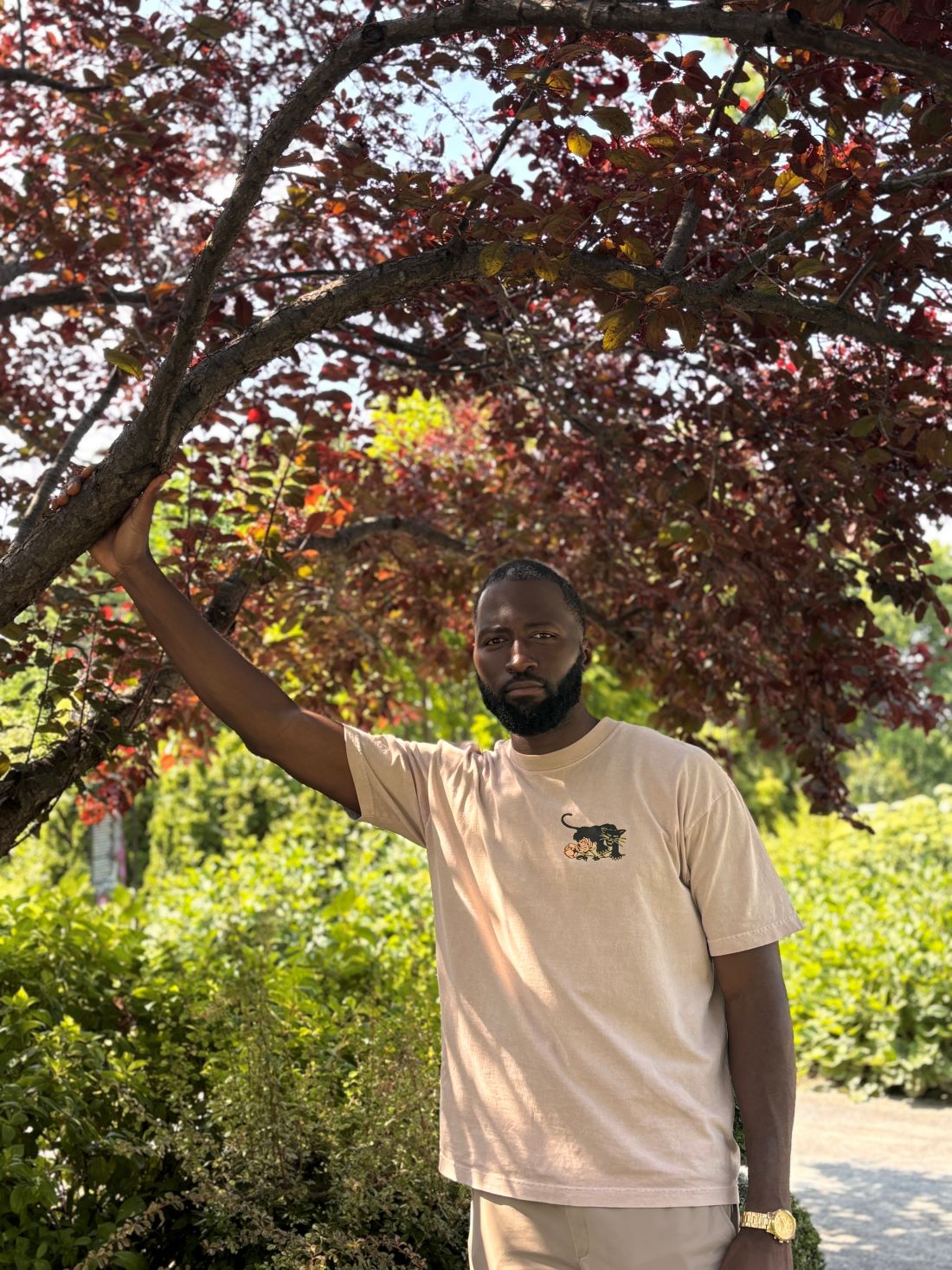
Voodoo, also known as Juju or Oru, has faced stigma for centuries, often used to suppress African spirituality. In this episode, Baudelaire Ceus unveils his latest project, "The Vodou Project," a captivating documentary that traces the journey of voodoo from Benin to New Orleans, Cuba, and Haiti. Discover the rich history and vibrant culture of voodoo and why embracing curiosity over fear can be enlightening.
Join us for a fun and insightful conversation. Support Baudelaire's work to help end the cycle of misunderstanding and celebrate African heritage!


Black History is American History, and we're thrilled to bring you an episode that truly resonates. Tune in as host Raphael and returning guest Baudelaire Ceus explore the fascinating world of African spirituality with The Vodou Project. This groundbreaking documentary series sheds light on the journey of Haitian Vodou from West Africa to today's diaspora. It's always a delight to have Baudelaire Ceus join the show. Make sure to check out and support Baudelaire's work, The Vodou Project!
In this riveting episode of White Label American, host Raphael reconnects with Baudelaire Ceus to explore the often misunderstood realm of African spirituality. They focus on The Vodou Project, a documentary series that traces Haitian Vodou from its roots in West Africa to the modern diaspora. Together, they share personal stories, challenge misconceptions, and emphasize the importance of reclaiming cultural narratives around Vodou, Juju, Oru, and other African spiritual traditions. The conversation spans intergenerational wisdom, the transformative power of music, identity across continents, and how colonial narratives have weaponized fear against ancestral beliefs.
And for a dose of humor, check out episode 194, featuring epic trolling with my favorite troublemaker!
Your feedback matters! Share your thoughts and connect with us at whitelabelamerican.com. Let's keep the conversation going!
The First episode of The Vodou Project is available on The Pitch Party everywhere you can listen to podcasts
Raphael Harry [00:00:00]:
Hey, everybody. Raphael, Harry here, you're listening to White Label American. On this show, we dive into unique and diverse origin stories from immigrants and allies. Join us weekly as we break barriers, connect the past with the present, and peek into the future. Welcome to an illustrious episode with an illustrious guest of White Label American. And I'm honored to be joined by returning guest today. Now, technically, this is the third time because, you know, for those of you on Patreon, you've already gotten that episode that had everything crashing. However, I'm honored to have my illustrious brother here again.
Raphael Harry [00:00:53]:
Thank you for giving me your time. And due to my. How will I say it? Well, due to my carelessness, I had.
Baudelaire Ceus [00:01:05]:
I.
Raphael Harry [00:01:05]:
When I, you know, thought about today, I had Afcon one week from today on my calendar because I. I don't even know what was going on with me. I thought Afcon was starting next week. And then, whoops, my Google alert went off. Opening match is on Sunday. I said, opening match of what? I said, oh, snap. Afcon starts now, man. Life is life in and everything.
Raphael Harry [00:01:31]:
And just before when this recording began, somebody already texted me, are you going to do a live show for Nigeria's match? I want to watch that. I was like, well, you could have signed up for my Patreon and give me some money, you know. So with that being said, support this show so that I can do live shows and if you want me to, you know, do a live talk on Nigeria playing at Afcon or any country, because, you know, I love multiple African countries. If you have the video you see that I'm wearing, it's different green with yellow, which means it's Teranga Lions. I'm representing on this recording. Yeah, I can do that. So support me on Patreon or just go on the website whitelabelamerican.com and donate. With that being said, welcome to the show, Mr.
Raphael Harry [00:02:15]:
Bodelaire Zeus. How you doing today, my brother?
Baudelaire Ceus [00:02:18]:
I'm doing good, man. I'm doing good. Glad to be here.
Raphael Harry [00:02:22]:
Yes, yes, I'm glad to be here, too. And please let people know about this awesome project that you have going on and. Yes, where they can find it. Let's start there.
Baudelaire Ceus [00:02:33]:
Yeah. So my show that I'm currently working on is called the Voodoo Project. And basically it's like a re examination of Haitian voodoo from its path from West Africa to Haiti today. Right. And kind of really checking to see if voodoo is what we've been taught it. It is by the West, Right. And pretty quickly we find out it's not. But what Is it actually, you know, is it's not the demonic, you know, witchcraft or whatever that, that we.
Baudelaire Ceus [00:03:09]:
That we were taught and that I was taught even as a Haitian amongst Haitians, A lot of Haitians even think that voodoo is. That's this like wicked and malicious thing. So anyway, yeah, that, that's basically the show is. It's a eight part documentary series of me, you know, documenting my learning about voodoo from day one, which was like a couple years ago all the way till today.
Raphael Harry [00:03:33]:
And anyone who hasn't listened, where can they find this project to listen to?
Baudelaire Ceus [00:03:39]:
So the pilot episode of the Voodoo Project is the only episode I'm releasing before the whole thing is finished. The pilot episode you can find on the Pitch Party feed. So just, you know, anywhere you get your podcast, look up Pitch Party, you know, it's like a red cover and then the Voodoo project is on that feed.
Raphael Harry [00:04:03]:
Yeah, I've listened to the pilot episode and I highly recommend everyone checks it out. Everyone hearing the sound of my voice, check it out in whatever misconceptions that you had of fears, it's a good place to start. And it will make you look back on whatever that made you feel that, oh, this is something that doesn't belong in my life for I should be afraid of. Yeah, it will make you look back and say, why am I afraid of it? Why is scary.
Baudelaire Ceus [00:04:35]:
Exactly, Exactly.
Raphael Harry [00:04:37]:
Why? Your project is very important.
Baudelaire Ceus [00:04:39]:
Yeah, absolutely. You know, it's. It's. Voodoo is very African. You know what I mean? It is, it is our. It is our connection, especially throughout the diaspora. Of course, Vodou is in Benin, of course, but. And throughout West Africa.
Baudelaire Ceus [00:04:54]:
But the versions that we see in the quote unquote New World, right? In New Orleans and Haiti and Cuba and all these places, Santeria in Cuba, condom in Brazil. All of that is our meaning, diasporic Africans, our maintenance of that connection to home, you know what I mean? And the connection to our spiritual base back at home. So, yes, this the show. Thank you for what you said about episode one. I've worked extremely hard on this show because it is such a personal story as well as it's so important culturally. Of course, I'm mainly speaking to Haitians, but the story is meant to resonate with all African people wherever they find themselves, you know what I mean? And being able to decide who tells us who we are, like, how does someone get that power? Like, we give them that power, you know, and then once we give them that power, we. We allow them to make us scared of ourselves.
Raphael Harry [00:05:57]:
Indeed. Because when I was listening to you talking to people from your Haitian community, including your family, and their response, listening to their responses. I could replace each person with a member of my family, with a friend from a different tribe, and even Africans from different parts of the continent, be it north, south, west. And each person had mad similar reactions when I. I just thought about asking them. I just left this topic in, I guess in limbo, one of the areas. I'm just like, ah, I guess I don't need to know since I, you know, I'd mentioned living in Benin City for a couple of years, for almost a decade, and we knew what we knew there. But there are people, everybody has their own practices.
Raphael Harry [00:06:51]:
You know, for most Nigerians, we call it juju, and it has a negative connotation. But when push comes to chase, there are times when everybody has a story of juju, had answers turning to it.
Baudelaire Ceus [00:07:07]:
Yeah, absolutely. That's the same thing.
Raphael Harry [00:07:11]:
You know, I know people who were on deathbed and it's like, well, juju man has answers or woman has answers. Now you're staring death in the face like, yeah, yeah, if you save me right now, I'll take it. And then after they found, you know, after they, they bounce back, then it's like, oh, you know, well, I went back to, you know, whichever religion they're from and what big two, which is always Christianity or Islamic. Then it's like, oh, no, no, no, no, that wasn't it. And I'm like, okay, but I remember, you know, this memory started coming back and when I asked people, you know, my mom, you know, was like, oh, I'm not. She. She kept deviating from the answer I was looking for. The different story that I wasn't even aware of came out and I was like, oh, it's not the story I was looking for, but okay.
Raphael Harry [00:08:05]:
And it was so funny how it happened. But it wasn't that she probably, like 10 years ago, she would have said, what, what are you trying to. What is this, the devil sending you? But she didn't go that route, which I, I was, okay, that this is. This is good. But at the same time, I just found it fascinating that there was an admittance that, yeah, something happened at one point in time. Then I asked another cousin of mine who, funny enough, we hadn't spoken in years, and she just reached out, hey, I just want to say hi. I was like, oh, I remember this incident when some money disappeared in the house and everybody in the house was taken to this juju man. And I was way too young to be a suspect because I wouldn't know what to do with the money.
Raphael Harry [00:08:52]:
That was the reason why I didn't. I wasn't taken. And she was like, oh, yes, I remember because she was. She's way older than I am. And she was like, yeah, I can't remember what that man did, but the person who was revealed as the culprit, he was given a second chance. And then he stole again. And he was banned from.
Baudelaire Ceus [00:09:17]:
And the juju man knew who it was.
Raphael Harry [00:09:19]:
He revealed the guy. When all of them were there, he revealed the guy. And when he came home, there was like a silence, a silent treatment. But I remember his mom begging. Like the mom was embarrassed because himself and his mom were guests in our house. I can't remember his name. My mom mentioned his name because that's what I brought up with my mom. And my mom was like, wow, you can remember stuff because she's almost 19 now.
Raphael Harry [00:09:46]:
She was like, you this boy, you can remember things. I can't remember that. You recall that story. I was like, that was one of the most legendary things that happened in my life. I was life again. So she wouldn't admit that they went to that juman's house for that money to be revealed, but she remembered the story, everything that happened that got him banned the second time when he stole, because that was like a. It was like a Hollywood movie. How he climbed up the window because we had.
Raphael Harry [00:10:22]:
We were living in a semi duplex that was attached to the next to. Yeah, semi attached duplex. And he climbed up and stuck his hand through the window. But an aunt, a younger aunt of mine was taking a bath and she had the door open. It was. And there was a mirror and she could see. She just saw a hand stick out from the window. Window and lift out a necklace from the luggage that my mom had kept the necklace in.
Raphael Harry [00:10:54]:
Yeah. And she had a stack of. A band of cash in there. But his hand couldn't reach the cash, so he. Only the necklace that he grabbed. So she went on detective mission. My aunt was taking a shower when who saw the hand and tracked this guy. And she was like, you must hand over what you stole.
Raphael Harry [00:11:12]:
And he was like, oh, please don't. Don't reveal that I did it and all that. That's how. You know. But as a kid, I was so fascinated. Like, man, this guy climbed all the way. But you're not social media, nobody. Cell phone cameras.
Raphael Harry [00:11:25]:
Back then, this was.
Baudelaire Ceus [00:11:26]:
Yeah, early.
Raphael Harry [00:11:27]:
Let's. Early 90s. Yeah, early 90s. So after that, I never I've never seen this guy again. Like, probably might have run into him at a party as a young.
Baudelaire Ceus [00:11:36]:
You wouldn't recognize him.
Raphael Harry [00:11:37]:
I wouldn't recognize him. But that was the band. I remember his mom crying, saying, oh, this guy embarrassed me. So my mom. When I brought this up. My mom is now revealing how apparently the guy had a record of stealing at multiple houses. But the juju man never met this guy before. He never knew him.
Raphael Harry [00:11:55]:
Well, she wouldn't admit that. That first incident when everybody was brought to that guy's, the juju man's house, and there was something happened. But I've had a different story from years ago that it was like. Have you ever heard of casting lots of.
Baudelaire Ceus [00:12:10]:
No.
Raphael Harry [00:12:10]:
In the Bible. It's. It's in the Bible. Somebody was trying to disparage that juju man way back this was like early 2000s, and try to say, oh, what that man did was just casting lots. And that's how he was able to trap the guy. But how did he cast lots? Anybody who's listening and knows what casting lot is, please write in and let me know if you've ever used that to trap somebody in something. But it's in the old. Especially Old Testament.
Raphael Harry [00:12:39]:
Yeah. I can't recall right now what they've used it for in the Old Testament, but there's a way it was used to reveal certain things, like in a group of people. And it revealed. I think even in New Testament. Yeah, it revealed somebody who did something wrong. Yeah, it's coming back to me little by little. But. Yeah, but they did.
Raphael Harry [00:12:59]:
He did a set of things and it. It revealed the person who pulled this. It was either, like. I think one was like, he gave everybody, like little sticks and the shortest. The person who pulled the shortest one. Everybody's like, everybody pick. You pick sticks there like broomsticks. But they're all the same.
Raphael Harry [00:13:19]:
They're supposed to be the same size or the same length, but one will be the shortest and the thief will pick the shortest one. Everybody will pick the same length and the thief picked the shortest one. And then it's like, let's do it. They'll do it again. And he scatters everything. But it's like to everybody, everything looks the same length. Only the thief that will see the one that looks different, but everybody, even the thief will see everything at the same length. And it's like he picked the same one.
Raphael Harry [00:13:48]:
And they did it like a couple of times. And the guy kept picking. He just kept going back to that same. No matter what they tried. If you put it in the back, you put it laid flat in a row so it was clear that, man, you're the guy.
Baudelaire Ceus [00:14:02]:
Yeah, man, it's a guy. It's crazy how the. How powerful, you know, our. I don't want to say native or like our ancestral traditions were, you know what I mean? There's been a lot of. Throughout this journey, I feel like I've. I've been in a lot of situations, even, to be honest with you. Even, like, the making of this show has been like. Like magical in a way.
Baudelaire Ceus [00:14:24]:
Like the way it just kind of comes together. Like when I go and travel on a recording trip, like, everything is easy. Like, it's like the path, like, unfolds before me. You know what I mean? I land in New Orleans, for example, for my New Orleans episode. And I only had a plan to go to one place. And then I go there. It was like a museum. And then from there, the people there told me to go here, and then when I went there, the people there told me to go here.
Baudelaire Ceus [00:14:49]:
And then it was a whole weekend. And at the end of the weekend, I listened back to my. My audio, and I'm like, oh, my God, this is an amazing episode. You know, even my walking from one place to another, I'd usually walk by someone playing music, like, on the street, and I would tell them, like, hey, I'm making a show. Like, is it cool? You know, I give you some money and you just keep playing. And I use what your. Your. Your music on the show.
Baudelaire Ceus [00:15:13]:
Like, that's going to be the music between scenes. They're like, yeah, of course.
Raphael Harry [00:15:16]:
What do you want me to play?
Baudelaire Ceus [00:15:17]:
Oh, you know, like, it was the episode. I can't wait for people to hear that one. But the same thing happened in Benin. In Benin, everything was so easy. It was so same thing. In Cuba, like, everything just comes together so well that I feel like this. This woman who I was on a tour with in Cuba, she said, like, that is the ancestor's way of telling you that this is a story you're meant to tell. And, yeah, that's literally.
Baudelaire Ceus [00:15:42]:
That's the only way I can describe it.
Raphael Harry [00:15:45]:
I have to second that. Repeat that phrase again.
Baudelaire Ceus [00:15:47]:
Yeah, she said that's the ancestors way of telling you that this is a story that you're meant to tell.
Raphael Harry [00:15:52]:
Yeah, that'll be the title of this podcast. That's the Ancestors way. Yes. Because that just makes sense, because the seamlessness of how everything just worked. It just has to be.
Baudelaire Ceus [00:16:10]:
Yeah. And that first episode is I had so much fun making it, but I just feel like the episodes just keep getting better, you know, so.
Raphael Harry [00:16:18]:
Yeah.
Baudelaire Ceus [00:16:20]:
Yeah, man. I think people really gonna like that first one, though. It's a good table setting of the. Of the problem. You know what I mean?
Raphael Harry [00:16:28]:
You are the right guy to do this because I've had your previous work, and then knowing your ethic combined with this in. It's not like you. You in this as some kind of tourist who's just like, oh, yeah, I'm on to something else. And no, this is something that you care about deeply. And so it makes sense that the ancestors are guiding you. And because I remember in the. The previous interview that we tried to do, and everything was just. I used the wrong venue.
Raphael Harry [00:17:02]:
That's why it didn't work out. You know, those. When you told me how long it took you to get the interviews to, you know, the whole traveling and all that, I was like, wow.
Baudelaire Ceus [00:17:14]:
Yeah.
Raphael Harry [00:17:15]:
And this is the amount of stories you've collected. I was so impressed. And I was like, yes, this. This man. This man is on to something. But let's not. Yeah, let's. Let's dive into some of the things that stood out to you in your traveling.
Raphael Harry [00:17:36]:
So what. What reminded you of. Because you went to New Orleans, you went to Benin Republic, and you also traveled around to other parts of the United States. Cuba too, right?
Baudelaire Ceus [00:17:49]:
Yeah, yeah, yeah. I actually just got back from Cuba last week. Oh, yeah? Yeah.
Raphael Harry [00:17:55]:
In the places that you've been to, what looked, what reminded you of? So keep Haiti is separate. But what reminded you of Haiti in all the places that you've been to? And said, oh, this is Haiti. And what reminded you of Benin Republic in the places that were in Benin Republic? And said, wow, this is from the places that you've been?
Baudelaire Ceus [00:18:18]:
Well, just now being in Cuba, man, I wish I could remember the name of the neighborhood we were in, but we were in this, like, pretty densely, like, Afro Cuban populated neighborhood outside of Havana. And it felt just like walking around Port au Prince. Like, it was like exactly the way people interacted with each other. The noise, like it was, you know, hearing the, like, roosters and stuff. Like it was. Yeah, very much like Porter Prince. And the food also reminded me a lot of Port au Prince. And even in the practices that I've now know about Voodoo, Haitian voodoo, or Vodou and Santeria, there's so much that is almost the exact same, you know what I mean? Maybe slightly different names.
Baudelaire Ceus [00:19:07]:
So Cuba reminded me of Haiti a lot. And in Benin, I would say like, so I went to a ceremony in Benin and it was during the day, maybe like one o' clock in the afternoon. Like, the sun is out, it's hot. And there was. So the way the roles of the ceremony went is the men coordinated the actual ceremony, right? Like the priests. And there was dancing and it was like these things called zanbetos. I explained in the pilot, they're all spinning on a courtyard. On the side are the children.
Baudelaire Ceus [00:19:46]:
And when you think about a voodoo ceremony, you don't think about children the way they, they tell it to you. It's happening at night and then there's blood and there's animal sacrifice and all this stuff. Man, these kids were having the best time of their life. Like, I can only compare it to a block party in the United States, you know what I mean? Like a block. I used to live in Bedside. Like a block party in Bed Stuy. Like, it was like the kids were having the most fun, but easy, easily. The kids were having the most fun.
Baudelaire Ceus [00:20:13]:
They're dancing, they're wearing costumes and stuff. They're having a great time. The women are in control of the music. So the women are also like, they're chatting with each other, laughing, and they're all drumming and they're like stopping and singing a little bit, but mostly just drumming. So that was a transformative experience for me to be, to be able to witness that and be there. And the whole community came up. Now, I say that because only maybe four months later, I'm in New Orleans. And the day I left New Orleans, I went to a ceremony in New Orleans.
Baudelaire Ceus [00:20:53]:
Now there, there wasn't the gender and the kid breakups. Right. It wasn't like everybody was drumming, men, women and children. And their drumming when I listen back is exactly the same as the drumming in Benin. Like, if I played you both, you wouldn't be able to tell me which one was which. If I paid you like a five second clip and I said, is this Benin? Is this New Orleans?
Raphael Harry [00:21:18]:
Is this Benin?
Baudelaire Ceus [00:21:18]:
This New Orleans? Is this you would you probably get it wrong every time.
Raphael Harry [00:21:22]:
Fascinating.
Baudelaire Ceus [00:21:24]:
Wow. Yeah. You know what I mean? And these people in New Orleans, I'm sure a couple of them, I mean, at that point I had been to Benin, I'm sure the, the majority never been to Africa, you know what I mean? But they're. Yeah, they're still drumming exactly the same as the drumming of the place that their ancestors were.
Raphael Harry [00:21:41]:
Beautiful. That is beautiful.
Baudelaire Ceus [00:21:44]:
Wow.
Raphael Harry [00:21:45]:
Music. Because I've heard of music traveling through time, but it makes that scene of the scene in Sinners. Yeah. Puffed my head again, like, man, that's.
Baudelaire Ceus [00:21:58]:
Yeah, yeah. It was amazing. It was amazing. It was amazing. And it was like there was somebody dancing there in New Orleans. And it's funny, like, in episode one, I'm talking to my mom and she's telling me a story about a voodoo ceremony. And she's mimicking what the dancing was like at the ceremony she went to In Haiti maybe 40, 50 years ago, you know what I mean? So she's. Maybe even longer.
Baudelaire Ceus [00:22:27]:
So she's showing me what the dancing was like there. That is the same dancing I saw in Benin and would later be the same dancing in New Orleans. So that's three different countries.
Raphael Harry [00:22:39]:
Wow.
Baudelaire Ceus [00:22:39]:
You know what I mean? With. It's like. And. And I'm sure the listener, like, if you've seen, like, the way Africans dance, like a full body dance, like, you know what I mean? From your toes to your shoulders, everything is like, so, like just. It's just moving. Yeah. You know, so it's that I was already a Pan African before I started working on this. I come into this Pan African.
Baudelaire Ceus [00:23:05]:
But what the show has taught me more than anything is how spiritual of a people we are, how important our spirituality is, and that's why we believe so deeply in Christianity and Islamic. Right. It's like, whatever we do, we're going to do it to 10, you know what I mean? Like, I forgot who it was I heard say, but it was like, you know, they gave us Christianity and then we became the best Christians, you know what I mean? Like, if you think of the person, you know, who is the most devout Christian who lives by the. What the Bible says, you probably thinking of an African. Probably an African woman is the most devout Christian, you know?
Raphael Harry [00:23:46]:
You know what I mean?
Baudelaire Ceus [00:23:49]:
It's not. It's just crazy how that ends up being the case. And it might be the same case with Islam, but it is the same with Islam, everyone. But that's the thing, right, is that our spirituality isn't compartmentalized. It is like, I heard a phrase one time, it's actually a Muslim phrase, like taqwa. And it's basically like the light shines a long time. Yeah. Your spirituality is supposed to.
Baudelaire Ceus [00:24:19]:
And listeners, correct me if I'm wrong, but the way I believe it is that your spirituality is supposed to shine in every part of your life in the way that the light shines through all the windows of a house into every room. You know what I mean? And I think the way we as Africans embrace Spirituality is a great example of that because it is in every part of our life.
Raphael Harry [00:24:41]:
Oh, I don't know what it means there, but there's a Taqwa bay in Lagos.
Baudelaire Ceus [00:24:45]:
Oh, really?
Raphael Harry [00:24:46]:
Yeah. That's why I'm like, I don't know.
Baudelaire Ceus [00:24:48]:
I mean, I probably. I wouldn't be surprised if it. I mean, you know.
Raphael Harry [00:24:54]:
First. But I was like, oh, yo, Lagos is the popular Western Nigeria, which is Yoruba, Muslim Yoruba. I won't say it's mainly with mostly Yoruba, because I'm your.
Baudelaire Ceus [00:25:07]:
By the way. By the way.
Raphael Harry [00:25:08]:
Yeah.
Baudelaire Ceus [00:25:09]:
I claim. I claim Yoruba, by the way.
Raphael Harry [00:25:11]:
Yeah, but that's.
Baudelaire Ceus [00:25:13]:
If.
Raphael Harry [00:25:13]:
If you. There's a part of Europe. But if I say it now, you're gonna fight me. But. But that's tied to Nigerian politics, so I won't say it out here, but there's the. By religion, Yoruba is majority Muslim. Yeah. So it's not a surprise that the turquoise tied to Islam.
Baudelaire Ceus [00:25:39]:
Yeah.
Raphael Harry [00:25:40]:
So. But it's part of the things that I've been finding out over, you know, especially since I started doing this podcast. Like almost every Euroba guest that I've had on the podcast, their name. I found out their name was Arabic, but it was based on pronouncing their name. You know, when you lived in Europe, you've lived in Yoruba land or Yoruba areas. The pronunciation of names. If you met a Yoruba, it's. You pronounce the name with Yoruba donations, and then you now find out, oh, it's an Arabic name, not Yoruba name.
Raphael Harry [00:26:15]:
And they're like, oh, man, I didn't. I didn't know that until they. They tell you the meaning of their name. It's like, oh, that name is. So it's actually an Arabic name. Oh, my.
Baudelaire Ceus [00:26:24]:
So.
Raphael Harry [00:26:25]:
So probably I was looking at taqwa all these years as a Yoruba.
Baudelaire Ceus [00:26:31]:
Word.
Raphael Harry [00:26:32]:
And then I just found out that it's Arabic. So.
Baudelaire Ceus [00:26:35]:
Yeah.
Raphael Harry [00:26:35]:
Yeah.
Baudelaire Ceus [00:26:35]:
I believe it to be. Yeah. I mean, the Middle east has done a number on Africa, too. You know, it's not just Europe, but, I mean.
Raphael Harry [00:26:45]:
Yeah.
Baudelaire Ceus [00:26:45]:
Nothing compared to what Europe did. But, hey, you know, the East African slave trade is also, you know.
Raphael Harry [00:26:51]:
Oh, yeah, there's that too. But before we digress, when it comes to juju, as we call it in Nigeria.
Baudelaire Ceus [00:27:00]:
Yeah.
Raphael Harry [00:27:01]:
Which I need to find out who has that word, juju, because I ask people from different tribes in Nigeria, and everybody just knows it as juju, so. But juju does Sound. I would say the word juju. I was. I would give it to Yoruba. I'll give it to Yoruba. Because they had way before, you know, now we say Afrobeats with the S. But way before there was Afro juju, they had a genre of music, Afro juju.
Raphael Harry [00:27:34]:
And that was. They were one of the few people to embrace juju at that level. That was actually a genre of music. And people weren't like, oh my God, I'm scared of what the hell, you know. But that was quite popular. And that was. It was madly popular. Like, no matter how hot Afrobeats gets is, there's nobody that has an album like Shino Peter's first album.
Raphael Harry [00:28:03]:
You can literally dance to it from the beginning to the end of the first. The tracks from track one to the end, like, you put that on them. Auntie is just gonna be dancing from beginning to the end. And he was one of the first guys to crossover to other. It wasn't just like Lagos or western Nigeria. It crossed over to. Because I was living in Benin City then and we were dancing to it and it's. That was Afro juju.
Raphael Harry [00:28:30]:
And.
Baudelaire Ceus [00:28:31]:
Okay, yeah.
Raphael Harry [00:28:32]:
And that was like one of the first times I had the word juju in a positive way. Because Afro juju was the genre of music. And he got so big that the military government even, you know, brought him to concerts. And until he performed for abacha at a concert during the time students were protesting abacha, that's how he lost popularity. Because he still, in a way, apologizes for that. But now I think many of the Afrobeats generation don't know. I think they're okay with him now. But it took a long time for him to regain that popularity.
Raphael Harry [00:29:06]:
But it was a big deal back then when he still performed on that Bachelor. But I understand, because Kama was killing people. Yeah, he said he could defeat France in the war, but people don't understand what it means to live under a dictator. But I digress. So that guy helped make it acceptable to hear the word juju. And so he deserves his credit because it's something that you don't think about. Until now we're having a conversation like this. And that's one way for me to throw the question to you that.
Raphael Harry [00:29:40]:
Do you think if Haiti had a version of an Afro juju or music genre or a musician in the form of Sashino Peters, like in the 90s, who came out, you know, with it with an album as hot as sh. I remember the. What's the album Called again because I remember one time I was with a Nigerian in his car, and I brought up Shino PETA's album, and that guy, I lit up, and he's from my region, not from the west. And he was like, man, the album. Yep. He's a few years older than I am, but he was like, yes, from beginning to the end. That's just dance, dance, dance, dance, dance. It's a party that was.
Raphael Harry [00:30:19]:
It was hot. So you. Do you think Voodoo could benefit from an artist? Because today, you know, we can't deny it. Pop culture.
Baudelaire Ceus [00:30:29]:
Yeah.
Raphael Harry [00:30:30]:
Helps move the conversation to positive or negative.
Baudelaire Ceus [00:30:35]:
Absolutely.
Raphael Harry [00:30:36]:
So Voodoo benefit from an artist like that doing something similar?
Baudelaire Ceus [00:30:41]:
100%. Yeah. I mean, because culture knows no borders. Culture knows, like, you know, especially a song or something like that can be all around the world in half a second because of the Internet, you know, so. Absolutely, I think it could benefit from that. And I think every artist. That's part of what I'm doing with this show is that I think it's every artist's job to kind of take on those types of subjects and give it to a mass audience. You know what I mean? Like, I've worked on a lot of podcasts, a lot of episodes about a lot of things, you know, but the episodes that feed my spirit the most are episodes that I know African people can take and learn something from.
Baudelaire Ceus [00:31:28]:
Nothing feels better, you know, like, anytime anything I do gets back to Africa. Like, there was a couple that emailed in on the last show I was working on, the. The Atlas Obscura podcast. They emailed in and said that they honeymooned across Africa and they went to places based off places that I did episodes about.
Raphael Harry [00:31:47]:
Wow.
Baudelaire Ceus [00:31:48]:
You know, so they got to be. They gotta have some pretty good money to do that. But. But that was amazing to know, you know what I mean? Because at that point, I'd already done episodes in Nigeria. I did episodes in Ghana. I did episodes in South Africa and Kenya, and, you know what I mean? Like, Egypt, of course. Just. Just being able to know, like, oh, wow, you know, they went to these African countries and spent their money.
Baudelaire Ceus [00:32:08]:
You know what I mean? That. That made me feel a little bit. That made me feel nice. So I think about that every time I set out to work on, especially this project. This is.
Raphael Harry [00:32:18]:
I.
Baudelaire Ceus [00:32:20]:
Not to be dramatic. This is like my life's work, like the Voodoo project right now, you know what I mean? Every part of me is in the show. My sense of humor, my kind of, like, scholarly focus. Of course, my family is in it, to some extent, you know what I mean?
Raphael Harry [00:32:39]:
I enjoyed when you were. Every time I played when you're talking with your mom, that just gave me idea. That gave me so many ideas to talk about with my. My own mom.
Baudelaire Ceus [00:32:48]:
And I'm not even done talking.
Raphael Harry [00:32:51]:
I know, I know.
Baudelaire Ceus [00:32:52]:
Yeah, I'm going to talk to my mom a few more times because she. It was. It was so great. I didn't think it was going to be that. I didn't think it was going to be like that. I literally went over there to talk to her. This is all in the pilot episode, by the way. If anybody listening.
Baudelaire Ceus [00:33:03]:
When I went over there to talk to her, I was prepared for her to shut me down. I just was like, even if she shuts me down, let me record it. You know what I mean? That was my thinking. I'm just going to get shut down, record it and say, why won't you talk about this? And she'll say, because I don't want to talk about it. I thought that was it. But she really sat there and I only used a few minutes of the conversation. You know, maybe one day as like a bonus episode, I'll just release the whole conversation. But yeah, man, like, for any, you know, for any Africans now who are, you know, having children now or have children that if they could listen to this show and then just be different with their kids when their kids are like, hey, you know, dad, what's voodoo? You know, you tell them, hey, you know, it's African spirituality, you know, and some people believe in it.
Baudelaire Ceus [00:33:48]:
Some people believe in this, some people believe in that. But you respect whatever people believe in because it's their right to believe in it. You know, no one wants to believe something as natural and as pure as voodoo or Vodou and be believed to be a devil worshiper, you know, like, could you imagine? Like, you know, there's so many people I've talked to on this show that are some of the. And that's one of my favorite things about the show is that you're gonna hear so many. The way you. You love my conversation with my mom. I talk to so many people that are so nice, so funny, like the greatest people you'll ever hear on a podcast. And they all practice voodoo or they practice Santeria.
Baudelaire Ceus [00:34:31]:
They practice condom blade. They practice something. And because of their practice, people think they're devil worshipers. Now, imagine being such a kind person and people think you are a devil. You a goofy guy, like. And people think you home and you worship Satan. Or how about this, you also have a. There's.
Baudelaire Ceus [00:34:56]:
There's a way that in. In Vodu, you know, you don't really. You don't gain anything from converting somebody else. You know, like that's the thing about Christianity and Islam both entered Africa. At least Christianity will say West Africa, of course, you know, there's the Ethiopian Orthodox Church, separate thing.
Raphael Harry [00:35:20]:
Most black people and the Coptic too.
Baudelaire Ceus [00:35:23]:
Yeah, but most. Exactly. But most Africans in the west, when you tell them that Christianity is a European export, they'll say, oh, no, like Africans. But you guys are not practicing, you know what I mean? That east or Northeast African version of Christianity. This version, Jesus is a blonde haired, blue eyed man. And to the people who say that, that doesn't matter. I want you to go into a church and change Jesus to a black Jesus and see how the congregation is going to react. Anyway, I say all that to say Christianity and Islam entered Africa largely as conquering forces.
Baudelaire Ceus [00:36:08]:
Right now, whether or not people want to be Christian or Muslim, their business, you know what I mean? I don't judge anybody. I think that's fine. But let's be honest about how I got there. So Christianity, Islam, enter as conquering forces. Especially because the idea of converting somebody is a way to say you're almost civilizing them, you know what I mean? Meanwhile, in a spiritual system like Vodou, the belief is that everyone has their unique connection to God. We are all a part of the spiritual universe. Whether you know Vodou exists or not, you're a part of it. You know what I mean? There isn't a chosen people.
Baudelaire Ceus [00:36:51]:
The people who are Vodou practitioners are not better than someone who thinks Vodou is the devil, you know what I mean? God does not. He's not partial, you know what I mean? God made you, and God made Mount Everest. He made the Pacific Ocean, and he made the sharks in the water. And the sharks in the water don't practice Voodoo either, don't worry, you know, but it's all a part of the same thing. And so because Vodou isn't out to seek converts, it kind of is seen as like almost crazy for that, you.
Raphael Harry [00:37:25]:
Know what I mean? It's like, oh, wow, you're touching on something that it's resonating with me in a way that I didn't expect it to. Because now I'm connecting certain dots that I had been missing because family members that I knew or I came across who practiced juju or let me transfer, I can say your Haitian way of Vodo. Vodo. Did I get it? I'M trying to say it in my head. I've been trying to say it in my head in your exact accent. None of them tried to convert me. And this was at the height of when everybody who was Christian around me was always pushing this, convert, convert. And when I was 17, going 18, you know, I made friends with my first.
Raphael Harry [00:38:28]:
I believe they were. Were they Buddhist? Confucius? Confucius. Is it Confucius or Confucius? They are from Sri Lanka. The first Sri Lankans that I made friends with, I was living in Ibadan. And one of them, he used to have a ponytail. And one day he lose this ponytail. When he came to my house, we're all around the same age, but he was a little bit taller than myself. And my guardian was like, oh, you brought a girl to the house.
Raphael Harry [00:39:01]:
And, you know, there's a whole thing about if you bring girls, you're already committing adultery. You can't talk to a girl. Adultery. I'm like, fornication always. I got hit with both of them at the same time. Although technically I'm. Adultery is supposed to be for married people. But hey, I got hit with.
Raphael Harry [00:39:18]:
And I was like, oh, no, no, that's a boy. Just because he didn't have his ponytail up. The hair is like, mad long. It's part of religion. What religion? It's not a Christian? Like, no, he practiced a different religion. So he's a Muslim? No, it's actually the first non Christian or Muslim friend that I have because I'm trying to. It was a different religion, so I'm like, wow. And he wasn't trying to convert me.
Raphael Harry [00:39:46]:
He didn't approach it like that. It was just cool.
Baudelaire Ceus [00:39:48]:
Yeah, absolutely.
Raphael Harry [00:39:50]:
The first thing was, so are you bringing him to church? We have service this evening.
Baudelaire Ceus [00:39:55]:
I was like, damn.
Raphael Harry [00:39:56]:
That's why I didn't want him to come to my house because.
Baudelaire Ceus [00:39:59]:
But now you have to do the work of. Yeah, now your place is like, are you gonna convert him? You have to convert him. You. You know the way.
Raphael Harry [00:40:06]:
I'm like, okay, okay, yeah, yeah, I'll talk to him. You haven't talked to him. And she just went and started bringing. We have service this evening. I was like, damn, man. It's gonna be hard for this guy now to see me as a friend. Of course, man. And you feel judged.
Baudelaire Ceus [00:40:28]:
Yeah, yeah. All the worst feelings. Yeah. Oh, boy.
Raphael Harry [00:40:32]:
Was he just, okay, okay. Yeah. I have my own religion, thank you. It's like, yeah, but you don't know God. What do you mean, don't. He don't know God.
Baudelaire Ceus [00:40:40]:
Yeah, I want to say something about that too. Is that like, and this is kind of. This. This is one of the sadder things I've learned or realized in this in my research is that like, when you tell somebody you're going to strengthen your relationship with God or you're going to find God, the assumption is the normative is you are going to become a Christian because. Yeah, because as African people in Mass, especially in the west, we have given the monopoly of God to Christian to Europe. Europe owns God. So if you say, no, I practice Vodou, and in Vodou, not me personally, but like, if you just say, like in Vodou there is one God who made the world and he just doesn't. He just doesn't care if.
Baudelaire Ceus [00:41:32]:
If Chelsea wins the game or not. You know, he doesn't care about the petty problems of the world. He makes the world and he goes off making other world and leaves the ruling of the world to these, for lack of a better term, like saints, right? In Haitian Vodou, they're called Loire. So this, this idea that God is owned by the west and by the Abrahamic religions is so problematic because as a human being, you should feel as connected to a grain of sand as you do to the cosmos. You know what I mean? Like, you were created divinely by the Creator. And once you feel like the Creator was brought to you and instead of you having a distinct connection to the Creator. Right, because the Creator was already in Nigeria before a white man ever stepped foot in Nigeria. You know what I'm saying? But if that creator looks Italian, then how can I say, how can I say there was the creator bend in Nigeria, you know what I mean? Because when, when people came to Nigeria and decided to create, to build up all these churches and force Nigerians who, you know, people at the time, whether it be the Benin kingdom or, you know, not, obviously it wasn't Nigeria yet.
Baudelaire Ceus [00:43:01]:
But when. When the Portuguese and the Dutch and the British went to that area and, you know, forced converts into Christianity, they weren't acting holy, right? Is that how God would introduce himself to you? His. His. His greatest creation? You know, like, is. Is that. Is, is that. Does that make sense, you know, for us to believe? Like, you know, we went through this horrible thing and, you know, Christianity was a part of that, of course, and religion in general. Same thing with the East African slave trade.
Baudelaire Ceus [00:43:38]:
But you know what? Now, you know, white Jesus and, you know, the Catholic Church, they have my best interest. They have my best interest. Now after all that, now they have My best interest, the King James version of the. Like Bob Marley said, you know, King James didn't write his version of the Bible to benefit the African man. Why would. He didn't. What? You know what I mean? Like, so I don't. I don't.
Baudelaire Ceus [00:44:07]:
I don't criticize people for wanting to be Christian or Muslim. You know what I mean? Whatever works for you. Whatever helps you find peace. I'm down for it. Is the forcing religion on anyone is when I start to criticize, I say, hey, you know what I mean? If your connection with God is so good, why he forcing you to do this?
Raphael Harry [00:44:24]:
Exactly.
Baudelaire Ceus [00:44:25]:
You know, like, because one thing in my travels across now four or five countries, you know, over a dozen cities, learning about Vodou, no one has ever forced me to say or believe anything. They don't even ask me if I practice vodu. Why are we having this conversation while we're talking, While I'm talking to a priest in Cuba, while I'm talking to a priest in Benin, they're not even saying, well, wait, are you. They're just. They just know I'm a curious reporter and they are being as open and honest as they can be with me. If I said. If I said to you, rough. I'm about to do a documentary, audio documentary on Christianity, and I'm gonna go fly around the country and I'm gonna go talk to priests.
Baudelaire Ceus [00:45:16]:
You would bet in that audio, them priests are gonna baptize me. They're gonna want to do. They're going to say, hey, you know what? You've accepted Jesus Christ as your lord and savior. You've done that. Okay, all right, great. So now we need to, like, they would never allow it to just stay philosophical and talk about the world. It's like, well, you're going to be damned to burn in hell if you don't accept this right now. Let's, let's.
Baudelaire Ceus [00:45:43]:
You know what I mean? Let's. Let's. Let's get you accepting this right now. And I just haven't had that experience at all in this, and it is powerful.
Raphael Harry [00:45:52]:
Well, to be fair, I do know of some Catholic priests that won't get promoted. I guess that's why they won't get promoted. But I like to think they've hung out around. Now it's making sense why they do sound like that. But they do sound similar to the juju or voodoo priests.
Baudelaire Ceus [00:46:11]:
Yeah.
Raphael Harry [00:46:12]:
Yeah.
Baudelaire Ceus [00:46:12]:
Well, I think that's the thing about what I say when I don't criticize people on the basis of being Christian or Muslim? Because I believe there's some very cool Christians. Muslims, you know what I mean?
Raphael Harry [00:46:23]:
Like a taxi driver, Uber driver, who I once had a great conversation when I was chat drivers, and he was like, you would have made a great Muslim, my brother. You would have made a great Muslim. But, you know, there's a reason why many Muslims don't like me. And I was like, so many Muslims don't like you. You said, I would have made a great Muslim. And we are agreeing on a lot of points right now. I don't know if I would have made a great musl.
Baudelaire Ceus [00:46:53]:
Yeah, he's not. He might not be the person. Well, he might be, though.
Raphael Harry [00:46:56]:
I don't know.
Baudelaire Ceus [00:46:57]:
I personally, I might. I might like him.
Raphael Harry [00:46:59]:
He was. He was making a lot of philosophical points, but he was also very critical of Muslim leaders who he felt were still stuck in the. The, like, 15th century, in his opinion. But the way he made the point wasn't like the way many people talk on social media. He was an old, older gentleman, and it was so beautiful hearing this man talk. I wish I. I hadn't thought about podcasting then. So I didn't write his name down, anything.
Raphael Harry [00:47:28]:
I wish I had his name. You would have loved to talk to this gentleman, but it's rare to meet such people. And I was like, damn. I always think about him every once in a while. But before I get carried away, there's something I wanted to read to you. So my people, we have never been one Central Kingdom type of people. We had, we are more like city states. Everybody was kind of on his own.
Baudelaire Ceus [00:47:54]:
Okay.
Raphael Harry [00:47:54]:
So when it comes to juju voodoo, everybody seems to have their own thing going on.
Baudelaire Ceus [00:48:03]:
Yeah.
Raphael Harry [00:48:03]:
So one of my uncles who was willing to talk about wasn't like, oh, my God, this boy. What are you talking about? He sent me a few things, and although he mixed all of them up, but he. He was. So my ancestral village is called Agberi. If I'm going in American accent, it's a G B E R e. So he says our juju in voodoo in, like, berries is called Oru. So that's instead of voodoo, we call it Uru. And we have a specific, specific word for it tied to our village itself, which is Agberic Besa.
Raphael Harry [00:48:47]:
And I just found out that what I've been calling my totem is actually not mine. It's a bigger village next to ours. He said that's what worships the monitor lizard. So I have to take off the monitor lizard that I've been Hanging around me because. Well, my elder sister told me that monitor lizard was our families, our village sacred animal all these years and now the head of my family says it's not. Yeah. But it says though there's a story behind the monitor list that being worshiped I will confirm and I've been waiting for that confirmation for how many months now, still hasn't confirmed. But he said we have well water people.
Raphael Harry [00:49:32]:
I think I've told you that before. We are, you know, River Ryan people mostly the guys who are by the coast, ocean, coastal people. But we are around water a lot. He said in regards to his personal experience, he's never been a worshiper or got himself involved but he just. Which is my tribe. He just have a strong belief system in the oru. And when he was a teenager he had an issue with his school principal. When he was in high school, he accused him wrongly and unfairly.
Raphael Harry [00:50:11]:
Knowing that he may not be able to defend himself, all he did was capitalize on their belief system and decided to invoke the gods oru right in the presence of the disciplinary staff. As I started, they rushed and stopped me. That was how the matter ended. The truth of it is that I don't even know how I did it. At the end of the day, the disciplinary committee have to apologize to me. And he put a laughing emoji. So I'm like, is this how you admitted to getting out of trouble in School over 50 years ago? So you knew enough to just say hey, y' all accused me of something I didn't do and you all want to discipline me or. Or you don't want to go face your.
Raphael Harry [00:51:02]:
My grandfather at home because he was a policeman. So that meant he kept. When you come home now he has big trouble. So yeah, I'm just going to invoke the gods. How dare you. The gods are my. I'm like, man, my grandfather was a Catholic man, man. And that's why my mom is a hard cost staunch Catholic.
Baudelaire Ceus [00:51:24]:
Yeah.
Raphael Harry [00:51:24]:
You know, because she should have aborted me. That's why she never did that. But because she said that's all she. I'm a Catholic. So yeah, my man invoked the gods immediately. He was like, man, I rather. Whatever you guys gonna do. The God of my witness.
Raphael Harry [00:51:44]:
Hey, you know what? We believe you, boy. We believe you because the guilty guy won't do this, bro. About 50 years now you have meeting.
Baudelaire Ceus [00:51:54]:
He lied on the gods. It's crazy. I mean, I guess, you know, I.
Raphael Harry [00:52:01]:
Said, bro, all I asked was about juju. You're gonna. Hey, do. Give me more information about this man here admitting to. Yeah, hey, man, but the story is coming up, man. The story is coming up. Yeah, it's over 50 years, but yeah, Visa.
Baudelaire Ceus [00:52:20]:
There's a lot of those stories amongst us as. As a people, like, even in my own family, there's still so many more that I'm, you know, asking questions about. And that's one of the things I. As one of the markers of success of the show and it's already happening is people like you told me earlier, you want to have a conversation with your mom and stuff like that, like, is being able to go back and have those conversations because we are that generation before us, they're not here forever. You know what I mean? So.
Raphael Harry [00:52:48]:
That's right.
Baudelaire Ceus [00:52:49]:
If they. If we let them go and we like I. One of my biggest regrets. My grandmother passed away. My mom's mom passed away when I was in the eighth grade. And sometimes, like, you couldn't tell give me enough an amount too high to have a conversation with her. If I could talk to her today, yeah, it would be like, because at the time, you know, I'm a kid, I'm in middle school, you know what I mean? So like, I talked to. I talked to about like.
Baudelaire Ceus [00:53:14]:
Like, you know, stupid stuff. Like, I never really asked her questions about like, like the Haiti. Her mom, my great grandmother, died at a. Almost like 107, 108 years old.
Raphael Harry [00:53:24]:
Wow.
Baudelaire Ceus [00:53:25]:
You know what I mean? Here's a picture of how close Haitians are to Africa. The Haitian revolution was in 1804. We won the revolution January 1, 1804, started in 1791. So Africans stopped being brought to Haiti around that time, around that, you know, 13 years. They would call them saltwater Africans, you know what I mean? Like, at that point, Haiti was cut off from new Africans coming. My great grandmother was born in, I believe the 1870s, 1870s, 1880s. She, before she died, would help take care of my oldest brother. Right.
Baudelaire Ceus [00:54:05]:
When my great grandmother was a child, she met Africans born in Africa who were brought to Haiti through the slave trade. You know what I'm saying? You see the connect like those Africans to my brother, both knew the same person, you know what I mean? Like, that is how it's really not that long ago. And of course, I mean, my grand. My great grandmother lived in an insane amount of time. 170 years old. She lived a long life, a very, very long life, and was active for a very long time. But the fact that when she was a baby, she met Africans who were brought to Haiti from the slave trade. And then she was able to take care of my brother who was just born in 1979.
Baudelaire Ceus [00:54:49]:
He was just born. You know what I mean? My brother, not. He's not an old man. You know what I mean? So it's crazy.
Raphael Harry [00:54:55]:
It is. That's why I tell people like, you know, I have a fellow podcaster, mutual friend of ours, who also a big listener of this podcast, a sister from Zambia. Yeah. She was able to do it on her last visit to Zambia. She got to record her grandmother. And yeah, it doesn't mean you have to be a podcaster to do this, you know, to everyone listening. Collect the stories, man. Collect the stories.
Raphael Harry [00:55:24]:
Have it for yourself. If you, even if you don't have kids, it's part of your family's history. Keep it.
Baudelaire Ceus [00:55:31]:
Absolutely.
Raphael Harry [00:55:32]:
And have it on vinyl. Put it on vinyl, you know, whatever. Yeah, but it's part of your history. It's part of. It's part of you, and it's part of your future.
Baudelaire Ceus [00:55:42]:
And imagine how much you would want. Like, think of all these podcasts and everything we're recording. Like, my son is 16 months old. His kids are going to be able to find my. My podcast. You know what I mean? I could be gone by then, but they were like, this is my grandfather talking. Like, this is the kind of stuff my grandfather used to talk about. This is his voice.
Baudelaire Ceus [00:56:04]:
This is his. You know what I mean? This is what he's interested in. They don't even have to ask my son, well, what was granddaddy like? They could go find out on the Internet.
Raphael Harry [00:56:12]:
That's another thing.
Baudelaire Ceus [00:56:13]:
Yeah, it's going to be there forever, you know what I mean? So I think just getting as many of those stories, even if we don't release them into the world, keep them on a hard drive.
Raphael Harry [00:56:21]:
That's right. And.
Baudelaire Ceus [00:56:22]:
And keep that hard drive. And one day, you know, when your kids are older, play it for them. Like, hey, this is my. My interview with your great grandmother, you know? Oh, yeah, my great grandmother lived through a U. S. Blockade of Haiti. You know what I mean? When she was born. My grandmother was born in US occupied Haiti.
Baudelaire Ceus [00:56:42]:
The US occupied Haiti from 1915 to 1935. Well, till today, the US occupied the US if you. If you could pick the president of a country, you occupy the country. So from 1915 to today, my grandmother's whole life was in a US occupied country.
Raphael Harry [00:57:00]:
She.
Baudelaire Ceus [00:57:01]:
My grandmother was born in, I believe, 1924. So they all saw different. Haiti's the Haiti I See, today versus my mom's Haiti, my grandmother's Haiti, my great grandmother's Haiti. Like, if I could combine those stories, you know what I mean? Like, and like I said, I don't have access to my great grandmother or my grandmother, but I have access to my mom. So it's like, I'm just going to ask her as much, and I'm going to talk as much as I can. And, you know, who knows? My. One day, my son might take the voodoo project and use that audio to create another show.
Raphael Harry [00:57:30]:
Hey, this kids, you know, tomorrow I'm going to interview my kids. You said every year we got to do one interview, so I got to go interview. I don't know.
Baudelaire Ceus [00:57:40]:
That's amazing. But that's amazing. That's a great idea, by the way. I think I'm gonna steal that idea, actually. I think I'm the same thing. Once my son starts talking, I'm gonna interview him.
Raphael Harry [00:57:48]:
Yeah, they do their thing, and I'm like, all right. Yeah, yeah. How old.
Baudelaire Ceus [00:57:54]:
How old is she?
Raphael Harry [00:57:55]:
Seven. Well, the first one we did, when she turned five, we interviewed for the first time, and then she said this year, she. Right on. Right around her bed day, she said, I want to. I want you. I want to be interviewed. Every year after my birthday, I want to go to the studio and get in here.
Baudelaire Ceus [00:58:15]:
That's amazing. Yeah, I can't. I can't wait to do that with my son.
Raphael Harry [00:58:18]:
I'm gonna do it. Okay. I wasn't expecting that, but, yeah, that's amazing. She just said, yeah, I want to go to the studio. I like going to the studio because sometimes, I mean, in the house, you just bring a mic, grab one mic, and come and say, I'm. I'm on the news now, and I have this man here, so. What. What.
Raphael Harry [00:58:34]:
What happened? What. What do you mean, what happened? Yeah, you're on the news. This how you're gonna talk. You know, I won't watch the news. Okay.
Baudelaire Ceus [00:58:44]:
All right. Amazing.
Raphael Harry [00:58:47]:
Interviewing me already, so. But the first time she was in the studio, she was like, when was our time to talk now?
Baudelaire Ceus [00:58:54]:
I was like, okay.
Raphael Harry [00:58:57]:
Yeah. So we're gonna make it a. An annual thing of going to the studio, and I get to see somebody grow over the years. I'm looking forward to teenage years. Yeah.
Baudelaire Ceus [00:59:09]:
Yeah. One day, maybe when she's, like, you know, 18, you can, like, edit it, you know. You know, it's like a graduation gift to her or something. Or, like, you know, I mean, play how she's changed throughout the years and her Voice is going to change so much and.
Raphael Harry [00:59:25]:
Yeah. Yeah, that'll be fun. Oh, man. Being a dad, one of the greatest journeys.
Baudelaire Ceus [00:59:31]:
Be great.
Raphael Harry [00:59:32]:
All right.
Baudelaire Ceus [00:59:32]:
Yeah.
Raphael Harry [00:59:33]:
So one day. I think one day I will compile a bunch of the texts that I received. Some people sent me audio messages, but they were scared because I tried to set up a meeting between one of them.
Baudelaire Ceus [00:59:45]:
And.
Raphael Harry [00:59:48]:
I'm like, dude, it's just conversation. It's not recording. We're gonna do.
Baudelaire Ceus [00:59:51]:
But he got scared.
Raphael Harry [00:59:53]:
I'm like, no, it's not a scary place. This. This is.
Baudelaire Ceus [00:59:57]:
Oh, because of me.
Raphael Harry [00:59:59]:
No, I. I don't think it's because of you. He's just. He's still one of those who might be scared of voodoo.
Baudelaire Ceus [01:00:05]:
Yeah, no, no, I know. Not me, but, like. Yeah, because of the topic. Yeah, yeah.
Raphael Harry [01:00:10]:
You know, I was like, come on, we have. Once you. I told him to listen to the pilot of Voodoo. You know, I sent him. I mean, I tried to make him laugh. You know, I like people laugh. And then if you still don't want to talk about it, all right, that's fine. But he kept going.
Raphael Harry [01:00:29]:
Everything. Every example he picked seemed to remind me of the Nigerian current. Nigeria's coach, who's from Mali, by the way. And on the way, he went on about Nigeria didn't qualify for the World cup because of voodoo. I said, man, get out of here. This is one of the worst Nigerian teams. That's why didn't qualify for the World Cup.
Baudelaire Ceus [01:00:48]:
That's the thing, too. Is that a lot of times with voodoo or Vodou or, you know, whatever, all African spiritually spiritual systems, when something bad happens, it's because of vodu or voodoo, right?
Raphael Harry [01:01:03]:
Yeah.
Baudelaire Ceus [01:01:04]:
Something good happens. It's in. It's, you know, just something good was going to happen. But, yeah, if that person was a Christian, something bad happens. Then it's God's plan.
Raphael Harry [01:01:13]:
Don't question God. Stop. That's when you know Drake all of a sudden. But you know, my counter to that. Whenever we having a wedding or a funeral or a big event.
Baudelaire Ceus [01:01:25]:
Yeah.
Raphael Harry [01:01:25]:
Especially when you grow up in Venice City. Who do you always have or who do you call? You always call the guy who can stop the rain. You always hire that guy. He's not a Christian, he's not a Muslim. He ain't from. One of the popular religions is somebody who other people refer to as a juju man. But his specialty is in stopping the rain. His claim to fame is that he can hold the rain, and people always pay money to that guy.
Raphael Harry [01:01:54]:
You know, I'VE seen Christians do it. I've seen Muslims do it. Yeah, yeah. Everybody pays. So why do you all. I want good weather on my. Okay, but you're willing to pay money on that day. Does it always work? Yeah, but I've seen.
Raphael Harry [01:02:09]:
Well, as far as he. As soon as it works.
Baudelaire Ceus [01:02:11]:
Hey, hey.
Raphael Harry [01:02:12]:
But nobody says good weather. Yeah, I can't. You're not going. Shazi praise for that guy.
Baudelaire Ceus [01:02:19]:
But no.
Raphael Harry [01:02:19]:
When it doesn't work, then. I knew it. He's a fraud. Yeah, but you paid money.
Baudelaire Ceus [01:02:25]:
Yes. Because you believed.
Raphael Harry [01:02:27]:
Yeah, you paid money. So, yeah, just come on, people. Well, it's like back to that saying when you're on your deathbed. I know people who were on their deathbed and when everything was like, oh, my God, it looks like I'm gonna die, man. And somebody says, there's one body here. People swear by. The person may want green concussion. I don't.
Raphael Harry [01:02:48]:
You don't know what's in it. I don't. I'm not telling you to go drink something that you don't know. I'm not. I'm here telling you to do that because people. Not everybody's a good fit actor, so. Yeah, but I've seen people, they were like. They weren't going as far as to togo.
Raphael Harry [01:03:04]:
I know people who did that because they refused to get a proper diagnosis. For some, that's. That was just a simple thing. Go get proper diagnosis.
Baudelaire Ceus [01:03:12]:
No.
Raphael Harry [01:03:13]:
And that thing came. You don't know where it came from.
Baudelaire Ceus [01:03:16]:
And.
Raphael Harry [01:03:17]:
But the thing is, they believed at that moment, yeah, this will save me. And they drank it.
Baudelaire Ceus [01:03:22]:
Yeah.
Raphael Harry [01:03:23]:
And when. As soon as they recovered. Hey, we don't know if that's what worked or not, so. But if you die, then, hey, that man killed me.
Baudelaire Ceus [01:03:35]:
Yeah.
Raphael Harry [01:03:36]:
So I've heard it all. This project is a project that everyone should be on. We need it in schools, and we need. We need people with talent. We need around Kogler. Not only Ryan Coogler, but we need Ryan Kuglers. Using Ryan Kugler is the main name because he's the most popular and he's. I love his movies too, but we need people with his way of thinking to make movies that bring voodoo to the light and show people that, you know, just like.
Raphael Harry [01:04:08]:
It's like when I used to be scared of masquerades back home, you know, and there was a time I encountered a masquerade. I think it was in Lagos. Lagos or Potaco, there are masquerades that will flog you. They put this. They give you the warning you know, that's why I sent you. I think I sent you a video of state governor banning the masquerade. I was like, oh, they are. They're harassing people.
Raphael Harry [01:04:28]:
They don't harass people. They give you warnings that this masquerade comes out at certain hours. You're not supposed to be in the public. It's a thing with. Like I said, in even my ethnic group, every city is different. Each town is different with their own thing. They have their own thing. Yeah, but people now, in this age of social media, the Internet, a lot of misinformation is out there.
Raphael Harry [01:04:51]:
This formation is out there. It's unfortunate. Same thing with masquerades. Everybody had stories. This masquerade, if you see a woman, it's going to rip the woman's clothes out. This and that. And I. What happened to be somewhere I wasn't supposed to.
Raphael Harry [01:05:05]:
Well, I was passing through. Not like I wasn't supposed to be there, but I was passing through. And a masquerade came out. Some of the masquerades, you need to confront them. And one came at me under the guy, Raz, I said, if you touch me, man, I will slap you. And the guy, the guy had the thing and he was dancing around me. But some of it is you, You. You also be like, hey, look, man, you acknowledge the masquerade, too, and you give it something.
Raphael Harry [01:05:28]:
You give the gift. But, man, I was broke. I was broke that day and I was hungry. The masked. You saw my photo. Then I was mad skinny. So I was. It was a different person you were seeing, man.
Raphael Harry [01:05:43]:
Looked like, hey, this guy was on his last. He had nothing. So the masquerade. Masquerades are not idiots. The thing came and danced. He danced around me, raised this whip. Like, faked, like was going. And then I could have gone home and said this masquerade to my.
Raphael Harry [01:05:57]:
And all nothing. But I just said, if you touch me, I slap you. But meanwhile, if you look at the person who was threatening to slap you, like, but this guy, if you, if he. If he touches his basket, it's going to hit my pass out. Who's watching who? So now. But every community has their masquerades. They have their thing. Why.
Raphael Harry [01:06:24]:
Why do you just move to the drastic? Catholic priests have been impregnating children all these years. They were communities celebrated. Ain't nobody binding any Catholic. All the imams, all this everybody wild stuff.
Baudelaire Ceus [01:06:38]:
If Vodou in all its forms from Benin to Haiti to Cuba had the blood on his hands that we know specifically, I could Say Christianity has. It would be. We would hear about it every day if there were massacres in the name of. If Christians were being harmed. If, you know, Vodou endorsed the transatlantic slave trade, you know what I mean? If it was. If. If those kind of things were on the jacket of Vodou, we wouldn't even be able to have this conversation. They would be outlawed to speak on it.
Baudelaire Ceus [01:07:18]:
You know what I mean? So I agree and like you said about the. Like you said about the priests as well, you know.
Raphael Harry [01:07:23]:
But hey, I agree. And two quick things before I wrap up. I know most, the most interactions through most interaction I had with voodoo practitioners. They were amongst the first queer friendly people that I also knew because they are not trying to convert you. But I was too young to understand these things back then because I was under that convert anybody, you see. And it was like competition between Christians and Muslims. And I also know a lot of atrocities committed by Muslims, my interactions in Nigeria. So that's why I can speak on both.
Raphael Harry [01:07:58]:
But just that understanding to let people be and give people the freedom to breathe and just, you know, it's one thing that will make me always appreciate our voodoo juju Oru people and why they will always have a high place in my heart. And another, the. One of the biggest misconceptions, in fact, this information that has been used to attack juju people in especially like Nigeria is ritual killings. Any Nigerian listening knows what I'm talking about. It has been so weaponized that, you know, like, like the masquerades, there's always somebody who's caught once in a while. It's like our version of serial killers. It's actually not a serial killer. It's a cabal.
Raphael Harry [01:08:52]:
It's like an organized crime thing. You target the poorest people and you kill them. But once in a while the police will show up with, oh, this guy who's like a juju man. We found him with so many skulls, he's like a Syriac. He's not. It's actually like it's the fastest way or the quickest way to do organ harvesting if you want to do something like that. How do you go through a business like that with. Without the.
Raphael Harry [01:09:20]:
The streets knowing, without the public keeping an eye on you, you spread what out like ritual, ritual killing. We are killing people and taking their. We are going after people. And you, you put a fear and say it's you, it's tied to voodoo. And people start freaking out. Meanwhile, you're just harvesting organs and selling it in the black market.
Baudelaire Ceus [01:09:45]:
And people.
Raphael Harry [01:09:47]:
Can'T put to it. But an investigative journalist revealed this a couple of years ago on Twitter.
Baudelaire Ceus [01:09:51]:
That actually had nothing to do with that.
Raphael Harry [01:09:53]:
This was a black market theme. And that's when I put two or two together. I was like, this makes more sense than it was the logic. And that's why I was very happy that you brought up the non conversion theme. Because if you were into converting people, why would you now go and be killing people? It doesn't add up.
Baudelaire Ceus [01:10:15]:
No, it doesn't.
Raphael Harry [01:10:16]:
But if you need something to be your punching bag, hey, they are the ones killing people. They're killing people. They will be afraid and. Yeah.
Baudelaire Ceus [01:10:27]:
And it just so happens that they are the most in their spiritual system, the most African. You know what I mean?
Raphael Harry [01:10:33]:
So it's so easy for us to be afraid of them. And every once in a while, you know this. It's like the. The cabal is easily sacrifices one of their soldiers because we never really know what happens to the guys who always. They capture with like 20 skulls in the bag. It's so weird how to always catch one person. This guy had 50 skulls and he would just be telling some weird stories. Oh, it was for rituals.
Raphael Harry [01:10:57]:
It's for people who I wanted to make rich. Who did you make rich by doing sacrifices? You can't show us 10 people who became millionaires. No, no, it doesn't work like that. It doesn't, but it goes on the newspapers be on the front pages and we just love them stories and then. But who did they make? A balloon? Yeah, you can't. You can't show us.
Baudelaire Ceus [01:11:17]:
No, it's all.
Raphael Harry [01:11:18]:
It doesn't work like that.
Baudelaire Ceus [01:11:19]:
It's all propaganda.
Raphael Harry [01:11:20]:
If you're selling organs, you're just grabbing poor people who nobody cares about until by mistake you grab somebody who you weren't supposed to grab. And then the police might activate and then. Oh, go grab. Okay, let this. You, you go. We sacrifice you and then you caught by the police. So that was one way we always demonized voodoo practitioners. And that's why we always look down on them.
Raphael Harry [01:11:45]:
Because when I talk to people and say, hey, tell me your story. Some. Somebody's like, hey, I don't want something to happen to me. I don't want my. My organ to disappear. That's why people hold that fear. That's one reason why we have that fear. So thank you again for coming on this episode.
Raphael Harry [01:11:59]:
Yeah, it went a little bit longer than I planned, but please, we'll do more episodes and we gotta have an episode for Haiti. Winning the World Cup.
Baudelaire Ceus [01:12:08]:
Yes, absolutely. I'll be back. We'll do a live stream of that game.
Raphael Harry [01:12:12]:
Oh, live stream. Yes. That's what I was definitely doing live stream for.
Baudelaire Ceus [01:12:15]:
Yeah.
Raphael Harry [01:12:16]:
Haiti beating everybody. We are Team Haiti here in Team Africa at the World Cup. And Brazil, too, because you know me, I love Brazil. Right. Do you have any plans to go to Brazil? Because there's some stuff happening there, too. Title.
Baudelaire Ceus [01:12:31]:
Yeah, no, the. The idea was I was either going to go to Cuba or Brazil, so I went to Cuba.
Raphael Harry [01:12:37]:
Okay. All right, so final question. I didn't ask about food or music this time, but that's good. We'll do that next time. What would you like to leave the audience with?
Baudelaire Ceus [01:12:49]:
I would say don't be scared of yourself. You know, Vodou and Vodou, they're not the same exactly like New Orleans Voodoo, Haitian Vodou, Ben Benin, Vodun, you know what I mean? It's all basically comes from the same source. Slight variations depending on where it went. But my point is that spiritual system was made and it persevered because our ancestors needed something to hold on to, you know, at a time of great suffering. We aren't suffering like they were, but we are suffering, you know what I mean? And answers that haven't been made clear by the spiritual systems that we've chosen or not. Maybe not that we've chosen, but that were handed to us.
Raphael Harry [01:13:32]:
Yes.
Baudelaire Ceus [01:13:33]:
And the point of the voodoo project isn't to get people to practice Vodou. I'm not initiated, you know, so.
Raphael Harry [01:13:44]:
Not.
Baudelaire Ceus [01:13:44]:
Necessarily that you need to be initiated. But like, for the record, the point of the show isn't to get people to practice. It's people to get people to respect what Vodou is. You know what I mean? In the same way you got a Muslim friend you're not thinking about. Man, I wonder what he's doing at home. I wonder if he's killing anybody at home. You know what I mean? And if you did that, people would know. Oh, yeah, Islamophobic.
Baudelaire Ceus [01:14:04]:
If your friend is Jewish and you talking that way, oh, he's anti Semitic. But if your friend practices voodoo, you could say you could make up all this stuff about him. Yeah.
Raphael Harry [01:14:11]:
What do you call that?
Baudelaire Ceus [01:14:12]:
What?
Raphael Harry [01:14:13]:
Anti what?
Baudelaire Ceus [01:14:14]:
Yeah, you know, I mean, it's easy. It's easy.
Raphael Harry [01:14:15]:
What's the phrase for that?
Baudelaire Ceus [01:14:17]:
Because it's really anti African is really what it is. So, you know, I think that that's just something that people got to listen to. The. Listen to the pilot. Follow me on this. On this journey and we'll get to the bottom of it.
Raphael Harry [01:14:32]:
Yeah. And where can people find the rest of your. Your work?
Baudelaire Ceus [01:14:36]:
Well, I'm making it now, the series isn't done yet, but the right now I'm seeking funding to finish the series. So I'm having conversations with companies and whatnot and schools to secure funding, but my goal is for it to come out towards the end of this year. Yeah, but we'll see, you know. So anyway, Raf, it's been a pleasure, my man.
Raphael Harry [01:15:01]:
Thank you, my brother.
Baudelaire Ceus [01:15:02]:
Yeah. This ain't the last time. This ain't even close to the last time. We're gonna do a bunch more time, so.
Raphael Harry [01:15:06]:
We got plenty more.
Baudelaire Ceus [01:15:08]:
Yeah. Oh, yeah. So I'm looking forward to the next time already. And hey, yeah, man. Take care, my brother.
Raphael Harry [01:15:14]:
Hey. Well, last thing. Who's winning the AFCON for you? This is the most difficult tournament, even more difficult than the World Cup, to predict a winner. So. Put you on the spot, Congo. Oh, that's a good pick. That's a good pick. All right.
Raphael Harry [01:15:32]:
They are Congo. I sent this to my Congolese people. Congolese people go and provide funding for this project to happen. You hear that? Now, apart. All right.
Baudelaire Ceus [01:15:42]:
All right.
Raphael Harry [01:15:43]:
Thank you, everyone. Thank you for the privilege of your company. I'll see you at the next episode. Happy holidays.
Baudelaire Ceus [01:15:48]:
Take care, brother.
Raphael Harry [01:15:50]:
Thanks for listening to White Label America American. If you enjoy the show, please give a five-star review on your favorite podcast app. You can follow the show on all social media platforms. Visit the White Label American website for links for donations, episodes, feedback, guests, merch, and newsletter. Thank you for the privilege of your company.

Podcaster
The child of two Haitian immigrants, Baudelaire has been professional Podcaster for the last three years with the Atlas Obscura Podcast. The show focuses on interesting yet little known places around the world but Baudelaire's particular focus has always been places throughout the African Diaspora. From Los Angeles to Haiti to Benin and everywhere in between. Baudelaire feels the immense beauty of the diaspora and its rich history are the greatest untold secret in the world today.


