Faith Under Fire: From 9/11 to Building a Global Brand
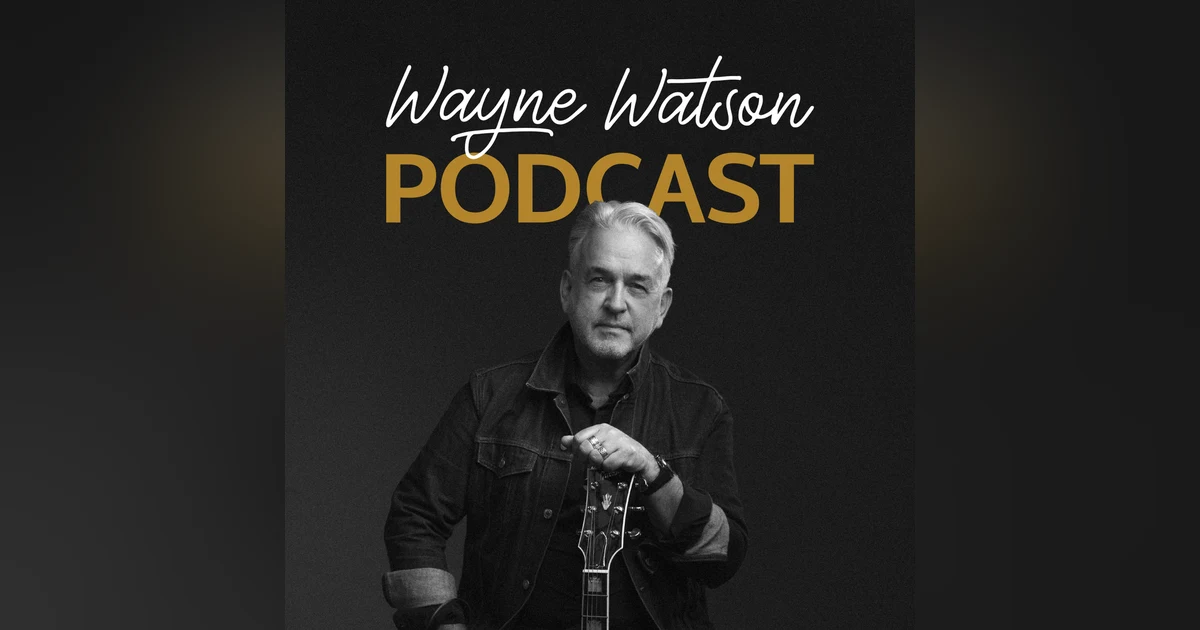

In this debut episode of The Wayne Watson Podcast, Wayne sits down with marketing executive, author, and marathon runner Brian Boyd for a compelling conversation about faith under pressure and leadership in uncertain times, diving into the strategies and disciplines required for finishing strong.
From his upbringing in a ministry-centered family to building a global marketing agency, Brian shares the defining moments that shaped his journey—including his firsthand experience on September 11, and the leap of faith that followed when he and his wife launched a business in the midst of loss and uncertainty. Tune in as Wayne and Brian explore marathon training as a metaphor for perseverance, as well as the responsibility of leadership in our digital age, and how to walk with clarity and conviction when the cultural noise grows loud.
Today's conversation serves as a powerful reminder that whether in business, athletics, or everyday life, faith is not a sprint—it’s a marathon.
(00:01) From Seattle to New York and a Family Legacy of Ministry
(06:00) Broadcasting, Sports Media, and Early Career Lessons
(10:00) Marathon Running, Discipline, and Setting Long-Term Goals
(17:00) Health, Training, and the Character of Endurance
(25:00) September 11 and Running Through the Towers
(29:00) Starting a Business After Crisis and Job Loss
(31:00) Building CCB Marketing and a Global Team
(34:30) The Future of Media, Marketing, and Digital Discernment
(41:00) Faith, Safety, and Walking with God in Uncertain Times
To learn more about Wayne Watson visit https://waynewatson.com/
01:00 - From Seattle to New York and a Family Legacy of Ministry
06:00:00 - Broadcasting, Sports Media, and Early Career Lessons
10:00:00 - Marathon Running, Discipline, and Setting Long-Term Goals
17:00:00 - Health, Training, and the Character of Endurance
25:00:00 - September 11 and Running Through the Towers
29:00:00 - Starting a Business After Crisis and Job Loss
31:00:00 - Building CCB Marketing and a Global Team
34:30:00 - The Future of Media, Marketing, and Digital Discernment
41:00:00 - Faith, Safety, and Walking with God in Uncertain Times
0:01 Welcome to the Wayne Watson Podcast, where Grammy nominee and multiple Dove award-winning artist Wayne Watson engages in lively conversation with remarkable people from every walk of life. Artists to healthcare professionals, athletes and leaders to everyday believers whose stories reflect the power of faith at work in the world. Join us as we go beyond the spotlight and into the heart of what it means to live with purpose and conviction, diving into real conversations about the moments that shape us, the faith that sustains us, and the God who inspires it all. Now, here's your host, Wayne Watson.
0:58 Where are you? Tell me where you are this morning. Hey, Wayne. Well, today I am in sunny and snowy New York City on the beautiful Upper West Side. My wife is the biggest New York fan. She would drop everything, move everything in our house, and move to New York now if there were a good reason. I have told her we would probably live in a space this big in New York City. It's true. It's true. Yeah, our face is not much here. It's enough, but both of our grown kids live here, and my wife's parents live just outside the city, and so we kind of, they're participating in the elder care part of that.
1:48 Is the Northeast your home stomping ground? Did you grow there? Where did you come from? Well, today we permanently live in Fort Lauderdale, so that's where we live most of the time. I grew up in the Seattle-Tacoma area. I was actually born in Oakland, California. I am a grandchild of, there's a lot of pastors in my heritage, in my legacy. My grandmother was Goldia Anderson. She was the National Women's Director for Assemblies of God for a lot of years, and she created something called Missionettes, which is a girls program for the Assemblies of God, and my grandfather also worked for the church.
2:32 My uncles were in the church and so forth, and so I was born in Oakland, California. My mom also worked in women's ministries, and my dad sold bras in San Francisco, so there's that. You didn't have that on your big old card today, did you? No, what a varied, interesting family story that is. Yeah, and then when I turned five, we moved to Seattle, and I'm sure my dad, I think he went to real estate. Okay. And I grew up and went to high school in Tacoma, Washington. I went to junior high in Woodby Island. There's a famous naval air station there. And then left the Seattle area, went to Oral Roberts University for my undergraduate degree, and the rest is history.
3:21 Yeah, yeah. Oh, it will. So did you go to a lot of events in the Tacoma Dome when you were growing up in that area? I actually, the Tacoma Dome was a thing. I think it might still be a thing. Yeah. The first event they ever had was a Billy Graham crusade. Wow. And the grand opening of the Tacoma Dome. Yeah, I remember playing there with some other artists. It seemed like a big wooden, I don't know what it was made out of, but it seemed like it was a wooden structure, dome structure. Yeah, wood dome. It sounded, yeah, it sounded really good in there. It wasn't like these big football stadiums. So are you a dyed-in-the-wool Seahawks follower or couldn't care less?
4:06 I actually used to work for the Seahawks, ironically. No kidding? In what capacity? I was a camera operator for the game camera. Wow. So I worked for the Seahawks. I worked for the Seattle Supersonics when they were there. And I worked for the Seattle Mariners. I was first base and I was center field camera for the Mariners. That is awesome. Oh, what a great job. Did you ever get hit by a foul ball or a throw? No, but I remember the center field for Mariners, they would hit home runs right over that area and it would fall into a little space. And so I would climb down the little stairs, hit the ball, climb up the stairs again to my camera, and they're somewhere in storage, I think.
4:50 Yeah. Wow. Seattle is, I remember good things about the Seattle-Tacoma area. It's not as rainy as people think. I think the Seattleites have kept that a secret. They want everybody to think, don't come live here. It's miserable and rainy all the time. Now, Portland, Oregon, that is more the case, I think. But my wife is, we've been to the Eugene, Oregon many, many times for coaching with the USA team. And we just love it up there. We've gone to the Oregon coast two or three times and just spectacular. So yeah, that Northwest corner and the history of it is fascinating.
5:34 How the Northwest corner of the United States was populated and how it was civilized. And some of the efforts that were made to civilize and populate it failed and probably for the better. At one point, I think it was John Astin from the New York Astin family tried to go around the tip before there was a Panama Canal and sail up and populate and call that part of the U.S. as by a different name in a different country. Oh, interesting. Do you know that story? Yeah. No, no, but it sounds, yeah. It's a great story. But trapping and fur trading and all that took place all the way across the country.
6:16 And it probably would be something very different than it is now. So how did you get to New York? Well, when I graduated from Oral Roberts University in 88, went back to Seattle, worked for the Seahawks, did all that, worked for the CBS TV affiliate there and did camera and editing and stuff like that. And got married. My wife, we both relocated there in 89. And it was just a little bit too much rain. It was, my wife was from Long Island.
6:57 It wasn't really conducive to, it was a little bit too much rain. Plus I was working really, really hard being a camera operator and not making a whole lot of money. So we, I found a job in New York City, dubbing videotapes. And for those of you who are watching, you don't know what that is. A videotape is a little box that has tape inside. So I got a job in New York City in Chelsea on 18th street, dubbing VHS and one inch videotapes. So we moved to New York City. I continued my career in broadcasting. But we lived in Long Island and I took the train to New York City every day.
7:40 And I made VHS videotapes for a while. Now, where in Long Island did your wife come from? What village settlement in Long Island? Cause I know there are many of them. Well, there's two counties. There's Nassau County and Suffolk County. Suffolk County is the Eastern end of Long Island. And she was from Suffolk. She was from a little town called Mastic, which is right near the Hamptons. So a lot of people know about the Hamptons. My wife and I just kind of co-located with the Hamptons area. Right. There used to be a great radio station on Long Island called WLIX, Christian Radio.
8:21 I don't know if they were there when you were there or not, but did many, many concerts out there. And one of the townships called Smithtown. Is that? Sure. There's Smithtown Tabernacle, was a big church there. Smithtown Gospel Tabernacle. Yeah, that's right. WLIX was a great radio station, played a lot of our stuff. And it seems like in the last couple of decades, a lot of the Christian radio stations that were independent and solely owned on one location have gone to bigger networks. And I've kind of lost track of that. But tell me about your kids.
9:04 What are they involved in? Sure. I've got a daughter, Sarah, who is 34, and a son, Brian, who's 31. And my daughter's in marketing. She recently just finished a contract job doing some marketing for the Honolulu Marathon in Honolulu, Hawaii. Wow. And she's married to a great guy in Jordan who's in the music business in the management side, like licensing and stuff like that. Okay. And then my son, Brian Jr., is a web developer, a coder. He works for Standard & Poor's at S&P.
9:45 Okay. And his wife, Abby, is a schoolteacher here in New York City, teaching, I forget what grade, but a younger grade here in New York City, teaching English as a second language. Well, one of the things that comes to mind, have you run the New York Marathon? I know you, by the way, are you up to date on walking every day in 2026 so far? I am. I just finished 45 minutes before this call. Okay. I wanted to hold you accountable. Thank you. I appreciate that. I've done it twice. I've done it twice since you and I talked, so. Good. I'm trying to do 40 minutes a day. So, it's not too hard to find 40 minutes. Yeah, I've run the New York Marathon once.
10:26 Have you really? It's done it five times. Wow. And I've also run Little Rock Marathon, Miami Marathon, Disney Marathon, and Mumbai, India. Well, we have one here in Houston that just happened two weeks ago, and it's always questionable what the weather will be like. It could be 80 or it could be 20. And this year, I'm not a runner, so this year was in the high 30s and 40s when they started, which I think is pretty much ideal for marathon runners. Yeah, the women's winner for Houston is a lady my wife knows, the second place. Oh, is that right? Yeah, yeah. She's a nice lady.
11:09 I'd say, no, it's not too bad. It's not too bad. Yeah, I would say the most interesting marathon for me was Mumbai, India. It was, it started off cool in the morning. I think our starting time was 4.30 or 5. And it got hot really quickly. It went from like 50 to 90 or something, some crazy change. And then it just got dusty and hot. But you got to see Mumbai, and it's a very car-centric city.
11:49 So to be on roads where normally cars are, but only pedestrians were allowed, was really, really cool. In fact, there's a bridge in Mumbai that only cars go on. That you can only go on as a pedestrian on the marathon. It's not allowed, there's no pedestrians. It's called the Sea Link Bridge. So that was just a fascinating time and interesting to see the Indian community. How many people ran that one as compared to what the New York, New York marathon is 25, 30,000 people or more? I don't. Yeah, I think New York's, I want to say 30 to 40, I want to say 35-ish. And I don't remember India, I got to be honest.
12:31 It was quite a bit less. They're trying really hard to market to outside of India to get outside people coming in. And it was a lot of fun. But running is a good way to see the community, see the sites. I did Little Rock, Arkansas, which seems weird, but we went with a group and they're known for these big giant medals that are huge. Yep. And seeing Little Rock was really just beautiful. And the same as New York, New York marathon's famous because you go through every single borough. Right. Every single part of New York City and see it all. So it's a fun way to see the sites.
13:11 And it's different from running it and walking it compared to riding in a car or a bus. I used to ride motorcycles and the difference in the way you experience your environment when you're traveling through somewhere on a motorcycle compared to a car was always just exhilarating to me. I love that. Tell me the strangest thing that's ever happened in any of those marathons. What's the most memorable odd thing? Other than finishing, I'm assuming you finished them all. Well, I'll tell you, I did finish them all. Okay. It was on one of my training runs. I think I was doing a half marathon and I forgot to put a protective tape in this area.
13:56 I'll just kind of point to this area here. I've heard about that. When you're running, a lot of things you learn on the job, hopefully someone teaches you these things, but you want to hydrate. You want to wear the right kind of shoes. You want to wear clothes that wick away that moisture. You want to put body glide on areas that chafe. You don't want to chafe because your skin is doing this for 26 miles. Sure. Well, I was on this half marathon and about five, six miles in, I realized that my shirt was rubbing against my chest and I was starting to bleed a little bit in the chest area.
14:37 Oh no. So you learn really quickly to put a little tape or they sell things for guys that run. Band-Aids or something, sure. Yeah, a little Band-Aid. So that was a learning experience for me. But the other mistake a lot of people make on marathons is they train with certain kind of drinks, whatever kind of hydration drink they have. And then on the marathon day, they drink something totally different. You can't do that. You have to stick with what you've trained on because your stomach's not used to if you train with this. And so it's kind of a rookie mistake for runners to try to drink something totally different or eat different food.
15:20 So it's a whole discipline. Sure. I think, Wayne, there's a lot about setting goals and meeting goals too. Right. If you can train for a marathon, be consistent in your training. You shouldn't just get up and run a marathon. You could hurt yourself. Right. Oh, sure. So the practice of setting goals, sticking to a regimen, meeting those goals and achieving those goals, it's more than just running a marathon. It shows the character of who you are, I think, a little bit too. Right. Okay. So if I were to make the decision to run the Houston Marathon next January, when would I need to start training and what would the training escalation be from day one?
16:13 Yeah, there's plenty of training guides for you out there. But I'd probably say you'd probably want to start about six months out. That might be a little bit too far, but there's no sense in waiting. Six months, start looking at your diet, thinking about maybe every pound you lose, not that you need to lose weight, but every pound is more pressure on your feet. There's a pressure on your feet. So when you make those steps, there's a downward motion that happens in the, I forget the word, the downward pressure. So start that.
16:55 And then start, there's something called Couch to 5K. It's an app out there. Start, how do you get to a 5K, which is 3.2 miles? Then how do you get to a 10K? How do you get to a half? And really, you're attempting to get all the way to your long run, which would be about, I think, three weeks before the marathon. And your long run would be about 20, 21, 22 miles. And if you can make that, then you're good for 26. Okay. So you worked your way up, but you're putting a lot of miles in over the six months as you get ready and get your heart in shape. And you learn about the shoes and learn about the tape and that sort of stuff.
17:38 But you also want to get your heart checked out. Last thing, there was a marathon I was just at recently. As a spectator, there was a couple medical incidents on the course. So we always recommend as a runner, just to go to your GP and get a checkup and go to your cardiologist and just have them do a workup. Just check everything out. There's no harm. Spend $100 and then do that. So you know that you're healthy and ready to take on this exercise. Yeah. Okay. Two questions. What was your last meal the night? Do you eat the morning of, or do you eat something?
18:19 What do you eat the night before? What's your last meal the night before? The night before, eat light. For me, it's usually a couple pieces of pizza. Oh, nice, nice. And lots of water, hydration. Sure. And, or some pasta, but not an overly amount because what comes in, what must go out. So you want to don't overdo it. Okay. What's the hydration drink of choice for Brian? I like Propel or Noon. Oh, yeah. We have the Noon capsules. We keep those here. Yep. Yeah. I'm a big fan of both of those. There's a thousand of them out there. Everyone finds, you know, you'll find one that you like, one that you don't like, one that tastes like John McBoney-like.
19:03 In the morning of, for me, again, I've only done five, so I'm not an expert, but usually like half a bagel and a little bit of banana. And then you eat along the course. You keep nutrition in your little bag that you brought along, of course. I don't know if the bodegas in New York have this magnitude of merchandise to pick from, but it seemed like our little convenience stores, which have gotten very fancy down here. You may have heard of Buc-ee's down here. Buc-ee's is a real- They're building a brand new Buc-ee's in Florida. The largest one in the world is in Florida. It opens in 2027. Well, it is something to see.
19:43 You can get enough of it real quick. But anyway, they have, I can't, it's mind-boggling how much floor space is dedicated to salty, crunchy snacks, chips of all kinds, and two or three walls of drinks, of fake water, real water, which still boggles my mind that a bottle of water costs more than a gallon of gas. But anyway, that's out of, way above my pay grade. But yeah, so a lot of choices, things to pick from. The meal thing, if things went terribly wrong for you and you were about to have your last meal, what would it be?
20:29 If you ignored your upbringing, the prayers of your mother and your grandmother, and something went really bad, and Brian Boyd's about to have his final meal, what would it be? That's an interesting question, Wayne. There's a couple things come to mind. My dad, who I lost this last- I know it's not something you've thought about or entertained, and will not ever have to entertain. It's interesting. My dad, who I lost last year at 98, was an amazing pancake maker, and taught me how to make pancakes.
21:10 And I do like a good pancake with fluffy, crunchy edges. As many as you want. You wouldn't have to worry about it. Those are good. I'm also a big fan of medium-rare, rare, prime red, with a straight horseradish. Not that creamy horseradish. But straight horseradish, and a baked potato. So probably would lean towards the prime red and a baked potato. Baked potato with all the fixings on it, and the horseradish would definitely clear your nose where you could breathe that last few breaths. I love horseradish. Really good.
21:51 Tell me about your time at ORU. Over the years, I've had a lot of friends that came from ORU. I remember playing in Tulsa a lot, on the campus a couple of times. Being on the show with the Oral and Richard, and I think at the time, Patty Roberts. Oh, that was before my time. Yeah, yep. It was, yeah. And I don't know if you were there, if they still had the hospital building with the big praying hands. Oh yeah, that was there for the grand opening and everything. Yeah, yeah. And now, without getting into anything, not interested in digging up any bones, but what happened with that?
22:31 That was a grand venture that I think they wanted that to be a hospital. How many floors? It had to be 20 or 30 floors. It was a very big building. 50? Yes, 60. The middle tower was 60 floors. Yeah. Yeah. They wanted that to be a hospital with a really benevolent position of how to take care of people, what to charge people, and things like that. Do you know the backstory of whatever happened to the building? Whatever happened to that building? Yeah, a little bit. Oral, if you drive up to the campus, there's two big bronze hands in front of the campus.
23:14 They're giant. They're 50 feet tall or something. Right. And one is the hand of prayer and one is the hand of medicine, and they do this. Because Oral, I'm paraphrasing, but Oral believed that doctors are led by God and they have the... Sure. He directs their paths and steps, and why not? Right. And I think that's great. So, I believe, to the best of my recollection, that was the dream of building a city of faith, is to have faith-filled doctors and faith-filled faculty taking care of medical needs. It didn't quite take off. I don't know all the reasons why it couldn't make money, but they ended up leasing the space out to different organizations.
24:01 Recently, I think a little hospital took one of the towers, and now I believe it's quite a thing. So, it's transitioned. There's some medical stuff there. There's a lot of just standard office complex people there too. So, it's quite a landmark in Tulsa. And as far as I recall correctly, it's actually a revenue generator for the university now, which is a good thing. Right. Tell me about CCB Marketing and how that came to be and your reach from the people I've spoken with you and some of your team all over the world.
24:47 Tell me how you went from being a cameraman in Seattle and dubbing VHS tapes in New York City to CCB Marketing. What was that journey? That's a... This is an interesting story. So, we were living in New York. I was doing the dubbing. Then I migrated to a satellite communications company, and I was still on broadcasting on the satellite side, moving video on satellite different locations. And then I moved into the IT part of that as I got promoted and moved around.
25:29 And so, I wasn't actually physically doing stuff. I was more in IT and management and a little bit of marketing and stuff like that. And on 9-11, we lived about two blocks from World Trade Center. And I went to work that day on Wall Street at this communications company I worked at. And my wife called and said, Hey, Brian, a plane just flew into the World Trade Center. And I remember thinking, Well, that stinks. How did the plane get off track and get lost and fly into a building? And I said, Where are you? She goes, I just dropped off the kids at school.
26:12 And the school was about a block and a half from World Trade Center. And so, I said, Hang out there. And let's just make sure the kids are okay, something like that. So, then I walk around my office to the windows. I'm looking at this fire in the World Trade Center. And I see plane number two, right into the World Trade Center. So, then I try calling Fran. I can't get a hold of her. The phones are... Nothing's working. And I said, Well, last thing I said was stay at the school. So, I looked at my job. I think, Should I leave my job?
26:52 Heck yeah, I should leave my job. So, I start running to find my wife and the kids. But from where I'm at to where she's at, the World Trade Center is right in the middle. I actually made a beeline right through the World Trade Center complex to find her. And once I got there, they said, Well, she's already left for the day. She already left. She took the kids and she's gone. I said, Great. She's safe. So, long story short, I go to my apartment. I changed my clothes real quickly. I'm just catching my breath when the first tower collapses. So, then I start running up the highway to escape the tower when the second tower collapses.
27:35 And it's just coming. I've got photos by the way. I took pictures this day of everything I saw. So, we finally regrouped later that day. Later that afternoon, I found my wife through... I called somebody in Michigan. Oh my God. And they called someone else and I was able to connect to find my wife where she was staying. But then where do we live? We can't go home. Our home is in the crime scene zone. So, we ended up going to a hotel in Columbus Circle. And we stayed there until Christmas time. So, we lived in a hotel from September 11th until Christmas.
28:17 And through a series of miracles, we didn't have to pay a penny for that. It was all covered by FEMA and by our renter's insurance at the time. And a gracious reduction in rates by the hotel. Sure. Sure. So, while we're in the hotel, my company shut us down. So, I'm getting to a point here. Well, I want to come back and I want to ask some more questions about the fact that you were on the site and you ran through the site before the buildings collapsed. You ran through the site trying to... Yeah. It was still on fire and they were... I didn't even know, but I found out later an engine from an airplane had landed just behind me as I was running through.
29:01 In fact, I can show you today the path I ran. It's down the streets again. But... Well, those of us who... I remember, of course, watching it on television that morning. And we saw the beautiful blue sky and people looking up and not knowing what's going on. And the thousands of people that were on the bridges trying to get out of Manhattan, walking out of Manhattan. So, you went which way? North to Columbus Circle? I went north on West Side Highway. Yeah. North to Columbus Circle. Yeah. Okay. So, your company basically shut down because of all that and the chaos? Yeah. Yeah. They were... Many other companies probably.
29:42 Yeah. There was a lot economically. Yeah. So, we're in a hotel and we have no job. For all intents and purposes, we have no home. And Fran's like, well, you've got a Rolodex. And again, for those of you watching, a Rolodex is a series of cards where you put people's phone numbers on and it does this. I don't think I have one anymore. Yeah. Yeah. Yeah. So, we started our first company, IT company in this hotel doing IT consulting. Well, 2007, we noticed... We got... We saw social media coming of age. And we said, well, let's expand and start helping people with social media efforts.
30:25 So, we called a couple people. I generated a couple clients. And we built a social media company. In 2017, we sold that company and created CCB Marketing, where now social media is just one of a dozen marketing disciplines that we support. Right. Social media, podcasting, web, advertising, all areas of marketing, direct email. And we can come in and build strategies and execute strategies for clients and really come in and help their marketing efforts. A lot of times, you come in and do an audit of the company. And then that audit helps us figure out what areas to help them.
31:07 Right. How did you assemble this team around the world? You have a couple who live in South Africa that I've met via Zoom. And how did you recruit and populate your company with these great people? It's really a series of miracles. We have staff in South Africa, in Tokyo, in Bahrain, in Hyderabad, India, in the Carolinas, on the West Coast, in Florida, and in New York. In Nashville. And everyone I've personally hired, they are people from the internet.
31:48 They're not Fiverr people or some of the people I've met. And you don't have to be religious. God always provides. If we need a certain kind of person, so I have my sister or my cousin or I know this person. And so we're able to put together a team. So it's an amazing team. Some of our team members have been in this since the very beginning, since 2007. And we just have... I put this team of marketers up against anybody in the world. The best marketing minds that exist. They're just really, really smart and really proud of them. You want to talk about some of the clients that you represent?
32:30 Would that be appropriate? Yeah. We've done quite a bit. We've done a lot in the nonprofit space. We've done also in corporate America. Our first big corporate client was a company called Rodale Publishing in New York City. And Rodale Publishing published Women's Health Magazine and Cycling Magazine and Men's Health Magazine and Prevention Magazine. We helped them set up their entire marketing, social media marketing strategy. On the face side, one of our nonprofits, some of our first clients was OOC Ministries in Houston, Texas, where we came in and set up their whole marketing strategy. But we've worked for organizations that feed the hungry. We've worked for organizations that are a lot of authors.
33:13 We've worked with a lot of authors over the years. We are a podcasting division, produces a couple dozen podcasts with nearly a million downloads weekly across our podcast network. And just a whole variety of organizations that need... That have said, Hey, we have a marketing... We know we have a marketing issue. We need help with marketing healthcare, retail. We've done a great successful project for Netflix for a movie in 2022. It went really, really well. So really varied clients.
33:55 Are magazines still a thing? You talked about Rodale Publishing that... I mean, my routine to go to the airport used to be, first of all, get to the airport two hours early, even before 9-11. My dad was a very disciplined early arriver, early leaver. If we're leaving at nine, we leave at five to nine. I end up waiting on people a lot because most people are not on time people. Sometimes it's impossible, but I would go to the airport. I would get a USA Today and a Houston Chronicle. Then the Houston Chronicle back then, the main newspaper here was a big newspaper with lots of stuff in it.
34:39 And now it is paper thin with very, very little. Most people don't read them, but I would go and get a couple of... Men's Health Magazine was one, New Yorker was one, and just the Atlantic was one that I would get. Just great writing. And I just wonder, as people thought when Blockbuster Video came online, people thought, well, movie theaters are done. It's over for them. And that's, of course, not the case. And Blockbuster Video is now no more because we don't need to go to the store to rent video cassettes. But I just wonder, what is the trend that you're seeing business-wise from things you've represented in the past to where things are going?
35:24 What is your future as a marketing company? What do you think the elements of needing marketing assistance in the future will be? Obviously, social media, podcasts, things like that. Yeah. We always study the demographic of who the client is. Talking about magazines, yeah, I subscribe to Apple News+. It's one of the... If you're a Mac user, it's one of the Mac things. It's called News. And I get all my magazines free there. I can read any magazine I want anytime. I know the stat. I didn't come prepared, but more people look at their news from TikTok than from anywhere else or something like that nowadays.
36:06 Wow. So for us, marketing-wise, we look at the client, we look at who their demographic is, and then we find the right platforms where that demographic should be. So if your demo is a 55-year-old, middle America, that would lean towards Facebook and targeted ads, for instance. If it's Gen Z or Gen Alpha, then it's TikTok and Instagram. Or if you're in the middle, it could be a podcast that reaches the most people. So it's a mix and match of those things. So for us, we don't want to put a Gen Zer on Facebook.
36:47 That's not going to work. Because Gen Zs don't really pay attention to that platform. So for us, it's a matter of building the right platform based on the demographics of the user in a nutshell. The thing I've noticed about Instagram, TikTok, any of those sites, and I'm sure there are others that I've never heard of that my children and grandchildren would know better than I, the one thing that is most evident to me is the lack of accountability on these things. Not just the lack of accountability of misleading people astray, with these TikTok challenges where they encourage kids to...
37:33 I mean, my wife is an administrator at a school, at a public school. And at one point, there was a TikTok challenge or something where kids would go in and knock the hand dryer off the wall, just knock it off the wall. And they would do it by the thousands and thousands. But that's not what I'm talking about. That's obvious. But what I'm talking about is people making claims for products, this will do this, and it will not do that. That's a huge problem, Wayne. In fact, yesterday, I read that almost 20% of YouTube videos are now AI generated. And on the news this week, Oprah Winfrey made a statement. She said, listen, if you see a product with my name on it, it's not me.
38:16 Because they're using deep fakes to Oprah Winfrey saying, take this file and then or something like that. So you have to be discerning. And for all of the ad, I suppose there is some good out there too. I've seen stories of people finding lost loved ones on social media. I've seen stories of dogs getting re-homed. They're a lost dog and they've gotten re-homed and they found their owner. For our nonprofit clients, we did a roundtable this last week where I paired up one of our clients who's in the faith space, he's in the 80s, with four Gen Zers.
39:01 And they talked about how they use social media to send out good information to provide as a good platform. So it's how you use it. I'm sure you remember, Wayne, when TV first came out. Well, I don't remember. I'm not saying you should remember that. But my grandmother told me a story that when the TV came and there was rabbit ears, the antenna was rabbit ears on top, that those were the devil's horns. I remember those, sure. The Jewish called them the devil's horns. Oh, wow. Grandma. Yeah. And I remember my grandmother saying, when makeup was first coming out, they couldn't wear makeup.
39:44 So I mean, TV in the whatever, 50s, maybe is... 50s, yeah. Yeah. Same thing like TikTok today. So it's a medium. And Billy Graham used TV for good. Or Roberts used TV for good. These guys learned how to communicate to a bigger audience. So you can use these platforms to communicate your message to the right audience. I remember the first... We used to... They weren't reruns when I was a kid. If you missed a show, you missed it. And every year they would play The Wizard of Oz on some local channel.
40:26 I think we literally had three channels. And then there was maybe one rogue UHF channel if you had the right rabbit ear position. Right, right. They would show The Wizard of Oz. And I remember when we got our first color TV and The Wizard of Oz came on. And when she steps out of that house after the tornado and steps onto the ground, it turned into color. And it was just indescribable. And I know people like, what are you talking about? It just makes no sense to not have color everywhere. But I remember that very well. And like you say, we have to be discerning. And I have lived my life assuming that most people are telling me the truth.
41:07 And that's my problem. I have a problem right now because I have lived my life assuming you're telling me the truth. There was a newscaster that's very famous named Walter Cronkite. And at the end of every broadcast, he would say, and that's the way it is. And we believed that's the way it was. It was not his opinion. It was no commentary on that opinion. It was just, this is the way it is. And now you can't afford to be so naive. And I hate that. But this is the fact of the culture we live in. We can't be quite so gullible. So we have to have the spirit in us to help us discern this is not good. This is, yeah, so. Yeah. Sometimes just the news is just too much too.
41:50 We'll watch the news at night, but after a little bit, we have to turn it off. It's just too much. I like to get the headlines, what's happening in the world, but I don't really need all the commentary sometimes. Yeah. I usually watch the first five minutes to make sure nothing is terribly on fire upside down. And here locally, you know, Houston's a pretty good size town. And if the lead story is about some apartment elevator that's not working, I realize I can probably go to bed and it's going to be okay. One of my favorite quotes from the church that I've been attending is in a book of prayer. And it says, only in thee can we dwell in safety.
42:32 And I think about that every time I close the door at night, I can lock the door, I can live in a safe neighborhood, but only in thee can we dwell in safety. And so we trust that that's what keeps us safe. So Brian, thank you so much. This has been a great time to talk with you and catch up. We went down roads I didn't know we'd go down. Yeah. Thanks for listening to The Wayne Watson Podcast, where stories of faith, purpose, and everyday life meet and continue to uplift hearts around the world. Be sure to follow, leave us a review, and share this episode with a friend.
43:14 To learn more about Wayne's music, ministry, and upcoming projects, visit Waynewatson.com. Every journey of faith begins with a story, and every heart finds its rhythm in the Lord. Until next time, go well, and may you keep walking in step with His song flowing through you.