S1E6: 006 Dave Ridill - From Paramedic Firefighter to Vertical Farmer
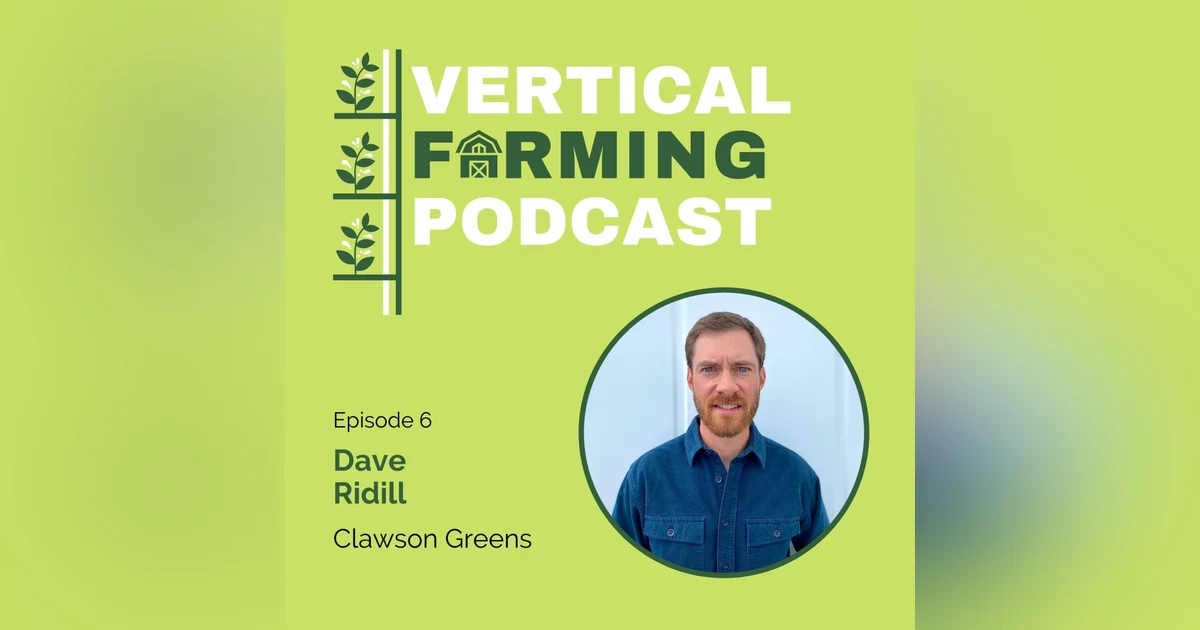

Dave Ridill is a hydroponic farmer as well as the owner and head of operations at Clawson Greens, an organization that supplies Teton Valley and surrounding areas with fresh clean greens, locally grown year-round. Join Harry Duran, host of Vertical Farming Podcast, as he and Dave discuss the learning curve of vertical farming, the impact that Covid-19 has had on the industry and the importance of being nimble as an entrepreneur. Dave tells the story of how he chose a career as a vertical farmer over that of a paramedic firefighter and the impact he wishes to make with his AgTech organization.
Special thanks to our Season 1 Sponsor
IGS – https://intelligentgrowthsolutions.com/
Key Takeaways
- 00:01 – Dave shares his background as a ski patrolman, his origin story as a vertical farmer and the work he’s doing at Clawson Greens
- 09:55 – Dave speaks to the learning curve of vertical farming, the breakdown of his clientele and how he is assisting his local community
- 16:35 – Dave expounds on the importance of remaining nimble as an entrepreneur in the AgTech space
- 20:09 – Dave breaks down a typical day in the life as a vertical farmer and the challenges that emerged due to Covid-19
- 27:32 – Best practices and insights Dave has learned from other hydroponic farms
- 30:56 – Dave talks about his marketing plans for Clawson Greens
- 35:49 – What Dave has learned about himself throughout his entrepreneurial journey
- 38:27 – What is something that Dave has changed his mind about recently
- 40:22 – Dave speaks to the trends that excite him about the future of vertical farming and where listeners can follow and connect with Dave
Tweetables:
“You have to understand that it [vertical farming] is a business in that if you want to actually do this you have there has to be this idea that you want to be successful. And, failure was not an option.” (08:17)
“I think that there’s a benefit for small farms like myself and all over the country – whether that’s indoor farming or just small scale farming in a community – is we have the ability to transition in a day or two from restaurants to a direct-to-consumer, to a drive-up.” (17:32)
“Our competition was more of what’s going on in California – the transportation and water shortages and climate change. That’s our competition.” (28:45)
“A lot of people still think their food just comes from the grocery store and they don’t have that connection that there’s actually farmers, there’s actually people who grow this food.” (37:02)
Links Mentioned:
Clawson Green’s Instagram – @clawsongreens
Intelligent Growth Solutions
See omnystudio.com/listener for privacy information.
Mentioned in this episode:
Indoor AgCon 2025
$680 million poured into precision ag last year.
Speaker:Autonomous weeding robots dominated, and John Deere made 2 acquisitions in 3
Speaker:months. A food company, not an equipment maker, bought a
Speaker:robotics startup to protect its own supply chain. The deals are
Speaker:accelerating, the money is moving, and the winners are already separating from the
Speaker:pack. If you're investing, building, or buying in this space,
Speaker:you need the full picture before your competitors get it. The 2025
Speaker:Precision Agriculture Intelligence Report from iGrow News is now
Speaker:available. Get your copy today at igrownews.com/precision.
Speaker:Special thanks to our title sponsor this season, IGS. Founded in
Speaker:2013, IGS develops Industry 4.0 solutions in the
Speaker:global agtech and commercial lighting markets. As an industry innovator, they
Speaker:make revolutionary controlled environment growth products. For more information,
Speaker:visit intelligentgrowthsolutions.com. I
Speaker:had more of a knowledge of shipping containers, and then once I learned that you
Speaker:could actually grow Out of them. I thought it was really
Speaker:cool. Welcome to the Vertical Farming Podcast, weekly
Speaker:conversations with fascinating CEOs, founders, and
Speaker:agtech visionaries. Join us every week as we dive deep
Speaker:into the world of vertical farming with your host, Harry
Speaker:Duran. Vertical Farming Podcast, welcome back, episode
Speaker:6. If you're new to the show, this is the podcast where we interview
Speaker:fascinating CEOs and founders of some of the leading vertical farming
Speaker:companies from around the world. In case you missed last week's episode, I had a
Speaker:great conversation with John Friedman of Freight Farms. If you
Speaker:haven't listened to it, it's been getting a lot of buzz. I highly recommend you
Speaker:check it out, episode 5. This week I have the privilege of speaking with
Speaker:Dave Riddle. He's the owner and head of operations at Clausen
Speaker:Greens. It's an organization that supplies Teton Valley and surrounding areas
Speaker:with fresh, clean greens grown year-round. Dave
Speaker:has an interesting path to how he became a vertical farmer. In a
Speaker:previous life, Dave has been a paramedic firefighter and a ski
Speaker:patrolman. We talk about the learning curve of vertical farming,
Speaker:the breakdown of his clientele, and how he's assisting his local community.
Speaker:I really love this conversation because Dave breaks down a typical day in the life
Speaker:of a vertical farmer and how he's had to be nimble in
Speaker:adjusting post-COVID-19. If you enjoyed this episode or
Speaker:past episodes, I'd love it for you to leave a rating and review at
Speaker:ratethispodcast.com/vfp. There
Speaker:you'll find easy instructions for how to support the show.
Speaker:with the review, which will go a long way to letting other people know about
Speaker:the podcast and see that it's adding value. So let's jump into this conversation
Speaker:with Dave. So Dave Radil, thank you for joining us
Speaker:on the Vertical Farming Podcast. Thanks for having me. So we had a nice
Speaker:pre-chat about all things vertical farming, how you got
Speaker:into it. And I think what's been helpful for me as
Speaker:I've been recording some of the episodes in this series is just coming at it
Speaker:from a place of natural curiosity. The inspiration, which I've started to mention a
Speaker:couple of times, I was reading Pier Diamandis' his book Abundance, and there was a
Speaker:chapter on vertical farming which led me to Dickson Despommiers'
Speaker:book on vertical farming, and then starting to have great conversations with some of the
Speaker:founders of some of these folks in the space. And we were connected
Speaker:to have a chat about what you're doing with Clawson Greens. So, for the
Speaker:benefit of the listener, I'm wondering if you could give a little bit of
Speaker:your backstory and how you sort of ended up in the
Speaker:world of vertical farming. Yeah. So it's kind of a long
Speaker:story. I kind of like to think I made a lot of good mistakes over
Speaker:years that kind of led me to this. And, I've had
Speaker:many, many jobs over the years and kind of farming, gardening has always
Speaker:been kind of this little hobby. I studied communication
Speaker:and forest recreation management up at the University of Maine. So,
Speaker:I really got into the outdoors and became a trail builder and then moved out
Speaker:west here to Idaho almost 13 years ago. And, I
Speaker:started as a ski patroller. So, that's kind of my background was doing
Speaker:medical work, avalanche control work, and skiing, and playing out
Speaker:in the mountains. And, it was here in Teton Valley,
Speaker:Idaho, we're right on the Wyoming border, and it's incredibly harsh winters
Speaker:and they just last forever. And so, we have a really harsh
Speaker:growing climate here. We have about 80, 85 days of actual growing.
Speaker:And so, here, it's a traditional
Speaker:conservative farming ag community, but, um, you know, for the
Speaker:most part it's, it's barley, it's beer farms, it's, you know, hay,
Speaker:alfalfa, and potatoes. And that's pretty much all you can grow out here
Speaker:because it's just, you know, it snows 8, 9 months out of the year. So
Speaker:there's always been this kind of, you know, thought of trying to figure out a
Speaker:way to, you know, get food in and out of this community a little
Speaker:easier and be able to grow a larger variety of crops.
Speaker:And it was about 5, 6 years ago I went in to work
Speaker:for my neighbors here who owned a small ranch in in the Sierras.
Speaker:And, that was my first time traveling through Central Valley, California. And, I knew this
Speaker:is where the majority, about 90% of our food came from.
Speaker:And, they were at the end of about a 4, maybe even 5-year drought
Speaker:at that point. And, everything that I could see was just lush and green, but
Speaker:then I realized that was only where it was being irrigated. Everything
Speaker:else was just brown all around. The streams were dry. The
Speaker:rivers just had these tiny little flow. And, that's when I
Speaker:realized like, wait a second, this is where all of our food comes from. There's
Speaker:no water here. Our food system is already broken.
Speaker:So, we're kind of redlined at this point. How are we going to
Speaker:continue with— we've got, what, 7 billion people in the world?
Speaker:We're trying to feed all these people here. We've got 380 million people.
Speaker:In the next 15, 20 years, we're going to be at 8, almost
Speaker:9 billion people. So, I was like, wait a second, we got to fix
Speaker:something. And so, I would go and I was helping my neighbors on this
Speaker:ranch prepare their property for wildfires. And, they lived up on top of this hill
Speaker:and we were clearing brush and setting up water lines and
Speaker:stuff like that. And, at night, we'd sit and drink beers in rocking chairs and
Speaker:try and figure out all these little problems and kept coming back to our
Speaker:little community in Teton Valley. And, it was always food. And, it was like, okay,
Speaker:well, how do we grow our own food there? Okay. When it's wintertime, the highways
Speaker:shut down. So our trucks in and out, we get closed off.
Speaker:And so there was no way of getting food in. And so I was like,
Speaker:okay, well, how do we do this? And my neighbor actually, they discovered Freight Farms.
Speaker:And they were working doing private consulting at the time for Yosemite
Speaker:National Park. And the park was looking at trying to
Speaker:figure out a way to cut down on transportation costs of getting
Speaker:food in and out of the park. So they discovered Freight Farms, did this whole
Speaker:bid for the park, and Yosemite ended up turning them down. So
Speaker:then they come back and they approached me, and I was
Speaker:actually at the time, I was also working with the fire department, had been accepted
Speaker:to a paramedic program in Boston, and I was moving to Boston to become a
Speaker:paramedic firefighter. And they're like, hey, we know you're leaving like 2 months,
Speaker:but we have this idea that goes back to that original problem we were
Speaker:trying to fix— Freight Farms and vertical farming. And so that's,
Speaker:yeah, kind of how I got into it. And long story short, I am not
Speaker:a paramedic firefighter. I'm a vertical farmer. So many fascinating
Speaker:parts about that that I feel like I want to dive deep into what goes
Speaker:into being ski patrol. Yeah, I'm happy
Speaker:to talk about that. It's— I still do it. Yeah, I've— I was a
Speaker:full-time professional for about 9 years. Okay. For the next 3 years, if I
Speaker:still do it kind of part-time. Yeah. It seems to be a thread because you
Speaker:mentioned the ski patrol, you mentioned the fire department. Paramedic,
Speaker:it seems like you have just a general love for the outdoors and having a
Speaker:job that is necessary for you to be outdoors. Is that just something
Speaker:that comes from your family, your upbringing? Is it like, where does that come
Speaker:from? Yeah, I think for me, I need both a physical and that
Speaker:kind of mental stimulation. And I think being
Speaker:able to like ski patrol, it's a very physical job. You're constantly
Speaker:out in cold climate and you're working hard. You're, you know,
Speaker:you're constantly taking care of rope lines and helping people and
Speaker:hauling stuff. And, it's a very physically demanding job. And then, on
Speaker:the avalanche control work, it's working with explosives. And so,
Speaker:there's also this really challenging— it's fun, it's
Speaker:exciting. And then, you go from skiing to
Speaker:the next second you get a call and there's somebody that needs CPR
Speaker:and you have to immediately just transition. Wow. And then, you go into
Speaker:that mental medical side, and it's also that kind of problem-solving.
Speaker:And then, an hour or 2 later, that's over with, and then you go right
Speaker:back to figuring out these projects and doing that kind of work.
Speaker:So, it's very similar with the fire department. You're doing about 80%
Speaker:of the fire department is medical calls, and it just keeps increasing these
Speaker:days. And so, it's that physical side and also the mental challenge, which
Speaker:is why also this farm is that it is very physical, but
Speaker:also it's kind of a science. Mm-hmm. And it's, you know, just
Speaker:problem solving. So talk to me about early days when you were approached
Speaker:with this. How much did you know about the industry? How much did you know
Speaker:about the technologies that were available? And, you know, how
Speaker:much of the learning did you have to do to get
Speaker:acquainted with what, what you were potentially going
Speaker:to set out to do? Not much, really. I was a hobby
Speaker:gardener and, you know, as a soil farmer with raised beds out here, and that
Speaker:was about it. I did not know anything really about— so this
Speaker:was 2015, 2016. when I started to get
Speaker:kind of into this. 2016 fall is when we started Crossing
Speaker:Greens. So, it was a pretty steep learning curve. And,
Speaker:I kind of understood, I knew that people were using shipping containers for a lot
Speaker:of stuff. I always thought it was pretty cool to build a house out of.
Speaker:A lot of people out here use them as storage units and just kind of
Speaker:as extra facility and understanding
Speaker:that they can be used for all sorts of stuff. And so, I had more
Speaker:of a knowledge of Shipping containers, and I knew that they could be
Speaker:used for all sorts of stuff. And I knew that they're just, you know, millions
Speaker:of them all over the world, just sitting around. And so I had that
Speaker:understanding. And then once I learned that you could actually grow out of them, and
Speaker:there was this company that was turning these containers into farms, I thought it
Speaker:was really cool. And so what type of research did that involve
Speaker:for you to learn about, you know, there's a different mindset
Speaker:when you're coming at it from not only as a farmer in terms of
Speaker:learning the technology, but also learning which crops or
Speaker:what exactly you wanted to grow. So how did you go about that process? Because
Speaker:I, I know that a lot of people, especially in the climate that we're in—
Speaker:we're recording this in May 2020, in the middle of a,
Speaker:of the COVID pandemic— and this idea, this concept of having local
Speaker:access to fresh food is top of mind for a lot of people. And
Speaker:so as you thought about that process of deciding what specifically you were going to
Speaker:focus on, can you walk us through like what you were thinking and how you
Speaker:decided on that? Sure. Well, I mean, to start one of these, you have
Speaker:to understand that it is a business and that if you want to actually
Speaker:do this, there has to be the idea that you want to be
Speaker:successful. And there really wasn't an option. Failure was not an
Speaker:option. It's a lot of time. It's a lot of money that you're investing. So
Speaker:you want to make sure that you're going into this knowing what your community
Speaker:needs, what those markets are, and then
Speaker:figuring out Really, what it came down to was one, was
Speaker:figuring out what product takes the least amount of time to
Speaker:grow, also which takes up the least amount of space,
Speaker:and then was figuring out, well, what do all of these different markets, whether
Speaker:that's restaurants, direct-to-consumer, or to farmers market or a
Speaker:grocer, you know, what's something that everybody is always, you know,
Speaker:is there always a demand for? It always came back to
Speaker:was lettuce and greens. And so, you know, every restaurant,
Speaker:there's always, you know, some sort of salad that they're going to offer.
Speaker:Every store is always going to have greens. So it was kind of a no-brainer
Speaker:that that was what we were going to pretty much grow. And the Freight
Speaker:Farm is known as the leafy green machine. That's what it does, you know, best
Speaker:with. And it was also kind of figuring out, like, you can grow herbs, you
Speaker:can grow hardy greens, but you really got to figure out what grows the
Speaker:best. Because if you grow Try and grow herbs
Speaker:and hardy greens in the same container. Well, they use a different nutrient blend. They
Speaker:also like different temperatures. They like different humidity. So, it's really
Speaker:focusing on one and really doing the
Speaker:best that you can with that versus growing this huge variety of things.
Speaker:So, that was really what we focused on, was growing a
Speaker:handful of different lettuces and hardy greens. How much
Speaker:did you have to educate yourself on all the different varieties in
Speaker:leafy greens? You know, it was, you know, Freight Farms
Speaker:is pretty good at kind of pointing you in that direction. But it was,
Speaker:you know, I mean, going to the grocery store, we've all been to the grocery
Speaker:stores, we know what they're serving. And I knew I didn't want to sell that.
Speaker:I wanted to sell something totally different. And that was the cool thing, was that,
Speaker:you know, you're able to go with like a seed catalog to the restaurants,
Speaker:and the chefs can look at this catalog and say, whoa, that looks great. It's
Speaker:like, okay, I can grow that for you. You know, just give me 8 weeks
Speaker:and I'll have that for you. So it was giving them this ability to
Speaker:kind of be able to set themselves apart from other restaurants.
Speaker:Even in this tiny little community that we have, restaurants are
Speaker:able to kind of set themselves apart and serve different
Speaker:varieties of lettuce on their menu, which is a
Speaker:great opportunity for both sides. It gives me the ability to
Speaker:sell something that the grocery store and the large
Speaker:commercial farms that you know, truck all their produce in can offer.
Speaker:You know, it's just like red leaf, green leaf, spinach, and there you go.
Speaker:So we knew that we didn't want to grow that. How much of it is
Speaker:an education also then for the restaurants
Speaker:and the grocery stores? So maybe just to back up a
Speaker:bit, who is the primary clientele and what is the
Speaker:percentage or the split between restaurants and grocers? 2 months
Speaker:ago was 100% restaurants. So, and so
Speaker:that's, you know, and I've done, I've done winter CSAs, which
Speaker:was a community-supported agriculture, and that was something that nobody else could offer.
Speaker:There's a lot of community-supported agriculture in the summertime with our
Speaker:local organic farms. The thing was is that in a small community, I never
Speaker:really wanted to compete with those other growers because I—
Speaker:it's a very challenging— it's very challenging being an
Speaker:outside soil farmer here in Teton Valley. And so they have limited
Speaker:markets. And so that was never really our goal
Speaker:to compete with them. It was always trying to figure out where
Speaker:there was an opening in the markets that they were unable to actually supply
Speaker:to. And that was winter, and a lot of it was restaurants. So
Speaker:we knew that going into the restaurants were our kind of main focus.
Speaker:Direct-to-consumer was another goal of ours. The restaurants was pretty
Speaker:easy because they want the freshest, best-looking product.
Speaker:And with a menu, they're able to hide the price of a more
Speaker:expensive product very easily. So if, say,
Speaker:you know, I up my price by 25 cents, you know, at the beginning
Speaker:of, you know, their spring menu, they're able to put
Speaker:that in, you know, very easily. And if somebody goes into a restaurant and they're
Speaker:going to get a salad, whether the salad is $10 or
Speaker:$10.25, they're not going to walk out. They're going to buy the
Speaker:So when you're at a restaurant, you're looking at a menu, you're not like pricing
Speaker:everything. You do make those decisions. But when you're at a grocery store, you have
Speaker:all these options in front of you and you can make that choice of like,
Speaker:oh, this one's $3, this one's $6. I'm going to go with the one in
Speaker:the middle at $4.50 here. So that was
Speaker:kind of hard. And we kind of knew that people were going to be— they're
Speaker:a little bit more able to spend less money and they are
Speaker:You know, that's their goal is to spend as little money as possible.
Speaker:Whereas a restaurant, they want the best product. And so we knew we were able
Speaker:to sell our product for more at a restaurant. So you said as of 2
Speaker:months ago, it was 100% restaurant. So now how's that changed now?
Speaker:We've got— so a couple restaurants did stay open and they kind of
Speaker:did to-go. It's really hard. You know, a salad
Speaker:is not the biggest seller on the to-go menu. So it was kind of hard.
Speaker:So the majority of the restaurants Yes. Literally, in 2 days. I
Speaker:have about 50% of my restaurants in Wyoming, 50% are here in
Speaker:Idaho. And, it was in 2 days both Idaho and Wyoming
Speaker:shut down the whole restaurant bar kind of scene. So, in 2 days, I lost
Speaker:100% of my clients. That was hard, but we were
Speaker:able to then just transition. What have you done since then to transition? So,
Speaker:since then, because we had all this product and it was
Speaker:figuring out, okay, well, people don't want to go to the grocery store. You know,
Speaker:that's like the last thing people don't want to put masks on. They don't want
Speaker:to put themselves into these areas. And the grocery store is literally
Speaker:probably your best chance if you're going to like catch COVID it's going to be
Speaker:in a grocery store somewhere or some sort because there's all these people there. People
Speaker:don't wear masks, some do, people are touching things. And so people
Speaker:really didn't want to go to the store. And so we kind of had this
Speaker:idea of why don't we start a little farm stand and
Speaker:we can just kind of reach out to the people that were a part of
Speaker:our CSA in the past. And we can use Instagram and
Speaker:Facebook and just kind of put it out there to people and just advertise that
Speaker:we're going to just offer this up and it's going
Speaker:to be a drive-up. And so, we just kind of put tables out and we
Speaker:made pre-made bags. We just kept it easy. It was like a $10
Speaker:and a $20 bag. And people would just kind of
Speaker:show up and they'd stay in their car. And we just had—
Speaker:we used Venmo as— we just had a whiteboard board, the information. So,
Speaker:people come up and say, I'll take 2 bags, and say, here you go, that'll
Speaker:be $20. And so, they would just pay right on their
Speaker:phone. We'd hand it to them or put in the open window. And then, another
Speaker:farmer from up the street, and they grow mushrooms, indoor mushrooms. They're
Speaker:really fantastic. And so, we kind of teamed up. And so, you could
Speaker:come and buy mushrooms and you could buy lettuce from us. And so, it was
Speaker:great. We did that for a little while. And then, here is
Speaker:you just about anywhere else in the country, the food banks are completely overwhelmed. And
Speaker:so, it was trying to figure out, okay, well, we have these people that want
Speaker:to buy from us, but our community that was already
Speaker:having a hard time, these people just, they need food. And so, somebody
Speaker:from the food bank actually reached out to me and they said, hey, we've got
Speaker:some people that have been asking how they can make donations to the food bank.
Speaker:And we thought that it would be a good idea if we had them
Speaker:make a donation to you And then you just donate your food, your
Speaker:greens to the food bank. And so that's actually now what I've transitioned to doing.
Speaker:So it's a way for the community to help out the food bank. They can
Speaker:make donations and it's also helping growers like
Speaker:myself stay in business during this time. And at the same time, we're helping
Speaker:out, you know, our community that really needs it. So it's been a great option.
Speaker:It's so fascinating, this idea of the drive-through, because typically,
Speaker:you know, as anyone who's grown up here in the States, they think of McDonald's
Speaker:drive-through, right? Which is the worst possible like, uh,
Speaker:non-nutrition. But it's so funny to turn it on its head and
Speaker:say, hey, we're gonna keep that same model but do it for good and, and
Speaker:for stuff that's— This is the healthy drive-through. That's, that's a, that's a beautiful pivot.
Speaker:What did you learn about yourself in terms of how you had to
Speaker:respond as a, as a business owner and figure out quickly, like, if I
Speaker:don't figure something out, I'm out of business? Yeah, yeah, it happened
Speaker:really quick. And I think that that's been one of the big issues for our
Speaker:large-scale agriculture is that why you've read these
Speaker:stories about dairy farms dumping milk or large
Speaker:farms plowing all of their crops, which are perfectly good,
Speaker:is that the system, the infrastructure that they have is not
Speaker:set up to feed individuals and supermarkets.
Speaker:They're set up to supply large chains and
Speaker:schools and these— they don't have the
Speaker:ability to just switch over to
Speaker:small scale. And so, that was the thing. They're like, well, we're going to lose
Speaker:all of this because we don't have the ability to spend all this money to
Speaker:completely change our packaging. And so, that was
Speaker:where I think that there's a benefit for small farms
Speaker:like myself and all over the country, whether that's indoor farming or
Speaker:just small-scale farming in a community, is we have the ability
Speaker:to transition in a day or 2 from
Speaker:restaurants to a direct-to-consumer to the
Speaker:drive-up, whether that's working with the food banks. Whereas, these
Speaker:large-scale systems that have all of these moving parts, they just don't
Speaker:have that ability. And so, that's why they're literally pouring their product down
Speaker:the drain or they're plowing perfectly good food. Yeah. I heard that
Speaker:they even had to slaughter a bunch of chickens for the eggs. Yeah, exactly.
Speaker:Their systems are not set up for it. And, I think that this
Speaker:pandemic is really showing both our weaknesses and our
Speaker:strengths. And, it's really kind of showing
Speaker:what is valuable and where we need to make changes.
Speaker:And, that's how we have all of this farmland, we have these
Speaker:massive growers, and it's really hard because they
Speaker:can't get the food out to us because of just their system that's in place.
Speaker:And so, that's the challenge is like, okay, well, if we continue to put this
Speaker:focus on big ag in times like this, it doesn't
Speaker:work for the average person. It doesn't work for the grocery store. We have
Speaker:all of the food, we can't get it to us. Have you thought
Speaker:about changing the mix of the products you
Speaker:offer? Because if you were traditionally restaurants and probably
Speaker:higher-end restaurants who can actually sell
Speaker:on their menu, like the benefits of having a bib versus a
Speaker:butterhead or the varieties of romaine that you cover, and that
Speaker:looks sexy on a menu, but when you— now, for a food bank
Speaker:though, you don't have to be as discerning. So I'm wondering
Speaker:how that's changed for you. You know, from that sense, I still
Speaker:take the same pride in providing a beautiful
Speaker:head of lettuce, whether that's going to the restaurant or if it's going to the
Speaker:food bank. So there wasn't much of a change. It's that we don't have
Speaker:to focus on, well, what are they going to pair this with? Or, how
Speaker:is this going to be presented kind of thing? That was with a lot of—
Speaker:we did specialty greens, which was wasabi arugula and
Speaker:red vein sorrel or rainbow Swiss chard, things like that. We just
Speaker:gave it right to the food bank. It was kind of like, if you've never
Speaker:had wasabi arugula and you get it in this package and you take a
Speaker:bite of it, it's like, where did that come from? Whereas, at a
Speaker:restaurant, they would have this elaborate kind of write-up on
Speaker:exactly what the flavor, you know, contrast will be with this. So
Speaker:there wasn't that kind of focus for us. It was just kind of get the
Speaker:food out to them. Can you talk a little bit about the day-to-day? Because I'm
Speaker:fascinated about what like a day in the life looks like for Dave. And maybe,
Speaker:you know, there may have been what a day looked like, you know, 6 weeks
Speaker:ago and what a day in the life looks like now. So I'd be interested
Speaker:in, in walking— you walking us through that. Sure. You know, mid,
Speaker:midwinter we were harvesting So I have 3 of these
Speaker:containers. And so each container, we harvest about 1,000 heads
Speaker:a week per container. So on a good week, we're,
Speaker:you know, 2,500 to 3,000 heads of lettuce a week. And
Speaker:it just snows constantly. So it starts very early in the
Speaker:morning of going out and doing snow removal, of plowing and snow
Speaker:blowing and shoveling so that I can get my employees in and I
Speaker:can get my van out. And so, there's just all these challenges. And then, it's,
Speaker:okay, we need water. Alright, I need to set up the heated hoses. I need
Speaker:to get all of this going. And so, just to start the day, it's
Speaker:get a quick breakfast, up probably 5:30, 6:00, get going,
Speaker:coffee, out the door, start working, and then get people in by
about 7 00:23:49
30, 8:00. And then, we're just harvesting and getting all
about 7 00:23:53
the restaurants lined up exactly what restaurant needs what.
about 7 00:23:57
And, it's nice because I I can just build a real quick
about 7 00:24:00
spreadsheet and say, this restaurant wants this, and just put it out
about 7 00:24:04
on the board. And, they come in, they can just look and see, okay, this
about 7 00:24:07
restaurant's getting this, this restaurant gets this, and they put them in the bags.
about 7 00:24:11
The biggest challenge between winter and summer
about 7 00:24:15
is driving. And so, I have some large restaurants
about 7 00:24:19
in Wyoming. Well, the thing is that we have Teton Pass
about 7 00:24:23
separates Idaho and Wyoming, which goes up to about
about 7 00:24:27
8,400 feet. It averages about 400 inches of snow a year.
about 7 00:24:31
It's one of the more challenging stretches of road in the country,
about 7 00:24:35
and that is my delivery route. And, it's constantly
about 7 00:24:39
getting closed because of avalanches that come across the road. So, sometimes
about 7 00:24:42
the highways just totally shut down. So, I've then got to figure out— I
about 7 00:24:46
have this drive around that adds about 4 hours to my delivery
about 7 00:24:49
It's tough when you're sitting on $1,000 worth
about 7 00:24:53
of greens in your van and you're sitting and they just close the highway. You're
about 7 00:24:56
like, well, I don't have an option. I've got to, again, back to that, there's
about 7 00:24:59
no failure here. We got to figure out a way. It's driving. So, some days
about 7 00:25:04
are really long, other days not so bad. So, that
about 7 00:25:08
was kind of through the winter. And then, with COVID hit
about 7 00:25:12
and there was kind of this really interesting time of Well, what does that
about 7 00:25:15
mean? And, it was, okay, well, what restaurants are going to stay open? Who's going
about 7 00:25:19
to close? And then, all of a sudden, the states just came down and said,
about 7 00:25:21
we're closing. It literally overnight just— it kind of changed everything for
about 7 00:25:25
us. And so then, it just kind of went to figuring out, well, we've got
about 7 00:25:29
all this produce. What do we do with it? Who needs it? How can we
about 7 00:25:32
get it out? And that was, well, we've got neighbors here. We've got people
about 7 00:25:36
that want to help. Let's do this. Let's just make a couple posts and
about 7 00:25:39
a few emails. And boom, we were in business. So that was
about 7 00:25:43
nice. Can you talk a little bit about the team, how big the operation
about 7 00:25:47
is, and also the ability to keep folks
about 7 00:25:50
employed, which I imagine was top of mind for you as well? So for the
about 7 00:25:54
most part, this past winter is myself and one other
about 7 00:25:57
person. I have one, one other employee. So that was, it
about 7 00:26:01
was pretty challenging. It was about 50, 60 hours a week for me with the
about 7 00:26:05
deliveries and running the business. It was challenging. And then having a part-time
about 7 00:26:08
employee that was probably about 20, almost 30 hours a week. It's really hard
about 7 00:26:12
to be able to offer a full-time job. I just don't have the hours for
about 7 00:26:16
it, which was hard. And so, it's kind of hard keeping people in that position
about 7 00:26:19
because I can't fault them if they find another full-time job, and I get it.
about 7 00:26:23
And, I mean, I've had employees that, I mean, my current employee right now
about 7 00:26:27
has her master's in geology. And, it's
about 7 00:26:31
like, well, what exactly are you going to do? And, she works on
about 7 00:26:34
this farm and she works on another farm. And so, we have people
about 7 00:26:38
from brewers to geologists to a
about 7 00:26:42
former director of a hospital. And, these are all part-time
about 7 00:26:46
employees that just come and they really love the work and they just wanted to
about 7 00:26:49
kind of help out. So, it's a real interesting team that I've had over the
about 7 00:26:53
past couple years. And, I kind of like that. I do get all sorts of
about 7 00:26:57
different people throughout the years. So, that's kind of how the team works. And
about 7 00:27:01
yeah, they get a lot of lettuce and I pay them a living wage
about 7 00:27:04
and they're pretty happy coming. They
about 7 00:27:08
work in a container. They harvest lettuce, and they listen to music and
about 7 00:27:11
podcasts. So it's not bad. How did you think about
about 7 00:27:16
the placement? Because you said you have 3 containers. Are they all geographically located in
about 7 00:27:20
the same place, or was there an idea of how to place them
about 7 00:27:23
strategically closer to where they're needed?
about 7 00:27:27
They're all in my backyard. Okay. They're all— I have
about 7 00:27:31
a barn, and I attached them all to the barn. So I have a shed
about 7 00:27:33
that I connect to the barn and these walkways that then go to the, uh,
about 7 00:27:37
to the containers themselves. For these, it was from day
about 7 00:27:41
one we knew that we wanted to have these on site. One,
about 7 00:27:44
I already own my land and my house here, so I
about 7 00:27:48
don't have to pay for a commercial piece of property. So that was
about 7 00:27:52
huge. And I know that is a challenge for a lot of people, especially in
about 7 00:27:56
an urban environment, is that people don't have the ability to just
about 7 00:28:00
put these things right in their backyard and have the infrastructure already set up. I
about 7 00:28:03
was able— I, you know, went out and rented an excavator and did a bunch
about 7 00:28:07
of land work and, you know, dug water lines and trenched out for electrical
about 7 00:28:10
and was able to do all that on my own. Where I know a lot
about 7 00:28:13
of people that live in, you know, in a city, they don't have that ability
about 7 00:28:17
and they just have to use the land that they can find and they've got
about 7 00:28:19
to pay a lot of money for that. So yeah, from the beginning we knew
about 7 00:28:22
that we wanted to start with one container and that it was It was always
about 7 00:28:25
going to grow to multiple containers. That was always the plan.
about 7 00:28:30
And do you distribute the varieties evenly across
about 7 00:28:34
the 3 containers, or do you have one container specifically for one variety?
about 7 00:28:38
We're geeking out on the specifics of it, but it's really fascinating.
about 7 00:28:42
Yeah, well, it's the ability. So the concept that I had
about 7 00:28:45
from day one was to kind of make our own spring mix, and that's what
about 7 00:28:48
people want when they have a salad at a restaurant. It kind of gives from
about 7 00:28:51
these options. And so I knew that I wanted to be able to, every time
about 7 00:28:55
I'm harvesting, I'm bringing people 4 or 5, 6 types of lettuce, and they can
about 7 00:28:58
then choose and make their own mix. So one of the containers I
about 7 00:29:02
might have more of one thing, or I might use that as like, I'm going
about 7 00:29:06
to grow a lot of rainbow Swiss chard because it takes up more room, so
about 7 00:29:09
I'm just going to use this one. But I really try and spread everything out
about 7 00:29:12
so at any given time I can always access every
about 7 00:29:16
variety of crop that I'm growing. So I always have that ability. There's
about 7 00:29:19
always, if somebody wants more of something, I always have that. And,
about 7 00:29:23
that was kind of the ability. It's also that idea of customization
about 7 00:29:27
for the chefs and the restaurants is that they always have
about 7 00:29:30
something that they wanted. And, there's also been a lot of kind of playing with
about 7 00:29:34
different things and figuring out what germinates the best. And, that was the
about 7 00:29:38
other thing is that a lot of times, a chef would be like, I really
about 7 00:29:40
want this, and I'd try it. And, it might look okay,
about 7 00:29:44
it could taste like crap, it just doesn't work. Yeah. Some of them
about 7 00:29:48
don't like, you know, the humidity, and so there's a lot of trial and error.
about 7 00:29:52
Over time, what I've, I've really kind of narrowed it down to about 8 or
about 7 00:29:55
9 lettuces that work every single time. Their
about 7 00:29:58
germination is like 98% and higher,
about 7 00:30:02
and it's just easy, and I just know. And it's also cost of seeds. So
about 7 00:30:06
it's figuring out your cost of seeds, your germination rates, and
about 7 00:30:09
what the restaurant is going to want every single time. Are you connected with
about 7 00:30:13
a community of other container farmers, and, and
about 7 00:30:17
do you share stories, best practices? There's one other
about 7 00:30:21
large indoor hydroponic farm, not here in Teton Valley but over
about 7 00:30:25
in Jackson Hole, Wyoming, and they're called Vertical Harvest. And,
about 7 00:30:28
they've worked with the state and the city. They've got all these
about 7 00:30:32
grants and they have this huge— it's a 3-story facility
about 7 00:30:36
on the side of a parking garage.
about 7 00:30:39
And, they use LED lights like I do, but they
about 7 00:30:43
also have— it's all glass on the south side of the building. So, they're also
about 7 00:30:46
able to use natural light. It's a really cool setup that they have. And we're
about 7 00:30:50
in, you know, we talk, but it was when I was going through the business
about 7 00:30:52
model and like we had figured everything out and we had just finalized
about 7 00:30:56
everything with the bank. And I literally had made the purchase
about 7 00:31:00
with Freight Farms. A friend of mine sent me an article about vertical harvest and
about 7 00:31:03
like, isn't this what you're doing? I was like, oh man,
about 7 00:31:08
like there goes the business. But the thing is, is that they're very limited. They
about 7 00:31:11
can grow a lot, but there's just so many restaurants, there's so much demand that
about 7 00:31:15
immediately we We realized that that's not our
about 7 00:31:18
competition. And, they're kind of in the same boat as us.
about 7 00:31:23
So, what's good for us is good for them. Our competition was more
about 7 00:31:27
what's going on in California and transportation and water shortages
about 7 00:31:31
and all of that. That's really climate change. That's our
about 7 00:31:34
competition. And so, that's what we kind of figured out. And, there is a very
about 7 00:31:38
supportive group here in Teton Valley. There are a lot of small farmers,
about 7 00:31:42
not many indoor farmers, more Indu Mushrooms, which is a mushroom farm right up the
about 7 00:31:46
street from me. They're an indoor mushroom farm. And, we were the ones who
about 7 00:31:49
started our little drive-through farm stand. We sell to a lot of
about 7 00:31:53
the same restaurants. A lot of times if I pick up a new restaurant, I'd
about 7 00:31:57
say, hey, if you want great mushrooms, I know a person, it's right up the
about 7 00:32:00
street and they love it. And so, we help each other out. And so, it's
about 7 00:32:03
been great. That's great. And, what have you learned? Because I think
about 7 00:32:07
As a consumer, we have tastes that we grew
about 7 00:32:11
up with, and for most people, it's typically iceberg lettuce, maybe it's
about 7 00:32:15
some romaine, and then as your palate continues to evolve,
about 7 00:32:19
then you appreciate the differences. But even just seeing what you have on the
about 7 00:32:22
menu, specific varieties, you have Bambi Bibb,
about 7 00:32:26
Salanova Butterhead, Cherokee Summercrisp, Chuches romaine,
about 7 00:32:30
and Rainbow Swiss chard. They
about 7 00:32:34
all have different textures, different tastes,
about 7 00:32:37
different profiles. Yeah, they look totally different. And, that was the goal is
about 7 00:32:41
that when you put them together, you have all of these
about 7 00:32:45
different types of greens all in one plate and it looks
about 7 00:32:49
great and it tastes great. And so, I think that that's when you're
about 7 00:32:52
saying, oh, do chefs understand and can people tell the
about 7 00:32:56
difference? And, it's an absolute 100% yes. Yes, because
about 7 00:33:00
people are used to just your standard romaine, iceberg,
about 7 00:33:04
green leaf, red leaf. That's about it. And then, when you look
about 7 00:33:08
at these Salanova that look like absolutely nothing, they're like, what is
about 7 00:33:11
this? And, you taste it, it's like, wow, that tastes fantastic. And, it's like, yeah,
about 7 00:33:15
well, that was because it was grown and harvested literally today and then was put
about 7 00:33:18
on your plate. It didn't take 10 days to get to that restaurant or
about 7 00:33:22
to get to your table. So yeah, that was kind of the
about 7 00:33:26
ability when you're just looking at it, and it's a selling point for both me
about 7 00:33:29
and it's a selling point for the restaurant because they're able to put that on
about 7 00:33:33
their menu and that's one of their biggest selling points. So this, this
about 7 00:33:37
current wave that we're in is not going to continue forever. And there
about 7 00:33:40
is some point where we see that some sense of, you know, I don't know
about 7 00:33:44
that there's ever going to be a normal, we're probably in what we consider a
about 7 00:33:47
new normal. So I'm wondering, as you think about marketing, if you could talk a
about 7 00:33:51
little about that, you know, You had a marketing plan in place and how you
about 7 00:33:54
were offering up the services and educating restaurants.
about 7 00:33:58
And so can you talk about what you are planning to do from a marketing
about 7 00:34:02
perspective as places start to open up to ensure that you get the
about 7 00:34:06
word out about, about Clawson? Yeah, I mean, I'm still gonna
about 7 00:34:09
go, you know, the majority of the restaurants that I was selling at are gonna
about 7 00:34:13
go back and continue to buy from Clawson Greens. It's really
about 7 00:34:17
figuring out, well, how much are they gonna be buying? You said
about 7 00:34:21
normal after all of this, whenever that is, we don't actually
about 7 00:34:24
know. That's not going to be— we have no idea what normal actually is
about 7 00:34:28
going to be. Is that 50% capacity? Is that
about 7 00:34:32
25% capacity? I don't quite know. I still
about 7 00:34:36
want and will continue to supply to all these restaurants
about 7 00:34:40
because they need to stay in business just like me. They
about 7 00:34:44
have families they need to feed. Take care of everybody. They need to stay, you
about 7 00:34:47
know, open. So I'm obviously gonna be working with them. It's then
about 7 00:34:51
figuring out, like I was saying, during this whole time, I think we figured out
about 7 00:34:54
our strengths and our weaknesses. And I think that the strengths of a business like
about 7 00:34:57
mine, we're able to find all these different markets and whether
about 7 00:35:01
that is that direct-to-consumer. And I really do like the
about 7 00:35:05
direct-to-consumer route. It's easier because for me, I can
about 7 00:35:09
make more money doing it because If I were to sell everything to the local
about 7 00:35:13
grocery store, well, they have to then mark it up. And it's usually a 40%,
about 7 00:35:16
almost 50% markup. So for me, I'd have to sell it to them for less.
about 7 00:35:20
And I've done it before, and it was tough because then I had to
about 7 00:35:23
sell it. I couldn't sell for anything less. I had to sell for what I
about 7 00:35:27
could. And I got to the grocery store and I saw what they were selling
about 7 00:35:30
it for. I was like, whoa, that's expensive. I mean, I like my lettuce, but
about 7 00:35:34
I don't know if I'd spend that. And so it's a little easier
about 7 00:35:37
for people to just say, oh, I'm going to spend $10 on this, and this
about 7 00:35:40
is going to feed, you know, myself and family for, you know, X amount of
about 7 00:35:43
days. And if I want more, I'm going to buy a larger bag kind of
about 7 00:35:46
thing. And they also know that they're supporting a local business. And I think
about 7 00:35:50
that that's the great thing about it, is that people, when they come in and
about 7 00:35:54
they sit down at a restaurant, they look on the menu and they see a
about 7 00:35:57
local product, they want to support that local, you know, farm, or they want
about 7 00:36:01
to, you know, support the local rancher where, where that meat came from, and they
about 7 00:36:05
make that connection. And, whether that's they sit down like, oh, I know
about 7 00:36:08
Kloss& Greens. I know Dave. I read about it in an
about 7 00:36:12
article. I want to support them, and they make that connection. And, they're more
about 7 00:36:16
willing to spend an extra dollar, extra $2 on it. And
about 7 00:36:19
so, there's that advertising for both me and there's also advertising for the
about 7 00:36:23
restaurant. So, having your name on the menu is a great way for both
about 7 00:36:27
consumer and for also the grower. Well, it's interesting what you were saying about this
about 7 00:36:30
idea of community because I've seen this in, in, you
about 7 00:36:34
know, helping folks in the podcasting space and, and new
about 7 00:36:38
services. Even the, even the tool that we're using right now, SquadCast, um, I,
about 7 00:36:42
I've been helping. I'm an advisor to the company. And what I told the guys
about 7 00:36:46
early on is like, though people buy from other people, so the sooner
about 7 00:36:49
they can establish like a face recognition or name recognition— because
about 7 00:36:53
to your point, it's Dave from Clausen Greens that they have a
about 7 00:36:57
relationship with— then I think it goes a long way towards showing that
about 7 00:37:01
you are a member of the community, you're not a
about 7 00:37:04
faceless entity, and when people buy from you, there's this sense
about 7 00:37:08
that they're supporting a local cause as well. So I feel like
about 7 00:37:12
that goes a long way to deepening the relationships you're having
about 7 00:37:16
with your customers. Yeah, absolutely. I mean, a restaurant
about 7 00:37:19
doesn't put, you know, on their menu, you know, Cisco
about 7 00:37:23
salad or a US Foods steak, you know,
about 7 00:37:27
there's no point. Like, nobody's gonna make a connection. They don't know who Mr. Cisco
about 7 00:37:30
is. But, you know, when they're able to say, oh,
about 7 00:37:34
well, this is Kloss and Green's from, you know, Tetonia, or
about 7 00:37:38
Morning Dew Mushrooms from Tetonia, or, you know, HD Dunn
about 7 00:37:42
Beef, you know, which is in Driggs. And so it's, you know, people make this
about 7 00:37:45
connection. And especially for tourists, when they come here, they want that connection. They,
about 7 00:37:49
they traveled, you know, a long distance to this town, and they want to be
about 7 00:37:53
a part of, you know, this community. And that's kind of their way, is supporting,
about 7 00:37:56
you know, whether they're going to local shops or they're buying from, you know, the,
about 7 00:38:00
uh, the markets, or they're, you know, supporting the growers that are on the menus.
about 7 00:38:04
And so there's— I mean, there's, there's plenty of research out there that people
about 7 00:38:08
are willing to spend more money and support the local,
about 7 00:38:12
uh, community. And so that's what we have, and that's why I think,
about 7 00:38:15
you know, the ability of these small business businesses and from ranchers, growers,
about 7 00:38:19
you know, that there is, there is a future even with,
about 7 00:38:23
you know, what's going on with this whole pandemic, that people want to help, people
about 7 00:38:27
want to support. So Dave, as you think about like what you had in
about 7 00:38:31
mind for what this business would be when you got started and
about 7 00:38:34
what you've experienced and obviously even how you've had to
about 7 00:38:38
shift, what have you learned about yourself
about 7 00:38:42
that maybe you didn't know coming in would be something that would, would be a
about 7 00:38:46
change for you? Sure. I think I kind of have always, you know,
about 7 00:38:50
I've loved the education side. And whether that was, you know, ski patrolling, you know,
about 7 00:38:54
there's always this element of education because there's a lot of times that people would
about 7 00:38:57
come, you know, from, you know, all over the country or world,
about 7 00:39:01
and they come into these mountains and it is pretty daunting. And they're
about 7 00:39:05
kind of looking around, you know, eyes wide open, like, whoa, what did I get
about 7 00:39:08
myself into? And you you've got to be able to kind of communicate with people
about 7 00:39:11
and kind of let them know like what's going on, where, you know, why they're
about 7 00:39:14
here, what this is all about, and how to be safe. And so I think
about 7 00:39:17
that I've been able to also kind of bring that education into, you know,
about 7 00:39:21
growing. And so we've been working with Full Circle Education, which
about 7 00:39:25
is a nonprofit here in our community, and it works with the local schools,
about 7 00:39:28
and it brings school groups to different farms, and they take field trips, and they
about 7 00:39:32
come here. And it's, you know, People, or, you know, these kids,
about 7 00:39:36
these 4th, 5th, 6th graders, they come here, and for some kids, you know, that
about 7 00:39:40
just don't understand where food comes from, and a lot of people still think your
about 7 00:39:43
food just comes from the grocery store, and they don't have that, you know, connection
about 7 00:39:47
of, oh, there's actually farmers. Oh, there's people that, you know, grow this food, then
about 7 00:39:51
it goes to the grocery store. And the cool thing is that,
about 7 00:39:55
you know, it's not this traditional where, you know, oh, your farmer is this old
about 7 00:39:58
guy in overalls. It's that there's, you know, young people like
about 7 00:40:02
myself that have all sorts of different backgrounds
about 7 00:40:05
and we're using technology. And I think that's really one of the cool
about 7 00:40:09
things is that getting into this, I knew that there was going to constantly be
about 7 00:40:13
these advances. And that was the exciting thing about it is that on
about 7 00:40:16
day 1 versus, you know, 5 years down the road, there's so
about 7 00:40:20
many other options that container farms, urban farming, hydroponic
about 7 00:40:24
farming, all of these different options are going to be able to kind of
about 7 00:40:27
change as needs change, whether that's, you know, land
about 7 00:40:31
space that we just don't have anymore, or water, and we have
about 7 00:40:35
less things available to us. We have to make more with less.
about 7 00:40:39
And I think that that's what's great about what I'm doing and being able to
about 7 00:40:42
educate that to younger people and have that kind of, you
about 7 00:40:46
know, grow up. And so they understand that there's a difference and that there are
about 7 00:40:49
other options. And kids love technology.
about 7 00:40:53
And when you open up one of these containers and all the lights are on,
about 7 00:40:57
it's still cool 4 or 5 years later that I've been doing this. I'm still
about 7 00:41:00
in awe when I go in and I'm like, wow, this is what I do.
about 7 00:41:03
This is impressive. Yeah, it's really inspiring. So one of the
about 7 00:41:07
questions I like to ask as we wrap up is what's something you've
about 7 00:41:11
changed your mind about recently? I think in the last couple of weeks, I mean,
about 7 00:41:15
up is down, down is up. And I think that it's again figuring
about 7 00:41:18
out, you know, where our strengths are. And I think we've kind of
about 7 00:41:22
seen where a lot of our weaknesses are, but I think there's a lot of
about 7 00:41:25
time that we can figure out what our strengths are. And I think it comes
about 7 00:41:28
down to community. And I think that that's probably one of the strongest things
about 7 00:41:32
that I've seen in this tiny little town is that, you know, everything
about 7 00:41:35
is from schools are shut down, all these businesses, but, you know, people still remain,
about 7 00:41:39
you know, confident. They seem pretty upbeat. And the amount
about 7 00:41:43
of just outpour to all of our local businesses has been
about 7 00:41:46
fantastic. And I think I've really learned that if you try
about 7 00:41:50
and you put yourself out there to help out the community, they're going to
about 7 00:41:54
respond. And I think that that's what I've really seen. And a lot of people
about 7 00:41:58
have also, whether that's the restaurants, working with the restaurants or other growers,
about 7 00:42:01
you know, there's just been amazing feedback. And I'm confident that kind of
about 7 00:42:05
moving forward that this isn't just going to go away. You know, there's still going
about 7 00:42:09
to be this connection that people just don't kind of give up on, you know,
about 7 00:42:12
and because we don't quite know what normal is going to be like in, you
about 7 00:42:15
know, months from now or 6 or, you know, a year from now. But I
about 7 00:42:18
think as we continue to make connections and kind of put yourself
about 7 00:42:22
out there and, you know, just be a face, whether that's, you know, being a
about 7 00:42:26
farmer or being an artist or whatever that be, you know, people are going to
about 7 00:42:29
respond to it. Well, that's truly an inspiring story. And I was
about 7 00:42:34
really grateful that we've been connected and to allow you to tell
about 7 00:42:38
the story of what's happening on the ground because, you know, you hear a lot
about 7 00:42:41
of like what these bigger farms doing, but to have a conversation with someone
about 7 00:42:45
who is working on this day to day, getting up early, you
about 7 00:42:49
know, figuring out what's the challenge for the day is really inspiring. And the
about 7 00:42:52
fact that you've been able to pivot through the current
about 7 00:42:56
crisis, I think is going to make you more resilient as a business owner,
about 7 00:43:00
especially in this industry that's still growing. So as we wrap up,
about 7 00:43:04
what's something that you're excited about when it comes to the vertical
about 7 00:43:07
farming I think it's efficiencies in technology.
about 7 00:43:11
I think that it's just every year that's, you know, it
about 7 00:43:15
continues to grow. And I think there's more and more people out
about 7 00:43:19
there that are kind of, you know, starting to come around and figure out this
about 7 00:43:23
is a really amazing technology and there's ways to make it even
about 7 00:43:26
better. And, you know, figuring out whether that's, you know,
about 7 00:43:30
new types of lighting, new nutrients, being able to do more with less. more
about 7 00:43:34
and less and more efficiently. And that's what I really love about it.
about 7 00:43:38
And that's why, you know, when I said from day one I knew that in
about 7 00:43:41
5 years I was going to have no idea what I was going to be
about 7 00:43:43
doing, and that's the exciting thing, is that it constantly is changing. Well, that's
about 7 00:43:47
great. So, uh, where's the best place for folks to get connected with
about 7 00:43:51
you and to learn more about Kloss and Greens? klossandgreens.com. We have—
about 7 00:43:55
I, I check that every once in a while. Instagram and Facebook is a, a
about 7 00:43:58
great way, or Dave at Kloss If you ever just want to shoot me an
about 7 00:44:02
email, I'm happy to chat. Yeah, if I ever make my way to that part
about 7 00:44:05
of the country, you'll have to give me a tour as well. Absolutely, be happy
about 7 00:44:09
to. Thanks again for your time, Dave. I really appreciate you sharing your story with
about 7 00:44:12
my audience. Happy to be here. Thanks. So thanks again to Dave Riddell.
about 7 00:44:16
I really appreciate the story of how he
about 7 00:44:20
became a vertical farmer, and I think differently from
about 7 00:44:24
some of the earlier episodes, It really paints a
about 7 00:44:28
picture of the different ways you can arrive in the
about 7 00:44:31
vertical farming industry and the different paths that you can take. And
about 7 00:44:35
Dave sharing his background as a ski patrolman and
about 7 00:44:39
paramedic firefighter, I think, really humanizes him and really
about 7 00:44:43
paints a great picture of how passionate he is about this
about 7 00:44:46
industry, which is why I loved the ability to tell his story. If you enjoyed
about 7 00:44:50
this episode or past episodes, please leave us a rating and review at
about 7 00:44:54
ratethispodcast.com. As always,
about 7 00:44:57
special thanks to our season 1 sponsor, Intelligent Growth Solutions.
about 7 00:45:01
Podcast production and marketing provided by Fullcast. If your company would like to
about 7 00:45:05
understand how a podcast can help your brand, sign up for a free call
about 7 00:45:08
at fullcast.co/chat15.
about 7 00:45:12
Make sure you tune in next week for my conversation with Nicola Kerslake.
about 7 00:45:16
She's the founder of Contain. Most in the vertical farming industry will be
about 7 00:45:20
familiar with Contain, but if you're not, Their platform connects the people who
about 7 00:45:23
make indoor growing happen. They've got a unique program that
about 7 00:45:27
supports leasing and insurance programs for vertical farming
about 7 00:45:31
projects. And Nicola is a fantastic guest
about 7 00:45:35
with a lot of energy and enthusiasm for the industry. So I really enjoyed
about 7 00:45:39
that conversation. I can't wait to share that one with you. Thank you for joining
about 7 00:45:42
us on this episode of the Vertical Farming Podcast. Here's to your health.
about 7 00:45:46
Thanks for listening. To hear all past episodes and read the episode
about 7 00:45:50
summaries, which includes any links mentioned in the episode, as well as
about 7 00:45:54
a full show transcription, visit
about 7 00:45:56
verticalfarmingpodcast.com. There you can sign up for our
about 7 00:46:00
email list to be notified when new episodes are published.
about 7 00:46:08
$680 million poured into precision ag last year.
about 7 00:46:12
Autonomous weeding robots dominated. And John Deere made 2 acquisitions in 3
about 7 00:46:15
months. A food company, not an equipment maker, bought a
about 7 00:46:19
robotics startup to protect its own supply chain. The deals are
about 7 00:46:22
accelerating, the money is moving, and the winners are already separating from the
about 7 00:46:26
pack. If you're investing, building, or buying in this space,
about 7 00:46:30
you need the full picture before your competitors get it. The 2025
about 7 00:46:34
Precision Agriculture Intelligence Report from iGrow News is
about 7 00:46:37
now available. Get your copy today at
about 7 00:46:40
igrownews.com/precision.


