S1E11: Alex Tyink - Fork Farms: Growing Food for Positive Change
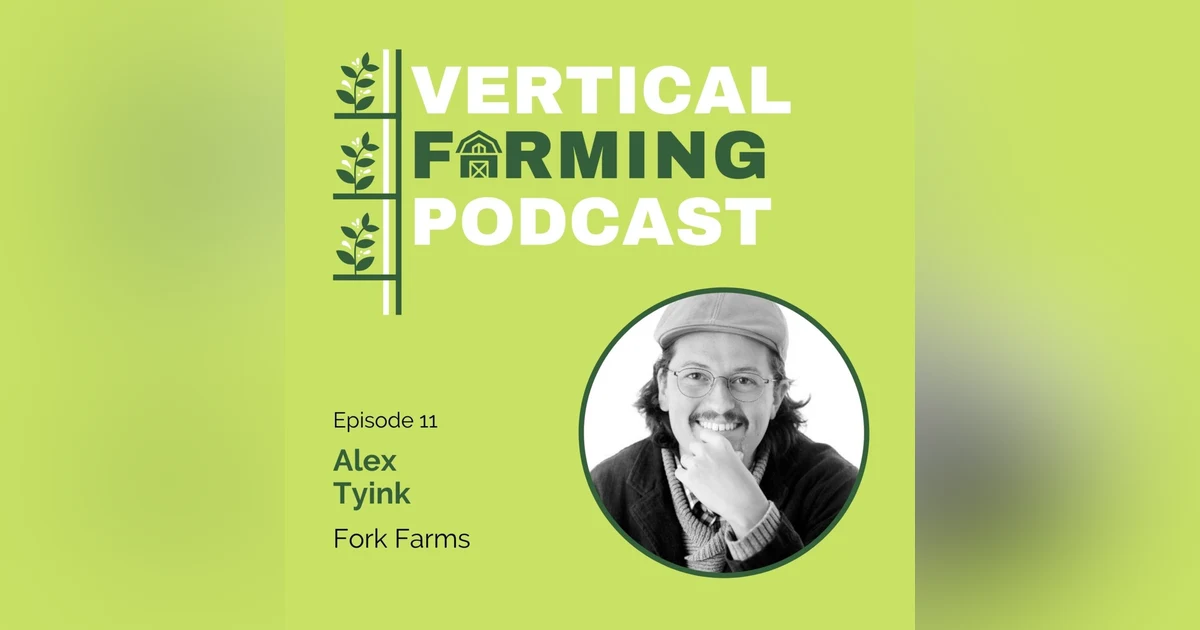

Alex Tyink is the President of Fork Farms, an organization that started on the principle that growing fresh and healthy food is a vehicle for positive change in the world. It is their belief that having consistent access to the freshest, highest quality food is a human right. Join Harry Duran, host of Vertical Farming Podcast, as he and Alex discuss Alex’s unorthodox path to entrepreneurship, hydroponic farming and the impact Covid-19 has had on Alex’s business, Fork Farms.
Special thanks to our Season 1 Sponsor
IGS – https://intelligentgrowthsolutions.com/
Key Takeaways
02:54 – Alex expounds on the impact Covid-19 has had on his business, Fork Farms, and how he got involved in AgTech
13:02 – Where Alex got his entrepreneurial drive and motivation and Alex’s experience moving to NYC
20:12 – Alex breaks down the business model of Fork Farms, the curriculum package they offer and the idea behind Flex Farm
32:28 – What Alex has learned throughout his entrepreneurial journey in AgTech
37:55 – Challenges and obstacles Alex has had to overcome as he continues to grow his team and business
43:14 – Alex talks about what excites him the most about the future of Fork Farms, AgTech, and a tough question he had to ask himself recently
50:29 – Harry thanks Alex for joining the show and let’s listeners know where they can connect and engage with Alex and Fork Farms
Tweetables:
“I started eating food that I was growing, and it completely changed my eating habits. I started eating better. I started feeling better. I started taking better care of myself.” (09:21)
“Labor efficiency and energy efficiency is really what we [Fork Farms] are all about.” (12:26)
“When I really started to dig into the industry, I learned how broken the food system really is. Sixty percent of all the food that we’re eating as Americans is ultra-processed. And we know – through all of these clinical studies – that ultra-processed food is directly linked to increase mortality due to all sorts of chronic diseases.” (18:25)
“I would say the majority of our growth as a company is organic.” (25:46)
“Every dime that we’ve made in the company we’ve put back into innovation. We are a for-profit company but we really act like a non-profit in a lot of ways. We have shareholders, but they understand what we’re trying to do and they’re willing to wait on the return in order to see something bigger than any one of us happen.” (33:08)
Links Mentioned:
Intelligent Growth Solutions
See omnystudio.com/listener for privacy information.
Mentioned in this episode:
Indoor AgCon 2025
$680 million poured into precision ag last year.
Speaker:Autonomous weeding robots dominated, and John Deere made 2 acquisitions in 3
Speaker:months. A food company, not an equipment maker, bought a
Speaker:robotics startup to protect its own supply chain. The deals are
Speaker:accelerating, the money is moving, and the winners are already separating from the
Speaker:pack. If you're investing, building, or buying in this space,
Speaker:you need the full picture before your competitors get it. The 2025
Speaker:Precision Agriculture Intelligence Report From iGrow News is now
Speaker:available. Get your copy today at
Speaker:igrownews.com/precision. Special thanks to our
Speaker:title sponsor this season, IGS. Founded in
Speaker:2013, IGS develops Industry 4.0 solutions in
Speaker:the global agtech and commercial lighting markets. As an industry
Speaker:innovator, they make revolutionary controlled environment growth products.
Speaker:For more information, visit intelligentgrowthsolutions.com.
Speaker:That food I brought home that I grew, for me, was the transformational
Speaker:piece of this. I mean, it sounds corny, but it's true. I
Speaker:started eating food that I was growing, and it completely changed my eating habits. I
Speaker:started eating better. I started feeling better. I started taking better care of myself.
Speaker:I got through some personal stuff that I needed to get through. It just was
Speaker:a really great time in my life.
Speaker:Welcome to the Vertical Farming Podcast, weekly conversations with
Speaker:fascinating CEOs, founders, and agtech visionaries.
Speaker:Join us every week as we dive deep into the world of vertical
Speaker:farming with your host, Harry Duran.
Speaker:Vertical Farming Podcast, welcome back, episode 11. If you're
Speaker:new to the show, this is the podcast where we interview fascinating CEOs
Speaker:and founders of some of the leading vertical farming companies from around the
Speaker:world. I'm your host, Harry Duran. In case you missed last week's episode, I
Speaker:had a great conversation with Scott Massey of HelioPonics
Speaker:and their fantastic GrowPod solutions. As a new CEO,
Speaker:Scott told a fascinating story of how he got started with the company
Speaker:and what he's quickly had to learn on the job as interest in the GrowPod
Speaker:has picked up steam. If you haven't listened to it, I highly recommend you check
Speaker:it out, episode 10. This week I have the privilege of speaking with
Speaker:Alex Tink. Alex is the president of Fork Farms, an organization that started
Speaker:on the principle that growing fresh and healthy food is a vehicle for positive
Speaker:change in the world. It's their belief that having consistent access to the freshest,
Speaker:highest quality food is a human right. In this interview, we discuss
Speaker:Alex's unorthodox path to entrepreneurship, hydroponic farming,
Speaker:and the impact COVID-19 has had on Alex's business, which has been a consistent thread
Speaker:throughout the season, given where we are in the world today.
Speaker:Alex talks about how he got involved in agtech, where he got his entrepreneurial
Speaker:drive from, and his experience moving to NYC, which
Speaker:we have a shared passion for. He breaks down the business model of
Speaker:Fork Farms, the curriculums they offer, and the idea behind
Speaker:the Flex Farm. We learn what Alex has discovered throughout his
Speaker:entrepreneurial journey in agtech and the challenges and obstacles he's had to
Speaker:overcome as he continues to grow the team and the business. We talk a little
Speaker:bit about what excites him about the future of Fork Farms
Speaker:agtech, and a tough question he's had to ask himself recently. As
Speaker:promised, here are a couple new reviews that came in the past few weeks.
Speaker:Thanks to Dananasplit617,
Speaker:great name. I've listened to about 4 of these podcasts so far and I've really
Speaker:enjoyed all of them. The speakers feel genuine and their stories are fascinating.
Speaker:I'm using this podcast to, quote, learn the language of vertical farming
Speaker:so that I can hopefully transition into the space in the near future. Keep these
Speaker:podcasts coming. Thanks so much for that inspiring review.
Speaker:Tommy Wami writes, fascinating and diverse guests with great
Speaker:discussions, a significant source of information that just isn't available
Speaker:anywhere else. If you're enjoying this episode or you've enjoyed past
Speaker:episodes, I'd love it if you leave a rating and a review at
Speaker:ratethispodcast.com/vfp.
Speaker:Okay, let's jump into this conversation with Alex. So Alex
Speaker:Seink, Thank you for joining us on the Vertical Farming Podcast.
Speaker:Thanks for having me. Having a chat in the pre-call, and I
Speaker:understand that this is your first podcast interview as well, so thanks
Speaker:for allowing us to experience that. I've done some interviews in the past, but this
Speaker:is my first podcast, so, uh, exciting. Thank you. Do you
Speaker:listen to any? Yeah, I've got my favorites just like everybody. I'm not a huge
Speaker:podcast junkie, but I can definitely appreciate it. Yeah, absolutely. I
Speaker:think the benefit of it, what I've seen, I've been doing it since
Speaker:2014, is the portability of it. So
Speaker:whenever I get some free time, if I'm making dinner, walking the dog, or just
Speaker:go out for a walk, and I was like, oh, I gotta catch up on
Speaker:a couple of episodes, and I can just queue them up on
Speaker:my podcast player. And I'm actually listening at a higher speed now, so I can
Speaker:listen at like 1.5x, 2x as well. And get through more faster.
Speaker:Yeah, we just moved our offices and I've got a longer commute, so they've come
Speaker:in very handy. Yeah, commutes are almost for a
Speaker:while there were a thing of the past, right? All right, yeah, I know.
Speaker:It feels good in a way to get at least a little bit of semblance
Speaker:of reality. So yeah, maybe that might be just a good
Speaker:place to add some context. We are towards the end of July
Speaker:still. I don't know whether this is considered phase 1.5 or
Speaker:phase 2 of COVID at this point. We sort of like stumbled
Speaker:our way through this. So I'm wondering what was the impact initially
Speaker:for you and the company? What's been happening so far since then?
Speaker:Yeah, it's a great question. I mean, it seems like generally
Speaker:affected people in the industry fairly well,
Speaker:which for me, there's a little bit of guilt that comes along with
Speaker:it, to be honest, just because there are so many people out there suffering and
Speaker:so many people where this has been really a difficult challenge.
Speaker:But at least at Fork Farms, People
Speaker:have to eat and people still want to eat good fresh food. And, you know,
Speaker:there's a lot of places where people are stuck in place
Speaker:and, you know, the opportunity to grow their own
Speaker:food right there on site has
Speaker:been a blessing for them. And so we're, we're really lucky that we get to
Speaker:help them with that. And was there a
Speaker:big disruption? What did you see in terms of the supply chain? Because that's what
Speaker:I've been hearing from earlier conversations I've had with folks as well.
Speaker:Well, for us on the manufacturing side, we, again,
Speaker:we're lucky we do all of our manufacturing in the US and actually we do
Speaker:it within a 100-mile radius of our office in Wisconsin. So it really is
Speaker:an American-made product, a Wisconsin-made product. And a
Speaker:lot of our manufacturers had to go to half production time because they
Speaker:have to socially distance the assembly lines. And so— Yeah.
Speaker:That was a challenge. We just had to get through the initial
Speaker:lead time lag that that created. But luckily, we've got a really great
Speaker:set of partners on that side of the business, and, you know, they were really
Speaker:accommodating. And we kept, you
Speaker:know, in a lot of ways, some of the— I think we were a benefit
Speaker:to their business because, you know, some people had to slow down their production during
Speaker:this period, and ours has been going the other way. And so I think
Speaker:that was really good partnership development. And we're just hearing all
Speaker:sorts of reports, though, from the folks that are calling us looking for
Speaker:the hydroponic systems, that they are, you
Speaker:know, really feeling the food supply chain disruption side of it, where,
Speaker:you know, we're seeing the reports. I'm sure a lot of your listeners are familiar
Speaker:with this too, of all the food that's being tilled under in Southern
Speaker:California and Mexico and places like that. And, uh, I think
Speaker:that's really where a lot of these vertical farming organizations, even more
Speaker:broadly, are, are really finding a deeper social
Speaker:benefit that they provide, right? Is that we, we don't have to stop
Speaker:production. We have that consistency, we have that year-round availability,
Speaker:and, you know, it just has become almost a matter of survival for some people.
Speaker:I mean, we work with some broadline distributors where they're talking about
Speaker:significantly increasing their investment into their
Speaker:vertical farming programs because they're really feeling it. I mean,
Speaker:on top of, you know, all the COVID stuff, then you also
Speaker:have foodborne illness outbreaks at the same time, right? Yeah. Where
Speaker:we're throwing away— And for us, it's a perfect storm.
Speaker:But again, you feel terrible saying that because you just wish it
Speaker:wasn't as necessary as I think it's becoming.
Speaker:So winding the clock back a bit, can you talk a little bit about how
Speaker:you actually got into the world of vertical farming,
Speaker:agtech, agriculture, wherever you think it's appropriate to start, just to set
Speaker:some context for people to hear the origin story?
Speaker:Yeah, well, I have a unique story and I won't give
Speaker:you all the nitty-gritty details, but I actually come from classical
Speaker:music. Seems like in the industry there's a lot of career refugees. There's
Speaker:a lot of people who found their passion through this in a lot of different
Speaker:ways, but you have a similar story too, Terry. Yeah. So, no, for
Speaker:me, I love music and I was an opera singer and I moved to New
Speaker:York. That's what I went to school for, moved to New York, and that's where
Speaker:I was first exposed to urban agriculture and During a summer,
Speaker:I volunteered for a rooftop farm. Really, as being a kid from
Speaker:Wisconsin, I needed something to do during the summer months just to get outdoors a
Speaker:little bit. But the gentleman who had started this
Speaker:rooftop farm had a very cool model. He would grow all this food
Speaker:and all of it ended up— majority of it ended up being donated to the
Speaker:food pantry that was right on the first floor of this building in
Speaker:Bushwick, Brooklyn. Yeah. I just thought that that was cool. I had never
Speaker:seen such a tight ecosystem like that, and to see it in
Speaker:East Brooklyn like that was very cool. I mean, you just could see the impact
Speaker:immediately with the families coming through, getting this fresh food. And so
Speaker:that was really inspiring. And at the end of the summer, he let me bring
Speaker:a bunch of the food that I had helped grow back to my apartment. And
Speaker:that was the first time I had ever really eaten what I had grown.
Speaker:Which is wild in New York City and in Brooklyn. I mean, to even think
Speaker:about the possibility of that happening. I grew up in Yonkers and I've lived in
Speaker:in Greenpoint and Lower East Side as well.
Speaker:Exactly. And a kid from Wisconsin where you drive 10 minutes in any direction, you're
Speaker:in the middle of farmland, right? So yeah, it really is wild. And
Speaker:I tell you that, that food I brought home that I grew for me was
Speaker:the transformational piece of this. I mean, it sounds corny,
Speaker:but it's true. I started eating food that I was growing and it completely changed
Speaker:my eating habits. I started eating better. I started feeling better. I started taking
Speaker:better care of myself. I got through some personal
Speaker:stuff that I needed to get through. It just was a really great time in
Speaker:my life. And I think through that process, I had this little aha
Speaker:moment where that blood, sweat, and
Speaker:tears, when you put your energy into things, really can be
Speaker:a powerful vehicle for change, personal
Speaker:change, and I think social change. I think as I've done more and more of
Speaker:this work, I've really realized that emotional connection and getting people
Speaker:involved and connected to anything is what
Speaker:ultimately drives behavior, in my opinion. And, we've seen
Speaker:it now time and time again. But so anyway, to make a long story
Speaker:short, I decided I wanted to do this for more people. So, we
Speaker:got involved with New York Public Schools, a couple other groups, got some United Way
Speaker:New York funding. And, just with the other ragtag
Speaker:band of folks, we were really passionate about it and started building
Speaker:rooftop farm soil and hydroponic aquaponic
Speaker:systems. All using what at the time was
Speaker:state-of-the-art technology, and in some ways still is. A lot of the,
Speaker:you know, the vertical rack systems, you know, horizontal tiered system, tower-type
Speaker:systems, and they all worked great, but none of the
Speaker:programs that we had were really willing to scale to feed a lot of
Speaker:people. And they were all up for, yeah, build us basically a
Speaker:demonstration-size thing. They'd use it for education. That was great,
Speaker:but you don't really feel the impact until until
Speaker:people really get the whole seed-to-plate experience, right? They grow the food
Speaker:and they get to eat the food, right? And so I did a little study
Speaker:to figure out why. And what I learned was that every one of these partners,
Speaker:it came down to the price of the food. So they were
Speaker:reporting that using these systems, again, educationally, it
Speaker:was great, but it was costing them anywhere from $3 to $8 a pound just
Speaker:to grow it, right? And you figure out the energy and the lights and the
Speaker:grow medium and nutrients and the time, and, you know, it can be very expensive
Speaker:to do vertical farming. And so, it really put this bug in me to
Speaker:figure out maybe there's a way to do it a little bit better in
Speaker:a slightly different way. And around 2014, and this
Speaker:is after 30 prototypes, Harry,
Speaker:and flooding the apartment floor. I'm not an
Speaker:engineer and I don't claim to be. So it took me—
Speaker:Trial by fire. Exactly, a lot of
Speaker:trial and error. But I stumbled into this really simple idea where
Speaker:if you put a grow light, a particular type of grow light in the
Speaker:middle of a bunch of reflective surfaces that the light will actually
Speaker:bounce around inside that enclosure. And if you build it
Speaker:right, you can dial back the wattage of the bulb by
Speaker:50+% in order to achieve the same yield outcome
Speaker:compared to other systems. And so that really dropped that energy cost really
Speaker:substantially. And from there, I just listened to the folks we were
Speaker:working with to learn how do we make this thing as easy as possible to
Speaker:use. And that was how the technology was
Speaker:born. Labor efficiency and energy efficiency is really what we're all about. So
Speaker:keeping that cost really competitive, you know, we're growing food, you know,
Speaker:commercially now for sometimes less than a dollar a pound,
Speaker:which we think is really good. And our goal through the
Speaker:technology is to utilize it to do the most good,
Speaker:right? So when I moved back home, I worked for Goodwill Industries and
Speaker:Feeding America, both kind of in the hunger relief side of this. And I
Speaker:learned a ton. And I think what I learned was it was such
Speaker:a deep passion that I just had to start the company. And I guess the
Speaker:rest is history from there, so. Where does
Speaker:that drive come from? 'Cause you mentioned goodwill
Speaker:and something that I thought was also interesting is this idea of having that emotional
Speaker:connection. So is this something that, you know, comes
Speaker:from your family or is this just inspiration you've gotten over the years in terms
Speaker:of like, I sense like a trend of like, wanting to do good for the
Speaker:communities and probably on a bigger scale just for the
Speaker:betterment of humanity as well. So, I'm wondering where that might
Speaker:come from. Well, I think everybody in the vertical farming industry is
Speaker:trying to do something good. I mean, I know there's obvious
Speaker:profit motivation to do it. There's a lot of financial reasons to be
Speaker:in the industry, but we all see the
Speaker:disruptive benefit that this can do, right? For sure. But for
Speaker:me, that's a really good question. I mean, I'll have
Speaker:to hire a shrink and maybe dig into it a little bit. But, uh, yeah,
Speaker:you know, I, I think part of it is, I, you know, you come into
Speaker:the world, I think everybody, and, you know, we can debate this, but
Speaker:I think everybody at their core, you know, is, is a social being and
Speaker:wants to fundamentally do good. And I think I've got great
Speaker:parents, you know, I was really lucky. lucky on the parent lottery. And,
Speaker:you know, they always encouraged me to follow my heart. You know, I mean, who
Speaker:lets their kid get into opera, right? I mean, it's not like we
Speaker:come from a wealthy background, right? It's like, it's not like I grew
Speaker:up in a mansion. So, I mean, it takes a particular parent
Speaker:to trust you enough to let you go down those paths. And
Speaker:I don't know, I think one thing my dad always says is if your intentions
Speaker:are pure, You know, if you really are true to who you are
Speaker:and what you believe, that you'll end up surrounding yourself with people that you
Speaker:like and you'll end up doing work that's meaningful to you. And I think that
Speaker:there's a lot of wisdom in that. Totally. Yeah, yeah. Just out of
Speaker:curiosity, what type of opera singer are you? I'm a
Speaker:baritone. Okay. Yeah, lyric baritone. I sang a lot of
Speaker:Mozart. That was my thing. So you always have that as a backup to
Speaker:fall back on. Although
Speaker:not a lot of people are going to operas these days, so I don't know.
Speaker:Yeah, that's true too. So how did you end up in the city?
Speaker:It was on a music contract. I actually went to school in Chicago. I went
Speaker:to Northwestern, their music school. They got a great program. And out of school, I
Speaker:ended up with a 2-year young artist contract. It was like a
Speaker:residency program, actually with Opera Tampa. But the
Speaker:whole crew lived in New York. So the agent, the
Speaker:manager, a lot of the people that were involved in the music
Speaker:side, we all lived in New York. And so it was just a natural place
Speaker:place to be. And along with that, I could do other things. I mean, you're
Speaker:not doing operas all year round, right? So you'd have these 2 to 3 month
Speaker:breaks in between the opera. And so I'd, you know, do, uh, voiceover
Speaker:gigs or theater gigs, or, you know,
Speaker:I'd try to get into movies and stuff like that. So it was
Speaker:fun. It was a great time in my life. Yeah. Any of your voiceovers
Speaker:floating around the internet somewhere? Yeah, I'm sure you can find them. I'm not going
Speaker:to tell you where to look though. What was
Speaker:your impression as a— it's funny because I live in Minneapolis now, but I grew
Speaker:up in Yonkers in New York and I've lived in LA, so
Speaker:just both coasts. And now I'm in the Midwest and you grew up
Speaker:in Wisconsin. So what was your just first impressions of New York City?
Speaker:First impression was it was dirty
Speaker:and huge. I mean, the biggest
Speaker:thing I think that struck me immediately is that when I moved there, I lived
Speaker:in Inwood, which is way up. Oh yeah. The listeners that don't know, that's
Speaker:way on the top of Manhattan, but you're basically in the Bronx. Yeah.
Speaker:And It's a very Dominican-heavy community, right? So I
Speaker:moved in and I was the minority. And coming from
Speaker:Wisconsin where I was white people everywhere, being the minority was a
Speaker:really incredible experience. I mean, just
Speaker:really alters your perspective in a great way. So a lot of good
Speaker:mofongo and other good Dominican dishes
Speaker:up there that I miss. So. Yeah, I love mofongo. That's great. Well, it's
Speaker:interesting because you got to see both perspectives. And, you know, as
Speaker:we're talking now about agriculture, I mean, coming from Wisconsin, you think
Speaker:agriculture, you think farm, you know, big farms. And then you go into the city
Speaker:and you just see how everyone is so condensed into one
Speaker:area. And even in places like New York City, you do have like
Speaker:these deserts where people don't have access to fresh food, and it's all
Speaker:they have is the bodega at the corner. So, you know, I imagine, you know,
Speaker:can you speak to maybe seeing that dichotomy in terms of like,
Speaker:and how that may have influenced, you know, some of the work you're now
Speaker:doing? Oh, it's huge. I mean, there's poverty everywhere,
Speaker:but in my community in Wisconsin, it's very hidden. We
Speaker:do a pretty good job, you know, during the winter making sure that the homeless
Speaker:are inside and things like that. And with a city the size of New York,
Speaker:it's, it's almost an impossible task. And so you see it
Speaker:everywhere, right? I mean, you see people sleeping on the street, you see the
Speaker:food lines, you see it, and To see it is what really,
Speaker:I think, first turned me on to the idea of volunteering with
Speaker:that urban farmer that I had mentioned. Just
Speaker:really hard to wrap your head around coming from privilege. I mean,
Speaker:I'll admit that I didn't come from a wealthy family, but we
Speaker:certainly didn't starve. I mean, we were never in a hurting position.
Speaker:So that was big. And then when I really started to dig into the
Speaker:industry, I learned how broken the food system really is. I mean,
Speaker:60% of all the food that we're eating as Americans is ultra-processed,
Speaker:right? And we know, yeah, through all of these clinical studies that
Speaker:ultra-processed food is directly linked to increased mortality due to all
Speaker:sorts of chronic diseases, heart disease, type 2
Speaker:diabetes, stroke. And if you're in poverty, what are you eating?
Speaker:Right? You're, you're buying food based on price and based on convenience, right? Yeah.
Speaker:Because generally you're working a lot of jobs, you're struggling to figure out how to
Speaker:make all the ends meet. And you don't have time to, you know,
Speaker:cook a lot of fresh food. And all of this processed
Speaker:food is really, really affordable. And look at what we
Speaker:grow. You know, we grow corn and soy and all this stuff that's easy to
Speaker:be processed. That's the stuff that's subsidized by the government. I mean, we all know
Speaker:the story. So, you know, I think the food system is
Speaker:literally killing people and it's disproportionately killing people in poverty. And
Speaker:that to me is wrong. That is not okay. So how do you take
Speaker:vertical farming technology and drop it into areas where you're going to move the
Speaker:needle there the fastest? And that's really the whole idea behind the company.
Speaker:And, and believe it or not, some of the largest food deserts in the country
Speaker:are in rural communities, which is crazy to me. The people who
Speaker:are growing food in this country are the ones that are disproportionately
Speaker:starving. So, you know, we're actually working with a lot of healthcare
Speaker:systems that serve rural populations to figure out, all right,
Speaker:let's put vertical farming systems in the rural schools and in the
Speaker:rural clinics and in these places so that we can start
Speaker:building food system resiliency
Speaker:right where people live. And it's really working.
Speaker:We're really having a lot of luck with that. Yeah, I think part of this
Speaker:is also just educating people in terms of what the challenges
Speaker:are and how the different variations of vertical farming can fit a wide variety of
Speaker:needs. Because I think when people initially come into it, they think, of like
Speaker:the historical model of like, you know, the big factory with like the tall
Speaker:towers and like that's all that vertical farming is. But when I had a
Speaker:conversation with Virginia Emery of Beta Hatch and she's doing
Speaker:insects for feed and, you know, and that's vertical, you know, that's
Speaker:indoor farming as well. So it's just, and then I spoke to the folks at
Speaker:Smallhold who are doing mushrooms. And so it's really interesting to kind of see the
Speaker:variety of what's happening. But specifically for what you're doing with fork farms,
Speaker:can you just kind of Talk through what the initial models— you
Speaker:touched on it briefly, like what the model is, but for folks who don't know,
Speaker:what is the actual product and what are the use cases for it?
Speaker:Yeah, yeah, sure. So we're in our 4th
Speaker:generation, commercial generation of the system. The first one was
Speaker:made out of stainless steel and cost $12,000, so we only sold 8 of those.
Speaker:But it's grown pretty quickly since then. I think the 4th generation of the
Speaker:product we launched earlier this year and There's already, I want
Speaker:to say, 100 or 200 out there. So for us, the idea
Speaker:is let's put a farm in a box and
Speaker:let's make it so easy to use that anybody can be a farmer. And so
Speaker:the FlexFarm is a product that grows highly
Speaker:perishable foods. So we decided to focus the grow environment on
Speaker:things that were going to provide the fastest ROI and the fastest nutrition
Speaker:outcome for customers. So the way I explain it is that potatoes don't
Speaker:really work in indoor farming right now, commercially. It's grown regionally all over the
Speaker:country. They're cheap to ship. They're really dense. It's a storage crop. We have year-round
Speaker:availability, all of it, right? Why are we going to grow it indoors, right? It
Speaker:doesn't make a ton of sense. Yeah. But leafy greens,
Speaker:your lettuces, spinach, all your herbs, soft fruits like strawberries,
Speaker:these are the things that have a lot of value to a local food system.
Speaker:So that's really what we focused our design on. Now, we've had
Speaker:partners, especially on the educational side, teachers love playing around with things. So
Speaker:they'll grow kumquats and apple tree starts, and pumpkins and all
Speaker:sorts of weird stuff in it. And it works. I mean, they've had success. If
Speaker:you're really looking to feed people, we try to push people into these highly perishable
Speaker:products. So, it fits in about the size of a standard
Speaker:refrigerator, about 3 feet by 3 feet. It's about as tall as I am,
Speaker:5.5 to 6 feet tall. Wow. But, it has in it 288
Speaker:plant positions. And so, it grows 20
Speaker:to 30+ pounds of food every 21 to 28-day cycle.
Speaker:So, a lot of that's depending on what you're growing, the varieties you choose, but,
Speaker:you know, you can see how 20 to 30 pounds, it's a
Speaker:serious food production system. I mean, we're not talking about
Speaker:tabletop unit or something that is more for
Speaker:hobby purposes, right? These are for people who really want to feed people. And
Speaker:what we find is that, like an educator, they'll partner
Speaker:with us because there's so much intrinsic educational value with something like this.
Speaker:But also, there's a serious impact that they can make on the lunch line.
Speaker:And over the years, we figured out how to— when you talk about use cases,
Speaker:we've really templated out for a lot of these industries ways that we can
Speaker:break some of the farm-to-table paradigms that have
Speaker:existed. So one example is I ran a
Speaker:farm-to-school program when I was at Goodwill, and it was really hard to figure out
Speaker:how to get local food on the lunch line just because a lot of these
Speaker:schools use a third-party food provider and it can be hard to
Speaker:navigate the food safety side of it. And it's just, it's overwhelming for the food
Speaker:service director. So it was hard to implement, but we've been able
Speaker:to create templates with our system that creates a really clear
Speaker:and easy pathway to get this food on the lunch line
Speaker:in a consistent, safe, easy way. And it doesn't require us to reinvent the wheel,
Speaker:right? We have it. It's worked. It's been approved by some of our best food
Speaker:service partners like Chartwells, Aramark, Taher Food Service, you know,
Speaker:folks that they've been doing a long time. And the collateral benefit is that a
Speaker:lot of these schools then, they know how to do it. And so it makes
Speaker:it then easy for them to start to bring in other local food products into
Speaker:their program as well. So that's a lot of what we do is we really
Speaker:see ourselves being a learning organization first and foremost. The
Speaker:agricultural technology that we have is the vehicle on how we get there,
Speaker:but really who we are at our core is We're a group of people
Speaker:very focused on our social mission and providing as much
Speaker:value as we can back to the partners, right? So, you know, another example is
Speaker:with assisted living facilities, right? We develop programs
Speaker:that bring a lot of purpose to the work of running a Flex Farm to
Speaker:the residents, right? So how do we have these seniors who are there
Speaker:living get as much value and sense of purpose and love
Speaker:for this indoor farming program that they possibly can, right? So,
Speaker:you know, that entails— cooking lessons and activities that they can do
Speaker:with the staff there and ways to share the food into the community. And,
Speaker:you know, all of these ideas that frankly we didn't come up with. A
Speaker:lot of the initial go-to-market for this product was,
Speaker:is this something that you could use? I mean, we didn't— I mean, there was
Speaker:nothing else like it at the time. You know, what I tell a lot of
Speaker:people is it's almost like, you know, I'm not trying to equate us to Apple,
Speaker:but it's a little bit like having the Apple II in the '80s. People were
Speaker:like, I have a typewriter. Why do I need like a
Speaker:personal computer that's twice as expensive? Or the Lisa. Right,
Speaker:exactly. So for us, it's a lot of we're educating the market, right?
Speaker:It's a part of learning organization, educating the market, what this can really do for
Speaker:them and the value it can bring. And I would say the
Speaker:majority of our growth as a company is organic. It's, we found that
Speaker:one partner and they loved it and they have been referring
Speaker:us to people ever since then. It's been this giant
Speaker:spiderweb effect, very Grassroots, very
Speaker:person-to-person. Food is really personal to people, and
Speaker:we've learned that. Yeah. You can't control it, right? You can't force them
Speaker:into the K-Cup model, right? If you want to use your grandma's seeds that are
Speaker:heirloom from your backyard, you have to be able to do that, right? It's the
Speaker:right thing to do. Food justice and culture has to play
Speaker:a real significant role in who we are as
Speaker:stewards of a better food system, right? And you've also— can you talk a little
Speaker:bit about the curriculum package that you offer as well? Because I think that's an
Speaker:important part of what you guys are offering. Yeah, and that's the kind of
Speaker:stuff that we're constantly building, right? We— and that's stuff
Speaker:that we provide at little to no cost to the
Speaker:customers, right? So for us, we want you to use our technology. We want it
Speaker:to be the best in the world at what it does. But in
Speaker:terms of all that wraparound programming, we want to make sure that
Speaker:these things are used not just for the next couple years, but for the next
Speaker:couple decades. And that's how we do it, is we do it through the underlying
Speaker:programming that we provide. So right now we have a 28-lesson
Speaker:plan curriculum, if you will, that's been used all the way
Speaker:K through 12. Actually, there's been some community colleges and universities that have
Speaker:used it too. We've got some learning modules that are video that you
Speaker:kind of click through, and learning modules really focused on community college
Speaker:space. We really think that you know, the future needs
Speaker:farmers, but it needs a different type of farmer than in the past, different
Speaker:types of farmers. I mean, we need more of the same to a certain degree,
Speaker:but we need different types of farmers. And so how do we attract
Speaker:the smart, innovative people that are going to be able to think differently and
Speaker:encourage them to enter into this space? So that's something that we're really
Speaker:invested in and care a lot about. We've got, again, programmatic stuff,
Speaker:application-based things where Well, what else can I do with
Speaker:this, right? Well, there's a whole set on if you want to grow
Speaker:food and sell it, right? So instead of a school growing food and eating it
Speaker:on the lunch line, how do they start a little junior achievement program or
Speaker:entrepreneurial program with their system and grow basil and sell it to the local restaurant
Speaker:for $10 a pound, right? Awesome. And then they— everyone goes on a field
Speaker:trip or they buy band uniforms or— Better and probably healthier than the Girl
Speaker:Scout cookies. No offense to the Girl Scouts organization, but— Feels a little
Speaker:better, right? And a great, great model that we have is
Speaker:you know, there's a bunch of, you know, at-risk programs that run the system and
Speaker:they'll sell the food. And actually the teacher will use the income to buy
Speaker:breakfast, like a free breakfast program for these kids who are usually truant.
Speaker:And, you know, it's that sort of stuff that just feels really good and it's
Speaker:what helps you get out of bed every morning, you know? Yeah. And then I've
Speaker:seen that now, I guess it's bigger organizations
Speaker:that have seen the benefits of the Flex Farms now are
Speaker:doing the The multi-farms, can you talk a little bit about that? Yeah, so
Speaker:it's a pretty simple idea. We figured out a way to daisy chain the systems
Speaker:together really easy. So instead of having to take care of 8 individual
Speaker:Flex Farms, we tie them together, put them on one larger
Speaker:pump, and then you're taking care of one centralized reservoir that
Speaker:feeds all of these systems. And really what that is, is
Speaker:to encourage people to grow to scale, right?
Speaker:Grow to form-fit what your need is. And so we have a lot
Speaker:of partners that'll reach out and say, okay, this is how
Speaker:much of this product that we go through, build us a farm that
Speaker:will make it so that we don't have to buy that stuff ever again, you
Speaker:know. And what we find, which is interesting, is we usually encourage them to bake
Speaker:in an extra 15 to 30%, because when people
Speaker:are growing it and they start to see the quality that can be produced
Speaker:from locally fresh, you know, clean food, The
Speaker:consumption rate inevitably goes up pretty significantly. And that's one of the big value
Speaker:propositions to the food service industry is that if they can
Speaker:get people eating more fresh food, that's better for their bottom line.
Speaker:Do you see a mix in terms of the consumers?
Speaker:And you mentioned schools, you mentioned retail, restaurants. Do you
Speaker:have personal folks put in it? Is it suitable for
Speaker:residences as well? Absolutely. We've had communities, you know, little
Speaker:neighborhoods, Like 3 houses will buy one together
Speaker:and it's on wheels, right? So it's not hard to roll it from one house
Speaker:to the next. And, uh, or one person's really into it and so
Speaker:they'll take care of it, but then they'll share the food. I mean, the one
Speaker:thing I'll tell your listeners is that this thing puts out a lot of food.
Speaker:You gotta be ready because it's like bringing your outdoor raised bed
Speaker:indoors is really what I tell people. You know what I mean? This isn't gonna
Speaker:be like 6 basil plants on, but you're gonna have to freeze your
Speaker:pesto if you're, all you're growing is basil and everything. But a lot
Speaker:of people love that, you know, they want to have that year-round consistency, the year-round
Speaker:quality. I mean, most people don't know a really good, let's
Speaker:say lettuce, a really good head of lettuce stored correctly, fresh, if it's
Speaker:fresh from the farm, it should last 3 or 4 weeks in the fridge and
Speaker:still be ready to eat good. Oh wow. I mean, how many times do you
Speaker:go to the grocery store and you're picking out the garbage
Speaker:from the little clamshell that you bought the day after you bought it? I mean,
Speaker:that's because it's been in transit for almost 3 weeks. It's not
Speaker:right. It's just you're paying so much for that product and the
Speaker:quality needs so much work. So, once you— we create lettuce
Speaker:snobs as part of what I think we do, which I don't know if that's
Speaker:good or bad, but a lot of people, they say, all right, now that I'm
Speaker:eating the good stuff, I'm never going back to the bad stuff. Have you
Speaker:found certain varieties that are more popular that people are experimenting with?
Speaker:Yeah. People love They love wow factor a lot of times.
Speaker:So we've got a couple of varieties that we recommend that have like really
Speaker:deep color that people love or different
Speaker:flavors. You know, we've got a lot of experimentation people love to do with
Speaker:basils. You know, you can get lemon basil or, you know, a citrus
Speaker:basil or purple colors. I mean, there's just the amount of
Speaker:variety of seed, if you aren't familiar, will shock
Speaker:you. I mean, there are thousands of lettuce types alone out
Speaker:there. I mean, not to mention, the gamut. Mints, I
Speaker:mean chocolate mint, right? I mean, most people don't even know that that's a thing.
Speaker:Yeah. It's delicious, right? I mean, that's why restaurants love it, right? Is
Speaker:that they, you know, high-end restaurant, you know, a cafeteria, they'll put this in and
Speaker:all of a sudden they have an offering that no one else in town has
Speaker:because they can't get it. You can't buy it from your— you can't get chocolate
Speaker:mint off the back of the truck. It's not going to happen. So
Speaker:all of a sudden you have this significant value add where You're providing
Speaker:something that, that is really exclusive to you, which people love.
Speaker:So I imagine there's been a lot of iterations because you're at the 4th generation
Speaker:with where you're at now. What have you learned along the way? And
Speaker:are— have the improvements been towards just making it as
Speaker:self-sustainable as possible and just easy to maintain? I would say
Speaker:that's number one. It's really been a customer-first
Speaker:type approach for us is You know, let's talk to people
Speaker:and be continuously learning. Again, learning organization, constantly learning.
Speaker:How do we make this thing work better for you? How do we— what are
Speaker:your pain points? What do you not like about it? And, or what do you
Speaker:struggle with? I mean, whatever it is, we want the feedback and we've really tried
Speaker:to take that feedback to heart. And I'll tell you, Harry, every
Speaker:dime that we've made in the company, we've put back into innovation. Mm-hmm. I mean,
Speaker:no one has— there's been no— we are a for-profit company, but we really
Speaker:act like a nonprofit in a lot of ways. I mean, we have shareholders, but
Speaker:they understand what we're trying to do and they're willing to wait on the
Speaker:return in order to see something bigger than any one of
Speaker:us happen. And it's bigger than me. I mean, I was the idiot that started
Speaker:the whole thing, but like, but I got,
Speaker:there's a lot of other people to blame at this point, right? I mean, I
Speaker:can't claim all the development and certainly
Speaker:not any of the success that we've had. I mean, all the way from the
Speaker:business development to the, you know, the product development and everything in between. I
Speaker:mean, you know, there's been a lot of smart people that we've roped into this.
Speaker:You know, I would say for us, the biggest things that we've
Speaker:learned from customers are they want the ability to have it be as
Speaker:easy as possible, but they also want to be able to bake in complexity if
Speaker:they want. So— Okay. Like an FFA teacher, Future Farmer
Speaker:of America teacher, may not want this thing to
Speaker:only take 5 minutes a week, right? They might want the kids to spend a
Speaker:couple hours on it a week. So how do we do that, right? Well, okay,
Speaker:here's the way that you strip out some of the automation and make it a
Speaker:bit more manual and more applicable to some of the other systems that these
Speaker:kids may run across if they decide to get into the business. So there's, there's
Speaker:a lot of that work that we've done, but the biggest upgrades from Generation
Speaker:3 to Generation 4 was actually on the cleaning side.
Speaker:People hate cleaning. Generation 3 had this snapping gasket
Speaker:mechanic that was really nice because you could easily pull different plants out, you
Speaker:could do different sizing and things like that. Okay. But, you know, really they were
Speaker:tough to clean. You know, there were a lot of little grooves in it where
Speaker:you had to, you know, either soak them and things like that. And we
Speaker:decided to completely do away with that, and we instead moved towards
Speaker:a panel model where this panel is removable and it's the size of a dinner
Speaker:plate, so it fits in any residential or commercial dishwasher.
Speaker:It's made out of a food-grade plastic that's dishwasher safe.
Speaker:The cleaning of this, you have to do a deep clean once every 3 to
Speaker:6 months. Okay. And the clean itself used to take about 90 minutes and now
Speaker:it takes about 15 minutes. And so for us, that was the biggest thing. Also
Speaker:on the assembly side, our light tower internally, it used to be made
Speaker:out of powder-coated steel LEDs, and we moved
Speaker:towards a different LED design where it actually comes
Speaker:pre-assembled now. And so the goal is just to have
Speaker:people focus on the thing that's gonna build that emotional connection, right?
Speaker:That's really the highest level goal that we have. Yeah. And so how do you
Speaker:do that? Get 'em up and running as quickly as possible, have 'em
Speaker:have a lot of success for their first crop, teach 'em how to experiment
Speaker:intelligently so that they continually have success. building
Speaker:programming that has a lot of staying power, make them feel really good
Speaker:about what they're doing and the network that they're a part of. We do a
Speaker:lot of community building as an organization. There's like a Facebook
Speaker:group of users where, um, you can get in and talk to other
Speaker:users. So instead of calling us, hey, how are you using this thing in this?
Speaker:Yeah, perfect. Better coming from somebody else, right? Because they're the ones with that
Speaker:experience. I mean, we run our own units, but it's limited,
Speaker:right? I mean, against the 500+ installations that are
Speaker:out there. I mean, we gotta leverage that knowledge that's out there,
Speaker:right? And bring that into the ecosystem that we're building as a
Speaker:company. And the community that you're building, 'cause that was something that I was gonna
Speaker:ask you about. Like if you've started to see and started to, you know,
Speaker:get all the customers talking to each other and, you know, there is something that
Speaker:happens when you're all feeling like you're working, you know, you've all got the same
Speaker:product or variation of it and you're excited 'cause now
Speaker:people are sharing success stories about what they're growing, what they're trying, experimenting. And
Speaker:it's interesting when that starts to happen and they start to have conversations and
Speaker:help themselves out as well without waiting for like a rep to jump in and
Speaker:answer a question. You'll know it's taken off when like they're helping
Speaker:themselves and answering their own questions. Well, exactly. And now
Speaker:that's the information that we pull when we say,
Speaker:okay, this person, they solved this problem, which is amazing, but we can
Speaker:make it even more intuitive by improving the product, right? Okay. Yeah.
Speaker:pull information out of the community, or you can say, hey, a lot of people
Speaker:are asking this question on the community. We can do
Speaker:like, this is a stock thing that comes included now, right? So
Speaker:always learning and trying to just amplify
Speaker:that voice. But you're absolutely right. I mean, our partner— we call our
Speaker:customers partners because they really are, right? I mean, we, you know, we're trying to
Speaker:continually check in with people and make sure they're having a good experience.
Speaker:And, you know, I would say that's also, in a lot of ways, our
Speaker:sales force. I mean, we've got all these folks out there who are
Speaker:having a good time, and it's always been our theory that if we take really
Speaker:good care of them, you know, hopefully they take care of us. And I think
Speaker:that's by and large been the case. Can you
Speaker:talk a little bit about growing the team as a new
Speaker:CEO and some of the challenges you've had, and even thinking about like, when's
Speaker:the right time and who's the right person? Because they're obviously important
Speaker:as you grow the organization. Yeah, it's a great question. Timely actually,
Speaker:because we're in the middle of a hiring process actually. So if any
Speaker:of your listeners are looking to get into the business, you know, give us a
Speaker:call. You know, I think in the beginning I didn't do this as well
Speaker:as we are now. And there's, you know, a long way for, for me to
Speaker:go, which I think is true for everybody. But I think our focus has been
Speaker:on really helping people understand what this is on the front end, really
Speaker:helping people understand who we are as an organization, because now we do
Speaker:have And it takes a long time to do this, but we do have a
Speaker:real good sense of our culture and it's continually evolving and growing. But
Speaker:in the beginning, you just, you don't even really know what your identity is.
Speaker:And I think being able to share that identity in a strong way
Speaker:will help people almost self-select out, which I think is an important part of
Speaker:that process, help people understand if this isn't right for them, make it very clear
Speaker:what's critical culturally, but also the team is
Speaker:evolving the culture as we speak, right? I mean, we are, who we are as
Speaker:people. And so I think the key is to hire people who
Speaker:diversify your team skillset and diversify the opinions, but also
Speaker:really jive with the kind of key behavioral aspects
Speaker:that you want out of your work culture. So, you know, things like
Speaker:humility and things like the ability to, you know, fail forward
Speaker:fast and to be inclusive in your thinking. And, you know,
Speaker:a lot of these qualities don't come naturally to everybody. That's okay. It
Speaker:just means that maybe maybe it's not the best fit. And
Speaker:for us, you know, we're really looking to build out a team
Speaker:of people who don't necessarily think all the same, which I think is,
Speaker:it's sometimes hard to wrangle that. But
Speaker:I think the value is that you get really
Speaker:strong opinions sometimes about things. And,
Speaker:you know, there are times where sometimes I have to say,
Speaker:you know, We're not all going to agree on this, so this is the way
Speaker:that we're going to go. But generally speaking, you know, if you hire a lot
Speaker:of smart people, we can logically come to
Speaker:consensus. And I think that's been a huge
Speaker:milestone for us, is getting to that point where we can really sit around, not
Speaker:necessarily agree with each other, but listen to each other. Not just listen to be
Speaker:heard, like not speak to be heard, but to be understood kind of thing.
Speaker:Yeah. Those sort of qualities don't come naturally
Speaker:Yeah. And what's important, some of the things you talked about are actually the core
Speaker:values that you've listed on the website. It says here empowerment, integrity,
Speaker:unconventional, relentless, humility, and inclusive. So I
Speaker:think, you know, when people come to the site, it's already
Speaker:speaking to the type of culture you're looking to build there. Yeah. And none of
Speaker:that was my idea, right? Like, that's the thing is people,
Speaker:they look at the leader of the organization and they're like, if it's a
Speaker:success, he's a genius. And if it's a failure, he was never going to succeed.
Speaker:And I'm like, no, I'm not a genius. succeed to begin with, right? But the
Speaker:reality is that you just surround yourself with people smarter than you.
Speaker:Yeah. Yeah. And they have good ideas like, hey, you have to have a very
Speaker:clearly defined mission statement. You have to have a very clearly defined set of values.
Speaker:And that's what you hire for, right? And they give you these
Speaker:tips. And if you, you know, don't have such a big ego that you can't
Speaker:acknowledge that that's a huge learning opportunity, again, the whole learning
Speaker:organization thing, I think that's been core to our success. Is
Speaker:there someone in this space, as the company has
Speaker:grown in the vertical farming industry, or just someone in business that you
Speaker:admire or have drawn inspiration from?
Speaker:Yeah, I mean, everybody. I think the whole thing is inspiring. I mean, I
Speaker:remember way back when I was getting started, there was a gentleman in
Speaker:Milwaukee named Will Allen who was running Growing Power, which is a
Speaker:nonprofit where he started just growing food and flowers with
Speaker:at-risk teens in his neighborhood, and that model exploded. The
Speaker:idea of, you know, how do we
Speaker:use urban agriculture as a mechanism to,
Speaker:you know, not just empower communities and to have great
Speaker:programming, but also to sustain the nonprofit. I mean, he was selling
Speaker:food too so that he didn't have to go and get donations every year to
Speaker:keep the program running, and I think that's sort of social entrepreneurship. was
Speaker:really inspiring to me. You know, Cornell University puts out
Speaker:incredible information. You know, I, I didn't go to school for this, right? So, I
Speaker:had to self-teach myself how to grow food hydroponically, right? So, that lettuce
Speaker:handbook that Cornell put out was the original gospel for
Speaker:me, right? I mean, I read that thing 300
Speaker:times. And then, you learn as you go, right? I mean, part of it is
Speaker:there's— it's very iterative. But, I mean, I remember when Ed
Speaker:Harwood at AeroFarms was getting started, I watched that. I remember Nate
Speaker:Storey with ZipGrow and that whole thing. I mean, I've been following
Speaker:everybody and all the work is important and inspiring. And I
Speaker:think there's room for more, to be honest with you. I think this sort of
Speaker:work is still in its infancy in a lot of ways. I think it's growing
Speaker:very quickly and exponentially. And I think we need to do it. We need to
Speaker:get it right. And I think, you know, working together is going to be the
Speaker:key. And that's something that we're just starting to do as a company, you know,
Speaker:is, you know, find partnerships in industry. And that's something that I really want to
Speaker:do more of as we, as we grow. Yeah, I was gonna ask you about
Speaker:that as well. Like, what's been your experience
Speaker:as you've started to engage with other folks in the vertical farming industry
Speaker:or in the agtech world? I think it's been great. I mean,
Speaker:everybody— I mean, there are a lot of new startups in this space. We're
Speaker:actually— we just formed a partnership with a venture
Speaker:capital group named Titletown Tech, a joint venture between the Green
Speaker:Bay Packers and Microsoft. We were lucky
Speaker:enough to get offered a place at their table. And so
Speaker:that's actually where we're moving our offices to. And they
Speaker:actually have a much deeper understanding of what's happening kind of in the
Speaker:emerging side of the industry because they're hearing just all these pitches.
Speaker:I think they've said, they told me that they've heard
Speaker:450 agtech pitches since they
Speaker:started just like a year to 18 months ago, right? So they've
Speaker:heard a lot and I've, through them, I've learned a little bit about the
Speaker:state of the space, and it is growing quickly. I mean, I will say that,
Speaker:you know, there's a lot of people entering the space, but I will also say
Speaker:that a lot of the people that have been here and a lot of the
Speaker:people that have been working on it for a long time are in a great
Speaker:position. And I think, you know, for me, the key is to
Speaker:figure out how to find the strategic partnerships that are going to grow
Speaker:the mission, right? That's really what it comes down to for us. Yeah. Is that
Speaker:we want to stay really true to this idea of using food as
Speaker:medicine and using agriculture agriculture technology as a vehicle for
Speaker:economic development and as a vehicle for social change
Speaker:in a way that improves our healthcare system and then improves our educational
Speaker:system. And I think if we find folks that, you
Speaker:know, are willing to partner with us to help us get there, there's a
Speaker:lot of ways that that can go, right? That leaves a pretty wide open sphere
Speaker:for partnership, you know. So I think it's easier said than done, but that's going
Speaker:to be our focus. Very, very cool. What's a hard question
Speaker:you've had to ask yourself Lately or recently? You
Speaker:know, I think I'm talking a lot about the mission today, but
Speaker:the reality is that we do run a business. We've got people that we
Speaker:employ. We're in the middle of a pandemic and
Speaker:the unemployment rate is high and people are suffering. And, you know,
Speaker:there are constant stress factors on, on the business to
Speaker:produce, right? And to sell and to grow and to do all of
Speaker:those things. And, and we You know, we've been lucky in that sense, but also
Speaker:that being the day in and day out, you know,
Speaker:working on the ground with customers, growing the business, you know,
Speaker:being in the trenches, sometimes you can lose sight of
Speaker:really why you were here to begin with. And I actually
Speaker:recently had to do a lot of reevaluation
Speaker:personally to reconnect myself with all this. And I think it's going to be an
Speaker:ongoing practice, to be honest, in the business. It's going to require me to
Speaker:ongoingly check back in with that part of this. And for the team too, too,
Speaker:I mean, we're actually doing that work as a team because it is easy
Speaker:to get caught up in, you know, the next person that you're
Speaker:serving and the next deal that's going to come together and the
Speaker:next installation, you know, that we're building. And
Speaker:you've got to extrapolate yourself out of that periodically and you
Speaker:have to maintain a laser-like focus of what you're trying to do and why you
Speaker:exist. And that's easier said than done. For sure. You know, I've had to
Speaker:take a hard look as we grow where my gaps are as a leader. So
Speaker:I had some leadership experience at Feeding America and Goodwill, but before then I
Speaker:was, you know, running my own little deals as an artist. Yeah. And
Speaker:so, you know, I've done a lot of reading and I've done a lot of
Speaker:self-education, but, you know, also sitting down with people and
Speaker:trying to really get honest answers from them of where are your gaps and being
Speaker:self-critical in that way is Is also hard, but really important work.
Speaker:I think I'm better for it. And I think the team is and the company
Speaker:is, but yeah, those, those are, it's hard to look at yourself and realize that
Speaker:the way that you were doing things is not necessarily the right way. And
Speaker:part of it is, as the organization grows, you have to grow as well and
Speaker:things can't stay the same, but also, you know,
Speaker:the business will beat you up. You know, startups are difficult, you know, and I
Speaker:think you also have to be gentle with yourself at the same time. And that's
Speaker:a hard balance to strike. Yeah. Well, I think what's important is that you
Speaker:realized that what got you
Speaker:here won't get you there, and you have to continuously look to
Speaker:do that self-improvement, improve, uplevel your skillset.
Speaker:And at some point you actually start hiring people who are smarter than you
Speaker:and then just not feeling like that's overwhelming for you or not
Speaker:intimidated by that. Being able to let it go, right? As a founder. Yeah,
Speaker:exactly. Yeah, sometimes the hardest thing is just being able to let it go.
Speaker:Yeah, I can't explain it. It's hard to explain how deep that
Speaker:difficulty is. Yeah, it's like a baby, you know? I mean, you've been
Speaker:nurturing this thing for years. So as we wrap up, what's
Speaker:just— what's the future look like as you think out, you know, next couple years?
Speaker:What has you excited? A lot of things, but I
Speaker:think the biggest thing is that we're really looking at
Speaker:scale. Now, I mean, I think up until this point we've been growing at a
Speaker:really aggressive rate and the market response
Speaker:to our work has been really strong. And I
Speaker:think now we're in a phase where we're really trying to figure out how do
Speaker:we exponentially move that into new markets
Speaker:and to affect new people and do that in innovative ways
Speaker:and creative ways that really support the mission. And so some examples are we
Speaker:brought on some channel partners that are going to help us find
Speaker:those types of— that type of work, right? So people who can help
Speaker:connect into the healthcare space more concertedly
Speaker:and help us add value to the educational sector in
Speaker:the times of COVID right? And how to
Speaker:work in the food service space to, you know, get out in
Speaker:front of the foodborne illness issue really intentionally, really
Speaker:start to build a better food system. than what we have now. So,
Speaker:you know, growing the business exponentially, but also doing it in
Speaker:an intentional way. And I think it's exciting to
Speaker:see the number of people now that are involved, that are on board to help
Speaker:us do that. Well, it's really exciting to hear
Speaker:your journey, your personal journey, and even coming from a background that
Speaker:most people wouldn't expect would lead to a career in vertical
Speaker:farming. So, but I think, like, you know, like polymaths, right? They have so many
Speaker:different hobbies. And I think— I'm sure a lot of what you
Speaker:learned just growing up in Wisconsin, living in New York City, you
Speaker:know, studying opera, just all these little facets of what
Speaker:makes you you, I, I think is what makes you— adds to your
Speaker:personality and I think enhances you as a leader in
Speaker:terms of this company. And I think that's what you, you know, you can draw
Speaker:on a couple of different things and you, you're not just classically trained in
Speaker:agtech business. And so I think that colors the way you approach
Speaker:your business, I would imagine. Yeah, and I think it keeps us differentiated.
Speaker:It makes us not as competitive against some of the other people in the space.
Speaker:You know, we're doing different types of work because of that. And, and
Speaker:hopefully, you know, when doing podcasts, I don't stumble over my words as
Speaker:much as maybe I did because I got some of that theater training. So that's
Speaker:true. Yeah, classically trained too. Thank you so much for taking the time to come
Speaker:on the podcast. Hopefully it was a good experience for you as your, as your
Speaker:first interview. Yeah, it was my pleasure. Thanks for having me. And I appreciate you
Speaker:sharing the story. What's the best way for folks to engage with Fork Farms and
Speaker:to connect with you online? Well, the first place is the website. So that's
Speaker:forkfarms.com. So
Speaker:forkfarms.com. And you can
Speaker:also, you know, Google the business and we've got our landline there. And, you
Speaker:know, there are real human beings that answer the phone that live in Wisconsin
Speaker:that work on the business every day. So give us a call.
Speaker:And yeah, we're looking for partners and we're looking for We're looking for people that
Speaker:we can help in the space and folks that potentially even want
Speaker:to, you know, work with us to propel the work. So any
Speaker:interest you have in the business, we'd be happy to talk to you. We'll make
Speaker:sure we'll include all those links in the show notes as well. Thanks again and
Speaker:hope you have a great day. You too. Thank you. Thanks again to Alex for
Speaker:sharing his inspiring story on everything that's
Speaker:happened with Fork Farms and how he got to this great place with
Speaker:his company. If you want to read the full show notes for this episode, which
Speaker:include a summary, timestamps, and any links mentioned, please visit
Speaker:verticalfarmingpodcast.com. There you'll find the
Speaker:information from this episode and any past episodes. And as a reminder, you
Speaker:heard me read them off at the beginning of the episode. If you're enjoying this
Speaker:podcast, please leave us a rating and a review at ratethispodcast.com/vfp.
Speaker:As you heard, we'll be sure to read these out on future episodes. Stay
Speaker:tuned next week for a very special interview with David Farquhar,
Speaker:making a return engagement from Intelligent Growth Solutions to talk about some of
Speaker:the great new projects that they're working on there. Until we meet again,
Speaker:here's to your health. Thanks for listening. To read the full show
Speaker:notes for this episode, which includes any links mentioned in the
Speaker:episode, as well as a full show transcription, visit
Speaker:verticalfarmingpodcast.com. There, You can sign
Speaker:up for our email list to be notified when new episodes are published.
Speaker:$680 million poured into precision ag last year.
Speaker:Autonomous weeding robots dominated, and John Deere made 2 acquisitions in 3
Speaker:months. A food company, not an equipment maker, bought a
Speaker:robotics startup to protect its own supply chain. The deals are
Speaker:accelerating, the money is moving, and the winners are already separating from the
Speaker:pack. If you're investing, building, or buying in this space,
Speaker:you need the full picture before your competitors get it. The 2025
Speaker:Precision Agriculture Intelligence Report from iGrow News is now
Speaker:available. Get your copy today at
Speaker:igrownews.com/precision.


