

Christmas Films, the Early Cold War & the FBI


When It’s a Wonderful Life was first released, it wasn’t a box office hit, but it did draw the attention of the FBI and its investigation into the Communist Infiltration of the Motion Picture Industry (COMPIC). The House Un-American Activities Committee (HUAC) didn’t end up doing anything with the FBI’s allegations of subversion in the film, but the pressure of investigations like this led to a shift in Christmas films over the next 15 years away from stories of social problems to more lighthearted romances and musicals. Joining me in this episode is Dr. Vaughn Joy, author of Selling Out Santa: Hollywood Christmas Films in the Age of McCarthy. Dr. Joy’s public scholarship website with her husband, Dr. Ben Railton, is Black and White and Read All Over.
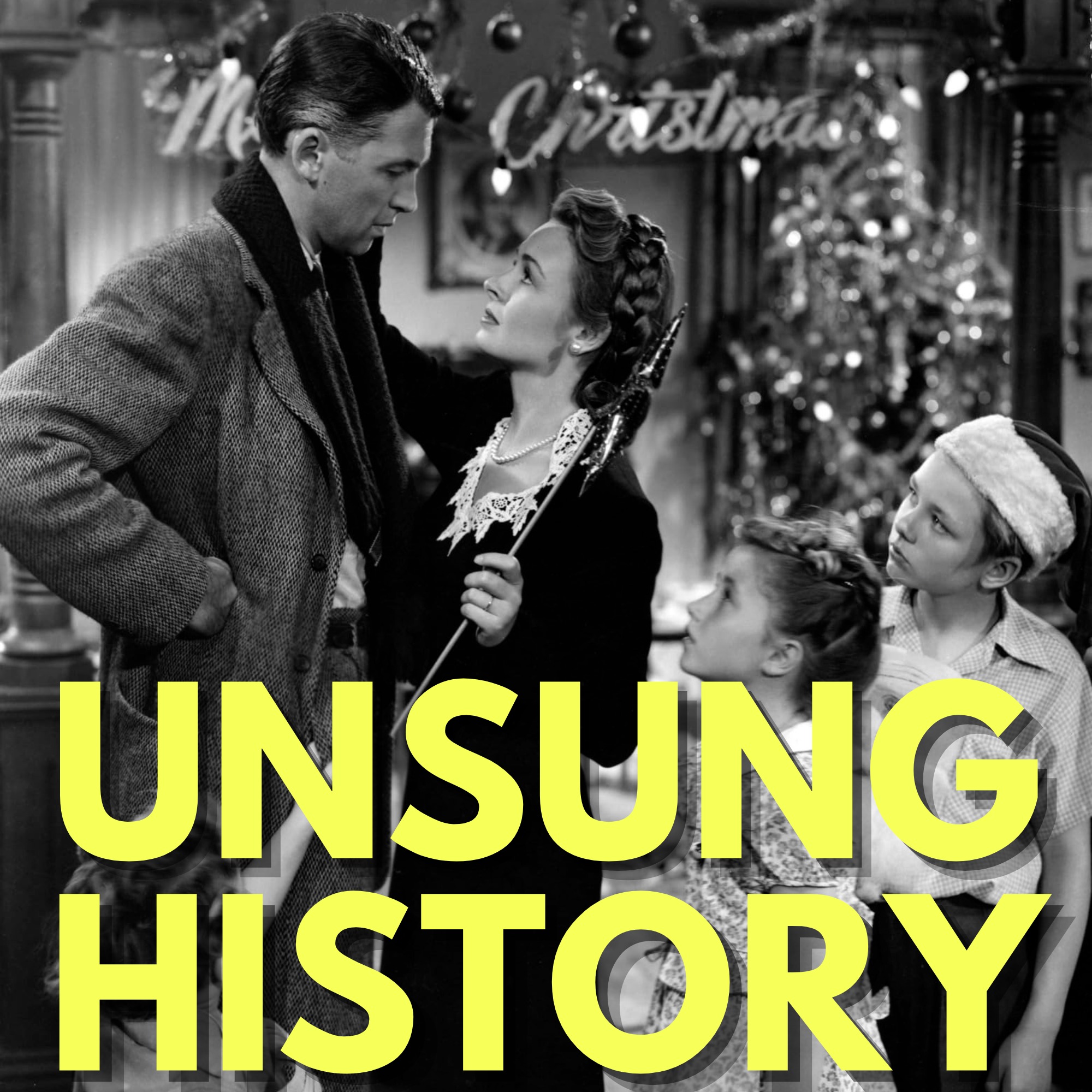
Our theme song is Frogs Legs Rag, composed by James Scott and performed by Kevin MacLeod, licensed under Creative Commons. The mid-episode music is "Carol of the Bells," composed by Mykola Leontovych and performed by the Concert Band of the United States Air Force Band of the Rockies; the performance is in the public domain and available via Wikimedia Commons. The episode image is a still from It’s a Wonderful Life, which is in the public domain.
Films Discussed:
Additional Sources:
- “Breaking Hollywood's 'Pattern of Sameness'; That is the task the independent producers have set themselves, says Frank Capra, who is one of them.” by Frank Capra, The New York Times, May 5, 1946.
- “The Truman Doctrine, 1947,” U.S. Department of State Office of the Historian.
- “House Un-American Activities Committee,” Harry S. Truman Library & Museum.
- “Screen Guide for Americans,” by Ayn Rand, the Motion Picture Alliance for the Preservation of American Ideals, 1947.
- “FBI File on Communist Infiltration- Motion Picture Industry (COMPIC),” via archive.org.
- “When 'It's a Wonderful Life' Came Under FBI Scrutiny,” by Christopher Klein, History.com, December 11, 2025.
- “How ‘It’s a Wonderful Life’ Went From Box Office Dud to Accidental Christmas Tradition,” by Jay Serafino, Mental Floss, December 6, 2024.
Advertising Inquiries: https://redcircle.com/brands
00:00.031 --> 00:08.820
[SPEAKER_02]: This is Unsung History, the podcast where we discuss people and events in American history that haven't always received a lot of attention.
00:09.720 --> 00:12.543
[SPEAKER_02]: I'm your host, Kelly Theresa Pollock.
00:12.563 --> 00:19.430
[SPEAKER_02]: I'll start each episode with a brief introduction to the topic and then talk to someone who knows a lot more than I do.
00:20.591 --> 00:27.658
[SPEAKER_02]: Be sure to subscribe to Unsung History on your favorite podcasting app so you never
00:27.638 --> 00:32.847
[SPEAKER_02]: Tell your friends, family, neighbors, colleagues, maybe even strangers to listen to.
00:37.554 --> 00:49.714
[SPEAKER_02]: Just days after the bombing of Pearl Harbor by the Japanese, in December of 1941, Director Frank Capred joined the U.S. Army as a major.
00:51.095 --> 00:54.519
[SPEAKER_02]: At 44, he was considered too old to fight.
00:55.500 --> 01:11.020
[SPEAKER_02]: And he was instead assigned to work under Chief of Staff George C. Marshall, making documentaries to explain to the troops, quote, why the hell they're in uniform, unquote.
01:11.040 --> 01:19.971
[SPEAKER_02]: The resulting seven episode, why we fight series was highly regarded.
01:20.457 --> 01:28.028
[SPEAKER_02]: prelude to war, winning the 1942 Academy Award for Best Documentary Feature.
01:29.651 --> 01:47.477
[SPEAKER_02]: Capra was discharged from the Army in 1945 as a Colonel and was awarded a number of honors, including the Legion of Merit in 1943 and the Distinguished Service Medal in 1945.
01:48.638 --> 02:11.980
[SPEAKER_02]: On May 5, 1946, Capra published an op-ed in the New York Times, the moaning the quote, orah of seamless, unquote, that had developed in Hollywood, under the consolidated power of studio heads, citing the application of mass production methods.
02:12.415 --> 02:23.293
[SPEAKER_02]: and noting, quote, we writers, directors, and producers began to get ideas, not from real life, but from each other's pictures.
02:24.254 --> 02:31.246
[SPEAKER_02]: Hollywood was isolating itself with a wall of mirrors, unquote.
02:31.266 --> 02:35.773
[SPEAKER_02]: Capra's solution was to form an independent production company.
02:36.479 --> 02:43.250
[SPEAKER_02]: with directors, William Wyler, and George Stevens, and producer Samuel J. Briskin.
02:44.812 --> 02:47.977
[SPEAKER_02]: They called their new studio, Liberty Films.
02:49.680 --> 02:59.415
[SPEAKER_02]: The first of only two movies to come out of Liberty Films was it's a wonderful life in 1946.
03:00.037 --> 03:16.917
[SPEAKER_02]: starring Jimmy Stewart as George Bailey, a small town banker who is contemplating suicide until his guardian angel, Clarence Oddbody, helps him to see the lives he's touched and the good that he's done.
03:16.957 --> 03:28.170
[SPEAKER_02]: Although it's now considered one of the greatest American films of all time, it's a wonderful life was unsuccessful at the box office.
03:28.977 --> 03:35.827
[SPEAKER_02]: and at garnered mixed reviews, earning five nominations for Academy Awards, but winning none of them.
03:37.350 --> 03:41.236
[SPEAKER_02]: The film did draw attention from one unlikely place though.
03:41.296 --> 03:43.078
[SPEAKER_02]: The FBI.
03:43.139 --> 03:46.564
[SPEAKER_02]: The Cold War was just beginning.
03:46.604 --> 03:57.921
[SPEAKER_02]: In a March 1947 joint session of Congress, President Harry
03:58.508 --> 04:01.572
[SPEAKER_02]: with the goal of stopping the spread of communism.
04:01.632 --> 04:10.204
[SPEAKER_02]: In Congress, the House on American Activities Committee, or who act, was investigating Hollywood.
04:11.526 --> 04:22.862
[SPEAKER_02]: And in November 1947, 10 screenwriters and directors, the Hollywood 10, were held in contempt by Congress.
04:23.500 --> 04:31.909
[SPEAKER_02]: In part, for refusing to answer the question, are you now, or have you ever been, a member of the Communist Party?
04:33.491 --> 04:52.933
[SPEAKER_02]: At the other end of the spectrum from the Hollywood 10, was the motion-picture alliance for the preservation of American ideals, MPAPAI, formed in 1944 to defend the industry
04:54.095 --> 05:07.211
[SPEAKER_02]: writing that they resented, quote, the growing impression that this industry is made of and dominated by communist radicals and crack pots, unquote.
05:07.231 --> 05:21.047
[SPEAKER_02]: One member of the MPAPAI, novelist and screenwriter, I and Rand, wrote a pamphlet in 1947 titled,
05:21.938 --> 05:36.613
[SPEAKER_02]: that outlined recommendations for filmmakers of things to avoid in their films, so that they did not, quote, help advance the cause of communism, unquote.
05:36.633 --> 05:40.777
[SPEAKER_02]: This list included number four, don't smear wealth.
05:41.958 --> 05:50.106
[SPEAKER_02]: Number six, don't smear success.
05:51.352 --> 06:04.984
[SPEAKER_02]: After writing a set of comprehensive rules for filmmakers, Rand, in her conclusion, noted that in the spirit of free speech, there should not be any laws against communist speaking their mind.
06:07.249 --> 06:07.369
[UNKNOWN]: Quote.
06:07.957 --> 06:24.578
[SPEAKER_02]: But the principle of free speech does not require that we furnish the communists with the means to preach their ideas, and does not imply that we owe them jobs and support to advocate our own destruction at our own expense.
06:24.598 --> 06:36.613
[SPEAKER_02]: The constitutional guarantee of free speech reads,
06:37.943 --> 06:51.641
[SPEAKER_02]: against this backdrop, and using Rans Guide, the FBI conducted its investigation into the communist infiltration of the motion picture industry, or Compek.
06:53.083 --> 06:58.190
[SPEAKER_02]: Looking into more than 200 films, including its wonderful life.
06:59.392 --> 07:07.022
[SPEAKER_02]: Two of the screenwriters for the film, husband and wife, Francis Goodrich, and Albert
07:07.694 --> 07:17.207
[SPEAKER_02]: were very close to known communists and on one occasion in the recent past, practically lived with known communists, unquote.
07:17.227 --> 07:20.592
[SPEAKER_02]: They even ate lunch daily with known communists.
07:22.134 --> 07:31.187
[SPEAKER_02]: In the film, Jimmy Stewart's George Bailey is a banker and a capitalist, albeit a compassionate capitalist.
07:32.095 --> 07:45.447
[SPEAKER_02]: who is contrasted with the film's villain, another banker named Henry Potter, who owned most of the town, and who stole Miss Placed Money from Billy's Uncle.
07:46.760 --> 08:10.422
[SPEAKER_02]: an FBI informant reviewing its wonderful life, alleged that the film, quote, represented a rather obvious attempt to discredit bankers by casting Lionel Barrymore as a scrooge type so that he would be the most hated man in the picture, a common trick used by the communists, unquote.
08:11.718 --> 08:26.403
[SPEAKER_02]: Furthermore, an informant claimed that the film quote deliberately maligned the upper class, attempting to show the people who had money were mean and despicable characters, unquote.
08:26.423 --> 08:34.958
[SPEAKER_02]: Despite the allegation that the film was subversive though, when the FBI gave their report to Huak, nothing came of it.
08:36.035 --> 08:41.704
[SPEAKER_02]: Heopper's reputation suffered, though, and he eventually lost his security clearance.
08:42.665 --> 08:48.995
[SPEAKER_02]: After a review of his next film, State of the Union, called it Communist Subversion.
08:49.015 --> 09:03.358
[SPEAKER_02]: The popularity today of its wonderful life is due in part to a clerical error.
09:04.064 --> 09:14.014
[SPEAKER_02]: And once it entered the public domain, it was shown frequently on CV during the holiday season, expanding its audience to new generations.
09:15.756 --> 09:25.465
[SPEAKER_02]: Joining me in this episode to discuss its wonderful life and ensuing Christmas films during the Cold War is Dr.
09:25.546 --> 09:34.054
[SPEAKER_02]: Von Joy, author of Selling Out Santa, Hollywood Christmas films in the
10:04.358 --> 10:05.019
[SPEAKER_02]: Hi, Vaughan.
10:05.339 --> 10:07.341
[SPEAKER_02]: Welcome back to unsung history.
10:07.381 --> 10:09.043
[SPEAKER_02]: Hello, Kelly.
10:09.083 --> 10:10.224
[SPEAKER_02]: Thank you so much for having me.
10:10.585 --> 10:15.570
[SPEAKER_02]: Yes, I am so excited to talk about your new book and to talk about Christmas movies.
10:16.111 --> 10:22.217
[SPEAKER_02]: Want to hear a little bit about what got you started on writing about Christmas films?
10:22.558 --> 10:25.180
[SPEAKER_02]: Why, why you chose that as your subject?
10:25.361 --> 10:32.188
[SPEAKER_02]: And if you are sick of Christmas films after doing all this research.
10:33.046 --> 10:40.362
[SPEAKER_01]: kind of not professional answer I guess it's just that I love Christmas films and I still love Christmas films after all this time.
10:41.164 --> 10:53.130
[SPEAKER_01]: I knew that I wanted to study the post-war period for my PhD and I know I wanted to do film and I was also very drawn to the idea of Asia on-rass study.
10:53.110 --> 11:04.991
[SPEAKER_01]: as this kind of like constant that you can then apply variables to, like a changing economy, what changes in the genre, as things improve or worsen.
11:05.472 --> 11:10.601
[SPEAKER_01]: So that was appealing to me and I can't do scary movies.
11:11.182 --> 11:12.564
[SPEAKER_01]: I'm not a horror person.
11:12.705 --> 11:13.566
[SPEAKER_01]: So
11:13.782 --> 11:19.930
[SPEAKER_01]: I was looking for another genre and my supervisor kind of jokingly said why not Christmas because this is the period.
11:19.950 --> 11:22.073
[SPEAKER_01]: This is the period of American Christmas.
11:22.273 --> 11:24.236
[SPEAKER_01]: It's a wonderful life miracle on 34th Street.
11:24.276 --> 11:24.997
[SPEAKER_01]: Why Christmas?
11:25.577 --> 11:26.178
[SPEAKER_01]: Why not?
11:26.218 --> 11:28.081
[SPEAKER_01]: And I said yeah, why not?
11:28.201 --> 11:38.254
[SPEAKER_01]: Actually, that sounds really interesting and he was a bit appalled at the idea of study and Christmas for four plus years, but we ran with it and I'm so glad that I did.
11:38.234 --> 11:55.635
[SPEAKER_02]: Obviously, watched all of these films probably millions of times what are the other kinds of sources and things that we have to understand the films, the filmmakers, how they're thinking about it, why they're making this choices that they're making and putting these films together.
11:56.122 --> 11:57.003
[SPEAKER_02]: It's a great question.
11:57.564 --> 12:08.839
[SPEAKER_01]: So for the films themselves, we are very fortunate to have a lot of press materials still where I was studying, I was very close to the British Film Institute, the BFI.
12:08.859 --> 12:21.235
[SPEAKER_01]: And they have just so many sources to use about press book materials and the marketing of these films at the Rubin Library.
12:21.215 --> 12:25.723
[SPEAKER_01]: that was really just a treasure trove for cappers materials.
12:25.924 --> 12:36.883
[SPEAKER_01]: I was really lucky enough to go to cappers archives at Wesleyan University in the Reed Cinema Archives and he kept brilliant notes.
12:37.645 --> 12:41.732
[SPEAKER_01]: Every fan mail letter, every kind of iteration of a script.
12:42.353 --> 12:44.978
[SPEAKER_01]: So that was fantastic and very lucky.
12:44.958 --> 12:50.505
[SPEAKER_01]: So we have all of those personal sources, and then we have tons of secondary scholarship, of course, about all of these films.
12:50.986 --> 13:00.838
[SPEAKER_01]: And then the other elements that I look at in the book are the kind of political and social cultural economic contexts in Hollywood and the wider US.
13:01.299 --> 13:10.611
[SPEAKER_01]: So those layers bring in documents from the FBI and testimony to the House Committee on
13:11.114 --> 13:25.254
[SPEAKER_01]: these kind of federal documents and correspondences with Hollywood elite, all of those things, and then for Hollywood itself, we have the trade journals, the Hollywood reporter.
13:25.295 --> 13:29.781
[SPEAKER_01]: So all of these just like vast materials,
13:29.761 --> 13:43.095
[SPEAKER_01]: Give us a lot of context for the Christmas film specifically, but then also the wider political kind of climate that Hollywood is working in and the country is kind of reeling in through this period.
13:44.071 --> 13:48.917
[SPEAKER_02]: People have probably heard of the House on American Activities Committee.
13:48.957 --> 13:53.102
[SPEAKER_02]: He went and might know something about that it was interested in Hollywood.
13:53.142 --> 14:02.393
[SPEAKER_02]: Could you talk a little bit about why they were so interested in Hollywood, why they went to the trouble blacklisting and having the ten and everything.
14:02.413 --> 14:09.522
[SPEAKER_02]: Like, what is it about movies or Hollywood or something that was so felt so important to this committee?
14:10.936 --> 14:11.397
[SPEAKER_01]: Yeah.
14:11.417 --> 14:14.224
[SPEAKER_01]: So it starts a little before now.
14:14.344 --> 14:18.453
[SPEAKER_01]: So in World War II, filmmakers were kind of conscripted.
14:18.534 --> 14:26.953
[SPEAKER_01]: Hollywood was conscripted to work for the war effort by producing kind of pro-war media.
14:27.119 --> 14:30.665
[SPEAKER_01]: And largely kind of non-fiction media.
14:30.705 --> 14:43.909
[SPEAKER_01]: So Frank Capra made the Why We Fight series and these played to the troops, but also to cinema audiences at home as kind of news real footage and things like that.
14:44.510 --> 14:51.523
[SPEAKER_01]: So we were aware of the kind of vast power that Hollywood could have.
14:51.503 --> 14:57.749
[SPEAKER_01]: There were other films like Mission to Moscow that was pro-Russian because Russia was our ally.
14:58.230 --> 15:06.618
[SPEAKER_01]: And it was important for Americans to have a kind of cultural connection to our allies and the war effort.
15:07.139 --> 15:11.964
[SPEAKER_01]: So non-fiction and fiction films were being made in Hollywood as part of this effort.
15:12.605 --> 15:17.950
[SPEAKER_01]: And then when the war ended, and we hadn't realized,
15:18.571 --> 15:22.018
[SPEAKER_01]: Oh, this is a real propaganda, kind of vehicle.
15:22.078 --> 15:33.981
[SPEAKER_01]: Some people were genuinely afraid that what if this falls into the wrong hands and starts issuing messages that are unamerican.
15:34.021 --> 15:37.187
[SPEAKER_01]: And some saw it as an opportunity,
15:38.298 --> 15:56.290
[SPEAKER_01]: to continue making pro-American content, but really as the kind of primary content of Hollywood and show it for free, like churches and schools and cinemas around the country, as a kind of civic duty of Hollywood.
15:56.270 --> 16:10.806
[SPEAKER_01]: that was kicked around in U.S. testimony from James K. McGinnis with the Chairman of U.S. J. Parnell Thomas, having this lovely little exchange about, what if we just make them a group of propaganda and see what happens?
16:11.407 --> 16:11.887
[SPEAKER_01]: Fascinating.
16:12.808 --> 16:23.340
[SPEAKER_01]: So there's a real genuine idea behind this that Hollywood is capable of making propaganda and that we should be aware of that.
16:23.827 --> 16:46.712
[SPEAKER_01]: Then there's also the flip of the anti-Communist effort is just kind of starving, where we're starting the coal war, and now we're kind of concerned about what the Russians are capable of, and we start really building our anti-Communist ideology in the U.S., and that is bipartisan.
16:46.692 --> 17:10.793
[SPEAKER_01]: Truman has his loyalty order in early 47 that says all federal workers have to declare that they are not part of a subversive group that has ideology that is counter-American and we also have a proliferation of the fears of kind of the communist threat abroad that we need to contain.
17:11.515 --> 17:27.433
[SPEAKER_01]: So while this is happening, there's this very pervasive idea that Hollywood is very visible and popular, and they can make a spectacle of investigating Hollywood, and these ideas all kind of come head and hand.
17:27.974 --> 17:40.628
[SPEAKER_01]: So Hollywood is this very visible glitzy glamorous stage that can be hardest for lots of different propaganda means, and in this period it very much is.
17:41.620 --> 17:48.630
[SPEAKER_02]: That brings us then to perhaps the most unexpected character in your book, which is Iron Rand.
17:50.132 --> 17:50.673
[SPEAKER_02]: Right.
17:50.693 --> 18:00.988
[SPEAKER_02]: Writing a booklet on, like, how do I identify communism in movies and then this gets applied shockingly by the FBI to its wonderful life?
18:01.549 --> 18:04.633
[SPEAKER_02]: Can you talk us through some of, how does Iron Rand get involved in this?
18:04.793 --> 18:10.041
[SPEAKER_02]: And then, where are the FBI agents doing trying to do film criticism?
18:10.510 --> 18:10.871
[SPEAKER_01]: Yes.
18:11.171 --> 18:15.459
[SPEAKER_01]: So this is a fascinating little era of her history, isn't it?
18:16.602 --> 18:27.603
[SPEAKER_01]: So yes, in Rand, she came over from Russia as a young woman and she was obsessed with Hollywood and the idea of America that she saw in Hollywood exports.
18:28.565 --> 18:31.911
[SPEAKER_01]: So she makes her way to Hollywood and has the most
18:32.347 --> 18:41.416
[SPEAKER_01]: kind of Hollywood dream experience by happening to run into Cecil B. Demil at he gets her a job just kind of on the street.
18:42.359 --> 18:45.630
[SPEAKER_01]: So fairy tale exposure in Hollywood.
18:45.931 --> 18:49.236
[SPEAKER_01]: So this really kicks off her kind of association with Hollywood.
18:49.417 --> 19:03.619
[SPEAKER_01]: She comes in and out of the Hollywood story for a few decades and ultimately had the film made and becomes very kind of intertwined with the cultural right-wing sector of Hollywood.
19:05.236 --> 19:20.375
[SPEAKER_01]: And that right-wing sector of Hollywood is busy making a different organization in this period to protect what they think are American ideals, being the motion picture alliance for the preservation of American ideals, the MPAPAI.
19:21.357 --> 19:29.607
[SPEAKER_01]: And that organization hires Ayn Rand to write for their publication called The Visual.
19:30.515 --> 19:42.217
[SPEAKER_01]: And she does a couple things for them, and one of them is this pamphlet called the screen guide for Americans that, yes, is a list of 13 things not to do in your films.
19:42.237 --> 19:46.144
[SPEAKER_01]: 13 things to avoid putting to screen.
19:46.124 --> 19:48.407
[SPEAKER_01]: to not be named a communist.
19:48.607 --> 19:55.136
[SPEAKER_01]: So if you do do any of these things, then you will be named a communist or suspected of communist sympathies in your film.
19:55.637 --> 20:07.373
[SPEAKER_01]: And they're non-sensical, honestly, things like don't glorify the common man and don't insult American institutions, things like that.
20:08.720 --> 20:14.992
[SPEAKER_01]: And the FBI gets a hold of this screen guide and quotes it in their report.
20:15.012 --> 20:24.331
[SPEAKER_01]: They're internal memo that they kept for over a decade called the Communist infiltration of the motion picture industry report.
20:24.451 --> 20:29.241
[SPEAKER_01]: It's called ComPIC and it is available by FOIA all over the internet.
20:29.261 --> 20:30.002
[SPEAKER_01]: You can find it.
20:31.045 --> 20:39.219
[SPEAKER_01]: I also wish we didn't have to talk about Ayn Rand and everyone who read my dissertation and throughout the years was like, you're really giving Ayn Rand too much credit.
20:39.599 --> 20:46.731
[SPEAKER_01]: But so did the FBI and that means we have to talk about her and her or a little list.
20:47.793 --> 20:55.045
[SPEAKER_01]: And this does, it does, it pops up in an interesting way by the FBI using her.
20:55.919 --> 21:03.178
[SPEAKER_01]: List of dogs to discuss it's a wonderful life as potential communist subversion.
21:03.867 --> 21:16.405
[SPEAKER_02]: I imagine many listeners, maybe the vast majority of listeners have seen it's a wonderful life and are probably scratching their heads and saying, I don't recall any clemenus propaganda in this film.
21:16.425 --> 21:23.856
[SPEAKER_02]: So what is it that these FBI agents, anyone looking at this to try to find communism?
21:23.876 --> 21:32.068
[SPEAKER_02]: Like, what is it that they're identifying that they think like, oh look, this is communist propaganda that the residents are clearly not seeing.
21:32.048 --> 21:34.452
[SPEAKER_01]: we just do not see because it's not there.
21:34.472 --> 21:39.720
[SPEAKER_01]: I think the important thing to start with is that it is just not communism.
21:40.221 --> 21:45.990
[SPEAKER_01]: And a lot of the times in this period when communism was alleged, it was not communism.
21:46.030 --> 21:52.460
[SPEAKER_01]: It was like the person doing the alleging would not be able to give you a definition of communism.
21:53.141 --> 21:55.846
[SPEAKER_01]: And that is what is happening here and it's a wonderful life.
21:56.146 --> 21:57.448
[SPEAKER_01]: So,
21:57.428 --> 22:09.081
[SPEAKER_01]: The FBI file suggests that it's a wonderful life is quote unquote maligning the upper class, and it's portraying Potter as evil.
22:09.161 --> 22:21.715
[SPEAKER_01]: It's vilifying him as a quote unquote scrooge like character because he indulges in wealth.
22:21.880 --> 22:35.683
[SPEAKER_01]: That's like, okay, I guess that is in the film, but in a very capitalist American way, it's not counter-American to condemn a monopolist.
22:36.505 --> 22:43.897
[SPEAKER_01]: It's actually extremely American, especially in the like early 20th century, America was very much like trust-busting.
22:43.917 --> 22:45.660
[SPEAKER_01]: One of our,
22:45.640 --> 22:48.803
[SPEAKER_01]: revered presidents, Teddy Roosevelt was the trust buster.
22:48.843 --> 23:13.470
[SPEAKER_01]: He, it's like very American to not like monopolisticizers and also to promote the exceptionalism of the common man that we see in George Bailey and the tightness, small town, Americana feeling of Bedford Falls, where everybody,
23:13.450 --> 23:21.162
[SPEAKER_01]: is selfless and working together constantly to keep their society going.
23:22.023 --> 23:41.432
[SPEAKER_01]: So I and probably many of you think of it's a wonderful life as just this deeply American film that is now in a nostalgic because we did not preserve a lot of the American ideals in it's a wonderful
23:41.986 --> 23:59.356
[SPEAKER_01]: But it is this like deeply nostalgic film about the promise of America and what we could have had if we stuck to our American values in that very idealistic capricorn kind of way, but the FBI took issue.
24:00.758 --> 24:04.585
[SPEAKER_02]: Even though we think, you know, this is obviously an unfair.
24:05.375 --> 24:21.342
[SPEAKER_02]: read of the film, there's not actually communism there, but nonetheless, Hollywood reacted right to these kinds of accusations, not just of this film, but the way that Hugh Act was going after Hollywood in general.
24:21.322 --> 24:26.356
[SPEAKER_02]: and that's what you're looking at in your book is the 15-year stretch.
24:26.757 --> 24:27.940
[SPEAKER_02]: So what happens?
24:28.000 --> 24:30.407
[SPEAKER_02]: How does Hollywood react to this?
24:30.507 --> 24:35.601
[SPEAKER_02]: They don't start making pro-communism films in response, right?
24:36.408 --> 24:44.936
[SPEAKER_01]: No, but we do have more of that promise of McGinnison Thomas's idea of more pro-American films.
24:45.516 --> 25:03.833
[SPEAKER_01]: And just the caveat, what I'm talking about here and in the book is not blanket for every film that was made in the 1950s, but it is very specific here that argument I am making to Christmas films in this period, that there is a very clear arc that we can see happening as a result.
25:03.813 --> 25:14.734
[SPEAKER_01]: of the pressures on Hollywood and the changing political cultural social economic landscape of the U.S. in this 15-year period from 46 to 61.
25:15.170 --> 25:22.240
[SPEAKER_01]: So what we do start to see is a real shift from communalist thinking to individualism.
25:22.841 --> 25:24.363
[SPEAKER_01]: And that's for several reasons.
25:25.084 --> 25:33.837
[SPEAKER_01]: First, this 46, it's a wonderful life, and then some of the all three of the Dekenzie and phones from 47, and...
25:33.817 --> 25:37.462
[SPEAKER_01]: They've Santa Claus film from 47, being miracle out there in Fort Street.
25:38.023 --> 25:48.739
[SPEAKER_01]: They all have these real communalist kind of ideas of using Christmas as a lens to think about society.
25:50.080 --> 26:00.195
[SPEAKER_01]: And who we are, who we have been to each other and who we would like to be going forward.
26:01.812 --> 26:03.975
[SPEAKER_01]: reflection and growth.
26:04.756 --> 26:13.550
[SPEAKER_01]: And that's normally embodied by a Scrooge Lake character having a moralizing arc like Scrooge does in Dickens, a Christmas Carol.
26:14.631 --> 26:29.794
[SPEAKER_01]: And they comment on larger systemic and societal problems, like homelessness, the GI crisis after World War II, and
26:30.787 --> 26:35.231
[SPEAKER_01]: by individuals changing their actions and calling for larger systemic change.
26:35.811 --> 26:42.337
[SPEAKER_01]: After 47, we get a very sharp change in the portrayal of Christmas in this period.
26:43.979 --> 26:51.665
[SPEAKER_01]: That maps on to larger trends that we do see in Hollywood, that is a shift to more simplistic plots.
26:52.506 --> 27:00.253
[SPEAKER_01]: Again, not never filmed from the 1950s, but more simplistic thoughts of plots in terms of like comedies and musicals and romances.
27:00.993 --> 27:27.186
[SPEAKER_01]: Christmas films like Holiday Affair from 1949 or White Christmas from 1954 have these these more romanticized storylines that really kind of the worst thing that could possibly happen is not George ending his life as it was in its wonderful life.
27:28.634 --> 27:41.691
[SPEAKER_01]: but rather a kind of like will they won't they Ross and Rachel thing that like, gently doesn't end up with Robert Mitchum is the worst possible ending for these films.
27:41.831 --> 27:54.608
[SPEAKER_01]: And we can really see that in films coming beyond this period and like the hallmark formula that Christmas is a period of escapism that these films are just purely individualistic
27:54.588 --> 28:02.068
[SPEAKER_01]: no greater problem than exactly what's in front of you with the interpersonal connections that you have with other people.
28:02.730 --> 28:03.813
[SPEAKER_01]: And like that tracks, right?
28:04.013 --> 28:05.898
[SPEAKER_01]: Like the fifties are a difficult period.
28:05.978 --> 28:07.984
[SPEAKER_01]: There's nuclear threats for the first time.
28:08.044 --> 28:11.112
[SPEAKER_01]: There's there are concerns that
28:11.615 --> 28:13.278
[SPEAKER_01]: don't match what came before.
28:13.318 --> 28:28.948
[SPEAKER_01]: We're a decade away from the problems of the Great Depression and World War II and many decades passed the Spanish influenza and World War I that we have like it's a wonderful life commenting on it.
28:30.380 --> 28:32.986
[SPEAKER_01]: And these films are in the 50s, they don't want to.
28:33.307 --> 28:42.229
[SPEAKER_01]: They just don't have the range to kind of nuclear threats and also systemic problems.
28:43.407 --> 28:52.878
[SPEAKER_02]: As a result, these romancees then are a very specific kind of heteronormative kind of romance.
28:53.498 --> 28:58.224
[SPEAKER_02]: And I want to talk specifically about Susan Slapchier, which is from 1954.
28:59.245 --> 29:05.652
[SPEAKER_02]: And, you know, I watched it on my own, and then told my husband, you have to watch this because I need someone to talk to.
29:05.632 --> 29:06.894
[SPEAKER_02]: about this film.
29:07.556 --> 29:09.279
[SPEAKER_02]: So what is happening in this film?
29:09.379 --> 29:25.108
[SPEAKER_02]: And how is this sort of, it's weird, but it's representative in a lot of ways of this, this kind of view of romance and normalcy that you're seeing in these Christmas movies of this period.
29:25.578 --> 29:26.560
[SPEAKER_01]: It is for sure.
29:27.121 --> 29:38.725
[SPEAKER_01]: And one of the things that I'll say before we get into the cultural behemoth that is Susan's left here is that this period is about domestic containment.
29:38.745 --> 29:40.549
[SPEAKER_01]: So I just mentioned the
29:40.968 --> 29:46.078
[SPEAKER_01]: the containment of communism abroad as our foreign policy in this period.
29:46.419 --> 29:53.933
[SPEAKER_01]: But then we also have a cultural response to that, or a cultural parallel, that is domestic containment.
29:53.953 --> 29:57.019
[SPEAKER_01]: And that's the idea that you can't control.
29:57.995 --> 30:08.070
[SPEAKER_01]: the horrors outside of your home, the just existential threat of nuclear annihilation, the fear that your neighbor could be a communist spy.
30:08.090 --> 30:10.874
[SPEAKER_01]: These are very present for people.
30:11.334 --> 30:18.164
[SPEAKER_01]: So psychologically, the nuclear family developed in this period as a way to stay sane.
30:18.184 --> 30:20.788
[SPEAKER_01]: And that's part of this holoscapism.
30:20.808 --> 30:26.837
[SPEAKER_01]: It's the idea that there is security in the home,
30:26.817 --> 30:28.804
[SPEAKER_01]: What is directly in front of you?
30:28.884 --> 30:34.262
[SPEAKER_01]: The worst thing that could happen that you are in control of is your interpersonal relationships.
30:34.833 --> 30:40.160
[SPEAKER_01]: Susan's left here is a film that I apologize for before talking about.
30:40.861 --> 30:46.468
[SPEAKER_01]: So Susan's left here is about this guy who ostensibly receives a 17-year-old for Christmas.
30:46.989 --> 30:53.197
[SPEAKER_01]: And he takes her to Las Vegas, he marries her, and he's too much of a gentleman to consummate the marriage.
30:53.297 --> 31:01.448
[SPEAKER_01]: So the rest of the film is about the 17-year-old trying to prove how grown she is by reading women's journals and learning how to be a wife.
31:01.428 --> 31:05.492
[SPEAKER_01]: and then forcing herself on her husband to consummate their marriage.
31:06.973 --> 31:28.093
[SPEAKER_01]: It is a wild film, but it's an absolute treasure trove for thinking about gender dynamics in the 1950s, how women learn to be women and wives, and this cultural containment domestic
31:29.086 --> 31:35.916
[SPEAKER_01]: by a heteronormative marriage, and the financial security, and the physical security that comes with it.
31:37.558 --> 31:48.454
[SPEAKER_02]: So I found myself thinking after watching it, like all the ways that it could have been a more interesting story, and maybe if it were told today, although I don't think it could be told to do.
31:49.135 --> 31:53.561
[SPEAKER_02]: You know, just like a different ending, it could have changed the film and made it.
31:54.182 --> 31:58.468
[SPEAKER_02]: I'm more interesting and heartwarming perhaps.
31:58.803 --> 31:59.708
[SPEAKER_01]: Yeah, probably.
31:59.728 --> 32:05.235
[SPEAKER_01]: I think maybe in like an adoption way.
32:06.211 --> 32:08.574
[SPEAKER_01]: I don't think you can really do the age difference.
32:09.095 --> 32:11.038
[SPEAKER_01]: It would not, especially not now.
32:11.579 --> 32:13.021
[SPEAKER_01]: Yeah, I don't think we could do that.
32:13.381 --> 32:19.751
[SPEAKER_02]: Yeah, well, it's, you know, I went into the film thinking, like, what is a different time, you know?
32:19.771 --> 32:24.878
[SPEAKER_02]: But like, they start right off the bat in like the first scene saying she's 17 hands off.
32:25.779 --> 32:30.987
[SPEAKER_01]: Yeah, everybody, everybody's like, ooh, don't touch her and you're like,
32:31.743 --> 32:34.707
[SPEAKER_01]: Yeah, don't do that.
32:34.727 --> 32:35.768
[SPEAKER_01]: We agreed.
32:36.069 --> 32:37.030
[SPEAKER_01]: What a film isn't it?
32:37.511 --> 32:43.258
[SPEAKER_01]: And there's also like the suggestion that someone else got her pregnant and that's a whole thing.
32:43.338 --> 32:45.081
[SPEAKER_01]: And it's like, why are we doing this?
32:45.641 --> 32:47.364
[SPEAKER_01]: Why are we doing this to Debbie Reynolds?
32:47.764 --> 32:48.725
[SPEAKER_01]: She deserves better.
32:48.765 --> 32:49.386
[SPEAKER_01]: Yes.
32:49.907 --> 32:54.533
[SPEAKER_02]: Debbie Reynolds, of course, should be noted was not actually 17, but no, she was 22.
32:55.074 --> 32:55.995
[SPEAKER_01]: She was 22 at the time.
32:56.315 --> 32:57.397
[SPEAKER_01]: And she's phenomenal in it.
32:57.717 --> 32:59.860
[SPEAKER_01]: She's really great in this film.
33:00.177 --> 33:22.827
[SPEAKER_02]: As you know, we go from this period with these films that are, you know, kind of fluffy romantic or musicals, and then that continues into 1961, but with kind of a little more
33:22.807 --> 33:25.699
[SPEAKER_02]: Can you talk a little bit about what you're seeing there?
33:25.819 --> 33:33.289
[SPEAKER_02]: What it is about the late 50s or at least 60s that lets us see this kind of shift in Christmas films.
33:33.826 --> 33:47.439
[SPEAKER_01]: Yeah, so we aren't nearing this, nearing the end of this decade that has been marked by so much fear and suspicion and cultural response to just this idea of nuclear annihilation at any time.
33:47.459 --> 34:03.073
[SPEAKER_01]: And that gets kind of exhausting and you get kind of angry, being scared all the time, right?
34:03.053 --> 34:06.219
[SPEAKER_01]: I'm done with being just sad.
34:06.259 --> 34:10.366
[SPEAKER_01]: And we get a return to Christmas films of villains.
34:11.087 --> 34:13.712
[SPEAKER_01]: These these romcoms don't have villains in them.
34:14.613 --> 34:25.112
[SPEAKER_01]: So in films like the apartment, which is still a romance in some ways, although a much more complicated one,
34:25.092 --> 34:35.084
[SPEAKER_01]: or babes in Thailand from Disney, they both have plots where you wouldn't really expect like a hardcore villain in them, but they do, they have them.
34:35.785 --> 34:42.994
[SPEAKER_01]: And that becomes kind of a comfort for people that there's a villain that can be vanquished.
34:43.735 --> 34:54.728
[SPEAKER_01]: We can't vanquish nuclear threats.
34:55.788 --> 35:18.218
[SPEAKER_01]: resolved by the end of the film, you can have a happy ending that touches a little bit closer to the social issues, the more societal problems that we're having without the villain being a nebulous societal problem.
35:18.451 --> 35:20.934
[SPEAKER_02]: very, very strange movies are.
35:21.795 --> 35:24.639
[SPEAKER_02]: It's commercially successful, but strange.
35:25.420 --> 35:38.417
[SPEAKER_02]: And I think, you know, one of the sort of most troubling aspects of it is the really deep misogyny in this film, the way that's
35:38.397 --> 35:49.533
[SPEAKER_02]: The character played by Annette Funicello, and this could have been a light romance with some weird twists without being quite so misogynistic.
35:51.516 --> 35:54.320
[SPEAKER_02]: Is this a product of its time?
35:54.600 --> 35:58.226
[SPEAKER_02]: Is it a project of Disney?
35:59.007 --> 36:02.412
[SPEAKER_02]: Do you have thoughts on what is happening here?
36:02.452 --> 36:08.100
[SPEAKER_02]: What this maybe tells us about 1961 or about films and Christmas?
36:08.519 --> 36:16.408
[SPEAKER_01]: Yeah, so I think this one is a really interesting one because it is Disney's kind of first for a feature length Christmas.
36:17.048 --> 36:23.395
[SPEAKER_01]: And it's also the first feature length Christmas film that we get that is purely for children and marketed to children.
36:24.296 --> 36:31.324
[SPEAKER_01]: That's kind of in response to the baby boom that we have just had and Disney's astronomical growth through the 50s.
36:32.024 --> 36:37.210
[SPEAKER_01]: This film is also a feature like the advertisement for Disneyland, which had opened a few years prior.
36:37.190 --> 36:42.438
[SPEAKER_01]: So, it's, it's already interesting just in it's kind of context around it.
36:43.860 --> 36:45.102
[SPEAKER_01]: But then, yeah, it's bizarre.
36:45.483 --> 36:47.306
[SPEAKER_01]: It is, it is a kind of bizarre film.
36:47.706 --> 36:57.782
[SPEAKER_01]: And there's, there's misogynist ideas, especially there are two songs in particular, where in that photo cello is saying that she can't do the song.
36:57.862 --> 37:04.733
[SPEAKER_01]: She can't figure out her weekly finances, so she might as well marry the villain because he's a man and he can.
37:04.713 --> 37:16.571
[SPEAKER_01]: and then there's a song about how she's just a doll for the male characters to pose and play with and in not and ironic tone like a genuine giving herself over to that idea.
37:17.372 --> 37:21.338
[SPEAKER_01]: And by my instinct here is to say that it is,
37:21.318 --> 37:24.562
[SPEAKER_01]: just a real exaggerated idea.
37:24.622 --> 37:35.456
[SPEAKER_01]: This is a film for kids, so let's teach kids gender norms in a very hyperbolic extreme way because something will stick in there, right?
37:36.738 --> 37:50.295
[SPEAKER_01]: But you're rated, it really isn't outlier in this period even for misogyny that this character is so so feminized in the worst
37:50.275 --> 38:07.099
[SPEAKER_02]: Looking ahead them from 1961 to the present day, obviously there's a lot of Christmas movies and we're not going to talk about all of them, but what do you see as what happened with Christmas movies after the end of your book to today?
38:07.119 --> 38:13.127
[SPEAKER_02]: It feels to me just as a sort of casual observer and I haven't seen most of them.
38:13.107 --> 38:28.045
[SPEAKER_02]: that they've continued on this kind of like fluffy tone for the most part that, you know, a lot of Christmas movies are like these lifetime romance films that happen to be Senate Christmas or something, but I'm curious what you see.
38:28.767 --> 38:31.994
[SPEAKER_01]: I would agree in general with with that tone.
38:32.074 --> 38:41.654
[SPEAKER_01]: I think we do have some lighter tones, but there are a lot of Christmas films that also do reflect much more serious things in society.
38:41.674 --> 38:44.680
[SPEAKER_01]: And they're not all romances.
38:44.761 --> 38:49.290
[SPEAKER_01]: Like we have horror Christmas films with like Gremlins in the 80s.
38:49.270 --> 39:05.440
[SPEAKER_01]: we have nostalgia laid in like films like a Christmas story which is herkening back to a pre-atomic America and kind of dealing with national trauma at another peak of the Cold War nuclear threat in the early 80s by
39:05.420 --> 39:08.005
[SPEAKER_01]: going back to a time where it just didn't happen.
39:08.126 --> 39:09.128
[SPEAKER_01]: It didn't exist yet.
39:09.609 --> 39:11.713
[SPEAKER_01]: I believe die hard is a Christmas film.
39:11.733 --> 39:15.922
[SPEAKER_01]: I think I've said that now three times on this podcast, but I do.
39:16.543 --> 39:23.578
[SPEAKER_01]: And that's an action Christmas film that is responding to social and political threats in the late 80s.
39:23.779 --> 39:24.981
[SPEAKER_01]: And
39:24.961 --> 39:35.643
[SPEAKER_01]: We have screwed the Bill Murray version of a Christmas Carol that is commenting on wealth at the end of the the Reagan decade.
39:36.786 --> 39:43.780
[SPEAKER_01]: So so we do have a lot of Christmas films still that are that are commenting on these things and I think the main kind of theme in the 21st century.
39:43.760 --> 39:58.950
[SPEAKER_01]: has been the kind of tinkerbell effect of Santa, where if we don't believe in Christmas and the Christmas spirit and what Santa can be as this figure of goodness and goodwill without a profit motive.
39:59.116 --> 40:01.919
[SPEAKER_01]: if we don't believe in that, then it goes away.
40:02.860 --> 40:09.788
[SPEAKER_01]: And I think that's a really post 9-11 idea where we can equate it with if we don't believe in democracy, then it goes away.
40:10.369 --> 40:14.554
[SPEAKER_01]: And that's been really, really prevalent in these films at the last like 20, 30 years.
40:15.735 --> 40:18.599
[SPEAKER_01]: Again, among other things, it's a complicated genre.
40:18.619 --> 40:24.145
[SPEAKER_01]: There are many things going on all the time, but I would say that's what we're seeing now.
40:24.732 --> 40:26.224
[SPEAKER_02]: There is a lot more in the book.
40:26.244 --> 40:27.413
[SPEAKER_02]: We're not going to get to.
40:27.676 --> 40:30.135
[SPEAKER_02]: Can you tell listeners how they can get a copy?
40:31.060 --> 40:35.705
[SPEAKER_01]: Yeah, it's available everywhere that you can get your books online at least.
40:35.905 --> 40:41.170
[SPEAKER_01]: I'm so Barnes and Noble, bookshop.org has it as well if you want to support your local bookshops.
40:42.211 --> 40:48.177
[SPEAKER_01]: And you can find it from the publishers website where it is also open access.
40:48.738 --> 40:49.739
[SPEAKER_01]: Please do check it out.
40:49.759 --> 41:00.730
[SPEAKER_01]: And if you like it, please get a copy for yourself, copy for a friend, and spread the, spread the Christmas drawing.
41:01.874 --> 41:08.684
[SPEAKER_01]: The main message of the book and something that I would really like people to just take away is that these films are important.
41:09.765 --> 41:12.169
[SPEAKER_01]: And media literacy is important.
41:12.650 --> 41:21.062
[SPEAKER_01]: You may not have ever really given it so wonderful life that much of a think, but it's important to do so.
41:21.643 --> 41:30.936
[SPEAKER_01]: So if you have listened to this episode and take nothing else away, but that these films
41:30.916 --> 41:32.927
[SPEAKER_01]: Then I'm happy with that.
41:33.211 --> 41:37.836
[SPEAKER_02]: And how can listeners find your public scholarship website?
41:37.856 --> 41:38.637
[SPEAKER_01]: Yes, thank you.
41:38.957 --> 41:45.284
[SPEAKER_01]: My husband and I have just launched this new website, this fall, called Black and White and Brad all over.
41:45.304 --> 42:00.940
[SPEAKER_01]: It is Black, White and Red or AD.com, where you can find my newsletter, Ben's newsletter, and lots of resources for other public scholars to get in the conversation and share their work.
42:00.920 --> 42:04.246
[SPEAKER_02]: Great, and I will put a link in the show notes as well.
42:04.927 --> 42:07.271
[SPEAKER_02]: So, Bon, thank you so much for speaking with me.
42:07.331 --> 42:08.172
[SPEAKER_02]: This was such fun.
42:08.653 --> 42:16.566
[SPEAKER_02]: Thank you so much for having me again.
42:46.229 --> 42:48.211
[SPEAKER_00]: Thanks for listening to UnSung History.
42:48.992 --> 42:52.515
[SPEAKER_00]: Please subscribe to UnSung History on your favorite podcasting app.
42:52.996 --> 42:58.481
[SPEAKER_00]: You can find the sources used for this episode in a full episode transcript at UnSung History Podcast.com.
42:59.102 --> 43:05.167
[SPEAKER_00]: To the best of our knowledge, all audio and images used by UnSung History are in the public domain or are used with permission.
43:06.008 --> 43:12.895
[SPEAKER_00]: You can find us on Twitter or Instagram at UnSung Under Score
43:13.465 --> 43:20.138
[SPEAKER_00]: To contact us with questions, corrections, praise, or absolute suggestions, please email Kelley at unsignedhistorypodcast.com.
43:20.922 --> 43:24.882
[SPEAKER_00]: If you enjoyed this podcast, please rate, review, and tell everyone you know.
43:25.243 --> 43:25.585
[SPEAKER_00]: Bye!