Special Guest- Bill Nelson
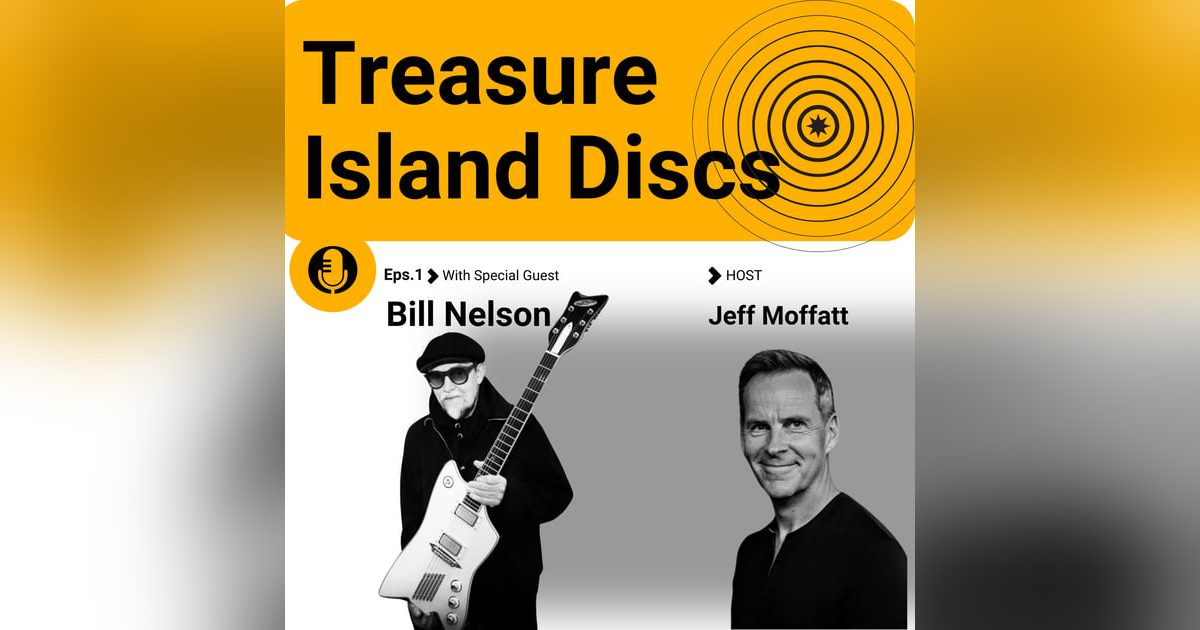


In this episode we visit with Bill Nelson, a true icon and legend of British Music.
Bill’s musical selections are like a time capsule of his life and fascinating music career. He takes us through five significant tracks, each representing a pivotal chapter in his musical evolution—from his childhood memories of saxophonist Freddie Gardner to the electrifying sounds of Duane Eddy that ignited his passion for guitar. What’s truly special is how he organizes his selections chronologically, allowing us to experience his soundtrack in real-time.
We’ll explore the influences that have guided him throughout his impressive career and how his commitment to artistic integrity has kept his creativity alive. So, get comfortable and prepare to explore the unique and fascinating stories with Bill Nelson about the music that forms the soundtrack of his life. If you’ve ever wondered how music weaves itself into the lives and inspiration of your favourite artists, this episode is a must-listen!
Takeaways:
- The music we grow up with profoundly shapes our creativity and artistic expression.
- Bill Nelson shares how his childhood music experiences sparked his lifelong passion for creating.
- Each song selected by Bill Nelson represents a significant chapter in his musical journey.
- Bill's exploration of various musical styles showcases how eclectic influences can shape a unique sound.
Links referenced in this episode:
Episode Playlists
Apple Music
https://music.apple.com/ca/playlist/treasure-island-discs-episode-1-bill-nelson/pl.u-aZb0qG7IVK6Pbp
Welcome to Treasure Island Discs.
Speaker AGet ready to set sail with your host, Jeff Moffat, as we dive deep into the stories behind the music, one Treasure island disc at a time.
Speaker BHi, I'm Jeff Moffat and welcome to Treasure Island Discs.
Speaker BWe've got a great show lined up for you this week.
Speaker BOur guest is one of the most innovative, original and creative forces in music.
Speaker BIt's the legendary Bill Nelson.
Speaker BHe's, of course, widely known and recognized for his work as the founder and leader of Bebop Deluxe, but there is so much more to this artist.
Speaker BHis body of work is extensive, and he has always pushed the boundaries of style, possibility, and creativity through his music.
Speaker BIn today's episode, you'll hear him talk in detail about his life, his approach to writing, and what has and still inspires him creatively.
Speaker BSo the format of the show revolves around our guests selecting five songs or artists that they feel best define the soundtrack of their lives.
Speaker BNeedless to say, it's not an easy task to narrow it down to such a short list.
Speaker BAnd Bill and I talk about this in the interview, as you'll hear, but he did a masterful job of choosing some excellent music to share with our listeners.
Speaker BWhat makes this episode especially powerful, though, is how Bill chose to structure his five selections in chronological order, each one representing a key chapter in his life.
Speaker BHe starts from the very first song he remembers hearing as a child growing up in Northern England, to the records that sparked his love of guitar, and finally to the music that influenced him as a songwriter and a more experimental artist.
Speaker BAfter Bebop Deluxe, the way he presents his selections allows us to walk through the soundtrack of his life in real time.
Speaker BI have such a tremendous amount of respect for this man as an artist, but also because of the way he has been committed his whole career to making the music that he wanted to make without any regard for following the pack, chasing hits or commercial gain.
Speaker BFor him, it was and always is about the art.
Speaker BIt's a rare quality and he's a truly unique, thoughtful and talented artist who, through a lengthy, diverse and impressive career, has never lost his love or passion for creating.
Speaker BAnd just before we jump into the interview, a reminder that we have a lot of great artists lined up for the show in the coming weeks and months.
Speaker BSo hit the follow button to stay up to date on upcoming episodes.
Speaker BYou can also find us on Instagram treasureislanddiscs and we'd love to hear your thoughts and comments on this show and any artists that you'd love to hear on an upcoming episode.
Speaker BWe've Also included links in the show notes for where you can learn more about Bill Nelson.
Speaker BAnd for your listening pleasure, we have a complete playlist of the songs from today's show as well as some highlights from Bill's career.
Speaker BGreat to have you along with us as we talk with Bill Nelson about his musical journey and the soundtrack of his life.
Speaker CBill, thanks so much for joining us.
Speaker BIn Treasure Island Discs.
Speaker CI know our listeners are going to enjoy the conversation very much.
Speaker CIt's wonderful to have the opportunity to speak with you about not only the songs that we're going to talk about, but your formative years, where you grew up and what the environment was like for you as a young person figuring out your place in the world at that time.
Speaker AYeah, well, I was born in Wakefield, which is a town in the West Riding of Yorkshire.
Speaker AAnd my parents were both very occupied with musical things as well as their ordinary work.
Speaker AMy father played saxophone, had his own big band.
Speaker AIt wasn't fully professional, it was semi professional.
Speaker AAnd he met my mother when she was in a tap dancing troupe.
Speaker AAnd so music meant a lot to both of them.
Speaker AAnd I grew up in a household that actually was my, my grandma's house.
Speaker AMy mum and dad didn't have a house of their own at that point.
Speaker ASo I was born in a place called Marriott's Buildings, which was an old tenement block in Wakefield that had been built in the 1800s by a man called Thomas Marriott, who had a mill just across the road from Marriott's buildings.
Speaker AAnd he built Marriott's Buildings for some of his workers to live there.
Speaker ABut I was born in 1948, so that had long gone, the mill is long gone.
Speaker AAnd it was just ordinary people living in that tenement block.
Speaker ASo it was a very sort of basic beginning start to my life.
Speaker AThere was no electricity in the place, it was all gas light, there was no central heating or anything, just open fireplaces.
Speaker AIn fact, there was no bathroom or toilet inside, it's an outside toilet.
Speaker ASo it was almost like a Victorian life there.
Speaker AAnd I lived there until I was three and then my parents got a modern flat, Armour Council estate called East Moore Estate and we moved there to a brand new house.
Speaker AAnd then, you know, most of my school years were spent living there with my parents and that's sort of when I was about 10 years old when I first got involved with the guitar.
Speaker CWas there always music in your house?
Speaker AThere was, yeah.
Speaker AI mean even, you know, right from the beginning before we moved to that place, at my grandma's house there was a Windup gramophone.
Speaker AAnd my father had a collection of.
Speaker AOf old 78 records.
Speaker AOne of the ones that he had was by a saxophonist called Freddie Gardner.
Speaker AAnd this was a track called Body and Soul.
Speaker AAnd my dad really liked this guy's playing.
Speaker AAnd his own muffin's own playing was very much influenced by Freddy Gardner's style.
Speaker ASo when, you know, when.
Speaker AWhen I was incredibly young, one and two years old, I would hear this record being played in my grandma's house.
Speaker AUnfortunately, at one point, I think I was about probably three, just before we moved, I tried to put the record on.
Speaker AOn one of the gramophone up.
Speaker AYeah, I accidentally broke the record, which didn't go down very well.
Speaker ABut that's the first.
Speaker AThat's the first recollection I've got of hearing music.
Speaker AWas hearing that record.
Speaker CYeah, did.
Speaker AAs a.
Speaker CAs a child, did you just feel kind of being exposed to that and listening to that, did you.
Speaker CWere you drawn to music, almost intuitive?
Speaker AYeah, I think so.
Speaker ALooking back, you know, it was something that felt natural and right to me.
Speaker AI mean, my dad did try to teach me to play the saxophone when I was 8 years old.
Speaker AAnd because he could read music, he started from that point of view trying to teach me to read music.
Speaker AAnd for some reason, I just couldn't make that connection between those black dots on the page and sounds in my head, you know, so he kind of gave up on me.
Speaker AHe thought, oh, he's ever going to be a musician, you know, he can't grasp this at all.
Speaker ABut it was a little later when I was, you know, 9 or 10 years old.
Speaker AMy younger brother had been given a plastic toy guitar for Christmas, and he didn't bother with it.
Speaker AAnd I messed around on it and managed to work out the Third man theme from the movie the Third Man.
Speaker AAnd dad heard this and said, okay, let's get you a guitar.
Speaker AAnd he got me a secondhand arch top guitar.
Speaker AAnd that's, you know, that's part of how I got going.
Speaker CAnd then did you at that point get formal lessons or did you basically learn on your own?
Speaker ANo, I didn't have any lessons.
Speaker AI mean, my dad showed me.
Speaker AMy dad, besides playing sax, he used to play the banjo bit as well, and ukulele.
Speaker ASo he showed me three ukulele records.
Speaker AThe toy guitar actually had four strings and was more like a ukulele than a guitar.
Speaker AAnd so I learned those.
Speaker AThose three chords, ukulele chords.
Speaker ABut other than that, it was a matter of sitting down with the record player and putting a 45 on a slower speed and.
Speaker AAnd trying to pick out the notes that were being played.
Speaker AI could find them on the guitar.
Speaker AI mean, one of the first things I heard that really struck me for guitar was a track by playing Eddie called Because They're Young.
Speaker AI just love the sound of It.
Speaker AAnd I can remember when I was around 10, my mother went and bought the single for me from a shop in town.
Speaker AAnd I used to play it in my bedroom and I made cardboard guitars that looked like Dwayne Eddy's guitar.
Speaker COh, I love it.
Speaker ASo I could stand in front of a mirror and mime to the, to the record.
Speaker ASo that was a powerful sort of inspiration to.
Speaker CDid you put your first band together by the time you were like 12 years old?
Speaker AYeah, well, we were.
Speaker ASchool.
Speaker AWe had a school band.
Speaker AYou know, it was, it was.
Speaker AI'd met a friend at school who was about the same stage as I was learning, you know, very rudimentary, simple things.
Speaker ABut, but we, we became pals and we used to chat about music and guitars and he had a lot of albums by the Ventures and so on and, and.
Speaker AAnd I had a lot of Shadow stuff and we had another friend who had a drum kit.
Speaker ASo the three of us put a band together.
Speaker AWe were called.
Speaker AFirst of all, we were called the Strangers.
Speaker AThen we changed it to the Cosmonauts.
Speaker AYou know, we played at the school's Christmas concert party.
Speaker AAnd that, that was, you know, quite a revelation to stand.
Speaker AThe first time I ever played in front of any kind of an audience was there at school thing.
Speaker AAnd of course, you know, several of the girls came and wanted to talk to us after.
Speaker AThis is a good thing, you know, I'll have to start practicing more, you know.
Speaker CRight.
Speaker CAnd playing music like the Shadows and, and that kind of stuff.
Speaker CWas that sort of what your playlist looked like?
Speaker AYeah, yeah.
Speaker AI mean, when this friend of mine that was playing guitar, same time as me at school, we also like the Ventures.
Speaker AI can remember he and I, he came down to my parents house and we sat in my bedroom with two guitars and we both knew the chords to Walk Out Loud.
Speaker ASo we were both playing the chords to the song together, both in unison.
Speaker AAnd then I suddenly got the idea, hang on a minute, you play the course.
Speaker AAnd that moment in time I became a lead guitarist and my friend became a written guitarist.
Speaker AThat's how it worked out.
Speaker CSo as you went into the next phase of your career, did you know or did you feel that, look, this could be my career and I'm Passionate about this.
Speaker CI love it enough that I really want to make this my, my vocation.
Speaker CDid you have a moment like that?
Speaker AStrange, because that part of the world where I lived in nobody any ambition to, to become a professional musician.
Speaker AAmongst my generation it was something that happened to people who lived in London.
Speaker AThey got record deals, they did this, that the other.
Speaker ABut we were in a.
Speaker AWe were in a kind of a vacuum really.
Speaker AAnd so the only hope anybody had was just to play local gigs in pubs and working men's clubs and so on.
Speaker ASo it just seemed an impossible thing.
Speaker AIt probably crossed my mind that it would be nice to do that, but it seemed literally impossible for somebody, you know, in Wakefield to do so.
Speaker AI, you know, for.
Speaker AFor quite a few years as my mobility developed on the guitar, I was in different local bands.
Speaker ASome I joined that were already formed, some I formed myself.
Speaker ASo there was a succession of bands that, that played around the area and that was kind of the best I thought it could be at that time I became an art student.
Speaker AI'd always had a facility for drawing and painting and I studied fine art at Wakefield Art School.
Speaker ABut at the same time I was playing with the bands in the evenings and at weekends.
Speaker AAnd my future plan at that point was a dream again to become perhaps a painter or at least a teacher of painting, which was a more practical solution than starving in a garret somewhere.
Speaker AMy dad got ill, had to stop work.
Speaker ASo after four years at our college I got a day job working as a local government officer which was incredibly boring job but it helped bring money in the family.
Speaker AI kept the bounds going.
Speaker AAt that point in time I actually met someone in Wakefield who had a homemade recording studio.
Speaker AIt was basically a bedroom with a tape recorder.
Speaker AAnd I recorded an album called Northern Dream.
Speaker AAnd then I also had a band just prior to that called Global Village which was a three piece kind of psychedelic blues rock band.
Speaker ABut when I came to record Normal Dream, that was the first batch of songs I'd ever seriously sat down to write.
Speaker AAnd we just made 250 copies I think of that were pressed up and that then got in the hands of John Peel, the dj, famous DJ who's gone now but he played both sides of the album on air on his program, BBC program and EMI Records.
Speaker AOne of the A and R people there happened to be listening to Peel's program and heard the album being played and then got in touch with me and wanted to re record the album with sort of session musicians and asked me to go down to EMI's headquarters in London and have a chat with them.
Speaker AAnd I just, at that point in time, I just put the first lineup of Bebop Tilots together.
Speaker AWe were literally two weeks old.
Speaker ASo knowing that I had this chance to go down to talk about, you know, EMI signing me, I took a demo.
Speaker AWe made a quick demo of a couple of songs and took that down to the EMI's headquarters and played it to them.
Speaker ASaid, look, you know, Roland and Dreams, a couple of years old now, and I'm doing this and I'd like you to consider this.
Speaker AAnd then listen.
Speaker AThey said, well, you've only been together a couple weeks.
Speaker ALet's give you two or three months and we'll come up to see you play live.
Speaker ASo that happened.
Speaker AThey came to see us and by that time we built up a good local following.
Speaker AWe did a gig in Leeds at a pub called the Staging Post and the place was packed out because we got this following of younger people who were really into what we were doing.
Speaker AAnd the EMI guys came up and they had a listen and afterwards they said, no, we don't, don't think the band's up to it, but we'll still sign you as a solo artist.
Speaker AThe band were my friends.
Speaker AIn fact, the, the rhythm guitarist in the band was the guy that I'd met at school when I was, you know, 10 years old, right?
Speaker AI said, no, they're my friends, you know, and I'm not dumping them, you know, so it's a band or nothing.
Speaker ASo they said, okay, well we'll see you again in a few months and see what we can do.
Speaker ASo anyway, what happened eventually was we landed a gig at the Marqueen Club in Warder street in London, which was the famous club for blues and jazz and rock.
Speaker AAnd we were supporting a band called String Driven Thing there.
Speaker AAnd we went down really well with the London audience, which the EMI people had been skeptical about, wondering whether we would mean anything outside of the north of England where we would play.
Speaker AAnd that's.
Speaker AWe went down really well with this audience in the Marquee Club and EMI were there EMI guys, and they came backstage after and said, okay, okay, we'll do a deal.
Speaker ACome and see us tomorrow.
Speaker AAnd we signed a deal with emi.
Speaker CEverything sort of happened very organically, clearly, and, and, and I, I'm not going to say it happened fast because there's so many years behind that where you're, you're learning your craft and you're paying your dues.
Speaker CBut as you transition to that next chapter with bebop, were you.
Speaker CDid you feel prepared for everything that was going to come at you in the next 10 years?
Speaker ANo.
Speaker ANothing?
Speaker ANo, no.
Speaker AI mean, you know, was.
Speaker AIt was still.
Speaker AEven though we were suddenly, we got a record deal, we were going to make our first album, I was serious about that, you know, I really wanted that to be good.
Speaker ABeyond that, it was still.
Speaker AWe still had that attitude of this is just fun.
Speaker ADon't let it get to you, go to your head.
Speaker AIt might not last long, you know.
Speaker ASo yeah, it was, it was, it was fairly hard to go lucky at this.
Speaker CAnd did it stay that way?
Speaker ANo, it didn't.
Speaker ABecause emi, although they had agreed finally to sign the whole band, they were still not convinced by the other guys in the band.
Speaker AAnd they kept having words with me and saying, look, you really need to find some better musicians to play with you.
Speaker AAnd I was, you know, very reluctant.
Speaker ABut one of the first things we did when we were signed to EMI was we were put on tour with a band called Cockney Rebel, which was led by a guy called Steve Harley.
Speaker AAnd Cockney Rebel had a number one hit at that time and were pulling fairly large audiences around the country.
Speaker ASo we were as a support, they were on EMI as well.
Speaker ASo EMI put us as a support band to Cockney Rebel.
Speaker AAnd during that tour I could see what EMI were getting at because Cockney Rebel were a lot kind of slicker and a bit more professional and tighter, I think thought.
Speaker ASo at the end of that tour I decided I.
Speaker AI'd take I advice and try and find some stronger musicians to work with.
Speaker AAnd the difficult thing then was saying to the guys in the in be that, you know, I needed to move on and that was.
Speaker AThat was a hard thing to do.
Speaker CThat would be a tough conversation.
Speaker AYeah, yeah.
Speaker AAnd I mean every, apart from one person in the band, the other guys understood and they said actually we expected it.
Speaker AYou knew we weren't sort of perfect for it.
Speaker AAnd one guy during the bass player Rob Brian, was very unhappy about it.
Speaker AThere was a bit of friction, you know, but then I had to try and put another band together.
Speaker AAnd as it happened, two members of Cockney Rebel had quit Cockney Rebel at the end of that tour as well.
Speaker AAnd one was Mel Marine James who was the keyboard player Incognit Rebel and the other was Paul Jeffries who was the bass player.
Speaker ASo they decided, they decided to play with me.
Speaker ASo Milton, the keyboard player, Neuro drummer from Birmingham, he played with in the past called Simon Fox and he said, you Know, I know this guy Simon Fox, he's a good drummer.
Speaker AShall we get him in and try him out?
Speaker ASo Simon came and auditioned and I thought was absolutely perfect.
Speaker ASo we went out with that lineup which was Simon, myself, Milton, Liam Jones on keyboards and Paul Jeffries on bass.
Speaker ABut something didn't quite gel.
Speaker AIt wasn't a personality thing.
Speaker ANice guys.
Speaker ASomething didn't feel right about the keyboard player and the bass player.
Speaker ASo after we only did a few gigs and they were quiet gigs, just sort of setting out how the band would work together.
Speaker ASo at the end of a couple of gigs I said no, this isn't working, I need to look elsewhere.
Speaker ASo I said I want to keep Simon.
Speaker ASo I was Simon and myself then needing a bass player and a Debo player.
Speaker AAnd we auditioned bass players in London.
Speaker AWe tried half a dozen bass players until Charlie Tulahi turned up and soon as he first few notes he played and it's absolutely just perfect for the band.
Speaker CYou know, like you just knew right away he was the guy.
Speaker AYeah and just his whole demeanor when he played, he enjoyed playing and you know, a big grin on his face, be bopping around and his playing was spot on.
Speaker AThere were no sort of nothing funky about it.
Speaker AIt was superb.
Speaker ASo then we had a bass player but we had no keyboard player.
Speaker AWell, we went out and did some gigs as a three piece.
Speaker AIn fact we recorded the second Bebop Deluxe album Futurama with just the three of us.
Speaker ABut we were looking for a keyboard player all the time and different people came to audition for us but nobody really was right until we met Andy Clark.
Speaker AAnd Andy had been in a band called Mother's Pride and Andy was a bit of a prog rock guy.
Speaker AWhen we first met him he sort of, he was dressed in an African coat and had hair down to his, his waist basically.
Speaker AAnd you know the image was completely not what I was looking for for the band.
Speaker ABut yeah, his playing was, was really, really good.
Speaker ASo we said okay, you can come into the band but you've got to get a haircut and get some different clothes for stageway.
Speaker ASo he was a bit reluctant to do that sort of thing but he did and you know we had.
Speaker ASuddenly we had the four piece band that went on to record the next album we did was Sunburst Finish.
Speaker AProbably the most commercially successful of the albums.
Speaker CDid you feel at that point that you like you had your people and that you had all of the requisite players in, in their seats that you could re really realize your vision for Bebop?
Speaker AYeah.
Speaker AI mean, the thing was that everybody in the band had slightly different tastes in music.
Speaker AI mean, Charlie loved reggae and kind of funk and a bit of soul.
Speaker AAndy was into like, King Crimson and elp, you know, sort of Rick Waitman keyboard type, and then was into the who and Keith Moon and that sort of, you know, British, right, rock, pop thing.
Speaker AAnd I was into all of it.
Speaker AI've always had incredibly wide tastes in music.
Speaker ASo I had this band that I felt I could.
Speaker AI had this idea that we could pull in all kinds of music into the mix.
Speaker AI didn't think of it in terms of being a postmodern band.
Speaker AThat's what it was.
Speaker AIt was a postmodern band that could reference different periods and styles of music and mix them up together and make something that, you know, reflected the whole history of popular music or whatever, without.
Speaker AWithout actually radically copying any of it.
Speaker AYou know, it would argue him to that.
Speaker ASo that was how the vision I had for the band.
Speaker CWhen you look back on it now, do you feel a sense of pride that, you know, what you accomplished during that period and with that band?
Speaker AYeah, yeah, I do, I do.
Speaker AI mean, I am often very.
Speaker AI don't know whether the dismissive is the right term, sort of.
Speaker AI've often said that I don't have a rear view mirror.
Speaker AI only have a windscreen to look forward to.
Speaker AAnd so I.
Speaker AI hardly ever listen to the.
Speaker AWell, not just to Bebop, but even to some of my more recent solo albums.
Speaker AOnce they're out there, I'm more interested in working on the next project rather than looking back.
Speaker ASo I'll leave whatever.
Speaker AWhatever on the trail is left to take care of itself.
Speaker AI'm not that sort of keen to be tied to it, you know, I.
Speaker CThink one of the things that.
Speaker COne of my observations about you and your career is that, for example, after Bebop had disbanded, you made, I would say, an artistic change of direction to a certain extent.
Speaker CWith the Red Noise project and the Sound On Sound album in particular.
Speaker CWhere there were elements of new wave, there was elements of punk in there.
Speaker CThere was obviously a real creative use of synths.
Speaker CAnd I think I will say this to you.
Speaker CI think it's an outstanding album.
Speaker CI thought it was an outstanding album then and I still think it is today.
Speaker CMaybe more so, looking back.
Speaker CBut it was also an album, I think, that was ahead of its time.
Speaker CCould you talk a little bit about your approach to writing and recording of that album and how that was a landmark in the Next part of your career?
Speaker AYeah.
Speaker AOne of the things at the tail end of Bebop Deluxe, I actually wanted to move on.
Speaker AI had this urge to try and incorporate more electronics into the sound and to make the guitar more of a textural part than a front line part, if you like.
Speaker AAnd I talked to the band's manager of the record company and I said, look, I need to do something different.
Speaker AAnd they said, you know, things are going really well.
Speaker AYou should continued dbop.
Speaker AAnd eventually they said, look, we'll compromise, give us one more Bebop Deducts album and then you can make this change.
Speaker ADidn't know what that change exactly was going to be at that time.
Speaker AI agreed to make one more album and we did the Drastic Plastic album, which was the last studio album and release.
Speaker AAnd that was a kind of a precursor to.
Speaker ATo Red Noise because I got.
Speaker AI got a mini Moog at home and I got one of the first synth guitars.
Speaker AIt was a guitar made by a company called Hagstrom and It's called Patch 2000.
Speaker AAnd you could this guitar into a mini Moog and play the Minimoog from the neck of the.
Speaker ASo I did some stuff on the classic Plastic album using that track called Electrical Language.
Speaker AYeah, the synth guitar on it.
Speaker AAnd then there's another track which was, I think a piece out of a single from there called Futurist Manifesto.
Speaker ASo it.
Speaker AThat was kind of where I was wanting to go, but I still had to keep something of the Bebop thing going.
Speaker ASo it was a kind of a hybrid thing.
Speaker ABut then when that was delivered and done with, I then started to think about forming and take those ideas further.
Speaker AAnd Red Noise was what was the result.
Speaker AAnd the sort of initial concept for the Sound On Sound album was to try and present a near future kind of scenario of a dystopian world.
Speaker AAnd that loose sort of concept helped me to come up with some of the ideas for the songs.
Speaker AAnd yeah, that's how I can always.
Speaker CCome about when I think one of the things that's clear to me is that you've never been an artist who's afraid to challenge the status quo or to push kind of beyond the conventions of the mainstream.
Speaker CAnd I think it's a kind of a recurring theme throughout your work where you have a bit of a fearless mindset and you are clearly going to go in the directions that you feel support the integrity of you as an artist.
Speaker CWere you trusting that your audience would find you and you were going to do what you did regardless?
Speaker AYeah, well, yes, I hoped.
Speaker AI hoped, obviously, because, you know, the only.
Speaker AI mean, it was never.
Speaker AIt was never about massive fame.
Speaker CRight.
Speaker AHuge amounts of money.
Speaker AIt was always about creating the music.
Speaker AA simple joy of creating music was the driving, driving force.
Speaker AAnd it was probably a bit too idealistic when I was younger, but that's how it was, you know, and it was kind of do it, and if it all falls apart, then it all falls apart.
Speaker AJust do it.
Speaker AJust try and do it.
Speaker ASee what happens.
Speaker AAnd that was that, you know, that was a real motivation all the time.
Speaker AAnd I mean, to have been times when things were difficult, particularly with management problems and not getting paid money from record companies and so on.
Speaker ABut I never.
Speaker ASomehow, I've never needed to go back to a day job of any kind.
Speaker AI've always managed to keep enough happening with the music that it sustained.
Speaker ASustained me making more.
Speaker AAnd that was.
Speaker AThat was the driving force.
Speaker AI didn't want to stop making music or.
Speaker CAnd you stayed very convicted to that.
Speaker CEven in our own lives.
Speaker CGoing through it, as, you know, at different points in your life where you have responsibilities as a parent, a family and people around you, you've got certain points in your career, you've had people that depended on you for their paycheck, so you have competing responsibilities.
Speaker CBut even through that, you manage to see your way through it and stay true to your principles.
Speaker AYeah, I mean, the thing about, you know, responsibility.
Speaker AI mean, looking back now, you know, I can see times when.
Speaker AWhen I couldn't, you know, now I would be very sort of feeling guilty about some of it.
Speaker AYou don't always take into account or as much into account of other people's feelings as you.
Speaker AYou should do.
Speaker AI wouldn't say I've ever been ruthless about it, but, you know, it's.
Speaker AYeah, I think if you have a dream or a vision that you really love, you follow it wherever it leads.
Speaker ASometimes along the way, there are bound to be difficulties and confrontations and so on.
Speaker CBill, let's talk a little bit about creativity and your artistic philosophy.
Speaker CIn any creative endeavor, there's an element of channeling the muse and allowing inspiration to find you.
Speaker CAnd I think you do that beautifully.
Speaker CCan you talk a little bit about your own creative process?
Speaker CBecause your.
Speaker CYour body of work is so extensive and you've never stopped creating.
Speaker CSo how do you find the inspiration?
Speaker AWell, the actual, you know, methods of making music are many, and they vary from different from time to time.
Speaker AFor instance, when I.
Speaker AWhen.
Speaker AWhen I was still working in my day job and playing in the Evenings.
Speaker AIf I got an idea for some lyrics, I'd write the lyrics down at my desk job, take them home and then work out a song because I didn't have any other means of doing it whilst I was working other than I could jot lyrics down.
Speaker ASo lyrics often came first at that point.
Speaker AWith the last 30 years or so, it's more like I, I don't necessarily need to have an idea before I start.
Speaker AIt's like a painter making a mark on a blank canvas and he might put a color and a line and then look at it and think, I'll put that behind there and I'll put a blob there and then I'll turn that around there and see what happens.
Speaker ASo you start with, with another way to think of it.
Speaker AIt's like if you've got an empty house or an empty room, you put the carpet down first, right?
Speaker AAnd you bring some furniture in and you move it around till it's comfortable and then you start decorating a bit with some lamps before you painting from the wall.
Speaker AIt's like that.
Speaker AYou just make a start.
Speaker AIt doesn't matter what, what.
Speaker AIt doesn't have to be a specific thing.
Speaker AIt can be anything.
Speaker ASo sometimes I'll start just with a rhythm pattern, a drum pattern, or I'll start with a keyboard pad sound that I like the sound of.
Speaker AAnd then you start working with that and gradually a song will start to take shape and emerge from it.
Speaker AIt's again, it's like I keep making these comparisons with, you know, visual artist, but a sculptor with a big stone and he just thinks inside that stone is a statue.
Speaker CThere's a Picasso quote where he says, to know what you're going to draw, you have to begin drawing.
Speaker AYeah, yeah, exactly.
Speaker ASo, yeah, I, I, it's just like that.
Speaker AAnd I record in my home studio.
Speaker AI record every evening.
Speaker AI just go up there and I have no idea what's going to emerge, right?
Speaker AI just start doing it, making marks and, and just seeing what develops and then shaping it up.
Speaker AAnd you know, when I've got a, a bit firmer grip on where it's going, I can then steer it a little bit more.
Speaker CHow have the tools of your trade changed over time?
Speaker CLike has that changed how you approach your own writing to decay?
Speaker AYeah, the, the kind of my studio at the moment, it's only in a very small room, but it's a software based recording system like many people have.
Speaker ABut I still tend to use it almost like it's a tape recorder rather than cutting and pasting things.
Speaker ASo, you know, some people will.
Speaker AThey'll get a perfect take on a chorus and then they'll copy that chorus and paste it further along in the song.
Speaker AIf I make a mistake, rather than copying it from a part that I didn't make a mistake, I'll re record the mistake, I'll play it.
Speaker ASo I don't use sequence as much.
Speaker AI try and play everything in real time, whether it be keyboards or guitar.
Speaker ASo I'm still trying to use an old school tape recorder approach to it.
Speaker AI think that keeps it sounding a little bit more organic and less clinical.
Speaker ABut there are things that this system I'm using, which is called Cubase, it outstrips anything that you could do at Abbey Road in the facilities that it can give you.
Speaker AAnd that is a massive change.
Speaker AMy past recording career.
Speaker CDo you still approach the process with the same sense of excitement, for lack of a better word, every day when you go into the studio, do you feel that same sense of joy of creating?
Speaker AOh, absolutely, yeah.
Speaker AI mean, the most exciting thing is a blank page, a blank canvas.
Speaker AIf you're a painter, you know, it's really exciting because, you know, and for me it's like it's not a piece of tape anymore because it's digital, you know, onto a hard drive.
Speaker ABut it's when you start, there you are, that's the exciting part.
Speaker AI find the actual.
Speaker AThe process of making music is really the thing that gets me.
Speaker AI enjoy that more than playing live, although I've retired from playing live.
Speaker ABut the actual process of creating the music is through the most joyous part of it for me.
Speaker AOnce the thing's done, that track finished, then that's it, you know.
Speaker CWell, we should talk about your selections of the music that you've chosen today.
Speaker CAnd I acknowledge that it is so hard when you reflect on coming down to five songs that you feel would best represent the soundtrack of your life.
Speaker CAnd I knew if you and I had the opportunity to talk today that you would come up with some amazing selections and they'd be interesting, they'd be eclectic.
Speaker CAnd what they would really do is provide a deeper understanding of you as a person and as a musician.
Speaker CAnd I think the music that you selected today is just that.
Speaker CSo I'm really excited to talk about these tracks that you've chosen and the reasons why you chose them.
Speaker CSo I'll throw it over to you.
Speaker CAnd what's your first track?
Speaker AFreddie Gardner, and it's a track called Body and Sou.
Speaker CSam.
Speaker ABasically this was the first piece of music I ever heard as an infant.
Speaker AAnd my father, as I think I mentioned before, was a semi professional saxophone player and he based his style on Freddie Gardner.
Speaker AAnd one of my dad's style pieces when he played with his band was Body and Soul.
Speaker AAnd he basically, you know, he did a faithful copy of Freddie Gardner's version.
Speaker ASo I heard that as a very, very young child, probably 2 years old or something.
Speaker AAnd it's.
Speaker AThe memory of it has stayed with me all these years, you know, as something that probably did ignite the first spark of musical appreciation that I ever had.
Speaker AAnd also reminds me of my dad because I did hear him play in his band when I was about four or five.
Speaker AHe played for a friend, a friend of her mum and dad's had a silver wedding anniversary and it was at a place in Wakefield called the Unity hall.
Speaker AAnd dad's band played for their wedding anniversary.
Speaker AAnd I can remember my dad playing on the bandstand and he sounded just like Freddie Gardner sounded like the record.
Speaker AAnd in fact, I had.
Speaker AThis is another thing which is strange.
Speaker AI had at that time a little poly saxophone.
Speaker AIt was like a.
Speaker AIt was like a kazoo.
Speaker AIt didn't have any things you could press a play, but you could sing or home into it and it would make a noise like a kazoo.
Speaker AAnd apparently my mother told me years and years ago at this particular silver wedding anniversary ball with my dad playing, I stood on a chair in front of the stage playing my kazoo saxophone along with.
Speaker AAlong with my dad at the age of probably three years old.
Speaker CIt's a very.
Speaker CIt's a beautiful tune.
Speaker CIt's a very melancholic tune as well, I would say.
Speaker CYeah, yeah.
Speaker AI mean, it's been covered by lots of people.
Speaker AI mean, you were saying about, you know, it's only five tracks, but, I mean, I could spend an entire day listing tracks that have meant an awful lot to me over the years.
Speaker AAnd it was really hard to just choose five because, you know, you're missing out 100 of them.
Speaker AYeah, that one had to be in because it was.
Speaker AIt was the first, you know, the first start of my musical journey.
Speaker CI think it's a beautiful selection and it's.
Speaker CIt clearly is a meaningful selection to you as well.
Speaker AYeah.
Speaker CHow about number two?
Speaker AWell, that's Dwayne Eddie's.
Speaker ABecause They're Young.
Speaker AI'd been messing around on a toy guitar at home.
Speaker AIt was just a toy guitar, but there was a radio program, a BBC radio program, which used as A signature tune because they're young, by the way.
Speaker AEri.
Speaker AAnd I just love the sound of the electric guitar.
Speaker AI think it was probably the.
Speaker AThe first time I'd heard an electric guitar.
Speaker AI don't know, maybe I had all the things, but the sound of that, that particular guitar just sounded amazing.
Speaker AAnd I used to, you know, put.
Speaker AListen to this program every week because I knew that that track would be the theme tune.
Speaker AAnd my mum noticed my enthusiasm for that track and I was off school with.
Speaker AI think I had flu and I wasn't very well and she decided to go out and buy me the single to cheer me up.
Speaker AAnd so I.
Speaker AI had the single at home and I could play as often as I wanted.
Speaker AThen without having to wait for the weekly radio show to hear it, you know, started investigating Toy Neddy and found that he got albums and saw pictures of him with.
Speaker AWith this bright orange red gretch guitar.
Speaker AAnd so I started making cardboard bars I cut out of pieces of card and painted to look exactly like Dwayne Eddie sketch.
Speaker AAnd they weren't even playable things, they were just flat, you know, visual representation.
Speaker CRight, right.
Speaker ABut then.
Speaker ASo I'd stand in front of my bedroom mirror and mime to test.
Speaker AVery young.
Speaker ABut then ironically, in.
Speaker AIn more recent years, I.
Speaker AI became friends with Wayne Eddie, which was an amazing thing because he was given an award.
Speaker AI forget what it was.
Speaker AA few years back now, he was given an award by Mojo magazine, which you may know, and it was the Icon award they gave him.
Speaker AAnd they got in touch with me and said, look, we know you're a diphtherain from.
Speaker AFrom when you start playing guitar.
Speaker AWould you like to present him with this award?
Speaker ASo I went down to London and it was the main event of the evening.
Speaker AThere was also an awards, but the final award was the Icon Award, which I got to present to Dwayne.
Speaker AAnd it was fantastic to meet him because he knew that I'd been mentioning him in different interviews and things seemed to be grateful for that.
Speaker AI brought his name up and he was.
Speaker AHe turned out to be a really nice guy.
Speaker AAnd I then did an interview for the American Guitar Player magazine.
Speaker AI interviewed him for that and then he played in London.
Speaker AI went to see him there and we were chatting a lot backstage.
Speaker AThen he played in York and wanted me to play get up and play a number with him.
Speaker AUnfortunately, that day I had to be somewhere else.
Speaker AMy brother had passed away and was having a bench dedicated to him in a sculpture park in Wakefield, so I couldn't get there for a rehearsal.
Speaker ABut I did get to see the show and meet him again afterwards.
Speaker AAnd then we started corresponding and I heard from him last year around New Year time.
Speaker AHe always used to send me Christmas greetings and things and we exchanged emails and he said at the time, he said, I've got family over at the moment for me a year, so I've got to tell you, but I'll.
Speaker AI'll be in touch soon, you know.
Speaker AAnd then the next thing I knew, he'd passed away and he'd had.
Speaker AHe had cancer and he'd never mentioned it.
Speaker AIt kept it quiet.
Speaker ASo I was really broken up about that because it's an important part of my, you know, early influences.
Speaker CYeah.
Speaker CSo that selection brings up a lot of fond memories and I think at that point in your.
Speaker CIn your life is part of, you know, one of the huge reasons why you picked up the guitar and played the guitar like you played it was because of Dwayne Eddy.
Speaker AYeah, yeah.
Speaker AI mean that was.
Speaker AThat really was the, you know, the initial driving force was one, you know, one thing.
Speaker AI mean, I had, you know, pictures of Drawing Eddie on my bedroom wall and pictures of the Shadows and so on.
Speaker AAnd I had no idea, being a pre teen thing, that I was going to have a chance of meeting any.
Speaker COf them because this segues beautifully into selection number three in a.
Speaker CIn a very kind of organic way.
Speaker AYeah, yeah.
Speaker AWell, that's the Shadows and this particular track is called Midnight.
Speaker AAnd, you know, it was a natural thing once you got into instrumental guitar music that you would also gravitate towards other artists that were doing that kind of style back then.
Speaker AVery early 60s vocalists were never of any particular interest to me at that point in time.
Speaker AI always felt the vocalist got in the way of the guitar.
Speaker ASo I really got into instrumental music and lots of other bands like the Ventures and so on.
Speaker ABut the Shadows were really.
Speaker AThey got big in the UK at that time and when I was still at school with this friend of mine, Ian Parkin, the guy that we were learning to play guitar together and we went to see the Shadows actually played in Wakefield at a cinema in Wakefield as part of a package show.
Speaker AUsually these package shows that toured where you get about five different acts in the same show and they'd.
Speaker AOne particular would headline the show and the Shadows headlined this other show that had Lord Rockingham's 11 on and some other bands who have forgotten now.
Speaker ABut we went.
Speaker AIan Parkin and myself went to see the Shadows play at this cinema in Lightfield.
Speaker AAnd when they came on, it was.
Speaker AThat was another kind of revelation.
Speaker AIt was the first time I felt the bass in my feet.
Speaker AYou know, the bass guitar sound vibrated the whole place.
Speaker AYou could feel the pulse of the bass in your feet.
Speaker AAnd when the curtains opened, it.
Speaker AProscenium moved with curtains.
Speaker AWhen they opened the curtains on the shadows, they were in darkness.
Speaker AAnd you could just see three little red lights, one for each amplifier, showing that the amplifier was turned on.
Speaker AAnd then they actually went into.
Speaker AThe first number they played was a Dwayne Eddy number called Shazam.
Speaker AAnd as they started out with that number, the spotlight came on and went straight onto Hank Marvin's guitar.
Speaker AAnd they had this red Fiesta, red Fender Stratocaster.
Speaker AIt was just like ice running down the back.
Speaker CThat is amazing.
Speaker AYeah.
Speaker CThe fact that you remember that in such great detail is amazing.
Speaker AYeah.
Speaker AWell, it made such an impact, you know, and.
Speaker AAnd again, it was.
Speaker AIt was another push.
Speaker AIt made me want to practice even more.
Speaker AAnd, you know, I just wished I could be like that on a stage with a spotlight and a red Fender.
Speaker ASo.
Speaker ASo that was.
Speaker AIt was a really important moment.
Speaker ABut one of the pieces I played was Midnight.
Speaker AAnd I hadn't.
Speaker AI hadn't heard that before for some reason.
Speaker AAnd it was a.
Speaker AIt's a ballad track.
Speaker AIt was very similar in some ways to Santo and Johnny's Sleepwalk.
Speaker AMy friend Ian Parking, who's gone with me to see them, he actually heard the single that Midnight was the B side of.
Speaker AI think the A side was probably FBI.
Speaker AIt was called FBI, but the B side was Midnight.
Speaker ASo he knew the tube.
Speaker AAnd at school the next day, I used to say, what's wrong with me?
Speaker AThat song again, I really like it.
Speaker AHow does it go?
Speaker AYou know, we sold a tune.
Speaker CTrack number four is another amazing song and a different part of your life a few years down the road.
Speaker CAnd like you were saying to me earlier this.
Speaker CThe selections that you've chosen fall into a chronological order.
Speaker CAnd this, you know, this progression makes total sense that it's the mid-1960s song you've chosen.
Speaker CIt is such a great track.
Speaker CI'll let you introduce the song.
Speaker AYeah, well, the song is happening 10 years time ago by the Albert Spurts.
Speaker CMeeting people along my way Seemingly I want one day of things that my dreaming always brings back 10 years time ago Situation.
Speaker ABetween the Shadows and this particular track, there is a host of other records I could have which would have taken up far too much time.
Speaker AMy introduction to, like, Chet Atkins on the guitar.
Speaker AI had loads Of Chad Atkins albums when I was early teens.
Speaker AJazz Boys of Montgomery, Kenny Burrell, people like that.
Speaker AAnd also from this era, where the Alberts were would be the early who stuff.
Speaker AAnd other sort of freaky psych rock bands.
Speaker ABut this sort of wraps it all up in one track.
Speaker AThat kind of psychedelic era, pre psychedelic, really.
Speaker AAnd has an amazing middle section which is quite abstract.
Speaker AIt sound devices and siren like guitar sound feedback.
Speaker AIt just.
Speaker ATo me at the time, it just seemed like a widescreen Technicolor thing opening up in front of my eyes.
Speaker CWas this the ultimate lineup of the Arbors, do you think?
Speaker AI would say so.
Speaker AI think it was, you know, their most interesting period, really.
Speaker AThere was such a lot of ideas being thrown into the mix.
Speaker AIt had moved on.
Speaker AI mean, when they, you know, their earliest stuff was really kind of more blues oriented.
Speaker ABut this was really just.
Speaker AIt opened up other areas.
Speaker AI mean, there'd been Things again.
Speaker AShapes of Things was a favorite track of mine when that came out, which was prior to this.
Speaker AAnd Over, Under, Sideways, Down Again.
Speaker ABeck's guitar was doing something new at that time.
Speaker AWith this particular combination of people in the band.
Speaker AThey really just sort of blew the jaws off, really, you know, I explored what was possible.
Speaker CAs we go to selection number five.
Speaker CIt is, I would say, best described as being a change of direction musically.
Speaker CA beautiful selection.
Speaker CAnd I'll let you talk a little bit about what this one means to you and.
Speaker CAnd a little bit about the artist.
Speaker AYeah, well, I've been interested in electronic music since I'm.
Speaker AI was an art student.
Speaker AIn fact, I'd made a kind of a.
Speaker AI'd made a soundtrack.
Speaker AThe college put on a play at.
Speaker AThe play was called Peer Gynt.
Speaker AAnd I made a soundtrack for this play.
Speaker AAnd I used some electronic sounds made not with synthesizers, but using found sounds and running them backwards.
Speaker ARecording and then running the tape backwards.
Speaker ASo the Earth.
Speaker AAnd I used some of John Cage's prepared piano techniques applied to the guitar.
Speaker AFor instance, putting pieces of metal between strings.
Speaker AAnd then hitting the strings with mallets to make abstract sounds.
Speaker AAnd recording them, speeding them up, slowing them down.
Speaker ASo I'd have an interest in avant garde electronica since the midsies.
Speaker AAnd then I put into craft work in their early stages.
Speaker APrior to them becoming a successful popular band.
Speaker AI'd always had that side interest in things electronic.
Speaker ABut at the same time I also had an interest in classical music.
Speaker ASome of my favorite composers are 20th century composers like Debussy and Edward Elgar, Vaughan Williams and so on.
Speaker ARavel I come across this album by Tomita and to me, to a Japanese musician, and he done.
Speaker AI think he'd done some albums before this one.
Speaker AThis album was called Snowflakes Are Dancing, and I like the title.
Speaker AAnd it also.
Speaker AIt was pieces of music composed by Debussy done on modular synthesizers.
Speaker AAnd at that time, to make a piece of music using this kind of complexity and beauty, using the module of synth was not an easy thing to do.
Speaker AIt took hours and hours of work.
Speaker AAnd I bought the album and I absolutely fell in love with it.
Speaker AIt was just so.
Speaker ASo beautiful, the whole thing.
Speaker ADebussy's compositions are fabulous anyway.
Speaker ATo hear them rendered with, you know, modular synthesizers in this way added another dimension, an ethereal dimension.
Speaker ASo, yeah, I absolutely love Albert and that.
Speaker AThat's again, another in terms of direct influence.
Speaker ABut it inspired me to explore similar kind of realms, if you like.
Speaker CAs you reflect on these selections, obviously there's different emotions that come from each of them.
Speaker CThey.
Speaker CThey have different places in your life.
Speaker CWas the process of going through this joyful bliss it nostalgic.
Speaker CHow did you feel trying to find five.
Speaker CFive selections?
Speaker AWell, it was difficult just finding five, you know, leaving out so many things that also have been equally important.
Speaker ABut.
Speaker ABut I think.
Speaker AI think these five have.
Speaker AThey show sort of the.
Speaker AThe major forces on my own music, which are.
Speaker AI think, you know, with.
Speaker AWith the Freddy Gardner track, it's melody and, you know, composition.
Speaker AWith Dwayne Any in the Shadows, it's.
Speaker AIt's that electric guitar sound that kicked off the whole thing, you know, in terms of guitar.
Speaker AWith the Arbors thing, it's.
Speaker AIt's.
Speaker AIt's my psychedelic rock teenage years, you know, and with.
Speaker AWith.
Speaker ATo me to it.
Speaker AIt just brings the classical and electronic together and they're all.
Speaker AThey're all key to what I do now in some way.
Speaker AArtist.
Speaker AIt's like these things, you absorb them and then they.
Speaker AThey like, sink to the bottom and they become subliminal.
Speaker AAnd you don't.
Speaker AYou don't reference them directly or intentionally, but there's something about them, something in the character that informs whatever you do yourself as an artist.
Speaker AAnd, you know, if you look hard enough, you can.
Speaker AYou can sense that that's where those things are coming from.
Speaker CAre you still excited about.
Speaker CAbout new music?
Speaker CDo you have any favorites that you're listening to these days, these last couple.
Speaker AOf years or so?
Speaker AMore, I guess.
Speaker AI.
Speaker AI'm so saturated with my own music.
Speaker AI have.
Speaker AI hardly.
Speaker AI'm aware of anything.
Speaker CRight.
Speaker AThat's going on.
Speaker CYeah.
Speaker AStrange.
Speaker AYeah.
Speaker AAnd I used to be.
Speaker AI used to be totally on top of all the, whatever was happening.
Speaker AIf I listen to music other than what I'm working on myself now, it tends to be often music that's made before I was born.
Speaker AYou know, I've still got a soft spot for old style rock and roll, you know, L.
Speaker AHaley or early Elvis or something like that.
Speaker AAnd I like western swing music very much as well.
Speaker ABob Wills and these Texas Playboys and that kind of thing.
Speaker AIt's kind of music that I think because it's so.
Speaker ASo apart from what I do, I can listen to it in a different way.
Speaker CI am so grateful that you have taken the time today to talk to us, to share all of the great music that you selected for our listeners.
Speaker CAnd I'm.
Speaker CI'm grateful that we've had the opportunity to talk about them in detail and it's given great insight and a glimpse into your career in a kind of a different way.
Speaker CAnd I want to thank you so much for being with us today.
Speaker CIt's been a wonderful conversation and it's been great to chat with you.
Speaker AThanks very much.
Speaker AIt's been a great pleasure.
Speaker AThank you.
Speaker BAnd that brings us to the end of this episode of Treasure Island Discs.
Speaker BA huge thank you to Bill Nelson for taking the time to share his music, his stories, and so many deep personal reflections on life and creativity.
Speaker BIf you enjoyed the episode, be sure to follow us.
Speaker BTreasureIslandDiscs and wherever you get your podcasts, you can grab the playlist and the links for today's episode in the show notes as well.
Speaker BThanks so much for listening.
Speaker BI'm Jeff Moffat.
Speaker BSee you next time.


