Royal Wood
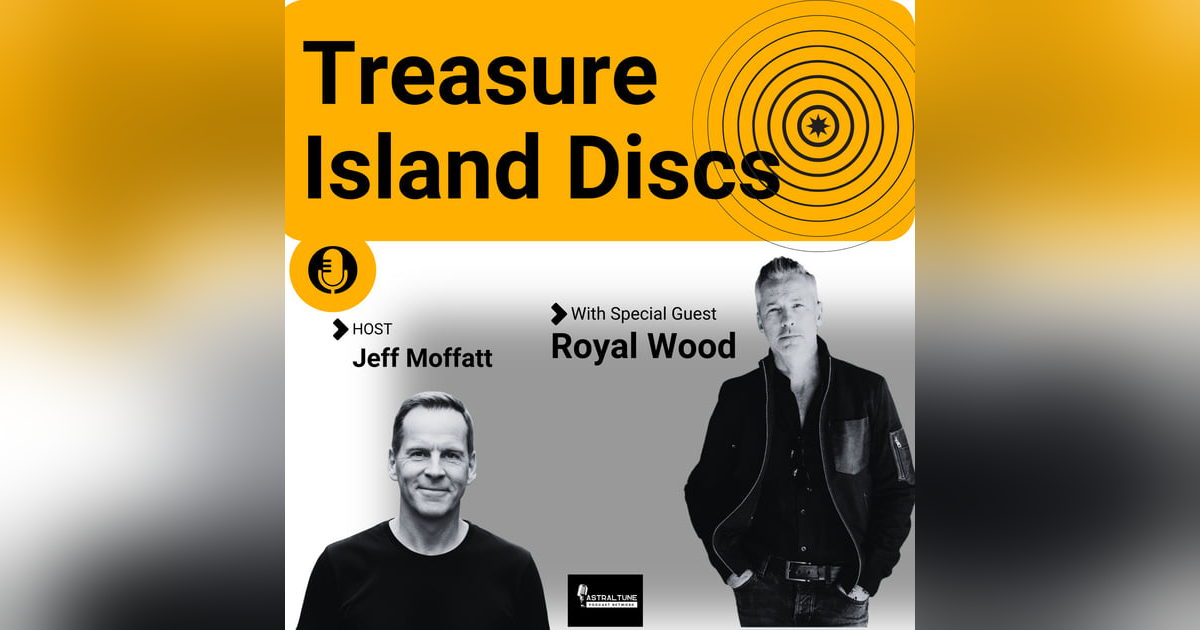


Royal Wood, one of Canada's most talented singer-songwriters, joins us for a heartwarming chat about balancing life as a musician, husband, and father. He opens up about his journey, tracing his early years immersed in music, and how he has evolved over the years to create some of his best work to date. Royal reflects on the importance of prioritizing family while still pursuing his passion, sharing how this balance has enriched both his personal life and his artistry. His latest album, "Dear John," serves as a beautiful testament to his love for family and his renewed commitment to music. Get ready for a relaxed, insightful conversation that dives deep into what it truly means to find harmony in life and music!
Royal Wood's Treasure Island Disc Selections
The Beatles- Sgt. Peppers
Cat Stevens- Tea for the Tillerman
Bob Dylan's Greatest Hits Volume. 2
Sam Fender- Seventeen Going Under
Royal Wood- Artist Bio
Royal Wood is a Juno-nominated Canadian singer-songwriter, multi-instrumentalist and producer whose work is marked by timeless melodies, lyrical sophistication, and emotional honesty. Raised in Lakefield, Ontario, he began playing piano by ear at age four and eventually mastered guitar, bass, drums and more — developing an ear for rich arrangements and evocative songwriting. Over nearly two decades in the music business, he has built a distinguished catalogue of albums, toured widely in North America and Europe, and earned the respect of a growing global audience. With his new album Dear John, Royal finds himself at an inflection point — rediscovering his love for creating while balancing life as husband, father and artist.
Listen to Dear John:
Apple Music: https://music.apple.com/us/album/dear-john/1832191785
Spotify: https://open.spotify.com/album/5FhXSeZv7hM2gpR4ou3IFe
Selected Discography
Studio Albums:
- Tall Tales (2004)
- A Good Enough Day (2007)
- The Waiting (2010)
- We Were Born to Glory (2012)
- The Burning Bright (2014)
- I Wish You Well (2014)
- Ghost Light (2016)
- Ever After the Farewell (2018)
- What Tomorrow Brings (2022)
- Dear John (2025)
EPs & Live:
- The Milkweed EP (2002)
- The Lost and Found EP (2009)
- Love Will Linger EP (2018)
- Live at Massey Hall (Live Album, 2021)
- Official website: https://royalwood.ca/
- Apple Music page: https://music.apple.com/ca/artist/royal-wood/192604581
- Spotify artist page: https://open.spotify.com/artist/0gpd8R84x5pZaGi5tgZdKc
Takeaways:
- Royal Wood reflects on his early love for music, starting with piano at age four.
- Balancing family life with a music career has led to Royal creating his best work yet.
- His new album, 'Dear John', embodies gratitude, love of family, and personal growth.
- Royal shares how becoming a father changed his perspective on music and priorities.
- The importance of being present and enjoying the small moments with family is emphasized.
- Royal's journey showcases how self-reflection can rejuvenate an artist's creative spirit.
Artists and Companies mentioned in this episode:
- Royal Wood
- McGill University
- Bonnie Raitt
- Sam Fender
- Olivia Rodrigo
- Jimi Hendrix
- Led Zeppelin
- Oscar Peterson
- Frank Sinatra
- The Beatles
- Cat Stevens
- Bob Dylan
- Leonard Cohen
- Joni Mitchell
- Jeff Buckley
- War on Drugs
Welcome to Treasure Island Discs.
Speaker AGet ready to set sail with your host, Jeff Moffat, as we dive deep into the stories behind the music, one Treasure island disc at a time.
Speaker AI see the sad souls Walking round With another bad day going down But I find myself here at your gate and I'm early.
Speaker AI just couldn't wait.
Speaker AYou have this feeling when you're young, like these little, these moments that you're a part of, that they last forever and they, they, they, they just don't.
Speaker ASo now, like, especially because I, I try to be home as much as possible and I try to lean into being a family man first and foremost.
Speaker AWhen I go on tour now and when I'm doing a show or when I'm in my studio or when a song presents itself or whatever that moment is.
Speaker AOh, I'm just trying to squeeze every last drop out of it.
Speaker BThose are the words of wisdom and experience from an artist who has spent over 20 years writing, recording and touring the world.
Speaker BHe's a musician, producer, performer, songwriter, but most importantly, he's a husband and a father to two young boys.
Speaker BAfter it's all said and done, Royal Wood has found peace and harmony in his life, but not without a tremendous amount of self reflection and soul searching.
Speaker BHis relationship with a career in music has evolved and all of this has led to some of his best work to date.
Speaker BHis new album, Dear John, is a testament to his love of family, gratitude, purpose, and a renewed commitment to his music.
Speaker BI'm Jeff Moffatt and welcome to the podcast as Royal Wood joins us on Treasure Island Discs.
Speaker BRoyal, welcome to the show.
Speaker AThank you very much for having me.
Speaker BSo where do I find you today?
Speaker AIn Saskatoon, Saskatchewan.
Speaker AI'm in my study.
Speaker AI would be in my studio, but there's no windows, so it always feels a little dark.
Speaker BI always like to start these conversations off talking about how music came into an artist's life.
Speaker BIn your case, having listened to Dear John over the last few days, actually quite a bit.
Speaker BAnd then looking at the COVID art for Dear John, I assume that music came into your life super early because the kid on the COVID is about 2 years old, sitting at a piano.
Speaker BIs that you?
Speaker AYeah, it's me.
Speaker AYeah.
Speaker AYeah.
Speaker AI was lucky.
Speaker AI grew up in a household where my parents just love music, so music was always on in some form and there were instruments, so I naturally gravitated, you know, just something that interested me.
Speaker AAnd piano was my first love.
Speaker BHow old were you when you started playing piano?
Speaker AProperly playing four.
Speaker AAnd then my parents put me into lessons when I was 8 or 9, so I could learn theory.
Speaker AAnd then I just started learning instruments along the go.
Speaker AI had a really great music teacher in high school who let me bring home, like, any instrument I wanted.
Speaker ASo my Rolodex became quite lengthy.
Speaker AI had a rock band in grade seven, and then I had bands all throughout high school.
Speaker AAnd I was in the jazz band and just, you know, playing coffee houses and, you name it, just was always playing.
Speaker AYeah.
Speaker BSo did you go through the whole jazz program in school?
Speaker AJazz band?
Speaker AI played trumpet, clarinet, tuba.
Speaker AIn the large ensemble.
Speaker AI didn't play piano.
Speaker AI was studying piano.
Speaker AAnd I love jazz, and I was playing it myself.
Speaker ABut they needed someone who was good on brass.
Speaker AAnd for some reason I had a.
Speaker AAn amisher for the trumpet.
Speaker AKind of leaned into that.
Speaker BWas there a point in time where you sort of realized, you know what?
Speaker BI love this.
Speaker BI'm passionate about it.
Speaker BI'd like to make this my career.
Speaker ANo, it always was.
Speaker AI. I don't have a memory of ever thinking I wanted to be a firefighter or a police officer or an astronaut.
Speaker AIn fact, my mom had this book.
Speaker ASo the first day of school, you got your photo done, and it was for all the kids.
Speaker AThere's five kids in our family, so there's a lot of these books.
Speaker ABut the first day of school, you take your photo and then you.
Speaker AYou'd check off these boxes, like, you know, how old you are and your favorite color and what do you want to be when you grow up?
Speaker AAnd mine always said musician, like across the board every year.
Speaker AAnd so it was definitely was a real.
Speaker AA real passion.
Speaker BDid you have a cover band through high school?
Speaker AYeah, I mean, it's a rite of passage.
Speaker AYou have to have a cover band.
Speaker AIt's where you learn arrangement and playing with others and communication and live sound and playing to no one.
Speaker AAnd, you know, playing when you think it's important, like year end assembly, like, you know, all the pressures of performance that comes from having that.
Speaker AThat sense of showmanship.
Speaker ALike, you know, you're trying to impress your friends and peers and that kind of never goes away.
Speaker BWhen did you start writing?
Speaker AStarted writing in early high school, but never let anyone hear anything.
Speaker AI did not divulge that part of me until I went to Montreal.
Speaker AI went there.
Speaker AI went to McGill University, and I started playing solo jazz piano in this place called the Upstairs, which I did for drinks and to meet French girls.
Speaker AAnd I started writing, really writing my own songs and performing them in, like, small little coffee houses and stuff.
Speaker ABut they were Just rudimentary.
Speaker AThey were listening back.
Speaker ALike, I had this little EP that I made back then called Sketches, and they're just.
Speaker AThey're just terrible.
Speaker AThey're just terrible songs.
Speaker ABut, you know, it was.
Speaker AYou're finding your voice as a.
Speaker AAs an artist, so you wear a mask of whoever you're listening to or you're trying to be something.
Speaker AAnd then I remember coming home on a Christmas break and I sat down on my childhood piano and this song came.
Speaker AIt was called off my sleeve.
Speaker AIt was just me on a piano, this, like, sad balladeer kind of thing.
Speaker AAnd I wasn't thinking about was it cool or did it sound like someone.
Speaker AI was trying to sound like.
Speaker AThis song just kind of came.
Speaker AAnd that was a very big aha moment for me.
Speaker AThat was when I was like, I'm just going to start sitting down at the piano or sitting with my guitar and just writing and seeing what comes.
Speaker AAnd slowly this collection of songs came to be, which I called the Milkweed ep.
Speaker AAnd that launched my career.
Speaker ALike, I. I put that out and immediately got attention and got a team.
Speaker AAnd then I chipped away this record called Tall Tales.
Speaker AAnd then that led to, like.
Speaker AWell, my.
Speaker AFully led to my career.
Speaker AI quit my job, I made a good enough day, started touring like crazy and never stopped.
Speaker BHave you felt that over time, from, you know, from the earliest stages of you writing, have you found that your writing has gotten easier?
Speaker BOr how has it evolved for you when you sit down now to write?
Speaker AWell, it's funny, I think I've actually found my way home.
Speaker AThere's a period in my career, though, I'm proud of it because it got me to this point.
Speaker AYou know, when you get far enough along, you have a massive team and everyone has input and thoughts, and you're trying to reach certain benchmarks and accolades, and I've either pulled some punches or steered songs in a direction that I otherwise wouldn't have.
Speaker ATrying to get a radio, whatever hits, or trying to get something.
Speaker AAnd I regret those moments, even though one of them led to my Juno nomination for Best Album of the Year.
Speaker AIt's the one I hate the most.
Speaker AAnd I.
Speaker ABut I was fully playing the game from start to finish.
Speaker AI A and R'd it like the whole thing was like a very involved team.
Speaker AI just cringe.
Speaker AI cringe at that record.
Speaker AAnd on Dear John, I think, because I thought I was going to quit music because it just wasn't feeling fun anymore.
Speaker AAnd I didn't think anyone was ever going to hear these songs.
Speaker AI Was very free to just be like that kid that came home during Christmas break, and I just started writing songs.
Speaker ALike, something would come through fast and furious, and I was like, oh, I like, felt that, and I like that.
Speaker AAnd I'm setting it aside, and then another one would come.
Speaker AAnd then I just found myself laying awake at night so excited to demo it and try something and record this and record that.
Speaker AAnd because it was just me and there was no team, I just jumped from instrument to instrument, you know, did my vocals the way I used to, and then I fell in love with it.
Speaker ALike, it was such a cathartic, fun process.
Speaker BAlmost feels it became that way for you because you just freed yourself from all the other distractions and other responsibilities.
Speaker AA million percent.
Speaker AYeah.
Speaker BBut I think there's something really interesting you just said there previously, because this whole thing about, you know, having as a career musician, you've.
Speaker BYou've made a good living out of doing this.
Speaker BBut there comes a point where life changes to where you have a family, you have other priorities in your life.
Speaker BHow did that manifest itself for you to start feeling the way that you did about, you know what?
Speaker BMaybe it's time for me to move on to something different.
Speaker BBut then also how it liberated you to actually come up with some of.
Speaker BI'm going to say to you, some of your best work.
Speaker AOh, well, thank you.
Speaker AI.
Speaker AIn hindsight, I don't remember the exact moment the joy started being stripped away from it, but I do think it certainly centered around the time we had our first child's.
Speaker AMy father had just passed away.
Speaker APandemic hit back to back.
Speaker AI suddenly was home and not touring.
Speaker AActually experienced what it's like to be home and not touring.
Speaker ALike, my toothbrush in a drawer, not in a bag.
Speaker AYou know, like home.
Speaker AWhereas, like, oh, yeah, that book that I'm reading is on my nightstand.
Speaker AAnd like, oh, this is nice.
Speaker AYou know, I've been on the road for 20 years and loved it.
Speaker ABut I guess there's another part of me that was ready to stop for a second.
Speaker AAnd it's that old Alan Watts quote, his philosopher that I love, but he said, you can't get wet from the word water, meaning I've.
Speaker AI had witnessed my brothers have kids.
Speaker AI had witnessed the changes in them and.
Speaker AAnd from a distance, I was like, yeah, I understand it, but I don't understand it.
Speaker AAnd then you have your own.
Speaker AEspecially when we had our second George, and we had, like, a family.
Speaker ALike, I was like, oh, man.
Speaker ALike, I don't want to Miss a second of these two.
Speaker ALike I want to watch them grow up, I want to teach them to ride their bike, I want to pick them up when they fall.
Speaker AI want to, just want to be their dad, you know, and I want to be a husband who's committed in home and in it for the right reasons and all those things.
Speaker ASo there's not a huge amount of time left when you do that.
Speaker ASo it all becomes about your priorities.
Speaker AAnd my priorities was to keep the lights on and the bills paid, but it, it wasn't about chasing some four year old dream of whatever stardom or you know, what you grew up thinking like, oh, if only I had a hit on the radio or I had a gold record or I headline master was at the Grammys or whatever it is.
Speaker AYou have these little things that you're like, oh, I want to feel special and do these things that seem so exciting, but when you're in it long enough and you're behind the curtain, it's actually not that exciting.
Speaker AAnd you meet your heroes and you work with them and you tour with them and you're like, you're just a person.
Speaker AWe're all just the same person doing the same thing.
Speaker ASome get paid better than others, but it all comes from the same place.
Speaker AAnd so it ceases to be as grand as you, you might have put it before.
Speaker AAnd now I, I love music, I love my career, I love making it and stuff, but nothing compares to like just a day with my, my boys.
Speaker ALike just nothing just doesn't.
Speaker ASo.
Speaker BYeah, it's interesting how, because I feel the same about my kids.
Speaker BIt's interesting how 20 year old you is such a different, not a different person in every respect, but a different person.
Speaker BLike you say your priorities have changed and if you're looking back now, what would you say to 20 year old you looking back on your career?
Speaker AWell, I would say, most importantly.
Speaker BI.
Speaker AWould say the very words of my first publicist told me when I was walking the red carpet on my first Juno nomination, she stopped me and she said, make sure you enjoy this.
Speaker AAnd I was like, I don't know what, I don't even know what you're talking about.
Speaker AYeah, of course I'm going to enjoy it.
Speaker ABut she meant be present, take it all, like take all of this in.
Speaker AYou have this feeling when you're young, like these little, these little moments that you're a part of that they last forever and they, they, they, they, they just don't.
Speaker ASo now like, especially because I, I try to be Home as much as possible.
Speaker AAnd I try to lean into being a family man first and foremost.
Speaker AWhen I go on tour now and when I'm doing a show or when I'm in my studio or when a song presents itself or whatever that moment is.
Speaker AOh, I'm just trying to squeeze every last drop out of it because I have no idea when the next one will be or if it will be.
Speaker ASo it's definitely made me far more grateful and in the moment with all things that's.
Speaker AI think that's the biggest change from being a father because my kids are changing so fast.
Speaker AIt.
Speaker AIt saddens me and.
Speaker AAnd fills me with joy at the same time.
Speaker AYou know, like our youngest George, when he finally lost that little sort of like, baby voice and just fully has conversations.
Speaker AI'm so proud of this bright little boy that he is.
Speaker ABut then the part of me is like, oh, my baby's gone.
Speaker ALike, he's.
Speaker AHe's just George now, you know, is those kind of.
Speaker AThose kind of things really hit you hard?
Speaker AAnd it's the same thing with being on a stage.
Speaker ALike, when my band.
Speaker AThe full band and crew, and we're truly, like, on tour at the end, after every show, all the audience is gone and everyone's packing up.
Speaker AI just sit on the stage and I watch it all just kind of happen and I just take it in.
Speaker AIt's like the ghosts of the room that were just there and the camaraderie on stage and the moments you made and you're like, I don't know if I get to do that again tomorrow.
Speaker ANo, that part's changed before.
Speaker AI just felt like this is.
Speaker AIt's going to go on forever, and it's just a to do list.
Speaker BGratitude.
Speaker AYeah, yeah.
Speaker AGratitude.
Speaker AFirst and foremost.
Speaker AIt's the one.
Speaker AIf there's one thing I instill inside my kids more than anything, I just want them to be grateful for every single moment that's happening.
Speaker AFortune.
Speaker AFortunate.
Speaker AAnd.
Speaker AAnd once.
Speaker AIt seems like it's the worst moment because I can definitely look back and see the fortune and the misfortune.
Speaker AYeah, Yeah.
Speaker BI feel a lot of how you're feeling now.
Speaker BWent into the writing of the new album.
Speaker AYeah, most definitely.
Speaker AYeah.
Speaker AAnd.
Speaker AAnd it wasn't.
Speaker AIt wasn't a conscious thing.
Speaker AI think that's just where I'm at emotionally, within my soul.
Speaker ABut definitely after each song would come, I spent more time on these lyrics than any record I've ever made.
Speaker AAnd that's also something I've learned looking back musically.
Speaker AI'M actually incredibly proud of a lot of the things I've made.
Speaker AIt's the lyrics.
Speaker ALooking back, I was like, oh, just because you said it the first time you wrote it doesn't mean it was the best thing you could have said.
Speaker AYou know, they're, I, I believe in allowing things to come through you, but I do think it's a marriage of the two.
Speaker AI think that's why I like Leonard Cohen's lyrics so much, is because it wasn't just a, a quick firing off of thoughts.
Speaker AIt was real imagery and he just weighed every single word.
Speaker AAnd I, I really appreciate that now in my career trying to do that.
Speaker AI'm not Leonard Cohen, but I, I, I really put a lot of effort into my lyrics now more than ever.
Speaker BThere's some really interesting material on that, on that new album, for sure.
Speaker BHaving listened to it, like I was saying, I listened to it quite a bit over the last couple of days, and I would say to you, I don't know what most people say, but my favorite song on the album is To Be in Love.
Speaker AOh, fantastic.
Speaker AYeah.
Speaker BI'll tell you why.
Speaker BIt's a relatively simple song, as you would agree, I would think.
Speaker BI think there's a couple of key changes in there, right?
Speaker AYeah, there's, there's three, three, three modulations.
Speaker AYeah.
Speaker BAnd it is just such a, from the heart song.
Speaker BAnd you can tell.
Speaker AYeah, yeah.
Speaker AAnd I, I, I've held on to that song for almost 10 years.
Speaker AYeah.
Speaker AAnd I, I wrote that song that it is.
Speaker AIt's odd that you picked that one out.
Speaker AIt is the only song in this record that I did not alter or change a single word.
Speaker AAnd I was in my apartment in Toronto.
Speaker AMy wife and I just gotten married.
Speaker AI was just trying to write the next record.
Speaker AAnd that song, she was just like in the other room doing something.
Speaker AAnd I was, was just in my little studio room and I just started to strum and I sang the first verse and it led to the next verse and I was like, this feels really nice.
Speaker ASo I grabbed my phone, I hit record, and I did that part again.
Speaker AAnd then I just kept singing and each part and each modulation and each change all just kind of tumbled out and, and then I put it away and I thought, well, that was kind of a fun, like, it was an amazing ride.
Speaker ABut that was a fun little writing exercise.
Speaker AIt's really on the nose and really simple and what I was making at the time, it just didn't fit at all.
Speaker ABut I always knew it was in my Back Pocket.
Speaker AAnd I always knew I'd come back to it.
Speaker AAnd when I was making this, I was about halfway through making the record, realizing that I'm actually making a record here, and I was like, I think this is the perfect album.
Speaker ACloser.
Speaker AI think this sums it all up.
Speaker AYeah.
Speaker AThat song still seems magical to me.
Speaker AEven in recording it, it all just kind of laid itself out at its feet.
Speaker AAnd I'm really glad that I remembered it.
Speaker AI'm really glad I recorded it that day.
Speaker AAnd it's my wife's favorite too, by far.
Speaker BIt is, right?
Speaker AYeah.
Speaker AInteresting.
Speaker AIt's your favorite by far.
Speaker BIt's the Royal.
Speaker BIt's a perfect song to end that record with.
Speaker AIt's perfect.
Speaker AThanks.
Speaker AThanks.
Speaker AThanks.
Speaker BLove it.
Speaker BOkay, I gotta ask you.
Speaker BTell me about.
Speaker BTell me about your look.
Speaker BI know that you were from Lakefield.
Speaker BIs that right?
Speaker BAnd when I was prepping for this, I'd seen that you guys had renovated your family home and you survived your marriage, survived this whole thing.
Speaker ATwo children, us moving across the country, a sick child.
Speaker AIt's kind of unbelievable, actually.
Speaker AYeah, we.
Speaker AWe've been through a lot, and it's definitely the.
Speaker AThe scars have made us very strong.
Speaker AIt's.
Speaker AIt's partnership.
Speaker AThat's.
Speaker AThat's.
Speaker AThat's the way to put it, which are not easy.
Speaker AUm, but there's.
Speaker AThere's grace and a strength to.
Speaker ATo going through those things together.
Speaker AIt makes the small things pretty trivial.
Speaker BAgreed.
Speaker AYeah.
Speaker BHow did you guys end up in Saskatoon?
Speaker AWell, my wife's in Saskatoon.
Speaker AAnd obviously having the two children changes things.
Speaker AAnd my family is scattered kind of all over the world.
Speaker AAll my siblings, and they all have kids, but they're everywhere.
Speaker AOne's in California, one's in the uk, one's in Toronto, one's in Northern Ontario, so we didn't have, like, a community.
Speaker AAnd because she wasn't from here, and I spent my life on the road, I don't have a lot of, like.
Speaker ALike meaningful friendships in Toronto.
Speaker ALike, not of that ilk.
Speaker AMost of my.
Speaker AMost of my, like, dearest friends live in Los Angeles and New York and parts of Europe.
Speaker AAnd it's because I spent my life on the road.
Speaker AYou know, I wasn't doing barbecues on the weekend and making communities.
Speaker AIt just wasn't.
Speaker AMy community would be like, oh, here's my good friend at a festival.
Speaker AI'm going to hang out with you for this one night, and we won't see each other again for six to nine more months.
Speaker AThat's life as an artist.
Speaker ASo when we started having kids and realized, man, we really need like a.
Speaker AWe need a network here, especially when I'm.
Speaker AWhen I'm away and I'm on the road, it was painfully obvious.
Speaker AI had this massive tour with Bonnie, Bonnie Raitt.
Speaker AAnd it was like three and a half weeks.
Speaker AAnd I, like, this is just too much.
Speaker ALike, she was just there alone in our farmhouse and I was like, this isn't going to work.
Speaker AAnd she, though, to her credit, was really pushing for us to go back to Toronto because that's where we started, because she thought that was better for my career.
Speaker ABut I thought being here was better for our family.
Speaker AAnd so I pushed Saskatoon.
Speaker AAnd I'm really glad I did because she's incredibly happy.
Speaker AAll of her friends from her childhood are here.
Speaker AThey all have kids around the same age.
Speaker AHer family's here, all her siblings have kids.
Speaker AWe see her friends and family every weekend, if not every other.
Speaker AAnd it's just been really.
Speaker AIt's been really good.
Speaker AIt's great for the boys, too.
Speaker AThey're playing with their cousins and, you know, because they were pandemic kids too, living in rural Ontario, they didn't have kids to play with other than like a little, like, day school that they went for a couple hours a day in our last, like six months living there.
Speaker ABut it's been really good.
Speaker AAnd I love my studio here and I love our streets and our neighbors are all great.
Speaker AAnd, you know, I was a country kid growing up.
Speaker AI grew up without neighbors.
Speaker AMy nearest neighbor is like 15 minute walk away.
Speaker ASo I was dead set against suburban life because in Toronto, I like the density.
Speaker AI like the craziness of the living in an apartment and like the grit, you know, that's why I love New York City so much.
Speaker ASo I was like, if we're going to go to Saskatoon, no, I just have one prerequisite.
Speaker AAnd I want to be on an old Saskatoon street full of character, lots of old homes and trees and, like, you know, the beauty of what Saskatoon is by the river and stuff.
Speaker AAnd she agreed.
Speaker ASo that's where we are, which has been great.
Speaker ABeautiful.
Speaker BSo listen, in the interest of time, let's talk about this.
Speaker BThis music that you grew up with and the three or four albums, let's say, that were the most meaningful for you and were the most influential for.
Speaker AYou in your career.
Speaker AWhew, that's.
Speaker AThat's a hard one.
Speaker AI mean, that's changed from.
Speaker AFrom each major paradigm shift.
Speaker AAs a human, you suddenly have these new pivotal records.
Speaker ABut looking back off the top of my head, I would say it was the Beatles, sergeant Peppers.
Speaker AIt was Cat Steven's Teeth of the Tiller man.
Speaker AAnd it was actually the.
Speaker AThat first Dylan collection, you know, that blue cover.
Speaker AThose three records in particular were the most like, monumental in, in my wanting to be a songwriter.
Speaker AThere's lots of things that maybe you want to pick up the guitar, like Jimi Hendrix Experience, Access, Bull Is Love or the first Zeppelin record, actually one end to maybe want to play electric guitar and all that stuff.
Speaker AAnd there's lots of Oscar Peterson records and things that made me want to play a jazz.
Speaker ALike you have these different pockets of things.
Speaker AYou know, Frank Sinatra made me want to use my voice in ways that a lot of.
Speaker AOf the 70 songwriters I was listening to didn't.
Speaker AYou know, he.
Speaker AHe added a timbre to me because I spent so much time listening to big band with my dad.
Speaker AThat.
Speaker AThat's in there too.
Speaker ASo, yeah, those are, those are tough.
Speaker AIf I thought about it for five more minutes, I'd think of, you know, oh, no, it was these three records.
Speaker ANo, it was these three records.
Speaker ARemember moving to Montreal and suddenly I discovered Jeff Buckley and I got into Leonard Cohen and I got into Joni Mitchell and, you know, my, My eyes opened to a, to a, Another depth of, of.
Speaker AOf visionary artistic music that wasn't pop music.
Speaker AIt was like touching something else, you know, and Leonard Cohen and Joni Mitchell and even Jeff Buckley, they just went places that were darker.
Speaker ADarker than a Cat Stevens record or even a Dylan record.
Speaker AThey just went to another place.
Speaker ASo I think I was just more complex by then.
Speaker ASo I got into more complex things.
Speaker BYeah.
Speaker BAnd I think like you say, there's periods in your life where certain music is really central to who you are as a person in, in the world that you're living in.
Speaker BBut as time goes on, decades go on, that changes.
Speaker BSo today, if you were to sit down and put an album on, what would you put on it?
Speaker AThe move I'm in today we know who I'm actually the most in love with on earth right now is Sam Fender.
Speaker ASam Fender is the starter center of the uk and I think his last record, People watching it is just brilliant, like from start to finish.
Speaker AI just think it is.
Speaker AI think it is exactly what I wish music was.
Speaker AWas doing in the saying.
Speaker AAnd it's such a.
Speaker AIt's the 1% of music being made now.
Speaker AI don't understand most of the stuff that that is out there.
Speaker AIt just doesn't resonate with me.
Speaker AUm, not like at a popular level, there's lots of, lots of things under, in the underbelly that are incredibly talented and I wish the world was lauding, but in terms of things that are wildly successful, you know, like Sam Fender would sell out every arena across the uk and I think he actually just won the, the, the Brit prize, like the be, like the Polaris prize.
Speaker ABut what they have in the UK for best record and stuff, and I think it was well deserved.
Speaker AI think it's really powerful lyrics that speak to a genuine zeitgeist of what it is to be a Brit growing up in the UK right now.
Speaker AAnd just.
Speaker AYeah, and just from a production standpoint, it's such a classic feeling to this record and yet they still made it sound contemporary and fresh and new.
Speaker AAnd as one of the guys from the War on Drugs and his name is escaping me, but, but he, he produced, he produced that record.
Speaker AIt's just so good.
Speaker AIt's just so good.
Speaker AI love it.
Speaker ASo that's the one I'm listening to the most.
Speaker AThere's lots of other really great songwriters out right now that I'm appreciating and I'm, I'm always trying to dive into what's like crazy popular just to make sure I kind of understand it.
Speaker AYou know, I think Chapel Roan's great, I think Olivia Rodriguez, like Rodrigo Rodrigo.
Speaker ABut that, that last record, the Vampire Song in particular, it's just crushing how good that is.
Speaker ASo there's lots of good stuff coming out.
Speaker ABut, but I always find myself returning to the, the albums of my youth.
Speaker AWhen I'm puttering around the house and I'm like painting the walls or fixing something or whatever, I'm like, oh, I'm gonna throw on Dylan.
Speaker ABlonde on Blonde.
Speaker BYou know what's super interesting about you is just kind of going back to the beginning of this conversation where the way music came into your life and you know, the chronology of it, of you being a guy, that was a rock guy, you were a folk guy, but you're also a jazz guy.
Speaker BAnd I feel that there's such a silver thread that runs through your work that takes all of this stuff and mashes it up and makes you truly a unique artist that way.
Speaker AThanks for saying that.
Speaker BIt's so true though.
Speaker BAnd you know, and, and I, I don't care what record of yours that people are gonna go listen to after you and I talking, but you hear it in every single one of your records.
Speaker AThere's.
Speaker BYou're not a One Dimensional Artist by.
Speaker AThank You.
Speaker AThank you for saying that.
Speaker AYeah.
Speaker AI think if that is true, which I hope it is, it's probably been a blessing and a curse.
Speaker ABut I definitely, I definitely unabashedly love what I love and that's that.
Speaker AI think that's the freedom that you finally feel.
Speaker AYou know, it's like, does the world want a saxophone solo on the outro of the song?
Speaker AProbably not, but I do.
Speaker AYou know those little moments where you're like, this isn't what people are doing right now, but man, I sure want this.
Speaker AI want a 12 string doubling, a 60s casino on the outro of to be in love.
Speaker AThat's what I want.
Speaker BYeah.
Speaker BBut Royal, you know, if George Martin had said that when they were recording sergeant Peppers, you never would have.
Speaker BSergeant Peppers.
Speaker AYes, yes, all true, all very true, Very true.
Speaker BSo I think one of the things that you've earned throughout, you know, all your years of work is the right to do what you choose to do and create the art that you are creating.
Speaker BAnd I think that's very liberating for you.
Speaker AIt definitely is.
Speaker AYeah.
Speaker AAnd I appreciate you saying that because it's.
Speaker AIt's not worth the sacrifice unless I'm loving what I'm doing, that's for sure.
Speaker BListen, thank you so much.
Speaker BIt's been awesome talking to you.
Speaker ANo, I enjoyed the chat as well, Jeff, very much.
Speaker BAnd I encourage anybody who's listening today to go out, listen to Dear John, a new album, catch you live when you're on the road.
Speaker BI know you've got some dates lined up for sure in the coming months.
Speaker BHopefully people will keep their eye open and, and if they don't know you already, they'll discover what a true treasure you are as a Canadian artist.
Speaker AI appreciate that very much.
Speaker AThank you.
Speaker BThanks for joining us today and I hope you enjoyed the conversation with Royal Wood.
Speaker BWe've got links in the show notes to Royal's website, as well as a playlist to some of his music.
Speaker BBe sure to check his new album, Dear John, and share this episode with anyone who loves great music and great artists.
Speaker BWe'll see you next time on Treasure Island Discs.


