
Why Jesus Could Not End The Law
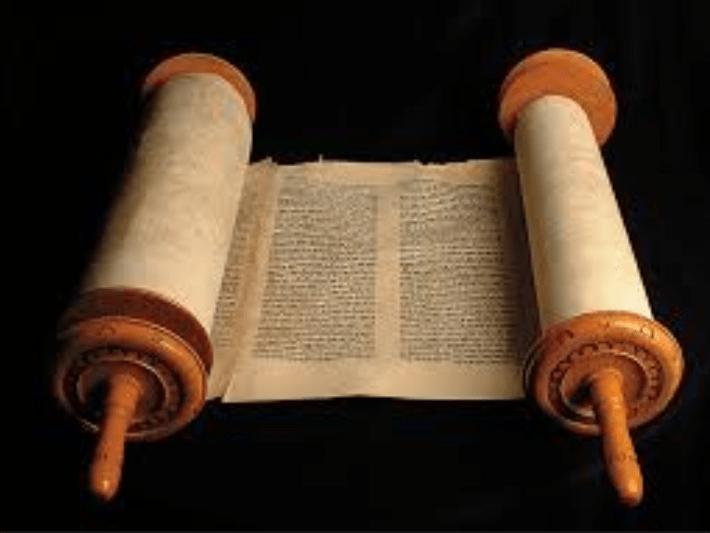
Very seldom do I do any of my teachings using the name Jesus. I prefer to use His Hebrew name, but I thought it fitting to use it in this teaching so that those that are not comfortable with the Hebrew name could relate more to this blog.
Now, for many of you reading this, I humbly ask that you bear with me as I break this down for you. This may knock over some sacred cows, but I promise, if you can read until the end, it will cause you to really re-think some things you have been taught to believe as Biblical truths.
Like many of you, before I became Torah observant, I had been taught to believe that the “Law” ended at the cross. If we are being honest, I literally had no idea what this so-called Law was. I never took the time to ask, nor did my pastor take time to break it down. But seeing as he was the pastor, and clearly had to know what he was talking about, I took it at face value.
I am inclined to believe that many of you reading now have had the same experience.
When digging into this topic, one thing that must be clearly understood is this: before we allow any teaching to become our core theology, we must first do our due diligence. There are questions that need to be asked. In other words, it has to pass the sound test. Is this sound theology?
So what questions need to be asked? First of all, what were these “laws” that we are claiming were done away with? Why were they given to the Hebrew people? Let’s dig into this.
Let’s talk about the why first. Many of you know about the state of mankind from Genesis 6. YHVH was utterly fed up with His creation because they thought of nothing but evil continuously. In that generation, Noah and his family were literally the only ones whom YHVH was not vexed with. As a result, as He began to destroy the earth, they were the ones spared.
A few generations later, mankind began to grow in numbers once again through Noah and his family.
A few generations later, we meet Abram, a righteous man in the sight of YHVH. It was through Abram that YHVH decided to build His own nation. From Abram to Moses, there were only a select few who interacted with YHVH. The people as a whole had no idea who this God was, what He expected from His people, or even His name for that matter.
The children of Israel had been in Egypt for a very long time. It is safe to assume that because they were there so long, they became accustomed to Egyptian culture. In fact, not having any knowledge of their God beyond the promises handed down by the patriarchs, that was literally all they knew.
This was a time when the entire world was engulfed in polytheism—the belief in multiple gods—as opposed to monotheism, the belief in a single God. That said, there is no doubt the children of Israel held this same worldview. Surely they were familiar with the various gods of Egypt since they were immersed in that culture.
Egypt had several gods. Of those many gods, YHVH would later prove ten of them to be false when He imposed the ten plagues upon Egypt. Each plague demonstrated the powerlessness of a specific Egyptian god before YHVH.
Having done this by the hand of Moses, and after leading them across the Red Sea to Mount Sinai, He formally introduced Himself to Israel. Having witnessed the awe of YHVH, it was a no-brainer that when He told them that if they would obey Him, keep His teachings, and guard His commands, He would be their God and they would be His people—they quickly said yes.
Why was this necessary? Because up until that moment, they embraced polytheism, and their understanding of righteousness was shaped by Egypt. They knew what pagan gods demanded, but they did not know the expectations of the true and living God.
Ultimately, God required a paradigm shift. He had a higher standard than mankind. Man’s version of righteousness was self-willed and rooted in the lower nature, whereas YHVH’s standard of righteousness was rooted in a higher nature. This new way of living would set Israel apart from the nations.
This is where the concept of holiness originates. In Western culture, we often think of holiness as perfection or something mystical. But the Hebrew word for holy is kodesh, which simply means “set apart.”
Think of it like this. Depending on your age, you may remember how, during Christmas or Thanksgiving, your family brought out the special plates and silverware used only once or twice a year. That’s kodesh. They were set apart for a specific purpose.
This is what the Torah did for Israel. It set them apart. It also made them a light to the nations because they lived by a higher standard.
So now we know why the Law was given. Let’s address what it was.
When many people think of the “Law,” they think only of the Ten Commandments or sacrifices. But did you know there are actually around 613 commandments that make up the Torah? That’s a lot.
For the sake of time, we won’t go through all of them, but we can break them down. These commands fall under categories that align with the Ten Commandments. Jesus broke them down even further in Matthew 22.
(Mat 22:34–40 quotation preserved as-is)
Here we see that Jesus reduced all the commands to two: loving YHVH with all your heart, soul, and mind, and loving your neighbor as yourself. He then states that on these two commands hang all the Law and the Prophets.
At that time, there was no New Testament. “The Law and the Prophets” referred to the entire Hebrew Bible—the Tanakh: Torah, Nevi’im, and Ketuvim.
So Jesus wasn’t minimizing Scripture—He was summarizing it.
Now let’s address the word Law itself. Law is a terrible translation. The Hebrew word Torah means teachings or instructions. Law carries a negative connotation that Torah never had.
Torah was given because the people had to be taught how to live in covenant with God. These teachings were never meant to save us. They were meant to reveal God’s standard and expose our inability to meet it—pointing us to our need for a Savior.
None of the commandments are cruel. All are morally sound. So why do we demonize them?
Now let’s answer the real question: could Jesus end the Law?
Deuteronomy 18 describes a prophet like Moses. This prophet would speak God’s words and lead the people as Moses did. Moses led the people toward Torah. A prophet like Moses would do the same.
A true prophet leads people toward God. A false prophet leads people away. Deuteronomy 13 defines a false prophet as one who leads people away from God’s commands—even if signs and wonders are performed.
Therefore, if Jesus taught against Torah, He could not be the Messiah. But if He upheld Torah, He fulfilled the role of the prophet like Moses.
Jesus Himself settles the matter in Matthew 5:17–19.
He states plainly that He did not come to destroy the Torah, and that not even the smallest letter would pass away until heaven and earth pass away.
So let me ask you: are heaven and earth still here?
If they are, then according to Jesus Himself, the Law remains.

Church Leadership


