What Do Raccoons Do in Winter? The Secret Cold-Weather Life of Our Favourite Masked Bandit
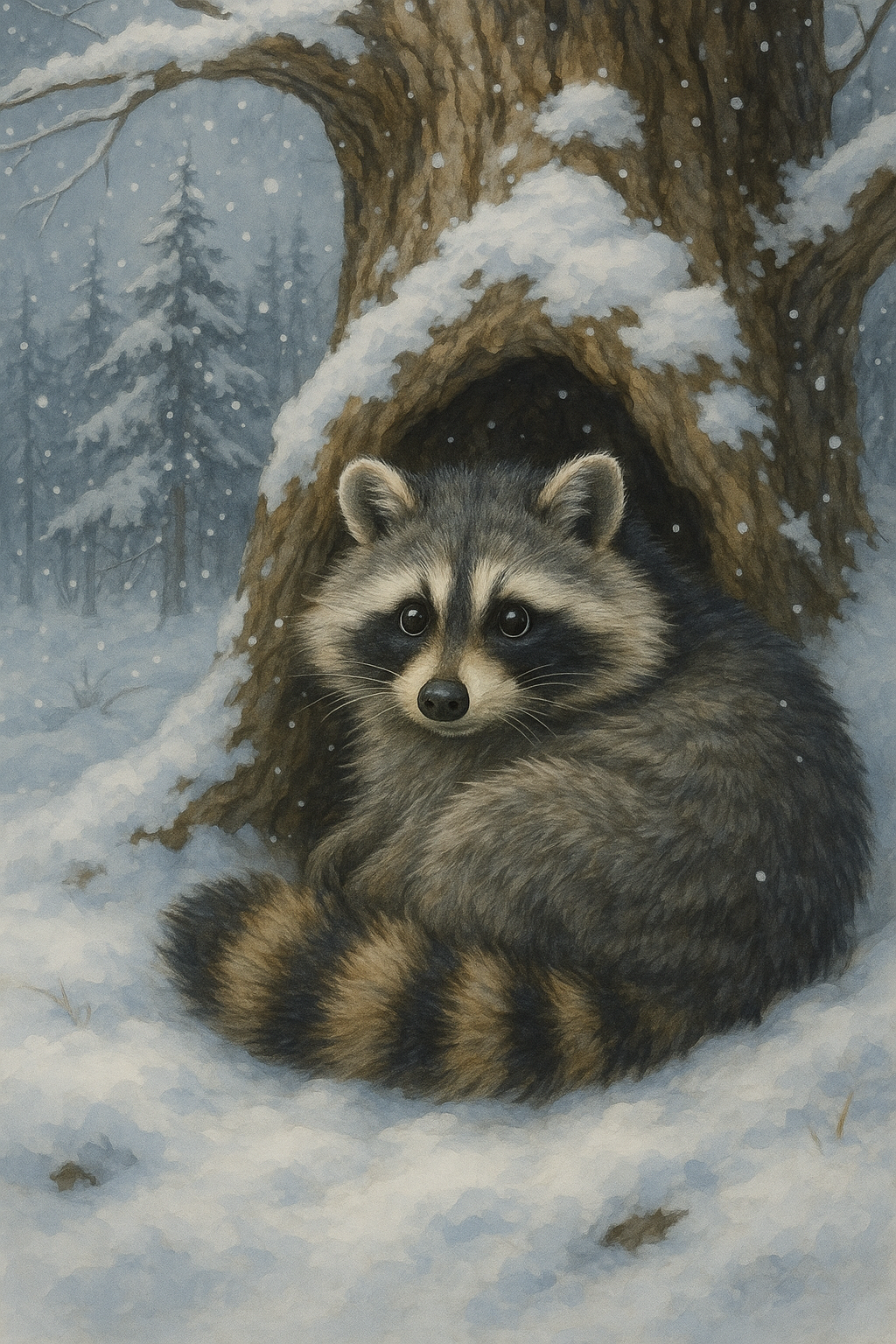
What Do Raccoons Do in Winter? The Secret Cold-Weather Life of Our Favourite Masked Bandits
When the days grow shorter and the air turns sharp, most of us bundle up, sip something warm, and head indoors. But what about the clever, curious raccoons who roam our neighbourhoods and parks all summer? Do they hibernate? Migrate? Build tiny raccoon-sized ski chalets?
As it turns out, winter life for raccoons is surprisingly cozy, clever, and full of fascinating adaptations.
Do Raccoons Hibernate? Not Quite — But Close!
Raccoons don’t truly hibernate, but they do enter a special winter state called torpor.
This means that instead of sleeping through the entire season, they:
Sleep for long periods during especially cold stretches
Lower their body temperature slightly
Move less to conserve energy
Think of torpor as “low-power mode.” They’re still around — just saving their batteries.
On mild winter days, raccoons may wake up, stretch, and wander out in search of food. On harsher days, they might snooze for days at a time, curled up in a warm den with their siblings or other raccoon buddies.
Where Do Raccoons Sleep in Winter?
Raccoons are expert real-estate hunters. In winter, they choose dens that offer warmth, shelter, and a safe hideaway from wind, rain, and snow.
Popular raccoon winter homes include:
Hollow trees
Abandoned burrows from other animals
Attics, crawl spaces, and barns (when living close to humans)
Rock crevices or brush piles
Cozy tree cavities in parks (Beacon Hill Park is basically raccoon heaven)
When a spot is good, raccoons might return to the same winter den year after year.
Do Raccoons Eat in Winter?
Oh yes — but much less often.
Before winter arrives, raccoons bulk up, adding a healthy layer of fat to get them through colder months. This is why they look extra round and fluffy in late fall.
During winter, they survive on:
Stored body fat
Occasional scavenged food
Any easy meals they can find on warmer days
They’re smart about conserving energy, so they don’t roam far.
Do Raccoons Stay Together?
Surprisingly… yes!
Although raccoons are mostly solitary the rest of the year, winter encourages raccoon sleepovers. Males may den together, and females sometimes share a cavity with sisters or mothers.
A pile of raccoons snuggled together in a hollow tree for warmth is a real thing — one of nature’s cutest secrets.
Winter Babies?
Raccoons don’t give birth in winter, but winter is mating season.
The real baby boom happens in the spring, when mothers settle into new dens to raise their kits.
So if you see raccoon activity in late winter, they might be:
Searching for mates
Scouting out potential spring nursery dens
Enjoying a mid-winter snack run
Urban vs. Wild Raccoons in Winter
City raccoons often have an easier time than their deep-forest relatives because:
Food is more available (garbage bins, compost, fallen fruit, friendly humans…)
Buildings provide warmer den sites
Snow accumulation tends to be lower in dense neighbourhoods
In places like Victoria, where winters are mild, raccoons might be active most days.
How You Can Help Wildlife in Winter (Without Accidentally Creating a Raccoon Resort)
If you love raccoons (like many of us do), there are safe and ethical ways to support their wellbeing without encouraging dependency:
Keep compost and garbage secure to avoid harmful human–wildlife conflicts
Leave some natural debris (logs, brush piles) for wildlife habitat
Don’t intentionally feed raccoons — it can alter their natural behaviour
Keep pets supervised, especially at night
A healthy raccoon is a wild raccoon.
In Summary: Winter for Raccoons Is All About Rest, Warmth, and Smart Survival
They don’t hibernate.
They don’t disappear.
They simply slow down, cozy up, and work with the rhythms of the season.
Whether curled up in a hollow oak in Beacon Hill Park or tucked inside an attic on Dallas Road, winter raccoons are doing exactly what their wild cleverness has equipped them to do for thousands of years: rest, adapt, and wait for spring.

The Penny & Joe Podcast: Celebrating an Award-Winning Debut Season!
