Feb. 14, 2025
Episode 7-Indian Boarding Schools-Trauma Through Forced Seperation
The player is loading ...
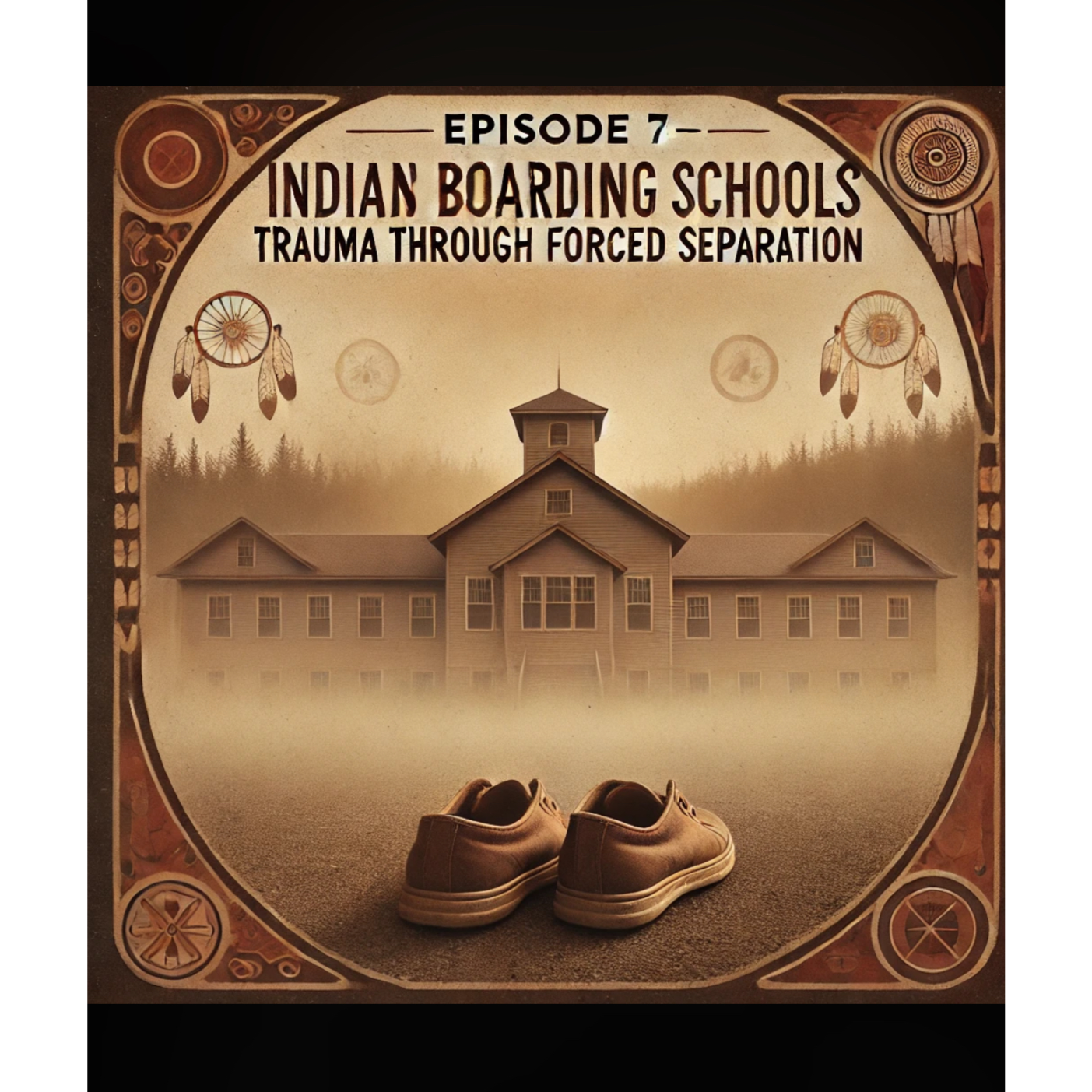




For decades, Native children were taken from their families and placed in Indian boarding schools under the guise of assimilation. These institutions stripped them of their culture, language, and identity, leaving behind a legacy of trauma that continues to affect generations. In this episode, we explore the devastating impact of forced separation, the abuse and neglect many children endured, and how communities are working toward healing and reclaiming their traditions. Join us as we shed light on this dark chapter in history and discuss the resilience of Indigenous peoples in the face of systemic oppression.
Follow on TikTok, Instagram, Youtube and RSS,com
00:00 - Untitled
1
00:00:00,000 --> 00:00:07,000
Welcome to the Forgotten Trail Podcast, where we explore untold stories and systematic issues in child welfare.
2
00:00:07,000 --> 00:00:17,000
I'm your host Damian, and today we're diving into a dark chapter in history that shaped generations and continues to echo in child welfare systems today.
3
00:00:17,000 --> 00:00:29,000
This is the story of Indian boarding schools, a government-backed system of forced separation, assimilation, and trauma that uprooted Native children from their families and culture.
4
00:00:29,000 --> 00:00:42,000
This isn't just history. It's a story that highlights the enduring resilience of Native communities, and the lessons we must carry forward in child welfare work today.
5
00:00:42,000 --> 00:00:50,000
To truly understand the Indian boarding school system, we need to go back to the late 19th century.
6
00:00:50,000 --> 00:01:00,000
The federal government and religious organizations collaborated to establish these schools under the rule of civilizing Native children.
7
00:01:00,000 --> 00:01:06,000
The aim was clear – a race, Native culture, language, and identity.
8
00:01:06,000 --> 00:01:12,000
Native children, some as young as five, were forcefully removed from their homes.
9
00:01:12,000 --> 00:01:19,000
A government agent would arrive at the family's doorstep, telling parents their children must leave for school.
10
00:01:19,000 --> 00:01:26,000
There was no choice, no consent, and no regard for the emotional toll on the families.
11
00:01:26,000 --> 00:01:39,000
These children were taken hundreds of miles away, sometimes never to return home, being stripped of their language, forced to cut their hair, and punished for practicing their traditions.
12
00:01:39,000 --> 00:01:46,000
These schools were not just educational institutions. They were tools of culture genocide.
13
00:01:46,000 --> 00:01:53,000
As Richard Henry Pratt, the founder of one of the first Indian boarding schools, infamously said,
14
00:01:53,000 --> 00:01:57,000
Kill the Indian in them and save the man.
15
00:01:57,000 --> 00:02:02,000
The trauma caused by these systems was unimaginable.
16
00:02:02,000 --> 00:02:09,000
The separation of children from their families mirrors some of the practice we see in today's child welfare systems,
17
00:02:09,000 --> 00:02:15,000
where systematic issues often lead to the removal of Native children from their homes.
18
00:02:15,000 --> 00:02:23,000
Imagine being a child, torn from your family, unable to hear your mother's voice or feel your father's embrace.
19
00:02:23,000 --> 00:02:28,000
Now imagine that trauma being passed down through generations.
20
00:02:28,000 --> 00:02:32,000
This is what we call intergenerational trauma.
21
00:02:32,000 --> 00:02:39,000
In my years as a tribal child welfare investigator, I saw firsthand the impact of this trauma.
22
00:02:39,000 --> 00:02:45,000
Families often grapple with the deep sense of mistrust towards government systems.
23
00:02:45,000 --> 00:02:48,000
And who can blame them?
24
00:02:48,000 --> 00:02:55,000
The boarding school system era taught them that these systems prioritize control over care.
25
00:02:55,000 --> 00:03:05,000
Now the question is, how do we as child welfare professionals honor this history while breaking the cycle?
26
00:03:05,000 --> 00:03:12,000
Despite the horrors of Indian boarding schools, Native communities have shown remarkable resilience.
27
00:03:12,000 --> 00:03:18,000
Elders have fought to reclaim their language, traditions and cultures.
28
00:03:18,000 --> 00:03:25,000
Survivors of boarding schools have shared their stories, turning their pain into a powerful story.
29
00:03:25,000 --> 00:03:33,000
Take the case of Viola Martinez, a boarding school survivor who spoke out about her experience.
30
00:03:33,000 --> 00:03:41,000
She described the loneliness, the abuse, but also the strength she found in reconnecting with her culture later in life.
31
00:03:41,000 --> 00:03:47,000
Stories like hers remind us that healing is possible.
32
00:03:47,000 --> 00:03:51,000
What does this history teach us about child welfare today?
33
00:03:51,000 --> 00:03:56,000
For one, it reminds us of the importance of culture preservation.
34
00:03:56,000 --> 00:04:06,000
When children are placed in foster care or adoptive homes, we must ensure they maintain ties to their culture and community.
35
00:04:06,000 --> 00:04:09,000
Secondly, it's about accountability.
36
00:04:09,000 --> 00:04:18,000
We need to acknowledge the historical and systematic harms inflicted on Native families and actively work to rebuild that trust.
37
00:04:18,000 --> 00:04:24,000
As professionals, let's challenge policies affecting Native families.
38
00:04:24,000 --> 00:04:35,000
As individuals, let's educate ourselves and others about the past and advocate for systems that honor family and culture integrity.
39
00:04:35,000 --> 00:04:43,000
When I was doing my research on this topic, there was something that I was thinking about when I was a kid.
40
00:04:43,000 --> 00:04:56,000
You see my dad, he really liked watching movies and shows that involve Native families or even just actors that portrayed them.
41
00:04:56,000 --> 00:05:03,000
There was a particular show that came on when I was a kid on TNT. It was called Into the West.
42
00:05:03,000 --> 00:05:13,000
The whole story of that show was giving you a point of view from a family on the East Coast and then another family on the West Coast.
43
00:05:13,000 --> 00:05:21,000
But there was one episode I remember watching with my dad where they specifically did talk about the boarding school incident.
44
00:05:21,000 --> 00:05:35,000
They actually showed some of these things that I had just said and also the aftermath of some of these kids that grew up later on and became adults and how they affected them later on.
45
00:05:35,000 --> 00:05:39,000
To where their own family even treated them differently.
46
00:05:39,000 --> 00:05:47,000
So if you have the time, maybe that might be something if you want to go more in depth and also see how some of these things were portrayed.
47
00:05:47,000 --> 00:05:54,000
Like I said, it's a show while back, I believe, like the early 2000s called Into the West.
48
00:05:54,000 --> 00:06:05,000
But the story of Indian boarding schools is painful, but it's also a story of survival and resilience.
49
00:06:05,000 --> 00:06:14,000
By remembering this history, we honor the resilience of Native communities and commit to ourselves in creating a better future for all children.
50
00:06:14,000 --> 00:06:18,000
Thank you for joining me on this forgotten trail podcast.
51
00:06:18,000 --> 00:06:24,000
If this episode was something you liked, please subscribe and share.
52
00:06:24,000 --> 00:06:28,000
And let me know your thoughts on this in the comments.
53
00:06:28,000 --> 00:06:31,000
This is a conversation we all need to have.
54
00:06:31,000 --> 00:06:45,000
Until next time, keep walking the trail of understanding and justice.
00:00:00,000 --> 00:00:07,000
Welcome to the Forgotten Trail Podcast, where we explore untold stories and systematic issues in child welfare.
2
00:00:07,000 --> 00:00:17,000
I'm your host Damian, and today we're diving into a dark chapter in history that shaped generations and continues to echo in child welfare systems today.
3
00:00:17,000 --> 00:00:29,000
This is the story of Indian boarding schools, a government-backed system of forced separation, assimilation, and trauma that uprooted Native children from their families and culture.
4
00:00:29,000 --> 00:00:42,000
This isn't just history. It's a story that highlights the enduring resilience of Native communities, and the lessons we must carry forward in child welfare work today.
5
00:00:42,000 --> 00:00:50,000
To truly understand the Indian boarding school system, we need to go back to the late 19th century.
6
00:00:50,000 --> 00:01:00,000
The federal government and religious organizations collaborated to establish these schools under the rule of civilizing Native children.
7
00:01:00,000 --> 00:01:06,000
The aim was clear – a race, Native culture, language, and identity.
8
00:01:06,000 --> 00:01:12,000
Native children, some as young as five, were forcefully removed from their homes.
9
00:01:12,000 --> 00:01:19,000
A government agent would arrive at the family's doorstep, telling parents their children must leave for school.
10
00:01:19,000 --> 00:01:26,000
There was no choice, no consent, and no regard for the emotional toll on the families.
11
00:01:26,000 --> 00:01:39,000
These children were taken hundreds of miles away, sometimes never to return home, being stripped of their language, forced to cut their hair, and punished for practicing their traditions.
12
00:01:39,000 --> 00:01:46,000
These schools were not just educational institutions. They were tools of culture genocide.
13
00:01:46,000 --> 00:01:53,000
As Richard Henry Pratt, the founder of one of the first Indian boarding schools, infamously said,
14
00:01:53,000 --> 00:01:57,000
Kill the Indian in them and save the man.
15
00:01:57,000 --> 00:02:02,000
The trauma caused by these systems was unimaginable.
16
00:02:02,000 --> 00:02:09,000
The separation of children from their families mirrors some of the practice we see in today's child welfare systems,
17
00:02:09,000 --> 00:02:15,000
where systematic issues often lead to the removal of Native children from their homes.
18
00:02:15,000 --> 00:02:23,000
Imagine being a child, torn from your family, unable to hear your mother's voice or feel your father's embrace.
19
00:02:23,000 --> 00:02:28,000
Now imagine that trauma being passed down through generations.
20
00:02:28,000 --> 00:02:32,000
This is what we call intergenerational trauma.
21
00:02:32,000 --> 00:02:39,000
In my years as a tribal child welfare investigator, I saw firsthand the impact of this trauma.
22
00:02:39,000 --> 00:02:45,000
Families often grapple with the deep sense of mistrust towards government systems.
23
00:02:45,000 --> 00:02:48,000
And who can blame them?
24
00:02:48,000 --> 00:02:55,000
The boarding school system era taught them that these systems prioritize control over care.
25
00:02:55,000 --> 00:03:05,000
Now the question is, how do we as child welfare professionals honor this history while breaking the cycle?
26
00:03:05,000 --> 00:03:12,000
Despite the horrors of Indian boarding schools, Native communities have shown remarkable resilience.
27
00:03:12,000 --> 00:03:18,000
Elders have fought to reclaim their language, traditions and cultures.
28
00:03:18,000 --> 00:03:25,000
Survivors of boarding schools have shared their stories, turning their pain into a powerful story.
29
00:03:25,000 --> 00:03:33,000
Take the case of Viola Martinez, a boarding school survivor who spoke out about her experience.
30
00:03:33,000 --> 00:03:41,000
She described the loneliness, the abuse, but also the strength she found in reconnecting with her culture later in life.
31
00:03:41,000 --> 00:03:47,000
Stories like hers remind us that healing is possible.
32
00:03:47,000 --> 00:03:51,000
What does this history teach us about child welfare today?
33
00:03:51,000 --> 00:03:56,000
For one, it reminds us of the importance of culture preservation.
34
00:03:56,000 --> 00:04:06,000
When children are placed in foster care or adoptive homes, we must ensure they maintain ties to their culture and community.
35
00:04:06,000 --> 00:04:09,000
Secondly, it's about accountability.
36
00:04:09,000 --> 00:04:18,000
We need to acknowledge the historical and systematic harms inflicted on Native families and actively work to rebuild that trust.
37
00:04:18,000 --> 00:04:24,000
As professionals, let's challenge policies affecting Native families.
38
00:04:24,000 --> 00:04:35,000
As individuals, let's educate ourselves and others about the past and advocate for systems that honor family and culture integrity.
39
00:04:35,000 --> 00:04:43,000
When I was doing my research on this topic, there was something that I was thinking about when I was a kid.
40
00:04:43,000 --> 00:04:56,000
You see my dad, he really liked watching movies and shows that involve Native families or even just actors that portrayed them.
41
00:04:56,000 --> 00:05:03,000
There was a particular show that came on when I was a kid on TNT. It was called Into the West.
42
00:05:03,000 --> 00:05:13,000
The whole story of that show was giving you a point of view from a family on the East Coast and then another family on the West Coast.
43
00:05:13,000 --> 00:05:21,000
But there was one episode I remember watching with my dad where they specifically did talk about the boarding school incident.
44
00:05:21,000 --> 00:05:35,000
They actually showed some of these things that I had just said and also the aftermath of some of these kids that grew up later on and became adults and how they affected them later on.
45
00:05:35,000 --> 00:05:39,000
To where their own family even treated them differently.
46
00:05:39,000 --> 00:05:47,000
So if you have the time, maybe that might be something if you want to go more in depth and also see how some of these things were portrayed.
47
00:05:47,000 --> 00:05:54,000
Like I said, it's a show while back, I believe, like the early 2000s called Into the West.
48
00:05:54,000 --> 00:06:05,000
But the story of Indian boarding schools is painful, but it's also a story of survival and resilience.
49
00:06:05,000 --> 00:06:14,000
By remembering this history, we honor the resilience of Native communities and commit to ourselves in creating a better future for all children.
50
00:06:14,000 --> 00:06:18,000
Thank you for joining me on this forgotten trail podcast.
51
00:06:18,000 --> 00:06:24,000
If this episode was something you liked, please subscribe and share.
52
00:06:24,000 --> 00:06:28,000
And let me know your thoughts on this in the comments.
53
00:06:28,000 --> 00:06:31,000
This is a conversation we all need to have.
54
00:06:31,000 --> 00:06:45,000
Until next time, keep walking the trail of understanding and justice.