 Apple Podcasts
 YouTube
 Spotify
 Overcast
 Audible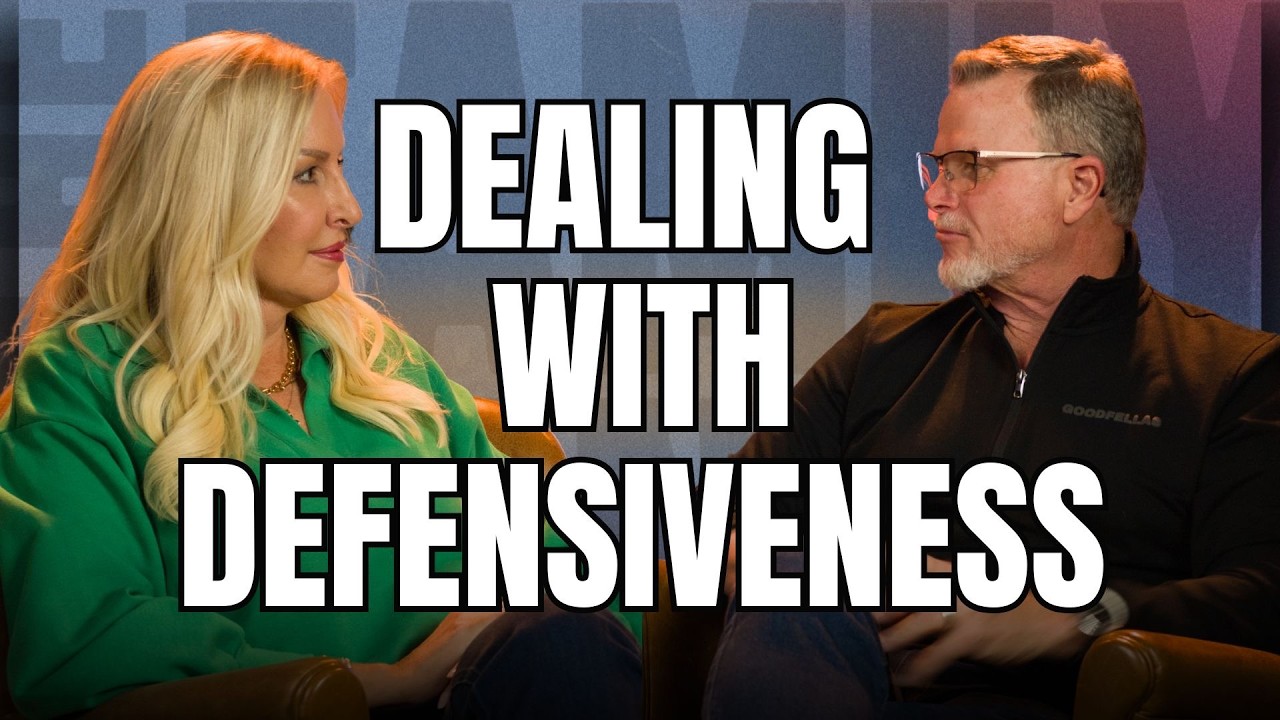
In this episode, Steve and Mary Alessi are tackling one of the biggest relationship killers—defensiveness. You'll hear raw, personal stories from their early life and marriage as they share practical advice—including how to recognize when YOU'RE the defensive one.


In this episode, Steve Alessi and Mary Alessi dive deep into why defensiveness destroys healthy communication in marriage, family, and the workplace. Drawing from 38 years of marriage and decades of working with people, they candidly share stories and practical tips on how to recognize defensive habits, put your “dukes down,” and open yourself up to honest feedback.
You’ll discover:
How defensiveness shows up in everyday arguments and why it creates unhealthy walls between loved ones
Ways to check your own sensitivity and practice self-assessment instead of blaming others
Why listening for truth vs. tone helps you grow and strengthens relationships
The difference between necessary boundaries and unhealthy stonewalling
Keys to responding to correction on the job, with in-laws, or with your spouse so you can build trust and avoid needless fights
With relatable examples of real-life conflicts and practical wisdom, Steve Alessi and Mary Alessi map out a path for couples, families, and teams to break the cycle of defensiveness and embrace vulnerability, honesty, and respect.
Whether you’re struggling with hypersensitivity or want to stop arguments from spiraling, this episode offers actionable steps and encouragement to foster deeper, healthier relationships at home and beyond.
Like, subscribe, and share this episode with someone who needs a little less defensiveness–and a lot more connection–in their life!
https://www.youtube.com/watch?v=Zk1pWBPUR74
Join our Podience Textline!
You can connect with us via text to ask questions and get updates!
Text FAMILY to 302-524-0800
Get our TFB Newsletter
Join our TFB Newsletter and get more inside news from the Alessis + tips and strategies for a happier family!
Get free access to the newsletter
Support the Family Business
- Follow Us on Instagram and Facebook
- Subscribe on YouTube
- Leave a review
Listen to the Alessi sisters' daily devotional podcast
My Morning Devotional
Join our family business every week as we talk about life, and help you build a great future with your family, no matter what business you are in.
New episodes are uploaded every Wednesday!
More Resources
Get your copy of the new book by Steve Alessi, “Forty-Two: A Guide to Finishing Well when You Thought You Were Finished”
Connect with Us on YouTube
Don't forget to LIKE and SUBSCRIBE to our YouTube channel!
Follow Us on Social!
Learn More about Metro Life Church:
Mary Alessi:
We've hit that conflict many times through our marriage. And what it's done for me is I've had to not be so sensitive to the way you approach me. If it's true, take it. I know you love me, but at the same time, you've been good about saying, well, it doesn't. This does not work. If I'm trying to be honest with Mary and I'm upset and I'm angry or I'm frustrated, but. But we lose two days later because she didn't hear what I said, because all she focused on was the tone.
Steve Alessi:
Hello, and welcome to another episode of the Family Business with the Alessi. I'm Steve Alessi and today I'm sitting with Mary Alessi.
Mary Alessi:
I am here and we got a.
Steve Alessi:
Great subject we're going to tackle. But first I want to say thank you for promoting and sharing the Family Business with other people. We are seeing over a million views on YouTube, which is a very nice thing. We are in our eighth season right now, 200 plus episodes, having a great time. So thanks for helping us share the love and getting the word out there and make sure you like us, make sure you're subscribing to us and you are sharing our podcast with others. So today, Mary, we're going to hit a subject matter that started in a message that I was able to share on a Sunday morning.
Mary Alessi:
That's right. And now we're getting everybody asking us, get in the podcast booth and unpack it some more.
Steve Alessi:
Give. That's right. That's right.
Mary Alessi:
So that's what we're gonna do.
Steve Alessi:
You know, what we did more or less with all the stuff going on, world events. It's always hard from a speaking standpoint. Do we hit the world events all the time or do we hit home events?
Mary Alessi:
Sure.
Steve Alessi:
That happen every day, you know, not just the new news cycle that's going to swing or stir it up on social media, or we're going to hit something that everybody deals with on a daily basis that is really making a difference of health in their home. And that's what that message was about. It was not something that was a. Let's address it from a national, international standpoint, what's happening in the world. Right. But how can we help our people that are in their home, the families? And pretty much what affects a family is what's going to rock a person's world.
Mary Alessi:
That's right.
Steve Alessi:
Every so often, the things that happen on a grand scale, national level, that's going to rock your world to a certain degree.
Mary Alessi:
Until something else happens.
Steve Alessi:
Until something else happens. Right, right. But what's going on in the home every week, every day, that's really what's affecting a person's well being.
Mary Alessi:
That's right.
Steve Alessi:
So that's where, where this message came from. So it, it started just being stirred up about defensiveness. And why is it that on occasion, even when you and I communicate with each other, it's easy, so easy to become defensive.
Mary Alessi:
Right.
Steve Alessi:
When it comes to hearing that, it's possible I can even look at you, the woman that I love, 38 years of marriage, and think you're actually saying something to hurt me.
Mary Alessi:
Right when.
Steve Alessi:
Yeah, come on, you had 30 years, 38 years to prove that, you know, you're not out to hurt me.
Mary Alessi:
That's right.
Steve Alessi:
So why would I hear something that would tell me she's out to hurt me? Yeah, it's, it's defensiveness. I'm, I'm going to defend myself. Now. In sports, defenses are needed. A strong defense is needed to keep the opponent from winning.
Mary Alessi:
Right.
Steve Alessi:
Why would I need that?
Mary Alessi:
In this relationship and in war, you need to have a strong defense. And that's where we've got to take off the battle filter when it comes to the relationships that we're in. And not everything's a fight and bring our defenses down. And that's what your message was about. That, I think, stirred up so many people because it made us all think the listener. Where am I defensive? Am I defensive? Listening to this message, am I in protection mode? Well, that's not me. See, that's her or that's my husband. And it made us all think really, really hard.
Mary Alessi:
While we were listening, we're also processing our own personal experience with being defensive or being married to somebody or in a relationship with somebody that's defensive. It's like you always have your dukes up. And I think a good indicator to know if you are a person that's more defensive, but you don't know it. Can people tell you the truth or do you stop them the minute they try to say, hey, can I be honest? Do you immediately clench your fists because you don't like it? Or how do you know you're in a relationship with somebody that hears defensively? Are you always very measured by bringing truth to them?
Steve Alessi:
Walking on eggshells and you hold back.
Mary Alessi:
Because you don't want to fight? So that's the indicators that a defensive posture has been taken either on one side of the party or the other. And I think we can only control ourselves. I don't think the person that is trying to get truth across to somebody who's in a defensive posture really can win. We all have to take responsibility and understand that that defensive posture is what kills relationships and it hurts us. And you really, you went line by line in that and gave some very good practicals as to how to identify that in yourself and ask those questions. Am I a person that's just always defensive? Teenagers, 16 year olds are always defensive.
Steve Alessi:
I expect it from a teenager.
Mary Alessi:
We expect that from them. Not me. Don't come at me like that. Don't talk to me like that. But as we get older, that does not work in healthy relationships.
Steve Alessi:
Well, I had a buddy, a buddy, okay? And this is probably all men that may listen to this or wives think that must have been my husband. Well, this was a buddy that I've known for many, many years. He came to my office this week and he said to me, I cannot believe you preached that message on Sunday. I'm like, why is he doing that?
Mary Alessi:
I'm like, wait, he said that to you? Why are you doing that?
Steve Alessi:
Most of the couples I know, it's the woman that's more defensive. Huh? Yeah, but I said, you were defenses. You're defensive like that. And he was honest. He said, you know what? I am, I have a tendency to, to be defensive when it comes to just conversation in general. The whole thing of the devil's advocate. I'm going to kind of whatever, defend my, my, my position or whatever, come at it. And he says, I'm not sure if it was if I'm defensive or if I just like debate, but he says, I'm listening to you.
Steve Alessi:
And I'm like, why in the world is he preaching this message?
Mary Alessi:
See, he was processing and I would.
Steve Alessi:
Never see him as defensive like that.
Mary Alessi:
So I think we all.
Steve Alessi:
It's not just a woman's thing.
Mary Alessi:
Thank you. Let's clarify that for our listeners. It's not all women, honey. You have your areas where you're defensive and I have my areas where I'm defensive.
Steve Alessi:
Hey, I started.
Mary Alessi:
Sometimes it's not just everything, it's just certain subjects.
Steve Alessi:
Well, I started the whole message saying, listen, this message is not a you problem. So when you're listening, it's not a you problem, it's a we problem. Yeah, because we all have tendency. And then I said, and it's a me problem too.
Mary Alessi:
Yeah.
Steve Alessi:
Because I have a tendency to hear through defensive lens. Part of mine is because I want to be right. Sure. And as just I think I am right. Most of the time, age helps you with that. As the older you get, you don't care if you're right. You don't have to be right. Right.
Mary Alessi:
You get tired of just.
Steve Alessi:
I'm not going to argue with you anymore.
Mary Alessi:
Yeah.
Steve Alessi:
Not worth it. You know, I know what I want. I know what I believe, and I'm pretty set in that. But I know I can be defensive on occasion. I remember a lady and her husband coming to church one time, and they wanted to leave. And instead of just being a shepherd with an open heart to say, you know what? God bless you. If this. It's been great having you.
Steve Alessi:
If this is what you're really feeling like you need to do, go ahead and do so. But, man, I got so defensive.
Mary Alessi:
Yeah.
Steve Alessi:
Like, what did I do? How come I couldn't make you happy? How come this church didn't meet your needs and we're not good enough? It came from that. And I, like, went at them.
Mary Alessi:
And you've. You were not always like that. You. I was there that day, and I remember being so shocked because that was not your norm to be that way. Not that you didn't feel that way about them, but you didn't. You rarely let that show. And that one was some somehow just hit too close to home. And I say that because sometimes a person that isn't always defensive can go through times where you're feeling insecure about something, and it makes you more defensive.
Mary Alessi:
So there's so many different degrees of this, and we were talking about it from all the different facets. Okay? Working with people. So you're working on a team. You have an employee that you work with.
Steve Alessi:
Right.
Mary Alessi:
And you can't say anything to them because they're so stinking defensive. We were watching a show the other day, and it was a documentary, and there were two police officers that were interrogating this woman. And of course, you know, we analyze people for a living, and we've been doing this for almost 40 years. So as I'm watching the interrogation, this show was not about the police officers or the detectives, but I'm listening to the way they're both approaching the person that they have in custody. And as I'm watching these two police officers, they're detectives. One is very. We focused, which we teach. We don't say I.
Mary Alessi:
We say we in our teen culture. And the other one, it was like he wasn't reading the room, and he. When he would speak up, he would say, did you hear what I said? Did you understand what I was saying? To you, to the person they had in custody, Whereas the other police officer was very we. And as I'm watching that, it's funny how your brain works. I'm watching that. I thought, I wonder if they had a huddle after that moment, and if that one detective could call out the. The detective that was saying I, I, I all the time, would he be able to correct that detective? Well, we know in the police force there's a lot of ego.
Steve Alessi:
Oh, my goodness.
Mary Alessi:
So you probably can't hold your partner accountable for those things because you're gonna be met with aggression, somebody who doesn't want to hear it. And I just wonder in corporate America, in those secular fields, how often people go up against other people they work with that are so stinking defensive. So it could be something maybe you don't have at home, but maybe you have on the job. And it makes it very difficult. But the most important thing is that you identify that in yourself.
Steve Alessi:
Yeah. So let's kind of respond to some comments that people have made. One had to do. And it was really sweet. She is. Her husband works on staff with us. And she was like on social media saying, all right, she understands the whole concept that you can't be defensive. Especially when it was talking, the message was talking about that you should let people share.
Steve Alessi:
You should let people say things and, and not always be willing to, you know, quick to take it so personal. And if they're saying things that even are coming across kind of harsh, just be understanding. Try to give them some grace. And so this individual was saying, okay, that's good. But you're saying it's not how they say it, it's what they're saying. Focus in on the content, focus the intention. What are they saying? Not the tone. And she says, but what.
Steve Alessi:
What about that person who just does not care how they're saying it?
Mary Alessi:
Yes.
Steve Alessi:
And they're just going to say it to you. Right. And you're saying we shouldn't respond to that.
Mary Alessi:
Right.
Steve Alessi:
So speak to that for a minute.
Mary Alessi:
Well, I, you know, that's been an issue that we've had is I was very much. You get a lot more honey. I just lost that whole saying, you attract honey to bees. Whatever. Anyway, when you say things sweetly, the hearer can actually hear you. But when you say things aggressively and angrily, the hearer can't hear you because all they see is your tone, hear is your tone, and see is your posture. So that's always been a sticking point between you and me because I am way extremely laid back about things, and you are just upfront about stuff. So we've hit that conflict many times through our marriage.
Mary Alessi:
And what it's done for me is I've had to not be so sensitive to the way you approach me. If it's true, take it. I know you love me, but at the same time, you've been good about saying, well, it doesn't. This does not work. If I'm trying to be honest with Mary and I'm upset and I'm angry or I'm frustrated, but we lose two days later because she didn't hear what I said, because all she focused on was the tone. Right. So we've had to work that out and flesh that out, and I've had to get better about it, and you've had to get better about it. We found a happy medium.
Mary Alessi:
But I've also had to understand that sometimes you can't always be mindful when you're frustrated about something to say it exactly like I need to hear it. That's manipulation on my part. And at the same time, you can take a deep breath and come in with, I know how Mary responds to things, and I like that. I like it that when she hears me versus us getting stuck over these hurdles that we can't jump because I came in too hot or I was critical or that's what she heard. Might not have been my heart, but that's what. That's what she heard. So you've been a lot more masterful and careful about coming in with the artful approach of, I'm going to say it the way Mary will respond and not feel criticized. But I also know that we've dealt with this before, and Mary's a lot tougher.
Mary Alessi:
So now I'll go just say it. I don't respond like I used to. I've dealt with that immaturity in me and control that. If you don't say it the way I want you to, I'm not gonna listen to it. So that's where we all have to be very mindful about how we hear things. Now. If we're talking about somebody that just comes in mean and ugly and disrespectful and is screaming and I can't believe you don't take out the garbage. You're such a loser.
Mary Alessi:
I've talked to you about this before. Well, who's going to receive that? That's. That's abuse. Yeah, that's verbal abuse. So I think we have to define what we're talking about in those conditions.
Steve Alessi:
Yeah. If you've got an in law or something that is coming at you or parent, parent coming at you all the time and they're not being careful and sensitive to. All right, the, the information that's being delivered here, I don't want to make you feel bad about those things. It's very hard to then not be defensive or at least put up some boundaries, because the focus of that message, and even in this conversation, is the relationship has to be more important to you as a person than being right as a person. And that means it's okay that you don't line up with my way of doing life all the time.
Mary Alessi:
Sure.
Steve Alessi:
I'm okay with that. I just want to make sure that we're in a healthy relationship.
Mary Alessi:
Right.
Steve Alessi:
I love you too much to then want you to be a little robot and always have to do things perfect. You have your way of doing things. I have my way. All right? But when a person's just not willing to respect you.
Mary Alessi:
Yeah.
Steve Alessi:
Now, now that's a different part of this conversation, because you don't want to be a battering ram. You don't want to be somebody that's getting beat up on all the time because the in law just wants to say it and doesn't care how you feel about it.
Mary Alessi:
Right.
Steve Alessi:
That's not somebody interested in keeping a relationship with you.
Mary Alessi:
That's not caring at all.
Steve Alessi:
That's not. And, and that's not even being defensive to the point of petty.
Mary Alessi:
Right.
Steve Alessi:
You know, I don't have a problem with you protecting yourself if it's a big issue and there's some kind of, you know, almost abuse, you better protect yourself.
Mary Alessi:
No, it's true.
Steve Alessi:
You better put up boundaries. Right. You better not have that person around you. You don't want them in your sphere and in your world. And if they come over and they're acting a certain way, why, while they're with you, you almost got to go into a whole different mindset and shift from, all right, I got to make you happy.
Mary Alessi:
Yeah.
Steve Alessi:
Because you're not interested in making me happy. Right. If you're coming in, like you say, hot, and you don't care that you're hot and you're going, you know, just.
Mary Alessi:
Burn it all down.
Steve Alessi:
Burn it all down. Because you got to say it.
Mary Alessi:
I don't care how I say it.
Steve Alessi:
You're not interested in a relationship.
Mary Alessi:
That's right.
Steve Alessi:
So maybe I don't let you in my home.
Mary Alessi:
Right.
Steve Alessi:
Maybe I don't give you the invite.
Mary Alessi:
That's right.
Steve Alessi:
Maybe I don't have to hang out.
Mary Alessi:
And I don't hear your truth and.
Steve Alessi:
I don't hear your truth. And I just, you know, during our time together, I'm just going to be very, I'm going to be removed.
Mary Alessi:
Yeah.
Steve Alessi:
I'm not going to give you the investment of my time and my heart. If you're not willing for the sake of relationship to say things in a respectable way right now, if you're mad, something happens in the moment, there's a blow up, I got it right.
Mary Alessi:
But if it's continuous, well, see, one of the problems we have right now is how we define what disrespectful language is. We don't define it the way we used to. This is not our mother's and our father's generation. So we definitely need to dig into that. What is disrespectful? What's respectful to a man is different than what's respectful to a woman and vice versa. So it's important for us to understand what respect is in a marriage. Then what is disrespectful from a parent or an in law or somebody on the outside of the marriage or the relationship that's the most important to you. And we do live in a very triggered society.
Mary Alessi:
Don't you come at me. Don't you talk to me. It's like everybody's got their dukes up. And if we're gonna generalize this whole conversation in the big general sense of things, put your defenses down, period, so you can hear if somebody's attacking you, still put your defenses down and listen, if it's wrong, it's wrong. Not everything has to be played through the filter of I got to protect myself. Just put your, put your fist down. Refuse to get in a battle position, regardless whether it's a critical word that's being spoke over you. Right where you're even in that position of saying, oh, you're not gonna talk to me that way.
Mary Alessi:
Oh, no, no, no, no, no, no. I don't care what you say. You're not coming at me that way. Well, that's, I think where we should, we should try to never get right. We control that. So I remember for years when we were first married, your father, he's a hot headed Italian. He was a hot headed Italian. And when I was around him, you guys had a, you had a certain relationship.
Mary Alessi:
He had it with his brothers. It was very Italian. He was raised this way where they would get mad, scream at each other and slam the phone down or whatever was their way. And you were not that way. You. You were a lot more like your mom. But I can remember a few times when your dad would just lose it over nothing. I mean, the toilet seat was left up at the church, or the bucket was.
Mary Alessi:
I mean, it was nothing. And I remember it would take me like two days to get over that interaction. And you always had this ability, which was. Which I learned from, to go, okay, dad, you're right. We did it. We'll fix it. It won't happen again. To defuse him.
Mary Alessi:
And you never got into it with him over those minor things. But you also, it was like you didn't let it bother you. That was him. That's how we communicated. That's what dad did. You didn't care. And what's important they tell you in psychology is that when there is somebody that. That's kind of their go to is to have emotional outbursts, don't be responsive to it, and almost be like disinterested in it so that they're not getting any juice from it.
Steve Alessi:
Right?
Mary Alessi:
And I remember thinking many times, how does Steve put up with that? And it didn't happen a lot. It was a handful of times, but I was so young and impressionable. And my dad. My mom and dad just got divorced because they couldn't tell each other the truth. But you would give your dad room to be a hothead and know that he was maybe stressed about something else. But you never took it personally. Even when I'd say, how do you let him do that? My God, he just went off. And you'd go, ah, that's my dad.
Mary Alessi:
And there is freedom in that, because it's not. You weren't going to change him. He was who he was. But he did that less and less when he didn't get a reaction from you, nor did you punish him for it later. So I would go, oh, it's a man thing. It's a father son thing. And then when we were raising Chris, we didn't have that same. You didn't have that same dynamic with him like you have with your dad.
Steve Alessi:
Right?
Mary Alessi:
You could have easily said a thousand times, dad, don't talk to me like that. Dad, don't talk to me that way. I'm not going to listen to what you say until you calm down and you tell me, well, all that would have done with your father. Don't you disrespect me. It would have just ramped up. Oh, yeah, but you were just. You would just be very respectfully go, I'm sorry, dad. You're right.
Mary Alessi:
You're right. And in that your mom would get more upset because she was so afraid that you would be offended. Do you remember all this?
Steve Alessi:
Well, yeah, but I do remember getting pretty ticked at them, which is why right now, as we go on this journey, I want to.
Mary Alessi:
We need some chocolate.
Steve Alessi:
Thank Maria Diaz for this wonderful Reese's.
Mary Alessi:
Is it upside down?
Steve Alessi:
No. 2 peanut butter cup.
Mary Alessi:
Oh, good. This is how we got through our childhoods.
Steve Alessi:
Yeah. This is a nice little bowl of chocolate treats. It's. She just keeps it full for me.
Mary Alessi:
No, I know. It's.
Steve Alessi:
It's good and bad. And she keeps your m m. It's.
Mary Alessi:
So bad bowl full. She keeps it full. I get to the end of it, and I'm like, oh, thank God. That's it. And since, like, she knows. She can sense it.
Steve Alessi:
We were addressing a pretty heavy subject. I figured I would need a little sweet treat.
Mary Alessi:
Really sweet treat.
Steve Alessi:
A sweet treat. There's only 200 per package, so I'm gonna.
Mary Alessi:
Oh, gosh, it's a hundred calories a cup. Yeah, but are you kidding?
Steve Alessi:
That's why they make it so hard to get a whole.
Mary Alessi:
Isn't a protein shake like a protein shake, like 100?
Steve Alessi:
Maria. Thank you.
Mary Alessi:
No, it's more.
Steve Alessi:
Yeah, I wondered.
Mary Alessi:
I know.
Steve Alessi:
When I saw her around the office yesterday.
Mary Alessi:
Is there any protein in there?
Steve Alessi:
What was she doing?
Mary Alessi:
Yeah, there's peanut butter. I can have it. See, I can have protein. Protein.
Steve Alessi:
Here.
Mary Alessi:
Praise God from all this is blessings.
Steve Alessi:
A little break with Reese's.
Mary Alessi:
Praise him always here below.
Steve Alessi:
Oh, man. Very good. Our lukewarm coffee really is going to do good.
Mary Alessi:
We're really going to eat this line.
Steve Alessi:
I am. My goodness. Oh, I love it.
Mary Alessi:
You have the ability to disassociate. Do you know that?
Steve Alessi:
It's hard to be defensive.
Mary Alessi:
Very scary.
Steve Alessi:
Hard to be defensive when things are so sweet. You.
Mary Alessi:
Who hurt you.
Steve Alessi:
Maybe. Maybe that's what you. Oh, yeah. So.
Mary Alessi:
But going back to that dilemma. Go back to that.
Steve Alessi:
No napkins.
Mary Alessi:
Oh, Lord. You keep the. No, you're supposed to keep this on like that. You don't take it off. It protects your fingers.
Steve Alessi:
There you go.
Mary Alessi:
I can't believe you don't know that.
Steve Alessi:
Perfect. So, you know.
Mary Alessi:
And we're back.
Steve Alessi:
Yeah. I do remember those early days with my dad. He was very aggressive, which is where my aggression came from. Right. I just. I feel like, as a person, if, you know, you made a mistake.
Mary Alessi:
Yeah.
Steve Alessi:
You forgot something.
Mary Alessi:
Yeah.
Steve Alessi:
Overlooked something. Didn't. Didn't do something.
Mary Alessi:
You did it again, you know?
Steve Alessi:
Okay. I got it.
Mary Alessi:
Yeah.
Steve Alessi:
Don't defend it.
Mary Alessi:
Right. No, you're right.
Steve Alessi:
And you're right. That's where I felt like along the way. That's who I worked for. My dad was my boss. He wasn't just my dad, he was my boss.
Mary Alessi:
Right.
Steve Alessi:
If I drop the ball, I'm going to go ahead and have to suck it up. My bad, dad. Doesn't matter how you were blowing up. If I didn't drop the ball, you. You wouldn't be blowing up. If I didn't forget something, you wouldn't be mad. No, it's true. See, that's where sometimes, from a relational standpoint, that.
Steve Alessi:
That's where. Don't get defensive with me when I'm showing you something that is truth. Right? And that was kind of like where this whole message was coming from. I'm not talking about people that just want to talk to you to abuse you or want you to do something because they prefer you doing it a certain way.
Mary Alessi:
Right?
Steve Alessi:
Now, if somebody's like that and they're always blowing up at you and you're having a hard time, they don't respect you, they don't respect themselves, then it's. It's not a being defensive or not being defensive, that's a matter of boundaries. And if they're wrong and are dishonoring and disrespecting you, don't hang out with them. Don't carry on the conversation. Or at least if you have to, because it's family, just know I'm not going to engage. I'm going to be checked out. You're not going to get the best version of me in this family. Yeah, but if you're responsible for something, right, in the relationship, in the marriage, in the home, on the job, and you drop the ball, don't get upset at the way they're talking to you.
Mary Alessi:
If what they're saying is anywhere in the vicinity of truth, come on, receive it. Don't get stuck on tone. Don't get stuck on approach. Now, you can't control what irks someone to the point of saying, I got to tell you the truth, this is really irking me, right? I can't control that something that I did or didn't do or vice versa caused you to say, that's it, I gotta talk to her. What's honesty? That's truth. But a lot of people aren't raised with good, healthy conversation communication. A lot of people aren't. So it's either passive aggressive, they don't address anything.
Mary Alessi:
So when we're trying to get people to the land of just having healthy communication there. There will be a process of having to die to your defensiveness to listen and hear truth. Because you said it in your message, which was really a good point. You can feel attacked when somebody's bringing truth to you because you hear it as criticism. And if you were raised with a very critical person, a parent that was very critical, or you hurt your parent, criticize other people in your presence, then all of a sudden you're in the spotlight. You can't handle it. So instead of listening with the okay, hold on a minute. I just.
Mary Alessi:
I just want to hear truth. I just want to hear what you're saying. I don't really care how you're saying it or how it's coming across. If what you're saying is remotely true about me, I need to hear that. But that has been, quite frankly, I. I see it in this generation that's. That's upon us right now. Something that has not been taught.
Mary Alessi:
It's really. I'm gonna give you an example. I saw this yesterday on a social media post. They were advertising a necklace. And the necklace, it was. It was all fake. But they tried to make it seem like this was a real moment. And the girl, it was a newlywed couple.
Mary Alessi:
And the description said, this is the. This was the last conversation, the last fight I had with my husband before I walked out. And she's young, she's like 20 something. She worked at home. And it's like a hidden camera. And she's sitting on the couch. And he comes in and he's mad because she hasn't cleaned the dishes. And she's saying, why would I clean the dishes? They're your dishes.
Mary Alessi:
I've been home working from home. And he goes, yeah, you've been home. They're having the typical argument husbands and wives have. And it escalated because she's saying, I don't have to wash the dishes. This is 50. 50. They're your dishes. I'm working from home.
Mary Alessi:
I'm on the clock. You might not be here, but that doesn't mean I have to wash the dishes. So he gets more mad, more mad. And all of a sudden, she reaches over and grabs her necklace. And when he gets mad off camera, like he's going to get aggressive with her over a normal conversation. And she's like, don't talk to me that way. Don't talk to me that way. She reaches up to push the button on her necklace, and it says, now, family and friends have been alerted that she's in danger.
Mary Alessi:
I was shocked. I was floored. Like, buy this necklace a newlywed girl. Buy this necklace in case your husband gets aggressive over washing the dishes. Now, I understand if you're an abusive relationship, that's different. But have we now defined abuse is something different as argument, as hostility. When things get ramped up, we're under stress. I mean, how much can we handle? Not much.
Mary Alessi:
Apparently you're gonna buy a necklace that you're gonna push to alert your dad that your husband's yelling at you.
Steve Alessi:
Wow.
Mary Alessi:
I mean, who are we? And I'm not saying that that's healthy or good, but we work those things out, we get through those things. We don't alert the authorities.
Steve Alessi:
Right.
Mary Alessi:
So that's my concern is if our threshold for honest conversation, honest, good back and forth debate, dialogue, we can't handle it.
Steve Alessi:
Right.
Mary Alessi:
So we see everything as defensive. Or we just have to get in a posture where we're constantly protecting ourselves. Because you're going to hurt me and I'm going to get to you before you hurt me. Don't even, don't cross this line. I know we have three kids together, but I'm warning you. And that's what's undiagnosed. I think in marriages and in relationships we really do have to check ourselves. How hypersensitive are we? Because that's what's really, I think, ruining relationships quicker than anything.
Mary Alessi:
You're defensive because you're hypersensitive.
Steve Alessi:
Yeah. Well, we don't have a society of people that know how to self assessment.
Mary Alessi:
Oh, there you go.
Steve Alessi:
And it's always somebody else.
Mary Alessi:
That's right.
Steve Alessi:
That's where there's just an immaturity on people's part. All of this has to do from, come from a standpoint of, okay, I want this relationship healthy.
Mary Alessi:
Yeah.
Steve Alessi:
And you matter to me. And I'm going to look at myself. I'm not going to look at you. I'm going to look at myself. How am I hearing you? How am I responding? Why do I want to get so sensitive about that issue? Why? And I'm looking at myself. If I can look at myself, then I would be quicker to be able to say, okay, maybe what she's saying is true.
Mary Alessi:
Yeah.
Steve Alessi:
Because you do have a tendency for this. You do have a tendency to say that or, or to not follow through with your commitments or to not wash the dishes or all those things. That's why you and I would go back and forth, say 10 years, give it 10 years and be married.
Mary Alessi:
Yeah. You Weren't saying, I don't wash dishes. You were saying in general. You were talking about general.
Steve Alessi:
Not that you're defensive or anything.
Mary Alessi:
You. No, no, it's for clarification. Clarity, Clarity.
Steve Alessi:
Saying any couple.
Mary Alessi:
Yeah, exactly. That's what I'm saying.
Steve Alessi:
Yeah. Yeah, Right. Though I do think, you know, if a dude washes the car, the wife should wash the dishes. You know, if a guy puts gas in the car, wife should be able to clean the house. Take care.
Mary Alessi:
Listen, I don't think gender roles matter as much as being fair and responsible and serving one another in the household. Being aware when you see him doing those things that you match that energy. Yeah, that's a. That's really important is before we even get to the place of having these arguments where you get defensive, back up and serve one another and read one another, and be mindful and respectful of one another so that you avoid those pitfalls and at the same time, grow up. Don't be so defensive. I remember my mom, I think I shared this in a teaching recently. My mom would say, when we were first married, she came to the house and stayed with us and. And we got into an argument and she goes, dear God, somebody waved the white flag.
Mary Alessi:
I may have said that in a podcast. Somebody just waved the sign of. And she said it to me like, wave the. The flag of surrender. Mary, relax, Let it go. And I'll be honest with you. I did not see myself in a position of defending myself. I was just arguing.
Steve Alessi:
Are you kidding?
Mary Alessi:
No, I didn't see that at all.
Steve Alessi:
Really?
Mary Alessi:
Absolutely not. I felt criticized. I felt like you were just criticizing me. You were being petty. You were making mountain out of a molehill. That's how I felt. And you're coming on too strong. Relax.
Mary Alessi:
It's not that big of a deal. Well, it's a big deal to me. Well, it shouldn't be. Why is that a big deal? Now you're making a storm. Now we're having a fight. Okay, Mary, I'm just trying to tell you what bothers me. Well, it shouldn't bother you. Why does it bother you? Well, that's a recipe for a big old blow up.
Mary Alessi:
But we had to get through that because that's disrespectful. When one party is trying to say I need to be honest. And this is the part that.
Steve Alessi:
Yeah, because on the other foot. What about when something's important to you?
Mary Alessi:
That's right. And I can't say it.
Steve Alessi:
You can't say it because you just shut down. Steve, that's right. Well, it shouldn't be important to you. You and I would go back and forth on that. But, you know, I think what helped us there was we did have to say, if it's important to you, Mary, enough for you to be this upset about it and this aggressive about it, but this defensive about it, then it should be important to us. So how do we figure this one out? I think over the years, that's probably been our saving grace.
Mary Alessi:
Yeah.
Steve Alessi:
Is recognizing that, you know, Steve's not that petty.
Mary Alessi:
No.
Steve Alessi:
Mary's not that sensitive. Small or whatever. Sensitive. So if this is a big deal that keeps coming up, then evidently it needs to be a big deal. So let's address it.
Mary Alessi:
Well, how many times, though, isn't that it's that big of a deal? It's what you heard or it's what I heard and it goes back. There's a great book that is very helpful. I should probably read it again. It's called the Art of Listening. And when you listen with an ear to learn rather than an ear to defend, which is what you say all the time, if you listen in an argument with an ear to learn. Okay. My, my. The person I work with is trying to come to me with something that's supposed to help me, that's to correct me, to help.
Mary Alessi:
Supposed to. He's not trying to hurt me or my spouse is coming to me because they want to be honest. We're trying to create an atmosphere, a culture of honesty. Okay. Listen to hear and to learn, not to respond or to defend. And it is an art. And if you've not had that modeled and your parents didn't do that, you've got to learn how. And it is not easy.
Mary Alessi:
That's why in your the sermon, which I encourage everybody to go on YouTube and watch, what did you title it? Do you know Listening with a Defensive Ear Anyway? Well, it's on YouTube on our Metro Life church page. Go listen to it. Because I will say in the last few sermons, it stirred up the most interest. What shows you this is an issue? This is an issue across the board for people dealing with a defensive posture and it causing arguments and it causing stress and conflict in your relationships. And it's so easy to make it just one party. It is a partnership. We are. This is a team sport.
Mary Alessi:
We're in it together. But sometimes loving the person in your life enough to say, I'm going to listen here, rather than getting stuck on the approach and I want to hear what they have to say is just the Most miraculous experience you can have in a relationship that brings such a reward with it of trust and authenticity and honesty and vulnerability.
Steve Alessi:
Well, babe, you're not perfect, I'm not perfect. We got issues in our life that, that should be brought to our attention if it's causing the partner of ours to be unhappy. I mean, I went to the dermatologist today. I didn't know I had so many issues under the skin that could be potential cancer causing deals. So they get in there and I told you, like on each arm from all the early sun damage, I had five different little patches of area. And I said to the guy, I said, are you seeing them? How are you seeing them? Because I don't see them and I don't feel anything. He says, well, I got this light and this magnifying glass on the light. That helps me.
Mary Alessi:
Yeah.
Steve Alessi:
So he's able to see what is going to be a potential problem. Well, you know, there may be a potential problem in the relationship. Not potential. It's a problem if it comes up. And if your spouse can't tell you about it because you're sensitive and you're hearing through defensive ears, you're not going to get better. Right. Why would you want a relationship where it's mediocre? No, you want to bring your best version to the relationship. And if something you're doing is bothering your spouse, and we're not talking about abusiveness here, we're talking about communication.
Mary Alessi:
Exactly.
Steve Alessi:
And the spouse does not even feel like they can bring it to your attention.
Mary Alessi:
Right.
Steve Alessi:
That is not a transparent relationship.
Mary Alessi:
No. It's not healthy.
Steve Alessi:
There's no vulnerability in that relationship. No honesty at all.
Mary Alessi:
No.
Steve Alessi:
Because being transparent is one thing, as we've said before, being vulnerable is another.
Mary Alessi:
Yeah.
Steve Alessi:
And being transparent says I can be open, but vulnerable means I could also be wrong when I'm open. And if I'm wrong, then correct me. And most people don't want to do that. They just want to say, well, I'm sorry I did this, and that's it. But they don't want to have to now hear somebody say, well, I don't want that to happen anymore. I want you to do this. I, I want the house this way. I, I want the car this way.
Steve Alessi:
I, I want you to be this.
Mary Alessi:
Way around the kids want to be heard. I want you to listen to me.
Steve Alessi:
Yeah. Come on.
Mary Alessi:
Yeah.
Steve Alessi:
And if you're not willing to do that, then, you know, what does that say about your desire for a happy, healthy marriage?
Mary Alessi:
You got to contribute something.
Steve Alessi:
Most of Our conversation with this message had to do with relationships and marriage.
Mary Alessi:
Yeah.
Steve Alessi:
Siblings, brothers, sisters, sure. You gotta get down to root issues if you want to have a healthy relationship. And, well, I don't see a lot of people really wanting that.
Mary Alessi:
There's a lot of stonewalling. There's a lot of stonewalling. And I will say that we do live in a. An environment where it's death by affirmation. Everybody wants to be encouraged and affirmed. Nobody wants to be corrected and held accountable. Not by nature. We are, we say, oh, fix me.
Mary Alessi:
We pay money to go to these life coaches, but the people that are in our lives are like, I can save you some money. Just listen to me. You don't need to go to a life coach. I got you. I can tell you. So we start there and we don't need to always be encouraged. We don't need the sandwich approach all the time for the person in our life to come and tell us the truth. I'm going to butter you up, then I'm going to tell you the truth and I'm going to butter you up on the backside.
Mary Alessi:
Well, that just gets exhausting after a while for a person. Be honest with one another. Let the person in your life tell you the truth. Be honest, receive it. Don't be defensive all the time and then see what happens.
Steve Alessi:
Yeah. And I get it sometimes, sometimes you can be hurt.
Mary Alessi:
Yeah.
Steve Alessi:
And you're being vulnerable means you're going to be put out there, you're going to be hurt. Yeah, but that's what love is, right? Love's a risk. You put it out there, you try, you reach.
Mary Alessi:
Yeah.
Steve Alessi:
Sometimes there's hurt, there's failure, sometimes there's setbacks, disappointments. I mean, I had another gentleman come to me and he's a high level executive, he's a leader of leaders. And he says, man, that was me today. He says, because I don't know why, but I am just so defensive. And you wouldn't expect it from this guy at the level he operates at, but it does answer some questions that people have about him, that work with him and know him. And so if you could be at that highest level, level where you're a leader of leaders, huge income earner, and yet you can be that immature. Right, Right. Why?
Mary Alessi:
Yeah.
Steve Alessi:
Whatever it is, Recognize why you're that defensive. Just look. What? Look at yourself. The old song. Take a look at me now.
Mary Alessi:
You.
Steve Alessi:
Got to look at yourself.
Mary Alessi:
Right.
Steve Alessi:
You know, I always said judge yourself and nobody else has to.
Mary Alessi:
Yeah.
Steve Alessi:
But if you don't judge yourself, be ready. People are going to judge you and try to come at you and try to fix you. Yeah, but check yourself before you wreck yourself. If you're doing your own inventory of where I'm weak, where I'm missing it, looking around at your life. Where's my life? A mess.
Mary Alessi:
Sure.
Steve Alessi:
Okay.
Mary Alessi:
Right.
Steve Alessi:
Can only blame other people for so long.
Mary Alessi:
That's right.
Steve Alessi:
Right. Over the years, when I was, you know, 20, 30 pounds heavier, can't believe that I would sit there and get mad at you, you know, for not making the right kind of food. And then I'd go to a restaurant and I'd order all the wrong kind of food.
Mary Alessi:
Yeah.
Steve Alessi:
And when I had an opportunity to eat the right kind of food, that my choice, I wouldn't do it. But I'd blame you for making potatoes then, and not greens and broccoli and stuff that I didn't like anyway. Right. I would blame you for it. But when it was in my hands, you'd order French fries, I'd order the junk food. So who could I blame for the heart attack? It was nobody but me. I'm the one who put all that junk in my body. And DNA, you can't pray away DNA.
Steve Alessi:
So that was on me. I should have taken responsibility for it. But you remember me saying to you, mary, come on all the time, help me, help me.
Mary Alessi:
So I'm like, okay, I'm going to help him.
Steve Alessi:
I'm going to help him.
Mary Alessi:
What? I don't want that. God, I could never get it right.
Steve Alessi:
Man, I'll eat that double cheeseburger. Going to McDonald's.
Mary Alessi:
Right.
Steve Alessi:
No doubt about a double quarter pounder. You know, supersize it with a Diet Coke. Really?
Mary Alessi:
That's another. Yeah.
Steve Alessi:
I had to look in the mirror. Right. Couldn't get defensive when you would say something, oh, my gosh, if you brought up anything about my weight, I would have a fit because I was so defensive of it, but I wouldn't do anything to correct it.
Mary Alessi:
Yeah.
Steve Alessi:
And that's an issue with couples. If you're defensive about something, maybe it's there. It's key to you having a problem with some. Sure. If you're defensive about the way you, you know, live in your life, then maybe, you know, deep down you should be doing something different. Right. And don't get mad. That's the whole thing.
Steve Alessi:
Don't. Don't kill the messenger.
Mary Alessi:
That's right. Truth's going to set you free.
Steve Alessi:
Just sit back and start working on these things. And also, you know, what if we you want to bring truth up to it for a minute. Scripture talks about I, I die to myself daily.
Mary Alessi:
Right.
Steve Alessi:
I gotta crucify me.
Mary Alessi:
That's right.
Steve Alessi:
My desires, my way of doing things.
Mary Alessi:
My position, my lack of discipline. That's right.
Steve Alessi:
I, I have to die to that. My laziness, my unwillingness to which attack a certain issue. I have to tie to my, My flesh and say, wait, for the sake of my marriage, I better do it better. For the sake of my purpose and destiny and health and longevity, I got to do something better. I got to take responsibility for it. I would say instead of listening and focusing on what people are saying, that's making you defensive. Listen to your own critic. Yeah, Your own self critic.
Steve Alessi:
And if there's anything that is worth adhering to, do it.
Mary Alessi:
Yeah.
Steve Alessi:
Die to yourself and you won't have a problem when other people come at you.
Mary Alessi:
No, I think to die to yourself, put your dukes down. As we used to say, don't put your dukes up. Put your dukes down. Don't fight. Don't get in a fight position. The minute you feel that, come up. Whether it's on the job with somebody you work with, whether it's a boss who wants to correct you, whether it's a spouse that wants to correct you or tell you something that's going to make you better, hear it from that perspective. I don't like this.
Mary Alessi:
I'm going to clench my fist, but I'm going to listen. I'm not going to respond. Start practicing that because it's a skill. And what will come to you through that is not only the reward of being able to hear truth, but applying truth and being better. And the person that had to share it loves you that much more, respects you that much more. Because I've been in that position where when I've responded right to your correction, when I say something, you brought up something you didn't like. But I said, I'm not going to put my dukes up. I'm not going to be in fight mode.
Mary Alessi:
Steve, you're right. My bad. I'll fix that. You're right. I get an agreement with it quickly. I can see myself and I see that I blew it or vice versa. It always brings such a. I don't even want to say joy.
Mary Alessi:
But the relationship goes to another level of respect. It's what respect brings, that I respected you or you respected me enough to listen. And then I will adjust. I hear you. I will not just take it in and then see how that lands and see if I agree with you. No, I receive that. If you see that about me, you love me. I'm gonna fix that.
Mary Alessi:
I'm gonna apply that thank you for sharing with me and then move forward with that truth. It just takes the relationship to a level that a lot of relationships don't even get to.
Steve Alessi:
A soft answer. Turns away.
Mary Alessi:
Turns away wrath.
Steve Alessi:
It would be. I mean, it's amazing when you see that in operation.
Mary Alessi:
Absolutely.
Steve Alessi:
It's a gift sometimes. I hated it when you would immediately go to the soft answer. I'm like, wait, oh, gosh, I still got this anger. I've been sitting on this for two weeks now, and I want to say it. And you immediately took that posture of, I'm not going to get defensive. Okay. You're right.
Mary Alessi:
It's like, man, but you know what? We've gotten to once in a while ago, you still want to say it. You want to say it, don't you?
Steve Alessi:
Go ahead.
Mary Alessi:
You can't stand it. You want to say it. Go ahead, say it.
Steve Alessi:
Get it out.
Mary Alessi:
Get it out. You'll feel better. And I can only do that because I don't take myself so seriously.
Steve Alessi:
Yeah. Oh, boy. When. When we're both in that mode right there, life is so much sweeter.
Mary Alessi:
Oh, my gosh. It's the best.
Steve Alessi:
Sometimes you got so much stress on the. On you as a couple, you got so many balls, you're juggling the weight of it. It's so hard to come back to that place of just, all right, you be you, I'll be me, and somehow we'll. We won't be sandpaper to each other. We'll just work with each other.
Mary Alessi:
We're Velcro. I don't know what that means.
Steve Alessi:
I'd hear you. But it sure makes it better to live defensive free. Oh, my goodness. Just not be all dialed into.
Mary Alessi:
In. In every relationship.
Steve Alessi:
Yeah.
Mary Alessi:
To not always be the guy in the room that's in an argument or a debate or thinks it's funny or is always in combat.
Steve Alessi:
The longer we do our line of work, our business.
Mary Alessi:
Yeah.
Steve Alessi:
The more we see human nature. We do see. There's a reason people are the way they are.
Mary Alessi:
That's right. There is a reason why people are the way they are.
Steve Alessi:
Yeah.
Mary Alessi:
It's very true.
Steve Alessi:
And there's a deeper issue. So if you're hearing this and you sense this. This insecurity and you're a bit defensive, why are you that way?
Mary Alessi:
Yeah.
Steve Alessi:
Don't look at somebody else, please. Don't look at the other person and blame them for why Are you defensive? Check yourself.
Mary Alessi:
Check yourself. I think this is one of those podcasts that we need to tell the audience to. Let's talk about it more. We might need to do a follow up on this message on this particular subject because it is so prevalent in all kinds of relationships. And if something we've said has only garnered another question that you have about defensiveness, let us know in the comments and we'll answer it in our next podcast.
Steve Alessi:
I could tell you, even in our home in the last three or four days since that message, I have seen how we're all sensitive about it right now. We're like, oh, defensive. Well, we're all sensitive about being too defensive.
Mary Alessi:
Sure.
Steve Alessi:
And that's good.
Mary Alessi:
It is very good.
Steve Alessi:
Have the conversation, keep the dialogue out there. Don't be hard on the other person without being hard on yourself first about why are you so defensive. Right. And don't take everything so seriously and so personally. Wow.
Mary Alessi:
It's not all an attack.
Steve Alessi:
No. And those that are going to attack you continuously move away, man.
Mary Alessi:
Yeah.
Steve Alessi:
Come on. Give the. We said before you got the gift of goodbye. Just send them on the road. Don't, don't keep fellowshipping with them. Don't keep hanging with them. Don't let them in your. Your space and ruin your.
Steve Alessi:
The, the vibe in your home because they may be critical or they're just mean spirited.
Mary Alessi:
That's. And that's like a whole nother level.
Steve Alessi:
Golly. God will send people to bless you. The devil will send people to curse you.
Mary Alessi:
Right.
Steve Alessi:
And it's possible, man, that person's out to curse you. So what do you do? Stay away from them. Right. That's it. Set your boundaries. That's important.
Mary Alessi:
Yeah.
Steve Alessi:
So, hey, being defensive should be a sign that as long as there's no abuse, maybe there's some room for improvement in your own life. Yeah. Embrace it.
Mary Alessi:
It's a big subject.
Steve Alessi:
Show it to you.
Mary Alessi:
That's right.
Steve Alessi:
And if it's a problem to your spouse, work it out. Your marriage will thank you for it later. So important.
Mary Alessi:
And all your relationships.
Steve Alessi:
Yeah.
Mary Alessi:
You'll be a better employee. You'll get promoted.
Steve Alessi:
Yeah.
Mary Alessi:
If you're not, if you are not a defensive employee and you take correction and you apply truth to get better, you'll just get promotion.
Steve Alessi:
If you can be offended, you.
Mary Alessi:
You will be offended.
Steve Alessi:
All right. Thanks for joining us. Yeah. For another episode of the welcome to the Family Business with the Alessi. Steve, Mary, Alessi talking to you today about how not to be so defensive. Hopefully it encouraged you send it to a few friends and maybe they'll stop being so defensive. Take care.
Mary Alessi:
Thanks so much for joining the family business today. If you enjoyed this episode, make sure to follow or subscribe, share with a friend and leave us a review. We appreciate your support and can't wait to have you join us next time because family is everybody's business.