Writing Outer Wilds: Joy, Grief, and Letting Go | Kelsey Beachum (Outer Wilds, Avowed, Outer Worlds)
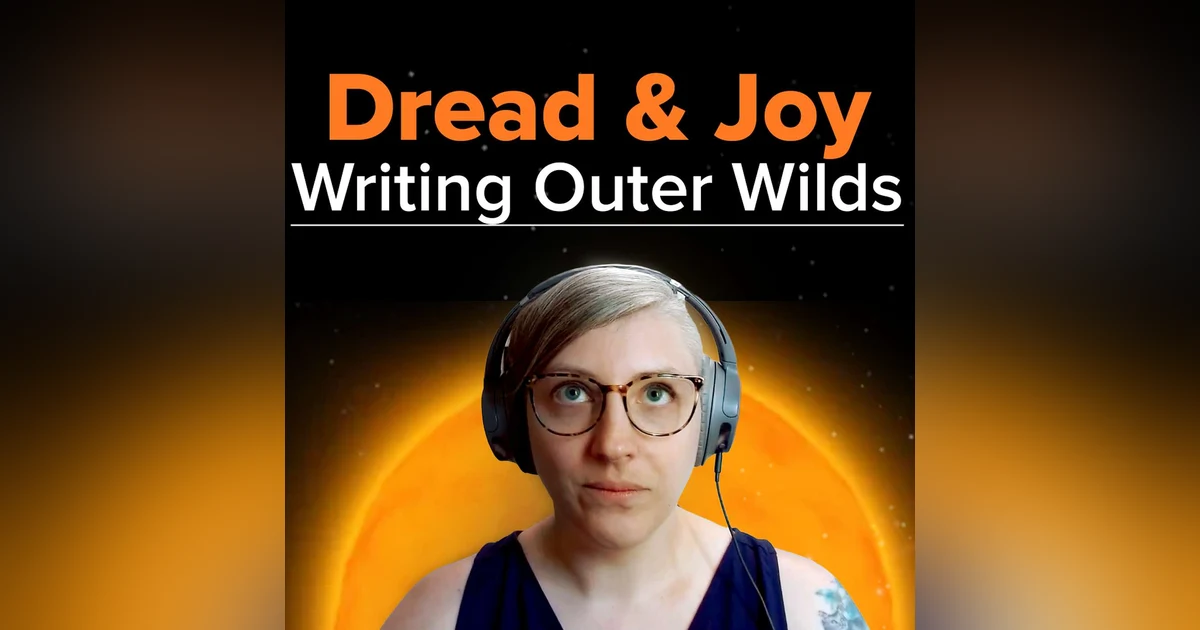

Send us Fan Mail Today I sit down with Kelsey Beachum, writer of Outer Wilds, for a deeply honest conversation about the creative process, including what it was like collaborating with her brother Alex Beachum on one of the most loved indie games of the past decade. Kelsey clearly poured so much of herself into the writing for Outer Wilds. I actually had no idea just how personal this game was for her. This of course bought up a ton of questions about what it must be like to put your heart o...


Today I sit down with Kelsey Beachum, writer of Outer Wilds, for a deeply honest conversation about the creative process, including what it was like collaborating with her brother Alex Beachum on one of the most loved indie games of the past decade.
Kelsey clearly poured so much of herself into the writing for Outer Wilds. I actually had no idea just how personal this game was for her. This of course bought up a ton of questions about what it must be like to put your heart on your sleeve for the whole world to see. As you can imagine she has some thoughts on this!
We also get into the strange phenomenon of imposter syndrome that can come even when the response from players is overwhelmingly positive. Kelsey reflects on what it means to feel disconnected from the success of a game like Outer Wilds and how she learned to navigate that emotionally.
We talk about burnout in the games industry, what causes it, what it costs creatively, and the importance of finding collaborators, studios, and creative environments whose values genuinely align with your own.
Beyond Outer Wilds, we also discuss Kelsey’s work on Avowed and The Outer Worlds.
This was one of the most open and generous conversations I’ve had on the show. Kelsey held nothing back, and I think anyone who makes things, games, films, documentaries, music, writing will find something here that resonates.
This is basically a conversation on creation and what we give to our projects. It reminds me about the disconnect between the maker and the audience. What we put into a creative endeavor is often different to what the audience gets out of it. I don't see this as a bad thing in the slightest and there is a joy in see how ones work is interpreted compared to what was going through our heads when we made it.
The Examined Game
Each week, host Steven Lake asks the creators behind some of the world’s most influential video games about the meaning of life (in video games), leading to conversations about the personal and creative impact games have had on their lives.
00:00 - Intro
02:12 - Cozy Games & Creative Problem Solving
05:31 - Early Gaming Memories & Zelda’s Reactivity
08:36 - Why Reactivity Matters in Games
11:04 - The Importance of Chairs in Video Games
13:12 - Growing Up Creating With Alex Beachum
17:04 - Joining Outer Wilds
21:02 - Bringing Humanity to the Nomai
25:14 - Writing Around Gameplay & Discovery
30:11 - Why Outer Wilds Trusted Players
35:22 - Building the Opening of Outer Wilds
40:31 - Melancholy, Wonder & Joy
47:08 - How Outer Wilds Reflected Real Life
50:55 - Death Anxiety & Grief During Development
57:18 - The Fear of Putting Creative Work Into the World
01:03:42 - Imposter Syndrome After Success
01:09:33 - Burnout in the Games Industry
01:15:42 - Returning to Games After Burnout
01:22:51 - Finding Healthy Creative Environments
01:30:06 - Why Outer Wilds Connected With Players
01:36:11 - Accepting That Not Every Game Is for Everyone
01:41:27 - Learning to Take Ownership of Her Work
01:48:04 - Why Video Games Matter as a Medium
01:53:44 - Writing for The Outer Worlds & Future Projects
01:58:37 - Branching Narratives & Experimental Storytelling
02:02:44 - Creativity, Mental Health & Feeling Less Alone
02:07:11 - Final Thoughts
Intro
SPEAKER_01I had a lot of issues with death anxiety. And um partway through production, I also lost someone I was really close with. And those things all went into, I mean, I put my heart and soul into this thing, you know? And it it's got it's got a real significant piece of me in there. What what does it mean to to find meaning in in something that is essentially meaningless? And how do you find joy in those moments that you have? So it just it wasn't quite so philosophical as all that on the face of it, but when you got to play a lot of it, it comes out.
SPEAKER_02Hi there, my name is Steven Lake, and welcome to the Examine Games. Today I'm talking with Kelsey Beecham, narrative designer and writer. She's the writer of Outer Wild. She's also contributed some brilliant games, including Avowed, The Outer Worlds DLC, and Marvel's Spider-Man 2. So this conversation is literally why I do this podcast. It's such a beautiful deep dive, not just into the kind of games that somebody has made, but the impact that that work has had on them, uh, both professionally and personally. The pressure of releasing a game that goes on to become like a cult classic almost instantly, and the fears around not being worthy of the work that we ourselves are doing as creatives. Please do subscribe, rate if you love what you're hearing. It really matters to me that you guys enjoy what I'm putting out, and I'm always welcome any kind of feedback as to what you want to hear more of. Thank you. Are you are you sort of playing much right now, or is that a harder thing to do when you're in the thick of work?
SPEAKER_01Uh I am playing some stuff right now. I'm mostly playing um actually playing a lot of the binding of Isaac, uh, because he had his new game, Eugenics, come out, and I don't think I can play that because I'm just a little too precious about cats.
SPEAKER_02Yeah, from from what I've played of it, it's not um it's it's not precious about cats. So you so I guess you sort of had the kind of the uh the desire to sort of dive into something like that just without necessarily the kind of cat mutilation. So you went back to his uh older work.
SPEAKER_01Yeah, I've been playing that, I've been playing Silk Song, I've been playing a couple of cozy
Cozy Games & Creative Problem Solving
SPEAKER_01games, that sort of thing.
SPEAKER_02Um you're not saying Silk Song is a cozy game for you, are you?
SPEAKER_01No. I would have to be really hardcore for that.
SPEAKER_02Like really, really hardcore, actually. Um What cozy games are you into, just out of interest?
SPEAKER_01Uh there's a game called Garden Galaxy that I really like. Um where it kind of spawns items and you can use them to assemble a little like landscape. Um I find that very relaxing. I also find it good to put a cozy game on when I'm kind of trying to puzzle through something. Kind of it gives you your hands something to do and your brain isn't directly focused like completely on the same problem. And I find that sometimes that frees me up a bit.
SPEAKER_02In terms of like uh puzzling something out like with a project or with writing.
SPEAKER_01Yeah. Like if I've got an idea I'm rolling around, or if I've got a uh something to resolve that I'm not quite sure how to do that.
SPEAKER_02That's a really nice uh that's a really nice approach to problem solving if a cozy game can uh help unlock that for you.
SPEAKER_01I find it's a good equivalent to like, you know, taking a walk, or um sometimes I go out with my bow staff and I just spin it for a while in the front yard, which gets me some looks. But just anything that can kind of take my brain off of the immediate problem tends to lessen the pressure and make it easier to problem solve, I've found.
SPEAKER_02Do you have the sort of good sense to like say, oh, okay, I need to go and do this? Or is it that you just go and happen to be doing it? Because I guess if if I'm in that place, you know, I might go for a walk or I might be doing some gaming or something just to change a scene. And I'm not necessarily like smart enough to think, oh, I need to go and do this to unlock this thing. But when I do start doing it, the the epiphanies then suddenly come. And I think, why haven't I done this sooner?
SPEAKER_01It's a little bit of column A and a little bit of column B. Uh sometimes I run up against a problem and I'm banging my head against it, and I'm like, I gotta stop, I gotta go reset, I gotta go do something else for a bit. And then other times it's nice just to give myself that space. It's kind of like shower thoughts where you're just kind of doing something else, and then your brain's like, hey, what if this? And it's a good idea, and you want to use that. So nice to give myself that space, I think.
SPEAKER_02And do you know, I mean, is is that is that sort of you is it kind of specific things that you find yourself bumping up against in terms of like the problem solving with your work?
SPEAKER_01Uh usually it's something story related. It'll be um, it's not typically like a mechanical thing, like how do I code this or how do I implement this? It's usually a structure thing for me with story, where it's like, oh, I know I need to evoke this emotion here. How do I effectively do that?
SPEAKER_02Say Yeah, it's very much the same with running into um dead ends on documentaries as well.
SPEAKER_00I bet.
SPEAKER_02Um and I guess some what something I love to ask people as well is about, you know, if we talk about gaming, what some of those kind of early gaming moments are for you, or maybe even just one. Usually something comes to mind for people as a really nice example of something that you you wouldn't have probably known it at the time, but you're basically like searing your love of video games
Early Gaming Memories & Zelda’s Reactivity
SPEAKER_02into your retinas in that in that moment.
SPEAKER_01Um there was this is sort of a silly example, but it's the first thing I can think of. Um in the Game Boy Zelda games, the Oracle games. Um I was I was hitting one of the cuckoos, and it you know, they swarm you if you do that. And I just thought, like, what a fun thing for it's so unnecessary. You don't need to do that in the game. It's so it's not important. It doesn't, it's not like a meaningful choice or anything like that. But it's such a fun way for the game to poke back if you poke it first. So I think I just I don't know, I'm so in love with reactivity, and I'm so in love with just the audience being able to poke back and say, like, okay, I see what you're giving me. What if I do this? Um, I love to respond to that sort of thing.
SPEAKER_02I love that answer. I think that poke back idea. What I think's because again, I've had my own examples of that. Um and it's obviously like the technology and what we can do with games has evolved so much over time. But the essence of that poke back is is the same, right? Be it like what you were talking about with Zelda, or whether you can like destroy an entire town, yeah. Um, the satisfaction is kind of the same, if not more so, perhaps, with something like what you experienced in Zelda.
SPEAKER_01I think it's so central to the concept of play. It's just inherent to video games, and it's inherent to video games and like pretty much no other medium, which is really cool.
SPEAKER_02And do you think so? Is that something that's been a through line with your with your work and what you've then gone on to do? Just the idea of reactivity and poking and poking.
SPEAKER_01Oh, absolutely. Yeah. I I I don't always get the chance to do a ton of it, but I like to put it where I can. And I I really enjoy surprising the player. I like if they, you know, if they do something, they're like, oh, I'm expecting this result to give them something different. That makes sense, but is but is different than what they expected. Um that is just a lot of fun.
SPEAKER_02I've been this is a slight non sequitur, but it comes to mind. I've been thinking a lot about chairs recently in video games. And well, just this idea, like I think a really nice litmus test for a video game is if there's a chair, can I sit in it? Um because it's kind of one of the most passive things that you can that you can do. And it it it rarely, rarely serves any purpose in a game. But just the idea that someone's taking the time to sort of let you just sit um in a game is uh I don't know, for me it's always quite a sort of a nice little special add-on to find.
SPEAKER_01I also love that it facilitates a moment of waiting in the game. It's a moment of just existing. Um, you know, you're not there's no chair-based gameplay for the most part, unless you're playing like prayer or something. Um but that moment of like on Hollow in Hollow Knight, when you hop on the bench and you sit and it's yeah, it's safe. There's a function to it,
Why Reactivity Matters in Games
SPEAKER_01but also there's a moment of just you get to just sit there and be calm and still in the moment and enjoy the scenery, and then it ends when you say it ends, when you hop up. Um, I think that's very different than just pausing and like, you know, gameplay. So I think it creates some really cool moments potentially, that moment of just doing nothing.
SPEAKER_02There's I think I'm not sure if you've played um split fiction, but there's some nice benches in that game where you can actually get an achievement for it if you sit in all the benches, which slightly negates what we were just saying. But it it's it's a moment for sort of reflection and between two players in that instance, which is which is quite interesting in its own right.
SPEAKER_00Yeah.
SPEAKER_02Um, just give a little a little bit of background just about, you know, so so let's say from from that that that moment of um inspiration from playing Zelda, what your sort of lineage has been leading up to sort of becoming like what seems to be like very present in the games industry and working on some really wonderful projects.
SPEAKER_01Um I don't know how far back you want me to go, but I know it's quite a big question, right? But is it leads up to it kind of there's a snowball effect. Um I grew up making all kinds of creative projects with my older brother. Um it was just we worked really well together creatively. And when he got to college, he was double majoring. He thought he wanted to do cinematography. And he was like, hey, can you write, you know, a script for me? So we were doing short films and things like that, and I was helping him with those. Um, we wrote uh uh a short film together that actually he's still working on to this day that I think may come out someday, but we'll see. Um it was when I was in high school, so it wasn't exactly my finest work. But um I started dating who I uh would eventually marry in college. And this person was studying game develop design or game development. And Alex was like, oh, Alex is my brother. Alex was like, oh, that's a a thing you can do. So he switched over to that for his remaining time at college, and then he went and he uh worked on his master's at USC. And of course, his thesis project for his master's at USC was Outer Wilds. So that is how I got into video games because there was actually a game before that where he was like, hey, we need somebody to punch up the lines, you know, in the script. And I was like, sure, I can do that, no problem. And
The Importance of Chairs in Video Games
SPEAKER_01getting to see somebody do a playthrough of the game and see my text come up in response to what they were doing. I don't know, it was just really fun to think about like where things physically occurred and and how the player was moving when they happened. And I kind of just fell in love with it right away. So when Outer Wilds came along, I was like immediately like, yes, I want to write for this. Um that was something I kept doing, I kept moonlighting on uh in my professional career during my career as an editor. And I was, I think, at the Onion as an editorial assistant when no, it was before that. It was at CSA, uh, the Cryogenic Society of America is where I was working. And it anywho, sorry, the important thing is that uh Outer Wilds won at IGF, the Independent Games Festival. And that was the moment where Mobius Digital picked us up for um to to actually finish the game. So I started working with them part-time, and that was the first time I was paid as a game developer. And in 2019, no, 2017, I lost my job at the Onion, and I was like, well, I could either, you know, pick up a new editorial gig, or I could try to go all in on game writing. And unfortunately the latter worked out for me.
SPEAKER_02And and in terms of I mean, I I just love that that um were you uh I was is it USC? You you you weren't there though yourself, it was just your brother studying there.
SPEAKER_01No, no, I did it remotely.
SPEAKER_02Um I um had a good conversation with Richard Le Montchand, who was part of the Uncharted games, who is uh teachers there now.
SPEAKER_00Oh wow.
SPEAKER_02Sort of so they may well have crossed paths. I actually told him I was speaking with you today. But um, and then you know, as that that sort of progression of becoming more and more on board with the outer wilds, um what is the part of that game that you feel like I mean it's it's it's obviously a good wholly collaborative thing, but are there parts of it that you sort of feel okay, this is the thing that I was really able to
Growing Up Creating With Alex Beachum
SPEAKER_02sort of bring to the table on this this project?
SPEAKER_01Okay. Um yeah, I think I brought a lot of life to it, to be honest. Um, it could have been very boring, it could have been very, yes, high of mind, we discovered the eye of the universe, and we are going to find it. And but what I did was I actually did individual characters, and those characters had individual voices, and they had the benefit of doing that is that you get conflict, you get relationships, you get, you know, one-on-one interactions that you wouldn't get with something more like a high of mind. Um, so I think I was able to like we would, for example, um, the shiplock. Pretty much everything in the ship log is something that I had as an assignment of like uh I'm trying to think of an example now. But if it's like, you know, the Nomai were here and they went underground to build a city, it's like, okay, I take that little fragment and then I say, how do I make not just a conversation that reveals that information, but also an interesting and compelling story? Because each of these instances of text needed to be an interesting story in and of themselves.
SPEAKER_02And so I I was talking with Eric Woolpo, who who wrote uh, you know, for Portal. Um, and what was interesting about speaking with him was how much of the game was, you know, in terms of the mechanics and the levels, and even this the part of the game where you sort of escape from the actual center and you're kind of behind the scenes. That was all in place um before he started to then build in the you know the actual story threads that obviously became you know, so you know, in terms of the antagonist and and all those parts. But I guess I'm just interested about that balance between like writing for what's already there, uh, or where where writing is being led by the mechanics and the environments and maps and levels that already exist versus where the writing then informs those things.
SPEAKER_01Sure. It's I at its best, it's a conversation. It's design saying, we need something like this, and the writing saying, what if we did something like this? And the design saying, Oh, if you do that, I can do this, you know? And so a lot of it was like we needed specific things. Um, and I I kind of had to be flexible on that, and I kind of created a species that worked, you know, with the design elements that we knew we were going to have. But then design was really good about saying, like, oh, if that's the case, maybe we could do this. And I'm being a bit vague just because I I don't remember the exact conversations, but one that stands out to me is there was um a moment where my brother came to me and said, Hey, we need the a conversation where the Nomai decide to blow up the sun. And I'm like, they would never do that. That's not, you know. So my um initially my writer brain was like, no, they would never. Uh and then I was like, actually, if they did, that shows, you know, one, their kind of religious fervor for finding this eye. And two, it's gonna be so dramatic. So it was really fun to lean into that. So there are times where like I even thought, you know, oh yeah, we're at odds here, but uh you can make it work.
SPEAKER_02Hmm. And I guess my my question then was gonna be, and maybe you've answered it, if there are moments in that game that you just really feel like it's like the sum of all of its parts sort of come together to make a really sort of special um moment or interaction for the for the players.
SPEAKER_01Honestly, just the core gameplay loop is something really special. Um, I people I literally have an inbox uh email right now sitting in my inbox asking me how we how we did that. I'm like, I don't, I don't fully know. Um it
Joining Outer Wilds
SPEAKER_01obviously has a lot to do, probably everything to do, with Alex saying, okay, information knowledge is going to function as a reward because it's going to teach you how to navigate the space differently. And that's so core to the game and to how it functions. And so it was so I had to move just really carefully in step when I was creating conversations that spelled out these things that you needed to know because it's like you you don't want it to be too obvious, you don't want it to be too subtle, you don't want it to be something that you know you get lost reading. Um a lot of the the narrative design, even was um like literally the design of the text itself. Um we had certain branches would be longer, and those longer ones, visually longer ones, tended to be where we would put um like s answers to things or important information.
SPEAKER_02So you could visually weight that is it a lot of like to because to pull that off and do it so as sublimely as you all did it, is that a lot of kind of course correction along the way? And trying something and so actually that's taking a little too that's a little too vague, that's a little too specific.
SPEAKER_01And I think I must have rewritten the game a hundred times um just because we would say, Hey, this is the clue we need to impart, and then I would try something, and then we'd say, Oh, that's actually a little too obvious. Let's make it more subtle. Oh, that's too subtle. Let's go a little more obvious than that. Actually, we've changed our minds that we're gonna put this clue all the way over here on this other planet, so this needs to be something different, so you're gonna have to rewrite it altogether. Writing is rewriting, right?
SPEAKER_02Mm-hmm. I mean, it's such an incredible game, and it's one of these things, it's like obviously gonna speak to you and then sort of going going back through the game and what I loved about it so much. But you don't I don't really think about just how many mechanics and and moving parts are at play until I start speaking with the person and realizing like especially when you've got you're dealing with a game that provides you a solar system and which can go sort of any direction in, and you know, you you obviously you know you very much want to see the players get to the end of the experience, right? But at no point in that game do you ever feel as if you're on any kind of rails, and I just think it's and maybe it's and I'm sure you I would love to hear your thoughts on this about just why it's just why it's been so why it was so successful. But I think for me, what I just loved about it out the gate was it's like I what every time I discovered something, every time I made progress, I genuinely felt like I was the only person that was could possibly not be smart enough to work it out, but like it just felt as if I'd I'd found something else that was private to me, specific to me, you know. Um rather than again being put on rails to kind of like find the solutions to these these puzzles.
SPEAKER_01Sure, because you come at it from your own angle and your own pathway, and the chances of somebody else another player following the exact same path as you are slim to none. Um yeah, I think part of the charm of the game, if I had to, if I had to say it, um, I would say part of the charm of the game is that it really trusts players to figure things out. It gives them enough that, you know, and it gives them like, for example, the museum. That's all information that you have to kind of um pull yourself. You have to be like, oh, I I want this information, so I'm going to read the plaques on purpose. We don't push that you. We don't say, this is gonna be important later, you should know it now. Um we're we're giving you, we're setting you up with enough to succeed, and we're saying, okay, now go go do it, go do your thing. And I think that's a big part of it because so many games these days are, you know, here's the location on the map, and you go exactly here, and here's
Bringing Humanity to the Nomai
SPEAKER_01the guy you gotta talk to, and you know, it's there's just a lot of a lot of hand holding.
SPEAKER_02And I guess that makes me think about again the beginning of that game and how much work was being done in terms of there's a few things like setting the intention or ambition for the player, setting the tone of the game, um, setting their kind of yearning for exploration. But good, you know, because if I know I'm talking about that build-up to when you finally take off, right, and and and leave your home planet. I just I'm just interested in in how many moving parts were involved in making that I know and I'm not talking about the moment when you actually do leave, because I which I do want to talk about, but just how much is going on um at the beginning of that game to really set the player up.
SPEAKER_01There's a lot of you kind of had to finesse it. We didn't want you to be like, hey, you're a dumb idiot, and you're not Going to be last very long in space, and we also didn't want you to feel like you had to cosplay this professional pilot that was extremely good. So there's room for you to fail, and there's room for you to practice. Um, and again, we don't force that on the player, but like with the model ship, that gives you some time working things out. You know, with the Zero G coach, you can go um work on the repaired satellite and uh you can get a feel for what it's actually like to be in that environment and and get a sense of the controls early. But also, I mean, you you do once you get into space, failure is not a uh uh like an end state. It's not, you know, necessarily a b a bad thing uh to die. So that's kind of an interesting thing. But it's actually inevitable why. Yeah. And in fact, you do have to die repeatedly. So it it's it's not a it's not a fail state for us. Um there was a lot of tweaking, also, like I think we had an early version where um everyone else was like, I don't know why you want to go to space. That's stupid. Yeah, it turns out if you tell your player repeatedly it's dumb to go to space, they'll start thinking it's kind of dumb to go to space. So we had to get the right level of like you want them to be encouraging the other villagers to get you to go to space, but we don't want them to get it, if that makes sense. Most of the characters don't really get why you want to go do this thing. Um, some of the key ones do, and that helps, but you know, we don't I don't know, we don't really. I think I think part of it is is just the way it's set up, the way it is like a choice to interact with tutorials or with like information. I think that teaches you early on, like, yeah, you can skip this stuff. It's not helpful if you do. You know, like this stuff is here to help you navigate the world, and it will be useful if you if you do access it, but we trust you and you can avoid it, or you can come back to it later. That's a choice as well. The fact that the tutorial is always available post-loop is because we wanted people to, you know, be able to get back in there and and you know, you don't want it to just be once ever one way through the tutorial, and if you didn't engage with the uh mechanics, whoops, screw you. So that helps.
SPEAKER_02And then I just wonder, you know, in terms of sort of setting a pace or a tempo for players in understanding that they're not going to be like rushing through anything here, that it's it's it's got a kind of meditative Well, is it's actually because there's two things going on at the same time there, where there's there's this kind of meditative pace to it. It's at least how I felt playing it. Whilst at the same time that you kind of like get a little bit caught up in the the idea that your time time is a a finite resource in this as well. And I just wonder you're sort of balancing two things there at the same time.
SPEAKER_01Yeah, I know there was some fine-tuning of how long the time loop actually takes. Um you want it to be long enough that you have enough time to explore your objective, but you don't want
Writing Around Gameplay & Discovery
SPEAKER_01it to be so long that if you die five minutes in or whatever, you're like, oh no, I failed the loop. That's that's tough to get right.
SPEAKER_02Um well and again, it's one of those things I don't really think about until I'm sort of here talking about it's like, oh yeah, you did get it right. Great, you know. Um and something you know that I'm just interested in whether this was something that that that you know you had a part in or how it came about, but this there's this sort of melancholy tinge to the game as well, you know, in the story, and there's a sort of sadness that kind of floats over. Sad melancholy is probably more accurate, at least again, that was my sort of perception of it. Yeah. Is that something that the game kind of naturally gravitated towards, or was that very intentional?
SPEAKER_01I think it was very natural that we gravitated toward kind of a melancholy tone. And that is, I mean, in part because I mean, one, you have an entire species that ultimately failed a lot. And I say fail, and in a scientific context, they're still learning from it. So there's some positivity there of like, well, it wasn't this, but maybe it could be this other thing. Maybe we, you know, go about it this way instead. Um they're pretty resilient to failure. I think they had to be, because otherwise it would just be so much more melancholy. Um but also we knew the whole game uh the what the end of the game was going to be. And that is inherently both an inspiring thing and a sad thing. It's naturally, you know, with with things coming to an end the way they do. So it's just kind of the bones of it are very melancholy, and I thought it part of my job um was to make it an enjoyable experience as well, so that it wasn't just melancholy the whole way through.
SPEAKER_02And how do you do that?
SPEAKER_01Um I think enjoy is kind of the antidote to melancholy. I There are a lot of little moments. There are little successes that the gnomy have, there are moments of very human relations. There are people who fall in love, there are siblings who tease each other, there are, you know, friends who are there for each other when something goes wrong. It implies that there's that whole, I mean, it says it's funny to say human element with aliens, but there's a humanity to them. And I think humanity is inherently, you know, and then you also have the the Harthians um rocketry program is very it's silly because it's very, let's launch it into space and see what happens. Um but it's it's it's very unhinged. But it's also a very, I think, joyful way to express scientific progress in that sometimes as humans we we discover things in the weirdest ways or unintentionally. And there's so much joy in trying those new things and saying, oh shit, well, okay, that was too much power. We did blow it up, so we'll have to make the next one different. But I mean, it is it is a funny thing, but it is also um I don't know, there's so much joy in learning inherently. So that helps.
SPEAKER_02I love that word joy, and again, it's that the the difference, right, between say joy and happiness, where that happiness is often contingent on a sort of external things going a certain way, but joy is it's like self-creating, right?
SPEAKER_01Yeah, taking pleasure in the thing that you're doing and and and just kind of that natural sense of like we're doing it.
SPEAKER_02And the word wonder sort of comes to mind in the idea that you know that you can the the melancholy and joy or wonder, they don't have to be m mutually exclusive.
SPEAKER_01Oh, of course not. You've got the wonder of the natural universe. I mean, it's it's fun just to go out in the ship and look at things, you know, and not not not even try to complete the story or the game, but just look at how things are moving and changing and and how naturally beautiful they are. And I think that's very much the case in our our real world.
SPEAKER_02Hmm. And it's it's and again, it's a little bit like we were talking about coming back to the chair thing, you know, and this this idea that if if you know art imitates life or the other way around, like just giving giving players the option to have a certain level of sort of passive passivity, passiv you know, to be passive within a space, um and and to just sort of take take it in. And that's that's a hard kind of world to build because it's sort of it's it's it's it's not about creating infinite distractions or things that
Why Outer Wilds Trusted Players
SPEAKER_02are pulling people in a certain way. It's just sort of creating an environment. I wonder if just the fact that you can float helps a little bit with that.
SPEAKER_01I bet it does. I think there's uh a nice element of of seeing things at such a small scale and being able to zoom in on them and and enhance that detail probably helps a lot.
SPEAKER_02And I was just wondering, and I don't want to try and fill in gaps where they aren't there, but is there any sort of parallel between the sort of story you're exploring in that game and the actual process of making a video game? Like, is there um things about what's going on in that game that you can sort of relate to in terms of what you all have achieved?
SPEAKER_01I hadn't thought of that before. That's interesting. Um definitely some of the just taking joy in the process is probably a big part of it because you are going to have a million little things that bog you down and that stymie your your you know your attempts to make something, and you have to kind of come up with clever ways to get around them, and it's you're not necessarily going to get it right on your first attempt. I'm a big proponent of failing quickly and uh effectively, and I think the gnomy do that. I think the player does that.
SPEAKER_02The um I mean and and and I suppose also just the the thing around repetition and going over and over and over again, you know, and coming in. It goes in cycles approaches.
SPEAKER_01Yeah, coming at it from a new angle, coming at it from from more information, having tried something and and taking that information and moving forward with that, saying, okay, we know this, we know this, let's try it this way as a result.
SPEAKER_02And had you um yeah, I know Pixar were big fans of like fail quick, like fail. It's okay to fail, just do it as quickly as possible. Um, so then you can sort of learn from it and move on, probably to the next failure, and then just slowly work your way through to a very, you know, a great um piece of art. Um leading up to the release of of Outer Wilds, had you had much experience of like putting your work, what any kind of work, like out there into the world?
SPEAKER_01No, I think that was the first time I was I I had put out a few things um professionally where it uh I was writing for magazines and whatnot, but I was writing in-house, so I didn't have like a byline. So I'd put my work out into the world before, and that wasn't a totally new feeling, but putting something creative out into the world, that was new. That was the first time I'd ever done that. And I did not I did not realize how vulnerable that could be I'd I'd love to talk about that actually.
SPEAKER_02I was thinking about this recently, just I mean, I mean, if you forget even putting like a piece of work out into the world that could say be accessed in theory by anyone, but sometimes even sending a cold email to somebody um can sort of be like extremely fear-inducing because you sort of think that you're exposing yourself to a potential rejection or I mean God knows what gaps you're sort of filling in in your head about just sending a polite email out. I mean, don't let me project that onto you. How old they perceive it's a good idea sometimes. You know, did I come across the way I wanted to come across the and all of that fear of yeah, miscommunication or being misconceived or misunderstood.
SPEAKER_01I mean, or sometimes the fear of being perceived correctly. I had at the time um a lot of issues with existential dread. I have I deal with mental uh illness, and uh I had a lot of issues with death anxiety. And um part way through production, I also lost someone I was really close with. And those things all went into, I mean, I put my heart and soul into this thing, you know? And it it's got it's got a real significant piece of me in there. And I've never that's a difficult thing to offer up even in therapy. So to give it to strangers where I don't know how sympathetic they are to that, I don't know if they're ready to receive that kind of message or that kind of, you know, story that's been affected in that way. Um because a lot of it was I was working through like, all right, how do we deal with death anxiety? How do we deal with knowing the end is inevitable? What what does it mean to find meaning in in something that is essentially meaningless? And how do you find joy in those moments that you have?
SPEAKER_02So it just it wasn't quite so philosophical as all that on the face of it, but when you got to play a lot of it, it comes out I mean, yeah, it's it's so interesting hearing you say it like that because and then thinking back of that game, in some ways it's so so overtly the sort of the theme theme of it, you know.
SPEAKER_00Yeah.
SPEAKER_02Um, and so you know, and obviously like the game was extraordinarily well received, but
Building the Opening of Outer Wilds
SPEAKER_02I'd like to just forget that for a second, and like m I know when I've put stuff out there, whether it's been, you know, very well received, I mean I've never had anything that's been like really negatively received, but I've had stuff that just wasn't really picked up on, do you know what I mean? And sure, and that is what it is. But I I think there's something that you have to do as a creator of any kind that you sort of have to make some sort of peace with what you're doing before you even get any sort of like external validation back. Because I think unless you're sort of prepared for it, it doesn't really matter how much validation you're you're getting back. It can sort of almost be a there's there's not enough validation in the world to kind of fill certain holes within ourselves that we could we sort of need to like fill in ourselves before we go out there getting it from others. Does that make sense?
SPEAKER_01Oh no, absolutely. And the funny thing is writing Outer Wilds, I was just sort of unaware on some level of uh at first at least. I was kind of unaware. I was like, yeah, I guess I knew in the back of my head people would eventually engage with it. They'd see it, they'd read it. But I think I have I'm my own harshest critic. I think a lot of creatives are. And I'm always trying to prove to myself that I'm good enough. And I had to prove to myself, yes, this is a good enough, you know, what you're doing with the story in collaboration with the story team, that's good enough. The writing you're doing is good enough. You're happy with it. You're, you know what I mean? You've hit a point where you feel like you're saying the things that you want to say and you're happy with what it is that you're saying. And then there was the separate part of it got published. And I was like, okay, it's out in the world. That's a little like, oof, yikes, sweaty palms. But I until it started receiving some serious attention, that's when I was like, oh my God, I accidentally put my whole heart, you know, out on display. For people to to, you know, reject or accept as they please. Like, what have I done?
SPEAKER_02And and and what yeah, what what did you then go through when you had that sort of crashing realization?
SPEAKER_01I mean, did you kinda I was a little avoidant of it, honestly. People were were messaging me on Twitter and things and thanking me or emailing me and thanking me for doing the work that I did. And I was like, oh my God, I'm such a like I'm only a small part of this game. You have to understand. Like Alex was massive, massively involved in Story, which people neglect to realize all the time. Uh Loan Verneau, also significantly involved in Story, uh, lead lead designer. And I don't know, I felt so like I didn't feel like I was I was worth the praise, you know? I was like, oh, all I did was I just put my head down and I got it done. Like, I don't really think I did anything special here. Um I still to this day I get a little embarrassed when people compliment the game. I uh complimenting the game is fine. When they compliment the story, I start getting embarrassed. When they compliment the writing, I'm I'm a puddle on the floor.
SPEAKER_02There's worse ways to respond to positive feedback than that.
SPEAKER_01Just absolutely we've been so, so fortunate with the response the game has gotten. And the community, I just absolutely love how they treat each other, how positive they are, how untoxic or non-toxic they are. It's it's a wonderful thing to see. I try to stay out of fan spaces, but from what I have seen of them, it's just so positive. And I think that's a really cool thing to see.
SPEAKER_02Yeah, it is it is possible, and it's one of those things I think when people are centered around the right thing. The fandom doesn't need heavy moderation or bannings or or anything because it it it kind of it draws out the best of people, and and other things can draw out the worst of people. Well, the worst is perhaps too, but just you know, more combative or whatever.
SPEAKER_01They're so they're so respectful of wanting everyone to have the experience they did. So they'll be really coy about giving hints and really careful about giving hints, and they will they make sure that you want the hint, and then sometimes they'll write it in like the know my voice, and I just oh I melt. It's so sweet.
SPEAKER_02And I just want to talk more about that. That you know, so first you said about that realizing what you were doing like was enough, it is enough. Is that something you've you've sort of gotten better at? I mean, I know I know for me like that, you know, that either belief or or lack thereof belief in myself, it can be a good driving force for kind of getting stuff done, but at the same time, it's not the most sustainable way of going about things because you spend a lot of time feeling kind of terrible about yourself.
SPEAKER_01Yeah, you have to be careful with that one. I had it for a period of time, I mean, I had uh uh it was it was hard coming off of outer wilds in some ways
Melancholy, Wonder & Joy
SPEAKER_01because I was thinking, okay, I have to do at least that good all the time, or I'm a failure. You know, which is like, wow, that's a lot of pressure to put on yourself. And also I had to learn that the conditions for outer wilds allowed me to do some of my best work. There are so many scenarios and requirements and conditions in game development that can prevent me from doing my absolute best work. And so a lot of the time you have to stop, stop going, oh, I'm gonna do the absolute best I can, and you're gonna you have to look at it as I'm gonna do the best I can within the limitations that are present. And I had to learn that pretty quickly. Um, I did burn out pretty badly for a while after uh feeling like I just couldn't reach my potential, and I it I had to take like a year off from games, and I came back and I just reconnected with doing it for the love of doing it, and that helped a lot.
SPEAKER_02Is there something that you kind of came to at the end of that time away that I mean, maybe it was just that like that, that decision to do it for the love of doing it, but um you know, what you went through to be able to kind of like take the pressure off yourself so that you can actually show up and do a good job?
SPEAKER_01Did some therapy. Gotta do some therapy. I'm a big proponent of it. Uh so I did some of that. Um, I talked a lot with my spouse. My spouse is a game developer as well, and they are kind of uniquely positioned to understand both me and the games industry, and they kind of helped me navigate, you know, how do I maintain sanity while also doing this thing. Because I do love this thing, and I just when I lost, when I burned out, when I when I had like legitimate burnout, when I lost that love of making games, that was terrifying because I didn't know if I'd ever get it back. And so somebody approached me about making a game, and I was like, all right, it's it was a part-time thing, so it was fine. And I really liked their gang concept. And it just got me, it got my imagination going. You know, I started cooking, and that was enough to get me back kind of over the hurdle, and now I'm just really careful with things like I won't work in workplaces with like bullying because I was I was bullied pretty badly at a past studio, and that was a huge problem for me. Um, I'm I'm really careful about like toxic attitudes, I'm really careful about leadership. Um you know, and as a result, I've gotten to work at some really amazing studios.
SPEAKER_02And I guess, yeah, because obviously, again, it seems like you were just like blessed with the setup and the the structure of outer wilds. Um what am I asking? There's something there's something really uh and maybe you weren't frightened at the time of going back, but but but knowing where the knowing the spaces you had been and the places you didn't you desperately didn't want to go back to. And I've had those same experiences myself. Um it can make it very trepidatious, feel very trepidatious moving forward because it it can often feel As if, like, it's inevitable that that's the place we're gonna end back up in because of whatever my past dynamics are the sort of period, what whatever, you know. And you sort of tread carefully, right? And and then it's sort of nice when you start to get this validation back that it's like, oh, you can kind of almost like you can sort of manifest your own destiny about the sorts of people that you wanna want to be working with. And then the I I suppose it's you know, it's that idea of a decision, right? A decision is where you cut away the alternatives and whatever's left is the path that you go down. Um I guess I'm just interested what that to talk a little more about what that process was like for you sort of coming back into the industry. Sure. Yeah.
SPEAKER_01And it's it's tough because I mean, especially right now, there's not a ton of jobs to go around. So you have to be like, well, do I want to work or do I want to be traumatized? And then like, that's a hell of a choice. Um I've started doing more freelance work as a direct result because I think freelancing you have a little bit of you're a little bit removed and you're a little more I can cut this off if I need to, I can find something else. Um but honestly, probably the thing that helped the most coming back. Um, I had a boss at a studio called Super Evil Megacorp, Thomas, uh, was the first boss I ever had that just understood, if that makes sense. He got my quirks. He knew what it looked like for me to have the support I needed to do my best work, and he just did everything he could to get us to that place wherever possible, even though we had some insane, you know, uh hurdles to to vault and some things that we just couldn't negotiate and whatnot. But working with him kind of just helped me undo some of the damage. Um at one point he point blank just said like he said, what did he say? He said something about, you know, it just really resonated with me at the time. Um that I was kind of expecting other people to be the enemy, and that they're just not, and like I'd heard it a million times. It was like, oh, you have to assume best intent, and like, yeah, of course, of course. And it's not like I was thinking, like, well, it could be A or B, and B is worse, so I assume it's B. It was just a matter of this is how I'm seeing the situation. But just the way he talked to me about it, it wasn't coming from a place of you're doing it wrong, stop fucking it up. It was coming from a place of, hey, you I understand you are wired this way because of some of the places you have been and some of the things that have happened to you, and that's understandable. But also, nobody here feels that way toward you. And I was kind of like, oh, and it was a massive weight off my shoulders. So I'm better at taking things less personally now for sure.
SPEAKER_02I love
How Outer Wilds Reflected Real Life
SPEAKER_02that. I mean, do you the cause because that that's the sort of message that I think uh I could have heard that like a dozen times prior, right, from someone and not being able to hear it, not being able to hear it. But then when I'm in the right place and I've done whatever the inside stuff is I need to have done to be able to pick up a message from that externally, all of a sudden, like the fact that you've remembered that very specific conversation and that it was kind of almost it sounds like again, it it in itself may not have been pivotal, pivotal because of everything else you'd done before, but it was kind of like the final straw that breaks the camel's back of like like you said, that suddenly not not taking things on quite quite so much as you had done prior, right?
SPEAKER_01Yeah. It also was a matter of um the the studio values and whatnot. So burnout is fundamentally you not fitting within it happens because you the system that you're in doesn't work for you, right? Like it's not aligning with your values, it's not aligning with what you're trying to do. You're not being supported by it. And I was so much more in alignment with super evil, so that was wonderful. But then also, like Thomas was really supportive of I'm neurodiverse, and I have certain traits because I have ADHD, certain quirks, and he was comfortable working with me as a human, not just as a writer, but as a human who had like little, you know, bits and pieces. And so as a result of that, we don't work together anymore. Um, but as a result of that, I'm so much more comfortable just being up front and saying, hey, I, you know, sometimes I tend to hyperfocus. So if you need to get hold of me, uh do it do a you know a call instead of a a you know like a Slack message. Um just asking for what I need is so much easier. And trusting that other people will, you know, make space for it. Because they haven't in the past. And that was you know a scary thing. So I do it up front now. And I'm like, if they react poorly to it, I'm like, okay, maybe this isn't the thing for me, and if they react well to it, then I know.
SPEAKER_02Whereas before, and again, I suppose it's like the it's like we're talking about the cold email or whatever, right? And certainly the idea of communicating one's needs can be a terrible thing.
SPEAKER_01Oh god, how how needy am I that I've got things that I require. But that's just being human.
SPEAKER_02Well, it it exactly. I mean, again, I love obviously love the idea that the fact that this this story and this this support that you got came from a company called Super Eva Mega Mega Corp as well.
SPEAKER_00It's one of the most supportive places I've ever worked.
SPEAKER_02Yeah, well, if they were a super evil megacorp, they wouldn't call themselves Super Evo Mega Corp, right?
SPEAKER_00Probably not.
SPEAKER_02Um I just want to think back because so yeah, just just and just touching a little bit again on that idea of um I guess and and the reason I'm just interested with without a wilds was because it seems like something you've got to have so much sort of um you know a portion of ownership over alongside everyone else you're working with on that game, but was it and maybe you've already answered this, but I'm just interested about that that launch window and that release time. I mean, was that despite the the the sort of positive affirmation coming back, again, was it sort of a difficult thing to to sort of know that that you you worked on this thing for so long and had
Death Anxiety & Grief During Development
SPEAKER_02so much control over it and now it's out there in the world to be interpreted or misinterpreted in whatever way people want to it was a weird thing, and I'll tell you why.
SPEAKER_01The whole Bartle taxonomy of players, right? The the four uh section breakdown of player types we made a game just for explorers, and so you might need to explain what that is. It's it's a it's a graph of um tell you what, I may have it. Sorry, give me one second.
SPEAKER_02Okay. Oh, I love your plushie, I just saw it.
SPEAKER_00Oh, yeah, that's right, Beck. He's my my perfect space child. Uh maybe I don't have it. Shoot. Oh no, here it is. It's this.
SPEAKER_01So what the bottle taxonomy of players does is it divides on two axes uh the types of players that you get for games. You get acting and interacting, and you get players and world. So it subdivides into killers, uh, achievers, you know, people who are going for like the high score or the time or whatever, with killers being the ones that they want to like kill other players or defeat enemies. Um, socializers, who are the ones that get you know chatty with it or use them to like build little communities and things, uh, or explorers who are motivated by interacting with the world around them. And we made a game just for explorers, um, which is sort of bonkers because you don't usually take a whole like, you know, three-fourths of your player types and say, Yeah, screw those guys. Uh but we did. So there were a lot of people, and there still are. Um there are plenty of people who play the game and they just bounce off it and they just don't get it. And that's okay. Um, I had to learn to be okay with it, though, because there was a part of me that's like, oh, I'm so sorry you didn't have a good time. I don't know how to fix this for you. Um You can't. I mean, you just either they're gonna get the game or they're not. And sometimes people needed to play a little bit more, and sometimes they're like, nope, I played it for an hour. It's just not for me. And that's fine. It kind of was a masterclass on accepting, you know, not everything you write is gonna be for everybody.
SPEAKER_02I think once we sort of get our heads around that, it suddenly gets a lot easier, right? Because then you're not trying to do everything in the world to win over everyone in the world, which is a pretty tall order.
SPEAKER_01Well, and we thought we would be like, at least I thought we'd be like a niche game. I was blown away by how much attention we got and by how many, how many people like liked the game. I was like, are you sure? Because it just, I knew it was going to be really self-selecting for a very specific player type. And we were having all kinds of players being like, I had such a good time with this. I don't normally play this type of game. Some of my favorite ones are when people are like, oh, I play this with my son, and we pass the controller back and forth every other loop, and I'm like, oh, yes, very good. Like people play it in interesting ways. People play the game and then they get their friends to play the game and then they sit there going, ooh, getting excited for their friends to have the moments that they had. Um I've seen streamers play the game. Uh I can't watch a ton of it because I get embarrassed.
SPEAKER_02You get embarrassed. That's interesting.
SPEAKER_01Well, I think what is the embarrassing? They'll they'll read my words out loud and I'm like, oh I can't see it. Oh, of course. Yeah, yeah, yeah.
SPEAKER_02Okay, yeah, yeah. No, I I I I I I I can yeah, okay, I get it. Yeah. Hearing hearing someone right now.
SPEAKER_01No, they're not any. I didn't write it for voiceover, so sometimes it just doesn't quite read, you know.
SPEAKER_02Sure. And do you think, you know, and you talked about that idea, like, because there is like, and it's anytime I talk to you know, writers or designers of games, like they're very, very, very um adamant about making sure that there's no misconception that there are the many, many people that that brought this thing together and it's not just done by like one or two people, right? However, there is also that idea of being able to take credit where credit is due, you know, and and say that assume that someone has an understanding that something wasn't done in a vacuum and that it was it was created by by multiple very talented people. But do you think that you've sort of gotten better over time at being able to like accept and acknowledge your sort of part in in a game and what you're able to bring to the table? Or is it or is it still very difficult for you to sort of take on board direct, you know, uh compliments and still really struggle with that unless it's coming from like my brother?
SPEAKER_01Unless he's saying, no, you did this, you should feel good about it. I'm like, well, but I did it with XYZ and I did it with your help. And I, you know, it's really easy to discount the work you did. Um But yeah, I think I've gotten a little better at it. It's just remembering, like, hey, remember how many times you wrote and rewrote this game? And do you remember how many times you like worked with design to figure out what the need was and then executed on that? And like it just you put a lot of effort into like brainstorming and stuff. Like when these big things came up, you did, you know, you were part of them. So yeah, uh it's it's a little easier now. I just I still I look at it and I'm like, oh, I could have written it totally differently. And you know, it's hard to ever put anything down and be like 100% done. I I had a con uh a contract with um my my first full-time contract was with Insomniac. And I started May 2018, I think. And it had to be they had a non-compete, and I was in North Carolina, so I believe it was enforceable. And I was like, okay, I guess I gotta be hands down on this, you know. We gotta have the writing done. And it was such a weird thing the night before to be like, I guess that's it. And then later I did work on some patches and we tweaked some things, and you know. But it's weird to be pencils down on
The Fear of Putting Creative Work Into the World
SPEAKER_01something like that.
SPEAKER_02And just like you, I just the way you said it's like it's very easy to discount our own what we bring to the table, but I'm not sure why it why is it so I don't know why it is so easy.
SPEAKER_01It's seems to be much more comfortable than There are plenty of people in this industry that are very comfortable at exaggerating what they bring to the table, and there are a lot of a lot of what we call big personalities, a lot of egos involved. And then you get writers and we're these weird little gremlins that are like we're just doing our best, man.
SPEAKER_02I guess it's and the reason, you know, and I've I've i it's that thing where it's it would be a shame to see see um someone, you know, and you've obviously found a way to have some sort of form of agency in the work that you're doing, but I know people certainly in my industry, you know, and I have done it myself or been at risk of doing it still, where you know, one can sort of fall through the cracks for lack of wanting to take not necessarily credit, but like ownership, right, over the work that they've done, because then it's a building block to do more good work. And if people like what you do, then it's it's a shame. And I'm not really talking about you specifically here, but I'm just curious on your take on that. It's it's a shame for the world to lose somebody because they're not willing to sort of stand up and take ownership about what they've done.
SPEAKER_01And of course, the awful part of my brain is like nobody would mind if they lost you, but you know, you know. Um yeah, no, that's a really good point. And it's I gotta say, I I've had some really cool opportunities because of my work on Outer Wilds. I've gotten to go to some conferences and speak at things and and travel outside of the country, and specifically because people liked my work on it. So I have to assume I know something.
SPEAKER_02There's um uh something uh uh uh that someone said to me, a guy Noxie, who um you know he's he we work on this project together, and I think he probably may have picked up on in a moment of low self-esteem or whatever. He said it was from an anime, but I'm I'm not sure which one he said. You believe in believe in the version of me that believes in the version of anything.
SPEAKER_01Ah, that's from Guren Lagan. Okay, right. I'm enough of a nerd to know that.
SPEAKER_02Absolutely, I don't know if I quoted it like verbatim or what.
SPEAKER_01No, it's like it's such it's such a beautiful sentiment.
SPEAKER_00I think it cut for everything.
SPEAKER_01Honestly, yeah, it there are people I work with, there are friends I have that are like, no, you did good work. You're going to keep doing good work. You don't have to constantly try to prove yourself to yourself. That's not necessary. Um honestly, my spouse is my biggest supporter in that regard.
SPEAKER_02That's that's literally what I was just thinking of, because it extends beyond the professional realm. And if I think about well, the people that are in my life, they're kind of incredible. Uh and they've probably got good taste as well. So it's like, well, if I'm in their lives, then maybe, you know, like something maybe I'm okay, you know.
SPEAKER_01I like to think so.
SPEAKER_02Um, and just something we we started on it and just talk about Zelda and I just wanted to sort of go back, back, back. But something I'm just always interested. And obviously you had a you had a life and a world before games. We haven't actually thought too much on that. But you know, what is it about video games or gaming, be it not necessarily even like creating them, but playing them, and and maybe it's you covered it. We talk about that pushing and the pushback feeling, but like why games, you know, because like I always have to remind myself not everybody loves video games. I I don't mean about whether they don't like them, but not everyone is drawn to them in the same way that I am. Like I get so much peace, so much pleasure, so much engagement connection from them. It's like it's sort of feeding my soul, you know. I was just curious if you know for yourself why you kept returning back to them as a form of entertainment.
SPEAKER_01It's a good question. And I mean it just I guess from a writer's perspective, there's just nothing like it as a medium. It's so engaging and it's so responsive and it's so interesting in that regard. And there are I play bullet hells, I play Minecraft, I play all kinds of different, you know, so sometimes there's a story, sometimes there's not. Sometimes there's a story I'm telling myself or I'm creating as I go. Sometimes it's the story of like the time my sister and I have played Minecraft together, and I spawned in at dark and I had never played before, and zombies started chasing me, and I'm sprinting around the field going, What do I do? And that's the story that we tell ourselves, you know? But I don't know, it's such a cool experience, and it's such a cool way to say, look, look at this thing, look at this other world that we've created and and and interact with it, because it's here to be interacted with. And I think that's just such an interesting thing.
SPEAKER_02I mean that yeah, I couldn't couldn't sort of put it better better myself, really. And and actually, I was just gonna I did want to ask as well, beyond like the outer wilds, is there things that you've sort of done since then and up till now and also moving forwards that you're sort of particularly proud of in terms of the evolution of your your process in terms of writing and and working games?
SPEAKER_01That's a good question. Um I'm panicking now because like what what have I worked on?
SPEAKER_02What am I proud of? Yeah.
SPEAKER_01Well, there were the Outer Worlds DLC, uh, the second one, I was pretty happy with that. I got better at writing Obsidian's specific brand of conversation. And that was a thing that just took a lot of repetition, and that got to a point that was a great example of choosing branching dialogue options where you got to surprise the player in a particular way. Um, I thought that was a lot of fun. And gosh, there was some work like at Lightspeed LA. I don't know if it'll ever see the light of day, but I did some quest design there that I'm so happy with the stories we were telling and the people we were
Imposter Syndrome After Success
SPEAKER_01telling stories about, and you know, the representation we were getting in games of people who are not straight white heterosexual, you know, because there's a lot of them already. Um yeah, I'm I'm currently working on some more um um cozy games type, and I'm I'm trying that out for a bit, and I'm finding what I like about it and what I don't. And it's it's just I don't know, it's really cool seeing like how my craft works or how how how my abilities fit into that particular thing and what I can do and what I can uniquely bring to the table, and maybe where my weaknesses are there. Um and the game that got me, honestly, it's not, it's I think it's cancelled, but the game that got me back into writing games again, that was a lot of fun. That was such a cool idea, and I don't think I'm allowed to talk about it. But I was really pleased with the work I was doing for that. So I've had some really rewarding, you know, stuff come up.
SPEAKER_02And then sort of finally, is there things as a writer that you'd sort of like the idea of getting engaged with more? I mean, I'm my assumption is you feel as if you're constantly learning, but uh if there are areas or genres that you'd you'd love to sort of try and tackle.
SPEAKER_01I do love an action game, and I do a lot of fantasy and sci-fi. I would actually like to do a shooter someday. Uh because it's it's maybe not a classic shooter, but I I always thought, oh, I can't do that. And now I'm thinking, no, I could do that. I can make that interesting. And I want I want to see, I think there's a lot of potential for character work there. Um I love character work, good at it too. So I would love to do more of that. But like the more I do it, the better I get. And I oh, I would love to do more with branching. Um branching in interesting ways.
SPEAKER_02I can imagine with branching, it's just like something you can iterate on and iterate on and iterate on.
SPEAKER_01Oh, yeah, you can get massive. I'd love to do a text game someday. I mean like a twined.
SPEAKER_02I don't know. I actually chatted with the uh John and Joe at um Inkle Studios who did you and yeah um TR49 and you know obviously they're I don't think they've necessarily refer to it so much as branching because it's this idea that obviously the the the route you pick is the one that you go down, but they they're kind of masters in that. And then um absolutely played um The Crimson Diamond as well.
SPEAKER_00No, I haven't what's that?
SPEAKER_02It's a text parser game, so you know, like that old school, not not a text adventure because it has the graphics, but it's that kind of old school EGA like Sierra style. But you're you're you're typing to interact with the the world and ask questions of the people, and it's a kind of a murder mystery set in this um um cabin in the Canadian wilderness.
SPEAKER_00Oh cool.
SPEAKER_02Um it's it's a it's a a brilliant, brilliant game, um, and it's got a lot of chairs in it that you can sit in as well. So it's really it was up my stream. Uh which is why I've been thinking thinking about that. But yeah, thank you so much for your time on this. I've really loved this this conversation, man. I feel like I just have an idea of well, it was it was very useful. You know, I'm I'm I'm sort of interested in I usually have the questions and then it just goes off in whatever direction it it's gonna go in. But I I love the discussion around you know that that that the anxiety of of putting oneself out there and and you know your willingness to to talk openly around the sort of mental health stuff and what you kind of work through to be able to sort of persevere. Um I feel like I owe it to people's industry.
SPEAKER_01Yeah, who who are struggling with that, that you know, I like to be a positive uh I'm not gonna say role model, but I am gonna say like a positive, you know, figure.
SPEAKER_02And I guess whether it's you can sort of feel yourself as it and that but if someone so chose to see you as a role model, then that's I suppose their their prerogative, you know. I would be flattering.
SPEAKER_01And a little concerned.
SPEAKER_02But you know, something so I'm sort of going on a bit, but it's why we like having these conversations and it's why I love video games as well. Because when a game gets me, I don't feel I don't want to sound sad, but like especially as a kid, like you felt you feel less alone, right? Because you've you've you've found something in a world that you can engage and connect with. And I think it's equally as important to have these sorts of conversations because I know when I'm hearing something like this, I'm like, oh, this thing that I feel or this way that I am or this thing that I struggle with isn't isn't unique to me. And it's it's always helpful to speak, especially with people who are like on the other side of say a release or having something out there in the world, because I'm I'm sure as you know, it can give this impression that like, well, once you get the Metacritic score above 88, then all of your problems go away and you just feel really good about yourself all the time.
SPEAKER_01And um I've still worked for a lot of studios where I'm like, boy, I sure would not have, you know, did not did not want to work for that one, or you know, like, oh, or this current game is like it's a nice studio, but it's kind of fluff. And I would love it if people were because sometimes people ask me, they're like, Why aren't you doing more? Or like whatever. And I'm like, I do what does that mean? Like, people aren't just coming in and handing me jobs, like Kelsey, would you like to do this elaborate? You know, I'd love it if they wanted to do that, but I'm not, you know, you you write one good game, it doesn't mean you get to just write good games forever.