Richard Lemarchand (Uncharted series, Gex, Legacy of Kain) Taking risks in AAA Games
In today's episode I pose to Richard Lemarchand, the co-lead game designer for the original Uncharted trilogy, the question: “How do you learn to take risks in AAA games?” I have wanted to speak with Richard on this topic ever since I heard an interview where he described taking inspiration from the art game The Graveyard by Belgian developers Tale of Tales when designing the Nepalese village in Uncharted 2: Among Thieves. I speak with Richard about the interactive art form that is gaming and...


In today's episode I pose to Richard Lemarchand, the co-lead game designer for the original Uncharted trilogy, the question: “How do you learn to take risks in AAA games?”
I have wanted to speak with Richard on this topic ever since I heard an interview where he described taking inspiration from the art game The Graveyard by Belgian developers Tale of Tales when designing the Nepalese village in Uncharted 2: Among Thieves. I speak with Richard about the interactive art form that is gaming and what games owe players in terms of engagement and interactivity.
Richard is a British game designer and Professor of Cinematic Arts in the USC Games program at the University of Southern California.
He has been a part of the Gex, Pandemonium and Soul Reaver series.
Richard Lemarchand (00:00)
Great, yeah, why don't we get started? Thank you so much for ⁓ having me.
Well, I have often said I feel extraordinarily lucky to have been in on the ground floor of the creation of a series like Uncharted. And it was kind of unique in my career because while I'd been around a number of cool game series close to the time of their inception, ⁓
Gex in particular and the Soul Reaver series. I'd never really been around right from the beginning. I always kind of came in a few months or a year after things really began. And while I wasn't full-time on Uncharted from the beginning, I was the lead game designer on Jack X Combat Racing, which was the combat racing game we made. It was the last PlayStation 2 game that Naughty Dog made.
but one game in the Jack and Dexter series and I was working on that full-time but was able to dive out and be in the meetings where the game was slowly co-hearing with the group of people who were working on it full-time who included my friends Amy Hennig who's very well known as the game director of the first Uncharted game, creative director of Uncharted 2 and 3, Bruce Straley
to become the game director of ⁓ Uncharted 2. Evan Wells, one of the co-presidents of the studio at the time, who kind of took care of the design parts of the projects. And a bunch of other cool people, including new folks that we'd hired. lot of, initially, ⁓ lot of technical directors from ⁓ film special effects industries who had the kind of ⁓ next level skills that we were going to need working on the PlayStation 3, you know, this hugely more
powerful platform that we working on. And so I got to kind of dive into and out of these meetings and it was very interesting watching the thing cohere from the initial constraints that the project had until the moment when the idea of this modern day ⁓ treasure hunter ⁓
⁓ slash salvager slash sometimes archaeological thief ⁓ inspired by golden age adventure was going to be the thing that we were making. To sort of answer your question, actually there was a lot of pressure because ⁓ Naughty Dog had recently been bought by Sony. They'd had these huge successes on the PlayStation, first with Crash Bandicoot that became the de facto mascot game for PlayStation 1 and then with the
Jack and Daxter series and there was a lot of anticipation that Naughty Dog would create a game series that would become ⁓ you know a kind of tentpole franchise that would become a series that people would ⁓ buy a PlayStation so that they could play it so yeah the expectations were pretty high in terms of what was going to be accomplished ⁓ but I think that ⁓ no creative person can really thrive ⁓
in a situation of intense pressure and so I think we all probably put that by the by and trusted that we were going to be able to do our best. I I joined Naughty Dog as a fan of the studio and it was kind of a special place you know it began small and it remained small for quite a long time. ⁓
through the Crash Bandicoot years. It grew through the Jack and Daxter years, but was still only 40 some people when I joined the studio. The median age of the studio was a little higher than other places where I'd worked. And I think that kind of represented a body of craft, you know, ⁓ understanding of how to make games well, a little more wisdom, maybe, maybe a little more storytelling ability
so the folks in that room, who also included Dan Airy, who had done great work on the ⁓ Jack and Daxter series, ⁓ began pitching to each other. ⁓ With these initial constraints, we knew that we wanted to make a third-person character action game, ⁓ you know, with the same
kind of on the button ⁓ action gameplay that the previous two game series had had. ⁓ Jack and Daxter had marked a kind of leap forward for Naughty Dog in terms of in-game storytelling and the standards of storytelling and ⁓ you know obviously that was Jack and Daxter was the first series that had ⁓ dialogue ⁓ which Dan Airy had written a lot of and so ⁓ we knew that we probably wanted whatever we were going to make next
to be the same kind of leap forward. I think probably the marketing ideas around the PlayStation 3 was that the system was more sophisticated, the audience was getting older, people were now playing games into their 30s, 40s, and so maybe our audience, we could anticipate that they would be a little more mature. Another interesting design constraint was that the older you get, the less discretionary
time you had so that maybe instead of the 40-hour games that we've been making ⁓ in previous console generations, maybe a shorter ⁓ game length for the single-player game was going to be acceptable. And with those kind of constraints, and it's a truism that a constraint is a designer's best friend, right? It gives you somewhere to stand, something to build off of. I think people just started pitching to each other and everyone had their own passions and interests, you know. ⁓
But eventually, over time and a lot of discussion, ⁓ we arrived at the place that we arrived at.
Yeah, one of these kind of...
leveling up moments, ⁓ trying new things. I do think that it's a very interesting aspect of the studio, the way that they have continued to reinvent themselves to a degree, to find a new direction. I I often think that The Last of Us ⁓ marked another kind of direction for the studio, building on those, the same techniques that we were using of cinematic in-game storytelling.
and the thoughtful planning of character-based drama, but taking it in this whole tonally very different direction to great success.
Right.
Well, and I'm very interested in the things they did in Last of Us Part II, you know, with Ellie and Abby as protagonists.
Draily? Yes.
Yes, the name of his studio is Wildflower Interactive and they're working on it.
I'm very excited for their game, which is called Coven of the Chickenfoot, ⁓ with this ⁓ elderly woman and then this other entity. yeah, think that ⁓ surprising protagonists.
And I mean that in every sense characters or types of characters that might be a surprising choice for a protagonist and also the things that happen.
to and with that protagonist. ⁓ It's the essence of drama, really. You'll find it in almost every ⁓ manual of storytelling ⁓ that its ⁓ surprise ⁓ is how we get and hold players' attention. It has to be in balance to that. My friend and colleague, Danny Billson, always ⁓ says that you have
to balance this essential element of surprise with relatability. And you have to find reasons that people will care about a protagonist. You kind of have to get their heart on the line and reel them in, you know, and there are countless ways to do that. So I'm very, very excited for Bruce's game. I say that, you know, I see ideas in there that I've heard Bruce talking about for the whole length of our friendship. And we first met Crystal Dynamics when we working there before Naughty Dog. So it's going to be great to
what he and the team are cooking up.
You know what? It's my desk. I have a standing desk. I'm going to back off. I'm going to keep my elbows off the desk for the rest of the interview.
Mmm.
Well, you know, I was just talking about arriving at Naughty Dog, this great studio of which I've been a fan for years, and one of the things that I really liked working about there was their process. ⁓
You know, ⁓ it's a truism. Every student of design and other design disciplines ⁓ from graphic design, industrial design, architecture, typography, knows that ⁓ good design is rooted in good design process. And process was what Naughty Dog had a lot of. ⁓ They had ⁓ clearly distinguished pre-production and full-production phases. ⁓ And they'd been ⁓ working in this way for a long time.
going all the way back to the Crash Bandicoot games. ⁓ Now this was partly because of my friends Mark Cerny and Michael John, MJ John, ⁓ who are two game designers. ⁓
game developers Mark Cerny is probably best known now for the role that he's played in the development of the systems hardware for the PlayStation 4 and PlayStation 5 and ⁓ But Mark and MJ are amazing storied game designers whose careers go back years and they work closely with Naughty Dog ⁓ and Insomniac games from the early days of those studios and they observed and then codified
and fed back into the studios the healthy processes that they observed there. And a lot of it was to do with pre-production and the way that when a project gets messed up it's very often because pre-production either isn't done properly or gets skipped over altogether. And so this is what I have been lucky enough to be able to bring to the USC games program where I now teach because I think it's a common... ⁓
trap that students of game development fall into. They have loads of ideas, they're very excited to get going, but they do the wrong things in the wrong order. Or the right things, but in the wrong order. a lot of it is to do with ⁓ rather than designing by coming up with lot of ideas and hoping that they were going to work, you have to build something. And we talk in the game industry about this thing called a vertical slice, which is one of the big deliverables that you need at the end of pre-production. ⁓
You can think of it like a playable demo of the game just like those demos we used to get on cover discs back in the day, you know that shows you a little bit of all the elements of gameplay that are most important in the game and also that sets a kind of standard for Production values how it's going to look how it's going to sound the quality of the animation the dialogue and so on so Yeah, we shifted our focus a little bit in the USC games program to help our students designed by
making and in order to figure out what it is that they're making before they move into full production. The other thing ⁓ is this special game design document.
that Mark Cerny really helped to codify called the Game Design Macro, which rather than a great big thick kind of telephone directory style game design document like the ones that I used to write at the beginning of my career and that no one would ever read and that instantly went out of date the moment you started real development, you write a short overview, an outline of the flow through the game focusing on the locations, the characters, the styles of gameplay and the story beats that are
happen in each part of the game. And then armed with that kind of rough overview plan then you can move forwards into full production with confidence. I've often said that it's this document ⁓ that ⁓ is the thing that makes the production of a big complex Naughty Dog game possible because without it you just get lost and you waste time working on all kinds of things. It also helps you having an overview like this helps you to scope down, you know, to reduce the scale of your project.
when you need to and that's something that game students need to do a lot because they're early in their careers and they haven't really worked out how long it takes them to do things yet so they usually have to scope down I've never seen a student scope their project up.
Yes, yeah that's a big part I think of the way that Naughty Dog worked. I got to see that ⁓ repeatedly, you know.
have a list of ideas but we worked in a way that I've always known as concentric development where you polish the core as you go and you don't move on to the next thing until the first thing is really good, really tight and shippably good so that you could release it. This is another key way I think of ⁓ you can develop games in a healthy way because when you need that means that when you eventually need to cut stuff then the things that you already have
are watertight and you're not struggling to fix up broken systems.
Mm.
Well we did, we had a lot of ideas of course because once the ball gets rolling on a game like Uncharted Drake's Fortune and everybody on the team starts to figure out the kind of world we're working in, the kinds of things that are ⁓ exciting and the kinds of gameplay that works best, the ideas just begin to snowball after that.
and would say that Uncharted 2's pre-production phase was kind of this charm period. ⁓ There was a particular very short sequence in the first Uncharted game ⁓ where ⁓ rather than... ⁓
kind of taking control of the camera for a long time and using those kind of quick time event button presses to make a sequence of cinematic action ⁓ feel interactive. ⁓ Which, know, I've liked the occasional quick time event in the past, but I think the received wisdom is, and certainly I think that they are too low frequency of interaction.
from
the control system that the player has been living in the whole game into this, it feels thin, it feels very overly constrained. So we wanted to have that same kind of cinematic action, but to keep the player in the flow of the control scheme, the regular control scheme that they've been using. And in Uncharted Drakes Fortune, there's this bit where Drakes had a waterfall, a jeep,
full of enemies pulls up on the cliff top above him and starts shooting him. He's like hanging off an edge in cover and he has to like pop up and can shoot back at them and eventually you realize there's a classic video game red barrel in the Jeep and if you shoot it there's a ⁓ very very short cutscene. It's like ⁓ under two seconds long I think. Timed it. I should go and figure it out. And the Jeep flips as the explosion happens and crashes and the guys fall
out and wash away downstream and the Jeep now forms a bridge so that you can run forwards. So this was emblematic of what Naughty Dog now call in-game cutscenes where you barely disrupt the main flow of the gameplay and you you know do a few clever camera tricks, camera cuts and get the player right back into the flow of the action to create this feel of playable cinema which was what Uncharted 2 was all about. That was really our North Star.
How can we get this ⁓ strongly cinematic feeling of all those 80s action movies that we had grown up loving? And in fact, know, the entire history of action films in world cinema and inject that into real time gameplay. And it worked very well. You know, we immediately started coming up with scenarios that would support this kind of thing. ⁓ The train sequence.
⁓ in Uncharted 2 where you jump on a train in our fictional ⁓ Nepalese city and make your way up into the Himalayas where the train is really moving through the video game environment which was a first for games. ⁓ Normally, you you animate the environment to make it look like the train is moving. That afforded a lot of cinematic action and culminating in this big explosive sequence at the end.
⁓ and all of the other ideas that just came thick and fast. was as if, know, we kind of, well, we worked in a way that I think it was probably Amy Hennig brought it to us, working on index cards, writing down all of the best ideas that we came up with in our brainstorms on index cards and then shuffling them on the... ⁓
desk and this is a time on a tradition in ⁓ screenwriting. ⁓ Blake Snyder recommends it in his book Save the Cat for example ⁓ and so we would find groups of ideas you know ⁓
and an NPC who's with you and maybe a particular enemy or you know a major boss like enemy like the helicopter in the Uncharted City a location special event and narrative beat and suddenly you've got a whole sequence, you know of the game and you can pin that up on the court board and By the time you've got a few sequences you start to see a natural order for them You can figure out how you're gonna get from sequence a to sequence
sequence D with a few more sequences in between. ⁓ yeah, I mean it took a lot of hard work, know, a ⁓ lot of ⁓ careful ⁓ discussion by ⁓ Amy and Bruce, our directors for that project and the kind of core story team around them. My co-lead game designer, Neil Druckmann, who's now ⁓ president of Naughty Dog and... ⁓
a few other folks in the mix, including our editors, Taylor Kurosaki, animators like my friend Josh Schur. So it was not a tiny team, but a small team of people figuring out the sequences. But I wanted to emphasize gathering up ideas from right across the team, which was growing at that time.
beginning of Uncharted 2. ⁓ And this was how we worked towards that game design macro that I was just describing, Uncharted 2. ⁓ So yeah, kind of a perfect storm in many ways.
⁓ playable ⁓ cinematic action.
Hello.
⁓ uh-huh.
I'm happy to hear that. It's an interesting case, the train level, because it was one of the first levels that we started work on and one of the last levels that we finished. This thing that I'm talking about of the train really moving through the environment, we had to invent a whole new core game system to do it, our dynamic object traversal system, we called it. ⁓ And it's quite common in games these days to have a moving object that the characters can
used their traversal abilities and their other abilities on top of, but it hadn't been done before, at least to my knowledge in this way back then. Our programmers had to either touch or rewrite nearly every system in the game to make it possible. And a whole load of gnarly bugs arose in this level. We discovered quite late in development that ⁓ when you were aiming your gun, the raycast from the end of the gun was actually aiming
at where the enemies were one frame ago. And in a game running at 30 or 60 frames a second, that's not ⁓ a very big distance. But when you're on a train moving at like 60 miles an hour through an environment, the enemies were two meters away, so you wouldn't hit them. And you'd throw grenades and they'd move into the coordinate space of the world, shooting back towards you and all of this stuff. But what it meant was that even though
The train level was one of the last levels we finished because of solving all these problems. It made all of the systems in the game very watertight. We worked in the train level, we knew it must work everywhere in the game.
Thanks. Kudos to the talented team members. I love to talk about this because I didn't myself work directly on the train level as talented colleagues at Naughty Dog.
Cheers.
Mm-hmm.
Yeah.
Right.
⁓ very much so, yes. I I've always been interested in very diverse styles of gameplay, just as I'm interested in diverse styles in all art making, you know. I've always been equally enthused about punk rock and ambient music.
And I think that for a long time, ⁓ games really only traded in kind of, at least ⁓ the mainstream of games, ⁓ arguably over traded in that high intensity play when we have all of these other styles of gameplay available to us. ⁓ And very often, think game developers were anxious about exploring other
styles because what if they lose the player? What if players recoil from either a tonal shift or a shift in the patterns of gameplay and they stop playing the game? coming back to this question of how sequences of ⁓ a game like Uncharted 2 emerge and how the ideas come up... ⁓
We knew that we wanted to go up into the Himalayas where there would be a temple to find, to unlock some of the final secrets of the game. And I wasn't in the room when it happened. I think it was probably... ⁓
Amy, Bruce, Neil and Evan who cooked up this idea for, well we know that we're coming out of a big battle in the flow of the gameplay and we're going to end up in another big battle before too long. ⁓ The intensity of the game right before the peaceful village sequence in Uncharted 2 is really really high and ⁓ they realised that we needed to do a reset.
know it's a bit like the old spinal tap thing you know if if you're at 10 do you have an 11 to go to the obvious answer to this kind of intensity arc problem is to bring the intensity back down ⁓ and I had been recently ⁓ been shown a game called the graveyard ⁓ by ⁓
⁓ my friends, ⁓ tale of tales,
Harvey and Michael Simin and I'd been shown this game by Robert Cogburn who was another one of the ⁓ game designers working on Uncharted 2 ⁓ and I'm not sure whether the folks in the room were aware of this game but they had this idea for a peaceful sequence of the game, a game where we took away ⁓ nearly all the core abilities of Drake, certainly the
combat abilities and just allowed him for a few minutes to explore this village. And there are a few key design elements to it. Drake had just been injured and nursed back to life. He'd been found in the snow by the village leader, brought to the village and nursed back to life. ⁓ When he wakes up, ⁓ none of his friends are around. It's just him and the village leader, Tenzin, who becomes an important character in the game. And Tenzin doesn't speak
English only speaks Tibetan Drake doesn't speak any Tibetan so he's wandering through this town he's a stranger to them the people of the town are going about their business ⁓
you know, tilling the small gardens for their crops and admiring the view kids are playing. ⁓
We all ended up thinking that a sequence like this would not only serve to bring the tone back down to a baseline that we could then build from, ⁓ but our hope was that it would ⁓ create an emotional attachment for the player to this village and its people so that when the bad guys show up, the people who were pursuing Drake on the train,
and
after the artifact that he has, ⁓ and the village comes under attack, that you would then feel responsible for the plight of these people in a first-hand way, without the game having to kind of tell you that you should feel guilty in a cut scene. We thought that players would just sort of internalize it, because they'd had all these first-hand experiences through core gameplay of this beautiful place that is now
in chaos and ⁓ I think it really paid off. ⁓ I mentioned this game, The Graveyard, which is an early art game by Belgian American indie art game developers, Tale of Tales. ⁓ The game is a memento mori. ⁓ It's a game with ⁓ triple A production values.
So great graphics, great animation, really good sound design. You play an old woman and you're walking down a path through a graveyard towards a bench outside the church at the end.
as you walk down the path, your steps are kind of faltering and the sunlight is playing across the scene and birds land on the tombstones, there's a dog barking in the distance and it doesn't have much in the way of ⁓ recognizably... ⁓
gameplay that would like grab you and draw you in and want you to keep playing. It just allows you to focus on the traversal mechanics of the game and what kind of meaning is implicit in them. In some ways I think it's the first ⁓ walking simulator. I don't really like that term but it's a recognizable one for a ⁓ know walking simulator is a first-person narrative game ⁓ without the
mechanics like shooting that were traditional first-person games where you can do other things, narrative things, maybe puzzle, problem-solving kinds of things. so, yeah, I think the graveyard kind of uses the meditative pace of walking to shift us into this space of what ultimately becomes a contemplation of mortality in this tradition of ⁓ Renaissance paintings of memento mori, which were intended
to ⁓ make their audiences humble in the face of their inevitable death. And I won't say more about the graveyard. think people should go and play it for themselves. But it kind of set a light bulb off over my head. I'd been oriented to games as an art form for a long time and was noticing the things that were happening here and there in games culture that ran counter to ⁓ the mainstream of game
design and I think it's a truism that when there's stuff happening in the avant-garde there's great potential for it to ⁓
for those ideas to make their way into the mainstream, to enrich what's happening in the mainstream of any art form. ⁓ So as soon as I heard this idea, I think, you know, I walked into the room and ⁓ Amy and the rest of the crew were discussing the idea for this peaceful village that would then become war-torn. I was like, can I work on the peaceful village level?
they gave me that job. ⁓ I then had to do a lot of running around, mainly talking to the animators. mean, we already had the level because it was getting built. And if you when you play through the peaceful village level, I think that actually it also kind of foreshadows what's going to happen there later, the fighting that's going to happen there later, because you can see the kind of recognizable low walls that great.
Yeah, yeah, yeah, and I think Bruce Straley did a lot of the level design for that place. It's a great piece of level design. you kind of walk through the village and it's lit as if it's a clear sky, sunny day. And there are all of these people around, you know, and...
with little animations that show them at repose. There's a guy kind of hoeing his garden and like I said people looking over the view, two kids playing with a ball, little kids hiding behind a wall, quite a few yaks for you to go and visit with
Yeah, I think I was lucky that I was able to persuade the animators to take a bit of extra time out of their day to make these additional animations that we were going to need to realize this thing. And I was very pleased with the reception it got because it was commented on a lot, actually a surprising amount by reviewers of the game when the game came out.
Yeah.
to mention it.
Right. Yeah, yeah, yeah. mean, we were very happy because it seemed like a kind of a risky thing to do at the time to have a kind of a sequence with little in the way of core gameplay. And there were people around the studio who were like, you're crazy. This isn't going to work. People are going to hate this. And admittedly, you know, there's a small number of players who do just run straight through the peaceful village. I think you can get through it in like 70 seconds or less if you kind of speed run it. But
⁓ In play tests I was happy to see that most people kind of took their time a bit and kind of lingered and explored a little bit and soaked up the atmosphere.
There's something mindful or meditative in it, I think.
Yeah, yeah, yeah.
That's right. We reversed it. Tenzin's leading you through and the areas are gated a little bit, especially at the beginning. It has to open a gate as you approach. And that's a kind of subtle design strategy that encourages you to explore a bit. ⁓ But yes, no, it's interesting to be following someone rather than being followed. It's this kind of inversion. I think that, you know, a lot of it is about tone. I'm a big believer in the power of audio design.
⁓ and you know it's mainly sort of environmental sound in that
sequence ⁓ and I think that sound design can do a huge amount to ⁓ shape people's emotional experience and I think that all of the great games, the great narrative games that have come out of every style from AAA through to the indie narrative games that I loved have tapped into that the way that we can ⁓ in a way that's quite transparent to the player that's not noticeable to the player.
We can really sculpt their emotional experience just with the tweeting of some birds, the blowing of the wind, the clouds dappled across the landscape and bring things back down. And then, you know, I'm a big believer in allowing players to drive their own experience. You know, we're an interactive art form. We want to engage people's agency as much as we can. so...
Yeah, it should be up to the player how long to linger. But I'm very interested, Stephen, in your remarks about your desire, your longstanding desire to experience more of these moments ⁓ in games.
Yeah.
Well, and I think you're not alone in your desire for this style of game. think, you know, that's what's driven the Cozy Games movement. All of these wonderful games in many different styles. ⁓ Yes, but you'll... ⁓
My friend, the Danish scholar of games, writes about this in one of his books, reflects on the way that ⁓ not all video games are traditionally game-like. ⁓ They're not necessarily winnable, or they don't trade in points. ⁓ The sort of ⁓ movement, which started a long time ago, games, maybe video games, maybe more as toys. And I think that Will Wright's work on his sim games
are emblematic of this. SimCity has a kind of meditative ⁓ quality to it, you know, as you build and nurture your city. The Sims obviously has a similar kind of thing going on in it. ⁓ One of the earliest art games that I'm aware of ⁓ was, I think it was an Atari game. It was called Alien Garden and it was developed by Bernie DeKoven, who
plays an important role in the history of the academic program, USC Games, where I teach. Bernie was a ⁓ game designer, a scholar of play, an educator associated with this thing called the New Games Movement, ⁓ which kind of arose out of the peace protest movement in America in the 60s. Hippies on marches devising ⁓
combat oriented games, non-competitive games for them to play when they were kind of waiting. ⁓
to begin or after a march. ⁓ Bernie is a wonderful thinker, multiply published author who talks a lot about meditative, the meditative community building qualities of games. So he developed this game Alien Garden with ⁓ Jaron Lanier who's now very well known as a virtual reality pioneer. And this game sees you attending a kind of virtual garden with strange creatures and this emergent
musical score. ⁓ And we can find, I think, these patterns of play in lots of places down history and I'm really happy that they seem to have gathered steam, you know, becoming game genres in their own right, ⁓ all of the wonderful kind of diorama building games that you can find on the way that these techniques have really made their way into ⁓ all of my favorite AAA narrative games, you know, they now use
quieter sequences like this. The Last of Us has used ⁓ techniques where you either ⁓ take away bits of the gameplay or insert other pieces of gameplay. I really like the guitar playing sequences in Last of Us. I think they lend a lot around this. Yeah, I think it's a marker of the ongoing maturation of ⁓ games as an art form.
that we now see this kind of emotional tone and the ideas, the almost spiritual ideas, right, that are tied up in it.
Yeah.
Yeah, I mean, I do think that I won't become that person who bangs on about their meditation practice, but I've been meditating for a few years now. I've always been interested in it. did yoga when I was at Naughty Dog, actually, for many years. And I think that, yeah, it's helpful for people to get attuned to their inner lives for a multitude of reasons, no matter what kind of person they are, whether they're a very action oriented, goal getting person or whether
whether they are someone who in their daily lives needs to tune into a more reflective space. I think it's useful for all of us to be able to cultivate ⁓ that ability to be able to... ⁓
have a little bit of detachment from what's going on and to observe what's going on more clearly, right? ⁓ Without getting so caught up in the emotion that, you know, inevitably forms a massive part of all of our lives. think that ⁓ human beings are mainly driven by emotion. In fact, ⁓ there's a professor at UFC, ⁓ Joseph DeMacio, who
⁓ is a very famous ⁓ neuroscientist ⁓ and philosopher who says that human beings are not primarily thinking beings, we are feeling creatures who happen to think. And you know, the more we learn about the way our minds work, the more we understand the primary role emotion plays in shaping our memories, our decision-making processes. So, like I say, I think it's helpful in a variety of ways.
for us to reflect and to get oriented on what's really going on for us and for others. I think it helps make the world a better place.
Right.
Yeah, yeah.
I always think that it's a bit like having an artist's palette, a painter's palette full of colours. And with those different colours you can create really any kind of experience that you want to. The thing I always try and point out to my students is what you were just saying. It comes back to this thing of are we at 10, 11, 7, 3. There are lots of different patterns that work in terms of
unfolding sequence and I think that is oftentimes just having the courage to do it. One more ⁓ influence that I wanted to mention is the work of ⁓ Fumito Ueda, know, who developed Eko and Shadow of the Colossus ⁓ and it was something that you said in one of our emails about just taking a moment, I think it was your desire to just like sit down and have a rest in a certain actiony game that you were putting out.
Yes, right, right, right, which is a lovely idea. And it immediately made me think of the save points in ICO ⁓ where ⁓
They sit down on a sofa and the sofa is kind of you know an anachronism. It's like ⁓ It doesn't belong there there are no other it doesn't seem like a world that would have sofas in it But they sit down on the sofa and rest for a moment and I think that that's a kind of indication of a tone that is pervasive throughout his games has this ⁓ quality or character of ⁓ reflect reflectiveness reflection, you know on what is
at stake here. think Shadow of the Colossus pulls this off absolutely beautifully where we're working towards a particular goal that is a personal goal for the protagonist of the game and we gradually gain the sense that maybe what we're doing is terribly wrong.
So yeah, there's a lot for us to do as storytellers. storytellers are very often interested in exploring moral territory. And I think that as games have gotten more sophisticated in exploring the ethical consequences of the actions of protagonists, antagonists alike, again, they're maturing as an art form.
mean.
Yeah.
I certainly think games have come a long way around questions of representation, not just the kinds of characters we see on screen, but in terms of who's writing their stories. I think we need to keep working on that. I don't think we can let our guard down. I think that a lot of what we respond to in stories is the authenticity of the storytelling.
And it's a truism that you should write what you know. And so I think that we need diverse authors, diverse writers, in order to be able to create those diverse experiences. But I think we've come a long way and we're going to keep going down that path. ⁓ Yeah, and I'm very interested to see as games become, I often say, like a literary form, inasmuch as I think cinema is a kind of literary form.
You know, there are words involved, there are stories that involve ethical situations that novels have been exploring for centuries. I think that games are a literary form as well and there are great scholarly works on my shelves here written, you know, ⁓ games as literary works and the way that they are, their meanings are received by audiences. And I think that while I'm not really ⁓ a person who
goes on a lot about how games are a special kind of art form, because I actually think they have more in common with cinema and literature than we sometimes think. There are very interesting opportunities for game developers around the player's agency and how that weaves into a story and how it can be guided by the designers or allowed to roam freely in different patterns of play to allow us to
have special kinds of experiences around this stuff, around exploring ethical moral lessons.
⁓ gosh.
Right.
That's great. I love that.
Yeah.
⁓ It's interesting, I've been teaching a class in level design for a few years now and the other day we were talking in class about how ⁓
As Robert Yang says in his excellent online book about level design, the leveldesignbook.com, Robert says that, or maybe one of his co-authors says that very often level designers put a lot more time and attention into an interior space, like a small room where you're gonna spend a lot of time and a lot of important things are gonna happen, then ⁓ the developers might put into a vast open world space.
⁓ And I think that historically that has been true, know, if you're developing, you know, square kilometers of space and you have to populate it and, you know, developers have invented tools to allow them to place trees and bushes and rocks algorithmically so that we don't have to at least initially place every single one by hand. ⁓ There's a certain amount of hand tailoring that ends up having to happen. ⁓ And I'm
I'm a very details oriented designer. Although I think that might be a truism. think every designer is detailed oriented. know, it's the whole ⁓ God lives in the details or the devil's in the details depending on how much trouble the details are giving you. ⁓ And I think that you're right. There's a real tension. Players sometimes just are running through and they're not attending to the details. But any player could stop and look at a corner
or a wall or the ground. if you know that experience from the early days of 3D in console and PC games where you end up stuck in a corner looking at a stretched texture and it it breaks the willing suspension of disbelief that players and people experiencing all kinds of stories have. ⁓ So I'm always on the lookout for ways that we can make it so that
it seems like everywhere has had a lot of design love. ⁓ It's why I love a theme park like Disneyland, you know, near where live here in Southern California. Because Disneyland is relatively small by the standards of a modern theme park and it was, you know, one of the first, ⁓ you know...
at least post-World War II theme parks to be built. And it's had so much love over the years that everywhere you look, there's another charming, interesting, story-supporting detail to experience. So maybe we should chalk this up to one of the next great challenges for game developers, is how to make everywhere in the world seem rich. I think it's going to have a lot to do with systems design, a lot like those tools that place trees automatically. I think that we're going to be able to
ways of making video game environments more ecological. know, so that where the sun is shining, moss doesn't grow, but in that shady corner there's lots of moss, lichen, you know, hanging from the branches. And, you know, games will be able to respond in real time to make them as rich as they can possibly be.
⁓ glad.
Yeah
Well, it's a fun thing that we used to talk about in the studio. ⁓
You know, I had in mind to talk to you about world building because obviously when you're creating a big new story world, you have to build that world. in the craft of world building, you know, any kind of fantasy or science fiction storyteller needs to engage in, you've got to figure out whether you're going to do top down or bottom up world building. Top down is where you take years to invent, maybe years to invent
a whole world in every aspect. What kind of planet are we on? What continents? What's the weather like? Where are the big cities? What are the political systems like? All the way down to the lives and the histories of individual nations or characters. But we did bottom-up world building where we invented just enough detail to support the kind of game we wanted to make, the kind of story we wanted to tell. ⁓
part of those discussions, we were always going back and forth around these questions of, ⁓ you know, is Uncharted going to be, is it going to have supernatural elements in the way that at the end of Raiders of the Lost Ark, which is taking place against this very realistic, you know, ⁓ pre-World War II.
You get that, but it's very clearly supernatural, right? With these spirits coming out and swirling around. I won't spoil it for anyone who hasn't seen Raiders, an amazing film. ⁓ And, you know, we knew that we wanted some of that flavor because it's such an essential part of the kind of golden age adventure that ⁓ we were ⁓ trading in. At least the suggestion of it is, you know, we knew that we wanted to have some element of
spookiness, ⁓ know, part of the way that we were going to get at that surprise and the mystery was the sense of, what the heck is going on here? ⁓ But I'd love to, and I'm not going to talk about it too much, because I think that at the end of the day, I want players to decide for themselves. ⁓ But we like the idea that ⁓ maybe ⁓ everything that happens in an uncharted game is
is
scientifically ⁓ explainable. ⁓ So Amy and I were big fans of Neil Marshall's excellent 2005 film, The Descent, which is about a group of ⁓ women spelunkers who get trapped underground and have an encounter with some entities. ⁓ we have some, there's a kind of,
similar encounter in the first Uncharted game. ⁓ And to my mind, it was never quite clear whether those creatures were...
supernatural in some way or not. ⁓ It could be that they were ⁓ the devolved descendants of the people who had inhabited this island centuries ago. Maybe the devolution was accelerated by some biological vector like a virus, which would then make Uncharted more of a science fiction story. ⁓
But that doesn't to me quite seem scientifically plausible as well. maybe there was something strange to do with the treasure that transformed them ⁓ in this way. So think that was a departure from the movie The Descent, which is much more clearly these are meant to be ⁓ some kind of devolved remnants of an earth branch, you know, maybe hundreds of thousands of years old. And I just think it's
⁓ nice place to play around in. I think that a lot of science fiction actually blurs ⁓ the boundary between ⁓ fact and fantasy and it's a ⁓ fun thing for us to kind of tease audiences with I think. If you play it out in the right way you can really ⁓ ramp up people's emotional engagement wanting to know what's the explanation here.
whether you give it to them or not is a matter of choice for the creators.
I'm happy to hear.
Well, it's been a real pleasure to talk to you, Stephen. Thanks for all of your thoughtful questions. I feel really lucky to have worked with that incredible group of people at Naughty Dog and to be able to bring their wisdom to my students in the USC games program. It's been a pleasure. Thanks very much.
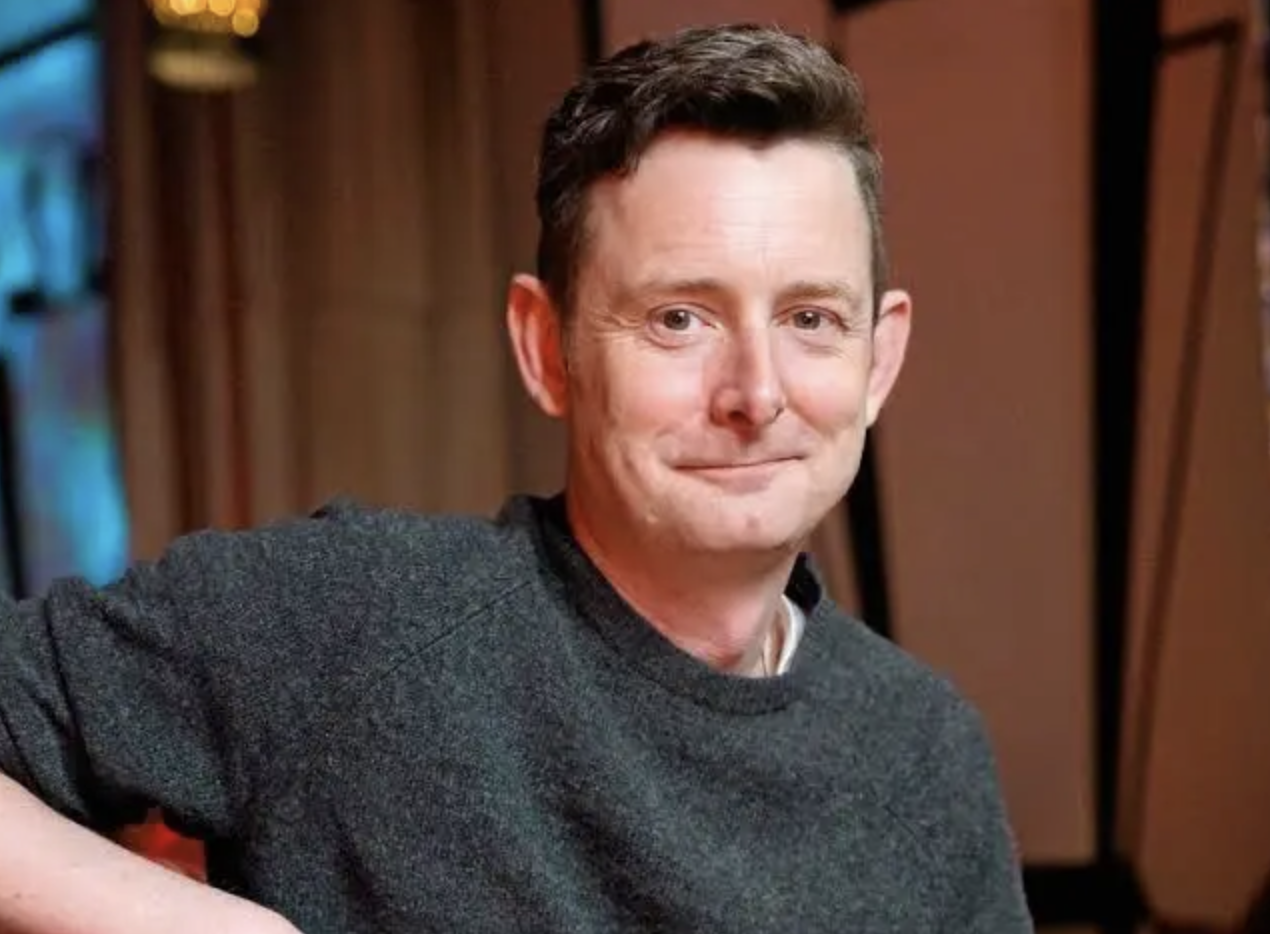
Video Game Designer
Richard Lemarchand is a game designer with a passion for innovation and creativity, game storytelling, and games as art.
Between 2004 and 2012, he worked at Naughty Dog, creators of the award-winning Uncharted series, where he served as lead or co-lead game designer on all three Uncharted games for the PlayStation 3. During his time there, he contributed to five critically acclaimed, multimillion-selling projects alongside one of the industry's most celebrated development teams.
He is now a full tenured Professor of Cinematic Arts in the USC Games program at the University of Southern California, where he teaches game design, development, and production. He also leads a series of experimental virtual reality game design research projects as part of the USC Game Innovation Lab.
His book A Playful Production Process: For Game Designers (and Everyone) was published by the MIT Press in 2021. It has been translated into Mandarin Chinese, Korean, and Russian, and adopted by more than fifty university courses around the world.
Richard continues to work as a consultant to the game industry and welcomes inquiries.