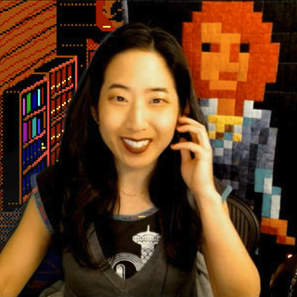
Julia Mininata (The Crimson Diamond) The Power of Play - 3# The Examined Game


Julia Minimata is the solo developer of the text parser adventure game The Crimson Diamond, a love letter to the classic Sierra On-Line adventures. I adored playing The Crimson Diamond and wanted to talk with Julia about the power of play in video games. We discuss her inspiration for the game and the idea of building a game like a doll’s house, with many different points of interactivity for the player to lose themselves in.
We also talk about the pressures of being a solo developer and how making the game became its own escape for Julia when her work as an illustrator was stalling.
https://store.steampowered.com/app/1098770/The_Crimson_Diamond/
https://www.thecrimsondiamond.com/
Steven Lake (00:00)
So, mean, I firstly, I actually just wanted to jump in and just talk a little bit about the game, obviously, first, that's okay. And again, mainly out of my own sort of just like curious interest. And obviously just a little bit of kind of basic overview about sort of when you started working on it and what was the sort of build up to making that and maybe it wasn't a big decision in the moment, you know, I guess I'd be curious about what how that all kicked off.
Julia Minamata (00:05)
Of course, yeah.
Mm-hmm.
Yeah, yeah, okay, so I didn't go to school for game development or game design. I don't even think those types of programs existed when I was going to college. Maybe I would have done that at the time had that been available to me because I had grown up always with a computer in the house. My dad was really keen on tech and everything. And so we started with the Commodore VIC-20. He would bring back this huge suitcase size compact computer.
from work and because you can sometimes work from home a little bit or takes I don't know work from home necessarily, but just take some work home after work and do extra work if you needed to. And there were some DOS games on that. And that's kind of my first exposure to it. And I was playing games through, you elementary school through middle school probably as well. But then, yeah, when it came to going to college or university, I did apply to some computer programming courses or programs.
but I was not really that interested in that aspect. was more interested in the visual aspect of it. And I ended up going to college for illustration. And I went to school. I specialized in editorial illustration, which is magazines and newspapers. And I did that and I graduated and I started looking for work as a freelance illustrator. And it was hard to find work. I graduated sort of in the early, well, not even really the early 2000s, but right into the recession.
in the 2000s and print media anyway has been on a decline for decades even before I graduated. it was not a very good timing I would say to enter that particular industry. But I had always been interested in games. I mean, we can talk about when we can get into that, when we get out of the background time and we talk about the play stuff, we can talk about board games and all kinds of games.
But yeah, I'd always been interested in that. And then by time the 2000s rolled around, you had YouTube and you had people let's playing games and there were YouTube tutorials about how to use stuff like Adventure Game Studio, which I found out about developers who were making their own games with that tool. And I just started to dabble in it. I wasn't really having any type of expectation that I'd make a game or anything like that. It started from...
me being an illustrator and remembering the type of art that I really liked from those games and saying, well, maybe can I, can I kind of duplicate that style based on what I, you all the reference I could pull off the internet at that point. And my first room was not that great, but it was good enough for me to continue just playing around with it. And the second room that I did actually did make it into the Crimson Diamond, which is the kitchen. And I just started to build little rooms here and there. And it was all about
It was all about making like a setting. it's still at that point, I was not thinking about making a game. I was thinking about, I just want to putter around and make little rooms as a hobby. was just basically an art project while I was still trying to find work as a freelance illustrator, which would be sporadic. Sometimes it'd be busy. Sometimes it wouldn't be busy. And as the years went by and I gave myself nine years, I told myself I'd give myself 10 years to try to make it as an illustrator. Cause I really wanted to give it a good try. And whoever knows why.
why that didn't take off. think it was just a really challenging, challenging thing to try in the first place. But I was having more and more free time and I was putting more and more time into this little hobby of mine. And yeah, learning about tools like Adventure Game Studio and doing YouTube tutorials and just puttering around with it. I don't think if I had started out telling myself that I'm going to make, you know, a full length adventure game, like a Sierra adventure game, that I would have.
been able to do it. It was something that I kind of fooled myself into learning slowly over many, years. I the demo for the game came out in 2018, November 2018. And I had been puttering around with it for probably seven or eight years before that, just slowly like learning stuff as I wanted to learn stuff and all that. so,
Steven Lake (03:45)
Mm.
Julia Minamata (04:05)
from 2018 to 2024 is when the actual most of the development happened, the rest of the game from chapters two, three to seven. And it was a matter of, well, what I want to do with this thing? At that point, when I showed the demo publicly in 2018, I did get some interest and I was very motivated and kind of excited because I was only really doing it for myself at that point. You we talk about, you you're going to be doing these interviews and you want to talk to people and you're doing it because of your own interest. And that made me smile because
Steven Lake (04:31)
Hmm.
Julia Minamata (04:32)
That's how this started for me too. I just wanted to make something of the type of thing that I enjoyed playing when I was a kid. And people weren't making that type of game anymore because everyone had moved on and I hadn't moved on. This was my time. That was the happiest time I think when I was playing games was playing those EGA text parser adventure games. yeah, that's why. And also because the fact that I was having trouble finding work as an illustrator was frustrating.
and I didn't really know what I was gonna do if that didn't work. And I was coming upon that 10th year of, am gonna try to keep making this work? Wondering why it wasn't working and kind of beating myself up over that. I could retreat into this little project of mine and just putter around with it and have complete control over it and do exactly what I wanted to do with it. And that's how it started. And I'm glad it started that way. It was a grudge. It wasn't like a big decision, like I'm gonna make a computer game. That's not how it started.
Steven Lake (05:15)
Hmm.
Julia Minamata (05:24)
It started in fits and starts and very slowly and just built over time until I reached a point probably maybe sometime around in chapter two where I realized I now knew everything I would need to know to finish this game and that was really a nice realization to have at that point.
Steven Lake (05:42)
Did you think much about, you again, you're sort of, picking EGA, you're picking TextPasser and you sort of know by the nature of those things that for some people that's going to be a barrier to entry, right? And it was interesting. I think a lot of the reviews or a lot of things people say, like rightly or wrongly, they're like, it's like a TextPasser game, but it's okay. You know, they sort of like, so they're kind of like saying that's like, that's potentially a tricky thing, but it's actually done really well.
Julia Minamata (05:52)
Mm-hmm.
Steven Lake (06:07)
So I guess I'm just sort of interested about, I don't know, I guess I'm asking how much you were thinking about that, that there probably potentially would be a barrier to entry for people, right?
Julia Minamata (06:18)
Yeah, this goes back to that same impulse of making what I wanted to see more of making more games like that. And I totally understand why we don't see these kinds of games anymore, at least commercially. mean, there's still lots of people in the interactive fiction realms that ⁓ are creating and releasing these games, but not, you know, not often not really with the type of graphics that I was doing, for instance, or with that particular style of, you know, EGA, that very retro look deliberately, and all those decisions.
Steven Lake (06:23)
Mm.
Julia Minamata (06:45)
being a text parser game, using that particular palette, all of those decisions were, this is what I want. And that's all I really focused on. And when I actually showed the game for that first time in November of 2018, and I saw other people playing it, that's when I realized that, yeah, I actually...
I want to make this maybe something that could appeal to other people potentially make this more flexible, make this more user friendly. The thing is, is those old Sierra games, when you would move around the arrow keys, you tap an arrow key, move in a direction, and then you'd have to tap it again to stop. And that's how the default movement was in the Crimson Diamond when I first showed it, but no one plays a game like that anymore. That's just how I, you know, how I have played it. then
Steven Lake (07:05)
Hmm.
Julia Minamata (07:25)
people were really struggling to move around on the screen. And that's why now if you play the game, the default is kind of like you have the press and hold those arrow keys to move or use the mouse. And that was just, that was one of many examples of things that I decided to adjust based on what I was watching people do. And that was something that was really helpful when I started showing the game at events or watching people live streaming is how are actually people, people who've never played one of these before, because I think it's quite likely that a lot of people wouldn't have played either a text parser adventure or controlled a game.
like those old games controlled, is the tap and tap to move and things like that. And that's one of the reasons that, well, first of all, the game comes with a handbook. You can open up an browser in case you get stuck because I realized text parser, it's a very challenging input system. really asks a lot of people. And not only that, mean, commercially speaking, I can't sell this on Xbox, right? I mean, I can't sell this on Switch. It's not, so from a business perspective,
Steven Lake (08:07)
Hmm.
So like literally,
yeah.
Julia Minamata (08:17)
Yeah, I mean, of course people aren't so, you know, making these games anymore to sell commercially, because not only can you not really play it on a console, but to even localize the game would be challenging. The game is 160,000 words and that's going to be expensive. And the niche of a niche that I'm targeting, it's not viable to do that. When maybe if I had made a game of that size, but with, you know, 5,000 words or something, then yeah, I could localize it to all these languages. That's still, there's so many reasons why people aren't making these, but.
Steven Lake (08:35)
Mm-hmm.
Julia Minamata (08:45)
knowing that there will be people like me that like this style of game and then people that might like it that don't have nostalgia for it. And that was the most surprising thing I found when I started to see people play it or when I read reviews of the game is when people say this is my first game that I ever played using a text parser and they enjoyed it. And that means so much to me because I wasn't thinking about that at all when I was making it. I just wanted to make something
for people like me who had that fond memory for the thing. But it's been really rewarding to try to accommodate those other people in ways such as the ways I just mentioned. Also, there's a tutorial that you can do to just kind of get your feet under you to learn the basic commands, stuff like that. So I did try within reason because not being someone who is from a programming background, there is only so much I'm able to do with.
you know, nested if-else statements. I don't know how technical you are, but I'm not a technical person. just figured out enough. I just figured out enough to make the thing. And when sometimes when people ask me about, can you do this or that or the other thing, I'm not able to, because I just don't have the knowledge, but I'm happy to accommodate when it's something that is within my power to do so. stuff like keyboard shortcuts was easy to do.
Steven Lake (09:41)
No, I'm not at all.
Hmm.
Julia Minamata (09:58)
just making the person more flexible, which is something I don't even really think that those older games had the resources to do in the first place. So being able to expand on that was nice.
Steven Lake (10:06)
That was my experience. so, although, you know, I I basically spend my life trying to find, and for me it's more just a little bit further along in the era, trying to find point and click games that are going to sort of scratch that like LucasArts kind of ⁓ itch for me. And so actually I'd never, although one of the first game I ever played on my dad's Amstrad was Hugo's Haunted House of Horror.
Julia Minamata (10:19)
Mm-hmm.
Yeah. Yes.
Steven Lake (10:29)
which was text bar, so I remember pick up pumpkin, drop pumpkin, pick
Julia Minamata (10:29)
Yes. Love it. Yes.
Steven Lake (10:32)
up key. But they actually weren't a big part of my childhood or teen-dom. So it was interesting, but obviously I was really drawn to your game just because it was enough in that wheelhouse and just I loved the art style that I lent into it. And I was surprised, my experience of any kind of modern adventure game, point and click game.
Julia Minamata (10:37)
Interesting.
Steven Lake (10:57)
is that it's it's it nearly scratches the itch but not quite and then I'm on to the next one you know and and what you did it really it really did you know for like those like eight hours I was totally I could kind of felt just like
Julia Minamata (11:01)
Yeah. Yeah.
Steven Lake (11:10)
again, and it's not that it's all nostalgia that I sort of just felt back in my childhood.
Julia Minamata (11:14)
I'm so pleased to hear that, yeah, you didn't really have too much experience with a text parser, but you do remember games from back in those times, and you still really enjoy the game, which is... I'm so proud of that, and I'm so glad to reach people like that, because I think, honestly, that the text parser interface is one of the most compelling and interesting and imaginative ways of interacting with a game.
It just, know that it is a big ask for people, especially people, first of all, who were never brought up with it. And also the idea that we need to make everything easier and make everything more streamlined and polish all those edges off and everything that's going to give even a little bit of friction. We're going to just eliminate that because we want people to just have no real, I don't want to call it challenge, but no real, not even no, but maybe less engagement in what they're doing in which you have to declare.
Steven Lake (11:43)
Hmm.
Julia Minamata (12:06)
what you want to do. Like you have to generate that from inside you and then put it on the screen. When a lot of point and click games, especially when it comes to things like dialogue, you're choosing from options. You're being presented by options and it's very limiting, I find. I still love a really good point and click adventure game, but even just playing, know, comparing my level of engagement when I play a text parser game versus a point and click game, I'm so much more into it for sure when I'm playing something that does require me to offer input. that makes me super.
Super pleased to hear.
Steven Lake (12:34)
I just wonder if there's a world where it's sort of, even if, again, if you're new to this genre or new to your game, if people have, you know, let's just say, I mean, there probably are a lot of people that have no familiarity with the fact that this used to be a genre in and of itself and the idea of people actually perceiving it as a new wave of approach for interactivity.
Julia Minamata (12:47)
Hmm
I think it's really, I think the time is really right for it at this point, because I think about all the ways that we are just interacting with text in our daily lives, know, there's social media, there's like texting and messaging and everything like that. And we are reading all the time for content and tone and context and all of our communications. And the fact that we're not gaming that way as well is interesting to me. And I really think, you know, we have phones and I have,
There's something called Adventure On that you can actually program so you can play like little text parser adventure games on your phone. And we have this pop-up keyboard. You can play the Crimson Diamond on your phone, in fact, because there's something called ScumVM that has an iOS app now. And you can play old adventure games on it. You can play the newer adventure games like the one that I made in Adventure Game Studio. And it's all there. It's all set up perfectly. And I didn't have to reprogram anything to make it work on mobile. It just worked.
Steven Lake (13:28)
Hmm.
Julia Minamata (13:49)
almost completely naturally, is shocking to me. It's incredible. And that's why I feel like there is so much opportunity here to bring back that style of gaming. Well, not even bring back, because like I said, there's always people who making them, but maybe making it more prominent in people's minds that this is the type of game that we can play. And there's something here that we either you haven't seen in a while or you've never seen in terms of I am kind of the person who is going to need to be.
Steven Lake (13:50)
That's amazing, that's incredible.
Julia Minamata (14:15)
the motivating factor here. I'm the person who needs to take the initiative, which in a way that we use all the time with language and this idea of not knowing what the boundaries of that game is because of the boundaries of language are just so, you know, it's the scope is so broad and language is so deep that you don't really know how far you can go with it. And I love that idea. It's considered something called system suspense in games where you don't really know what you can do in a game.
Steven Lake (14:23)
Hmm.
Julia Minamata (14:41)
And some games do that by introducing new mechanics into a game, maybe halfway into the game, a game might introduce a new mechanic or a new way of doing something. But a text parser just naturally has system suspense because you don't actually know what you're capable of. And you feel like the limit is your own imagination. And that's the part that I find really exciting.
Steven Lake (14:59)
It's a brilliant way of putting it. I guess with that in mind, I'm curious how much you think about new audiences, not new to like, know, specifically your games, but people that aren't being drawn in from the sort of element.
And if that's, you know, if you want to be able to cast a wider net to those people, I'm assuming not, not by not diluting down what it is you want to be necessarily doing, but I can imagine that there's a huge satisfaction in bringing those people under the wing of your games, right?
Julia Minamata (15:26)
Yes, absolutely. And I think about new audience. And one of the things that I like to do that has been a benefit in many ways is I like to stream on Twitch. And I stream game development stuff on Twitch, which means I will do artwork. I'll do some of the pixel art for my game and I'll stream that live, but I'll also play retro adventure games on my stream. And Twitch is great because I've met a bunch of other people who play retro adventure games or other types of retro games.
And there's actually a lot of interest in generations that didn't grow up with those particular games to experience those types of games, especially nowadays. It seems that modern times, the way that games are being designed or being monetized in a way that is not really friendly to the consumer. When you think about AAA games that cost hundreds of millions of dollars to make, and they need to hit a certain broadness of audience, which means you're not going to get weird, unique, singular-voiced
projects and I think that indie games and small team games have a real opportunity there to get to show, you know, younger people you can play all these kinds of weird things and they're not going to be the most broadest appeal of a game because there doesn't need to be. It doesn't need to make a billion dollars. And if it doesn't make a billion dollars, we're to shut the studio down. It doesn't have to be that way. When you're when you're when you're solo like me or a small team, you get to have a unique something unique.
and a really neat little experience that you can't have with a AAA game. And also not only that, but a lot of these practices that AAA games really, it's almost necessity that they do like stuff like, know, what game passes and, you know, subscription models and loot boxes and all those things that they need to do in order to make the money back for this project that costs all that money. It took thousands of hours of labor to achieve. It's, you know, the...
Steven Lake (16:48)
Mm.
Julia Minamata (17:13)
the equation is different completely for what we do. And what I like is those old games that were made like 30 or 40 years ago or more, they were made in that same spirit of uniqueness. There was not this idea that it had to make a billion dollars. And also because the medium is so young, they were still figuring stuff out in terms of like the genres weren't as well defined. And in what you could or could not do with interfaces, you know, there was not a lot of
this is how this type of game is made or this is the type of game that gets made here. It was kind of all kind of more chaotic, I think, in an exciting way. And so people really, I think even younger people are drawn to older games because what they get is they just, first of all, they just get a game and that you don't have to be connected to the internet to play it. you don't, even if it doesn't have a multiplayer aspect, you don't have loot box, you don't have any of that other stuff. And you get weird, weird, things. And I see a lot of people.
Steven Lake (17:45)
Hmm.
Julia Minamata (18:03)
getting into that type of game that also get into retro adventure games or other older types of games. And I see people are really a real interest, not even just playing that, but watching other people play those games because some of those games are really hard to get running. First of all, a lot of these games are very challenging to even play in the first place.
Steven Lake (18:18)
I spend my Christmas basically setting
up, you know, I was like trying to get the longest journey running on my Mac, you know, things like that. They just take hours to get running.
Julia Minamata (18:23)
Right. Yeah. Stuff like exactly. Exactly.
And so sometimes for me, actually like that when I'm working often, I'll have someone playing a retro game on a second screen. And a lot of people on Twitch, think probably would skew younger. And in that way, they're seeing a game. And that's the thing is another thing. A lot of times developers have this idea of, well, should I, know, especially with an adventure game or game that's very narrative focused.
you know, do I want people to stream my game? Do I want people to see the game and maybe they won't buy my game if they see somebody else playing it? Well, I think it is actually a really good opportunity when people see a game being played, that's a really good way for them to decide if they're going to want it or not as well. And I think that's a really good way. It's been a good way for me, I think, to reach maybe an audience that might not necessarily would have appealed to necessarily the game. in that way, Twitch is good. And also another way that Twitch is good is because I stream old games.
I am reminded that there are, yeah, there all that game quality of life design stuff that I did with the Crimson Diamond based on what had come before. I'm reminded about stuff like those friction points that I would like to smooth over. And that has been a helpful design exercise for me beyond the fact that I just really enjoy not only revisiting old games that I played, but discovering old games that I had never even known about that I get recommended by people who are watching my stream. And that's been a real education too. And it really does keep.
Steven Lake (19:30)
Hmm.
Julia Minamata (19:42)
keep me thinking about how can I improve this experience for people who are going to be coming to what I'm going to be making next.
Steven Lake (19:47)
And just out of interest, how much in terms of... because in terms of drawing an audience, think positioning is so important and I can imagine very rarely anyone's going to write about your games without bringing up the word nostalgia or past, And I Ron Gilbert spoke about this when he released Thimbleweed Park.
Julia Minamata (19:57)
Mm.
Steven Lake (20:10)
because he'd done this kind of retro style art direction. For him, he actually felt a frustration there because he didn't feel like he'd made a retro game, but just by the look of it, that's the sort of box it got put into. And I think that was part of the reason why he changed the art style for the latest Monkey Island game that he did, because he didn't want to get sort of...
Julia Minamata (20:18)
Hmm.
Mm-hmm.
Steven Lake (20:29)
pulled into that. mean, that's just his preference, but I guess I'm just curious for you, and maybe this is what's something you can reference with what you're working on next. You know, what that balancing act is in terms of positioning. You know, how much does it sort of hitting the nostalgia box help with bringing an audience versus wanting to not get pigeonholed into that too much so that you can sort of be finding these new people? Or again, a bit like you said, perhaps that...
Pigeon-holing actually works across the board, you know, and people want to pick up these games that are being perceived as nostalgia-style games.
Julia Minamata (20:58)
Hahaha
When it comes to new audiences, what I think about is, and when I even think about old audience, the old audience, when the people who do have nostalgia for the type of game that I'm making, I still feel like I've only reached a fraction of those people. There's still, I'm sure vast numbers of people who have never heard of my game that would love to play the game. And that's why I continue to, yeah, I'm still on social media, I still stream, I do all that stuff. And I'm pleased.
I'm really glad when I hear when someone says, oh, I've never even heard of this game because that means that there are people I can still reach with it. don't, yeah, I still think there is, there are a lot of people who have not heard of it. And I'm so happy to continue banging that drum. But yeah, when it comes to this idea of positioning it as sort of like a retro style type of game, like I don't really have any hangups about it because I genuinely have an affection for the EGA color palette, this particular low resolution type of game.
Steven Lake (21:31)
Mm-hmm.
Julia Minamata (21:52)
and the text parts, everything like that. It's not me trying to figure out, well, I'm trying to appeal to specifically the same people who have that nostalgia. It's because I love that color palette. And that's where it comes from for me. I mean, it could be that other people who are trying to make that decision about, I position this game more retro or should I change the style of the artwork to make it seem, give it a more modern feel and a more modern appeal?
It's not really a question that I ask myself because it's just what I like. And so it's not a question of repositioning what I do. And it's not even a question of...
I'm always trying to find new people, but I'm not going to try to do that in a way that is going to compromise what I actually want to do with it, which just so happens to be this extremely specific style of game, not only in the visual and in the gameplay, but also even in the music where the music was composed on a roll and empty 32, like a real one. We did that live on stream. I did that with Dan Policar, who composed the music. We just have this idea of
this is what I like and it's very specific and there are going to be other people who like that specific way of doing things and I still think that there is something here and I think of especially with the text parser there is something here that is not just for nostalgia nostalgia's purpose I mean I would talk about EGA sure the EGA you look at that color palette and it's weird
And it immediately places you in the late 80s, if you are familiar with that. But at the same time, when I showed the game for the first time, well, the demo for the first time, and I had a big banner that I put up by my table, I would see kids come up to it. Their faces would light up because of all these bright colors. They didn't care. They didn't, you know, they didn't remember 30 years ago. They're eight years old. didn't, they loved it though. They loved that look. And they accepted the weird color of the people's skin because you don't really have any.
Steven Lake (23:17)
Hmm.
Julia Minamata (23:41)
realistic colors of any sort in that palette. But they like bright colors and I like bright colors and the people who have the nostalgia will get that other bit out of it. But the fact is that bright colors are fun. And if you put bright colors on a screen in an appealing way, then it's gonna appeal to people and it doesn't matter if they have a fond memory about it or not. Same as with the text parser. Sure, it's a bonus if you have a nostalgia for that particular type of user input, but I still think it stands on its own. And that's why I don't think about
Steven Lake (23:42)
Yeah.
Hmm.
Julia Minamata (24:11)
⁓ whether I'm concerned about being retro and I'm proud. I'm proud to be a retro do retro style gaming. I'll continue to do it. as long as it holds my interest and continues to compel me and you asking about my next project, I'm actually working on a small, mini maple mystery right now. And it's even more back in time than the Crimson Diamond was. It actually uses a, an earlier looking
Earlier version of the Sierra AGI, it's an AGI graphical engine, which means double wide pixels. The pixels were two by one pixels actually to save on disk space at the time. So we're talking 160 by 200 pixel resolution with these. So then the screen is stretched and, absolutely. Yes. ⁓ So Gold Rush was published by Sierra and it's got, it's got this most, the most incredible graphics and also.
Steven Lake (24:47)
Are there any games you could just reference that were made in that just to paint a picture?
Yeah.
Julia Minamata (24:59)
King's Quest 1, King's Quest 2, King's Quest 3. These are all AGI games, the first Space Quest, I believe also. the reason I'm doing that is I wanted the challenge of trying that other style because again, it just appeals to me. It's true there's nostalgia to do with it, but I just think it's fun. think lower as graphics are fun and the lower I go, the more fun I have a lot of the time because it means...
Steven Lake (25:11)
Hmm.
you
Julia Minamata (25:22)
It means I can spend less time on everything, which is kind of nice. It's funny because I also did some artwork for this game called Space Warlord Organ Trading Simulator and kind of a related game called Space Warlord Baby Trading Simulator that's going to be coming out soon. And it's monochrome. It's black. It's black and green. And, and no, I've done some pixel art graphics for other projects and it's always been
Steven Lake (25:40)
Hmm.
Julia Minamata (25:45)
lower resolution and or fewer colors than the Crimson Diamond. I did a playdate game called Chance's Lucky Escape with the Yen of Galassos games and it's black and white as well on a playdate screen which is not even backlit. These types of limitations are things that sure I have fond memories of but I just enjoy and maybe it's only I don't think it's only because of fond memories though I do think there's something here that it just has that appeal for me and that's the kind of art that I've always wanted even when I was doing
Steven Lake (26:09)
Hmm.
Julia Minamata (26:12)
Even when I was doing illustration, I was doing some silk screen printing, which also is very limited color, but six to eight colors is what I would do for silk screen printing. And my art was always kind of flat anyway. And I just think it's naturally how I like to express myself.
Steven Lake (26:27)
Well, just to come back to the, you you talk about this idea of these eight and eight year old kid, know, in 2025 sort of playing the game or being drawn to it. And it's like, it's like literally just a mirror image of, you know, me in 1994.
you know, again, sat at that Amstrad, although we might have had a PC at that point. ⁓ So, you know, and that kind of can segue to what it was that I'd sort of mentioned about wanting to sort of dive into about the sort of the childhood inspiration that I think we get from the sorts of games we play. And again, I don't know about you, because I'm just coming from a player perspective, I feel like...
Julia Minamata (26:46)
Hehehehe
Steven Lake (27:04)
And I wonder if when they're marketing games, sort of aware of this, regardless of what someone's childhood or version of nostalgia is, because for some kids, the nostalgia was gonna be Fortnite. But as a player, I feel like any spending decisions I'm making are based purely on whether I'm gonna sort of recapture a feeling or a moment that I felt sort of before in a game. And...
Julia Minamata (27:15)
Mm-hmm.
yeah.
Steven Lake (27:29)
you and you've sort of talked about it a little bit, but I just kind of want to come back around to it. You know, what was this idea that you were bringing into existence something that you wanted more of yourself and that you're sort of then able to provide that to others? And I guess what I'm asking is, like how much of this desire to sort of pull something from your childhood into present tense existence is sort of driving the, you know, creative
decisions that you're making about where you want to invest your time and energy.
Julia Minamata (28:02)
So to answer the question, for me, the thing that I loved as a kid in terms when it comes to play is play sets, doll houses, know, Castle Grayskull, Snake Mountain, these types of things, where it creates this environment, this setting where there's all these opportunities with different rooms and different furniture to kind of come up with your own stories.
That's what I loved about play. And when I think about LEGO and I was someone who loved LEGO and I kind of had a second phase of loving LEGO, a second time around. And this idea where, yeah, you can create these environments. And that was what I loved. Those are the sets I liked the most, the ones that were buildings. And you could kind of, you could reformulate them. You can reconstruct them. You can do your own type of building. You can furnish it in your own way. And just all those little opportunities to create potentials for stories based on.
context or the setting. That was a type of play that I would engage in a lot when I was a kid. And it's even with board games and you we played a lot of board games as a family. Particularly ⁓ things like of course Clue. Clue is a huge inspiration when it comes to The Crimson Diamond. Some of the rooms in Clue like the conservatory and the study are just lifted directly from Clue. The reason there's a billiards room in the lodge is because there's a billiards room in Clue. Stuff like that.
Steven Lake (29:14)
you
Julia Minamata (29:15)
And that, funny thing is though, is yeah, we would play that as a board game, but sometimes I would just take it out and play it like it was a playset where I just move the characters around in the rooms. I'd put them in the little chairs. That's the type of stuff that I would love doing. And you can actually do that in The Crimson Diamond You can sit yourself down in a chair and that's probably just something, well, it is something that is completely useless in the game. Like you don't need to sit down in the game. ⁓
Steven Lake (29:36)
But why is that so satisfying in games? Like any game, it's like one of the first things I'll try and do instead of trying to bring is like,
want to, you and you sit there and you kind of like just for a minute, you kind of, you just feel totally immersed in that space.
Julia Minamata (29:48)
Yes,
well, that's the thing, right? You feel like you're engaging in that space. You're interacting with that space. And that is something that, yeah, I would just from my childhood, just thinking like, I would love to do that in these games is pretend I'm in that space. And it's fun to do that when you actually, yeah, I'm gonna sit down in this chair and I can just hang out here and be part of this scene now. That's so powerful to me. I don't really know if I can really articulate why that is, but that's why that it's in there is because I felt like.
I want people to feel like they're in this setting. And I think of stuff like even like stuff like Fireball Island, which was actually this whole 3D map thing that you could move your little character around. And I would play with it more like that. Then I would actually play the game. And when I started creating the lodge for the Crimson Diamond set, I started with these rooms, right? I started with the kitchen and then the parlor maybe, and then the study. And I was thinking about it like I was building a dollhouse. I was building a set. And that's why the taps work.
Steven Lake (30:27)
Mm-hmm.
Julia Minamata (30:41)
That's why you can wash your hands. That's why you can open and close all the cupboards. Cause you, you wouldn't want to have like a, I did have a doll house with my sister and I shared it. And I love the doll house because you could open all these little things. And I had constructed all that. And this is, this is how you know that I didn't design this as a game first. And as a setting, it was a setting first because you can open up all those things. And I laboriously, you know, did all the sprites and did all the animation for that stuff because I wanted to furnish. I wanted to furnish this house that I was making. And that was where it came.
that's where it was first. And then the game idea came later because I started to think about, I started being an artist first, visual artist. I think about the importance of visual reference and historical reference and things like that. And so I can't just put a couch in a room. Like what couch is this? What, what design is this couch? What era is this couch from? What, you know, is there wallpaper? What's a, what's a wallpaper going to look like? I wanted to draw from historical reference as much as possible because I wanted to
create a setting that felt grounded and felt real. And in order to do that, you do have to do all this research. And from that research, I started, the story idea started to germinate in terms of, what else? We have to say, well, where does this place exist? You know, in the world, where does this exist? Who lives here? You know, that's gonna dictate the type of rooms. What's the history of this house? And from there, yeah, the game started to come together from...
Steven Lake (31:39)
Hmm.
Julia Minamata (31:59)
those elements. it was so, so it's kind of like a backwards way to develop a game, I think, now, now that I'm making other games, I'm starting with what the wolf my design document first, okay, well, here's what I want to happen in the game. And this is the use of the assets I'm going to need for the game. The Crimson Diamond started out assets first, I just built it. And then from that, I started looking, well, I made a billiards room, I'm going to need to come up with a reason for there to be one in the game. Because otherwise, people are going to just feel disappointed that
I didn't do anything with this room. that's reason why there's a puzzle that centers on that room. Otherwise, that wouldn't have happened. so it was very, for my play was very much setting based, this idea of coming up with these stories based on what was happening in my mind about those different pieces of furniture or those different rooms. That was the basis of how I got started in the first place.
Steven Lake (32:32)
Hmm.
I mean, it's sort of, and so it's really leaning on again, just because that was obviously what you gravitated towards, but the sort of immersion element of it, you I mean, you just, you've created a fully, I mean, the comparison of the Doll's House is, I totally see it now actually. And actually I feel like there's a lot of games where you can apply that, that too, but I don't know if it's a...
Julia Minamata (32:57)
Yes.
Ha
Yeah.
Mm-hmm.
Steven Lake (33:12)
I mean, you know, I think of the whole genre of like immersive Sims and games like Deus Ex and, you know, it's games like that where you can sort of run the taps and, you know, these funny little things that make you feel. I think about my sort of childhood experience, exact same as you, like Lego and then board games, playing them. But also, I remember there were...
Julia Minamata (33:20)
Yes.
Steven Lake (33:32)
I'm trying to think of an example of early games I was playing, not because again, I always gravitated towards, you know, point and click adventure games, but you know, I had a Sega and games like Sonic and there was Mickey Mouse's House of Illusion. And I remember that game. There were these spaces that had no enemies in them. It was in the, I think it was a forest where you were sort of like between levels. And it was those spaces that I always kind of enjoyed spending time because it was sort of like I would role play in my head.
sort of an immersive situation whilst in the game and the same with... is it a game Wonder Boy? Basically any game, you know those old sort of 2D RPG games, at any point when you sort of get to the village
Julia Minamata (34:15)
Yes, yes.
Steven Lake (34:15)
That was the space that I wanted to hang out in most, you know,
because, it wasn't just because of like the fact that I was frightened of going on to the next thing where I was going to get more stressed out because of the, you know, because in those games there was like an actual threat, you know, I mean, I suppose in Sierra games there was as well, but in a different way, it was more like you sort of drown in a puddle, things like that. But what am I getting at? I just loved being in those spaces because they...
Julia Minamata (34:29)
Right, right.
Steven Lake (34:40)
they either felt lived in or I project onto them that they were lived in. And I mean, I guess maybe that's what so much of it, Point and Click games are, is it's just an entire version of that experience. Although, and actually just to say the other element of your game is there's that real time passing element as well, which I think makes you feel even more like you're sort of living in that environment.
Julia Minamata (34:49)
Mm-hmm.
Yes.
Yes, when I think about why adventure games appealed to me when I was a kid, it was of course this idea that you get to explore this setting. And not only that, but you get to explore the setting with, I'm not going to say no danger because as we mentioned, yes, Sierra games are pretty hazardous. But I will say that compared to other genres of games when I would play them and I, they would be scary where everything's out to get you.
And to kill, know, that all idea is just to survive as long as possible on the screen. That's what most games were early on, but adventure games were not like that. Adventure games, you could just kind of, yeah, walk around. didn't, you know, you didn't have to, you weren't trying to score, shoot as many things as possible or stay alive. You were just, you could just wander around across, go walk across a bridge or something like that. And that really did appeal to me. And not only that, but this idea that
Well, in early games, there was not really the idea of time passing so much, that idea. But the idea that you were setting your own pace when you're playing an adventure game, because when I think about arcade games, obviously, know, stuff is coming around actually really fast and you know, you're the one reacting to stuff. And I like the idea of an adventure game as you know, working with text parsers, like you're taking that initiative to engage with the world. And if you don't,
Steven Lake (35:59)
Hmm.
Julia Minamata (36:18)
Then the game is patient and the game is waiting for your input. It's not out to get you. It's not rushing you. It's not telling you to hurry up and you need to do something. I don't like that feeling just in real life. I don't like that feeling either. And when you, know, when I did the time passage mechanic in the Crimson Diamond, I wanted to be explicit about you being in complete control of when that's going to happen. And that's why in the notebook, it will have like these, all the asterisks around like, okay, you're done.
You can go to the dining room now and then you can advance the story. But if you don't want to do that, you can just not go to the dining room and just feel free to explore and feel free to talk to anybody about anything that you want. I don't like the idea where you, where the player would get punished for exploring or trying something that that really didn't sit well with me. And it's funny because I, I, I, I streamed this game called Mortville Manor and I'm actually watching somebody else stream it as well to see how he gets around playing it. But that game is a mystery game.
And it's a mystery game that when you ask people questions, they'll only let you ask like five questions and then they'll just stop answering your questions. And I found that completely infuriating because this idea is I'm an investigator and my way of finding out information is to ask people. why are you, you're limiting the amount of questions I can ask. Same thing as with, especially with adventure games when you have an inventory limit, stuff like that. Just that that type of stuff really.
Steven Lake (37:18)
Mm-hmm.
Julia Minamata (37:35)
bothers me because it kind of stands in the way of me doing as I wish to do it. I mean, some people like that limitation and that pressure and that logistic element that it does give you. especially when it comes to mystery, I didn't want anyone to feel like they would do something by accident. And I know you mentioned that you played the Colonel's Bequest a little bit, and that's something that was huge in the Colonel's Bequest. And some people actually like the fact you can wander into a room and then time will pass all of a sudden.
And I did not like that about that game, which is why I made it. it's so stressful.
Steven Lake (38:04)
No, it stressed me out, you know, was, was why I, so
I couldn't, I played it, but just through fully with the walkthrough, cause I just didn't want to miss a single thing. Whereas with
Julia Minamata (38:09)
Mmm. Yeah. Yep.
but that feeling is something. Yeah. That's why I find that experiencing or re-experiencing or discovering those older games and playing them is such an education because it, did emphasize, re-emphasize to me the type of time passage mechanic that I don't like. And I wanted my game, I didn't want my game to feel like a movie. I wanted my game to feel like a book where you, you can just, there's a pause button in the game that I implemented very late in the game because it's not really necessary.
There's only one instance in the entire game where something's happening that's out of your direct control. The game is always on pause if you're not doing anything in it, except for this one exception. But people like a pause, especially if there's, guess, a cut scene or something that they don't want to miss, then you can put the pause on. But yeah, the idea that the game is waiting for you, a book will wait for you, a book is not going to rush you through it. And that feeling, it ties into this idea of it being like a cozy mystery.
know, it's very, it's very influenced by Agatha Christie and other types of golden age type of detective fiction, but that coziness of feeling like you're, you're, I don't know, like you're being accommodated in a really nice way, in a gracious way is another feeling besides all that other stuff we talked about nostalgia, that feeling of kind of, I don't know, hospitality, I don't know. That's the type of feeling I also wanted to bring into the game where
It's a of a retreat from, you know, whatever's happening in the real world. that, and when I was making it, it was a retreat for me about what was happening professionally for me, which wasn't much, which is why I wanted that retreat. I wanted to also recreate that for the player where they can come into this little place where it feels very rich and deep of a setting that you feel like you're engaged in and you're in that place. And it's a nice little kind of a mini vacation for whatever else is happening, a place where you have complete control. And that's how I felt when I was making it.
Steven Lake (39:53)
Do you think that that's something that is sort of unique to less games than more?
But is that, it's getting a little sort of metaphorical here, is there just like an innate drive in gamers, like taking away the whole like win points, get the goal, kill the enemy to just be in a space, you know, and feel a part of it.
Julia Minamata (40:17)
I think it's always been around that desire and that type of game, but I do think it's probably easier to create that type of game now. And also in contrast to what we've had before, where I talked about early on with arcade games about how they were very, they could be very frantic and they could, for me, being someone who was never really good at those games, it's kind of frustrating as well and stressful.
And the fact that there was this genre called adventure game that would accommodate that. But now we have games that have those sections, like you say, that can accommodate that desire for this immersion, this relaxed immersion. And we talk about modern games. I've been playing something recently, like that is an RPG that kind of did remove the combat for the most part. I've been playing Caves of Cut. I don't know if you've ever played that one. It's kind of like a blend between like a rogue-like and an RPG.
Steven Lake (40:46)
Hmm.
I've actually not heard of it, no.
Julia Minamata (41:09)
And it can be very challenging, but the key is they have different modes with which to play it. this idea being a roguelike is a game that, you people, kind of play it repeatedly and you die a lot and you learn from each play through more about the world and the systems to helpfully, make you more, give you a better chance of survival and finishing the game. And that's the mode of the game that was the first mode of the game that they designed initially.
but quite late in development, they designed a mode called Wander Mode. And with the Wander Mode, most of the creatures are not hostile to you. And in Wander Mode, the XP that you can earn is based on knowledge that you would learn in the world. Which means that someone like me, who is more of an adventure game person, be in this world, can explore to my heart's content, and I can level and I can develop my character, but it's not based on conflict, it's not based on battle.
Steven Lake (41:40)
Mm.
Julia Minamata (41:59)
because the vast majority of creatures are not going to be hostile to you. And it's allowed me to enjoy this very deep world that I would not necessarily be able to enjoy if it kept being just that one thing. And I think that accommodation is really, was really a great idea on their part. Because I do think that people, not everybody and not all the time, but I think there is this desire for players to
to get to be immersed in this completely other place. And I mean, I'm not necessarily like a person who's super into augmented reality or virtual reality. Like that type of immersion I'm not so much into, but just the idea of your mind immersing you into something. I think also for me, when it comes to stuff like graphics, I like simpler graphics, know, going back to retro adventure games and Caves of Cod also has low resolution graphics. It's the same idea as with a book where you...
Steven Lake (42:34)
Hmm.
Julia Minamata (42:49)
the book doesn't allow, you know, they're not illustrated everything that's happening in a book. You kind of, there's room to breathe and there's gaps for your own imagination to fill in those spaces. And I think low resolution graphics give you that opportunity where it does feel, can feel more like a book where you are interpreting what, you know, the feelings of the characters, for instance, can be more ambiguous or what you're actually seeing on the screen can be more ambiguous. Like maybe not for Crimson Diamond, but for other very low resolution games, it describe a scene to you.
And you get some cues of what is where, but you're filling in the rest of the blanks based on the text that you're being supplied. That type of feeling I quite like as well. People have said that Nancy Maple's face is very blank and they will project their own types of feelings on what they think her face is doing. depending what the situation is around her, she'll be feeling a certain way. mean, she does have a speech portrait because sometimes you'll get to see up close, you'll see what her face is doing. But for the most part,
Steven Lake (43:42)
Yeah, that's what I'm picturing.
Julia Minamata (43:44)
Yeah, for the most
part, just her little sprite has like, I don't know, it's like 30 pixels or something her face. And that idea where you're projecting yourself onto Nancy or how you're feeling onto her is something that I find quite appealing. And when I think about Laura's pixel art, when I think about Lego as well, where a lot of it is up to interpretation in terms of what a brick is gonna represent in context with the other bricks based on its color.
Steven Lake (44:03)
Hmm.
Julia Minamata (44:05)
You can get a yellow brick that could be gold or it could be grain or it could be any number of things, the fact that it's yellow. And when I talk about play and going back to play, the fact that I loved Lego so much as a kid was that it had that ability to change its meaning based on the context of what else was around it. And the shapes were so basic, but you can use your imagination to kind of flesh it out in a more detailed manner. And that idea with...
the type of art that's in the Crimson Diamond or other low res pixel art games is something that I really, that appeals to me a lot. I like the lack of specificity. Of course, you know, going back to the historical reference, yeah, there's some amount of specificity, but it doesn't have to be necessarily visual, really, all the time. Like there can be visual cues, but it doesn't have to be completely and utterly detailed, because that's a lot of labor when it comes down to it. And I think when, for me as a solo developer or small team,
development. You know, don't want to spend a month on a chair, for instance. You know, it's it's not the amount of labor required to just make a fully fleshed out, you know, that's the reason these games cost millions of dollars. And that's the reason why they have to be, you know, safer or broader in scope. The fact that I can make a chair that yeah, fine, this is an you know, a Victorian chair, because I put like a type of leg on it.
Steven Lake (45:08)
You
Julia Minamata (45:19)
like a particular leg, but it's a very low res pixel art and it's gonna take me an hour to do versus someone who's modeling that and beautifully, know, lighting it. And then the texture artist has to come in and do it. That part of that part appeals to me as well. The fact that I can do it myself, I can do it relatively not so much labor comparatively speaking. And also the player has some freedom in their mind to also construct what's going on or the feeling of what that place is.
Steven Lake (45:44)
And I guess do you, again, what you were pulling from the idea that sort of Doll's House and sort of building the space first and the environments and then going to build that. mean, do you think that that sort of like is...
Julia Minamata (45:50)
Mm-hmm.
Steven Lake (45:57)
the reason behind why you think the game has been sort of, if you've got a sense of why you think people really resonated with it and why they've gravitated to it. Because to me, it sort of feels like quite a success for this type of game. Like I'm sure you were saying there's still more people to reach, but.
Julia Minamata (46:13)
Mm-hmm.
Steven Lake (46:14)
I'm usually finding games through... I mean the algorithm's gonna sort of put a game like this in front of me probably through YouTube but most of my reading is in kind of mainstream-ish gaming sites which is how I got exposed to this one, right?
Julia Minamata (46:26)
Hmm.
Steven Lake (46:31)
And I guess I'm just wondering if you, know, like Rock Paper Shotgun, I think did some coverage of it, which they wrote about really, really well about it. Yeah, I guess I'm just interested if you think that you sort of to a degree bottled something that again might be hard to sort of explain that people were drawn to in terms of it coming back to that sort of raw play. it's almost like the video game equivalent of moving the pieces around the board.
Julia Minamata (46:56)
Yes.
I do think it's part of it. I do think that's part of the
because I did do a lot of research and reading about all aspects of the story and the characters, people have said that, yeah, the setting feels grounded in reality. And it's because it is. And there are things that aren't even directly addressed in the game that, know, geographically specifically where it is like, I know where Crimson
would be if had it been a real place because the the mineralogy and the geology is realistic for that region of Ontario, for instance, like we did have a diamond mine in Ontario, there was an operation for I don't know, maybe about 10 years or something. So they're there, those diamonds are there. And it's just a matter of well, they just weren't found in Nancy's time, but they could have been which is kind of a tantalizing prospect as well. But yeah, that the setting I think I love
Steven Lake (47:22)
Hmm.
Julia Minamata (47:46)
It's kind of like a niche of a niche of a shove genre. This idea of having adventure games based in houses, stuff like the Maniac Mansion, Day of the Tentacle, even the Colonel's Request. This idea of this house metaphor, it's not even really metaphor, but a house setting is super appealing because it kind of gives you expectations of what you could do in certain rooms. Because we are, for the most part, everyone's familiar with what a kitchen is. Well, there's going to be a refrigerator, there's going to be a...
a stove and can we do things with those things and are there going to be opportunities to do stuff with that? So it kind of sets up expectations of what you might want to do in those rooms or even subverts certain expectations of what you might see in those rooms. And that idea of coming into something with this idea of what something's going to be like, and that's not even down to the setting. It's also down to, you know, genre. did, you know, when I was kind of marketing the game, I was marketing it as a cozy mystery, kind of like Agatha Christie. So people have a set of expectations.
that as well. And so there's this anticipatory factor of well, you know, who's is someone going to die, who's going to die, and that gets them also engaged in expecting things that might happen in the story. And they'll see this grand room, where there'll be, ⁓ well, there's a dining room, what's gonna happen in the dining room, or is something going to happen in this bathroom, all that all that type of setting up these little mini expectations, I also think engages people.
in it. But I do think there is an appeal to the setting of a house, a mystery house, which is something, you literally a game called Mystery House. mean, that, that I think is something, at least for me, know appeals. And I do think that other people feel the same way about it.
Steven Lake (49:07)
Hmm.
Yeah, you're so right. mean there's something about a contained space as well, you know, I mean it makes me think one of my favorite games is the Last Express by Georgian Mechner, you know, and again that was a game I replayed it recently very stressful because there's so much you're missing like, you know, and I just But you know, it's contained to these however many like four carriages
Julia Minamata (49:23)
Mm-hmm. Mm-hmm.
Mm-hmm. Yes.
Mm. Yes.
Steven Lake (49:43)
on a train and it's incredible how much depth and it's actually interesting. I'm just realizing we've spent a lot of time.
talking about the immersion of the game, but we haven't really touched on sort of story or character or all these other things that are primary core elements that you've got nothing if you don't have that. Which of course, again, I think he achieved so well because it was just like firstly, so drawn into our sort of protagonist, you know, and then the sort of the tropes of the various characters around her as well.
I guess I'd just like to ask about that, suppose, and how much, if you, again, you start with the rooms, the environment, the immersion, the space, and then when did the ⁓ character development start to come in and how much time did you have to spend on that and how organic was that process? Was the fact that you built spaces for them to exist in, did that kind of help?
Julia Minamata (50:16)
Mm-hmm.
Mm-hmm.
It did in a way, because also like it's a lodge, it's also a hotel. So I had to come up with a reason why would people want to come to this area in the first place. And I had the benefit of this being my first game. I had the benefit of just taking everything that I was interested in and like kind of putting it all in one thing. I've always been interested in rocks and geology and mineralogy. And I was collecting rocks before I started making the game. And I've kind of gotten even more into the hobby.
now that I've kind of learned more about it by virtue of the fact of doing all the research for the game. That was something where Canada, well, first of all, I knew I wanted to set it in Canada because you don't see a lot of games set in Canada. And of course, where I grew up, and that's where I'm most familiar with, I knew Canada would be it. And Canada, especially during that time, and the reason, another thing is like, where is it going to be? When is it going to be? Those are the two big questions. And
I eventually settled on 1914, this idea of turn of the century, because it's an era that I quite enjoy the art and design of stuff like, know, art nouveau and moving into art deco. And also this time, this period of time in Canadian history, where it was this idea of the so-called frontier where people are moving out into these ⁓ Northern Ontario or further out, and they're not being this rule of law necessarily.
and not having like CCTV and not having telephones and not having all the other tools that make it really hard to commit crimes and get away with them. I like the idea of setting up something for that reason, for practical reasons and also that aesthetic reason of just liking that particular era and the type of decor and art that you would see at that time. That was where it started. yeah, the character, so I knew I wanted to have it based on natural resources because a lot of the driving factors in
in, you know, Canadian pioneers being motivated by the government to go and settle in those areas was this idea of natural resources like lumber and minerals, mines and things like that. There were an abundance of that type of development happening in that time. And because of my own fascination with rocks, I knew that I wanted that to be the kind of the thing that would draw everyone to that area with their own interests.
I wanted there to be a main really compelling reason for everyone to go there. And this idea of this diamond being discovered was a really nice way, knowing that it would work geologically with the region. also people just find big gems really compelling. And thinking of the types of different reasons people would want it. And that was a really good starting point for developing the characters.
Steven Lake (53:05)
Hmm.
Julia Minamata (53:05)
And knowing that there'd be an interest of not wanting to reveal this potential diamond find, who would want to keep that a secret and who would want to exploit it. And that's how the characters evolved just from that one thing. And of course they started to take on more aspects, but that was the main kernel of each character is how do they feel about the situation and what do they want out of the situation? And then.
you start thinking about, who would ally with whom and what would their opinions be about other parts of the story? And it was a nice way to kind of play off people's different motivations. And then when everyone kind of meets up at the loss and people are scheming and coming up with plans on the fly, that'll happen way later, but just that kernel of why are we all here and what do we all want was, and how far are people willing to go to get those things?
Those were all the major questions and that's how all the characters developed. So for someone like, I don't know if we want to go, I mean, we're not going to really go into spoilers. This is not really a spoiler, but a character like Kimi Kishiro, the birder, I actually wasn't sure if I would keep her on because she has a lot less to do than a lot of the other characters. But I eventually decided to keep her because I do think
Steven Lake (54:08)
Mm-hmm.
Julia Minamata (54:22)
she offers a good counterpoint to the other characters. And I like to think, well, I don't like to think, I'm kind of afraid that if I had been in the same situation of the game, I would probably be more like Kimmy than Nancy, where I would probably just stay in my room and mind my own business. And I don't want to get into any confrontations with anybody. So she was, I think, a nice counterpoint for that. And a lot of this, when I think about developing characters, is yeah, what are those counterpoints like?
Steven Lake (54:36)
You
Julia Minamata (54:49)
And how are they going to oppose each other and the rest of it? It was really fun and it was really rewarding to write because it was my first story that I'd written since school when they made you do it. And I had never taken any type of creative writing classes or anything. So I like to tell people that the best and easiest way to flatter me is to tell me they like the writing in the game because...
Steven Lake (54:58)
Mm-hmm.
Julia Minamata (55:12)
It is something that I just kind of did by instinct and I don't have any training in that. It was just a matter of, cause I think the way I think naturally kind of made me a decent writer because I'm always thinking, what if this happens and what if that happens? And it's just in my general life. And sometimes that's a bad thing because it can skew toward being maybe more of an anxious person who kind of expects the worst things to happen.
Steven Lake (55:36)
Mm-hmm.
Julia Minamata (55:37)
But
when you're writing, it's actually really helpful because you never really think about all the eventualities, but it does put you in that mind of, all the different possibilities that you can come up with. Well, what if that happens? What if this happens? What happens then? And that type of thinking, that type of systematic thinking, I think is really good for writing in general and maybe even particularly writing for like a mystery story where there is some type of element of logic to what's happening. Like you want it to make sense. That was really important to me that it didn't feel
random, it didn't feel chaotic. There's there are a few puzzles that people have a little bit of a problem with, I totally understand, because it was my, obviously, my logic is not going to be the same as everybody's logic. But this idea where it has to pass muster, at least with me, like this has to make sense. People's actions have to make sense, even though even in the real world, they don't. But I try to hold myself to bit of a standard when it comes to that, and that the story should be discernible. And it has to be discernible by people who
Steven Lake (56:13)
Mm-hmm.
Julia Minamata (56:33)
are paying different levels of attention to. And that's something else I wanted to address is that, you know, sometimes people just want to get through the game. They don't want to, they want to see the story, but they don't want to like really dive deep into what's going on. And that's fine. I want them to have a good experience with the game. I also want to reward people who are going to be paying more attention to what's going on and reading very closely and asking the right questions based on their close reading of what's happening up into including what the ending might be like for them. I did want
Steven Lake (56:35)
Hmm.
Julia Minamata (56:58)
something saved for those people, especially at the end where there is kind of like a debrief thing where you kind of get these hints about what you might want to revisit. There's no need to really. I don't know if this would be a spoiler. If it is, you can just get rid of it. But it was really important to me at the end of the game that no matter how you did in the game, no matter if you whatever conversations you missed, whatever decisions you made, none of that actually matters when it comes down to getting the
good ending or the bad ending. There's basically two endings. And it was really important to me that no matter how the player did, I wanted to thank the player and reward the player for taking the time to even get through it. And it was important to me that they wouldn't just get a bad ending because they didn't do well or whatever. Like I wanted that to be an actual choice that they could sit down and say, here's the choice. I'm going to say yes or no. If I say whatever, then I will get.
Steven Lake (57:26)
Yes. Yeah.
Julia Minamata (57:50)
an ending that I will have some satisfaction with. It might not be the perfect ending. There might be things that you might would have liked to have changed and go back and play. But overall, I wanted to, in conjunction with the handbook as well, like I want people to get through this game without getting completely stuck and just dropping it because they're frustrated. And also if you're going to take that time, then I think you deserve to be satisfied with an ending you could receive.
Steven Lake (58:11)
Yeah, well, I think that was definitely my camera's sort of bugging out at this point. So that was definitely what I got to experience and without going into much detail, but with the sort of the recapping at the end, I'm a sort of like 60, 70 % attention to detail sort of person, you know, like I'm not, I'm not, and that's fine. And again, that's probably where, you know, it's interesting once I start reloading saves or playing something on the last express, because I feel like I'm missing things.
Julia Minamata (58:24)
Yes.
Steven Lake (58:36)
and it was quite a satisfying thing having the recap to sort of perceive and pick up on or the hints of these things that I had missed. But exactly as you were saying, it didn't feel sort of like punishing, you know. It was a very satisfying ending, you know, and I was sort pleased for her ending as well, you know. Yeah, which is always nice, you know, because sometimes you can see a game into completion just because you've gone that far, but to have it kind of wrap up for you is...
Julia Minamata (58:48)
Good.
Steven Lake (59:03)
is always sort of a bonus, you know.
Julia Minamata (59:05)
It's actually funny because you say you're 70 to 70 percent paying attention. I'm probably less than that actually when I play adventure games. I'm not, I don't think in general I'm good at any type of game really, but even with something like an adventure game, like I said, I've been playing a lot of these old ones. I get frustrated really quickly and I will go to a walkthrough really quickly. But what's fascinating to me is when I see people stream the game and they're so patient and they have so much attention to do.
Steven Lake (59:25)
Mm-hmm.
Yeah.
Julia Minamata (59:33)
I saw the streamer play it and she got like a really good ending. was her first playthrough and I watched her do it. I was amazed. Some people, I'm not that person. I think that's actually not necessarily a bad thing as a developer because I have my eye on who, know, the 50 % paying attention person. I want them to have a really good experience with this because that's where I would probably be with this or less even. then yeah, the fact that there are people who...
Steven Lake (59:50)
Absolutely.
Julia Minamata (59:57)
they'll notice like a line of text will be they'll play it maybe twice or multiple times. They'll notice that a single line of text has been changed based on a flag that they had tripped or like way earlier that almost no one's going to notice. They'll notice that stuff. And I love the fact that they can appreciate that difference that I did put in the game, but I certainly don't expect people to notice all that stuff that I did that I put in. And I'm fine with that too. It's it's nice that when it does get appreciated because I know all.
Steven Lake (1:00:07)
Mm-hmm.
Julia Minamata (1:00:24)
I'm not really that type of gamer either.
Steven Lake (1:00:26)
But I think it's interesting, you know, that idea of frustration, because again, that's the thing that'll kick me out of a game. it's not usually, it's not, that the mechanic can do that, but more often than not, because of like my own impatience, you know. And again, this fear of missing stuff. And it's why, when I try to go back to some of those older text past games, I couldn't get on with them. And so I think, and again, maybe that's the sort of the dollhouse element of this game. I felt like I could be immersed in this space and I wasn't picking up everything, but actually there was a kind of a satisfaction around that because
you knew if you were in this room and then this was going on over here and you sort of once you lean into that you're sort of immersed in it and you can kind of bathe in it and just be like well I am sort of a fly on the wall and if I'm thinking realistically I can't be in all places at once you know and that's okay you know if you don't have that sort of completionist mindset.
Julia Minamata (1:01:04)
Mmm.
Yes.
Yes. And also just having the other characters move around in the house and they're doing different things. All that stuff to make it feel like a lot of live place. I did want to put I wanted to put the mechanic of her making a cup of tea for herself, which would have been totally useless. But it's another one of those very cozy things that I want to do when I'm in a house. I love drinking tea. So this would be I didn't get around to it. But yeah, that type of thinking where and that's what you get to do when you're
Steven Lake (1:01:23)
Mm-hmm.
Yeah, yeah, yeah.
Julia Minamata (1:01:40)
Yeah, solo small team, you're working for yourself. I self-published my game. I didn't have any time pressures on me and I didn't have to make any compromises, which is good and bad because it means I can indulge all these, you know, not germane desires in terms of game design where this is, you know, the washing the hands and, you know, flushing the toilet, all those things, they take up time and they take up labor. And if I had to talk to a producer or a publisher about this, they might say,
Well, don't do that because it doesn't really have anything to do with the game. So you stay in budget and not do those things. I didn't have to didn't have to rationalize any of my decisions, which was great. But also it can be not necessarily a good thing because, you can just find yourself being super self-indulgent about all the stuff you're going to add to your game and then you never finish it. So there are times when I think an approach is required where I did say to myself, I guess I'm not going to let Nancy make a cup of tea in this game.
Steven Lake (1:02:19)
Mm-hmm.
Julia Minamata (1:02:30)
which I'm a little bit sad about, then also this thing of, people might think that's for a puzzle too. And it's the idea that they'd go through that entire process of making a cup of tea and then not having to do anything with it might be frustrating from a different perspective.
Steven Lake (1:02:43)
That's a good little behind the scenes insight about the cut content. But this has been brilliant. I just loved the conversation. I think it was exactly what I sort of wanted to get in. I just love hearing the full lore around so much of it.
Julia Minamata (1:02:50)
Well, thank you, no.