

 Apple Podcasts
 Spotify
 Youtube Music
 #45 | BONUS Air vs. Vapour: The Moisture Mistakes in Modern Builds with Dr John Straube

Why do we expect our cars to have perfect temperature control, yet tolerate drafty, mould-prone homes that cost ten times as much?
In this episode, host Jess Kismet sits down with world-renowned building science expert Dr. John Straube to demystify climate-responsive construction. From the extreme winters of Canada to the humid tropics of Australia, John breaks down why our buildings fail, how terminology confusion is causing massive jobsite errors, and what it actually takes to build durable, comfortable, and healthy homes.
Useful links
John Straube - website
John Straube - website
John Straube, PEng | Civil and Environmental Engineering | University of Waterloo
John Straube LinkedIn
Building Science for Building Enclosures
What is the Leaky Building Crisis NZ
Rottenomics - book about the leaky building crisis in NZ
What is the Leaky Condo Crisis Canada
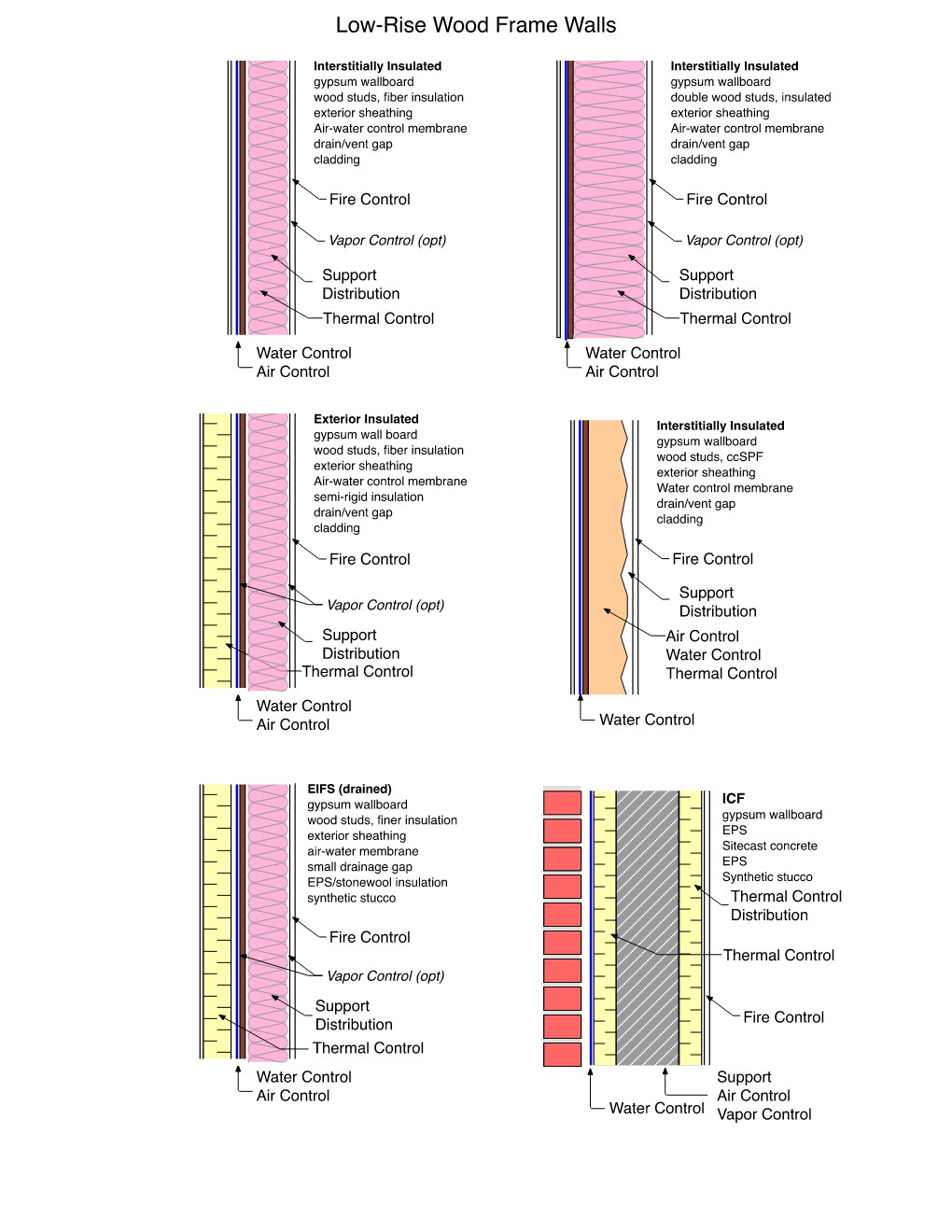
Residential Enclosure Wall Control Layers
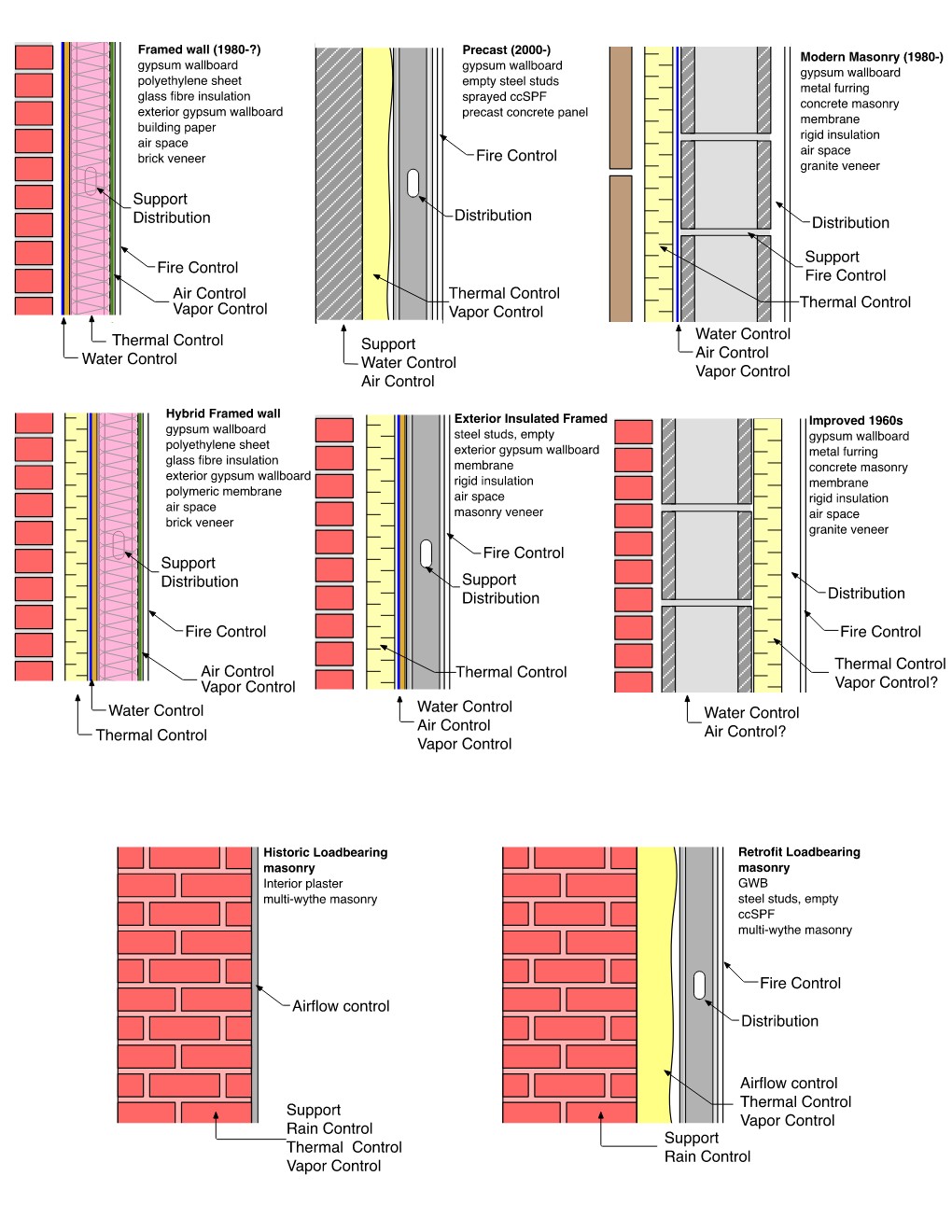
Commercial Enclosure Wall Control Layers
Thank you to our sponsors Enduro Builders and Climasure
Connect with Jess here:
Don't forget to follow the show wherever you get your podcasts!
Thanks for listening. Happy healthy building!
John Straube (00:51.353)
Glad to be here. Thanks for inviting me.
Jess Kismet (00:54.262)
It's a really a pleasure too and an honor to have you on the show. Really appreciate it. So you are in Canada at the moment. That's where you live, right? Where which part of Canada? Yeah.
John Straube (01:05.133)
That's right, I am near Toronto, where we're you know the World Cup s games have stopped because we're moving at a higher level now. But that's sort of the most populous city in Canada, in the most populous province of Canada. And it's probably from your listener's point of view, what matters is that we actually get reasonably cold in the winter, like I would say minus twenty degrees Celsius.
and we get reasonably hot and humid in the summer, like mid thirties degrees Celsius with 60, 70% humidity, that kind of stuff. So it's useful in that it challenges our buildings to be kind of pretty good at pretty cold and at pretty hot and humid.
Jess Kismet (01:54.061)
Yeah. I mean we have a similar situation here when I am in Adelaide, but we don't we we have we have down to maybe five degrees in winter and thirty five degrees, forty degrees in summer. Not not as extreme as what you have. But we have similar issues where we have to deal with qu quite cold, not compared to you, but quite cold and ver quite hot.
John Straube (02:14.903)
Yeah, and if you think about the human comfort zone tends to be in the low twenties to the mid-20s. you know, if you're going up to thirty-five, that's, you know, 10 degrees warmer than we'd like. And if you're going down to five, that's 15 or 20 degrees colder than we'd like. And so that's really what our buildings are for, is to to make to smoosh that range of temperatures down to a more comfortable range. And I think one of the trends that
What what's really good about the building science world around the planet is that we're we're talking about this about what are our climates and not saying how do we build, but how do we build for our climates. And secondly, I think we're the challenge we face is that in the developed world, people are getting more and more picky about how what c what is okay. And you know, when you can buy a car.
That has adjustable temperature for the driver's side and the passenger side, and actually can blow cold air up your butt to keep you cool. buying a house that costs literally 10 times more money, that you have a hard time even controlling the temperature in any knowable number is kind of a surprise to them, right? And so that's part of the in our business. That's where why I think we're actually being asked more and more. It's not okay if it's
You know, no one died in the building when it got cold overnight. That's not the standard we're looking for. It's the level of is it at least as comfortable as my car? And oftentimes we're not even getting to that level. And that that's where we need to get to. That's where we need to grow to.
Jess Kismet (03:56.429)
Yeah, yeah. We were sort talking off air about how people come to Australia from overseas, they'll come from Canada or from Europe. and they'll come they'll move to Melbourne because that's that's the you know, that's the first place people tend to go and they'll be think they'll say, I've never been so cold in my life, they'll come to Adelaide, I've never been so cold in my life inside my house. You know, I thought I thought Australia was warm. Well like no, sorry, our housing is crap
John Straube (04:21.899)
And so yeah, the story, the personal story I have about that is that I I was born and raised in this climate zone not too far away from here. And my partner Victoria was born and raised in northern Alberta, where cold is minus 40 degrees Celsius. So it's they they actually really know what cold is. And we did a sabbatical quite a few years ago at the university in Berkeley and Berkeley, California, which is the Bay Area.
And so we moved to Berkeley, California in December 2008. And we had absolutely that experience. We rented a house, and after a month, it was like our routine was to get up in the morning and leave the house to warm up in the sunshine. Because even though it was only getting down to like, say, 10 degrees, it was like 12 in the house. And so we literally had that experience of saying,
We've never, my my partner Victoria, who comes from Edmonton, said, I've never been so cold as in this warm climate. And that I think is when you tell me the story, that's quite an analogy and it's not a surprise. I actually I think I understand why. The I think the reason is that the climate is not it's not so demanding that it requires a as much focus. And so
When I first started working in the Bay Area, I discovered to me it was like that's why they wear fleeces. Is because you could wear a fleece in the morning and be comfortable, and then you shedded you shed the fleece and then in the afternoon you could get down to short sleeve shirts, and then on night you put a don't know, a some sort of scarf around your neck and what because the temperature range was narrow enough that
You could ignore the building and you could just add a little bit to squeak yourself through. And if you're Swedish or you're German or you're Canadian for sure, you just don't have that option. You gotta get it right because otherwise it is horribly uncomfortable. And then once you start down that path, it's easy to turn the dial to get you into a better spot. Whereas if you don't even have to do things like
John Straube (06:44.449)
insulation and airtightness and thermal bridge management and condensation control. If that's not your normal modus operandi, well then being pushed to doing all that to meet higher comfort requirements is hard. And that I think is what we're seeing what I saw as early as 2000 in Japan, what I see happening in parts of Europe where they're in they're discovering air conditioning.
it's like, my gosh, they had no idea there's air conditioning. And they need it. Yeah, yeah, yeah. And people are dying because they don't have air conditioning. I mean, so that's I mean, to it's not even just at the level of comfort. It's like at a certain point for the immunocompromise for the old and the young, it's actually can be fatal. And we know that there are literally thousands more people dying than usual.
Jess Kismet (07:12.462)
Mm-hmm. Yeah. They actually need to they actually need to cool their buildings now. Yeah. They're having a heat wave at the moment. Yeah. Mm-hmm. Mm-hmm.
John Straube (07:41.409)
in France this week than a normal week in France and that's because of the heat.
Jess Kismet (07:48.801)
I have a friend who lives in Ireland and she took her children to the beach and the beach was just, you know, packed, packed with people. They live on the coast. But, you know, in Australia, if you don't have an air conditioner in your home and it's really hot, you just go to the supermarket to cool down. But they can't even do that. Their buildings just aren't conditioned in that way. Hmm.
John Straube (08:07.387)
They're getting there. I mean, it is definitely changing. One of the things that's the air conditioning sales rates are growing faster in Europe than they are in America, because in North America, most people have air conditioning by now. Even in a place like where I live, where it's minus twenty in the winter, most people have air conditioning. so but it is really happening. It's it's the growth it's just enough climate change that in the UK.
and in in in France and Germany that the growth rates are tremendous. And that changes how your building works. And so that means we have these types of podcasts to talk about so how does it change and what do I gotta do different and what do I got to tweak to make it okay. It's not just a buy a machine that goes whirr and hope all is going to be well. It is often much more than
John Straube (09:27.567)
W well the first the the first response I'd have to that is I don't feel that I know enough about the details of Australian housing that I can that people should listen to what I say about this topic. However, what I have learned about Australian housing from one visit and a lot of interactions on various projects is that there really is a confusion between
airtightness, air barriers, and vapor tightness and vapor barriers. And that usually isn't the most significant high-level p national strategy thing, but it is a common problem on the job site. It's a common problem in the design office. And the the problem can result in real moisture problems in buildings and disappointing performance.
So the it's it has meaningful results and literally everybody down to the sparky has to know what do I mean by an air barrier and what do I mean by a vapor barrier. And I I've seen this in multiple countries and I see this in New Zealand. it's although it's much better in New Zealand because of efforts made to educate, and I think that's why Australia can also get on top of this confusion quickly.
John Straube (10:59.693)
Yes.
John Straube (11:48.055)
It's a tower of Babel for our industry. Is these and and I'm a and it's not I mean, membranes is where it's very real and very c current, but it it goes like throughout a lot of products in the building industry. and this sort of what the words are and what it actually works at. I really think there's a lot of value that be gat be by an industry accepting terminology with really clear
performance like to to say it does this real good definitions and we things like things like we use words like sarking and and noggings and underlayments and then we move to water resistive barriers and and it's like it's not clear if you actually look at it so what's the difference between sarking underlayment and building paper or or a a pro clima product right
and we say pro clima here, but anyway, yeah, I know, that threw me for a loop for a second. anyway, so I think the the language is is a is a huge deal. It it's not enough people give it the respect that's needed because it really becomes a problem in builder asks for something, salesperson delivers something else,
Jess Kismet (12:51.586)
We say for a climate
John Straube (13:16.693)
inspector is expecting something else and designer is looking for something else. I I mean and it's like they and they might even all agree because the words they're using are mean different things. And that's why that language is such a critical aspect.
Jess Kismet (13:33.23)
Sorry, excuse me.
John Straube (13:37.325)
This is a topic that really chokes me up too, Jess. So I just, you know, it's it's truly emotional for me as well. And that's why I said I care about.
Jess Kismet (13:45.512)
goodness me.
We've we've already crossed over a couple of my questions. and I need I I would like to drill down. So the difference between an air barrier and a vapor barrier, I i there's just the in my experience a lot of the industry doesn't know that there that there is a difference. as we've said, lots of different names, confusion about how they actually work. So could you explain for you know, an ost mostly Australian audience what the difference is, please?
John Straube (14:16.579)
Yeah, and actually I wouldn't even, you know, the normal way to try and describe these is something I a concept that I know you've raised in other podcasts about the perfect wall. You I'm and I'm putting air quotes on there for people who have audio-only versions of this. and one of the, to me, the most important aspect of the perfect wall is that it clearly identifies the critical functions, the control functions of an enclosure. Many people
Not wrongly, but they focus on the order of the layers. And that's actually not the only thing about the perfect wall that's important. In fact, I would argue that maybe the most important thing is that you know that there are these layers in an assembly for an enclosure that every system has to have. Whether it's a 400 year old Adobe building in New Mexico or a brand new.
a state home in Melbourne. and those control layers are in order of importance be first job number one zero is s structure so it's got to stand up and then control layer one is water number two is air number three is heat or thermal and number four is vapor and so these control layers as a way we describe them as control layers
So that we can say they're not always just a thin thing and they're not always a product. But we should be able to identify on any assembly what is a water, what is the air, what is the thermal, what is the vapor. So you specifically were addressing what's the difference in water and sorry, air and vapor. And those are historically been the most confusing ones. And
In a way, it's kind of ironic that they're confusing because let me explain. A air control layer controls the flow of air across it, and the vapor control layer controls the la the flow of vapor by diffusion across it. And the only thing that's often left out of that description is vapor control layers are vapor by diffusion, which is a specific scientific, nerdy.
John Straube (16:40.425)
Mechanism of water vapor transport. But many times we almost all practical assemblies, it's controlling the airflow that provides the most benefit and is most necessary for successful performance. One of the reasons we want to control airflow is because air contains water vapor. But that doesn't make it a vapor control air. Air also contains pollutants.
also contains like dust and pollens and the exhaust from that idling FedEx truck outside the front door, it's and the pesticides that they've just sprayed to keep the termites away from the perimeter of your building. So all of that's in the air, and we don't want that air to mingle into the air in the home that we've cleaned up and conditioned. vapor is part of that story, but it's only one part of that story.
Vapor control layers are only they're the simplest layer. They're a layer that just controls water vapor movement by diffusion. The movement of water vapor from more water vapor to less. And that's the problem here is that vapor is in air. And so people get easily confused by the air control layer and the vapor control layer. I'm not sure if that's
You know, you'd think I'd have practiced that for 30 years. I'm not sure if that's a succinct distinction between them. but it's a major challenge. And in most of your climate zones, it's really it's really weird that you would care about vapor diffusion. If five degrees is a cold night, like vapor diffusion is not something you need to worry about. but if it if it's thirty five, you do care about air. Sorry.
John Straube (19:01.625)
Yeah, yeah yeah.
John Straube (19:24.493)
You're saying you can only use them on the outside. What about on the inside?
John Straube (19:40.879)
Mm-hmm.
Jess Kismet (19:57.941)
not a commonly used product in Australia.
John Straube (20:00.353)
And so I think actually you're highlighting also one of the concerns with a vapor control layer is that the we had come in North America, and I mean by North America, I mean Canada and the northern US states, had come to the the conclusion somewhere in the 80s or 90s, when in doubt, leave it out. Was what the sort of the tagline for vapor barriers. And and one of the things is that we had always had a tradition of,
The only place you would ever conceive of using a a vapor diffusion control layer would be on the inside. I mean, like duh, you wouldn't put it outside of the insulation. but what you're describing is that people were actually putting vapor diffusion resistant layers on the outside. And that's where well, wait a second, that that's a bit weird, and you gotta be careful about that. Even again, when you're at so the the question is
If you use a vapor diffusion resisting layer, you have to give it some serious thought everywhere in Australia and beyond. But I'm just saying, because of Australia. And when I say vapor diffusion resistant layer, I'm being quite clear in that, for example, let's say you were to use corrugated steel, pre-painted corrugated steel as your cladding system.
Right? I mean you use that, right? Sure. is that a vapor diffusion resistant layer? Well, by golly, it's about as good as it gets. So, so okay, if you put that on the outside, you now say you now need to have a response in a climate where it gets below, I would say, I would argue below 12 degrees, maybe something like that, 12 degrees Celsius, somewhere between twelve.
You'd be going, you're using a piece of steel on the outside, now only in Canada would you say A, but anyway. so that minus do you okay? gosh, gosh, you're closer and closer all the time. so we would now what do we normally do when we use steel on the outside as cladding? Well, we provide an air gap.
John Straube (22:25.091)
That we ventilate as one of our solutions. Anytime you let air flow around a vapor diffusion resistant layer, you bypass its vapor diffusion resistance by using airflow. And it's like you just sort of negate its performance. You blow air around it. And that's why we ventilate many roofs. That's why we would ventilate behind metal cladding.
That's why we would even ventilate behind some sorts of polymer claddings, etc. Any vapor diffusion control layers, vapor diffusion resistance can be offset by allowing air to flow around.
Jess Kismet (23:36.307)
I said to clarify what you just said, are you saying that if we use a vapor permeable layer on the outside? 'Cause our these vapor permeable layers for us, like the Proclima system, is a and and other brands as well, are a air barrier and a vapor control layer as well. They're a they're a air and vapor control. They do both.
John Straube (24:08.674)
No so no I'm saying if you have a vapor def impermeable, a non vapor permeable product, you like a sh piece of sheet metal or glass or even glazed terracotta tile, if you allow air to flow around it, you you bypass the vapor resistance. If you use a vapor permeable layer, like well then it's vapor permeable, so it's not a problem.
I know, but I mean also, but you but you also would say I wouldn't call a materi a layer that allows vapor diffuse through it a vapor control layer. I would call that a vapor non-control layer. Isn't the reason that you make it vapor permeable is so it doesn't limit vapor diffusion? Like how could you possibly in a sane world call that a vapor something that doesn't control vapor a vapor control layer?
Jess Kismet (25:07.724)
I guess it I yeah, I guess.
John Straube (25:12.023)
In the same way, I wouldn't call something an air control air if it didn't control airflow across it. And so
John Straube (25:22.895)
Well, you know, it controls it by not controlling it. I mean, you know, so Jess, I think you have a future as a lawyer. but I'm just saying though, this goes back to that initial discussion about language. You know, if we're gonna tell people you need to use a layer here that is permeable to water vapor diffusion, and then call it a vapor control layer.
What are you gonna call the layer that actually restricts vapor flow? I mean, it's they're not all vapor barriers. They could be and and right, and vapor barrier, here's a here's a reason why barrier has often found challenges in the practicing world. Barrier suggests that it stops things. I mean, like, call me crazy, but at least in the English we use here, a barrier to something is something that stops it. And so if you call
Jess Kismet (25:58.511)
Vapor barrier, but yeah.
John Straube (26:21.975)
Something a vapor barrier, but it still allows some vapor through. Well, that's not you could call it a crappy vapor barrier, a not very good vapor barrier, but you wouldn't be good, you wouldn't be right to call it a vapor barrier. When I said use the example of steel or aluminum foil or glass, those are vapor barriers because they literally allow danada, which is Spanish for nothing, through. And so those are real vapor barriers.
But if I were to use many of the membranes that are not metallized on the marketplace, they will all allow some vapor through. And you can argue, is it really a vapor barrier? And so it becomes an arbitrary scientific line that we draw by consensus committee about what is a vapor barrier. And you know, the numbers have changed historically over time, and they have changed, they to this day are different.
In Italy, then Sweden, then Japan. but they're all l small numbers. Let's put that clear. A vapor barrier is always a small number. but I didn't realize that you were actually using the term vapor control layer for something that allows water vapor through it. That's gobsmacking to me. And that's a that's a that's just you're asking for confusion.
Jess Kismet (27:43.831)
Yeah, okay. All right. Note note to self, note to industry. Everyone out there, listen up.
John Straube (27:49.039)
You invited me, Jess. I didn't ask to be on this show. I'm sorry.
Jess Kismet (27:54.435)
We want the info. We want the info. Okay. Now, I want to go back to something else you said before as well about the control layers and the four of them and how there's different they're in different orders. So you've said water, air, heat and then vapor. In Australia, we say water air.
John Straube (27:57.719)
All right, all right.
John Straube (28:30.219)
No, well, okay. I I I'm I'm putting them in the preferred order that I gave for some and it's not always the right the the best order. It is the preferred order for most assemblies to avoid problems and deliver performance. And vapor control layers are the least impactful to performance. like
You only need to even think about vapor diffusion properties of materials once you've installed insulation. If you haven't installed insulation, who gives a crap? I mean, go look at any building in Australia that's over 100 years old and go find the vapor control layer. Well, they didn't have any. They didn't need any. The whole concept of vapor barriers, not vapor control layers, which seems to be an Australian invention.
But vapor barriers was because we invented thermal insulation that was really lightweight and really open to water vapor diffusion. If you don't need to worry about vapor control layers if you're using foam insulations of any type, if you're using adobe, if you're using masonry, if you're using wood.
You need to only think about it when you're using lightweight, fibrous, highly vapor open insulating materials. That's the only time when you need to care about vapor control layers. And that the previous 5,000 years of experience building buildings did not use highly vapor permeable insulations, and therefore they didn't have to think about this whole vapor control layer thing. But we do.
And now that's w that's the only time we need to think about it.
John Straube (30:29.049)
Totally. Yeah. Yeah.
John Straube (30:48.663)
And we went through the same j but we we went through the exact same history as Australia. As you're I mean, I'm sure all your audience is aware. our home building tradition is wood frame. It's it's very similar to yours. We don't use Dwangs, we just call them different weird ass names depending where you are in the country. Noggins, we don't ever use that. But anyway,
But the the framing is very similar and a lot of the a lot of the same rules. The difference is we began putting light, like light and fluffy insulation between the studs a hundred years ago. Right? So we were advertising and s
John Straube (31:37.633)
And so it became, but it was not the norm. it was not the norm until even depending where you are, post World War II, it became a thing people would regularly talk about, but not always do, except in the coldest of climates. And in the coldest of climates, it was not a dominant thing to do until the 60s, which is admittedly f over 50 years ago.
So we went through a long transition of wood timber frame, pitched ventilated roofs, no insulation. And then we started insulating roofs first, then we insulated walls. But that doesn't change the vapor control layer importance. In fact, what all of that taught us was that you can get away with an awful, you can build a lot of insulation in some pretty brutal climates without ever thinking about vapor control layers.
And that we have living proof of literally millions of buildings. So only when the temperature get differences get large, when the insulation levels get high, and when the interior cold weather comfort increases humidity, do we actually need to even do anything about them? The history of vapor control layers in North America, which
Colleague of mine, Bill Rose, University of Illinois, wrote a book on this. you know, the history was Bill Rose from University of Illinois. he's retired now. He wrote a book called Water in Buildings. He was always the historical conscience of building science conferences in the 90s and into the 2000s. And he would remind us that we
We we invented vapor barriers without a lot of science. And the requirement for a vapor control, a vapor diffusion resisting layer. I'm not gonna call it a vapor control layer since apparently that doesn't work. A vapor diffusion resisting layer was based on demonstrably documented black and white wrong science. They they thought it was caused by diffusion.
John Straube (34:04.735)
And they discovered it was caused by the moisture problems were being caused by air movement. The difference between the recommendations for vapor control being a low vapor permanence layer, and the discovery that actually it was air that was causing their moisture problems was a 20 to 30 years. And that still is working its way through our system, our construction system.
Our building codes have largely sorted that out. And they're very explicit that there's something called an air barrier and something called a vapor barrier. and they're completely separate things. You can buy two product one product that does both things, but they're completely separate in terms of design requirement. And in almost all of Australia for housing.
It's it's I'm really struggling to think about when I would ever need to use a low vapor permanence material. Need to. It would you don't need to to solve moisture problems in Melbourne.
John Straube (35:15.055)
There you really want to be careful not to you want to be very careful about using something that has low vapor resistance. And if you do it, you do use it, you want to put it on the outside. But even in Darwin, you have to be careful because you're more you're much more likely to be successful with that in a hot, humid climate like that. But even in those climates, it sometimes gets cooler at night.
So depending how far away you are from the coast, and then if you start, you know, getting a little bit slap happy with your vapor barriers on the outside, you can also cause problems. So I go back to when in doubt, leave it out.
Jess Kismet (35:59.949)
Yeah. There's a up in the Athena Table Lands in far north Queensland, which is inland from Cairns, they get down to minus temperatures in winter overnight and they can be they can be you know, thirty degrees and ninety eight percent humidity in the afternoon. So they've got massive, massive issues with controlling the vapor in the air constantly.
John Straube (36:11.331)
Right.
John Straube (36:26.029)
And before, I know this has come up in the past, so we've been talking about vapor control layers, air control layers, and you we were generally thinking about something that might be a millimeter thick or even less. but historically, when we built masonry buildings, we provided that though the that brick provided some thermal resistance, you know, not non- non-trivial thermal resistance. And there was never a need to control vapor diffusion.
Because the material itself had built-in vapor resist diffusion resistance. And the modern equivalent of that would be foam insulation. Not all, but most foam, polyurethanes, polyisosanurates, phenolics, etc., are all sufficiently close cell that they have built-in resistance to vapor flow and resistance to heat flow. And as a consequence,
You don't need a vapor barrier. And it in Cannes or in Melbourne or on the mountain in the top of Tasmania.
John Straube (37:48.505)
So now we're getting into the question of if you're trying to manage vapor diffusion, how important is it to get to avoid holes and cracks and rips and tears? but in your advice that you're giving a hundred percent, because not because of vapor diffusion, though. I'm trying to stop air from flowing through, not trying to stop vapor diffusion. Now, yes.
it does, but that's not, it doesn't matter about the material properties. That's why it's a vapor, it's not a vapor control layer, it's an airflow problem. A crack allows airflow. You don't have to ask what is vapor permanence. You have to say, find the holes and plug them. Now, but even if you were to seal those joints between, say, foam boards, with something that stops air.
But doesn't stop vapor diffusion, you have a minuscule chance of a problem in extreme climates. Not impossible. but the key here though is stop the air. And the concern about when we start talking about vapor diffusion resistance, job site people, the trades installing the product, the supervisor looking over the site, the inspector.
Everybody thinks they've solved the problem by specifying a vapor resistant product. Or, yeah, tape all the cracks. That's good. We'll solve that. But that's not good enough for air. For air, it's not about the product, it's about making sure that you have proper installation so there are no cracks, openings, and penetrations. And that is why it's so critical to distinguish that. The reason.
we wanna tape the joints in that foam is to stop the air, not to stop vapor diffusion. We're trying to stop air convection.
Jess Kismet (39:57.379)
This is getting onto dew point conversations and all sorts of things, which I definitely want to get to. I think in I'm gonna go back to the tropics again for a second. in in far north Queensland and Darwin and those and you know, Broome and all those hot humid climates in Australia up north,
John Straube (41:01.251)
We haven't even discussed health yet, but but but nevertheless the the mold part is part of that, right? So it
Jess Kismet (41:04.118)
Yeah, it's all 'cause that's the why behind everything we're doing, right?
John Straube (41:09.827)
Well, maybe what you're doing, but a f a lot of times a lot of the reason we're doing it is to meet the the the construction deadline and w and the move in date that the owner's insisting. and we're sacrificing health on that altar. but no, but here's a here's a really this is why I wanna be quite careful in answering this. Because in in many places which have hot, humid weather, like Darwin, in let me just say, in the United States.
They're not opening the windows and the doors and using louvered openings to let the air flow through. They're using mechanical space conditioning to keep the relative humidity in the space low and reducing the temperature somewhat. And
Jess Kismet (41:50.479)
They do that too. In the really, really hot parts of the year, the houses are completely closed up, the air conditioning is pumped, and the CO two is at two thousand, three thousand parts per million. You know?
John Straube (42:04.195)
Well, but the first two parts are you definitely can do and that's because you d you haven't you've w you do call it HVAC systems, I believe. Do you call them
John Straube (42:19.905)
And so the V in HVAC is for ventilation. And ventilation doesn't mean stirring the air around the building. Ventilation means discarding waste air to the outdoors and providing clean, filtered, fresh air to the indoors. And so the big reason, I mean, the joke we have here is that many HVAC jobs are hack jobs because they don't include the V. And if you are getting 2,000 PPM CO2.
Well, that's just an abject failure of the mechanical contractor. I mean, I don't know how el it's like and the reason I can't blame an Australian contractor installing mechanical systems is that no one's saying, yeah, it actually matters that we provide fresh air to the people in this house. We're gonna rely on mistakes made by the electrician and people who make crappy windows to provide fresh air. I mean, that's just insane. And that's something where there's nothing can
Fix this unless the culture precedes it. So there are so many trivially simple, inexpensive, and effective methods of providing ventilation and fresh air. We don't have to talk about it. The hard part is the culture that, when you close down the house, you need to provide ventilation. That is the cultural breakthrough that needs to happen. In the same way,
That we have to have a breakthrough is that it's not about vapor freaking diffusion. It's about airtightness. Plug the holes, keep the bugs and the dust outside, and you will save energy and make a healthy home. I'm sorry if that's a negative outcome to you, but we need to keep the dust and the bugs outside, and codes are going to require us to save energy.
And yes, you will bec you will create a healthy and comfortable indoor environment that manages moisture.
John Straube (44:26.351)
Well, here's the challenge though, Jess, is that you're in a transition period about well, what do you do when we haven't entered the lock down the house mode? And and this is the thing. You're even 35 years ago, I don't know why I chose thirty-five, even forty, fifty years ago, you certain you wouldn't be doing that in houses. The option was it's open or it's not there.
So nobody, so what's happened is we've created a new option, which you know is sort of you can look at modern as a negative or positive here, but it's a new option where you can control the interior environment. And that is, by the way, the option that historically people have tended to choose when given that option. and so that's why we now have a discussion about choice.
This is not something that people in Southern Florida discuss anymore. It's clear we're gonna have an airtight building that's well insulated and we're gonna use mechanical systems to control the temperature and the humidity. And then they try to do it without ventilation, and then they realize that people got sick and bled from their ears, et cetera. And so that now they have ventilation as well. So that's the pathway. The question is when in
If, when, how can we revert to this open building opportunity? So you might be okay, it's 27 degrees, 65% relative timidity. You can open the windows and doors. You know, you're not gonna get mold. unless you do something now. Now you run the air conditioner while you leave the windows and doors open.
And now that 27 degree air with 65% humidity is going to condense all over refrigerated components, often hidden inside of hollow spaces in your building, which are usefully lined with either wood or paper. Right? Because the paper is there for the the young and and and and weak mold so that it can get a start. And then the wood is there to meet the appetite of the aggressive growing mold. So you
John Straube (46:47.373)
You gotta be incredibly careful about when you do the switch over from the open home to the controlled home. And the people get into trouble when they try and do both. And that, of course, is also terrible for the environment and the climate. but and they also get into trouble as we learn the cultural ways of operating homes. When is it okay to switch? You know, when can I open the windows?
Usually, you know, you can come up with simple rules for a climate, but again, it's back to being aware that there are choices to be made and it's no longer your grandparents' home. We are now going to be, we're expecting more. And so we have to operate the homes differently. And that means we have to start building them differently.
John Straube (47:49.891)
But you mentioned mold, but it's interesting that there are lots of complaints in hot humid climates about modern living. For example, corrosion in the electronics of your TV. It's like, well, like that this is not an uncommon problem. And it's like, well, yeah, like you shouldn't be using it outdoors. Well, I'm not using it outdoors. I just like open the windows in my house. Yeah, well, guess what? That's has the same effect.
And so often that can gro that can become a problem sooner and is harder to solve than the mold problem. The mold problem is solved historically by using ceramic tiles, plastered with integral color walls, tropical hardwood for all of your trim, having no small enclosed closets, everything has to be a ventilated wardrobe. We know how to do this stuff.
But when people say, Yeah, but I want painted drywall with a with my Apple TV streaming Netflix, it's well, well shit, you can't do that if you actually live outdoors. So make a choice. Just saying.
John Straube (49:29.359)
And and the people who have documented this the best, although it's hard for you to find this information, are hotel chains. So when a hotel chain like say Holiday Inn or Marriott moves into the the Gulf of Mexico or the or or you know the Caribbean, they have to change the designs of their hotels. And all of the closet doors go away. like you just can't have a closet, otherwise it's gonna grow mold. Now
We've told them how they can do that. And that is you actually need to have mechanical conditioning that runs not on the keycard entering the room. It has to run all the time. And what they do is they to save energy, they turn the air conditioner off when a when a person checks out. And then the next day the temperature and the humidity in that suite is way through the roof and it grows mold. So you either gotta run it or you don't run it. Or and if you don't want to run it, you gotta stop building things out of paper and mold food.
and expecting that they won't eat it. so it you have to revert to the Caribbean island traditional materials and systems.
So there's actually more there's more to this story. I mean, there's I can go on and on about hotels in the Caribbean, but there's you it's this same problem of being in that caught in the shift between we used to do it with open, well-ventilated spaces, we lived with what we got in the outdoor air, and we used materials that could tolerate it. And now we wanna do better than that, and we wanna put materials in our buildings that are different than that, and we're we're
This is where we end up with a clash. And it usually takes at least two human generations to sort this out. That's like forty to fifty years. even though I believe we have the knowledge documented to make us get there immediately, yeah, it's just so hard. It's change is hard.
Jess Kismet (51:32.507)
Right with material selection. I've I walking through the streets of Cairns, everything's just covered in green and black. There's just green and black mold streaking down the outside of these buildings. I mean that's the outside, so you can't do much about the humidity outside, but you can change your material specifications. You can change what if you're giving the mold food. Anyway. my goodness, there is just so much to talk about. Okay, I wanna I wanna I I we're we're at nearly an hour now and I I've I recognize it's late in
John Straube (51:54.551)
Yeah.
John Straube (52:09.327)
I think we've covered a few of them, but go ahead. Okay, let's let's do let's do some more.
John Straube (53:07.811)
First of all, I think it's it should be pretty clear that it both have to be there, right? And and and you're asking who is maybe not doing as good a job? And yeah, and I and I and that's why it's pretty obvious, I would hope, to anybody in the industry that you're gonna find all kinds of examples of bad workmanship, and you're gonna find all kinds of examples of bad design. And the question is.
Jess Kismet (53:20.558)
Whose fault is it? John? Tell me.
John Straube (53:36.535)
Well, you're asking, okay, I want to know whose fault it is, Jessie. Again, you should be a lawyer. I've t this is back to you again being a lawyer. so I i in in in a lot of the commercial world, institutional commercial, I actually put most of the blame on the designers. And and that's partly 'cause I is one. And I have I have expectations. So that doesn't mean
That when we go to the job site, that there aren't failures because someone didn't attach X to Y. But a lot of times you ask, why was that X to Y not connected? And it's because, well, the design made it practically impossible to do so. The design did not realize how.
Well, guess like the walls are not straight up and down and and floors are not flat. The only place where things are plum, flat, and level is in Revit. In the real world, everything has bumps. it's got something that a lot of product manufacturers haven't learned yet is that they could actually be like dusty. Like dust could be on a material that exists on a construction site.
And so then we stick a membrane or a sealant to it and it fails. And what do we do? well, we blame the trade. Well, really? I mean, should you be relying on that adhesion in that application? Meaning outdoors on a job site? And my answer is no, that's just ear that's literally sticking as a designer, sticking your head in the stand and saying, well, just stick this to this, except you can't.
And so you either need to choose different systems, different details, or different materials to make workmanship possible. Now that's not saying that there's not lots of bad workmanship out there. What I'm saying there's lots of failures and performance shortfalls because you made it impossible or practically impossible to be able to achieve that level. And another aspect is you've only included the trades.
John Straube (55:52.715)
and the designers, there's a bigger system here about where like codes like that call things that don't control vapor, vapor control. Like, you know, like that's a part of the part of the conversation.
And we also have we we yeah, we definitely edit that out. We can also like how is a trades person supposed to know that it is incredibly important that there be no gaps in that joint between the two pieces of foam panel unless you say it's an air control layer and then train them that air control layers need to have no holes in them. So
I think it it that's why I I lean towards saying it's usually designers because I have more of the weight, because the designs are not being accommodating of reality. And they have a responsibility and have always, for a hundred years or more, you've had to say, what materials do I have available? What trades do I have available? What budget do I have available? What schedule do I have available? I choose my systems based on those constraints.
And a lot of times people just want to draw something up in Revit, especially if you can do it in 3D. it's 3D, it's really good design. No, it isn't. it's depending on did you get the right materials, the right organization? Does it fit that locale? Have you found out what's in the local builder's yard? Can they buy your stuff? Or is it a three-week lead time, kind of forcing the trades to do a substitution? Are you paying the trades $500 for a job that
takes a thousand to do properly? Well, guess what? You get $500 worth of work. So that's why it's so much more complicated than blame it on one or the other. But I am saying I I put a lot of the blame on the design and the and industry as a whole of not caring about performance, not measuring performance, not being clear what's expected, using good language. That's a big part of it.
John Straube (58:26.445)
And I'm sure, I mean, that is generally advice I've heard everywhere, but it is often put at risk by money. So then the the owner wants three bids. I see. So you want the good person, the uninformed person, and the bad person. Because that usually goes high, medium, and low price. And so like, why are we like, why are we doing those three? you want.
Bad person. Well, then why didn't you tell me that? But what that also means, if you're a designer, is that we we actually spend far too much time documenting designing fine details because we're trying to communicate things that we're not able to communicate at the right time and place. We actually can't talk to the builder about how, okay, how are we going to deal with that tough detail there?
Right? Because in the contractual system that most people set up, is that it has to all be nailed down and buttoned down perfectly before you bid the job. And that actually rails against the natural and what I believe is the most effective way, which is the designer and the owner are speaking to the contractor about, okay, how do I get this done? You know, what how do we do this? What are your ideas? Right. But no, and a lot of times.
because of contractual things, we have to we have to be so specific about every little detail. Because once this contract's signed, we apparently have no control anymore. And so it it really you get very fun like fundamentally different qualities of design and construction depending on how that relationship works. It absolutely still is the case that owners are saying, I want this contractor, I want this designer.
And we're gonna work as a team. Like that's the best buildings in my career have been when we've had that. Where it's people who all kind of understand the goal. Each of them have their own little you know, sorry, maybe priorities, but we're talking and able to be flexible, and it's not all based on whether I have a change order. and some of the worst jobs are the ones with the most high performance architects and contractors who are so bound by their contractual terms that they
John Straube (01:00:50.019)
The contractor completely on time, on budget, delivers a completely bad building. That's what it said I should do and I can do it. That's how much of a professional I am.
Jess Kismet (01:01:01.262)
Yeah. Sounds like a solution. Okay. Alright. I've got I want to get to wood fiber. You've mentioned to me previously that wood fiber it's a great material, but you have to use it properly because it can go moldy. It's a natural it's a natural product, right? Australi wood wood fiber is having a bit of its mo a bit of a moment in Australia. So I'd love to cover this before we wrap up. what do we need to do to use wood fiber safely?
John Straube (01:01:30.797)
Don't get it too wet for too long while it's warm.
I mean, it's really but that that's simple. And now the question is, how do we achieve that? So one of the things that I say, how what you should be worried about is that let's use some wood fiber on the outside of our timber frame behind a brick veneer. I mean, that's just that's just stupid. Because the brick veneer is going to get rained on and absorbing water, and the humidity behind it will be
Jess Kismet (01:01:58.275)
That tend to happen, but
John Straube (01:02:04.971)
A relative community will be over 80% for, depending on the climate, three to twelve months a year. And if you put brick, air gap, wood fiber, well, you're just asking for trouble. So it's gonna absorb moisture, it's gonna grow mold, and it just depends on how much time.
If you yeah.
John Straube (01:02:47.406)
Where?
Like how do you use wood rigid wood fiber that you don't try and put it between the studs, do you? No.
John Straube (01:03:00.185)
Bats is different. Yeah, yeah, yeah. Yeah.
John Straube (01:03:29.476)
Copy.
John Straube (01:03:39.619)
Will it? I mean, you should just get one of those buy a little sample and set it into a container in your kitchen and come back in a in a week and find out whether it's safely been able to deal with that water.
That's the problem, it won't. And and so so you have to be in the situation fiber cement, wood fiber on the outside of wood timber framing.
John Straube (01:04:24.825)
So first of all, the the the ventilated air gap is critical in these applications if you have any kind of moisture at all. Now, maybe if you're in Alice Springs, it doesn't matter. if it you know, if it never rains, you can you can do whatever you like. but if you're in a place where you're getting, you know, six hundred millimeters a year of rainfall, okay, now you have to you have to do something like ventilation.
And if you're in an area where you're getting eight hundred to a thousand millimeters of rain, then you wanna put a water control layer on the outside of that wood fiber, in addition to the water, air, vapor, not control layer you were using. You you're like
So
John Straube (01:05:14.937)
Well, I would prefer to leave your proklima type membrane on the inside of the wood fiberboard, on the outside of the sta timber framing, because that's the best place to put it for long-term performance and durability. However, I want to provide some additional rain protection of the wood fiberboard. And so we often use like really inexpensive building paper. do you have still papers? Like you must have, like they certainly do in New Zealand.
stuff that costs like a a dollar a square meter, and you're just putting it up there as a rain shelling element to to stop 90% of the rain water that might get to that wood fiberboard. And that and you're still relying on your inner layer as your primary control layer, that this is a watershedding layer because we have a material that's more sensitive. This is highly dependent on how much rain you have.
And so if you have a bungalow with an 800 millimeter overhang, like like more of a traditional home, it's so protective from rain. But let's say you have an architect involved, and now you have a two-story building with a a parapet that is a sharp enough edge that it cuts off the legs of incoming birds, and there's literally no way of resisting rainwater penetration.
And then they, you know, or worse, they put it on an angle, right? Like somebody, you know, you get like a leap skint or a Zaha Hadid involved. And now it's like, now it's a disaster. So, and that's why it's so much, this is not even just a climate. Climate matters a lot because of the rain, but also it matters how complex and exposed is your design. And that's something that is often not given enough respect. And when it we were not gonna.
Talk about the leaky condo crisis, but understanding that exposure and the complexity of the design is everything because it almost explains entirely all the failures and all of the successes. You keep building bungalows with 800 millimeter overhangs and hip roofs. You know, you can build straw bale houses. I mean, that might be a little bit risky, but only a little bit.
John Straube (01:07:36.153)
But you go to a twelve hundred millimeter overhang on a bungalow and you're not s you can build them in Melbourne quite safe and durably. So that's why it's so hard to say, can I use this material? Well, you can if it doesn't get wet.
Too l too much. It can get wet for a week. As long as it dries out again, we're good. Right. But if it gets too wet for too long when it's warm. And that's and the warm means like five degrees means that even mold like wants to go on holiday. But when you're at thirty-five degrees and wet, well, you know, you can like that's what we do in labs to grow mold.
Jess Kismet (01:07:55.639)
But has to be able to try. Yep. Yeah.
John Straube (01:08:17.261)
Right? We we put in we add water and we heat it up to thirty two degrees Celsius. Mmm, that's the best way to grow mold. Well, if that's your climate zone, maybe you shouldn't be using mold food on the outside of your building.
John Straube (01:08:38.551)
And and I think you should be
Right, right, right, right. And it'll depend a bit on the cladding. Like some of these cladding systems are open jointed, and then some buildings are highly exposed and some aren't. So that's why there's a bit of a judgment call. And I and I wouldn't focus so much on calling them membranes because I know that's the product, but the product is providing airtightness, water tightness, and not vapor tightness. That layer is behind the wood fiber, and the layer on the front, maybe it's a membrane, whatever you want to call it.
But it's a watershedding layer. It is enhancing it the resistance to liquid rain water. that's why we're putting it there. And the ventilation is there to deal with moisture that is stored in materials and stored in gaps.
Jess Kismet (01:09:33.337)
We aren't gonna cover the leaky building crisis today, but for the listener, go and have a look, go and find, go and Google leaky building crisis in New Zealand, go and l Google leaky condo crisis in Canada. Clue yourself up as to why that happened. and I I it's it's
significant issues that have happened internationally over the years that we can avoid in Australia if we know what caused it. So go have a look. I'll put some links in the show notes for some interesting resources. Alright, Dr. Straub, the last question is the same question I ask everybody on this show. I try to try to get out the, you know, the really important I mean we've we've covered so much today, but I try and get out like the really key things for each person. What is the one most important thing you've learned in your career that you would want the listener to know.
John Straube (01:10:23.871)
my gosh, the one most important thing I've learned, you know, whew. you know, like I there's so many ways I could answer that. you know, like it's about the people would be one way to answer that. but you know, paying attention to all the details, everything like.
so you can't just think about the materials, the products, you can't think about the design, you gotta think about how they build it. You can't just think about how to build it, you have to think how you're gonna maintain and repair it. You can't just think about maintain and repair it. You gotta think how are the people gonna live in it and how are we gonna demolish it and how is it gonna be recycled. So j and once you are aware of there's just so much, you'll never stop.
being curious about learning the next thing because there's so much. Buildings are everywhere and really important and complicated and we just you you just you gotta spend a lot of time paying attention. Don't fall into ruts and think we've got it figured out. If you got it figured out it's only because you don't know.
John Straube (01:11:43.245)
Yeah, that was a pleasure. I mean, love it love talking about these topics. It's kinda what I do.
Jess Kismet (01:11:47.471)
Yeah. Yeah. I know. We're weirdos, aren't we? All right. Thank you, Dr. Strawb. It's been a pleasure. Okay. I'd love that. Bye.
John Straube (01:11:52.61)
We are.
John Straube (01:11:57.849)
Thank you so much. I'm sure we'll chat again. Bye bye.


Ph.D., P.Eng.
John Straube, Ph.D., P.Eng., is a Principal at RDH Building Science, where he conducts forensic investigations, assists with the design of new high performance buildings, and leads research projects in the areas of low-energy building design, building enclosure performance, hygrothermal analysis, and field performance monitoring. Dr. Straube is also a cross-appointed faculty member in the School of Architecture and the Department of Civil and Environmental Engineering at the University of Waterloo. He was a Principal at Building Science Corporation from 2006 to 2013, and is the author or co-author of over 100 published technical papers, author of the book High Performance Enclosures and co-author, with Eric Burnett, of Building Science for Building Enclosures. Dr. Straube’s leadership as a building scientist and an educator has been recognized with multiple awards, including the Lifetime Achievement Award in Building Science Education from the National Consortium of Housing Research Centers (NCHRC).