

 Apple Podcasts
 Spotify
 Youtube Music
 #37 | How High Performance Building Knowledge Changes Everything with Karina Rafailov
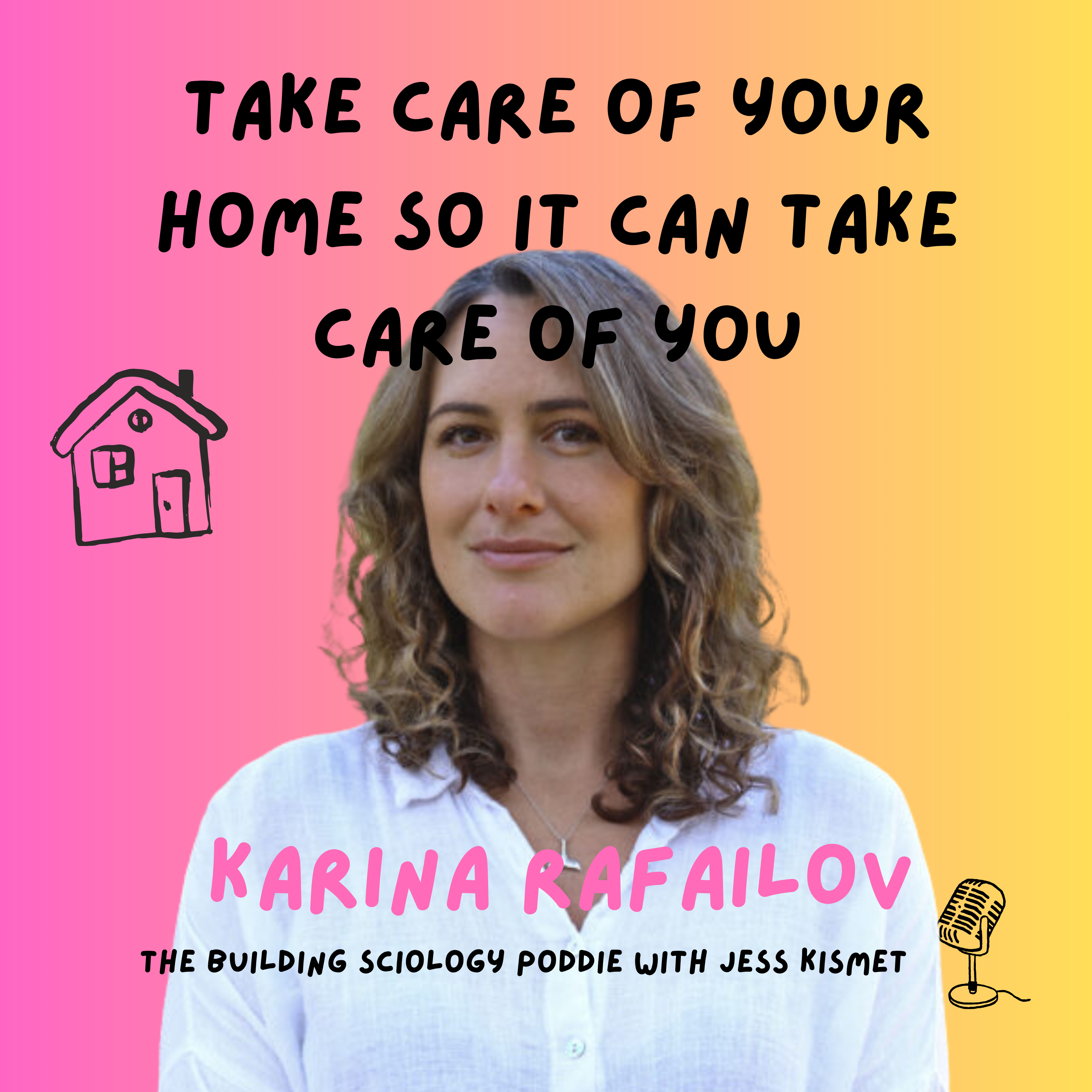
In today’s rapidly changing world, the way we build our homes plays a crucial role in our overall well-being. Join me as I chat with Karina Rafailov, a Blue Mountains designer and founder of Earthy Haus. We chat about sustainable architecture and community education, shedding light on how better informed choices can lead to much healthier living environments!
Useful Links
Blue Mountains Planetary Health Initiative.
“The Space” - discover more about this exciting project here!
Episode Highlights
00:01 – Introduction
00:50 – From Brazil to the Blue Mountains: Karina’s Journey
03:21 – Designing for Extremes: The Blue Mountains Climate
07:05 – Why Education Comes Before Design
10:53 – Treating the Cause: Moisture Management and Mold
16:29 – Seeing the Invisible: The Power of Thermal Imaging
19:51 – Is Passive House Overkill?
25:58 – The Toolkit: Metaphors for Building Science
28:52 – Non-Negotiables: Health, Comfort, and Performance
31:49 – "The Space": A High-Performance Test Drive
38:15 – Final Thoughts: Your Home as a Living Organism
Find the full show notes here
Connect here:
Thank you to our sponsors:
Thanks for listening. Happy healthy building!
Jess Kismet (00:01)
Hello and welcome to the Building Sciology Poddie where we talk about better buildings to live and breathe in. My name is Jess Kismet and today I am joined by Karina Rafalov from Earthy Haus Karina is a Blue Mountain space designer. She is building a values-led practice grounded in building science and passive house principles.
Through advocacy, education and community workshops, Karina is working to remove those barriers that stop people from acting on better building ideas by helping regional communities better understand how buildings actually work and why that knowledge changes everything. Welcome Karina, thank you for joining me.
Karina Rafailov (00:34)
Thank you so much. I'm happy to be here.
Jess Kismet (00:38)
Excellent, so your practice, Earthy House, is still quite a young practice. Could you take us back a little step and share a bit about your journey through previous firms and how those experiences shaped where you are today and why you started your own practice?
Karina Rafailov (00:50)
Yeah, so I studied architecture overseas and at university I was already very interested in sustainable design so much that my final thesis was about multi-use community building with hydroponic planting and energy efficiency. And I did what I could back then with the knowledge that I had back then. And, but the seed of wanting to go towards that direction was always there. And when I moved to Australia, I first had to understand how building works here.
Because it's quite different when you live overseas. Building systems generally are completely different. In Europe, you get a lot of different building systems that do not exist here. And in Brazil, where I'm actually originally from, it's completely different. Again, you use a lot of concrete, a lot of block work, and it's not a lot of lightweight construction where in Australia, it's like a little bit more towards that way. So I established my life here in the first year as working for bigger practices in the city and learning.
And I guess the big turning point was when I studied a small course at the University of Vienna, the Technical University in Vienna, which offered a green building solution summer course. And it was basically, I think it was a few weeks long and we did a lot of introduction to sustainable approaches, including passive house. But they were really focused on net zero buildings. And we did even like a little case study about net zero
retrofit based on passive house principles and all of that. And that's where I learned about passive house. And it completely changed my mind about how we should build buildings. It was incredible. And there was the big turning point. And I said, I need to work for someone that does these buildings in Australia. And luckily I've well established firm in Sydney took me on board and I was able to learn a lot and take projects from start to finish.
and see how this whole process works. And that's where I also did my passive house designer course, which is another big stepping stone. And I guess when you see this whole process and you understand the building science behind it and you just can't turn away from it. And I think I hear that from a lot of professionals that are in this world. They just can't turn back. So when I moved to the Blue Mountains, basically I started my own business and yeah, and this is kind of
Jess Kismet (02:50)
Mm-hmm.
Mm-hmm.
Karina Rafailov (03:12)
the base of my business is using high performance building and passive house principles and passive house building. So there is a lot of like motion in that sense.
Jess Kismet (03:21)
Excellent. So you're located in the Blue Mountains. What is it? Is there something particularly interesting about that area compared to where you've lived before, climatically and culturally?
Karina Rafailov (03:30)
Yeah,
both, guess. We're at climate zone seven, as you might know, and it's cool temperate. And PHPP sees it as climate zone four, which is warm temperate, where I'm living at least. I'm close to Katoomba. And it's all data-based anyway. But the climate is quite extreme. And I feel like it's more extreme than...
where I used to live in Sydney. So there is really high temperatures in summer and really, really, really low temperatures in winter. And there is a lot of fluctuation during seasons as well. So for example, in January, we had days that was eight degrees outside and suddenly the next day it was almost 35 and your body really struggles to adjust. I felt really, it's really interesting temperatures. And I guess that high performance building, this is kind of the...
perfect testing ground for these sort of buildings, isn't it? To have a building that is performing so well that can deal with these big fluctuations and maintain the stable temperature inside. So I think it's actually a really good place to have those buildings. And culturally, guess, the Blue Mountains is more focused on, let's keep the houses warm because the winter here is quite cold.
But I feel like things are changing now because we have more the heat waves and the houses are not coping with all of the heat and it's getting more and more. So I think that culturally just looking at the cold is not working anymore. So we have to now start looking at both. So I think that this is kind of a really good place to build high-performance buildings.
Jess Kismet (05:10)
Adelaide's kind of similar. We get extremes too. We get up to 45 in summer. We get heat waves of three, four, five days of 40 plus. We had one last week. And then in winter we get down to two, three, four degrees at night time and in the early mornings. So we have that challenging sort of fluctuation as well. And we can have four seasons in one day here. So yeah, I agree.
Karina Rafailov (05:12)
Mmm.
Yeah.
Yeah.
Yeah, yeah. And it's quite extreme. And
I don't know how your winds work, but here, for example, we get a lot of westerly winds, which are hot and dry. And in Sydney, you get the easterly, which is that cool, nice sea breeze coming from the ocean. So that kind of freshens up the afternoon quite quickly. After 2 PM or something, you get this breeze coming in, whereas here you got the hot, dry air and it can go, it can stay 35 degrees up to 11, 12 at night. And it's really hard to sleep in this heat.
Jess Kismet (05:41)
Yeah.
Mm-hmm.
Yep.
Yep, yep, same. It's the same. But I think from what you're saying, yours could be slightly more extreme, but yeah, it's the same here. It's the same here. We get a lot of southerly breezes off the ocean, which can be really, really cold. And then we'll get northerlies from the desert above us. yeah, I we're on the coast and we do get coastal breezes, but yeah, it is a challenging climate. And we've had winds whipping through Adelaide these last few days as well, just come out of nowhere.
Karina Rafailov (06:02)
Yeah, I don't know how it is in Adelaide is similar. Yeah.
Hmm.
Yeah.
Yeah.
Jess Kismet (06:31)
branches down and
Karina Rafailov (06:33)
Wow. So I guess it is also a perfect testing ground for high performance building where you are.
Jess Kismet (06:37)
Yeah,
yeah it is, it is. We have overheating issues like a lot of Australian climates do but we also have, you know, we need to control the, know, keeping our buildings warm as well in the winter. It's definitely challenging. So.
Moving on from that, a lot of your work is focused less on design and more on education and community engagement. So why did that feel to you like the right place to start rather than, you know, jumping straight into trying to get as many architecture jobs as you could or design jobs?
Karina Rafailov (07:05)
Yeah, so my practice,
yeah, my practice is still very young. I'm just over a year practicing on my own. So thank you. It was a big leap. It's a little bit scary, but instead of seeing that as a limitation, I saw that as an opportunity because I've got the time. I realized I have the time to engage with the community and invest in education. And I guess that's, I'm very passionate about all of this and it was kind of a pleasure to.
Jess Kismet (07:11)
Congratulations by the way, I'm starting your own business.
Karina Rafailov (07:33)
connect with the community and try to make people understand a little bit of building science. So I did quite a few presentations in the last year up here in the Blue Mountains together with the Planetary Health Initiative from the Blue Mountains City Council and actually talking to the user rather than people already in this realm of passive house or high performance.
So it was quite a different experience than I had before. Normally when I go to talks in Sydney, there's people that already know about this and already go to this thinking to improve their knowledge. And here I talked to an audience that completely had no idea about nothing. So it was really interesting to engage with the community through that. And I saw the gap in how people actually understand
buildings and how they actually work. So there's a huge gap in that way. So I'm using this opportunity to try to improve the knowledge of the people so that they can understand the basics, which is important. And then also live, ask better questions and, better, make better decisions and actually choose better professionals to take them through the right pathway.
And not necessarily just me, but being like very generous and saying, hey, there is a bunch of people here in the mountains that actually do passive house and understand these principles. you know, just sending people to those professionals to get informed and develop their knowledge about buildings, because it's such an important part of a person's life. As you know, we read everywhere that we spend about 80 to 90 % of our time indoors.
Jess Kismet (09:09)
Mm-hmm.
Karina Rafailov (09:10)
And
especially here in the mountains, I feel like the demographic is such that there's a lot of people working from home because it's far from Sydney. So people don't commute every day and there's not a lot of admin or management jobs here for people. So even that makes it even more important because you're working inside your house all day and in winter you're locked in all day. You'd go out for your exercise, but then you back in to be warm.
Jess Kismet (09:16)
Mm-hmm.
huh.
Mm-hmm.
Karina Rafailov (09:37)
So you spend so much time indoors that it is really important how the quality of your home here. So I try to kind of pass on this knowledge a little bit to the community up here.
Jess Kismet (09:43)
Okay.
Yeah, that's excellent. Without that knowledge, like you say, they don't know what questions to ask and they don't know who to ask. So how can they end up with a product that we know they can achieve if they don't even know where to start? And I find that people too, get so overwhelmed, even if they do know that they need to ask the question, they get so overwhelmed with where to start that they don't start.
Karina Rafailov (09:55)
Exactly.
Yeah.
Yep. Yep.
Jess Kismet (10:13)
I had one girl message me once not so long ago and she's like, I don't even know where to start so I'm just going to word vomit. And she just wrote me this huge message about all the things that she was worried about. I was like, you started, that's all that matters. So yeah.
Karina Rafailov (10:25)
Yeah, yeah. And there is
so much information online, I guess you can go after the information, but sometimes people are too intimidated of the amount of information that is online and talking to someone in person is a little bit more accessible and easier to then ask questions straight away and not go down a rabbit hole with no end in the internet. yeah.
Jess Kismet (10:47)
Yes,
100%, someone like you or I who can distill it into something that makes sense to them and to their project. Yeah, okay. So you've spoken a lot about how symptoms from things like mould and condensation in cold homes, you talked about the symptoms rather than the root causes. Why do you think that moisture management and thermal performance are still so poorly understood, those sorts of concepts, even within parts of the industry?
Karina Rafailov (10:53)
Yeah.
It's very interesting. am actually genuinely surprised how common it still is to have this confusion about cause and symptoms. And I see people painting over mould all of the time and that's not really treating the cause, right? And wiping condensation off the windows. Not that you shouldn't do that. You should wipe the condensation off and take that water away as soon as possible. But it's not actually finding
where it's coming from and getting a solution. So just there is so much acceptance of cold homes, putting another jumper on, know, just accepting damp rooms or accepting how misty the air feels inside the house and just, you know, this accept we are humans and we are used to getting used to things. There's a saying in German that we are a being of getting used to translating roughly.
Jess Kismet (12:00)
I
Yeah
Karina Rafailov (12:07)
Which
means that we get used to things and we just accept things. it takes about three months for us to get used to something that is not common to us. So in reality, we're used to very poor quality indoor environments. So this is kind of not solving any problems. the problems need to be actually looked at and the cause needs to be addressed.
so I guess that finding the cause of mould is about, it's tricky because you can't really see where it's coming from. Building physics is something you can't really touch or see.
Sometimes it's also hidden behind the Gyprock right? Sometimes you don't really know that it is happening behind a wall and you don't have where to start. So I think that it's very common as well for us to think that the room is warm, it's 20 degrees, but you don't really address the surface temperatures. So the surfaces might be cold, so the window frame might be cold, the Gyprock might be cold because...
Jess Kismet (13:09)
Mm-hmm. Mm-hmm.
Karina Rafailov (13:14)
it's not actually the whole building envelope is not working. So there's still this issue of condensation happening behind the walls because of that cold surface and the moisture management is not being addressed in the room. So I think that's the main problem. And I guess since you can't see that, you don't really know what's happening. And I think that's where the education of building science comes in handy is trying to...
explain this physics to the general public that does not have an idea about how this works and therefore try to make them understand what to do to make it better. So put a dehumidifier in a room that is too humid and that way you can try to avoid things. Put a better exhaust fan in your bathroom. Try avoid the moisture in first place.
and then you can find a better solution instead of treating putting paint over mould or hiding the problem, patching up instead of fixing the cause. I guess that's it.
Jess Kismet (14:20)
Yeah,
100%. In my mould course, the first thing we're taught is when you're going to inspect mould or talk to a homeowner about their issue, the first thing you do is figure out what the source of the problem is. Before you remediate anything, before you touch anything, fix the source, fix the leak, fix the humidity issue before you touch anything because you're just gonna come back again if you don't know what the source of the problem is.
Karina Rafailov (14:47)
Yeah.
Jess Kismet (14:48)
and once you start explaining what's actually happening inside the building, how do you see people's understanding and then their behaviour and their choices start to change?
Karina Rafailov (14:56)
Yeah, that's what I was saying. A lot of people struggle in understanding building science because it's something you can't really see physically. It's not like gravity that you feel like it's happening with you. So it's a concept and you have to try to explain that to someone. And it's beautiful actually to see when people start understanding and you see that little light bulb.
coming alive and then it clicks and then suddenly they're on your side and they want to fight with you against all of those issues. So I think that's kind of the behavioral shift that I'm looking for in people and having that, yeah, I understand now and I want to do something about it rather than going back into the circle and saying, how can I just fix this thing? Can I just fix this thing? And then the other.
Jess Kismet (15:20)
I love that.
Yeah.
Karina Rafailov (15:47)
stuff will be okay. And I'm like, no, try to understand it's a holistic system and it all has to work together to achieve a better outcome. So a few things can be fixed to make something better, but in the end of the day, it has to work all together. So you can't just put good windows without a good building, thermal building envelope, because they're not going to do their part the right way. So yeah, trying to make that holistic
Jess Kismet (15:57)
Mm-hmm.
No.
Karina Rafailov (16:17)
approach be understood by people, think is a big, big challenge, but it's there, it's happening and I've seen it happen. And so yeah, that's the main goal.
Jess Kismet (16:29)
Yeah, I love those light bulb moments. That's kind of what I wait for when I'm to people. The light bulb moment for me many years ago on my very first blower door test that I went out. I went out with some guys I was working with. They'd started this service in the business I was working for and I went out with them. Because as soon as I found out about blower door testing, I was like, I wanna do that. Went out with them onto a job and they had a thermal camera and we...
put the house under negative pressure and they put the thermal camera up to a exhaust fan in the ceiling under negative pressure and I could just see the purple. was just like air was gushing out of this exhaust fan and that was my light bulb moment because you can't see that unless you put it under thermal imaging and I was like
Karina Rafailov (17:10)
Nah. Yeah. Yeah.
Jess Kismet (17:13)
goodness and then you know as we went through the house there was missing insulation batts and things like that just simple stuff that you can't see that once I saw it I was like this is so easy this we have to get this right from the start like it's so simple to fix if you know what's there
Karina Rafailov (17:25)
Yeah. Yeah.
Yeah, yeah, exactly. And then that's the great thing about the thermal camera. And there is not a lot of access to that nowadays still. There is some cameras, for example, in the Blue Mountains library, you can actually borrow them and take home and do your scan. But I don't think there is enough information for people to actually go and do that. So it's a really good exercise actually to make people realize where the energy losses are happening in your building envelope.
Jess Kismet (17:46)
Yeah.
Yeah.
Karina Rafailov (17:58)
where the cold spots are and all of that stuff. So it's really interesting. Just a little side story. I've designed a house for my dad when I was still in university and had no knowledge about anything. And he just wanted a year two already. He wanted me to do something for him. And he went on and built the house with steel, obviously. I was like, I like glass because I'm an architect and la la la la.
Jess Kismet (18:03)
Yeah.
course he did.
Right.
Is it?
Karina Rafailov (18:25)
And then I was like, okay, so I put a lot of glass and a lot of, he put a lot of steel and in the end of the day, he went around with a thermal camera after he built the house and he was showing to me all of the cold spots where the steel structure was. And then I was like, okay. And when I look at his house nowadays, I would like, I tell him that I would never have designed a house like that to you if I knew what I know now back then. So you could have waited another 10 years or 15.
Jess Kismet (18:50)
Yep. Yep.
Karina Rafailov (18:54)
to build your house.
Jess Kismet (18:56)
That is a great story, I love that story. Because you didn't know what you didn't know. You hadn't been taught yet. And you designed based on your knowledge at the time.
Karina Rafailov (19:01)
Yeah, exactly. Yeah.
Yeah,
and these things should be in university. And it's funny, it's not yet. It's starting to, but hopefully it's going to get more and more. And that's how I kind of also want to orient, like try to get things into university so people actually understand from day one what they should be doing.
Jess Kismet (19:10)
Absolutely!
Yeah.
Yeah, absolutely.
This is all self-discovery. You have to go on Google and ask people and go to extra workshops like that one that you went through, the green building one.
Karina Rafailov (19:34)
Yeah.
Jess Kismet (19:35)
you've got to reach outside of what's right in front of you to learn about this stuff.
Karina Rafailov (19:38)
Yeah, yeah, yeah,
you got to go after it, but once you do it, it's worth it.
Jess Kismet (19:42)
Yeah, you do.
But like you say, the information is everywhere. If you just start, you'll find so much.
Karina Rafailov (19:48)
Yeah.
Jess Kismet (19:51)
So Passive House can seem like overkill to some people and it can feel intimidating. I can't tell you how many phone calls I get where people are like, I want to just make my house better. I'm not going Passive House. That's not in my budget, but I just want a better house. And it's okay. But from your perspective, how suitable is Passive House for Australian climates and particularly in regional areas?
Karina Rafailov (20:03)
You
Yeah, yeah.
Yeah,
yeah, I think that what you were saying about the overkill is really true and I get that a lot as well. And I get that not just from clients, I get that from builders, from carpenters, from plumbers, because everybody's sort of like, what is this thing? And once you change the terminology to high performance, it's a little bit more accepted. it's okay, it's not this kind of German thing that we're going to have to comply.
It's a little bit looser, it's still, I try to explain, it's still going to go through the same things and we're going to still do the same analysis and all that. And I guess that the concept of being an overkill, comes more from fear of not knowing and fear of the extra cost that's going to be. So it's unknown and costs which are kind of making this fear, this overkill happen. So I think that yes,
Jess Kismet (20:49)
Mm-hmm.
Karina Rafailov (21:05)
We can do a certification for passive house or no, we can't, but the process should be the same of testing the building and making sure everything is thermal bridge free and all of the wraps up done correctly, air tightness, so on and so forth. So I guess that otherwise you're just guessing. If you don't test it, if you don't model it, if you don't make good detailing, then you're just guessing it's going to be okay and it's not really going to be okay.
So I guess that's, and going then to your original areas question, I think that builders, they're just not familiar with high performance and pass files. And that means that they probably put an extra margin on top for the uncertainty that that causes. And just to make sure they're going to be covered. And I guess that that then makes the project not accessible anymore for the owner.
Jess Kismet (21:31)
Mm-hmm.
Yeah, for sure.
Karina Rafailov (21:57)
because the price is too high, it's over budget. And that's where the problem kind of is. And that's where we should be educating more builders and trades to understand the concept and understand it's not really rocket science. It's really just building better and making better detailing and paying attention to what you're doing on site and working collaboratively with everybody on site to make sure that
things don't go like if there is a hole in the membrane, fix it straight away, things like that. So that the trades come in, do their job, but don't damage what's there already. So, and in regional areas, I guess that it's very sad that this is happening because I feel like there, the poorest performing homes kind of are in regional areas, probably because they're just stick frame houses, like timber frame houses or cottages.
and they're old and they probably don't have insulation, most of them at least. So, and it also has the biggest potential of improvement because there is a lot of access around those houses generally in the city, everything's kind of close together and there's a lot of townhouses and on those properties, everything's kind of open and you have access generally to all sides of the building very easily.
Jess Kismet (22:55)
Mmm.
Okay.
Karina Rafailov (23:14)
So there is a lot of potential to upgrade those buildings easier than you would in the city. So I think regional areas are a good place to start and especially because they also have those extreme weather conditions and they're really exposed normally in huge empty fields or, so I think those homes, they need attention and hopefully we can get this education rolling out to the regional areas as well.
Jess Kismet (23:20)
I
Yeah, for sure, for sure. I've got a project at the moment up north of Adelaide, about two hours north of Adelaide. the climate up there, the client was just saying it's just roasting hot. Like they don't get the cool changes that we get. And he wants to build this gigantic, I think it's east facing house. It's beautiful. But I'm going to whack it through PHPP because he's got a very exposed site and he's got facades of glass.
you know, all the, think we're gonna get, we're gonna get in the end, we're gonna get him a much better performing house because we're actually gonna make informed decisions for him about his glazing spec, his shading, all of that stuff. So yeah.
Karina Rafailov (24:17)
It's incredible what the shading factor actually does on the PHPP. Once you start, like, if you do like a little test model and you don't put all of the trees and houses around straight away, it's a completely different result than putting a huge circle around and putting all of your neighbors on, on all of the trees and all of the foliage. So it's really, really important that we actually start from the beginning with a lot of shading around and actually seeing what the difference does.
Jess Kismet (24:20)
Yeah.
Karina Rafailov (24:47)
And I can imagine like a house in the middle of nowhere in an open field is completely different than a house like here, for example, where you have a lot of trees around and neighbors next to you. So it really affects the numbers. So it's really important to model that from the beginning on. And yeah, I have an idea of what's going on with the shading.
Jess Kismet (24:47)
Yeah.
Yeah.
Yeah, for
sure, for sure, for sure. And the way he was going, he was gonna need a gigantic solar system and a gigantic air conditioner in order to power this house, because this house is huge and it's built out of steel. we're gonna make some much better decisions for this client with a pH repair model and I'm really, really excited about actually getting stuck into that because I reckon the client's gonna be like, pretty pleased that we're going through the process. Yeah.
Karina Rafailov (25:19)
my gosh.
That's great.
Jess Kismet (25:34)
And I'm sort of imagining when you were saying about the open spaces and when you said the steel before, it of started to tick over in my mind about this project. The power of the passive house planning package is big. So what language or tools have you found most effective when you're talking to everyday homeowners to make all of this make sense?
Karina Rafailov (25:58)
I think I tried to keep it as simple as possible, very human. I tried to take construction photos and that helps a lot people to understand what's behind a wall because normally the general public that does not know anything about it doesn't even know how a wall assembly is. taking that, have a little, Proclima was amazing. They gave me that little sample buildup that has the wall and the roof and the insulation in between and it shows where
Jess Kismet (26:15)
Mm.
Karina Rafailov (26:26)
the window seal is taped and everything and people love that they go on it and touch it and yeah, yeah, yeah, it's great. People love that stuff. And I have a little window sample from Logic House and I have a little window sample from Kinzel and people actually look, this frame looks like this and they see where the seals are. And that's kind of, I'm showing it. Look, there's three seals on this window. So that's how airtight it is. So things like that really help from the...
Jess Kismet (26:30)
The little model? Yeah, I've got one too. Yeah. Yeah.
Yep.
Mm-hmm.
Karina Rafailov (26:54)
for people to see and touch and actually understand how it's all come together. And then I guess I also try to do comparisons. For example, I'll use, say, installation is like putting a down jacket on and the WRB is like putting a rain jacket over your down jacket. And that protects you from the weather and from the wind. And how about you open a zipper in that? What's gonna happen with...
Jess Kismet (26:57)
Mm-hmm.
Mm-hmm.
Mm-hmm.
Karina Rafailov (27:20)
with the down jacket below, you know, it's gonna get wet, it's gonna get cold, it's not gonna perform as it should. So I try to make these comparisons and people then understand it a little bit better. And then I guess that for people that have already existing houses and limited budgets, I try to talk to them about the long-term plan and long-term thinking so that they don't have to do everything at once, but understand the principles.
So they can plan the upgrades in the right timing and don't get into the lock-in effect of putting in some big, big high-performance windows and then not thinking about which cladding they're gonna do later on if they wanna add some extra insulation on the outside. So planning for that thickness to be put on later. So stuff like that and having like a big sustainability plan. I call it a sustainability plan for your existing house and then trying to write down the...
Jess Kismet (28:03)
Yeah.
Karina Rafailov (28:13)
the steps that you can take to make things better throughout years, not all at once, but something accessible. mean, yeah.
Jess Kismet (28:17)
huh.
Yeah, I think breaking it down into bite-sized pieces is definitely the way to go because that overwhelm can happen quickly and people just shut down.
Karina Rafailov (28:26)
Yeah.
Exactly.
Yeah, then they go, it's too much. I'm not doing anything anymore. I prefer to upgrade the kitchen instead of upgrading. Yeah.
Jess Kismet (28:34)
We don't want that.
So when you're running a business like yours, it's very values based. And it means that you have to say no to some projects if they don't align with your values. So what values for you are non-negotiable? And how does that influence the clients that you choose to work with in the projects that you take on?
Karina Rafailov (28:52)
I guess my non-negotiables are health, comfort and performance, which is basically the whole base of high-performance building. So having a healthy building and a healthy environment for the person living in it, having a comfortable building to be in, in air quality and temperature and good performance with low energy use, of course, as well. So those are kind of non-negotiable for me. And I try to, every project, I really try to...
steering that direction, even if it's not pacified certified. I don't force anyone to do a certification, but I really try to explain the advantages of the thermal modeling for PHPP and tell them the advantages of doing that to see what kind of variations they can do in the building to improve it and save money. So I kind of, yeah, those are non-negotiables for me. And obviously I do want to work with people that
Jess Kismet (29:39)
Mm-hmm.
Karina Rafailov (29:48)
that care about how their home feels rather than how it looks. Obviously, I love beautiful architecture and I love designing beautiful buildings and kind of this is very important as well because I am a big believer in you feel great when the space is beautiful. But it's also I want them to think about how they will feel in the space and not how just how pretty it is to show to people.
So, and that's again, very difficult to sell, right? How do you sell a feeling? How do you sell comfort in the future? So it's a little bit, it's a hard thing to do, especially for people that are not familiar with the concept or already sold on the idea of high-performance building. So it's a kind of, it's a slow burning long process to kind of get them around to do that. And sometimes it doesn't work and that's okay. But I do want to leave a
Jess Kismet (30:20)
Mm-hmm.
Karina Rafailov (30:40)
a good footprint behind and I kind of have this commitment so I'm trying my best to stick to that three basic things.
Jess Kismet (30:50)
It can be hard too when it's your own business and you know if a client comes along that wants you to design something that doesn't quite align with where you're going with your business and having to turn that business away that can be a tough call to make.
Karina Rafailov (30:52)
Yeah.
Yeah,
it's tough, but it's also kind of powerful. it's difficult when you have your own business, obviously you need to pay bills, but you also don't want to compromise on your values. Because I think when you're working on this sort of business, also, your business values are almost sort of also your life values, if you know what I mean, like it kind of, it's merging.
Jess Kismet (31:07)
Mm.
Yeah.
Okay.
Yes. Yes.
Karina Rafailov (31:26)
So you kind of, you need to be true to yourself and try to get the right clients. And it's a difficult thing, but I think it's possible. And I think more people want to have better homes as well. Yeah.
Jess Kismet (31:39)
Yeah, yeah,
definitely. So you have a project underway at the moment called The Space. This is intended as an educational and studio environment. Tell us a little bit about that and what's your vision for it?
Karina Rafailov (31:49)
So I think the whole idea of the space, which is basically just a secondary dwelling, it's tiny, it's less than 60 square meters, but it's, I'm hoping to make the invisible, everything that we were talking about visible. yeah, helping people to understand what a space feels like that has those high performance constructions and systems and components. So actually for them to experience that.
Jess Kismet (32:03)
That's fantastic.
Karina Rafailov (32:15)
to walk in and experience a high-performance building. So the studio kind of will have the components up close. You will have the tilt and turn windows and doors, the lift and slide door. You will have the HRV and you can actually experience it. And I want to run my workshops and presentations there. And even if they want to experience it overnight, there might be this option because if you want to...
For example, if you want to buy a car, you want to do a test drive before, right? If you want to buy a house, you go and do inspections. If you want to buy a land, you go and have a look. If you want to buy performance, what do you exactly do? Like there is no actual feeling or thing that you can go and do to buy performance. And it is an extra cost and people need to experience that. And hopefully this is kind of going to be a little experience based.
project for people to come and have a look and actually experience on their own terms. And also it's been like a little case study for myself to try to understand what the difference in cost actually is from a building to up it to a passive house. So it's targeting passive house. Hopefully I get there.
Jess Kismet (33:27)
Mm-hmm.
Karina Rafailov (33:28)
But yeah, I want to see what the price difference would be. Obviously, I'm not building the conventional building, so I don't really, I won't really have those figures. But I'm gathering all of the information that I can about the cost and what the differences could be, like the membranes and the HRV and the windows and the doors and variations within that. And that then I can kind of open the books.
Jess Kismet (33:43)
Okay.
Yep.
Karina Rafailov (33:53)
for people that come to me and explain to them like these are the extras and but these are the advantages of the extras. hopefully then we will have a much more open communication level because it's quite hard just to when you are a designer, you kind of design into their budget and then you talk to builders and you try to gather estimations and all of that early on.
But it's never actually the cost of the building. It's really hard to give someone a figure of how much it's going to cost. So giving them an idea, I think a real idea of a finished product and how much that cost and what cost went where is going to be a good exercise, hopefully. So that's the whole intention about this project.
Jess Kismet (34:41)
Yeah, for sure.
That's awesome. So is that, that's gonna be your workshop, training venue, office type situation? Awesome.
Karina Rafailov (34:51)
Yeah, it's going to be used for everything. hopefully, yeah,
hopefully it's going to be an open sort of home for people to come around and experience as well.
Jess Kismet (35:00)
Fantastic. So
have you got a website for that or anywhere we can find resources?
Karina Rafailov (35:03)
It's,
it is in my website. It's still very, very generic at the moment, cause everything is sort of happening this year. So I'm trying to keep it like not, not too much, but, hopefully once it starts happening, we can start promoting and people can come around and have a look. So yeah, it's in my website.
Jess Kismet (35:14)
Mm-hmm.
Excellent. okay,
I'll put a link in the show notes to your website and then as time goes on, I can update the show notes with any more information that you've got. That'd be awesome. Yeah, very good. That's excellent. And what's the timeline for it? When will it be finished approximately? Because this episode won't be published, like, it'll be published in the future, so you might even have some more information by the time this episode gets released.
Karina Rafailov (35:25)
Mm.
Yeah. Yeah. Yeah. Yeah.
Okay. yeah.
Let me know when it, cause the slab pour is, so Carbon Light is delivering first week of May. The windows are being shipped 24th of February, arriving 24th of March at Carbon Light's factory. They're going to be installed in factory. And then everything comes on a truck and it's going to be cranked in on the first week of May. So.
Jess Kismet (35:54)
Okay.
Karina Rafailov (36:09)
I think in June, it's going to be standing obviously already. I'm hoping there is a, I just got the email from sustainable open home and I don't know. Yeah, yeah, yeah. So I'm not sure if I can already open the doors, it being just a lockup stage. So I don't know, I will have to have a look into that, but maybe.
Jess Kismet (36:22)
Sustainable Health Day. Yep.
Yep.
Karina Rafailov (36:36)
I can already open it then. We'll see.
Jess Kismet (36:38)
Okay, it's sustainable
house day. When is that this year?
Karina Rafailov (36:42)
That is 17th of May. So it might be just the week after CarbonLite has done their assembly, but it's going to be at lockup. Hey? Yeah.
Jess Kismet (36:44)
Right.
Okay, how exciting. Okay, all right. Well, maybe
I'll try and align the release of this episode with that. That'd be cool. Yeah.
Karina Rafailov (36:56)
Yeah, I sent you the dates. Yeah, it
will be cool because it's kind of, I'm so excited it's happening because it was a long, long-term dream of mine to make this happen. yeah, yeah, expensive goals.
Jess Kismet (37:08)
Good on you. Look at you kicking goals. Yeah.
That's fantastic.
Karina Rafailov (37:15)
But yeah,
very interesting, very interesting. So I'll let you know the dates and hopefully we can align it there and then say, it might be open for that event already. And if not, then it's going to be open for the Passive House open days in, I think it's in November this year or October, October, November. Yeah.
Jess Kismet (37:21)
Yeah.
Yeah, okay.
Yep,
I think it was November last year, so probably November again this year. Well, fantastic, well done, Karina, that's awesome. Yeah, we'll try and align this episode with Sustainable House Day and we can sort of cross promote, that'd be great. All right, last question. The final question that I ask everybody. If there is one thing that you want the listeners today to take away out of everything that you've learned so far in your career, what would that one thing be?
Karina Rafailov (37:36)
Mmm. Yeah.
Yeah. Nice. Okay.
I think it is like if you look closely, a building is not very different than any other living organism. It breathes, it should breathe. It has lungs like a HRV. Like if it doesn't have an HRV, doesn't actually have lungs. It sweats, it creates moisture, it generates humidity, it spends energy. So all of the things that the living organism is doing, a house is doing as well, it's kind of, it's living.
because it has this effect of having the energy and everything and us living in it. So just like our bodies, it needs everything to work in a holistic way. Otherwise, it's going to be sick. Otherwise, it's going to have to be patched up, which is not what we want to do anyway. So it's just caring for that thing as a living thing. It's basically, yeah, I think it's a good way to start.
care about your house as something living that you need to keep alive. It needs maintenance. It needs love. It needs testing. It needs all of those things that we actually also do with us. The house also needs and we should cherish it because we live in it and it's giving us back what we give to it. So if we don't give anything to it, it's going to create mould. It's going to create issues. We're going to get sick as well. So it's all connected.
Jess Kismet (39:05)
This is
Thank you.
Karina Rafailov (39:13)
So care about your home as it was your own body or something that you love a lot.
Jess Kismet (39:14)
Mm-hmm.
Thank you very much. Thanks for that.
That brings us to the end of our chat. Thank you so much for joining me.
Karina Rafailov (39:26)
Thank you for having me, Jess. It has been a pleasure talking with you and exploring all of these concepts. And I hope that we can cross paths again in the future.
Jess Kismet (39:35)
Yeah, I hope for that too. All right, thanks Karina. See ya.
Karina Rafailov (39:38)
Okay. Okay, bye.
Was that better? Okay.
Jess Kismet (39:43)
Yeah, that was heaps better.
All right, stop. So I'll stop the recording and if you could leave your browser open, it'll tell you how much is uploaded on your screen. If you keep that open until it's 100%, because it records locally on your end and then uploads to the cloud so I can access all the audio. So my buttons are being very slow to respond today, so I'll stop this in a second. I'm at 71 % uploading, so I'll leave my browser open.
Karina Rafailov (39:50)
Yeah.
Okay.
Okay. Yeah.
Yeah,
I'm at 69, so yeah, it's going to take a while.
Jess Kismet (40:10)
until it's finished.
All right, cool. Yeah, yeah, just leave the session. You can leave the session. Also, I'll close off the session and then just leave your browser open. All right, cool. Well, it was really nice to meet you. Yeah, yeah, it was good. It was really good. It was really good and it's been lovely to meet you too. I think we are very much aligned in what we're doing. It's nice to...
Karina Rafailov (40:13)
Okay, and we just leave the video going and that's it. Yeah.
Okay, sounds good. Was that okay? Yeah. Yeah, nice to meet you too. Yeah, I
think the values align very much. Yeah.
Jess Kismet (40:40)
Yeah, yeah, and the work
we're doing, everything we're doing is very similar, including the advocacy stuff, because not everyone does this stuff. There's a lot of consultants who work in this area, but they don't all go as far out of their way as we do to educate. yeah, it was really nice to... Yeah.
Karina Rafailov (40:55)
Yeah, yeah, there has been a lot of donating time last year, but I kind of
I'm proud of it in a way as well. And I'm happy that I've done that. So I want to do more this year. I'm planning on another workshop with a friend that is a lighting designer and she's going to talk about lighting design as well, which is also related to health and all of that. So we're going to do it together. yeah, yeah, planning, planning more.
Jess Kismet (41:02)
Yeah. Yeah.
Very important, yeah. Fantastic.
Awesome. Well, thank you for all those months ago reaching out to me and saying hello. It was really great.
Karina Rafailov (41:25)
Yeah, yeah, always. I'm always following you since you started it. So it's great to see your progress and see how far you've gone. Like it's amazing the community that you build up there. It's amazing.
Jess Kismet (41:35)
Thank you. I actually
haven't done much this year. I've only, I need to get, I need to get my, get back on the horse with, I've been doing the podcast, but yeah, I need to get back on the, on the horse a bit, but.
Karina Rafailov (41:43)
This year is...
It will happen.
No rush, the year is long.
Jess Kismet (41:50)
Yeah.
All right. Well, thank you also for being so flexible with all the time changes and date changes. That's been good. All right. Have a good weekend. See ya. Bye.
Karina Rafailov (41:54)
No problem. No problem. Okay, I'll see you. Bye, you too.

Director
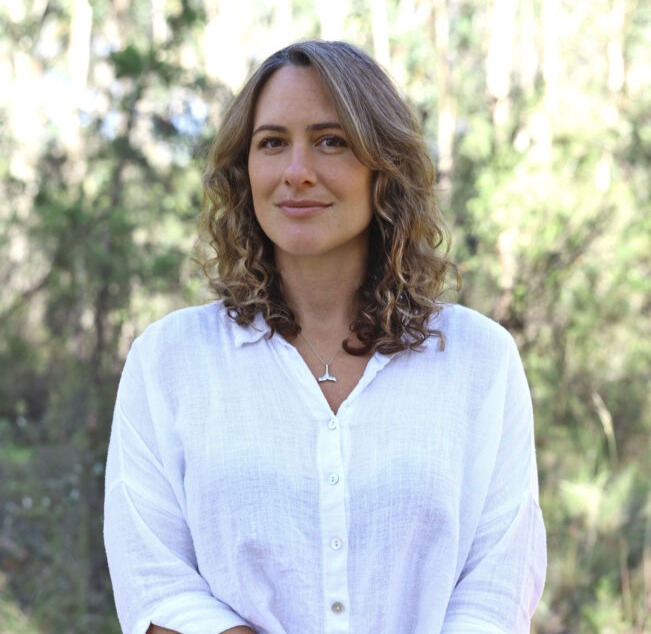
Earthy Haus founder Karina is a Certified Passivhaus Designer and accredited building designer based in the Blue Mountains, NSW. Passionate about building science, healthy homes and environmentally conscious design, her work focuses on creating warm, high-performance homes that feel deeply connected to nature while supporting healthier living and better comfort.