

 Apple Podcasts
 Spotify
 Youtube Music
 #34 | The Future of Construction: Systems, Science, and Professionalism with Duayne Pearce
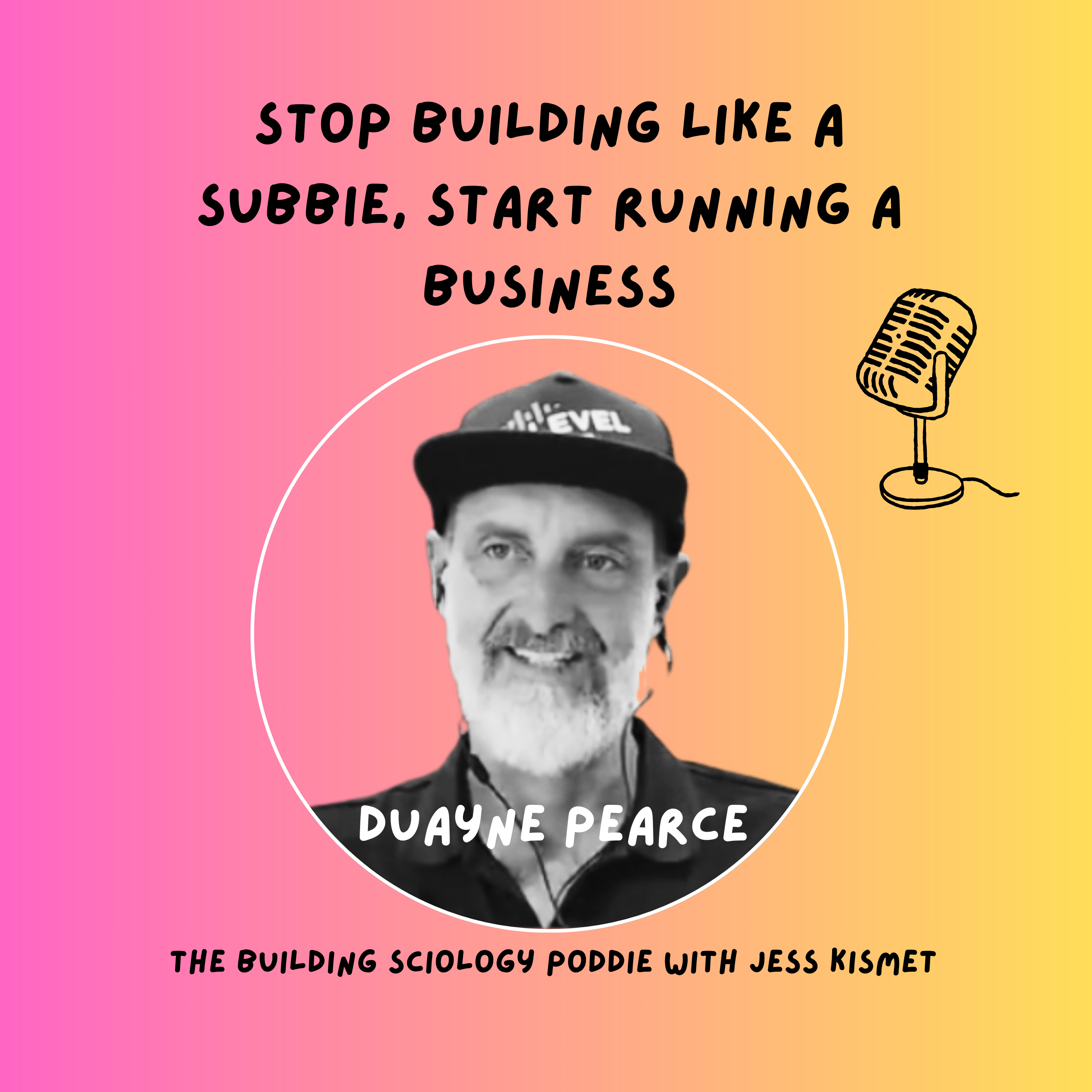
In this episode, I chat with Duayne Pearce, a builder, industry mentor, and co-founder of Live Life Build. Duayne shares his journey from industry struggles to embracing new systems, and his vision for a more professional and sustainable building industry.
We talk about industry transformation, proactive leadership, continuous education, and collaboration. His initiatives like the Level Up expo in 2025, his mentorship program and systematised workflows aim to elevate standards, attract quality clients, and promote sustainable, healthy homes.
Building a better industry is a collective effort. By embracing systems, education, and a passion for quality, builders can significantly improve client outcomes, personal well-being, and industry professionalism.
Follow along wherever you get your podcasts and please leave a review on iTunes if you're loving the content!
Key topics:
-
Lessons from early industry days and shifting from stress to systematized success
-
The importance of understanding business finances and overheads
-
The PAC process: early collaboration for better outcomes
-
Building a community and sharing knowledge through events and mentorship
-
The future of sustainable building and energy efficiency
-
Developing resource libraries and systematizing construction processes
-
Leadership and industry transformation through education and professional development
-
Practical tips for builders: setting expectations, professionalism, and branding
-
The significance of ongoing education and collaboration within the industry
Useful Links
Connect with Duayne Pearce
Timestamps
00:00 - Intro: The building industry’s need for innovation and professionalism
02:24 - Realization that better business practices exist beyond stress management
03:56 - Duayne’s journey from high-end builder to systematized success
05:52 - The turning point: financial struggles, ownership, and industry insights
07:58 - Misconceptions about overheads and profit margins in building
10:00 - How Live Life Build empowers builders through mentorship and systems
13:41 - Implementing the PAC process for early client collaboration
16:30 - The benefits of building personal relationships with clients early
18:02 - The importance of project teams working together for quality outcomes
20:37 - The PAC certification system and global reach
23:06 - Blind spots in building businesses: finances, systems, and processes
24:02 - System libraries and their role in improving operations
27:29 - How to start implementing effective systems today
28:54 - Essential processes that can transform a builder’s business
30:01 - Setting boundaries: the power of professional communication
31:54 - The importance of signage and branding for reputation
33:10 - Navigating the discussion of sustainability with clients
35:35 - Developing minimum standards for durable, energy-efficient homes
37:20 - Educating clients about sustainable building options
41:12 - The impact of industry expos and community building
45:35 - The role of industry leaders and collaboration in progress
47:53 - Prioritizing health, sustainability, and quality in building practices
50:08 - Insights from Paula Baker-LePorte on healthy, sustainable homes
52:36 - Building knowledge and relationships with pioneers in health-conscious building
54:43 - Favorite podcast guests and lessons learned from industry leaders
55:47 - Duayne’s future plans for growth and industry influence
57:03 - The key lesson: always stay open to learning and improvement
Thank you to our sponsors Enduro Builders and Climasure
Join the mailing list here!
Thanks for listening. Happy healthy building!
Jess Kismet (00:00)
Hello and welcome to The Building Sciology Poddie where we talk about better buildings to live and breathe in. My name is Jess Kismet. Today on the show we have Duayne Pearce. Duayne is the director of D. Pearce Constructions.
He is also the host of the Level Up podcast and the co-founder of Live Life Build Duayne's building company specialises in architectural homes and quality renovations, where his podcast and Live Life Build ventures are more about collaboration, education, and the leveling up of the construction industry. Today, we're going to dig into his approach to running a building business, mentoring others in the industry, and the lessons he's learned along the way. Welcome, Duayne.
Duayne Pearce (00:33)
Hi Jess, thanks for having me.
Jess Kismet (00:35)
No worries at all. Let's dig in. So you've been in this industry quite some time now. Looking back, what do you think some of the early lessons were that
you run your business today and where you are today?
Duayne Pearce (00:45)
Look, I'm very grateful for what I was taught in my early days as an apprentice and even just a subcontractor and working for developers and other builders and stuff. if anything, what I do now is based on what I saw them not doing correctly and all the issues they were having. And look, I didn't know that for very long time. I thought being stressed all the time.
running around like headless chook constantly being on the phone, constantly putting out fires. I just thought that was the way the building industry was. obviously now in the last sort of 10 years, actually it's coming up to a bit over 10 years that I've been helping other builders. Yeah, I've learned that there's a better way to do things.
Jess Kismet (01:25)
What did the realisation come for you? How did you learn that?
Duayne Pearce (01:27)
Look, I got to a point in 2000, it was between 2012, 2013. I was just like every builder. I had, like I'd actually done quite well. I'd built up a large building business. I'd moved on from being a subcontract carpenter. We ended up being the largest subcontract carpenter in Queensland. I then transitioned into being a builder. And because of the carpentry business, I built up.
I had a lot of business straight away. And so for the first sort of six years of my building business, getting work wasn't an issue and doing really high end homes wasn't an issue. within two years of getting my license, like we were building multi-million dollar homes and I was very good at building. And we'll probably get into that more down the track, but
I was good at building the way I was taught, knowing what I know now. I wasn't building correctly, but like on face value, we were killing it. Like we had a huge team, big turnover. I was buying rental properties, bought a big boat, had a big truck. Like I thought I was killing it, but my admin person that had at the time, which I've still got now, Sharon, she's my accounts manager. I've been with me 19 years.
would always be telling me, you can't afford that, Duayne, you shouldn't be spending that money. And then I'd have to sit with her in the office and literally go line item by line item through our bills and cross out the ones in red pen that we could afford not to pay or we couldn't afford to pay. So every month it was just this vicious cycle. And it was really hard for me to understand what I was doing wrong because the industry was rewarding me. So...
Jess Kismet (02:55)
Mm-hmm.
Duayne Pearce (03:07)
Like I was young, like 2010, I won the Master Builders Rising Star Award. And back then, like the Rising Star Award was something you didn't enter. Like you won the award based on the entries that you'd put into the awards. And so I didn't have to fill out any paperwork about my business or turnover or anything that I was doing. It was one on merit. And so after that, I was getting asked to speak at industry events and
Jess Kismet (03:20)
Mm-hmm.
Mm-hmm.
Duayne Pearce (03:31)
because we had such a big turnover, like I had suppliers paying for me to go on overseas holidays with them. like I was just getting rewarded and like I was getting articles in newspapers and all sorts of things. so it took a very long time for me to take ownership of my situation because I was like, what am I? Like I've never gotten any money in bank. The cashflow is always shit. I'm constantly putting out fires. feel like
Jess Kismet (03:39)
Rock star treatment.
Mm-hmm.
Duayne Pearce (03:57)
the clients are always at battle. And yeah, everything, like I got to a point by end of 2012 that I was out, I was ready to go and clean toilets. I just didn't want to be a builder anymore, which for me was huge because that's all I ever wanted to do. And it was all at the same time, I like, I met my wife, we got married, we had two kids. So I had a one year old and almost three year old. And I was like, something's got to change. Like,
Jess Kismet (04:06)
Mm-hmm.
Duayne Pearce (04:21)
We got to a point where we were about to lose everything. We couldn't pay our bills. We had to borrow quite a substantial amount of money off a family member to even survive. And yet everyone was still telling me, at the same time all this is happening, my own team didn't know what was going on. Other builders were looking up to me. And as a bloke, it was quite hard for me to, I guess, accept that it was all my fault.
Jess Kismet (04:41)
That's massive.
Duayne Pearce (04:45)
So one of the biggest thing I tell everyone now, like It doesn't matter who you hang around, what you listen to, like what courses you go to, like you have to want change. You're the only one that can make a difference. No one's going to hold your hand. No one's going to come and save you. And so I basically just realized I had to start taking ownership. Like I had to learn more, I had to do more. I was a great builder, but I could not run a business.
Jess Kismet (05:10)
I think that you're not alone there. think that anyone who's good at anything with their hands or even anyone who's got a skill doesn't mean they can run a business. And this is something that I've talked about for a long time. getting an ABN should come along with some sort of requirements and I don't know, some sort of business course, because you can get an ABN like that. It's not hard. And people get into so much trouble with cashflow and tax debt and...
superannuation and you know, it's a huge undertaking starting a business that I think that is not fully understood by a lot of people.
Duayne Pearce (05:40)
Yeah. And look, I think I definitely know one of the things that made it hard for me, like, and knowing what I know now, it's completely wrong, but like through my apprenticeship and then through subcontracting and like, was always asking questions to builders and I look back now and think the builders are the last thing questions that I looked up to. They didn't know what they were doing either. And so when it, when it, when it comes to, talking about overheads and profit, like,
Jess Kismet (05:59)
Yeah, exactly.
Duayne Pearce (06:06)
I'm talking like it's nearly 20 years since I got my builders license. So, and I know it's still get straight around now. 10 % was always thrown around. Like you work at your costs, you put 10 % on. And because I didn't understand what I but like what my overheads were and how much they were actually costing us. And because we grew so quickly and we're doing a multi-million dollar homes, I thought like we've signed a million dollar contract. I'll make it a hundred grand. And.
Jess Kismet (06:16)
Mm.
Yeah.
Duayne Pearce (06:32)
And so I was in my mind, like, I've always been, I'm pretty good with numbers. If I hadn't known what was, what an overhead was, I would have obviously figured it out a lot sooner. But in my mind, I'm just thinking we've got $8 million worth of work. I've got 800 grand. Like what can I buy? What can I spend? Um, and so I was living it up and having a great time, but it caught up with me very quickly.
Jess Kismet (06:49)
Hahaha
Duayne Pearce (06:57)
I'm very cautious now. I'm all over my numbers. do constant reviews almost on a weekly basis with my accounts manager. know what's coming in, what's going out, work in progress, all those types of things. But I think that was the main reason. And I speak to builders now that have that same situation where they think this number, this overhead number or this profit margin is all theirs.
by the time you take out all your insurances and your phone, everything that's an overhead, which it blows my mind now with the building, the builders that we teach and we mentor. Every builder that reaches out, I can count on one hand how many builders actually know overheads. Overheads are so misunderstood.
Jess Kismet (07:25)
Mm-hmm.
So for you, was primarily a cashflow issue that prompted you to start sort of changing the way you were doing things.
Duayne Pearce (07:49)
Yeah, because I have my young family. I'm I'm responsible. need to, I can't have my family living on the street. I need to do something about this.
Jess Kismet (07:58)
Yep. And for the listener who doesn't know what Live Life Build is, could you please just give a quick description of what you guys do?
Duayne Pearce (08:04)
So Live Love Build is a full coaching mentoring program. So we have our launchpad, which is our basic little do-it-yourself online course that you can do at your own will. We have our PAC process, is we've trademarked it's Paid As a Consultant so that covers everything that a builder does from the initial inquiry from a client all the way up to signing a building contract. So we've developed a whole system of process around that, bit of a roadmap.
that you can actually put in front of your client and visibly show them. For me to take you from this inquiry through to your building, like signing your building contract, we actually need to do all this. And when you lay that out in front of a client, they nine times out of 10, they're more than happy to pay for your process. And then our full program is Elevate. So Elevate is, we have seven mentors in the business now. We've got an online course portal. We have a systems library worth over half a million dollars. We,
Jess Kismet (08:39)
Mm-hmm.
Duayne Pearce (08:56)
We do, this year we've done six live events for our members, so it's a big deal. And our community of builders is unbelievable.
Jess Kismet (09:05)
I discovered Live Life Build ⁓ probably only about three and half years ago. And I remember being really encouraged because up until I heard about Live Life Build, I hadn't heard of any mentoring for builders at all. There was no support. There's no...
As I've often said, there's no continuing professional development from a technical perspective, but there's also no readily, from what I knew, there was no readily available business coaching for builders. And I know that is a huge, a massive gap that you guys have filled.
If you are listening and you're a builder and any of the things that Duayne has mentioned just now resonate with you, then get onto the Live Life Build website and start doing your research because you will benefit from what they offer from the community that they're building.
Duayne Pearce (09:53)
Yeah, thanks, Jess. It's definitely become a bit of a, it's my mission, it's my purpose in life now. Like, I just get so much out of helping builders have their dream business. And through having a dream business, they get their passion back. And I feel like if we can get passion back to our builders and our tradesmen, then we can deliver better quality homes to our clients.
Jess Kismet (10:13)
Yeah, that resonates with me deeply. You know, what you're saying about your young family, Live Life Build process, the Live Life Build community, you know, helping builders to understand their business, understand their finances saves families, it doesn't just save businesses. So it's ⁓ the impact is far, far reaching.
Working on architectural homes and renovations can be quite complex. And you mentioned the PAC process just now. The PAC process is a process where you encourage early collaboration. Could you, how do you approach that PAC process? How do you teach it and how do you enable your members to get the best out of that process?
Duayne Pearce (10:47)
So look, knowing, being through everything I've been through and like I used to, to go back a little bit when I was having all my problems in my building business, I used to blame everybody but myself. And like most builders, probably the number one person I blame was the client. And I used to, it was always the client's fault. Why I wasn't getting paid or why something was too difficult or they didn't understand what we should have needed to be doing. And
When I think back to how we operated for close to 10 years in my building business, especially on the big jobs, the architectural jobs, a lot of the time, the first time that I would face-to-face meet the client was signing the contract. So it'd all be administered by the architect. I would be dealing with the architect, the engineer, while I was doing all my pricing and tendering, but we used to tender a lot.
Jess Kismet (11:36)
Mm-hmm.
Duayne Pearce (11:36)
And there was no collaborate, very little collaboration at all. Like the architects designers would occasionally ask me some building advice or my ideas on what I thought or products or whatever. But I never got to understand what the client was after and what they wanted. And so a lot of our problems on our jobs and sometimes the problem would happen that like literally the first day on site and a lot of those problems were.
We were building off a set of drawings we'd been given, a set of documents. But what the client envisaged or what the client had thought they were getting was different. And that used to happen all the time. There could be, and like we would build up a space as well. And because I hadn't built any relationship with the client, like all of a sudden I'm the bad guy because I'm saying to them, look, we've allowed to do what's specified here. We haven't allowed to do that. And there was all these.
really difficult situations that I felt terrible because I was having to cut charge of client variations for, but I was simply just building off the documents that I've been given. And not only that, when you don't get that opportunity to build that connection with a client, it's all about the dollar value and there's no personal connection there. And that is really hard when you're, when you consider how much money a lot of homes are costing.
Jess Kismet (12:32)
Mm.
Yeah.
Duayne Pearce (12:48)
And so because there was no personal connection, I believe that's why a lot of our, we had quite a lot of our issues. Besides on top of I wasn't running a great business, but the PAC process really allows you to, and the way that we do it in my building business now, 90 % of our clients come to us first and then we pass on details of the design and architects we work with and then we build a team. And so.
Jess Kismet (13:11)
Mm-hmm.
Duayne Pearce (13:13)
It's very personal now. We are minimum 8, 10 months, some of our jobs are three years in design, planning, specifications, pricing. And so during that time, you build an incredible relationship. probably one thing that the PAC process has allowed us to do, also gives me the opportunity to decide if I can't work with a client. So I don't want to be working with a client that isn't taking my advice or thinks that they know everything.
Jess Kismet (13:32)
Yeah.
Duayne Pearce (13:38)
or questions everything that I say or when we invoice for our PAC process takes a long time to pay or questions it because whatever that like to me whatever expectations they're setting early on that's what I'm gonna have to deal with for the entire job but yeah the fact for the fact like for me the PAC process the biggest thing out of it is that personal connection building the relationship really knowing the client
Jess Kismet (13:40)
Hmm.
Mm-hmm.
Duayne Pearce (14:03)
But the best way I explained is it's my job as a builder through the PAC process to pull the team together. So client, myself, designer, architect, engineers, like I coordinate them all. I liaise with them all. I review all the documents. I make sure everything's going to work. And it's my job to educate the client and the designer on what they want is possibly going to cost.
And then it's up to the client to tell myself and the designer what they see value in. And that's how I believe we get such incredible homes now because everyone's working towards like I am, I stole this off Aaron Wales from Green Case Designs. It's an old Murbach saying, like they say the project is king. And I believe that, like, I believe if you build a team and you all work together and even like yourself, like a couple of our current clients are working with Climasure and you guys.
Jess Kismet (14:31)
Mm-hmm.
Duayne Pearce (14:54)
So we will have all that information before we finalize our costings and finalize design so we can make sure that the information you're giving back is getting incorporated into the home. So we're getting our clients such better products. We're able to educate our clients a lot more. And as you're aware, we're very passionate about sustainability building, probably the word I like to use is durable. Like I want to be building
durable homes that last a lifetime, not just 20, 30, 40 years. And so, by doing the PAC process, it's quite funny, like a lot of our clients come to us and say they want a sustainable home. But sustainable means a million different things. And so, they'll say they want one thing, and we'll educate them on something else, and then...
Jess Kismet (15:20)
Mm-hmm.
Mm-hmm.
Duayne Pearce (15:37)
You can see the passion grow as they get more educated and everyone starts to work together and that's how we get a good outcome because everyone's on the same page and we're all working towards that quality project.
Jess Kismet (15:47)
Mm hmm. Yeah, it's the ultimate way to do it, isn't it? The PAC stands for Paid As Consultant I realise I didn't say that at the beginning of the question. To clarify the PAC acronym, it's Paid As Consultant which means that the builder comes on at the very beginning stages of design to make sure that the architectural design gets input from a builder.
Duayne Pearce (15:55)
Yeah
Jess Kismet (16:07)
instead of a builder being handed a set of plans and being asked to build it and having all sorts of questions and problems with that set of plans. Did I miss anything?
Duayne Pearce (16:16)
Yeah, I think, ⁓
I guess just to clarify a couple of things with that, Jess, like there's a lot of people that they charging for quotes. Paid As a Consultant is very different. Like it's a fully documented process. and people think it doesn't work. Like we have, we now have hundreds and hundreds and hundreds of builders across Australia, New Zealand, and actually other parts of the world now that have subscribed, done our process. when they finish our
little course, they can do a questionnaire and if they pass all their questions, they get certified and we put them their company details on their website so people can actually search for a PAC train builder. But we have builders using the PAC process from kitchen, bathroom, deck renovations all the way through to multi-million dollar homes, passive homes. So the way we've developed the PAC process is it's once you learn it and do our training, you
Jess Kismet (16:48)
Yeah, right.
Duayne Pearce (17:04)
adapt it to suit your business model and the type of homes you do and the type of clients you want to attract. And I think that's why it's so successful.
Jess Kismet (17:08)
⁓ Mm-hmm. Mm-hmm.
Yeah, yeah, it's a fantastic thing. I know I've a lot of, ⁓ you know, projects that I've come across who haven't undergone a similar process, they just end up with problem after problem, because of the, you know, The topic of good communication and collaboration just continually comes up in my work, particularly because of the need to incorporate all sorts of different detailing and energy efficient.
concepts and ideas and design features and things early on in the process. It comes up all the time. But even if that is not your end goal, it's still crucially important to have a collaborative relationship between Builder Architect and Client and any other consultant that you need early on. It doesn't matter if you're going for a high performance or passive house or not, it's still crucial. So I didn't realize that it was actually global now.
Duayne Pearce (17:56)
Yeah.
Yeah, we've got a few international builders that have come on board, so it's the word spreading.
Jess Kismet (18:01)
Yeah, cool.
Good work. That's awesome.
Live Life Build focuses on helping builders improve their projects and their businesses, which as we've discussed, it's incredibly necessary mentoring program. ⁓ I think that a lot of builders struggle with balancing the practical side of their job with the business side. So what do you think are the largest blind spots in the trades that you come across?
Duayne Pearce (18:23)
Just like where do I start? could go on all day about this one But definitely the biggest one which we've already touched on is is knowing your numbers but so many builders just do not have a clue about their numbers, but the The next one would be systems and processes like so many builders just have everything in their head they run around all day they're on the tools a lot and Quite often they're turning up the site. They're having conversations with their team or their trades and
then they get frustrated when they come back and it hasn't been done correctly or there's a different outcome. And it's purely because they're not systems and processes driven in their business. So to me, that's a massive one because ultimately systems and processes is what will give you freedom from your business and allow you to step back. So yeah, and look to me again as a trader and a builder,
Jess Kismet (19:04)
Okay.
Duayne Pearce (19:10)
I didn't know what a system in a process was. thought it was what I had in my head and I thought it was turning up to side each day and flicking the lines out and cutting the timber and nailing it together. I had no idea. And so from building a systems library in LiveLive Build now and documenting an entire construction company, it's all been based off my building business. We now know.
Jess Kismet (19:30)
Mm-hmm.
Duayne Pearce (19:32)
that over 80 % of the tasks that it takes to run a building business actually happen offsite.
Jess Kismet (19:38)
So you have, you say you've got a document library, you've actually got a bunch of systems and processes that you give out as part of Elevate. Or is that part of the Elevate program or the different section?
Duayne Pearce (19:45)
Yeah, so in Elevate,
our members get access to PDF versions of all of our systems. So off the top of my head, I think there's about 147 of them. And then a lot of those systems are accompanied with other documents. So it might be checklists, it could be email templates, it could be...
Jess Kismet (20:05)
Mm-hmm.
Duayne Pearce (20:06)
It could be work orders. It's a lot of things. It's a huge undertaking.
Jess Kismet (20:09)
Yeah. Wow.
That's a, that's a, mean, obviously that's a paid, you pay to access that, but I think for a lot of companies that would be a priceless resource because, know, that's, that takes years and time and effort and, and money to build up those sorts of resources within any business.
Duayne Pearce (20:27)
Yeah, look, we have put a huge amount of time and resources into them. so we have upgrades. So as an Elevate member, you get access to all the PDF versions. We have some upgrades that people can purchase on top of that to customize them to suit their own business.
We put so much time and resources into the systems library that I believe that if you're a builder just starting out or possibly even someone that hasn't got their builder's license, if you followed the way we've laid our systems out is basically right from the initial inquiry all the way through to handing defects. So if you literally followed our system start to finish, you could build a house.
Jess Kismet (21:01)
Yeah, wow.
What is one system or approach that you found is truly transformative in how a business, a builder runs their business or manages the project? Because I think that there's a lot of overwhelm that comes with running. mean, running a building project is no small feat. And I think that there's a lot of overwhelm involved in that and a lot of frustration and emotion and it's sleepless nights. And so do you think that there is one particular process that or system that you implement that you think is
more important or more key than others.
Duayne Pearce (21:30)
I can't really put my finger on one Jess because as you said like there are so many parts to a building business But I can definitely give you listeners a few hot tips that they could but they can literally literally make changes overnight and these ones sound so simple that most people think they won't make a difference but The first one is you have to set business hours But builders have this thing where they think they've got to please everybody
Jess Kismet (21:51)
Mm-hmm.
Duayne Pearce (21:54)
And so quite often they're taking phone calls or having meetings after hours and even on weekends. But just something as simple as on your email signatures and even your voice memo, like anywhere people have contact with you, if you just set clear business hours. But the thing is once you've set them, you have to stick with them. Like I've definitely found in my business and we see a lot of Live Life Build members now, the more professional you become, the better you get treated. So.
Jess Kismet (22:11)
Mm-hmm.
Duayne Pearce (22:20)
People respect professionalism and not only that, people know when you start acting more professional that they're going to get a better outcome during their build.
Jess Kismet (22:29)
Yeah, immediately
increases trust.
Duayne Pearce (22:30)
100 % and look I the builders like I tell that and they're like, ⁓ it's can't be that simple. But like for me, everything I do these days is about setting expectations. so builders quite often ruin their chance at the very first point of contact. So they'll get in, they could get an email after hours or weekends or more likely than not, they'll get a phone call. And if they answer that phone call at seven o'clock at night or 11 o'clock on a Sunday morning,
Jess Kismet (22:31)
Hmm.
Duayne Pearce (22:56)
they've set the expectation for that client for the entire process. And so that it's very hard to go backwards. So when you've responded to an email, you've answered a phone call outside your business hours, that client's going to expect you to do that for the whole time that I know you. And the other thing that makes a massive difference and I've had a lot of builders argue with me about this one, but when they've done it, they've realized how good it is, is take your phone number off things.
Jess Kismet (22:59)
Mm-hmm. Mm-hmm.
Mm-hmm.
Genius.
Duayne Pearce (23:22)
Like it's that simple. Like people think they're not going to get any work, but honestly, if people are driving past your sites, signage is everything. Like I'm really big on building brand. So if you have good signage and your name's very prominent on your job sites and your work vehicles, these days with social media, the first thing everybody's going to do before they even try and call you anyway, is look you up and see what you're doing. So, and that's going to avoid.
Jess Kismet (23:44)
Mm-hmm.
Duayne Pearce (23:47)
You're getting, like you're gonna have a process around everything. So you take your number off everything, even your social media and everything, that's gonna force people to email you. When they email you, you need to have a response for that email, the questionnaire. You get the details you need and then that determines if they're a client you wanna work with or not. It's...
Jess Kismet (23:51)
Mm-hmm.
all that happens
without you doing a thing.
Duayne Pearce (24:05)
Yeah. Yeah.
Jess Kismet (24:06)
Yeah, interesting. I know what you're saying about taking your phone number off the business hours one. know actually Hamish from Sanctum Homes. Hamish, if you're listening, hello. He has a voicemail ⁓ and every Friday at four o'clock his phone is off and that's it for the weekend. And the first time I heard his voicemail, his phone was off. I think it was four or five. I can't remember. But anyway, he has a time and that's it. And he's off with his family for the weekend. And I thought...
Brilliant! I completely respect that. I can wait until Monday. That was great. Yeah, yeah. He he set an example.
Duayne Pearce (24:35)
Yeah, well there you
go. Hamish was a Live Life Build member for a couple of years, so hopefully it's good that he's put that in practice.
Jess Kismet (24:42)
There you go.
So you mentioned earlier sustainability is one of your core focuses in your business. are increasingly, sustainability and energy efficiency are increasingly on top of mind for clients building houses at the moment.
How do you navigate these discussions on site? How do you navigate budget? How do you navigate all of these complications, all of these discussions without over complicating things?
Duayne Pearce (25:06)
Again, yes, I can talk all day underwater about this sort of stuff. think sustainability has become like architectural. It's a word that's just thrown around for everything. So sustainability for me probably means differently to what it means for you and for lots of different people. So I don't know, I can never really put this into short words, but
Jess Kismet (25:09)
you
Mm-hmm.
Duayne Pearce (25:32)
Sustainability for me means that we need to be taking care of this incredible planet that we live on and we can't take advantage of it. So sustainability for me comes back to durability and we should be building products or building homes that last lifetimes. So we get the odd client come to us. Most of our clients follow our socials now and they know what we stand for but...
Jess Kismet (25:42)
Mm-hmm.
Mm-hmm.
Duayne Pearce (25:54)
we still get the clients that come through and they think sustainability is just putting some solar panels on and maybe some e glass or double glazed windows and a bit of insulation in the walls. To me, that's not sustainability. So I'm very open with how I talk to my clients about it. And one of the questionnaires on our questionnaire form is us and what they're after. So I think figuring out what sustainability means to your clients.
Jess Kismet (26:16)
Mm-hmm.
Duayne Pearce (26:20)
is really important first and then finding out if they're a type of client that wants to be educated on more ideas around sustainability. And then once you know the direction they want to go, then we can guide it with costs. Part of our whole process is really educating our clients on cost. So the other part of that is we set our own standards in my building business. So like
Jess Kismet (26:33)
Mm-hmm.
Mm-hmm.
Duayne Pearce (26:44)
Now at a bare minimum, like our base standard is we use a pro clima wrap, we use a cavity batten or drain batten system. We do vented ridge caps, we do vented soffit. So we're starting to really develop this minimum standard that if you want us to build your home, that's a non-negotiable. And so I'm very open with clients that those standards will add cost. And if you want to, if you want to build with us, those costs are what they are.
Jess Kismet (27:02)
Mm-hmm.
Mm-hmm.
Duayne Pearce (27:12)
And look, we lose the odd client because they don't want to go to that level. But I believe by me being, or us being very strict and setting those standards with our clients, we're attracting the clients that we want to be working for, the ones that do want to build durable homes. We don't build investment properties or houses that people want to flick.
Jess Kismet (27:33)
Mm-hmm.
Duayne Pearce (27:34)
putting all this out there on socials, what we believe and what we build, we're attracting clients that are building either their forever home or they might have a young family they want to stay in because they're in that school vicinity and they want to live there for 18 years and all those types of things. So our clients want a home that's going to last. So yeah, I'm not really sure if I answered your question there, but yeah.
Jess Kismet (27:48)
Mm-hmm.
What did I even ask?
Navigating budget and I guess that whole... Because I mean, you probably do have clients, like you said, you have clients who come to you who don't really understand what it truly means to build a sustainable home. Solar panels and low-e glass are a top of mind for people. And they think that that's going over and above.
or some people do anyway. So what I was trying to get at was like that's a whole journey to take somebody on to get them from solar panels and low-E glass to something that actually fits the bill for what you want to build. And so I guess what I'm curious about is how you approach that education process.
Is it, is it just lots of conversations? it, you know, do you put them through something in Live Life Build I don't know. there, maybe that could be another arm for your business, clients. ⁓
Duayne Pearce (28:51)
Yeah,
definitely. Look, we, we do spend a lot of time educating clients and I'm pretty vocal about this. ⁓ we're trying to get other builders to get on the same page. We always find the clients have more money to spend for what they see value in. And a lot of clients, you've only got to look at all the marketing and media and the attention that our industry gets and
Jess Kismet (29:06)
Mm-hmm.
Duayne Pearce (29:15)
Most of it's garbage. It's all focused on poor quality products, mass produced buildings. A lot of people when they're thinking about building a new home or renovating will go through display villages or something. So they're starting with a very low standard. And so I'm pretty open with all of our clients. Like number one, like I said, we've got that process. They have to fill out a questionnaire. And so we're qualifying them before we've even had a conversation.
Jess Kismet (29:39)
Mm-hmm.
Duayne Pearce (29:40)
Number two is we put a lot of content on our social media. So 90 % of our clients know what they're going to get when they work with us. And I think I can't, I guess I can't preach that to builders enough. Like if you're not putting content on social media about the way you want to build and the standards you want to build to, you need to start because our clients and we've had it a lot of times now, like our clients.
Jess Kismet (29:48)
Yeah.
Duayne Pearce (30:05)
And my best example is we've done multiple jobs for them now. He's actually is an investor in one of my businesses. We're actually good friends, good mates now. We built the first job for them nine years ago, eight years ago. And I turned up to the deal that they did at Questionnaire, organized a meeting. turned up and I was starting off with my normal spill and he basically put his hand on my back, patted me and said, Duayne.
You don't have to sell us. We've followed you for the last couple of years. We know your standards. You're building our house.
Jess Kismet (30:34)
Yeah, right. He already was already in, already trusted you.
Duayne Pearce (30:37)
Yeah, and I think that's the beauty of social media. Well, that's the power of social media. Like it gets your emotions across. It gets your opinions across. And so if you do it a lot, you're attracting people that are attracted to you because of what you're putting out there. I think builders that probably going off on another tangent here, but I think builders that only put the nice glossy finished photos, they're attracting a wrong type of client.
Jess Kismet (30:46)
Mm.
Mm-hmm.
Thank
Mm-hmm.
Duayne Pearce (31:03)
because they're
not showing the real process and the real, like during the build and the standards they build to. And so builders that only show that glossy stuff, those clients expect it to be absolutely perfect process. And when little things happen or changes are made, they don't understand what's going on because they're only ever seeing this perfect photograph, finished photographs. Yeah.
Jess Kismet (31:17)
Yeah.
the end product.
Yeah, they don't see the process. And I guess that goes back to what you were saying about setting expectations. You just sort of set the bar and get people to meet you there.
Duayne Pearce (31:35)
Yeah.
Yeah, but
look back to, guess your question sustainability. think sustainability means something different to a lot to everybody. ⁓ so yeah, I think spending time with your clients, understanding what sustainability means to them, educating them on what options you could deliver them. And then, ⁓ we always, we always find now like the last two years, two and a half years, the more we educate clients, the more hungry they get. ⁓
Jess Kismet (31:46)
Mm-hmm.
Mm-hmm.
Yeah.
Duayne Pearce (32:04)
Like Darryl, like our client that's working with you now, like when we first met him, he knew nothing about WUFI reports. didn't like that house has just grown and grown and grown, not in size, but it started as ⁓ a lift and build renovation. And through the process and the education, they sold the house, they moved it on, they've now got a clear site and they've designed a house that they can now build to the quality they want to build to.
Jess Kismet (32:12)
Mm-hmm.
Yeah.
Mm-hmm.
Duayne Pearce (32:32)
So look, I think education is powerful stuff.
Jess Kismet (32:35)
Yeah, absolutely. Don't know what you don't know.
So let's talk about your expo. So your expo this year was in, what was it, July?
Duayne Pearce (32:43)
30th of May
Jess Kismet (32:44)
May. So you had your Level Up Expo in May, Yes, I see you have your Level Up hat on there. So Level Up is your podcast and you ran an expo branded under the Level Up brand.
And there was 800 odd builders from around the country all getting together to learn and network. So what was the inspiration behind putting on this show?
Duayne Pearce (33:01)
Look, I just wanted to show people that I'm serious about. So I say all the time that I'm creating a new building industry and I'd had the idea of doing some form of event for a long time. And as you know, I got Matt Risinger around from the States. So I followed Matt for a very long time. I love what he does. And I think my biggest driver was there's a lot of noise out there.
Jess Kismet (33:17)
Mm-hmm.
Duayne Pearce (33:26)
And I wanted to show people how serious I am And yeah, we pulled it off. Like it was an incredible event. It was funny, Jess, because it was meant to be a combination of my event and a trade show. then a lot of big name suppliers told me point blank, people won't show up, but no one's going to buy a ticket. Our industry doesn't do these types of things. And so...
Jess Kismet (33:28)
Mm-hmm.
Duayne Pearce (33:49)
it ended up being split. my conference, we had to fence off my conference area inside a big warehouse and then the trade show all happened outside. And so we ended up with, I think it was just over 580 builders that bought tickets to my part of it. And then there was another 300 odd that turned up for the trade show part. And it's been quite amazing, like all the suppliers that showed up and had, so we had 68 stores, I think it was.
Jess Kismet (33:56)
Mm-hmm.
Mm-hmm.
Mm-hmm.
Duayne Pearce (34:15)
on display which for a trade show is quite big. And the feedback has been it's the best show they've ever attended even in taking into account all the build expos around Australian things because the quality of the caliber of people that paid to purchase tickets and showed up were engaged. And so instead of just having your average trade show where people just walk around and
Jess Kismet (34:18)
Yeah, that's pretty big.
Yeah.
Duayne Pearce (34:39)
drink beers and food and...
Jess Kismet (34:40)
and it just feels like a big
sales exercise. ⁓
Duayne Pearce (34:44)
Yeah, like the
feedback's been, they got great results out of it. They very engaged, they asked lots of questions, they very interested about products. So it worked. We're super, super proud of it. We've definitely got another one on the cards. We don't have a date yet, but I just wanted to show people that I'm serious. When I say I'm gonna create a new building industry, I mean it.
Jess Kismet (35:00)
Mm-hmm.
Mm-hmm.
Duayne Pearce (35:08)
And I think it's really good to see people like yourself doing your podcast and like what you and Jackson are doing with Climasure Sure. Like Hamish and the boys with their podcasts. There's so much good quality information out there now. But one thing that I've learned from my journey is it's very hard to implement being a better builder, being more sustainable, healthy homes, passive homes. It's very hard to do all of that.
Jess Kismet (35:17)
Mm.
Yeah.
Duayne Pearce (35:33)
if you're not right yourself. And so like we do a lot of personal development inside Live Life Build So the reason a lot of suppliers didn't want to support my event was because we had a lot of big names speakers there like Dr. Joe Lukens, Helen Rodgerson, had the guys from TIAC there and Trademark with the mental health staff, Rick Rushden, like just, and it just went off. Like it was unreal. they, I'm super proud of it. And I just.
Jess Kismet (35:54)
Mm. Mm.
Duayne Pearce (35:58)
I want our industry to see that we're not just blue collar workers, but we are a professional industry. Um, we deserve, we deserve to do very well, but I think you and I have touched on this before, Jess, like honest, my biggest driver is I don't care if a client spending $50,000 or $5 million. Everybody works hard for their money. And so like
Jess Kismet (36:01)
Mm.
Absolutely.
Mm-hmm.
Duayne Pearce (36:23)
everyone in the industry, everyone should be delivering value. But as builders, we're the ones that pull it all together. We need to deliver clients better products. It's that simple. And so I firmly believe if we're doing better, if we're running better businesses, we will build better homes. And we've seen it now. Our homes are affecting people's health. it's, I'm just...
Jess Kismet (36:40)
Mm-hmm.
Yep.
Duayne Pearce (36:45)
I'm not stopping, like this snowball is getting bigger and bigger and I want to keep helping as many people as I can.
Jess Kismet (36:50)
Yeah, that's great. That's really great. you know, we, don't think we can, I haven't seen too much of this sort of impetus from industry bodies or educational bodies. And it is up to us. It's up to the individuals. to do this kind of thing within our own industry. So keep it up. I know you will.
Duayne Pearce (37:07)
Well,
I think you need to, you're doing great things as well.
Jess Kismet (37:12)
Yeah, yeah, well, I'm like you, just want to inspire and spread information and inspire conversations and just get people thinking about how to do things a bit better. Better buildings to live and breathe in. Because, you know, they do affect our health, affect the places that we occupy, affect our mental and physical health in many ways that we don't think about necessarily when we are designing and constructing our homes or buying a home, moving into a rental.
Duayne Pearce (37:24)
Yeah. Yeah.
Jess Kismet (37:38)
doesn't necessarily cross our mind. And it's pretty important. So if we can get ahead of the game and help people start thinking about that before they put pen to paper, or before they pour a slab, then job done.
Duayne Pearce (37:44)
It's a...
Yeah, I think like one thing that I put out there all the time, Jess like I don't know everything. Like every day is a school day. I am definitely not the best at things, but I'm on a mission to keep improving and learning. And I, like my wife and I already on this journey with living healthier and building healthier and all those types of things. But not only did we bring Matt out for my event, we were lucky enough to make contact.
Paula Baker-LePorte had been on my podcast. We stayed in contact and I didn't think she'd come because she's a really laid back, humble person. Paula come out, she's an older lady. She actually ended up staying in our family home. She stayed with us for seven days. And honestly, the value I got out of her in those seven days far outweighs all the cost of that event.
Like her knowledge, it's a shame that she's so humble and doesn't put herself out there more, but the knowledge that she has about building healthy, building healthier and the way that our products affect us and it's unbelievable. I think we're, we're only, like we're an outcome of who we surround ourselves with. So I think like you and Jackson doing what you do and my podcast and everybody else that's trying to do better now.
Jess Kismet (38:57)
Mm-hmm.
Duayne Pearce (39:02)
The more that we all collaborate and we all work together and share what we're learning, I just see it growing and snowballing and more people being able to do better.
Jess Kismet (39:11)
Yeah, 100 % that old saying rising tide lifts all boats is very applicable in this industry. Yeah. So for those who don't know who Paula Baker Lepore is, could you explain for us?
Duayne Pearce (39:16)
Yeah.
Paula Baker- Laporte is, she's the author of, I can't reach them from where I am, but Subscriptions for a Healthy Home, The Eco Nest and I forget what the other one is called, but she's done a few books. But she's a world renowned, she's been leading the way with healthy homes and sustainable homes and even a little bit of passive home for I think over 40 years now.
Jess Kismet (39:35)
Mm-hmm.
Mm-hmm.
Duayne Pearce (39:47)
She's actually been a huge player in America and Canada with actually getting rules and regulations changed in their building code based off her research and her knowledge. She's just, I've never met anybody, like it was infectious. I've never met anybody in the building industry that is so passionate. But what really, why I really resonated with her, it wasn't just about the building. Like she was about the entire process.
Jess Kismet (39:57)
Mm-hmm.
you
Duayne Pearce (40:13)
Like so ultimately to have a healthy home, is about, it's a relationship that gets built with the team that's documenting the home. It's where the materials come from. It's the transport companies. It's the cleaning products that are even used to finish the home. Like there's so many parts to it that I wasn't like I knew of, but I just didn't put it all together. But to see how she lives, to hear how she lives and her husband.
Jess Kismet (40:28)
Mm-hmm.
Duayne Pearce (40:38)
is really big on it as well. So her husband does all the traditional timber framing and those types of things. So in the States, they do courses where, and we're talking about possibly bringing her and her husband out to maybe do this in Australia, but they actually do a 10 day course where in that 10 days, the whole class builds a 3.6 by 3.6 small healthy home. And you go through.
Jess Kismet (41:01)
yeah?
Duayne Pearce (41:02)
You go through all the process, you learn about all the materials. Yeah, I don't know. Look, you can't even really look her up on Instagram because she has sold out of her architectural practice. Now you can look that, I think it's called Econess. I think that's on Instagram, but really, unless you buy a book, you can't learn about it. Like she's off the radar.
Jess Kismet (41:16)
Mm-hmm. Yeah.
How did you find out about it? Did you read the book?
Duayne Pearce (41:23)
⁓
I got introduced to her from Zara DaCotta So Zara had done some training with Paula. And so after I've done a little bit of work with Zara and then did Zara's course and yeah, Zara sent me her email address and I just reached out to her and we just, we started sending some emails and we got on really well and she was just.
Jess Kismet (41:31)
yeah.
Mm-hmm.
Duayne Pearce (41:48)
She couldn't believe how passionate I was and one thing led to another and next thing I've got her on a plane and she's coming over to be in my event.
Jess Kismet (41:50)
Mm-hmm.
I love
that. I actually really love how willing people are to be part of things and to help and to contribute. Like all you gotta do is ask and you know, most people are pretty happy to pitch in and you know, that's really good. Pardon?
Duayne Pearce (42:10)
Yeah, I think people pick up on vibes. People know that you're genuine about what you're talking about and what you're passionate about. I think it resonates.
Jess Kismet (42:12)
Yeah.
Yeah, yeah, absolutely. I agree. Yeah, for those who don't know who Zara is, Zara D'Cotta is a healthy home consultant building biologist and I will link everyone that we've talked about in all the programs that Live Life Build and Level Up podcasts and everyone we've talked about. I'll put all of that in the show notes for anyone who is interested in digging a little bit deeper into what we have discussed today. ⁓ So my next question is about your favorite podcast guest, but have we already covered that?
Duayne Pearce (42:43)
No, we haven't talked about that.
Jess Kismet (42:45)
No, I mean, like, have you already answered the question? Like, was it Paula? On your own podcast, your Level Up podcast, who has been your favourite guest and why?
Duayne Pearce (42:50)
⁓ yeah, look, I would say it was Paula
I've had so many good ones to be honest and and and ones that I wasn't sure would be so good have turned out to be incredible but Paula is definitely up there and purely just because we made a really good connection and it was just like literally my long-lost second grandma or something like we we just got on so well I look closely behind Paula would be definitely Matt like we've had Matt Risinger on the podcast he Matt is awesome
Jess Kismet (43:11)
No
Duayne Pearce (43:22)
I'm really grateful for getting to know him and spending time with him. Look, honest and under those two, obviously they're big names, but I just get so much out of having builders and tradies on my podcast and hearing their stories. And it's pretty powerful stuff. There's been a lot of tears on my podcast and you never know where they're going to go.
Jess Kismet (43:39)
Yeah.
Duayne Pearce (43:42)
stories that people tell and the places they've been to and where they've been able to turn their lives around. It's just, it's so inspiring.
Jess Kismet (43:49)
Yep. Yep, that's great. All these conversations and connections, you know, they really help. So what's next for you, Duayne? What's next for Duayne Pearce
Duayne Pearce (43:56)
I don't know, Jess, there's always a lot going on, look at building businesses going really well. We've got an incredible team there. ⁓ I've been able to step back from that quite a bit this year and they've done an incredible job. Live Life Build is like I'm on a mission with that one. Like that has a lot of potential. And like I said, my purpose in life now is to help as many builders as they can, not only have great businesses, but really improve their life. ⁓
Jess Kismet (44:19)
Mm-hmm.
Duayne Pearce (44:21)
I love actually just finished a meeting before this podcast. So I went that too much away, but we we've got some good stuff coming up when it comes to building better. We're working on some, we're working on some stuff to transition our business into only doing quality. Like I, yeah, I won't get too much away. Stay tuned in the next six months. There'll be a lot coming out.
Jess Kismet (44:32)
Mm-hmm.
Sure.
Awesome. Exciting times. Exciting times onwards and upwards, as I always say. Okay, final question. And as the final question I ask everybody that comes on this show is what is the most important thing you've learned in your career that you would want the listener to know?
if you had to pick one thing.
Duayne Pearce (45:00)
Look it would definitely be that you don't know what you don't know just be open-minded about everything And I guess to be more specific with builders and tradies Don't go through your entire career. Just doing things the way you're taught There's always room for improvement. There's always like I say every day is a school day And this industry there is always new ways better ways
to do and build better. yeah, be open-minded and that old saying, you don't know what you don't know. It couldn't be more true.
Jess Kismet (45:30)
Yep.
Yep. Yep. Love it. Be proactive. Love it, Duayne. Well, thank you so much for your time coming on and sharing your passion with us all. I really appreciate the conversation that we just had. And I think that I believe that if there's any tradies listening, builders listening who haven't come across you before, they will have valued this conversation. And I hope they go and look you up and keep learning.
Duayne Pearce (45:53)
I appreciate it Jess and hats off to you as well. think what you're doing down at Climasure there and everything you're working on is going to make big improvements as well so keep up the good work.
Jess Kismet (46:02)
I will. Thanks so much, Duayne.

Builder, Mentor
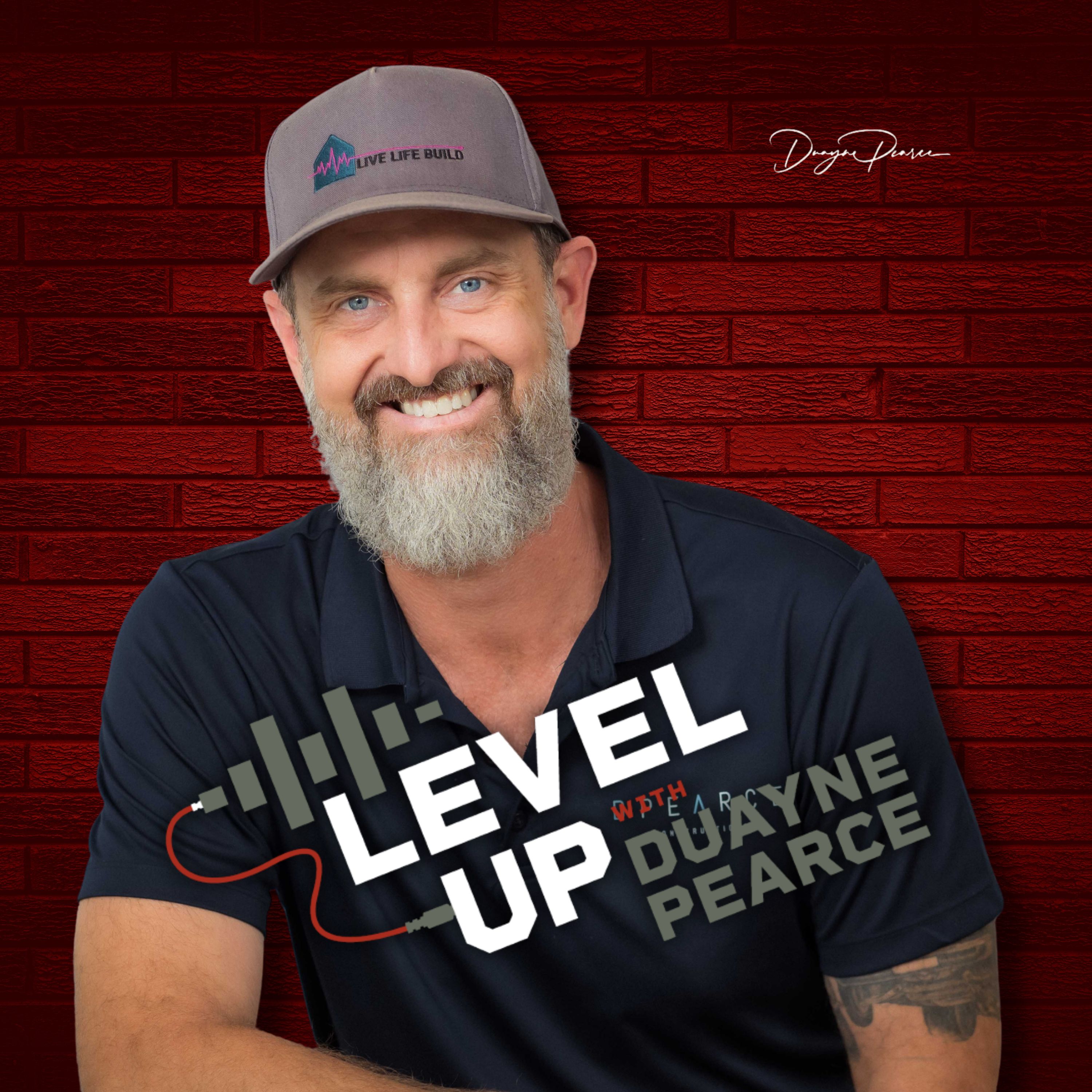
I’m Duayne Pearce — builder, mentor, and host of the Level Up podcast.
After 20+ years in the Australian construction industry, I’ve seen what works, what doesn’t, and what breaks people. I share real conversations and lessons I’ve learned on the tools, in business, and through mentoring other builders.