

 Apple Podcasts
 Spotify
 Youtube Music
 #20 - Communication, Collaboration, Education and Designing Better Homes with Amelia Lee
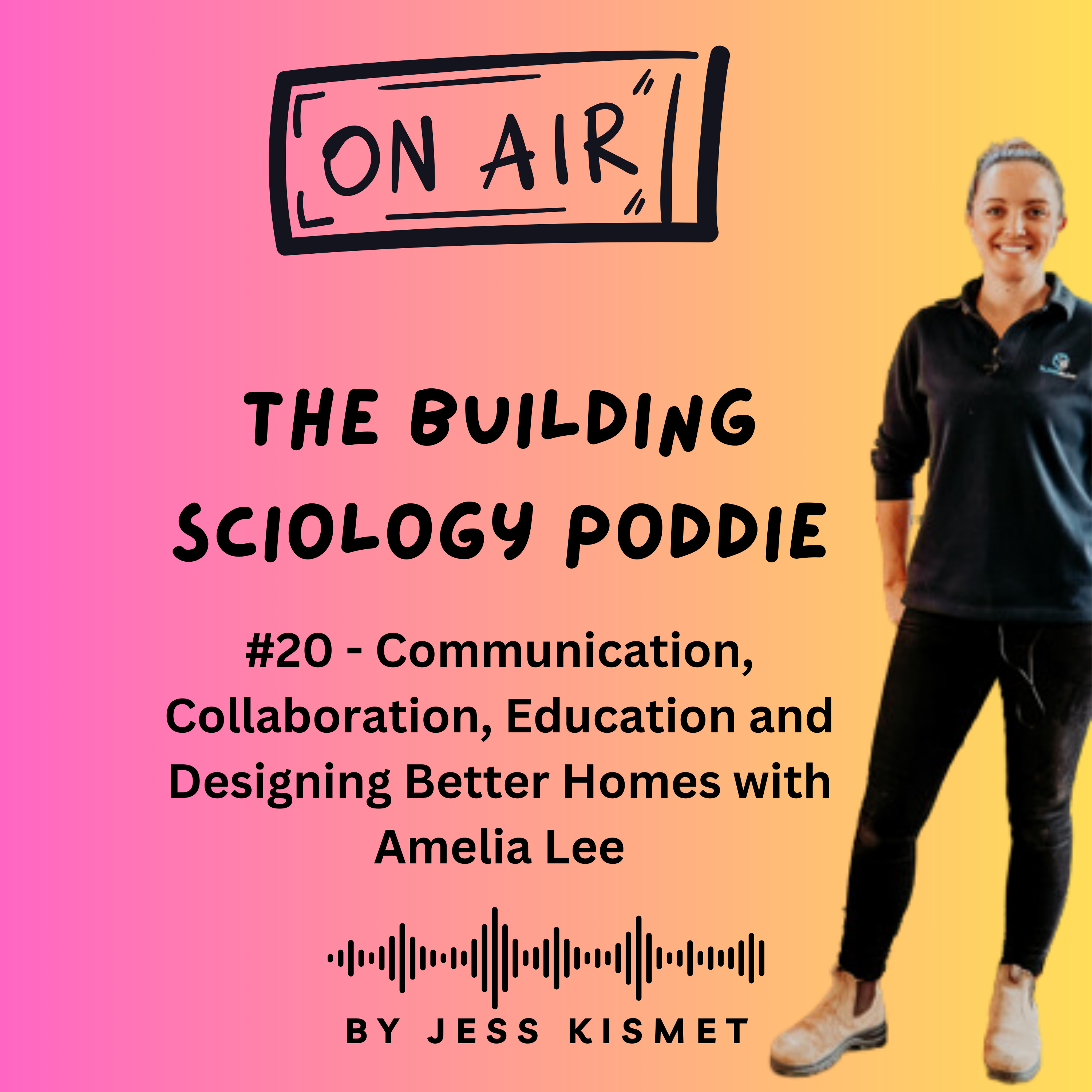
In this episode, I saw down with Amelia Lee, Undercover Architect. Amelia has been empowering homeowners in the building and renovation process, and upskilling builders in their businesses. In this episode she shares her journey in architecture, the challenges homeowners face, and the importance of communication and education in the industry. The conversation covers the PAC process, managing client expectations, and the significance of moisture management in building health. Amelia emphasizes the responsibility of builders to educate homeowners and create lasting impacts on communities through their work.
Useful Links
Sponsors
Sign up to the mailing list here!
Thanks for listening. Happy healthy building!
Jess Kismet (00:00)
Hello and welcome to the Building Sciology Poddie where we talk about better buildings to live and breathe in. Today we are joined by Amelia Lee, the architect behind Undercover Architect. This is the online resource dedicated to helping homeowners feel confident and informed when building or renovating. With over 30 years of experience in architecture, design and residential projects, Amelia has guided thousands of people through the complexities of creating homes that are beautiful, functional and sustainable.
She's also the host of the popular Undercover Architect podcast where she shares insights on everything from design decisions to building codes. Amelia is passionate about empowering homeowners and bridging the gap between clients, designers, architects and builders so everyone can achieve better outcomes. So thank you for joining me Amelia and welcome to the show.
Amelia Lee (00:48)
Thanks so much for having me Jess, it's really good to be here.
Jess Kismet (00:52)
Excellent. So give us a quick rundown of where you've been and how you got to where you are first up, please, Amelia.
Amelia Lee (00:58)
I'll try and keep it short because obviously it's 30 plus years, I figured out I wanted to be an architect when I was about 16. And so I went straight into my degree from school and the degree is five and a half years. So I worked part-time pretty much from my second degree, my second year of my degree. I started working in an architectural practice and part of my degree was to work
Jess Kismet (01:01)
Hahaha
Amelia Lee (01:25)
for a practice for six months full time whilst sort of in the middle of the degree. So back when I did it, it was a full bachelor degree. You didn't do a bachelor and a master's, you just did a full bachelor for five and a half years. And so I had the good fortune of working for a firm in Sydney, Tonga Zalaika, and did an amazing amount of work on the Sydney Olympic site and Customs House in Circular Quay had really great experience and exposure to incredible projects and started also working on residential with them.
And ⁓ so I've pretty much worked in architecture since kind of I was 20 years old. And ⁓ from working there, I traveled overseas. I worked in London for an architectural practice for a period of time, came back. met my now husband whilst we were traveling overseas and we decided to settle in Brisbane. And so I, since being in Brisbane, I've worked for small design firms. I worked inside the senior design team in Mervat, Queensland. ⁓
for about seven years. So really at the coalface of residential projects, both single residential and multi-res. And I also did some postgraduate studies in property economics whilst I was working for Mervac and understanding kind of how the financial side of, I suppose, creating residential developments in that way worked, which was really great. And then ⁓ when the GFC struck, Mervac did a...
Jess Kismet (02:38)
Can you hear me Amelia?
Amelia Lee (02:46)
big centralization back to its Sydney office. And a group of us were offered jobs in the Sydney office for Mervack and instead decided to start our own practice. So I co-owned an architectural practice called DC8 Studio for about five years and was one of six directors of that business. And we built that business very quickly from the six of us to having then a team of 20 and studios in Brisbane and Sydney. And I traveled overseas at the end of 2013 with a not-for-profit, The Hunger Project. And it really had me reassess kind of where the trajectory of my career had been going.
I realized that I didn't kind of have a vision to be the, you know, leading an architectural practice. My kids were six, four and two at the time. I really wanted to be a mom who could have some flexibility and autonomy about my time. And my husband and I, we talked for a long time about ⁓ living ⁓ on acreage and being able to give our kids a really, you know, kind of rumbling kind of childhood where they were in connection with nature. A lot of the time we'd been looking around the Byron Hinterland a lot and we'd renovated houses for about 12 years whilst we've been living in
Brisbane. So we'd renovated these three houses, had a baby per renovation. And all of that trip to Uganda with the not for profit really brought everything to a head. came home, told my business partners that I needed to leave the practice. And my husband and I then moved in the middle of 2014 to where we live now, which is in the Byron Hinterland. And when I moved, I sort of looked around at okay, what do I do? And I looked everywhere but architecture.
Jess Kismet (04:08)
Bye
Amelia Lee (04:10)
And, ⁓ and then somebody very wise said to me, look, your skills as an architect aren't easily replicable. You really should look at doing something with those. was very concerned though, that, ⁓ you know, my kids were little. If I started working in private practice or trying to build a private practice here, I'd be traveling long distances to sites, be away from home quite a bit. And I looked at all of this experience that I had both, both personally and professionally ⁓ and the level of frustration that I was seeing with people just not getting the right information at the right time. And so.
You know, really, you know, then I'd seen that design wasn't, great design wasn't any more expensive. It was just about you getting the right information upfront. And, you know, it was all sort of being locked up in these one-to-one relationships and it felt like it was potluck for a homeowner, you know, to sort of find the right person to work with. And I just felt that if I could get in front of people sooner, it would just make a big difference. And the not-for-profit, the hunger project that I'd gone overseas with really believed in, in creating change ⁓ to those impacted by hunger and poverty through educating, particularly women.
And I took that and thought, can that apply to my industry? And so I created Undercover Architect really as a, it began as a, as a blog. And I started sending out weekly blogs on weekly newsletters to be able to kind of disseminate this information that I had felt was always under lock and key in the way that I worked with people. And just to put it out there, really focusing on the core fundamentals of what makes a home great, work really well long-term, be energy efficient, functional, fantastic to live in, make you feel great.
⁓ and, yeah, so undercover architect really began from there in about mid 2014. And at the end of 2014, I created my first online, ⁓ course. And so started working with people more than that one to one level, ⁓ and was offering sort of, ⁓ online design services, where I'd create a concept design for somebody. We were working over Skype, ⁓ and then I wouldn't enforce copyright so that could take it to local professionals to be able to continue that process, feeling empowered and knowledgeable about what was going to make that design work.
and having that sort of architectural injection at the beginning. And then I was running alongside the courses at the same time. And over the course of the next few years, that was sort of how run the business. And then there came a crunch point where I was never having to advertise the design services, but they were really ⁓ obviously making my scalability of my time difficult. And so I came to the point where I thought I either need to hire a team to help me deliver these design services. And I'd realized a long time ago that I'd
didn't really want to run an architectural practice. So it was then a case of actually calling it quits on the design services and doubling down on the online courses and programs. And so I think that's probably been since maybe about 2019. ⁓ Undercover Architects been solely focused on educating and supporting homeowners through their project journey. And then around that time, I also co-founded Live Life Build, which ⁓ have their business partner, Duayne Pearce where we help and support builders ⁓ and help them run their businesses more professionally, understand how to work with homeowners.
⁓ and have fantastic businesses and lives and projects.
Jess Kismet (07:11)
I mean, that is an incredible rap sheet. You have done so much work. It's who, I mean, I like to think that I help builders and educate builders, but I have got nothing on what you guys, you and Duayne have done between you is incredible. So from the whole industry, thank you very much. It's amazing what you do. As you say, it is not easy to find information on just simple stuff on building a house. When you're a lay person, you want to build a house, you want to renovate a house.
Amelia Lee (07:26)
That's very kind of you, Jess. That's very kind of you.
Jess Kismet (07:41)
It's not easy to find really helpful, good information. You're working from a base of zero a lot of the time. And I just, know a lot of people who've got a lot of value. I've been referred as well from your program, ⁓ from people who've been inside your program. ⁓ And I know that there's a lot of people who've got a lot of value out of it. ⁓ And the Live Life Build program, I work with a lot of builders who are part of that program and it's a life-changing program.
Amelia Lee (08:00)
Thank you.
It is. It's amazing to see the impact that it makes ⁓ on not just the builders and their business, but their families and their communities, you know. And it's all driven by just wanting to change the way that people design, build and renovate so everyone gets to enjoy the process. So Undercover Architect works to deliver that on the homeowner side, Live Life Build works to deliver that on the builder side. yeah, really is, ⁓ it's a mission and a passion of mine and Duayne's as well.
Jess Kismet (08:09)
Good work.
with the lifting.
Yeah, incredible work, incredible work. So let's move on to the questions. ⁓ You have created an incredibly valuable library of resources for homeowners and professionals alike by your website and your podcast. What do you see as the biggest knowledge gap that is faced by homeowners when they come to you?
Amelia Lee (08:53)
I think ⁓ when we think about it, if we go right back to the basics, women will drive most purchasing decisions in any industry and renovating and building is very much that case. So it's a lot of data shows that women are driving 80 % of the purchasing decisions or highly influencing them. And yet they tell me they feel like they're walking around with a target on their forehead waiting to be taken advantage of. It feels like, you know, they sort of use words like, just feel like a mere mortal.
It feels like a really dark opaque industry. And yet there's sort of this thing, this weird kind of juxtaposition where it's all over our TV screens. We see so many reality renovating and building shows where it's all made to look like it's super easy and it's just about paint colors and styling. And, you know, we all live in houses, so apparently we should all know how they all go together and what it takes to make them work and be built and be renovated. so.
A lot of homeowners say to me, just don't even know where to start. It looks like there's a whole myriad of players. I've got no idea whether I should talk to a builder or a designer or an architect first. I don't even understand potentially what an architect does over a drafts person. I don't know who's going to be the best fit for me. I'm trying to protect obviously my investment. I don't want to be overspending, but I want to be spending in places that are reasonable and represent a good investment for me.
⁓ and I think it's understandable that when they're going to be investing so much money, you know, more money than they probably invested in anything except for buying the house or buying the block of land in the first place, they're looking for certainty in that process. And we all know that there's no certainty when it comes to, or there's very little certainty when it comes to building and renovating. Particularly if you're doing a custom approach, I think project home builders have sold everybody kind of this facade of certainty, which doesn't actually really exist, but at least a homeowner can walk into a display village and have
kind of an understanding of what they might get on their project, but the whole cost and timeline isn't certain inside a volume builder project either. And I think in all of that, homeowners really forget, and I tell them time and time again, it's actually you that is the person that unlocks what is possible for your project. It's your choice, your money, your vision. That's the whole thing that is driving this project, making this project happen. And they forget that. And so they forget that they can actually have agency as an educated and informed.
They are, they kind of dive into the process. They seek recommendations from friends and family who they don't know if they've had a good experience, if they've only done it once, you know, they're looking around their neighborhood. They just don't know the questions to ask. They don't know what good looks like. They don't know what the standards that they should tolerate should be. And they go in really ill-informed by very scant kind of resource services. And I think a lot of homeowners really struggle because they feel like
there's a lot of unknowns and the more they research, the more they scratch the surface of all the things that they don't know. And so they can, you they can be very resistant to, well, how far down this wormhole do I have to disappear before I feel like I can do this confidently? And, you know, I think that that can understandably be super overwhelming and you can really underestimate how much is personally at stake for you, how emotionally invested you can be in this journey as a homeowner.
And it can blindside you really badly in a project. you know, particularly for women, it's a very unusual experience because for unlike a lot of other purchasing decisions, they're walking into a male dominated industry. And it's a male dominated industry. That's not necessarily got a lot of expertise in communication and expectation management and how to shepherd a homeowner through this process. ⁓ and, and has some really interesting status quos about how things are apparently supposed to be done. And so in all of that, homeowner is trying to do this once and get it right.
⁓ and you know, really, ⁓ really relinquishing the, the, the the agency that they can have and how much they can collaborate in this process overall.
Jess Kismet (12:34)
Yeah, I think the answer to that wormhole is it's pretty well never ending. Isn't it?
Amelia Lee (12:40)
Yeah. And that's the thing, like the homeowner
doesn't have to be the expert, you know, that's the thing, but you can know enough to know when you're being fed BS and you can know enough to be able to spot the red flags. And, and you know, if somebody's telling you time and time again, something you don't want to hear, and then you find the person that tells you that thing that they like where that's the thing where you start to mistrust the information, not fall for the person who's telling you what you want to hear. So, but I just find that.
you know, there's so much in our industry that is about surface level stuff and that does distract homeowners with, look, this is about styling and it's about finishes and it's about whatever the latest trends are. And it's about a status symbol and it's about your home representing who you are, you know, and how successfully you're adulting at life. And it keeps homeowners distracted, you know, and it turns them into fantastic consumers, but it doesn't enable them to navigate their projects intentionally. And really, you know, ⁓
kind of get to the core of like, what is actually gonna make my home work for me long-term? What's gonna make me feel better? What's gonna help this function? And this home actually, you know, I fundamentally believe our home's our launch pad for our lifestyle. They help when they work for us, they help us go out into the world as the best version of ourselves. But that doesn't sell magazines. doesn't, you know, it doesn't look great on glossy websites and that kind of stuff. And so it's really understandable that a homeowner can kind of get sucked into figuring out what their kitchen colors are gonna be.
rather than figuring out, what am I actually allowed to do? What will planning controls allow me to do on this project? ⁓ And they get misled very quickly in that process.
Jess Kismet (14:07)
So in all of that, what are you finding that the homeowners really need from their builders?
Amelia Lee (14:14)
So homeowners tell me that what they are ultimately looking for is really good quality open communication. They want to have their expectations managed. So they want their builders to talk to them with a level of seeking to understand where their expertise gap is, really helping them understand what they need to know as they navigate their projects and seeking to build trust with them ⁓ so that they can have really candid conversations with them, that they can feel that they can bring their concerns and queries to them.
that they don't feel like they're gonna ask a silly question. know, homeowners, a lot of what I'm doing is often giving permission to homeowners to ask that question or to have that conversation. A lot of people, particularly women, find it difficult or confrontational to have that kind of challenging conversation. They worry that they're gonna look stupid ⁓ and builders don't always do a great job of making room and space for that kind of communication. And so...
You know, and I remember learning at university, most litigation in the construction industry comes down to communication breakdowns. And so really focusing on how you as a builder can improve your, not just what you communicate to a client, but how you communicate to them and how you're going to build trust and manage expectations through that communication. Quality, of course, is an important criteria, but it's quite interesting when you chat to homeowners, how they interpret quality, what quality looks like to them.
I think that builders are often confused and think that it's all about that kind of glossy, polished, finished photograph. But some of the most successful social media that I see builders have that really reaches out to homeowners is showing behind the scenes on construction sites and all of the little touches and decisions that they make as a business because they know that it delivers longevity and durability in a project. homeowners really love seeing that. They have a perception that
When their home is built, there's a whole heap of stuff that happens that they don't understand. It all gets hidden in the structure and behind the skin of their building, and yet they're paying for all of it. And they won't know if it's going to cause them issues until the builder is long gone. so homeowners are making a massive leap of faith to be able to trust a builder to deliver that in a great quality way.
And so the more builders kind of reveal how they're doing that through ⁓ their conversations with homeowners, but also obviously what they're sharing in their marketing and those kinds of things becomes really critical and helping that homeowner build kind of that trust incrementally to them know that they're going to have a good relationship with that builder as well.
Jess Kismet (16:43)
Are you finding that the builders, like the feedback you're getting from your community, are the builders responding well to these sorts of questions or are they getting pushed back?
Amelia Lee (16:53)
⁓ So pushback in terms of builders seeing that there's value in doing this, is that what you mean?
Jess Kismet (16:59)
Yeah, are they engaging and are they accepting the questions well, graciously, or are they saying, you know, leave it to me, I know what I'm doing.
Amelia Lee (17:11)
Yeah, there's two schools definitely. So obviously, I know the builders that we work with inside Live Life Build, we talk a lot to them about the importance of maintaining, ⁓ of really setting and managing expectations with a client that you as the professional running your building business, it's your responsibility to be able to guide the client through this process that they might only be doing once or twice in their life and to build systems and processes in your business that facilitate this really smoothly right from that very initial meeting.
through to the completion of construction. And the more that you can do that and the more opportunity you have to systemize that really does set up a level of professionalism that just streamlines everything in your building business. And of course, when you do get involved during pre-construction, ⁓ acting as a paid consultant during pre-construction to work collaboratively with the designer or architect and the client, you get a lot more runway to be able to do that as well. ⁓
So you're not just coming down to that crunchy point of tendering and contract signing to all of a sudden get to know the homeowner, demonstrate your expertise, figure out how to facilitate good quality, open, transparent communication, and then be able to then have a good construction process. And I think what I do love seeing is builders realizing that they've got so many touch points available to them now to be able to have these conversations. So...
You know, we've got websites, social media, email, newsletters. It doesn't just have to come down to all of those one-to-one conversations with clients or potential clients to kind of get this all out in the open. And the builders that I know we work with are really seeing the benefits of thinking about this from a marketing strategy, from a client relationship strategy, from a client attraction strategy, making sure that it attracts the right clients to them. Don't get me wrong. There are still some clients out there who in their
desire to become knowledgeable, or their desire to feel in control of their project will turn into bullies. And they'll be coming from a place of fear where they're saying, look, I'm not going to let this builder hold anything over me. I'm going to micromanage this entire situation. I'm going to keep this builder on their toes. ⁓ And so they misinterpret what's available to them in being informed as seeing that they have to take control of the process in case somebody does them over.
And instead what I seek to create is that collaborative relationship where a homeowner is not over owning their responsibility or their role in the project. A builder is able to set and manage those expectations and also at the same time, ⁓ provide peace of mind to the homeowner that things are being delivered to those expectations. Keep them informed, answer their questions and everybody can operate with curiosity rather than demanding or instructing each other.
and really be able to facilitate that fantastic, beautiful working relationship that can occur. But, know, builders have got so many, you know, pardon the pun, but tools available to them to be able to build this out in their business. And, and I think that they really underutilize them. You know, I see builders out there who do just say, look, just trust me, I've got it. And you can't tell somebody who's investing six or seven figures in their project, just trust me, I've got it. And really expect that to go well. So it's, ⁓
Jess Kismet (19:57)
Yeah.
Amelia Lee (20:13)
It's yeah, you're better served by running your projects and your relationships much more transparently. That doesn't mean that you have to lift your kimono and tell them absolutely everything that goes on in your business. You are a professional and how you run your business is your business, but you do need to give them a level of confidence. You know, when we see the amount of insolvencies in the industry, you know, if you're a great builder doing great things in your business and you know, running your business well.
There's ways that you can give a homeowner confidence around that so that it really does differentiate you in the marketplace.
Jess Kismet (20:45)
Yeah, that insolvency issue is a big one right now. I there are homeowners who are too scared to even go into this journey because they're too scared their building is going to go broke. So that's a big one. It's about trust. It just comes down to trust and that's human to human relationships. Can you go back a step? This is not one of my planned questions, but could you elaborate on the PAC process, please? Paid As Consultant process for builders because there could be...
Many it was listening to this who don't know what that is and could really could really benefit from understanding that process and homeowners as well.
Amelia Lee (21:21)
Yeah, so the PAC process, the name for it is something that we have inside Live Life Build, the Paid As Consultant process where a builder is paid as a consultant to work during pre-construction and advise on cost and buildability as the design is developed with a designer or an architect. So the client can basically have two consultants working with them.
The builder, advising on cost and buildability, the designer or architect acting as design lead and driving the design development of the project. The architect and the builder then can have that collaborative relationship where any of the decisions and those kinds of things that impact obviously the deliverability of the project, what the project might cost can be informed by that builder knowledge as you go through. I've obviously got a lot of information about this on Undercover Architect, episodes 201 to 205 on the podcast, we'll take it.
people through it in a lot of detail. And we teach it inside Live Life Build to builders. The benefit of this, and it's something that ⁓ I think it's really interesting, is not paying for a quote. ⁓ So I know that there's a lot of people out there spruiking that you can pay for a quote. If you're going to pay for a quote, you might as well just get a quantity surveyor involved. What this actually does is set up a fantastic collaborative relationship where architects and designers, we are not costing professionals.
We don't know what things necessarily cost because we're not the ones physically ordering and installing and constructing these things on site. Really, there's only two costing professionals in the industry. There's quantity surveys or building estimators, ⁓ and then there's builders. And builders are at the coalface of obviously figuring out how do you strategically deliver something to make it efficient, to make it last a long time? What does that look like in labor, materials, deliverability, all of that kind of stuff? And so...
For them to be able to inform the design process as the design develops means that you can avoid that whole terrible but very common drama that happens where somebody invests months, sometimes years and thousands and thousands of dollars working with a designer or an architect to then go to tender on a completely designed project that they've mentally moved into, fallen in love with, to then find out at tendering phase that it's two to three times the price of what they wanted to spend. And then having to figure out how do they kind of gear back from that. And so instead,
You can obviously be getting that input. You can also be getting to know your builder and seeing that they do what they say they do. How do they work? All of those kinds of things can be fleshed out as part of you working through that much more gentle process rather than under the pressure and stress of being on construction, on site, ⁓ under a contract. And I think it's worth pointing out this kind of process happens in every other sector of the industry.
For decades, I have had somebody from costing and buildability sitting at the table, having input on my design decisions whenever I've been working on a project that's multi-res or public. And yet the individual homeowner waging a mortgage or savings has not benefited from this process. And so what the PAC process does is enable that kind of ⁓ experience to filter down into a custom residential project.
Jess Kismet (24:26)
Yeah, to me, it's the only way to go about doing a residential project. So if you're a builder who is not currently closely aligned with a designer or an architect, or if you're an architect listening who doesn't have a preferred builder, ⁓ make it your intention to create that relationship because your clients will benefit infinitely from you doing that. Thank you for going through that, Amelia.
Amelia Lee (24:46)
Most definitely.
Jess Kismet (24:48)
Budget blowouts. Speaking of the pack process and money, sometimes they happen even with the best laid plans. So they're a common pain point. How do you think builders can better manage client expectations around cost and value for their residential projects?
Amelia Lee (25:05)
I love this question because it immediately fleshes out some of the biggest kind of challenges in a project and it's those words cost and value. So I think a lot of homeowners really underestimate when they dive into a project that what something costs is not actually going to necessarily represent what's expensive or cheap to them because ⁓ what something costs is just a black and white piece of data. Yet what something feels like in terms of whether it's expensive or cheap is entirely attached to your value propositions and your
priorities for your project. And so ⁓ it's really important that builders actually help homeowners define what represents value to them. You what are the homeowners priorities? What are the deal breakers for them? Where do they place importance and how does that align with their own personal values and their own intentions for their projects? This can be really nuanced. can have some sort of more larger representational things in terms of if you've got a homeowner that's got sustainable goals for their project and those kinds of things. But like I said,
Creating a new build or renovation project is an incredibly emotional and personal journey for most homeowners, particularly when it's their long-term family home. And so what represents value can be really personal. It can be quite nostalgic. It can be based on, you know, memories and things like that. And so really trying to kind of help a homeowner unpack that is super helpful for you as a builder then to understand how that's going to align with the way that you're delivering cost information. think too, builders need to remember it is not their job to tell a homeowner. And this goes to architects and designers as well.
It's not your job to tell a homeowner what they can and can't afford. If they've given you a budget, your job is basically to educate them what their budget will buy and to demonstrate where you think value lies. There'll be things that homeowners aren't aware of in terms of what actually creates durability in a home or what lowers maintenance or what improves energy efficiency. Where does that spend now improve the long-term running costs of the home, for example?
You know, how can you educate a homeowner about the benefits of some of those upfront spends to then create longer term returns in their project? But it's not your job to just say, look, you can't afford that. You really need to help them feel empowered to make a good decision about where they're investing their finances in their project. And I think a lot of, you know, I know the builders that we work with, this is something that we talk about a lot and I see it all the time in the industry. ⁓
The builders are natural people pleasers, you know, you'd, and sometimes it can be just as difficult for the builder to have a conversation about money with the homeowner as it is for the homeowner to feel like they can have the conversation too. We all bring our own money mindsets to projects. At the end of the day, you know, it's, it's really important that you do your own personal work on that and that you don't, you'll be so much better served by being frank and upfront about things in a project rather than letting a homeowner believe that they can.
buy something that they actually can't in their project. And I think, you know, homeowners are guilty of going, look, let's just leave it in and we'll see later. You know, we'll test later if it's still going to be over budget. If you as a builder know that that's never going to happen. And you know too, that when somebody says, I'll leave it in, that all of the decisions are from that point on are going to be consequentially built on that decision that was made to leave it in.
it's a lot to unravel, you know, if you need to go backwards. So it's really important to just give really frank feedback about that. And you can do that in a way that's kind and professional. ⁓ If you can park your need to please people to the side and you're, you know, you worry about disappointing people about things.
Jess Kismet (28:33)
Mm-hmm. Yeah, the talk about cost and value is a big one in my particular part of the industry, in the better building, higher performance part of the industry, because the upfront cost is usually a little bit higher to do all the things that we sort of advocate for to create a healthy home is over and above usually what the minimum code requirement is. And so we try and talk about
As you say, like we are, we're humans. have, we're feeling beings. And I can't tell you the number of times in my previous sort of pre better performance career days when all of this was just dancing around in my head, clients moving into a home ⁓ and ringing me up and saying, I thought this was a six star home. I thought it was meant to be energy efficient and comfortable. And it's not.
And that comes down to education of the homeowner, education of the builder and perception of value and upfront cost. So it's an incredibly important decision that design and early phase for homeowners to get their head around that because money, the budget is everything in a building project.
Amelia Lee (29:49)
Most definitely.
Jess Kismet (29:51)
So last year you did an in-depth podcast series about the National Construction Code. ⁓ What motivated you to create that series and what were some of the big takeaways for your audience?
Amelia Lee (30:04)
The reason that I did that series was because I'd seen obviously the draft changes come out and I'd seen, you know, through my industry memberships that there was a lot of conversation on the architectural side of things about how significant these changes were and that they were some of the biggest changes that we've seen for, you know, in the history of the NCC since it was adopted. And I'd also seen, you know, having been in this industry for a while, I'd seen the pushback on
just how long it had taken for us to go from six stars to seven stars and all of the pushbacks that had happened along the way. Meanwhile, know, energy prices had doubled in that same timeframe. And, you know, I could see that this update was incredibly important for us to be able to avoid some of the, some of the issues that have obviously occurred in other countries with the leaky building syndrome and issues around building performance overall. And yet I felt like the construction side of the industry was so heavily focused on pushing back again.
And it was this thing of ⁓ nobody seems to be actually focusing on how this industry is going to be up skilled to handle this massive change, particularly builders when so much of this is going to impact them. And I've always believed that ⁓ the industry can deliver better, but I've sat across the table from enough developers and builders who've said to me, homeowners aren't going to ask for any better, so we're not going to bother delivering it. And I just knew that homeowners needed this information.
And I thought also doing the series was gonna be an awesome way for me to, I love having conversations to really then dive into the details. So I'm upskilling myself in the process ⁓ and it's much more interesting obviously than just solely driving, diving into a 2000 page document and reading it going through it and learning it that way. Being able to have the conversations about, why have these changes been made with people that have been involved in obviously campaigning for those changes.
And then understanding what that means on the ground inside the industry. And so, yeah, it was, it was really exciting to be able to do it. Obviously we had some really great people like yourself being involved in it and, it just to able to, be able to bring that level of knowledge to directly to homeowners to me was just game-changing for them to then know how to have these conversations. What does the terminology mean? Even just explaining to a homeowner.
how is the NCC structured? What is acceptable solution deemed to satisfy, you or what does that even mean? And the fact that it was also shifting in its structure so significantly as well, helping them understand how to navigate that. And I think that the Australian Building Codes Board did such a good job of showing how the transition occurred between 2019 and the 2020, you know, 2022 model and sort of set and showing the link between all of them, like, and the fact that
You can see how much work went into making it like a legible document online and, to make it online interactive. And so being able to now put search terms in and be able to find what you're looking for. It's so much more user friendly. And I think, you know, homeowners, they'd obviously been hearing whispers and information about this. course, you know, organizations had been saying, this is going to make your home so much more expensive. This is a ridiculous ask of the industry. Like that was the negative news that they were getting, which of course causes fear for a homeowner to be able to disrupt some of that.
bust some of those myths and go, actually, look, this is something the industry really needs. Of course, if you've got millions of dollars and hundreds of display homes built in villages that are going to no longer be compliant, of course you're to push back on something like this, but at some point the industry needs to address this change and we can't keep postponing it. I think homeowners, the general feedback has been, thank you, that this information was made available to them.
that it was demystified in a lot of ways and it was explained to them in a way that really empowered them to have much more informed conversations with the team members that they was reaching out to and to be able to pick through kind of stuff that was just fear mongering versus things that actually had meaning to them.
Jess Kismet (34:01)
The building industry is under a lot of pressure with the new code changes. ⁓ Now code pauses.
⁓ material costs and labour shortages. from your perspective, how do you think the NCC changes, pauses, etc intersect with these challenges?
Amelia Lee (34:16)
It's a really interesting one. Obviously this is very timely in terms of our conversation and what's been coming out of the economic reform round tables and housing affordability generally. think that ⁓ the thing that the latest NCC changes really brought to highlight was it was the very first time that building health was linked to occupant health. And ⁓ I don't think that, ⁓ I think that once the industry knows that we can't unknow it.
And so, you know, I know, for example, ⁓ mould is being phased out of ⁓ professional indemnity insurance ⁓ in the architectural industry. I would expect that that obviously either hasn't occurred, it's starting to occur inside other professions as well. ⁓ So from what I can see, and the Green Building Council sent out a really great email ⁓ last week about the fact that the changes in a significant, well this
Paws isn't as dire as what is necessarily being made out. Whilst there's obviously industry bodies that are agreeing with it and there's industry bodies that are disagreeing with it. I know that the Institute of Architects is disagreeing with it and campaigning against it. It does promise to ratify the NCC 2025. The next update is NCC 2028. So this pause to 2029 is only one year longer than that.
I think that the motivation for it around giving the industry some breathing room and trying to help with the affordability of housing really speaks to this kind of smoke and mirrors dance that keeps occurring ⁓ that the NCC is the red tape in the process ⁓ when so much is tied up in kind of the planning approval end of, know, trying to get a DA on some projects just takes a ridiculously
owner's amount of time, a huge amount of expense for a client, a lot of uncertainty that they're diving into in the hope that they'll get approval. it really does tie up a lot of energy and resources at that end of the process that I don't think that the NCC does in a commensurate way. I think that ⁓ I would love, I know that in some chapters, industry bodies have been doing a much better job of educating builders about
what the changes actually mean for the way that they run their business. From my side of things, I think that if there was a lot more clarity around performance solutions, that would be super helpful for both homeowners and industry alike. ⁓ I think that for, and I know Sarah Lebner shared this on her ⁓ from CUE architecture, she was talking about this as well. In some states, building certifier or surveyor can't provide advice, preliminary advice on a project that they're going to provide the building approval on.
And that to me, because it's deemed as a conflict of interest, but they're the ones at the coalface of this information and knowledge and can be an incredibly useful resource to a team to be able to know whether it's worth kind of navigating things. And I actually don't see the issue when they are, when they have a level of accountability to what they approve, ⁓ that they shouldn't be able to provide advice and be able to help somebody navigate what can feel like quite a complex system. I think that what I do love is that
I know the undercover architect community ⁓ still seeks to educate themselves and improve what they know about this information. And I know that there's builders in the industry and architects and designers who are very aware that our building codes represent the bare minimum of what we can get away with and are still seeking to build beyond the code. so it's a really, ⁓ it is a really great opportunity to, because it's like I said, it's not like we can unknow the fact.
that building health and an occupant's health are intrinsically linked. And I really do feel that as an industry, we need to be more proactive in how we're helping this industry and this built environment not cause long-term health challenges for the people that we're building and renovating for. And when we have the knowledge ⁓ and it's really about how we continue to educate homeowners to know that that's valuable, as you were saying before about cost and value, yes, it does cost more, but...
when it comes to your health, there's this, you know, it's a really important and significant thing. And so, and I just say that, you know, these kinds of things start with some small momentum and then gradually they gain traction. And when that becomes louder than the voice of dissent of, know, let's know this is just going to make everything, you know, slower and more red tape. ⁓ Yeah, let's not kid ourselves that housing affordability is going to change just because we put a pause on the NCC. It's just, you know,
I think that there's a whole layer of economic issues that feed into housing affordability that the NCC pause is not going to solve. yeah, it's a really, and it's a, the thing is at the end of the day, and I know you spoke about this as well, ⁓ we are kidding ourselves if we think that as an industry, we can't continue to have to learn once we get qualified at something. Architects have continuing professional development. I know that builders in New South Wales do, but it's pretty light on compared to most other roles in the industry.
We need to embrace ⁓ a culture of continuing professional development. This industry has held on by the, it's fingernails to a very kind of like we're doing things the way that we've done them for decades. It is such, it's an industry that is so right for disruption. They keep talking about modular and prefab being the way that it's going to be. don't think it'll be, I think it'll be something that blindsides us at 4 a.m. in the morning as the sunscreen song talks about, that's really going to blow this industry up. And I think as builders, the only
The only thing that you have to confront that is to continually learn a better way of doing things and embrace that as an exciting opportunity, not as a, you know, kind of like ⁓ a begrudging thing that you kind of just have to do. I mean, you're a professional, you're operating inside an industry that is changing at a rate of knots, embrace the learning, kind of overcome your own, you know, personal challenges around that. There's so many different ways that you can learn this information now.
And it's really important that you do embrace that as a way to continue to grow and develop in this industry and improve the industry overall.
Jess Kismet (40:17)
Yep, yep, yep. ⁓ think in my opinion, that connection between building health and ⁓ occupant health is so key to this continued professional development because structurally, fire I don't know, all these other things that kind of haven't changed all that much are not really the places that we need to be focusing our learning on as an industry. I think in my experience, and maybe that's because I live in this bubble, but in my experience, I think that the biggest knowledge gap is around
moisture management. The addition of so much insulation, changing of air tightness of buildings is changing the dynamics inside a house and they are at much higher risk of going mouldy which means the occupants are at much higher risk of getting sick inside their houses. So in my opinion, the biggest knowledge gap that we are currently facing and the biggest focus of continuing professional development should be around energy efficiency as an entry point and then
understanding heat, and moisture and how all of these energy efficiency measures change that and how that impacts the health of the building and this knock-on effect that happens. In your experience, would you agree with that?
Amelia Lee (41:34)
Yeah, look, think that definitely the moisture management, it's the one that unravels people the most when they start to actually join all the dots. And it feels like, you know, the fact that it's called building science and that Passive House industry have sort of claimed ownership over building science, but building science obviously existed a long time before Passive House did. so, and I think that...
It's one of those things that it's so intrinsically linked to so many other issues that it can be difficult to divorce it. So of course, you know, we're making these more heavily insulated, more airtight homes, but we're also filling them up full of plastic materials that have high VOCs. People have got chronic health conditions. They're not understanding that this is feeding into that. ⁓ And so, you know, it's sort of this, it can feel for homeowners like how far do I have to go, as I said, down this wormhole to create a solution.
I get homeowners who get very angry and say, why can't there just be a list of instructions somewhere about how I'm supposed to do this? Why do I have to feel like I have to solve this problem every single time a house gets built? And I think that for builders, they just don't have practices in their business because we lack an as-built verification process during construction to really understand how they can empower themselves to understand how to do this better. I've heard builders say,
I remember Brian Guinan from the Sustainable Builders, ⁓ know, sustainable builders podcast talking about, ⁓ if you're building in similar climates, get a Wolfie analysis done for the building makeup that you do, you know, in those climates so that you just have confidence every single time that that building makeup is going to do the job and you only need to do that once and then you've got that solved as a ⁓ construction methodology for your projects. And so I think the more that builders can see their work as something they can systemize,
⁓ and something that they can think about globally across their business and then apply in each of the individual projects. And how can they incorporate as built verification process to manage their risk? It's only going to take one very wealthy homeowner and a class action to ⁓ challenge a builder on the ⁓ NatHERS modeling at 10 Air Changes per hour versus the inability to actually achieve seven stars in the finished home and then mould growing in the wall.
for things to start to snowball. And so I think that, as like I said, builders have got access to so many tools, if they can understand how to feed it into their process. The thing for me, Jess, though, that I was, I know I was really shocked about when I started Undercover Architect and I started the podcast at the end of 2016. And the very first season that I did was about designing for the orientation of your site and explaining what that actually meant to homeowners because...
I grew up in a house with a mum who wasn't an architect, but she always cared about where North was whenever she bought a house. you know, she's continued to go on and renovate houses and always looks at that. When I was looking at properties with my husband, we wouldn't even look at a property that didn't have a decent orientation on it. could look at it the real estate map and we just wouldn't even go there. Yet for the, for the average homeowner out there, it's not something that is, they don't, they think that it needs to be North to street because that's what the real estate industry talks about. you know, I think that.
⁓ I've found that there's still such a, such a massive, think, you know, this podcast obviously speaks to a, a certain type of builder who's really interested in wanting to upskill in this. And there's still a massive part of the industry that is about bigger is better. It doesn't matter how well designed the house is. It's just about more rooms because that actually adds up to more value and it, can completely ignore orientation and we're building on subdivisions that can, aren't set up to help us do that anyway. So yeah, for me, it's so multi-layered. ⁓ but I know that.
If builders who are already operating this space can just understand the risk that they're exposing themselves to by not caring about moisture management in their projects, even if they don't care about, I mean, I would hope that they care about it from the health of their clients, but from an exposure to long-term business risk, given that most custom residential builders have got their families and their own properties on the line in their businesses, you know, this is something you really need to wrap your head around so that you can manage your business exposure in that point of view.
Jess Kismet (45:49)
I've had two phone calls just this year and that's never happened before. I've had two phone calls, one from an engineering consultancy and one from a lawyer asking me for expert witness modeling in WUFI to determine condensation risk in a wall because there was moisture damage in this particular building. So it is written into the building code now, a mould index in the building code. is still quite vague with the wording and where liability actually lies, but it's in there. The conversation has begun.
Builders really, really need to understand. And mould doesn't just come from condensation. It of course comes from lots of other moisture sources. But condensation is one that you can get a handle on and design out and build out of your building. If you know what you're doing, if you know how to do it. So yeah, that's really, really essential.
In your experience Amelia, what do you think separates the builders that homeowners rave about from the builders that they warn their friends about?
Amelia Lee (46:46)
⁓ We could be talking about this all day to be frank with you, but I ⁓ think that the builder that understands the homeowner mindset and operates from a place of empathy with that will always do better than the builder that ignores it and gets frustrated that they have to work with clients and just wishes they could be doing their own developments. It's really interesting.
Jess Kismet (46:48)
Okay.
You
Amelia Lee (47:08)
When you, you that thing that I talked about, about women making 80 % of the purchasing decisions often being the driving ⁓ voice in their projects, even if they're not necessarily the one that the builder's always dealing with. I think that there's, you know, a lot of really common fears that homeowners experience. One is they're obviously concerned about cost and how much their project is, you know, how they're to avoid budget blowouts and be financially crippled by their project. ⁓ But then how that shows up inside their project can look at lots of different ways. They're concerned about time, how they'll
actually manage a project. They've already got very full lives. How are they going to know that this is going to run on time and not steal a whole heap of time from them? They're very concerned about the unknowns, having the walls pulled over their eyes, not knowing what they don't know and it biting them on the, on the butt, you know, somewhere in their project. you know, homeowners tell me time and time again, I'm just worried about stuffing it up, about getting it wrong. And I tell builders that, you know, you could build the most beautiful quality home.
But if it doesn't actually work functionally for the homeowner, if it doesn't make them feel great, if the design doesn't sort of fuel and fill their everyday life, that's going to cause them day-to-day frustration. And they won't actually really be raving about how well the home was built. It'll be more present to them that the home just frustrates them and they've got wasted spaces or it costs a fortune to heat and cool or there's places that are dark and damp. That's the thing that they're going to most focus on. And so I think that when builders also recognize the value of design
and a great design outcome in the projects that they deliver. In this industry, the finished home is kind of the business card of everybody in it. And so it's not just about the showy kind of styling look of it, but it's actually about how it serves the homeowner in their day-to-day life. And so when you as a builder work collaboratively with really great quality designers and architects who understand how to work that way, and you as a builder also educate yourself about design and what makes the difference to a homeowner's lifestyle overall.
then that can really fuel a really great working relationship with the homeowner as well, where you really show, because I know I've seen homeowners take on builders advice about design. It cracks me up because I think about how long I trained to be a designer. The builders never been trained on design and yet homeowners, I remember doing a project for my in-laws and I did the design for them, but then they listened to the builder about a bunch of things because for some reason the builder sort of had more authority to them in the process than an architect who is their daughter-in-law.
And yet when it was finished and they'd taken the builder's advice, they acknowledged that they'd taken the wrong advice because he'd not thought about the misalignment of door heads and how it was gonna look in this space overall, even though it sort of explained it to them. you know, the more I think that builders can really understand that they have a role to play and that they can really lean into working collaboratively with other professionals in the industry, that they bring huge amount of expertise and knowledge to the table.
and how can they really position themselves with that expertise with clients can be super helpful and always operating with professionalism. know, really, if you, I think a lot of builders just think of themselves as a tradie, but then get frustrated that they get traded like one. You as a building business owner, you are a professional. And if you want people to value what you do, you've got to actually show that you're demonstrating that you offer value. So, you know, things like don't run your business out of your glove box, stop communicating with your clients in WhatsApp and on SMS.
You know, use systems and processes that professional operators use to run. It's a big investment that goes over a really long timeframe. And there's so many software platforms and things like that. Builders just go, I don't do tech. It's like such a bad excuse, know, upscale yourself or hire somebody to help you and make sure that you can run your business professionally and efficiently.
Jess Kismet (50:47)
Yeah, for sure. I was going to mention ⁓ project management software earlier. That's something that you would say that builders should definitely get on board with. Do you find that they are a bit nervous to do that?
Amelia Lee (51:00)
Yeah, I think that the common thing can be a builder hates to have to sit in front of a computer for a long period of time and ⁓ can find some tech tools really overwhelming. Some builders take to it like a duck to water and really love how it kind of streamlines everything once they kind of get their heads around it. I say to builders time and time again, you do some of the most complex work. Like you can look at lines on a page and you can visualize a finished home. So figuring out a piece of software, you know, it's just about thinking differently and about applying your knowledge sort of somewhere else, you know? And so really problem solving.
And there's so much available to us in terms of whether it's, you know, we talk to our builders a lot about using virtual assistants, about hiring admin teams, you know, that kind of stuff, getting somebody to help you behind the scenes in your office will, you know, really improve the trajectory of your business overall and be able to elevate what you actually provide to your clients too. And if you can, you know, if you're operating through WhatsApp and SMS over the duration of working with somebody,
and you're not keeping written records in a centralized location of what decisions are being made, it's really, you can just expect that something will go pear-shaped at some point and you'll have no point of recourse to actually talk to a client about that and demonstrate sort of what the process or methodology was that you got to that point. And it can just expose you obviously to a risk from a liability point of view in that regard.
Jess Kismet (52:19)
Yep, yep, 100 % agree. It's time for the last question that I ask everybody. What out of everything you've learned in your career would be the one thing you want the industry to know?
Amelia Lee (52:29)
This is such a tricky one. like, I can't think of one thing. But if I was going to say anything, if I was going to say anything, look, I think that the industry is very guilty of forgetting sometimes, particularly the custom residential industry is guilty of forgetting sometimes that we only exist because people have decided that they want to live in, build and renovate houses. And, you know, it's clients that pay.
Jess Kismet (52:32)
I'm dying, but you're doing something. You're doing something.
Amelia Lee (52:55)
for our businesses to operate. It's clients that making that decision that means that we have work. Now that doesn't mean that we're beholden to them or we just have to surrender to the process. But I think, you know, it does mean that we need to recognise as an industry, the responsibility that we have with the expertise and the knowledge that we carry to do a really great job with that. You know, what we're creating can last decades, it can last generations. And I don't know about you, but like I remember houses that I spent time in as a kid.
are still having an impact on me now in terms of my memories and my experience. And it's this interesting thing where we're doing something really pragmatic. We're creating shelter for people, but we're also doing something that's very aspirational and very personal in terms of creating the container and the stage for all of these memories and these long life dreams. And also at the same time, you're also building somebody's financial wealth through the investment that they make in you and your abilities. And so, I think that understanding that
that legacy that we are creating impacts, not just the clients that we're working with, but everybody, the streets, the suburbs, the communities that get built and the planet that it's being built on. so, you know, I think it's that, that does that really recognizing that we have a massive responsibility. As I said before, sat enough from across the table from enough builders and developers who said the client's not going to know any better. So I'm not going to bother delivering it. And yet I know that there are so many parts of this industry with so many great people working in it.
who are terrible at blowing their own horn, tooting their own horn, who are terrible at keeping a marketing presence, and yet are doing an amazing job to improve the industry overall. And I started undercover architect because I really believe that a rising tide floats all boats. I felt like there was enough architects serving that three to 5 % of the market, but there was this kind of 95 % that was being left behind. And what I would love for the industry to remember is who we actually serve. What are we actually creating here?
And what does that mean for how we want to kind of go about our business and our lives as a result and, you know, and really take on board that opportunity that we have to embrace that responsibility in a really powerful way. Um, you know, I've heard builders say, look, this is the hardest job that exists. Um, you know, you wake up in the morning and you never know if anything's going to go to hell in a handbasket. You can have a team challenge, can have a delivery change. know, nobody understands how hard it is. It's just, it's a ridiculously hard job. I reckon you got to choose your hard. You know, I've got a girlfriend who's an ear, nose, throat surgeon.
who operates on toddlers and babies with life-threatening conditions, I would not want her hard in a heartbeat, you know? I think it's this thing of like, if this is what you're doing, do it well, you know, really just do it well. Continue to upskill yourself, continue to embrace the incredible opportunity you have, not only to change the way that we live, but to change the lives of the people that live in and around the homes that you're creating. And it's really exciting to me when I see people wrap their heads around that.
because I feel that's what actually gets to change the future of construction and design in this country and well beyond it.
Jess Kismet (55:51)
think that's one of my favorite answers to that question. Love that. And I really love that description too, the container in the stage. I love that. All right, Amelia, thank you so much.
Amelia Lee (55:54)
Thank you.
Yeah. I remember saying, ⁓
I was just, I was just going to say to you, I remember saying it really came home to me when I was really quite a young graduate architect and I was doing a project at ⁓ Mervac where it was a subdivision of a whole heap of houses in Balimba in Brisbane. And you know, the first Christmas in that development and only I think for the first stage had been done.
And people were hanging fairy lights on these balustrades that I had agonized over for so long to figure out the details of these battens and all of the way that the balustrade. And I all of a sudden got this perspective of this is somebody's home. You know, they're going to have a photograph in front of the Christmas tree that we figured out where it was going to go and that the power point was going to be there for the lights. And we figured out, you know, all of that kind of stuff. and, this is what's, this is what's the backdrop of their photographs. And this is what they remember from that tough conversation about that breakup or
you know, sitting down and doing homework with a kid or, you know, that coming home with that really fantastic news. Like what a joy that we get to be part of that and create that for somebody. had a client that I worked with six years ago who sent me a video of her kids doing band rehearsal in a space. And she was like, another thing that you thought about six years ago when we created this music room, you know? And it's like, it's this thing, like we have such, we have such a long-term impact on the way that people get to live. And so, yeah, I just love that we get to do that as an industry. think it's bloody amazing.
Jess Kismet (57:21)
It's a beautiful thing.
Thank you so much, Amelia, for that incredibly inspiring and informative discussion. I really appreciate you coming on the show.
Amelia Lee (57:31)
Thanks so much for having me Jess, it's been so lovely to chat with you, I really appreciate and such a privilege to be here.
Jess Kismet (57:37)
Awesome. Thank you.

Founder
Amelia Lee is the architect behind Undercover Architect. With over 30 years industry experience, Amelia founded Undercover Architect in 2014 as an award-winning online resource to help and teach homeowners how to get it right when designing, building or renovating their homes. Whoever they’re working with, and whatever their dreams, their location or budget, Undercover Architect provides support, industry insights and knowledge via both free and paid resources, including the signature program, HOME Method.