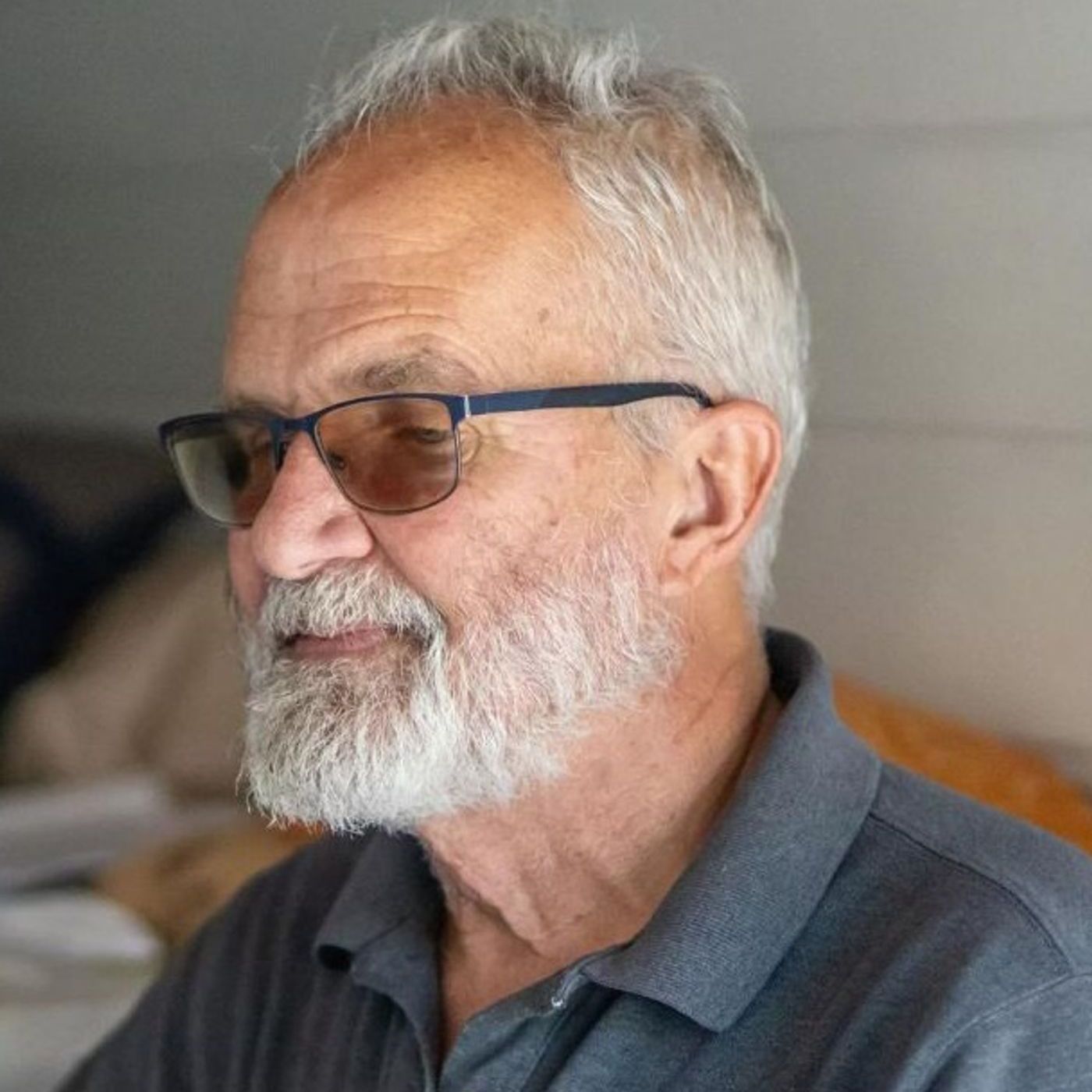






Jeff Jones shares insights on family recovery solutions, addressing addiction, and the impact of mixed messages on addiction treatment. He emphasizes the importance of family involvement and the role of nutrition in addiction recovery.
Takeaways
Family involvement is crucial in addressing addiction
Nutrition plays a significant role in addiction recovery
Chapters
00:00 Introduction and Free Master Class
05:55 The Role of Nutrition in Addiction Recovery
11:53 Addressing Stigma and Changing Perspectives
17:47 The New Family Recovery Solution
Jeff Jones, MA, LPC, CRNC, is a licensed professional who combines years of clinical expertise with his own personal experience navigating family addiction. He rejects traditional approaches that shame families for "enabling," choosing instead to honor their love and concern. By integrating family engagement strategies with advanced mental health nutrition, Jeff addresses the critical factors—both biological and relational—that many standard treatments often overlook.
Driven by his own upbringing, Jeff is passionate about "flipping the script" for families who feel judged or labeled by the medical community. He provides research-backed tools and resources that empower families to become a strategic part of the recovery solution. As a frequent podcast guest and speaker for treatment centers, he focuses on improving brain function through nutrition and helping families move from isolation to effective action.
The Addiction Podcast -: Jeff Jones, thank you so much for being on the podcast today and sharing your years and years of experience and wisdom and knowledge with our listeners. off. All right, so â Jeff, you told us about the six week course that you have that's available for free. And I think you wanted tell us the website for that.
Jeff Jones: And thank you so very much for having me on here. I am honored.
The Addiction Podcast -: â thank you. That's kind. So, Jeff, you have been in this area of, well, tell us what you do exactly that would help our listeners.
Jeff: Yes, so the website is thefamilyrecoverysolution.com and right there at the top they can sign up for the master class. They can also find out about my book and more about what I'm up to.
The Addiction Podcast -: Okay.
Jeff Jones: Yeah, so â after growing up in a family system, you know, kind of governed by addiction and seeing that growing up in that as with as being a child and then never forgetting and eventually becoming a therapist and and
The Addiction Podcast -: What other solutions would you offer to, you know, families who have a loved one who is in addiction or even in recovery?
Jeff: Yeah, yeah. So I think one of the very first things that I have seen that can be helpful, and it's a big picture shift, and that is to, to recognize for generations, you know, that our country has had a specific narrow way of thinking about addiction and addiction in the family. And I can call this, you know, the cultural addiction paradigm, and
Jeff Jones: you know, learning quite a bit academically, but then seeing the way addiction was talked about, some of the language that was used, and then becoming a therapist and working in different treatment facilities and state mandated facilities. I just saw some things that were like reminiscent of when I was a child and
Jeff: really, what I have seen is, you know, that if families can shift from just focusing on just their loved one, they can shift to include, you know, maybe 180 degrees from that and thinking beyond the cultural addiction paradigm and what I call
Jeff Jones: the outcomes from addiction, â there's a lot of room for improvement. mean, for years, about approximately 300 people die every day from overdose or an addiction related cause. And I'm sure you know that, Joni. But it's like for me, I kept thinking like there's something here that doesn't make sense to me. And
Jeff: What is a best possible outcome? A best possible outcome for their situation, for their loved one. And the reason why I say that, Joni, is because it's like on some level we have been trained, â habituated to focus on that one person. And there's a lot of good reason.
Jeff Jones: there's got to be room for improvement. that â â actually before academically that started my journey, my curiosity. And when I was a child, I had a question â how do families become part of the solution? And then when I started to become â
Jeff: for that and I'm not saying that that's bad but when we just stay myopically focused there it's like it reinforces our own worry, our own concern, our own trauma.
The Addiction Podcast -: Mmm.
Jeff Jones: therapist and work in different facilities, my next question that I held on to was how do people actually get better?
The Addiction Podcast -: Right. So Jeff, you actually had addiction in your family. Is that what you mean when you say you saw it as a child? Understood. So do you have like exercises or, you know, like tips that you would give to families to change that?
Jeff Jones: â In my family of origin, there was no one that was labeled an addiction. However, my mom's father was an alcoholic. He showered more love and attention upon me. The other side of it is my mother hated him and it wasn't safe for me to love him in my mother's presence, which I'm sure you know, Joni.
Jeff: Well, largely that's what this whole six week masterclass is about. Sure, there's a lot of little things that I could say. Like one of the very first things is for families to recognize what's going on in their own body from the standpoint of their nervous system and activation. Because if their nervous system is activated,
The Addiction Podcast -: Hmm. Mmm.
Jeff Jones: as like the perfect storm for drum roll codependency.
Jeff: and stays activated, it's like the part of their brain that is going to be engaged is what's referred to what I know as the default mode network. And that's all the old stories. That's all the stuff that runs over and over. And I'm not saying that this is easy or simple. What I'm saying is that people aren't going to be able to set boundaries.
The Addiction Podcast -: Right, right. I understand. â And then you went to school to study this whole area.
Jeff Jones: â went to school â got a master's degree as a therapist â my focus was couples and family counseling because that's what I was learning was counseling. â every time I got the chance to make a choice to go this way or that way, I would go in the direction of families, addiction, and eventually trauma in my â
Jeff: when their nervous system is all activated and they're focused on the old habituated stuff. Sure, I could say set boundaries. I know that's a good idea. We all know that's a good idea. Because when we set boundaries, it helps calm our own nervous system. And then we as a family member can be the calmest nervous system in the room. And then other people can set their nervous system
Jeff Jones: learning journey, which I'll be a lifelong learner till my last breath. I hope so.
The Addiction Podcast -: Won't we all? And I think while that, you know, we started this podcast thinking we knew a fair amount about addiction and what we didn't know was, I mean, it's amazing what we've learned going through this whole journey. But â I think that what you're doing focusing on the family is probably Interesting.
Jeff: off of our calm nervous system.
The Addiction Podcast -: I mean, that in itself is just a great tip to be calm. I think, â I know I'm asking you for tips, but I think another tip often when we talk to family members is to really listen and to not react. Listen and tell the person that you've heard them, but don't jump in with what's wrong or what you think is wrong with what they say. one of the most important things that you can do because we know that â oftentimes the members in the family enable the person who is addicted and that's a situation. And more even than that, I think that a lot of people, when they have a loved one in addiction, they just don't know what to do and there's guilt involved. So they don't want to ask anybody what to do because they don't want anybody to know.
Jeff: That's
The Addiction Podcast -: You know, it's interesting, Jeff, I had an older brother. He passed away, unfortunately. But when I was little, my dad was in the military for 32 years. And when I was little, we would sit around the dinner table and the conversation would go like this. My brother would say, this is just an example, he would say something along the lines of, wow, it's really nice weather we're having. And my dad's response would be, you need a haircut.
Jeff Jones: Yes, yeah Yeah. Yeah. Yeah.
The Addiction Podcast -: How could it be their son or their daughter or their mom or their dad? I mean, how could that be? And I even have a friend whose â mother-in-law, elderly woman, was totally addicted to painkillers. I mean, totally. And you don't think of that. You think, â addict, homeless guy, under the bridge. Yeah, not so much.
Jeff Jones: Yeah. Right, right. So I, â I love the way you frame that. And I want your listeners to know that on this podcast, I do hope to share as many solutions as possible to your question.
The Addiction Podcast -: and then it would take off from there. And my mother and I would just look and we would scratch our heads. But that's what I mean when I say don't react. And I think you're also saying the same thing. Maybe don't react the way you have in the past. That hasn't worked, you know? So maybe try something new.
Jeff: Yeah. Yeah, and what I love about what you just said, Joni, is the simple thing of like listening. And, you know, when our brain is connected to all this habituated default mode network kind of thing, we can't just listen.
The Addiction Podcast -: â huh.
Jeff Jones: there and
The Addiction Podcast -: Good, and I know that this is probably not the, maybe, I mean, maybe it is, I don't know. One of the things that grabbed me about your website was nutrition.
Jeff Jones: and
Jeff: I mean, it sounds so simple. Just listen, just set boundaries. Those are all wonderful tips, you know, but the point I'm trying to make is...
The Addiction Podcast -: And that whole aspect, I don't know how large a part of what you do that is, but I have so much â affinity, if you will, for nutrition. I know from experience and from talking to people that when someone has been addicted, there's no nutrition going in the body and the body is so depleted of vitamins and minerals. And â I've been...
Jeff: family members, when they realize that there's something they can do inside their own body to kind of calm themselves down, then they are naturally going to have more resources, they are naturally going to have more solutions that are appropriate for their
The Addiction Podcast -: We've interviewed people with certain treatment programs where that's a big part of what they do is put that back in. How did you encounter that? How did you even go down that road? Nutrition is such a...
Jeff: situation. So I know that may sound simplistic. And in this six week masterclass, I will say a whole lot more about strategies. But they all come back to what we're talking about right here. And that is family members when they can calm themselves down, everything else afterwards is going to be better.
Jeff Jones: Yeah, yeah. So yeah, part of my training is with the Academy for Addiction and Mental Health Nutrition. And that was a big learning for me. And
The Addiction Podcast -: Say that again, the academy.
Jeff Jones: the Academy for Addiction and Mental Health Nutrition and the founder. Yeah. â I spent quite a bit of time there. â I did a level one and level two training. Each training is about nine months or a year.
The Addiction Podcast -: Exactly. you know, just another example that I can think of too is like, if you know you're going to have a difficult conversation, let's say on the telephone and you're not ready to have that conversation, don't answer the phone. Wait, take a walk, look around and then call the person back when you're in a good, a good place. And similar, if you have a family meeting set up at a certain time. I didn't even know there was such a thing. I'm so sorry to cut you off. I didn't even know there was such a thing, but it sounds like it's needed.
Jeff: Yeah.
Jeff Jones: and I'm still a part of consultation groups and my addiction nutrition mentor, Christina Vasilok, has trained several hundred people from therapists to medical doctors to any kind of healer to people who have tried everything, nothing has worked, and then they started learning about what you said.
Jeff: Yeah.
The Addiction Podcast -: take some time before the meeting and go outside and take a walk. I'm a big proponent of walk taking, you know, but I just, think you're absolutely right that, you it just, you have to take a different approach because if you've got someone who's in active addiction and you want to address that, you're going to have to change something and you can go, â yeah, but it's his, it's him, it's him, or it's her, it's her. Fair enough, but you need to look in the mirror.
Jeff: Movement. Yeah. Yeah.
Jeff Jones: nutrition. But what I want to do is just frame what I'm coming with. And if you can imagine like a healing arc, like a rainbow, and the nutrition piece that you just mentioned is at the top of that arc. And that would be â resource, resources. So the way I think about this from the healing arc standpoint is
The Addiction Podcast -: and change something at your end. Since you can't make the decision for them, make a decision for yourself, you know?
Jeff: Both. Yeah. I love what you're saying, Joni. And when you said go out for a walk, which is like movement or exercise. So there is plenty of research and actually, â there's a book that just came out, Chemical Imbalance. And it's like the serotonin myth or something like that. â Joanna Mum-
Jeff Jones: recognize, resource, realize. And so at recognize, it is a lot about recognizing that there have been obstacles from the very beginning, way before any of us who are alive now were even born. And part of that is mixed messages about addiction.
Jeff: Moncrieff, a psychiatrist. She came out with this book at the end of 2025. like, essentially, what she's saying is, our understanding of low serotonin, you know, contributing to or not contributing to but causing depression, it's not quite like that. And exercise,
Jeff Jones: There is no one definition of addiction even today. National organizations have different definitions of like you go to a doctor, it will be a brain disease. A psychologist, it's a brain disorder. know, there â and like there's been so many mixed messages even from, you know, many, many, centuries ago.
Jeff: And this is what I read and I don't know where, but exercise gets as good, if not better results than SSRIs.
The Addiction Podcast -: Yeah, well, there's something called runner's high and people get it from running. Exactly. So once again, for our listeners, six week free course, the website is thefamilyrecoverysolution.com. And you should see it right there on the homepage. Any last words you'd like to share with our listeners that will spur them on?
Jeff: Endorphins, yes.
Jeff Jones: the Egyptians thought there was a cure and that cure was public shaming and flogging. And the Turks thought there was a cure and that cure was pouring molten lead down the throat of the drunkard. That was the language that they use in those days. And I'm just like that. And then the Greeks, they did this thing where when they made like a beer stein,
Jeff: I mean, the only thing that I can really say is when we can step back and rethink our situation, there is so much hope. There are so many things that family members actually can do that are gonna enable their own health and not enable old problems that reinforce addiction. So thank you for having me on.
Jeff Jones: are a goblet they would drink wine out of they embedded amethyst stone around the rim with the idea that it wasn't a cure but they could avoid the drunkenness when the alcohol went over the rim over the amethyst stone that they could avoid drunkenness so the history when I started learning this I was going wow mixed messages are embedded and
The Addiction Podcast -: I think that's huge. Thank you, Jeff. I appreciate it. It's just, it's down home advice that anybody can listen to and anybody can take and anybody can act on it. I appreciate that.
Jeff Jones: You know, I know, you know, it used to be like a moral failing a bad choice, and, you know, etc, etc. So with every mixed message, what I found out is our mind wants to come up with a solution, wants to have black and white, this is right, this is wrong kind of thing. And â so black and white thinking,
Jeff: Thank you, Joanie.
Jeff Jones: There's an impulse that comes up, I believe it's the truth, it's the whole truth, and I do not look at any other perspectives. that in my mind, and that really stood out because as I was, you know, a young therapist and in different places and seeing how different centers worked with the individual in addiction.
The Addiction Podcast -: Hmm.
Jeff Jones: and the language that they used, just like I saw these patterns over and over again that actually reinforce the problem we're trying to cure our fix. So yeah, that's, â my gosh. â
The Addiction Podcast -: Yep, yep. I can see that. And there are still mixed messages, as you know. There are people who believe it is a brain disease. There are people who believe that it is an inherited thing, that it comes from your genes. It's a genetic thing. There are people who do believe that it is...
Jeff Jones: . you
The Addiction Podcast -: because of a bad choice maybe in the beginning, but make no mistake, drugs and alcohol cause a physical, mental, and spiritual addiction. whereas maybe you made a bad choice to try cocaine or try heroin, you can become addicted right away, and then you have a physical craving and a physical problem. So, you are correct. There are a lot of mixed messages about addiction. And you know, it's interesting, Jeff, so often we interview parents who have lost their children and sometimes their child wasn't addicted. Maybe they were poisoned by fentanyl or they had one really bad trip and that was the end of that. But it comes up over and over again, the stigma of addiction. And if we don't set that aside, then we can't address it. You know, if you go in,
Jeff Jones: Yeah.
The Addiction Podcast -: If you go into handling someone who's addicted and you go in with the viewpoint that they are wrong and everything they have done is wrong, you're setting yourself up for failure.
Jeff Jones: I am so glad that you said that and I want to circle back to what you were first saying about the the different perspectives where people believe it's this or they believe it's it's that and I think of that as a perfect example of cause and effect thinking. There's one problem, there's one cause to â addiction. So, Joni, what has been a big game changer, at least it was many years ago when I started, was really in my own mind starting to frame this at in not from cause and effect thinking, but as contributing factors thinking that there's many different kinds of addiction. There's many different people that can get addicted but their primary factor that is problematic is not always the same. And if I thought about it as the same, I would end up, you know, kind of having some preconceived notion about what addiction was and then talking to people like I knew more than they did. And that was
The Addiction Podcast -: Mm.
Jeff Jones: That was not helpful. It may have been helpful for my ego or something, but that was not helpful for my role as therapist or addiction worker or whatever.
The Addiction Podcast -: And that's a good realization, Jeff. You know what I'm saying? That's really good. So do you mostly deal with families, Jeff? Is that who you mostly deal with or do you also deal quite a bit with people who are in recovery or need to get into recovery? What would you say is your largest demographic?
Jeff Jones: Yes, ma'am. Yeah, I well, from the standpoint of people that I've worked with over time, I would say it was with the individual. And so I have, you know, you mentioned nutrition, I have worked with a lot of people from a nutritional recovery life coaching perspective, even when I was taking these classes from Christina Vasilok, the Academy for nutrition and mental health or the Academy for addiction. And yeah, thank you. Yeah, yeah. So I, I mean, as I was going through her level one training, it was about the time I was working with my first
The Addiction Podcast -: Addiction and mental health nutrition. I remembered it.
Jeff Jones: family where they had a daughter who she was couch surfing. She was in you know heroin stage kind of thing and the mom was a therapist and she was a friend of mine and she had like talked to me for probably a number of years about what was happening in her family. And she would ask me now and then, will you work with our family? And I'm like, well, I'm a therapist, you're a therapist, that would be dual relationship. And I can't do that. You know, I can't do that. And I learned about coaching. And really how my role was different as a coach. and I started working with her family with the contract of coaching. And what ended up happening is the daughter eventually, it didn't take that long really, would come to a Zoom call. She might be there for two or three minutes first and then boom, she'd be gone. And then she'd be there for maybe 10 and then gone. And eventually she would be there for the majority of the meeting. And eventually I was having individual Zoom call conversations with her explaining, you know, the difference between toxic substances that go into the body to detox opiates and non-toxic, non-addictive substances like amino acids. And actually, I helped her detox
The Addiction Podcast -: Mm.
Jeff Jones: heroin with an amino acid, like quite a bit of an amino acid. And I'm not going to mention the name, because I don't want people to get the idea that that it's black and white thinking, yeah, you just do this one thing and everything's cool. But that experience opened my eyes, Joni, it opened my eyes quite a bit. And I was like, wow, there's, there, there is a lot going on here. And the nutritional part with the amino acids in the detox was really a small part of what I learned with that coaching. And so what I did is I ended up getting more and more experience doing that. I, know, right now I have a nine month program for families who have a family member in active addiction and how the family can start. making change first to where their change can ripple out and influence all the relationships in the family, specifically that one person still in active addiction.
The Addiction Podcast -: Mmm. Right, that's brilliant. I think that's brilliant. Jeff, if someone wants to find out about this nine month program, how do they do that?
Jeff Jones: Well, â so right now, I am putting together a six-week master class that is free and it starts Saturday, March 7th at 11 a.m. Central Time and it will be six consecutive Saturdays. So that is one way for people to find out about what I'm up to. At the end of the year, I also had a book come out, Rethinking Addiction, the new family recovery solution. And that book is on my website, the family recovery solution.com. It's also a Kindle book in Amazon for 99 cents right now. Eventually, it'll be a paperback in Amazon. Right now you can get a paperback but you can only get it through my website going to Lulu press it. my gosh, the tech is overwhelming.
The Addiction Podcast -: Jeff Jones, thank you for talking to us today. I appreciate you. I appreciate what you're doing.
Jeff Jones: Joni, thank you for having me here.