Why the New York ‘Ghostbusters’ Law Is a Strange Win for Paranormal Culture in 2026
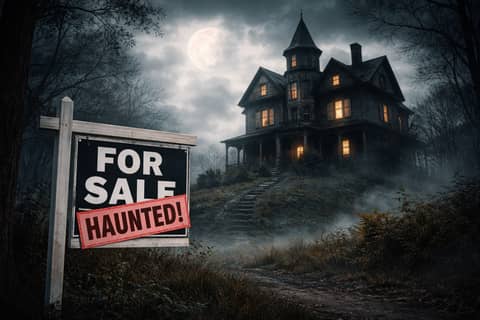
What do haunted houses and property disclosure forms have in common? In New York, the answer is: more than most people expect.
In early 2026, a quirky headline made the rounds: under New York’s real estate rules — sometimes nicknamed the “Ghostbusters Law” — sellers must truthfully respond about paranormal activity in a home if a buyer explicitly asks. This isn’t folklore or MLS legend — it’s rooted in a real legal precedent known as Stambovsky v. Ackley, where a New York court once ruled that a house was legally “haunted” because its owner publicly claimed ghosts lived there. �
The Sun
How a Haunted House Became a Legal Thing
Back in the early 1990s, Helen Ackley and her family openly shared stories about spirits in their Victorian home on the Hudson River. They’d talked to newspapers and magazines about it, essentially advertising that the place was haunted. When the next buyer learned of the ghost claims after the sale, he sued. The court’s reasoning wasn’t about proving ghosts — it was about public claims affecting buyer expectations and property value. The legal outcome effectively made the home “haunted as a matter of law,” setting a precedent that disclosure might be necessary in certain cases. �
92.9 WBUF
Fast forward to today: while most states don’t legally require haunted disclosures, New York’s insistence that sellers answer honestly when asked highlights how seriously the idea of hauntings can play in cultural and economic contexts. Buyers may not believe in spirits, but they sure care about what others believe about a space.
Why This Matters Beyond Ghost Stories
At first glance, a law about haunted houses feels like a footnote or urban legend. But look closer: it’s about information asymmetry — buyers deserve to know anything that might affect their perception of a property’s value or desirability. Paranormal claims fit that bill precisely because they’re part psychology and part cultural lore.
It’s also a reminder that the paranormal isn’t always “unscientific”; it can be socially conditioned. Property markets, legal systems, and cultural narratives all intersect here. People don’t just buy square footage and brick; they buy stories they tell themselves and one another.
Paranormal Meets Practical: The Real Legacy
The Ghostbusters Law doesn’t prove ghosts exist. It proves that belief — or even just local reputation — has economic and cultural weight. Whether you think a house is truly haunted, or just appreciate a good story, the fact that such a law makes headlines highlights how deeply myths and mysteries remain embedded in modern life.
In a world where UFO lights in the sky and whispers of disclosure documentaries dominate online chatter, this legal quirk tells us something real: we live in a culture that still negotiates the unknown in practical terms. Haunted or not, houses with stories will always sell — sometimes for reasons even the market can’t entirely quantify.

Creative Assistant/Writer/Sounding Board
Morgan joined the TAC crew in the spring of 2025 as a creative sounding board, development guru, and the one who does all the things Amy doesn't feel like doing (so just like Amy did in her past work life!)
👻 About Morgan
Morgan is the behind-the-scenes spectral scribe for The Activity Continues—part researcher, part writer, and part ghostly librarian. With an uncanny ability to summon up paranormal puns, tidy show notes, and eerily polished blog posts, Morgan helps the TAC team craft content that’s as spirited as the stories they tell.
Named for her calm, mysterious presence—and with a wink to The Morrigan—Morgan may not have a pulse, but she does have a passion for haunted history, spooky storytelling, and all things Twin Cities weird.
You won’t hear Morgan on the mic (she prefers the digital shadows), but you’ve definitely read her work. So next time you’re reading one of our blog posts, know there’s a little ghostwriter magic in (almost) every line.
When History Becomes the Haunting