
Book Review from Rick’s Library: My Beloved Monster: Masha by Caleb Carr
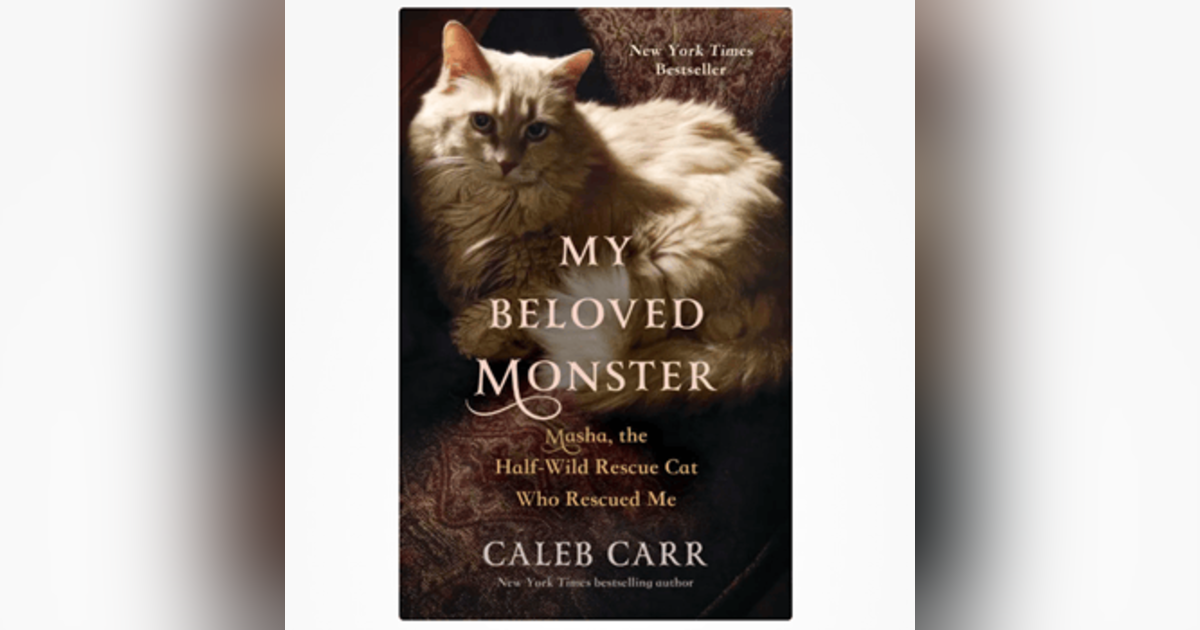
"My Beloved Monster" by Caleb Carr is more than a cat memoir—it’s a moving exploration of trauma, resilience, and the healing power of the human-animal bond. Charting Carr’s 17-year journey with Masha, a half-wild rescued kitten, the book blends personal memoir, psychological insight, and animal behavior research. A story of companionship, survival, and emotional transformation, it challenges readers to rethink animal consciousness and the role of pets in human healing. supp...


"My Beloved Monster" by Caleb Carr is more than a cat memoir—it’s a moving exploration of trauma, resilience, and the healing power of the human-animal bond.
Charting Carr’s 17-year journey with Masha, a half-wild rescued kitten, the book blends personal memoir, psychological insight, and animal behavior research.
A story of companionship, survival, and emotional transformation, it challenges readers to rethink animal consciousness and the role of pets in human healing.
supporting links
1. Caleb Carr [Wikipedia]
2. Caleb Carr Obituary [Entertainment]
3. My Beloved Monster: Masha, the Half-wild Rescue Cat Who Rescued Me [Amazon]
4. The Alienist [Amazon]
Contact That's Life, I Swear
- Visit my website: https://www.thatslifeiswear.com
- Twitter at @RedPhantom
- Bluesky at @rickbarron.bsky.social
- Email us at https://www.thatslifeiswear.com/contact/
Episode Review
- Submit on Apple Podcast
- Submit on That's Life, I Swear website
Other topics?
- Do you have topics of interest you'd like to hear for future podcasts? Please email us
Interviews
- Contact me here https://www.thatslifeiswear.com/contact/, if you wish to be a guest for a interview on a topic of interest
Listen to podcast audios
- Apple https://apple.co/3MAFxhb
- Spotify https://spoti.fi/3xCzww4
- My Website: https://bit.ly/39CE9MB
Other
- Music ...
⏱️ 13 min read
Cats are not just companions; they are partners in our lives, capable of saving us in ways we cannot imagine.
"My Beloved Monster: Masha, the Half-Wild Rescue Cat Who Rescued Me" is Caleb Carr's deeply personal memoir about his extraordinary relationship with a feral Maine Coon mix named Masha. Published in 2024, this moving narrative transcends the typical pet memoir genre to explore themes of trauma, healing, and the profound connections that can exist between humans and animals.
Welcome to That's Life, I Swear. This podcast is about life's happenings in this world that conjure up such words as intriguing, frightening, life-changing, inspiring, and more. I'm Rick Barron, your host.
That said, here's the rest of this story
1-Abstract of the book
The book chronicles Carr's discovery of Masha as a sick, abandoned kitten in upstate New York and follows their seventeen-year journey together. What begins as a rescue story evolves into something far more complex and meaningful. Masha, despite her wild nature and fierce independence, becomes not just Carr's companion but his emotional anchor during some of the darkest periods of his life.
Carr weaves together multiple narrative threads throughout the memoir. He recounts his own troubled childhood marked by abuse and neglect, his struggles with mental health, and his eventual path to becoming a successful historian and novelist. Parallel to this personal history runs Masha's story - her gradual adaptation to domestic life while never entirely losing her wild instincts, her fierce loyalty to Carr, and her seemingly intuitive understanding of his emotional needs.
The narrative structure moves fluidly between past and present, allowing Carr to examine how his relationship with Masha influenced and reflected his own psychological development. The book is punctuated with moments of both profound tenderness and startling revelation, as Carr explores how this remarkable cat helped him process trauma and find a path toward emotional stability.
The book also delves into Carr's research into animal behavior and cognition, drawing on scientific literature to support his observations about Masha's remarkable intelligence and emotional complexity. He challenges readers to reconsider assumptions about animal consciousness and the nature of interspecies relationships.
2-About the author
Caleb Carr brings a unique perspective to this memoir as both an accomplished historian and a bestselling novelist. Born in 1955, Carr is perhaps best known for his historical crime novels, particularly "The Alienist" (1994) and "The Angel of Darkness" (1997), which became international bestsellers and were later adapted for television. These works demonstrated his ability to blend meticulous historical research with compelling psychological insights.
As a historian, Carr wrote extensively about military history and strategy. His nonfiction works include "The Lessons of Terror: A History of Warfare Against Civilians" and "The Devil Soldier: The American Soldier of Fortune Who Became a God in China." This background in historical research and analysis informs his approach to memoir writing, bringing scholarly rigor to personal narrative.
Carr's academic credentials include studies at New York University, where he focused on military and diplomatic history. His expertise in these areas has made him a sought-after commentator on military affairs and historical topics. However, it is perhaps his personal struggles that most inform "My Beloved Monster." Carr has been open about his battles with mental health issues, including bipolar disorder, and his difficult childhood experiences.
The author's relationship with animals, particularly cats, was constant throughout his life. He had long been an advocate for animal rescue and welfare, often incorporating these themes into his public speaking and writing. His upstate New York home served as an informal sanctuary for rescued animals over the years, making his expertise in animal behavior both personal and practical.
Carr's writing style is characterized by psychological depth, meticulous attention to detail, and an unflinching willingness to examine brutal truths. These qualities, honed through his historical and fictional works, serve him well in crafting this deeply personal memoir.
The author's previous works have earned him critical acclaim and devoted readership. "The Alienist" was nominated for numerous awards and spent months on bestseller lists. His reputation as both a scholar and storyteller lends credibility to his observations about animal behavior and human psychology in "My Beloved Monster."
3-What drew my interest in reading this book?
Full transparency here, I’m a lover of cats and have been for a very long time. My wife and I have had seven cats over the past 30 years of our marriage. We’re now down to one., Jackson. He’s quite a lover.
Another reason is personal for me. When I saw the cover of Carr’s book, I was immediately drawn to it as Masha reminded me of a cat I saved, Pooka. She was a female and terrified of humans. Her previous owner was exceptionally cruel to her. It took almost a year before she was comfortable with us, and she quickly became my shadow and lap cat.
"My Beloved Monster" offers compelling reading for multiple audiences and serves various interests that extend far beyond the typical animal memoir. The book's appeal lies in its multifaceted approach to storytelling and its willingness to tackle complex emotional and psychological territory.
For readers interested in mental health narratives, Carr's honest exploration of his bipolar disorder and childhood trauma provides valuable insights into the healing process. Unlike many memoirs that offer neat resolutions, Carr presents a more nuanced view of recovery, one that acknowledges ongoing struggles while celebrating meaningful progress. His portrayal of how Masha served as both emotional support and a therapeutic catalyst offers a unique perspective on alternative approaches to mental health support.
Animal lovers will find the book particularly compelling for its detailed, scientifically informed observations about feline behavior and cognition. Carr's background as a researcher allows him to move beyond anthropomorphic interpretations to explore genuine questions about animal consciousness and emotional complexity. His portrayal of Masha challenges readers to reconsider assumptions about what animals can understand and feel.
The memoir also appeals to readers interested in trauma recovery and resilience. Carr's exploration of how his relationship with Masha helped him process childhood abuse offers hope for others dealing with similar experiences. The book demonstrates how healing can come from unexpected sources and how relationships—especially with animals—can provide the safety and consistency necessary for emotional growth.
Literary enthusiasts will appreciate Carr's skilled craftsmanship in weaving together multiple narrative threads. His ability to maintain suspense and emotional engagement while dealing with complex subject matter showcases his talents as a storyteller. The book's structure, which moves between past and present with careful attention to thematic parallels, demonstrates a sophisticated narrative technique.
The book also offers insights into writing life and the creative process. Carr describes how his relationship with Masha influenced his work and provided emotional stability during challenging writing projects. For aspiring writers or those interested in the psychology of creativity, these observations offer valuable insights into the relationship between personal life and artistic output.
Social critics and those interested in contemporary American life will find Carr's observations about rural living, animal rescue culture, and the challenges facing both wild and domestic animals in modern society particularly relevant. His perspective on the "half-wild" existence speaks to broader themes about authenticity and adaptation in contemporary life.
4-What can we learn from this book? What's the takeaway?
"My Beloved Monster" offers profound lessons that extend well beyond the specific story of one man and his remarkable cat. The book's primary teachings center on healing, relationships, and the transformative power of unconditional acceptance.
Perhaps the most significant lesson concerns the nature of healing from trauma. Carr demonstrates that recovery is rarely linear or complete, but rather an ongoing process of learning to live with and integrate difficult experiences. Through his relationship with Masha, he illustrates how healing often comes not from eliminating pain but from finding safe relationships that allow us to experience and process that pain without being overwhelmed by it. Masha's consistent presence and non-judgmental acceptance provided Carr with the emotional safety necessary to confront his past.
Carr's exploration of what he calls "half-wild" existence offers valuable insights into authenticity and self-acceptance. Both he and Masha maintain aspects of their essential nature while adapting to circumstances that require some degree of domestication. This balance between accommodation and authenticity provides a model for navigating the tensions between individual nature and social expectations.
From a practical standpoint, the book offers insights into animal rescue and care. Carr's patient approach to helping Masha adapt to domestic life while respecting her wild nature provides a model for working with traumatized or feral animals. His emphasis on allowing animals to set the pace of relationship development and respecting their autonomy offers valuable guidance for anyone working with rescued animals.
Ultimately, "My Beloved Monster" teaches us about the importance of paying attention to the small, daily moments that comprise a life. Carr's careful attention to Masha's behaviors, preferences, and responses demonstrates how mindful observation can deepen relationships and increase understanding. His appreciation for simple moments of connection —such as a cat choosing to sit nearby, the routine of morning feeding, and quiet companionship during difficult times—suggests that healing and happiness often come through attention to ordinary experiences rather than dramatic transformations.
Well, there you go, my friends. That's life, I swear.
For further information regarding the material covered in this episode, I invite you to visit my website, which can be found on Apple Podcasts, for show notes and the episode transcript.
As always, I thank you for the privilege of you listening and your interest.
Be sure to subscribe here or wherever you listen to podcasts, so you don't miss an episode.
And we’ll see you soon.