
Why Conversations Feel Awkward (and What Helps Immediately) | Ep. 93
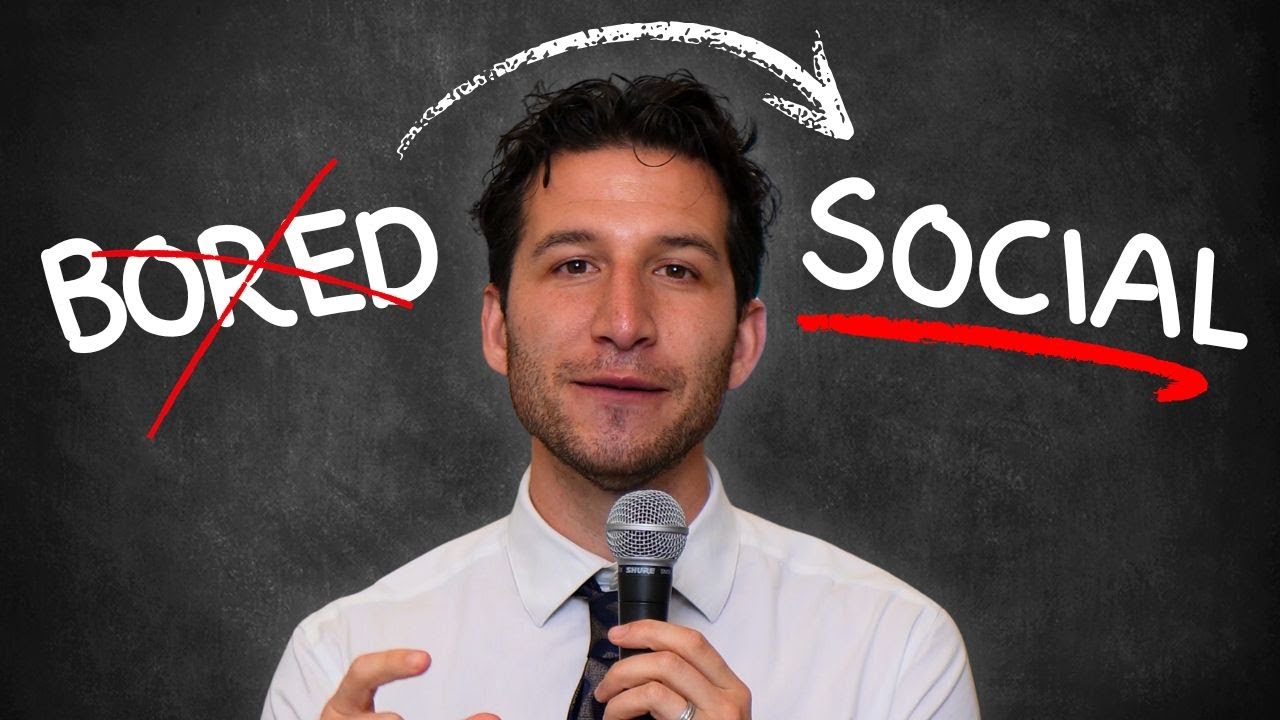
I'm back! In this episode we're talking about something that doesn't get enough press: SOLITUDE. I think it's a gateway to conversation that needs to be practiced, especially nowadays! If you listen to this, take 2 minutes of tech-free solitude as a thank you to yourself. Subscribe to the talk to people podcast youtube if you like to watch video: https://www.youtube.com/@Talktopeoplepod See my other work I mentioned: onlytastes.com An easy way to send me a message? Click th...


I'm back!
In this episode we're talking about something that doesn't get enough press: SOLITUDE. I think it's a gateway to conversation that needs to be practiced, especially nowadays! If you listen to this, take 2 minutes of tech-free solitude as a thank you to yourself.
Subscribe to the talk to people podcast youtube if you like to watch video: https://www.youtube.com/@Talktopeoplepod
See my other work I mentioned: onlytastes.com
An easy way to send me a message? Click the link here.
Have you enjoyed the podcast? If so, follow it, rate it, and share it with three people:
- Follow on Apple Podcasts
- Follow on Spotify
- Follow on Instagram
- Subscribe on YouTube
If you want to share feedback, have a great idea, or have a question then email me: talktopeoplepodcast@gmail.com
Produced by Capture Connection Studios: captureconnectionstudios.com
Welcome to the Talk to People Podcast. This is your host, Chris Miller. Have you ever felt like you really need to lock in and spend less time on your phone?
Maybe you find yourself on Instagram or TikTok or checking your work email, or even looking at your stock market app or seeing what the sports scores are. I think it's so easy to be constantly connected currently.
So I wanted to create an episode about how constant connection ultimately mitigates social confidence.
I think there's a tie, there's a connection, and there's one trait, one ingredient that we're missing, and that's the importance of tech-free solitude.
So in this episode, I'm going to share with you how constant connection kills your social confidence and what we can do about it. It's been quite some time since I recorded a podcast episode. Let's see how long it's been.
The last episode I published was April 24th, 2025, which is about seven months ago. A lot has happened since then. If you're watching this on Spotify.
Also, I'm going to upload this to a new YouTube channel called the Talk to People Podcast YouTube channel. I'll put the link in the episodes below.
If you follow my YouTube channel, that's going to be my personal YouTube channel, Talk to Chris Miller, where I'm going to be doing communication analysis videos over there.
But I wanted to do or continue this podcast because this podcast still adds a lot of value to a lot of you out there.
I get notifications every day that it gets new listeners and just yesterday it got a shout out on Instagram and it makes me reflect like I want to keep doing this.
This is a big goal and cause of my heart is to grow the world's social connection because ultimately it's very important. It's an important thing to do.
So I'm going to upload the video version to the Talk to People Podcast YouTube channel and be sure to find that and subscribe to that. But you can also watch it on Spotify.
So if you're watching it on Spotify, what you'll notice is I'm not in my typical studio. I am in our guest room because we lost our studio and it got taken away.
We had this beautiful studio with these beautiful cameras, beautiful fill lights, beautiful microphones, RGB lights. I had multiple monitors, a really nice Apple computer and we lost it all.
And I know it's crazy and it's different for me, but now we have a baby boy and he needs a nursery. Really, the only thing we have used the nursery for is just to chill and have like a Zen den. But ultimately he's going to spend more time in there.
So gave up my podcast studio and he has his own room and we have a baby boy. So a lot has happened in the past seven months since I recorded a podcast episode. I also created a new media channel called Only Tastes.
You can go to onlytastes.com and see that. It is a food-based channel because I wanted to focus on short form content. I never really done short form content before.
So I started a journey to eat every little w in America. And tonight, I am uploading day 96 of eating every little w in America. So there's more than 96 little w products.
That is probably going to surprise you because it certainly surprises me. Tonight, I'm having the Star Crunch ice cream bar. So if you like the Star Crunch, caramel, chocolate, rice, little like rice crisps, it's a delicious little w.
But now they've made ice cream out of it. And so I'm very excited about that. Yesterday, I had the Nutty Buddy ice cream bar.
But so far, I've gotten close to 10,000 followers. I'm making some money on TikTok from commissions. People watch my videos and buy little debbies.
I have been reposted up by little debbie. I've gotten little debbie sent to me from all over the country, Mississippi, New York, Minnesota. I'm getting more sent to me.
You're like, what the heck, Chris? This is a really weird update, and it is. A lot of people say, how the heck did you get on little debbie?
Well, what happened was whenever I turned 30, I had always, not always, but a few months prior to that, I wanted to do Journey, like a Journey thing on social media. I see that all the time. This is day one of me flossing my teeth.
This is day two of me flossing my teeth. And I wanted to do a different thing creatively. I think the podcast had gotten to a point to where I was just unsure of what I was doing.
And now I've had a bit more clarity on how I want this podcast to essentially be my classroom. And I want to show up here and figure out how to become a better teacher to all of you. So all of you who are listening, you are in my classroom.
And I would love for you to email and reach out. I've spent a lot of time around professors. I went to undergrad and I was pretty close to some professors.
Then I went to grad school and I worked for professors. I was a teaching assistant, got to hang out with professors. My girlfriend at the time, well, I guess fiance, came to Kansas for a PhD fellowship to become a professor.
And we got married and then she switched over and is no longer doing that. But many of my friends stuck to that path and they are professors. And now currently I know professors that I talk to regularly.
And I say all this to say, you all are my classroom and I'm showing up to try and figure out how to be a professor and just relay information and education.
But something professors do a lot of the times, they don't want to admit it, is they gripe and they whine and they rant and they bring their personal baggage to the classroom. The best professors do that even. They are their true selves.
And that's going to be me too. So on this podcast, hopefully I can give out some good information and share revelation that I'm having, but also kind of bring my personal stuff here. Okay.
So yeah, I did that. And I'm back to doing communication analysis videos on YouTube. I've done two in this past week.
I did one on Zoran Mondami, and he's the new New York City mayor. A big controversial thing, because he's running on a Democratic socialist ticket. He's only 34 years old, but he really echoes Obama, the rhetoric that Obama has.
He's very good at public speaking, very good at generating hype and maintaining hype. And I think he's going to be a big figure in the rhetorical space for some years. So it's good for me to figure that out now.
And then I did a rhetorical analysis over the 2025 Tesla shareholder meeting. Elon Musk gave a CEO speech for about an hour to the shareholders there, and it was drenched with persuasive tactics.
It's pretty crazy when you slow things down and you see all that he does, but his use of reframing and his use of exaggeration and absolutes, his use of humor to get people hyped up, get people excited and inspired to buy more Tesla stock.
It's impressive. So in that video, I slowed that down and I share all different things that he does.
And in this video, or this podcast, we're going to talk about the importance and power of solitude and how it will make you a better conversationalist and help you show up more authentically.
Because oftentimes people tell me, Chris, I'm not interesting. I'm not interesting enough to show up and start talking to strangers. And solitude is a gateway to that.
Solitude is one of the three chairs that Henry David Thoreau talks about. If you know Henry David Thoreau, he was a big writer in the 19th century.
He says, I have three chairs in my house, one for solitude, two for friendship, and the third for society. And it's three different levels of our social fabric. The first, solitude, is essentially a fancy way of saying alone or me time.
It's where we take ourselves out of the social world and we bring ourselves to a space where we get to reflect on all of the things that exist aside from everyone else.
I looked into the psychological literature about this and Sigmund Freud has a ton of daunting, but also intriguing research in solitude or thoughts on solitude. He refers to solitude as this deep void.
It's where your masks fall away and you are no longer required to fulfill the roles that others put on you. You're no longer required to be a people pleaser or behave in ways that other people want you to behave.
And you have to figure out who you are. It's the reckoning of who are we whenever nobody else is around. The difference between loneliness and solitude is ultimately up to you.
Loneliness is whenever you feel like you haven't met your social connection that you desire. Similar to eating food or drinking water. If you're hungry, you need to eat.
If you're thirsty, you need to drink. If you feel like you need to be around people, then you need to be around people. Solitude is actually a great barometer on whether or not you're lonely.
If you find yourself feeling incredibly content by yourself, more than likely you're not in a state of loneliness. Now, there can be exceptions to that, but it's typically a good barometer. When we think about solitude, we hear different phrases.
Oftentimes, I hear you find yourself in solitude. You develop mental clarity. It allows for reflection.
This is where you get to grow self-assurance. You get to be secure in yourself. And it also allows you to be more creative and authentic.
But I like to think about solitude as a building block to our social fabric and a building block to our personal social competence and confidence.
A big reason is in solitude, we get to figure out what goes on internally, which allows us to connect and relate to other people. For instance, empathy. So empathy is when we attend to the feelings of others and signal that we try to understand them.
We're at least going to try. Even if someone's in the most different circumstance or political party, or race, or religion, no matter how different they are than us, it's recognizing their emotions and at least trying to understand them.
What solitude is really good at for that is when we're by ourselves. And I'd like to put a little asterisk here, and I'd like to say tech-free solitude. I think that's going to be a goal for this, is tech-free.
So to remove yourself from any notifications or distractions. Whenever we are in tech-free solitude, we're more likely to have the bandwidth and the opportunity to reflect on our emotional state.
What emotions we're currently feeling them, why we think we're currently feeling them, and how or like what we think about it. So what am I feeling? Why am I feeling upset?
Do I think I should be feeling upset about that? You know, today, Annie, my wife, has done a great job at taking care of everything. She's a super mom, crushing it.
And in moments, I felt like she's holding it down for us, because I didn't feel like I was doing as well as I could be doing. And then I can reflect on that. Like, why is that the case?
Could Annie be crushing it and I could be doing okay? I'm just feeling self-critical, or am I actually not meeting the mark? And is, are there things that I am not reaching, or are my goals a little bit too lofty?
Like, right now, I have a big goal of being able to revive this podcast, revive my YouTube channel, and get to the point to where I'm pretty consistently monetized on TikTok for my food-based channel.
And that's a lot of different things to think about whenever I have a first priority, a first order priority of being a good dad and being present to Annie during parental leave. So, empathy is reflecting on those emotions.
Like, wow, I'm feeling a lot of those things. Like, why is that? And when we get to reflect on our personal emotion and how we feel when certain things happen, it gives us a greater ability to connect with others.
This is why pain is such a great bonding agent. Everybody, no matter how glorious or luxurious their life is, they're going to experience pain. So, whenever we experience pain, it allows us to connect to others better.
If you ever lost a loved one, more than likely, you're going to feel a bit more suited to comfort or inquire when someone else is also losing a loved one, right? It hurts, but it gives us connection points.
And another big thing about it is also mentorship. And I'd like to think about mentorship. It's not a professional-only thing.
It's not exclusively professional. I think mentorship has kind of been co-opted by the management world in making sure we reach our key performance indicators and climb the corporate ladder.
I like to think about mentorship as friendship, and seeing the potential in one another, hearing the goals of one another, and helping each other reach those points.
Oftentimes, mentors are typically wiser, more experienced, and potentially more resourced in different forms of resources.
But solitude helps us be better mentors, because in knowing who we are, we're able to better understand our relation to others, and also how to get to know a different person.
So empathy and mentorship are two important ingredients to our social fabric, and the underpinnings of both are conversation. So I find solitude as a really important byproduct to crucial components of like us staying connected as a society.
But whenever you try tech-free solitude, you realize it's pretty hard because it requires us to focus inward.
Whenever you step into an elevator or whenever you go to the restroom and you sit on the toilet and you're going poop, you see people and they take their phones on the toilet, and they're on the toilet for like 30 minutes playing a game or scrolling
TikTok. Whenever someone leaves and it's just you and you don't have an immediate obligation, you find yourself going to your phone. Whenever we're at home, the TV's on, podcast is on, we're just enmeshed in external stimuli.
So being required to focus inward is tough. I have a few people on the screen, Steve Jobs, Andy Rubin, Sundar Pichai, Apple, Android, Google, these creators of phones. And we shouldn't call them a phone, should we?
Because less than 5% of the time, we use our phones to make and receive a call. The other 95% of the time, they're supercomputers, but they still retain the name phone, which makes it a little more difficult to say that they're so obstructive.
It's just a phone. Well, it's actually not just a phone, because it creates two things and that's the fear of missing out and this belief that we're always on call.
Now that we're constantly accessible, text, phone call, direct message, email, we feel as if we need to keep our phone on us just in case something were to happen.
And it's ironic because it actually removes our presence and our attention and focus from the people we are with in person.
And then whenever we leave them in person, we feel on call to them from afar, despite we weren't even present with them when we were in person. So with all this being said, how do you have solitude? What does it require?
It requires three principles. The first is we need to keep it small initially. I just want two minutes, two minutes a day.
If you could give me two minutes of you leaving your phone in the other room, two minutes of you stepping away from your laptop, standing outside, sitting down and just looking at the wall, looking at the clouds. I'm just asking for two minutes.
If you go beyond two minutes, which hopefully at some point you will, it also may require you to talk to people about it.
For instance, I can't just go on a one-hour walk tech-free without telling my wife because we're tag teaming in, watching the baby together, and we don't just want to disappear.
So more than likely, if you're a parent or if you live with people, heck, maybe you could just go tech-free for a week and you don't even need to tell anybody. But remember to keep people in the loop and then go analog, right?
Lately, I've been going to the gym and I bought a watch off Amazon, so I no longer need to take my phone to time my rest sets. And I'm not interrupted by Apple watch notifications. It's important to go analog.
In doing this, you have to recognize your vulnerabilities as well. I have RuneScape on the screen here, old school RuneScape. It is a vulnerability of mine.
I've been loving this video game and I've been wanting to play it a lot. So due to that, sometimes I have to tell myself I'm not playing video games this week, or I'm not playing video games today.
Because when I tell myself that, then I'm more likely to attend to other things in my life. Now there's two different ways to look at it. We can have tech-free spaces or tech-free activities.
For spaces, I think of the bedroom, the bathroom, the elevator, the nursery. These are spaces for me where I try and practice tech-free. I don't sleep with my phone near me.
I don't take my phone when I'm going to the restroom. When I'm in an elevator by myself, I'm very intentional about not instinctively or reflex going to my phone. I try and talk to myself in the elevators.
Whenever I'm in the nursery with our baby, I try to avoid being on my phone and just spending time with him. And then we have our tech-free activities. For instance, when I go on a walk with Sonny, I try to avoid being on my phone.
Whenever I go to the gym just to shoot hoops by myself, it's a great way for me to have a moment of serenity and not be interrupted. Whenever I'm reading a book, the goal is to be able to focus on the page and not the screen.
I have someone just sitting here. Whenever you go outside to have an intentional, I'm just going to sit here. It's a great way for you to have a tech-free activity set aside.
When you're doing this, it's important for us to write things down, because when you write it down, you do a little cognitive offloading. You get to remove that from your bandwidth in your mental head space. It's like a sticky note.
If you have a line filled up on there, you have less space to write on it. Well, whenever we are by ourselves and we're trying to stay away from screens, just write whatever down that you're thinking about, oh, I need to do this later.
That way you can remove it from your sticky note in that moment and give yourself a bit more space and bandwidth to think of things, right? So how does this help with conversation?
Well, I mentioned the whole mentorship and empathy and how we need to know our emotions, but it also is really helpful because at some point we're going to be able to reflect on who we are as people and how to show up authentically to conversations.
And I think that's one of the best ingredients to a great conversation is you show up to the conversation with who you are uniquely. We're entering an age where content creation is no longer an asset. It's no longer difficult to do.
We could come up with a million and one things to talk about. If you go to ChatGPT, you could come up with a better podcast script about solitude and its relation to social confidence than I just gave you by far.
I used to do that, by the way, and then I quit because I realized it was ChatGPT's podcasts and not mine. You could go on ChatGPT and have a book written about anything you want. You could have an essay written about anything you want.
So it's no longer an asset just to be able to be like, oh yeah, I could come up with something.
Rather, the unique asset nowadays that's becoming more and more sacred is showing the world who you are uniquely, what your thumbprint, what your individual DNA is.
That's something that ChatGPT won't be able to replicate and won't be able to bring to the table. So I always encourage people to lean in to that, bring that to conversation. But what does that require?
It requires knowing who you are before you can let others know who you are. So solitude is a great way for us to kill that lie that we feel and hear of, I have nothing interesting to bring to the conversation. Nobody wants to talk to me.
What am I going to say that's going to be memorable, right? That's a really big, common gripe, grievance, complaint, fear that people bring to me. And when I reflect on it, the answer is show up with your authentic self.
Sometimes the best way to be interesting is to be interested. And in order to be interested, we have to be curious of something, right? Like what is that about you?
Then follow that curiosity. As you meet different people, what about them makes you curious? Being real about it.
That's the importance of solitude, right? Is it allows us to tap into a level of authenticity, and then we get to show up to conversations uniquely ourselves, which will set conversations apart, make them more enjoyable.
But also to put to death this fear of like, oh man, I'm just not interesting. It's like, yes, you are. If you're listening to this podcast, you're very interesting.
I promise you that. So, moving forward, give me two minutes of tech-free solitude when you get a chance, just two. I'll be your professor virtually.
I'll have office hours one of these days. You could pop in. You can email me at talktopeoplepodcast.gmail.com.
My goal is to have a podcast episode for you every week. You don't have to listen to them. You could just see them.
But it's going to be there. And I'm also going to have YouTube videos up. So subscribe to the Talk to People Podcast YouTube channel.
But above all, have a good day. And remember, life is better when you talk to people. And I'll see you next time.