
Power of Audio - Rob Greenlee with Josh Cary - Ep 1
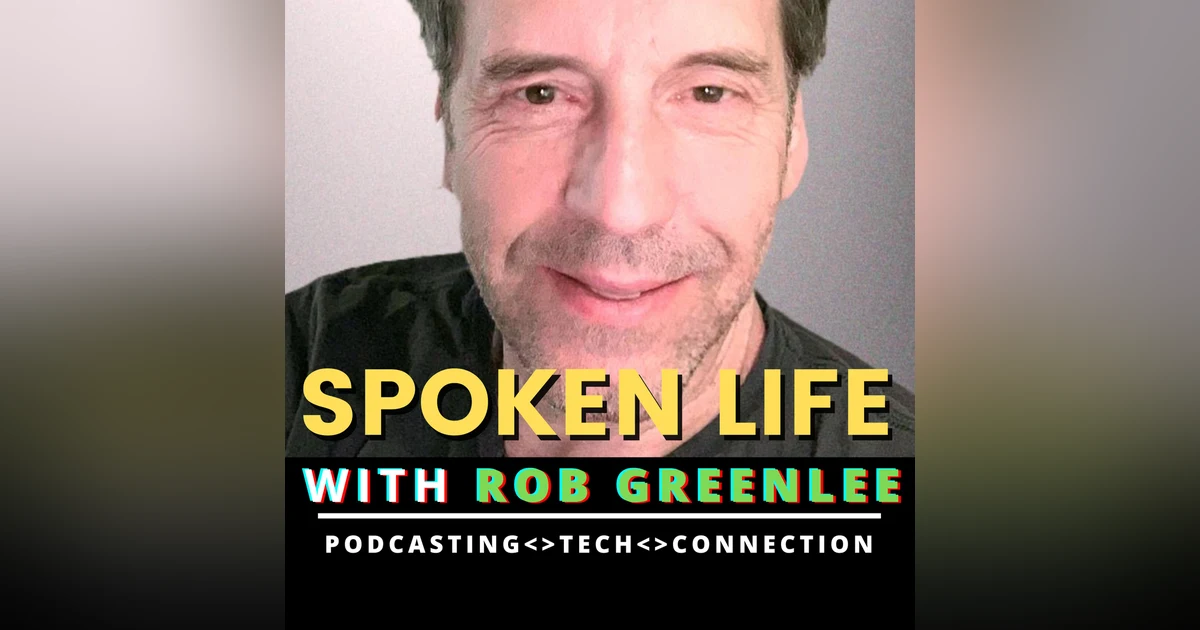

In this first episode of Spoken Life with Rob Greenlee you will learn about the power of audio and podcasting as radio host and podcaster Josh Cary () interviews me from WOR-AM Radio Studio in NYC I am Rob Greenlee, long-time podcast host…...

 Apple Podcasts

 Castro

 RSS Feed
In this first episode of Spoken Life with Rob Greenlee you will learn about the power of audio and podcasting as radio host and podcaster Josh Cary (https://joshcary.com) interviews me from WOR-AM Radio Studio in NYC
I am Rob Greenlee, long-time podcast host… that has been in the podcasting space since 2004 - RobGreenlee.com/about/
This show exists for both of us to explore and experience the layers around how technology and native human communications are taking digital spoken word back to the fundamentals of human story.
This digital instant global connection and communications has never existed before and is causing unprecedented social and economic changes that have never been possible in the past.
We are all facing challenges like never before NOW and I want this show to be a foundation to you understanding and using your voice to navigate opportunities in your life.
You can expect me to be controversial at times and have guests on the show as spoken word and the life it can create is powerful …. I am an example of it... building a 20 year career based on it! That impact has been profound too and I want to share that to empower you too.
You can reach me anytime via email - rob.greenlee@gmail.com or mobile to 253-831-5632 - you can send me a text message or DM via LinkedIn, Facebook, Instagram and yes, even TiKTok and am on Twitter twitter.com/robgreenlee
If you wanted to read more about my background then visit robgreenlee.com/about/
0:02 In this first episode of Spoken Life, you will learn about the power of audio and podcasting as radio host and podcaster Josh Kerrey interviews me from the WOOR radio station studio in New York City. The inspiration of spoken word, tech and connection Spoken Spoken. Hello, it's great to be here today with you. I'm Rob Greenley and I'm a longtime podcast host that has been podcasting since two thousand and four. Thank you for joining me on the show today. This show exists for both of us to explore and experience the layers around how technology and native human communications are taking digital spoken word back to the fundamentals of human story. This digital instant global connection and communications has never existed before and is causing unprecedented social and economic changes that have never been possible in the past. We are all facing challenges like never before, and I want this show to be a foundation to you in helping you understand the power of using your voice to navigate opportunities in your life.
1:14 You can expect me to be controversial at times and have guests on the show as spoken word and the life it can create is powerful. I am an example of it, building a twenty year career based on it. The impact has been profound in my life and I want to share that to empower you to experience the same. You can certainly reach me via email at Rob dot Greenley at gmail dot com or on mobile to my phone which will be two five three eight three one five six three two, and you can send me a text message or call me. Just be your respectful of the time zone. I'm in the Eastern Standard time zone.
1:59 Or you can direct message me on LinkedIn, Facebook, Instagram, and yes, even TikTok. And I'm also on Twitter at Rob Greenley. So if you want to read more about my background, then visit Rob Greenley dot com slash about So. Here is my conversation with Josh Carey from the Wooram iHeartRadio station studios in New York City from this past July of twenty twenty two. I hope you enjoy it. Welcome back in. It is Josh carry right here on seven ten wor the Voice of New York and any time your heart desires on the iHeartRadio app. Make sure to download and check that out. We're back in studio today in the beautiful city of New York, the place I love to be. You know that We have a great guest today who we're going to be talking all about communication and the need to communicate and really how you do it. Well, if you ask me, has it ever even changed? I think only the mediums and the technologies have changed a bit, But really the need and the desire to connect, to communicate, to get your point across, whether you're in the living room or the boardroom, it does not matter, does it. Today is all about podcasting on one level, but we're also gonna be talking about radio and where we've been and certainly where we are going,
3:31 and there's no better person to help us with that today. I've known this gentleman for years. And trust me, if you have ever stepped near the podcast industry, you know Rob Greenley, you just do. And God forbid you go to any sort of podcast industry or radio related event, you're gonna see him keynoting a stage, certainly moderating a panel. What have you? Rob does it all get this? He's also almost a two decade veteran and evangelist inside and out of the podcast industry. Listen to this because this fascinates me. He's the current board member and former chairperson of the podcast Academy, Yes, the Podcast Academy and the current chairperson of the Podcast Hall of Fame. Did you know that it exists? The Podcast Hall of Fame? How amazing is that? If you've been paying attention at all in and around this pandemic, chances are you either tried dabbling in the podcast industry. You started one, you got asked to listen to one, you heard of one, you know all about it. And that's what today's show is.
4:43 So thank you for coming along, staying tuned. Let's bring Rob Greenley right onto the mic. Rob, so good to finally be speaking to you. Yes, it's great to be here, Josh. I appreciate the invitation, and it's always exciting to get on a microphone and talk. You've been on a microphone for decades, right back before the millennium. Hy two K I mean remember that, of course you do. In nineteen ninety nine, you were already on the air, You were already broadcasting. Did you always have that desire and aspiration for your life? Did you think that you'd spend decades doing this kind of a thing. To be quite honest, I had no idea prior to walking into a radio station in the Seattle Market and asking the station if they had a slot or an opening for a technology talk show. And that's kind of how I got started. I was not a radio presenter.
5:37 I didn't really spend much time doing any kind of presentations to anyone back in those days. So I was expanding my reptop was a business major in college, and I was trying to build a client base of doing some side projects of working with small companies to help them with the search engines and get them listed in search engines. This was back in nineteen ninety six, ninety seven, ninety eight, ninety nine, And that's what motivated me to walk into a radio station and start reaching more people. And how do you, or somebody the proverbial you, how do you get good at it? Is it just doing it?
6:17 Yeah, doing it over and over again and making lots of mistakes along the way and learning how to do it. And being comfortable, I think is the big thing. I think confidence breeds comfort, and comfort brings skill development and understanding the process and not getting to kind of out of your focus. I think focus is a huge area of our presence and creating content online. I think it's very important, and that's something that I've developed over the years is the ability to focus in and think about what people that are listening to what I'm saying care about.
6:59 You've asked an incredible resume over the past twenty plus years. I've mentioned some of them. Was it as quote unquote easy and direct as it sounds? Because now it seems like you're running on this amazing momentum. You have incredible connections, incredible positions. How did you build that. One step at a time, just you know, getting involved in helping people and really, at the end of the day, that's what my career has been really all about, is sure. I've been a content creator. I've built up a radio show, I built a podcast, been on satellite or radio, all that kind of stuff, but those were kind of in the past. I mean, I'm still doing a podcast today, and it's live video. It's a whole spectrum. Actually love live and I've always have. I haven't always been very good at it, but it's something that I've really grown a liking to. I love getting up on stage and speaking in front of us big an audios. I can find to spread the word of the podcasting industry, and that's really what I've done for the last eighteen nineteen years.
8:10 Is is really being an evangelist for podcasting? And what is the word you're looking to spread? The opportunity of it, I think, and also the open nature of podcasting where you can have a voice. I think that's probably more important than ever. It was important when podcasting started, and it's probably more important today that more and more people have a voice out there. I think that I think we are reaching a time where a lot of people have voices, and not everybody likes the fact that everybody has a voice. So it's an interesting time. And what about the reasons or psychology of podcasting. I know that, like I said at the top, so many people.
8:55 We see the statistics right for better or worse. It makes sense people were at home, they saw the barrier to entry quite simple really, but then executing on it, it doesn't always work right. I think we did see a big burst in people having an interest in creating a podcast. I think during the pandemic, people were locked at home, they weren't commuting anymore, so they probably felt like they had extra time that they could start a podcast and do it. And we did see huge increases in the number of new shows that came into the podcasting medium during the pandemic, and I think that also sparked on the listening side too.
9:37 I think a lot of people started to spend time with podcasting and because there was so much variety of content out there. But I think over the last probably six months eight months, I think we have seen a little bit of pullback on new shows being created in the medium. And I think it's just because there was a lot of people that are getting back to work, They're having to commute again, they don't have as much time to produce a podcast, and it does take time, and it does take focus. Like I was saying earlier, and why do people start? I mean, I said, we have a need to communicate. What's all this about? Though? Well, I think the need to communicate transcends doing a podcast.
10:18 I think more and more we're coming into a time when presentation skills and being able to talk on a microphone or a zoom call meeting is more important than ever. So I think that the skills around creating a podcast are applicable to creating a podcast, but they're also applicable to more and more people's lives and their careers. So I think that is also a component of what's happening here and where it's where it's moving towards is just the importance of being able to present to a group of people and feeling confident doing it, and knowing how to use audio equipment. And I'm constantly working on trying to find companies that are trying to streamline this stuff to balance this quality of audio or quality of video with ease of doing it, because it's been hard over the years to produce good quality audio content and if we can make it easier, that's kind of what I've been focused on that probably the last year, more than anything else, is just trying to make it easier.
11:20 And for the person and the people who sort of are doing it. Are there right reasons and wrong reasons to go about this? I think that there are some very good reasons. I mean, if you look at the whole spectrum of especially audio creation, audio production, it's really going the whole gamut now. I think in the past, radio was a pretty limited glimpse of what the opportunity of audio was, and I think now we're coming into a time when audio is spanning a lot of different opportunities out there. You know, people creating subscription con people creating advertising based content, people just creating a show to support whatever business or service or company that they're working on the better serve customers, to be able to better market what they're doing, to create compelling stories that can drive connection with people. And there's fiction, there's reality based content now and I'm hearing more and more talk about the audio space starting to have an interest in creating game shows and who knows, maybe the soap opera audio soap opera will come back.
12:34 Well, that's one of the things I've always loved and appreciated about the podcast space is there's almost no wrong answer, right as long as you have a microphone and hit record and you have a thing, you can structure it. There's almost no rules and you can find what works. Yeah, no, I agree. I mean I think that there is huge opportunities still. I think with a little bit of the pullback and the amount of podcasts that are out there and how many shows are actively being updated every week or every month is actually just a fraction of what the catalog is out there. I think Apple's put out that there's like two and a half million shows in their Apple podcast catalog, of which if you really look at the numbers, probably maybe two or three or four hundred thousand of them are actually actively updating with new episodes like every ninety days. So it's not a huge number of competitors. And that's on a global scale.
13:30 So I still think that there's huge opportunities. And there's new genres that are starting to bubble, like I just mentioned, and that's going to keep capturing listeners' attention. And then there's audiobooks. You know, it's subscription connection with this medium as well, that has never been as big as it is now. Yeah, and it's first of all, I love that figure two three four hundred thousand active podcasts. And then of course we hear about the people saying, oh, it's a saturated market, extremely far from from the truth we have. I mean, now is the time too. As you said, it's just content creation, it's communication, it's learning a new skill, figuring out what the benefit for you might be. And you don't have to become the next Joe Rogan. Far from it.
14:20 It'd be great if he did, but he's doing very well. But I think he's also a good lesson in what's possible, and also how natural and inorganic this medium really should be and how we approach it. You know, people love natural connection and honest communications and raw, real thoughts that people have out there. I think, and telling stories is always at the crux of the think of your popular talk show, the late Late show or something, you know, all those guests come on and the big thing that they need to do is be entertaining, tell a story and keep people engaged. And that's kind of what a podcaster needs to do too, because people love stories. I mean, our whole culture is built on stories. Really if you think about it.
15:14 Yeah, it's such a great concept. I want to talk about the I guess the business side of it. At the top of the show, I introduced you as part of the Podcast Academy and then the current chairperson of the Podcasters Hall of Fame, which it's just fascinating. Walk me through those two things, because I'm guessing a majority of the listenership right now didn't know those existed. And they's sort of a legitimacy in rounding out the industry, I mean, needless to say, when businesses like Spotify are spending you know, eight nine figures every year to purchase something to increase their podcast lib. You know something's happening.
16:01 But talk to me about the Podcast Academy and the Hall of Fame. Well, I think it's a reflection of the maturity of the medium and its evolution over I would say probably a twenty year lifespan that this medium has been around, and there are so many podcasts that are of really high quality that need to be recognized and highlighted and brought attention to as examples to others on what is possible. And I think that's what the purpose of the podcast. It can educate, create networking opportunities for audio professionals, and to create a ceremony and a celebration of amazing audio content.
16:44 And the iHeart folks have also created a podcast Awards as well, so I think that there's a culture of rewarding really quality productions and quality audio podcast That's what we're trying to create is the essentially the academ Awards of podcasting, and I think we've mostly accomplished that. I think we're coming up on our was our third or fourth ceremony here here this next year, and we're excited to do it as part of the Podcast Movement kind of related to that event in Las Vegas next I believe it's going to be next March twenty twenty three, and so that ceremony will be be an amazing like it was here this past year in Los Angeles, just a real celebration of amazing content creators. The Hall of Fame is kind of a little different from that. It's looking at success and contribution, looking at the past up to almost the present. I think to have significant contribution to the development of the podcasting medium, I think you have to have a little bit of time associated with that.
17:56 So that's what that is about. It's been around, I believe the first year was twenty fifteen, and so Podcast Movement is the producer of that that particular event. They took a few years off for the pandemic, but they're back now in full swing, and so we're excited to induct another eight people into the Podcast Hall of Fame here in Vegas next year. And you happen to be one of those earlier inductees in twenty seventeen. What was that like for you? Really a humbling honor is what it was. You know, I got a chance to get up in front of you an audience there. It was live streamed all those things and talk about my journey and getting going as a podcaster, you know, coming out of radio and really thanking the people that were around me that helped make it all happen. So that's what that ceremony is about.
18:54 It gets back to what I was selling earlier. We kind of make that ceremony really kind of a retelling environment where these amazing content creators get up there and they tell their story of how they what was their journey, of how they got to be on the stage being recognized as the Hall of Fame because not everybody gets a chance to be recognized like that, and I think there's a lot of lessons to be learned from that and that live stream. It's actually available in YouTube, so if you did a search for Podcasts Hall of Fame, you can find the actual awards ceremony. It's about an hour and a half long or so, but it's just full of stories that these successful podcasters, how they got to where they are, Where were the core principles that actually earned them that place in the Hall of Fame.
19:48 And for you, what was it? It was really I think all about community. It was all about helping others, but also being you know, showing regular leadership either behind the mic or kind of in front of the mic, doing other things to support other people to be successful. That's what I was, That's what I have been doing for most of my career. I've been lucky enough to create a eighteen year career in podcasting, not necessarily on mic, but off of the mic, helping people learn how to do it, as well as support them in their process around building a business around it, which is what I've been doing more recently over the last few years, is helping more content creators build businesses around audio.
20:39 And I'm guessing you feel the way I do, where no matter what business owner, executive, or CEO you're talking to, there's no reason they shouldn't be implementing something that resembles a podcast or video series. What have you right in this day and age? Yeah, I think you really have to now, I think in order to be part of the conversation out there that exists. And I think that's a terrific way of looking at it, is that you need to be engaged and you need to be connecting on a competitive level with others that I'm sure or in your industry that are doing a podcast or they are doing something on YouTube or whatever, and more and more, what we're starting to see because of that is the spectrum of what people perceive a podcast to be is expanding. Right now.
21:31 I think that there's from a listener perspective or a viewer perspective, they don't really care that it's in an RSS feed. I think that we've we've kind of moved to this next level, and I'm I'm a little hesitant because I come from the historical past of podcasting where podcasting was seen as it's not a podcast if it's not distributed by RSS. And you know, I say that word RSS realizing that most of the people listening to this don't even know what I'm talking about. So that's kind of what I'm trying to say, is that when people watch content on YouTube, they think it's a podcast, whether or not it's distributed as an RSS distribution to Apple Podcasts and to Spotify as a podcast, or it may not be the case. You know, I watch a lot of podcasts on YouTube that don't have to have an RSS feed in order to be seen as a podcast.
22:27 So I think that the spectrum has gotten wider, and I think we're starting to see people even think of creating content on like TikTok is you're a. Podcaster and is that is that right or wrong or you know. I think it's just looking at it more from a listener perspective than it is from a content creator. I think it does matter to the content creator how they're distributing their content depends on what their goals are, what are they trying to achieve with their show, what kind of content it does it? Does that content belong in an RSS feed or does it belong where it's native, which would be like maybe content that's specific to LinkedIn or content specific to Facebook or whatever. I think the definition has expanded because the listeners don't really care about technology as much.
23:22 Yeah, my experience, I spent fifteen years in this very city as an actor and filmmaker, and that had its own challenges. You know, you had to knock on the doors and get management, be repped by an agency. You wanted to be on stage. You either had to audition and get cast or write and produce and direct your own thing. And even the film industry it was totally closed door, right, I mean how could you even break into that You shot it on your own and then it just sits right, you could do some sort of film festival. Barrier to entry there was quite high and quite exclusive. But how do we compare that to what's going on current day in the podcast space? And more importantly or intriguingly, where is it going with all the bigger players coming in?
24:19 Yeah, I think it's a it's an interesting question because there is this influence of larger budgets that are coming into productions. It's been going on for many years actually now. But you also have to look at the the roots of organic content creation. And I still come back to like a Joe Rogan as a good example of a guy who started on our platform back back when he first got started. This was probably like two thousand and eight or something like Lips. He got started on Lips and and and he was just a guy who's started a show because he thought it was fun to do.
25:04 He was part of the comedians community, and he just he started to invite guests on his show, and he just liked to talk, and he liked to have conversations and learn and dig into topics and things like that. And I think it's a really good example of really what the core of this is, and that's interpersonal communication and people exploring topics that are not always normally talked about in this world. And that has its baggage too, as we all know. But I still think that those that are pushing through that and that are having those difficult conversations are finding more and more audience because people are craving that stuff. So I think that's at the root of it, and I think we have to think about that. But then there's the other end of the spectrum of the content creation spectrum, and that's highly produced script type programming, which has a place most definitely. I mean, look at audiobooks and the success of Audible and all these audiobooks on a subscription basis. Those are highly produced.
26:11 There's big budgets behind them. You have, you know, actors that are coming in and recording those, so those people have to get paid, and so you have this whole spectrum of opportunity. But at the core, it's about storytelling and if you can do that successfully, and you can produce a quality program that keeps people paying attention but also drives value and is entertaining and fun and drives a motion. That's the key here, and that spans any kind of medium, video, audio, even text. Those that can write well entertain And is. There always going to be a place for the independent content creator who has a message or are they going to get shooned out like the current or what was the current film market where you couldn't get seen or heard.
27:07 I think that the independent producer or somebody that comes in and just wants to create a show, I think those opportunities will continue to be available. I do think that the bar has been raised, and a lot of these highly produced programs are raising the bar on the audio production, the sound quality. I think, you know, some of these productions are starting to get into spatial sound and the principles of sound depth and creating you know, emotion, and these different kind of microphones that simulate how people listen to audio and it creates this kind of this in depth type of listening experience. So I think that there is a raising of the bar that's happening, and it is a competitive landscape, there's no question about it.
27:58 And that's one of the reasons why I'm pushing to discover technology that can make this easier. So we have quality that can be done easier for everybody to be able to still participate and not have this situation where only the big guys can produce quality content. Right, And just to go back to what we spoke about earlier, this is about just content creation and communicating almost regardless of platform or distribution method. Like, how many times do we hear just fire up your phone. You have something to say, just fire up your phone and speak into it. That still might be a viable first step for anybody.
28:41 Yeah, I know. Actually I did a call with a company in the Middle East that is working on a software stack that's going to basically enable a person to use their mobile phone to completely record a podcast anywhere they are, anywhere and have it sound like you're in a studio like this. You know, it's all algorithm driven, it's all filtering, it's all technology, right, And so you could hold up your iPhone and be able to do a full show just like what we're doing right here, and have it sound as good as this no matter where you are. You could be on the street in New York and it would filter out all that sound.
29:24 What did we talk about quality versus quantity? Where is that line. No matter if you're in a studio like this, if you're at home in your studio, or if you're on your phone, where's the line? Well, I think each show, content and genre needs to evaluate that. I think duration is definitely an issue. I think it needs to have some consideration given the spectrum of duration that's out there, from you know, two or three minute TikTok videos to Joe Rogan doing a three our talk show you know episode. So that's the spectrum that we're dealing with. So you need to figure out where in that spectrum is appropriate for the for the type of content that you're creating. And that isn't always an easy choice, but it also gets back to what are you comfortable doing and can you continue to drive value over three hours or can you drive value in ten minutes you know, or five minutes?
30:24 And as we've said, the idea is there. There's really no wrong answer as long as you identify it for yourself business owner, executive CEO, you should probably have a scenario where something like this exists in your marketing strategy today and certainly this very quarter and year, the question I don't want to end the show without having this touched upon. So they might be saying, Okay, so I do this, but then who's going to hear it? How do I get it seen and heard? Right? Obviously the million dollar question, but what kind of answer do you give? I give the question. It's really just like starting any small business. You need to really think about how you're going to reach your target audience. All right, who is your best listener? And you need to find pathways to find those. You know, a lot of people have been talking about getting involved in like an industry community and letting people know that you're doing a show, doing live on stage events. There's a lot of podcasters that kind of backed away from that because of the pandemic, but I think more and more jumping back into the fray again, getting out, getting in the real world with people and letting them connect with you. And it's also more and more podcasters are advertising their shows on other podcasts, or they're advertising on the radio, or they're advertising on Facebook or Twitter. You know, your return on that is kind
31:56 of up to what you're trying to accomplish and how much budget you have, and really is the audience you're trying to reach appropriate for that particular advertising medium, But more and more we're seeing podcasters advertise on other podcasts and create this synergy which really that concept has been around and podcasting forever where people cross promote with each other. It was kind of like a pod spot trading in the early days is what you know, all run a spot. If you run a spot, kind of kind of a situation. But more and more we're seeing larger shows or shows that have a budget, or if you're an individual and you have a few hundred dollars to spend, there's no reason why you can't run a small campaign on Twitter or on Facebook to drive a little bit of attention to your program and just build on that over over time.
32:50 But there's other podcasters that are spending fifty sixty seventy thousand dollars a month running advertising on other big shows that are willing to advertise their podcast on to grow their audience, and some of them the ROI on. That's really good because they can grow their audience and make more revenue on the CPM side or the revenue side from the sponsors, and it pays off. So yeah, I think the answer to this, I think search engines are still very important. Google and being to some degree, are still really important. I think YouTube is really more important from a search discovery standpoint, and the social platforms just in general can be utilized as a connection tool to existing audience as well as maybe build a little bit on the new audience side. So it's a synergistic strategy that actually takes a fair amount of effort.
33:47 Certainly a lot of moving parts to all of this, but one easy to dissect or at least make a phone call and connect with somebody who can help you, or look to somebody in your marketing department that knows a little bit of something and just fill in the dots. Because again, there are some moving pieces to this that might have a slight learning curve, but certainly if you look at what you've accomplished in your own life today, it's not insurmountable and something that I'm going to continue to reiterate. You should absolutely have a plan to create content in this form in some form if you're not already doing so. And I love how, like I said, how creative just having the mic allows you to be.
34:38 There is almost no wrong answer. You can be as creative as you want, but you can't separate. There's this X factor that exists in the content creation side. It's the same thing that exists in music as well as and movies and television, is there's just some sometimes everything just clicks right. I mean, the timing of the topic, the timing of the guest, or the timing of what you're trying to do just aligns with the market and things just blow up. And that's what I'm always searching for, is what's the right timing and what's the right content? Rob Greenley an icon in the industry for certain Where would you like people to go to continue the conversation with you?
35:24 Yeah, I'm on Twitter, so you can't reach out to me at Rob Greenley And that's what two weeks on the end, and I do have a website, Rob Greenley dot com. And absolutely amazing happy to hear from you, Rob. So glad that our paths finally crossed in this arena, in this studio and not just on the podcast industry events circuit. Thank you for coming down. Well, thank you so much, Josh, And it was exciting to get back into a broadcast radio station again. That's awesome, excellent, so good to speak with you, so good to speak with you. Kind listen, we'll do it again so soon. Take care, be well. Well, thank you Josh Carey for having me on your radio show at War in New York City. Josh can be found online at Joshkerrie dot com, So if you want to go check out more about him and the podcasting that he does and the podcast production and media training that he's involved in as well, certainly go visit him at Joshcarrie dot com. And that's jos H c A r Y dot com. And thank you so much for checking out the initial launch episode for Spoken Live Show with Rob Greenley. I appreciate you spending time with us, Josh and I in the episode today, and I'll be back with a new episode next week talking about the opportunity and future of the spoken word. Thank you so
36:57 much and we'll see you next time. M H. The Inspiration, Spoken Word, Tech and Connection, Spoken Spoken, Spoken Light, Spoken Light, Spoken Lights with Rob Greenley with Rob Greenley with Rob Greenley with MHM