

"Hurricane Melissa Special" Sense of Purpose
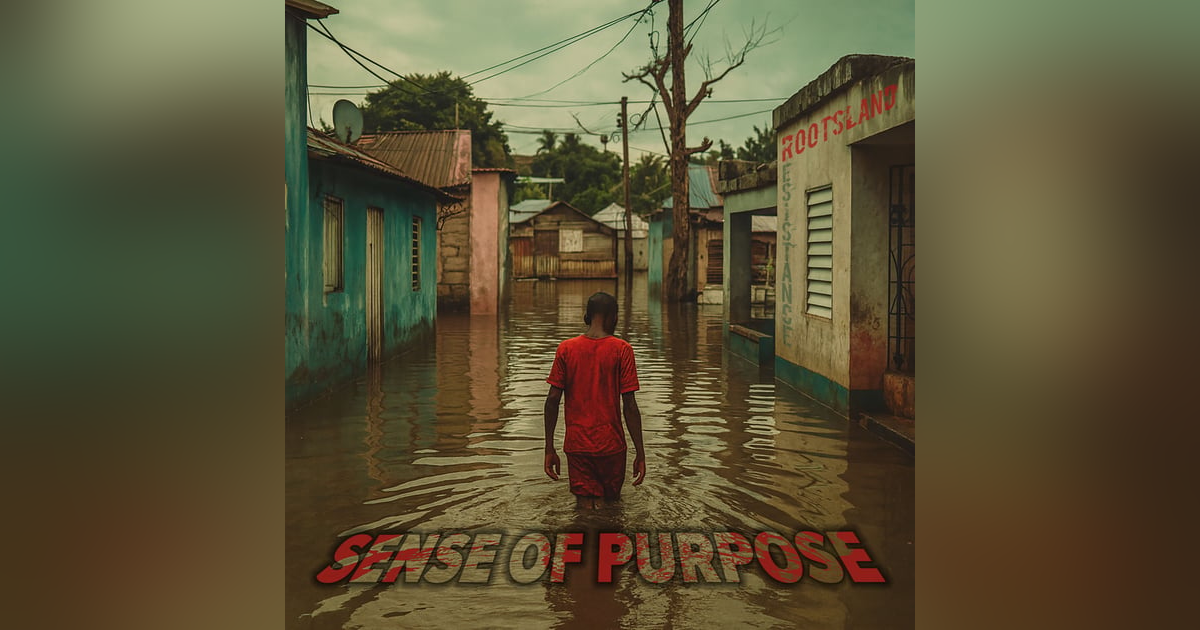


In the wake of Hurricane Melissa’s devastation, Henry K and Sia reflect on Jamaica’s unbreakable spirit — and what it truly means to live with purpose. From the humor of “Wild Gilbert” to the wisdom of a Cornell study, this episode explores how resilience, rhythm, and compassion keep the island — and all of us — moving forward. Featuring heartfelt stories, reggae insight, and a call to rebuild with love and intention.
Fundraiser by William Brawner : Rebuilding For The Future In The Wake of Hurricane Melissa
Produced by Henry K in association with Voice Boxx Studios Kingston, Jamaica
"Row Jimmy" (Garica/Hunter) performed by Judy Mowatt
The guy's righteousness govern the world.
Speaker BBroadcasting live and direct from the rolling red hills on the outskirts of Kingston, Jamaica, the Roots Land podcast.
Speaker BStories that are music to your ears.
Speaker AGreetings, everyone.
Speaker AAnd these are tough times in Roots Land.
Speaker AWe want to start off by sending our love and prayers to everyone in Jamaica, all of our family and friends impacted by the strongest hurricane to hit the island in a century.
Speaker BHenry, that was the strongest hurricane of all time, okay?
Speaker AOf all time.
Speaker AHurricane Melissa didn't just pass.
Speaker AShe carved her name into the island and tore a hole right through the heart of Roots Land.
Speaker ATwo thirds of Jamaica lies in ruins, but the western parishes, St Elizabeth, Westmoreland, the fertile plains around Black river and Santa Cruz, gone under.
Speaker AFields that fed the nation now flattened.
Speaker AMontego Bay airport torn apart.
Speaker AAnd all along the south coast looks less like paradise and more like a war zone.
Speaker ABut if there's one thing I've learned in all my years in Jamaica, she bends, but she doesn't break.
Speaker ASo, Sia, how's Grandma Blossom and all your brothers and sisters in country?
Speaker BWe're all very grateful.
Speaker BWe're so thankful that my family's okay.
Speaker BMy friends are okay.
Speaker BThey had leaks, but the roof is still standing, and they're alive.
Speaker BNo casualties.
Speaker BMy family's in St. Thomas, which is east of where the devastation really hit.
Speaker BSo they got very lucky.
Speaker BIf the eye of the storm had hit them, it would have been devastating.
Speaker AWhere the eye hits, land makes all the difference.
Speaker AJust a mile or two decides who lives and who dies.
Speaker BVery true.
Speaker BEven though St. Thomas didn't get the worst of it, it still is bad.
Speaker BIt still is very bad.
Speaker BI saw where the roads collapsed.
Speaker BThere's a big hole in the road.
Speaker BI saw Bath was flooded, and that was only just two videos I saw.
Speaker BI'm not there, obviously, in person, so I can't imagine the areas that were hit, what they look like, what it looks like in person.
Speaker BJust pure devastation.
Speaker AYes, it's really rough down there.
Speaker AAnd we've been hearing from lots of you, the Roots Land gang, asking where and how they can support the rebuilding process.
Speaker AYou know, they trust us, Thea, for reliable info.
Speaker ABut I know there are a lot of sketchy fundraisers, charities that pop up in times like this.
Speaker ASo at the end of the show, we're going to tell you a great way how you can do your part.
Speaker BYeah, you have to be careful because of all these scammers out there, especially with social media and TikTok and all that.
Speaker ASo, Sia, like I was just telling you, before we went live.
Speaker AJamaica always finds a way to smile in the sorrow, doesn't it?
Speaker ATo find purpose in the pain.
Speaker ARemember Hurricane Gilbert, 1989?
Speaker ARight before I moved to Jamaica, the whole island was nearly flattened.
Speaker ABut just months later, the biggest song on the radio and the streets was Love and Dear's Wild Gilbert.
Speaker BI remember Wild Gilbert.
Speaker BWho could forget Une se me dish?
Speaker BUne se me satellite dish.
Speaker AThat sounded like the opera version.
Speaker BOh, that's funny.
Speaker AIt was a full blown comedy about chaos.
Speaker AA man wading through the flooded streets, searching for his lost satellite dish like it was his last lifeline to the world.
Speaker AIt was absurd, but it was genius.
Speaker ABecause back then, those big dishes the size of UFOs were like trophies up in the hills.
Speaker AThe national flower of Jamaica.
Speaker AYes, uptown was worried about their gardens, while downtown was still trying to find clothes and something to eat.
Speaker AIt was comedy, but it was also therapy.
Speaker AHalf the island lost their homes, the other half lost their cable service.
Speaker AAnd somehow everyone ended up joining together as one to rebuild the country.
Speaker ABecause Jamaicans do have this gift, the ability to turn pain into performance, to process disaster through music, through faith, through humor.
Speaker AIt's like the island knows you either laugh or.
Speaker AOr you drown.
Speaker AThe song Wild Gilbert became a kind of mirror, a joke that revealed something real.
Speaker ABecause in every storm, there's always a divide.
Speaker AThe uptown worried about losing signal.
Speaker AThe downtown worried about what to eat for dinner.
Speaker ABut through it all, music united the people.
Speaker AIt gave everyone a space to breathe again, to move again, to remember you are still alive.
Speaker AYou know, Siya, it's not just the hurricane.
Speaker AIt feels like even before Melissa, people had forgotten what it meant to really be alive.
Speaker BSo true.
Speaker BVery true.
Speaker AWe've been caught up in our own worlds, our own bubbles scrolling past each other instead of actually reaching out.
Speaker AAnd it's not just one generation.
Speaker AIt's everybody feeling it lonelier, more disconnected.
Speaker ALike we're all living behind glass.
Speaker BHenry.
Speaker BWe actually are.
Speaker BEverybody's on their phones or behind their big computer screens.
Speaker AGood point.
Speaker AAnd we've talked about that before on the show.
Speaker AHow the noise of modern life drowns out real connection.
Speaker ASo anytime I come across something that offers a little hope, a way to feel more human again, I want to share it with our audience.
Speaker AAnd what better time than now?
Speaker ASo just last week, before the hurricane, I read an article about this study out of Cornell University.
Speaker AThey called it the Contribution Project.
Speaker BContribution projects.
Speaker BI like that.
Speaker BIt sounds interesting.
Speaker AYes, very interesting.
Speaker AIt started out with a simple idea.
Speaker AGive young people a small amount of money, $400 and let them decide how to use it in a way that feels meaningful.
Speaker ANo instructions, no conditions, just trust.
Speaker AAnd what the researchers found out was something that we basically already knew.
Speaker AHappiness doesn't come from what we keep.
Speaker AIt comes from what we give.
Speaker AMost students didn't spend it on themselves.
Speaker AThey bought groceries for their parents, helped a younger sibling pay for school fees, picked up supplies for a neighbor.
Speaker AA few even used that small grant to start something lasting.
Speaker ACommunity gardens, mentoring programs, small social enterprises, initiatives not for profit, but for people.
Speaker AAnd the results were remarkable.
Speaker AThose students reported feeling more connected, more useful, more alive.
Speaker AThey were happier, not because they had more, but because they had done more.
Speaker AOne young woman said, it made me realize I could do something small and it would still matter.
Speaker BThat sounds like me.
Speaker AIt does.
Speaker AYou're a giving person.
Speaker AThat's it right there.
Speaker AThe pulse of purpose.
Speaker AKnowing your hands can change something, even in the smallest way, and that what you do matters.
Speaker AThe lead researcher, Dr. Anthony Burrow, called it purpose in motion.
Speaker AAnd that phrase stayed with me.
Speaker ABecause you can't just think your way into purpose.
Speaker AYou have to move into it.
Speaker AYou take a step, no matter how small, and meaning begins to take root beneath your feet.
Speaker APurpose isn't a privilege.
Speaker AIt's a practice.
Speaker AAnd when you move with it, when we use what little we have to help someone else, life begins to expand.
Speaker AThat's what science says.
Speaker ABut we didn't need a study in upstate New York to know what Jamaicans and Rastafarians have known forever.
Speaker AThis is what Rastafarians call livity, the divine energy that flows through all living things.
Speaker ATo live in rhythm with the world, to move with intention, to live right, eat right, think right.
Speaker AIt's about balance between self, earth, and spirit.
Speaker AWhen you live with levity, everything you do carries meaning.
Speaker AYou don't need wealth or titles or permission, just a sense of belonging and motion.
Speaker AYou see it in a farmer tilling his soil, a mason working with stone, and the drummer beating his nyabingi drum, each one moving in harmony with creation, planting, building, singing.
Speaker AThat's what reggae has always been about.
Speaker ARhythm as remedy, movement as medicine, music as prayer.
Speaker ABecause the Rastafari knew long before any scientist wrote it down.
Speaker AYou can search the entire world for happy, but it's not something you find.
Speaker AIt's something you create.
Speaker AIt's that vibration you send out when you live life with purpose.
Speaker ASia, do you think that Dr. Burrow at Cornell University, the head researcher, is a fan of the reggae band Third World?
Speaker BA fan of Third World?
Speaker BHow should I know?
Speaker BThat's so random.
Speaker AWell, decades before his Purpose in Motion theory, Third World had the song Sense of Purpose, which sounds a lot like his premise.
Speaker AThey said when you have a sense of purpose in love and in life, you gain the strength to rise above negativity, to overcome that darkness.
Speaker ABecause purpose isn't just what we do.
Speaker AIt's how we live, how we love.
Speaker AIt's how we lift each other up.
Speaker AIt seems like after every storm.
Speaker AGilbert, Ivan, Dean.
Speaker AJamaica always found its rhythm again.
Speaker AIn a song, in a dance and a reason to rise.
Speaker AIt's what Bob Marley meant when he sang the words forget your troubles and dance.
Speaker AHe wasn't saying ignore them.
Speaker AHe was saying, move through them.
Speaker ABecause a person in motion stays in motion.
Speaker ASmall movements become mighty causes.
Speaker ABob Marley knew when you keep on moving, you resist stagnation, you resist apathy.
Speaker AYou resist and defy a system that wants you to sit still, to stay numb, to scroll your way through the day.
Speaker ABecause motion in mind, in body and spirit, is life, you know?
Speaker AAs I see all these pictures and posts of devastation across the island, there is so much I do not recognize.
Speaker ASmall towns and fishing villages along the south coast from Treasure beach to Sav Lamar are gone.
Speaker ABluefields, child, home of Peter Tosh, where I stayed last year while working on the show, leveled the agricultural heartlands of Mandeville and St. Elizabeth.
Speaker ATowns of Santa Cruz and Holland.
Speaker ABamboo completely unrecognizable.
Speaker ABut in the middle of all that wreckage, there was something I did recognize.
Speaker AJamaican spirit.
Speaker AI observed it in a group of locals helping an elderly woman take stock of what little was left of her seaside beach bar.
Speaker AI saw it in a neighbor hoisting a water tank back onto another man's roof.
Speaker AIn road crews made up of farmers and shopkeepers clearing fallen trees with everything from chainsaws to machetes.
Speaker AIn street vendors who had lost practically everything themselves, handing out free breadfruit to the volunteers, cleaning up.
Speaker AAnd in one small moment that said it all, a young girl, wiping tears from her mother's face, saying softly, don't worry, Mom.
Speaker AWe will build back again.
Speaker AThat's the Jamaica I know.
Speaker AThe one that took me in all those years ago and made me feel at home.
Speaker AI know in the days ahead, the politicians and business leaders will rush to rebuild the airports and seaports, the hotels and attractions that draw the world to our shores.
Speaker AAfter all, tourism keeps the lights on.
Speaker ABusiness is business.
Speaker ABut Jamaica's true wealth doesn't lie in its resorts or revenue.
Speaker AThe island's Greatest resource has always been its people.
Speaker AGolden sunsets and white sandy beaches exist all over the world.
Speaker ABut the warmth, the humor, the generosity, that's uniquely Jamaican.
Speaker AThat's what keeps people coming back.
Speaker AThat's what keeps the island alive.
Speaker ASo my hope, my prayer is that the same energy, care, and funding poured into rebuilding the roads and runways and hotels is also poured into rebuilding the people and their lives in homes.
Speaker ABecause the heart of the island isn't made of concrete and steel.
Speaker AIt's made of flesh and blood and resilience.
Speaker AAnd that, more than anything, is what makes Jamaica truly special.
Speaker AYou know, Siya, after every storm, every trial, every.
Speaker AWe need to find a sense of purpose.
Speaker AAnd since Melissa hit, a lot of our listeners, friends of Roots Land, have reached out, asking how they can help in a real way, Something that makes a difference, not just a gesture.
Speaker BYes, a lot of people have been asking me, too, where they can help out, how they can help out.
Speaker AWell, one of our Roots Land soldiers and close friend to the show, Billy Brauner, the same man who brought me down to the Peter Tosh Festival last year, is working directly with a community that needs us now more than ever.
Speaker ABilly has spent years working with the Selassie School of Vision in the Blue Mountains, a small Rastafarian village that's become like family to him.
Speaker AA few years back, after seeing a helpless mother turned away due to lack of space, he vowed to never have that happen again.
Speaker ASo he helped to build a woman's shelter there, a place of refuge for young families looking for a better life and escaping domestic abuse.
Speaker AThat shelter and those families, they survived many storms until this one.
Speaker AMelissa tore through those remote Blue Mountains and left behind flooding and unimaginable destructions.
Speaker AHomes were washed away.
Speaker AFamilies lost everything.
Speaker ANine of those families, the same ones that had just found safety, are now displaced again.
Speaker AOur friend Billy's heart is heavy, but his spirit is strong.
Speaker AHe set up a GoFundMe to restore the shelter, to rebuild the homes and help the community find its footing again.
Speaker AYou can find the link below in the show notes.
Speaker ASo if Rootsland has ever meant something to you, if our stories have ever moved you, this is your chance to be part of one, to turn that sense of purpose into action.
Speaker BHenry, could I just say something?
Speaker AYeah, of course, Billy.
Speaker BHenry told me what you're doing with the women's shelter, and I must say, I feel like you're doing God's work.
Speaker BIt takes a very special person to do what you're doing.
Speaker BI hope everybody clicks the link below this is a great way to help these individuals.
Speaker BYou know exactly where.
Speaker BYou know where your funds are going, who you're helping.
Speaker BThank you, Billy.
Speaker BAnd to my Jamaican people, my family, stay strong.
Speaker BWe will rebuild.
Speaker AWe're going to end the show with a song called Ro Jimmy, sung by Judy Mowat.
Speaker AOne of the best songs I ever produced.
Speaker AA song that reminds you to keep going even when you think you're out of strength.
Speaker BTruly.
Speaker CCatch a rabbit by his ear come back stepping like you're walking on ear get back home where you belong and don't you run away, no don't you hang your head let the good time roll Grasshack nailed to a pine wood floor Ask the times, baby, I don't know come back later gonna let it show and I say roll Jimmy Ro gonna get there I don't know seems a common way to go get down row, row, row Jimmy Here's a half a dollar is to give double twist when you hit the air you got two leads down below by the river I direct sh Broken heart don't feel so bad you ain't got half of what you thought you had Rock your baby to and fro not too fast and not too slow and I say ro Jimmy Ro gonna get there I don't know seems a common way to go get down row, row, row, row that's the way it's been in town ever since they tore the tooth box down 2 bit beast don't buy no more not so much as it's done before I say raw Jimmy Ro Ro When I get there I don't know the common way to go I say Ro Ro J Sam Produced by Henry K.