The Shelf & Its Data Never Lie | 5IM
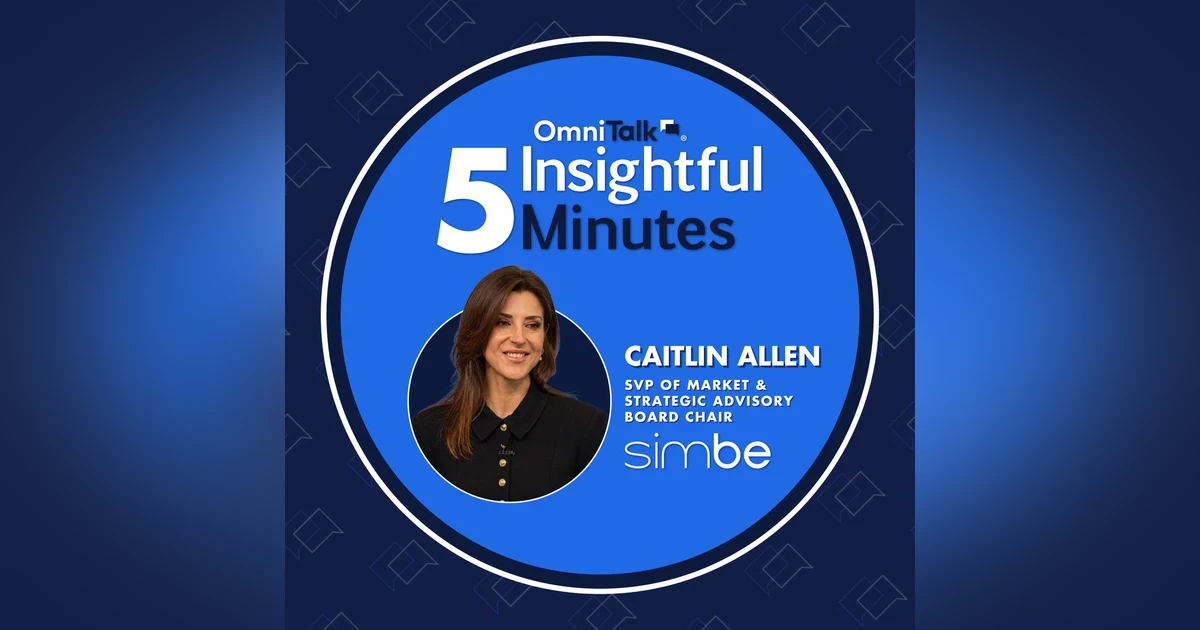


Retailers have no shortage of data. But what if the most valuable insights aren't coming from sales reports or demand forecasts, but from what's happening on store shelves in real time?
In this edition of 5 Insightful Minutes, Caitlin Allen, SVP of Market at Simbe, joins Omni Talk to discuss the latest findings from the Simbe Index and why shelf data is quickly becoming one of retail's most powerful leading indicators.
Drawing from more than 45 billion shelf images captured across retailers worldwide, Caitlin explains how real-time shelf intelligence is revealing shifting shopper behavior, exposing supply chain pressure before it's reflected in sales data, and helping retailers respond faster during volatile seasons like back-to-school.
She also makes the case that despite billions invested in retail technology, many retailers are still missing the foundational data needed to make those investments pay off.
Key Topics Covered:
- Why the shelf has become retail's most important source of real-time intelligence
- What the latest Simbe Index reveals about this year's back-to-school shopping season
- How tariffs, inflation, and supply chain disruptions first show up on store shelves
- Why observational shelf data can be more valuable than transactional sales data
- Where retailers are still losing billions due to in-store execution challenges
- Why shelf digitization should come before other store technology investments
- How leading retailers are improving inventory availability, fulfillment, and associate productivity
- Why the future of retail starts with understanding what's happening at the point of customer decision
Music by hooksounds.com
Sponsored Content
This podcast uses the following third-party services for analysis:
Podcorn - https://podcorn.com/privacy
00:00 - Untitled
00:23 - Introduction to the Simbi Index
02:05 - The Dynamics of Retail: Understanding the Shelf Impact
02:51 - Impact of Tariffs on Retail and Supply Chains
04:26 - Understanding Retail Operations and Shelf Visibility
06:53 - The Impact of Technology on Retail Outcomes
07:21 - Retailer Success Stories
Foreigning us now for five insightful minutes is Caitlin Allen.
Speaker ACaitlin is the SVP of market at Symby, and Caitlin is here to discuss how shelf intelligence can give retailers a key insight into more than they would ever expect.
Speaker AAll right, Caitlin, let's start with this.
Speaker ASimbi just released its latest edition of the Simby Index dollar diving deeper into back to school shopping trends.
Speaker AWhat is this Simbi Index, first of all?
Speaker AAnd what are the shelves actually telling us about the season that is upon us, that being back to school?
Speaker BWell, thanks for having me, Chris.
Speaker BSo I actually think the interesting, the most interesting part is not about back to school, but what shelves are telling us about retail as a whole.
Speaker BSo to answer your question, the Simbi Index is essentially a real time pulse check on physical retail.
Speaker BAnd it's built from more than 45 billion images from the shelf that are captured across retailers around the world in almost a dozen countries.
Speaker BAnd instead of looking after the fact that what's been sold, it shows what's actually happening on the shelf while shoppers are making decisions.
Speaker BAnd, you know, I think we could all agree that the shelf is like the final delivery point of the entire retail ecosystem.
Speaker BAnd last year what we found out was that tariff concerns pulled demand way forward.
Speaker BNearly three quarters of shoppers started earlier because they were worried about future price increases and refill rates declined.
Speaker BSo store stores last year were able to replenish only 30% of empty shelves in early July, compared to 46% the year before.
Speaker BAnd as you can imagine, out of stocks climbed as the season progressed.
Speaker BSo this year, obviously, inflation is continuing and Amazon Prime Prime Day was pulled forward and effectively kicked the season off even earlier.
Speaker BSo we're starting to see that many shoppers are moving into back to school buying much earlier in July instead of waiting.
Speaker BAnd what this tells us is that effectively, retail is becoming less driven by forecasts and is really shaped by real time reality.
Speaker BAnd winning in that context means knowing exactly what's happening on the shelves minute by minute.
Speaker AWow, that's, that's, that's an angle that I never have ever, ever even thought about.
Speaker AI think the financial community is going to love that too, because what, you know, what you're saying is you can see the behavior of, of the consumers in real time and the ability of the retailer to react to that macroeconomic influence on the consumer.
Speaker ASo that's crazy, Caitlin.
Speaker AAll right, so, you know, tariffs keep coming up as a factor.
Speaker AYou know, we hear it here, it's impacting shopper behavior all the time.
Speaker ALike go into that a little bit more for us.
Speaker ASo where are you actually seeing the pressure show up on shelves?
Speaker BIt's in different places where supply chains are under the most pressure, Chris.
Speaker BSo last year the early signal showed up in high import categories like apparel and footwear and school supplies and outdoor recreation.
Speaker BAnd so commodity items like pens and pencils saw out of stocks climb more than 50%.
Speaker BAnd foot, your foot year footwear was up 17% year over year.
Speaker BAnd you know, to me the points, not so much about tariffs.
Speaker BMacroeconomics are arguably always going to happen, whether it's tariffs, inflation, you know, what have you.
Speaker BWhat matters is understanding where those pressure pressures are showing up on the shelf early enough so that stores can respond rather than discover that they are, you know, they've been behind weeks after the fact.
Speaker BAnd so they this year we're obviously watching things like apparel and footwear and electronics closely.
Speaker BAnd I think the categories that will likely be the canary in the coal mine, so to speak, are the ones that are going to be impacted by another volatile back to school season that's influenced by the supply chain.
Speaker ARight.
Speaker AAnd right.
Speaker AAnd how quickly the retailers can actually react.
Speaker ASo given what you just said, what does that tell our audience about where retail operations are potentially breaking down, if anywhere?
Speaker BYeah, I mean, having eyes into what's happening at the point of customer decision is what matters.
Speaker BAnd I said this earlier, every forecast, every purchase order, every distribution decision, it ultimately has to show up on the shelf.
Speaker BRight.
Speaker BLike when a shopper reaches for that item or orders it online.
Speaker BAnd the problem is that despite billions that have been invested in digitizing our supply chain, the shelf's historically been the least visible part of it.
Speaker BAnd you know, in store efficiencies, according to a new research report from Coresight show that that about $200 billion are lost every year to these inefficiencies.
Speaker BAnd you know, the data or the transactional data that we've done a lot to try to capture is important.
Speaker BBut so is, and maybe even more so is the observational data that gives us a reliable view into what's actually happening on shelves and in our stores.
Speaker BSo, you know, talking about order fulfillment breaking down, it's, you know, it's sexy to think about like, oh my Alexa could talk to my smart fridge and order my groceries for me.
Speaker BThat's not going to work if Alexa and your smart fridge are ordering groceries for you, but then the things that the grocery thinks are on the shelves actually aren't there.
Speaker ARight, right.
Speaker AYeah.
Speaker AAnd the merchant.
Speaker AThe merchant and the retailer in me too, like thinks about, like when I'm, if I'm, if I've got this type of data and I'm looking at it longitudinally, year over year, there's actually new inventory metrics that come into play too.
Speaker ALike I could actually think about, like, what is my time?
Speaker AHow long are my outs on shelf this year relative to last year?
Speaker ALike, how long did it take me to replenish or refill an out and am I getting better at that or is it getting worse?
Speaker AAnd that should signal categorically where I have issues and direct my supply chain team to fix them.
Speaker ASo I'm curious, Caitlin, you mentioned the coresight.
Speaker AYou know, they've, they've also said that technology investments at an all time high.
Speaker ASo if that's the case, why are we still seeing these issues then?
Speaker BYeah, it's such a good question.
Speaker BAnd I think the siren song is that more technology automatically leads to better outcomes.
Speaker BWhat the report effectively found is that retailers are involving or investing in the right technologies just in the wrong sequence.
Speaker BYou have to have shelf data as the foundation for other store technology to produce the ROI to that, the that the business cases that are put together predict.
Speaker BAnd so the core site report stance effectively is that the retailers that are winning with technology have flipped the sequence and they invest in shelf digitization first and then everything thereafter produces the ROI that's intended because of that initial investment.
Speaker AWow, this is great stuff.
Speaker AAll right, so.
Speaker ASo let's say, let's say I'm a retailer and I get that sequencing right, Then what does the payoff actually look like, Caitlin, to you?
Speaker BYeah, I mean it starts with better execution, Chris.
Speaker BAnd like, of course it also impacts sales and mar.
Speaker BBut why.
Speaker BWhat it really impacts is why retail exists in the first place, which is serving the shopper and empowering the associates.
Speaker BSo, you know, measurable results that we've seen across our client base.
Speaker BSchnooks has reduced out of addressable out of stocks by 30%.
Speaker BBJ's has improved picking efficiency by 40%.
Speaker BBNR stores has given associates up to 30 hours back a week to focus on shoppers.
Speaker BBut I think the bigger story is that what retailers are building is a trusted source of truth for them to work better with their partners to serve the people that they care about in their ecosystems.
Speaker AYeah, I love the inclusion of the employees in there.
Speaker AThat's really good stuff.
Speaker AAll right, well, thank you, Caitlin.
Speaker AThat was really insightful.
Speaker BThank you, Chris.
Speaker BAlways good to be with you.


