Love Beyond Labels: Meagan Skidmore's Journey with her LGBTQIA+ Son
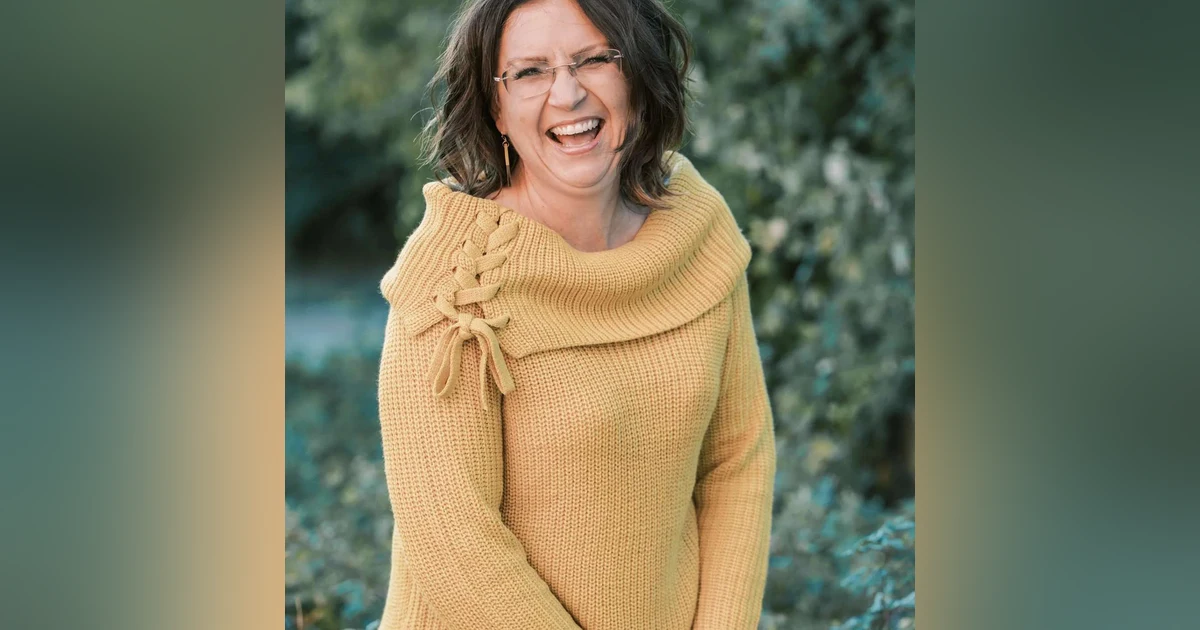
Today, we're thrilled to welcome Meagan Skidmore, a powerful Life Transformation Coach whose own journey of awakening began in 2019 when her child came out as queer (LGBTQIA+). Raised in a conservative faith tradition, this revelation shattered Meagan's foundation and forced her to confront the cognitive dissonance between her upbringing and her inner truth. Rather than rebuilding her life according to external expectations, Meagan chose to embrace her authentic self and listen to her inner w...


Today, we're thrilled to welcome Meagan Skidmore, a powerful Life Transformation Coach whose own journey of awakening began in 2019 when her child came out as queer (LGBTQIA+). Raised in a conservative faith tradition, this revelation shattered Meagan's foundation and forced her to confront the cognitive dissonance between her upbringing and her inner truth.
Rather than rebuilding her life according to external expectations, Meagan chose to embrace her authentic self and listen to her inner wisdom. Now, through her hybrid coaching program and community known as "The Other Side of Maybe™," she guides others to awaken to their truth, break free from confining boxes, and step boldly into their power.
Meagan believes that purpose comes from within, and that we are whole simply because we exist—not because of what we do. Today, she'll share insights on living authentically and unapologetically, helping us recognize when we're lying to ourselves and how to embrace our genuine selves instead.
Please join me in welcoming Meagan Skidmoore!
Takeaways
Meagan's journey began with a text revealing her child's identity.
The initial reaction was one of fear and isolation.
Navigating relationships became challenging as her child came out.
Creating a supportive family unit was essential for their bond.
Society needs to improve in supporting LGBTQ youth and families.
Education is key to understanding gender and sexuality.
Faith can evolve alongside personal experiences and beliefs.
Advocacy is a crucial part of Meagan's journey as a mother.
Every individual's story is a gift that should be respected.
Misconceptions about LGBTQ identities often stem from a lack of understanding. Gender identity is more than just biological sex.
Parenting should focus on the child in front of you.
Neurodiversity is a different way of experiencing life.
Support systems are crucial for parents of queer children.
Personal growth is an ongoing journey.
Finding your voice is essential for self-advocacy.
Daily habits can significantly improve mental health.
Resources can guide personal development.
Embracing spiritual guidance can enhance well-being.
Living authentically leads to a more fulfilling life.
Chapters
00:00 Introduction and Podcast Goals
04:43 Meagan's Journey with Her Child's LGBTQ Identity
12:24 Navigating Relationships and Community
17:31 Challenges Faced as a Mother of an LGBTQ Child
20:01 Societal Support for LGBTQ Youth
24:30 Faith and Personal Beliefs
32:52 Advocacy and Sharing Stories
39:40 Misconceptions About LGBTQ Individuals
40:56 Understanding Gender Identity and Expression
43:20 Parenting Beyond Traditional Norms
44:36 Neurodiversity: Embracing Different Minds
46:58 Celebrating Your Child's Identity
49:08 The Power of Personal Growth
50:39 Finding Your Voice
52:40 Daily Habits for Mental Well-Being
55:41 Resources for Personal Development
56:34 Future Practices for Mental Health
Website: https://meaganskidmorecoaching.com
Instagram- @meaganskidmorecoaching
Podcast: Living Beyond The Shadow Of Doubt
Apple and Spotify
✨ About the Host & Ways to Work Together
Melissa-Sue Methven hosts Not Alone with Melissa-Sue Methven, and is an author, speaker, and breathwork facilitator guiding emotional, nervous-system, and spiritual healing. She uses storytelling, expert conversations, and lived experience to help people reconnect with their body, release stored emotions, and return to wholeness.
Available for:
- Speaking engagements & keynotes
- Breathwork & nervous system workshops
- Podcast guest features & collaborations
- Faith-based, wellness, and integrative health events
🔗 Inquiries: Breathwork Coach & Speaker | Mélissa-Sue Methven | Phoenix, AZ
📘 The Truth Behind the Smiles explores grief, emotional suppression, faith, and the journey back to self.
📕 Amazon: https://amzn.to/4mSAcEt
🎧 Audible: https://www.audible.com/pd/B0DG5ZZN5C
🌱 Coming Soon: The Gut God Connection & Gut God Blueprint Coaching Program, focused on gut health, nervous system regulation, emotional healing, and faith-aligned living.
✨ Join the waitlist: Melissa Methven
🎧 Subscribe to Not Alone, share episodes, and leave a review.
You are not alone 🤍
Welcome to Not Alone with Melissa Methfin, a safe haven where we embrace our truth and break the silence surrounding our struggles. Here, we believe in the power of sharing our stories, fostering a loving community filled with hope, tools, and resources for healing. Together, we'll explore the journeys of those who have faced adversity, offering insights and support to ensure no one suffers alone. Join us as we shine a light on the path to healing. One authentic conversation at a time. Welcome! I have a special guest here, Megan Skidmar. She is a fellow author, and that's how we met. And she's also in the Mose Network for Women, Businesswomen. And but her story is where I really felt it needed to be shared. She is a certified life coach. She is trauma-informed. She is a mother, a wife, and an author. Her book will be out very soon. And uh she will share about what her experience has been supporting a child as he has shifted how he identifies. Now, Shimegan shares what her journey has been as a devout Christian and how that's shifted as well. So I'm just gonna welcome you and I'm honored to have you on the show.
SPEAKER_01Thank you, Melissa. I'm so happy to be here with you. So excited for you to have this podcast.
SPEAKER_00Yes, me too.
SPEAKER_01And to extend the reach of our messages and our voices, especially for those that are searching and really need and want to not feel alone, right? That they're not alone.
SPEAKER_00Not alone. So I have so my first question to you was can you share your journey of discovering your child LGBTQ? Am I saying it correctly? Yeah, their identity. Yes, okay, identity, and how it impacted your relationship.
SPEAKER_01Well, first of all, I do come from a conservative faith background. I was raised in the LDS faith. And the way I found out initially about my child's identity was through a text. My kids, both of them were still young enough, I was getting their texts. You can set your settings when you have the family plan on Apple. I don't do it anymore because they're 21 and 18, but so it's not something that my child chose to share, although they did know that I was getting their texts. So that is how we learned that at the time my kiddo was identifying as a lesbian. Coming from a conservative faith back, the LDS faith, Mormons, is sometimes how they're called, it rocked my world. And I didn't, in the beginning, especially, I felt very isolated, very alone. I didn't really have anyone to talk to about it. I equate it to this, this is how it felt. It's like imagine you're sitting in your pew on Sunday, and you look around, and all the other families are there and enjoying the sermon and the service. And then all of a sudden, out of nowhere, an earthquake hits, and your pew, you're ripped apart, you're there's a big, you know, hole in the ground, and your family is affected by it, you're bleeding and whatnot, and in need of triage. And then that's when you pause and you realize that you're the only one. Your pew is the only one that was hit by the earthquake. And in some ways, that's how it felt because nobody really was talking about queer folks. Queer is a term that is okay to use. Those in the LGBTQ IA2S plus community have reclaimed that term. So in the beginning, it was it strained my relationship because I was trying to navigate based on what I had been taught, based on what I knew. And unfortunately, you know, I can see in hindsight, it was coming from a place of fear and not love and definitely panic and worry. Because in the Mormon faith, the LDS faith, your salvation is tied to your familial relationships. The idea of what happens after this life and your ability to be worthy to live with God again is tied to your familial relationships. And because it used to be that queer relationships or queer folks weren't really recognized, it was seen as a sin, an abomination. And that's not specific to the LDS faith. That's a lot of conservative faiths, saw it that way. Now they acknowledged that they don't know what is, you know, why some persons identify or feel attracted to the same gender or the same sex and or feel like they identify as a different gender than what they were, or sex than what they were assigned at birth, but it still is to act on it is not okay. So I, after kind of white knuckling it through that first year, and then the pandemic hit, it kind of provided a cocoon for us to process through this as a family, shielded us a little bit from observers. My kiddo was in high school. Well, was moving into high school, would have that year following the pandemic hit. It was just a really, really hard year.
SPEAKER_00At this point, he knew that you found out.
SPEAKER_01Like when did you get it? Yes, that was in 2019. And my husband and I did talk with them at the time and you know, tried to share our beliefs and whatnot. And I know now how damaging that was because my kiddom knew the beliefs. That's what you don't do. They're very aware of what their family's religious beliefs are, queer folks are. So I remember distinctly, it was about a year later, summertime, something had happened. And I just said out loud what I had been feeling, formulating inside of me, a different outlook, just uh a knowing that there were things going on here that I didn't fully understand. I didn't have all the answers, but how I understood it at present was not it. There was nothing wrong with my child. There was nothing to be ashamed of, that they had been perfectly created by God, just the way that they were, and I took the opportunity to verbalize that. And that was kind of a turning point for our relationship. I noticed over the course of since the initial moment when we found out, I noticed some variation in the way that my child would dress, the clothing that they liked, or the way they presented themselves. Shorter hair, different clothes, maybe more neutral, not necessarily only feminine or only masculine, right? And I had an inkling that there was more to what they how they were identifying. They were in the process of exploring that. One thing that's not really talked about is just in a similar way that teens, tweens, young adults explore their talents, whether it's athletics or music or drama, you know, and their gifts, whether it's they're they're happy. Some people are just happy all the time, or some people are just really good at making friends, or some people are really good at connecting with those that might feel left out or ostracized or whatever. Kids, tweens, teens, they explore how they identify on the inside. And the outward expression of that is a manifestation of this exploration of their self-identity. One of the questions you asked was, How did I educate myself? And I, when I realized I just I didn't have all of the information, and there was definitely more for me to find out, I just dove in headfirst. I did all the reading I could, I talked to all the queer folks that I could. I started a podcast that had to do with the intersection of a faith journey and learning that my child identified as queer and how that rocked my foundation and kind of what happened next, you know, the moving through that and allowing my beliefs to evolve and to refine and and morph into something I now know to be more sacred, more divine, more reverent or or honoring of the divine within each of us. But by listening to someone's story, you're educating yourself.
SPEAKER_00Absolutely.
SPEAKER_01You can't tell someone that their story is wrong, that their life experience didn't really happen. That's not for you to say. As parents, I think we we do think that we have a say, that that we should. It's it's almost a feeling of entitlement. And that can vary from parent to parent, but especially when you've kind of given a been given a prescribed way of living and boxes to check along the way, you have this expectation that this is how your family is going to look.
SPEAKER_00Yes, absolutely. I feel like you can control so much more of that environment when they're little, but I'm seeing now that shift. You know, my daughter now being 11, there's quite a shift. Yes, you know, that happens. And all of a sudden, parents, I see, sometimes have a hard time because they can no longer control as much what they're around or surrounded and whatnot.
SPEAKER_01So and that's truly how it's supposed to work. I don't like to speak in terms of shoulds or supposed to's, but but really and truly we were given the honor, the role, the privilege of parenting them, not controlling their narrative, but to be there to protect them when they're younger and they don't know certain things, but allow them to flourish and grow as they move into each next stage of their own growth and development. And then did you find that some of your relationships, did you lose some relationships? That was one of the hardest parts as a parent, and I'm sure even more difficult for my kiddo. Not only did, you know, my my faith journey, when your reality, your lived reality is different than what you've been taught, you can't just ignore it. Once you see or understand something in a new way, you can't just unsee it. You can't just take that back. Like that would be living a lie. That would be denying your integrity, right? And so by honoring that in myself and choosing to explore and learn more and try to expand my faith, it does scare some people off, a lot of people off. As a parent, it was really painful to watch my kiddo lose their friends because my child decided, this was in middle school, decided to share their feelings the way that they identified with their friends. And that was heartbreaking. And I didn't even know the full extent of it until they had graduated high school. I will say, though, this experience, all of it, and I'm not in any way justifying that that was okay, that it just happened, right? But this journey has created this bond between me and my kiddo. My kiddo and their sibling, you know, us as a family, and it's a very unique, very strong, very tight bond. And and we had to work for it.
SPEAKER_00It didn't just come naturally, but how wonderful that I had that foundation at home where he felt safe to be himself.
SPEAKER_01We I had to work towards it. I had to challenge some of my own beliefs and and the beliefs system I had been handed. I mean, I think every parent of a queer child wishes they had done some things differently in the beginning.
SPEAKER_00Absolutely, I could see that. And how did it, did you overcome them?
SPEAKER_01So, what I just mentioned is is probably the hardest ones watching them lose their friends and losing my own, a lot of my community as well. And creating our own unit, our own community within our family has been really helpful. And eventually inviting extended family into it. I would say overall, the reception has been among my own immediate family, my siblings, I'm one of six. My family isn't one to really judge for the most part, luckily, but it still is something I believe to get used to because I guess I I forgot to mention, so about 2021, about two years after my kiddo, we first found out they came out as as transgender. So it was almost like I felt kind of thrown back to the beginning, getting trying to understand and wrap my brain around what it meant and and what this experience was that my kiddo was having.
SPEAKER_00Does he feel lonely? Does he has he found community out there for himself?
SPEAKER_01Yeah, so so he ended up graduating early from high school. That was a really good thing. We had a really helpful, caring, non-judgmental high school counselor, which is a big thing, a huge thing in Texas. And so we were able to arrange for my kid to graduate early from high school, and now he's in college and is thriving. We found an inclusive space, an inclusive campus, and he's living his best life, taking a snowboarding class this semester. Oh, I love that.
SPEAKER_00That's fantastic.
SPEAKER_01That's great. Just as this reminder of hanging there during the very difficult times. Just make sure you find support for you and for your kiddo. There are better, brighter days ahead.
SPEAKER_00Yeah, finding that community. In what ways do you believe society can improve in supporting LGBTQ youth and their families?
SPEAKER_01I look forward to the day where those who are somewhere under the queer umbrella no longer have to come out. That there's not this need to come out to others. And the only reason they feel a need to now is because identifying as a heterosexual is the norm. We live in a heteronormative society. And the only way to move in that direction is to educate ourselves, to be able to see each other as the human beings that we are, divinely created in all of our complexity and diversity and beauty. Just like we see diversity in in backgrounds and race and skin color, education, gifts, talents, cultures, communities, we also have them in gender and sexuality. There's science that backs this up. There's more than just two combinations of X and Y chromosomes. And there's I I don't want to call it a condition, there's I'll call it a phenomena. Some folks are born what's called intersex. And so they literally, this is not figurative, are born with variations that don't fit the typical binary society-made definitions of male or female. And so this can be variation in their chromosomes, in their sex organs, ovaries, testes, or both, or in their hormones sometimes have androgens or estrogens or the combination. And then in their genitalia, which is the external sex organs, male and female are a combination, and there are documented individuals who are born with some combination of both. I remember learning that too. Yeah. That's not talked about very often. And so I have a friend who is a doctor who identifies as a transgender woman. And I love they do a lot of gender education. And I want to read something that she shared in a group that I'm a part of. She said, we under her name is Dr. Christine Kuhnz. We understand gender identity better by understanding the body better. This is not just limited to certain anatomy or focusing on chromosomes. This involves analysis of the complete per person. And the amount of research fields involved with gender identity is vast, but it starts with a better or more complete foundation of how we actually develop. And so she lists some subcategories that are imperative to consider that we would have to be experts in to understand gender identity and know their relationships to each other. So these are the subcategories: genetics, anatomy, physiology, endocrinology, psychiatry, embryology, neurology, neurodevelopment, history, anthropology, ethics, philosophy, and biostatistics. And she goes on to say, even things like linguistics and theology play roles in understanding our human development and helping individuals navigate this thing we called life, including gender and sexuality.
SPEAKER_00I love that you share this because, like you said, knowledge is power. And that's why I wanted you to share what you've learned. So then maybe there's less fear. More compassion.
SPEAKER_01It helps breeds understanding. And yeah, exactly. Compassion for someone else's story.
SPEAKER_00And now I know you had touched about your faith, and now how has that changed? Now are you, you're not no longer in the LDS church.
SPEAKER_01So I consider myself to be in a mixed-faith marriage. My husband still participates much in the same way he has our entire married life. I have stepped away for my own mental health. It just, it's a very hard space for me to be in. And particularly since some policies were implemented last August that target transgender and non-binary individuals that put restrictions on the way that they can participate in the community, in the church. It just was another integrity piece. It just did not sit right with me. I just knew that if Christ were here, those are not policies he would put in place.
SPEAKER_00I have to agree with that. I have to agree. God is like no judgment, right? Is love all. So that's why I have a hard time with that too. Always have.
SPEAKER_01That's really the moment that I I just I have I have felt throughout this journey that I'm to be an advocate, that I'm to speak up on behalf of those that don't maybe have a voice or aren't are misunderstood, and to help others see them. That's one of the reasons I'm I've written my book. I call it Transparency, spelled T R A N S P A R E N T S E E. I'm a child.
SPEAKER_00When is it going to be published?
SPEAKER_01When it's how I learned to see through my journey as a parent of a transgender kiddo. What I really learned. From my kiddo is how to see souls. I recognized so starkly how much we look to the external to define our world, including the people in our lives. We look to others to make sense of it, perhaps their thoughts, their opinions. We look to external cues to pass judgment, good or bad, on what they're doing, what they're saying. And the thing about having a transgender or non-binary child is you have to set that aside if you really want to see the soul of that person. And if you want to maintain that relationship. Otherwise, you're at risk of losing them. I feel lucky to have him as my kiddo.
SPEAKER_00Yeah. Yeah. And he's gonna teach uh so many, and so will you, you know, with your story. There's there's other people out there maybe getting that as a parent, being told that by their child today, and their world, like you said, the earthquake, we turn upside down for them, and they can look at you and read your book, listen to your story, and find hope. Yeah. Oh, I know, I know, absolutely, and that's why I wanted you to share your story here because it's important. It's the more we can share it, it's gonna touch many lives. Thank you, Melissa. And uh and how do you handle conversations? So if you have, let's say you're out there and people are really on the other end of the spectrum, how do you handle those conversations now? Do you just don't even try because you feel like there's a wall, there's so much fear. So, yeah, I don't know.
SPEAKER_01Yeah, this is kind of the way I handle it. First of all, your child does not owe anybody their story. If they choose, if and when they choose to share it, it's a gift and it's not a right that anybody is entitled to. If you think about it, what if we were expected, those who identify as straight, as heterosexual, you had to anticipate the day that you were going to come out to your family and friends. Imagine the norm was being attracted to the same gender, and you had to share with your family and friends that and loved ones that you actually were attracted to the opposite gender. Because that's not something expected of those who identify as heterosexual, they don't have to worry about that. Putting yourself in their shoes can be so helpful. So, first of all, they don't owe their story to anybody. They can choose to take it to the grave or they can choose to share with a few friends. It's up to them. And I've learned as, you know, I'm speaking from my experience, but other parents I've talked with, they some will get to a point where they're okay with being more open about it and transparent and share. Like I've I kind of had to wait for some time before I was able to be as open as I am about it now, because the part that's my story is me being the parent. But I only shared it when my kiddo was comfortable, being more open about it. And I I ask for his permission, you know.
SPEAKER_00I so much respect, you know.
SPEAKER_01I wrote a chapter in Mosai Messages that came out a few weeks ago in January, and it did mention him, and I let him read it first and asked if it was okay. And he knows I'm writing this book, and I've given him a link to read through transparency, the one I mentioned.
SPEAKER_00He's so brave. I mean, that's really brave and courageous of him, but I think he he knows the community needs that, you know.
SPEAKER_01And so when it comes to sharing or not sharing, I kind of take it on a case-by-case basis. There's been times where I have tested the water, so to speak, and the person's reaction or non-reaction or never bringing it up again. I mean, that told me what I needed to know. That for whatever reason they weren't comfortable with it, that wasn't necessarily a safe space for me to share or talk about my experience. Yeah, I guess you can feel it when people are ready for how they respond or don't respond.
SPEAKER_00I felt that myself too. And I love that you said that he doesn't owe anyone his story. I love that you pointed that out because I felt that for me once my husband passed. I felt I was holding everyone's uh grief, and everybody was asking me what else we could have done, or asked me what happened leading up to it, and blah, blah, blah. And I felt I had to explain myself. You know, and and now it was so draining. It was so draining. And those phone calls so drained. Yes. And then I had to realize I don't owe anyone all the background, all the stories. I just had to sit in my own grief. Yeah. They were dealing with theirs and wanted all these answers I couldn't answer.
SPEAKER_01I think choosing to see it as a gift because that's really what it is, it helps to bring it into perspective. Each of our stories is a gift.
SPEAKER_00Absolutely. Now I I say thank you and to Scott and everything that we have gone through. And even my kids are like, wow, what a gift to go through that. They were six and eight at the time, because that's gonna make them who they are. There's obviously a bigger purpose that God has aligned for them, and they had to go through that. So that is a gift. So I love, I love that he, your son sees that as well. What role does uh advocacy play in your life as a mother of an LGBTQ child?
SPEAKER_01So I mentioned a little bit ago, I felt early on that I was supposed to be an advocate. I it was just something I felt to my bones that I was supposed to speak up. And I remember committing to God that I would, no matter how hard it might feel in the moment. And my prayer for a long time was just tell me what you want me to say, and that happened a lot, and that's a big part of the reason why this book is happening. I mean, I felt that story coming on before I met Kira, and I just I knew I had a book to write, but I thought I have no idea how to get something like that published so that more people can see. I I grown into the shoes that I wear now that I want people to see we're just a regular family, and that is a big part of my advocacy work. So I mentioned my podcast. I that is a huge part of my advocacy. I make it a point to interview folks who identify as queer in some way, and I really try when I can to interview individuals who are transgender.
SPEAKER_00Yes, and what or share the name of shame, share the name of your podcast, and I'll we'll leave it in the show notes as well.
SPEAKER_01For sure. It's I called it beyond the shadow of doubt for the first two and a half years. And last year, sometime, 2024, I just I noticed I was feeling kind of this heaviness and I was tiring of a faith journey can be very hard, especially when it's one that's been in your family for generations. And I and I got the inspiration at the end of the year to focus on the joy, to focus on the life, that there's life to be lived on the other side. Not that there's ever a point of arrival, and so I now call it living beyond the shadow of doubt. And I love it. I've had some amazing conversations, but you can hear stories of individuals who finally stepped into, I don't say that they decided to change their sex or their identity, because for many of them, this is something they have felt from the time they were very, very young. And so the folks, some of them that I've interviewed later in life, you know, just chose to be their authentic self. And so they there's there's limits to what they can do because of whichever sex they were assigned at birth, the hormone that comes with that limits in when you're in your 50s or 60s, limits what changes you can make externally so that you feel aligned with your sex and your gender. But even just wearing clothes that match how you feel, wearing makeup, maybe, getting your nails done that match how you feel is so affirming. And it's honestly a form of suicide prevention. And that's why it's hard to see all of these laws get passed regarding gender-affirming care because it's so misunderstood. You know, I'm 52 and I've been on a hormone to help me through perimenopause. I'm on hormones too. I'm perimenopause. So and if you if you were to tell somebody that, it's it's usually not a problem. There's not a reaction because it's been normalized. Now, folks had to grow into that. I remember learning way after the fact, but my mother had I can say this, I think. Lots of women, okay, I'll just say lots of women had hysterectomies, but because of the fear around hormone replacement therapy for women who had been pushed into early menopause, women suffered greatly. Yes, I remember hearing, yes, and so it's just interesting to me. I see parallels there because something isn't understood or because it's new to you, it seems scary. It seems, how could someone do that? And we instead of choosing proximity to that person or issue and choosing to educate yourself, people that takes work. So people will tend to act from a place of fear or concern or worry. And it's often like, I don't want my child to get that idea, like that's okay. And then when you combine that with beliefs of a, you know, various faith background, then you're attaching a moral value to whether or not you make certain decisions about your identity. And so this is the way I approach advocacy. You know, imagine a lighthouse at the shore of the ocean. The lighthouse doesn't go up and down the beach for the ships. Hey, I'm over here, you know, come this way to safety. The lighthouse stays firm and shines its light for the ships to come to. And I kind of have have taken that approach. I have created lots of content based on my experience and my own reading and research and conversations and interviews that I have had, I've taken the time to do. But I'm not running up and down the beach trying to steer folks to the light, so to speak. The light or information that I have to offer is here, and folks know where to find it. And I truly trust those that it is meant for will find it.
SPEAKER_00Yeah, I love that. I love the way the analogy and the picture that you move me through through the lighthouse. That's a beautiful way to explain it. I could see that. I could see that. Even for this show, I feel whoever, you know, God is being his hand, they'll be they'll come out, they'll listen to it. You know, who needed to to hear this.
SPEAKER_01Because no one's gonna listen if you're trying to force it down them. No, force it into them anyway.
SPEAKER_00No, absolutely. They have to find it themselves, yeah, be ready for it. It has to be a choice. Yeah. Are there any misconceptions about LGBTQ individuals that you would like to address based on your experiences?
SPEAKER_01Yes. Here's the thing that came up for me with that question, and that is that gender and sex are not the same thing. So simply put, sex as traditionally understood, you know, like the M or the F that's on your birth certificate, that's really an identification of external sex organs that the doctor identified when the baby was born. If it was a penis, you're a M for male. If it was labia and vagina, then it was an F for female. And incidentally, historically, those that were born with a combination of both that were born intersex, the parents would often choose which ones to remove. In other words, which gender, which sex to kind of assign their. There's a lot of controversy, and the kids that have grown up as intersex, they have a lot that they're struggling with or wrestling with in their adulthood because that they they were not able to give consent over these surgeries. So, anyway, that's what your your sex is, the M or the F. Okay, and a human's identity is so much more than sex organs. Your gender identity is who you feel on the inside, your your gifts, your talents, your interests, maybe what you're good at, what you're drawn to, who you're drawn to. That's your gender identity. And the expression of that, your gender expression is that outward display and of that feeling inside. And that's through clothing, shoes, maybe jewelry or makeup, hair. And for some, their name, they choose to change their name to align maybe more with how they feel on the inside. And and it's also manifested in the interests that they naturally gravitate towards. And that's regardless of it, if it's something that has been traditionally associated with, you know, girls, you know, dolls, or playing house or doing girly things versus playing with trucks or you know, things playing in the dirt, things that would that traditionally were boys were told that's what you do. But that gender expression is it's a it's a manifestation of the God-given talents and gifts that they were born with, and how they feel on this on the inside that that they they were born with.
SPEAKER_00Yeah. That's beautiful. I can I could see that because that's that's it, that's their gift, that's who they are, right? And if they have those mannerisms or they feel more comfortable, yeah, that's their gift.
SPEAKER_01And it's us because we've grown up with these certain ideologies, theologies, expectations, boxes of what male means, what female means, what uh gender expression is, what you should look like, and what you shouldn't look like, right? Right. Um thing I learned to do is parent, and and this is advice that was given to me that I pass on parent the child that is in front of you, not the one you thought you wanted or that you expected, but parent and love the child that is there.
SPEAKER_00I was just speaking to uh to somebody that I just met, and yeah, I think it is hard for some parents that come and oh, maybe they're a special need child or this and that, and they're like, oh, those are hard transitions too, because they're trying to parent what the box is, fits, you know, and it doesn't fit all. And and you see it, I feel more and more, and that's how I feel even the school system now is a little bit archaic because kids are just not fitting into the system, you know.
SPEAKER_01It's all one way, it's just yeah, it doesn't work, and and I think that's why for so long neurodiversity has been viewed as a problem to fix, and that's just I'm glad that the way they're viewed and understood is is changing. It's slow, it's slowly shifting, but it's just another way of your brain operating, it's another way of experiencing life. And somewhere, somehow, somebody decided that this way of thinking was the norm. And so these folks over here are neurodiverse, whether it's ADHD or ADD, whether it's somewhere on the autism spectrum, you know, ASD. Um these boxes that are our norms really keep us from truly experiencing fully that human connection, that those human relationships that are available to us, and by extension, that divine relationship, that that connection.
SPEAKER_00I love the way you explain it. Uh I could see that even with my kids, you know, I have a daughter, she she has dyslexia, and then my other son with the trauma and everything else, you know, there's some anger issues, and they're, you know, not issues. I don't like to call them that, just that it it under that sadness, he'll project a little bit more outbursts and anger, just we're because we're he's just learning how to control these emotions, the sadness that he feels. And sometimes I feel like I need to, you know, control that situation, but it's okay. It's okay that, and we're just gonna learn these tools to help him guide him to to reset his nervous system. And actually, we just did brain scans as well, and they talked about neurodivergence as well, and how they're able to see some of these, and but they go more on the natural side of things as well for for different healing. Yeah. But I I also wanted to ask you how do you celebrate your child's identity, encourage them to embrace who they are? Okay, so this is a good question.
SPEAKER_01So, first and foremost, I sought support. You can't look outside of yourself and love or celebrate or see others until you have done that internal work first. And it's ongoing. I still have support, right? But doing our own work is a gift that won't end, it will continue. And that's really a gift to your child. That's a way of celebrating. Because this journey of being a parent of a queer kiddo is there's lots of moving parts, especially if you come from a conservative faith background. And it's not your child's responsibility to carry the burden of whatever struggles you might be having, whatever worries you're having, whatever fears or questions that are coming up. So make sure you have adequate support as you navigate. Because I say I say adequate, venting frustrations to friends is not the same as hiring a coach or a therapist or a practitioner of some kind in the mental health space who can hold neutral space for you, encouraging your growth as you call into question perhaps your existing beliefs in exchange for hopefully a healthier, broader, more expansive outlook. And once I could, I did my work and I continue to, that's when I could really see my kiddo for who they are and celebrate them. And I do, and and like I mentioned before, I have learned to see the heart, the soul, the spirit of my kiddo, and also those around me. He taught me to see his soul. Like that's a gift. This is why I'm really grateful for this journey because it spills over into other relationships. And I decided to write my book transparency because I still am in all of the courage. I can't imagine. That feels like I do to an extent as a parent. There are times I I do their safety, but the more I speak up and educate, that's where I feel like I I do have power in helping others to see. Because why would anybody choose to be queer knowing the difficulty of this path? And difficult not because of how they identify or how they experience love and life and the world, but because of the way they are treated.
SPEAKER_00Treated, yeah. What they have to face, maybe on a daily basis, you know?
unknownYeah.
SPEAKER_00And then I had some well, I love everything that you share. So now, as far as you being a life coach, do you primarily help people that are kind of going through a similar shift in their in the family dynamic?
SPEAKER_01So my focus that I have felt very strongly and called to is it's not so much specific to the LGBTQ space, you know, community, whether it's individuals or parents. Of course it includes them. But where I feel strongly my calling is, is in helping people to find their voice. My chapter in the Mosai Messages was called Speak Up. I like that. We all learn to talk when we're babies, right? And it starts out as just consonants or single sounds, and then it grows into word chunks, maybe, and then eventually words and then sentences, right? But that's not the same as learning to speak. And I won't give away the chapter, but basically, we have to learn how to speak. We have to learn how to own our voice, and that starts from here.
SPEAKER_00Yeah.
SPEAKER_01From being able to hear your higher self and honor it and acknowledge it. That's beautiful.
unknownYeah.
SPEAKER_01So I that's what I've had to do, you know. That's what I've had to do. We all do, no matter how you identify in life.
unknownYeah.
SPEAKER_00Oh, yeah, absolutely. I've had to do that a lot. I will have to read that chapter. And I can't wait to read your book. And so, how can I had some few questions here that I wanted to ask you? Can you share a specific daily habit that has significantly improved your mental health well-being and how you integrated it into your routine?
SPEAKER_01Yes, and that's a really interesting question because growing up the way that I did, I struggled with all of the things I was told or taught that I should do daily in order to have God's influence, God's love, God's presence in my life. And so I have, you know, it felt like a list that I was supposed to check off or pray at certain times of the day and speak these things, like these are the steps of the prayer that you should say, or wear certain clothing, or eat certain foods, or you know, attend certain meetings certain days of the week and read only these scriptures, or at least the the emphasis was you know on the scriptures of the of my faith of fortune. So there's that kind of background. What I have loved is learning what really resonates for me and bringing me closer to that divine presence in my life. And so much of it I'm learning is tied to my ability to reset and maintain my nervous system, you know, learning about how past traumas have affected me even to present day and healing those and offering forgiveness to my younger self, to those around me at the time, you know, of my younger self to present day and offering grace. I did the best I knew with what I had, I continue to, and so did these people in my life, right? So finding ways I like to meditate, I like yoga, I love platis, things that you really can't multitask. You you need to focus on that one activity. For that reason, I love taking Epsom salt baths.
SPEAKER_00That's another way because I love those too.
SPEAKER_01When you're wet, I love it too. It kind of creates the space where you you get to just go inward and whatever you call it, meditate, pray, ponder, go inward.
SPEAKER_00I could resonate with that. That's how cold plunge when it's really cold. I have to just concentrate on meditating and be still and breathe and clear-minded. So thank you for sharing. Right. My other question is Is there a particular resource, book or person that has inspired you in your journey, which would you recommend to our audience?
SPEAKER_01I think I don't know that I could narrow it down to any single source, but I would love to, and I can share this with you after we're done chatting. I would love to offer a list of resources, whether that's books or podcast episodes, or, you know, of individuals who I've learned from all of those types of things, because it is really helpful when you first learn that you're in this space and you just don't know where to go.
SPEAKER_00Or who I would love that. Yes, I'll put it all in the show notes because I feel well, that's what I learned too is more from other books and other podcasts. And yeah, what, yeah, okay, I can do that. We will definitely do that. And then their last question here is looking ahead. What new habits or practices are you considering incorporating into your daily life to further enhance your mental health journey?
SPEAKER_01So yeah, I have really been working on getting up earlier. I've learned so much through working with Kira, right? And I I have a different, more deeper, I guess, connection with my angels and my spirit guides, my helpers, my mentors. And I call upon them. And it's just it's so that I don't have the right words. It's beautiful, it's phenomenal. I have taken care at her word, and I'll ask for certain things and for the for the next day because I just really I get exhausted, especially in this year. I feel like since our conference, I've yeah, I know about that I've died several lives. And I know.
SPEAKER_00I'm pretty sure we were so activated right after I was getting up in the middle of the night. I said, okay, angels, wait, hold on.
SPEAKER_01I made sleep too. I feel like I lived several lifetimes. And so that helps me put my mind at ease if I just put my trust in them. And I have not usually I've not really been a morning person, but I have been pleasantly shocked that I've been able to wake up quite a lot without the help of an alarm, but you know, earlier than I used to ever. And and I feel bright and alert. It's not like that all the time. I still have hormones that will come into play various times of life. Oh, yes, those hormones overall just inviting those spirit guides in more frequently has been a very real, very transitional, transformational practice.
SPEAKER_00So okay. Well, thank you so much for sharing. And how can do you have a website or do you like to share?
SPEAKER_01Give these to you. I'm on um Instagram at Megan Skidmore Coaching, all one word. I that's the name of my website as well, just Megan Skidmore Coaching.com. And I'm on fake Facebook. So I connect with folks. I'm gonna I'm I'm on LinkedIn. I'm gonna try to get more active there. I've been trying that too. I mean, it's so hard to be good on all the platforms.
SPEAKER_00Yeah, I know. I'm like, I don't want to be on my phone all the time.
SPEAKER_01Enough balls, I'm juggling right now. Once I hire a VA, I think I can do a little bit more, but that's where I'm at for now.
SPEAKER_00Okay, well, fantastic. Well, it was a true honor. Thank you so much for time and I know you will touch many lives. And uh, Megan Skidmore, you can find her on podcasts soon. She'll have her book, and I'll have everything in the show notes for resources. Thank you. Megan Melissa. Hi. Thank you for joining me on this episode of Not Alone with Melissa Methpin. Your time and attention mean the world to me. Remember, you are never alone in your journey. There is a community filled with support and love, ready to embrace you. I see you and you matter. Until next time, may you find peace and strength in the connections we share. Take care and be kind to yourself.