Goat Rescue Trial Takes a Dramatic Turn
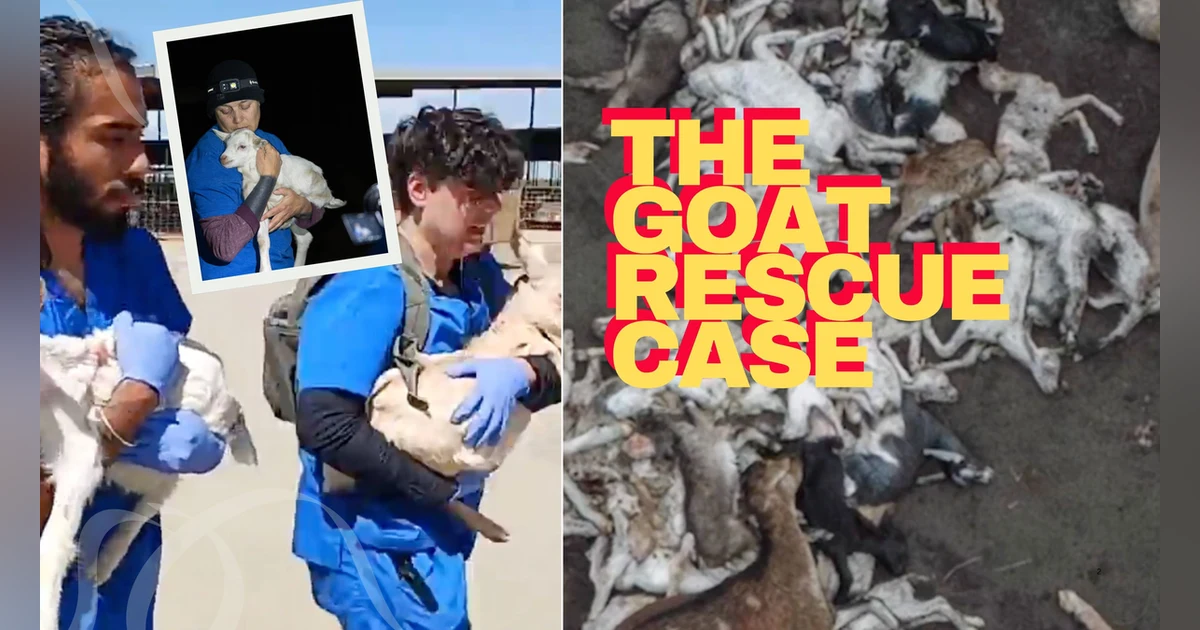


Goat rescue trial developments take a dramatic turn as four Direct Action Everywhere animal rights activists get a major break in a controversial California case. The activists faced felony charges after rescuing two sick baby goats, Phoebe and Celia, from Vera Goat Dairy in Northern California. Now, those felony charges have been reduced to misdemeanors, eliminating the possibility that the four defendants could face more than six years behind bars.
"The charges have just been reduced from felonies to misdemeanors."
– UnchainedTV
What You'll Discover
Jane Velez-Mitchell speaks with defendants Carla Cabral and Sally Zito following the dramatic court appearance. The case raises larger questions about open rescue, animal cruelty allegations and the legal risks faced by animal activists. UnchainedTV reports that controversy also surrounds an alleged prior relationship between the prosecuting District Attorney and the owners of the farm property—an issue the defendants characterize as a conflict of interest. The District Attorney's office was ordered to disclose information concerning that alleged relationship.
"Going to trial is important so that we can present this evidence to the general public."
– Carla Cabral
Join the Adventure
Hear directly from the activists at the center of this extraordinary animal rights trial and discover why its outcome could matter to the broader Right to Rescue movement. Listen now, share this episode and follow UnchainedTV for continuing coverage.
Jane Velez-Mitchell is an award-winning journalist, TV producer and NY Times bestselling author who founded UnchainedTV, the world's premier plant-based streaming network. UnchainedTV offers 2,000 free documentaries, cooking shows, lifestyle and news programs. Download UnchainedTV free on mobile or TV streaming devices like Amazon Fire, Roku, and Apple TV. Watch online: https://watch.unchainedtv.com/browse
💡 DONATION INFO & UNCHAINEDTV LINKS
Thank you for watching! UnchainedTV is a 501c3 nonprofit. Our vision is a world where plant-based, cruelty-free, sustainable living is the norm—across food, fashion, science, and entertainment. You can help us spread this crucial message here:
👉 Donate: https://unchainedtv.com/donate/
Links:
🎥 WATCH for FREE: https://unchained.tv
✅ LEARN MORE / https://unchainedtv.com
📘 Facebook / janevelezmitchell
📬 SubStack / https://unchainedtv.substack.com
📸 Instagram / unchained_tv
🐦 Twitter / jvm
🔴 Reddit / https://www.reddit.com/user/Unchained_TV/
📺 Rumble / https://rumble.com/user/UnchainedTV
TRANSCRIPT:
(0:00) A slew of arrests in Northern California (0:03) as the animal rights organization Direct Action Everywhere (0:07) held a huge animal liberation convergence. (0:10) A smaller team of activists capped it all off (0:13) with a dramatic open rescue of two baby goats (0:16) from a factory farm south of San Francisco. (0:19) Goats they described as sick.
(0:21) Eye discharge, nasal discharge. (0:23) The goats, whom they named Phoebe and Celia,(0:26) were rushed away to get medical care. (0:28) Then, the activists returned to the farm.
(0:44) One activist tried unsuccessfully to show sheriff's officers (0:49) what he called evidence of an emergency, (0:52) necessitating rescue. (0:53) We can turn around in a second. (0:56) Coined the Goated Five, the five activists (0:59) were hailed as heroes by supporters gathered around them (1:02) as they were led away by authorities.
(1:14) That was back in May of 2025. (1:18) Four of those activists ended up being charged (1:21) with felonies that could have landed them behind bars (1:26) for six years. (1:28) And the breaking news we can tell you about today (1:31) is that those charges have reportedly been reduced (1:36) to misdemeanors, and Direct Action Everywhere (1:40) is calling that a huge victory.
(1:42) We've got two of the defendants here alive, (1:45) Carla Cabral and Sally Zito. (1:47) And Sally is with her dog. (1:49) No, that's not a goat.
(1:50) But that is her dog that we're holding, so he doesn't bark. (1:55) Tell us what happened.(1:57) You guys are smiling, so I assume the reports (2:00) that your charges have been reduced are accurate? (2:04) They are accurate.
(2:06) The charges were reduced to misdemeanors. (2:09) And I think that we have mixed feelings(2:12) among the defendants about how this is progressing (2:18) because it's not quite over yet.(2:21) But we were happy that this judge, (2:24) who has been extremely fair, this has been, in my experience, (2:29) one of the most neutral and unbiased judges (2:32) that I have been around.
(2:35) They have not been either swayed wholly by our side of things, (2:44) nor have they been able to be influenced (2:47) by the prosecution, in my opinion. (2:50) So I think that the fact that they came to this conclusion (2:54) after seeing the overwhelming amount of evidence (2:59) that we had of animal cruelty and the unfair nature (3:03) with which we were charged with felonies,(3:06) even though he originally said that he was probably going (3:09) to side on keeping them felonies, (3:12) he did ultimately reconsider (3:15) and change us to having only misdemeanors.(3:20) Yes, and that was a bit surprising that he did reconsider (3:25) because he seemed very firm on keeping these as felonies (3:29) as recently as this morning.
(3:32) And so we were bracing ourselves for that decision. (3:35) And then apparently upon reading some more of the evidence (3:40) and he said some very persuasive arguments from the legal team, (3:44) he said that he had changed his stance. (3:47) So it was quite a surprise.
(3:50) And so what I find fascinating is that you're not celebrating, (3:53) like normally someone would say, (3:55) oh my God, I'm not going to go to prison for six years. (3:59) The maximum with misdemeanors, I don't know what it is, (4:02) but it's certainly not a lot of time behind bars. (4:05) But you are more concerned with getting your story (4:09) out to the public and having your day in court.
(4:11) Is that correct? (4:13) Well, honestly, it's about having Phoebe and Celia's stories told, (4:18) letting them have their day in court. (4:20) We are simply the proxy, you know, (4:23) working as whistleblowers, (4:25) being firsthand able to witness what these animals are going through. (4:30) And after I had identified Phoebe and Celia as really being in need (4:36) of emergency medical care, (4:39) it really comes down to telling their stories.
(4:42) And you can see how many goats are on this facility. (4:46) You know, we heard reports of anywhere from 5,000 upward to 9,000 goats (4:53) on this dairy, none of whom are getting to run through grass (4:58) or eat leaves off of trees. (5:00) You can see that they're just in these dirt lots right there.
(5:03) You're looking at babies, right? (5:05) That's Phoebe right there who had feces on her. (5:09) Celia also had feces on her, crusted over eyes, (5:14) crusted noses indicative of severe respiratory infections. (5:19) Their abdomens were distended, (5:22) which can mean that they might be carrying a load of parasites.
(5:26) And, in fact, when I had retrieved some dead baby goats (5:30) from the large, massive dead pile on the facility (5:35) and had them tested at UC Davis, (5:38) we found that those babies had died from severe emaciation, (5:43) that they were lacking in nutrition, (5:45) that they did have parasites, respiratory infections. (5:49) And so when I saw Phoebe and Celia, (5:52) all I could imagine was that they were going to be in that dead pile next, (5:56) and we could not let that happen. (5:58) It just wasn't going to happen.
(6:00) So while we have this incredible news (6:03) that the charges have been dropped to misdemeanors, (6:06) there are other controversies. (6:08) I would like to play a clip from Direct Action Everywhere, (6:13) starring you and some of the other defendants, (6:16) where you talk about what you call (6:18) a conflict of interest by the prosecutor. (6:22) Let's hear it, and then we'll discuss on the other side.
(6:25) Guess who donated thousands of dollars (6:27) to the prosecutor charging us for rescuing goats? (6:31) The goat farm. (6:32) But wait, it gets worse. (6:35) Before becoming county prosecutor, (6:37) Sarah Hacker was the private attorney for this very farm.
(6:41) Meaning, Hacker's office is now prosecuting a case (6:44) on behalf of a former client. (6:47) Isn't that a conflict of interest? (6:49) Well, at least the sheriff's office got its wish. (6:51) And I need an exact amount for those goats.
(6:55) Are you recording? (6:58) Okay, I guess you caught that curse (7:01) by the law enforcement officer there. (7:04) So how did you discover this? (7:08) And what was the reaction? (7:11) Was it brought up in court? (7:12) Because you're saying it's a major conflict of interest. (7:15) In fact, it sounds like a major conflict of interest.
(7:20) Yes, I think what I understand is that (7:23) these are usually brought to the court (7:25) by the person who possibly has the conflict of interest. (7:29) So how we may have expected to have found out (7:32) would be that the DA would have revealed it to us (7:35) and the judge at some point to say, (7:37) look, just want you to be aware of this. (7:39) But I believe we found out through(7:40) a Freedom of Information Act request.
(7:42) Right, a public records request. (7:46) We had a lot of documents to go through. (7:48) And we were very surprised to see that (7:52) the DA had in fact formally represented (7:55) the landowners of this dairy (7:58) and did not disclose that to us.
(8:01) And in fact, one of the other things that happened today (8:03) was that we had a motion to compel (8:06) because we had asked the DA to provide information to us (8:12) about her involvement, and she refused to do so, (8:16) or at least that's my understanding. (8:18) So we put forward a motion to compel (8:21) and the judge granted that. (8:23) So we were expecting also and still are expecting (8:27) to get more information to clarify (8:29) why we weren't told about this (8:32) and what exactly is going on between her and the dairy, (8:37) even today, because we know that not just (8:40) did she represent them for workers' rights violations, (8:45) but also having given thousands of dollars (8:48) to her campaign election from that dairy, (8:52) it just doesn't look good.
(8:54) Yeah, pretty wild. (8:56) So do you expect your attorneys to continue to bring this up? (8:59) I mean, it seems like it's a big issue. (9:04) Yeah, I do hope that this continues forward (9:07) because while everything is not complete, (9:11) and like we said, the judge, after reviewing everything, (9:15) decided to reduce our felonies to misdemeanors, (9:19) but he also then went a step further (9:21) and decided to have a judicial diversion for us (9:27) where we were being offered 40 hours of community service (9:32) and six months where we don't get into any legal trouble.
(9:38) And if that goes forward, then everything is dropped. (9:42) We wouldn't be charged further for this. (9:46) And we hope that by continuing forward with that motion (9:53) to compel information from the DA, (9:56) that it will prevent future instances for other people (10:00) who might also have a conflict of interest.
(10:03) And we would hope that if we can get this out there, (10:08) that the DA won't hide this from anyone else (10:11) for any other reason. (10:13) This is very interesting stuff. (10:16) I want to put up a couple of comments (10:21) from this district attorney, and we invite her on anytime.
(10:26) We would love to dialogue with you. (10:28) This is the district attorney who you're talking about, (10:32) and I'm holding a letter from last August (10:34) where she essentially said, (10:37) nothing to see here. (10:39) All of Direct Action Everywhere's allegations (10:43) have no foundation.
(10:45) And I want to dive into the smoky gun, as it were, (10:51) is the dead pile. (10:53) So Direct Action Everywhere photographed this pile of goats (10:59) saying this was at the dairy in question.(11:02) And one of the reasons you went in, (11:04) because there's at least looks like two dozen goats there.
(11:09) And your contention is that, well, this is a dead pile. (11:14) It's a mass grave. (11:16) It's horrifying.
(11:18) And their reaction to this is that if you look at it, (11:25) there's approximately 5,000 to 5,500 goats. (11:28) This is according to the DA. (11:31) And that approximately one goat dies per day on average.
(11:36) And during kidding season, January through April, (11:39) approximately three to four die every day. (11:43) And that's based on the National Animal Health Monitoring System. (11:47) The overall goat mortality rate for adults is 7.2% annually (11:53) for adults and 13.8% for kids.
(11:58) So that they're saying the dairy, and we invite the dairy on any time (12:02) to discuss this, their mortality rate is within industry standards. (12:09) And they also said that this dairy disposes of deceased animals (12:14) via composting, placing carcasses beneath manure piles (12:19) located on the north side of the property away from the herd. (12:23) This practice aligns with evolving state guidance.
(12:28) So what is your reaction to that? (12:31) Because it sounds like what they're describing is this, (12:36) but these goats, A, are not covered by manure. (12:40) And secondly, is your contention that that is legal? (12:47) So it was not, there is some debate about whether that was legal (12:56) or not legal at the time. (12:58) We contend that it was not legal because the Water Quality Board (13:04) cited them for it.
(13:05) Why would they have a citation if it was perfectly legal to do? (13:09) And then later the law was changed. (13:13) But even so, that's not the only open dead pile (13:18) that we have evidence of. (13:20) We went back multiple times and got drone footage (13:24) of several different dead piles that were just out in the open.
(13:29) And we even have footage of the dogs that are on the property (13:35) ingesting the dead flesh off of these carcasses. (13:40) And that is not okay. (13:43) They are supposed to dispose of these animals in a way (13:47) that discourages scavenging.
(13:50) And usually one might think that it would be a vulture (13:53) that would come in and perhaps scavenge on these animals, (13:57) but instead it was the dogs on the property (14:01) tearing their flesh apart. (14:02) I mean, it was absolutely abysmal. (14:05) And when you're there, there's just no way to describe (14:08) the smell and the visual of all of these thousands of goats(14:16) and other animals.
(14:17) I saw myself bones of a cow that was mixed in as well (14:22) because it's not just that dead pile. (14:25) There are huge rows of large piles of dirt. (14:29) And you can see all scattered through that are bones.
(14:32) And there are varying degrees of decaying animals. (14:36) I mean, it's a hellscape for sure.(14:39) And even if it's legal at the moment, that doesn't make it okay.
(14:44) And we invite that farm on. (14:46) We also reached out the dairy farm supplies, (14:50) Meyenberg, which is the largest distributor of goat milk. (14:55) And they did not respond to us,(14:57) but they did issue a statement to the Fresno Bee.
(15:00) We have followed up with onsite visits (15:02) and have found no evidence to support the claims being made. (15:05) And the farm was recertified in October of 2025. (15:15) And that is recertified by an organization (15:19) that monitors for humane standards purportedly.
(15:22) So what is your response to that? (15:27) I mean, they are certified humane. (15:30) And I feel horrible because the average consumer does not know (15:35) that in order to get recertified, they pay for that. (15:39) It is a paid service where they come out.
(15:43) And sure, I mean, if there is an announced visit (15:47) and they choose to look in certain places (15:50) and they don't look in other places. (15:52) I mean, we reported the dead pile. (15:55) The animal control officers went out and said, (15:59) we don't see any dead animals.
(16:01) And we went back the very next day that we received that report (16:05) and there was still a dead pile right out in the open. (16:09) So to get recertified, I don't believe myself (16:14) that that is actually folding these places (16:18) to some grand higher standards than one might think.(16:23) Absolutely.
(16:24) And especially the fact that we do have this in writing (16:27) that they went out, they saw no dead animals, (16:30) and then the drone went up and saw dead animals. (16:33) So it just makes you think, where is the disconnect? (16:37) The dead animals have been there for, it looks like, decades. (16:41) The level of bones sticking out of the dirt, (16:45) this is not like just a few years.
(16:49) Let me ask this because they're saying essentially (16:53) that it's composting. (16:54) This is the DA saying that this dairy disposes of deceased animals (17:00) via composting, placing carcasses beneath manure piles (17:04) located on the north side of the property, (17:07) and that this practice aligns with evolving state guidelines. (17:11) And they even mention a new law that hadn't been passed yet.
(17:18) It went into effect in 2026, (17:22) but your investigations happened in 2025. (17:26) So maybe you could discuss that a little bit, (17:28) because it seems to me that you're talking about a dead pile. (17:32) They're also talking about carcasses, (17:36) and the difference is they're saying that the carcasses (17:40) are covered in manure, and that makes it okay.
(17:45) Yeah, I mean, we can talk all day long (17:48) about what it means to actually compost.(17:51) They did pass AB 411 that changed the law (17:57) so that they would be able to dispose of carcasses on the property. (18:02) Whether they're doing it exactly up to standards or not, I can't say.
(18:09) The evidence that I saw with my own eyes back when we took it said, (18:15) no, that was not legal. (18:17) Whether things are being done different now, (18:19) unfortunately I can't go back right now and take a look. (18:24) But what really we need to take a look at (18:27) is not whether the composting is being done properly or not, (18:32) but why are all of these animals dying?(18:36) This is a function of having these massive warehouses (18:42) full of thousands of animals.
(18:44) Anytime you have these concentrated animal feeding operations, (18:49) you are going to have disease that runs through here, (18:53) and I'm sorry, I just cannot accept what they call acceptable losses. (19:00) To think that animals are just dying every day, (19:04) and that that is acceptable. (19:06) I mean, 13 point some percent of animals (19:10) being considered an acceptable amount, (19:13) and oh, just because they have, according to what they're telling us,(19:17) fewer than that.
(19:18) To say that that is all right, in my eyes, is an abomination (19:23) when we're talking about being good stewards of these animals. (19:28) They cannot be properly cared for when they are kept in these massive numbers. (19:34) It's not okay.
(19:36) I think the point you're making is that the very fact (19:41) that this is within industry standards (19:46) is a reflection of the entire industry. (19:51) And that this doesn't necessarily,(19:54) this is not necessarily out of the norm. (19:59) In fact, the DA is saying, well, this is absolutely normal (20:03) and this is happening across all of these dairies.
(20:09) Yeah, I will say that we have to push against things (20:15) like acceptable standards like this. (20:17) And when we faced Sergeant Faustnett, (20:20) the one who said make it a fucking felony, (20:23) he was very flippant in court saying, (20:27) well, you know, animals are going to die.(20:30) Animals die, people die, go to a morgue, (20:34) you'll find dead people as if that's the same thing.
(20:37) And we all know it's not. (20:39) And like I said, when I had the baby goats evaluated at UC Davis, (20:46) it wasn't, well, they were poor doers and some animals are going to die. (20:52) I think we can all agree that, yes, some animals are going to die, (20:58) but this is excessive to that.
(21:01) Whether it's within industry standards or not, (21:04) this is unacceptable to have this number of animals die (21:07) and to see that they were dying from malnutrition, (21:11) from emaciation, muscle atrophy, parasite infection. (21:16) That is not normal, nor should it ever be.(21:21) Well, I don't know if we've covered all the controversies surrounding this case, (21:26) but we certainly have covered a lot of them.
(21:29) And my final question to you is, what's next? (21:33) When does your trial occur? (21:38) Yeah, I guess there is another hearing on September 23rd (21:43) to see if we can cement or dry the ink on these thoughts that the judge is having. (21:49) We hope that they will stick to what we think with the misdemeanors, (21:56) the felonies coming down to misdemeanors and possibly diversions, (22:00) but we have to wait and see because anything can happen in that time. (22:05) Yeah, it's really a matter of us actually not going to trial, (22:10) and that's why we're not so celebratory as one might think, (22:14) because, again, going to trial is important so that we can present this evidence (22:21) to the general public so that we can elevate the story of Phoebe and Celia (22:28) and all of the other goats that are at this Whole Foods goat dairy (22:32) that's supplying milk to Meyenberg under cruel conditions, (22:36) and we're not going to get that day in court.
(22:40) And we can still spread the word and we can still talk about this, (22:45) but, yes, we are to some degree very hopeful and grateful (22:50) that the judge was able to see through what the industry was trying to sell (22:55) and really, I don't know, he wasn't on our side, (23:02) but luckily he was able to see the cruelty evidence and also just the law. (23:08) He read the law for what it is, and he decided to do the judicial diversion (23:14) and the prosecution is going to oppose that.(23:19) And so this isn't quite over, but we will find out September 23rd (23:23) the final ruling of how this will go down.
(23:27) So to clarify, it's not clear as to whether you'll even go to trial. (23:33) Correct. (23:35) And so in September you're going to go back to court, and is it ironic? (23:42) Are you actually going to be fighting to go to trial (23:45) when most defendants do everything in their power to not go to trial? (23:51) Just clarify for people who don't understand the nuances of the law.
(23:56) Yeah, I think that normally we would be fighting to go to trial, (24:01) again, to elevate what's happening to all of the goats on these factory farms, (24:06) but the judge really wanted this to be over with. (24:12) I think that he saw that there was overreach by the prosecution (24:17) to artificially inflate these charges to felonies, (24:21) and after seeing all of the evidence he really wanted this to be done, (24:27) and so he offered the 40 hours of community service and six months (24:34) where if we are on good behavior and don't do anything wrong (24:39) that everything will basically go away, (24:43) and I think that we are all all right with that. (24:47) I think it still gives us an opportunity to talk about what happened (24:50) and to make sure that people understand how important it was to make sure (24:56) that Phoebe and Celia were taken care of(25:00) and that they are happy and healthy today as far as we know, (25:03) and hopefully in the future people will question what is happening on these farms (25:09) and question what the industry norms are (25:11) and whether they should actually be what they are.
(25:14) I just want to thank both of you. (25:16) I know it's been a very long, trying day for you.(25:19) I appreciate the fact that you took the time to talk to us, (25:23) and please keep us posted because people are interested in this case (25:27) so we can bring the very latest to our viewers when you make your next appearance.
(25:34) Thank you. (25:35) Thanks so much. Bye.
(25:36) Thank you. (25:38) Bye-bye. (25:38) And once again, I want to say, as we've said before,(25:41) any companies involved, you are invited on Unchained TV.
(25:45) We would love to dialogue with you, and that goes for the district attorney as well. (25:49) So it's a vegan Netflix. (25:52) Okay, that's the craziest thing I've ever heard.
(25:54) I love Unchained TV. (25:55) Unchained. Unchained TV.
(25:57) Your life will change. It's just that easy. (25:59) Unchained TV has all sorts of content for everybody.
(26:03) Unchained TV changed my life. (26:05) Unchained TV is crushing it. (26:08) I love Unchained TV.
(26:10) Unchained TV is my go-to. (26:12) Unchained TV. (26:13) Who knew? (26:14) Unchained, baby!