
The Smartest Show You're Still Discovering Jokes In
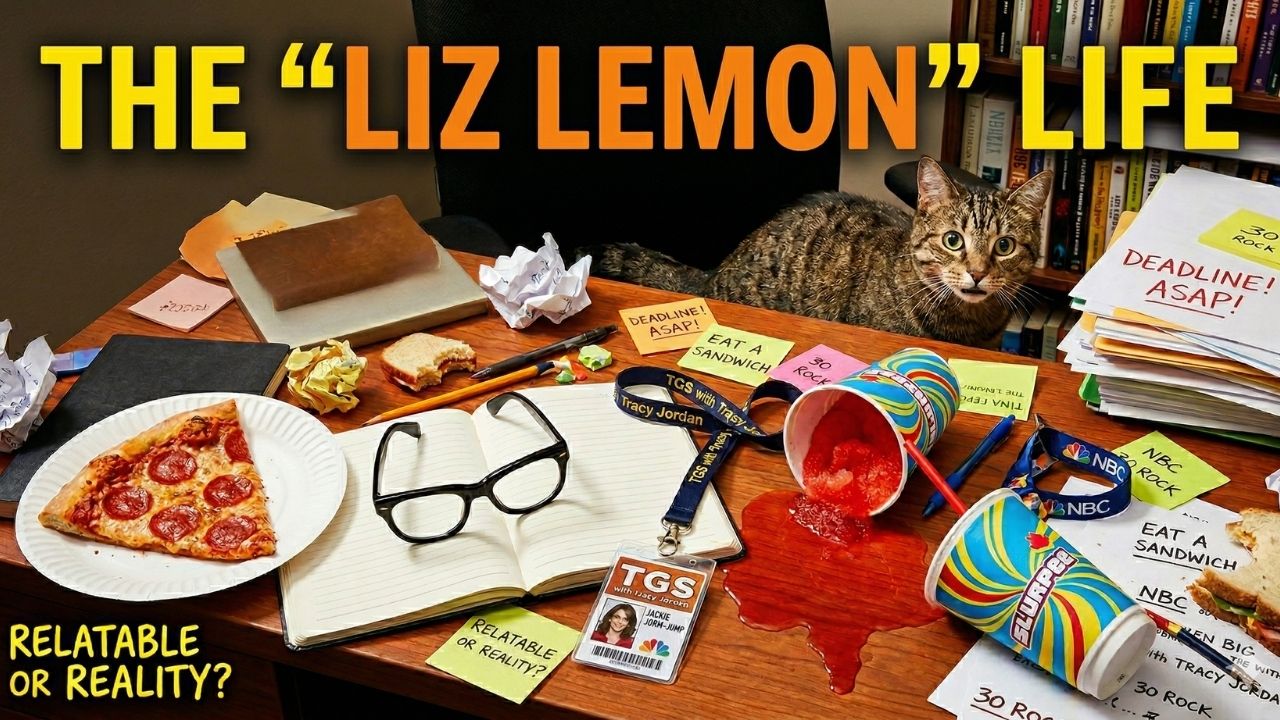
The Smartest Show You're Still Discovering Jokes In
If you've ever binged a comedy and felt like you were doing homework—in the best way—you understand 30 Rock. The NBC sitcom that ran from 2006 to 2013 didn't just make you laugh. It trained you. It punished you for scrolling on your phone. It rewarded obsessive rewatchers with Easter eggs buried three punchlines deep. And more than a decade later, it still holds up better than most shows airing today.
On this week's Parallel Frequencies, Just Blane and Coco (after an April Fools prank involving a fake Forrest Gump 2 screening) dove into why 30 Rock remains untouchable. The answer isn't just "good writing." It's a masterclass in trusting your audience, showing messy leadership instead of fantasies, and proving that chaos—when channeled correctly—creates genius.
Joke Density That Feels Disrespectful
The first thing you notice about 30 Rock is the speed. Blink and you miss three punchlines, a cultural reference, and a sight gag in the background. As Blane pointed out on the podcast, "It's almost disrespectful." But that's exactly why it works.
Unlike traditional sitcoms that hold your hand with setups and pause for laugh tracks, 30 Rock assumes you're smart enough to keep up. Tina Fey, who created and starred in the show, trusted the audience's intelligence. She didn't dumb down the humor or wait for you to catch up. The jokes kept coming, layered and fast, which made the show infinitely rewatchable.
Think about it: How many times have you watched an episode and caught something new? A background detail. A throwaway line that suddenly clicks with a joke from three episodes ago. That's intentional design. The writers weren't interested in easy laughs. They wanted you engaged, thinking, and coming back for more.
Liz Lemon: The Anti-Girl Boss We Needed
At the center of 30 Rock is Liz Lemon, played by Tina Fey herself. She's the head writer of a fictional sketch comedy show, navigating the chaos of live television while managing a team of eccentric personalities. But here's what makes Liz different from most TV heroines: she's a mess.
She's not a polished "girl boss" who has it all figured out. She struggles with her identity, her appearance, and whether she's respected for her work or dismissed because she doesn't fit Hollywood's beauty standards. In one episode, she dresses up to prove she can be "hot too," only to be met with awkward reactions. It's painfully relatable.
Coco highlighted this on the podcast: "Liz struggles with her identity in a lot of ways. She's not that beautiful, gorgeous type. I actually think she is gorgeous, but she doesn't show that." The show constantly asks: How do women show up in spaces where looks and power intersect? If you're too firm, are you a bitch? If you're too soft, are you weak? If a man does the same thing, he's just... a boss.
30 Rock didn't answer these questions neatly. It sat in the discomfort, which is what made it honest.
The Reunion Episode: When Perspectives Flip
One of the most brilliant episodes of 30 Rock is the high school reunion. Liz remembers herself as the bullied nerd—awkward, picked on, invisible. But when she returns to her reunion, her former classmates reveal the truth: she was the mean girl.
The same flashback scene plays twice. First, from Liz's perspective (she's the victim). Then, from reality (she's the aggressor). It's a gut punch of self-awareness. How often do we remember ourselves as the hero of every story when the truth is more complicated?
As Coco said on the podcast, "My favorite things that happen on the show are when perspectives are shifted a little bit. You perceive things a certain way, but it's not actually how it was at all."
This theme runs throughout the show. Characters misjudge situations, themselves, and each other. The comedy comes from the collision between perception and reality—a lesson that applies to life, relationships, and definitely content creation.
Messy Leadership, Not Fantasy
Tina Fey didn't just create a funny show. She redefined what women in power could look like on screen. Liz Lemon isn't a superhero. She's stressed, overworked, and constantly putting out fires. She eats night cheese. She wears Slankets. She doesn't have a perfect work-life balance because no one does.
Blane put it perfectly: "Tina Fey changed the culture. She made being a woman in power look complicated, not perfect. No superhero energy, no girl boss fantasy. She just does it."
And that's the key. Liz doesn't monologue about empowerment. She just shows up, manages chaos, makes mistakes, and keeps going. For anyone who's ever built something—a business, a podcast, a creative project—while feeling like everything's on fire, Liz Lemon is your patron saint.
The Guest Stars Who Showed Up Because They Believed
One underrated aspect of 30 Rock is the sheer volume of A-list guest stars: Matt Damon, Jon Hamm, Jason Sudeikis, James Marsden, Oprah (kind of—long story involving airplane drugs). These weren't just cameos for publicity. These were friends and collaborators who believed in what Tina Fey was building.
As Blane noted, "That just shows you how connected these people were. You see friends coming to her, lending a hand and helping grow this thing because they believed in her."
It's a reminder that great work attracts great people. When you're creating something smart, something that respects its audience and takes risks, the right collaborators show up.
Why It Still Matters for Creators Today
Here's the thing about 30 Rock: It's not just a sitcom. It's a case study in managing creative chaos. Every episode is Liz trying to get a show to air while dealing with diva actors, network executives, last-minute rewrites, and personal disasters. Sound familiar?
If you're a podcaster, content creator, or entrepreneur, you know this feeling. You're building something while everything's breaking. You're trying to maintain quality while deadlines crush you. You're balancing vision with reality.
30 Rock shows you that the chaos is part of the process. The mess doesn't mean you're failing. It means you're creating something real.
Final Thoughts: Can You Be Liz Lemon?
At the end of the episode, Blane posed a question to listeners: "When in your life have you been Liz Lemon? Are you right now? Should you be?"
It's worth asking. Are you managing chaos while chasing something bigger? Are you trying to lead without pretending to be perfect? Are you building something that trusts people's intelligence instead of dumbing it down for mass appeal?
Because if you are, you're in good company. And if 30 Rock teaches us anything, it's that messy, smart, and honest beats polished fantasy every single time.
Want more deep dives into the shows that shaped culture? Subscribe to Parallel Frequencies wherever you listen to podcasts. Recorded and edited with Riverside for studio-quality sound, clipped and distributed with Opus Pro for maximum reach, and hosted on Podpage for a seamless listening experience. Follow Just Blane and Coco for weekly breakdowns that connect what we watch to how we live.
🌊 Visit https://www.ridethewave.media
📺 Subscribe: https://YouTube.com/@parallelfrequenciesdaily
📺 Full Episodes: https://YouTube.com/@ridethewavemediapodcast
📸 Instagram: https://Instagram.com/justblanesworld | https://Instagram.com/ridethewavemedia

When Desperation Meets Manipulation: How "Housemaid" Mirrors Our Digital Burnout