Consistency is Key: Crafting a Memorable Brand Identity
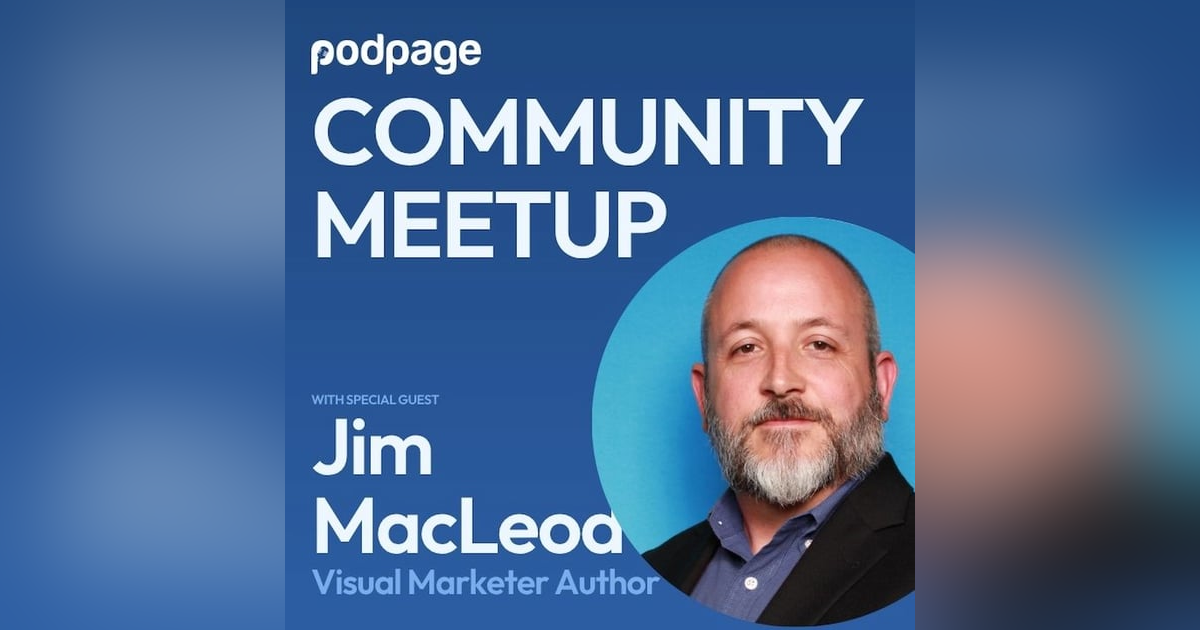


Hey everyone, Dave Jackson here! In this episode, I sat down with Jim McLeod, the mind behind the book The Visual Marketer: The Marketer’s Crash Course for Creating Memorable and Effective Visuals. We dove deep into what it takes to build not just a brand, but a truly standout visual brand for your podcast or business.
Here’s what you’ll learn today:
- Why your brand is much more than just your logo. Jim breaks down the misconception that your brand is simply your logo — it’s every interaction people have with your business.
- How to think about your logo and colors. We chat about why starting your logo design in black and white is so important, and how to pick colors that mean something to your audience (and why blue is so common in tech, for example).
- Choosing colors that help you stand out. Jim shares how owning a color, like T-Mobile’s magenta or Home Depot’s orange, can boost your recognition. He even discusses surprising meanings behind colors like red, blue, green, and neon, and how international audiences might interpret them differently.
- Survey and analytics tips. I ask Jim for his best practices on getting meaningful feedback from your audience — including the need to pair survey responses with real analytics, since what people say and what they do can be totally different.
- The power of faces and typography. YouTube thumbnails (and all digital artwork) can benefit from bold faces and bold type — but you do have to strike the right balance based on whether you’re the brand or the topic is the draw.
- Common design mistakes. We tackle the issue of not leaving enough white space, and why consistency with your fonts, colors, and layouts is absolutely essential for quick brand recognition.
- How to research your competition and carve your niche. Jim recommends creating Pinterest boards or swipe files to study what others are doing — and then finding your spot in the “white space” to stand out, without looking totally out of place in your market.
- Using AI for visual design and prompts. Jim gives his take on trusting AI-generated color palettes and how to create consistent visuals even when you’re using tools like ChatGPT or Canva.
Plus, we touch on classic rivalries (Coke vs. Pepsi, Marvel vs. DC, Red Sox vs. Yankees) and how even your color choice can put you side-by-side — or directly opposite — your biggest competitors.
Shout-outs in this episode to Stephanie Graham (for the neon color question!) and Zita Christian (for the story on Tiffany blue and copyright — wild stuff).
Here is the video version.
More From Jim Macleod
Check out Jim’s book at visualmarketer.co and subscribe to his newsletter at MarketingByDesignKit.com.
Next Month: Matt Diamante
Coming up next month: I’m thrilled to welcome Matt Diamante of heytony.ca to talk simple, actionable SEO tips for podcasters and creators! Check out his YouTube Channel.
And don’t forget — if you haven’t tried Podpage yet, get your 14-day free trial here.
Thanks for listening — keep building that brand and I’ll catch you in the next episode!
This podcast uses the following third-party services for analysis:
OP3 - https://op3.dev/privacy
00:00 - Untitled
00:04 - The Power of Thumbnails in Digital Branding
01:55 - What is a Brand?
03:14 - Start with Black and White
05:23 - Choosing the Right Colors for Your Brand
06:15 - Understanding Branding and Audience Insights
08:15 - Faces in Podcast Artwork & Thumbnails
09:39 - Best Practices for YouTube Thumbnails
11:44 - How People View Graphics: ‘Think Like a Z’
12:11 - Understanding Color Psychology in Design
16:20 - From Podcast Artwork to Website Branding
17:07 - Choosing Colors for Branding
17:45 - mportance of White Space in Design
18:31 - Understanding White Space in Design
23:01 - The Impact of AI on Design and Marketing
Ever wonder why faces and bold words dominate YouTube?
Speaker AThumbnails.
Speaker AThe psychology goes back millennia and today we're looking at not just making a brand, but making a great looking brand.
Speaker BWelcome to Podcast website Tips, the ultimate guide for podcasters who want to level.
Speaker AUp their online presence with no coding required.
Speaker BWhether you're a seasoned pro or just getting started, this show gives you practical, actionable advice to build and optimize podcast website.
Speaker AWe cover everything from design and content.
Speaker BTo SEO and monetization.
Speaker BGet ready to attract more listeners and take your website from good to great.
Speaker AHere's your host, Dave Jackson.
Speaker AHey, I'm Dave Jackson, head of podcasting here@podpage.com and we had our October meetup with Jim McLeod.
Speaker AHe is the man behind the book the Visual Marketer.
Speaker AThe the Marketer's crash course for creating memorable and effective visuals.
Speaker AI'll have links to all this out at podcast website tips.com 3, 2 and so obviously since we're talking about making graphics, some of this webinar and I'll have a Link to the YouTube if you want to watch.
Speaker AIt is visual.
Speaker ASo what I've done is I've gone through and cut out the things that were super visual and so we can talk about great tips on again, not just making a brand, but making a good looking brand.
Speaker ABecause I see things sometimes that just burn my corneas and I'm like, how are you thinking that works?
Speaker AAnd the answer might be they were colorblind or there are actual reasons why sometimes people just don't see that that looks good.
Speaker ASo I brought in Jim to help us kind of walk through how to make a great looking brand.
Speaker ASo we started off the webina at the very beginning by defining, well, what is a brand?
Speaker BSo a brand I usually like to start this with what it's not.
Speaker BAh, good brand is not your logo.
Speaker BAh, like a lot of people think, okay, this is my logo, this is my brand.
Speaker BBut a brand is actually every touch point you have with a customer prospect and it either adds to the brand value or subtracts from the brand value.
Speaker BSo if it every time you get an email, every time you call customer support, every time you're interacting with some sort of business, you're having a brand interaction.
Speaker BAnd in order to build a powerful brand, your business needs to deliver on every interaction.
Speaker BSo yes, your logo, your colors, your website, all that kind of help shape what the brand is.
Speaker BBut you don't actually, you don't actually own that it can be because it's so many more things Robert Rose used to say that image is what you project and brand is how it's received.
Speaker BSo your brand, as much as you try to own your brand and say like, this is what our brand is, the brand actually lives in the hearts and minds of every person who is experiencing your business.
Speaker AI love that your brand lives in those who consume it.
Speaker AI love that.
Speaker AAnd one of the things you might think about is when it comes to making a brand or a logo, start with black and white.
Speaker BThis actually goes back to the old print only days of design, which is when I was originally trained.
Speaker BSo I, when I was studying design was right as computer programs were starting to become more active.
Speaker BSo my freshman year of college, we were setting metal type and then rolling ink on it and putting paper down and doing presses that way.
Speaker BMy sophomore year is when we actually got access to the computers and started using Photoshop.
Speaker BAnd you know, and then like a year later they're like, oh, Photoshop now has layers.
Speaker BLike, this was a new thing and I had a professor who was like, oh, there's this new thing called a portable document file, which we now know as PDFs.
Speaker BBut these were all new things back when I was starting out.
Speaker BBut the reason why it's good to kind of learn, you know, things to be black and white initially was because if you're running a newspaper ad, that's going to be in black and white.
Speaker BBut the reality is, you know, as we get deeper into this, you know, decades now, we're not running newspaper ads anymore.
Speaker BEverything's going to be full color wherever you are.
Speaker BBut there are times where you need that simplified logo.
Speaker BSo if you have a really busy background or even like a black background, you might want just a flat white version of your logo.
Speaker BOr if you are embroidering it on a shirt for a golf tournament or something, or a baseball cap, you need your logo to be simple.
Speaker BIf you have a lot of gradients, you think about the Microsoft Copilot logo that kind of like two Cs that kind of sit on top of each other, it's all gradients and drop shadows and all that.
Speaker BThat's going to be insanely hard to embroider on a shirt or a cap or something.
Speaker BSo if the logo works by itself in just black and white, then it's going to translate into different use cases beside just the upper left hand corner of your website.
Speaker BWhen I'm designing a logo for a client, I'll do it in black and white first because that will, then we'll determine if the design is good or not?
Speaker BBecause if I present three different logo options, one's red, one's green, one's blue, and the person I'm presenting it to doesn't like the color red, that one automatically gets dismissed.
Speaker AAnd once you get your design, then it's time to start talking about colors.
Speaker BYou want to choose colors that evoke the right emotion.
Speaker BOne of the things that I talk about in the book is how colors are interpreted in different parts of the world.
Speaker BFor example, if you've seen the movie Black Panther, Wakanda Forever, there's a funeral scene in there and everyone's wearing white because white represents death in that culture here in the Western world, we tend to wear black to funerals and white to weddings.
Speaker BWhereas in China they tend to wear, the bride will wear red to weddings.
Speaker BAnd so if you think about, you know what this, the message it would convey if you were to wear white to a funeral or red to a wedding, it's drastically different.
Speaker BSo you need to think about how that, that works across all the different regions of the world and the message that you're trying to convey and those.
Speaker AMessages start by knowing who your audience is.
Speaker BAnalytics.
Speaker BIf you're doing any sort of digital marketing or you know, if you're, wherever you're hosting your podcast or videos or anything, if you look at the analytics, they will tell you exactly what they're interested in.
Speaker BAnd so I used to use a video platform called Wistia and that was great because it would give you analytics for every single viewer, how much of the video they watched.
Speaker BAnd the best part is where we could see that they went back and re watched a segment.
Speaker BSo that tells me that either one, they didn't understand it or two, they really liked it and they wanted to understand it better.
Speaker BSo then we could take that information and be like, all right, let's go back, let's double down on this, either to clarify it or they want to know more about this.
Speaker BLet's create more content in this space.
Speaker AInteresting.
Speaker AAnd I know you talk about surveys.
Speaker APodPage has a built in survey that you can kind of customize.
Speaker AAre there any best practices when it comes to using a survey?
Speaker ABecause the mistake I always hear is I can't get people to fill it out.
Speaker ASo do you have any insights on that?
Speaker BUsually if there's some sort of incentive, people are more likely to fill it out.
Speaker BBut it's the surveys can be interesting because then it turns into a little bit of people like to say the right things, even if they're not necessarily doing it.
Speaker BSo you want to take your survey information, your survey data, but then combine that with the actual analytics of what you're seeing audiences doing.
Speaker BBecause if someone's like, oh, I listen to the very end of every episode, and you see, no, they don't.
Speaker BOr I scroll to the very bottom of every webpage and like, no, they don't.
Speaker BSo it.
Speaker BYou know, somebody might want to be helpful to you, like, oh, I think you've got the best podcast and you got the best website and you've got the best promotions, and I consume all of it.
Speaker BAnd the reality is that audiences don't.
Speaker BRight.
Speaker BLike, they.
Speaker BThey trail off as time goes on.
Speaker BSo it's trying to find that fine line between what people are saying and what they're actually doing.
Speaker AGreat.
Speaker AAnd then the one thing I really was interested in is I have always been of the thought when it comes to your podcast artwork, that maybe don't put your face on it because, again, it's going to be really small.
Speaker AAnd I always, like, make the name as big as it can be.
Speaker ABut you talk in the book a lot about how apparently people love faces.
Speaker ASo can you expand on that a bit?
Speaker BYeah.
Speaker BIt's one of those things that we are taught from the literal minute we're born.
Speaker BRight.
Speaker BBabies come out looking for, you know, some.
Speaker BSomeplace safe, and they identify that in the mother's face and in human faces.
Speaker BAnd what happens is, as we get older, we start to learn.
Speaker BWe start to learn how to read facial cues of who is friend and who is foe.
Speaker BRight.
Speaker BLike, these are survival instincts that go back millennia because, you know, we used to be hunted to a degree at some point.
Speaker BRight.
Speaker BSo we need to learn these things.
Speaker BAnd a lot of that's still ingrained in us.
Speaker BSo faces are.
Speaker BWe're drawn to faces because it.
Speaker BIt can be the difference between life and death.
Speaker BLike, it's just wired into the deepest part of our brain.
Speaker AYeah.
Speaker AAnd I know on YouTube especially, it seems like not only are there faces, but everybody has to be going or something of that nature.
Speaker AAny best practices for YouTube design for their thumbnails?
Speaker BYeah, no.
Speaker BAnd it's great because I'm actually working on my next book right now, and I just wrote the video chapter yesterday or the day before or the video thumbnail chapter.
Speaker BAnd.
Speaker BYeah, so it needs to be a combination of faces and bold typography.
Speaker BBut there needs to.
Speaker BBut they can't be competing with each other.
Speaker BLike, there needs to be a clear hierarchy of what you're supposed to look at.
Speaker BFirst and what you're supposed to look at second.
Speaker BSo sometimes the text is so loud, sometimes you want the text to be really loud and then the photo to be secondary.
Speaker BOther times you want the photo to be primary and the text to be secondary.
Speaker BSo some of that has to deal with your brand recognition.
Speaker BLike, do people know your name?
Speaker BDo they know your face?
Speaker BAnd.
Speaker BAnd then other times, is it the topic that are more likely to draw people in?
Speaker BSo you look at somebody like.
Speaker BLike a Mr.
Speaker BBeast who actually.
Speaker BHis video thumbnails don't match.
Speaker BKind of what a lot of best practices are right now.
Speaker BBut it's because he's Mr.
Speaker BBeast and he can do those things, but he.
Speaker BHis face is on every single one.
Speaker BNow, granted, it's all AI and it looks really odd right now, but it.
Speaker BHis face is more recognizable than his name to his audience.
Speaker BRight.
Speaker BAnd it's all about that recognition of how quickly can you see something, understand it, and then move on to the next bit of information you need to consume.
Speaker BAnd that's one of the reasons why faces are so critical.
Speaker BBut then, yeah, type can really make a big difference in there.
Speaker BBut one of the things that I've noticed with typography on YouTube thumbnails is it seems like most type is either white or.
Speaker BOr yellow on a dark background.
Speaker BIt's that high contrast and high energy that you want to be able to grab people.
Speaker BBecause if you're looking at the desktop interface or on a smart tv, you have a lot of different thumbnails to choose from, and your eye is going to go to the one with the most contrast and whatever you, as an individual, are most drawn to.
Speaker AAnd speaking of how people consume graphics, you kind of need to think like a zoo.
Speaker BAnd what you want to do is make sure that you're guiding the viewer's eye around.
Speaker BAnd what you have to think about is here in the Western world, we start in the upper left, and then we go to the upper right, and then we kind of scroll down.
Speaker BWe move in a Z, like fashion.
Speaker BAnd what you want to do is use contrast and placement in order to move the viewer's eye around.
Speaker AAnd so we already talked about some other colors, white and red.
Speaker AWhat do other colors mean?
Speaker BYeah, One of the reasons why you see a lot of blue in technology is because blue often means trust, and it means kind of safety.
Speaker BAnd whereas red means, you know, excitement or danger or fire or blood.
Speaker BLike, red can have a lot of negative connotations.
Speaker BBut if your number one competitor is blue, then you're Obviously going to want to go over to red.
Speaker BBut then there are others.
Speaker BLike, green usually means nature, green energy, solar, all that sort of stuff.
Speaker BOr money in some cases.
Speaker BI'm looking at some of the books behind over my shoulder here.
Speaker ABut then it's funny because if you think about it, John Deere green, people talk about that as a color.
Speaker AThey're like, oh, it's kind of John Deere green.
Speaker ASo there's another company that's owned a color.
Speaker BYeah, yeah.
Speaker BAnd you see it at Sherwin Williams and other big paint places.
Speaker BThey will have dedicated colors to that.
Speaker BI know up here in the Boston area, Fenway Green is a color.
Speaker BRight.
Speaker BLike, everyone knows what that green is and it's something that they own to a degree and they're able to produce products with that.
Speaker BBut then other colors, you know, yellow is kind of life and sunshine and fun and excitement and energy.
Speaker BAnd even though.
Speaker BWhich is weird because a long time ago I heard about a study that said yellow is actually a very aggressive color because you think about the most dangerous.
Speaker BYou know, you think about bees and you think about snakes with yellow coloring.
Speaker BAnd there are times in nature where yellow is actually a sign for danger.
Speaker BSo it ends up triggering different parts of our basic brain because in some ways, like, oh, it's happy in sunlight, but otherwise it's a sense of danger.
Speaker BYeah.
Speaker AInteresting.
Speaker AStephanie Graham from Nosy AF.com says, what about neon colors?
Speaker BNeon colors, they're really popular right now and you're seeing a lot of that because the.
Speaker BWith.
Speaker BEspecially with the rise of AI over the last couple years, everyone's trying to be different.
Speaker BIt's a tech company, but it wants to be a new type of tech company.
Speaker BSo they're not playing the kind of safe, flat colors with sans serif typography.
Speaker BA lot of these AI companies are going for this kind of more electric dynamic because they want to give you a sense of vibrancy and life that's actually going on underneath this.
Speaker BThe pink to purple kind of gradient colors.
Speaker BWe've been seeing that for about 10 years now.
Speaker BSo I'm curious to see how long that popularity cycle goes.
Speaker BBecause colors come in and out of fashion.
Speaker BRight.
Speaker BThink about the 70s when everything was orange and brown and yellow.
Speaker BYou're not going to see a whole lot of that these days.
Speaker AYeah.
Speaker BBut yeah, neon.
Speaker BNeon especially, like there's a new Tron movie coming out maybe tomorrow that, you know, it looks great and that they've been tapping into neon for 40 years, 50 years now.
Speaker AYeah.
Speaker AZita Christian has A great comment.
Speaker AShe says, etsy shut down my shop.
Speaker AShut down my shop once.
Speaker ABecause I described something I made as Tiffany blue.
Speaker ALawyers from Tiffany wrote to me to make sure I got the message.
Speaker ASo that's legit.
Speaker AThey're not kidding around when they're like, no, no, that's our color.
Speaker AYou can't even.
Speaker ADon't even.
Speaker ADon't even look.
Speaker AIt's almost like Spinal Tap.
Speaker ADon't even look at it.
Speaker ADon't know.
Speaker AIt's crazy that way.
Speaker AAnd so one of the things you might want to do is the direct opposite of whatever your current competition is doing to help you stand out.
Speaker AWhat I thought was funny because you mentioned how red and blue are opposite, and then you spit out a bunch of different companies that are the opposite.
Speaker ACan you remember what those were?
Speaker BYeah, it's, you know, Coke and Pepsi are obviously the two biggest ones.
Speaker BMarvel and DC are red and blue.
Speaker BCNN and Fox News are red and blue.
Speaker BRed Sox, Yankees are red and blue.
Speaker BThere are so many different examples out there.
Speaker BTarget and Walmart, red and blue, like the number one and two players in most spaces tend to be red and blue.
Speaker BAnd then everyone else falls into another color beyond that.
Speaker AAnd so once you have the artwork for your podcast, that's an easy place to start when it comes to building.
Speaker BYour website, because one of the best things you can do is own a color.
Speaker BThere are.
Speaker BYou think T Mobile Home Depot, you know, they're at Target.
Speaker BThere are so many of these big brands that you know what that color is the second you say it.
Speaker BYou know, Dunkin Donuts or Starbucks, they're drastically different.
Speaker BThey're not Coke and Pepsi, red and blue, but they are the opposite ends of the color spectrums.
Speaker BBut.
Speaker BBut they own their colors.
Speaker BSo if you can get that.
Speaker BGet that color, own that color, use that color in everything you do, that helps cut down the recognition time so people can better recognize that it's you.
Speaker AAnd sometimes maybe you're colorblind, maybe you're just not a graphic person.
Speaker AHow do you go about picking other colors to be part of your brand?
Speaker BYeah.
Speaker BColor.
Speaker BAdobe.com so that will allow you to pick a hex color and then come up with the colors that go that work well with it.
Speaker BAnd those can be complementary colors.
Speaker BThey can be tertiary colors.
Speaker BThere are like five different categories that you can choose from, but it kind of sets your main color as the pivot point and then changes the colors around it.
Speaker AAnd Jim and I agree, when it comes to one thing that I see over and over and over and that is, is people leaving room.
Speaker AThere's just no white space whatsoever.
Speaker BAnother thing that a lot of people are allergic to, and in my space, it tends to be executives, is white space.
Speaker BIt's okay to have white space around the elements that.
Speaker BBecause that helps draw attention.
Speaker BThink about a museum.
Speaker BA museum is probably 98% white space, right?
Speaker BYou go, you see a wall, and there's one, one painting or photograph or a sculpture on a wall with a little description next to it.
Speaker BAnd the reason is because when you surround something with a lot of white space, it forces you to pay attention to just that one thing.
Speaker BSo when you have the white space, you know, around your item, it tells the viewer exactly where to look.
Speaker BThere's no confusion.
Speaker BYeah.
Speaker BDon't give them an opportunity to get distracted or confused.
Speaker ANext up is time to put some type of into your graphics.
Speaker BOne of the things I've noticed with a lot of Canva templates is a lot of cursive.
Speaker BThey will.
Speaker BThey will mix up typefaces.
Speaker BAnd so you get these kind of really elegant, swoopy kind of cursive letters and then some small.
Speaker BSome small, basic sans serif type.
Speaker BBut the problem is, as you were joking about, people aren't learning cursive anymore.
Speaker AYeah.
Speaker BAlso, it's really hard to read at small sizes.
Speaker BSo think about how it's going to be consumed and then find typography that works for that space.
Speaker AAnd so if your audience has to squint or they're not really sure what that says, well, then you're in this situation.
Speaker BThere are better ways to represent your brand because if it is hard to consume, people just won't consume it.
Speaker AAnd so once you've got your color palette, you've got your fonts picked out, you want to stay consistent.
Speaker AJim mentions this over and over in his book.
Speaker BAnd then finally, consistency is the name of the game.
Speaker BYou want to keep things consistent because you want people to be able to recognize what it is that your brand is portraying.
Speaker BBy reusing fonts and colors and layouts.
Speaker BThis helps create a shortcut to brand.
Speaker BAnd a lot of times the example I like to give is if you're scrolling a website and you see a banner ad over on the right, and.
Speaker BAnd it is.
Speaker BHas a red background with a yellow M in it, you know that's McDonald's, right.
Speaker BYou don't.
Speaker BThey don't have to explain to you, hey, this is a burger place or a fast food place.
Speaker BYou already know what it is because of that brand recognition.
Speaker BAnd it helps you get to, you know, get to that brand recognition faster, and you can get to your offer that much quicker.
Speaker AAnd what are some of the common mistakes that Jim sees in branding?
Speaker BSo one of the things you want to do is figure out your space around you when you're coming up with your visual brand, you know, and one of the ways that I suggest doing is create a Pinterest board.
Speaker BWhenever you see something from one of your competitors, you can create multiple Pinterest boards, same as a swipe file if you'd rather do something like that.
Speaker BBut I like Pinterest boards because you can see, okay, these are a whole bunch of ads from this company.
Speaker BAnd here are a whole bunch of ads from this company.
Speaker BFigure out what everyone else is doing and figure out what the white space is, what, what area is not being covered.
Speaker BBecause you want to stand out from your competition, but you don't want to stand too far out from your competition.
Speaker BSo an example I give in the book is I actually, I. I hired somebody to design a death metal, like a Swedish death metal type logo for Goldman Sachs, because that's not going to look anything, you know, like.
Speaker BSo I've got this Goldman Sachs logo that's, like dripping blood and all this, you know, that's way too outside of your area, you know, so you want to stand out from the crowd, but you don't want to stand in the wrong crowd.
Speaker BAnd then the.
Speaker BAnother example that I have in there with knowing where you stand and how to stand out is actually the energy drink space.
Speaker BSo I talk about all these kind of like extreme and neon and, like, it's always dark backgrounds and bright colors and lots of loud motion and everything.
Speaker BExcept for the number one player in the space, which is Red Bull.
Speaker BThey do these silly little cartoons, and Red Bull gives you wings.
Speaker BWe've all seen those.
Speaker BSo they actually stand out on their own, which is really interesting because everyone else is going after that kind of video game, extreme sports audience, whereas Red Bull's like, no, this is just for everyone.
Speaker BIt'll just help your day.
Speaker BSo Red Bull's trying to transcend their brand in their space.
Speaker AWell, and it's weird because I see those on TV, on YouTube.
Speaker AI'm constantly getting people doing these just insane stunts as they rolled down a ramp.
Speaker AThis one guy, he set a world record of going down a ramp and then just went into a giant wall of foam on a skateboard.
Speaker ABut everything he did, you know, Red Bulls on the ramp, Red Bulls on his helmet, Red.
Speaker AIt was just, like, interesting.
Speaker AAnd I Thought, well, that's.
Speaker ABut it's, you know, for YouTube, that's the kind of audience that, that will resonate with.
Speaker ALike, oh, that's cool, we're on TV and I'm watching whatever, Nickelodeon and I'm watching reruns of friends.
Speaker ASo everybody's 40 and above.
Speaker AYou know, the Red Bull gives you wings.
Speaker AWill probably resonate a little more with that, which goes back to know who your audience is and give them what they want and test, test a lot.
Speaker AAnd I'm not sure how we did it.
Speaker AWe went over 20 minutes without bringing up AI.
Speaker BAI is really changing things.
Speaker BObviously how people are using AI in their visuals is changing.
Speaker BYou need to be careful with some copyright type stuff.
Speaker BThe new Sora 2 that just came out last week, the video, the new OpenAI video Social media platform is insane with the video that they're putting out.
Speaker BBut one of the things that you're seeing is all the AI companies all have similar logos.
Speaker BSo if you're working with AI companies or you're talking about AI or whatever, try something outside of the star.
Speaker AAnd we mentioned earlier the importance of consistency.
Speaker ABut when you're not designing it, AI is.
Speaker AAnd AI doesn't even know how it's doing it.
Speaker AHow do you maintain your consistency if you're using AI?
Speaker BYeah, you need a good prompt.
Speaker BAnd one of the things that you can do is if you come up with an image that you like, take that image, feed it into one of the other AI systems, ChatGPT or Meta AI or whatever, and say, give me a prompt to recreate this type of image and that'll give you the core of the information that you need.
Speaker BSo for my newsletter, I create AI images every week and I have a big long, you know, I say what I want and then I paste in a big long prompt from my prompt library that says this is the color, this is the lighting, this is the angles.
Speaker BThis is the type of subject that I'm looking for.
Speaker BSo that each week you can tell when you see this cyan magenta in yellow image.
Speaker BIt's probably coming from my newsletter.
Speaker BNice.
Speaker AAnd again, Jim's newsletter, you can find that at marketingbydesign Kit.
Speaker AYou can find the book at visualmarketer.
Speaker ACo. Stephanie had a question.
Speaker AShould we trust AI to give us a color palette?
Speaker BIt can.
Speaker BI would say yes, but then double check it with color.
Speaker BAdobe Canva is actually pretty good with creating color palettes for you.
Speaker BSo if you have a color that you like, try going in there and playing with it.
Speaker BIf you have the pro version of Canva, the brand guides that you can build into that can really help build out the rest of your graphics.
Speaker AI'll have links to everything.
Speaker AJim's book, Jim's websites, Jim's newsletter.
Speaker AIt's all@podcast websitetips.com here's what I was saying as we were wrapping up.
Speaker AYes, you're talking graphics and things like that, but it's also marketing.
Speaker AAnd all of that marketing really applies to a podcast.
Speaker AIt's the same thing.
Speaker AKnow your audience, give them what they want.
Speaker AKeep it simple.
Speaker AYou know, that whole nine yards.
Speaker ASo again, VisualMarketer Co Jim, thanks so much buddy.
Speaker BGreat.
Speaker BYeah, thank you for having me.
Speaker AAnd again, I'll have links to everything out@podcast websitetips.com 32 thanks to Jim again.
Speaker AAnd I'm still reading the book.
Speaker AIt's an amazing book.
Speaker AYou should check it out.
Speaker AAnd in November I'm very excited.
Speaker AWe got another great guest.
Speaker ABeen very lucky with this.
Speaker AIf you've never watched Matt Diamante on YouTube or Facebook reels or things like that, he is an SEO guru.
Speaker AAnd the thing I love is all of his tips are super easy.
Speaker AThis is Thursday, November 13th at 2:00pm Eastern.
Speaker AI'll put a link in the show notes where you can click and there's a one click register.
Speaker ADefinitely want to check this out.
Speaker ASo you'll be hearing this on the website or in the podcast as well.
Speaker ABut Matt really knows his stuff and just has so many tips and tricks because as always, they can't hear you until they find you and then once they find you, well, hopefully you followed all the great tips in Jim McLeod's book so that they then click on you and they finally hear you.
Speaker ABut I'm really looking forward to this because SEO is a topic that a lot of people are.
Speaker AIs SEO dead?
Speaker AWait a minute, what about AI?
Speaker AYep, Matt's gonna clear all that up on November 13th.
Speaker ALinks in the show notes@podcast websitetips.com 32 and if you haven't tried out PodPage yet, you should just go out to podpage.com preview and you can type in the name of your show and we'll look it up in Apple.
Speaker AIf you got your RSS feed, you can put it there.
Speaker AIf you're a YouTuber and you're looking for a website, you can put in your playlist.
Speaker AIt's all right there.
Speaker AAnd start a 14 day trial.
Speaker AThat's podpage.com preview.
Speaker AWe'll see you again real soon with another episode of Podcast Website Tips Podcast website Tips is part of the Power of Podcasting Network.
Speaker AFind this and all of Dave's shows@powerofpodcasting.com.