Ghana's Award Winning Humanist on Billboards, Bills and Backlash
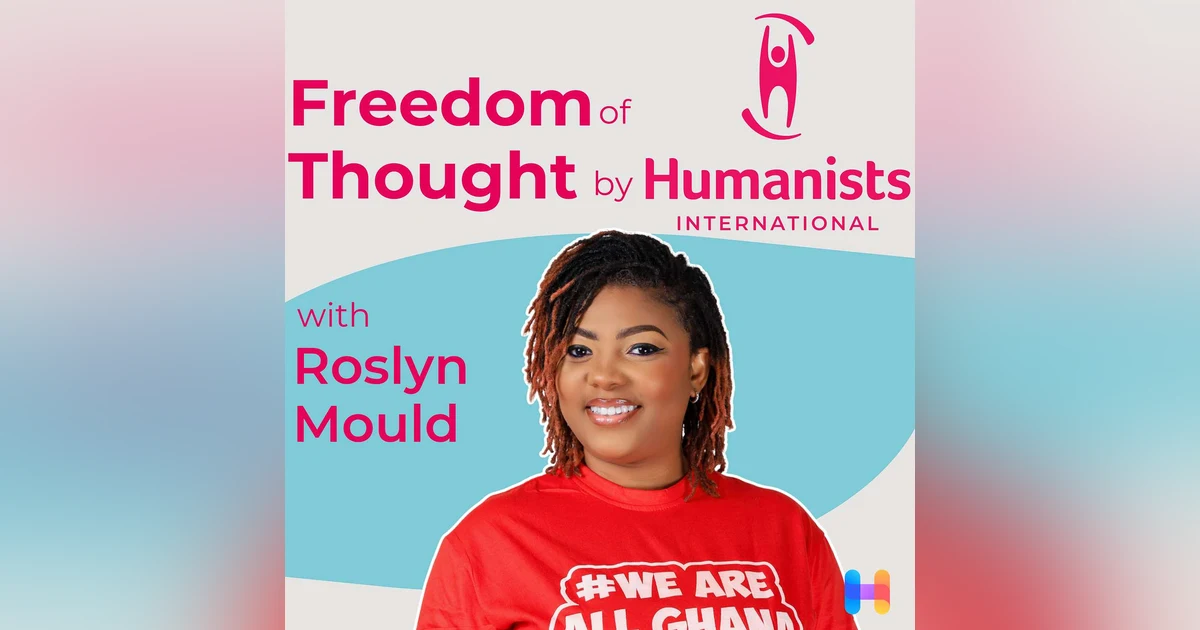

Content note: this episode includes references to rape and sexual assault. Sign up for the Humanists International Newsletter https://humanists.international/sign-up-for-the-newsletter/ Gary and Leon return from the World Humanist Congress in Ottawa — the biggest Congress in over a decade, bringing together 500 people from 60 countries under the theme Humanism as Resistance. They discuss the Ottawa Declaration on Humanism as Resistance adopted at the General Assembly, the launch of the Amst...


Content note: this episode includes references to rape and sexual assault.
Sign up for the Humanists International Newsletter
https://humanists.international/sign-up-for-the-newsletter/
Gary and Leon return from the World Humanist Congress in Ottawa — the biggest Congress in over a decade, bringing together 500 people from 60 countries under the theme Humanism as Resistance. They discuss the Ottawa Declaration on Humanism as Resistance adopted at the General Assembly, the launch of the Amsterdam Circle (HI's new major donor initiative), the announcement of Lima, Peru as host of the 2027 World Humanist Congress, and a historic first: a UN independent expert report specifically mentioning humanist organisations.
Rosalind Mould is President of Accra Atheists and Coordinator of the West African Humanist Network. She was formerly President of the Humanist Association of Ghana (2015-2019) and Chair of the Young Humanist International African Working Group (2014-2019). In 2019, she became the first African Vice President of Humanists International, concluding a seven-year board tenure at the 2026 General Assembly in Ottawa, where she received the Distinguished Service to Humanism Award.
In this episode we cover
- How Roz found humanism in Ghana when there was no language for it, no community, and no one she knew who had done it before
- Building Accra Atheists from a group who met in person just to check whether each other were real
- The economic cost of being visibly non-religious in Ghana: half of Accra Atheists members have had to leave the country
- Advocating for Ghana's LGBT community — the resource center raid, the anti-LGBT bill, and how a coalition defeated it after three years
- Seven years on the HI board: what it meant to be the first African woman VP, and why she believes it can be done again
Further reading and references
- Accra Atheists: https://humanists.international/civi/profile/view/?reset=1&id=19632&gid=19
- Ottawa Declaration on Humanism as Resistance: https://humanists.international/policy/the-ottawa-declaration-on-humanism-as-resistance/
- Amsterdam Circle: https://humanists.international/civi/contribute/transact/?reset=1&id=43
- World Humanist Congress 2027, Lima: https://humanists.international/get-involved/events/
- United Nations invites humanist organizations to shape new human rights report: https://humanists.international/2026/08/united-nations-invites-humanist-organizations-to-shape-new-human-rights-report/
- Freedom of Thought Report: https://fot.humanists.international
Follow Humanist International
- Sign up for our free Newsletter
- Support Humanists International
- Follow our Campaigns
- About - Humanists International
- Join us at the World Humanists Congress 2026
This podcast is produced by Humanise Live.
Start your podcast today, visit: humanise.live
🎶Music: Horizon by Simon Folwar
Podcast transcripts are AI-generated and may contain errors or omissions. They are provided to make our content more accessible, but should not be considered a fully accurate record of the conversation.
00:00 - Content Warning
00:25 - Update from World Humanist Congress in Ottawa
03:34 - Ottawa Declaration On Resistance
04:51 - The Amsterdam Circle And Independence
07:11 - Lima 2027 And UN Solidarity Report
10:43 - Guest Introduction: Rosalind Mould
11:45 - From Catholic Upbringing To Atheism
16:50 - Visibility And Discrimination In Ghana
19:31 - LGBT Rights Ghana And The Anti LGBT Bill
32:24 - Leading Humanists International And Parting Words
37:13 - How To Support The Podcast
Content Warning
Leon LangdonHello everyone, this is Leon. Quick note before this week's episode. This episode includes references to rape and sexual assault that some listeners may find distressing. Welcome to Freedom of Thought, a podcast by Humanist International. With me, Leon Langdon, and me, Gaddy McClellan. Each week we'll be discussing news, research, policy developments, and campaigns related
Update from World Humanist Congress in Ottawa
Leon Langdonto freedom of thought around the world and speaking with experts in that field. Later on in this episode, you'll hear our wonderful conversation with former vice president of Humanist International, Rosalind Mould. Before that, though, I think we should probably acknowledge that we did miss a week, which was not in the plan, as it were. Some of you will have heard our little filler episode. Gary, do you want to tell people where we were busy in a bit more detail than your 90-second filler?
Gary McLellandYes, so we were very busy, as were probably a lot of the listeners of this podcast at the 21st World Humanist Congress in Ottawa, Canada, which brought together about 500 people from around 60 countries around the world under the theme Humanism as Resistance. So we had an excellent programme, excellently co-hosted by Humanist Canada with whom we collaborated very closely. So yeah, we had you know three days of different events and talks and conversations and panel discussions and a lovely gala dinner together. And I think it's probably taken certainly most of our team a good week or two to kind of catch up with ourselves and decompress. But it was a fantastic event, I think. When I was reflecting on it again, probably people might remember that actually the Congress this year was meant to take place in Washington, DC, hosted by American atheists. But early last year, 2025, the decision was taken that in light of the US government's actions and policies, that it just simply wasn't either possible or safe to host the Congress there. And so we had a phone call. I think it was May 25 with the president of Humanist Canada. And from that opening phone call, we put together, I think, an excellent Congress. I mean, the biggest Congress in over a decade, under the theme Humanism as Resistance, I think really, really hit the spot in terms of where we see ourselves. And the program followed a very sensible progression from trying to sort of unpack what are the problems today and what are we resisting to how can we resist it. We heard from a panel of different humanist parliamentarians from around the world, all giving different perspectives and from their own legislatures and political cultures, and then moving towards more of a what resources do we need? How do we work together? And then finishing on a wonderful keynote talk by Professor AC Grayling on hope to fortify ourselves for the challenges that lie ahead. But I think one of the interesting things, we're still going through the data on the survey that we sent out to all the participants, but it seems like the approval rating was very, very high. Many of the attendees were first-time attendees, and over 50% of them said that they leave with plans, new contacts, new collaborations, new projects and campaigns in the pipeline that were sparked and incubated and generated at that Congress. And that for me is always the thing where planning the Congress, you always have to leave a bit of room for the kind of unknown collaborations and sparks that happen when you bring people together like this. So, yes, it's a it's a big undertaking, it's a big expensive operation. Humanists International has invested hundreds of thousands of dollars into this, but I am confident that it will spark a whole new wave of activity, focus, drive, ambition within our network that we won't see the fruits of for a number of months and years to come.
Leon LangdonYeah,
Ottawa Declaration On Resistance
Leon LangdonI think I agree. It's it's just a real catalyst, hopefully, for so much action. I think to pin down one specific point as well, the General Assembly, which we talked about in our last full episode as the sort of governance and decision-making body of Humanists International, passed the Ottawa Declaration on humanism as resistance. Again, following this theme and following that sort of logic that Gary set out of what are the problems, what are we resisting? Okay, how do we resist? With what resources do we resist? What does resistance look like in different contexts and different cultures? You know, affirming the power both of community but also of individual agency committing to compassionate solidarity. And I think there's some really excellent, definitely top-line points there, as well as some drilling down and some really excellent points. But within that, hopefully, you know, this is a document that members and also humanists as individuals can bring to their governments, can bring to friends and colleagues of theirs, can help to inspire their own lives. And really in this time of frankly, all season, all last season too, we've been talking about the crises that we're in, the different things that we have to resist. I feel like this moment is something to really stand up to that. And 500 people is a lot, but it's also, you know, just the seed of how many people will hopefully read and share this document and how many people will interact with the people who are at this Congress who go on and are inspired to do good things with it.
Gary McLellandAbsolutely,
The Amsterdam Circle And Independence
Gary McLellandyeah.
Leon LangdonAnd the other exciting thing, Gary, that was launched at the Congress a bit more quietly than some of the other stuff was the Amsterdam Circle. That's right.
Gary McLellandSo the Amsterdam Circle is a new initiative that we have, as you say, launched at the Ottawa Congress. What it is essentially is a small group of donors who are able to support Humanists International financially in a bigger way than some of our other donors have been invited to join a small group called the Amsterdam Circle. Why is it called the Amsterdam Circle? Well, Humanists International was founded, in fact, almost exactly to the day, 74 years ago, in a small room in Amsterdam with a handful of people from different parts of the world dedicated to building out the vision of what has now become Humanists International. And we're very, very fortunate that we rely on funding from our member organizations, a handful of other donors, and occasionally some grant funding. What we aren't is reliant on one major government or one big uh donor. We have multiple sources of income. But as you can see, hopefully, from the content of this podcast and the events that have taken place at our Congress, that budget, great as it is, doesn't match with the scale of the challenges we face and the ambition and the fizzing, buzzing activity and energy that is within this organization. So the Amsterdam Circle is one small part to try and bridge that gap between the resources we have now and what we need in order to fully implement our mission and to rise to meet the challenges that we face. So you'll find details of what the Amsterdam Circle is about, what it is and what it isn't. And if you are one of those fortunate people who is able to support us financially by giving a bit extra, around $100, pounds or euros per month, then please click that link or get in touch with me or anybody else and find out about how you can join the Amsterdam Circle and help us give a little bit more so that we can remain an independent NGO that stands up for humanists around the world.
Leon LangdonHighlighting our independence is something we frankly probably don't do enough. We are independent of governments in a way that many, you know, even progressive and positive NGOs don't have the privilege of being in. And much of that is down to our members, and we're so grateful for that. But I agree with what you say, Gary, on on the scale of our ambition, sort of outmatching the funding that that we currently have. And I guess on that, and and to tie all of the thoughts, at least the preliminary thoughts on the World Humanist Congress that do you want to tell us about 2027, which, you know, we've been keeping a little bit of a secret for a while. That's right, yes.
Gary McLellandSo
Lima 2027 And UN Solidarity Report
Gary McLellandon the last day of the Congress in Ottawa, we were very pleased to invite our colleague Adrian Nunez from Peru to announce that indeed the 2027 World Humanist Congress will take place in Lima, Peru. The dates are still tentative. It's probably going to be the last weekend in August, but we will confirm those dates as soon as possible. There's already some information on the Humanists International website. So if you're interested in joining us in Peru, which you should be, then please make sure you're subscribed to our newsletter and you'll find out all the information as soon as we confirm it. But we're very, very excited. I think this will be the first Congress ever to take place in Latin America, and it will certainly be an interesting and engaging event, and hopefully will act as a bit of a catalyst in a seed specifically for our members in the Latin American region. So that's another exciting development. The other thing, I mean, you mentioned there about the scale of our ambitions. I mean, one thing that's happened recently, Leon, has been that we've seen that there's been a UN consultation specifically mentioning engagement with humanists around the world, which at least it's the first time it's happened, in my knowledge, in the last 10 years or so that I've been with Humanists International. But maybe you could just tell us some more about that.
Leon LangdonYeah, I'll race through a few things. I mean, we've got on the advocacy side an incredibly busy month ahead with, you know, attending the parliamentary assembly at the Council of Europe, attending the Human Rights Council, and then there's several of these reports open. And yeah, you flag kind of one of the most exciting ones. So we're well used to being pretty established in the Forbes community. So that's the right to freedom of religion or belief. And many of the special rapporteurs, in fact, all of the special rapporteurs we've worked with in the last couple of decades in that field, have really made an effort to include the non-religious, be that atheist, humanists, you know, however self-defined. And you'll see in many of the questions that there's specific questions tailored that will mention humanist groups. What we haven't had is a report that's had a specific title mentioning humanist groups. And for the first time, the independent expert on international solidarity, which is very on theme given we've just been talking about our international Congress expressing solidarity. The independent expert is doing a report on international solidarity of faith-based organizations and specifically end-humanist organizations, which is very exciting. So we've just put up a news story in the last couple of days about that, be reaching out to members, really encouraging them to be involved. This is looking at everything from kind of big picture, for example, the World Humanist Congress. We'll have Roz speaking in a few minutes, and she was coordinator of the West African Humanist Network. These are kind of big picture pieces of solidarity, particularly in the midst of all the crises and all the strife we're talking about. But it's also solidarity across communities, interfaith work the humanists and the non-religious are involved in. Also social welfare provision. I know many of our members have been involved in, for example, food drives, involved in supporting communities after earthquakes or after tsunamis, you know, uh, Burmese Atheist comes to mind, as does Happy in the Philippines, as does the American Empathy Project, uh led by the American Humanist Association in the US. So for all of our members to have several thousand words to go to the UN, specifically divorced in many ways from these sort of concepts of international law that people can get really bound up in and frankly a little bit intimidated by sometimes. It's going to be really exciting for the humanist community to have a very specific outlet to showcase the breadth of work being done around the world. So yeah, very exciting. First time that we're aware of that humanists have been mentioned in the title of the report. So it's it's very exciting for us all and all.
Gary McLellandVery exciting. A busy, so a busy hitting the ground running after the Congress. And I'm very pleased that we've got an excellent guest for today's podcast, my dear friend and outgoing board member, Rosalind Muld.
Guest Introduction: Rosalind Mould
Leon LangdonRosalind Mold is a renowned humanist campaigner and leader based in Ghana. She's the president of Accra Atheists as well as a coordinator for the West African Humanist Network. She has also previously held roles as president of Humanist Association of Ghana from 2015 to 2019 and was chair of the Young Humanist International African Working Group from 2014 to 2019. Rosalind was the first African vice president of Humanist International, and at the 2026 General Assembly, she concluded her seven-year tenure on the board and was awarded the Distinguished Service to Humanism Award at the 2026 World Humanist Congress in Ottawa. Roz, welcome to Freedom of Thought.
Roslyn MouldThank you. I'm happy to be here.
Leon LangdonWelcome, Roz.
Gary McLellandIt's a pleasure to be with you as always. I think you and I met probably about 10 years ago now at the General Assembly in Malta in 2016, which feels just like yesterday, which is quite scary. And of course, we'll talk about your many leadership roles that you've had over the years. But to start off with, I think it would be really interesting, maybe if we could just hear a bit about how you came to humanism.
Roslyn MouldYes.
From Catholic Upbringing To Atheism
Roslyn MouldThank you, Gary. Yes, it's been 10 years. We should be celebrating our 10 years of friendship and working together. Yeah, uh, it was good times back then for me because it was my first time leaving Africa. It was my first general assembly. It was a lot of first for me. And it was so exciting to meet like humanists around the world. But um, my journey started from Accra, Ghana, where I was raised. I was born in Takuradi in the western region of Ghana, raised by a religious family, like 99% of the population. My father's side of the family is Anglican, and my mother's side of the family is a Catholic. But they chose to go Catholic with me, so I was upside, raised in Catholic schools, my secondary school. I went through my own confirmation, and yeah, as a confirmed Catholic, I wanted the whole point was to receive one or more of the seven gifts of the Holy Spirit, and I wanted to know what that gift was because I did I didn't feel it had come to me, and it just went from being more curious about that, trying to understand religion together, trying to preach to my friends, especially my expert friends who I felt were not a Christian enough. And in that process, I decompleted myself. I came across enough information to tell me that everything that I had grown to know to be true was not, I was not. And eventually, um, I was so scared to come out as an atheist, I didn't even know what that meant. I hadn't met an atheist before, I didn't know of any atheist anywhere, I hadn't read any books or any philosophy about any of this. So it was very, very scary times. But a few years later, my sister, my younger sister also went through her own journey of leaving Catholicism to a more evangelical church to, you know, to becoming atheists. And that was new times where social media was becoming a thing. And by 2007, I knew that I was an atheist, but I kept it closeted for five years until 2012, when my sister met other non-religious Ghanaian on social media, and they decided to meet in person to see if this was real, it was a prank, or it was just I don't know, bots on the on the internet doing this or something like that. But for some reason, they decided to meet in person. And soon after I joined, and yeah, within weeks we were like, you know, so excited to get to know that we were not alone. We had other people who were also non-religious like ourselves. And by the end of that year, Humanists International at the time was the International Humanists and Ethical Union, heard about us and decided to support us to organize the first ever humanist conference in Ghana. And I was one of the volunteers for that. From there, one of the then presidents of the youth organization, International Humanists and Ethical Youth Organization, which is now Young Humanists International, Aya Myers, attended that conference and noticed me and encouraged me to also apply for the position as secretary of the African Working Group, which I did. And in my absence, for some reason, I was the one elected by the General Assembly or by the members of the youth organization at the time to represent Africa as a secretary to Kato, who was the then chair, and then I was eventually re-elected as chair, and you know, helping start groups, helping create groups, helping turn dormant groups into active groups, coming up with creative ideas on how we can reach more people, how we can organize, how we can go mainstream and all that. I guess a lot of my efforts paid off. You know, all of a sudden humanism was being recognized in Ghana. We were being invited to other platforms, other CSOs were inviting us. We were on other mainstream media platforms on television, on radio. You know, the LGBT community became recognized as the first official allies. The feminist movement was practically started by us. You know, we were unafraid to come out to talk about feminism, we were unafraid to talk about our atheism. And for those of us who are privileged enough like myself to show our faith is to let people know that humanism is another alternative to living your life, and you can do that without having to believe in any of the supernatural things and stuff like that. And I think eventually that recognition got the General Assembly to elect me by 2019 as a board member. And yes, one of the happiest moments was that moment when I was elected as board member, and then eventually as the first African woman vice president. It's very, very, very, very big privilege, and I'll always cherish that moment. But the biggest for me was receiving my award as a distinguished service team award winner recently in Ottawa. Yeah, I'm just really grateful to the board, the staff, the whole General Assembly, all the members and organizations.
Leon LangdonThanks for that, Raz. I mean, your journey is is really inspiring from yeah, being raised in a religious household and and everything you've done. I guess
Visibility And Discrimination In Ghana
Leon Langdonin in reflecting back over that 15 or so years, specifically in Ghana and I guess in the wider region, how do you feel like humanism and and you know you mentioned LGBTI plus rights? How do you feel, you know, how is the progress, you know, even though you talk about sort of wider or small, you talked about victories, how do you feel like societal acceptance is is coming along?
Roslyn MouldWell, with the putting up of the billboard now, it's kind of certified things from acryities of our organization. But for a long time, yes, we were being recognized. There was never a time where we could be on a platform discussing things um based on religion or religious beliefs where a humanist will be called to have a say or have a opinion at all. So we were one of the first, and yeah, me being the face of most of that gave us that as a platform to show ourselves, to show to let them know that you know we are a percentage of our population who do not believe. And that has been our quest to try to find as many of those people as possible, and also to let people know because like myself, many of us didn't know there was any other alternative than believing. It's either you are moving from one religion to another, or you know, you are sticking to your religion. The idea of not believing in anything is a lot of things that that people cannot comprehend here at all. And even I used to think my family was totally accepting of me as after a decade. But no, I even up to now, it's almost 20 years as an atheist, and yeah, I still have to face certain comments, you know, and these are people who care about me. Coming from a good place to them, but they still show that they do not understand what I mean by that. They still want me to accept God, they still want me to come back. A lot of people have prophesied, you know, friends and total strangers who just let me know. Like you might have received this award, you might have been the first African vice president of the biggest atheist organization in the world, but one day you're gonna be a pastor or married to a pastor or something like that. So, you know, there's all these things that I still face. The discrimination is still there, definitely. Um, finding jobs is always much more difficult than regular people would face, even though there is unemployment in my country as an issue. But especially for me, and I know I'm not the only one, there are other people in organizations who feel those the same way. For example, I cry atheists, half of our members are not even based in Ghana anymore. They've had to go and seek green up pastures elsewhere because you will not find a job. You cannot make a living, you cannot survive as an atheist financially or socially. Yes, and for your own mental health, a lot of people choose to leave.
Gary McLellandIt's really
LGBT Rights Ghana And The Anti LGBT Bill
Gary McLellandsad to hear Rosen. Uh you mentioned there, but I think it would be worth for the sake of our listeners just to kind of expand a little bit that you acted as a spokesperson for the LGBT community in Ghana, and I think probably some of our listeners will know about these dreadful terms, the kill the gaze bill, and there's there's all these kind of phrases that get thrown around. I wonder if I could just ask you to tell us a bit more about your role there, what the situation's like, for example, for LGBT people in the kind of political context at the moment.
Roslyn MouldYes, thank you for that question, Gary. Actually, you know, the LGBTQ community was something that I didn't know it was an issue, maybe because my fa family, part of my family, are not homophobic. So I never knew it was a thing. And even when I was Christian, I just believed, you know, love your neighbours yourself. It didn't occur to me how dangerous it is to be LGBT in Ghana until I became an advocate. And I think one of our first conferences, we invited uh well, she eventually became Ministry for Gender, Minister for Gender, Honorable Nano Yelita. She was then a lawyer. I mean, she's she's still a lawyer, a very prominent lawyer, but she was the only one we knew was open about her pro bono work she does for LGBT people. So we invited her as a speaker. She gave us a lot of insights onto what is actually going on, and a lot of the cases they are having to deal with when it comes to abuse, physically and so on, and legal issues, what the law actually says, the history of the criminal code, which is the British colonial law and things like that. All those things we were so not aware of. And then by our second, because she's a Christian, but she was the one openly doing this and talking about it. By the second conference we had, we had other LGBT groups themselves who come and told us about their personal stories, but also gave us a broad insight into the issues that they have been tackling and their fight for their own rights. And it comes from all sorts of rights. You know, people like to use the term rights or human rights to mean that oh, they want access to be free to practice anal sex or something like that. And that's what the far right like to use to tell people that that is not a human right to be able to have you know intimate sex with the same gender. So that should be scrapped. But the human rights we are talking about is even beyond that. We are talking about housing, education, the right to child. The right to medical care. All these things are serious issues. And then the abuse, the blackmail, the stories are so devastating. It's one of the biggest privileges and honor to have been asked as an ally for LGBT community who have been through so much all their life to entrust you to not just, you know, support them as an ally, but to be in their inner circle and to become a board member of an LGBT organization. One of the most active at the time, LGBT plus Rights Ghana. So yeah, we then became more official, tried to be more organized and deal with a lot of the cases. Now for Ghana, it's different from what is happening in other countries, but there are a lot of similarities. In Uganda, they have the kill the gays bill they've been trying to pass for ages. But from technical issues, it's not been fully passed. However, people are killing gays in in Uganda as we speak, regardless of their bill and all or law coming into place. Nigeria has passed it to 14 years of imprisonment and other horrible repercussions or punishments for people who identify as LGBT people. In Ghana, we have a current bill that has come back. Even before the bill, and some of the abuse cases we're dealing with for trans people, for gay or effeminate men, and a lot of lesbians or bisexual women, you know, for a lot of the lesbians and bisexual women, they they tend to face more of corrective rape and gang raping, which is one of the most severe forms. And especially for those who are Muslim, the Muslim bisexual women, lesbian women are forced into marriages. So some of these were their main like general issues that they face, but they have individual issues as well. And for the intersex as well, you know, they are forced to choose between one gender or the other and have to make transition into what society thinks they should be rather than how they can be. So that was also a very big issue. For gay men, a lot of it was blackmailing. So there's this thing where, especially now with social media and dating apps like Grindr, it's it's practically, you know, you're setting yourself up for death or something really, really bad, you know. And if you go on Grindr in Ghana, people will lure you into coming to have relations, intimate relationships with them. And once you get there, you are ambushed, you are stripped naked, you are beaten, all your money and your phones or your property is stolen from you, you are blackmailed, you are filmed and threatened that it's gonna be put on social media, things like that. And people have to give up so much money or force their family members and friends to come pay so much money to be able to get away with it. They can take you to an ATM, force you to withdraw as much money as you can, things like that. And this have been going on freely. Nobody is gonna catch them. If it wasn't for a group like LGBT plus right ghana, who would contact these victims once we see the videos have been released, even if they paid, they are released on social media. The mainstream media never put it on the news. You know, you could be late for something else, and it will be news and the police will deal with it. But when it comes to LGBT things, the news, none of the journalists capture it. It's there's no record of anybody being having to go through that. So it was LGBT groups like LGBT plus white Ghana that had uh medical personnel on standby, had legal people in the legal field, lawyers, law enforcement people that would come to your aid who would hold your hand and take you to the police station so you can make a report. Because a lot of them are also fearful to tell the police about their identity or their sexual orientation for fear of being further violated. So, yeah, these were some of the things we were dealing with on almost a daily basis. And having to be in a workshop group and seeing graphic videos every day was even, you know, a lot for me as a person um to see that this is much more serious than we thought. And so we decided to open an LGBT resource center in some early 2019, 2020, 2020. And yeah, the media got hold of that. And this coalition of religious leaders and homophobic people led by a lawyer, Moses Kuamwane. I've written a whole article about him online. Um so he alerted the media that there was a now resource center. Like he didn't make it seem like a resource center. He made it sound like it was a place everybody is gonna have gay sex. So now we are doing it openly and we have even launched it. And this launch, I was one of those who helped to, you know, cut the sword for that, including the then ambassador to Denmark, High Commissioner to from Australia, and the ambassador to the EU at the time. And they started attacking these ambassadors. Even some of them had to flee the country. They were attacking them on all the media houses. They threatened that if they found the place, they were going to arrest all the people there. So we had to have our personnel flee from the building, literally jumping walls, with the police raiding the place. And it was shown all over television that you know this LGBT place was raided and had been closed down. Shortly after, eight members of parliament came up with this bill named after the coalition, which is the proper human sexual rights bill. And now they keep changing it a bit and amending it a bit, but basically it's all these things. And recently we've seen the first anti-LGBT conference led by this family international or this family, one of these far-right American evangelical groups, that's CSOs or something like that, and they came there to organize that, invited then speaker of parliament and so on, all these people on their platform talking freely about what to do about the gay situation in Ghana. Recently, just before the Ottawa conference, just yeah, we've had an interparliamentary African conference on anti-LGBT. Like everybody knows Africa has several issues from poverty, economic issues, medical issues, lack of education, all these kinds of issues, infrastructure, all these things. And yet the anti-LGBT agenda was the biggest problem for these politicians and government leaders and religious leaders that gathered in our parliament house in Accra to discuss what to do about the gay situation in Ghana. That's how severe it is. And the bill is not only targeting LGBT people, it's giving the choice to LGBT people to have up to five years' imprisonment, I believe, for recants and say you are not gay anymore, you are not lesbian anymore, you are not trans anymore, or you you have to go through undergo what gay conversion therapy. And for allies, they even hate allies so bad that they want 10 years' imprisonment for any ally because you are said to be spreading or promoting gays, is is is how they term it on national television, national radio, and riling up this homophobia because Ghanaians naturally are not that homophobic. We've never had it in our history. Pre-colonial times, there was not even a difference between whether you are gay or not. You there was not even a proper name for it. You know, we might call effeminate man Kojo Besia. Um, so Kojo is a name for a man born on Wednesday, but it's just a term for oh, a man. And Besia is woman, so man, woman kind of thing. So an effeminate man or somebody who is said to be gay with a feminine tendency will be termed Kojo Besia. So that has been in our language since time immemorial. And we also know soup, like lesbians and things like that. So we have the term, but it's not really ingrained in our language. Uh and now our pronouns we use are mutual. We use general mutual pronouns in our language. We don't have specific pronouns for male and female either. It's always been our culture for hundreds of years. And so all of a sudden, having this riling up of hate and just changing narratives and lying and threatening people, anybody who is coming to give a platform to LGBT people or allies to speak about it, anybody who is going to try to help to stop this bill becomes a threat. And I've had to face that even on national TV several times. One time it became really bad with me and the one of the proponents of the bill sometime in 2021. And I think that's an acceptance that I showed in the other one conference. And that's how bad it can get, you know, when they start calling you names, and he was telling me to shut up on national television, like you know, things like that. We face a lot, and they threaten you with I know you, I know where you are, things like that. It gets even scary. But I think I use my privilege. That's all I have. And if that's what I can do to help change something, then I'm doing the right thing. And I believe it's working because once we started speaking, more senior people, academics, professors, lawyers, all these prominent, more influential people, older people also formed their own coalition against the bill. And in 21, when they brought that bill, after three years, they thought it would take three months for it to pass. Three years went by, it did not get passed, it was actually thrown out of parliament. So our advocacy does work, and I'm glad that I was really one of the major parts of it at that time. Um currently the bill has come again, and we still go on, we still fight. And um, even though I'm not a major part of it this time, I've taken a step back. But there are other people who are still pursuing this, and in courts, in whatever way they can do it, Amnesty International Ghana is doing the same. You know, there's so many allies and allied organizations who are still fighting the bill. And yeah, we hope the international community gets to know about this situation in any small way you can. Even calling your senator, your president, whoever it is, to let them know that this is the situation, what's going on in Ghana. And if you want us to help, you want to help us, you know, you can reach out to me or and I'll guide you to or direct you to the LGBT organizations and activists doing a lot of the work in how you can help me.
Leading Humanists International And Parting Words
Leon LangdonThank you so much for that, Roz. And thank you for the the call to action, even on the work you've been doing over so many years, is is really inspirational. I guess as we're kind of coming to time on the interview, I guess the other big role you've had is obviously as vice president of Humanist International for seven years. So, as we're looking to wrap up the interview, if you have any reflections on those seven years, and also if you've any parting words for our members and also our listeners around the world.
Roslyn MouldYeah, thanks, Leon. It's been amazing. Um, the seven years I've worked with amazing people, each and every person on the board. Initially, it was so intimidating because these are so like amazing people, these people are well experienced. It was an honor to work under Andrew Cobson at the time and the then vice president and Franz Catalia, who carried herself with so much grace and wisdom. I really admire them. And I just felt so young in the whole thing and trying to learn my way. But Gary, to be CEO, I think after a while we all feel like, oh, Gary is there, so he'll be alright. If you need any information, you know, Gary is always there to help keep you abreast with what's going on and all that. And, you know, exchanging ideas, even as humanists having the same fundamental values, it can be challenging because everybody is coming from different parts of the world. It's not easy to manage an international organization with completely different cultures, completely different issues, completely different successes. It's not easy. And so, yeah, kudos to the staff we've worked with from the last seven years. I've worked with amazing, amazing staff. Some have left and it's really sad to see them go. I could start mentioning it, but I won't finish today. So they know themselves. Like Elizabeth, for example, gave me the opportunity to speak at the Universal Periodic Review of Ghana a couple of years ago. And yeah, uh, I think it's the first time a humanist has done that for Ghana. So it was really good that we could have a voice, if not for Humanists International, if it wasn't for having an advocacy department, we wouldn't have had that opportunity to be able to say these things. And so I really commend all the presidents. Uh, current president Madiadience is also doing an amazing job. She's just finished a successful General Assembly. We had another while we're still my friends from Dr. Lio Igwe from Nigeria that he's been a mentor to a friend, to a colleague, to everything. You know, I criticize him a lot, but that's why we are also close as friends because we keep pushing each other to do better. And I know Humanists International is a it's more than just an organization to me, it's family. We are more than people that work with each other. Learn a lot. I learn a lot, and like I did with this past conference, with the discussions we had. You think you've done so much until you hear other people and what they are doing, and you're like, wow, you know, there's a lot we can do. And it opens your minds, it keeps you refreshed, it keeps you motivated to do more, to know that you can make change in the smallest way. So, yeah, it's been amazing being on the board. And hopefully, one day I can come back again. I would I would love it if I would be re-elected again. But for now, I'm happy that there are people there we can look up to. Every single one of them is doing an amazing job. And I agreed with them on a lot of the decisions that we made. Some of them are as we disagreed because maybe it wasn't we thought it wasn't the right time. And I know with the new ones who have come on board, they will also come up with their own perspectives and maybe have better ideas on how to run things. So I can't have complete trust in the in the board as led by Manchester Yense. And of course, you know, after you, Larry McLean, to carry out the vision and the mission of the board. Yeah.
Gary McLellandVery kind. Thank you, Rosen. Thank you for all of your hard work over the last 10 years. And I know that even all of our listeners will know that we haven't seen the last of Rosalind Mould and humanist leadership.
Roslyn MouldYes, thank you. Yes, I can't really leave because I'm still president of Accra eight years. A lot of my members are still saying, you know, even though I might take some time off to attend to some personal stuff, they they still want me to stand in the role and be a guide, even if I'm not that active, but they they refuse to let it go. But you know, we are still gonna vote on it and see. I mean, I also would like to step by, step back or step aside for others to experience it because some of us we are learning on the job what it is to be a leader, and until you are in the shoes, you can really see what it takes and probably do better. I do believe, look, I did not have any formal training for it, but somehow with the people I was surrounded with, I was able to achieve so much. And I think that anybody else can do it also, you know, no matter where which part of the world you are in. And I would like other people to experience what I've experienced as well.
Leon LangdonThanks, Ros.
Roslyn MouldThank you.
How To Support The Podcast
Leon LangdonThank you so much, Ross. If you found this episode useful, please share it with others, subscribe wherever you listen to podcasts, and leave us a five-star rating and review. It makes a big difference in helping new listeners find the show.
Gary McLellandIf there's a topic you'd like us to cover or someone you'd like to suggest as a guest, you can contact us via the links in the show notes.
Leon LangdonTo find out more by join Humanist International, visit humanist. To the team at Humanist International. Thank you for it.
Gary McLellandThank you for listening to this episode.