Jan. 1, 2026
Stellar Spectacles: January's Night Sky Highlights
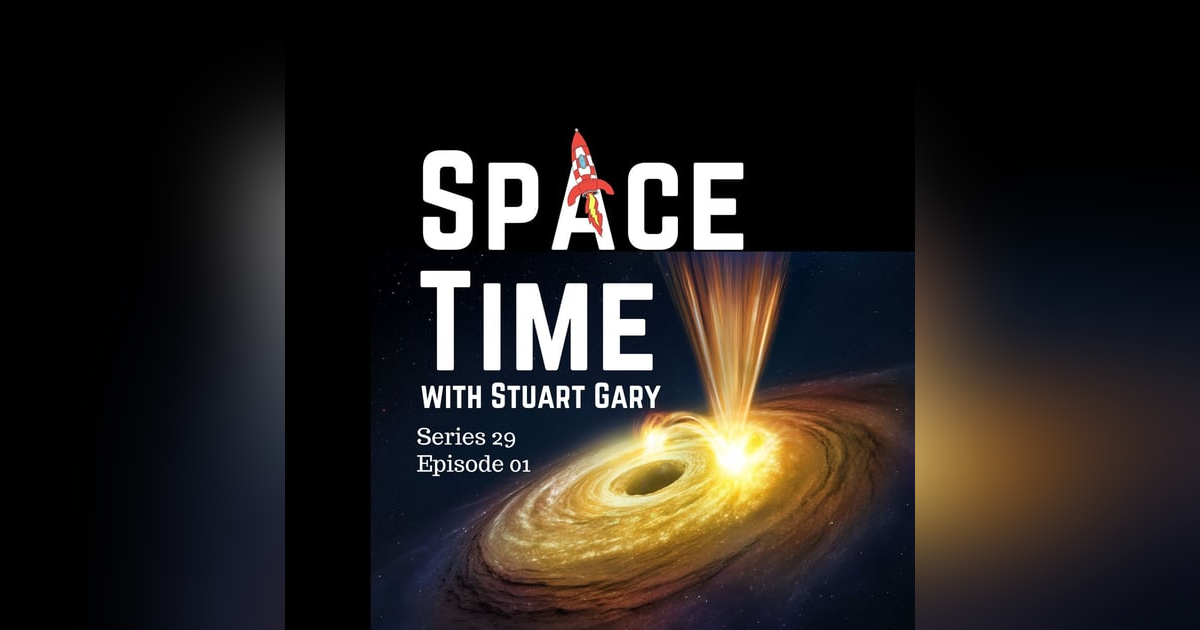
SpaceTime with Stuart Gary Gary - Series 29 Episode 1 In this episode of SpaceTime, we delve into extraordinary cosmic phenomena and the ongoing exploration of our solar system. Cosmic Matter Ejected at 20% the Speed of Light Astronomers have made a...


SpaceTime with Stuart Gary Gary - Series 29 Episode 1
In this episode of SpaceTime, we delve into extraordinary cosmic phenomena and the ongoing exploration of our solar system.
Cosmic Matter Ejected at 20% the Speed of Light
Astronomers have made a groundbreaking observation of matter being ejected from a supermassive black hole at the center of the barred spiral galaxy NGC 3783, located 135 million light years away. This matter, propelled at an astonishing 20% the speed of light, challenges previously held notions about how such superluminal jets are powered. The findings suggest that a sudden change in the magnetic field, rather than radiation, may be responsible for this high-speed outburst, providing new insights into the mechanisms of black hole dynamics and their impact on galactic evolution.
Wind-Sculpted Landscapes on Mars
NASA's Perseverance Rover continues its exploration of Mars, focusing on megaripples—large sand formations shaped by wind. These megaripples, some reaching up to 2 meters in height, offer scientists a unique opportunity to study current Martian atmospheric processes. As the rover investigates the Honeyguide region, researchers hope to gain insights into the planet's wind patterns and surface chemistry, which will be crucial for future human missions to Mars.
Potential Ocean Beneath Uranus's Moon Ariel
New research suggests that Uranus's moon Ariel may harbor a vast subsurface ocean, potentially more than 170 kilometers deep. This discovery, reported in the journal Icarus, highlights Ariel's unique geological features and raises questions about its past interior structure and orbital dynamics. The study indicates that understanding Ariel's ocean could provide crucial context for the moon's surface fractures and cryovolcanic activity, emphasizing the need for future missions to the Uranian system to confirm these findings.
www.spacetimewithstuartgary.com
✍️ Episode References
Astronomy and Astrophysics
Icarus
NASA Reports
Become a supporter of this podcast: https://www.spreaker.com/podcast/spacetime-your-guide-to-space-astronomy--2458531/support.
(00:00:00) This is Space Time Series 29, Episode 1 for broadcast on 2 January 2026
(00:00:47) Cosmic matter ejected from supermassive black hole
(00:12:30) Perseverance Rover studies wind-sculpted megaripples on Mars
(00:20:10) Evidence of a subsurface ocean beneath Uranus's moon Ariel
(00:25:00) Skywatch: January night sky highlights and celestial events
In this episode of SpaceTime, we delve into extraordinary cosmic phenomena and the ongoing exploration of our solar system.
Cosmic Matter Ejected at 20% the Speed of Light
Astronomers have made a groundbreaking observation of matter being ejected from a supermassive black hole at the center of the barred spiral galaxy NGC 3783, located 135 million light years away. This matter, propelled at an astonishing 20% the speed of light, challenges previously held notions about how such superluminal jets are powered. The findings suggest that a sudden change in the magnetic field, rather than radiation, may be responsible for this high-speed outburst, providing new insights into the mechanisms of black hole dynamics and their impact on galactic evolution.
Wind-Sculpted Landscapes on Mars
NASA's Perseverance Rover continues its exploration of Mars, focusing on megaripples—large sand formations shaped by wind. These megaripples, some reaching up to 2 meters in height, offer scientists a unique opportunity to study current Martian atmospheric processes. As the rover investigates the Honeyguide region, researchers hope to gain insights into the planet's wind patterns and surface chemistry, which will be crucial for future human missions to Mars.
Potential Ocean Beneath Uranus's Moon Ariel
New research suggests that Uranus's moon Ariel may harbor a vast subsurface ocean, potentially more than 170 kilometers deep. This discovery, reported in the journal Icarus, highlights Ariel's unique geological features and raises questions about its past interior structure and orbital dynamics. The study indicates that understanding Ariel's ocean could provide crucial context for the moon's surface fractures and cryovolcanic activity, emphasizing the need for future missions to the Uranian system to confirm these findings.
www.spacetimewithstuartgary.com
✍️ Episode References
Astronomy and Astrophysics
Icarus
NASA Reports
Become a supporter of this podcast: https://www.spreaker.com/podcast/spacetime-your-guide-to-space-astronomy--2458531/support.
(00:00:00) This is Space Time Series 29, Episode 1 for broadcast on 2 January 2026
(00:00:47) Cosmic matter ejected from supermassive black hole
(00:12:30) Perseverance Rover studies wind-sculpted megaripples on Mars
(00:20:10) Evidence of a subsurface ocean beneath Uranus's moon Ariel
(00:25:00) Skywatch: January night sky highlights and celestial events
The Astronomy, Space, Technology & Science News Podcast.
WEBVTT
1
00:00:00.240 --> 00:00:04.240
This is Spacetime Series twenty nine, Episode one, for broadcast
2
00:00:04.280 --> 00:00:07.679
on the second of January twenty twenty six. Coming up
3
00:00:07.719 --> 00:00:11.720
on space Time, cosmic matter spotted traveling at twenty percent
4
00:00:11.759 --> 00:00:15.759
the speed of light, studying wind sculpted landscapes on the
5
00:00:15.759 --> 00:00:20.160
red planet Mars, and could there be a vastation under
6
00:00:20.199 --> 00:00:24.160
the surface of Uranus's moon Ariel. All that and more
7
00:00:24.239 --> 00:00:26.399
coming up on space Time.
8
00:00:27.760 --> 00:00:30.879
Welcome to space Time with Stuart Gary.
9
00:00:47.079 --> 00:00:50.159
Astronomers have observed a sudden outburst of matter near a
10
00:00:50.200 --> 00:00:53.240
super massive black hole, shooting out into deep space at
11
00:00:53.320 --> 00:00:57.200
some twenty percent the speed of light. The findings reported
12
00:00:57.200 --> 00:01:00.600
in the journal Astronomy in Astrophysics a demonstration a new
13
00:01:00.719 --> 00:01:05.439
way of powering these superluminal jets. Astronomers were studying the
14
00:01:05.439 --> 00:01:08.760
super massive black hole at the center of NGC thirty
15
00:01:08.760 --> 00:01:12.319
seven eighty three, a barred spiral galaxy some one hundred
16
00:01:12.319 --> 00:01:15.799
and thirty five million light years away the constellation Centaurus.
17
00:01:16.400 --> 00:01:20.040
During a ten day observational run primarily using NASA's Chrism
18
00:01:20.040 --> 00:01:24.519
space telescope. Astronomers witness powerful outbursts of matter being ejected.
19
00:01:25.079 --> 00:01:27.480
Now they often find that these outbursts are powered by
20
00:01:27.560 --> 00:01:32.280
strong radiation, But this time the most likely cause isn't radiation,
21
00:01:32.480 --> 00:01:35.719
but a sudden change in the magnetic field, similar to
22
00:01:35.760 --> 00:01:39.480
bursts on the Sun caused by solar flares. While super
23
00:01:39.519 --> 00:01:42.000
massive black holes are known to flicker and X rays,
24
00:01:42.120 --> 00:01:44.920
this is the first time astronomers have clearly seen a
25
00:01:45.000 --> 00:01:49.239
high speed ejection accelerated during an X ray burst. During
26
00:01:49.239 --> 00:01:52.319
this ten day period, scientists saw variations in X ray
27
00:01:52.319 --> 00:01:56.400
brightness and intensity, especially in the softer X ray bands. Now,
28
00:01:56.439 --> 00:01:59.319
these changes, including the outbursts that lasted for three days,
29
00:01:59.400 --> 00:02:03.000
aren't un usual for super massive black holes. However, what
30
00:02:03.120 --> 00:02:05.920
makes this event so unique is the simple tennis ejection
31
00:02:06.000 --> 00:02:08.960
of gas from the accretion disc of swirling matter orbiting
32
00:02:09.000 --> 00:02:13.240
the black hole. This gas was expelled at incredibly high speeds,
33
00:02:13.520 --> 00:02:17.439
reaching some sixty thousand kilomets per second that's twenty percent
34
00:02:17.479 --> 00:02:20.919
the speed of light. The gas appear to originate from
35
00:02:20.919 --> 00:02:23.719
a region at a distance roughly fifty times the size
36
00:02:23.719 --> 00:02:28.039
of the black hole itself. In this turbulent region, gravity
37
00:02:28.120 --> 00:02:32.719
and magnetic forces interact in extreme ways. The authors believe
38
00:02:32.840 --> 00:02:35.879
the ejection was caused by a process called magnetic reconnection.
39
00:02:36.120 --> 00:02:39.879
The sudden reconfiguration of magnetic fields, releasing huge amounts of
40
00:02:40.000 --> 00:02:43.599
energy in the process. The Steadies lead author Lay Ego
41
00:02:43.840 --> 00:02:47.520
from the Netherlands Institute of Space Research says these observations
42
00:02:47.639 --> 00:02:50.919
are providing a unique opportunity to study the launch mechanism
43
00:02:51.000 --> 00:02:55.639
for ultrafast outbursts. The data suggested the acceleration of the
44
00:02:55.639 --> 00:02:59.240
outflow is being driven by magnetic forces, similar to chronal
45
00:02:59.280 --> 00:03:00.719
mass ejection from the Sun.
46
00:03:01.280 --> 00:03:01.439
Now.
47
00:03:01.560 --> 00:03:04.319
Coronal mass ejection on the Sun happens when larch blobs
48
00:03:04.319 --> 00:03:07.120
of hot plasma and magnetic field are hurled into space
49
00:03:07.280 --> 00:03:10.439
during a solar flare event, and a super massive black
50
00:03:10.439 --> 00:03:13.159
hole can do the same, only the eruptions that tens
51
00:03:13.159 --> 00:03:17.000
of billions of times more powerful, dwarfing anything everything blasting
52
00:03:17.000 --> 00:03:20.599
out from our sun doing. Colleagues propose that the observed
53
00:03:20.639 --> 00:03:23.759
black hole event, just like its solar counterpart, is being
54
00:03:23.840 --> 00:03:27.759
fueled by sudden bursts of magnetic energy, but that contradicts
55
00:03:27.800 --> 00:03:31.439
the hypothesis that black holes expel matter through intense radiation
56
00:03:31.719 --> 00:03:35.280
or extreme heat. The results therefore often new insights into
57
00:03:35.319 --> 00:03:38.280
how black holes not only pull matter in and under
58
00:03:38.319 --> 00:03:40.800
the right conditions, can also shoot it back out again
59
00:03:40.840 --> 00:03:44.639
into space. The process has been dubbed feedback, and it
60
00:03:44.680 --> 00:03:47.159
may play a key role in how galaxies grow and
61
00:03:47.280 --> 00:03:50.680
change over time, influencing the stars and gas around the
62
00:03:50.680 --> 00:03:53.800
black hole and helping shape the universe as we see
63
00:03:53.800 --> 00:03:59.080
it today. This is space time still to come studying
64
00:03:59.080 --> 00:04:02.759
the wind sculpted landscapes of the red planet Mars, and
65
00:04:02.840 --> 00:04:05.800
could there be a vast ocean under the surface of
66
00:04:05.960 --> 00:04:09.319
Uranus' moon Ariel. All that and more still to come
67
00:04:09.840 --> 00:04:29.319
on space time. While much of NASA's Mars Perseverance Rover's
68
00:04:29.360 --> 00:04:32.720
work focuses on ancient rocks that record the red planet's
69
00:04:32.759 --> 00:04:35.839
long lost rivers and lakes, mega ripples are offering a
70
00:04:35.920 --> 00:04:39.360
rare opportunity to examine processes which are still shaping the
71
00:04:39.439 --> 00:04:43.759
Martian surface today. Mega ripples are sand ripples, some up
72
00:04:43.759 --> 00:04:46.839
to two meters tall, that are mainly built and modified
73
00:04:46.959 --> 00:04:50.720
by wind. However, when water in the atmosphere interacts with
74
00:04:50.839 --> 00:04:54.319
dust on the ripple surface, a salty, dusty crust can
75
00:04:54.360 --> 00:04:57.920
often form, and when this happens, it's much harder for
76
00:04:57.959 --> 00:05:01.600
the wind to move or reshape the mega ripple. As such,
77
00:05:01.800 --> 00:05:05.920
mega ripples on Mars are largely considered inactive, standing as
78
00:05:06.000 --> 00:05:11.360
records of past wind regimes and atmospheric water interactions. Over time. However,
79
00:05:11.600 --> 00:05:14.639
some have shown signs of movement, and it's possible that
80
00:05:14.720 --> 00:05:18.000
periods of high wind speeds may erode or even reactivate
81
00:05:18.120 --> 00:05:23.279
these deposits. Again. Despite within Martian atmosphere today, which is
82
00:05:23.360 --> 00:05:26.439
just two percent that of Earth's atmosphere density, wind remains
83
00:05:26.480 --> 00:05:29.240
one of the main drivers of change on the Martian surface,
84
00:05:29.519 --> 00:05:33.560
eroding local bedrock into sand sized grains and transporting these
85
00:05:33.600 --> 00:05:37.680
grains across the ripple field. As a result, Mega Ripple
86
00:05:37.720 --> 00:05:41.199
studies and help scientists better understand how wind reshapes the
87
00:05:41.240 --> 00:05:45.000
Martian surface, how it changes the planet's recent history, and
88
00:05:45.079 --> 00:05:47.720
in the process, it will help scientists plan for future
89
00:05:47.800 --> 00:05:50.279
human missions to the Red planet, because the chemistry and
90
00:05:50.319 --> 00:05:53.680
cohesion of Martian soils will influence everything that people do
91
00:05:53.759 --> 00:05:58.319
on Mars, from mobility through the resource extraction. Following the
92
00:05:58.360 --> 00:06:01.600
successful investigation of the does the inactive mega ripple at
93
00:06:01.639 --> 00:06:05.000
Kurla Guna, the cas sized Perseverance Rover, which is traveling
94
00:06:05.040 --> 00:06:08.120
along the rim of Jezrot Crater, has now begun exploring
95
00:06:08.160 --> 00:06:11.959
a new, more expansive field of mega ripples known as Honeyguide.
96
00:06:12.399 --> 00:06:15.319
This region boasts some of the largest mega ripples ever
97
00:06:15.399 --> 00:06:18.439
seen along the rover's journey so far. That makes it
98
00:06:18.480 --> 00:06:22.040
an ideal location for a comprehensive study of these features.
99
00:06:22.680 --> 00:06:26.120
The mega ripples at Honeyguide are larger and extend further,
100
00:06:26.279 --> 00:06:30.319
and have sharply defined crests with more uniform orientation compared
101
00:06:30.360 --> 00:06:33.959
to those at Kerla Guna. The consistent orientation of the
102
00:06:34.000 --> 00:06:36.759
mega ripples that Honeyguide suggests that the winds in this
103
00:06:36.839 --> 00:06:40.079
area have been blowing predominantly from the same direction, that's
104
00:06:40.120 --> 00:06:43.079
north to south, for a long, long period of time.
105
00:06:43.680 --> 00:06:46.800
At honey Guide, Perseverance has been studying the Hazy View
106
00:06:46.839 --> 00:06:50.120
mega ripple, where more than fifty observations have now been taken,
107
00:06:50.319 --> 00:06:53.600
looking for grain movement, signs of early morning frost, and
108
00:06:53.680 --> 00:06:58.040
for changes in mineralogy from crest to trough. The investigation
109
00:06:58.120 --> 00:07:00.439
of the Hazy View bed form builds the directly on
110
00:07:00.480 --> 00:07:04.000
the results from Kerlaguna and represents the most detailed study
111
00:07:04.079 --> 00:07:08.920
yet of these intriguing wind form deposits this space time
112
00:07:09.720 --> 00:07:12.639
still to come. Could there be a vast ocean deep
113
00:07:12.720 --> 00:07:17.079
under the surface of Uranus's moon Ariel and planet earth
114
00:07:17.160 --> 00:07:20.639
richest Perihelian serious, the brightest star in the night sky.
115
00:07:20.920 --> 00:07:25.160
The missing constellation of Argo Navis and the Quadranted's meteor
116
00:07:25.240 --> 00:07:28.480
showers are among the celestial highlights of the January night
117
00:07:28.560 --> 00:07:47.839
skies on SkyWatch. There's growing evidence suggesting that a vast
118
00:07:47.920 --> 00:07:51.720
subsurface ocean could be lurking beneath the icy surface of
119
00:07:51.879 --> 00:07:56.360
Uranus' moon Ariel. The findings reported in the journal Icarus,
120
00:07:56.480 --> 00:07:59.199
looks at the possible evolution of this ocean, finding that
121
00:07:59.240 --> 00:08:01.000
it may once have been more than one hundred and
122
00:08:01.040 --> 00:08:05.279
seventy kilometers deep. Now, by comparison, Earth's largest ocean, the
123
00:08:05.319 --> 00:08:08.839
Pacific average, is just four kilometers in depth. One of
124
00:08:08.879 --> 00:08:12.199
the studies authors, Alex Padder from the Planetary Science Institute,
125
00:08:12.319 --> 00:08:16.319
says Ariel is unique in terms of icy moons. It's
126
00:08:16.319 --> 00:08:19.680
the brightest and second closest moon to Uranus, and at
127
00:08:19.759 --> 00:08:22.600
just one one hundred and fifty nine kilometers in diameter,
128
00:08:22.800 --> 00:08:25.839
it's the fourth largest moon in the entire Uranian System.
129
00:08:26.360 --> 00:08:29.000
From the little astronomers can see, it has some very
130
00:08:29.000 --> 00:08:32.240
old geological features like craters, which are right next to
131
00:08:32.320 --> 00:08:35.320
some very young features like smooth terrain of the type
132
00:08:35.320 --> 00:08:40.279
possibly created by cryovolcanism. Ariel has fractures, ridges and grabon.
133
00:08:40.440 --> 00:08:43.399
That's crust that's dropped lower than its surroundings, and it
134
00:08:43.399 --> 00:08:46.399
has these its scales larger than almost anything anywhere else
135
00:08:46.440 --> 00:08:50.440
in our solar system. It's this dramatic landscape that's prompted
136
00:08:50.480 --> 00:08:55.120
the study. The authors want to understand Ariel's past interior
137
00:08:55.159 --> 00:08:58.120
structure as well as its orbit eccentricity, that is, how
138
00:08:58.200 --> 00:09:01.200
much the Moon's orbit deviates from s circular, which would
139
00:09:01.200 --> 00:09:04.879
help define how features on Arial's surface have evolved today.
140
00:09:05.720 --> 00:09:08.519
Both characteristics can contribute to how much stress can be
141
00:09:08.559 --> 00:09:11.200
applied to the surface, causing it the fracture under the
142
00:09:11.200 --> 00:09:13.960
push and pull gravity that's exerted on the small Moon
143
00:09:14.080 --> 00:09:17.519
as it orbits around its ice giant host. To work
144
00:09:17.559 --> 00:09:20.080
out what's going on, the authors first mapped out the
145
00:09:20.200 --> 00:09:23.080
large structures which we're able to see on the Moon's surface.
146
00:09:23.679 --> 00:09:26.159
They then use a computer program the model the tidal
147
00:09:26.240 --> 00:09:29.240
stresses on the surface, which result from the distortion of
148
00:09:29.320 --> 00:09:32.200
ariol from a soccer ball shaped object a slightly more
149
00:09:32.240 --> 00:09:36.080
elongated rugby league or gridiron shaped ball, which then moves
150
00:09:36.159 --> 00:09:38.720
back to around soccer ball shape and back to an
151
00:09:38.720 --> 00:09:42.320
elongated shape as it moves closer and further from Urinus
152
00:09:42.480 --> 00:09:46.039
during its orbit around the planet. Platov says, by combining
153
00:09:46.039 --> 00:09:48.039
the model with what can be seen on the surface,
154
00:09:48.320 --> 00:09:50.759
Heed his colleagues were able to make some inferences about
155
00:09:50.799 --> 00:09:54.480
Ario's past eccentricity and how thick the ocean beneath the
156
00:09:54.519 --> 00:09:57.720
surface must have been. They found that in the past,
157
00:09:57.840 --> 00:10:00.559
Ariol needed to have an eccentricity of about zero point
158
00:10:00.639 --> 00:10:04.720
zero four. That's about forty times higher than its current value.
159
00:10:04.799 --> 00:10:07.519
While zero point zero four may not sound very dramatic,
160
00:10:07.720 --> 00:10:11.519
eccentricity can strengthen the effects of tidal stresses, and Ariel's
161
00:10:11.639 --> 00:10:13.960
orbit would have been four times more eccentric than that
162
00:10:14.000 --> 00:10:17.240
of Jupiter's moon Europa, which is racked by tidal forces
163
00:10:17.279 --> 00:10:20.559
pushing and pulling on it, creating its cracked and broken surface.
164
00:10:21.159 --> 00:10:24.080
Patov says, in order to create these fractures, the body
165
00:10:24.159 --> 00:10:26.519
has to have either really thin ice on a really
166
00:10:26.519 --> 00:10:30.000
big ocean, or a higher eccentricity and a smaller ocean,
167
00:10:30.679 --> 00:10:33.039
but either way, one still needs an ocean to create
168
00:10:33.039 --> 00:10:37.240
the sorts of fractures seen on ariel surface. These new
169
00:10:37.279 --> 00:10:40.600
findings represent the second in a series of studies investigating
170
00:10:40.639 --> 00:10:43.799
the moons of Uranus. Back in twenty twenty four, the
171
00:10:43.840 --> 00:10:46.320
same set of authors published a paper on Miranda with
172
00:10:46.399 --> 00:10:50.399
similar results. Of course, the problem is astronomers have only
173
00:10:50.440 --> 00:10:54.840
seen the southern hemispheres of both Aril and Miranda. Ultimately,
174
00:10:55.000 --> 00:10:57.840
astronomers will need to send a mission there studying the
175
00:10:57.960 --> 00:11:00.919
Urinus system in order to find out what's really going on.
176
00:11:01.919 --> 00:11:21.159
This is space time, and time that to turn our
177
00:11:21.159 --> 00:11:23.840
eyes to the skies and check out the celestious sphere
178
00:11:23.919 --> 00:11:27.840
for January on SkyWatch. January is the first month of
179
00:11:27.879 --> 00:11:32.000
the year in the Julian Angagorian calendars. The name originates
180
00:11:32.039 --> 00:11:35.399
in the Latin word for door. That's because January is
181
00:11:35.399 --> 00:11:38.039
the door to the new year and an opening to
182
00:11:38.120 --> 00:11:41.559
new beginnings. The month is conventionally thought of as being
183
00:11:41.639 --> 00:11:45.799
named after Janus, the mythical Roman god of beginnings in transitions,
184
00:11:46.440 --> 00:11:49.360
but according to the ancient Roman Farmer's Almanac, it was
185
00:11:49.399 --> 00:11:53.519
actually Juno, who was the traditional god of January. Of course,
186
00:11:53.559 --> 00:11:57.120
from an astronomical point of view, January marks Earth's closest
187
00:11:57.200 --> 00:12:00.440
orbital position to the Sun perihelion, which occurs of two
188
00:12:00.480 --> 00:12:04.159
weeks after the descent of solstice. Planets, including the Earth,
189
00:12:04.279 --> 00:12:07.600
don't orbit the Sun in perfect circles, but rather in
190
00:12:07.679 --> 00:12:11.679
ever changing elliptical orbits. The shape of these orbits vary
191
00:12:11.799 --> 00:12:15.440
due to gravitational influences from other planetary objects, and in
192
00:12:15.519 --> 00:12:18.480
Earth's case, that especially includes the Moon, which is almost
193
00:12:18.559 --> 00:12:22.039
massive enough to be considered a binary partner. So over
194
00:12:22.039 --> 00:12:25.240
a roughly one hundred thousand year cycle, Earth's orbit changes
195
00:12:25.279 --> 00:12:28.799
in shape from almost circular to far more elliptical. This
196
00:12:29.000 --> 00:12:32.960
difference is known as eccentricity, and the nearest point in
197
00:12:32.960 --> 00:12:36.960
Earth's orbit around the Sun is called perihelium. This year,
198
00:12:37.000 --> 00:12:40.080
perihelium will occur on Sunday, the fourth of January, at
199
00:12:40.159 --> 00:12:43.759
four fifteen in the morning Australian Eastern daylight time. That's
200
00:12:43.799 --> 00:12:45.559
when the Earth will be just one hundred and forty
201
00:12:45.600 --> 00:12:48.600
seven million, ninety nine thousand and eight hundred and ninety
202
00:12:48.600 --> 00:12:51.679
four kilometers from the Sun. That's a quarter past twelve
203
00:12:51.759 --> 00:12:54.879
in the afternoon of Saturday, January the third US Eastern
204
00:12:54.919 --> 00:12:57.840
Standard time, and five point fifteen in the afternoon of
205
00:12:57.919 --> 00:13:02.600
January the third Gretitch meantime. Around six months later, and
206
00:13:02.679 --> 00:13:05.240
about two weeks after the June solstice, Earth will be
207
00:13:05.279 --> 00:13:08.240
at its furthest orbital position from the Sun, a location
208
00:13:08.440 --> 00:13:12.320
known as Appelian. Okay, let's start our tour of the
209
00:13:12.360 --> 00:13:15.519
January night sky by looking to the northeast, right next
210
00:13:15.559 --> 00:13:18.200
to the constellation of Ryan, where you'll see the brightest
211
00:13:18.240 --> 00:13:21.720
star in the night sky, the Dog Star Serious, so
212
00:13:21.879 --> 00:13:24.919
called because it's the brightest star at the constellation Canis Major,
213
00:13:25.120 --> 00:13:29.399
the Big Dog. The name Sirius actually meets scorching or brilliant,
214
00:13:29.559 --> 00:13:32.360
a clear reference to its spectacular brightness in the sky.
215
00:13:33.120 --> 00:13:34.960
As well as being one of the nearest stars to
216
00:13:35.000 --> 00:13:37.559
the Sun at just eight point seven light years, it's
217
00:13:37.600 --> 00:13:40.879
also intrinsically bright and almost twice as bright as the
218
00:13:40.919 --> 00:13:44.320
second brightest star in the night skies, Canopus. A light
219
00:13:44.399 --> 00:13:47.919
year is about ten trillion kilometers, the distance a photon
220
00:13:48.000 --> 00:13:50.360
can travel in a year at three hundred thousand kilometers
221
00:13:50.360 --> 00:13:52.639
per second, the speed of light in a vacuum, and
222
00:13:52.679 --> 00:13:56.120
the ultimate speed limit of the universe. Sirius is the
223
00:13:56.120 --> 00:13:59.240
fifth closest start of the Sun, and it's gradually moving
224
00:13:59.279 --> 00:14:02.559
closer to the Soul system, so it will steadily increase
225
00:14:02.600 --> 00:14:05.919
in brightness over the next sixty thousand years, after which
226
00:14:05.960 --> 00:14:08.559
time it will begin moving away again, and it will
227
00:14:08.600 --> 00:14:12.080
gradually become fainter and fainter, but it will still continue
228
00:14:12.120 --> 00:14:14.399
to be the brightest star in Earth's night sky for
229
00:14:14.519 --> 00:14:17.039
at least the next one hundred and ten thousand years.
230
00:14:17.840 --> 00:14:21.799
Sirius is a binary star system comprising a spectro type
231
00:14:21.840 --> 00:14:25.240
A main sequence white star called Serious A, and a
232
00:14:25.320 --> 00:14:29.440
small white dwarf companion, Serious B, which orbits between eight
233
00:14:29.440 --> 00:14:32.559
point two and thirty one point five astronomical units away
234
00:14:32.559 --> 00:14:36.039
from the primary star. An astronomical unit is the average
235
00:14:36.039 --> 00:14:38.759
distance between the Earth and the Sun, about one hundred
236
00:14:38.799 --> 00:14:43.360
and fifty million kilometers. Main Sequence stars are those undergoing
237
00:14:43.440 --> 00:14:47.759
hydrogen fusion into heal him in their core. Astronomers describe
238
00:14:47.840 --> 00:14:51.600
stars in terms of spectro types, a classification system based
1
00:00:00.240 --> 00:00:04.240
2
00:00:04.280 --> 00:00:07.679
3
00:00:07.719 --> 00:00:11.720
4
00:00:11.759 --> 00:00:15.759
5
00:00:15.759 --> 00:00:20.160
6
00:00:20.199 --> 00:00:24.160
7
00:00:24.239 --> 00:00:26.399
8
00:00:27.760 --> 00:00:30.879
9
00:00:47.079 --> 00:00:50.159
10
00:00:50.200 --> 00:00:53.240
11
00:00:53.320 --> 00:00:57.200
12
00:00:57.200 --> 00:01:00.600
13
00:01:00.719 --> 00:01:05.439
14
00:01:05.439 --> 00:01:08.760
15
00:01:08.760 --> 00:01:12.319
16
00:01:12.319 --> 00:01:15.799
17
00:01:16.400 --> 00:01:20.040
18
00:01:20.040 --> 00:01:24.519
19
00:01:25.079 --> 00:01:27.480
20
00:01:27.560 --> 00:01:32.280
21
00:01:32.480 --> 00:01:35.719
22
00:01:35.760 --> 00:01:39.480
23
00:01:39.519 --> 00:01:42.000
24
00:01:42.120 --> 00:01:44.920
25
00:01:45.000 --> 00:01:49.239
26
00:01:49.239 --> 00:01:52.319
27
00:01:52.319 --> 00:01:56.400
28
00:01:56.439 --> 00:01:59.319
29
00:01:59.400 --> 00:02:03.000
30
00:02:03.120 --> 00:02:05.920
31
00:02:06.000 --> 00:02:08.960
32
00:02:09.000 --> 00:02:13.240
33
00:02:13.520 --> 00:02:17.439
34
00:02:17.479 --> 00:02:20.919
35
00:02:20.919 --> 00:02:23.719
36
00:02:23.719 --> 00:02:28.039
37
00:02:28.120 --> 00:02:32.719
38
00:02:32.840 --> 00:02:35.879
39
00:02:36.120 --> 00:02:39.879
40
00:02:40.000 --> 00:02:43.599
41
00:02:43.840 --> 00:02:47.520
42
00:02:47.639 --> 00:02:50.919
43
00:02:51.000 --> 00:02:55.639
44
00:02:55.639 --> 00:02:59.240
45
00:02:59.280 --> 00:03:00.719
46
00:03:01.280 --> 00:03:01.439
47
00:03:01.560 --> 00:03:04.319
48
00:03:04.319 --> 00:03:07.120
49
00:03:07.280 --> 00:03:10.439
50
00:03:10.439 --> 00:03:13.159
51
00:03:13.159 --> 00:03:17.000
52
00:03:17.000 --> 00:03:20.599
53
00:03:20.639 --> 00:03:23.759
54
00:03:23.840 --> 00:03:27.759
55
00:03:27.800 --> 00:03:31.439
56
00:03:31.719 --> 00:03:35.280
57
00:03:35.319 --> 00:03:38.280
58
00:03:38.319 --> 00:03:40.800
59
00:03:40.840 --> 00:03:44.639
60
00:03:44.680 --> 00:03:47.159
61
00:03:47.280 --> 00:03:50.680
62
00:03:50.680 --> 00:03:53.800
63
00:03:53.800 --> 00:03:59.080
64
00:03:59.080 --> 00:04:02.759
65
00:04:02.840 --> 00:04:05.800
66
00:04:05.960 --> 00:04:09.319
67
00:04:09.840 --> 00:04:29.319
68
00:04:29.360 --> 00:04:32.720
69
00:04:32.759 --> 00:04:35.839
70
00:04:35.920 --> 00:04:39.360
71
00:04:39.439 --> 00:04:43.759
72
00:04:43.759 --> 00:04:46.839
73
00:04:46.959 --> 00:04:50.720
74
00:04:50.839 --> 00:04:54.319
75
00:04:54.360 --> 00:04:57.920
76
00:04:57.959 --> 00:05:01.600
77
00:05:01.800 --> 00:05:05.920
78
00:05:06.000 --> 00:05:11.360
79
00:05:11.600 --> 00:05:14.639
80
00:05:14.720 --> 00:05:18.000
81
00:05:18.120 --> 00:05:23.279
82
00:05:23.360 --> 00:05:26.439
83
00:05:26.480 --> 00:05:29.240
84
00:05:29.519 --> 00:05:33.560
85
00:05:33.600 --> 00:05:37.680
86
00:05:37.720 --> 00:05:41.199
87
00:05:41.240 --> 00:05:45.000
88
00:05:45.079 --> 00:05:47.720
89
00:05:47.800 --> 00:05:50.279
90
00:05:50.319 --> 00:05:53.680
91
00:05:53.759 --> 00:05:58.319
92
00:05:58.360 --> 00:06:01.600
93
00:06:01.639 --> 00:06:05.000
94
00:06:05.040 --> 00:06:08.120
95
00:06:08.160 --> 00:06:11.959
96
00:06:12.399 --> 00:06:15.319
97
00:06:15.399 --> 00:06:18.439
98
00:06:18.480 --> 00:06:22.040
99
00:06:22.680 --> 00:06:26.120
100
00:06:26.279 --> 00:06:30.319
101
00:06:30.360 --> 00:06:33.959
102
00:06:34.000 --> 00:06:36.759
103
00:06:36.839 --> 00:06:40.079
104
00:06:40.120 --> 00:06:43.079
105
00:06:43.680 --> 00:06:46.800
106
00:06:46.839 --> 00:06:50.120
107
00:06:50.319 --> 00:06:53.600
108
00:06:53.680 --> 00:06:58.040
109
00:06:58.120 --> 00:07:00.439
110
00:07:00.480 --> 00:07:04.000
111
00:07:04.079 --> 00:07:08.920
112
00:07:09.720 --> 00:07:12.639
113
00:07:12.720 --> 00:07:17.079
114
00:07:17.160 --> 00:07:20.639
115
00:07:20.920 --> 00:07:25.160
116
00:07:25.240 --> 00:07:28.480
117
00:07:28.560 --> 00:07:47.839
118
00:07:47.920 --> 00:07:51.720
119
00:07:51.879 --> 00:07:56.360
120
00:07:56.480 --> 00:07:59.199
121
00:07:59.240 --> 00:08:01.000
122
00:08:01.040 --> 00:08:05.279
123
00:08:05.319 --> 00:08:08.839
124
00:08:08.879 --> 00:08:12.199
125
00:08:12.319 --> 00:08:16.319
126
00:08:16.319 --> 00:08:19.680
127
00:08:19.759 --> 00:08:22.600
128
00:08:22.800 --> 00:08:25.839
129
00:08:26.360 --> 00:08:29.000
130
00:08:29.000 --> 00:08:32.240
131
00:08:32.320 --> 00:08:35.320
132
00:08:35.320 --> 00:08:40.279
133
00:08:40.440 --> 00:08:43.399
134
00:08:43.399 --> 00:08:46.399
135
00:08:46.440 --> 00:08:50.440
136
00:08:50.480 --> 00:08:55.120
137
00:08:55.159 --> 00:08:58.120
138
00:08:58.200 --> 00:09:01.200
139
00:09:01.200 --> 00:09:04.879
140
00:09:05.720 --> 00:09:08.519
141
00:09:08.559 --> 00:09:11.200
142
00:09:11.200 --> 00:09:13.960
143
00:09:14.080 --> 00:09:17.519
144
00:09:17.559 --> 00:09:20.080
145
00:09:20.200 --> 00:09:23.080
146
00:09:23.679 --> 00:09:26.159
147
00:09:26.240 --> 00:09:29.240
148
00:09:29.320 --> 00:09:32.200
149
00:09:32.240 --> 00:09:36.080
150
00:09:36.159 --> 00:09:38.720
151
00:09:38.720 --> 00:09:42.320
152
00:09:42.480 --> 00:09:46.039
153
00:09:46.039 --> 00:09:48.039
154
00:09:48.320 --> 00:09:50.759
155
00:09:50.799 --> 00:09:54.480
156
00:09:54.519 --> 00:09:57.720
157
00:09:57.840 --> 00:10:00.559
158
00:10:00.639 --> 00:10:04.720
159
00:10:04.799 --> 00:10:07.519
160
00:10:07.720 --> 00:10:11.519
161
00:10:11.639 --> 00:10:13.960
162
00:10:14.000 --> 00:10:17.240
163
00:10:17.279 --> 00:10:20.559
164
00:10:21.159 --> 00:10:24.080
165
00:10:24.159 --> 00:10:26.519
166
00:10:26.519 --> 00:10:30.000
167
00:10:30.679 --> 00:10:33.039
168
00:10:33.039 --> 00:10:37.240
169
00:10:37.279 --> 00:10:40.600
170
00:10:40.639 --> 00:10:43.799
171
00:10:43.840 --> 00:10:46.320
172
00:10:46.399 --> 00:10:50.399
173
00:10:50.440 --> 00:10:54.840
174
00:10:55.000 --> 00:10:57.840
175
00:10:57.960 --> 00:11:00.919
176
00:11:01.919 --> 00:11:21.159
177
00:11:21.159 --> 00:11:23.840
178
00:11:23.919 --> 00:11:27.840
179
00:11:27.879 --> 00:11:32.000
180
00:11:32.039 --> 00:11:35.399
181
00:11:35.399 --> 00:11:38.039
182
00:11:38.120 --> 00:11:41.559
183
00:11:41.639 --> 00:11:45.799
184
00:11:46.440 --> 00:11:49.360
185
00:11:49.399 --> 00:11:53.519
186
00:11:53.559 --> 00:11:57.120
187
00:11:57.200 --> 00:12:00.440
188
00:12:00.480 --> 00:12:04.159
189
00:12:04.279 --> 00:12:07.600
190
00:12:07.679 --> 00:12:11.679
191
00:12:11.799 --> 00:12:15.440
192
00:12:15.519 --> 00:12:18.480
193
00:12:18.559 --> 00:12:22.039
194
00:12:22.039 --> 00:12:25.240
195
00:12:25.279 --> 00:12:28.799
196
00:12:29.000 --> 00:12:32.960
197
00:12:32.960 --> 00:12:36.960
198
00:12:37.000 --> 00:12:40.080
199
00:12:40.159 --> 00:12:43.759
200
00:12:43.799 --> 00:12:45.559
201
00:12:45.600 --> 00:12:48.600
202
00:12:48.600 --> 00:12:51.679
203
00:12:51.759 --> 00:12:54.879
204
00:12:54.919 --> 00:12:57.840
205
00:12:57.919 --> 00:13:02.600
206
00:13:02.679 --> 00:13:05.240
207
00:13:05.279 --> 00:13:08.240
208
00:13:08.440 --> 00:13:12.320
209
00:13:12.360 --> 00:13:15.519
210
00:13:15.559 --> 00:13:18.200
211
00:13:18.240 --> 00:13:21.720
212
00:13:21.879 --> 00:13:24.919
213
00:13:25.120 --> 00:13:29.399
214
00:13:29.559 --> 00:13:32.360
215
00:13:33.120 --> 00:13:34.960
216
00:13:35.000 --> 00:13:37.559
217
00:13:37.600 --> 00:13:40.879
218
00:13:40.919 --> 00:13:44.320
219
00:13:44.399 --> 00:13:47.919
220
00:13:48.000 --> 00:13:50.360
221
00:13:50.360 --> 00:13:52.639
222
00:13:52.679 --> 00:13:56.120
223
00:13:56.120 --> 00:13:59.240
224
00:13:59.279 --> 00:14:02.559
225
00:14:02.600 --> 00:14:05.919
226
00:14:05.960 --> 00:14:08.559
227
00:14:08.600 --> 00:14:12.080
228
00:14:12.120 --> 00:14:14.399
229
00:14:14.519 --> 00:14:17.039
230
00:14:17.840 --> 00:14:21.799
231
00:14:21.840 --> 00:14:25.240
232
00:14:25.320 --> 00:14:29.440
233
00:14:29.440 --> 00:14:32.559
234
00:14:32.559 --> 00:14:36.039
235
00:14:36.039 --> 00:14:38.759
236
00:14:38.799 --> 00:14:43.360
237
00:14:43.440 --> 00:14:47.759
238
00:14:47.840 --> 00:14:51.600