June 3, 2025
SpaceX's Starship 9: A Journey Through Triumph and Turmoil
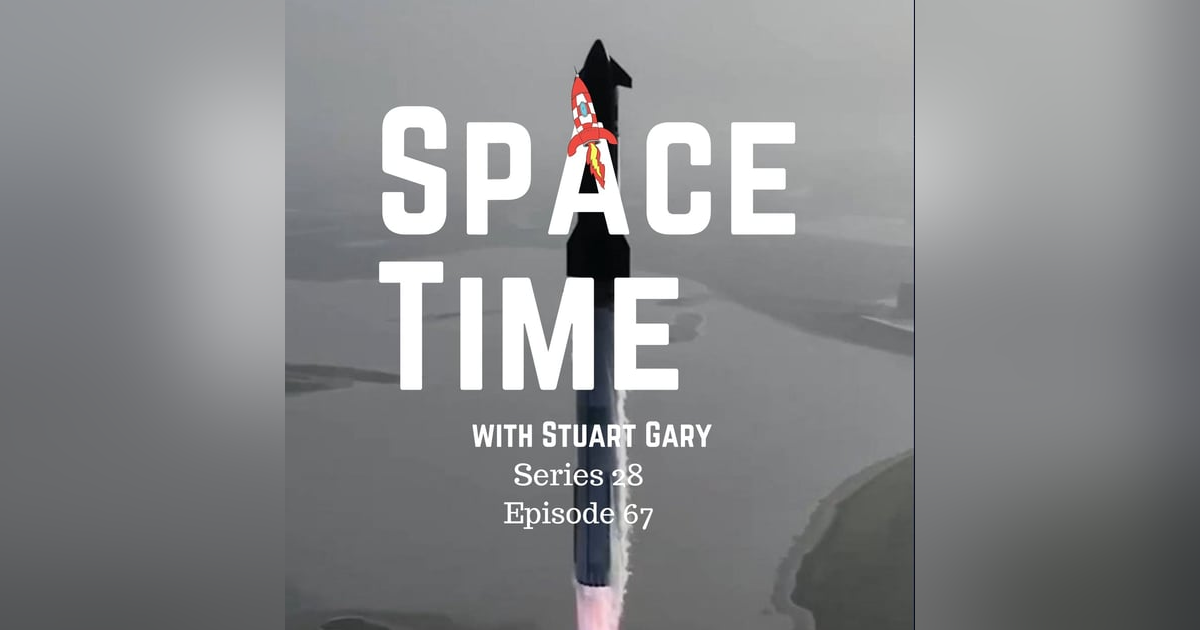
Sponsor Details: Incogni: When your data privacy matters, you need Incogni. To get your special SpaceTime deal and bonuses, visit https://www.incogni.com/stuartgary and let them do all the heavy lifting for you Insta360 This episode is brought to you...


Sponsor Details:
Incogni:When your data privacy matters, you needIncogni.To get your special SpaceTime deal and bonuses, visitwww.incogni.com/stuartgaryand let them do all the heavy lifting for you
Insta360
This episode is brought to you with the support ofInsta360- the innovators in 360-degree camera technology. Capture your adventures with the Insta360 X5, designed for extreme conditions. To claim a free invisible selfie stick with your purchase, visitstore.insta360.comand use the promo codeSpaceTime!
In this episode ofSpaceTime, we explore the latest developments in space exploration, lunar geology, and solar phenomena.
SpaceX's Fiery Ninth Starship Test Flight
The latest test flight of SpaceX's Starship ended dramatically as both the orbiter and the booster were destroyed during reentry. Despite the fiery conclusion, SpaceX officials noted that the test was designed to push the limits of the spacecraft. The flight featured numerous milestones, including a successful hot staging and the first reflight of a booster. However, issues arose during the landing burn, resulting in a spectacular explosion. We discuss the implications of this test and what it means for future missions, including NASA's Artemis 3.
Lunar Rocks and Their Magnetic Mystery
A new study proposes that a significant asteroid impact may explain the presence of highly magnetic rocks on the Moon. Researchers suggest that a brief amplification of the Moon's weak magnetic field, caused by a large plasma-generated impact event, could account for the magnetism observed in some lunar samples. This hypothesis sheds light on the Moon's geological history and its magnetic properties, particularly in regions near the lunar south pole, where future missions are planned.
Revealing the Sun's Corona
Astronomers have captured unprecedented details of the Sun's corona using a new adaptive optics system. This groundbreaking technology has allowed scientists to produce the clearest images of the corona yet, enhancing our understanding of coronal heating and solar eruptions. The new observations reveal dynamic features and turbulent flows within the corona, providing insights into the mechanisms driving space weather and its effects on Earth.
www.spacetimewithstuartgary.com
✍️ Episode References
Nature Astronomy
https://www.nature.com/natureastronomy/
Science Advances
https://www.science.org/journal/sciadv
Become a supporter of this podcast:https://www.spreaker.com/podcast/spacetime-space-astronomy--2458531/support.
00:00 This is Space Time Series 28, Episode 67 for broadcast on 4 June 2025
01:00 SpaceX's ninth Starship test flight
12:15 Lunar rocks and their magnetic mystery
22:30 Revealing the Sun's corona
30:00 Science report: New methods for green hydrogen production
Incogni:When your data privacy matters, you needIncogni.To get your special SpaceTime deal and bonuses, visitwww.incogni.com/stuartgaryand let them do all the heavy lifting for you
Insta360
This episode is brought to you with the support ofInsta360- the innovators in 360-degree camera technology. Capture your adventures with the Insta360 X5, designed for extreme conditions. To claim a free invisible selfie stick with your purchase, visitstore.insta360.comand use the promo codeSpaceTime!
In this episode ofSpaceTime, we explore the latest developments in space exploration, lunar geology, and solar phenomena.
SpaceX's Fiery Ninth Starship Test Flight
The latest test flight of SpaceX's Starship ended dramatically as both the orbiter and the booster were destroyed during reentry. Despite the fiery conclusion, SpaceX officials noted that the test was designed to push the limits of the spacecraft. The flight featured numerous milestones, including a successful hot staging and the first reflight of a booster. However, issues arose during the landing burn, resulting in a spectacular explosion. We discuss the implications of this test and what it means for future missions, including NASA's Artemis 3.
Lunar Rocks and Their Magnetic Mystery
A new study proposes that a significant asteroid impact may explain the presence of highly magnetic rocks on the Moon. Researchers suggest that a brief amplification of the Moon's weak magnetic field, caused by a large plasma-generated impact event, could account for the magnetism observed in some lunar samples. This hypothesis sheds light on the Moon's geological history and its magnetic properties, particularly in regions near the lunar south pole, where future missions are planned.
Revealing the Sun's Corona
Astronomers have captured unprecedented details of the Sun's corona using a new adaptive optics system. This groundbreaking technology has allowed scientists to produce the clearest images of the corona yet, enhancing our understanding of coronal heating and solar eruptions. The new observations reveal dynamic features and turbulent flows within the corona, providing insights into the mechanisms driving space weather and its effects on Earth.
www.spacetimewithstuartgary.com
✍️ Episode References
Nature Astronomy
https://www.nature.com/natureastronomy/
Science Advances
https://www.science.org/journal/sciadv
Become a supporter of this podcast:https://www.spreaker.com/podcast/spacetime-space-astronomy--2458531/support.
00:00 This is Space Time Series 28, Episode 67 for broadcast on 4 June 2025
01:00 SpaceX's ninth Starship test flight
12:15 Lunar rocks and their magnetic mystery
22:30 Revealing the Sun's corona
30:00 Science report: New methods for green hydrogen production
The Astronomy, Space, Technology & Science News Podcast.
1
00:00:00,160 --> 00:00:04,103
This is Space Time Series 28
Episode 67 for broadcast on the
2
00:00:04,263 --> 00:00:09,427
4th of June 2025. Coming up on
Space Time, SpaceX's 9Th
3
00:00:09,467 --> 00:00:13,511
Starship test flight comes to a
fiery end, a possible solution
4
00:00:13,551 --> 00:00:17,594
as to why some rocks on the Moon
are highly magnetic, and amazing
5
00:00:17,694 --> 00:00:20,836
never-before-seen details about
the Sun's atmosphere, the
6
00:00:20,856 --> 00:00:24,879
corona. All that and more coming
up on Space Time.
7
00:00:26,240 --> 00:00:29,303
Welcome to Space Time with
Stuart Gary.
8
00:00:45,528 --> 00:00:48,410
The ninth test flight of SpaceX
's Starships reached a
9
00:00:48,430 --> 00:00:51,673
spectacular and fiery conclusion
with the destruction of both the
10
00:00:51,793 --> 00:00:55,256
orbiter and the booster. The
super-heavy booster exploded
11
00:00:55,296 --> 00:00:58,118
during its landing engine burn,
while the Starship orbiter
12
00:00:58,218 --> 00:01:01,601
suddenly lost attitude control
and began spinning wildly before
13
00:01:01,681 --> 00:01:03,642
ripping itself apart during
re-entry.
14
00:01:04,383 --> 00:01:07,745
However, mission managers at
SpaceX said the outcome wasn't
15
00:01:07,805 --> 00:01:10,788
totally unexpected, as the
flight was always designed to
16
00:01:10,848 --> 00:01:13,516
test the limits of the
spacecraft. The launch from
17
00:01:13,576 --> 00:01:17,059
SpaceX's Starbase in Boca Chica
on the Texas Gulf Coast went
18
00:01:17,139 --> 00:01:21,182
smoothly enough, with all 33
Raptor 2 engines lighting up and
19
00:01:21,282 --> 00:01:24,345
sending the world's biggest and
most powerful rocket into space.
20
00:01:42,184 --> 00:01:46,728
Out of 33 Raptor engines lit on
Super Heavy as it starts to
21
00:01:46,748 --> 00:01:50,170
ascend skyward. Coming up on
maximum aerodynamic pressure,
22
00:01:50,210 --> 00:01:53,053
then only about a minute and a
half until we get into hot
23
00:01:53,113 --> 00:01:53,553
staging.
24
00:01:53,713 --> 00:01:57,596
We could feel the building
shaking here, feel the vehicle's
25
00:01:57,696 --> 00:02:01,159
power. And we're just about a
minute away from shutting down
26
00:02:01,179 --> 00:02:04,622
those engines on the booster.
Again, this booster is flying
27
00:02:04,662 --> 00:02:06,263
for its second time today.
28
00:02:06,563 --> 00:02:09,956
We're going to see all but the
three center engines. Turn off
29
00:02:10,077 --> 00:02:13,379
on the booster. So our version
of MECO, most engines cut off.
30
00:02:13,539 --> 00:02:16,361
And then just a few seconds
later, hoping to see six engines
31
00:02:16,422 --> 00:02:18,303
ignite on ship to push it away.
32
00:02:18,523 --> 00:02:22,006
The mission profile was supposed
to see the spacecraft fly across
33
00:02:22,026 --> 00:02:24,788
the Atlantic Ocean and Africa
before descending over the
34
00:02:24,828 --> 00:02:28,031
Indian Ocean and then finally
splashing down off the Western
35
00:02:28,071 --> 00:02:32,714
Australian Coast. Hot staging of
the 123 meter tall vehicle was
36
00:02:32,814 --> 00:02:35,957
nominal, with Starship igniting
all six Raptor engines for the
37
00:02:35,997 --> 00:02:38,636
climb to orbital altitude. While
the Super Heavy booster
38
00:02:38,676 --> 00:02:41,016
performed a successful flip and
boost back burn.
39
00:02:41,156 --> 00:02:43,736
Keep an eye on which way the
booster flips. First ever
40
00:02:43,796 --> 00:02:46,876
directional flip we're going for
today should flip straight up.
41
00:02:47,536 --> 00:02:50,736
See those engines powering down?
Booster engine cut off. It
42
00:02:50,756 --> 00:02:52,236
ignited. Eight.
43
00:02:52,596 --> 00:02:57,236
Incredible flip by Super Heavy
booster. Those six engines,
44
00:02:57,316 --> 00:02:59,636
those three engines on the ship
ignited.
45
00:03:00,376 --> 00:03:03,656
Six healthy Raptors running on
ship on its way to space.
46
00:03:03,816 --> 00:03:05,196
Boosters are in the boost back.
47
00:03:05,396 --> 00:03:08,225
Super pressure's not on. It is
looking absolutely incredible
48
00:03:08,285 --> 00:03:11,428
here in Hawthorne. As we said,
six healthy engines on ship.
49
00:03:11,508 --> 00:03:14,971
We've got 13 out of 13 engines
on the booster. Now down to
50
00:03:14,991 --> 00:03:17,613
those three, which is what we
expect in the final moments of
51
00:03:17,673 --> 00:03:18,814
the boost back burn.
52
00:03:19,054 --> 00:03:22,837
This was the third flight for
the V2 version of Starship and
53
00:03:22,857 --> 00:03:25,439
included numerous improvements
over previous prototypes,
54
00:03:25,579 --> 00:03:28,942
including new heat shield tiles
and additional venting. But the
55
00:03:28,962 --> 00:03:32,064
flight was even more significant
as this marked the second launch
56
00:03:32,124 --> 00:03:34,786
for the same booster, the first
time it had been tried on a
57
00:03:34,806 --> 00:03:37,941
Starship mission. That same
booster had successfully flown
58
00:03:38,022 --> 00:03:40,503
previously on Flight 7 back in
January.
59
00:03:41,204 --> 00:03:44,527
And following that mission, only
four of the 33 Raptor engines
60
00:03:44,587 --> 00:03:47,389
needed to be replaced, and one
of those engines was now on its
61
00:03:47,509 --> 00:03:50,912
third launch. The booster's
descent back to Earth included
62
00:03:50,972 --> 00:03:54,094
testing a new steeper re-entry
angle of attack profile.
63
00:03:54,248 --> 00:03:57,330
Designed to send it to a watery
splashdown landing in the Gulf
64
00:03:57,551 --> 00:03:59,192
rather than return to the launch
pad.
65
00:03:59,452 --> 00:04:02,995
Six healthy engines on ship.
We've got 13 out of 13 engines
66
00:04:03,055 --> 00:04:05,597
on the booster. Now down to
those three, which is what we
67
00:04:05,637 --> 00:04:09,020
expect in the final moments of
the boost back burn. Now, as a
68
00:04:09,040 --> 00:04:11,962
reminder, we are not recovering
the Super Heavy booster today.
69
00:04:12,002 --> 00:04:13,803
We are instead going to do
some...
70
00:04:14,784 --> 00:04:18,487
And there we had a good shutdown
of the boost back burn. Next up
71
00:04:18,547 --> 00:04:20,849
will be the jettison of that hot
stage rain.
72
00:04:20,869 --> 00:04:22,330
...power and climate phenomenal.
73
00:04:22,556 --> 00:04:24,758
Great call out there that
everything looking nominal
74
00:04:24,878 --> 00:04:28,100
aboard the Super Heavy vehicle,
which is returning to Earth. And
75
00:04:28,101 --> 00:04:30,903
we're going to be doing some
experiments with it, including a
76
00:04:30,983 --> 00:04:35,826
higher angle of attack reentry,
as well as some engine tests as
77
00:04:35,846 --> 00:04:38,068
it gets closer to the Gulf.
78
00:04:38,148 --> 00:04:40,650
We are, again, because of these
tests not recovering it, we are
79
00:04:40,710 --> 00:04:43,953
sending it to the Gulf on
purpose. To do those tests with
80
00:04:44,053 --> 00:04:47,055
six healthy engines continuing
its ascent to its planned
81
00:04:47,115 --> 00:04:50,178
suborbital trajectory.
Everything going very well so
82
00:04:50,338 --> 00:04:54,601
far for Starship's ninth flight.
Now four minutes, 15 seconds in.
83
00:04:54,881 --> 00:04:58,364
The booster doing its LOX dump,
that liquid oxygen dump. So
84
00:04:58,404 --> 00:05:01,126
because we don't need some of
that liquid oxygen propellant in
85
00:05:01,166 --> 00:05:04,349
its tanks, we vent that
propellant out to lessen the
86
00:05:04,369 --> 00:05:08,732
booster's mass as it comes in
for its landing. Super Heavy is
87
00:05:08,792 --> 00:05:12,054
descending rapidly. What can we
expect here in the next few
88
00:05:12,094 --> 00:05:13,577
minutes as it does happen?
89
00:05:14,518 --> 00:05:17,383
Super Heavy might not have a
very smooth ride down. We're
90
00:05:17,384 --> 00:05:20,608
going to be putting it through
this higher angle of attack. So
91
00:05:20,609 --> 00:05:24,197
we're kind of pitching it up a
tiny bit, increasing drag. We've
92
00:05:24,237 --> 00:05:27,717
done this in wind tunnels, we've
done this in computer modeling.
93
00:05:27,757 --> 00:05:31,877
It shows that sometimes the
control isn't great, but only
94
00:05:31,997 --> 00:05:34,397
one way to really prove it out
and that's to get real world
95
00:05:34,457 --> 00:05:39,057
data. So here comes SuperHeavy.
It should be igniting for its
96
00:05:39,157 --> 00:05:43,817
landing burn in just about 40
seconds from now.
97
00:05:44,177 --> 00:05:47,897
And we are going to relight 13
engines, then bring that down to
98
00:05:47,997 --> 00:05:51,225
three engines. We will be
intentionally setting down We
99
00:05:51,265 --> 00:05:54,267
will be shutting down one of
those three center engines
100
00:05:54,548 --> 00:05:57,530
intentionally to push the limits
of the Super Heavy booster.
101
00:05:57,590 --> 00:05:58,851
Chamber practice nominal.
102
00:05:58,971 --> 00:06:03,635
And continuing to see six
healthy engines on the ship,
103
00:06:03,995 --> 00:06:08,298
three sea level and three vacuum
engines still ignited as the
104
00:06:08,318 --> 00:06:10,440
Super Heavy booster is making
its way back down to Earth.
105
00:06:10,540 --> 00:06:12,322
Those grid fins doing some heavy
work.
106
00:06:13,382 --> 00:06:14,764
Ignited for our landing burn.
107
00:06:15,084 --> 00:06:17,746
Everything appeared to be going
smoothly until the landing burn.
108
00:06:17,977 --> 00:06:21,517
13 Raptor engines were meant to
restart for this, but only 12
109
00:06:21,557 --> 00:06:24,837
did. And moments later, the
booster suddenly exploded in a
110
00:06:24,877 --> 00:06:25,917
massive fireball.
111
00:06:26,097 --> 00:06:29,017
It may have ended with that
landing burn. Does look like we
112
00:06:29,097 --> 00:06:32,357
lost telemetry from the booster
once we started into that
113
00:06:32,457 --> 00:06:35,437
landing burn. Did you see a
confirmation that the booster
114
00:06:35,637 --> 00:06:39,437
did demise? So the booster's
flight ending before it was able
115
00:06:39,438 --> 00:06:41,917
to get through landing burn, but
again, we are not bringing that
116
00:06:41,957 --> 00:06:42,217
back.
117
00:06:42,257 --> 00:06:46,325
We're expecting it to make a
hard splash down in the Gulf. We
118
00:06:46,326 --> 00:06:49,367
were getting live data back the
entire time through that high
119
00:06:49,428 --> 00:06:52,990
angle of attack flight, so that
was something that was really
120
00:06:53,070 --> 00:06:56,653
vital for us to get during this
reuse, first reflighted booster
121
00:06:56,654 --> 00:06:57,214
in the books.
122
00:06:57,654 --> 00:07:01,057
Meanwhile, Starship continued
its ascent into space, but then
123
00:07:01,157 --> 00:07:04,619
a jet of fluid was seen venting
from the engine bay between the
124
00:07:04,679 --> 00:07:08,082
sea level and vacuum Raptor
engines. Now, it's thought this
125
00:07:08,142 --> 00:07:10,884
was probably just the new
nitrogen purge system installed
126
00:07:10,885 --> 00:07:13,466
in the attic space between the
top of the engine heat shield
127
00:07:13,586 --> 00:07:14,987
and the bottom of the oxygen
tank.
128
00:07:15,385 --> 00:07:18,525
See, that's where fire broke out
during Flight 7, so SpaceX
129
00:07:18,625 --> 00:07:22,605
installed the new purge system
to vent out built-up gases. Then
130
00:07:22,625 --> 00:07:25,265
about nine minutes into the
flight, hotspots began to
131
00:07:25,305 --> 00:07:28,545
develop quite noticeably at two
separate locations in the engine
132
00:07:28,585 --> 00:07:28,825
bay.
133
00:07:28,965 --> 00:07:33,605
In about two minutes, we expect
all six Raptor engines to shut
134
00:07:33,705 --> 00:07:37,845
down. That will be SECO,
basically second engine or
135
00:07:37,865 --> 00:07:39,345
second stage engine shut off.
136
00:07:39,745 --> 00:07:43,025
All eyes definitely on ship as
we get through the final stages.
137
00:07:43,477 --> 00:07:47,277
Into its ascent. We're expecting
it to start to cut those engines
138
00:07:47,437 --> 00:07:50,717
off. Terminal guidance. We're in
terminal guidance. The final
139
00:07:50,757 --> 00:07:52,277
stages of this ascent burn.
140
00:07:52,397 --> 00:07:55,857
We did see shutdown of the
Raptor engines. We do stagger
141
00:07:55,897 --> 00:07:58,937
these, so we do the Raptors
first. Those three have shut
142
00:07:58,997 --> 00:08:02,637
down successfully. Sea level's
still running. Hip engine cut
143
00:08:02,677 --> 00:08:06,357
off. Hip engine cut off. The
three most beautiful words in
144
00:08:06,358 --> 00:08:07,637
the English language.
145
00:08:07,757 --> 00:08:12,886
And great call out that we had
nominal insertion. An incredible
146
00:08:13,386 --> 00:08:18,710
flight test so far today. We
reflew a Super Heavy booster for
147
00:08:18,730 --> 00:08:23,834
the very first time in nine test
flights. Ship is in its orbital
148
00:08:23,895 --> 00:08:28,258
trajectory. Again, it's going to
remain suborbital for its
149
00:08:28,358 --> 00:08:33,862
mission today, but it ignited
all six of its engines and made
150
00:08:33,863 --> 00:08:36,344
it all the way through SECO just
now.
151
00:08:36,584 --> 00:08:39,367
Managing cutout happened as
planned, but it was at about
152
00:08:39,407 --> 00:08:43,023
this time that Starship began
tumbling end over end out of
153
00:08:43,024 --> 00:08:46,185
control, possibly from venting
fuel leaks acting as a sort of
154
00:08:46,225 --> 00:08:49,888
jet and causing an asymmetric
rotation of the spacecraft. Now
155
00:08:49,928 --> 00:08:52,390
this should have been countered
by Starship's attitude control
156
00:08:52,470 --> 00:08:52,810
system.
157
00:08:53,471 --> 00:08:56,073
It uses some of the gas normally
used to pressurize the fuel
158
00:08:56,153 --> 00:09:00,076
system to act as a propellant.
But because the fuel system was
159
00:09:00,136 --> 00:09:02,958
leaking, there simply wasn't
enough gas left to charge the
160
00:09:02,998 --> 00:09:06,861
attitude control system. And so
gradually the end over end
161
00:09:06,941 --> 00:09:10,154
tumble got worse. And eventually
a horizontal spin began
162
00:09:10,195 --> 00:09:11,055
developing as well.
163
00:09:11,235 --> 00:09:15,178
And so at this point, we've
essentially lost our attitude
164
00:09:15,198 --> 00:09:18,841
control with Starship. We are
still on a path toward re-entry.
165
00:09:19,081 --> 00:09:21,683
We are suborbital, so no matter
what, we are going to enter.
166
00:09:22,084 --> 00:09:25,727
However, this lowers the chances
for it to be a controlled
167
00:09:25,807 --> 00:09:26,227
re-entry.
168
00:09:26,807 --> 00:09:31,411
So if you think back to Flight
3, when we had something similar
169
00:09:31,471 --> 00:09:36,047
happen, just the... And symptom
of a loss of attitude control.
170
00:09:36,067 --> 00:09:39,470
We were in a roll by the time we
hit reentry. So we are going to
171
00:09:39,490 --> 00:09:42,392
reenter. We should hopefully
still have views.
172
00:09:43,533 --> 00:09:46,455
These Starlink satellites are
pretty robust to still
173
00:09:46,495 --> 00:09:49,497
maintaining contact. We've got
four of those terminals on the
174
00:09:49,498 --> 00:09:52,179
vehicle, and they're pretty
robust to maintaining contact,
175
00:09:52,300 --> 00:09:56,583
even when we are in a spin,
essentially. We're coming up on
176
00:09:56,883 --> 00:10:00,226
Africa. I believe we do swing
just to the south of that
177
00:10:00,286 --> 00:10:00,806
continent.
178
00:10:01,774 --> 00:10:04,458
And by the time we start heading
out over the Indian Ocean, we'll
179
00:10:04,498 --> 00:10:07,843
start heading into a sunrise. So
not looking great with a lot of
180
00:10:07,863 --> 00:10:10,607
our on-orbit objectives for
today. Relight an engine and
181
00:10:10,608 --> 00:10:13,973
then really importantly, get
into that controlled entry to
182
00:10:14,033 --> 00:10:17,098
really put the heat shield
through the ringer. Nonetheless.
183
00:10:17,658 --> 00:10:20,440
Starship marching forward
towards that re-entry over the
184
00:10:20,520 --> 00:10:23,262
Indian Ocean, so we'll continue
to hang with it.
185
00:10:23,343 --> 00:10:25,905
Now, while all this was going
on, an attempt was being made to
186
00:10:25,925 --> 00:10:28,947
deploy a series of eight
Starlink satellite simulators as
187
00:10:29,007 --> 00:10:32,209
part of an in-flight test. But
that also failed when the
188
00:10:32,250 --> 00:10:36,313
payload bay door failed to open.
But the bigger problem, Starship
189
00:10:36,433 --> 00:10:39,175
now spinning out of control, was
doomed to fall back into the
190
00:10:39,235 --> 00:10:41,056
atmosphere at crazy angles.
191
00:10:41,297 --> 00:10:45,160
So we are expecting it to break
up, essentially, on its re-entry
192
00:10:45,320 --> 00:10:48,894
over the Indian Ocean. So. Not
able to do a lot of our own
193
00:10:48,994 --> 00:10:52,934
orbit objectives today. So
again, we are in essentially a
194
00:10:52,954 --> 00:10:54,974
tumble. We had lost that
attitude control.
195
00:10:55,054 --> 00:10:58,254
41 minutes into the flight,
Starship began to break apart
196
00:10:58,274 --> 00:11:01,314
and melt as it was ripped into
pieces by its atmosphere.
197
00:11:01,594 --> 00:11:05,494
Vehicle to sea about 1400
degrees Celsius, feeling that
198
00:11:05,554 --> 00:11:09,094
temperature there melting away.
But as we expected with the
199
00:11:09,654 --> 00:11:13,654
spinning of the vehicle, we are
no longer controlling. It is
200
00:11:13,694 --> 00:11:16,134
expected to see it begin to...
201
00:11:16,682 --> 00:11:18,902
Demise a little bit on its way
back down to Earth it's
202
00:11:18,962 --> 00:11:22,282
re-entering actively right now
and again we did do what's
203
00:11:22,302 --> 00:11:25,082
called passivation so you
essentially vent all of your
204
00:11:25,142 --> 00:11:27,882
excess propellant overboard
before you hit the atmosphere
205
00:11:28,062 --> 00:11:30,962
that's a safety measure we can
take on the ship while you still
206
00:11:31,022 --> 00:11:34,442
have contact with it so that was
done it's now coming down in the
207
00:11:34,462 --> 00:11:37,462
predetermined hazard area that
was cleared ahead of flight not
208
00:11:37,502 --> 00:11:40,322
controlled so we're not going to
get all of that re-entry data
209
00:11:40,362 --> 00:11:43,822
that we're still really looking
forward to this is kind of a new
210
00:11:43,902 --> 00:11:48,031
generation of ship that has
different flaps improved heat
211
00:11:48,051 --> 00:11:50,373
shield a whole lot of things
that we're really trying to
212
00:11:50,833 --> 00:11:53,115
really put through the ringer
there's a whole lot we still
213
00:11:53,135 --> 00:11:55,997
need to learn before we get to
kind of the next step that we're
214
00:11:56,017 --> 00:11:59,040
hoping for which is going to be
that ship going orbital and
215
00:11:59,060 --> 00:12:03,163
eventually coming back here for
a catch so getting through one
216
00:12:03,164 --> 00:12:06,305
of these fully is going to be
really important it's not going
217
00:12:06,306 --> 00:12:09,988
to be today but we are just
going to stick with the ship see
218
00:12:09,989 --> 00:12:12,750
what else we we can learn as it
makes its way through the
219
00:12:12,791 --> 00:12:16,591
atmosphere and brings an end to
the ninth flight test.
220
00:12:16,592 --> 00:12:17,772
So we'll stick with it.
221
00:12:17,773 --> 00:12:21,054
The mission was over. A full
investigation to determine what
222
00:12:21,134 --> 00:12:25,237
happened is now underway. SpaceX
boss Elon Musk says launch
223
00:12:25,317 --> 00:12:27,599
cadence for the next three
flights will be faster at
224
00:12:27,600 --> 00:12:30,962
approximately one every three to
four weeks. The company need to
225
00:12:30,963 --> 00:12:33,404
get on top of the problem
because no V2 version of
226
00:12:33,424 --> 00:12:36,326
Starship has successfully
achieved its flight parameters.
227
00:12:37,047 --> 00:12:40,269
See, a key part of the Starship
program will be assisting NASA's
228
00:12:40,349 --> 00:12:43,992
plans to return humans to the
Moon in 2027 aboard the Artemis
229
00:12:44,152 --> 00:12:47,312
III mission. A version of
Starship will act as a shuttle,
230
00:12:47,492 --> 00:12:50,474
transporting crew and supplies
from the Orion capsule down to
231
00:12:50,475 --> 00:12:51,515
the lunar surface.
232
00:12:52,436 --> 00:12:55,598
Meanwhile, major design changes
for Starship and Super Heavy are
233
00:12:55,678 --> 00:12:59,341
also on the horizon. These
include a nine-engine variant of
234
00:12:59,381 --> 00:13:01,843
Starship, there are currently
six engines on the Starship
235
00:13:01,923 --> 00:13:04,405
orbiter, and the use of just
three rather than the current
236
00:13:04,485 --> 00:13:08,368
four grid fins on the Super
Heavy booster. Also, future
237
00:13:08,408 --> 00:13:11,150
versions of the Starship Super
Heavy booster stack will get
238
00:13:11,250 --> 00:13:14,193
taller, eventually reaching a
height of 142 metres.
239
00:13:14,878 --> 00:13:18,221
These ongoing evolutionary
changes are all part of Musk's
240
00:13:18,321 --> 00:13:21,743
plan to develop Starship as a
true interplanetary colonial
241
00:13:21,803 --> 00:13:25,847
transport vehicle, one capable
of taking 100 people or 150 tons
242
00:13:25,848 --> 00:13:28,889
of equipment and supplies on
journeys not just to the Moon,
243
00:13:29,149 --> 00:13:32,972
but eventually Mars and beyond,
in the process turning the human
244
00:13:33,052 --> 00:13:35,514
race into a two-planet
civilization.
245
00:13:36,415 --> 00:13:40,718
This is space-time. Still to
come, why are some rocks on the
246
00:13:40,758 --> 00:13:43,959
Moon so heavily magnetized? And
astronomers scope
247
00:13:44,059 --> 00:13:47,222
never-before-seen details in the
Sun's atmosphere, the corona.
248
00:13:47,722 --> 00:13:50,544
All that and more still to come
on Space Time.
249
00:13:54,027 --> 00:13:56,409
Okay, let's take a break from
our show for a word from our
250
00:13:56,449 --> 00:13:59,231
sponsor, Incogni. If you're
anything like me, you're
251
00:13:59,251 --> 00:14:02,754
probably concerned about your
privacy online. And for good
252
00:14:02,814 --> 00:14:05,576
reason. Did you know there are
hundreds of data brokers out
253
00:14:05,616 --> 00:14:08,798
there quietly collecting, buying
and selling your personal
254
00:14:08,838 --> 00:14:09,479
information?
255
00:14:09,902 --> 00:14:12,404
I'm talking about your phone
number, your home address, your
256
00:14:12,464 --> 00:14:15,527
browsing habits, even your
location history. And that's
257
00:14:15,547 --> 00:14:18,609
where Incogni comes in. Incogni
is a service that acts on your
258
00:14:18,649 --> 00:14:22,112
behalf, requesting the removal
of your personal data from these
259
00:14:22,152 --> 00:14:23,293
shady data brokers.
260
00:14:23,773 --> 00:14:26,535
And they don't just send a
one-off email. They follow up,
261
00:14:26,755 --> 00:14:29,918
track responses, and ensure that
your data actually does get
262
00:14:29,958 --> 00:14:32,960
deleted. Think of it as having a
digital privacy agency
263
00:14:33,080 --> 00:14:36,443
constantly working for you
behind the scenes. And the best
264
00:14:36,483 --> 00:14:39,898
part, it's all incredibly easy.
You just sign up, give them the
265
00:14:39,918 --> 00:14:42,258
go-ahead, and Incogni take care
of all the rest.
266
00:14:42,718 --> 00:14:45,358
And within just a few weeks,
you'll start seeing the results.
267
00:14:45,538 --> 00:14:49,358
There'll be fewer spam calls,
less targeted advertising, and a
268
00:14:49,398 --> 00:14:52,458
genuine sense of relief knowing
that your private data is no
269
00:14:52,538 --> 00:14:54,278
longer being traded like a
commodity.
270
00:14:55,098 --> 00:14:57,558
Now, as a Space Time listener,
we're offering you a special
271
00:14:57,618 --> 00:15:01,398
discount deal. Just go to
Incogni.com slash Stuart Gary.
272
00:15:01,598 --> 00:15:05,178
That's Incogni.com slash Stuart
Gary. And if you're not
273
00:15:05,198 --> 00:15:08,328
completely satisfied, no
worries. Incogni offers a 30-day
274
00:15:08,408 --> 00:15:11,994
money-back guarantee, so you can
try it out risk-free. You know,
275
00:15:12,274 --> 00:15:15,119
protecting your privacy really
shouldn't be optional in this
276
00:15:15,199 --> 00:15:16,100
digital age.
277
00:15:16,421 --> 00:15:19,025
So let Incogni help you by
keeping your personal
278
00:15:19,045 --> 00:15:22,884
information where it belongs,
with you. That's Incogni.com
279
00:15:23,084 --> 00:15:26,467
slash Stuart Gary to access this
exclusive discount offer and
280
00:15:26,527 --> 00:15:32,100
learn more. Stay safe, stay
private with Incogni. And now it
281
00:15:32,100 --> 00:15:33,012
's back to our show.
282
00:15:40,978 --> 00:15:43,921
A new study claims a large
asteroid impact on the Moon
283
00:15:44,041 --> 00:15:47,819
could explain why some lunar
rocks are highly magnetic. The
284
00:15:47,859 --> 00:15:50,201
findings, reported in the
journal Science Advances,
285
00:15:50,441 --> 00:15:53,243
suggest the impact could have
briefly amplified the Moon's
286
00:15:53,283 --> 00:15:56,206
weak magnetic field, creating a
momentary spike that was
287
00:15:56,286 --> 00:15:58,067
recorded in some lunar rocks.
288
00:15:58,788 --> 00:16:01,370
Scientists have puzzled over the
fate of the Moon's magnetic
289
00:16:01,450 --> 00:16:04,592
field for decades, ever since
orbiting spacecraft first picked
290
00:16:04,632 --> 00:16:07,795
up signs of a highly magnetic
field in some lunar surface
291
00:16:07,875 --> 00:16:11,618
rocks. The problem is, the Moon
itself has no inherent magnetism
292
00:16:11,698 --> 00:16:12,038
today.
293
00:16:12,655 --> 00:16:15,815
This new hypothesis suggests
that a combination of an ancient
294
00:16:15,915 --> 00:16:19,635
weak magnetic field and a large
plasma-generated impact event
295
00:16:19,775 --> 00:16:22,835
may have temporarily created a
strong magnetic field
296
00:16:22,955 --> 00:16:25,015
concentrated on the far side of
the Moon.
297
00:16:25,635 --> 00:16:28,755
The study's authors undertook
detailed simulations showing how
298
00:16:28,756 --> 00:16:31,795
an impact such as from a large
asteroid could have generated a
299
00:16:31,815 --> 00:16:34,735
cloud of ionized particles that
briefly enveloped the entire
300
00:16:34,775 --> 00:16:37,615
Moon. This plasma would have
streamed around the Moon and
301
00:16:37,655 --> 00:16:40,735
concentrated at the opposite
location from the initial point
302
00:16:40,736 --> 00:16:43,692
of impact. There, the plasma
would have interacted with and
303
00:16:43,793 --> 00:16:47,135
momentarily amplified the Moon's
own weak magnetic field.
304
00:16:47,576 --> 00:16:50,298
And any rocks in that region
could have recorded signs of
305
00:16:50,338 --> 00:16:53,660
heightened magnetism before the
field died away. This
306
00:16:53,740 --> 00:16:56,603
combination of events could
explain the presence of highly
307
00:16:56,683 --> 00:16:59,805
magnetic rocks detected in a
region near the lunar south pole
308
00:17:00,105 --> 00:17:01,466
on the Moon's far side.
309
00:17:02,027 --> 00:17:04,929
And as it happens, one of the
largest impact basins on the
310
00:17:04,969 --> 00:17:08,112
Moon, the Ibrahim Basin, is
located in the exact opposite
311
00:17:08,152 --> 00:17:11,332
spot on the near side of the
Moon. The study's lead author,
312
00:17:11,612 --> 00:17:14,935
Isaac Narette from MIT, says
whatever made the impact likely
313
00:17:15,035 --> 00:17:17,557
released a cloud of plasma that
kicked off the magnetic
314
00:17:17,597 --> 00:17:19,538
scenarios seen in their
simulations.
315
00:17:20,079 --> 00:17:23,021
He says there are large parts of
lunar magnetism that are simply
316
00:17:23,161 --> 00:17:26,604
unexplained. But the majority of
the strong magnetic fields that
317
00:17:26,704 --> 00:17:29,566
are being measured by orbiting
spacecraft could be explained by
318
00:17:29,586 --> 00:17:32,588
this impact process, especially
on the lunar far side.
319
00:17:33,709 --> 00:17:36,391
Scientists have learned for
decades that the Moon does hold
320
00:17:36,431 --> 00:17:39,895
remnants of a strong magnetic
field. Samples from the surface
321
00:17:39,896 --> 00:17:42,175
of the Moon returned by
astronauts on NASA's Apollo
322
00:17:42,275 --> 00:17:45,155
missions in the 60s and 70s, as
well as global measurements of
323
00:17:45,156 --> 00:17:47,855
the Moon taken from orbiting
spacecraft, show signs of
324
00:17:47,875 --> 00:17:50,615
remnant magnetism in surface
rocks, especially on the far
325
00:17:50,735 --> 00:17:51,435
side of the Moon.
326
00:17:52,075 --> 00:17:55,455
Now, the typical explanation for
surface magnetism is a global
327
00:17:55,495 --> 00:17:59,455
magnetic field, generated by an
internal geodynamo, a core of
328
00:17:59,515 --> 00:18:01,535
molten, churning metallic
material.
329
00:18:02,115 --> 00:18:04,515
In fact, the Earth today
generates just such a magnetic
330
00:18:04,555 --> 00:18:07,508
field through its own geodynamo
process. And it's thought that
331
00:18:07,509 --> 00:18:10,630
the Moon may well once have done
the same, although being a much
332
00:18:10,710 --> 00:18:13,092
smaller core, it would have
produced a much weaker magnetic
333
00:18:13,172 --> 00:18:16,835
field. But that wouldn't explain
the highly magnetised rocks
334
00:18:16,895 --> 00:18:19,657
observed, particularly those on
the Moon's far side.
335
00:18:20,197 --> 00:18:22,459
And that's where this
alternative hypothesis involving
336
00:18:22,460 --> 00:18:26,723
a giant impact comes in. In
2020, scientists tested this
337
00:18:26,763 --> 00:18:29,945
hypothesis with simulations of a
giant impact on the Moon in
338
00:18:29,965 --> 00:18:32,567
combination with the
solar-generated magnetic field,
339
00:18:32,767 --> 00:18:35,369
which is weak as it stretches
out to the Earth and Moon.
340
00:18:36,103 --> 00:18:39,003
In the simulations, they tested
whether an impact on the Moon
341
00:18:39,063 --> 00:18:41,963
could amplify such a solar field
enough to explain the highly
342
00:18:42,023 --> 00:18:45,683
magnetic measurements they found
on the surface rocks. Turns out
343
00:18:45,743 --> 00:18:48,383
it wasn't enough, so the results
seemed to rule out a
344
00:18:48,423 --> 00:18:51,383
plasma-induced impact as playing
any sort of role in the Moon's
345
00:18:51,443 --> 00:18:52,343
missing magnetism.
346
00:18:52,923 --> 00:18:55,723
But in this new hypothesis, the
authors took a different tack.
347
00:18:56,363 --> 00:18:58,703
Instead of accounting for the
Sun's magnetic field, they
348
00:18:58,803 --> 00:19:02,343
assumed the Moon once hosted its
own geodynamo-produced magnetic
349
00:19:02,443 --> 00:19:04,383
field, although a reasonably
weak one.
350
00:19:05,251 --> 00:19:08,113
Given the size of the lunar
core, they estimate that such a
351
00:19:08,133 --> 00:19:11,576
field would have been about 1
microTesla, 50 times weaker than
352
00:19:11,577 --> 00:19:14,799
the Earth's magnetic field
today. From this starting point,
353
00:19:14,939 --> 00:19:17,981
the authors simulated a large
impact on the Moon's surface,
354
00:19:18,201 --> 00:19:20,423
similar to what would have
created the Embryum crater on
355
00:19:20,424 --> 00:19:21,564
the Moon's near side.
356
00:19:22,204 --> 00:19:25,247
Using impact simulations, the
authors then simulated the cloud
357
00:19:25,248 --> 00:19:27,789
of plasma that such an impact
would have generated as the
358
00:19:27,829 --> 00:19:31,412
force of the impact vaporised
the surface material. They
359
00:19:31,572 --> 00:19:34,364
simulated how the resulting
plasma would flow and interact
360
00:19:34,384 --> 00:19:36,165
with the Moon's weak magnetic
field.
361
00:19:36,726 --> 00:19:39,748
And these simulations show that
as a plasma cloud arose from the
362
00:19:39,788 --> 00:19:42,570
impact, some of it would have
expanded into space, while the
363
00:19:42,590 --> 00:19:45,332
rest would have streamed around
the Moon and concentrated on the
364
00:19:45,412 --> 00:19:49,155
opposite side. There, the plasma
would have compressed and
365
00:19:49,175 --> 00:19:52,058
briefly amplified the Moon's own
weak magnetic field.
366
00:19:52,698 --> 00:19:55,340
The entire process from the
moment the magnetic field was
367
00:19:55,380 --> 00:19:58,202
amplified to the time it decays
back to the baseline would have
368
00:19:58,203 --> 00:20:01,887
been fairly quick, no more than
around 40 minutes. But they also
369
00:20:01,987 --> 00:20:04,449
found that an embryo-scale
impact would have produced a
370
00:20:04,489 --> 00:20:06,971
pressure wave which travelled
through the Moon, similar to a
371
00:20:07,011 --> 00:20:07,732
seismic shock.
372
00:20:08,012 --> 00:20:10,014
And these waves would have
converged on the opposite side
373
00:20:10,015 --> 00:20:12,275
from the impact, where the shock
front would have jittered the
374
00:20:12,316 --> 00:20:15,278
surrounding rocks, briefly
unsettling the rock's electrons.
375
00:20:15,598 --> 00:20:17,960
They're the subatomic particles
that naturally orient their
376
00:20:18,060 --> 00:20:20,282
spins to any external magnetic
field.
377
00:20:20,878 --> 00:20:23,600
The authors suspect that the
rocks were being shocked just as
378
00:20:23,620 --> 00:20:27,503
the impact plasma was amplifying
the Moon's magnetic field. So as
379
00:20:27,543 --> 00:20:30,305
the rock's electrons settled
back, they assumed a new
380
00:20:30,425 --> 00:20:33,968
orientation in line with the
momentarily high magnetic field.
381
00:20:34,629 --> 00:20:38,091
This combination of a dynamo
plus a large impact, coupled
382
00:20:38,092 --> 00:20:41,014
with the impact shockwave, would
be enough to explain the Moon's
383
00:20:41,054 --> 00:20:44,657
highly magnetic surface rocks,
especially on the far side. Of
384
00:20:44,677 --> 00:20:47,579
course, one way to know for sure
is to directly sample these
385
00:20:47,619 --> 00:20:49,761
rocks for signs of shock and
high magnetism.
386
00:20:50,354 --> 00:20:53,276
And that could well be possible
relatively soon, as the rocks on
387
00:20:53,277 --> 00:20:56,799
the far side are near the lunar
south pole where NASA's Artemis
388
00:20:56,919 --> 00:21:00,002
manned lunar missions are
programmed to land and explore.
389
00:21:00,722 --> 00:21:05,086
Needless to say, we'll keep you
informed. This is Space Time.
390
00:21:05,786 --> 00:21:09,269
Still to come, never-before-seen
details about the Sun's corona,
391
00:21:09,629 --> 00:21:13,152
and later in the science report,
a new study shows that urine
392
00:21:13,272 --> 00:21:15,894
rather than water would be the
most efficient method of
393
00:21:15,914 --> 00:21:18,956
production if you wanted to make
green hydrogen. All that and
394
00:21:18,996 --> 00:21:19,777
more coming up.
395
00:21:20,210 --> 00:21:39,045
On Space Time, astronomers have
employed a new adaptive optics
396
00:21:39,085 --> 00:21:42,067
system, allowing them to uncover
stunning never-before-seen
397
00:21:42,127 --> 00:21:45,626
details about the Sun's
atmosphere, the corona. The
398
00:21:45,627 --> 00:21:48,388
groundbreaking results reported
in the journal Nature Astronomy
399
00:21:48,608 --> 00:21:51,671
are paving the way for deeper
insights into coronal heating,
400
00:21:51,931 --> 00:21:54,373
solar eruptions and space
weather events.
401
00:21:55,174 --> 00:21:57,836
Research by scientists from the
United States National Science
402
00:21:57,856 --> 00:22:00,798
Foundation's National Solar
Observatory and the New Jersey
403
00:22:00,858 --> 00:22:03,260
Institute Of Technology have
reduced the clearest
404
00:22:03,340 --> 00:22:06,522
high-resolution images of the
Sun's corona ever undertaken.
405
00:22:07,183 --> 00:22:10,606
The key is this new coronal
adaptive optic system that
406
00:22:10,666 --> 00:22:13,848
removes the blur from images
caused by Earth's atmosphere.
407
00:22:14,526 --> 00:22:17,468
Funded by the National Science
Foundation and installed on the
408
00:22:18,109 --> 00:22:21,171
1.6-metre Goud Solar Telescope
at Big Bear Solar Observatory in
409
00:22:21,191 --> 00:22:24,214
California, Kona, the name of
the adaptive optics system
410
00:22:24,274 --> 00:22:26,956
responsible for these new
images, compensates for the blur
411
00:22:27,076 --> 00:22:29,438
caused by air turbulence in the
atmosphere.
412
00:22:29,998 --> 00:22:32,700
Dirk Schmidt, who helped develop
the system, says the turbulence
413
00:22:32,740 --> 00:22:35,843
in the air severely degrades
images of objects in space seen
414
00:22:35,883 --> 00:22:37,884
by telescopes, and that includes
the Sun.
415
00:22:38,486 --> 00:22:41,386
The Sun's corona, the outermost
layer of the Sun's atmosphere,
416
00:22:41,546 --> 00:22:44,946
is visible only during a total
solar eclipse, and it's long
417
00:22:45,026 --> 00:22:48,046
intrigued scientists due to its
extreme temperatures, violent
418
00:22:48,086 --> 00:22:51,546
eruptions and large prominences.
Among the remarkable
419
00:22:51,586 --> 00:22:54,866
observations seen in these new
images are quickly restructuring
420
00:22:54,946 --> 00:22:58,666
solar prominences, unveiling
fine, turbulent internal flows.
421
00:22:59,306 --> 00:23:02,822
These look like raindrops in the
Sun's atmosphere. Solar
422
00:23:02,862 --> 00:23:05,742
prominences are large bright
features often appearing as
423
00:23:05,802 --> 00:23:09,522
arches or loops and extending
out from the Sun's surface. The
424
00:23:09,562 --> 00:23:12,722
corona is heated to millions of
degrees, much hotter than the
425
00:23:12,762 --> 00:23:15,162
Sun's surface which is about
6,000 degrees.
426
00:23:15,462 --> 00:23:18,562
But the exact methods doing this
are still not fully understood.
427
00:23:18,882 --> 00:23:20,902
After all, the further you get
away from a heat source, the
428
00:23:20,962 --> 00:23:24,422
cooler it's supposed to get. The
corona is also home to dynamic
429
00:23:24,482 --> 00:23:28,062
phenomena such as cooler solar
plasma that appears reddish pink
430
00:23:28,182 --> 00:23:29,002
during eclipses.
431
00:23:29,938 --> 00:23:32,320
Astronomers believe that
resolving the structure and
432
00:23:32,321 --> 00:23:36,063
dynamics of the cooler plasma at
smaller scales holds the key to
433
00:23:36,203 --> 00:23:38,745
answering the coronal heating
mystery, thereby improving our
434
00:23:38,765 --> 00:23:41,807
understanding of the eruptions
ejecting plasma deep into space,
435
00:23:41,967 --> 00:23:44,810
driving space weather, the
conditions which, in near-Earth
436
00:23:44,870 --> 00:23:48,192
space, are primarily influenced
by the Sun's activity, such as
437
00:23:48,232 --> 00:23:51,535
solar flares, coronal mass
ejections and the solar wind.
438
00:23:52,316 --> 00:23:55,358
These effects can impact
technology and systems on the
439
00:23:55,458 --> 00:23:58,260
Earth and near-Earth space. They
can damage or destroy
440
00:23:58,380 --> 00:24:01,260
satellites. Cause the Earth's
atmosphere to suddenly expand
441
00:24:01,261 --> 00:24:04,322
and contract unexpectedly,
inducing atmospheric drag and
442
00:24:04,362 --> 00:24:07,124
orbital decay on spacecraft,
thereby causing them to use more
443
00:24:07,164 --> 00:24:07,504
fuel.
444
00:24:08,105 --> 00:24:10,247
They can also increase
radioactive exposure for
445
00:24:10,347 --> 00:24:13,209
astronauts and other crew in
space. They can affect
446
00:24:13,229 --> 00:24:16,311
communications and navigation
systems, and they can severely
447
00:24:16,411 --> 00:24:20,154
disrupt terrestrial power grids
by overloading power lines,
448
00:24:20,254 --> 00:24:24,077
causing blackouts. Adaptive
optic systems like that used on
449
00:24:24,117 --> 00:24:26,960
Kona use a mirror that
continually reshapes itself
450
00:24:27,060 --> 00:24:28,961
2,200 times every second.
451
00:24:29,054 --> 00:24:31,916
In order to counteract the image
degradation caused by turbulent
452
00:24:32,016 --> 00:24:35,419
air. I guess you can describe
adaptive optics as sort of being
453
00:24:35,439 --> 00:24:38,682
like pumped-up autofocus and
optical image stabilisation in
454
00:24:38,683 --> 00:24:41,364
your smartphone camera, but
correcting the errors for the
455
00:24:41,444 --> 00:24:44,006
atmosphere rather than the user
's shaky hands.
456
00:24:44,626 --> 00:24:47,989
Since the early 2000s, adaptive
optics have been used by large
457
00:24:48,049 --> 00:24:51,000
telescopes, including solar
observatories, to study the Sun
458
00:24:51,000 --> 00:24:53,913
's surface, enabling scientists
to reach their theoretical
459
00:24:53,993 --> 00:24:57,256
diffraction limits, that is, the
theoretical maximum resolution
460
00:24:57,316 --> 00:25:00,051
of an optical system. These
systems have since
461
00:25:00,111 --> 00:25:03,233
revolutionized observing the Sun
's surface, but until now
462
00:25:03,273 --> 00:25:05,295
they've not been used for
observing the corona.
463
00:25:05,635 --> 00:25:08,858
And the resolution features
beyond the solar limb stagnated
464
00:25:08,918 --> 00:25:12,240
at an order of 1,000 kilometers
or worse, the same levels as
465
00:25:12,241 --> 00:25:15,343
were achieved 80 years ago. And
that's where this new coronal
466
00:25:15,363 --> 00:25:19,286
adaptive optics system comes in.
It closes that decades-old gap,
467
00:25:19,466 --> 00:25:22,248
delivering images of coronal
features at 63 kilometer
468
00:25:22,308 --> 00:25:25,731
resolution, which is the
theoretical limit of a 1.6 meter
469
00:25:25,771 --> 00:25:28,466
telescope. This is Space Time.
470
00:25:30,726 --> 00:25:34,406
This episode of Space Time is
brought to you by Insta360, the
471
00:25:34,446 --> 00:25:38,606
trailblazers in 360-degree
action camera technology. Their
472
00:25:38,666 --> 00:25:43,366
latest model, the Insta360 X5,
is engineered for extremes. In
473
00:25:43,386 --> 00:25:46,146
fact, it's not just an upgrade,
it's a whole new level of
474
00:25:46,246 --> 00:25:49,446
rugged. With an ultra-tough
user-replaceable lens, you can
475
00:25:49,506 --> 00:25:52,106
finally take risks with your
shots and not worry about the
476
00:25:52,166 --> 00:25:52,466
gear.
477
00:25:52,906 --> 00:25:56,630
Dust, drops, debris, it's built
to survive it all. And if your
478
00:25:56,650 --> 00:25:59,750
adventures take you below the
surface, well, the X5's IP68
479
00:26:00,390 --> 00:26:03,430
waterproofed out of 49 feet
right out of the box. No
480
00:26:03,570 --> 00:26:04,990
housing, no hassles.
481
00:26:05,330 --> 00:26:07,890
And if you want to go deeper,
just add the invisible dive
482
00:26:07,930 --> 00:26:11,510
case, and you can capture
seamless 360-degree footage all
483
00:26:11,511 --> 00:26:15,670
the way down to 197 feet
underwater. Of course, none of
484
00:26:15,690 --> 00:26:18,190
this matters if your footage is
shaky. That's why the X5
485
00:26:18,610 --> 00:26:21,058
features flow rate
stabilization. And full
486
00:26:21,979 --> 00:26:25,742
360-degree horizon lock, giving
you silky smooth level shots no
487
00:26:25,782 --> 00:26:27,563
matter how intense the motion
gets.
488
00:26:27,824 --> 00:26:31,126
It's like having a steadicam
built into your camera. Whether
489
00:26:31,127 --> 00:26:34,129
you're climbing mountains,
diving reefs, or exploring alien
490
00:26:34,189 --> 00:26:37,892
worlds, the X5 is ready for
anything. To bag a free
491
00:26:38,832 --> 00:26:42,415
114-centimeter invisible selfie
stick worth $24.99 US with your
492
00:26:42,515 --> 00:26:45,658
Insta360 X5 standard package
purchase, head to
493
00:26:45,718 --> 00:26:50,580
store.inst360.com and use our
special promo code SPACETIME.
494
00:26:50,840 --> 00:26:53,362
But remember, you've got to be
one of the first 30 standard
495
00:26:53,402 --> 00:26:56,585
package purchasers. For more
information, be sure to check
496
00:26:56,605 --> 00:26:59,667
out the links in our show notes.
Once again, that's
497
00:26:59,707 --> 00:27:05,311
store.Insta360.com and use the
promo code SPACETIME. And now,
498
00:27:05,532 --> 00:27:06,612
it's back to our show.
499
00:27:17,942 --> 00:27:20,004
And time now to take another
brief look at some of the other
500
00:27:20,064 --> 00:27:23,446
stories making use in science
this week with a science report.
501
00:27:24,387 --> 00:27:26,929
Scientists say they've created a
new device that can detect
502
00:27:27,049 --> 00:27:29,771
atrial fibrillation without
needing to touch a patient.
503
00:27:30,452 --> 00:27:33,774
Atrial fibrillation, or AFib, is
an irregular and often rapid
504
00:27:33,875 --> 00:27:37,017
heartbeat which can be fatal.
Usually, this kind of heart
505
00:27:37,117 --> 00:27:39,839
issue is diagnosed with the help
of an electrocardiogram, a
506
00:27:39,859 --> 00:27:42,441
device that's connected to the
body and measures the heart's
507
00:27:42,481 --> 00:27:43,402
electrical signals.
508
00:27:44,050 --> 00:27:46,472
But a report in the journal
Nature Communications claims
509
00:27:46,572 --> 00:27:49,134
researchers say they can now
perform the same monitoring with
510
00:27:49,214 --> 00:27:52,797
radar sensing. The authors
evaluated the system using data
511
00:27:52,837 --> 00:27:57,561
from over 6,000 patients. That
included 229 with AFib, and they
512
00:27:57,641 --> 00:28:00,683
say it showed comparable results
to a standard ECG.
513
00:28:02,725 --> 00:28:05,847
A new study claims that people
who value personal success,
514
00:28:05,987 --> 00:28:09,210
excitement and the challenges of
life, as well as control over
515
00:28:09,330 --> 00:28:12,272
other people and resources, are
also more likely to be
516
00:28:12,352 --> 00:28:13,293
vegetarians.
517
00:28:13,938 --> 00:28:17,081
The findings, reported in the
journal PLOS One, also suggest
518
00:28:17,101 --> 00:28:19,282
that these differences indicate
that people who adopt the
519
00:28:19,322 --> 00:28:22,645
vegetarian diet tend to be
independent thinkers who aren't
520
00:28:22,665 --> 00:28:26,268
afraid to March to the beat of a
different drum. Fascinatingly,
521
00:28:26,288 --> 00:28:29,810
the same study also found that
non-vegetarians are more likely
522
00:28:29,830 --> 00:28:32,993
to value other people's welfare,
other people's safety, and the
523
00:28:33,073 --> 00:28:35,395
harmony of society and social
cohesion.
524
00:28:36,035 --> 00:28:38,397
The authors reached their
conclusions by analyzing data
525
00:28:38,457 --> 00:28:41,262
from three studies in the United
States and Poland, in which
526
00:28:41,322 --> 00:28:43,764
people were surveyed on their
dietary habits and answered a
527
00:28:43,804 --> 00:28:46,246
series of questions on the basic
human values which were
528
00:28:46,266 --> 00:28:46,967
important to them.
529
00:28:47,647 --> 00:28:50,970
They found that vegetarians
prized basic human values of
530
00:28:51,010 --> 00:28:54,112
stimulation, achievement and
power to be more important than
531
00:28:54,152 --> 00:28:57,335
non-vegetarians, while
non-vegetarians found
532
00:28:57,375 --> 00:29:01,058
benevolence, security and
conformity to be more important.
533
00:29:01,738 --> 00:29:04,480
The authors admit that these new
results are somewhat at odds
534
00:29:04,540 --> 00:29:06,962
with how vegetarianism is often
discussed.
535
00:29:08,670 --> 00:29:11,672
A new study has found that
urine, not water, is the most
536
00:29:11,752 --> 00:29:15,275
efficient production method to
generate green hydrogen. The
537
00:29:15,295 --> 00:29:17,997
researchers have now developed
two unique energy-efficient and
538
00:29:17,998 --> 00:29:21,280
cost-effective systems that use
urea found in urine and
539
00:29:21,380 --> 00:29:22,961
wastewater to generate hydrogen.
540
00:29:23,542 --> 00:29:26,084
A report in the journal Nature
Communications claims the
541
00:29:26,124 --> 00:29:29,026
findings show a new pathway to
economically generate green
542
00:29:29,086 --> 00:29:32,048
hydrogen, a sustainable and
renewable energy source, and the
543
00:29:32,049 --> 00:29:35,331
potential to remediate nitrogen
waste in aquatic systems.
544
00:29:37,042 --> 00:29:39,422
Samsung have just released their
latest smartphone, the new
545
00:29:39,542 --> 00:29:43,182
lightweight S25 Edge. With the
details, we're joined by
546
00:29:43,202 --> 00:29:46,722
technology editor Alex
Harov-Royd from TechAdvice.life.
547
00:29:46,882 --> 00:29:49,102
There's been a lot of talk that
Apple was going to launch the
548
00:29:49,262 --> 00:29:54,042
IPhone 17 Air in 2025, and that
was going to be a 5.5mm phone,
549
00:29:54,082 --> 00:29:58,562
very thin, and it would be
replaced in the iPhone 17 Plus,
550
00:29:58,862 --> 00:29:59,802
although they might still have
that.
551
00:29:59,842 --> 00:30:03,722
So knowing this was heavily
rumoured, Samsung decided to
552
00:30:03,822 --> 00:30:07,316
gazump Apple. And when they
showcased the S25 range in
553
00:30:07,376 --> 00:30:10,018
January this year, the very last
thing they showed was the
554
00:30:10,078 --> 00:30:14,261
Samsung S25 Edge. Now, this has
now come on to pre-sale. I've
555
00:30:14,401 --> 00:30:16,523
managed to get one in my little
hands today.
556
00:30:17,460 --> 00:30:21,840
It is 5.8mm thick, so it's very
thin. It's much thinner than the
557
00:30:22,400 --> 00:30:27,000
Samsung S25 Ultra and thinner
than the Samsung A56 mid-range
558
00:30:27,120 --> 00:30:30,580
phone. It's about 60g lighter
than the S25 Ultra, so it's
559
00:30:30,640 --> 00:30:33,180
noticeably lighter than their
most premium phones. You do only
560
00:30:33,200 --> 00:30:35,920
get two cameras on the back as
opposed to the five on the S25
561
00:30:36,340 --> 00:30:36,560
Ultra.
562
00:30:36,580 --> 00:30:42,300
There's obviously no stylus. And
you have a 3,900mAh battery as
563
00:30:42,320 --> 00:30:45,468
opposed to the 5,000mAh
batteries you find on... Many of
564
00:30:45,469 --> 00:30:47,990
the premium phones today, even
the mid-range phones. So you
565
00:30:48,010 --> 00:30:50,732
will have to charge it a bit
more often if you're a heavy
566
00:30:51,033 --> 00:30:51,533
user of it.
567
00:30:51,713 --> 00:30:54,555
We're yet to see the full
ramifications of this in terms
568
00:30:54,575 --> 00:30:57,538
of battery life, but I'm not
terribly worried that people are
569
00:30:57,539 --> 00:30:59,820
going to be too concerned. And
Apple's battery is meant to be
570
00:30:59,980 --> 00:31:04,123
2,900 milliamp hours, according
to the rumors, although they are
571
00:31:04,363 --> 00:31:07,465
supposed to be using a different
battery chemistry that will give
572
00:31:07,466 --> 00:31:11,288
it more capacity than what 2,900
milliamp hours would normally
573
00:31:11,469 --> 00:31:11,749
give you.
574
00:31:11,769 --> 00:31:15,369
So again, we get to see in that
regard. Holding the phone, it's
575
00:31:15,749 --> 00:31:17,951
delightful. I mean, it's light.
I haven't tried bending it, but
576
00:31:18,011 --> 00:31:19,832
people on the internet say they
haven't. They say it's very
577
00:31:19,892 --> 00:31:20,213
robust.
578
00:31:20,214 --> 00:31:22,294
You've got to put it in your
back pocket and sit down. That's
579
00:31:22,295 --> 00:31:22,534
the tip.
580
00:31:22,555 --> 00:31:24,756
Well, yes, yes. But, I mean,
look, they would have done all
581
00:31:24,776 --> 00:31:27,278
sorts of stress tests because
there was a huge kerfuffle over
582
00:31:27,279 --> 00:31:29,840
the iPhone 6, which was
supposedly bending in people's
583
00:31:29,880 --> 00:31:31,742
back pockets when they were
doing this. And, look, you're
584
00:31:31,743 --> 00:31:32,702
going to buy a case for it.
585
00:31:32,722 --> 00:31:35,124
You're going to be careful with
it. I mean, you don't want to be
586
00:31:35,765 --> 00:31:39,868
manhandling a phone that, at the
moment, costs $1,849 in
587
00:31:39,869 --> 00:31:43,701
Australia for the 512 gig
version. There is also a 250-60
588
00:31:43,761 --> 00:31:46,764
version, which is the one that I
have, but the age of thin phones
589
00:31:46,784 --> 00:31:47,244
is upon us.
590
00:31:47,284 --> 00:31:50,246
That's Alex Saharov-Royd from
TechAdvice.life.
591
00:32:05,859 --> 00:32:09,400
And that's the show for now.
Space Time is available every
592
00:32:09,500 --> 00:32:12,980
Monday, Wednesday and Friday
through Apple Podcasts, ITunes,
593
00:32:13,280 --> 00:32:17,660
Stitcher, Google Podcasts,
Hockeycasts, Spotify, Acast,
594
00:32:17,900 --> 00:32:22,000
Amazon Music, Bytes.Com,
SoundCloud, YouTube, your
595
00:32:22,080 --> 00:32:24,600
favorite podcast download
provider and from
596
00:32:24,680 --> 00:32:26,720
spacetimewithstuartgarry.com.
597
00:32:27,500 --> 00:32:30,020
Space Time is also broadcast
through the National Science
598
00:32:30,040 --> 00:32:34,020
Foundation on Science Zone Radio
and on both IHeart Radio and
599
00:32:34,140 --> 00:32:37,908
TuneIn Radio. And you can help
to support our show. By visiting
600
00:32:37,909 --> 00:32:41,071
the SpaceTime store for a range
of promotional merchandising
601
00:32:41,111 --> 00:32:41,551
goodies.
602
00:32:42,032 --> 00:32:45,254
Or by becoming a SpaceTime
patron, which gives you access
603
00:32:45,274 --> 00:32:47,536
to triple-episode
commercial-free versions of the
604
00:32:47,596 --> 00:32:50,738
show, as well as lots of bonus
audio content which doesn't go
605
00:32:50,758 --> 00:32:54,081
to air, access to our exclusive
Facebook group, and other
606
00:32:54,141 --> 00:32:58,084
rewards. Just go to
spacetimewithstuartgary.com for
607
00:32:58,124 --> 00:33:01,547
full details. You've been
listening to SpaceTime with
608
00:33:01,627 --> 00:33:04,970
Stuart Gary. This has been
another quality podcast
609
00:33:04,990 --> 00:33:06,711
production from Bytes.Com.
00:00:00,160 --> 00:00:04,103
This is Space Time Series 28
Episode 67 for broadcast on the
2
00:00:04,263 --> 00:00:09,427
4th of June 2025. Coming up on
Space Time, SpaceX's 9Th
3
00:00:09,467 --> 00:00:13,511
Starship test flight comes to a
fiery end, a possible solution
4
00:00:13,551 --> 00:00:17,594
as to why some rocks on the Moon
are highly magnetic, and amazing
5
00:00:17,694 --> 00:00:20,836
never-before-seen details about
the Sun's atmosphere, the
6
00:00:20,856 --> 00:00:24,879
corona. All that and more coming
up on Space Time.
7
00:00:26,240 --> 00:00:29,303
Welcome to Space Time with
Stuart Gary.
8
00:00:45,528 --> 00:00:48,410
The ninth test flight of SpaceX
's Starships reached a
9
00:00:48,430 --> 00:00:51,673
spectacular and fiery conclusion
with the destruction of both the
10
00:00:51,793 --> 00:00:55,256
orbiter and the booster. The
super-heavy booster exploded
11
00:00:55,296 --> 00:00:58,118
during its landing engine burn,
while the Starship orbiter
12
00:00:58,218 --> 00:01:01,601
suddenly lost attitude control
and began spinning wildly before
13
00:01:01,681 --> 00:01:03,642
ripping itself apart during
re-entry.
14
00:01:04,383 --> 00:01:07,745
However, mission managers at
SpaceX said the outcome wasn't
15
00:01:07,805 --> 00:01:10,788
totally unexpected, as the
flight was always designed to
16
00:01:10,848 --> 00:01:13,516
test the limits of the
spacecraft. The launch from
17
00:01:13,576 --> 00:01:17,059
SpaceX's Starbase in Boca Chica
on the Texas Gulf Coast went
18
00:01:17,139 --> 00:01:21,182
smoothly enough, with all 33
Raptor 2 engines lighting up and
19
00:01:21,282 --> 00:01:24,345
sending the world's biggest and
most powerful rocket into space.
20
00:01:42,184 --> 00:01:46,728
Out of 33 Raptor engines lit on
Super Heavy as it starts to
21
00:01:46,748 --> 00:01:50,170
ascend skyward. Coming up on
maximum aerodynamic pressure,
22
00:01:50,210 --> 00:01:53,053
then only about a minute and a
half until we get into hot
23
00:01:53,113 --> 00:01:53,553
staging.
24
00:01:53,713 --> 00:01:57,596
We could feel the building
shaking here, feel the vehicle's
25
00:01:57,696 --> 00:02:01,159
power. And we're just about a
minute away from shutting down
26
00:02:01,179 --> 00:02:04,622
those engines on the booster.
Again, this booster is flying
27
00:02:04,662 --> 00:02:06,263
for its second time today.
28
00:02:06,563 --> 00:02:09,956
We're going to see all but the
three center engines. Turn off
29
00:02:10,077 --> 00:02:13,379
on the booster. So our version
of MECO, most engines cut off.
30
00:02:13,539 --> 00:02:16,361
And then just a few seconds
later, hoping to see six engines
31
00:02:16,422 --> 00:02:18,303
ignite on ship to push it away.
32
00:02:18,523 --> 00:02:22,006
The mission profile was supposed
to see the spacecraft fly across
33
00:02:22,026 --> 00:02:24,788
the Atlantic Ocean and Africa
before descending over the
34
00:02:24,828 --> 00:02:28,031
Indian Ocean and then finally
splashing down off the Western
35
00:02:28,071 --> 00:02:32,714
Australian Coast. Hot staging of
the 123 meter tall vehicle was
36
00:02:32,814 --> 00:02:35,957
nominal, with Starship igniting
all six Raptor engines for the
37
00:02:35,997 --> 00:02:38,636
climb to orbital altitude. While
the Super Heavy booster
38
00:02:38,676 --> 00:02:41,016
performed a successful flip and
boost back burn.
39
00:02:41,156 --> 00:02:43,736
Keep an eye on which way the
booster flips. First ever
40
00:02:43,796 --> 00:02:46,876
directional flip we're going for
today should flip straight up.
41
00:02:47,536 --> 00:02:50,736
See those engines powering down?
Booster engine cut off. It
42
00:02:50,756 --> 00:02:52,236
ignited. Eight.
43
00:02:52,596 --> 00:02:57,236
Incredible flip by Super Heavy
booster. Those six engines,
44
00:02:57,316 --> 00:02:59,636
those three engines on the ship
ignited.
45
00:03:00,376 --> 00:03:03,656
Six healthy Raptors running on
ship on its way to space.
46
00:03:03,816 --> 00:03:05,196
Boosters are in the boost back.
47
00:03:05,396 --> 00:03:08,225
Super pressure's not on. It is
looking absolutely incredible
48
00:03:08,285 --> 00:03:11,428
here in Hawthorne. As we said,
six healthy engines on ship.
49
00:03:11,508 --> 00:03:14,971
We've got 13 out of 13 engines
on the booster. Now down to
50
00:03:14,991 --> 00:03:17,613
those three, which is what we
expect in the final moments of
51
00:03:17,673 --> 00:03:18,814
the boost back burn.
52
00:03:19,054 --> 00:03:22,837
This was the third flight for
the V2 version of Starship and
53
00:03:22,857 --> 00:03:25,439
included numerous improvements
over previous prototypes,
54
00:03:25,579 --> 00:03:28,942
including new heat shield tiles
and additional venting. But the
55
00:03:28,962 --> 00:03:32,064
flight was even more significant
as this marked the second launch
56
00:03:32,124 --> 00:03:34,786
for the same booster, the first
time it had been tried on a
57
00:03:34,806 --> 00:03:37,941
Starship mission. That same
booster had successfully flown
58
00:03:38,022 --> 00:03:40,503
previously on Flight 7 back in
January.
59
00:03:41,204 --> 00:03:44,527
And following that mission, only
four of the 33 Raptor engines
60
00:03:44,587 --> 00:03:47,389
needed to be replaced, and one
of those engines was now on its
61
00:03:47,509 --> 00:03:50,912
third launch. The booster's
descent back to Earth included
62
00:03:50,972 --> 00:03:54,094
testing a new steeper re-entry
angle of attack profile.
63
00:03:54,248 --> 00:03:57,330
Designed to send it to a watery
splashdown landing in the Gulf
64
00:03:57,551 --> 00:03:59,192
rather than return to the launch
pad.
65
00:03:59,452 --> 00:04:02,995
Six healthy engines on ship.
We've got 13 out of 13 engines
66
00:04:03,055 --> 00:04:05,597
on the booster. Now down to
those three, which is what we
67
00:04:05,637 --> 00:04:09,020
expect in the final moments of
the boost back burn. Now, as a
68
00:04:09,040 --> 00:04:11,962
reminder, we are not recovering
the Super Heavy booster today.
69
00:04:12,002 --> 00:04:13,803
We are instead going to do
some...
70
00:04:14,784 --> 00:04:18,487
And there we had a good shutdown
of the boost back burn. Next up
71
00:04:18,547 --> 00:04:20,849
will be the jettison of that hot
stage rain.
72
00:04:20,869 --> 00:04:22,330
...power and climate phenomenal.
73
00:04:22,556 --> 00:04:24,758
Great call out there that
everything looking nominal
74
00:04:24,878 --> 00:04:28,100
aboard the Super Heavy vehicle,
which is returning to Earth. And
75
00:04:28,101 --> 00:04:30,903
we're going to be doing some
experiments with it, including a
76
00:04:30,983 --> 00:04:35,826
higher angle of attack reentry,
as well as some engine tests as
77
00:04:35,846 --> 00:04:38,068
it gets closer to the Gulf.
78
00:04:38,148 --> 00:04:40,650
We are, again, because of these
tests not recovering it, we are
79
00:04:40,710 --> 00:04:43,953
sending it to the Gulf on
purpose. To do those tests with
80
00:04:44,053 --> 00:04:47,055
six healthy engines continuing
its ascent to its planned
81
00:04:47,115 --> 00:04:50,178
suborbital trajectory.
Everything going very well so
82
00:04:50,338 --> 00:04:54,601
far for Starship's ninth flight.
Now four minutes, 15 seconds in.
83
00:04:54,881 --> 00:04:58,364
The booster doing its LOX dump,
that liquid oxygen dump. So
84
00:04:58,404 --> 00:05:01,126
because we don't need some of
that liquid oxygen propellant in
85
00:05:01,166 --> 00:05:04,349
its tanks, we vent that
propellant out to lessen the
86
00:05:04,369 --> 00:05:08,732
booster's mass as it comes in
for its landing. Super Heavy is
87
00:05:08,792 --> 00:05:12,054
descending rapidly. What can we
expect here in the next few
88
00:05:12,094 --> 00:05:13,577
minutes as it does happen?
89
00:05:14,518 --> 00:05:17,383
Super Heavy might not have a
very smooth ride down. We're
90
00:05:17,384 --> 00:05:20,608
going to be putting it through
this higher angle of attack. So
91
00:05:20,609 --> 00:05:24,197
we're kind of pitching it up a
tiny bit, increasing drag. We've
92
00:05:24,237 --> 00:05:27,717
done this in wind tunnels, we've
done this in computer modeling.
93
00:05:27,757 --> 00:05:31,877
It shows that sometimes the
control isn't great, but only
94
00:05:31,997 --> 00:05:34,397
one way to really prove it out
and that's to get real world
95
00:05:34,457 --> 00:05:39,057
data. So here comes SuperHeavy.
It should be igniting for its
96
00:05:39,157 --> 00:05:43,817
landing burn in just about 40
seconds from now.
97
00:05:44,177 --> 00:05:47,897
And we are going to relight 13
engines, then bring that down to
98
00:05:47,997 --> 00:05:51,225
three engines. We will be
intentionally setting down We
99
00:05:51,265 --> 00:05:54,267
will be shutting down one of
those three center engines
100
00:05:54,548 --> 00:05:57,530
intentionally to push the limits
of the Super Heavy booster.
101
00:05:57,590 --> 00:05:58,851
Chamber practice nominal.
102
00:05:58,971 --> 00:06:03,635
And continuing to see six
healthy engines on the ship,
103
00:06:03,995 --> 00:06:08,298
three sea level and three vacuum
engines still ignited as the
104
00:06:08,318 --> 00:06:10,440
Super Heavy booster is making
its way back down to Earth.
105
00:06:10,540 --> 00:06:12,322
Those grid fins doing some heavy
work.
106
00:06:13,382 --> 00:06:14,764
Ignited for our landing burn.
107
00:06:15,084 --> 00:06:17,746
Everything appeared to be going
smoothly until the landing burn.
108
00:06:17,977 --> 00:06:21,517
13 Raptor engines were meant to
restart for this, but only 12
109
00:06:21,557 --> 00:06:24,837
did. And moments later, the
booster suddenly exploded in a
110
00:06:24,877 --> 00:06:25,917
massive fireball.
111
00:06:26,097 --> 00:06:29,017
It may have ended with that
landing burn. Does look like we
112
00:06:29,097 --> 00:06:32,357
lost telemetry from the booster
once we started into that
113
00:06:32,457 --> 00:06:35,437
landing burn. Did you see a
confirmation that the booster
114
00:06:35,637 --> 00:06:39,437
did demise? So the booster's
flight ending before it was able
115
00:06:39,438 --> 00:06:41,917
to get through landing burn, but
again, we are not bringing that
116
00:06:41,957 --> 00:06:42,217
back.
117
00:06:42,257 --> 00:06:46,325
We're expecting it to make a
hard splash down in the Gulf. We
118
00:06:46,326 --> 00:06:49,367
were getting live data back the
entire time through that high
119
00:06:49,428 --> 00:06:52,990
angle of attack flight, so that
was something that was really
120
00:06:53,070 --> 00:06:56,653
vital for us to get during this
reuse, first reflighted booster
121
00:06:56,654 --> 00:06:57,214
in the books.
122
00:06:57,654 --> 00:07:01,057
Meanwhile, Starship continued
its ascent into space, but then
123
00:07:01,157 --> 00:07:04,619
a jet of fluid was seen venting
from the engine bay between the
124
00:07:04,679 --> 00:07:08,082
sea level and vacuum Raptor
engines. Now, it's thought this
125
00:07:08,142 --> 00:07:10,884
was probably just the new
nitrogen purge system installed
126
00:07:10,885 --> 00:07:13,466
in the attic space between the
top of the engine heat shield
127
00:07:13,586 --> 00:07:14,987
and the bottom of the oxygen
tank.
128
00:07:15,385 --> 00:07:18,525
See, that's where fire broke out
during Flight 7, so SpaceX
129
00:07:18,625 --> 00:07:22,605
installed the new purge system
to vent out built-up gases. Then
130
00:07:22,625 --> 00:07:25,265
about nine minutes into the
flight, hotspots began to
131
00:07:25,305 --> 00:07:28,545
develop quite noticeably at two
separate locations in the engine
132
00:07:28,585 --> 00:07:28,825
bay.
133
00:07:28,965 --> 00:07:33,605
In about two minutes, we expect
all six Raptor engines to shut
134
00:07:33,705 --> 00:07:37,845
down. That will be SECO,
basically second engine or
135
00:07:37,865 --> 00:07:39,345
second stage engine shut off.
136
00:07:39,745 --> 00:07:43,025
All eyes definitely on ship as
we get through the final stages.
137
00:07:43,477 --> 00:07:47,277
Into its ascent. We're expecting
it to start to cut those engines
138
00:07:47,437 --> 00:07:50,717
off. Terminal guidance. We're in
terminal guidance. The final
139
00:07:50,757 --> 00:07:52,277
stages of this ascent burn.
140
00:07:52,397 --> 00:07:55,857
We did see shutdown of the
Raptor engines. We do stagger
141
00:07:55,897 --> 00:07:58,937
these, so we do the Raptors
first. Those three have shut
142
00:07:58,997 --> 00:08:02,637
down successfully. Sea level's
still running. Hip engine cut
143
00:08:02,677 --> 00:08:06,357
off. Hip engine cut off. The
three most beautiful words in
144
00:08:06,358 --> 00:08:07,637
the English language.
145
00:08:07,757 --> 00:08:12,886
And great call out that we had
nominal insertion. An incredible
146
00:08:13,386 --> 00:08:18,710
flight test so far today. We
reflew a Super Heavy booster for
147
00:08:18,730 --> 00:08:23,834
the very first time in nine test
flights. Ship is in its orbital
148
00:08:23,895 --> 00:08:28,258
trajectory. Again, it's going to
remain suborbital for its
149
00:08:28,358 --> 00:08:33,862
mission today, but it ignited
all six of its engines and made
150
00:08:33,863 --> 00:08:36,344
it all the way through SECO just
now.
151
00:08:36,584 --> 00:08:39,367
Managing cutout happened as
planned, but it was at about
152
00:08:39,407 --> 00:08:43,023
this time that Starship began
tumbling end over end out of
153
00:08:43,024 --> 00:08:46,185
control, possibly from venting
fuel leaks acting as a sort of
154
00:08:46,225 --> 00:08:49,888
jet and causing an asymmetric
rotation of the spacecraft. Now
155
00:08:49,928 --> 00:08:52,390
this should have been countered
by Starship's attitude control
156
00:08:52,470 --> 00:08:52,810
system.
157
00:08:53,471 --> 00:08:56,073
It uses some of the gas normally
used to pressurize the fuel
158
00:08:56,153 --> 00:09:00,076
system to act as a propellant.
But because the fuel system was
159
00:09:00,136 --> 00:09:02,958
leaking, there simply wasn't
enough gas left to charge the
160
00:09:02,998 --> 00:09:06,861
attitude control system. And so
gradually the end over end
161
00:09:06,941 --> 00:09:10,154
tumble got worse. And eventually
a horizontal spin began
162
00:09:10,195 --> 00:09:11,055
developing as well.
163
00:09:11,235 --> 00:09:15,178
And so at this point, we've
essentially lost our attitude
164
00:09:15,198 --> 00:09:18,841
control with Starship. We are
still on a path toward re-entry.
165
00:09:19,081 --> 00:09:21,683
We are suborbital, so no matter
what, we are going to enter.
166
00:09:22,084 --> 00:09:25,727
However, this lowers the chances
for it to be a controlled
167
00:09:25,807 --> 00:09:26,227
re-entry.
168
00:09:26,807 --> 00:09:31,411
So if you think back to Flight
3, when we had something similar
169
00:09:31,471 --> 00:09:36,047
happen, just the... And symptom
of a loss of attitude control.
170
00:09:36,067 --> 00:09:39,470
We were in a roll by the time we
hit reentry. So we are going to
171
00:09:39,490 --> 00:09:42,392
reenter. We should hopefully
still have views.
172
00:09:43,533 --> 00:09:46,455
These Starlink satellites are
pretty robust to still
173
00:09:46,495 --> 00:09:49,497
maintaining contact. We've got
four of those terminals on the
174
00:09:49,498 --> 00:09:52,179
vehicle, and they're pretty
robust to maintaining contact,
175
00:09:52,300 --> 00:09:56,583
even when we are in a spin,
essentially. We're coming up on
176
00:09:56,883 --> 00:10:00,226
Africa. I believe we do swing
just to the south of that
177
00:10:00,286 --> 00:10:00,806
continent.
178
00:10:01,774 --> 00:10:04,458
And by the time we start heading
out over the Indian Ocean, we'll
179
00:10:04,498 --> 00:10:07,843
start heading into a sunrise. So
not looking great with a lot of
180
00:10:07,863 --> 00:10:10,607
our on-orbit objectives for
today. Relight an engine and
181
00:10:10,608 --> 00:10:13,973
then really importantly, get
into that controlled entry to
182
00:10:14,033 --> 00:10:17,098
really put the heat shield
through the ringer. Nonetheless.
183
00:10:17,658 --> 00:10:20,440
Starship marching forward
towards that re-entry over the
184
00:10:20,520 --> 00:10:23,262
Indian Ocean, so we'll continue
to hang with it.
185
00:10:23,343 --> 00:10:25,905
Now, while all this was going
on, an attempt was being made to
186
00:10:25,925 --> 00:10:28,947
deploy a series of eight
Starlink satellite simulators as
187
00:10:29,007 --> 00:10:32,209
part of an in-flight test. But
that also failed when the
188
00:10:32,250 --> 00:10:36,313
payload bay door failed to open.
But the bigger problem, Starship
189
00:10:36,433 --> 00:10:39,175
now spinning out of control, was
doomed to fall back into the
190
00:10:39,235 --> 00:10:41,056
atmosphere at crazy angles.
191
00:10:41,297 --> 00:10:45,160
So we are expecting it to break
up, essentially, on its re-entry
192
00:10:45,320 --> 00:10:48,894
over the Indian Ocean. So. Not
able to do a lot of our own
193
00:10:48,994 --> 00:10:52,934
orbit objectives today. So
again, we are in essentially a
194
00:10:52,954 --> 00:10:54,974
tumble. We had lost that
attitude control.
195
00:10:55,054 --> 00:10:58,254
41 minutes into the flight,
Starship began to break apart
196
00:10:58,274 --> 00:11:01,314
and melt as it was ripped into
pieces by its atmosphere.
197
00:11:01,594 --> 00:11:05,494
Vehicle to sea about 1400
degrees Celsius, feeling that
198
00:11:05,554 --> 00:11:09,094
temperature there melting away.
But as we expected with the
199
00:11:09,654 --> 00:11:13,654
spinning of the vehicle, we are
no longer controlling. It is
200
00:11:13,694 --> 00:11:16,134
expected to see it begin to...
201
00:11:16,682 --> 00:11:18,902
Demise a little bit on its way
back down to Earth it's
202
00:11:18,962 --> 00:11:22,282
re-entering actively right now
and again we did do what's
203
00:11:22,302 --> 00:11:25,082
called passivation so you
essentially vent all of your
204
00:11:25,142 --> 00:11:27,882
excess propellant overboard
before you hit the atmosphere
205
00:11:28,062 --> 00:11:30,962
that's a safety measure we can
take on the ship while you still
206
00:11:31,022 --> 00:11:34,442
have contact with it so that was
done it's now coming down in the
207
00:11:34,462 --> 00:11:37,462
predetermined hazard area that
was cleared ahead of flight not
208
00:11:37,502 --> 00:11:40,322
controlled so we're not going to
get all of that re-entry data
209
00:11:40,362 --> 00:11:43,822
that we're still really looking
forward to this is kind of a new
210
00:11:43,902 --> 00:11:48,031
generation of ship that has
different flaps improved heat
211
00:11:48,051 --> 00:11:50,373
shield a whole lot of things
that we're really trying to
212
00:11:50,833 --> 00:11:53,115
really put through the ringer
there's a whole lot we still
213
00:11:53,135 --> 00:11:55,997
need to learn before we get to
kind of the next step that we're
214
00:11:56,017 --> 00:11:59,040
hoping for which is going to be
that ship going orbital and
215
00:11:59,060 --> 00:12:03,163
eventually coming back here for
a catch so getting through one
216
00:12:03,164 --> 00:12:06,305
of these fully is going to be
really important it's not going
217
00:12:06,306 --> 00:12:09,988
to be today but we are just
going to stick with the ship see
218
00:12:09,989 --> 00:12:12,750
what else we we can learn as it
makes its way through the
219
00:12:12,791 --> 00:12:16,591
atmosphere and brings an end to
the ninth flight test.
220
00:12:16,592 --> 00:12:17,772
So we'll stick with it.
221
00:12:17,773 --> 00:12:21,054
The mission was over. A full
investigation to determine what
222
00:12:21,134 --> 00:12:25,237
happened is now underway. SpaceX
boss Elon Musk says launch
223
00:12:25,317 --> 00:12:27,599
cadence for the next three
flights will be faster at
224
00:12:27,600 --> 00:12:30,962
approximately one every three to
four weeks. The company need to
225
00:12:30,963 --> 00:12:33,404
get on top of the problem
because no V2 version of
226
00:12:33,424 --> 00:12:36,326
Starship has successfully
achieved its flight parameters.
227
00:12:37,047 --> 00:12:40,269
See, a key part of the Starship
program will be assisting NASA's
228
00:12:40,349 --> 00:12:43,992
plans to return humans to the
Moon in 2027 aboard the Artemis
229
00:12:44,152 --> 00:12:47,312
III mission. A version of
Starship will act as a shuttle,
230
00:12:47,492 --> 00:12:50,474
transporting crew and supplies
from the Orion capsule down to
231
00:12:50,475 --> 00:12:51,515
the lunar surface.
232
00:12:52,436 --> 00:12:55,598
Meanwhile, major design changes
for Starship and Super Heavy are
233
00:12:55,678 --> 00:12:59,341
also on the horizon. These
include a nine-engine variant of
234
00:12:59,381 --> 00:13:01,843
Starship, there are currently
six engines on the Starship
235
00:13:01,923 --> 00:13:04,405
orbiter, and the use of just
three rather than the current
236
00:13:04,485 --> 00:13:08,368
four grid fins on the Super
Heavy booster. Also, future
237
00:13:08,408 --> 00:13:11,150
versions of the Starship Super
Heavy booster stack will get
238
00:13:11,250 --> 00:13:14,193
taller, eventually reaching a
height of 142 metres.
239
00:13:14,878 --> 00:13:18,221
These ongoing evolutionary
changes are all part of Musk's
240
00:13:18,321 --> 00:13:21,743
plan to develop Starship as a
true interplanetary colonial
241
00:13:21,803 --> 00:13:25,847
transport vehicle, one capable
of taking 100 people or 150 tons
242
00:13:25,848 --> 00:13:28,889
of equipment and supplies on
journeys not just to the Moon,
243
00:13:29,149 --> 00:13:32,972
but eventually Mars and beyond,
in the process turning the human
244
00:13:33,052 --> 00:13:35,514
race into a two-planet
civilization.
245
00:13:36,415 --> 00:13:40,718
This is space-time. Still to
come, why are some rocks on the
246
00:13:40,758 --> 00:13:43,959
Moon so heavily magnetized? And
astronomers scope
247
00:13:44,059 --> 00:13:47,222
never-before-seen details in the
Sun's atmosphere, the corona.
248
00:13:47,722 --> 00:13:50,544
All that and more still to come
on Space Time.
249
00:13:54,027 --> 00:13:56,409
Okay, let's take a break from
our show for a word from our
250
00:13:56,449 --> 00:13:59,231
sponsor, Incogni. If you're
anything like me, you're
251
00:13:59,251 --> 00:14:02,754
probably concerned about your
privacy online. And for good
252
00:14:02,814 --> 00:14:05,576
reason. Did you know there are
hundreds of data brokers out
253
00:14:05,616 --> 00:14:08,798
there quietly collecting, buying
and selling your personal
254
00:14:08,838 --> 00:14:09,479
information?
255
00:14:09,902 --> 00:14:12,404
I'm talking about your phone
number, your home address, your
256
00:14:12,464 --> 00:14:15,527
browsing habits, even your
location history. And that's
257
00:14:15,547 --> 00:14:18,609
where Incogni comes in. Incogni
is a service that acts on your
258
00:14:18,649 --> 00:14:22,112
behalf, requesting the removal
of your personal data from these
259
00:14:22,152 --> 00:14:23,293
shady data brokers.
260
00:14:23,773 --> 00:14:26,535
And they don't just send a
one-off email. They follow up,
261
00:14:26,755 --> 00:14:29,918
track responses, and ensure that
your data actually does get
262
00:14:29,958 --> 00:14:32,960
deleted. Think of it as having a
digital privacy agency
263
00:14:33,080 --> 00:14:36,443
constantly working for you
behind the scenes. And the best
264
00:14:36,483 --> 00:14:39,898
part, it's all incredibly easy.
You just sign up, give them the
265
00:14:39,918 --> 00:14:42,258
go-ahead, and Incogni take care
of all the rest.
266
00:14:42,718 --> 00:14:45,358
And within just a few weeks,
you'll start seeing the results.
267
00:14:45,538 --> 00:14:49,358
There'll be fewer spam calls,
less targeted advertising, and a
268
00:14:49,398 --> 00:14:52,458
genuine sense of relief knowing
that your private data is no
269
00:14:52,538 --> 00:14:54,278
longer being traded like a
commodity.
270
00:14:55,098 --> 00:14:57,558
Now, as a Space Time listener,
we're offering you a special
271
00:14:57,618 --> 00:15:01,398
discount deal. Just go to
Incogni.com slash Stuart Gary.
272
00:15:01,598 --> 00:15:05,178
That's Incogni.com slash Stuart
Gary. And if you're not
273
00:15:05,198 --> 00:15:08,328
completely satisfied, no
worries. Incogni offers a 30-day
274
00:15:08,408 --> 00:15:11,994
money-back guarantee, so you can
try it out risk-free. You know,
275
00:15:12,274 --> 00:15:15,119
protecting your privacy really
shouldn't be optional in this
276
00:15:15,199 --> 00:15:16,100
digital age.
277
00:15:16,421 --> 00:15:19,025
So let Incogni help you by
keeping your personal
278
00:15:19,045 --> 00:15:22,884
information where it belongs,
with you. That's Incogni.com
279
00:15:23,084 --> 00:15:26,467
slash Stuart Gary to access this
exclusive discount offer and
280
00:15:26,527 --> 00:15:32,100
learn more. Stay safe, stay
private with Incogni. And now it
281
00:15:32,100 --> 00:15:33,012
's back to our show.
282
00:15:40,978 --> 00:15:43,921
A new study claims a large
asteroid impact on the Moon
283
00:15:44,041 --> 00:15:47,819
could explain why some lunar
rocks are highly magnetic. The
284
00:15:47,859 --> 00:15:50,201
findings, reported in the
journal Science Advances,
285
00:15:50,441 --> 00:15:53,243
suggest the impact could have
briefly amplified the Moon's
286
00:15:53,283 --> 00:15:56,206
weak magnetic field, creating a
momentary spike that was
287
00:15:56,286 --> 00:15:58,067
recorded in some lunar rocks.
288
00:15:58,788 --> 00:16:01,370
Scientists have puzzled over the
fate of the Moon's magnetic
289
00:16:01,450 --> 00:16:04,592
field for decades, ever since
orbiting spacecraft first picked
290
00:16:04,632 --> 00:16:07,795
up signs of a highly magnetic
field in some lunar surface
291
00:16:07,875 --> 00:16:11,618
rocks. The problem is, the Moon
itself has no inherent magnetism
292
00:16:11,698 --> 00:16:12,038
today.
293
00:16:12,655 --> 00:16:15,815
This new hypothesis suggests
that a combination of an ancient
294
00:16:15,915 --> 00:16:19,635
weak magnetic field and a large
plasma-generated impact event
295
00:16:19,775 --> 00:16:22,835
may have temporarily created a
strong magnetic field
296
00:16:22,955 --> 00:16:25,015
concentrated on the far side of
the Moon.
297
00:16:25,635 --> 00:16:28,755
The study's authors undertook
detailed simulations showing how
298
00:16:28,756 --> 00:16:31,795
an impact such as from a large
asteroid could have generated a
299
00:16:31,815 --> 00:16:34,735
cloud of ionized particles that
briefly enveloped the entire
300
00:16:34,775 --> 00:16:37,615
Moon. This plasma would have
streamed around the Moon and
301
00:16:37,655 --> 00:16:40,735
concentrated at the opposite
location from the initial point
302
00:16:40,736 --> 00:16:43,692
of impact. There, the plasma
would have interacted with and
303
00:16:43,793 --> 00:16:47,135
momentarily amplified the Moon's
own weak magnetic field.
304
00:16:47,576 --> 00:16:50,298
And any rocks in that region
could have recorded signs of
305
00:16:50,338 --> 00:16:53,660
heightened magnetism before the
field died away. This
306
00:16:53,740 --> 00:16:56,603
combination of events could
explain the presence of highly
307
00:16:56,683 --> 00:16:59,805
magnetic rocks detected in a
region near the lunar south pole
308
00:17:00,105 --> 00:17:01,466
on the Moon's far side.
309
00:17:02,027 --> 00:17:04,929
And as it happens, one of the
largest impact basins on the
310
00:17:04,969 --> 00:17:08,112
Moon, the Ibrahim Basin, is
located in the exact opposite
311
00:17:08,152 --> 00:17:11,332
spot on the near side of the
Moon. The study's lead author,
312
00:17:11,612 --> 00:17:14,935
Isaac Narette from MIT, says
whatever made the impact likely
313
00:17:15,035 --> 00:17:17,557
released a cloud of plasma that
kicked off the magnetic
314
00:17:17,597 --> 00:17:19,538
scenarios seen in their
simulations.
315
00:17:20,079 --> 00:17:23,021
He says there are large parts of
lunar magnetism that are simply
316
00:17:23,161 --> 00:17:26,604
unexplained. But the majority of
the strong magnetic fields that
317
00:17:26,704 --> 00:17:29,566
are being measured by orbiting
spacecraft could be explained by
318
00:17:29,586 --> 00:17:32,588
this impact process, especially
on the lunar far side.
319
00:17:33,709 --> 00:17:36,391
Scientists have learned for
decades that the Moon does hold
320
00:17:36,431 --> 00:17:39,895
remnants of a strong magnetic
field. Samples from the surface
321
00:17:39,896 --> 00:17:42,175
of the Moon returned by
astronauts on NASA's Apollo
322
00:17:42,275 --> 00:17:45,155
missions in the 60s and 70s, as
well as global measurements of
323
00:17:45,156 --> 00:17:47,855
the Moon taken from orbiting
spacecraft, show signs of
324
00:17:47,875 --> 00:17:50,615
remnant magnetism in surface
rocks, especially on the far
325
00:17:50,735 --> 00:17:51,435
side of the Moon.
326
00:17:52,075 --> 00:17:55,455
Now, the typical explanation for
surface magnetism is a global
327
00:17:55,495 --> 00:17:59,455
magnetic field, generated by an
internal geodynamo, a core of
328
00:17:59,515 --> 00:18:01,535
molten, churning metallic
material.
329
00:18:02,115 --> 00:18:04,515
In fact, the Earth today
generates just such a magnetic
330
00:18:04,555 --> 00:18:07,508
field through its own geodynamo
process. And it's thought that
331
00:18:07,509 --> 00:18:10,630
the Moon may well once have done
the same, although being a much
332
00:18:10,710 --> 00:18:13,092
smaller core, it would have
produced a much weaker magnetic
333
00:18:13,172 --> 00:18:16,835
field. But that wouldn't explain
the highly magnetised rocks
334
00:18:16,895 --> 00:18:19,657
observed, particularly those on
the Moon's far side.
335
00:18:20,197 --> 00:18:22,459
And that's where this
alternative hypothesis involving
336
00:18:22,460 --> 00:18:26,723
a giant impact comes in. In
2020, scientists tested this
337
00:18:26,763 --> 00:18:29,945
hypothesis with simulations of a
giant impact on the Moon in
338
00:18:29,965 --> 00:18:32,567
combination with the
solar-generated magnetic field,
339
00:18:32,767 --> 00:18:35,369
which is weak as it stretches
out to the Earth and Moon.
340
00:18:36,103 --> 00:18:39,003
In the simulations, they tested
whether an impact on the Moon
341
00:18:39,063 --> 00:18:41,963
could amplify such a solar field
enough to explain the highly
342
00:18:42,023 --> 00:18:45,683
magnetic measurements they found
on the surface rocks. Turns out
343
00:18:45,743 --> 00:18:48,383
it wasn't enough, so the results
seemed to rule out a
344
00:18:48,423 --> 00:18:51,383
plasma-induced impact as playing
any sort of role in the Moon's
345
00:18:51,443 --> 00:18:52,343
missing magnetism.
346
00:18:52,923 --> 00:18:55,723
But in this new hypothesis, the
authors took a different tack.
347
00:18:56,363 --> 00:18:58,703
Instead of accounting for the
Sun's magnetic field, they
348
00:18:58,803 --> 00:19:02,343
assumed the Moon once hosted its
own geodynamo-produced magnetic
349
00:19:02,443 --> 00:19:04,383
field, although a reasonably
weak one.
350
00:19:05,251 --> 00:19:08,113
Given the size of the lunar
core, they estimate that such a
351
00:19:08,133 --> 00:19:11,576
field would have been about 1
microTesla, 50 times weaker than
352
00:19:11,577 --> 00:19:14,799
the Earth's magnetic field
today. From this starting point,
353
00:19:14,939 --> 00:19:17,981
the authors simulated a large
impact on the Moon's surface,
354
00:19:18,201 --> 00:19:20,423
similar to what would have
created the Embryum crater on
355
00:19:20,424 --> 00:19:21,564
the Moon's near side.
356
00:19:22,204 --> 00:19:25,247
Using impact simulations, the
authors then simulated the cloud
357
00:19:25,248 --> 00:19:27,789
of plasma that such an impact
would have generated as the
358
00:19:27,829 --> 00:19:31,412
force of the impact vaporised
the surface material. They
359
00:19:31,572 --> 00:19:34,364
simulated how the resulting
plasma would flow and interact
360
00:19:34,384 --> 00:19:36,165
with the Moon's weak magnetic
field.
361
00:19:36,726 --> 00:19:39,748
And these simulations show that
as a plasma cloud arose from the
362
00:19:39,788 --> 00:19:42,570
impact, some of it would have
expanded into space, while the
363
00:19:42,590 --> 00:19:45,332
rest would have streamed around
the Moon and concentrated on the
364
00:19:45,412 --> 00:19:49,155
opposite side. There, the plasma
would have compressed and
365
00:19:49,175 --> 00:19:52,058
briefly amplified the Moon's own
weak magnetic field.
366
00:19:52,698 --> 00:19:55,340
The entire process from the
moment the magnetic field was
367
00:19:55,380 --> 00:19:58,202
amplified to the time it decays
back to the baseline would have
368
00:19:58,203 --> 00:20:01,887
been fairly quick, no more than
around 40 minutes. But they also
369
00:20:01,987 --> 00:20:04,449
found that an embryo-scale
impact would have produced a
370
00:20:04,489 --> 00:20:06,971
pressure wave which travelled
through the Moon, similar to a
371
00:20:07,011 --> 00:20:07,732
seismic shock.
372
00:20:08,012 --> 00:20:10,014
And these waves would have
converged on the opposite side
373
00:20:10,015 --> 00:20:12,275
from the impact, where the shock
front would have jittered the
374
00:20:12,316 --> 00:20:15,278
surrounding rocks, briefly
unsettling the rock's electrons.
375
00:20:15,598 --> 00:20:17,960
They're the subatomic particles
that naturally orient their
376
00:20:18,060 --> 00:20:20,282
spins to any external magnetic
field.
377
00:20:20,878 --> 00:20:23,600
The authors suspect that the
rocks were being shocked just as
378
00:20:23,620 --> 00:20:27,503
the impact plasma was amplifying
the Moon's magnetic field. So as
379
00:20:27,543 --> 00:20:30,305
the rock's electrons settled
back, they assumed a new
380
00:20:30,425 --> 00:20:33,968
orientation in line with the
momentarily high magnetic field.
381
00:20:34,629 --> 00:20:38,091
This combination of a dynamo
plus a large impact, coupled
382
00:20:38,092 --> 00:20:41,014
with the impact shockwave, would
be enough to explain the Moon's
383
00:20:41,054 --> 00:20:44,657
highly magnetic surface rocks,
especially on the far side. Of
384
00:20:44,677 --> 00:20:47,579
course, one way to know for sure
is to directly sample these
385
00:20:47,619 --> 00:20:49,761
rocks for signs of shock and
high magnetism.
386
00:20:50,354 --> 00:20:53,276
And that could well be possible
relatively soon, as the rocks on
387
00:20:53,277 --> 00:20:56,799
the far side are near the lunar
south pole where NASA's Artemis
388
00:20:56,919 --> 00:21:00,002
manned lunar missions are
programmed to land and explore.
389
00:21:00,722 --> 00:21:05,086
Needless to say, we'll keep you
informed. This is Space Time.
390
00:21:05,786 --> 00:21:09,269
Still to come, never-before-seen
details about the Sun's corona,
391
00:21:09,629 --> 00:21:13,152
and later in the science report,
a new study shows that urine
392
00:21:13,272 --> 00:21:15,894
rather than water would be the
most efficient method of
393
00:21:15,914 --> 00:21:18,956
production if you wanted to make
green hydrogen. All that and
394
00:21:18,996 --> 00:21:19,777
more coming up.
395
00:21:20,210 --> 00:21:39,045
On Space Time, astronomers have
employed a new adaptive optics
396
00:21:39,085 --> 00:21:42,067
system, allowing them to uncover
stunning never-before-seen
397
00:21:42,127 --> 00:21:45,626
details about the Sun's
atmosphere, the corona. The
398
00:21:45,627 --> 00:21:48,388
groundbreaking results reported
in the journal Nature Astronomy
399
00:21:48,608 --> 00:21:51,671
are paving the way for deeper
insights into coronal heating,
400
00:21:51,931 --> 00:21:54,373
solar eruptions and space
weather events.
401
00:21:55,174 --> 00:21:57,836
Research by scientists from the
United States National Science
402
00:21:57,856 --> 00:22:00,798
Foundation's National Solar
Observatory and the New Jersey
403
00:22:00,858 --> 00:22:03,260
Institute Of Technology have
reduced the clearest
404
00:22:03,340 --> 00:22:06,522
high-resolution images of the
Sun's corona ever undertaken.
405
00:22:07,183 --> 00:22:10,606
The key is this new coronal
adaptive optic system that
406
00:22:10,666 --> 00:22:13,848
removes the blur from images
caused by Earth's atmosphere.
407
00:22:14,526 --> 00:22:17,468
Funded by the National Science
Foundation and installed on the
408
00:22:18,109 --> 00:22:21,171
1.6-metre Goud Solar Telescope
at Big Bear Solar Observatory in
409
00:22:21,191 --> 00:22:24,214
California, Kona, the name of
the adaptive optics system
410
00:22:24,274 --> 00:22:26,956
responsible for these new
images, compensates for the blur
411
00:22:27,076 --> 00:22:29,438
caused by air turbulence in the
atmosphere.
412
00:22:29,998 --> 00:22:32,700
Dirk Schmidt, who helped develop
the system, says the turbulence
413
00:22:32,740 --> 00:22:35,843
in the air severely degrades
images of objects in space seen
414
00:22:35,883 --> 00:22:37,884
by telescopes, and that includes
the Sun.
415
00:22:38,486 --> 00:22:41,386
The Sun's corona, the outermost
layer of the Sun's atmosphere,
416
00:22:41,546 --> 00:22:44,946
is visible only during a total
solar eclipse, and it's long
417
00:22:45,026 --> 00:22:48,046
intrigued scientists due to its
extreme temperatures, violent
418
00:22:48,086 --> 00:22:51,546
eruptions and large prominences.
Among the remarkable
419
00:22:51,586 --> 00:22:54,866
observations seen in these new
images are quickly restructuring
420
00:22:54,946 --> 00:22:58,666
solar prominences, unveiling
fine, turbulent internal flows.
421
00:22:59,306 --> 00:23:02,822
These look like raindrops in the
Sun's atmosphere. Solar
422
00:23:02,862 --> 00:23:05,742
prominences are large bright
features often appearing as
423
00:23:05,802 --> 00:23:09,522
arches or loops and extending
out from the Sun's surface. The
424
00:23:09,562 --> 00:23:12,722
corona is heated to millions of
degrees, much hotter than the
425
00:23:12,762 --> 00:23:15,162
Sun's surface which is about
6,000 degrees.
426
00:23:15,462 --> 00:23:18,562
But the exact methods doing this
are still not fully understood.
427
00:23:18,882 --> 00:23:20,902
After all, the further you get
away from a heat source, the
428
00:23:20,962 --> 00:23:24,422
cooler it's supposed to get. The
corona is also home to dynamic
429
00:23:24,482 --> 00:23:28,062
phenomena such as cooler solar
plasma that appears reddish pink
430
00:23:28,182 --> 00:23:29,002
during eclipses.
431
00:23:29,938 --> 00:23:32,320
Astronomers believe that
resolving the structure and
432
00:23:32,321 --> 00:23:36,063
dynamics of the cooler plasma at
smaller scales holds the key to
433
00:23:36,203 --> 00:23:38,745
answering the coronal heating
mystery, thereby improving our
434
00:23:38,765 --> 00:23:41,807
understanding of the eruptions
ejecting plasma deep into space,
435
00:23:41,967 --> 00:23:44,810
driving space weather, the
conditions which, in near-Earth
436
00:23:44,870 --> 00:23:48,192
space, are primarily influenced
by the Sun's activity, such as
437
00:23:48,232 --> 00:23:51,535
solar flares, coronal mass
ejections and the solar wind.
438
00:23:52,316 --> 00:23:55,358
These effects can impact
technology and systems on the
439
00:23:55,458 --> 00:23:58,260
Earth and near-Earth space. They
can damage or destroy
440
00:23:58,380 --> 00:24:01,260
satellites. Cause the Earth's
atmosphere to suddenly expand
441
00:24:01,261 --> 00:24:04,322
and contract unexpectedly,
inducing atmospheric drag and
442
00:24:04,362 --> 00:24:07,124
orbital decay on spacecraft,
thereby causing them to use more
443
00:24:07,164 --> 00:24:07,504
fuel.
444
00:24:08,105 --> 00:24:10,247
They can also increase
radioactive exposure for
445
00:24:10,347 --> 00:24:13,209
astronauts and other crew in
space. They can affect
446
00:24:13,229 --> 00:24:16,311
communications and navigation
systems, and they can severely
447
00:24:16,411 --> 00:24:20,154
disrupt terrestrial power grids
by overloading power lines,
448
00:24:20,254 --> 00:24:24,077
causing blackouts. Adaptive
optic systems like that used on
449
00:24:24,117 --> 00:24:26,960
Kona use a mirror that
continually reshapes itself
450
00:24:27,060 --> 00:24:28,961
2,200 times every second.
451
00:24:29,054 --> 00:24:31,916
In order to counteract the image
degradation caused by turbulent
452
00:24:32,016 --> 00:24:35,419
air. I guess you can describe
adaptive optics as sort of being
453
00:24:35,439 --> 00:24:38,682
like pumped-up autofocus and
optical image stabilisation in
454
00:24:38,683 --> 00:24:41,364
your smartphone camera, but
correcting the errors for the
455
00:24:41,444 --> 00:24:44,006
atmosphere rather than the user
's shaky hands.
456
00:24:44,626 --> 00:24:47,989
Since the early 2000s, adaptive
optics have been used by large
457
00:24:48,049 --> 00:24:51,000
telescopes, including solar
observatories, to study the Sun
458
00:24:51,000 --> 00:24:53,913
's surface, enabling scientists
to reach their theoretical
459
00:24:53,993 --> 00:24:57,256
diffraction limits, that is, the
theoretical maximum resolution
460
00:24:57,316 --> 00:25:00,051
of an optical system. These
systems have since
461
00:25:00,111 --> 00:25:03,233
revolutionized observing the Sun
's surface, but until now
462
00:25:03,273 --> 00:25:05,295
they've not been used for
observing the corona.
463
00:25:05,635 --> 00:25:08,858
And the resolution features
beyond the solar limb stagnated
464
00:25:08,918 --> 00:25:12,240
at an order of 1,000 kilometers
or worse, the same levels as
465
00:25:12,241 --> 00:25:15,343
were achieved 80 years ago. And
that's where this new coronal
466
00:25:15,363 --> 00:25:19,286
adaptive optics system comes in.
It closes that decades-old gap,
467
00:25:19,466 --> 00:25:22,248
delivering images of coronal
features at 63 kilometer
468
00:25:22,308 --> 00:25:25,731
resolution, which is the
theoretical limit of a 1.6 meter
469
00:25:25,771 --> 00:25:28,466
telescope. This is Space Time.
470
00:25:30,726 --> 00:25:34,406
This episode of Space Time is
brought to you by Insta360, the
471
00:25:34,446 --> 00:25:38,606
trailblazers in 360-degree
action camera technology. Their
472
00:25:38,666 --> 00:25:43,366
latest model, the Insta360 X5,
is engineered for extremes. In
473
00:25:43,386 --> 00:25:46,146
fact, it's not just an upgrade,
it's a whole new level of
474
00:25:46,246 --> 00:25:49,446
rugged. With an ultra-tough
user-replaceable lens, you can
475
00:25:49,506 --> 00:25:52,106
finally take risks with your
shots and not worry about the
476
00:25:52,166 --> 00:25:52,466
gear.
477
00:25:52,906 --> 00:25:56,630
Dust, drops, debris, it's built
to survive it all. And if your
478
00:25:56,650 --> 00:25:59,750
adventures take you below the
surface, well, the X5's IP68
479
00:26:00,390 --> 00:26:03,430
waterproofed out of 49 feet
right out of the box. No
480
00:26:03,570 --> 00:26:04,990
housing, no hassles.
481
00:26:05,330 --> 00:26:07,890
And if you want to go deeper,
just add the invisible dive
482
00:26:07,930 --> 00:26:11,510
case, and you can capture
seamless 360-degree footage all
483
00:26:11,511 --> 00:26:15,670
the way down to 197 feet
underwater. Of course, none of
484
00:26:15,690 --> 00:26:18,190
this matters if your footage is
shaky. That's why the X5
485
00:26:18,610 --> 00:26:21,058
features flow rate
stabilization. And full
486
00:26:21,979 --> 00:26:25,742
360-degree horizon lock, giving
you silky smooth level shots no
487
00:26:25,782 --> 00:26:27,563
matter how intense the motion
gets.
488
00:26:27,824 --> 00:26:31,126
It's like having a steadicam
built into your camera. Whether
489
00:26:31,127 --> 00:26:34,129
you're climbing mountains,
diving reefs, or exploring alien
490
00:26:34,189 --> 00:26:37,892
worlds, the X5 is ready for
anything. To bag a free
491
00:26:38,832 --> 00:26:42,415
114-centimeter invisible selfie
stick worth $24.99 US with your
492
00:26:42,515 --> 00:26:45,658
Insta360 X5 standard package
purchase, head to
493
00:26:45,718 --> 00:26:50,580
store.inst360.com and use our
special promo code SPACETIME.
494
00:26:50,840 --> 00:26:53,362
But remember, you've got to be
one of the first 30 standard
495
00:26:53,402 --> 00:26:56,585
package purchasers. For more
information, be sure to check
496
00:26:56,605 --> 00:26:59,667
out the links in our show notes.
Once again, that's
497
00:26:59,707 --> 00:27:05,311
store.Insta360.com and use the
promo code SPACETIME. And now,
498
00:27:05,532 --> 00:27:06,612
it's back to our show.
499
00:27:17,942 --> 00:27:20,004
And time now to take another
brief look at some of the other
500
00:27:20,064 --> 00:27:23,446
stories making use in science
this week with a science report.
501
00:27:24,387 --> 00:27:26,929
Scientists say they've created a
new device that can detect
502
00:27:27,049 --> 00:27:29,771
atrial fibrillation without
needing to touch a patient.
503
00:27:30,452 --> 00:27:33,774
Atrial fibrillation, or AFib, is
an irregular and often rapid
504
00:27:33,875 --> 00:27:37,017
heartbeat which can be fatal.
Usually, this kind of heart
505
00:27:37,117 --> 00:27:39,839
issue is diagnosed with the help
of an electrocardiogram, a
506
00:27:39,859 --> 00:27:42,441
device that's connected to the
body and measures the heart's
507
00:27:42,481 --> 00:27:43,402
electrical signals.
508
00:27:44,050 --> 00:27:46,472
But a report in the journal
Nature Communications claims
509
00:27:46,572 --> 00:27:49,134
researchers say they can now
perform the same monitoring with
510
00:27:49,214 --> 00:27:52,797
radar sensing. The authors
evaluated the system using data
511
00:27:52,837 --> 00:27:57,561
from over 6,000 patients. That
included 229 with AFib, and they
512
00:27:57,641 --> 00:28:00,683
say it showed comparable results
to a standard ECG.
513
00:28:02,725 --> 00:28:05,847
A new study claims that people
who value personal success,
514
00:28:05,987 --> 00:28:09,210
excitement and the challenges of
life, as well as control over
515
00:28:09,330 --> 00:28:12,272
other people and resources, are
also more likely to be
516
00:28:12,352 --> 00:28:13,293
vegetarians.
517
00:28:13,938 --> 00:28:17,081
The findings, reported in the
journal PLOS One, also suggest
518
00:28:17,101 --> 00:28:19,282
that these differences indicate
that people who adopt the
519
00:28:19,322 --> 00:28:22,645
vegetarian diet tend to be
independent thinkers who aren't
520
00:28:22,665 --> 00:28:26,268
afraid to March to the beat of a
different drum. Fascinatingly,
521
00:28:26,288 --> 00:28:29,810
the same study also found that
non-vegetarians are more likely
522
00:28:29,830 --> 00:28:32,993
to value other people's welfare,
other people's safety, and the
523
00:28:33,073 --> 00:28:35,395
harmony of society and social
cohesion.
524
00:28:36,035 --> 00:28:38,397
The authors reached their
conclusions by analyzing data
525
00:28:38,457 --> 00:28:41,262
from three studies in the United
States and Poland, in which
526
00:28:41,322 --> 00:28:43,764
people were surveyed on their
dietary habits and answered a
527
00:28:43,804 --> 00:28:46,246
series of questions on the basic
human values which were
528
00:28:46,266 --> 00:28:46,967
important to them.
529
00:28:47,647 --> 00:28:50,970
They found that vegetarians
prized basic human values of
530
00:28:51,010 --> 00:28:54,112
stimulation, achievement and
power to be more important than
531
00:28:54,152 --> 00:28:57,335
non-vegetarians, while
non-vegetarians found
532
00:28:57,375 --> 00:29:01,058
benevolence, security and
conformity to be more important.
533
00:29:01,738 --> 00:29:04,480
The authors admit that these new
results are somewhat at odds
534
00:29:04,540 --> 00:29:06,962
with how vegetarianism is often
discussed.
535
00:29:08,670 --> 00:29:11,672
A new study has found that
urine, not water, is the most
536
00:29:11,752 --> 00:29:15,275
efficient production method to
generate green hydrogen. The
537
00:29:15,295 --> 00:29:17,997
researchers have now developed
two unique energy-efficient and
538
00:29:17,998 --> 00:29:21,280
cost-effective systems that use
urea found in urine and
539
00:29:21,380 --> 00:29:22,961
wastewater to generate hydrogen.
540
00:29:23,542 --> 00:29:26,084
A report in the journal Nature
Communications claims the
541
00:29:26,124 --> 00:29:29,026
findings show a new pathway to
economically generate green
542
00:29:29,086 --> 00:29:32,048
hydrogen, a sustainable and
renewable energy source, and the
543
00:29:32,049 --> 00:29:35,331
potential to remediate nitrogen
waste in aquatic systems.
544
00:29:37,042 --> 00:29:39,422
Samsung have just released their
latest smartphone, the new
545
00:29:39,542 --> 00:29:43,182
lightweight S25 Edge. With the
details, we're joined by
546
00:29:43,202 --> 00:29:46,722
technology editor Alex
Harov-Royd from TechAdvice.life.
547
00:29:46,882 --> 00:29:49,102
There's been a lot of talk that
Apple was going to launch the
548
00:29:49,262 --> 00:29:54,042
IPhone 17 Air in 2025, and that
was going to be a 5.5mm phone,
549
00:29:54,082 --> 00:29:58,562
very thin, and it would be
replaced in the iPhone 17 Plus,
550
00:29:58,862 --> 00:29:59,802
although they might still have
that.
551
00:29:59,842 --> 00:30:03,722
So knowing this was heavily
rumoured, Samsung decided to
552
00:30:03,822 --> 00:30:07,316
gazump Apple. And when they
showcased the S25 range in
553
00:30:07,376 --> 00:30:10,018
January this year, the very last
thing they showed was the
554
00:30:10,078 --> 00:30:14,261
Samsung S25 Edge. Now, this has
now come on to pre-sale. I've
555
00:30:14,401 --> 00:30:16,523
managed to get one in my little
hands today.
556
00:30:17,460 --> 00:30:21,840
It is 5.8mm thick, so it's very
thin. It's much thinner than the
557
00:30:22,400 --> 00:30:27,000
Samsung S25 Ultra and thinner
than the Samsung A56 mid-range
558
00:30:27,120 --> 00:30:30,580
phone. It's about 60g lighter
than the S25 Ultra, so it's
559
00:30:30,640 --> 00:30:33,180
noticeably lighter than their
most premium phones. You do only
560
00:30:33,200 --> 00:30:35,920
get two cameras on the back as
opposed to the five on the S25
561
00:30:36,340 --> 00:30:36,560
Ultra.
562
00:30:36,580 --> 00:30:42,300
There's obviously no stylus. And
you have a 3,900mAh battery as
563
00:30:42,320 --> 00:30:45,468
opposed to the 5,000mAh
batteries you find on... Many of
564
00:30:45,469 --> 00:30:47,990
the premium phones today, even
the mid-range phones. So you
565
00:30:48,010 --> 00:30:50,732
will have to charge it a bit
more often if you're a heavy
566
00:30:51,033 --> 00:30:51,533
user of it.
567
00:30:51,713 --> 00:30:54,555
We're yet to see the full
ramifications of this in terms
568
00:30:54,575 --> 00:30:57,538
of battery life, but I'm not
terribly worried that people are
569
00:30:57,539 --> 00:30:59,820
going to be too concerned. And
Apple's battery is meant to be
570
00:30:59,980 --> 00:31:04,123
2,900 milliamp hours, according
to the rumors, although they are
571
00:31:04,363 --> 00:31:07,465
supposed to be using a different
battery chemistry that will give
572
00:31:07,466 --> 00:31:11,288
it more capacity than what 2,900
milliamp hours would normally
573
00:31:11,469 --> 00:31:11,749
give you.
574
00:31:11,769 --> 00:31:15,369
So again, we get to see in that
regard. Holding the phone, it's
575
00:31:15,749 --> 00:31:17,951
delightful. I mean, it's light.
I haven't tried bending it, but
576
00:31:18,011 --> 00:31:19,832
people on the internet say they
haven't. They say it's very
577
00:31:19,892 --> 00:31:20,213
robust.
578
00:31:20,214 --> 00:31:22,294
You've got to put it in your
back pocket and sit down. That's
579
00:31:22,295 --> 00:31:22,534
the tip.
580
00:31:22,555 --> 00:31:24,756
Well, yes, yes. But, I mean,
look, they would have done all
581
00:31:24,776 --> 00:31:27,278
sorts of stress tests because
there was a huge kerfuffle over
582
00:31:27,279 --> 00:31:29,840
the iPhone 6, which was
supposedly bending in people's
583
00:31:29,880 --> 00:31:31,742
back pockets when they were
doing this. And, look, you're
584
00:31:31,743 --> 00:31:32,702
going to buy a case for it.
585
00:31:32,722 --> 00:31:35,124
You're going to be careful with
it. I mean, you don't want to be
586
00:31:35,765 --> 00:31:39,868
manhandling a phone that, at the
moment, costs $1,849 in
587
00:31:39,869 --> 00:31:43,701
Australia for the 512 gig
version. There is also a 250-60
588
00:31:43,761 --> 00:31:46,764
version, which is the one that I
have, but the age of thin phones
589
00:31:46,784 --> 00:31:47,244
is upon us.
590
00:31:47,284 --> 00:31:50,246
That's Alex Saharov-Royd from
TechAdvice.life.
591
00:32:05,859 --> 00:32:09,400
And that's the show for now.
Space Time is available every
592
00:32:09,500 --> 00:32:12,980
Monday, Wednesday and Friday
through Apple Podcasts, ITunes,
593
00:32:13,280 --> 00:32:17,660
Stitcher, Google Podcasts,
Hockeycasts, Spotify, Acast,
594
00:32:17,900 --> 00:32:22,000
Amazon Music, Bytes.Com,
SoundCloud, YouTube, your
595
00:32:22,080 --> 00:32:24,600
favorite podcast download
provider and from
596
00:32:24,680 --> 00:32:26,720
spacetimewithstuartgarry.com.
597
00:32:27,500 --> 00:32:30,020
Space Time is also broadcast
through the National Science
598
00:32:30,040 --> 00:32:34,020
Foundation on Science Zone Radio
and on both IHeart Radio and
599
00:32:34,140 --> 00:32:37,908
TuneIn Radio. And you can help
to support our show. By visiting
600
00:32:37,909 --> 00:32:41,071
the SpaceTime store for a range
of promotional merchandising
601
00:32:41,111 --> 00:32:41,551
goodies.
602
00:32:42,032 --> 00:32:45,254
Or by becoming a SpaceTime
patron, which gives you access
603
00:32:45,274 --> 00:32:47,536
to triple-episode
commercial-free versions of the
604
00:32:47,596 --> 00:32:50,738
show, as well as lots of bonus
audio content which doesn't go
605
00:32:50,758 --> 00:32:54,081
to air, access to our exclusive
Facebook group, and other
606
00:32:54,141 --> 00:32:58,084
rewards. Just go to
spacetimewithstuartgary.com for
607
00:32:58,124 --> 00:33:01,547
full details. You've been
listening to SpaceTime with
608
00:33:01,627 --> 00:33:04,970
Stuart Gary. This has been
another quality podcast
609
00:33:04,990 --> 00:33:06,711
production from Bytes.Com.


