Dark Energy Unveiled: New Insights from Supernovae, Lunar Magma Mysteries, and Europe's Space Weather Watch
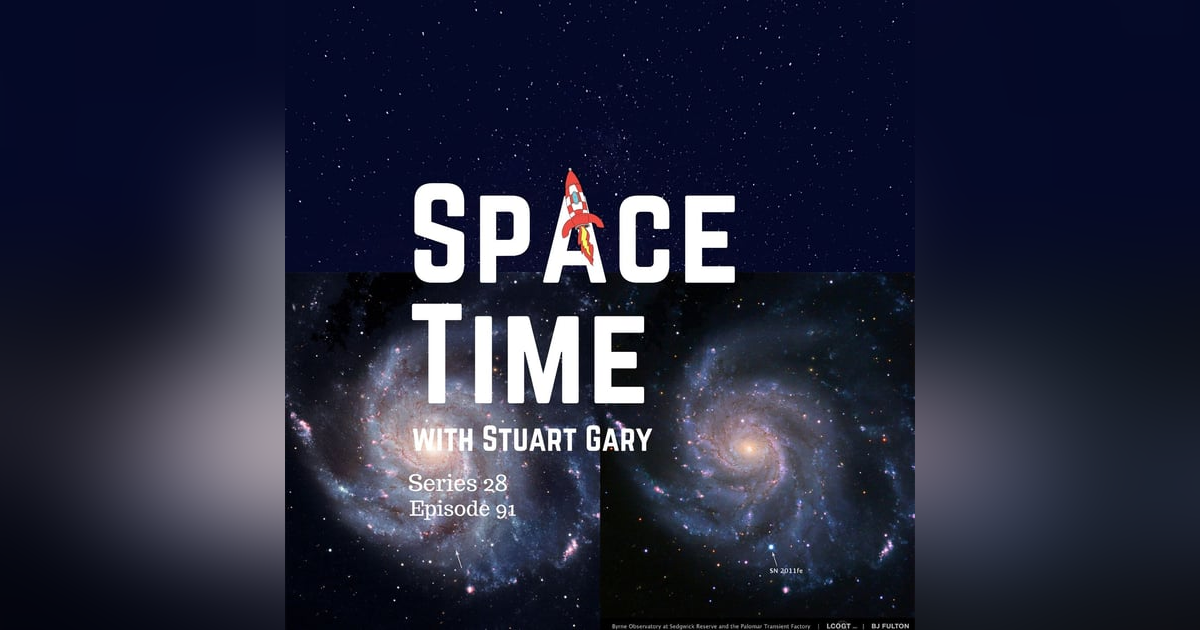


In this episode of SpaceTime, we uncover groundbreaking revelations about dark energy, lunar geology, and Europe's innovative space weather monitoring initiative.
Dark Energy: A Changing Force?
Astronomers have compiled the largest supernova dataset to date, revealing tantalizing hints that dark energy may not be a constant force in the universe. This research, led by the International Supernova Cosmology Project, analyzes over 2,000 Type 1A supernovae to explore the evolving nature of dark energy, which currently comprises nearly 70% of the universe's mass-energy content. The findings suggest that if dark energy is weakening, it could significantly impact the universe's expansion and ultimate fate, challenging existing models and sparking excitement in the astrophysics community.
New Insights into Lunar Magma
A recent study analyzing samples from China's Chang' e 5 mission indicates that molten magma may have persisted on the Moon's surface much longer than previously believed. Researchers, led by Stephen Alado, utilized radioactive dating to reveal that volcanic activity on the lunar far side could have continued for billions of years, contradicting earlier theories about the Moon's cooling process. This new understanding of lunar geology offers valuable insights into the Moon's evolution and the processes that shape celestial bodies.
Europe's Space Weather Early Warning System
The European Space Agency is set to launch Vigil, a pioneering space weather probe, in 2031. Positioned at the Lagrangian L5 point, Vigil will provide unprecedented monitoring of solar activity, allowing for early warnings of solar storms that could disrupt communication systems and power grids on Earth. This mission aims to enhance our ability to predict and mitigate the impacts of space weather on modern infrastructure, marking a significant advancement in global space safety efforts.
www.spacetimewithstuartgary.com
✍️ Episode References
Astrophysical Journal
https://iopscience.iop.org/journal/1538-4357
Science Advances
https://www.science.org/journal/sciadv
ESA Vigil Mission
https://www.esa.int/Applications/Observing_the_Earth/Space_Weather/Vigil
Become a supporter of this podcast: https://www.spreaker.com/podcast/spacetime-space-astronomy--2458531/support.
The Astronomy, Space, Technology & Science News Podcast.


