Solar Storm Hits Early! Plus China’s Reusable Rockets & Exoplanet Magnetic Shields
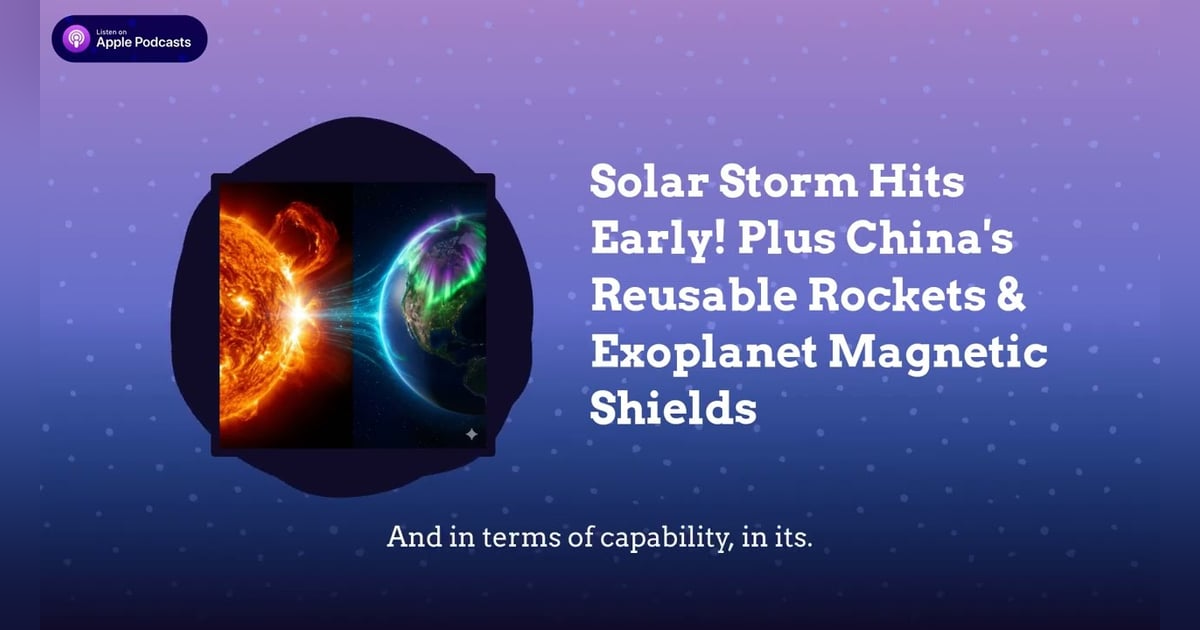


The Sun's latest outburst arrived ahead of schedule! A powerful X1.9 solar flare and massive CME triggered severe G4 geomagnetic storms on January 19th, bringing spectacular auroras as far south as Alabama. Hosts Anna and Avery break down what happened and what to expect.
Also in today's episode: China successfully tests the Long March 12B reusable rocket, giving us a preview of their next-gen launch capabilities. We get an exclusive look at the Xuntian space telescope set to launch in 2027, which could rival Hubble with 300x the field of view. Plus, stunning new Hubble images reveal how baby stars carve out cosmic homes in the Orion Molecular Cloud.
We'll run through this week's packed launch schedule featuring SpaceX, Blue Origin, Rocket Lab, and China, and explore groundbreaking research showing how hidden magma oceans might protect rocky exoplanets from deadly radiation.
**Episode Highlights:**
• BREAKING: Severe G4 solar storm strikes Earth early - aurora forecast through Jan 20
• China's Long March 12B reusable rocket passes critical static fire test
• Xuntian telescope preview: China's answer to Hubble launches 2027
• Hubble reveals protostar jets and cavities in Orion Molecular Cloud
• 7 launches from 6 sites this week: Your complete guide
• Basal magma oceans could generate protective magnetic fields on super-Earths
**Topics Covered:**
Space Weather, Solar Flares, CMEs, Geomagnetic Storms, Auroras, Reusable Rockets, Chinese Space Program, Space Telescopes, Star Formation, Orbital Launches, Exoplanets, Planetary Magnetism, Astrobiology
Visit us at astronomydaily.io for more space and astronomy news!
Follow us on social media: @AstroDailyPod on all major platforms
#SpaceWeather #SolarStorm #Aurora #NorthernLights #SpaceX #China #SpaceTelescope #Exoplanets #Astronomy #SpaceNews
Become a supporter of this podcast: https://www.spreaker.com/podcast/astronomy-daily-space-news-updates--5648921/support (https://www.spreaker.com/podcast/astronomy-daily-space-news-updates--5648921/support?utm_source=rss&utm_medium=rss&utm_campaign=rss) .
Sponsor Details:
Ensure your online privacy by using NordVPN . To get our special listener deal and save a lot of money, visit You'll be glad you did!
Become a supporter of Astronomy Daily by joining our Supporters Club. Commercial free episodes daily are only a click way... Click Here (https://www.spreaker.com/podcast/astronomy-daily-space-news-updates--5648921/support)
This episode includes AI-generated content.
Episode link: https://play.headliner.app/episode/31216523?utm_source=youtube
Kind: captions
Language: en
00:00:00.400 --> 00:00:02.869
Welcome to Astronomy Daily, your daily
00:00:02.879 --> 00:00:05.430
dose of space and astronomy news. I'm
00:00:05.440 --> 00:00:06.230
Anna.
00:00:06.240 --> 00:00:08.870
>> And I'm Avery. Today is Tuesday, January
00:00:08.880 --> 00:00:12.150
20th, 2026, and we've got a fantastic
00:00:12.160 --> 00:00:14.230
lineup of stories covering everything
00:00:14.240 --> 00:00:16.630
from solar storms to Chinese space
00:00:16.640 --> 00:00:18.550
technology and some fascinating
00:00:18.560 --> 00:00:20.790
discoveries about how young stars shape
00:00:20.800 --> 00:00:22.470
their cosmic neighborhoods.
00:00:22.480 --> 00:00:24.550
>> That's right. We're going to dive into
00:00:24.560 --> 00:00:26.550
some breaking news about the sun's
00:00:26.560 --> 00:00:28.710
latest outburst. There's been quite a
00:00:28.720 --> 00:00:30.870
development there that Aurora chasers
00:00:30.880 --> 00:00:32.709
definitely need to hear about.
00:00:32.719 --> 00:00:35.350
>> Plus, China continues to make impressive
00:00:35.360 --> 00:00:37.430
strides in reusable rocket technology
00:00:37.440 --> 00:00:40.069
with the Long March 12b. And we'll get a
00:00:40.079 --> 00:00:42.150
sneak peek at their upcoming Shunen
00:00:42.160 --> 00:00:44.310
Space Telescope that's set to rival some
00:00:44.320 --> 00:00:46.470
of the best observatories in orbit.
00:00:46.480 --> 00:00:48.630
We'll also journey into the Orion
00:00:48.640 --> 00:00:51.190
Molecular Cloud to see how baby stars
00:00:51.200 --> 00:00:53.590
are literally carving out their homes in
00:00:53.600 --> 00:00:56.150
space. Check out this week's busy launch
00:00:56.160 --> 00:00:58.709
schedule and explore a fascinating new
00:00:58.719 --> 00:01:01.510
theory about how some exoplanets might
00:01:01.520 --> 00:01:03.110
protect themselves from deadly
00:01:03.120 --> 00:01:04.149
radiation.
00:01:04.159 --> 00:01:06.390
>> So, grab your coffee, settle in, and
00:01:06.400 --> 00:01:08.149
let's get started with today's Astronomy
00:01:08.159 --> 00:01:08.950
Daily.
00:01:08.960 --> 00:01:11.270
>> All right, Avery, let's jump right into
00:01:11.280 --> 00:01:13.590
our top story, and this one's developing
00:01:13.600 --> 00:01:15.990
even as we speak. The sun threw a
00:01:16.000 --> 00:01:18.070
massive tantrum this weekend, and Earth
00:01:18.080 --> 00:01:20.310
is already feeling the effects.
00:01:20.320 --> 00:01:22.950
>> That's right, Anna. On Sunday, January
00:01:22.960 --> 00:01:25.350
18th, the sun unleashed a powerful
00:01:25.360 --> 00:01:26.870
X.1.9cl
00:01:26.880 --> 00:01:29.190
class solar flare from sunspot region
00:01:29.200 --> 00:01:31.270
AR4341.
00:01:31.280 --> 00:01:33.030
For our listeners who might not be
00:01:33.040 --> 00:01:35.510
familiar, X-class flares are the most
00:01:35.520 --> 00:01:37.910
powerful category of solar eruptions.
00:01:37.920 --> 00:01:39.990
And this one came with a particularly
00:01:40.000 --> 00:01:41.270
energetic friend,
00:01:41.280 --> 00:01:45.109
>> a coronal mass ejection or a CME. Right.
00:01:45.119 --> 00:01:47.990
>> Exactly. This CME was what forecasters
00:01:48.000 --> 00:01:50.789
call a full halo event, meaning it was
00:01:50.799 --> 00:01:53.429
aimed directly at Earth. The interesting
00:01:53.439 --> 00:01:55.270
twist here is that it arrived much
00:01:55.280 --> 00:01:57.350
sooner than predicted. Space weather
00:01:57.360 --> 00:01:59.590
forecasters initially expected it to hit
00:01:59.600 --> 00:02:02.310
sometime within 24 hours of the flare,
00:02:02.320 --> 00:02:03.990
but it actually slammed into Earth's
00:02:04.000 --> 00:02:06.789
magnetosphere yesterday, January 19th,
00:02:06.799 --> 00:02:09.430
at 2:38 p.m. Eastern time.
00:02:09.440 --> 00:02:11.350
>> And I'm guessing from the reports I've
00:02:11.360 --> 00:02:13.270
been seeing, this wasn't a gentle
00:02:13.280 --> 00:02:14.390
arrival.
00:02:14.400 --> 00:02:17.830
>> Not at all. The CME triggered severe G4
00:02:17.840 --> 00:02:20.550
geomagnetic storms. According to Noah's
00:02:20.560 --> 00:02:22.470
Space Weather Prediction Center, this is
00:02:22.480 --> 00:02:24.869
actually a pretty rare event. We're also
00:02:24.879 --> 00:02:27.350
dealing with an S4 severe solar
00:02:27.360 --> 00:02:29.589
radiation storm that's ongoing.
00:02:29.599 --> 00:02:31.670
>> Now, for those wondering why this
00:02:31.680 --> 00:02:33.830
matters, let's talk about what makes a
00:02:33.840 --> 00:02:37.110
CME geo effective or not. It's all about
00:02:37.120 --> 00:02:39.509
magnetic field orientation, isn't it?
00:02:39.519 --> 00:02:42.070
>> That's the crucial factor. When a CME
00:02:42.080 --> 00:02:44.309
arrives, if its magnetic field is
00:02:44.319 --> 00:02:46.710
oriented southward, what scientists call
00:02:46.720 --> 00:02:49.589
a negative BZ component, it can connect
00:02:49.599 --> 00:02:51.589
with Earth's northward pointing magnetic
00:02:51.599 --> 00:02:54.229
field. Think of it like opening a door.
00:02:54.239 --> 00:02:56.550
The southward orientation essentially
00:02:56.560 --> 00:02:58.550
allows solar wind energy to pour into
00:02:58.560 --> 00:03:00.229
our magnetosphere, triggering
00:03:00.239 --> 00:03:01.910
geomagnetic storms.
00:03:01.920 --> 00:03:04.070
>> And in this case, that door was wide
00:03:04.080 --> 00:03:05.030
open.
00:03:05.040 --> 00:03:08.390
>> Exactly. Data from the DSCOVR and a
00:03:08.400 --> 00:03:10.630
spacecraft which monitor the solar wind
00:03:10.640 --> 00:03:12.869
upstream of Earth confirmed that
00:03:12.879 --> 00:03:15.270
southward BZ component. That's what made
00:03:15.280 --> 00:03:17.030
the storm so potent.
00:03:17.040 --> 00:03:19.110
>> So what does this mean for people on the
00:03:19.120 --> 00:03:20.790
ground? Obviously there's the
00:03:20.800 --> 00:03:23.350
spectacular side with auroras, but there
00:03:23.360 --> 00:03:25.589
are practical concerns, too.
00:03:25.599 --> 00:03:27.750
>> Right. The good news is that this storm
00:03:27.760 --> 00:03:29.589
could push the northern lights much
00:03:29.599 --> 00:03:31.910
further south than usual. According to
00:03:31.920 --> 00:03:34.309
Noah's scales, GeForce storms can make
00:03:34.319 --> 00:03:36.869
auroras visible as far south as Alabama
00:03:36.879 --> 00:03:39.270
and Northern California. But there are
00:03:39.280 --> 00:03:41.670
some downsides. These storms can disrupt
00:03:41.680 --> 00:03:44.070
GPS navigation, affect satellite
00:03:44.080 --> 00:03:46.789
operations, increase atmospheric drag on
00:03:46.799 --> 00:03:49.270
spacecraft, and potentially impact power
00:03:49.280 --> 00:03:50.949
grids and highfrequency radio
00:03:50.959 --> 00:03:52.070
communications.
00:03:52.080 --> 00:03:54.390
>> And the flare itself caused immediate
00:03:54.400 --> 00:03:56.550
problems when it erupted. Correct.
00:03:56.560 --> 00:03:59.990
>> Yes. The X do 1.9 flare triggered strong
00:04:00.000 --> 00:04:02.309
R3 level radio blackouts across the
00:04:02.319 --> 00:04:04.869
sunlit side of Earth with the Americas
00:04:04.879 --> 00:04:07.350
taking the biggest hit. Radio blackouts
00:04:07.360 --> 00:04:09.429
happen because the intense X-rays and
00:04:09.439 --> 00:04:11.589
extreme ultraviolet radiation from the
00:04:11.599 --> 00:04:13.990
flare ionize the upper atmosphere
00:04:14.000 --> 00:04:15.910
disrupting radio signals.
00:04:15.920 --> 00:04:18.469
>> For our aurora chasers out there, what's
00:04:18.479 --> 00:04:20.870
the forecast looking like? Well,
00:04:20.880 --> 00:04:22.710
geomagnetic storm conditions are
00:04:22.720 --> 00:04:24.550
expected to continue through at least
00:04:24.560 --> 00:04:27.590
today, January 20th. The best viewing
00:04:27.600 --> 00:04:29.830
times are typically between 1000 p.m.
00:04:29.840 --> 00:04:32.390
and 4:00 a.m. local time. Of course,
00:04:32.400 --> 00:04:34.230
you'll want to get away from city lights
00:04:34.240 --> 00:04:36.790
and find the darkest location possible.
00:04:36.800 --> 00:04:38.790
And keep in mind, you need clear skies
00:04:38.800 --> 00:04:39.909
to see them.
00:04:39.919 --> 00:04:41.830
>> The tining is interesting, too, isn't
00:04:41.840 --> 00:04:44.710
it? We're well into solar maximum.
00:04:44.720 --> 00:04:47.430
>> We are. Solar cycle 25 has been
00:04:47.440 --> 00:04:49.590
particularly active and we're seeing the
00:04:49.600 --> 00:04:52.070
effects. The sun has been consistently
00:04:52.080 --> 00:04:54.870
active throughout late 2025 and into
00:04:54.880 --> 00:04:58.390
2026 with multiple X-class flares and
00:04:58.400 --> 00:05:00.950
CMEs. This is exactly the kind of
00:05:00.960 --> 00:05:03.830
activity we expect during Solar Maximum.
00:05:03.840 --> 00:05:06.150
It's yet another reminder that our star
00:05:06.160 --> 00:05:09.110
is a dynamic, powerful force. What's
00:05:09.120 --> 00:05:10.870
fascinating to me is how much we've
00:05:10.880 --> 00:05:12.870
learned about predicting these events,
00:05:12.880 --> 00:05:14.629
even if this one arrived earlier than
00:05:14.639 --> 00:05:15.830
expected.
00:05:15.840 --> 00:05:17.909
>> Absolutely. Space weather forecasting
00:05:17.919 --> 00:05:21.029
has come a long way. But CMEs are still
00:05:21.039 --> 00:05:23.510
notoriously tricky. Their speed,
00:05:23.520 --> 00:05:25.990
direction, and crucially, their magnetic
00:05:26.000 --> 00:05:28.310
orientation all factor into how they'll
00:05:28.320 --> 00:05:30.469
interact with Earth. We often don't know
00:05:30.479 --> 00:05:32.710
the full picture until spacecraft like
00:05:32.720 --> 00:05:35.749
DSCOVR sample them directly when they're
00:05:35.759 --> 00:05:38.150
almost at our doorstep. Well, if you're
00:05:38.160 --> 00:05:40.469
in the northern tier states of the US or
00:05:40.479 --> 00:05:42.550
Canada, keep your eyes on the sky
00:05:42.560 --> 00:05:45.029
tonight. This could be a spectacular
00:05:45.039 --> 00:05:47.590
display. Shifting gears from solar
00:05:47.600 --> 00:05:49.990
fireworks to human engineering, let's
00:05:50.000 --> 00:05:51.990
talk about China's latest achievement in
00:05:52.000 --> 00:05:54.790
reusable rocket technology. The China
00:05:54.800 --> 00:05:56.550
Aerospace Science and Technology
00:05:56.560 --> 00:05:59.110
Corporation has successfully conducted a
00:05:59.120 --> 00:06:02.550
static fire test of the Long March 12B.
00:06:02.560 --> 00:06:04.629
This is China's followup to the Long
00:06:04.639 --> 00:06:06.950
March 12A, which we covered when it made
00:06:06.960 --> 00:06:08.950
its maiden flight back in late December
00:06:08.960 --> 00:06:10.950
2025. Right.
00:06:10.960 --> 00:06:13.590
>> Exactly. And if you recall, that first
00:06:13.600 --> 00:06:16.150
flight was partially successful. The
00:06:16.160 --> 00:06:18.070
second stage successfully delivered its
00:06:18.080 --> 00:06:20.710
payload to orbit, but the reusable first
00:06:20.720 --> 00:06:23.189
stage crashed near the intended recovery
00:06:23.199 --> 00:06:25.749
area in Gansu Provice. So, there's
00:06:25.759 --> 00:06:27.909
definitely been some lessons learned.
00:06:27.919 --> 00:06:29.830
>> Let's talk specs. What can you tell us
00:06:29.840 --> 00:06:32.790
about the Long March 12B? It's a fairly
00:06:32.800 --> 00:06:35.189
substantial vehicle. The rocket stands
00:06:35.199 --> 00:06:37.990
approximately 70 m tall. That's about
00:06:38.000 --> 00:06:41.990
230 ft with a diameter of 4 m. Both
00:06:42.000 --> 00:06:44.390
stages use liquid oxygen and kerosene
00:06:44.400 --> 00:06:46.309
propellants, which is interesting
00:06:46.319 --> 00:06:47.830
because it's the same propellant
00:06:47.840 --> 00:06:49.990
combination that SpaceX uses in their
00:06:50.000 --> 00:06:51.270
Falcon 9.
00:06:51.280 --> 00:06:53.510
>> And in terms of capability,
00:06:53.520 --> 00:06:55.830
>> in its baseline configuration, the Long
00:06:55.840 --> 00:06:58.710
March 12b can lift about 20 metric tons
00:06:58.720 --> 00:07:01.350
to low Earth orbit. That puts it firmly
00:07:01.360 --> 00:07:03.990
in the heavy medium lift category. When
00:07:04.000 --> 00:07:06.309
fully fueled, the entire vehicle has a
00:07:06.319 --> 00:07:09.430
liftoff mass of around 700 tons.
00:07:09.440 --> 00:07:11.589
>> So, what exactly did this static fire
00:07:11.599 --> 00:07:13.110
test accomplish?
00:07:13.120 --> 00:07:15.430
>> The test, which took place Friday at the
00:07:15.440 --> 00:07:17.589
Guan Satellite launch center in
00:07:17.599 --> 00:07:19.670
northwest China, was all about
00:07:19.680 --> 00:07:22.150
validation. Ground teams ignited the
00:07:22.160 --> 00:07:23.830
first stage engines and sustained
00:07:23.840 --> 00:07:26.230
combustion for a period while monitoring
00:07:26.240 --> 00:07:28.550
performance and control parameters. They
00:07:28.560 --> 00:07:30.629
were verifying fueling procedures,
00:07:30.639 --> 00:07:33.029
ignition sequences, and making sure all
00:07:33.039 --> 00:07:34.950
the propulsion and support systems
00:07:34.960 --> 00:07:36.469
worked smoothly under planned
00:07:36.479 --> 00:07:37.430
conditions.
00:07:37.440 --> 00:07:39.830
>> And the reusability aspect, how does
00:07:39.840 --> 00:07:40.950
that work?
00:07:40.960 --> 00:07:42.150
>> This is where it gets really
00:07:42.160 --> 00:07:44.390
interesting. The first stage is designed
00:07:44.400 --> 00:07:46.309
to separate from the second stage during
00:07:46.319 --> 00:07:48.790
flight, then flip itself around for
00:07:48.800 --> 00:07:51.510
re-entry using aerodynamic grid fins for
00:07:51.520 --> 00:07:53.990
guidance. Picture those waffle-like fins
00:07:54.000 --> 00:07:56.790
you see on Falcon 9 boosters. Then it
00:07:56.800 --> 00:07:58.950
uses deployable landing legs to touch
00:07:58.960 --> 00:08:01.270
down vertically at a designated landing
00:08:01.280 --> 00:08:02.070
zone.
00:08:02.080 --> 00:08:04.469
>> So it's very much following the SpaceX
00:08:04.479 --> 00:08:05.350
playbook.
00:08:05.360 --> 00:08:07.670
>> It is though China has been developing
00:08:07.680 --> 00:08:10.150
this technology independently. The goal
00:08:10.160 --> 00:08:12.469
is the same though reusability to cut
00:08:12.479 --> 00:08:14.230
mission costs and increase launch
00:08:14.240 --> 00:08:16.390
cadence. This is especially important
00:08:16.400 --> 00:08:18.469
for China's commercial space sector and
00:08:18.479 --> 00:08:20.390
their growing satellite constellation
00:08:20.400 --> 00:08:21.270
projects.
00:08:21.280 --> 00:08:23.749
>> And you mentioned the long march 12A's
00:08:23.759 --> 00:08:25.749
landing attempt failed. Are they
00:08:25.759 --> 00:08:27.029
incorporating what they learned from
00:08:27.039 --> 00:08:28.950
that into the 12b?
00:08:28.960 --> 00:08:31.589
>> Absolutely. Engineering teams are still
00:08:31.599 --> 00:08:33.589
investigating what went wrong with that
00:08:33.599 --> 00:08:35.589
December landing attempt. And the
00:08:35.599 --> 00:08:37.750
lessons from that mission are being fed
00:08:37.760 --> 00:08:39.829
directly into refinements for the Long
00:08:39.839 --> 00:08:42.230
March 12b's re-entry and landing
00:08:42.240 --> 00:08:44.550
systems. That's actually a really
00:08:44.560 --> 00:08:45.910
important part of the development
00:08:45.920 --> 00:08:47.030
process.
00:08:47.040 --> 00:08:49.350
>> So, when might we see an actual launch
00:08:49.360 --> 00:08:52.310
of the Long March 12B? Based on this
00:08:52.320 --> 00:08:54.790
successful static fire test, we're
00:08:54.800 --> 00:08:56.790
probably looking at flight tests in the
00:08:56.800 --> 00:08:59.190
near future. They still need to do more
00:08:59.200 --> 00:09:01.350
ground testing and verification, but
00:09:01.360 --> 00:09:03.590
successful engine testing is a major
00:09:03.600 --> 00:09:06.230
milestone on the path to orbital flight.
00:09:06.240 --> 00:09:08.150
>> It's interesting to watch multiple
00:09:08.160 --> 00:09:10.070
countries and companies working on
00:09:10.080 --> 00:09:12.630
reusable rocket technology. It really
00:09:12.640 --> 00:09:14.470
does seem to be the future of space
00:09:14.480 --> 00:09:15.430
flight.
00:09:15.440 --> 00:09:18.150
>> No question. When you can land and reuse
00:09:18.160 --> 00:09:20.070
your first stage, which is the most
00:09:20.080 --> 00:09:22.070
expensive part of the rocket, the
00:09:22.080 --> 00:09:24.070
economics of space access changed
00:09:24.080 --> 00:09:26.310
dramatically. China positioning
00:09:26.320 --> 00:09:28.949
themselves with both the 12A and 12B
00:09:28.959 --> 00:09:30.870
shows they're committed to competing in
00:09:30.880 --> 00:09:32.070
this arena.
00:09:32.080 --> 00:09:34.310
>> Staying with China's space program,
00:09:34.320 --> 00:09:36.070
let's look ahead to what could be one of
00:09:36.080 --> 00:09:38.550
the most capable space telescopes ever
00:09:38.560 --> 00:09:40.949
launched. The Chinese space station
00:09:40.959 --> 00:09:43.990
telescope known as Shunan is gearing up
00:09:44.000 --> 00:09:47.190
for launch as soon as early 2027.
00:09:47.200 --> 00:09:49.590
>> And scientists just completed something
00:09:49.600 --> 00:09:52.310
pretty important, a full endto-end
00:09:52.320 --> 00:09:54.710
observation simulation to test how the
00:09:54.720 --> 00:09:56.630
telescope will perform once it's in
00:09:56.640 --> 00:09:57.509
orbit.
00:09:57.519 --> 00:09:59.829
>> Let's start with the basics. How big is
00:09:59.839 --> 00:10:00.870
this thing?
00:10:00.880 --> 00:10:04.310
>> Chunen features a 2 m primary mirror.
00:10:04.320 --> 00:10:07.509
That's about 6.6 ft across. For
00:10:07.519 --> 00:10:09.910
comparison, that's slightly smaller than
00:10:09.920 --> 00:10:12.790
Hubble's 2.4 meter mirror. But here's
00:10:12.800 --> 00:10:15.190
where it gets interesting. Junien is
00:10:15.200 --> 00:10:17.190
designed specifically as a survey
00:10:17.200 --> 00:10:19.430
instrument. And in that role, it's going
00:10:19.440 --> 00:10:21.910
to be far more capable than Hubble.
00:10:21.920 --> 00:10:23.030
>> How so?
00:10:23.040 --> 00:10:25.910
>> It's all about field of view. Junien's
00:10:25.920 --> 00:10:28.710
field of view is about 300 times larger
00:10:28.720 --> 00:10:31.110
than Hubble's. That means it can survey
00:10:31.120 --> 00:10:33.590
the sky much more efficiently. Combine
00:10:33.600 --> 00:10:36.870
that with a 2.5 billion pixel camera and
00:10:36.880 --> 00:10:38.790
the ability to observe from near
00:10:38.800 --> 00:10:41.430
ultraviolet to near infrared wavelengths
00:10:41.440 --> 00:10:43.670
and you've got yourself an extremely
00:10:43.680 --> 00:10:46.150
powerful sky surveying machine.
00:10:46.160 --> 00:10:48.389
>> That's impressive. What will it be
00:10:48.399 --> 00:10:49.350
looking for?
00:10:49.360 --> 00:10:52.069
>> The science goals are pretty ambitious.
00:10:52.079 --> 00:10:54.069
According to the National Astronomical
00:10:54.079 --> 00:10:56.150
Observatories under the Chinese Academy
00:10:56.160 --> 00:10:58.870
of Sciences, Chunen should make major
00:10:58.880 --> 00:11:01.350
contributions across multiple fields.
00:11:01.360 --> 00:11:03.670
cosmology, galaxy formation and
00:11:03.680 --> 00:11:06.069
evolution, the structure and evolution
00:11:06.079 --> 00:11:08.790
of our own Milky Way, and studies of
00:11:08.800 --> 00:11:10.310
stars and planets.
00:11:10.320 --> 00:11:11.990
>> I've also heard it might help us
00:11:12.000 --> 00:11:15.030
understand dark matter and dark energy.
00:11:15.040 --> 00:11:17.430
>> Exactly. Those are two of the biggest
00:11:17.440 --> 00:11:19.829
mysteries in astrophysics, and a wide
00:11:19.839 --> 00:11:22.389
field survey telescope like Shunien is
00:11:22.399 --> 00:11:24.230
perfectly suited to contribute to that
00:11:24.240 --> 00:11:26.870
research. By mapping large areas of the
00:11:26.880 --> 00:11:29.269
sky and observing how galaxies cluster
00:11:29.279 --> 00:11:31.750
and move, scientists can gather evidence
00:11:31.760 --> 00:11:33.750
about the nature of dark matter and dark
00:11:33.760 --> 00:11:34.790
energy.
00:11:34.800 --> 00:11:37.590
>> Now, what makes Shunian really unique is
00:11:37.600 --> 00:11:39.590
how it will operate in relation to
00:11:39.600 --> 00:11:42.470
China's Tangong space station. Right?
00:11:42.480 --> 00:11:45.190
>> That's one of the coolest aspects. Shun
00:11:45.200 --> 00:11:47.190
will fly independently in low Earth
00:11:47.200 --> 00:11:49.990
orbit, co-orbiting with Tangong, but
00:11:50.000 --> 00:11:52.470
doing its own thing. However, and this
00:11:52.480 --> 00:11:54.470
is the really neat part, it's designed
00:11:54.480 --> 00:11:56.310
to dock with the space station when
00:11:56.320 --> 00:11:57.269
needed.
00:11:57.279 --> 00:11:59.430
>> So, astronauts can service it.
00:11:59.440 --> 00:12:01.829
>> Exactly. Just like NASA astronauts
00:12:01.839 --> 00:12:04.790
serviced Hubble five times between 1993
00:12:04.800 --> 00:12:07.910
and 2009. According to recent video from
00:12:07.920 --> 00:12:10.230
China Central Television, astronauts
00:12:10.240 --> 00:12:12.230
will be able to conduct spacew walks to
00:12:12.240 --> 00:12:14.949
maintain, repair, or even upgrade the
00:12:14.959 --> 00:12:17.430
observatory. This is a huge advantage
00:12:17.440 --> 00:12:19.509
because it extends the operational life
00:12:19.519 --> 00:12:21.269
of the telescope and allows for
00:12:21.279 --> 00:12:23.590
technology upgrades over time.
00:12:23.600 --> 00:12:25.750
>> That's actually brilliant. Hubble's
00:12:25.760 --> 00:12:27.430
servicing missions turned it from a
00:12:27.440 --> 00:12:29.350
disappointment into one of the most
00:12:29.360 --> 00:12:31.590
productive scientific instruments ever
00:12:31.600 --> 00:12:32.710
built.
00:12:32.720 --> 00:12:35.030
>> Absolutely. And China clearly learned
00:12:35.040 --> 00:12:37.509
from that example. Being able to service
00:12:37.519 --> 00:12:40.150
a space telescope in orbit is enormously
00:12:40.160 --> 00:12:41.110
valuable.
00:12:41.120 --> 00:12:42.949
>> Tell us about these simulations they
00:12:42.959 --> 00:12:45.269
just completed. The research team built
00:12:45.279 --> 00:12:47.590
what they call an end-to-end simulation
00:12:47.600 --> 00:12:49.990
suite. Basically, they created mock
00:12:50.000 --> 00:12:52.230
observations that replicate the expected
00:12:52.240 --> 00:12:54.069
instrumental and observational
00:12:54.079 --> 00:12:56.710
conditions. They tested both the optical
00:12:56.720 --> 00:12:59.190
systems and other observation systems to
00:12:59.200 --> 00:13:01.030
evaluate the telescope's overall
00:13:01.040 --> 00:13:03.350
performance before it ever leaves the
00:13:03.360 --> 00:13:04.310
ground.
00:13:04.320 --> 00:13:06.230
>> That makes sense. Better to find
00:13:06.240 --> 00:13:08.069
problems in simulation than after
00:13:08.079 --> 00:13:10.389
launch. The results were published in
00:13:10.399 --> 00:13:12.629
the journal research in astronomy and
00:13:12.639 --> 00:13:15.590
astrophysics in early January. This kind
00:13:15.600 --> 00:13:17.910
of validation work is crucial for a
00:13:17.920 --> 00:13:20.389
mission of this scale and complexity.
00:13:20.399 --> 00:13:23.590
>> When you say early 2027, how firm is
00:13:23.600 --> 00:13:24.710
that timeline?
00:13:24.720 --> 00:13:27.509
>> It's a no earlier than timeline. These
00:13:27.519 --> 00:13:29.509
large space telescopes are complex
00:13:29.519 --> 00:13:32.550
beasts and schedules can slip. But if
00:13:32.560 --> 00:13:34.310
everything stays on track, we could see
00:13:34.320 --> 00:13:36.870
Shunen launching on a Long March 5B
00:13:36.880 --> 00:13:39.190
rocket sometime in the first half of
00:13:39.200 --> 00:13:40.389
2027.
00:13:40.399 --> 00:13:42.230
>> It's going to be really interesting to
00:13:42.240 --> 00:13:44.230
see what Chunian discovers once it's
00:13:44.240 --> 00:13:46.710
operational. Having another major space
00:13:46.720 --> 00:13:48.790
telescope conducting surveys will be
00:13:48.800 --> 00:13:50.710
fantastic for astronomy.
00:13:50.720 --> 00:13:52.629
>> Next, let's head out to one of the most
00:13:52.639 --> 00:13:54.550
famous star forming regions in our
00:13:54.560 --> 00:13:57.430
cosmic neighborhood, the Orion Molecular
00:13:57.440 --> 00:13:59.590
Cloud Complex. The Hubble Space
00:13:59.600 --> 00:14:01.750
Telescope has captured some stunning new
00:14:01.760 --> 00:14:04.230
images that reveal how baby stars are
00:14:04.240 --> 00:14:05.990
literally carving out space for
00:14:06.000 --> 00:14:08.230
themselves in the surrounding gas and
00:14:08.240 --> 00:14:09.030
dust.
00:14:09.040 --> 00:14:11.509
>> This is such a beautiful topic. These
00:14:11.519 --> 00:14:13.750
are protostars, right? Stars that
00:14:13.760 --> 00:14:15.430
haven't quite grown up yet.
00:14:15.440 --> 00:14:17.990
>> That's right. Protoars are young stellar
00:14:18.000 --> 00:14:20.069
objects that are still in the process of
00:14:20.079 --> 00:14:22.069
accumulating mass from the molecular
00:14:22.079 --> 00:14:24.230
clouds they're forming in. They haven't
00:14:24.240 --> 00:14:26.470
started fusing hydrogen into helium yet,
00:14:26.480 --> 00:14:28.389
which is what defines a main sequence
00:14:28.399 --> 00:14:30.470
star like our sun. But even though
00:14:30.480 --> 00:14:32.550
they're not doing fusion, they're far
00:14:32.560 --> 00:14:33.509
from quiet.
00:14:33.519 --> 00:14:35.829
>> They're quite energetic, actually.
00:14:35.839 --> 00:14:38.470
>> Incredibly so. Protoars generate
00:14:38.480 --> 00:14:40.550
powerful winds and jets that shape their
00:14:40.560 --> 00:14:43.110
surroundings in dramatic ways. These
00:14:43.120 --> 00:14:45.189
jets and winds carve out bubbles and
00:14:45.199 --> 00:14:47.350
caverns in the surrounding gas. And
00:14:47.360 --> 00:14:49.189
astrophysicists have been trying to
00:14:49.199 --> 00:14:51.750
better understand this feedback process.
00:14:51.760 --> 00:14:53.590
What's driving these jets?
00:14:53.600 --> 00:14:55.910
>> It's a fascinating process. Material
00:14:55.920 --> 00:14:58.150
from the molecular cloud first forms a
00:14:58.160 --> 00:15:00.870
disc around the protoar. Not all of that
00:15:00.880 --> 00:15:03.269
material makes it onto the star itself.
00:15:03.279 --> 00:15:05.430
Some gets accelerated to high speeds
00:15:05.440 --> 00:15:08.069
along the stars magnetic field lines and
00:15:08.079 --> 00:15:10.389
shot out from the poles as focus beams
00:15:10.399 --> 00:15:12.069
of mostly hydrogen.
00:15:12.079 --> 00:15:14.870
>> So, they're like cosmic fire hoses.
00:15:14.880 --> 00:15:16.870
>> That's a good analogy. And in addition
00:15:16.880 --> 00:15:19.430
to these focused jets, protostars also
00:15:19.440 --> 00:15:21.829
produce wide angle stellar winds that
00:15:21.839 --> 00:15:24.389
flow in all directions. These winds from
00:15:24.399 --> 00:15:26.389
young stars are actually far more
00:15:26.399 --> 00:15:28.230
powerful than the solar wind from our
00:15:28.240 --> 00:15:30.550
sun or other main sequence stars.
00:15:30.560 --> 00:15:32.629
>> What did the Hubble images reveal?
00:15:32.639 --> 00:15:35.110
>> The three new images show protoars at
00:15:35.120 --> 00:15:37.350
different stages, all in the Orion
00:15:37.360 --> 00:15:39.670
molecular complex. You can actually see
00:15:39.680 --> 00:15:41.750
the cavernous shapes these young stars
00:15:41.760 --> 00:15:43.350
have carved out from the surrounding
00:15:43.360 --> 00:15:45.990
gas. It's quite striking visually. these
00:15:46.000 --> 00:15:48.150
dark, sometimes intricate structures
00:15:48.160 --> 00:15:49.829
against the glowing background of the
00:15:49.839 --> 00:15:50.629
nebula.
00:15:50.639 --> 00:15:52.710
>> But there was a surprising finding in
00:15:52.720 --> 00:15:54.230
the research, wasn't there?
00:15:54.240 --> 00:15:56.550
>> Yes, and it challenges some assumptions.
00:15:56.560 --> 00:15:58.310
Researchers found that the cavities
00:15:58.320 --> 00:16:00.389
carved by these jets and winds didn't
00:16:00.399 --> 00:16:02.389
grow larger as the stars move through
00:16:02.399 --> 00:16:04.710
their later formation stages. You might
00:16:04.720 --> 00:16:06.629
expect the cavities to keep expanding
00:16:06.639 --> 00:16:08.230
over time, but that's not what they
00:16:08.240 --> 00:16:09.269
observed.
00:16:09.279 --> 00:16:11.509
>> So, what does that tell us? Well, the
00:16:11.519 --> 00:16:13.350
Orion molecular cloud has been
00:16:13.360 --> 00:16:15.590
experiencing a declining star formation
00:16:15.600 --> 00:16:17.910
rate, and these protostars also have
00:16:17.920 --> 00:16:20.550
lower rates of mass accretion over time.
00:16:20.560 --> 00:16:22.550
Scientists initially thought maybe this
00:16:22.560 --> 00:16:24.150
could be attributed to the jets and
00:16:24.160 --> 00:16:26.710
winds carving out all the available gas,
00:16:26.720 --> 00:16:28.710
but the new findings suggest that's not
00:16:28.720 --> 00:16:31.030
the case. The cavity sizes weren't the
00:16:31.040 --> 00:16:32.230
limiting factor.
00:16:32.240 --> 00:16:34.389
>> So, something else is controlling the
00:16:34.399 --> 00:16:35.590
star formation rate.
00:16:35.600 --> 00:16:37.749
>> Exactly. There must be other factors at
00:16:37.759 --> 00:16:39.829
play in regulating how quickly stars
00:16:39.839 --> 00:16:42.230
form and grow in this region. It's a
00:16:42.240 --> 00:16:43.990
reminder that even in wellstudied
00:16:44.000 --> 00:16:46.069
regions like Orion, we're still learning
00:16:46.079 --> 00:16:48.629
the details of how star formation works.
00:16:48.639 --> 00:16:50.389
>> I love that these images aren't just
00:16:50.399 --> 00:16:52.230
pretty pictures. They're revealing
00:16:52.240 --> 00:16:53.509
actual physics.
00:16:53.519 --> 00:16:55.829
>> That's what makes astronomy so exciting.
00:16:55.839 --> 00:16:57.749
Every observation adds a piece of the
00:16:57.759 --> 00:16:59.749
puzzle. In this case, we're learning
00:16:59.759 --> 00:17:01.509
that the feedback from young stars
00:17:01.519 --> 00:17:03.670
through their jets and winds, while
00:17:03.680 --> 00:17:06.309
dramatic and visually spectacular, might
00:17:06.319 --> 00:17:08.470
not be the main factor controlling star
00:17:08.480 --> 00:17:09.669
formation in the region.
00:17:09.679 --> 00:17:11.429
>> It's also interesting to think about our
00:17:11.439 --> 00:17:13.029
own sun going through this phase
00:17:13.039 --> 00:17:14.630
billions of years ago.
00:17:14.640 --> 00:17:16.949
>> Absolutely. When the sun was young, it
00:17:16.959 --> 00:17:18.710
was in a cluster with its siblings,
00:17:18.720 --> 00:17:20.789
probably in a molecular cloud much like
00:17:20.799 --> 00:17:22.949
Orion. It would have had these same
00:17:22.959 --> 00:17:25.510
powerful jets and winds shaping the gas
00:17:25.520 --> 00:17:27.750
and dust around it. Eventually, the
00:17:27.760 --> 00:17:29.750
molecular cloud dispersed, the star
00:17:29.760 --> 00:17:31.909
cluster broke up, and the sun ended up
00:17:31.919 --> 00:17:34.310
as the solitary star we know today.
00:17:34.320 --> 00:17:36.070
>> Orion is close enough that we can study
00:17:36.080 --> 00:17:37.990
these processes in detail, which is
00:17:38.000 --> 00:17:39.830
really lucky for astronomers.
00:17:39.840 --> 00:17:43.190
>> Very lucky. At about 1350 light-years
00:17:43.200 --> 00:17:45.510
away, it's one of the nearest large star
00:17:45.520 --> 00:17:47.590
forming regions. We can resolve
00:17:47.600 --> 00:17:49.350
individual protoars and their
00:17:49.360 --> 00:17:51.350
surrounding structures, which gives us
00:17:51.360 --> 00:17:53.190
insights we can apply to understanding
00:17:53.200 --> 00:17:55.590
star formation throughout the galaxy and
00:17:55.600 --> 00:17:57.669
beyond. All right, let's shift from
00:17:57.679 --> 00:18:00.230
natural cosmic phenomena to humanmade
00:18:00.240 --> 00:18:02.390
space activities. We've got a busy week
00:18:02.400 --> 00:18:04.070
of launches coming up, Avery.
00:18:04.080 --> 00:18:06.789
>> We do indeed. Seven launches from six
00:18:06.799 --> 00:18:08.710
different sites across the globe. Let's
00:18:08.720 --> 00:18:09.430
run through them.
00:18:09.440 --> 00:18:11.110
>> The week actually started this morning
00:18:11.120 --> 00:18:12.870
with a Chinese launch. Correct.
00:18:12.880 --> 00:18:15.669
>> That's right. A Changang 12 rocket, also
00:18:15.679 --> 00:18:18.470
known as Long March 12, lifted off from
00:18:18.480 --> 00:18:21.190
commercial launch complex 2 at WCang
00:18:21.200 --> 00:18:23.909
Space Launch Site in Hainan, China. This
00:18:23.919 --> 00:18:27.430
was at 748 UTC carrying nine satnet
00:18:27.440 --> 00:18:30.549
satellites to low Earth orbit. The CZ12
00:18:30.559 --> 00:18:33.990
can lift about 12,000 kg to LEO. And
00:18:34.000 --> 00:18:35.750
this was a demonstration of China's
00:18:35.760 --> 00:18:37.430
commercial launch capabilities.
00:18:37.440 --> 00:18:39.909
>> Moving on to tomorrow, what do we have
00:18:39.919 --> 00:18:42.789
>> tomorrow, January 21st, we have Rocket
00:18:42.799 --> 00:18:45.029
Lab launching from New Zealand. Their
00:18:45.039 --> 00:18:47.029
Electron rocket will be carrying two
00:18:47.039 --> 00:18:49.430
satellites for Open Cosmos as part of a
00:18:49.440 --> 00:18:51.590
secure broadband constellation being
00:18:51.600 --> 00:18:54.150
built in the UK. The mission is called
00:18:54.160 --> 00:18:56.870
the cosmos will see you now and liftoff
00:18:56.880 --> 00:18:59.909
is scheduled for 11:09 UTC from their
00:18:59.919 --> 00:19:01.990
facility on the Maha Peninsula.
00:19:02.000 --> 00:19:04.310
>> Rocket Lab has really established a
00:19:04.320 --> 00:19:06.070
solid cadence with Electron.
00:19:06.080 --> 00:19:08.789
>> They have. This will be Electron's 80th
00:19:08.799 --> 00:19:10.950
mission. That's a remarkable achievement
00:19:10.960 --> 00:19:13.270
for a small rocket. The vehicle has
00:19:13.280 --> 00:19:15.590
proven itself reliable and capable,
00:19:15.600 --> 00:19:17.510
especially for these small satellite
00:19:17.520 --> 00:19:19.190
constellation deployments. It's
00:19:19.200 --> 00:19:21.110
Wednesday that gets particularly
00:19:21.120 --> 00:19:22.950
interesting with the ESAR aerospace
00:19:22.960 --> 00:19:23.590
launch.
00:19:23.600 --> 00:19:26.470
>> Yes, this is second attempt to launch
00:19:26.480 --> 00:19:28.630
their Spectrum rocket from the Andoya
00:19:28.640 --> 00:19:31.110
rocket range in Norway. The mission is
00:19:31.120 --> 00:19:33.270
called Onward and Upward, which is
00:19:33.280 --> 00:19:34.789
fitting given that their first attempt
00:19:34.799 --> 00:19:37.590
in March 2025 failed shortly after
00:19:37.600 --> 00:19:39.430
liftoff due to an engine issue.
00:19:39.440 --> 00:19:40.789
>> What's different this time?
00:19:40.799 --> 00:19:42.470
>> Well, they've been investigating what
00:19:42.480 --> 00:19:44.150
went wrong on that first flight and
00:19:44.160 --> 00:19:46.549
making refinements. Spectrum is a
00:19:46.559 --> 00:19:48.789
two-stage rocket powered by Aquilla
00:19:48.799 --> 00:19:51.430
engines using propane and liquid oxygen.
00:19:51.440 --> 00:19:53.029
It's designed for the satellite
00:19:53.039 --> 00:19:55.190
constellation market and can lift about
00:19:55.200 --> 00:19:57.909
a,000 kg to LEO. They're carrying
00:19:57.919 --> 00:20:00.070
several cubats for the European Space
00:20:00.080 --> 00:20:01.669
Ay's boost program.
00:20:01.679 --> 00:20:03.350
>> So fingers crossed for ESAR on
00:20:03.360 --> 00:20:04.630
Wednesday. What else?
00:20:04.640 --> 00:20:07.190
>> Wednesday is also when SpaceX has their
00:20:07.200 --> 00:20:09.270
first Falcon 9 launch of the week.
00:20:09.280 --> 00:20:11.750
They're launching 24 Starlink satellites
00:20:11.760 --> 00:20:13.909
from Vandenberg Space Force Base in
00:20:13.919 --> 00:20:15.990
California. Liftoff is currently
00:20:16.000 --> 00:20:20.150
targeted for 243 UTC on January 22nd,
00:20:20.160 --> 00:20:22.789
which is 6:43 p.m. Pacific time on the
00:20:22.799 --> 00:20:23.510
21st.
00:20:23.520 --> 00:20:25.830
>> Vandenberg has been busy lately.
00:20:25.840 --> 00:20:28.630
>> Very busy. This mission will use booster
00:20:28.640 --> 00:20:31.990
B1093 on its 10th flight, landing on the
00:20:32.000 --> 00:20:34.070
drone ship, Of course I Still Love You
00:20:34.080 --> 00:20:36.549
in the Pacific. It's another example of
00:20:36.559 --> 00:20:39.510
SpaceX's routine reuse. This particular
00:20:39.520 --> 00:20:41.430
booster has previously flown seven
00:20:41.440 --> 00:20:43.350
Starlink missions and two military
00:20:43.360 --> 00:20:44.070
missions.
00:20:44.080 --> 00:20:46.390
>> Do we have a New Shepard launch from
00:20:46.400 --> 00:20:47.830
Blue Origin this week?
00:20:47.840 --> 00:20:50.070
>> Correct. Blue Origin is targeting
00:20:50.080 --> 00:20:54.149
Thursday, January 22nd at 14:30 UTC.
00:20:54.159 --> 00:20:56.630
That's 9:30 a.m. Eastern for New
00:20:56.640 --> 00:20:59.750
Shepard's 17th crude mission designated
00:20:59.760 --> 00:21:01.430
NS38.
00:21:01.440 --> 00:21:03.430
This will be a suborbital flight from
00:21:03.440 --> 00:21:06.070
launch site one in West Texas, carrying
00:21:06.080 --> 00:21:08.390
six people past the Carmen line and into
00:21:08.400 --> 00:21:09.669
space for a few minutes of
00:21:09.679 --> 00:21:11.750
weightlessness. New Shepard has really
00:21:11.760 --> 00:21:13.990
become a regular operation for them.
00:21:14.000 --> 00:21:16.390
>> It has. The capsule will separate from
00:21:16.400 --> 00:21:18.230
the booster which will return for a
00:21:18.240 --> 00:21:20.310
propulsive landing while the capsule
00:21:20.320 --> 00:21:22.149
lands under parachutes with retro
00:21:22.159 --> 00:21:24.470
thrusters firing just before touchdown
00:21:24.480 --> 00:21:26.870
to soften the landing for the crew. And
00:21:26.880 --> 00:21:28.950
we round out the week with
00:21:28.960 --> 00:21:31.270
>> two more launches on Sunday, January
00:21:31.280 --> 00:21:34.549
25th. First, China will conduct a sea
00:21:34.559 --> 00:21:36.710
launch of a Gia Long 3 rocket from the
00:21:36.720 --> 00:21:39.430
South China Sea. Details on the payload
00:21:39.440 --> 00:21:41.270
are still under wraps. They'll likely
00:21:41.280 --> 00:21:42.789
release that information after the
00:21:42.799 --> 00:21:45.590
launch. Liftoff is scheduled for 6:30
00:21:45.600 --> 00:21:46.470
UTC.
00:21:46.480 --> 00:21:48.630
>> Sea launches are always interesting.
00:21:48.640 --> 00:21:51.510
>> They are. The Geonong 3 is a four- stage
00:21:51.520 --> 00:21:53.590
solidfueled rocket that launches from a
00:21:53.600 --> 00:21:55.830
maritime platform. It's an interesting
00:21:55.840 --> 00:21:57.990
capability that gives China flexibility
00:21:58.000 --> 00:22:00.070
in launch as a myth and location.
00:22:00.080 --> 00:22:01.590
>> And finally,
00:22:01.600 --> 00:22:03.990
>> Sunday also brings SpaceX's second
00:22:04.000 --> 00:22:06.230
Falcon 9 launch of the week, also from
00:22:06.240 --> 00:22:09.190
Vandenberg. Another batch of 24 Starling
00:22:09.200 --> 00:22:12.950
satellites heading to orbit at 1517 UTC.
00:22:12.960 --> 00:22:16.070
This one will use booster B0088
00:22:16.080 --> 00:22:18.710
on its 13th flight. Another testament to
00:22:18.720 --> 00:22:20.149
booster reusability.
00:22:20.159 --> 00:22:22.870
>> That's quite a week. Seven launches from
00:22:22.880 --> 00:22:25.510
six sites. It really shows how routine
00:22:25.520 --> 00:22:27.190
space access has become.
00:22:27.200 --> 00:22:28.950
>> It does, and it's only going to get
00:22:28.960 --> 00:22:31.110
busier as more commercial constellations
00:22:31.120 --> 00:22:33.270
come online and more providers enter the
00:22:33.280 --> 00:22:34.149
launch market.
00:22:34.159 --> 00:22:36.549
>> And may we wish them all successful
00:22:36.559 --> 00:22:37.590
launches.
00:22:37.600 --> 00:22:40.149
>> Indeed. Moving along for our final
00:22:40.159 --> 00:22:42.630
story, let's journey to distant worlds
00:22:42.640 --> 00:22:44.710
and explore a fascinating new theory
00:22:44.720 --> 00:22:47.029
about how some rocky exoplanets might
00:22:47.039 --> 00:22:49.029
protect themselves from deadly cosmic
00:22:49.039 --> 00:22:49.990
radiation.
00:22:50.000 --> 00:22:52.630
>> This involves super Earths, right? Those
00:22:52.640 --> 00:22:54.870
planets that are larger than our Earth
00:22:54.880 --> 00:22:56.789
but smaller than ice giants like
00:22:56.799 --> 00:22:57.669
Neptune.
00:22:57.679 --> 00:23:00.149
>> Exactly. Super Earths are actually the
00:23:00.159 --> 00:23:02.149
most common type of exoplanet we found
00:23:02.159 --> 00:23:04.390
in our galaxy, which makes understanding
00:23:04.400 --> 00:23:06.710
them really important. But here's an
00:23:06.720 --> 00:23:08.710
interesting problem. Many of these
00:23:08.720 --> 00:23:10.630
worlds might not be able to generate
00:23:10.640 --> 00:23:12.950
magnetic fields the way Earth does.
00:23:12.960 --> 00:23:15.190
>> And magnetic fields are crucial for
00:23:15.200 --> 00:23:16.710
protecting a planet's surface from
00:23:16.720 --> 00:23:18.149
harmful radiation.
00:23:18.159 --> 00:23:20.149
>> Right? Earth's magnetic field is
00:23:20.159 --> 00:23:22.310
generated by movement in our liquid iron
00:23:22.320 --> 00:23:24.310
outer core through a process called a
00:23:24.320 --> 00:23:27.110
dynamo. But larger rocky worlds like
00:23:27.120 --> 00:23:29.190
super Earths might have cores that are
00:23:29.200 --> 00:23:31.830
completely solid or completely liquid,
00:23:31.840 --> 00:23:33.750
neither of which can produce a magnetic
00:23:33.760 --> 00:23:35.669
field through the same mechanism.
00:23:35.679 --> 00:23:37.990
>> So how do they protect themselves?
00:23:38.000 --> 00:23:39.590
>> That's where this new research from the
00:23:39.600 --> 00:23:41.909
University of Rochester comes in. They
00:23:41.919 --> 00:23:44.549
propose an alternate source. Deep layers
00:23:44.559 --> 00:23:47.669
of molten rock called basil magma oceans
00:23:47.679 --> 00:23:50.549
or BMOs which exist at the boundary
00:23:50.559 --> 00:23:52.710
between a planet's mantle and core.
00:23:52.720 --> 00:23:55.909
>> Molten rock generating a magnetic field.
00:23:55.919 --> 00:23:57.909
>> It sounds surprising, but the key is
00:23:57.919 --> 00:23:59.990
what happens to rock under the extreme
00:24:00.000 --> 00:24:02.390
pressures inside super Earths. The
00:24:02.400 --> 00:24:04.549
research team led by associate professor
00:24:04.559 --> 00:24:07.270
Miki Nakajima conducted laser shock
00:24:07.280 --> 00:24:09.590
experiments and quantum simulations to
00:24:09.600 --> 00:24:11.669
recreate the conditions deep inside
00:24:11.679 --> 00:24:13.190
these massive planets.
00:24:13.200 --> 00:24:14.630
>> What did they find
00:24:14.640 --> 00:24:16.630
>> under the crushing pressures found in
00:24:16.640 --> 00:24:18.950
super Earths? We're talking planets 3 to
00:24:18.960 --> 00:24:21.830
six times the mass of Earth. Molten rock
00:24:21.840 --> 00:24:24.230
becomes electrically conductive. And if
00:24:24.240 --> 00:24:25.750
you have electrically conductive
00:24:25.760 --> 00:24:28.310
material in motion, you can generate a
00:24:28.320 --> 00:24:31.110
magnetic field. So these basil magma
00:24:31.120 --> 00:24:34.310
oceans could act like liquid metal cores
00:24:34.320 --> 00:24:36.070
just using rock instead.
00:24:36.080 --> 00:24:38.630
>> Essentially, yes. The movement of this
00:24:38.640 --> 00:24:40.470
electrically conductive molten rock
00:24:40.480 --> 00:24:43.350
could drive what they call a dynamo.
00:24:43.360 --> 00:24:45.029
And according to their models, these
00:24:45.039 --> 00:24:47.029
dynamos could generate magnetic fields
00:24:47.039 --> 00:24:48.630
that are actually stronger and
00:24:48.640 --> 00:24:50.470
longerlasting than those produced by
00:24:50.480 --> 00:24:52.230
core dynamos like Earths.
00:24:52.240 --> 00:24:54.630
>> That's remarkable. How long could these
00:24:54.640 --> 00:24:55.750
fields last?
00:24:55.760 --> 00:24:58.149
>> Billions of years potentially. That's
00:24:58.159 --> 00:24:59.909
important because for a planet to
00:24:59.919 --> 00:25:01.830
develop and sustain life, you need
00:25:01.840 --> 00:25:04.149
stable protection from radiation over
00:25:04.159 --> 00:25:05.909
very long time scales
00:25:05.919 --> 00:25:08.630
>> now. Earth probably had a basil magma
00:25:08.640 --> 00:25:11.029
ocean early in its history. Right?
00:25:11.039 --> 00:25:13.669
>> Yes. Shortly after formation, but Earth
00:25:13.679 --> 00:25:16.070
is relatively small. So as it cooled,
00:25:16.080 --> 00:25:18.789
that magma ocean eventually solidified.
00:25:18.799 --> 00:25:20.470
Super Earth though with their higher
00:25:20.480 --> 00:25:22.390
internal pressures and temperatures
00:25:22.400 --> 00:25:24.630
could maintain these basil magma oceans
00:25:24.640 --> 00:25:26.950
for much much longer potentially
00:25:26.960 --> 00:25:28.870
throughout their entire lifetime.
00:25:28.880 --> 00:25:30.950
>> This has pretty significant implications
00:25:30.960 --> 00:25:33.269
for the search for habitable worlds.
00:25:33.279 --> 00:25:35.590
>> Absolutely. One of the factors in
00:25:35.600 --> 00:25:37.350
determining whether a planet might be
00:25:37.360 --> 00:25:39.510
habitable is whether it has magnetic
00:25:39.520 --> 00:25:41.990
protection. Without a magnetic field, a
00:25:42.000 --> 00:25:43.990
planet's atmosphere can be stripped away
00:25:44.000 --> 00:25:46.310
by stellar wind, making it hard for life
00:25:46.320 --> 00:25:48.390
to survive on the surface. If super
00:25:48.400 --> 00:25:50.390
Earths can generate magnetic fields
00:25:50.400 --> 00:25:52.710
through basil magma oceans, that
00:25:52.720 --> 00:25:54.390
potentially increases the number of
00:25:54.400 --> 00:25:55.990
worlds that could harbor life.
00:25:56.000 --> 00:25:57.750
>> How do we test this theory?
00:25:57.760 --> 00:26:00.070
>> That's the exciting next step. We need
00:26:00.080 --> 00:26:02.310
to actually detect and measure magnetic
00:26:02.320 --> 00:26:04.390
fields around exoplanets, which is
00:26:04.400 --> 00:26:06.070
extremely challenging with current
00:26:06.080 --> 00:26:08.070
technology. But next generation
00:26:08.080 --> 00:26:09.990
telescopes and instruments might be able
00:26:10.000 --> 00:26:12.310
to do it. Professor Nakajima mentioned
00:26:12.320 --> 00:26:14.310
she can't wait for future magnetic field
00:26:14.320 --> 00:26:16.310
observations of exoplanets to test their
00:26:16.320 --> 00:26:18.549
hypothesis. It's fascinating how
00:26:18.559 --> 00:26:20.710
interdisciplinary this research is,
00:26:20.720 --> 00:26:23.190
combining experimental physics, quantum
00:26:23.200 --> 00:26:25.669
simulations, and planetary evolution
00:26:25.679 --> 00:26:26.310
models.
00:26:26.320 --> 00:26:28.470
>> That's what makes it so robust. They
00:26:28.480 --> 00:26:30.230
weren't just working on theory. They
00:26:30.240 --> 00:26:32.710
actually recreated the conditions inside
00:26:32.720 --> 00:26:34.789
supererves with laser shock experiments
00:26:34.799 --> 00:26:36.870
at the laboratory for laser energetics
00:26:36.880 --> 00:26:38.870
at the University of Rochester. Then
00:26:38.880 --> 00:26:40.710
they combined that with computational
00:26:40.720 --> 00:26:42.310
modeling to understand how these
00:26:42.320 --> 00:26:44.390
conditions would evolve over billions of
00:26:44.400 --> 00:26:46.630
years. And this was challenging work for
00:26:46.640 --> 00:26:47.830
the team, wasn't it?
00:26:47.840 --> 00:26:49.990
>> Very much so. Professor Nakajima
00:26:50.000 --> 00:26:51.190
mentioned this was her first
00:26:51.200 --> 00:26:53.269
experimental work. Her background is
00:26:53.279 --> 00:26:55.669
primarily computational. She credited
00:26:55.679 --> 00:26:57.430
support from collaborators across
00:26:57.440 --> 00:26:59.350
various research fields for making this
00:26:59.360 --> 00:27:01.110
interdisciplinary work possible.
00:27:01.120 --> 00:27:02.950
>> It's a great reminder that some of the
00:27:02.960 --> 00:27:05.029
biggest scientific questions require
00:27:05.039 --> 00:27:06.789
bringing together expertise from
00:27:06.799 --> 00:27:08.070
multiple disciplines.
00:27:08.080 --> 00:27:10.549
>> Absolutely. Understanding planetary
00:27:10.559 --> 00:27:13.110
interiors, magnetic field generation,
00:27:13.120 --> 00:27:15.990
and habitability requires geoysics,
00:27:16.000 --> 00:27:18.549
astrophysics, planetary science, and
00:27:18.559 --> 00:27:20.710
material science all working together.
00:27:20.720 --> 00:27:23.350
>> So, the bottom line is super Earths
00:27:23.360 --> 00:27:25.190
might have a built-in radiation shield
00:27:25.200 --> 00:27:27.350
that we didn't know about, potentially
00:27:27.360 --> 00:27:29.110
making more of them candidates for
00:27:29.120 --> 00:27:30.149
harboring life.
00:27:30.159 --> 00:27:32.710
>> That's exactly right. It expands our
00:27:32.720 --> 00:27:34.310
understanding of what makes a planet
00:27:34.320 --> 00:27:36.390
potentially habitable and gives us new
00:27:36.400 --> 00:27:38.230
things to look for when we're evaluating
00:27:38.240 --> 00:27:40.549
exoplanets as possible homes for life.
00:27:40.559 --> 00:27:42.549
>> Well, that wraps up today's edition of
00:27:42.559 --> 00:27:45.350
Astronomy Daily. From solar storms to
00:27:45.360 --> 00:27:48.149
baby stars, Chinese space technology to
00:27:48.159 --> 00:27:50.789
hidden magma oceans on distant worlds.
00:27:50.799 --> 00:27:52.390
It's been quite a journey through the
00:27:52.400 --> 00:27:53.110
cosmos.
00:27:53.120 --> 00:27:55.350
>> It really has. And remember, if you're
00:27:55.360 --> 00:27:57.510
in the northern tier states of the USA
00:27:57.520 --> 00:27:59.669
or Canada tonight, keep an eye on the
00:27:59.679 --> 00:28:01.350
sky for those auroras from that solar
00:28:01.360 --> 00:28:03.029
storm. Could be quite a show.
00:28:03.039 --> 00:28:04.789
>> Thanks for joining us. For the latest
00:28:04.799 --> 00:28:07.029
space and astronomy news delivered fresh
00:28:07.039 --> 00:28:09.029
everyday, be sure to subscribe to
00:28:09.039 --> 00:28:11.029
Astronomy Daily. You can find us on our
00:28:11.039 --> 00:28:13.430
website at astronomyaily.io
00:28:13.440 --> 00:28:15.029
or search for us on your favorite
00:28:15.039 --> 00:28:16.070
podcast platform.
00:28:16.080 --> 00:28:17.830
>> Until next time, keep looking up.
00:28:17.840 --> 00:28:22.389
>> Clear skies, everyone. Astronomy day.
00:28:22.399 --> 00:28:30.389
Stories be told.
00:28:30.399 --> 00:28:34.120
Stories told.


