James Webb’s Cosmic Revelation, Lunar Landers Take Flight, and a Race Against Time for SWIFT
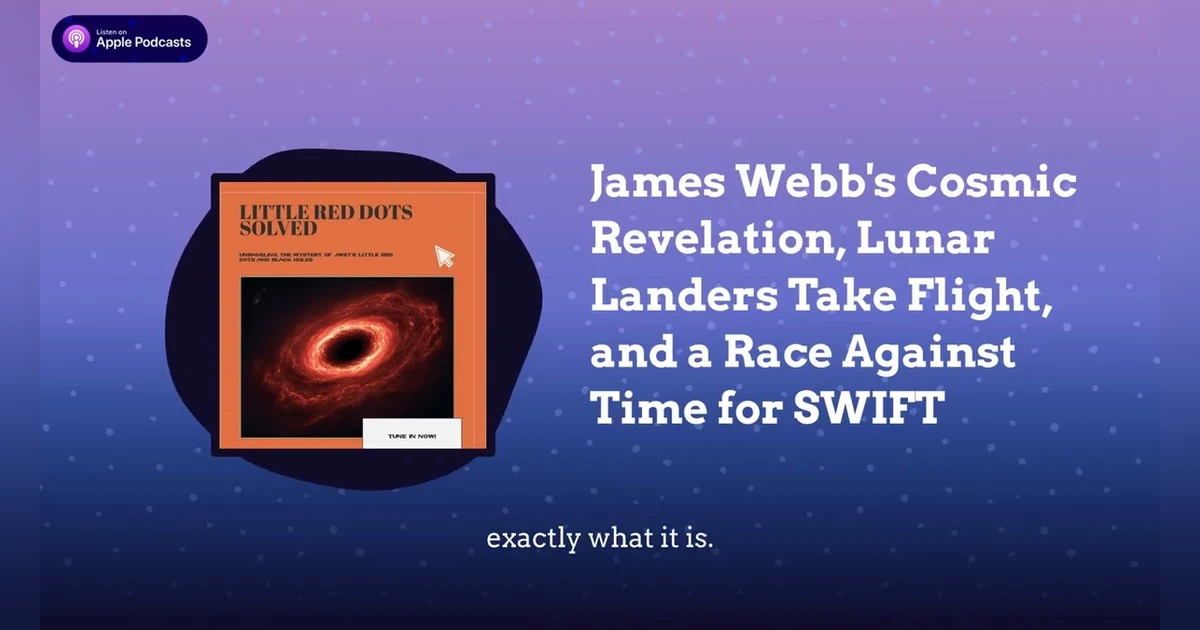


Today's episode covers six stories spanning cosmic mysteries, lunar exploration, robotic rescue missions, cutting-edge space medicine, and what's happening in your own night sky tonight. 1. JWST Solves the "Little Red Dots" Mystery Four years after the James Webb Space Telescope began spotting strange, compact red objects in the ancient universe, scientists have a definitive answer. A team led by Vasily Kokorev at the University of Texas at Austin published the most detailed spectrum ever obtained of one of these objects — GLIMPSE-17775 — in The Astrophysical Journal on June 10. The data confirms these objects are supermassive black holes in their furious early growth phase, wrapped in dense cocoons of hot gas that disguise them. The universe is not broken — the little red dots were just very well hidden. 2. Astrobotic Unveils Griffin-1 Lunar Lander Pittsburgh-based Astrobotic publicly unveiled its Griffin-1 lunar lander on June 15 at the Moonshot Museum. NASA selected Griffin as the vehicle for its Moon Base II mission. The lander will carry Astrolab's FLIP rover and payloads from multiple nations — including Australia — to the lunar South Pole, targeting launch on a SpaceX Falcon Heavy in late 2026. Griffin-1 heads to JPL for environmental testing this month. 3. Robotic Rescue Mission for NASA's Swift Observatory NASA's 22-year-old Neil Gehrels Swift Observatory is losing altitude fast due to accelerated solar activity. A startup called Katalyst Space Technologies has built a robotic spacecraft — LINK — in under a year, and it's now integrated into a Northrop Grumman Pegasus XL rocket ready for launch from Kwajalein Atoll, Marshall Islands, later this month. If successful, LINK will boost Swift's orbit and extend its life — while pioneering on-orbit servicing capabilities. 4. SpaceX CRS-34 Dragon Departs the ISS NASA's 34th SpaceX commercial resupply mission departed the ISS today, June 16, carrying blood stem cells, bioprinted organ and cartilage tissue, DNA-inspired cancer treatment materials, and cryogenic fuel storage experiment data. Splashdown off California is expected June 17. 5. Tonight's Sky: Moon Meets Three Planets A stunning western sky show is on offer tonight — a crescent Moon appearing between Mercury and Jupiter about an hour after sunset, with brilliant Venus also on display. Mercury reached its greatest eastern elongation on June 15, making this the best time of its current apparition to spot it. Tomorrow evening the Moon drifts to sit beside Venus. 6. Space Weather: CME Glancing Blow A coronal mass ejection from June 12 is expected to deliver a glancing blow to Earth on June 16-17. Active geomagnetic conditions (Kp up to 4) are forecast, with a chance of minor G1 storm conditions. High-latitude aurora watchers in the Southern Hemisphere may see some activity. Links & Further Reading • GLIMPSE-17775 study — The Astrophysical Journal (June 10, 2026) • Astrobotic Griffin-1 mission info: astrobotic.com • NASA Swift Boost mission: science.nasa.gov/mission/swift/swift-boost-mission • ISS research blog: nasa.gov/blogs/spacestation • Space weather: spaceweather.gov | NOAA Space Weather Prediction Center Find us at astronomydaily.io | Follow: @AstroDailyPod
Become a supporter of this podcast: https://www.spreaker.com/podcast/astronomy-daily-space-news-updates--5648921/support (https://www.spreaker.com/podcast/astronomy-daily-space-news-updates--5648921/support?utm_source=rss&utm_medium=rss&utm_campaign=rss) .
Sponsor Details:
Ensure your online privacy by using NordVPN . To get our special listener deal and save a lot of money, visit You'll be glad you did!
Become a supporter of Astronomy Daily by joining our Supporters Club. Commercial free episodes daily are only a click way... Click Here (https://www.spreaker.com/podcast/astronomy-daily-space-news-updates--5648921/support)
This episode includes AI-generated content.
Episode link: https://play.headliner.app/episode/33820137?utm_source=youtube
Kind: captions
Language: en
00:00:00.000 --> 00:00:02.550
From the dawn of the universe to the
00:00:02.560 --> 00:00:04.789
shores of the moon and the skies above
00:00:04.799 --> 00:00:07.430
your head tonight, this is Astronomy
00:00:07.440 --> 00:00:08.470
Daily.
00:00:08.480 --> 00:00:10.709
>> Coming up, James Webb has finally
00:00:10.719 --> 00:00:13.350
cracked the 4-year cosmic mystery. We'll
00:00:13.360 --> 00:00:15.110
tell you what those strange little red
00:00:15.120 --> 00:00:17.750
dots really are, and it's even weirder
00:00:17.760 --> 00:00:19.109
than you'd expect.
00:00:19.119 --> 00:00:21.830
>> A brand new lunar lander just made its
00:00:21.840 --> 00:00:24.230
public debut, and it's aiming to lay the
00:00:24.240 --> 00:00:26.950
foundation for a permanent moon base. We
00:00:26.960 --> 00:00:29.349
have the details. And there's a NASA
00:00:29.359 --> 00:00:32.069
spacecraft on a race against time. A
00:00:32.079 --> 00:00:34.150
robotic rescue mission is heading for an
00:00:34.160 --> 00:00:36.389
observatory that's slowly falling out of
00:00:36.399 --> 00:00:39.750
the sky. Plus, a science-packed Dragon
00:00:39.760 --> 00:00:42.150
capsule is heading home from the ISS as
00:00:42.160 --> 00:00:44.470
we speak. There's a celestial triple
00:00:44.480 --> 00:00:47.029
play in tonight's sky. And we've got a
00:00:47.039 --> 00:00:48.950
space weather update for Aurora
00:00:48.960 --> 00:00:52.229
watchers. It is Tuesday, June 16th,
00:00:52.239 --> 00:00:55.350
2026, and this is Astronomy Daily,
00:00:55.360 --> 00:00:59.510
season 5, episode 116. I'm Avery.
00:00:59.520 --> 00:01:01.990
>> And I'm Anna. Let's get into it. We're
00:01:02.000 --> 00:01:04.549
starting with a big one today. A mystery
00:01:04.559 --> 00:01:06.710
that has genuinely unsettled
00:01:06.720 --> 00:01:09.270
cosmologists since James Web first
00:01:09.280 --> 00:01:10.789
opened its eyes.
00:01:10.799 --> 00:01:13.190
>> We're talking about the little red dots.
00:01:13.200 --> 00:01:15.510
And if that name sounds almost comically
00:01:15.520 --> 00:01:16.950
understated for something that
00:01:16.960 --> 00:01:18.710
threatened to break our understanding of
00:01:18.720 --> 00:01:21.190
the universe, well, that's astronomy for
00:01:21.200 --> 00:01:21.990
you.
00:01:22.000 --> 00:01:24.550
>> So, let's rewind a little. When Web
00:01:24.560 --> 00:01:27.990
began science operations back in 2022,
00:01:28.000 --> 00:01:30.310
astronomers noticed something deeply
00:01:30.320 --> 00:01:32.789
strange. Practically everywhere the
00:01:32.799 --> 00:01:35.270
telescope looked in the ancient distant
00:01:35.280 --> 00:01:38.069
universe, in a period just a few hundred
00:01:38.079 --> 00:01:40.469
million years after the Big Bang, it
00:01:40.479 --> 00:01:43.670
kept spotting these tiny, compact, ruby
00:01:43.680 --> 00:01:46.630
red objects. They were everywhere. Far
00:01:46.640 --> 00:01:49.270
too many of them, far too bright, and
00:01:49.280 --> 00:01:51.670
nobody could explain what they were.
00:01:51.680 --> 00:01:53.590
>> The problem was that they didn't behave
00:01:53.600 --> 00:01:55.670
like anything in our existing models.
00:01:55.680 --> 00:01:57.749
They looked too massive and too mature
00:01:57.759 --> 00:02:00.069
to be young galaxies lit up by newborn
00:02:00.079 --> 00:02:02.550
stars. But they also weren't blasting
00:02:02.560 --> 00:02:04.870
out the X-rays and radio waves you'd
00:02:04.880 --> 00:02:07.270
expect from a super massive black hole
00:02:07.280 --> 00:02:09.990
feeding on gas and dust. They seemed to
00:02:10.000 --> 00:02:12.949
break every box astronomers had. Some
00:02:12.959 --> 00:02:15.430
researchers genuinely used the phrase
00:02:15.440 --> 00:02:17.910
broken cosmology, not because they
00:02:17.920 --> 00:02:20.150
thought physics had failed, but because
00:02:20.160 --> 00:02:22.550
these objects appeared in such numbers
00:02:22.560 --> 00:02:24.790
and with such properties that the
00:02:24.800 --> 00:02:27.110
standard story of how the early universe
00:02:27.120 --> 00:02:29.270
evolved simply couldn't account for
00:02:29.280 --> 00:02:32.710
them. And now, four years later, WEB has
00:02:32.720 --> 00:02:34.630
handed astronomers the object they
00:02:34.640 --> 00:02:37.190
needed to solve it. It goes by the name
00:02:37.200 --> 00:02:39.990
Glimpse 17775.
00:02:40.000 --> 00:02:42.390
Not exactly a catchy title, but it
00:02:42.400 --> 00:02:44.229
turned out to be the Rosetta Stone for
00:02:44.239 --> 00:02:45.750
this whole mystery.
00:02:45.760 --> 00:02:48.150
>> A team led by Vasili Kakorv at the
00:02:48.160 --> 00:02:50.710
University of Texas at Austin observed
00:02:50.720 --> 00:02:54.550
glimpse 17775 through a stroke of cosmic
00:02:54.560 --> 00:02:56.949
luck. Webb was actually pointed at a
00:02:56.959 --> 00:03:00.710
galaxy cluster called Abel S1063
00:03:00.720 --> 00:03:02.550
as part of a program searching for
00:03:02.560 --> 00:03:05.190
something entirely else. population
00:03:05.200 --> 00:03:07.670
three stars, the hypothetical first
00:03:07.680 --> 00:03:10.229
generation of stars in the universe. The
00:03:10.239 --> 00:03:12.630
galaxy cluster's gravity acted as a
00:03:12.640 --> 00:03:15.110
natural lens, magnifying what was behind
00:03:15.120 --> 00:03:17.430
it. And right in the field of view was
00:03:17.440 --> 00:03:19.990
glimpse 17775,
00:03:20.000 --> 00:03:22.470
magnified beautifully, giving the team
00:03:22.480 --> 00:03:24.630
the most detailed spectrum of a little
00:03:24.640 --> 00:03:26.869
red dot ever obtained.
00:03:26.879 --> 00:03:29.110
>> The data published in the Astrophysical
00:03:29.120 --> 00:03:31.350
Journal on June 10th is about as clear
00:03:31.360 --> 00:03:33.830
as it gets. These objects are super
00:03:33.840 --> 00:03:36.070
massive black holes, but not in the way
00:03:36.080 --> 00:03:37.990
we're used to seeing them. They're in
00:03:38.000 --> 00:03:40.309
the midst of an explosive early growth
00:03:40.319 --> 00:03:42.949
phase wrapped in dense cocoons of hot
00:03:42.959 --> 00:03:45.589
ionized gas. The gas acts like a
00:03:45.599 --> 00:03:47.910
disguise. It scatters and absorbs the
00:03:47.920 --> 00:03:49.670
high energy radiation that would
00:03:49.680 --> 00:03:52.149
normally give a growing black hole away,
00:03:52.159 --> 00:03:54.070
making these objects look red and
00:03:54.080 --> 00:03:56.949
compact rather than blazingly bright.
00:03:56.959 --> 00:03:59.270
>> Though the universe isn't broken, we
00:03:59.280 --> 00:04:01.429
just couldn't see through the costume.
00:04:01.439 --> 00:04:03.429
And this finding also resolves something
00:04:03.439 --> 00:04:05.350
that had alarmed astronomers even
00:04:05.360 --> 00:04:07.750
further. Earlier estimates suggested
00:04:07.760 --> 00:04:09.910
these black holes were extraordinarily
00:04:09.920 --> 00:04:12.229
massive, which made the timeline for how
00:04:12.239 --> 00:04:14.630
they grew seem impossible. But the
00:04:14.640 --> 00:04:17.110
team's analysis shows the gas cocoon was
00:04:17.120 --> 00:04:19.430
distorting those mass measurements. The
00:04:19.440 --> 00:04:21.430
black holes inside the little red dots
00:04:21.440 --> 00:04:24.310
are likely around 100 times less massive
00:04:24.320 --> 00:04:26.629
than originally thought, bringing them
00:04:26.639 --> 00:04:28.150
back within the bounds of what our
00:04:28.160 --> 00:04:30.950
models can explain. A very I think the
00:04:30.960 --> 00:04:32.790
thing that strikes me most about this
00:04:32.800 --> 00:04:35.110
story is what it says about how science
00:04:35.120 --> 00:04:37.909
actually works. Four years of competing
00:04:37.919 --> 00:04:40.790
theories, genuine alarm among serious
00:04:40.800 --> 00:04:43.110
scientists, and then one lucky
00:04:43.120 --> 00:04:45.670
observation of one well-placed object
00:04:45.680 --> 00:04:47.909
and suddenly the picture snaps into
00:04:47.919 --> 00:04:49.030
focus.
00:04:49.040 --> 00:04:52.469
>> Serendipity and a very big telescope. A
00:04:52.479 --> 00:04:54.070
combination that seems to work
00:04:54.080 --> 00:04:56.950
remarkably well. The little red dots are
00:04:56.960 --> 00:04:59.270
solved. And the universe, it turns out,
00:04:59.280 --> 00:05:01.990
was never broken. Just very good at
00:05:02.000 --> 00:05:03.749
keeping secrets.
00:05:03.759 --> 00:05:05.670
>> Story two. And we're heading to the
00:05:05.680 --> 00:05:08.310
moon. Or at least heading toward heading
00:05:08.320 --> 00:05:10.710
to the moon. Yesterday, June 15th,
00:05:10.720 --> 00:05:13.189
Pittsburgh-based company Astrootic held
00:05:13.199 --> 00:05:15.189
a public unveiling of their Griffin 1
00:05:15.199 --> 00:05:17.749
lunar lander at the Moonshot Museum,
00:05:17.759 --> 00:05:19.270
which is co-located with their
00:05:19.280 --> 00:05:21.510
headquarters and has a large window into
00:05:21.520 --> 00:05:23.430
the clean room, so the public could
00:05:23.440 --> 00:05:25.430
actually watch engineers working on the
00:05:25.440 --> 00:05:27.590
vehicle in real time while the press
00:05:27.600 --> 00:05:29.029
conference was happening,
00:05:29.039 --> 00:05:30.790
>> which is a nice touch.
00:05:30.800 --> 00:05:33.350
>> Very nice touch. Now, Griffin 1 is
00:05:33.360 --> 00:05:36.150
significant on multiple levels. NASA has
00:05:36.160 --> 00:05:37.830
selected it as the lander for what
00:05:37.840 --> 00:05:40.550
they're calling the moon base 2 mission,
00:05:40.560 --> 00:05:42.629
part of the first phase of the AY's
00:05:42.639 --> 00:05:44.790
efforts to establish a permanent lunar
00:05:44.800 --> 00:05:47.909
outpost. Astrobotic CEO John Thornton
00:05:47.919 --> 00:05:50.070
described it as quote the first
00:05:50.080 --> 00:05:52.230
infrastructure class lander going to the
00:05:52.240 --> 00:05:53.830
surface of the moon.
00:05:53.840 --> 00:05:56.070
>> And it's carrying a substantial payload
00:05:56.080 --> 00:05:58.629
to prove that point. The largest is the
00:05:58.639 --> 00:06:01.270
Flip rover, the Flex Lunar Innovation
00:06:01.280 --> 00:06:03.189
Platform from California company
00:06:03.199 --> 00:06:05.510
Astrolab. Flip is designed to
00:06:05.520 --> 00:06:07.430
demonstrate critical technologies for
00:06:07.440 --> 00:06:09.350
future large-scale commercial lunar
00:06:09.360 --> 00:06:11.830
rovers. It'll be deployed in the Noble
00:06:11.840 --> 00:06:14.469
region near the lunar south pole. The
00:06:14.479 --> 00:06:16.629
lander is also carrying several other
00:06:16.639 --> 00:06:18.950
payloads, including Astrobot's own
00:06:18.960 --> 00:06:21.510
Beacon Cube rover and the European Space
00:06:21.520 --> 00:06:24.950
Ay's Land Cam X designed to help improve
00:06:24.960 --> 00:06:27.270
precision landing on future missions.
00:06:27.280 --> 00:06:29.350
There are also payloads from Japan,
00:06:29.360 --> 00:06:32.070
Canada, Germany, and worth a mention for
00:06:32.080 --> 00:06:35.189
our audience, Australia. Of course,
00:06:35.199 --> 00:06:37.350
>> Griffin 1 is now preparing to depart
00:06:37.360 --> 00:06:39.270
Pittsburgh for NASA's Jet Propulsion
00:06:39.280 --> 00:06:41.749
Laboratory in California, where it'll go
00:06:41.759 --> 00:06:43.830
through environmental testing. From
00:06:43.840 --> 00:06:45.590
there, it'll head to Florida, where the
00:06:45.600 --> 00:06:47.749
Flip rover will be integrated ahead of
00:06:47.759 --> 00:06:50.230
launch on a SpaceX Falcon Heavy,
00:06:50.240 --> 00:06:51.909
currently targeting the fourth quarter
00:06:51.919 --> 00:06:54.950
of this year. Now, Astrobotic's previous
00:06:54.960 --> 00:06:57.110
mission, the paragrin lander in early
00:06:57.120 --> 00:07:00.070
2024, unfortunately didn't make it to
00:07:00.080 --> 00:07:02.469
the surface due to a helium valve issue
00:07:02.479 --> 00:07:05.110
early in flight, but Thornton emphasized
00:07:05.120 --> 00:07:07.510
that the in-house avionics and systems
00:07:07.520 --> 00:07:09.589
performed as expected on that flight,
00:07:09.599 --> 00:07:11.510
and the post anomaly review was
00:07:11.520 --> 00:07:14.950
thorough. Griffin is the next chapter. A
00:07:14.960 --> 00:07:17.510
moon base has to start somewhere. And if
00:07:17.520 --> 00:07:19.270
all goes to plan, this could be one of
00:07:19.280 --> 00:07:21.749
the most significant robotic landings in
00:07:21.759 --> 00:07:24.150
the history of lunar exploration.
00:07:24.160 --> 00:07:26.629
>> We'll be watching very closely.
00:07:26.639 --> 00:07:29.189
>> Story 3 has all the drama of a rescue
00:07:29.199 --> 00:07:31.350
mission because that's exactly what it
00:07:31.360 --> 00:07:32.150
is.
00:07:32.160 --> 00:07:35.029
>> NASA's Neil Gar's Swift Observatory has
00:07:35.039 --> 00:07:36.790
been one of the workh horses of high
00:07:36.800 --> 00:07:38.870
energy astrophysics since it launched
00:07:38.880 --> 00:07:42.150
back in 2004. 22 years of catching
00:07:42.160 --> 00:07:44.230
gammaray bursts, the most powerful
00:07:44.240 --> 00:07:46.469
explosions in the known universe, and
00:07:46.479 --> 00:07:48.070
relaying that information to ground
00:07:48.080 --> 00:07:49.909
telescopes fast enough to catch the
00:07:49.919 --> 00:07:51.110
afterglows.
00:07:51.120 --> 00:07:53.749
>> It has acted, as NASA put it, as a kind
00:07:53.759 --> 00:07:56.230
of cosmic dispatcher, spotting a burst
00:07:56.240 --> 00:07:57.749
and immediately alerting other
00:07:57.759 --> 00:07:59.909
observatories to follow up before the
00:07:59.919 --> 00:08:03.189
light fades. It has been extraordinary.
00:08:03.199 --> 00:08:06.070
But now, Swift has a problem. Like all
00:08:06.080 --> 00:08:08.469
spacecraft in low Earth orbit, Swift
00:08:08.479 --> 00:08:10.150
experiences drag from the upper
00:08:10.160 --> 00:08:12.469
atmosphere which gradually lowers its
00:08:12.479 --> 00:08:15.110
altitude over time. That's manageable
00:08:15.120 --> 00:08:17.110
except that the recent surge in solar
00:08:17.120 --> 00:08:19.270
activity has dramatically accelerated
00:08:19.280 --> 00:08:21.670
the process. The orbit has decayed
00:08:21.680 --> 00:08:23.510
faster than expected and without
00:08:23.520 --> 00:08:25.589
intervention, Swift would re-enter
00:08:25.599 --> 00:08:27.589
Earth's atmosphere in the autumn of this
00:08:27.599 --> 00:08:28.550
year.
00:08:28.560 --> 00:08:30.790
>> Now, many spacecraft simply do that at
00:08:30.800 --> 00:08:33.190
end of life. It's a normal retirement.
00:08:33.200 --> 00:08:35.269
But NASA looked at this situation and
00:08:35.279 --> 00:08:37.269
saw an opportunity to do something
00:08:37.279 --> 00:08:38.790
unprecedented.
00:08:38.800 --> 00:08:41.509
In September 2025, they awarded a
00:08:41.519 --> 00:08:43.829
contract to a company called Catalyst
00:08:43.839 --> 00:08:46.389
Space Technologies in Flagstaff, Arizona
00:08:46.399 --> 00:08:48.949
to build and launch a robotic servicing
00:08:48.959 --> 00:08:51.509
spacecraft called Link to Rendezv with
00:08:51.519 --> 00:08:53.990
Swift and physically boost its orbit to
00:08:54.000 --> 00:08:57.110
a higher altitude in less than a year.
00:08:57.120 --> 00:08:59.750
>> That turnaround is remarkable in itself.
00:08:59.760 --> 00:09:01.590
Link went through testing at Gddard
00:09:01.600 --> 00:09:03.590
Space Flight Center, was transported to
00:09:03.600 --> 00:09:05.509
NASA's Wallups flight facility in
00:09:05.519 --> 00:09:07.590
Virginia, and was integrated into a
00:09:07.600 --> 00:09:10.790
Northrup Grumman Pegasus XL rocket. On
00:09:10.800 --> 00:09:13.030
June 12th, that rocket was attached to
00:09:13.040 --> 00:09:15.269
the belly of Northrup Stargazer, a
00:09:15.279 --> 00:09:18.310
modified L1011 and is now ready for the
00:09:18.320 --> 00:09:19.509
trip south.
00:09:19.519 --> 00:09:21.670
>> Blink will launch from Quadal and Attal
00:09:21.680 --> 00:09:23.350
in the Marshall Islands later this
00:09:23.360 --> 00:09:25.509
month. The air launch approach gives
00:09:25.519 --> 00:09:27.590
flexibility in reaching Swift's orbit
00:09:27.600 --> 00:09:29.750
that a ground launch couldn't match.
00:09:29.760 --> 00:09:32.310
Once in orbit, Link will use its three
00:09:32.320 --> 00:09:34.389
ion thrusters and robotic arms to
00:09:34.399 --> 00:09:36.550
rendevous with Swift and execute the
00:09:36.560 --> 00:09:39.670
boost. NASA is calling it bluntly a
00:09:39.680 --> 00:09:42.389
fast, high-risk, highreward mission.
00:09:42.399 --> 00:09:44.389
There are no guarantees. This type of
00:09:44.399 --> 00:09:46.630
onorbit servicing at this speed has
00:09:46.640 --> 00:09:49.030
never been done before. But if it works,
00:09:49.040 --> 00:09:50.870
it not only saves a beloved and
00:09:50.880 --> 00:09:52.550
productive science mission, it
00:09:52.560 --> 00:09:54.310
demonstrates a capability that could be
00:09:54.320 --> 00:09:56.150
transformative for the future of the
00:09:56.160 --> 00:09:57.990
entire spacecraft fleet.
00:09:58.000 --> 00:10:00.070
>> A NASA media briefing on the mission is
00:10:00.080 --> 00:10:02.470
scheduled for tomorrow, June 17th,
00:10:02.480 --> 00:10:04.070
though we'll likely have more details
00:10:04.080 --> 00:10:06.070
coming. We'll keep you across it.
00:10:06.080 --> 00:10:08.470
>> Swift has spent 22 years watching the
00:10:08.480 --> 00:10:10.949
universe's most violent moments. Here's
00:10:10.959 --> 00:10:12.949
hoping it gets a few more years to keep
00:10:12.959 --> 00:10:14.949
doing exactly that.
00:10:14.959 --> 00:10:17.430
Story four is happening right now as we
00:10:17.440 --> 00:10:20.710
record. A SpaceX Dragon cargo spacecraft
00:10:20.720 --> 00:10:22.949
supporting NASA's 34th commercial
00:10:22.959 --> 00:10:25.509
resupply services mission has undocked
00:10:25.519 --> 00:10:27.190
from the International Space Station
00:10:27.200 --> 00:10:30.310
today, Tuesday, June 16th, at around
00:10:30.320 --> 00:10:33.350
12:05 in the afternoon Eastern time.
00:10:33.360 --> 00:10:35.430
>> Splashdown off the coast of California
00:10:35.440 --> 00:10:38.069
is expected tomorrow morning, June 17th,
00:10:38.079 --> 00:10:40.949
at around 8:00 a.m. Eastern. Now, the
00:10:40.959 --> 00:10:43.990
Dragon arrived at the ISS on May 17th,
00:10:44.000 --> 00:10:47.430
carrying nearly 6,500 lb of supplies and
00:10:47.440 --> 00:10:50.630
equipment for the Expedition 74 crew.
00:10:50.640 --> 00:10:52.310
But what it's bringing back is what
00:10:52.320 --> 00:10:54.630
makes this particularly interesting.
00:10:54.640 --> 00:10:56.630
Because packed inside Dragon right now
00:10:56.640 --> 00:10:58.949
are some genuinely remarkable research
00:10:58.959 --> 00:11:01.670
specimens. Blood stem cells harvested by
00:11:01.680 --> 00:11:03.670
NASA flight engineer Jessica Mayor
00:11:03.680 --> 00:11:05.990
inside the KBO laboratory module have
00:11:06.000 --> 00:11:07.910
been growing aboard the station and are
00:11:07.920 --> 00:11:10.069
now heading home. Researchers are
00:11:10.079 --> 00:11:11.990
exploring whether the microgravity
00:11:12.000 --> 00:11:13.829
environment of space could allow these
00:11:13.839 --> 00:11:15.910
cells to be developed into therapies for
00:11:15.920 --> 00:11:18.069
blood cancers and immune diseases that
00:11:18.079 --> 00:11:20.389
are difficult to manufacture on Earth.
00:11:20.399 --> 00:11:22.790
There are also samples of bioprinted
00:11:22.800 --> 00:11:25.030
organ and cartilage tissue produced
00:11:25.040 --> 00:11:26.550
using three-dimensional printing
00:11:26.560 --> 00:11:28.630
techniques aboard the station and
00:11:28.640 --> 00:11:30.150
materials developed for what are
00:11:30.160 --> 00:11:32.870
described as DNA inspired cancer
00:11:32.880 --> 00:11:35.350
treatments. The capsule is also carrying
00:11:35.360 --> 00:11:37.509
hardware, including equipment related to
00:11:37.519 --> 00:11:40.230
cryogenic fuel storage experiments. Data
00:11:40.240 --> 00:11:42.150
that will be valuable for future deep
00:11:42.160 --> 00:11:44.949
space missions. The ISS has long been
00:11:44.959 --> 00:11:47.590
described as a laboratory in the sky.
00:11:47.600 --> 00:11:49.509
Missions like this are a reminder of
00:11:49.519 --> 00:11:51.829
what that actually means in practice,
00:11:51.839 --> 00:11:53.829
that the unique conditions of orbit
00:11:53.839 --> 00:11:56.230
allow science that simply isn't possible
00:11:56.240 --> 00:11:58.710
on the ground, and that the journey home
00:11:58.720 --> 00:12:00.870
is sometimes the most scientifically
00:12:00.880 --> 00:12:03.190
significant part of the mission. Safe
00:12:03.200 --> 00:12:05.110
travels, Dragon, and fingers crossed for
00:12:05.120 --> 00:12:07.110
a smooth splashdown tomorrow.
00:12:07.120 --> 00:12:09.350
>> Now for something you can actually go
00:12:09.360 --> 00:12:12.069
outside and see tonight. And it is a
00:12:12.079 --> 00:12:13.350
lovely one.
00:12:13.360 --> 00:12:15.190
>> Right now in the western sky after
00:12:15.200 --> 00:12:17.590
sunset, three planets are visible to the
00:12:17.600 --> 00:12:19.829
naked eye simultaneously.
00:12:19.839 --> 00:12:23.110
Venus, Jupiter, and Mercury. That alone
00:12:23.120 --> 00:12:25.350
is worth stepping outside for. And
00:12:25.360 --> 00:12:27.990
tonight specifically, the slim waxing
00:12:28.000 --> 00:12:30.230
crescent moon is joining the party,
00:12:30.240 --> 00:12:32.629
appearing between Mercury and Jupiter in
00:12:32.639 --> 00:12:34.710
the western sky about an hour after
00:12:34.720 --> 00:12:38.230
sunset. Tomorrow evening, June 17th, the
00:12:38.240 --> 00:12:40.550
moon will drift further along and sit
00:12:40.560 --> 00:12:42.710
next to brilliant Venus.
00:12:42.720 --> 00:12:45.269
>> Mercury is the trickiest of the three to
00:12:45.279 --> 00:12:47.990
spot. It's much fainter than Venus and
00:12:48.000 --> 00:12:50.310
Jupiter and sits very close to the
00:12:50.320 --> 00:12:53.269
horizon. So, you'll want a clear sky and
00:12:53.279 --> 00:12:55.990
an unobstructed western view. It
00:12:56.000 --> 00:12:58.069
actually reached its greatest eastern
00:12:58.079 --> 00:13:00.470
elongation, its furthest point from the
00:13:00.480 --> 00:13:03.030
sun, as seen from Earth just yesterday
00:13:03.040 --> 00:13:05.670
on June 15th. Though, right now is
00:13:05.680 --> 00:13:07.750
genuinely the best time of this
00:13:07.760 --> 00:13:09.590
apparition to find it.
00:13:09.600 --> 00:13:12.310
>> Venus, as always, is unmissable, the
00:13:12.320 --> 00:13:14.069
brightest object in the sky after the
00:13:14.079 --> 00:13:16.550
sun and the moon. and Jupiter sits just
00:13:16.560 --> 00:13:18.870
below it, the second brightest. Both of
00:13:18.880 --> 00:13:20.550
them easy to find.
00:13:20.560 --> 00:13:22.870
>> For our listeners in Australia and New
00:13:22.880 --> 00:13:25.110
Zealand, the geometry will appear
00:13:25.120 --> 00:13:27.350
flipped compared to northern hemisphere
00:13:27.360 --> 00:13:29.670
charts with the planets appearing to the
00:13:29.680 --> 00:13:32.150
right rather than the left as they track
00:13:32.160 --> 00:13:34.629
west after sunset. But the view is
00:13:34.639 --> 00:13:36.069
equally beautiful.
00:13:36.079 --> 00:13:38.310
>> The crescent moon alongside three
00:13:38.320 --> 00:13:40.230
planets all setting together in the
00:13:40.240 --> 00:13:42.870
western glow. It's one of those simple,
00:13:42.880 --> 00:13:45.190
no telescope required moments that
00:13:45.200 --> 00:13:47.190
reminds you why people fell in love with
00:13:47.200 --> 00:13:49.190
the night sky in the first place.
00:13:49.200 --> 00:13:51.990
>> Get outside tonight if you can. And
00:13:52.000 --> 00:13:54.710
finally, a quick space weather update,
00:13:54.720 --> 00:13:57.189
which also ties in nicely with our sky
00:13:57.199 --> 00:13:58.629
watching story.
00:13:58.639 --> 00:14:00.550
>> Forecasters at Noah Space Weather
00:14:00.560 --> 00:14:03.030
Prediction Center are tracking a coronal
00:14:03.040 --> 00:14:06.230
mass ejection, a CME, that departed the
00:14:06.240 --> 00:14:08.870
sun on June 12th. It's expected to
00:14:08.880 --> 00:14:11.269
deliver a glancing blow to Earth today
00:14:11.279 --> 00:14:14.550
or tomorrow, June 16th to 17th.
00:14:14.560 --> 00:14:17.670
>> The emphasis is glancing. A direct hit
00:14:17.680 --> 00:14:20.389
is not anticipated, but forecasters
00:14:20.399 --> 00:14:23.430
expect active conditions with a KP index
00:14:23.440 --> 00:14:26.069
up to around 4, and there's a chance of
00:14:26.079 --> 00:14:30.230
an isolated G1, minor geomagnetic storm.
00:14:30.240 --> 00:14:33.030
A G1 is the lowest level on Noah's
00:14:33.040 --> 00:14:35.189
fivepoint scale, but it can still
00:14:35.199 --> 00:14:37.269
produce aurora activity at high
00:14:37.279 --> 00:14:39.430
latitudes. If you're in the higher
00:14:39.440 --> 00:14:42.310
latitudes of Australia, Tasmania, or New
00:14:42.320 --> 00:14:44.310
Zealand tonight, it's worth keeping an
00:14:44.320 --> 00:14:46.790
eye on space weather apps. The Aurora
00:14:46.800 --> 00:14:49.110
Arralis won't be putting on a headline
00:14:49.120 --> 00:14:51.350
show, but with clear skies and a bit of
00:14:51.360 --> 00:14:53.430
luck, there may be some activity on the
00:14:53.440 --> 00:14:55.430
southern horizon for those in the right
00:14:55.440 --> 00:14:58.550
location. June is generally a quieter
00:14:58.560 --> 00:15:01.030
time for southern aurora chasers given
00:15:01.040 --> 00:15:02.949
the shorter nights as we head towards
00:15:02.959 --> 00:15:05.670
the solstice in just a few days. But the
00:15:05.680 --> 00:15:07.829
sun has been reasonably active this
00:15:07.839 --> 00:15:10.629
month. Earlier in June, there was a G3
00:15:10.639 --> 00:15:12.790
watch issued for a series of more
00:15:12.800 --> 00:15:15.829
significant CMEs. And this is a reminder
00:15:15.839 --> 00:15:17.910
that space weather remains worth
00:15:17.920 --> 00:15:18.949
monitoring.
00:15:18.959 --> 00:15:21.030
>> We'll of course keep watching and update
00:15:21.040 --> 00:15:23.670
you as conditions develop. And on that
00:15:23.680 --> 00:15:26.389
note, that is your Astronomy Daily for
00:15:26.399 --> 00:15:29.829
Tuesday, June 16th, 2026.
00:15:29.839 --> 00:15:31.670
>> A massive thank you for spending part of
00:15:31.680 --> 00:15:33.430
your day with us. If you're enjoying the
00:15:33.440 --> 00:15:35.670
show, please subscribe, leave a review,
00:15:35.680 --> 00:15:37.189
or share it with a fellow space
00:15:37.199 --> 00:15:39.269
enthusiast. It makes an enormous
00:15:39.279 --> 00:15:40.230
difference.
00:15:40.240 --> 00:15:43.350
>> Find us at astronomyaily.io
00:15:43.360 --> 00:15:45.590
and follow us on social media at
00:15:45.600 --> 00:15:48.230
astroaily pod. We'll be back tomorrow
00:15:48.240 --> 00:15:51.269
with another full episode. Until then,
00:15:51.279 --> 00:15:52.629
>> keep looking up.
00:15:52.639 --> 00:15:55.269
>> This is Astronomy Daily. Goodbye for
00:15:55.279 --> 00:15:56.230
now.
00:15:56.240 --> 00:15:59.269
>> Astronomy.
00:15:59.279 --> 00:16:07.269
Stories told
00:16:07.279 --> 00:16:15.189
stories told.
00:16:15.199 --> 00:16:18.680
Story for


