ISS Crew Emergency Evacuation | Mars Mission Dead | Fastest Spinning Asteroid: Your Daily Space...
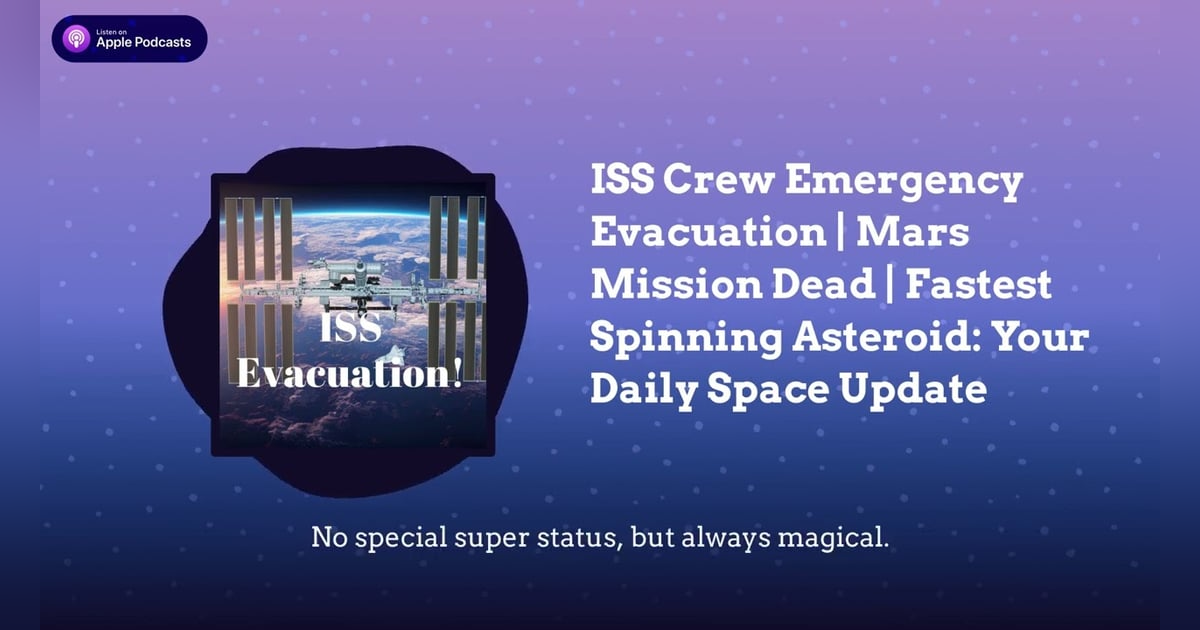


In this episode, we explore a remarkable array of developments in space exploration and astronomy that are making headlines. We begin with a historic moment as NASA orders its first controlled medical evacuation from the International Space Station, bringing home the entire Crew 11 team due to a medical issue affecting one astronaut. This unprecedented decision underscores the importance of crew safety and the challenges of long-duration spaceflight.Next, we look forward to the upcoming February full moon, known as the Snow Moon, which promises a stunning display in the night sky. With peak illumination set for February 1st, we provide tips for the best viewing experience across various regions.Shifting our focus to the ongoing advancements at SpaceX's Starbase, we discuss significant upgrades to Pad 1, preparing for the next generation of Starship launches. These enhancements aim to facilitate rapid reusability and increase launch frequency, crucial for the ambitious goals of the Starship programme.We also address the unfortunate news regarding NASA's Mars Sample Return mission, which has effectively been shelved due to budget cuts. This opens the door for China's simpler and potentially quicker plans to return Martian samples, marking a significant shift in the landscape of Mars exploration.In a thrilling discovery, the Vera Rubin Observatory has identified the fastest spinning large asteroid ever recorded, prompting discussions on the implications for asteroid deflection strategies.Finally, we unveil a new map detailing the origins of billions of ghostly neutrinos that pass through us daily, offering insights into stellar processes and the mysteries of our galaxy.Join us as we unpack these fascinating stories and more in this episode of Astronomy Daily!00:00 – **Astronomy Daily brings you the latest news from space and astronomy
00:57 – **NASA orders medical evacuation of entire ISS crew due to medical issue
03:43 – **February full moon is coming up soon. Peak illumination at 5:09pm Eastern on February 1st
05:29 – **NASA's Mars sample return mission effectively dead after budget cuts
06:31 – **The Vera Rubin Observatory has spotted the fastest spinning large asteroid ever discovered
07:47 – **From ISS drama to neutrino maps. What a day in space news### Sources & Further Reading1. NASA (https://www.nasa.gov/) 2. SpaceX (https://www.spacex.com/) 3. European Space Agency (https://www.esa.int/) 4. Galactic Neutrinos (https://www.galacticneutrinos.org/) ### Follow & ContactX/Twitter: @AstroDailyPod
Instagram: @astrodailypod
Email: hello@astronomydaily.io
Website: astronomydaily.io (http://astronomydaily.io/)
Clear skies and see you next time! 🌟
Become a supporter of this podcast: https://www.spreaker.com/podcast/astronomy-daily-space-news-updates--5648921/support (https://www.spreaker.com/podcast/astronomy-daily-space-news-updates--5648921/support?utm_source=rss&utm_medium=rss&utm_campaign=rss) .
Sponsor Details:
Ensure your online privacy by using NordVPN . To get our special listener deal and save a lot of money, visit You'll be glad you did!
Become a supporter of Astronomy Daily by joining our Supporters Club. Commercial free episodes daily are only a click way... Click Here (https://www.spreaker.com/podcast/astronomy-daily-space-news-updates--5648921/support)
This episode includes AI-generated content.
Episode link: https://play.headliner.app/episode/31030116?utm_source=youtube
00:57 - NASA orders medical evacuation of entire ISS crew due to medical issue
03:43 - February full moon is coming up soon. Peak illumination at 5:09pm Eastern on February 1st
05:29 - NASA’s Mars sample return mission effectively dead after budget cuts
06:31 - The Vera Rubin Observatory has spotted the fastest spinning large asteroid ever discovered
Kind: captions
Language: en
00:00:00.480 --> 00:00:03.990
Hello everyone and welcome to Astronomy
00:00:04.000 --> 00:00:06.550
Daily, the podcast where we bring you
00:00:06.560 --> 00:00:08.629
the latest and greatest from the world
00:00:08.639 --> 00:00:11.830
of space and astronomy. I'm Anna and
00:00:11.840 --> 00:00:15.270
with me is my co-host Avery. Hey Avery,
00:00:15.280 --> 00:00:18.550
it's January 9th, 2026. Hope you're
00:00:18.560 --> 00:00:20.310
staying warm wherever you are.
00:00:20.320 --> 00:00:23.029
>> Hey Anna, and hi to all our listeners.
00:00:23.039 --> 00:00:24.790
Yeah, it's chilly out there where I am
00:00:24.800 --> 00:00:26.550
in the northern hemisphere, but I
00:00:26.560 --> 00:00:28.470
believe our listeners down under are
00:00:28.480 --> 00:00:30.470
experiencing very high temperatures
00:00:30.480 --> 00:00:33.190
today. But the news is heating up.
00:00:33.200 --> 00:00:35.270
Today, we've got a truly historic story
00:00:35.280 --> 00:00:37.110
leading off. One that's making waves
00:00:37.120 --> 00:00:39.590
across the space community, plus lunar
00:00:39.600 --> 00:00:41.910
viewing tips, Starship infrastructure
00:00:41.920 --> 00:00:43.910
upgrades, big shifts and Mars
00:00:43.920 --> 00:00:46.310
exploration plans, a record-breaking
00:00:46.320 --> 00:00:49.029
asteroid spin, and a fascinating map of
00:00:49.039 --> 00:00:51.350
ghostly particles streaming through us.
00:00:51.360 --> 00:00:53.270
We'll spend extra time on that first one
00:00:53.280 --> 00:00:55.270
because it's a milestone. Let's jump
00:00:55.280 --> 00:00:56.150
right in.
00:00:56.160 --> 00:00:58.630
>> Absolutely. This top story is
00:00:58.640 --> 00:01:01.270
unprecedented. For the first time in the
00:01:01.280 --> 00:01:03.510
25- year history of the International
00:01:03.520 --> 00:01:05.990
Space Station, NASA has ordered a
00:01:06.000 --> 00:01:08.710
controlled medical evacuation, bringing
00:01:08.720 --> 00:01:11.109
home an entire crew early due to a
00:01:11.119 --> 00:01:13.510
medical issue with one astronaut.
00:01:13.520 --> 00:01:15.910
>> This involves crew 11, who launched back
00:01:15.920 --> 00:01:19.030
in August 2025 aboard SpaceX's Dragon
00:01:19.040 --> 00:01:21.590
Endeavor. The four-person team, NASA
00:01:21.600 --> 00:01:23.749
commander Mike Frink, veteran of
00:01:23.759 --> 00:01:26.550
multiple flights, pilot Zena Cardman on
00:01:26.560 --> 00:01:29.830
her rookie mission, Jax Kima Yui, and
00:01:29.840 --> 00:01:32.710
Ros Cosmos cosminot Oleg Platonoff.
00:01:32.720 --> 00:01:34.390
They're a multinational crew
00:01:34.400 --> 00:01:35.830
highlighting the international
00:01:35.840 --> 00:01:36.870
partnership.
00:01:36.880 --> 00:01:39.270
>> The issue arose earlier this week on
00:01:39.280 --> 00:01:42.310
January 7th with one unidentified crew
00:01:42.320 --> 00:01:44.630
member experiencing a medical situation
00:01:44.640 --> 00:01:47.510
in microgravity. NASA emphasizes the
00:01:47.520 --> 00:01:50.149
astronaut is absolutely stable and the
00:01:50.159 --> 00:01:52.230
crew provided immediate care using
00:01:52.240 --> 00:01:54.789
onboard equipment which is advanced but
00:01:54.799 --> 00:01:57.429
limited compared to a full hospital
00:01:57.439 --> 00:01:59.429
>> details are private for good reason.
00:01:59.439 --> 00:02:01.830
HIPPA and all that but NASA chief
00:02:01.840 --> 00:02:05.109
medical officer Dr. JD Pulk noted it's
00:02:05.119 --> 00:02:07.190
unrelated to station operations or
00:02:07.200 --> 00:02:10.150
upcoming tasks. The key factor while
00:02:10.160 --> 00:02:12.309
stable now there could be lingering
00:02:12.319 --> 00:02:14.949
risks if they stay in orbit longer and
00:02:14.959 --> 00:02:17.110
full diagnosis or treatment isn't
00:02:17.120 --> 00:02:19.910
possible up there. After consultations,
00:02:19.920 --> 00:02:22.309
administrator Jared Isacman made the
00:02:22.319 --> 00:02:25.030
call, air on the side of caution and
00:02:25.040 --> 00:02:27.430
return the whole crew 11 team in the
00:02:27.440 --> 00:02:30.229
coming days. They'll undock soon. Exact
00:02:30.239 --> 00:02:33.110
schedule coming within 48 hours. splash
00:02:33.120 --> 00:02:35.430
down off California with Space X
00:02:35.440 --> 00:02:37.110
recovery ships ready.
00:02:37.120 --> 00:02:39.430
>> Why the whole crew? They share one
00:02:39.440 --> 00:02:41.430
Dragon as their lifeboat. No splitting
00:02:41.440 --> 00:02:44.390
up. This leaves the ISS with just three
00:02:44.400 --> 00:02:47.190
people temporarily. NASA astronaut Chris
00:02:47.200 --> 00:02:49.589
Williams and two Russian cosminauts.
00:02:49.599 --> 00:02:51.750
They'll handle basics, defer some
00:02:51.760 --> 00:02:53.910
science, and no spacew walks possible
00:02:53.920 --> 00:02:56.869
until Crew 12 arrives. Maybe accelerated
00:02:56.879 --> 00:02:58.150
to next month.
00:02:58.160 --> 00:03:00.869
>> It's certainly historic. NASA's first
00:03:00.879 --> 00:03:03.670
medical early return ever. There was a
00:03:03.680 --> 00:03:07.509
Soviet case in 1985 on Salute 7, but
00:03:07.519 --> 00:03:10.390
nothing like this for the ISS era. Past
00:03:10.400 --> 00:03:13.190
issues like a blood clot in 2019 or
00:03:13.200 --> 00:03:16.229
pinched nerve in 2021 were managed on
00:03:16.239 --> 00:03:18.390
board without evacuation.
00:03:18.400 --> 00:03:20.470
>> This shows how far we've come in crew
00:03:20.480 --> 00:03:22.550
health management, but also the limits
00:03:22.560 --> 00:03:24.949
of long duration space flight. It's a
00:03:24.959 --> 00:03:27.030
learning moment for Aremis lunar stays
00:03:27.040 --> 00:03:29.509
and eventual Mars missions. How do we
00:03:29.519 --> 00:03:31.589
handle unexpected health events far from
00:03:31.599 --> 00:03:32.390
Earth?
00:03:32.400 --> 00:03:35.350
>> Totally. NASA stressed crew safety as
00:03:35.360 --> 00:03:37.670
priority one and the quick response
00:03:37.680 --> 00:03:39.670
highlights training. We'll keep an eye
00:03:39.680 --> 00:03:42.229
on updates. Safe return wishes to crew
00:03:42.239 --> 00:03:43.190
11.
00:03:43.200 --> 00:03:45.990
>> Okay, moving to something more serene.
00:03:46.000 --> 00:03:48.070
The February full moon is coming up
00:03:48.080 --> 00:03:50.309
soon, known as the snow moon.
00:03:50.319 --> 00:03:53.910
>> Peak illumination at 5:09 p.m. Eastern
00:03:53.920 --> 00:03:57.190
on February 1st. Look east at sunset for
00:03:57.200 --> 00:03:59.910
that classic big orangeet tinted rise
00:03:59.920 --> 00:04:02.229
due to the moon illusion and atmospheric
00:04:02.239 --> 00:04:05.110
scattering. It'll be near Cancer stars,
00:04:05.120 --> 00:04:06.869
easy naked eye spot.
00:04:06.879 --> 00:04:08.949
>> Traditional names reflect winter in the
00:04:08.959 --> 00:04:11.509
northern hemisphere. Snow moon for heavy
00:04:11.519 --> 00:04:14.309
snowfall. Hungary or bare moon in some
00:04:14.319 --> 00:04:17.030
indigenous cultures. In India, Maga
00:04:17.040 --> 00:04:20.390
porna with rituals. Bonus. On February
00:04:20.400 --> 00:04:22.870
2nd, it occults regulus for parts of
00:04:22.880 --> 00:04:25.990
North America and Africa. Incidentally,
00:04:26.000 --> 00:04:27.670
you will be able to see this in the
00:04:27.680 --> 00:04:29.909
southern hemisphere as well with best
00:04:29.919 --> 00:04:32.070
date in Sydney, for instance, forecasted
00:04:32.080 --> 00:04:34.870
to be on February 2nd, the same day as
00:04:34.880 --> 00:04:36.629
Beijing and Tokyo.
00:04:36.639 --> 00:04:39.749
>> Great for photos, tripod, long lens for
00:04:39.759 --> 00:04:42.710
details or wide for landscapes. No
00:04:42.720 --> 00:04:45.030
special super status, but always
00:04:45.040 --> 00:04:46.150
magical.
00:04:46.160 --> 00:04:49.270
>> Up next, updates from Starbase. SpaceX
00:04:49.280 --> 00:04:51.590
is futurep proofing pad 1's tower and
00:04:51.600 --> 00:04:54.790
launch mount for Starship Block 3. Pad 1
00:04:54.800 --> 00:04:57.590
had supported early block 2 flights, but
00:04:57.600 --> 00:05:00.230
is now offline for major rework,
00:05:00.240 --> 00:05:02.629
demolishing the old mount, adding a
00:05:02.639 --> 00:05:05.350
flame bucket with powerful water deluge,
00:05:05.360 --> 00:05:08.230
nitrogen inerting to prevent fires, and
00:05:08.240 --> 00:05:10.070
reinforced structures.
00:05:10.080 --> 00:05:11.749
>> Upgrades include better quick
00:05:11.759 --> 00:05:13.749
disconnects for propellants, shortened
00:05:13.759 --> 00:05:16.710
chopsticks for heavier lifts. Goal is
00:05:16.720 --> 00:05:19.350
rapid reusability, minimal refer between
00:05:19.360 --> 00:05:22.790
launches, handling 33 Raptors power.
00:05:22.800 --> 00:05:25.510
This mirrors pad 2 improvements,
00:05:25.520 --> 00:05:27.590
enabling frequent flights, which are
00:05:27.600 --> 00:05:29.749
crucial for Starship's goals.
00:05:29.759 --> 00:05:32.870
>> Next, let's shift our gaze to Mars.
00:05:32.880 --> 00:05:35.830
NASA's ambitious Mars sample return
00:05:35.840 --> 00:05:38.710
mission is effectively dead, opening the
00:05:38.720 --> 00:05:40.550
door wider for China.
00:05:40.560 --> 00:05:44.150
>> Budget cuts slashed funding. Original 11
00:05:44.160 --> 00:05:47.350
billion ballooned, redesigned to around
00:05:47.360 --> 00:05:50.070
7 billion, but it was still too complex.
00:05:50.080 --> 00:05:52.950
Perseverances, caches, lander, fetch
00:05:52.960 --> 00:05:55.749
rover or helicopters, ascent rocket,
00:05:55.759 --> 00:05:58.790
orbital rendevous. It was a lot.
00:05:58.800 --> 00:06:01.029
Congress prioritized other spending, so
00:06:01.039 --> 00:06:03.830
there was only $110 million left for
00:06:03.840 --> 00:06:06.550
tech development. This disrupts the ESA
00:06:06.560 --> 00:06:09.110
partnership, too. Perseverance's 33
00:06:09.120 --> 00:06:11.670
tubes stay on Mars. Stable and cold
00:06:11.680 --> 00:06:14.309
dryness for potential future grab.
00:06:14.319 --> 00:06:16.710
>> Meanwhile, China's plans advance.
00:06:16.720 --> 00:06:19.350
Simpler, opportunistic sampling. They
00:06:19.360 --> 00:06:21.990
could be first to return Martian rocks
00:06:22.000 --> 00:06:24.390
which will be huge for science.
00:06:24.400 --> 00:06:27.029
>> H a bitter pill for NASA after all their
00:06:27.039 --> 00:06:29.189
planning but it does redirect resources
00:06:29.199 --> 00:06:31.590
elsewhere. So there is that.
00:06:31.600 --> 00:06:34.309
>> Let's move on now to asteroid hunting.
00:06:34.319 --> 00:06:36.790
The Vera Rubin Observatory has spotted
00:06:36.800 --> 00:06:39.590
the fastest spinning large asteroid ever
00:06:39.600 --> 00:06:42.710
discovered. This huge rock rotates in an
00:06:42.720 --> 00:06:44.550
insanely quick period under the
00:06:44.560 --> 00:06:47.270
theoretical rubble pile limit, yet holds
00:06:47.280 --> 00:06:49.990
together, likely monolithic or strong
00:06:50.000 --> 00:06:52.390
internally. This discovery highlights
00:06:52.400 --> 00:06:54.629
Vera Rubin's power and importance for
00:06:54.639 --> 00:06:57.029
locating near Earth objects.
00:06:57.039 --> 00:06:59.270
>> There are implications for deflection
00:06:59.280 --> 00:07:02.150
strategies as spin affects how we nudge
00:07:02.160 --> 00:07:03.909
threats if needed.
00:07:03.919 --> 00:07:06.950
>> Okay, moving on. Finally, today, those
00:07:06.960 --> 00:07:09.350
billions of ghost particles, nutrinos,
00:07:09.360 --> 00:07:11.589
streaming through you every second. You
00:07:11.599 --> 00:07:13.110
were aware of them, weren't you? Of
00:07:13.120 --> 00:07:15.589
course. Well, we now have a map of where
00:07:15.599 --> 00:07:17.270
many of them come from.
00:07:17.280 --> 00:07:20.150
>> New models using Gaia star data show
00:07:20.160 --> 00:07:22.870
stellar nutrinos from nuclear fusion in
00:07:22.880 --> 00:07:25.270
massive young stars across the Milky
00:07:25.280 --> 00:07:27.749
Way, although denser toward galactic
00:07:27.759 --> 00:07:30.710
center. Detected via giant Antarctic
00:07:30.720 --> 00:07:33.189
instruments catching rare interactions,
00:07:33.199 --> 00:07:35.510
this first comprehensive stellar nutrino
00:07:35.520 --> 00:07:38.070
map filters solar noise, probes core
00:07:38.080 --> 00:07:40.629
processes, and has led to potential new
00:07:40.639 --> 00:07:41.670
physics.
00:07:41.680 --> 00:07:44.309
>> Wild invisible messengers from our
00:07:44.319 --> 00:07:45.749
galaxy's heart.
00:07:45.759 --> 00:07:48.150
>> And that's a wrap for today. From ISS
00:07:48.160 --> 00:07:50.710
drama to nutrino maps, what a day in
00:07:50.720 --> 00:07:51.909
space news.
00:07:51.919 --> 00:07:54.469
>> Thanks for joining us. Subscribe, share,
00:07:54.479 --> 00:07:56.710
and we'll be back tomorrow. And if you'd
00:07:56.720 --> 00:07:58.390
like to keep up with the evacuation
00:07:58.400 --> 00:08:01.270
story unfolding on the ISS, just visit
00:08:01.280 --> 00:08:03.430
our website and check out our constantly
00:08:03.440 --> 00:08:05.670
updating news feed. You'll find us at
00:08:05.680 --> 00:08:08.070
astronomyaily.io.
00:08:08.080 --> 00:08:09.749
>> Clear skies, everyone.
00:08:09.759 --> 00:08:12.230
>> And one final reminder to keep looking
00:08:12.240 --> 00:08:16.710
up. Bye. Astronomy day.
00:08:16.720 --> 00:08:24.710
Stories we told.
00:08:24.720 --> 00:08:28.440
Stories to tell.


