Io’s Record Eruption, Nuclear Space Future, and Ancient Mars Beaches
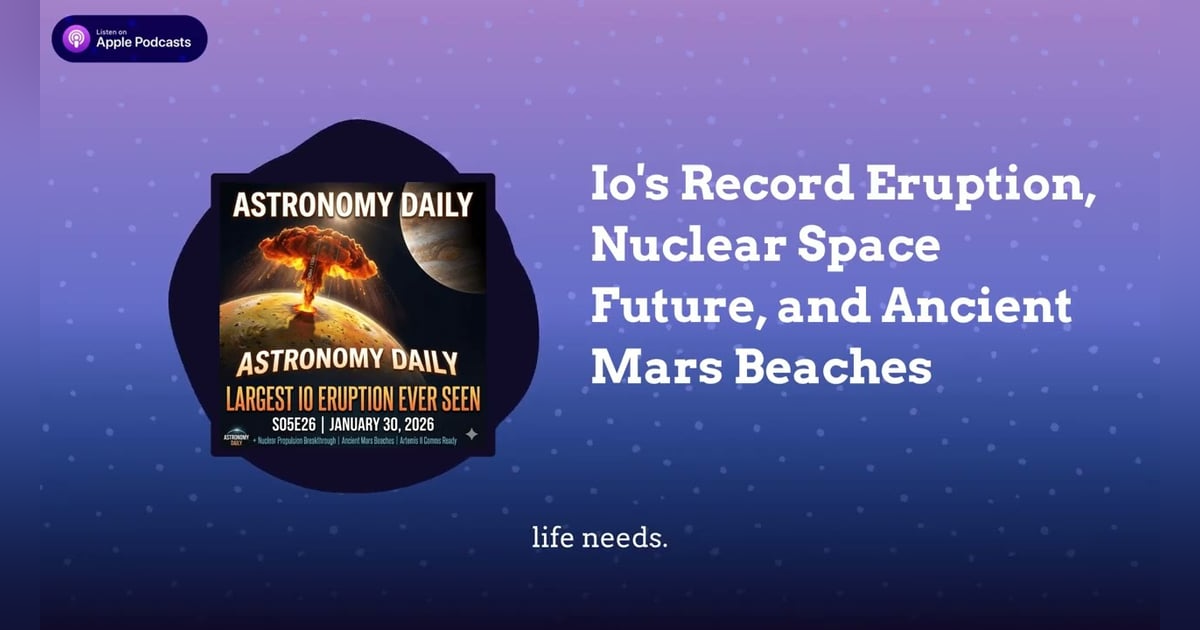


Witness the largest volcanic eruption ever seen on Jupiter's moon Io, explore NASA's breakthrough in nuclear propulsion, and discover evidence of ancient Martian beaches that could rewrite the story of life beyond Earth.
In this episode, we cover:
• NASA's Juno spacecraft captures a colossal 150-mile-high volcanic plume on Io
• KRUSTY nuclear reactor test paves the way for deep space exploration
• Ancient beach deposits in Gale Crater reveal Mars' watery past
• Artemis II communication networks ready for lunar missions
• The Moon's February celestial tour featuring Venus, Saturn, and Jupiter
• Life's chemical building blocks form naturally in interstellar space
Hosted by Anna and Avery, Astronomy Daily brings you the latest space and astronomy news in an engaging, accessible format perfect for enthusiasts and curious minds alike.
**Links & Resources:**
Visit astronomydaily.io for full articles, transcripts, and sources
Follow us @AstroDailyPod on social media
Watch on YouTube
Become a supporter of this podcast: https://www.spreaker.com/podcast/astronomy-daily-space-news-updates--5648921/support (https://www.spreaker.com/podcast/astronomy-daily-space-news-updates--5648921/support?utm_source=rss&utm_medium=rss&utm_campaign=rss) .
Sponsor Details:
Ensure your online privacy by using NordVPN . To get our special listener deal and save a lot of money, visit You'll be glad you did!
Become a supporter of Astronomy Daily by joining our Supporters Club. Commercial free episodes daily are only a click way... Click Here (https://www.spreaker.com/podcast/astronomy-daily-space-news-updates--5648921/support)
This episode includes AI-generated content.
Episode link: https://play.headliner.app/episode/31410003?utm_source=youtube
Kind: captions
Language: en
00:00:00.000 --> 00:00:03.830
Picture this. A volcanic eruption so
00:00:03.840 --> 00:00:06.309
massive it could swallow entire [music]
00:00:06.319 --> 00:00:09.110
countries. Now imagine witnessing it
00:00:09.120 --> 00:00:12.870
from space on a moon 400 million miles
00:00:12.880 --> 00:00:15.030
away. Welcome to Astronomy [music]
00:00:15.040 --> 00:00:17.430
Daily where today we're bringing you the
00:00:17.440 --> 00:00:19.990
most explosive story from Jupiter's
00:00:20.000 --> 00:00:23.830
volcanic moon Io. Literally. I'm Anna.
00:00:23.840 --> 00:00:26.470
>> And I'm Avery. Anna, when NASA's Juno
00:00:26.480 --> 00:00:28.230
spacecraft captured [music] the largest
00:00:28.240 --> 00:00:31.189
volcanic eruption ever seen on Io, it
00:00:31.199 --> 00:00:33.110
reminded me why we explore [music] these
00:00:33.120 --> 00:00:35.270
distant worlds. The sheer scale of
00:00:35.280 --> 00:00:36.549
what's happening out there is
00:00:36.559 --> 00:00:37.990
mind-blowing. [music]
00:00:38.000 --> 00:00:41.030
Absolutely. And speaking of exploration,
00:00:41.040 --> 00:00:43.430
we've also got some groundbreaking news
00:00:43.440 --> 00:00:45.510
about nuclear propulsion [music] that
00:00:45.520 --> 00:00:48.150
could revolutionize deep space travel.
00:00:48.160 --> 00:00:50.630
Plus, discoveries about ancient Martian
00:00:50.640 --> 00:00:52.950
beaches, the communication networks
00:00:52.960 --> 00:00:54.630
keeping Artemis astronauts [music]
00:00:54.640 --> 00:00:57.350
connected around the moon, a lunar world
00:00:57.360 --> 00:00:59.990
tour happening in February, and
00:01:00.000 --> 00:01:01.510
fascinating research [music] about
00:01:01.520 --> 00:01:04.549
life's ingredients forming in space.
00:01:04.559 --> 00:01:07.990
It's Friday, [music] January 30th, 2026,
00:01:08.000 --> 00:01:10.950
and you're listening to Astronomy Daily.
00:01:10.960 --> 00:01:13.030
>> Let's get into it, then. Avery, [music]
00:01:13.040 --> 00:01:15.590
let's dive right into this spectacular
00:01:15.600 --> 00:01:18.870
volcanic eruption on Io. NASA's Juno
00:01:18.880 --> 00:01:20.710
spacecraft has been giving us
00:01:20.720 --> 00:01:23.670
unprecedented views of Jupiter's most
00:01:23.680 --> 00:01:26.149
volcanically active moon. And this
00:01:26.159 --> 00:01:29.670
latest discovery is absolutely stunning.
00:01:29.680 --> 00:01:32.789
>> It really is, Anna. During Juno's 71st
00:01:32.799 --> 00:01:35.830
close flyby of Jupiter on January 28th,
00:01:35.840 --> 00:01:37.910
the spacecraft captured what scientists
00:01:37.920 --> 00:01:40.069
are calling the largest volcanic
00:01:40.079 --> 00:01:42.789
eruption ever observed on Io. We're
00:01:42.799 --> 00:01:45.350
talking about a plume that's absolutely
00:01:45.360 --> 00:01:47.749
colossal in scale. The plume was spotted
00:01:47.759 --> 00:01:51.190
at a volcano called Khi. And here's what
00:01:51.200 --> 00:01:53.350
makes this so remarkable. The plume
00:01:53.360 --> 00:01:58.389
extends an estimated 240 km or about 150
00:01:58.399 --> 00:02:01.030
m above Io's surface.
00:02:01.040 --> 00:02:03.270
>> That's incredible. To put that in
00:02:03.280 --> 00:02:05.190
perspective for our listeners, that's
00:02:05.200 --> 00:02:07.190
roughly the distance from New York to
00:02:07.200 --> 00:02:09.270
Philadelphia. But instead of a road
00:02:09.280 --> 00:02:11.589
trip, we're talking about a volcanic
00:02:11.599 --> 00:02:14.710
plume shooting straight up into space.
00:02:14.720 --> 00:02:16.869
>> Exactly. And what makes Io such a
00:02:16.879 --> 00:02:19.430
volcanic powerhouse is the immense tidal
00:02:19.440 --> 00:02:21.990
forces it experiences. Jupender's
00:02:22.000 --> 00:02:23.670
massive gravity combined with the
00:02:23.680 --> 00:02:25.430
gravitational poles from its sister
00:02:25.440 --> 00:02:27.910
moons Europa and Ganymede literally
00:02:27.920 --> 00:02:30.550
flexes ISO's interior generating
00:02:30.560 --> 00:02:32.869
enormous amounts of heat. It's like
00:02:32.879 --> 00:02:35.030
continuously kneading dough but on a
00:02:35.040 --> 00:02:37.670
planetary scale. The images Juno
00:02:37.680 --> 00:02:40.630
captured are fascinating too. Scientists
00:02:40.640 --> 00:02:43.430
use the spacecraft's Juno cam instrument
00:02:43.440 --> 00:02:45.830
and what they saw was this enormous
00:02:45.840 --> 00:02:48.390
umbrellashaped plume extending from Cain
00:02:48.400 --> 00:02:51.270
Hackily. Scott Bolton, Juno's principal
00:02:51.280 --> 00:02:53.430
investigator from the Southwest Research
00:02:53.440 --> 00:02:56.390
Institute, described it as both enormous
00:02:56.400 --> 00:02:59.190
and incredibly faint, which is why these
00:02:59.200 --> 00:03:01.830
observations are so valuable.
00:03:01.840 --> 00:03:03.430
>> Right. And this isn't just about
00:03:03.440 --> 00:03:05.830
impressive visuals. Understanding is
00:03:05.840 --> 00:03:07.910
vcanism helps us learn about tidal
00:03:07.920 --> 00:03:09.670
heating processes throughout the solar
00:03:09.680 --> 00:03:12.390
system. Plus, Juno has been on quite the
00:03:12.400 --> 00:03:14.949
journey. The spacecraft has made 18
00:03:14.959 --> 00:03:17.110
close flybys of Io since entering
00:03:17.120 --> 00:03:19.910
Jupiter's orbit back in 2016, and it's
00:03:19.920 --> 00:03:21.910
scheduled to continue observations until
00:03:21.920 --> 00:03:23.990
at least 2025.
00:03:24.000 --> 00:03:27.350
>> Actually, Avery, we're now in 2026, so
00:03:27.360 --> 00:03:29.670
Juno has been extended beyond that
00:03:29.680 --> 00:03:31.990
original timeline, which is fantastic
00:03:32.000 --> 00:03:34.710
news for continued observations. This
00:03:34.720 --> 00:03:37.589
discovery really highlights how active
00:03:37.599 --> 00:03:40.550
and dynamic Io remains. It's not just
00:03:40.560 --> 00:03:43.110
the most volcanically active body in our
00:03:43.120 --> 00:03:45.910
solar system. It's constantly surprising
00:03:45.920 --> 00:03:48.710
us with the scale of its eruptions.
00:03:48.720 --> 00:03:50.630
>> Absolutely. And there's something almost
00:03:50.640 --> 00:03:52.789
poetic about witnessing such raw
00:03:52.799 --> 00:03:54.949
primordial forces at work on another
00:03:54.959 --> 00:03:57.350
world. While we deal with our relatively
00:03:57.360 --> 00:04:00.390
tame volcanic activity here on Earth, Io
00:04:00.400 --> 00:04:02.789
is experiencing eruptions that dwarf
00:04:02.799 --> 00:04:05.429
anything in our planet's history. It's a
00:04:05.439 --> 00:04:07.750
powerful reminder that our solar system
00:04:07.760 --> 00:04:11.270
is far from a static, quiet place. There
00:04:11.280 --> 00:04:13.270
are worlds out there where the geology
00:04:13.280 --> 00:04:15.750
is extreme beyond our everyday
00:04:15.760 --> 00:04:18.150
comprehension. All right, let's shift
00:04:18.160 --> 00:04:20.870
gears from volcanic fury to the cutting
00:04:20.880 --> 00:04:23.830
edge of space propulsion technology.
00:04:23.840 --> 00:04:25.430
>> Anna, if we're going to send humans
00:04:25.440 --> 00:04:27.670
deeper into the solar system to Mars and
00:04:27.680 --> 00:04:29.510
beyond, we need better propulsion
00:04:29.520 --> 00:04:31.749
systems than what we currently have.
00:04:31.759 --> 00:04:33.430
That's where nuclear technology comes
00:04:33.440 --> 00:04:35.990
in. And NASA just achieved a significant
00:04:36.000 --> 00:04:37.189
milestone.
00:04:37.199 --> 00:04:40.310
>> This is exciting stuff, Avery. NASA and
00:04:40.320 --> 00:04:42.710
the Department of Energy recently fired
00:04:42.720 --> 00:04:45.430
up crusty. And yes, that's actually the
00:04:45.440 --> 00:04:47.830
acronym they went with, which stands for
00:04:47.840 --> 00:04:50.550
kilo power reactor using sterling
00:04:50.560 --> 00:04:53.670
technology. This test represents a major
00:04:53.680 --> 00:04:55.909
step toward making nuclear power a
00:04:55.919 --> 00:04:58.550
reality for deep space missions.
00:04:58.560 --> 00:05:00.790
>> I love that acronym. But beyond the fun
00:05:00.800 --> 00:05:03.590
name, this is serious technology. Frosty
00:05:03.600 --> 00:05:05.670
is a small fish and reactor designed to
00:05:05.680 --> 00:05:07.670
provide reliable power in the harsh
00:05:07.680 --> 00:05:09.749
environments of deep space. We're
00:05:09.759 --> 00:05:11.270
talking about a system that could
00:05:11.280 --> 00:05:13.749
generate around 10 kows of electrical
00:05:13.759 --> 00:05:17.270
power continuously for over a decade. 10
00:05:17.280 --> 00:05:19.590
kow might not sound like much compared
00:05:19.600 --> 00:05:22.230
to a power plant, but in space it's
00:05:22.240 --> 00:05:24.469
transformational. That's enough to power
00:05:24.479 --> 00:05:26.469
life support systems, scientific
00:05:26.479 --> 00:05:29.189
instruments, and habitats on Mars or the
00:05:29.199 --> 00:05:31.670
moon. Traditional solar panels become
00:05:31.680 --> 00:05:33.670
less effective the farther you get from
00:05:33.680 --> 00:05:36.390
the sun, but nuclear reactors work
00:05:36.400 --> 00:05:37.430
anywhere.
00:05:37.440 --> 00:05:39.270
>> Exactly. And the technology behind
00:05:39.280 --> 00:05:42.150
Crusty is elegantly simple in concept if
00:05:42.160 --> 00:05:45.189
complex in execution. It uses a solid
00:05:45.199 --> 00:05:47.430
uranium core about the size of a paper
00:05:47.440 --> 00:05:50.070
towel roll. Nuclear fish in this core
00:05:50.080 --> 00:05:51.909
generates heat which is then converted
00:05:51.919 --> 00:05:54.710
to electricity using sterling engines.
00:05:54.720 --> 00:05:56.629
These are highly efficient engines that
00:05:56.639 --> 00:05:59.029
convert heat to mechanical energy and
00:05:59.039 --> 00:06:00.710
then to electricity.
00:06:00.720 --> 00:06:03.270
>> What I find particularly impressive is
00:06:03.280 --> 00:06:05.749
the safety engineering. These systems
00:06:05.759 --> 00:06:08.469
are designed to be inherently safe with
00:06:08.479 --> 00:06:10.469
passive cooling systems that don't
00:06:10.479 --> 00:06:12.950
require active intervention. During the
00:06:12.960 --> 00:06:15.510
Nevada test, engineers put Crusty
00:06:15.520 --> 00:06:18.070
through its paces, simulating various
00:06:18.080 --> 00:06:20.150
failure scenarios to prove it could
00:06:20.160 --> 00:06:22.309
handle extreme conditions.
00:06:22.319 --> 00:06:24.309
>> Right? And this isn't just theoretical
00:06:24.319 --> 00:06:25.990
anymore. The successful test
00:06:26.000 --> 00:06:28.309
demonstrates that the technology works.
00:06:28.319 --> 00:06:30.710
Now NASA's looking at scaling this up
00:06:30.720 --> 00:06:33.430
for actual mission use. Imagine a Mars
00:06:33.440 --> 00:06:35.510
base powered by one or more of these
00:06:35.520 --> 00:06:38.070
reactors providing consistent power
00:06:38.080 --> 00:06:40.790
regardless of dust storms, nighttime, or
00:06:40.800 --> 00:06:41.670
seasons.
00:06:41.680 --> 00:06:43.909
>> It also opens up possibilities for
00:06:43.919 --> 00:06:46.150
missions to the outer solar system.
00:06:46.160 --> 00:06:49.029
Places like Titan or Europa, where solar
00:06:49.039 --> 00:06:51.749
power is essentially useless, suddenly
00:06:51.759 --> 00:06:54.070
become more accessible with reliable
00:06:54.080 --> 00:06:56.390
nuclear power sources. We could have
00:06:56.400 --> 00:06:59.029
rovers or even submarines exploring
00:06:59.039 --> 00:07:01.430
these distant worlds. And let's not
00:07:01.440 --> 00:07:03.670
forget about nuclear thermal propulsion,
00:07:03.680 --> 00:07:05.990
which is related but different. That's
00:07:06.000 --> 00:07:08.070
where nuclear reactors heat propellant
00:07:08.080 --> 00:07:10.230
to generate thrust, potentially cutting
00:07:10.240 --> 00:07:12.950
Mars transit times in half. Between
00:07:12.960 --> 00:07:15.589
power generation and propulsion, nuclear
00:07:15.599 --> 00:07:17.749
technology could be the key to humanity
00:07:17.759 --> 00:07:19.510
becoming a truly space fairing
00:07:19.520 --> 00:07:20.629
civilization.
00:07:20.639 --> 00:07:22.469
>> It's one of those technologies that
00:07:22.479 --> 00:07:24.550
sounds like science fiction, but is
00:07:24.560 --> 00:07:27.029
rapidly becoming science fact. The
00:07:27.039 --> 00:07:28.950
crusty test proves we have the
00:07:28.960 --> 00:07:31.350
engineering capability. Now, it's about
00:07:31.360 --> 00:07:33.830
implementation and integration into
00:07:33.840 --> 00:07:36.150
actual mission architectures. Speaking
00:07:36.160 --> 00:07:38.629
of missions, let's head to Mars where
00:07:38.639 --> 00:07:40.710
scientists have discovered intriguing
00:07:40.720 --> 00:07:42.790
evidence of ancient water.
00:07:42.800 --> 00:07:44.790
>> Anna, one of the biggest questions about
00:07:44.800 --> 00:07:46.950
Mars is whether it ever had conditions
00:07:46.960 --> 00:07:49.270
suitable for life. Every time we find
00:07:49.280 --> 00:07:51.430
evidence of ancient water, we get closer
00:07:51.440 --> 00:07:53.430
to answering that question. And this
00:07:53.440 --> 00:07:55.510
latest discovery is particularly
00:07:55.520 --> 00:07:56.390
compelling.
00:07:56.400 --> 00:07:59.110
>> It really is, Avery. Researchers have
00:07:59.120 --> 00:08:00.710
identified what they believe to be
00:08:00.720 --> 00:08:03.189
ancient beach deposits in Mars Gale
00:08:03.199 --> 00:08:05.430
Crater, where the Curiosity rover has
00:08:05.440 --> 00:08:07.749
been exploring. These aren't just random
00:08:07.759 --> 00:08:10.230
rocks. They're sedimentary layers that
00:08:10.240 --> 00:08:13.110
tell a story of water lapping at ancient
00:08:13.120 --> 00:08:15.749
shorelines billions of years ago. The
00:08:15.759 --> 00:08:17.749
evidence comes from detailed analysis of
00:08:17.759 --> 00:08:19.189
rock formations that show
00:08:19.199 --> 00:08:21.189
characteristics consistent with beach
00:08:21.199 --> 00:08:22.950
environments. We're talking about
00:08:22.960 --> 00:08:25.510
specific grain sizes, layering patterns,
00:08:25.520 --> 00:08:27.749
and chemical signatures that match what
00:08:27.759 --> 00:08:29.589
we see in coastal deposits here on
00:08:29.599 --> 00:08:31.990
Earth. The team identified features like
00:08:32.000 --> 00:08:34.149
ripple marks and crossbedding that form
00:08:34.159 --> 00:08:36.550
when waves and currents move sediment.
00:08:36.560 --> 00:08:39.029
>> What makes this discovery particularly
00:08:39.039 --> 00:08:41.589
significant for habitability is that
00:08:41.599 --> 00:08:43.670
beach environments on Earth are
00:08:43.680 --> 00:08:46.389
incredibly productive ecosystems. The
00:08:46.399 --> 00:08:49.110
interface between water and land where
00:08:49.120 --> 00:08:52.150
you have tides, nutrients washing in,
00:08:52.160 --> 00:08:54.389
and varying conditions creates
00:08:54.399 --> 00:08:57.190
opportunities for diverse life forms.
00:08:57.200 --> 00:08:59.990
>> Exactly. If Mars had stable shorelines
00:09:00.000 --> 00:09:01.990
billions of years ago, those would have
00:09:02.000 --> 00:09:04.389
been prime locations for any potential
00:09:04.399 --> 00:09:06.870
Martian life to emerge and thrive.
00:09:06.880 --> 00:09:08.710
You've got water, you've got minerals
00:09:08.720 --> 00:09:10.870
being concentrated, you've got energy
00:09:10.880 --> 00:09:13.110
from the sun, all the ingredients that
00:09:13.120 --> 00:09:15.990
life needs. The research also helps us
00:09:16.000 --> 00:09:18.630
understand Mars's climate history. For
00:09:18.640 --> 00:09:21.670
beaches to exist, you need a stable body
00:09:21.680 --> 00:09:24.710
of water over extended periods, not just
00:09:24.720 --> 00:09:27.030
brief flooding events. This suggests
00:09:27.040 --> 00:09:29.590
that ancient Mars had a more earthlike
00:09:29.600 --> 00:09:31.910
hydraological cycle than we might have
00:09:31.920 --> 00:09:34.230
thought with lakes or seas that
00:09:34.240 --> 00:09:36.389
persisted long enough to create these
00:09:36.399 --> 00:09:37.670
coastal features.
00:09:37.680 --> 00:09:39.509
>> And the location in Gail Crater is
00:09:39.519 --> 00:09:41.670
significant, too. Curiosity has been
00:09:41.680 --> 00:09:43.670
slowly climbing Mount Sharp in the
00:09:43.680 --> 00:09:45.910
center of the crater. And as it climbs,
00:09:45.920 --> 00:09:47.829
it's essentially reading through Mars'
00:09:47.839 --> 00:09:50.550
geological history like pages in a book.
00:09:50.560 --> 00:09:52.790
These beach deposits fit into a broader
00:09:52.800 --> 00:09:55.030
narrative of a wetter, warmer ancient
00:09:55.040 --> 00:09:56.070
Mars.
00:09:56.080 --> 00:09:58.550
>> The implications for future missions are
00:09:58.560 --> 00:10:01.430
huge. If we can identify ancient beaches
00:10:01.440 --> 00:10:03.829
and shorelines, those become high
00:10:03.839 --> 00:10:06.150
priority targets for searching for bio
00:10:06.160 --> 00:10:08.630
signatures, chemical or physical
00:10:08.640 --> 00:10:11.350
evidence that life once existed. We
00:10:11.360 --> 00:10:13.509
might want to send future rovers, or
00:10:13.519 --> 00:10:15.670
even sample return missions to these
00:10:15.680 --> 00:10:16.710
locations.
00:10:16.720 --> 00:10:18.630
>> It's also worth noting how far we've
00:10:18.640 --> 00:10:20.949
come in our understanding of Mars. From
00:10:20.959 --> 00:10:23.190
a planet we once thought was completely
00:10:23.200 --> 00:10:25.509
dry and dead, we now know Mars had
00:10:25.519 --> 00:10:28.550
rivers, lakes, possibly oceans, beaches,
00:10:28.560 --> 00:10:31.269
and deltas. Each discovery adds another
00:10:31.279 --> 00:10:33.350
piece to the puzzle of what ancient Mars
00:10:33.360 --> 00:10:36.389
was really like. And who knows, maybe
00:10:36.399 --> 00:10:38.389
one day humans will walk on those
00:10:38.399 --> 00:10:41.350
ancient beaches 4 billion years after
00:10:41.360 --> 00:10:43.990
waves last touched them. But before we
00:10:44.000 --> 00:10:46.470
send humans to Mars, we need to perfect
00:10:46.480 --> 00:10:49.269
operations around the moon. Let's talk
00:10:49.279 --> 00:10:51.269
about the communication networks being
00:10:51.279 --> 00:10:53.430
prepared for Artemis 2.
00:10:53.440 --> 00:10:55.750
>> Anna, when the Artemis 2 crew ventures
00:10:55.760 --> 00:10:57.590
around the moon next year, they'll be
00:10:57.600 --> 00:10:59.670
farther from Earth than any humans have
00:10:59.680 --> 00:11:03.190
traveled since Apollo 17 in 1972.
00:11:03.200 --> 00:11:05.110
Keeping them connected requires an
00:11:05.120 --> 00:11:07.030
incredibly sophisticated network of
00:11:07.040 --> 00:11:09.190
ground stations and satellites.
00:11:09.200 --> 00:11:11.430
>> That's right, Avery. NASA has been
00:11:11.440 --> 00:11:13.829
building out what's essentially a cosmic
00:11:13.839 --> 00:11:16.150
communication infrastructure and the
00:11:16.160 --> 00:11:18.230
latest updates show that the networks
00:11:18.240 --> 00:11:20.470
are ready to support the mission. We're
00:11:20.480 --> 00:11:22.630
talking about the deep space network,
00:11:22.640 --> 00:11:24.790
the near space network, and even
00:11:24.800 --> 00:11:26.790
partnerships with commercial satellite
00:11:26.800 --> 00:11:29.110
operators. Let's break down what makes
00:11:29.120 --> 00:11:31.110
this so challenging. When the Orian
00:11:31.120 --> 00:11:33.509
craft carrying the Artemis 2 crew swings
00:11:33.519 --> 00:11:35.590
around the far side of the moon, there's
00:11:35.600 --> 00:11:37.670
a period where they're completely out of
00:11:37.680 --> 00:11:39.910
direct line of sight with Earth. No
00:11:39.920 --> 00:11:41.910
radio signals can reach them directly
00:11:41.920 --> 00:11:44.230
because the moon itself is in the way.
00:11:44.240 --> 00:11:46.550
>> That's where the tracking and data relay
00:11:46.560 --> 00:11:48.790
satellites come in. NASA has been
00:11:48.800 --> 00:11:51.269
upgrading the deep space network. Those
00:11:51.279 --> 00:11:54.069
massive dish antennas in California,
00:11:54.079 --> 00:11:56.470
Spain, and Australia that communicate
00:11:56.480 --> 00:11:59.030
with distant spacecraft. These dishes
00:11:59.040 --> 00:12:01.350
can pick up incredibly faint signals
00:12:01.360 --> 00:12:03.829
from the Oran capsule even when it's
00:12:03.839 --> 00:12:05.509
280,000
00:12:05.519 --> 00:12:08.389
m away. The redundancy built into the
00:12:08.399 --> 00:12:10.629
system is impressive, too. Multiple
00:12:10.639 --> 00:12:12.470
ground stations can track Orian
00:12:12.480 --> 00:12:14.629
simultaneously, ensuring that if one
00:12:14.639 --> 00:12:16.790
station loses signal due to weather or
00:12:16.800 --> 00:12:19.030
other issues, others can maintain
00:12:19.040 --> 00:12:21.269
contact. The crew will never be more
00:12:21.279 --> 00:12:22.710
than a few minutes without a
00:12:22.720 --> 00:12:25.269
communication link. What's particularly
00:12:25.279 --> 00:12:27.190
interesting is how much bandwidth
00:12:27.200 --> 00:12:29.190
they'll have. Unlike the Apollo
00:12:29.200 --> 00:12:31.269
missions, which had relatively limited
00:12:31.279 --> 00:12:33.829
voice communications, Artemis 2 will
00:12:33.839 --> 00:12:36.470
have highdefinition video capabilities,
00:12:36.480 --> 00:12:38.790
allowing mission control and the public
00:12:38.800 --> 00:12:41.829
to see what the crew sees in real time.
00:12:41.839 --> 00:12:44.470
Imagine watching HD footage of Earth
00:12:44.480 --> 00:12:47.030
rising over the lunar horizon as it
00:12:47.040 --> 00:12:48.150
happens.
00:12:48.160 --> 00:12:50.870
>> That's going to be spectacular. And it's
00:12:50.880 --> 00:12:52.389
not just about keeping the crew
00:12:52.399 --> 00:12:54.310
connected for safety, though that's
00:12:54.320 --> 00:12:56.310
obviously paramount. These
00:12:56.320 --> 00:12:58.790
communications enable realtime science
00:12:58.800 --> 00:13:01.430
operations, medical monitoring, and the
00:13:01.440 --> 00:13:03.509
kind of public engagement that makes
00:13:03.519 --> 00:13:06.389
these missions so inspiring. The testing
00:13:06.399 --> 00:13:09.350
that's been done is extensive, too. NASA
00:13:09.360 --> 00:13:11.750
has run countless simulations, putting
00:13:11.760 --> 00:13:13.829
the network through every conceivable
00:13:13.839 --> 00:13:16.470
scenario, from normal operations to
00:13:16.480 --> 00:13:19.030
emergency situations. They've verified
00:13:19.040 --> 00:13:21.269
that commands can be sent and received
00:13:21.279 --> 00:13:23.509
quickly enough to respond to any issues
00:13:23.519 --> 00:13:26.310
that might arise. And this network
00:13:26.320 --> 00:13:27.750
infrastructure they're building for
00:13:27.760 --> 00:13:30.310
Artemis will serve missions for decades
00:13:30.320 --> 00:13:32.790
to come. When we establish a permanent
00:13:32.800 --> 00:13:35.190
lunar base when we send astronauts to
00:13:35.200 --> 00:13:37.350
Mars, these same communication
00:13:37.360 --> 00:13:39.750
principles and much of the same hardware
00:13:39.760 --> 00:13:41.829
will be the backbone keeping everyone
00:13:41.839 --> 00:13:44.550
connected. It's a reminder that space
00:13:44.560 --> 00:13:47.110
exploration isn't just about rockets and
00:13:47.120 --> 00:13:49.190
spacecraft. It's about building the
00:13:49.200 --> 00:13:51.670
infrastructure to support human presence
00:13:51.680 --> 00:13:54.230
beyond Earth. Speaking of the moon,
00:13:54.240 --> 00:13:56.389
there's a beautiful celestial show
00:13:56.399 --> 00:13:58.470
coming up in February that everyone can
00:13:58.480 --> 00:13:59.829
enjoy from Earth.
00:13:59.839 --> 00:14:01.910
>> Anna, I love these monthly lunar
00:14:01.920 --> 00:14:04.310
highlights. February is shaping up to be
00:14:04.320 --> 00:14:06.389
a great month for lunar watchers with
00:14:06.399 --> 00:14:08.470
some beautiful planetary conjunctions
00:14:08.480 --> 00:14:11.110
and interesting phases to observe.
00:14:11.120 --> 00:14:13.350
>> Absolutely, Avery. Let's walk our
00:14:13.360 --> 00:14:15.509
listeners through what they can expect.
00:14:15.519 --> 00:14:17.430
The month kicks off with the moon in a
00:14:17.440 --> 00:14:19.910
waxing crescent phase. And on February
00:14:19.920 --> 00:14:22.069
1st and 2nd, we'll see a lovely
00:14:22.079 --> 00:14:24.389
conjunction with Venus. If you look to
00:14:24.399 --> 00:14:26.710
the western sky just after sunset,
00:14:26.720 --> 00:14:28.470
you'll see the bright crescent moon
00:14:28.480 --> 00:14:31.110
paired with the brilliant evening star.
00:14:31.120 --> 00:14:33.590
Venus is always stunning, and when you
00:14:33.600 --> 00:14:35.590
add the moon to the picture, it creates
00:14:35.600 --> 00:14:37.269
one of those scenes that makes even
00:14:37.279 --> 00:14:40.470
nonastronomers stop and look up. A few
00:14:40.480 --> 00:14:43.030
days later on February 4th, the moon
00:14:43.040 --> 00:14:45.350
will pass near Saturn, giving us another
00:14:45.360 --> 00:14:47.110
beautiful evening pairing.
00:14:47.120 --> 00:14:49.670
>> The full moon arrives on February 12th.
00:14:49.680 --> 00:14:51.509
And this one has a particularly
00:14:51.519 --> 00:14:53.910
evocative traditional name, the snow
00:14:53.920 --> 00:14:56.150
moon. Various cultures have called it
00:14:56.160 --> 00:14:58.389
the hunger moon or the storm moon,
00:14:58.399 --> 00:15:00.550
reflecting the harsh conditions of late
00:15:00.560 --> 00:15:02.790
winter in the northern hemisphere. Of
00:15:02.800 --> 00:15:04.310
course, the moon doesn't know what
00:15:04.320 --> 00:15:06.790
season it is down here, so the name is
00:15:06.800 --> 00:15:09.829
purely a human cultural addition. After
00:15:09.839 --> 00:15:12.389
full phase, the moon starts waning and
00:15:12.399 --> 00:15:14.230
this is when morning observers get their
00:15:14.240 --> 00:15:17.670
treats. On February 17th, early risers
00:15:17.680 --> 00:15:19.910
can catch the waning gibbus moon near
00:15:19.920 --> 00:15:21.829
the star Spika in the constellation
00:15:21.839 --> 00:15:25.189
Virgo. Then on February 20th, the moon
00:15:25.199 --> 00:15:27.350
makes a close approach to Jupiter, which
00:15:27.360 --> 00:15:29.350
will still be prominent in the pre-dawn
00:15:29.360 --> 00:15:32.150
sky. One of my favorite things to watch
00:15:32.160 --> 00:15:34.550
is how the moon appears to march across
00:15:34.560 --> 00:15:36.949
the sky from night to night, visiting
00:15:36.959 --> 00:15:39.670
different stars and planets. It's like a
00:15:39.680 --> 00:15:42.310
natural cosmic clock, and you don't need
00:15:42.320 --> 00:15:44.389
any equipment beyond your eyes to enjoy
00:15:44.399 --> 00:15:46.389
it. Though, binoculars definitely
00:15:46.399 --> 00:15:48.389
enhance the view. Speaking of
00:15:48.399 --> 00:15:50.790
binoculars, the waxing crescent phases
00:15:50.800 --> 00:15:52.629
early in the month are perfect for
00:15:52.639 --> 00:15:54.790
observing what astronomers call Earth
00:15:54.800 --> 00:15:57.030
shine. That's when you can see the dark
00:15:57.040 --> 00:15:59.350
portion of the moon, faintly illuminated
00:15:59.360 --> 00:16:01.910
by sunlight reflecting off Earth. It's
00:16:01.920 --> 00:16:04.550
this beautiful ghostly glow that reveals
00:16:04.560 --> 00:16:07.189
the entire disc. And for anyone
00:16:07.199 --> 00:16:09.590
interested in lunar photography, those
00:16:09.600 --> 00:16:11.509
conjunctions with Venus and Jupiter
00:16:11.519 --> 00:16:14.069
offer fantastic opportunities. You don't
00:16:14.079 --> 00:16:16.150
need expensive equipment. Even a
00:16:16.160 --> 00:16:18.069
smartphone can capture these scenes if
00:16:18.079 --> 00:16:19.829
you have steady hands or a simple
00:16:19.839 --> 00:16:23.030
tripod. The moon's February tour also
00:16:23.040 --> 00:16:25.189
serves as a nice reminder of celestial
00:16:25.199 --> 00:16:27.749
mechanics. Every conjunction, every
00:16:27.759 --> 00:16:29.749
phase we see is the result of the
00:16:29.759 --> 00:16:32.069
precise dance between the Earth, Moon,
00:16:32.079 --> 00:16:34.870
and Sun. The fact that we can predict
00:16:34.880 --> 00:16:36.949
exactly when these events will occur
00:16:36.959 --> 00:16:39.350
centuries in advance is a testament to
00:16:39.360 --> 00:16:42.230
our understanding of orbital dynamics.
00:16:42.240 --> 00:16:44.310
Though, mark your calendars, folks.
00:16:44.320 --> 00:16:47.269
February 1st and 2nd for Venus, February
00:16:47.279 --> 00:16:50.069
4th for Saturn, February 12th for the
00:16:50.079 --> 00:16:52.710
full snow moon, and February 20th for
00:16:52.720 --> 00:16:55.110
Jupiter. The moon is putting on a world
00:16:55.120 --> 00:16:58.310
tour, and admission is absolutely free.
00:16:58.320 --> 00:17:00.470
Now, let's wrap up with some fascinating
00:17:00.480 --> 00:17:02.389
research about the chemistry of life
00:17:02.399 --> 00:17:03.590
itself.
00:17:03.600 --> 00:17:05.990
>> Anna, one of the most profound questions
00:17:06.000 --> 00:17:08.949
in science is how life began. And new
00:17:08.959 --> 00:17:10.710
research is revealing that some of the
00:17:10.720 --> 00:17:12.870
key ingredients for life might form
00:17:12.880 --> 00:17:15.669
spontaneously in space without any need
00:17:15.679 --> 00:17:18.069
for planets or special conditions.
00:17:18.079 --> 00:17:20.390
>> This is absolutely fascinating research,
00:17:20.400 --> 00:17:22.870
Avery. Scientists have discovered that
00:17:22.880 --> 00:17:25.590
complex organic molecules, the building
00:17:25.600 --> 00:17:27.990
blocks of proteins and other biological
00:17:28.000 --> 00:17:30.390
molecules, can form in the harsh
00:17:30.400 --> 00:17:32.789
environment of interstellar space. We're
00:17:32.799 --> 00:17:35.270
not talking about life itself, but the
00:17:35.280 --> 00:17:38.070
chemical precursors that life needs,
00:17:38.080 --> 00:17:40.549
>> right? The study focused on amino acids,
00:17:40.559 --> 00:17:42.310
which are the fundamental components of
00:17:42.320 --> 00:17:45.270
proteins. On Earth, we know amino acids
00:17:45.280 --> 00:17:47.830
can form through biological processes.
00:17:47.840 --> 00:17:49.750
But this research shows they can also
00:17:49.760 --> 00:17:52.070
arise through purely chemical reactions
00:17:52.080 --> 00:17:55.190
in space in molecular clouds where stars
00:17:55.200 --> 00:17:57.270
and planets eventually form.
00:17:57.280 --> 00:17:59.029
>> What makes this possible is the
00:17:59.039 --> 00:18:01.029
chemistry happening on the surfaces of
00:18:01.039 --> 00:18:03.669
dust grains in these molecular clouds.
00:18:03.679 --> 00:18:05.909
These grains are coated with ices,
00:18:05.919 --> 00:18:08.710
frozen water, methane, ammonia, and
00:18:08.720 --> 00:18:11.430
other simple molecules. When cosmic rays
00:18:11.440 --> 00:18:14.470
or ultraviolet light hits these ices, it
00:18:14.480 --> 00:18:16.390
triggers chemical reactions that can
00:18:16.400 --> 00:18:18.789
build up more complex molecules.
00:18:18.799 --> 00:18:20.549
>> The researchers use laboratory
00:18:20.559 --> 00:18:22.789
simulations that recreate the conditions
00:18:22.799 --> 00:18:25.750
in space, extreme cold, vacuum, and
00:18:25.760 --> 00:18:28.230
radiation. They found that even without
00:18:28.240 --> 00:18:30.950
any biological input, amino acids and
00:18:30.960 --> 00:18:33.669
other organic molecules form readily.
00:18:33.679 --> 00:18:35.669
It's like space is running a giant
00:18:35.679 --> 00:18:37.510
chemistry experiment, and the products
00:18:37.520 --> 00:18:39.830
are the ingredients for life. This has
00:18:39.840 --> 00:18:42.710
huge implications for astrobiology. If
00:18:42.720 --> 00:18:45.110
life's building blocks form naturally in
00:18:45.120 --> 00:18:47.110
space, then they're probably common
00:18:47.120 --> 00:18:49.350
throughout the galaxy. When new star
00:18:49.360 --> 00:18:51.029
systems form from these molecular
00:18:51.039 --> 00:18:53.270
clouds, they inherit these organic
00:18:53.280 --> 00:18:55.830
molecules. Young planets get seated with
00:18:55.840 --> 00:18:57.669
the chemistry they need for life to
00:18:57.679 --> 00:18:59.029
potentially emerge.
00:18:59.039 --> 00:19:01.029
>> We've actually found evidence supporting
00:19:01.039 --> 00:19:03.350
this on Earth. Some meteorites,
00:19:03.360 --> 00:19:05.830
particularly carbonatous condrites,
00:19:05.840 --> 00:19:08.230
contain amino acids and other organic
00:19:08.240 --> 00:19:10.710
compounds that formed in space before
00:19:10.720 --> 00:19:13.350
the solar system even existed. When
00:19:13.360 --> 00:19:15.270
these meteorites fall to Earth, they
00:19:15.280 --> 00:19:17.430
deliver this prebiotic chemistry.
00:19:17.440 --> 00:19:19.430
>> It raises an interesting question about
00:19:19.440 --> 00:19:21.909
the origin of life on Earth. Did life
00:19:21.919 --> 00:19:24.310
arise entirely from scratch using
00:19:24.320 --> 00:19:26.870
molecules made here, or did it get a
00:19:26.880 --> 00:19:28.950
head start from organic compounds
00:19:28.960 --> 00:19:31.510
delivered by comets and asteroids? The
00:19:31.520 --> 00:19:34.150
answer might be both. A combination of
00:19:34.160 --> 00:19:37.270
homegrown chemistry and cosmic delivery.
00:19:37.280 --> 00:19:39.110
>> And when we search for life on other
00:19:39.120 --> 00:19:42.150
worlds, Mars, Europa, Enceladus,
00:19:42.160 --> 00:19:44.470
exoplanets, knowing that the basic
00:19:44.480 --> 00:19:46.710
ingredients are probably already there
00:19:46.720 --> 00:19:49.110
makes the question shift from could
00:19:49.120 --> 00:19:51.669
light's chemistry exist there to did
00:19:51.679 --> 00:19:53.669
conditions allow that chemistry to
00:19:53.679 --> 00:19:54.950
become biology.
00:19:54.960 --> 00:19:56.870
>> The research also highlights how
00:19:56.880 --> 00:19:58.950
interconnected everything in the
00:19:58.960 --> 00:20:01.350
universe is. The same processes that
00:20:01.360 --> 00:20:04.230
create stars and planets also create the
00:20:04.240 --> 00:20:06.710
molecules necessary for life. We're
00:20:06.720 --> 00:20:09.190
literally made of stardust, but we're
00:20:09.200 --> 00:20:11.110
also made of chemistry that happens
00:20:11.120 --> 00:20:12.470
between the stars.
00:20:12.480 --> 00:20:14.950
>> It's humbling and inspiring at the same
00:20:14.960 --> 00:20:17.430
time. The universe isn't just capable of
00:20:17.440 --> 00:20:20.310
creating stars and galaxies. It's also a
00:20:20.320 --> 00:20:22.549
place where the precursors to life form
00:20:22.559 --> 00:20:24.390
naturally, waiting for the right
00:20:24.400 --> 00:20:26.150
conditions to spark something
00:20:26.160 --> 00:20:28.310
extraordinary. Which brings us full
00:20:28.320 --> 00:20:31.590
circle to why we explore. Every mission,
00:20:31.600 --> 00:20:34.230
every observation, every discovery adds
00:20:34.240 --> 00:20:36.070
to our understanding not just of the
00:20:36.080 --> 00:20:38.390
universe, but our place in it and the
00:20:38.400 --> 00:20:40.549
processes that made us possible.
00:20:40.559 --> 00:20:42.549
>> What a journey we've taken today, Anna.
00:20:42.559 --> 00:20:45.350
From explosive vulcanism on Io to the
00:20:45.360 --> 00:20:47.350
chemistry of life forming in the depths
00:20:47.360 --> 00:20:49.750
of space. It's been a packed episode.
00:20:49.760 --> 00:20:51.909
>> It really has, Avery. We've covered
00:20:51.919 --> 00:20:54.230
groundbreaking propulsion technology,
00:20:54.240 --> 00:20:56.789
ancient Martian beaches, cuttingedge
00:20:56.799 --> 00:20:58.950
communications for Aremis, and a
00:20:58.960 --> 00:21:01.190
beautiful lunar tour to look forward to.
00:21:01.200 --> 00:21:03.350
If today's episode shows us anything,
00:21:03.360 --> 00:21:05.350
it's that the universe never stops
00:21:05.360 --> 00:21:07.830
surprising us. Before we sign off, a
00:21:07.840 --> 00:21:09.590
quick reminder that you can find all the
00:21:09.600 --> 00:21:11.350
links to the stories we discussed today
00:21:11.360 --> 00:21:13.510
in our show notes. And if you enjoyed
00:21:13.520 --> 00:21:15.029
this episode, please share it with
00:21:15.039 --> 00:21:17.110
someone who loves space as much as you
00:21:17.120 --> 00:21:20.230
do. You can find us on all major podcast
00:21:20.240 --> 00:21:22.870
platforms and we're also on YouTube if
00:21:22.880 --> 00:21:25.190
you prefer to watch. We're @
00:21:25.200 --> 00:21:27.990
astroailyaily pod on social media and
00:21:28.000 --> 00:21:29.830
you can visit our website at
00:21:29.840 --> 00:21:31.750
astronomyaily.io
00:21:31.760 --> 00:21:34.470
for articles, transcripts, and more.
00:21:34.480 --> 00:21:37.590
Astronomy [music] day.
00:21:37.600 --> 00:21:45.590
Stories be told.
00:21:45.600 --> 00:21:53.935
Stories to tell.
00:21:53.945 --> 00:21:55.965
[singing]


