Inner Solar Secrets: Sample Returns, Water Origins, and the Dawn of Space Commerce
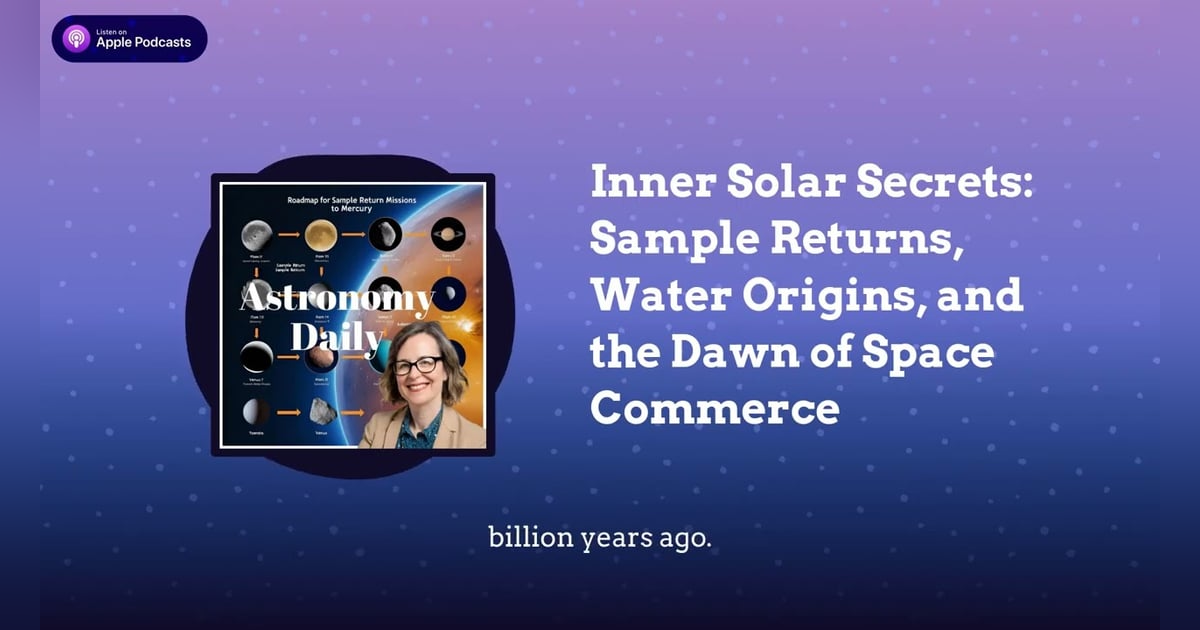


Astronomy Daily | Space News: S04E91
In this episode of Astronomy Daily, host Anna takes you on an exciting journey through the latest cosmic discoveries and developments that are enhancing our understanding of the universe. From ambitious sample return missions to the intriguing origins of Earth's water, this episode is filled with insights that will spark your curiosity about space.
Highlights:
- Roadmap for Sample Return Missions to Mercury and Venus: Join us as we delve into the groundbreaking research from the California Institute of Technology, which outlines potential missions to collect samples from our solar system's innermost planets, Mercury and Venus. Discover the significance of these missions in filling crucial gaps in our understanding of the inner solar system and the challenges scientists face in making them a reality.
- New Theories on Earth's Water Origins: Explore a fascinating new study from the University of Oxford that challenges the long-held belief that Earth's water was delivered by asteroids. This research suggests that the primordial Earth may have contained the building blocks for water all along, fundamentally shifting our understanding of our planet's development.
- The Dawn of a New Space Age: Reflect on the exciting parallels between today's space exploration and the Age of Sail in the 1600s. As private companies and startups venture into space, we discuss the potential for resource acquisition, energy production, and advanced manufacturing that could redefine humanity's future beyond Earth.
- James Webb Space Telescope Observes NGC 1514: Marvel at the latest observations from the James Webb Space Telescope as it examines the planetary nebula NGC 1514. Learn about the nebula's complex history, its unique structure, and how these observations are reshaping our understanding of stellar evolution.
- Upcoming Meteor Showers: Lyrids and Eta Aquarids: Get ready for two spectacular meteor showers! We provide a guide to spotting the Lyrids and Eta Aquarids, including tips for optimal viewing conditions and the best times to catch these celestial displays.
For more cosmic updates, visit our website at astronomydaily.io (http://www.astronomydaily.io/) . Join our community on social media by searching for #AstroDailyPod on Facebook, X, YouTubeMusic, TikTok, and our new Instagram account! Don’t forget to subscribe to the podcast on Apple Podcasts, Spotify, iHeartRadio, or wherever you get your podcasts.
Thank you for tuning in. This is Anna signing off. Until next time, keep looking up and stay curious about the wonders of our universe.
00:00 - Welcome to Astronomy Daily
01:05 - Sample return missions to Mercury and Venus
10:30 - New theories on Earth's water origins
17:00 - The dawn of a new space age
22:15 - JWST observations of NGC 1514
27:30 - Upcoming meteor showers: Lyrids and Eta Aquarids
✍️ Episode References
Sample Return Missions
[California Institute of Technology]( https://www.caltech.edu/ (https://www.caltech.edu/) )
Earth's Water Origins Study
[University of Oxford]( https://www.ox.ac.uk/ (https://www.ox.ac.uk/) )
New Space Age Insights
[NASA]( https://www.nasa.gov (https://www.nasa.gov/) )
JWST NGC 1514 Observations
[NASA JWST]( https://www.nasa.gov/mission_pages/webb/main/index.html (https://www.nasa.gov/mission_pages/webb/main/index.html) )
Meteor Showers Guide
[American Meteor Society]( https://www.amsmeteors.org/ (https://www.amsmeteors.org/) )
Astronomy Daily
[Astronomy Daily]( http://www.astronomydaily.io/ (http://www.astronomydaily.io/) )
Become a supporter of this podcast: https://www.spreaker.com/podcast/astronomy-daily-exciting-space-discoveries-and-news--5648921/support (https://www.spreaker.com/podcast/astronomy-daily-exciting-space-discoveries-and-news--5648921/support?utm_source=rss&utm_medium=rss&utm_campaign=rss) .
Episode link: https://play.headliner.app/episode/26639920?utm_source=youtube
00:00 - Welcome to Astronomy Daily
01:05 - Sample return missions to Mercury and Venus
10:30 - New theories on Earth’s water origins
17:00 - The dawn of a new space age
22:15 - JWST observations of NGC 1514
27:30 - Upcoming meteor showers: Lyrids and Eta Aquarids
Kind: captions
Language: en
00:00:00.240 --> 00:00:02.070
welcome to Astronomy Daily your source
00:00:02.080 --> 00:00:04.230
for the latest space and astronomy news
00:00:04.240 --> 00:00:06.309
i'm your host Anna and today we'll be
00:00:06.319 --> 00:00:07.990
diving into some fascinating stories
00:00:08.000 --> 00:00:10.629
from across the cosmos we have quite a
00:00:10.639 --> 00:00:12.390
lineup of cosmic discoveries and
00:00:12.400 --> 00:00:14.789
developments to explore we'll begin with
00:00:14.799 --> 00:00:16.470
an intriguing road map for potential
00:00:16.480 --> 00:00:18.230
sample return missions from our solar
00:00:18.240 --> 00:00:20.470
systems most inhospitable planets
00:00:20.480 --> 00:00:22.790
Mercury and Venus these ambitious
00:00:22.800 --> 00:00:24.550
missions could help fill critical gaps
00:00:24.560 --> 00:00:26.310
in our understanding of the inner solar
00:00:26.320 --> 00:00:29.189
system then we'll examine a surprising
00:00:29.199 --> 00:00:31.189
new theory about the origins of Earth's
00:00:31.199 --> 00:00:33.270
water that challenges conventional
00:00:33.280 --> 00:00:35.750
wisdom about asteroid impacts delivering
00:00:35.760 --> 00:00:38.630
our planet's life-giving resource we'll
00:00:38.640 --> 00:00:40.709
also explore the dawn of a new space age
00:00:40.719 --> 00:00:42.310
that some are comparing to the
00:00:42.320 --> 00:00:45.270
revolutionary age of sale in the 1600s
00:00:45.280 --> 00:00:46.709
with all its opportunities and
00:00:46.719 --> 00:00:48.470
challenges for humanity's expansion
00:00:48.480 --> 00:00:51.029
beyond Earth the James Web Space
00:00:51.039 --> 00:00:53.709
Telescope continues to amaze us with its
00:00:53.719 --> 00:00:55.670
observations and we'll look at its
00:00:55.680 --> 00:00:58.630
latest examination of a complex nebula
00:00:58.640 --> 00:01:00.549
with a fascinating history that dates
00:01:00.559 --> 00:01:02.389
back to William Hershel's observations
00:01:02.399 --> 00:01:03.469
in
00:01:03.479 --> 00:01:06.310
1790 finally we'll provide a helpful
00:01:06.320 --> 00:01:08.310
guide to spotting two upcoming meteor
00:01:08.320 --> 00:01:11.510
showers the Lids and Aquarids that will
00:01:11.520 --> 00:01:13.190
grace our night skies beginning in late
00:01:13.200 --> 00:01:15.510
April so buckle up for a journey through
00:01:15.520 --> 00:01:17.510
the latest astronomical discoveries that
00:01:17.520 --> 00:01:20.109
are expanding our understanding of the
00:01:20.119 --> 00:01:22.310
universe for our first story today
00:01:22.320 --> 00:01:24.710
ponder this how can we successfully
00:01:24.720 --> 00:01:26.870
collect and return samples from the two
00:01:26.880 --> 00:01:29.270
innermost planets of our solar system
00:01:29.280 --> 00:01:32.069
Mercury and Venus this fascinating
00:01:32.079 --> 00:01:33.670
question was recently tackled by
00:01:33.680 --> 00:01:35.510
researchers at the California Institute
00:01:35.520 --> 00:01:37.910
of Technology in a study presented at
00:01:37.920 --> 00:01:40.390
the 56th Lunar and Planetary Science
00:01:40.400 --> 00:01:43.030
Conference the team outlined potential
00:01:43.040 --> 00:01:44.550
road maps for what would be
00:01:44.560 --> 00:01:46.069
groundbreaking missions to these
00:01:46.079 --> 00:01:47.230
challenging
00:01:47.240 --> 00:01:49.710
destinations these aren't just academic
00:01:49.720 --> 00:01:51.990
exercises sample return missions from
00:01:52.000 --> 00:01:53.990
Mercury and Venus could help scientists
00:01:54.000 --> 00:01:56.469
fill a significant knowledge gap in our
00:01:56.479 --> 00:01:58.350
understanding of the solar systems
00:01:58.360 --> 00:02:00.789
formation what makes this particularly
00:02:00.799 --> 00:02:02.310
interesting is that despite the
00:02:02.320 --> 00:02:03.749
thousands of meteorites in our
00:02:03.759 --> 00:02:05.749
collections we don't have a single
00:02:05.759 --> 00:02:08.070
confirmed meteorite that originated from
00:02:08.080 --> 00:02:10.630
either Mercury or Venus when you think
00:02:10.640 --> 00:02:13.030
about it this is quite remarkable we
00:02:13.040 --> 00:02:16.309
have meteorites from Mars from asteroids
00:02:16.319 --> 00:02:18.150
and even from the Kyper belt beyond
00:02:18.160 --> 00:02:20.550
Neptune but nothing from our closest
00:02:20.560 --> 00:02:23.350
planetary neighbors this absence creates
00:02:23.360 --> 00:02:25.190
a substantial blind spot in our
00:02:25.200 --> 00:02:26.949
understanding of the planetary building
00:02:26.959 --> 00:02:29.350
materials of the inner solar system
00:02:29.360 --> 00:02:32.229
tangi Tony Yap the PhD student who led
00:02:32.239 --> 00:02:34.550
the study explained that their research
00:02:34.560 --> 00:02:36.869
emerged from a workshop at Caltech's KEK
00:02:36.879 --> 00:02:39.350
Institute of Space Studies the workshop
00:02:39.360 --> 00:02:40.670
brought together experts in
00:02:40.680 --> 00:02:43.270
geocchemistry orbital dynamics and
00:02:43.280 --> 00:02:45.589
mission science to discuss high priority
00:02:45.599 --> 00:02:47.509
scientific objectives that could be
00:02:47.519 --> 00:02:49.190
achieved through sample returns from
00:02:49.200 --> 00:02:51.070
various bodies throughout the solar
00:02:51.080 --> 00:02:53.110
system one of the most compelling
00:02:53.120 --> 00:02:54.790
reasons for pursuing these challenging
00:02:54.800 --> 00:02:57.509
missions is to understand what materials
00:02:57.519 --> 00:02:59.830
existed in the inner solar system during
00:02:59.840 --> 00:03:01.910
its early formation billions of years
00:03:01.920 --> 00:03:04.470
ago without samples from Mercury and
00:03:04.480 --> 00:03:06.869
Venus we lack crucial data on the
00:03:06.879 --> 00:03:08.790
carbonatous and non-carbonatous
00:03:08.800 --> 00:03:11.430
materials that formed these planets the
00:03:11.440 --> 00:03:13.350
researchers made their case by building
00:03:13.360 --> 00:03:15.030
on knowledge gained from previous
00:03:15.040 --> 00:03:16.949
missions like NASA's Messenger to
00:03:16.959 --> 00:03:19.350
Mercury and looking ahead to active
00:03:19.360 --> 00:03:21.509
missions like the European Space Ay's
00:03:21.519 --> 00:03:23.830
Bey Columbo currently in route to
00:03:23.840 --> 00:03:26.710
Mercury they also considered proposed
00:03:26.720 --> 00:03:29.430
future NASA missions to Venus like Da
00:03:29.440 --> 00:03:31.430
Vinci and Varadus as potential
00:03:31.440 --> 00:03:34.190
precursors to eventual sample return
00:03:34.200 --> 00:03:37.430
missions but the challenges are immense
00:03:37.440 --> 00:03:39.509
mercury's proximity to the sun makes it
00:03:39.519 --> 00:03:41.910
extraordinarily difficult to reach while
00:03:41.920 --> 00:03:43.830
Venus has a crushing atmosphere and
00:03:43.840 --> 00:03:45.710
surface temperatures hot enough to melt
00:03:45.720 --> 00:03:48.390
lead these conditions make landing
00:03:48.400 --> 00:03:50.630
collecting samples and returning them to
00:03:50.640 --> 00:03:53.430
Earth technologically daunting despite
00:03:53.440 --> 00:03:55.589
these obstacles the Caltech team
00:03:55.599 --> 00:03:57.110
believes that with the development of
00:03:57.120 --> 00:03:59.350
advanced propulsion technologies
00:03:59.360 --> 00:04:01.830
particularly nuclear thermal propulsion
00:04:01.840 --> 00:04:04.309
a Mercury sample return mission might
00:04:04.319 --> 00:04:07.030
eventually become feasible venus
00:04:07.040 --> 00:04:08.949
presents even greater challenges with
00:04:08.959 --> 00:04:10.789
its massive gravity while making it
00:04:10.799 --> 00:04:12.390
particularly difficult to launch
00:04:12.400 --> 00:04:14.949
anything from its surface back to Earth
00:04:14.959 --> 00:04:17.110
the researchers emphasize a critical gap
00:04:17.120 --> 00:04:19.509
in our understanding of our solar system
00:04:19.519 --> 00:04:21.189
we simply don't have any physical
00:04:21.199 --> 00:04:24.469
samples from Mercury or Venus tony Yap
00:04:24.479 --> 00:04:26.469
the Caltech PhD student leading the
00:04:26.479 --> 00:04:29.030
study puts it bluntly we do not have a
00:04:29.040 --> 00:04:31.270
single sample in the form of a meteorite
00:04:31.280 --> 00:04:34.150
from Mercury and Venus this absence
00:04:34.160 --> 00:04:35.990
creates a significant blind spot in
00:04:36.000 --> 00:04:38.550
planetary science the building blocks of
00:04:38.560 --> 00:04:40.629
both planets derived from the innermost
00:04:40.639 --> 00:04:43.909
solar system remain largely theoretical
00:04:43.919 --> 00:04:45.189
understanding these materials
00:04:45.199 --> 00:04:46.950
geochemically would provide crucial
00:04:46.960 --> 00:04:48.950
insights into the evolution of the early
00:04:48.960 --> 00:04:51.990
solar system approximately 4.6 billion
00:04:52.000 --> 00:04:54.310
years ago what makes these potential
00:04:54.320 --> 00:04:56.310
sample return missions particularly
00:04:56.320 --> 00:04:58.629
significant is that they might represent
00:04:58.639 --> 00:05:01.110
the missing component needed to explain
00:05:01.120 --> 00:05:04.310
Earth's composition currently scientists
00:05:04.320 --> 00:05:06.070
cannot fully account for our planet's
00:05:06.080 --> 00:05:08.230
composition using known meteorite
00:05:08.240 --> 00:05:10.310
materials there's a piece of the puzzle
00:05:10.320 --> 00:05:12.629
missing and Mercury or Venus samples
00:05:12.639 --> 00:05:14.870
might provide it the technical
00:05:14.880 --> 00:05:17.590
challenges however are formidable for
00:05:17.600 --> 00:05:19.670
Mercury the team believes nuclear
00:05:19.680 --> 00:05:21.430
thermal propulsion could eventually make
00:05:21.440 --> 00:05:24.070
a sample return mission feasible this
00:05:24.080 --> 00:05:25.990
advanced propulsion technology would
00:05:26.000 --> 00:05:27.830
provide the necessary power to escape
00:05:27.840 --> 00:05:29.909
Mercury's gravity well while managing
00:05:29.919 --> 00:05:32.390
the extreme heat near the sun venus
00:05:32.400 --> 00:05:34.790
presents even greater obstacles its
00:05:34.800 --> 00:05:36.629
massive size creates a much deeper
00:05:36.639 --> 00:05:38.710
gravity well than Mercury making it
00:05:38.720 --> 00:05:40.310
extraordinarily difficult to launch
00:05:40.320 --> 00:05:42.150
anything from its surface with enough
00:05:42.160 --> 00:05:44.950
velocity to return to Earth the planet's
00:05:44.960 --> 00:05:46.629
crushing atmospheric pressure and
00:05:46.639 --> 00:05:48.790
extreme surface temperatures hot enough
00:05:48.800 --> 00:05:51.029
to melt lead further complicate any
00:05:51.039 --> 00:05:53.510
sample collection mission given these
00:05:53.520 --> 00:05:55.510
challenges researchers are exploring
00:05:55.520 --> 00:05:57.990
alternative approaches for Venus
00:05:58.000 --> 00:05:59.670
balloonbased technologies that could
00:05:59.680 --> 00:06:01.189
float in the more temperate upper
00:06:01.199 --> 00:06:03.909
atmosphere are being considered these
00:06:03.919 --> 00:06:05.510
floating laboratories might collect
00:06:05.520 --> 00:06:08.070
atmospheric samples or potentially even
00:06:08.080 --> 00:06:10.390
surface material without requiring a
00:06:10.400 --> 00:06:12.270
traditional landing and return
00:06:12.280 --> 00:06:15.189
mission moving forward the scientists
00:06:15.199 --> 00:06:16.950
emphasize the need to develop these
00:06:16.960 --> 00:06:18.790
advanced technologies while
00:06:18.800 --> 00:06:20.550
simultaneously building stronger
00:06:20.560 --> 00:06:22.790
scientific cases for sample returns from
00:06:22.800 --> 00:06:25.909
the inner planets as Yap notes figuring
00:06:25.919 --> 00:06:28.150
out how to maximize scientific value
00:06:28.160 --> 00:06:30.469
from even a single gram of material
00:06:30.479 --> 00:06:32.950
scraped or drilled from these hostile
00:06:32.960 --> 00:06:35.430
planetary surfaces will be crucial to
00:06:35.440 --> 00:06:37.629
justifying such ambitious
00:06:37.639 --> 00:06:41.029
missions next on today's story list a
00:06:41.039 --> 00:06:42.629
fascinating new study published in the
00:06:42.639 --> 00:06:44.629
journal Icarus challenges the prevailing
00:06:44.639 --> 00:06:46.230
notion that Earth's water came from
00:06:46.240 --> 00:06:48.790
asteroid impacts for decades the
00:06:48.800 --> 00:06:50.629
scientific consensus has suggested that
00:06:50.639 --> 00:06:52.870
water or its components arrived on our
00:06:52.880 --> 00:06:55.189
planet via asteroid bombardment after
00:06:55.199 --> 00:06:57.830
Earth had already formed but now
00:06:57.840 --> 00:06:59.670
University of Oxford researchers have
00:06:59.680 --> 00:07:01.749
uncovered compelling evidence that the
00:07:01.759 --> 00:07:03.830
building blocks for water may have been
00:07:03.840 --> 00:07:06.870
here all along the team examined a rare
00:07:06.880 --> 00:07:09.110
type of meteorite known as an Enstatite
00:07:09.120 --> 00:07:10.950
condrite which is particularly
00:07:10.960 --> 00:07:12.710
significant because it shares similar
00:07:12.720 --> 00:07:14.390
composition with the materials that
00:07:14.400 --> 00:07:17.430
formed early Earth approximately 4.5
00:07:17.440 --> 00:07:19.830
billion years ago what they discovered
00:07:19.840 --> 00:07:22.469
was surprising hydrogen present within
00:07:22.479 --> 00:07:24.870
the meteorites chemical structure this
00:07:24.880 --> 00:07:26.790
finding suggests that if this meteorite
00:07:26.800 --> 00:07:28.270
material could naturally contain
00:07:28.280 --> 00:07:30.550
hydrogen then the primordial Earth
00:07:30.560 --> 00:07:33.189
likely did too perhaps most convincing
00:07:33.199 --> 00:07:35.350
about this research is how carefully the
00:07:35.360 --> 00:07:37.589
scientists worked to determine that the
00:07:37.599 --> 00:07:39.749
hydrogen they found was original to the
00:07:39.759 --> 00:07:42.150
meteorite not the result of terrestrial
00:07:42.160 --> 00:07:44.870
contamination after it landed this
00:07:44.880 --> 00:07:47.110
distinction is crucial if the hydrogen
00:07:47.120 --> 00:07:48.950
was merely from Earth exposure it
00:07:48.960 --> 00:07:50.390
wouldn't tell us anything about our
00:07:50.400 --> 00:07:52.790
planet's early composition to
00:07:52.800 --> 00:07:54.790
investigate this the researchers
00:07:54.800 --> 00:07:56.629
employed a massive machine called a
00:07:56.639 --> 00:07:59.430
synretron that produces powerful X-rays
00:07:59.440 --> 00:08:01.270
to probe the meteorites chemical
00:08:01.280 --> 00:08:03.589
structure they initially expected any
00:08:03.599 --> 00:08:05.270
hydrogen to be linked with sulfur
00:08:05.280 --> 00:08:07.309
molecules and targeted their analysis
00:08:07.319 --> 00:08:09.909
accordingly to their surprise they found
00:08:09.919 --> 00:08:12.469
areas rich in hydrogen sulfide just
00:08:12.479 --> 00:08:14.710
outside where they anticipated with the
00:08:14.720 --> 00:08:16.390
highest concentration locked within
00:08:16.400 --> 00:08:19.270
crystalline structures the smoking gun
00:08:19.280 --> 00:08:21.029
came when they examined areas of the
00:08:21.039 --> 00:08:23.029
meteorite showing signs of earthly
00:08:23.039 --> 00:08:26.150
contamination cracks and rust these
00:08:26.160 --> 00:08:27.909
sections had little to no hydrogen
00:08:27.919 --> 00:08:30.309
present strongly suggesting the hydrogen
00:08:30.319 --> 00:08:32.110
elsewhere was native to the meteorite
00:08:32.120 --> 00:08:34.310
itself this evidence points to a
00:08:34.320 --> 00:08:36.709
revolutionary conclusion the proto Earth
00:08:36.719 --> 00:08:38.230
likely already contained sufficient
00:08:38.240 --> 00:08:40.070
hydrogen to explain our planet's current
00:08:40.080 --> 00:08:42.389
water supply by the time the young
00:08:42.399 --> 00:08:43.909
planet had grown large enough to be
00:08:43.919 --> 00:08:45.910
struck by asteroids the essential
00:08:45.920 --> 00:08:47.550
ingredients for water were already
00:08:47.560 --> 00:08:50.470
present as Oxford professor James Bryson
00:08:50.480 --> 00:08:52.870
one of the study's authors explained "We
00:08:52.880 --> 00:08:54.710
now think that the material that built
00:08:54.720 --> 00:08:56.790
our planet was far richer in hydrogen
00:08:56.800 --> 00:08:59.269
than we thought previously this finding
00:08:59.279 --> 00:09:01.269
supports the idea that the formation of
00:09:01.279 --> 00:09:03.829
water on Earth was a natural process
00:09:03.839 --> 00:09:05.590
rather than a fluke of hydrated
00:09:05.600 --> 00:09:07.750
asteroids bombarding our planet after it
00:09:07.760 --> 00:09:10.230
formed while this research may not
00:09:10.240 --> 00:09:11.670
completely resolve the debate over
00:09:11.680 --> 00:09:13.829
Earth's original water source it
00:09:13.839 --> 00:09:15.590
significantly strengthens the case for
00:09:15.600 --> 00:09:18.070
an internal origin rather than an
00:09:18.080 --> 00:09:19.990
external delivery system the
00:09:20.000 --> 00:09:22.150
implications extend beyond Earth
00:09:22.160 --> 00:09:23.990
potentially helping us understand water
00:09:24.000 --> 00:09:25.670
formation throughout our solar system
00:09:25.680 --> 00:09:28.230
and beyond the Oxford team's
00:09:28.240 --> 00:09:30.150
investigation methods were particularly
00:09:30.160 --> 00:09:31.990
ingenious in their pursuit to determine
00:09:32.000 --> 00:09:34.150
whether the hydrogen was truly original
00:09:34.160 --> 00:09:37.030
to the meteorite to precisely pinpoint
00:09:37.040 --> 00:09:39.590
hydrogen's presence they utilized a
00:09:39.600 --> 00:09:42.070
powerful X-ray beam from a synretron
00:09:42.080 --> 00:09:43.670
essentially a massive particle
00:09:43.680 --> 00:09:45.590
accelerator that produces incredibly
00:09:45.600 --> 00:09:48.150
intense light used to examine the atomic
00:09:48.160 --> 00:09:50.550
structure of materials when they aimed
00:09:50.560 --> 00:09:52.070
this sophisticated equipment at the
00:09:52.080 --> 00:09:54.590
Antarctic meteorite named
00:09:54.600 --> 00:09:56.630
LR12252 they discovered something
00:09:56.640 --> 00:09:59.030
remarkable the hydrogen wasn't
00:09:59.040 --> 00:10:00.550
distributed randomly throughout the
00:10:00.560 --> 00:10:02.870
sample but was specifically concentrated
00:10:02.880 --> 00:10:04.949
in hydrogen sulfide locked within
00:10:04.959 --> 00:10:07.190
crystalline structures of the meteorite
00:10:07.200 --> 00:10:09.190
this specific positioning is significant
00:10:09.200 --> 00:10:11.670
because it suggests the hydrogen was
00:10:11.680 --> 00:10:13.350
incorporated during the meteorite's
00:10:13.360 --> 00:10:16.550
formation not afterward what makes their
00:10:16.560 --> 00:10:18.870
evidence particularly compelling is the
00:10:18.880 --> 00:10:20.870
comparison between different areas of
00:10:20.880 --> 00:10:23.670
the same meteorite the sections showing
00:10:23.680 --> 00:10:26.069
clear signs of terrestrial contamination
00:10:26.079 --> 00:10:28.150
like cracks or rust formations that
00:10:28.160 --> 00:10:30.150
developed after the meteorite landed on
00:10:30.160 --> 00:10:33.990
Earth contained virtually no hydrogen if
00:10:34.000 --> 00:10:36.150
contamination were the source of all the
00:10:36.160 --> 00:10:38.550
hydrogen we would expect to see higher
00:10:38.560 --> 00:10:40.550
concentrations in these damaged areas
00:10:40.560 --> 00:10:42.470
where Earth materials could more easily
00:10:42.480 --> 00:10:43.990
penetrate
00:10:44.000 --> 00:10:46.630
instead the pristine uncontaminated
00:10:46.640 --> 00:10:48.949
sections held the hydrogen creating a
00:10:48.959 --> 00:10:50.630
strong case that this element was part
00:10:50.640 --> 00:10:52.509
of the meteorite's original
00:10:52.519 --> 00:10:55.110
composition tom Barrett an Oxford
00:10:55.120 --> 00:10:57.110
graduate student who worked on the study
00:10:57.120 --> 00:10:58.990
described their excitement at this
00:10:59.000 --> 00:11:01.350
discovery we were incredibly excited
00:11:01.360 --> 00:11:03.269
when the analysis told us the sample
00:11:03.279 --> 00:11:05.590
contained hydrogen sulfide just not
00:11:05.600 --> 00:11:07.750
where we expected this finding
00:11:07.760 --> 00:11:09.350
fundamentally shifts our understanding
00:11:09.360 --> 00:11:12.389
of Earth's water origins since instatite
00:11:12.399 --> 00:11:13.829
condondrites are believed to represent
00:11:13.839 --> 00:11:16.069
the building blocks of our early planet
00:11:16.079 --> 00:11:18.310
their hydrogen content suggests Earth
00:11:18.320 --> 00:11:19.910
naturally contained the essential
00:11:19.920 --> 00:11:22.190
ingredients for water from its very
00:11:22.200 --> 00:11:24.949
beginning rather than requiring a cosmic
00:11:24.959 --> 00:11:26.310
delivery service of water- richch
00:11:26.320 --> 00:11:28.630
asteroids our planet had the necessary
00:11:28.640 --> 00:11:31.430
components all along the implications
00:11:31.440 --> 00:11:34.150
extend beyond Earth this research could
00:11:34.160 --> 00:11:35.829
help explain water formation throughout
00:11:35.839 --> 00:11:38.150
our solar system and may even inform our
00:11:38.160 --> 00:11:39.750
search for potentially habitable
00:11:39.760 --> 00:11:41.430
exoplanets
00:11:41.440 --> 00:11:43.190
if water formation is a natural
00:11:43.200 --> 00:11:45.269
byproduct of planetary development
00:11:45.279 --> 00:11:47.269
rather than depending on chance asteroid
00:11:47.279 --> 00:11:49.590
impacts the potential for waterbearing
00:11:49.600 --> 00:11:51.110
worlds might be much higher than
00:11:51.120 --> 00:11:52.590
previously
00:11:52.600 --> 00:11:55.110
estimated next if you've ever felt like
00:11:55.120 --> 00:11:57.190
becoming an entrepreneur of some note
00:11:57.200 --> 00:11:58.790
you may have picked a good time to be
00:11:58.800 --> 00:12:01.750
alive let me explain now imagine it's
00:12:01.760 --> 00:12:03.990
1625 and you're an ambitious young
00:12:04.000 --> 00:12:06.310
entrepreneur the world's most powerful
00:12:06.320 --> 00:12:07.990
nations have pushed wooden shipb
00:12:08.000 --> 00:12:10.269
building technology to unprecedented
00:12:10.279 --> 00:12:12.710
heights the oceans are no longer the
00:12:12.720 --> 00:12:15.269
barrier to commerce they once were new
00:12:15.279 --> 00:12:17.030
continents have been discovered with
00:12:17.040 --> 00:12:19.829
gold to be found spices to trade and
00:12:19.839 --> 00:12:22.629
fortunes to be made of course there were
00:12:22.639 --> 00:12:25.509
risks violent storms shipwrecks and
00:12:25.519 --> 00:12:27.470
pirates lurking in wait for merchant
00:12:27.480 --> 00:12:30.870
vessels fast forward 400 years and we
00:12:30.880 --> 00:12:32.550
find ourselves at a remarkably similar
00:12:32.560 --> 00:12:35.269
threshold instead of wooden ships we
00:12:35.279 --> 00:12:37.590
have advanced spacecraft instead of
00:12:37.600 --> 00:12:39.350
crossing oceans we're venturing beyond
00:12:39.360 --> 00:12:40.110
our
00:12:40.120 --> 00:12:42.470
atmosphere the comparison between these
00:12:42.480 --> 00:12:44.550
two eras of exploration is not just
00:12:44.560 --> 00:12:47.110
poetic it's profoundly accurate in terms
00:12:47.120 --> 00:12:49.030
of the opportunities and challenges we
00:12:49.040 --> 00:12:49.790
now
00:12:49.800 --> 00:12:52.550
face space launch technology has evolved
00:12:52.560 --> 00:12:55.190
at a breathtaking pace particularly in
00:12:55.200 --> 00:12:57.590
the last decade what was once the
00:12:57.600 --> 00:12:59.509
exclusive domain of powerful nation
00:12:59.519 --> 00:13:01.509
states is now accessible to private
00:13:01.519 --> 00:13:04.310
companies and ambitious startups Earth's
00:13:04.320 --> 00:13:06.150
atmosphere which for millennia
00:13:06.160 --> 00:13:08.269
represented an absolute barrier to human
00:13:08.279 --> 00:13:10.710
exploration is now regularly traversed
00:13:10.720 --> 00:13:13.590
by both crude and uncrrewed missions the
00:13:13.600 --> 00:13:15.590
potential rewards of this new frontier
00:13:15.600 --> 00:13:17.750
dwarf even the riches sought by those
00:13:17.760 --> 00:13:20.310
early maritime explorers we're not just
00:13:20.320 --> 00:13:21.910
talking about discovering new trading
00:13:21.920 --> 00:13:23.670
routes or finding gold we're
00:13:23.680 --> 00:13:26.069
contemplating mining asteroids rich in
00:13:26.079 --> 00:13:28.870
precious metals harnessing unprecedented
00:13:28.880 --> 00:13:31.430
energy sources and potentially even
00:13:31.440 --> 00:13:33.750
finding the answers to humanity's oldest
00:13:33.760 --> 00:13:36.150
questions about our origins and whether
00:13:36.160 --> 00:13:37.710
we're alone in the
00:13:37.720 --> 00:13:40.150
universe space traffic is projected to
00:13:40.160 --> 00:13:42.710
grow exponentially over the next 5 to 10
00:13:42.720 --> 00:13:45.269
years it's not unreasonable to imagine
00:13:45.279 --> 00:13:47.030
regular trips to the moon by the end of
00:13:47.040 --> 00:13:49.190
this decade with Mars and even the
00:13:49.200 --> 00:13:51.350
asteroid belt becoming accessible in the
00:13:51.360 --> 00:13:54.069
following years currently we use space
00:13:54.079 --> 00:13:56.350
primarily for communications and Earth
00:13:56.360 --> 00:13:58.710
observation but that's merely scratching
00:13:58.720 --> 00:14:01.269
the surface of possibilities just as the
00:14:01.279 --> 00:14:03.430
age of sale brought risks alongside its
00:14:03.440 --> 00:14:05.750
rewards our venture into space comes
00:14:05.760 --> 00:14:07.670
with inherent dangers the space
00:14:07.680 --> 00:14:09.670
environment itself is incredibly hostile
00:14:09.680 --> 00:14:13.550
to human life vacuum radiation
00:14:13.560 --> 00:14:15.430
micrometeorites these are the modern
00:14:15.440 --> 00:14:17.189
equivalents of the storms and reefs that
00:14:17.199 --> 00:14:19.350
threatened early sailors and as space
00:14:19.360 --> 00:14:21.189
becomes more commercialized we'll likely
00:14:21.199 --> 00:14:23.189
face new challenges in terms of security
00:14:23.199 --> 00:14:24.910
and competition for
00:14:24.920 --> 00:14:27.269
resources for every entrepreneur who
00:14:27.279 --> 00:14:29.750
sees opportunity in mining asteroids
00:14:29.760 --> 00:14:31.350
there may be those who see opportunity
00:14:31.360 --> 00:14:34.949
in piracy or sabotage nations with early
00:14:34.959 --> 00:14:37.269
advantages in space capability will have
00:14:37.279 --> 00:14:39.110
tremendous economic and strategic
00:14:39.120 --> 00:14:41.750
benefits over those who lag behind the
00:14:41.760 --> 00:14:43.829
dynamics of power and wealth that shaped
00:14:43.839 --> 00:14:46.150
Earth's colonial era may find new
00:14:46.160 --> 00:14:48.189
expression in our expansion beyond our
00:14:48.199 --> 00:14:50.790
planet yet unlike our ancestors who
00:14:50.800 --> 00:14:52.550
sailed into the unknown with limited
00:14:52.560 --> 00:14:55.030
knowledge and primitive tools we venture
00:14:55.040 --> 00:14:56.870
forth with the accumulated wisdom and
00:14:56.880 --> 00:14:59.509
technology of our entire civilization
00:14:59.519 --> 00:15:01.430
the possibilities before us are limited
00:15:01.440 --> 00:15:04.150
only by our imagination our courage and
00:15:04.160 --> 00:15:06.310
our ability to cooperate across national
00:15:06.320 --> 00:15:07.990
boundaries for the benefit of all
00:15:08.000 --> 00:15:10.310
humanity space traffic is expected to
00:15:10.320 --> 00:15:12.629
grow exponentially in the coming years
00:15:12.639 --> 00:15:14.949
as humans explore new worlds and seek
00:15:14.959 --> 00:15:17.350
fortune beyond Earth while the concept
00:15:17.360 --> 00:15:19.110
of space tourism gets plenty of
00:15:19.120 --> 00:15:21.189
attention it's merely the tip of an
00:15:21.199 --> 00:15:23.110
iceberg of commercial possibilities
00:15:23.120 --> 00:15:25.949
whose depths we have yet to fully
00:15:25.959 --> 00:15:28.310
comprehend the initial focus of space
00:15:28.320 --> 00:15:30.389
commerce will likely center around three
00:15:30.399 --> 00:15:33.509
key areas: resource acquisition energy
00:15:33.519 --> 00:15:36.069
production and advanced manufacturing
00:15:36.079 --> 00:15:38.069
these aren't just speculative ventures
00:15:38.079 --> 00:15:39.829
they represent logical extensions of
00:15:39.839 --> 00:15:41.509
existing needs coupled with emerging
00:15:41.519 --> 00:15:44.069
technological capabilities asteroids
00:15:44.079 --> 00:15:45.990
present perhaps the most tantalizing
00:15:46.000 --> 00:15:48.710
near-term opportunity many contain vast
00:15:48.720 --> 00:15:50.470
quantities of rare earth minerals and
00:15:50.480 --> 00:15:52.470
precious metals in concentrations far
00:15:52.480 --> 00:15:54.230
exceeding those found in Earth's most
00:15:54.240 --> 00:15:57.189
productive mines a single asteroid with
00:15:57.199 --> 00:15:59.189
the right composition could yield
00:15:59.199 --> 00:16:01.189
trillions of dollars worth of materials
00:16:01.199 --> 00:16:03.350
critical to advanced technologies and
00:16:03.360 --> 00:16:05.829
manufacturing processes
00:16:05.839 --> 00:16:08.069
meanwhile the moon has drawn renewed
00:16:08.079 --> 00:16:10.230
interest not just as a stepping stone to
00:16:10.240 --> 00:16:12.629
deeper space but as a valuable resource
00:16:12.639 --> 00:16:15.110
in its own right its surface contains
00:16:15.120 --> 00:16:17.910
abundant helium 3 an isotope extremely
00:16:17.920 --> 00:16:20.389
rare on Earth but potentially ideal as
00:16:20.399 --> 00:16:23.590
fuel for future nuclear fusion reactors
00:16:23.600 --> 00:16:25.509
if fusion power becomes commercially
00:16:25.519 --> 00:16:28.470
viable lunar helium 3 could become one
00:16:28.480 --> 00:16:30.389
of the most valuable commodities in the
00:16:30.399 --> 00:16:33.110
solar system the unique environment of
00:16:33.120 --> 00:16:34.870
space also creates opportunities for
00:16:34.880 --> 00:16:37.030
manufacturing processes impossible on
00:16:37.040 --> 00:16:39.509
Earth zero gravity conditions allow for
00:16:39.519 --> 00:16:41.990
the creation of perfect crystals ultra
00:16:42.000 --> 00:16:44.389
pure pharmaceuticals and exotic alloys
00:16:44.399 --> 00:16:45.749
that cannot be produced under
00:16:45.759 --> 00:16:48.470
terrestrial conditions as launch costs
00:16:48.480 --> 00:16:50.870
continue to decrease the economic case
00:16:50.880 --> 00:16:52.710
for orbital manufacturing becomes
00:16:52.720 --> 00:16:55.430
increasingly compelling for ambitious
00:16:55.440 --> 00:16:57.030
companies looking to stake their claim
00:16:57.040 --> 00:16:59.430
in this new frontier several market
00:16:59.440 --> 00:17:01.990
niches are emerging manufacturing will
00:17:02.000 --> 00:17:04.069
be crucial not just for Earth-based
00:17:04.079 --> 00:17:05.990
customers but for the infrastructure of
00:17:06.000 --> 00:17:09.029
space itself long range transports
00:17:09.039 --> 00:17:12.069
mining systems and lunar bases will all
00:17:12.079 --> 00:17:14.470
need to be constructed potentially on
00:17:14.480 --> 00:17:16.630
orbit to avoid the limitations of
00:17:16.640 --> 00:17:19.510
Earth-tospace launch systems logistics
00:17:19.520 --> 00:17:21.590
presents another massive opportunity
00:17:21.600 --> 00:17:23.829
we'll need transfer stations refueling
00:17:23.839 --> 00:17:26.710
depots and efficient transport networks
00:17:26.720 --> 00:17:28.710
the companies that develop reliable
00:17:28.720 --> 00:17:30.710
cost-effective ways to move people
00:17:30.720 --> 00:17:32.789
equipment and resources throughout cys
00:17:32.799 --> 00:17:34.789
lunar space and beyond will be the
00:17:34.799 --> 00:17:36.230
equivalent of the shipping companies
00:17:36.240 --> 00:17:39.669
that dominated oceanic trade of course
00:17:39.679 --> 00:17:41.270
all this activity will generate
00:17:41.280 --> 00:17:43.430
unprecedented demand for information
00:17:43.440 --> 00:17:45.909
management communication systems
00:17:45.919 --> 00:17:47.990
navigation networks and security
00:17:48.000 --> 00:17:50.789
services the data infrastructure needed
00:17:50.799 --> 00:17:53.029
to support operations across the solar
00:17:53.039 --> 00:17:55.190
system will dwarf our current internet
00:17:55.200 --> 00:17:57.830
in both complexity and capacity the
00:17:57.840 --> 00:17:59.350
countries and companies that master
00:17:59.360 --> 00:18:01.190
these challenges will enjoy economic
00:18:01.200 --> 00:18:03.350
advantages comparable to those gained by
00:18:03.360 --> 00:18:05.789
maritime powers during the age of
00:18:05.799 --> 00:18:08.390
exploration but unlike Earth's resources
00:18:08.400 --> 00:18:10.230
the resources of space are virtually
00:18:10.240 --> 00:18:12.390
limitless offering the potential for
00:18:12.400 --> 00:18:14.549
growth and prosperity without the zero
00:18:14.559 --> 00:18:16.710
sum competition that has characterized
00:18:16.720 --> 00:18:19.350
much of human history
00:18:19.360 --> 00:18:22.110
next time to check in with the
00:18:22.120 --> 00:18:25.110
JWST the James Web Space Telescope has
00:18:25.120 --> 00:18:26.950
recently turned its powerful infrared
00:18:26.960 --> 00:18:30.549
eyes toward NGC 1514 a fascinating
00:18:30.559 --> 00:18:33.110
planetary nebula sitting about 1,500
00:18:33.120 --> 00:18:35.110
lighty years away from Earth this
00:18:35.120 --> 00:18:37.430
celestial object has a particularly
00:18:37.440 --> 00:18:39.190
intriguing history in the annals of
00:18:39.200 --> 00:18:41.350
astronomy when William Hershel first
00:18:41.360 --> 00:18:44.070
discovered it in 1790 the nebula's
00:18:44.080 --> 00:18:45.750
unique appearance forced him to
00:18:45.760 --> 00:18:47.590
reconsider fundamental assumptions about
00:18:47.600 --> 00:18:50.470
the nature of nebula prior to this
00:18:50.480 --> 00:18:52.710
discovery Hershel had believed that all
00:18:52.720 --> 00:18:55.430
nebuli were simply masses of stars too
00:18:55.440 --> 00:18:57.830
distant to be resolved individually but
00:18:57.840 --> 00:19:00.870
NGC 1514 presented something different
00:19:00.880 --> 00:19:03.110
what he described as a lone star
00:19:03.120 --> 00:19:04.950
surrounded with a faintly luminous
00:19:04.960 --> 00:19:06.630
atmosphere
00:19:06.640 --> 00:19:08.470
this observation marked a significant
00:19:08.480 --> 00:19:10.710
shift in astronomical understanding
00:19:10.720 --> 00:19:12.789
suggesting that not all nebulous objects
00:19:12.799 --> 00:19:15.830
were comprised of stars fast forward to
00:19:15.840 --> 00:19:18.310
modern times and this curious nebula
00:19:18.320 --> 00:19:20.070
continues to yield new insights with
00:19:20.080 --> 00:19:22.789
each technological advance nasa's
00:19:22.799 --> 00:19:26.150
Widefield Infrared Survey Explorer WISE
00:19:26.160 --> 00:19:27.909
previously detected a pair of rings
00:19:27.919 --> 00:19:29.830
around the nebula that are only visible
00:19:29.840 --> 00:19:33.190
in infrared wavelengths now the JWSD's
00:19:33.200 --> 00:19:35.110
unparalleled capabilities have allowed
00:19:35.120 --> 00:19:37.029
astronomers to examine these structures
00:19:37.039 --> 00:19:40.310
in unprecedented detail led by Michael
00:19:40.320 --> 00:19:42.070
Wrestler a researcher and project
00:19:42.080 --> 00:19:43.750
scientist for WEB's mid-infrared
00:19:43.760 --> 00:19:45.430
instrument at NASA's Jet Propulsion
00:19:45.440 --> 00:19:47.750
Laboratory the new observations reveal
00:19:47.760 --> 00:19:50.549
the complex and turbulent nature of NGC
00:19:50.559 --> 00:19:54.390
1514 the JWST's mid-infrared imager and
00:19:54.400 --> 00:19:56.789
mediumresolution spectrometer have
00:19:56.799 --> 00:19:58.390
clearly resolved the nebula's
00:19:58.400 --> 00:20:00.470
distinctive rings showing them to be
00:20:00.480 --> 00:20:02.390
relatively distinct structures with both
00:20:02.400 --> 00:20:05.270
filament and clumpy details throughout
00:20:05.280 --> 00:20:07.029
what makes these new observations
00:20:07.039 --> 00:20:08.789
particularly valuable is how they've
00:20:08.799 --> 00:20:10.549
enabled astronomers to peer through the
00:20:10.559 --> 00:20:12.950
nebula's history tracing its evolution
00:20:12.960 --> 00:20:15.830
over approximately 4,000 years as
00:20:15.840 --> 00:20:18.390
Wrestler noted before web we weren't
00:20:18.400 --> 00:20:20.470
able to detect most of this material let
00:20:20.480 --> 00:20:22.870
alone observe it so clearly the
00:20:22.880 --> 00:20:25.350
telescope's infrared sensitivity has
00:20:25.360 --> 00:20:27.350
provided a comprehensive view of the
00:20:27.360 --> 00:20:29.750
nebula's turbulent nature allowing
00:20:29.760 --> 00:20:32.149
scientists to examine features that were
00:20:32.159 --> 00:20:35.029
previously impossible to detect the
00:20:35.039 --> 00:20:37.029
detail revealed by these observations
00:20:37.039 --> 00:20:39.830
offers a time capsule of sorts recording
00:20:39.840 --> 00:20:41.830
the dramatic processes of stellar
00:20:41.840 --> 00:20:43.909
evolution as they've unfolded over
00:20:43.919 --> 00:20:46.390
millennia by studying the intricate
00:20:46.400 --> 00:20:50.070
structures within NGC 1514 astronomers
00:20:50.080 --> 00:20:51.830
can better understand the complex
00:20:51.840 --> 00:20:53.909
interactions that occur when stars reach
00:20:53.919 --> 00:20:56.549
the end of their main sequence lives and
00:20:56.559 --> 00:20:58.830
begin shedding their outer layers into
00:20:58.840 --> 00:21:01.990
space a pair of binary stars reside at
00:21:02.000 --> 00:21:05.510
the center of NGC 1514 appearing as a
00:21:05.520 --> 00:21:06.950
single purple star with bright
00:21:06.960 --> 00:21:09.830
diffraction spikes in JDUSD images this
00:21:09.840 --> 00:21:11.830
central system is actually what powers
00:21:11.840 --> 00:21:14.149
and shapes the entire nebula one of
00:21:14.159 --> 00:21:16.310
these stars was originally several times
00:21:16.320 --> 00:21:19.110
more massive than our sun and as it
00:21:19.120 --> 00:21:21.750
evolved into a red giant it cast off its
00:21:21.760 --> 00:21:23.590
outer layers of gas which formed the
00:21:23.600 --> 00:21:25.710
distinctive nebular structure we see
00:21:25.720 --> 00:21:28.470
today david Jones a senior scientist at
00:21:28.480 --> 00:21:29.990
the Institute of Astrophysics on the
00:21:30.000 --> 00:21:31.990
Canary Islands who proved there is a
00:21:32.000 --> 00:21:35.110
binary star system at the center in 2017
00:21:35.120 --> 00:21:36.510
explains this
00:21:36.520 --> 00:21:39.350
process as it evolved it puffed up
00:21:39.360 --> 00:21:41.350
throwing off layers of gas and dust in a
00:21:41.360 --> 00:21:43.750
very slow dense stellar wind that once
00:21:43.760 --> 00:21:45.669
massive star has now collapsed to become
00:21:45.679 --> 00:21:47.990
a white dwarf while its companion is
00:21:48.000 --> 00:21:49.510
currently a giant star on what
00:21:49.520 --> 00:21:52.070
astronomers call the horizontal branch
00:21:52.080 --> 00:21:53.750
what appears from our viewing angle to
00:21:53.760 --> 00:21:55.350
look like a can being poured out is
00:21:55.360 --> 00:21:57.270
actually an hourglass shape there are
00:21:57.280 --> 00:21:59.510
hints of a pinched waist near the top
00:21:59.520 --> 00:22:01.750
left and bottom right of the nebula and
00:22:01.760 --> 00:22:03.510
at these locations the dust appears
00:22:03.520 --> 00:22:06.310
orange and drifts into shallow Vshapes
00:22:06.320 --> 00:22:08.710
this unusual configuration likely
00:22:08.720 --> 00:22:10.390
results from the interaction between the
00:22:10.400 --> 00:22:13.510
binary stars when this star was at its
00:22:13.520 --> 00:22:15.990
peak of losing material the companion
00:22:16.000 --> 00:22:18.950
could have gotten very very close jones
00:22:18.960 --> 00:22:21.029
notes that interaction can lead to
00:22:21.039 --> 00:22:23.190
shapes that you wouldn't expect instead
00:22:23.200 --> 00:22:25.430
of producing a sphere this interaction
00:22:25.440 --> 00:22:28.630
might have formed these rings the JWSD
00:22:28.640 --> 00:22:30.310
observations have allowed researchers to
00:22:30.320 --> 00:22:32.070
dig more deeply into the nebula's
00:22:32.080 --> 00:22:34.070
composition revealing something quite
00:22:34.080 --> 00:22:36.630
unexpected unlike many other planetary
00:22:36.640 --> 00:22:39.830
nebula the brightness of NGC 1514's
00:22:39.840 --> 00:22:41.590
rings doesn't come from line emissions
00:22:41.600 --> 00:22:43.750
from elements like atomic hydrogen
00:22:43.760 --> 00:22:46.710
polyclic aromatic hydrocarbons or
00:22:46.720 --> 00:22:49.909
shocked molecular hydrogen instead the
00:22:49.919 --> 00:22:51.750
brightness primarily comes from thermal
00:22:51.760 --> 00:22:53.990
emission from dust grains with
00:22:54.000 --> 00:22:55.990
researchers calculating that only about
00:22:56.000 --> 00:22:58.470
1.5% of the ring flux comes from line
00:22:58.480 --> 00:22:59.990
emissions
00:23:00.000 --> 00:23:02.149
this composition is particularly unusual
00:23:02.159 --> 00:23:04.270
since carbon and polyyclic aromatic
00:23:04.280 --> 00:23:06.470
hydrocarbons are common features in
00:23:06.480 --> 00:23:09.029
planetary nebula the lack of emissions
00:23:09.039 --> 00:23:11.029
from molecular hydrogen indicates that
00:23:11.039 --> 00:23:13.029
the ring structures weren't formed by
00:23:13.039 --> 00:23:14.789
material shocked from collisions with
00:23:14.799 --> 00:23:17.110
the interstellar medium while the new
00:23:17.120 --> 00:23:18.870
observations provide unprecedented
00:23:18.880 --> 00:23:21.270
clarity about what the rings are made of
00:23:21.280 --> 00:23:22.870
they haven't yet fully explained how
00:23:22.880 --> 00:23:25.430
they formed researchers suggest that a
00:23:25.440 --> 00:23:27.270
strong thermal pulse from the binary
00:23:27.280 --> 00:23:29.830
stars common envelope may have created
00:23:29.840 --> 00:23:31.750
pronounced changes in density in the
00:23:31.760 --> 00:23:34.470
surrounding material alternatively a
00:23:34.480 --> 00:23:36.470
period of heavy mass loss followed by
00:23:36.480 --> 00:23:38.789
fast jets or winds could have carved out
00:23:38.799 --> 00:23:40.789
material along the poles to create the
00:23:40.799 --> 00:23:43.669
ring-like structure as the researchers
00:23:43.679 --> 00:23:45.990
concluded the new data do complete the
00:23:46.000 --> 00:23:47.990
picture of the rings being cool dusty
00:23:48.000 --> 00:23:50.470
structures embedded in the tenuous outer
00:23:50.480 --> 00:23:53.110
shell of a very complex but fascinating
00:23:53.120 --> 00:23:57.190
planetary nebula finally today shifting
00:23:57.200 --> 00:23:59.430
our gaze from distant nebuli to events
00:23:59.440 --> 00:24:02.149
much closer to home skygazers have an
00:24:02.159 --> 00:24:04.149
exciting opportunity coming up with not
00:24:04.159 --> 00:24:06.470
one but two meteor showers visible in
00:24:06.480 --> 00:24:09.110
our night skies beginning in late April
00:24:09.120 --> 00:24:11.029
these celestial light shows offer
00:24:11.039 --> 00:24:12.710
everyone a chance to witness the beauty
00:24:12.720 --> 00:24:15.390
of space without the need for expensive
00:24:15.400 --> 00:24:17.909
equipment the Lid's meteor shower will
00:24:17.919 --> 00:24:20.230
be the first to grace our skies active
00:24:20.240 --> 00:24:23.750
from April 17th to 26 these meteors are
00:24:23.760 --> 00:24:25.669
actually tiny pieces of debris from the
00:24:25.679 --> 00:24:27.669
Thatcher comet that interact with
00:24:27.679 --> 00:24:30.070
Earth's atmosphere and disintegrate
00:24:30.080 --> 00:24:31.590
creating those beautiful streaks of
00:24:31.600 --> 00:24:34.950
light we associate with shooting stars
00:24:34.960 --> 00:24:36.710
the lids take their name from the
00:24:36.720 --> 00:24:39.269
constellation Lyra which contains the
00:24:39.279 --> 00:24:42.149
bright star Vega this is the region of
00:24:42.159 --> 00:24:44.430
the sky from which the meteors appear to
00:24:44.440 --> 00:24:46.549
radiate what makes the Lirids
00:24:46.559 --> 00:24:49.190
particularly special is their long
00:24:49.200 --> 00:24:51.750
observational history people have been
00:24:51.760 --> 00:24:53.950
spotting these meteors for at least
00:24:53.960 --> 00:24:56.789
2,700 years making them one of the
00:24:56.799 --> 00:24:59.190
oldest recorded meteor showers while
00:24:59.200 --> 00:25:01.029
they may not produce the highest rates
00:25:01.039 --> 00:25:03.190
compared to other major showers they
00:25:03.200 --> 00:25:05.149
often compensate with numerous bright
00:25:05.159 --> 00:25:07.669
meteors this year the peak activity
00:25:07.679 --> 00:25:10.310
occurs on the night of April 21st with
00:25:10.320 --> 00:25:12.390
the best viewing just before dawn on
00:25:12.400 --> 00:25:15.830
April 22nd hot on the heels of the Lids
00:25:15.840 --> 00:25:18.630
comes the Aquarids meteor shower these
00:25:18.640 --> 00:25:20.630
meteors have a more famous parent
00:25:20.640 --> 00:25:22.470
they're the icy and rocky debris
00:25:22.480 --> 00:25:25.430
originally shed by the renowned comet
00:25:25.440 --> 00:25:27.029
when these particles eventually reach
00:25:27.039 --> 00:25:29.350
Earth's atmosphere they create their own
00:25:29.360 --> 00:25:32.390
fiery nighttime display the Eta Aquarids
00:25:32.400 --> 00:25:34.470
can be seen between April 20th and May
00:25:34.480 --> 00:25:36.789
28th with optimal viewing between
00:25:36.799 --> 00:25:39.430
midnight and dawn on May 5th the Eta
00:25:39.440 --> 00:25:41.190
Aquarids are named after one of the
00:25:41.200 --> 00:25:43.070
brightest stars in the constellation
00:25:43.080 --> 00:25:45.990
Aquarius Eta Aquari which is near the
00:25:46.000 --> 00:25:47.669
point from which the meteors appear to
00:25:47.679 --> 00:25:50.070
originate astronomers note that the
00:25:50.080 --> 00:25:52.710
itaids are particularly interesting
00:25:52.720 --> 00:25:54.549
because they sometimes produce strong
00:25:54.559 --> 00:25:56.630
outbursts in certain years though this
00:25:56.640 --> 00:25:58.909
year is expected to show more moderate
00:25:58.919 --> 00:26:00.710
activity there's an interesting
00:26:00.720 --> 00:26:02.470
hemispheric divide when it comes to
00:26:02.480 --> 00:26:05.190
viewing these showers the Lids are best
00:26:05.200 --> 00:26:07.190
observed from the northern hemisphere
00:26:07.200 --> 00:26:08.950
while the southern hemisphere provides
00:26:08.960 --> 00:26:11.510
superior viewing conditions for the ITA
00:26:11.520 --> 00:26:13.110
aquarids
00:26:13.120 --> 00:26:15.590
that said both can be seen from either
00:26:15.600 --> 00:26:18.110
hemisphere just with varying degrees of
00:26:18.120 --> 00:26:20.470
visibility while the lids might produce
00:26:20.480 --> 00:26:22.470
around 10 to 20 meteors per hour during
00:26:22.480 --> 00:26:25.350
their peak the Eta Aquarids can display
00:26:25.360 --> 00:26:27.110
about 30 meteors per hour from the
00:26:27.120 --> 00:26:29.909
southern hemisphere and between 10 to 30
00:26:29.919 --> 00:26:31.310
from the northern
00:26:31.320 --> 00:26:34.390
hemisphere the Eta Aquarids sometimes
00:26:34.400 --> 00:26:36.390
leave glowing dust trains in their wake
00:26:36.400 --> 00:26:38.470
that remain visible for several seconds
00:26:38.480 --> 00:26:40.710
or even minutes adding an extra
00:26:40.720 --> 00:26:42.870
dimension to the spectacle
00:26:42.880 --> 00:26:44.230
if you're hoping to catch either of
00:26:44.240 --> 00:26:46.710
these meteor showers location and timing
00:26:46.720 --> 00:26:49.590
are everything for the lids northern
00:26:49.600 --> 00:26:51.909
hemisphere viewers have the advantage
00:26:51.919 --> 00:26:53.750
head out in the dark hours just before
00:26:53.760 --> 00:26:57.110
dawn particularly on April 22nd and look
00:26:57.120 --> 00:26:59.510
up you won't need any special equipment
00:26:59.520 --> 00:27:01.110
just your naked eyes and a bit of
00:27:01.120 --> 00:27:03.510
patience the meteors will appear as fast
00:27:03.520 --> 00:27:05.510
streaks of light across the sky and
00:27:05.520 --> 00:27:06.950
occasionally you might spot an
00:27:06.960 --> 00:27:09.430
especially bright flash during peak
00:27:09.440 --> 00:27:10.789
activity you could be rewarded with
00:27:10.799 --> 00:27:13.590
anywhere from 10 to 20 meteors per hour
00:27:13.600 --> 00:27:15.510
for those in the southern hemisphere
00:27:15.520 --> 00:27:16.870
while you won't have the best view of
00:27:16.880 --> 00:27:19.029
the Lid since the constellation Lyra
00:27:19.039 --> 00:27:21.029
stays below the horizon for most
00:27:21.039 --> 00:27:23.029
southern viewers you'll have the prime
00:27:23.039 --> 00:27:26.870
seats for the ETA aquarids in early May
00:27:26.880 --> 00:27:28.789
this shower favors southern hemisphere
00:27:28.799 --> 00:27:31.029
observers who can expect to see around
00:27:31.039 --> 00:27:34.149
30 meteors per hour during peak activity
00:27:34.159 --> 00:27:36.070
northern hemisphere sky watchers needn't
00:27:36.080 --> 00:27:38.470
feel left out though you can still catch
00:27:38.480 --> 00:27:40.950
about 10 to 30 meters hourly but you'll
00:27:40.960 --> 00:27:42.549
need to look toward the horizon as the
00:27:42.559 --> 00:27:44.830
radiant point remains lower in your
00:27:44.840 --> 00:27:47.350
sky one challenge for northern viewers
00:27:47.360 --> 00:27:49.669
of the EDA aquarids is the limited
00:27:49.679 --> 00:27:52.230
viewing window the showers radiant only
00:27:52.240 --> 00:27:54.549
rises a couple of hours before dawn and
00:27:54.559 --> 00:27:56.310
daylight arrives before it climbs high
00:27:56.320 --> 00:27:58.870
in the sky this gives you just a brief
00:27:58.880 --> 00:28:01.430
opportunity to spot these meteors making
00:28:01.440 --> 00:28:04.070
proper preparation even more important
00:28:04.080 --> 00:28:05.909
for optimal viewing of either meteor
00:28:05.919 --> 00:28:08.149
shower astronomy experts recommend
00:28:08.159 --> 00:28:09.909
finding a location with minimal light
00:28:09.919 --> 00:28:12.149
pollution far away from city lights if
00:28:12.159 --> 00:28:14.549
possible bring along a star map to help
00:28:14.559 --> 00:28:16.549
locate the relevant constellations
00:28:16.559 --> 00:28:18.389
though the meteors themselves can appear
00:28:18.399 --> 00:28:21.029
anywhere in the sky a reclining lawn
00:28:21.039 --> 00:28:22.870
chair or camping mattress will make the
00:28:22.880 --> 00:28:25.029
experience much more comfortable as
00:28:25.039 --> 00:28:27.149
you'll be looking up for extended
00:28:27.159 --> 00:28:29.830
periods dress warmly even if the spring
00:28:29.840 --> 00:28:32.230
night doesn't seem that cold initially
00:28:32.240 --> 00:28:33.590
when you're sitting still for long
00:28:33.600 --> 00:28:35.269
periods temperatures can feel much
00:28:35.279 --> 00:28:37.750
chillier than expected remember that
00:28:37.760 --> 00:28:39.909
your eyes need about 20 to 30 minutes to
00:28:39.919 --> 00:28:42.389
fully adapt to the darkness so avoid
00:28:42.399 --> 00:28:44.070
looking at your phone or other bright
00:28:44.080 --> 00:28:46.470
lights once you've settled in keep in
00:28:46.480 --> 00:28:48.549
mind that patience is key not every
00:28:48.559 --> 00:28:50.549
meteor you see will necessarily be from
00:28:50.559 --> 00:28:53.110
these specific showers but the ultimate
00:28:53.120 --> 00:28:54.870
experience of watching the night sky
00:28:54.880 --> 00:28:56.789
come alive with streaks of light is well
00:28:56.799 --> 00:28:59.269
worth the wait
00:28:59.279 --> 00:29:00.950
and that's all for today's episode of
00:29:00.960 --> 00:29:03.269
Astronomy Daily from sample return
00:29:03.279 --> 00:29:05.029
missions to our solar systems most
00:29:05.039 --> 00:29:07.350
challenging planets to the surprising
00:29:07.360 --> 00:29:09.430
origins of Earth's water the new
00:29:09.440 --> 00:29:12.389
frontier of space commerce the JWST's
00:29:12.399 --> 00:29:15.430
stunning observations of NGC 1514 and
00:29:15.440 --> 00:29:17.110
the upcoming meteor light shows in our
00:29:17.120 --> 00:29:19.510
night skies the universe continues to
00:29:19.520 --> 00:29:22.389
amaze and inspire us i'm Anna and it's
00:29:22.399 --> 00:29:23.669
been my pleasure to bring you these
00:29:23.679 --> 00:29:26.149
cosmic stories today if your curiosity
00:29:26.159 --> 00:29:28.149
about our universe has been peaked
00:29:28.159 --> 00:29:29.909
there's always more to discover at our
00:29:29.919 --> 00:29:32.029
website
00:29:32.039 --> 00:29:34.070
astronomydaily.io there you can catch up
00:29:34.080 --> 00:29:36.070
on all the latest space and astronomy
00:29:36.080 --> 00:29:37.990
news and listen to our complete library
00:29:38.000 --> 00:29:40.470
of past episodes we're also active
00:29:40.480 --> 00:29:42.549
across social media making it easy to
00:29:42.559 --> 00:29:44.630
stay connected with our cosmic community
00:29:44.640 --> 00:29:46.470
just search for Astro Daily Pod on
00:29:46.480 --> 00:29:49.510
Facebook X YouTube YouTube Music Tumblr
00:29:49.520 --> 00:29:52.070
Instagram and Tik Tok remember that
00:29:52.080 --> 00:29:53.669
whether you're scanning the night sky
00:29:53.679 --> 00:29:55.909
for meteors or contemplating the origins
00:29:55.919 --> 00:29:58.470
of Earth's water we're all explorers of
00:29:58.480 --> 00:30:01.110
this vast and wondrous cosmos the
00:30:01.120 --> 00:30:03.029
universe is full of mysteries waiting to
00:30:03.039 --> 00:30:05.269
be unraveled and we'll continue bringing
00:30:05.279 --> 00:30:07.350
them to you right here thanks for
00:30:07.360 --> 00:30:09.029
joining me today on this journey through
00:30:09.039 --> 00:30:11.830
space i'm Anna and until next time keep
00:30:11.840 --> 00:30:13.269
looking up and wondering about the
00:30:13.279 --> 00:30:17.990
magnificent universe we call home
00:30:18.000 --> 00:30:20.700
the stories we told
00:30:20.710 --> 00:30:36.130
[Music]


