Exploring the Cosmos Asteroid Donaldjohanson, Mercury’s Gem, and a Busy Launch Week
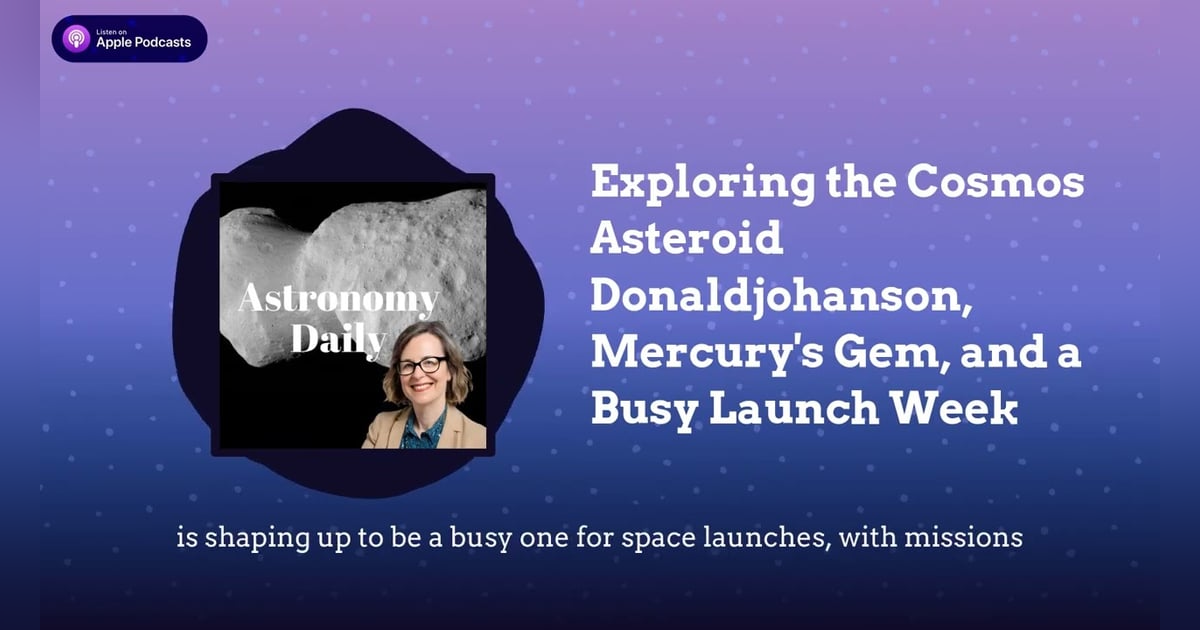


In this episode of Astronomy Daily, join host Anna as she navigates through a thrilling array of cosmic stories that stretch from our solar system's asteroids to the mysteries of ancient galaxies. Get ready to discover NASA's Lucy spacecraft's remarkable encounter with the uniquely shaped asteroid Donaldjohanson, delve into the surprising possibility of a diamond layer beneath Mercury's surface, and catch up on an exciting launch schedule that showcases the future of space exploration.
Highlights:
- NASA's Lucy Spacecraft Meets Asteroid Donaldjohanson: Experience the groundbreaking insights from Lucy's second asteroid encounter, revealing the intriguing contact binary structure of Donaldjohanson. With its unexpected shape and complex geology, this asteroid challenges our understanding of cosmic evolution.
- Mercury's Hidden Diamond Layer: Uncover the astonishing discovery that Mercury may harbor a diamond layer beneath its surface. This finding, stemming from NASA's MESSENGER mission, could explain the planet's strong magnetic field and offers a new perspective on planetary formation.
- Busy Launch Schedule: Stay informed as we highlight an action-packed week in space launches, including China's Shenzhou 20 mission to the Tiangong Space Station and multiple Falcon 9 missions from SpaceX, showcasing advancements in crewed spaceflight and satellite technology.
- Amazon's Project Kuiper Launch Date: Get the latest on Amazon's ambitious Project Kuiper, as it prepares for its inaugural satellite launch, marking a significant milestone in the race for global broadband coverage through a constellation of satellites.
- Radioluna: A Lunar Mission to Detect Ancient Signals: Explore the innovative Radioluna project, which aims to deploy a satellite fleet around the moon to capture radio signals from the universe's dark ages, using the moon's far side as a unique radio quiet zone.
For more cosmic updates, visit our website at astronomydaily.io (http://www.astronomydaily.io/) . Join our community on social media by searching for #AstroDailyPod on Facebook, X, YouTubeMusic, TikTok, and our new Instagram account! Don’t forget to subscribe to the podcast on Apple Podcasts, Spotify, iHeartRadio, or wherever you get your podcasts.
Thank you for tuning in. This is Anna signing off. Until next time, keep looking up and stay curious about the wonders of our universe.
00:00 - Welcome to Astronomy Daily
01:05 - NASA's Lucy spacecraft meets asteroid Donaldjohanson
10:30 - Mercury's hidden diamond layer
17:00 - Busy launch schedule
22:15 - Amazon's Project Kuiper launch date
27:30 - Radioluna: a lunar mission to detect ancient signals
✍️ Episode References
NASA's Lucy Mission
[NASA]( https://www.nasa.gov/ (https://www.nasa.gov/) )
Mercury's Diamond Layer Study
[NASA MESSENGER]( https://www.nasa.gov/mission_pages/messenger/main/index.html (https://www.nasa.gov/mission_pages/messenger/main/index.html) )
China's Tiangong Space Station
[China National Space Administration]( http://www.cnsa.gov.cn/ (http://www.cnsa.gov.cn/) )
Amazon's Project Kuiper
[Amazon]( https://www.amazon.com/ (https://www.amazon.com/) )
Radioluna Project
[Blue Skies Space]( https://www.blueskiesspace.com/ (https://www.blueskiesspace.com/) )
Astronomy Daily
[Astronomy Daily]( http://www.astronomydaily.io/ (http://www.astronomydaily.io/) )
Become a supporter of this podcast: https://www.spreaker.com/podcast/astronomy-daily-exciting-space-discoveries-and-news--5648921/support (https://www.spreaker.com/podcast/astronomy-daily-exciting-space-discoveries-and-news--5648921/support?utm_source=rss&utm_medium=rss&utm_campaign=rss) .
Episode link: https://play.headliner.app/episode/26731299?utm_source=youtube
00:00 - Welcome to Astronomy Daily
01:05 - NASA’s Lucy spacecraft meets asteroid Donaldjohanson
10:30 - Mercury’s hidden diamond layer
17:00 - Busy launch schedule
Kind: captions
Language: en
00:00:00.160 --> 00:00:02.070
hello and welcome to Astronomy Daily
00:00:02.080 --> 00:00:03.909
your daily dose of cosmic news and
00:00:03.919 --> 00:00:06.789
celestial happenings I'm Anna your guide
00:00:06.799 --> 00:00:09.030
through the cosmos Today we've got a
00:00:09.040 --> 00:00:10.790
stellar lineup of space stories that
00:00:10.800 --> 00:00:13.110
will take us from nearby asteroids to
00:00:13.120 --> 00:00:15.589
the mysteries of distant galaxies We'll
00:00:15.599 --> 00:00:17.830
explore NASA's Lucy spacecraft and its
00:00:17.840 --> 00:00:19.830
fascinating encounter with the uniquely
00:00:19.840 --> 00:00:22.550
shaped asteroid Donald Johansson Dive
00:00:22.560 --> 00:00:24.390
into the surprising discovery of a
00:00:24.400 --> 00:00:26.630
potential diamond layer inside Mercury
00:00:26.640 --> 00:00:28.470
And catch up on this week's busy launch
00:00:28.480 --> 00:00:30.550
schedule We'll also look at Amazon's
00:00:30.560 --> 00:00:32.150
Project Kyper as it prepares for a
00:00:32.160 --> 00:00:34.069
milestone launch and examine an
00:00:34.079 --> 00:00:35.750
ambitious plan to place satellites
00:00:35.760 --> 00:00:38.150
around the moon to detect radio signals
00:00:38.160 --> 00:00:40.869
from the universe's ancient dark ages So
00:00:40.879 --> 00:00:42.709
buckle up for a journey across our solar
00:00:42.719 --> 00:00:44.790
system and beyond as we explore the
00:00:44.800 --> 00:00:47.110
latest developments in space exploration
00:00:47.120 --> 00:00:49.430
and astronomical discovery Let's get
00:00:49.440 --> 00:00:51.110
started
00:00:51.120 --> 00:00:53.029
NASA's Lucy spacecraft has just
00:00:53.039 --> 00:00:55.590
completed its second asteroid encounter
00:00:55.600 --> 00:00:57.510
giving us an unprecedented view of
00:00:57.520 --> 00:00:59.510
asteroid Donald Johansson from
00:00:59.520 --> 00:01:03.189
approximately 600 miles away The images
00:01:03.199 --> 00:01:05.710
which started arriving on April 20th
00:01:05.720 --> 00:01:07.910
2025 have already revealed some
00:01:07.920 --> 00:01:09.910
fascinating details about this cosmic
00:01:09.920 --> 00:01:12.870
object that formed roughly 150 million
00:01:12.880 --> 00:01:15.270
years ago Scientists had previously
00:01:15.280 --> 00:01:17.510
observed large brightness variations
00:01:17.520 --> 00:01:19.590
from Donald Johansson over a 10-day
00:01:19.600 --> 00:01:21.590
period suggesting it might be an
00:01:21.600 --> 00:01:24.789
elongated body But when Lucy's first
00:01:24.799 --> 00:01:27.109
images came in they showed something
00:01:27.119 --> 00:01:29.749
even more intriguing What appears to be
00:01:29.759 --> 00:01:32.870
a contact binary essentially two smaller
00:01:32.880 --> 00:01:35.910
bodies that collided and stuck together
00:01:35.920 --> 00:01:37.350
What's particularly striking about
00:01:37.360 --> 00:01:39.429
Donald Johansson is the unusual shape of
00:01:39.439 --> 00:01:42.469
the narrow neck connecting its two loes
00:01:42.479 --> 00:01:44.069
Mission scientists describe it as
00:01:44.079 --> 00:01:46.950
looking like two nested ice cream cones
00:01:46.960 --> 00:01:48.630
This unique structure wasn't what the
00:01:48.640 --> 00:01:50.550
team expected and adds another puzzle
00:01:50.560 --> 00:01:52.069
piece to our understanding of how
00:01:52.079 --> 00:01:55.030
asteroids form and evolve Preliminary
00:01:55.040 --> 00:01:57.030
analysis from Lucy's Lori imager
00:01:57.040 --> 00:01:58.870
indicates Donald Johansson is larger
00:01:58.880 --> 00:02:01.590
than originally estimated about 5 m long
00:02:01.600 --> 00:02:04.709
and 2 m wide at its widest point The
00:02:04.719 --> 00:02:06.630
full asteroid wasn't initially visible
00:02:06.640 --> 00:02:08.869
in the highresolution images because
00:02:08.879 --> 00:02:10.790
it's actually larger than the imager
00:02:10.800 --> 00:02:12.309
field of view
00:02:12.319 --> 00:02:13.990
The team expects to download the
00:02:14.000 --> 00:02:15.990
complete data set over the coming week
00:02:16.000 --> 00:02:17.190
which should provide a more
00:02:17.200 --> 00:02:18.910
comprehensive picture of the asteroid
00:02:18.920 --> 00:02:22.030
shape Hal Levisan Lucy's principal
00:02:22.040 --> 00:02:24.949
investigator notes that asteroid Donald
00:02:24.959 --> 00:02:27.070
Johansson has strikingly complicated
00:02:27.080 --> 00:02:29.430
geology As we study the complex
00:02:29.440 --> 00:02:31.670
structures in detail they will reveal
00:02:31.680 --> 00:02:33.589
important information about the building
00:02:33.599 --> 00:02:35.990
blocks and collisional processes that
00:02:36.000 --> 00:02:39.270
form the planets in our solar system
00:02:39.280 --> 00:02:41.270
While Donald Johansson isn't a primary
00:02:41.280 --> 00:02:44.070
target for the Lucy mission this flyby
00:02:44.080 --> 00:02:45.910
served as a full dress rehearsal for
00:02:45.920 --> 00:02:48.150
future encounters The spacecraft
00:02:48.160 --> 00:02:50.390
conducted a series of dense observations
00:02:50.400 --> 00:02:53.270
to maximize data collection In addition
00:02:53.280 --> 00:02:55.509
to images Lucy's other scientific
00:02:55.519 --> 00:02:57.990
instruments the LRAL color imager and
00:02:58.000 --> 00:03:00.229
infrared spectrometer along with the
00:03:00.239 --> 00:03:02.949
Latas thermal infrared spectrometer
00:03:02.959 --> 00:03:04.790
collected data that will be analyzed in
00:03:04.800 --> 00:03:06.470
the coming weeks
00:03:06.480 --> 00:03:08.550
Lucy will spend most of the remainder of
00:03:08.560 --> 00:03:10.949
2025 traveling through the main asteroid
00:03:10.959 --> 00:03:13.350
belt before reaching its first main
00:03:13.360 --> 00:03:15.589
target the Jupiter Trojan asteroid
00:03:15.599 --> 00:03:19.750
Uripes in August 2027 The spacecraft's
00:03:19.760 --> 00:03:21.990
ultimate mission is to study these
00:03:22.000 --> 00:03:24.229
Trojan asteroids which orbit the sun in
00:03:24.239 --> 00:03:26.229
the same path as Jupiter and are
00:03:26.239 --> 00:03:28.070
considered time capsules from the early
00:03:28.080 --> 00:03:30.710
solar system As Tom Statatler program
00:03:30.720 --> 00:03:32.789
scientist for Lucy at NASA headquarters
00:03:32.799 --> 00:03:35.350
put it "These early images of Donald
00:03:35.360 --> 00:03:37.030
Johansson are again showing the
00:03:37.040 --> 00:03:38.869
tremendous capabilities of the Lucy
00:03:38.879 --> 00:03:41.430
spacecraft as an engine of discovery The
00:03:41.440 --> 00:03:43.270
potential to really open a new window
00:03:43.280 --> 00:03:44.949
into the history of our solar system
00:03:44.959 --> 00:03:46.869
when Lucy gets to the Trojan asteroids
00:03:46.879 --> 00:03:48.110
is
00:03:48.120 --> 00:03:50.470
immense." Let's get a little update on
00:03:50.480 --> 00:03:52.470
Mercury and a finding that might make
00:03:52.480 --> 00:03:54.309
the planet a lot more attractive to some
00:03:54.319 --> 00:03:56.949
people Mercury may be the closest planet
00:03:56.959 --> 00:03:59.110
to the sun and often overlooked in our
00:03:59.120 --> 00:04:01.589
cosmic neighborhood but scientists have
00:04:01.599 --> 00:04:03.110
recently discovered something truly
00:04:03.120 --> 00:04:05.830
dazzling about this scorched world New
00:04:05.840 --> 00:04:07.589
research suggests that Mercury may be
00:04:07.599 --> 00:04:09.670
hiding a diamond layer approximately 10
00:04:09.680 --> 00:04:12.149
miles thick beneath its surface This
00:04:12.159 --> 00:04:13.830
extraordinary finding comes from
00:04:13.840 --> 00:04:15.830
analyzing data collected by NASA's
00:04:15.840 --> 00:04:18.069
Messenger spacecraft which mapped
00:04:18.079 --> 00:04:20.629
Mercury in detail during its mission The
00:04:20.639 --> 00:04:22.629
spacecraft detected graphite patches
00:04:22.639 --> 00:04:24.790
scattered across Mercury's crust
00:04:24.800 --> 00:04:26.790
indicating the planet once had a magma
00:04:26.800 --> 00:04:29.350
ocean incredibly rich in carbon content
00:04:29.360 --> 00:04:31.350
higher than any other rocky world in our
00:04:31.360 --> 00:04:34.390
solar system When this ancient magma
00:04:34.400 --> 00:04:36.950
ocean cooled lighter carbon floated
00:04:36.960 --> 00:04:39.110
upward creating the dark graphite
00:04:39.120 --> 00:04:42.230
patches visible on the surface Meanwhile
00:04:42.240 --> 00:04:45.310
denser materials including carbon sank
00:04:45.320 --> 00:04:47.830
inward According to researchers from
00:04:47.840 --> 00:04:51.350
China and Belgium led by Dr Yangha Lynn
00:04:51.360 --> 00:04:53.350
this heavier carbon descended alongside
00:04:53.360 --> 00:04:55.909
sinking metal and recristallized into
00:04:55.919 --> 00:04:59.030
diamond under immense pressure To test
00:04:59.040 --> 00:05:00.870
this theory scientists recreated
00:05:00.880 --> 00:05:02.790
mercury's interior conditions in a
00:05:02.800 --> 00:05:05.430
laboratory They used a specialized press
00:05:05.440 --> 00:05:08.110
to squeeze synthetic mantel rock to 7
00:05:08.120 --> 00:05:10.390
gigapascals roughly seven times the
00:05:10.400 --> 00:05:11.830
pressure found at the bottom of the
00:05:11.840 --> 00:05:13.990
Mariana Trench while heating it to
00:05:14.000 --> 00:05:15.150
nearly
00:05:15.160 --> 00:05:18.469
3,600° F Their experiments confirmed
00:05:18.479 --> 00:05:20.950
that at Mercury's core mantle boundary
00:05:20.960 --> 00:05:22.870
with its unique pressure and temperature
00:05:22.880 --> 00:05:25.110
conditions carbon transforms from
00:05:25.120 --> 00:05:27.510
graphite into diamond These diamonds
00:05:27.520 --> 00:05:29.510
would theoretically form a sparkling
00:05:29.520 --> 00:05:31.909
shell up to 11 m thick around the
00:05:31.919 --> 00:05:34.629
planet's metallic core This diamond
00:05:34.639 --> 00:05:36.469
layer may also explain another Mercury
00:05:36.479 --> 00:05:38.830
mystery its surprisingly strong magnetic
00:05:38.840 --> 00:05:41.590
field For a planet only slightly wider
00:05:41.600 --> 00:05:43.909
than the continental United States
00:05:43.919 --> 00:05:45.990
Mercury maintains a robust magnetic
00:05:46.000 --> 00:05:48.390
field that requires heat to flow out of
00:05:48.400 --> 00:05:51.590
the core Diamond being an excellent
00:05:51.600 --> 00:05:53.749
thermal conductor would efficiently
00:05:53.759 --> 00:05:55.990
funnel this energy upward helping to
00:05:56.000 --> 00:05:57.590
maintain the magnetic dynamo that
00:05:57.600 --> 00:06:00.629
generates the field Unlike Earth Mars
00:06:00.639 --> 00:06:02.629
and Venus which lost most of their
00:06:02.639 --> 00:06:04.230
carbon to space or locked it in
00:06:04.240 --> 00:06:06.230
carbonates Mercury appears to have
00:06:06.240 --> 00:06:08.309
hoarded its carbon first as floating
00:06:08.319 --> 00:06:10.390
graphite and then as diamond sinking to
00:06:10.400 --> 00:06:13.029
great depths While we can't directly
00:06:13.039 --> 00:06:15.670
observe Mercury's interior the European
00:06:15.680 --> 00:06:17.909
Japanese Bey Columbo mission currently
00:06:17.919 --> 00:06:19.990
on route to the planet may provide
00:06:20.000 --> 00:06:23.110
confirmation when it arrives in 2030 Its
00:06:23.120 --> 00:06:25.189
instruments will refine gravity maps and
00:06:25.199 --> 00:06:27.189
look for twists in Mercury's magnetic
00:06:27.199 --> 00:06:29.430
field that could reveal the presence of
00:06:29.440 --> 00:06:31.990
this superconductive diamond layer This
00:06:32.000 --> 00:06:33.909
discovery isn't about finding gemstones
00:06:33.919 --> 00:06:36.469
for jewelry It's about understanding
00:06:36.479 --> 00:06:39.350
planetary evolution Carbon's behavior
00:06:39.360 --> 00:06:41.590
shapes a planet's heat flow crust
00:06:41.600 --> 00:06:44.870
composition and even its magnetic field
00:06:44.880 --> 00:06:46.469
By tracing carbon's journey through
00:06:46.479 --> 00:06:48.950
Mercury scientists can refine models
00:06:48.960 --> 00:06:50.550
that apply to worlds throughout our
00:06:50.560 --> 00:06:52.550
universe including those orbiting
00:06:52.560 --> 00:06:55.510
distant stars What initially appears as
00:06:55.520 --> 00:06:57.029
just a scorched ball of rock is
00:06:57.039 --> 00:06:58.710
revealing exotic physics and hidden
00:06:58.720 --> 00:07:00.070
secrets that are absolutely worth
00:07:00.080 --> 00:07:01.150
exploring
00:07:01.160 --> 00:07:03.189
further Time to take a look at this
00:07:03.199 --> 00:07:05.270
week's launch calendar This week is
00:07:05.280 --> 00:07:06.870
shaping up to be a busy one for space
00:07:06.880 --> 00:07:08.469
launches with missions taking off from
00:07:08.479 --> 00:07:10.469
around the globe Let's start with
00:07:10.479 --> 00:07:12.469
China's upcoming crude mission to their
00:07:12.479 --> 00:07:15.589
Tiangong space station On Thursday April
00:07:15.599 --> 00:07:18.550
24th the Chong Jang 2F rocket will lift
00:07:18.560 --> 00:07:20.309
off from the Jukuan satellite launch
00:07:20.319 --> 00:07:22.390
center carrying three tyonauts on the
00:07:22.400 --> 00:07:25.029
Shenho 20 mission This marks China's
00:07:25.039 --> 00:07:27.029
15th crude space flight and the ninth
00:07:27.039 --> 00:07:28.550
crew transportation mission to their
00:07:28.560 --> 00:07:30.950
space station While the three crew
00:07:30.960 --> 00:07:33.670
members were selected back in February
00:07:33.680 --> 00:07:35.270
China typically doesn't officially
00:07:35.280 --> 00:07:36.950
announce their names until about a day
00:07:36.960 --> 00:07:40.150
before launch The Shenha 20 crew will
00:07:40.160 --> 00:07:41.830
replace the current occupants of the
00:07:41.840 --> 00:07:45.350
station Song Ling Dong Kaiuji and Wong
00:07:45.360 --> 00:07:47.189
Haozi who have spent the past 6 months
00:07:47.199 --> 00:07:50.230
in orbit Once a formal handover ceremony
00:07:50.240 --> 00:07:52.870
is completed the Shenho 19 crew will
00:07:52.880 --> 00:07:55.749
return to Earth SpaceX is having a
00:07:55.759 --> 00:07:57.430
particularly active week with three
00:07:57.440 --> 00:08:00.390
Falcon 9 launches on their manifest The
00:08:00.400 --> 00:08:02.469
first is their third bandwagon ride
00:08:02.479 --> 00:08:04.150
share mission scheduled for Monday
00:08:04.160 --> 00:08:06.950
evening from Cape Canaveral Bandwagon
00:08:06.960 --> 00:08:08.629
missions carry multiple smaller
00:08:08.639 --> 00:08:10.790
satellites to mid-incclination low Earth
00:08:10.800 --> 00:08:13.029
orbits complementing SpaceX's
00:08:13.039 --> 00:08:15.029
transporter missions which primarily
00:08:15.039 --> 00:08:18.070
target sun-synchronous orbits Notable
00:08:18.080 --> 00:08:20.150
payloads on this flight include Vast's
00:08:20.160 --> 00:08:22.070
Haven Demo Technology Demonstrator
00:08:22.080 --> 00:08:25.189
weighing approximately 500 kg Atmas
00:08:25.199 --> 00:08:27.589
Space Cargo's Fenix 1 prototype re-entry
00:08:27.599 --> 00:08:29.670
capsule which will test an innovative
00:08:29.680 --> 00:08:32.230
inflatable heat shield and several Earth
00:08:32.240 --> 00:08:35.430
observation satellites from Hawkeye 360
00:08:35.440 --> 00:08:37.350
The Falcon 9 booster supporting this
00:08:37.360 --> 00:08:38.990
mission
00:08:39.000 --> 00:08:41.589
B90 will be making its third flight and
00:08:41.599 --> 00:08:43.350
is scheduled to return for a landing at
00:08:43.360 --> 00:08:46.550
Cape Canaveral's landing zone 2 SpaceX
00:08:46.560 --> 00:08:48.550
has two more Starlink launches planned
00:08:48.560 --> 00:08:50.710
later in the week One from Florida on
00:08:50.720 --> 00:08:52.630
Thursday evening carrying satellites for
00:08:52.640 --> 00:08:55.910
Starlink Group 6 74 and another from
00:08:55.920 --> 00:08:57.990
Vandenberg in California on Friday
00:08:58.000 --> 00:09:02.470
afternoon for Starlink Group 11 9 These
00:09:02.480 --> 00:09:04.710
launches continue the rapid expansion of
00:09:04.720 --> 00:09:07.430
SpaceX's internet mega constellation
00:09:07.440 --> 00:09:10.150
which now connects over 5 million users
00:09:10.160 --> 00:09:14.470
across 125 countries Meanwhile Firefly
00:09:14.480 --> 00:09:16.230
Aerospace is preparing to launch its
00:09:16.240 --> 00:09:18.389
Alpha rocket from Vandenberg Space Force
00:09:18.399 --> 00:09:21.190
Base on Sunday This mission playfully
00:09:21.200 --> 00:09:23.430
dubbed Message in a Booster will carry
00:09:23.440 --> 00:09:26.070
Loheed Martin's LM400 technology
00:09:26.080 --> 00:09:28.550
demonstration satellite This marks the
00:09:28.560 --> 00:09:30.870
sixth launch of Fireflyy's Alpha rocket
00:09:30.880 --> 00:09:32.790
and the second flight in a multilaunch
00:09:32.800 --> 00:09:35.110
agreement with Loheed Martin that could
00:09:35.120 --> 00:09:37.590
span up to 25 launches over the next 5
00:09:37.600 --> 00:09:41.110
years The LM400 is Lockheed's new
00:09:41.120 --> 00:09:43.550
midsize satellite bus designed for
00:09:43.560 --> 00:09:45.750
versatility It can accommodate various
00:09:45.760 --> 00:09:48.190
missions including remote sensing
00:09:48.200 --> 00:09:50.829
communications imaging and radar
00:09:50.839 --> 00:09:53.269
operations This Pathfinder mission will
00:09:53.279 --> 00:09:54.949
help prove the technology in orbit
00:09:54.959 --> 00:09:57.750
before it's used for customer missions
00:09:57.760 --> 00:09:59.509
All these launches underscore the
00:09:59.519 --> 00:10:01.350
growing cadence and diversity of space
00:10:01.360 --> 00:10:03.350
missions from crude flights and
00:10:03.360 --> 00:10:05.110
satellite deployments to technology
00:10:05.120 --> 00:10:06.790
demonstrations that push the boundaries
00:10:06.800 --> 00:10:09.070
of what's possible beyond
00:10:09.080 --> 00:10:11.750
Earth Speaking of launches after
00:10:11.760 --> 00:10:13.990
multiple delays we finally have a new
00:10:14.000 --> 00:10:16.550
launch date for Amazon's project Kyper
00:10:16.560 --> 00:10:18.949
Internet satellite constellation United
00:10:18.959 --> 00:10:21.110
Launch Alliance announced that the first
00:10:21.120 --> 00:10:24.310
batch of 27 operational Kyper satellites
00:10:24.320 --> 00:10:26.949
will lift off aboard an Atlas V rocket
00:10:26.959 --> 00:10:30.150
on April 28th at 700 p.m Eastern time
00:10:30.160 --> 00:10:32.069
from Cape Canaveral Space Force Station
00:10:32.079 --> 00:10:35.350
in Florida ULA has set aside a 2-hour
00:10:35.360 --> 00:10:37.670
launch window for this mission
00:10:37.680 --> 00:10:40.949
This launch designated Kyper 1 marks a
00:10:40.959 --> 00:10:43.110
significant milestone as the first of a
00:10:43.120 --> 00:10:45.350
planned 83 launches needed to deploy
00:10:45.360 --> 00:10:47.550
Amazon's ambitious broadband
00:10:47.560 --> 00:10:49.829
constellation The company aims to place
00:10:49.839 --> 00:10:52.470
more than 3,200 satellites in low Earth
00:10:52.480 --> 00:10:54.389
orbit to provide global high-speed
00:10:54.399 --> 00:10:56.710
internet coverage These satellites
00:10:56.720 --> 00:10:59.269
aren't Amazon's first space hardware The
00:10:59.279 --> 00:11:00.949
company successfully launched two
00:11:00.959 --> 00:11:03.350
prototype Kyper satellites last year to
00:11:03.360 --> 00:11:05.269
validate the technology and pave the way
00:11:05.279 --> 00:11:08.150
for this operational fleet The upcoming
00:11:08.160 --> 00:11:10.470
mission will utilize ULA's Atlas V
00:11:10.480 --> 00:11:12.670
rocket in its most powerful 551
00:11:12.680 --> 00:11:14.949
configuration featuring five solid
00:11:14.959 --> 00:11:17.269
rocket boosters This launch also
00:11:17.279 --> 00:11:19.430
represents a historic moment for ULA as
00:11:19.440 --> 00:11:21.990
it marks the 250th flight of a Centaur
00:11:22.000 --> 00:11:24.710
upper stage a top an Atlas rocket The
00:11:24.720 --> 00:11:26.150
launch was originally scheduled for
00:11:26.160 --> 00:11:28.470
early April but was postponed due to
00:11:28.480 --> 00:11:30.790
unfavorable weather conditions When
00:11:30.800 --> 00:11:33.829
asked about subsequent delays ULA CEO
00:11:33.839 --> 00:11:35.829
Tory Bruno simply cited range
00:11:35.839 --> 00:11:38.470
availability as the limiting factor
00:11:38.480 --> 00:11:40.150
suggesting congestion in the Eastern
00:11:40.160 --> 00:11:42.470
Range launch schedule managed by the US
00:11:42.480 --> 00:11:45.350
Space Force While Amazon has contracted
00:11:45.360 --> 00:11:47.509
ULA for seven more Kyper missions on
00:11:47.519 --> 00:11:49.590
Atlas V rockets the company is
00:11:49.600 --> 00:11:51.350
diversifying its launch providers for
00:11:51.360 --> 00:11:53.509
the remainder of its constellation
00:11:53.519 --> 00:11:55.269
Future Kyper satellites will ride on
00:11:55.279 --> 00:11:58.389
ULA's newer Vulcan Centaur rocket Aryan
00:11:58.399 --> 00:12:01.829
Space's Arani 6 Blue Origin's New Glenn
00:12:01.839 --> 00:12:04.790
and even SpaceX's Falcon 9 Despite
00:12:04.800 --> 00:12:06.550
SpaceX being a direct competitor with
00:12:06.560 --> 00:12:08.670
its own Starlink internet
00:12:08.680 --> 00:12:11.110
constellation Amazon's Kyper satellites
00:12:11.120 --> 00:12:12.470
will operate at slightly higher
00:12:12.480 --> 00:12:14.790
altitudes than Starlink With the fleet
00:12:14.800 --> 00:12:17.430
distributed across 98 orbital planes in
00:12:17.440 --> 00:12:21.990
three layers at altitudes of 590 610 and
00:12:22.000 --> 00:12:25.350
630 km this launch begins a new chapter
00:12:25.360 --> 00:12:27.670
not just for Amazon but for the growing
00:12:27.680 --> 00:12:29.750
commercial space industry as competition
00:12:29.760 --> 00:12:31.350
in the satellite internet market
00:12:31.360 --> 00:12:33.750
continues to heat up
00:12:33.760 --> 00:12:35.310
Finally for
00:12:35.320 --> 00:12:37.829
today in an exciting development for
00:12:37.839 --> 00:12:40.310
lunar exploration and cosmology the
00:12:40.320 --> 00:12:42.230
Italian space agency has selected
00:12:42.240 --> 00:12:44.710
European company Blue Skies Space to
00:12:44.720 --> 00:12:46.710
build a revolutionary satellite fleet
00:12:46.720 --> 00:12:49.509
that will orbit the moon The project
00:12:49.519 --> 00:12:51.670
named Radol Luna will be developed in
00:12:51.680 --> 00:12:54.230
partnership with OB Italia and aims to
00:12:54.240 --> 00:12:56.150
use the unique radio environment of the
00:12:56.160 --> 00:12:58.550
lunar far side to detect signals from
00:12:58.560 --> 00:13:00.150
the early universe that are impossible
00:13:00.160 --> 00:13:02.550
to capture from Earth The mission
00:13:02.560 --> 00:13:04.310
targets what astronomers call the dark
00:13:04.320 --> 00:13:06.710
ages of the universe the period before
00:13:06.720 --> 00:13:09.030
the first stars formed when the cosmos
00:13:09.040 --> 00:13:11.750
was filled with neutral hydrogen gas
00:13:11.760 --> 00:13:13.430
These ancient radio signals hold
00:13:13.440 --> 00:13:14.870
valuable information about the
00:13:14.880 --> 00:13:16.949
universe's earliest structure But
00:13:16.959 --> 00:13:19.110
they're exceptionally faint and
00:13:19.120 --> 00:13:21.269
difficult to detect amid Earth's
00:13:21.279 --> 00:13:23.310
cacophony of humanmade radio
00:13:23.320 --> 00:13:25.590
interference The far side of the moon
00:13:25.600 --> 00:13:28.230
offers a perfect radio quiet zone
00:13:28.240 --> 00:13:30.150
shielded from Earth's electromagnetic
00:13:30.160 --> 00:13:32.949
noise If successful Radol Luna's small
00:13:32.959 --> 00:13:34.710
satellite constellation could provide
00:13:34.720 --> 00:13:36.470
unprecedented insights into the
00:13:36.480 --> 00:13:38.949
universe's formative period essentially
00:13:38.959 --> 00:13:41.910
creating a map of cosmic dawn "We are
00:13:41.920 --> 00:13:43.990
grateful to the Italian Space Agency for
00:13:44.000 --> 00:13:45.829
funding this activity with our project
00:13:45.839 --> 00:13:49.430
partner OB Italia to explore novel ways
00:13:49.440 --> 00:13:51.990
of delivering exciting science," said
00:13:52.000 --> 00:13:55.269
Marcel Tesseni Blue Sky co-founder and
00:13:55.279 --> 00:13:58.470
CEO He noted that the project aligns
00:13:58.480 --> 00:14:00.389
with broader international efforts to
00:14:00.399 --> 00:14:02.069
develop lunar infrastructure through
00:14:02.079 --> 00:14:04.670
programs like ISA moonlight and NASA
00:14:04.680 --> 00:14:06.870
Artemis What makes radio luna
00:14:06.880 --> 00:14:08.629
particularly innovative is its approach
00:14:08.639 --> 00:14:11.110
to spacecraft design Rather than
00:14:11.120 --> 00:14:13.670
building expensive custom satellites the
00:14:13.680 --> 00:14:15.829
network will utilize small cubats
00:14:15.839 --> 00:14:17.949
equipped with commercial off-the-shelf
00:14:17.959 --> 00:14:20.389
components This strategy emphasizes
00:14:20.399 --> 00:14:22.389
simplicity and cost effectiveness
00:14:22.399 --> 00:14:23.990
potentially creating a template for
00:14:24.000 --> 00:14:26.310
future scientific missions
00:14:26.320 --> 00:14:29.350
Roberto Aseti managing director at OB
00:14:29.360 --> 00:14:32.310
Italia described the project as a
00:14:32.320 --> 00:14:34.069
challenge where scientific ambition
00:14:34.079 --> 00:14:36.150
meets engineering pragmatism
00:14:36.160 --> 00:14:38.069
highlighting their pride in contributing
00:14:38.079 --> 00:14:40.550
to an observatory that could open new
00:14:40.560 --> 00:14:42.389
frontiers in our understanding of the
00:14:42.399 --> 00:14:45.189
early universe While details on funding
00:14:45.199 --> 00:14:46.910
and launch timelines haven't been
00:14:46.920 --> 00:14:49.350
disclosed Radio Luna represents an
00:14:49.360 --> 00:14:51.269
intriguing example of how the burgeoning
00:14:51.279 --> 00:14:53.509
lunar economy might support fundamental
00:14:53.519 --> 00:14:56.230
scientific research By leveraging the
00:14:56.240 --> 00:14:57.870
unique properties of the lunar
00:14:57.880 --> 00:15:00.389
environment these small satellites could
00:15:00.399 --> 00:15:01.990
help unlock some of the biggest
00:15:02.000 --> 00:15:04.590
mysteries about our cosmic
00:15:04.600 --> 00:15:06.870
origins And that brings us to a close
00:15:06.880 --> 00:15:09.030
for this episode What an incredible
00:15:09.040 --> 00:15:10.949
journey through space we've had today
00:15:10.959 --> 00:15:12.710
From Lucy's close encounter with the
00:15:12.720 --> 00:15:15.590
oddly shaped asteroid Donald Johansson
00:15:15.600 --> 00:15:17.990
to the stunning possibility of a diamond
00:15:18.000 --> 00:15:20.550
layer deep within Mercury we've explored
00:15:20.560 --> 00:15:22.389
the packed launch schedule ahead with
00:15:22.399 --> 00:15:24.230
China sending tyonauts to their space
00:15:24.240 --> 00:15:27.350
station SpaceX's multiple missions and
00:15:27.360 --> 00:15:29.350
Firefly preparing for their technology
00:15:29.360 --> 00:15:31.910
demonstration flight We also learned
00:15:31.920 --> 00:15:34.310
about Amazon's Project Kyper finally
00:15:34.320 --> 00:15:36.150
getting its launch date after several
00:15:36.160 --> 00:15:39.269
delays with those first 27 internet
00:15:39.279 --> 00:15:41.430
satellites ready to begin building their
00:15:41.440 --> 00:15:44.150
orbital constellation And of course the
00:15:44.160 --> 00:15:46.550
fascinating Radio Luna project that aims
00:15:46.560 --> 00:15:48.870
to use the moon's far side as a quiet
00:15:48.880 --> 00:15:51.110
zone to listen for whispers from the
00:15:51.120 --> 00:15:53.430
universe's dark ages
00:15:53.440 --> 00:15:55.670
Space exploration continues to surprise
00:15:55.680 --> 00:15:58.150
and inspire us revealing new secrets
00:15:58.160 --> 00:15:59.990
about our solar system and beyond with
00:16:00.000 --> 00:16:02.710
each mission These discoveries not only
00:16:02.720 --> 00:16:05.030
expand our scientific knowledge but
00:16:05.040 --> 00:16:07.350
remind us of the incredible ingenuity of
00:16:07.360 --> 00:16:09.430
human exploration This has been
00:16:09.440 --> 00:16:11.829
Astronomy Daily with me Anna I want to
00:16:11.839 --> 00:16:13.670
thank you for joining me on this cosmic
00:16:13.680 --> 00:16:15.670
journey today If you're hungry for more
00:16:15.680 --> 00:16:17.910
space news visit our website at
00:16:17.920 --> 00:16:20.629
astronomydaily.io io where you can sign
00:16:20.639 --> 00:16:22.710
up for our free daily newsletter and
00:16:22.720 --> 00:16:24.389
catch up on all the latest space and
00:16:24.399 --> 00:16:26.470
astronomy news with our constantly
00:16:26.480 --> 00:16:28.949
updating news feed You'll also find all
00:16:28.959 --> 00:16:30.710
our back episodes there ready for your
00:16:30.720 --> 00:16:32.550
listening pleasure Don't forget to
00:16:32.560 --> 00:16:34.710
follow us on social media too Just
00:16:34.720 --> 00:16:37.870
search for Astro Daily Pod on Facebook X
00:16:37.880 --> 00:16:40.710
YouTube Music Instagram Tumblr and Tik
00:16:40.720 --> 00:16:43.430
Tok Until next time keep looking up at
00:16:43.440 --> 00:16:45.670
the stars and I'll see you for our next
00:16:45.680 --> 00:16:49.790
exploration of the cosmos Sunny
00:16:49.800 --> 00:16:57.790
day stories
00:16:57.800 --> 00:17:01.020
told stories
00:17:01.030 --> 00:17:05.710
[Music]
00:17:05.720 --> 00:17:09.439
told stories


