Artemis II Rollout Weekend: NASA Preps Moon Mission + ESA Hacked & Jupiter’s Oxygen Surprise
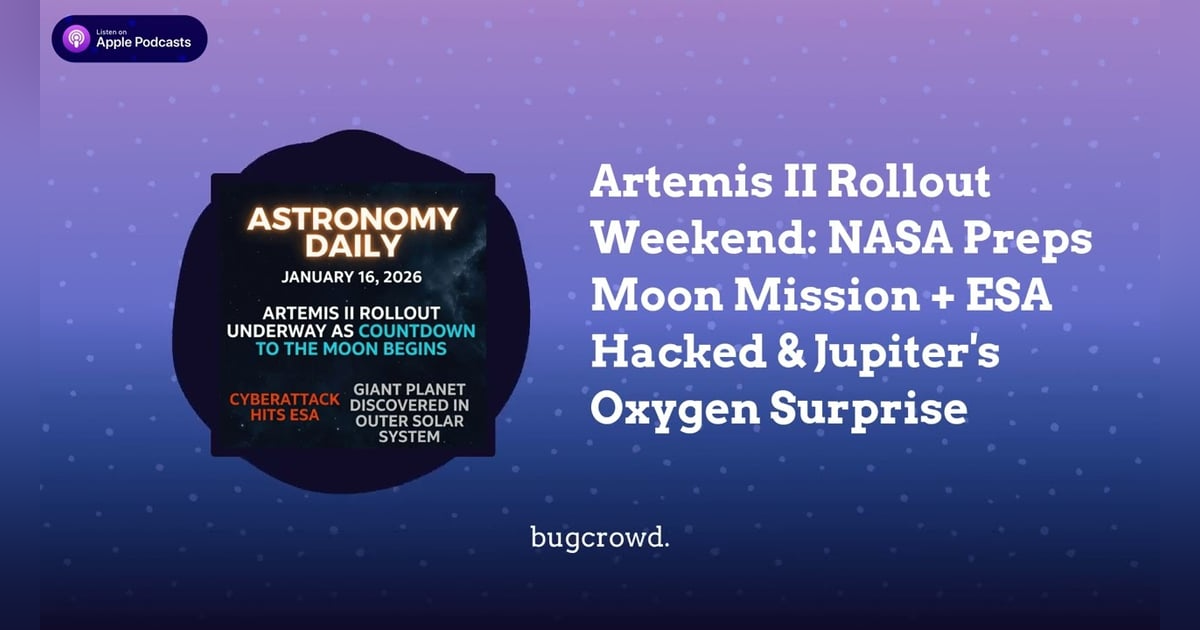


Artemis II is entering its final preparations! This weekend, NASA rolls out the Space Launch System and Orion spacecraft to the launch pad for the first crewed mission to lunar orbit in over 50 years. We cover the crew, timeline, challenges, and what to expect in the coming weeks.
Plus: The European Space Agency suffers a major cyberattack with over 700 GB of sensitive data stolen. We discuss what was compromised, how it happened, and the broader cybersecurity implications for the space industry.
Also in this episode: China's successful dual satellite launches kick off an ambitious 2026, scientists discover Jupiter has 1.5 times more oxygen than our Sun, a mysterious iron bar is found hidden in the Ring Nebula, and we explore the fascinating legacy of the Apollo 14 Moon Trees.
New episodes every weekday!
---
## EPISODE TIMESTAMPS
**[00:00]** Intro
**[01:15]** Story 1: Artemis II Final Preparations
**[04:45]** Story 2: European Space Agency Cyberattack
**[08:30]** Story 3: China's Satellite Launches
**[11:45]** Story 4: Jupiter's Oxygen Surprise
**[14:30]** Story 5: Ring Nebula Iron Mystery
**[17:00]** Story 6: Apollo 14 Moon Trees Legacy
**[19:30]** Outro
---
## STORIES COVERED
### 1. NASA Enters Final Preparations for Artemis II Mission
NASA is entering the final stages of preparation for Artemis II, the first crewed mission beyond Low Earth Orbit in over fifty years. The Space Launch System rocket and Orion spacecraft will roll out to Launch Pad 39B this Saturday, January 17th.
**Key Points:**
- **Launch Window:** February 6 - April 2026 (subject to readiness)
- **Crew:** Reid Wiseman (Commander, USA), Victor Glover (Pilot, USA), Christina Koch (Mission Specialist, USA), Jeremy Hansen (Mission Specialist, Canada)
- **Mission Duration:** 10 days circumlunar flight
- **Rollout:** 6.5 km journey takes ~12 hours on crawler-transporter-2
- **Recent Updates:** Valve replacement on Orion hatch pressurization system (Jan 5), leak repair on ground support hardware
- **Upcoming:** Wet dress rehearsal end of January with 2.65 million liters of cryogenic fuel
- **Next Steps:** Flight readiness review, final crew walkdown at pad
- **Historical Context:** First crewed deep space mission since Apollo 17 (1972)
- **Looking Ahead:** Artemis III lunar landing scheduled for 2028
**Why It Matters:**
This mission is a crucial stepping stone for returning humans to the lunar surface and eventually sending astronauts to Mars. It will validate all systems needed for deep space exploration and demonstrate international cooperation through the Canadian Space Agency's participation.
**Read More:**
- [Universe Today: NASA Enters Final Preparations for Artemis II Mission](https://www.universetoday.com/articles/nasa-enters-final-preparations-for-artemis-ii-mission)
- [NASA Artemis II Mission Page](https://www.nasa.gov/mission/artemis-ii/)
---
### 2. Cyberthieves Hit European Space Agency in Major Data Breach
The European Space Agency suffered significant cyberattacks over the Christmas period, resulting in over 700 gigabytes of potentially sensitive data being leaked to dark web forums.
**Key Points:**
- **Initial Attack:** Boxing Day 2025 - Hacker "888" dumps 200+ GB of data
- **Second Attack:** One week later - "Scattered Lapsus$ Hunters" claims 500+ GB more
- **Data Compromised:** Proprietary software, authorization credentials, access tokens, project documentation, operational procedures, spacecraft details, contractor data
- **Affected Contractors:** SpaceX, Airbus Group, Thales Alenia Space
- **ESA Response:** Criminal investigation launched, cooperating with authorities
- **Root Cause:** Possible "infostealer malware" harvesting browser-stored credentials
- **Broader Issue:** Email credentials of ESA and NASA employees frequently found on dark web
- **Security Gap:** Solar conjunction prevented communications blackout
- **Expert Warning:** Data could be combined with future breaches to enable attacks on space systems
**Industry Context:**
Cybersecurity researcher Clémence Poirier warns that cyberattacks against space agencies are common and will continue. NASA faces similar threats with vulnerabilities disclosed almost daily via BugCrowd platform.
**Why It Matters:**
As space infrastructure becomes increasingly critical for communications, navigation, and national security, cybersecurity vulnerabilities represent a major threat to space operations and international cooperation.
**Read More:**
- [Space.com: Cyberthieves hit European Space Agency](https://www.space.com/space-exploration/esa-email-credentials-on-dark-web)
---
### 3. China's Long March Rockets Launch Key Satellites to Start 2026
China successfully launched two Long March rockets on January 13, 2026, deploying the Yaogan-50 01 remote sensing satellite and multiple Guowang constellation satellites, marking an ambitious start to their space program's busiest year yet.
**Key Points:**
- **Launch Date:**...
00:00 - Intro
01:15 - Story 1: Artemis II Final Preparations
04:45 - Story 2: European Space Agency Cyberattack
08:30 - Story 3: China’s Satellite Launches
11:45 - Story 4: Jupiter’s Oxygen Surprise
14:30 - Story 5: Ring Nebula Iron Mystery
17:00 - Story 6: Apollo 14 Moon Trees Legacy
19:30 - Outro
Kind: captions
Language: en
00:00:00.240 --> 00:00:03.190
Hello space fans. Welcome to Astronomy
00:00:03.200 --> 00:00:05.670
Daily, your source for the latest news
00:00:05.680 --> 00:00:08.549
from across the cosmos. I'm Anna.
00:00:08.559 --> 00:00:10.709
>> And I'm Avery. Great to have you with us
00:00:10.719 --> 00:00:12.870
today. We've got a really exciting
00:00:12.880 --> 00:00:14.629
lineup of stories covering everything
00:00:14.639 --> 00:00:16.790
from upcoming missions to mysterious
00:00:16.800 --> 00:00:17.990
discoveries.
00:00:18.000 --> 00:00:19.910
>> That's right. We're starting with some
00:00:19.920 --> 00:00:22.630
big news from NASA. Artemis 2 is
00:00:22.640 --> 00:00:24.870
entering its final preparations for the
00:00:24.880 --> 00:00:27.109
first crude mission beyond low Earth
00:00:27.119 --> 00:00:30.230
orbit in over 50 years. The roll out to
00:00:30.240 --> 00:00:32.950
the launchpad happens this weekend.
00:00:32.960 --> 00:00:35.110
>> Very exciting. We'll also be talking
00:00:35.120 --> 00:00:37.110
about a serious cyber security breach at
00:00:37.120 --> 00:00:39.510
the European Space Agency, China's
00:00:39.520 --> 00:00:41.670
ambitious satellite launches to kick off
00:00:41.680 --> 00:00:44.630
2026, and the surprising discovery about
00:00:44.640 --> 00:00:46.150
Jupiter's atmosphere.
00:00:46.160 --> 00:00:48.389
>> Plus, we have an intriguing cosmic
00:00:48.399 --> 00:00:50.630
mystery. Astronomers have found a
00:00:50.640 --> 00:00:53.270
massive bar of iron hidden inside the
00:00:53.280 --> 00:00:55.670
famous ring nebula. and we'll wrap up
00:00:55.680 --> 00:00:57.510
with a fascinating look back at the
00:00:57.520 --> 00:01:00.470
Apollo 14 moon trees and what happened
00:01:00.480 --> 00:01:01.430
to them.
00:01:01.440 --> 00:01:03.990
>> Lots to cover, so let's get started.
00:01:04.000 --> 00:01:06.149
>> All right, Avery, let's dive into our
00:01:06.159 --> 00:01:09.030
top story. NASA is entering the final
00:01:09.040 --> 00:01:11.750
stages of preparation for Artemis 2, and
00:01:11.760 --> 00:01:14.149
the excitement is really building.
00:01:14.159 --> 00:01:16.390
>> This is huge, Anna. We're talking about
00:01:16.400 --> 00:01:18.550
the first crude mission beyond low Earth
00:01:18.560 --> 00:01:21.030
orbit in over 50 years. The launch
00:01:21.040 --> 00:01:23.590
window opens as early as February 6th,
00:01:23.600 --> 00:01:25.270
though it could extend into April
00:01:25.280 --> 00:01:27.190
depending on final preparations.
00:01:27.200 --> 00:01:29.350
>> And this weekend is a major milestone,
00:01:29.360 --> 00:01:31.749
right? The roll out to the launchpad.
00:01:31.759 --> 00:01:34.230
>> Exactly. Targeted for no earlier than
00:01:34.240 --> 00:01:37.030
this Saturday, January 17th, the Space
00:01:37.040 --> 00:01:38.789
Launch System rocket and Orion
00:01:38.799 --> 00:01:40.710
spacecraft will make that slow journey
00:01:40.720 --> 00:01:42.870
from the Vehicle Assembly Building to
00:01:42.880 --> 00:01:46.069
launch pad 39B at Kennedy Space Center.
00:01:46.079 --> 00:01:49.990
It's about 6.5 km or 4 miles and it'll
00:01:50.000 --> 00:01:52.069
take up to 12 hours on the crawler
00:01:52.079 --> 00:01:53.109
transporter.
00:01:53.119 --> 00:01:54.950
>> That's the same launchpad used for
00:01:54.960 --> 00:01:56.149
Apollo, isn't it?
00:01:56.159 --> 00:01:59.190
>> It is. Launchpad 39B has quite a
00:01:59.200 --> 00:02:01.429
history. Now, the Artemis 2 crew
00:02:01.439 --> 00:02:03.990
consists of four astronauts. NASA's Reed
00:02:04.000 --> 00:02:06.550
Wiseman as commander, Victor Glover as
00:02:06.560 --> 00:02:08.710
pilot, Christina Coach as mission
00:02:08.720 --> 00:02:10.790
specialist, and Canadian astronaut
00:02:10.800 --> 00:02:13.750
Jeremy Hansen also a mission specialist.
00:02:13.760 --> 00:02:15.670
This mission is essentially a dress
00:02:15.680 --> 00:02:17.750
rehearsal for the actual lunar landing.
00:02:17.760 --> 00:02:18.550
Correct.
00:02:18.560 --> 00:02:21.350
>> Right. Artemis 2 will be a 10-day circum
00:02:21.360 --> 00:02:23.350
lunar flight. They'll loop around the
00:02:23.360 --> 00:02:25.350
moon without landing and return to
00:02:25.360 --> 00:02:27.350
Earth. It's building on the success of
00:02:27.360 --> 00:02:30.150
Aremis 1 uncrrewed mission and paving
00:02:30.160 --> 00:02:32.150
the way for Artemis 3, currently
00:02:32.160 --> 00:02:34.550
scheduled for 2028, which will put
00:02:34.560 --> 00:02:36.710
humans back on the lunar surface for the
00:02:36.720 --> 00:02:40.869
first time since Apollo 17 in 1972.
00:02:40.879 --> 00:02:42.790
I know they've been working around the
00:02:42.800 --> 00:02:44.550
clock to get everything ready. Have
00:02:44.560 --> 00:02:46.309
there been any challenges?
00:02:46.319 --> 00:02:48.710
>> There have been some. Back in December
00:02:48.720 --> 00:02:50.869
during a countdown demonstration test,
00:02:50.879 --> 00:02:52.790
engineers detected a problem with a
00:02:52.800 --> 00:02:54.630
valve associated with the Orion
00:02:54.640 --> 00:02:57.110
capsule's hatch pressurization system.
00:02:57.120 --> 00:02:59.670
They replaced that valve on January 5th
00:02:59.680 --> 00:03:01.589
and successfully completed a pressure
00:03:01.599 --> 00:03:03.750
test. They also resolved a leak in the
00:03:03.760 --> 00:03:05.670
ground support hardware that pressurizes
00:03:05.680 --> 00:03:08.630
Orion with oxygen gas. So, what happens
00:03:08.640 --> 00:03:10.470
when one sits at the launchpad?
00:03:10.480 --> 00:03:11.990
>> Ground crews will connect all the
00:03:12.000 --> 00:03:14.070
electrical lines, fuel control system
00:03:14.080 --> 00:03:16.630
ducts, cryogenic propellant feeds, and
00:03:16.640 --> 00:03:18.630
other ground support equipment. Then
00:03:18.640 --> 00:03:20.229
they'll power up all the rocket
00:03:20.239 --> 00:03:22.710
integrated systems for the first time to
00:03:22.720 --> 00:03:24.710
make sure everything works together, the
00:03:24.720 --> 00:03:26.630
rocket, the mobile launcher, and the
00:03:26.640 --> 00:03:28.390
launchpad infrastructure.
00:03:28.400 --> 00:03:30.869
>> And then comes the wet dress rehearsal
00:03:30.879 --> 00:03:32.949
>> scheduled for the end of January. That's
00:03:32.959 --> 00:03:34.550
when they'll load the rocket with about
00:03:34.560 --> 00:03:38.550
2.65 million L. That's 700,000 gallons
00:03:38.560 --> 00:03:41.110
of cryogenic fuel, conduct a launch
00:03:41.120 --> 00:03:43.509
countdown, and then safely unload it.
00:03:43.519 --> 00:03:45.110
They'll run through several countdown
00:03:45.120 --> 00:03:47.110
holds and recycles just like they would
00:03:47.120 --> 00:03:48.789
during an actual launch.
00:03:48.799 --> 00:03:51.030
>> NASA learned a lot from Artemis 1's wet
00:03:51.040 --> 00:03:52.630
dress rehearsal, didn't they?
00:03:52.640 --> 00:03:54.869
>> They did, particularly around loading
00:03:54.879 --> 00:03:56.869
liquid hydrogen propellant. They
00:03:56.879 --> 00:03:58.390
experienced some challenges with that,
00:03:58.400 --> 00:04:00.309
so they'll be monitoring very carefully
00:04:00.319 --> 00:04:02.229
this time. They're also watching how
00:04:02.239 --> 00:04:04.229
much nitrogen gas accumulates between
00:04:04.239 --> 00:04:06.309
the Orion crew module and the launch
00:04:06.319 --> 00:04:08.710
abort system using recently updated
00:04:08.720 --> 00:04:09.830
procedures.
00:04:09.840 --> 00:04:12.229
>> And if all goes well with the wet dress
00:04:12.239 --> 00:04:13.190
rehearsal,
00:04:13.200 --> 00:04:15.429
>> then NASA's mission management team will
00:04:15.439 --> 00:04:17.670
hold a flight readiness review to assess
00:04:17.680 --> 00:04:20.310
whether all systems are truly ready.
00:04:20.320 --> 00:04:22.150
Only then will they commit to a firm
00:04:22.160 --> 00:04:24.550
launch date. And of course, the Aremis 2
00:04:24.560 --> 00:04:26.710
astronauts will conduct a final walkdown
00:04:26.720 --> 00:04:29.030
at the pad, which will be quite a media
00:04:29.040 --> 00:04:31.189
event. The launch windows are
00:04:31.199 --> 00:04:33.430
interesting, too, aren't they? It's not
00:04:33.440 --> 00:04:35.670
every day in February and April.
00:04:35.680 --> 00:04:38.150
>> That's right. Due to the complex orbital
00:04:38.160 --> 00:04:40.310
mechanics of Earth and the moon, there's
00:04:40.320 --> 00:04:42.310
a pattern of about a week of launch
00:04:42.320 --> 00:04:44.390
opportunities followed by 3 weeks
00:04:44.400 --> 00:04:46.950
without any. NASA has published a
00:04:46.960 --> 00:04:48.870
specific dates between February and
00:04:48.880 --> 00:04:51.430
April when launches are possible. This
00:04:51.440 --> 00:04:54.790
is such an exciting time, 50 years since
00:04:54.800 --> 00:04:56.870
we've sent humans beyond low Earth
00:04:56.880 --> 00:04:57.830
orbit,
00:04:57.840 --> 00:04:59.430
>> and it's setting the stage for
00:04:59.440 --> 00:05:02.070
sustainable lunar exploration. Crew
00:05:02.080 --> 00:05:04.629
safety remains NASA's top priority every
00:05:04.639 --> 00:05:06.870
step of the way, as Lorie Glaze, acting
00:05:06.880 --> 00:05:08.790
associate administrator for NASA's
00:05:08.800 --> 00:05:10.870
exploration systems development mission
00:05:10.880 --> 00:05:12.950
directorate, emphasized in their recent
00:05:12.960 --> 00:05:15.510
statement. Moving on to some concerning
00:05:15.520 --> 00:05:18.310
news, Avery. The European Space Agency
00:05:18.320 --> 00:05:21.189
has suffered a significant cyber attack.
00:05:21.199 --> 00:05:23.590
>> Unfortunately, yes. This happened just
00:05:23.600 --> 00:05:26.230
after Christmas on Boxing Day. Actually,
00:05:26.240 --> 00:05:28.469
a hacker operating under the code name
00:05:28.479 --> 00:05:31.990
888 dumped over 200 gigabytes of ESA
00:05:32.000 --> 00:05:34.310
data onto dark web forums.
00:05:34.320 --> 00:05:36.390
>> What kind of data are we talking about?
00:05:36.400 --> 00:05:38.230
The leaked information included
00:05:38.240 --> 00:05:40.550
proprietary software, authorization
00:05:40.560 --> 00:05:43.029
credentials, access tokens, and
00:05:43.039 --> 00:05:45.749
sensitive project documentation. ESA
00:05:45.759 --> 00:05:47.749
initially downplayed the breach, saying
00:05:47.759 --> 00:05:49.909
its impact was limited to servers with
00:05:49.919 --> 00:05:51.670
unclassified documents.
00:05:51.680 --> 00:05:53.830
>> But there was more to the story.
00:05:53.840 --> 00:05:56.390
>> There was. Just a week later, a cyber
00:05:56.400 --> 00:05:58.390
crime group known as Scattered Lapsis
00:05:58.400 --> 00:06:00.950
Hunters claimed they stole another 500
00:06:00.960 --> 00:06:03.590
GB of data, saying the security hole was
00:06:03.600 --> 00:06:06.150
still unpatched. This batch reportedly
00:06:06.160 --> 00:06:08.150
included operational procedures,
00:06:08.160 --> 00:06:10.309
spacecraft and mission details,
00:06:10.319 --> 00:06:12.629
subsystems documentation, and even
00:06:12.639 --> 00:06:15.110
proprietary data from ESA contractors
00:06:15.120 --> 00:06:17.670
like SpaceX, Airbus Group, and Thalus
00:06:17.680 --> 00:06:19.189
Alenia Space.
00:06:19.199 --> 00:06:21.830
>> That's pretty serious. How did ESA
00:06:21.840 --> 00:06:22.629
respond?
00:06:22.639 --> 00:06:23.830
>> They've launched a criminal
00:06:23.840 --> 00:06:25.830
investigation and are fully cooperating
00:06:25.840 --> 00:06:28.230
with authorities. In a press briefing on
00:06:28.240 --> 00:06:31.189
January 8th, Eric Morel de Westgver,
00:06:31.199 --> 00:06:33.990
ESA's director of European legal and
00:06:34.000 --> 00:06:35.749
international matters, said the
00:06:35.759 --> 00:06:37.430
authorities will manage communication
00:06:37.440 --> 00:06:39.350
about the case and handle the criminal
00:06:39.360 --> 00:06:40.309
proceedings.
00:06:40.319 --> 00:06:42.390
>> Is this kind of attack common against
00:06:42.400 --> 00:06:43.749
space agencies?
00:06:43.759 --> 00:06:45.749
>> More common than you think. Cyber
00:06:45.759 --> 00:06:47.990
security researcher Clement Porier from
00:06:48.000 --> 00:06:49.830
the Center for Security Studies at
00:06:49.840 --> 00:06:53.189
ETHZurich told space.com that during her
00:06:53.199 --> 00:06:55.670
research she frequently encounters email
00:06:55.680 --> 00:06:58.230
credentials of ESA employees and even
00:06:58.240 --> 00:07:00.710
other space agencies being sold on dark
00:07:00.720 --> 00:07:01.909
web forums.
00:07:01.919 --> 00:07:03.430
>> How are these credentials being
00:07:03.440 --> 00:07:04.469
obtained?
00:07:04.479 --> 00:07:06.710
>> Hier suggests it may be due to a lack of
00:07:06.720 --> 00:07:09.430
cyber hygiene from ESA staff. Threat
00:07:09.440 --> 00:07:11.350
actors may have used info stealer
00:07:11.360 --> 00:07:13.430
malware which harvests data stored in
00:07:13.440 --> 00:07:15.749
web browsers. things like credentials,
00:07:15.759 --> 00:07:17.749
session cookies, multifactor
00:07:17.759 --> 00:07:19.990
authentication data, and even saved
00:07:20.000 --> 00:07:21.189
credit cards.
00:07:21.199 --> 00:07:23.029
>> That's pretty insidious.
00:07:23.039 --> 00:07:25.189
>> It is. These info steelers are
00:07:25.199 --> 00:07:27.189
particularly dangerous because they can
00:07:27.199 --> 00:07:29.990
evade detection by anti virus software.
00:07:30.000 --> 00:07:31.830
They often spread through malicious ads
00:07:31.840 --> 00:07:34.550
on popular websites or infected links in
00:07:34.560 --> 00:07:36.390
YouTube video descriptions.
00:07:36.400 --> 00:07:38.870
>> And NASA faces similar threats.
00:07:38.880 --> 00:07:41.189
According to sources familiar with space
00:07:41.199 --> 00:07:43.670
cyber risk environment, NASA's actually
00:07:43.680 --> 00:07:46.150
a frequent victim. Vulnerabilities are
00:07:46.160 --> 00:07:48.469
being disclosed almost every day via the
00:07:48.479 --> 00:07:50.950
crowdsource cyber security platform Bug
00:07:50.960 --> 00:07:51.670
Crowd.
00:07:51.680 --> 00:07:54.230
>> Even though the recent ESA leaks didn't
00:07:54.240 --> 00:07:56.629
seem highly critical, there are still
00:07:56.639 --> 00:07:58.070
concerns, right?
00:07:58.080 --> 00:08:00.550
>> Absolutely. Puyer warned that this data
00:08:00.560 --> 00:08:02.469
could be combined with information from
00:08:02.479 --> 00:08:04.790
future breaches to reveal strategic
00:08:04.800 --> 00:08:06.710
information that could enable another
00:08:06.720 --> 00:08:09.110
cyber attack against a space system.
00:08:09.120 --> 00:08:10.550
We're not there yet, but it's an
00:08:10.560 --> 00:08:11.990
important consideration.
00:08:12.000 --> 00:08:14.070
>> And vulnerabilities might exist with
00:08:14.080 --> 00:08:16.070
third party providers, too.
00:08:16.080 --> 00:08:18.469
>> Exactly. The security holes could be on
00:08:18.479 --> 00:08:20.950
the side of software providers or other
00:08:20.960 --> 00:08:22.469
third parties they purchase services
00:08:22.479 --> 00:08:25.029
from. Or ISA's own networks might be
00:08:25.039 --> 00:08:27.029
hiding unpatched vulnerabilities that
00:08:27.039 --> 00:08:29.029
hackers could exploit. What's the bottom
00:08:29.039 --> 00:08:29.909
line here?
00:08:29.919 --> 00:08:31.909
>> As Pooyer put it, data leaks and
00:08:31.919 --> 00:08:33.829
breaches against space agencies are
00:08:33.839 --> 00:08:36.469
common. It can happen to each agency and
00:08:36.479 --> 00:08:38.469
will happen to each agency in the future
00:08:38.479 --> 00:08:40.469
given the rise of cyber attacks against
00:08:40.479 --> 00:08:42.709
the space sector. It's a reality that
00:08:42.719 --> 00:08:44.630
all space organizations need to take
00:08:44.640 --> 00:08:45.910
very seriously.
00:08:45.920 --> 00:08:47.910
>> Let's shift gears to some space activity
00:08:47.920 --> 00:08:50.710
from China. They've kicked off 2026 with
00:08:50.720 --> 00:08:52.310
a couple of impressive satellite
00:08:52.320 --> 00:08:53.269
launches.
00:08:53.279 --> 00:08:56.389
>> They really have, Anna. On January 13th,
00:08:56.399 --> 00:08:58.389
China launched two Long March rockets
00:08:58.399 --> 00:09:00.310
from the Wang Chan Space Launch Center,
00:09:00.320 --> 00:09:02.230
representing a strong start to what's
00:09:02.240 --> 00:09:04.230
expected to be a very busy year for
00:09:04.240 --> 00:09:05.430
their space program.
00:09:05.440 --> 00:09:06.710
>> What were they launching?
00:09:06.720 --> 00:09:09.750
>> The first mission carried the Yaoan 501
00:09:09.760 --> 00:09:12.070
remote sensing satellite, and the second
00:09:12.080 --> 00:09:14.230
deployed a series of Guawang satellites
00:09:14.240 --> 00:09:16.790
into low Earth orbit. Both launches were
00:09:16.800 --> 00:09:18.470
successful and marked the beginning of
00:09:18.480 --> 00:09:19.829
what China hopes will be a
00:09:19.839 --> 00:09:21.030
record-breaking year.
00:09:21.040 --> 00:09:23.990
>> Tell us about the Yaoan 501. That sounds
00:09:24.000 --> 00:09:24.790
interesting.
00:09:24.800 --> 00:09:27.030
>> It is. This satellite was launched
00:09:27.040 --> 00:09:29.509
aboard a Long March 6A rocket, and it's
00:09:29.519 --> 00:09:32.310
notable for its unusual orbit. Unlike
00:09:32.320 --> 00:09:34.230
typical satellites in standard low Earth
00:09:34.240 --> 00:09:37.350
orbits, Yaogon 501's orbit is designed
00:09:37.360 --> 00:09:39.750
to maximize its ability to observe Earth
00:09:39.760 --> 00:09:42.070
from unique angles, providing broader
00:09:42.080 --> 00:09:43.990
and more detailed views of the planet.
00:09:44.000 --> 00:09:46.070
>> What will it be used for? It's part of
00:09:46.080 --> 00:09:47.990
China's growing portfolio of remote
00:09:48.000 --> 00:09:49.670
sensing technology, which has
00:09:49.680 --> 00:09:51.829
applications ranging from agricultural
00:09:51.839 --> 00:09:54.630
monitoring to, let's be honest, military
00:09:54.640 --> 00:09:56.710
surveillance. As China develops and
00:09:56.720 --> 00:09:58.310
deploys more of these satellites,
00:09:58.320 --> 00:09:59.910
they're positioning themselves as a
00:09:59.920 --> 00:10:01.269
leader in Earth observation
00:10:01.279 --> 00:10:02.310
capabilities.
00:10:02.320 --> 00:10:03.990
>> And it'll also help with natural
00:10:04.000 --> 00:10:05.670
disaster monitoring and resource
00:10:05.680 --> 00:10:06.710
management.
00:10:06.720 --> 00:10:08.710
>> Absolutely. It'll contribute to
00:10:08.720 --> 00:10:10.949
monitoring natural disasters, managing
00:10:10.959 --> 00:10:12.790
resources, and supporting scientific
00:10:12.800 --> 00:10:15.190
research efforts globally. The satellite
00:10:15.200 --> 00:10:16.790
is quite advanced in terms of what it
00:10:16.800 --> 00:10:17.509
can do.
00:10:17.519 --> 00:10:19.910
>> Now, what about the Guawang satellites?
00:10:19.920 --> 00:10:22.069
>> The Guawang constellation is designed to
00:10:22.079 --> 00:10:23.670
improve China's capabilities in
00:10:23.680 --> 00:10:25.910
telecommunications, Earth observation,
00:10:25.920 --> 00:10:28.230
and scientific research. By placing
00:10:28.240 --> 00:10:30.150
these satellites in low Earth orbit,
00:10:30.160 --> 00:10:32.150
China will be able to provide enhanced
00:10:32.160 --> 00:10:34.389
communication services, including
00:10:34.399 --> 00:10:36.470
high-speed data transmission over large
00:10:36.480 --> 00:10:37.350
regions.
00:10:37.360 --> 00:10:38.949
>> So, it's not just for China
00:10:38.959 --> 00:10:41.430
domestically. No, it'll improve their
00:10:41.440 --> 00:10:43.509
global connectivity, particularly in
00:10:43.519 --> 00:10:45.750
areas with limited access to terrestrial
00:10:45.760 --> 00:10:48.150
communication networks. And beyond just
00:10:48.160 --> 00:10:49.910
communications, the Guawang
00:10:49.920 --> 00:10:51.829
constellation is expected to play a
00:10:51.839 --> 00:10:53.670
crucial role in supporting China's
00:10:53.680 --> 00:10:55.509
future space exploration goals.
00:10:55.519 --> 00:10:56.470
>> How so?
00:10:56.480 --> 00:10:58.710
>> By providing real-time communication and
00:10:58.720 --> 00:11:00.710
data transfer capabilities. These
00:11:00.720 --> 00:11:02.550
satellites will be instrumental in
00:11:02.560 --> 00:11:04.230
supporting future missions to the moon
00:11:04.240 --> 00:11:06.470
and Mars. It's all part of China's
00:11:06.480 --> 00:11:08.310
integrated approach to building space
00:11:08.320 --> 00:11:10.550
infrastructure. This seems like quite an
00:11:10.560 --> 00:11:12.230
ambitious start to the year.
00:11:12.240 --> 00:11:14.710
>> It really is. According to the China
00:11:14.720 --> 00:11:16.790
Aerospace Corporation, these missions
00:11:16.800 --> 00:11:18.790
underscore China's growing capabilities
00:11:18.800 --> 00:11:20.710
and commitment to expanding their space
00:11:20.720 --> 00:11:23.030
exploration infrastructure. And this is
00:11:23.040 --> 00:11:24.790
just the beginning. They have many more
00:11:24.800 --> 00:11:27.110
launches planned throughout 2026.
00:11:27.120 --> 00:11:29.110
>> It's fascinating to see how competitive
00:11:29.120 --> 00:11:31.110
the space sector has become with
00:11:31.120 --> 00:11:32.790
multiple nations ramping up their
00:11:32.800 --> 00:11:35.590
capabilities. Indeed, we're in a new era
00:11:35.600 --> 00:11:37.590
of space activity, and it's not just
00:11:37.600 --> 00:11:39.430
government agencies anymore. The
00:11:39.440 --> 00:11:41.509
combination of national programs and
00:11:41.519 --> 00:11:43.030
commercial ventures is really
00:11:43.040 --> 00:11:44.630
accelerating progress.
00:11:44.640 --> 00:11:46.550
>> All right, Avery, let's head out to
00:11:46.560 --> 00:11:48.870
Jupiter for our next story. Scientists
00:11:48.880 --> 00:11:51.030
have made a surprising discovery about
00:11:51.040 --> 00:11:53.269
the gas giants atmosphere.
00:11:53.279 --> 00:11:55.670
>> This is really interesting, Anna. A new
00:11:55.680 --> 00:11:57.670
study published in the Planetary Science
00:11:57.680 --> 00:11:59.509
Journal reveals that Jupiter holds
00:11:59.519 --> 00:12:02.630
roughly 1.5 times more oxygen than our
00:12:02.640 --> 00:12:03.430
sun.
00:12:03.440 --> 00:12:05.829
>> That's way more than expected, isn't it?
00:12:05.839 --> 00:12:08.150
>> It is. For decades, studies have
00:12:08.160 --> 00:12:10.470
disagreed about how much oxygen Jupiter
00:12:10.480 --> 00:12:12.790
contains. Some recent studies even
00:12:12.800 --> 00:12:14.949
suggested it was much less than the sun.
00:12:14.959 --> 00:12:17.430
So, this finding significantly reshapes
00:12:17.440 --> 00:12:18.870
our understanding of the planet's
00:12:18.880 --> 00:12:19.750
composition.
00:12:19.760 --> 00:12:22.790
>> Why is oxygen content so important?
00:12:22.800 --> 00:12:24.710
Oxygen is one of the most abundant
00:12:24.720 --> 00:12:26.389
elements in the universe and its
00:12:26.399 --> 00:12:27.990
presence on Jupiter has big
00:12:28.000 --> 00:12:30.389
implications. As Ji Hungyang, a
00:12:30.399 --> 00:12:32.310
post-doal researcher at the University
00:12:32.320 --> 00:12:34.470
of Chicago and the study's lead author
00:12:34.480 --> 00:12:36.550
explained, the precise quantity of
00:12:36.560 --> 00:12:38.870
oxygen offers important clues about how
00:12:38.880 --> 00:12:41.030
Jupiter formed and how our solar system
00:12:41.040 --> 00:12:41.910
evolved.
00:12:41.920 --> 00:12:43.829
>> Because oxygen is key to water
00:12:43.839 --> 00:12:44.790
formation.
00:12:44.800 --> 00:12:47.269
>> Exactly. Understanding its presence and
00:12:47.279 --> 00:12:48.949
distribution could help researchers
00:12:48.959 --> 00:12:50.470
learn more about the conditions that
00:12:50.480 --> 00:12:52.230
allow for the formation of habitable
00:12:52.240 --> 00:12:54.550
planets both in our solar system and
00:12:54.560 --> 00:12:55.430
beyond.
00:12:55.440 --> 00:12:57.750
>> Jupiter's atmosphere is famously
00:12:57.760 --> 00:12:59.350
difficult to study, though.
00:12:59.360 --> 00:13:01.430
>> That's putting it mildly. The thick
00:13:01.440 --> 00:13:03.509
clouds covering the planet, the Great
00:13:03.519 --> 00:13:05.509
Red Spot, which is a storm twice the
00:13:05.519 --> 00:13:07.829
size of Earth, and other violent weather
00:13:07.839 --> 00:13:09.430
patterns have kept scientists from
00:13:09.440 --> 00:13:11.030
getting a clear view of what lies
00:13:11.040 --> 00:13:13.190
beneath the surface. Previous missions
00:13:13.200 --> 00:13:14.550
couldn't measure deep into the
00:13:14.560 --> 00:13:15.509
atmosphere.
00:13:15.519 --> 00:13:17.590
>> The Galileo spacecraft couldn't, but
00:13:17.600 --> 00:13:19.829
more recently, the Juno spacecraft has
00:13:19.839 --> 00:13:21.750
provided valuable data on the upper
00:13:21.760 --> 00:13:23.350
layers, including measurements of
00:13:23.360 --> 00:13:26.150
ammonia, methane, and carbon monoxide.
00:13:26.160 --> 00:13:28.310
Still, building an accurate model has
00:13:28.320 --> 00:13:29.350
been challenging.
00:13:29.360 --> 00:13:31.590
>> What made this new model different?
00:13:31.600 --> 00:13:33.269
>> The researchers integrated both
00:13:33.279 --> 00:13:35.750
chemistry and hydrodnamics, the study of
00:13:35.760 --> 00:13:38.069
how fluids move. As Ji Hong Yang
00:13:38.079 --> 00:13:39.990
explained, you really need both.
00:13:40.000 --> 00:13:41.910
Chemistry alone doesn't include water
00:13:41.920 --> 00:13:43.910
droplets or cloud behavior, while
00:13:43.920 --> 00:13:46.230
hydrodnamics alone oversimplifies a
00:13:46.240 --> 00:13:48.310
chemistry. Bringing them together allows
00:13:48.320 --> 00:13:50.389
for much more accurate predictions.
00:13:50.399 --> 00:13:52.069
>> And they discovered something else
00:13:52.079 --> 00:13:53.829
surprising, too, didn't they?
00:13:53.839 --> 00:13:56.069
>> They did. The study revealed that the
00:13:56.079 --> 00:13:57.829
movement of gases within Jupiter's
00:13:57.839 --> 00:14:00.230
atmosphere is far slower than previously
00:14:00.240 --> 00:14:02.790
believed. The diffusion of molecules is
00:14:02.800 --> 00:14:05.269
35 to 40 times slower than the standard
00:14:05.279 --> 00:14:06.150
assumption.
00:14:06.160 --> 00:14:08.310
>> What does that mean practically? As Ji
00:14:08.320 --> 00:14:10.389
Hungyang put it, it would take a single
00:14:10.399 --> 00:14:12.629
molecule several weeks to move through
00:14:12.639 --> 00:14:14.550
one layer of the atmosphere rather than
00:14:14.560 --> 00:14:17.189
hours. This slower diffusion could have
00:14:17.199 --> 00:14:19.110
significant implications for how heat
00:14:19.120 --> 00:14:20.870
and chemical elements are transported
00:14:20.880 --> 00:14:23.110
within the planet, and it may affect how
00:14:23.120 --> 00:14:24.949
clouds form and dissipate.
00:14:24.959 --> 00:14:27.189
>> This must challenge a lot of existing
00:14:27.199 --> 00:14:29.910
assumptions about gas giant atmospheres.
00:14:29.920 --> 00:14:32.310
>> It does. The discovery adds another
00:14:32.320 --> 00:14:34.389
layer of complexity to our understanding
00:14:34.399 --> 00:14:36.550
and shows that even wellstudied planets
00:14:36.560 --> 00:14:38.389
like Jupiter still have surprises in
00:14:38.399 --> 00:14:40.629
store. This is the most comprehensive
00:14:40.639 --> 00:14:42.949
atmospheric model of Jupiter to date,
00:14:42.959 --> 00:14:45.350
but clearly there's still more to learn.
00:14:45.360 --> 00:14:47.189
>> We'll be sure to follow up this one with
00:14:47.199 --> 00:14:48.069
interest.
00:14:48.079 --> 00:14:50.790
>> Anna, our next story is about a cosmic
00:14:50.800 --> 00:14:53.670
mystery hiding in plain sight, or rather
00:14:53.680 --> 00:14:55.430
hiding in one of the night sky's most
00:14:55.440 --> 00:14:56.710
famous objects.
00:14:56.720 --> 00:14:58.870
>> Oh, this is the Ring Nebula discovery,
00:14:58.880 --> 00:15:01.030
right? I was reading about this. It's
00:15:01.040 --> 00:15:02.150
fascinating.
00:15:02.160 --> 00:15:04.470
>> It really is. Astronomers have
00:15:04.480 --> 00:15:06.790
discovered a mysterious bar-shaped cloud
00:15:06.800 --> 00:15:09.670
of iron inside the iconic Ring Nebula,
00:15:09.680 --> 00:15:11.829
and it went completely unnoticed for
00:15:11.839 --> 00:15:13.829
decades, despite this being one of the
00:15:13.839 --> 00:15:15.829
most studied objects in space.
00:15:15.839 --> 00:15:18.550
>> How did they finally spot it? A European
00:15:18.560 --> 00:15:21.030
team led by researchers at University
00:15:21.040 --> 00:15:23.590
College London and Cardiff University
00:15:23.600 --> 00:15:26.629
used a new instrument called Weave, the
00:15:26.639 --> 00:15:30.629
WHT, Enhanced Area Velocity Explorer
00:15:30.639 --> 00:15:32.389
installed on the William Hershel
00:15:32.399 --> 00:15:34.949
telescope. The key was that weave
00:15:34.959 --> 00:15:37.030
allowed them to obtain spectra across
00:15:37.040 --> 00:15:39.990
the entire face of the nebula at all
00:15:40.000 --> 00:15:42.870
optical wavelengths simultaneously.
00:15:42.880 --> 00:15:44.870
So it wasn't about getting a sharper
00:15:44.880 --> 00:15:46.790
image but analyzing the light
00:15:46.800 --> 00:15:47.990
differently.
00:15:48.000 --> 00:15:50.870
>> Exactly. Dr. Roger Wesson, the lead
00:15:50.880 --> 00:15:52.870
author, explained that by obtaining a
00:15:52.880 --> 00:15:55.110
spectrum continuously across the whole
00:15:55.120 --> 00:15:57.829
nebula, they could create images at any
00:15:57.839 --> 00:15:59.829
wavelength and determine the chemical
00:15:59.839 --> 00:16:02.710
composition at any position. And when
00:16:02.720 --> 00:16:05.030
they processed the data, this iron bar
00:16:05.040 --> 00:16:07.749
just popped out clear as anything.
00:16:07.759 --> 00:16:10.629
>> How big is this thing? The bar's length
00:16:10.639 --> 00:16:13.670
is roughly 500 times that of Pluto's
00:16:13.680 --> 00:16:16.629
orbit around the sun. And get this, the
00:16:16.639 --> 00:16:19.269
mass of iron atoms is comparable to the
00:16:19.279 --> 00:16:21.189
mass of Mars.
00:16:21.199 --> 00:16:23.990
>> That's colossal. And it fits inside the
00:16:24.000 --> 00:16:25.910
ring nebula's inner region.
00:16:25.920 --> 00:16:28.550
>> It does. It's shaped like a narrow strip
00:16:28.560 --> 00:16:30.949
that fits neatly within the nebula's
00:16:30.959 --> 00:16:33.269
elliptical inner layer. the part that's
00:16:33.279 --> 00:16:35.269
familiar from all those beautiful images
00:16:35.279 --> 00:16:37.350
we've seen from telescopes, including
00:16:37.360 --> 00:16:39.590
the James Webb Space Telescope.
00:16:39.600 --> 00:16:42.069
>> So, what is the Ring Nebula exactly for
00:16:42.079 --> 00:16:43.990
our listeners who might not know?
00:16:44.000 --> 00:16:46.550
>> The Ring Nebula, also known as Messier
00:16:46.560 --> 00:16:50.470
57, was first identified in 1779 by
00:16:50.480 --> 00:16:53.269
French astronomer Charles Messier. It's
00:16:53.279 --> 00:16:55.829
what's called a planetary nebula, a
00:16:55.839 --> 00:16:58.150
shell of gas created when a star reaches
00:16:58.160 --> 00:17:00.470
the end of its fuel burning life and
00:17:00.480 --> 00:17:03.430
releases its outer layers into space. In
00:17:03.440 --> 00:17:05.829
several billion years, our own sun is
00:17:05.839 --> 00:17:07.510
expected to undergo a similar
00:17:07.520 --> 00:17:08.870
transformation.
00:17:08.880 --> 00:17:11.189
>> And this iron bar, do we know how it
00:17:11.199 --> 00:17:12.230
formed?
00:17:12.240 --> 00:17:14.309
>> That's the mystery. The scientists
00:17:14.319 --> 00:17:16.470
honestly don't know yet. Professor
00:17:16.480 --> 00:17:18.390
Albert Silstra from the University of
00:17:18.400 --> 00:17:20.789
Manchester noted that they selected the
00:17:20.799 --> 00:17:23.110
Ring Nebula as an early target because
00:17:23.120 --> 00:17:25.909
it's bright, wellstudied, and ideal for
00:17:25.919 --> 00:17:27.909
testing the instrument. But then they
00:17:27.919 --> 00:17:30.710
found something entirely unexpected.
00:17:30.720 --> 00:17:32.310
>> What are the theories?
00:17:32.320 --> 00:17:35.029
>> There are two main scenarios. First, the
00:17:35.039 --> 00:17:36.870
iron bar might reveal something new
00:17:36.880 --> 00:17:39.190
about how the nebula was ejected by the
00:17:39.200 --> 00:17:41.830
parent star, perhaps showing an uneven
00:17:41.840 --> 00:17:44.789
or directional outflow in the process.
00:17:44.799 --> 00:17:47.510
Second, and more intriguingly, the iron
00:17:47.520 --> 00:17:49.990
might be an arc of plasma resulting from
00:17:50.000 --> 00:17:53.190
the vaporization of a destroyed planet.
00:17:53.200 --> 00:17:55.510
>> A planet that got too close to the dying
00:17:55.520 --> 00:17:56.549
star,
00:17:56.559 --> 00:17:59.350
>> possibly, as a star expanded into a red
00:17:59.360 --> 00:18:02.310
giant late in its life, any rocky planet
00:18:02.320 --> 00:18:04.230
that wandered too close could have been
00:18:04.240 --> 00:18:06.390
torn apart by extreme heat and
00:18:06.400 --> 00:18:09.029
radiation, living behind this metalrich
00:18:09.039 --> 00:18:12.070
cloud trapped inside the nebula. That
00:18:12.080 --> 00:18:13.990
would be quite a dramatic end for a
00:18:14.000 --> 00:18:15.990
planet. Do they think this iron bar is
00:18:16.000 --> 00:18:16.950
unique?
00:18:16.960 --> 00:18:19.350
>> Dr. Wesson doesn't think so. He said it
00:18:19.360 --> 00:18:21.110
would be very surprising if the ring
00:18:21.120 --> 00:18:23.830
nebula's iron bar is unique. Weave is
00:18:23.840 --> 00:18:26.150
conducting surveys of many more ionized
00:18:26.160 --> 00:18:28.549
nebuli across the northern Milky Way.
00:18:28.559 --> 00:18:30.390
And they hope to discover more examples
00:18:30.400 --> 00:18:32.470
of this phenomenon which would help them
00:18:32.480 --> 00:18:34.630
understand where the iron comes from.
00:18:34.640 --> 00:18:37.110
>> It's amazing that such a familiar object
00:18:37.120 --> 00:18:38.789
still had this hidden.
00:18:38.799 --> 00:18:41.750
>> Amen to that. Professor Janet Drew, also
00:18:41.760 --> 00:18:44.230
at UCL, cautioned that they need to know
00:18:44.240 --> 00:18:46.870
more, particularly if any other chemical
00:18:46.880 --> 00:18:49.510
elements coexist with the iron, as that
00:18:49.520 --> 00:18:51.350
would help determine the right model to
00:18:51.360 --> 00:18:53.350
pursue. They're planning follow-up
00:18:53.360 --> 00:18:55.590
studies using weave at higher spectral
00:18:55.600 --> 00:18:56.710
resolution.
00:18:56.720 --> 00:18:58.470
>> Just goes to show that even the most
00:18:58.480 --> 00:19:00.390
studied objects can surprise us when we
00:19:00.400 --> 00:19:01.990
look at them in new ways.
00:19:02.000 --> 00:19:03.190
>> Amen to that.
00:19:03.200 --> 00:19:05.669
>> For our final story today, we're taking
00:19:05.679 --> 00:19:07.830
a look back at a fascinating piece of
00:19:07.840 --> 00:19:10.789
Apollo history. Avery, tell us about the
00:19:10.799 --> 00:19:12.150
moon trees.
00:19:12.160 --> 00:19:14.310
>> This is such a cool story, Anna. When
00:19:14.320 --> 00:19:17.590
Apollo 14 returned to Earth in 1971, it
00:19:17.600 --> 00:19:19.750
brought back something unexpected.
00:19:19.760 --> 00:19:21.909
Hundreds of tree seeds that had orbited
00:19:21.919 --> 00:19:22.789
the moon.
00:19:22.799 --> 00:19:24.310
>> These were part of a scientific
00:19:24.320 --> 00:19:25.190
experiment.
00:19:25.200 --> 00:19:27.750
>> It started as a small experiment led by
00:19:27.760 --> 00:19:30.230
astronaut Steuart Rousa, who was a
00:19:30.240 --> 00:19:32.950
former US Forest Service smoke jumper
00:19:32.960 --> 00:19:35.510
before becoming an astronaut. He carried
00:19:35.520 --> 00:19:37.590
several hundred seeds in his personal
00:19:37.600 --> 00:19:41.430
kit. Lobli pine, sycamore, sweet gum,
00:19:41.440 --> 00:19:43.270
redwood, and Douglas fur.
00:19:43.280 --> 00:19:45.110
>> And there was an accident with these
00:19:45.120 --> 00:19:46.310
seeds, wasn't there?
00:19:46.320 --> 00:19:49.350
>> There was. As NASA recounts, the seed
00:19:49.360 --> 00:19:51.110
bags burst open during the
00:19:51.120 --> 00:19:53.270
decontamination procedures after the
00:19:53.280 --> 00:19:55.830
spacecraft returned to Earth. The seeds
00:19:55.840 --> 00:19:57.909
scattered around the chamber and were
00:19:57.919 --> 00:20:00.310
exposed to vacuum and everyone thought
00:20:00.320 --> 00:20:02.150
they might not be viable.
00:20:02.160 --> 00:20:03.909
>> But they decided to try planting them
00:20:03.919 --> 00:20:04.549
anyway.
00:20:04.559 --> 00:20:06.789
>> They did to test whether the seeds had
00:20:06.799 --> 00:20:08.789
survived and the results were
00:20:08.799 --> 00:20:11.510
extraordinary. Many sprouted and grew
00:20:11.520 --> 00:20:13.909
just like normal trees, showing no
00:20:13.919 --> 00:20:15.669
visible damage from their cosmic
00:20:15.679 --> 00:20:16.390
journey.
00:20:16.400 --> 00:20:18.710
>> How many trees eventually grew?
00:20:18.720 --> 00:20:21.430
>> Over 400 seedlings grew into mature
00:20:21.440 --> 00:20:23.750
trees. Some were planted beside
00:20:23.760 --> 00:20:25.909
earthgrown control trees to compare
00:20:25.919 --> 00:20:28.549
their development. And remarkably, after
00:20:28.559 --> 00:20:30.950
years of observation, no differences
00:20:30.960 --> 00:20:33.110
were found between the space flown seeds
00:20:33.120 --> 00:20:35.190
and their earthbound counterparts.
00:20:35.200 --> 00:20:37.350
>> When were these trees distributed?
00:20:37.360 --> 00:20:39.669
>> The distribution coincided with the US
00:20:39.679 --> 00:20:42.950
bsentennial celebrations of 1975 and
00:20:42.960 --> 00:20:44.549
1976.
00:20:44.559 --> 00:20:46.230
Most were given to state forest
00:20:46.240 --> 00:20:48.470
reorganizations to be planted as part of
00:20:48.480 --> 00:20:51.110
the nation's bsentennial celebration.
00:20:51.120 --> 00:20:53.110
The trees were only sent to countries
00:20:53.120 --> 00:20:55.270
and states where they could actually be
00:20:55.280 --> 00:20:56.630
grown and thrive.
00:20:56.640 --> 00:20:58.870
>> And some went to pretty notable places,
00:20:58.880 --> 00:20:59.510
right?
00:20:59.520 --> 00:21:02.630
>> Oh yes. A lobly pine was planted at the
00:21:02.640 --> 00:21:05.190
White House. Trees were sent to Brazil,
00:21:05.200 --> 00:21:07.430
Switzerland, and even presented to the
00:21:07.440 --> 00:21:10.549
emperor of Japan. Each tree served as a
00:21:10.559 --> 00:21:12.230
living connection between space
00:21:12.240 --> 00:21:14.230
exploration and Earth's natural
00:21:14.240 --> 00:21:15.190
environment.
00:21:15.200 --> 00:21:16.870
>> There were telegrams that accompanied
00:21:16.880 --> 00:21:19.190
the trees. NASA sent telegrams
00:21:19.200 --> 00:21:21.510
highlighting their symbolic importance.
00:21:21.520 --> 00:21:23.590
The message read that the tree is a
00:21:23.600 --> 00:21:25.990
living symbol of our spectacular human
00:21:26.000 --> 00:21:28.230
and scientific achievements and the
00:21:28.240 --> 00:21:30.310
fitting tribute to our national space
00:21:30.320 --> 00:21:32.549
program which has brought out the best
00:21:32.559 --> 00:21:35.350
of American patriotism, dedication and
00:21:35.360 --> 00:21:37.190
determination to succeed.
00:21:37.200 --> 00:21:39.350
>> That really captures the spirit of that
00:21:39.360 --> 00:21:39.909
era.
00:21:39.919 --> 00:21:42.470
>> It does. It was this beautiful blend of
00:21:42.480 --> 00:21:45.270
scientific curiosity and national pride
00:21:45.280 --> 00:21:48.070
during the Apollo years. Each moon tree
00:21:48.080 --> 00:21:50.310
represented not just a triumph of space
00:21:50.320 --> 00:21:52.470
exploration, but a reminder that the
00:21:52.480 --> 00:21:55.110
pursuit of knowledge can be rooted quite
00:21:55.120 --> 00:21:57.350
literally in the natural world.
00:21:57.360 --> 00:21:59.350
>> Many of these trees are still standing
00:21:59.360 --> 00:22:00.149
today.
00:22:00.159 --> 00:22:02.470
>> They are. Their plaques may be faded,
00:22:02.480 --> 00:22:05.510
but their symbolism remains intact. NASA
00:22:05.520 --> 00:22:07.350
continues to track and document the
00:22:07.360 --> 00:22:09.669
locations of surviving moon trees. And
00:22:09.679 --> 00:22:11.669
there's even a modern continuation of
00:22:11.679 --> 00:22:12.630
this project.
00:22:12.640 --> 00:22:15.510
>> The Moon Tree 2.0 project.
00:22:15.520 --> 00:22:18.390
>> Exactly. It uses seeds taken aboard the
00:22:18.400 --> 00:22:20.789
Orion spacecraft during the Aremis 1
00:22:20.799 --> 00:22:23.110
mission. So, this initiative bridges
00:22:23.120 --> 00:22:25.270
past and future, connecting the
00:22:25.280 --> 00:22:27.669
pioneering Apollo missions to the next
00:22:27.679 --> 00:22:29.830
generation of lunar explorers.
00:22:29.840 --> 00:22:31.990
>> I love that these trees serve as both
00:22:32.000 --> 00:22:34.470
scientific curiosities and powerful
00:22:34.480 --> 00:22:35.350
symbols.
00:22:35.360 --> 00:22:38.149
>> They really do. From forests across the
00:22:38.159 --> 00:22:41.190
United States to royal gardens overseas,
00:22:41.200 --> 00:22:43.750
these trees stand as silent witnesses to
00:22:43.760 --> 00:22:45.909
one of the most extraordinary chapters
00:22:45.919 --> 00:22:48.950
in human history. Their story, rooted in
00:22:48.960 --> 00:22:51.750
science, resilience, and wonder, remains
00:22:51.760 --> 00:22:53.510
a testament to what happens when
00:22:53.520 --> 00:22:56.149
curiosity literally takes flight beyond
00:22:56.159 --> 00:22:57.350
Earth's atmosphere.
00:22:57.360 --> 00:22:59.350
>> Well, that wraps up today's episode of
00:22:59.360 --> 00:23:01.830
Astronomy Daily. We covered quite a
00:23:01.840 --> 00:23:04.070
journey today. From NASA's preparations
00:23:04.080 --> 00:23:06.950
to return humans to lunar orbit to cyber
00:23:06.960 --> 00:23:09.110
security challenges in the space sector,
00:23:09.120 --> 00:23:11.430
China's expanding satellite network,
00:23:11.440 --> 00:23:13.830
surprising discoveries about Jupiter, a
00:23:13.840 --> 00:23:16.149
mysterious iron bar hidden in a famous
00:23:16.159 --> 00:23:18.870
nebula, and the enduring legacy of the
00:23:18.880 --> 00:23:21.270
moon trees. It's episodes like this that
00:23:21.280 --> 00:23:23.350
really show the breath of space science
00:23:23.360 --> 00:23:25.029
and exploration. Whether it's
00:23:25.039 --> 00:23:27.110
cuttingedge missions, astronomical
00:23:27.120 --> 00:23:29.430
discoveries, or looking back at historic
00:23:29.440 --> 00:23:31.590
achievements, there's always something
00:23:31.600 --> 00:23:33.669
fascinating happening in space.
00:23:33.679 --> 00:23:36.470
>> Thanks so much for joining us today. If
00:23:36.480 --> 00:23:38.950
you enjoyed the show, please subscribe
00:23:38.960 --> 00:23:41.430
and leave us a review. It really helps
00:23:41.440 --> 00:23:44.070
other space enthusiasts find us.
00:23:44.080 --> 00:23:45.990
>> And if you have questions or topics
00:23:46.000 --> 00:23:48.149
you'd like us to cover, reach out to us
00:23:48.159 --> 00:23:50.310
on social media. We love hearing from
00:23:50.320 --> 00:23:53.270
our listeners. Until next time, keep
00:23:53.280 --> 00:23:54.470
looking up.
00:23:54.480 --> 00:23:58.870
>> Clear skies everyone. Astronomy day.
00:23:58.880 --> 00:24:06.870
Stories be told.
00:24:06.880 --> 00:24:10.679
Stories to tell.


