
Community in Motion: The Inspiring Journey of 'EL47'
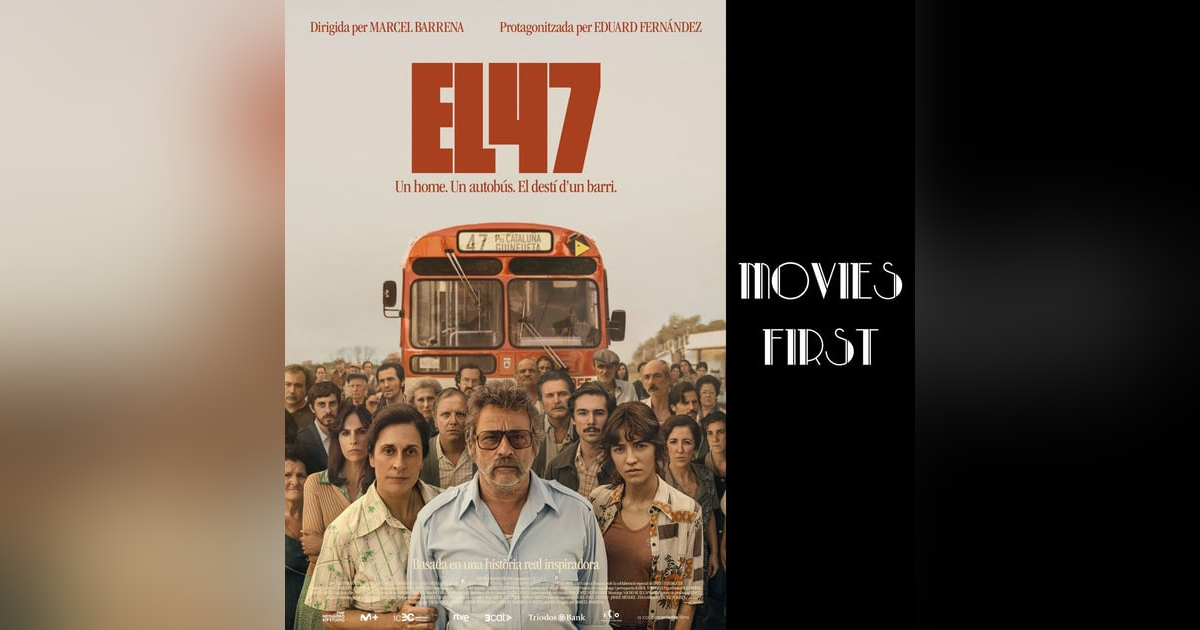


In this episode of *Movies First*, we delve into the inspiring true story depicted in *EL47*, a film that chronicles the life of Manola Vital, a bus driver whose courageous actions transformed Barcelona's public transportation landscape during a tumultuous period in Spanish history. Set against the backdrop of the 1950s and 60s, the film highlights the plight of internal migrants, including Vital and his daughter Joanna, as they navigate the challenges of displacement and seek a new life in the hillside community of Torre Barro.
The narrative paints a vivid picture of the housing crisis, showcasing a peculiar legal provision that allowed migrants to establish makeshift shelters overnight. As they race against time to secure their homes, the film captures the essence of community spirit amidst adversity. The evolution of Torre Barro into a close-knit community, despite being overlooked by city authorities, reflects the resilience of its residents.
Eduard Fernandez delivers a powerful performance as Manola Vital, embodying the struggle of a principled man who transitions from a law-abiding citizen to a tenacious community activist. His quest for public transportation access for his neighbourhood underscores the broader themes of bureaucratic indifference and social justice. Klara Segura's portrayal of Carmen, a former nun, adds a rich cultural layer to the story, symbolising the integration of diverse backgrounds within the immigrant community.
The film's unique blend of authentic historical footage and dramatic recreations enhances its documentary feel, while the nuanced performances from the cast, including Zoe Bonafonte as the adult Joanna, elevate the emotional stakes. Co-written by Alberto Marini and directed by Marcel Barrena, *EL47* has garnered critical acclaim, earning five Goya Awards and resonating with audiences through its poignant exploration of grassroots activism.
Join us as we unpack the film's compelling narrative that not only sheds light on an important chapter in Barcelona's history but also celebrates the indomitable spirit of community action and the quest for social change.
https://www.bitesz.com/podcast/movies-first
Become a supporter of this podcast: https://www.spreaker.com/podcast/movies-first
0
00:00:00.000 --> 00:00:02.750
Alex First: The film EL47 chronicles the extraordinary
1
00:00:02.750 --> 00:00:05.590
true story of Manola Vital, a bus
2
00:00:05.590 --> 00:00:08.550
driver whose courageous actions reshaped
3
00:00:08.550 --> 00:00:11.470
Barcelona's public transportation system during
4
00:00:11.470 --> 00:00:14.470
a pivotal period of Spanish history. In the
5
00:00:14.470 --> 00:00:17.390
1950s and 60s, waves of internal
6
00:00:17.390 --> 00:00:20.310
migrants from regions like Extremadura and Andalusia,
7
00:00:21.140 --> 00:00:23.940
including Vital and his young daughter Joanna,
8
00:00:24.180 --> 00:00:27.110
found themselves displaced and and seeking new beginnings
9
00:00:27.110 --> 00:00:30.070
in Barcelona's outskirts, specifically in a
10
00:00:30.070 --> 00:00:32.950
hillside area known as Torre Barro. The
11
00:00:32.950 --> 00:00:35.910
film skillfully depicts a remarkable aspect of that
12
00:00:35.910 --> 00:00:38.910
era's housing crisis through a ah, peculiar legal
13
00:00:38.910 --> 00:00:41.750
provision. Anyone who could construct
14
00:00:41.750 --> 00:00:44.750
a shelter with a roof overnight would be permitted to
15
00:00:44.750 --> 00:00:47.630
stay, while those failing to complete a roof
16
00:00:47.790 --> 00:00:50.670
would see their structures demolished by dawn
17
00:00:50.670 --> 00:00:53.480
police patrols. This policy led
18
00:00:53.480 --> 00:00:55.880
to the rapid emergence of a makeshift community
19
00:00:56.280 --> 00:00:59.040
in 1958, with Vital and
20
00:00:59.040 --> 00:01:01.960
fellow migrants racing against time to establish their
21
00:01:01.960 --> 00:01:04.680
precarious homes under the cover of darkness.
22
00:01:05.880 --> 00:01:08.760
Over the following two decades, Torre Baro
23
00:01:08.760 --> 00:01:11.560
evolved into a tight knit community, though one
24
00:01:11.560 --> 00:01:14.040
systematically overlooked by city authorities
25
00:01:14.200 --> 00:01:16.520
and lacking basic infrastructure.
26
00:01:17.490 --> 00:01:20.410
The film's narrative gains additional complexity through
27
00:01:20.410 --> 00:01:23.290
Vital's unexpected marriage to Carmen, a
28
00:01:23.290 --> 00:01:26.130
former nun played by Klara Segura, who
29
00:01:26.130 --> 00:01:29.090
brings her own cultural dimension to the story. As
30
00:01:29.090 --> 00:01:32.050
a Catalan speaker, their relationship
31
00:01:32.050 --> 00:01:34.530
represents the broader cultural integration
32
00:01:34.690 --> 00:01:36.770
occurring within these immigrant communities.
33
00:01:37.490 --> 00:01:40.170
The heart of the conflict centres on the community's
34
00:01:40.170 --> 00:01:42.770
isolation. Despite
35
00:01:42.850 --> 00:01:45.650
Vital's long standing position as a driver on bus
36
00:01:45.650 --> 00:01:48.370
route 47, Toribara residents,
37
00:01:48.530 --> 00:01:51.530
including his own family, faced a daily struggle
38
00:01:51.530 --> 00:01:53.730
with no public transportation access.
39
00:01:54.610 --> 00:01:57.490
The steep, unpaved roads to their neighbourhood
40
00:01:57.490 --> 00:01:59.970
proved too challenging for regular bus service,
41
00:02:00.370 --> 00:02:03.330
forcing residents to undertake lengthy walks to reach
42
00:02:03.330 --> 00:02:06.010
the city. Their repeated petitions for
43
00:02:06.010 --> 00:02:08.690
transportation services were consistently
44
00:02:08.690 --> 00:02:11.650
dismissed by local authorities. Despite
45
00:02:11.730 --> 00:02:14.650
Vital's persistent efforts to demonstrate the
46
00:02:14.650 --> 00:02:17.090
obvious need for expanded bus routes.
47
00:02:17.900 --> 00:02:20.740
Eduard Fernandez delivers a nuanced performance as
48
00:02:20.740 --> 00:02:23.540
Manola Vital, portraying him as an
49
00:02:23.540 --> 00:02:26.300
understated but principled man who
50
00:02:26.300 --> 00:02:29.180
exhausts every conventional avenue before
51
00:02:29.260 --> 00:02:32.260
taking the radical action that ultimately leads to
52
00:02:32.260 --> 00:02:34.060
his arrest and conviction.
53
00:02:35.020 --> 00:02:37.660
The film carefully builds tension through his
54
00:02:37.660 --> 00:02:40.180
transformation from a law abiding civil
55
00:02:40.180 --> 00:02:43.020
servant to a community activist driven to
56
00:02:43.020 --> 00:02:45.630
extraordinary measures by bureaucratic
57
00:02:45.630 --> 00:02:48.470
indifference. The production masterfully
58
00:02:48.470 --> 00:02:50.910
integrates what appears to be authentic
59
00:02:50.910 --> 00:02:53.670
historical footage with dramatic recreations,
60
00:02:53.910 --> 00:02:56.390
enhancing the film's documentary feel while
61
00:02:56.390 --> 00:02:58.390
maintaining its narrative flow.
62
00:02:58.950 --> 00:03:01.950
Klara Segura brings depth and humanity to
63
00:03:01.950 --> 00:03:04.870
her role as Carmen, whose evolution from
64
00:03:04.870 --> 00:03:07.430
nun to teacher reflects the community's
65
00:03:07.430 --> 00:03:10.270
adaptability and resilience. Zoe
66
00:03:10.270 --> 00:03:12.870
Bonafonte's portrayal of the adult Joanna
67
00:03:13.180 --> 00:03:15.820
adds a younger generation's perspective to the struggle,
68
00:03:15.980 --> 00:03:18.460
culminating in a powerful musical performance
69
00:03:18.700 --> 00:03:21.500
that serves as the film's emotional capstone.
70
00:03:22.220 --> 00:03:24.940
Co written by Alberto Marini and directed by
71
00:03:24.940 --> 00:03:27.610
Marcel Barrena, EL47 has earned significant
72
00:03:27.690 --> 00:03:30.610
critical acclaim, including five Goya
73
00:03:30.610 --> 00:03:33.050
Awards, Spain's highest film honours.
74
00:03:33.850 --> 00:03:36.170
While the narrative develops at a measured pace,
75
00:03:36.570 --> 00:03:39.290
it maintains engagement through its authentic
76
00:03:39.290 --> 00:03:41.930
portrayal of community activism and social
77
00:03:41.930 --> 00:03:44.430
change. The film's impact is
78
00:03:44.430 --> 00:03:47.190
amplified by its grounding in historical events,
79
00:03:47.590 --> 00:03:50.390
demonstrating how grassroots movements can affect
80
00:03:50.390 --> 00:03:53.030
lasting change in urban development and social
81
00:03:53.110 --> 00:03:55.790
services. Through its careful
82
00:03:55.790 --> 00:03:58.430
attention to historical detail and emotional
83
00:03:58.430 --> 00:04:01.190
authenticity, EL47
84
00:04:01.510 --> 00:04:03.750
preserves an important chapter in
85
00:04:03.750 --> 00:04:06.750
Barcelona's social history while delivering
86
00:04:06.750 --> 00:04:09.720
a, compelling narrative about the power of community action
87
00:04:09.880 --> 00:04:12.720
and perseverance in the face of institutional
88
00:04:12.720 --> 00:04:13.240
neglect.