How to break an artist (without a label) w/ Jessica Page
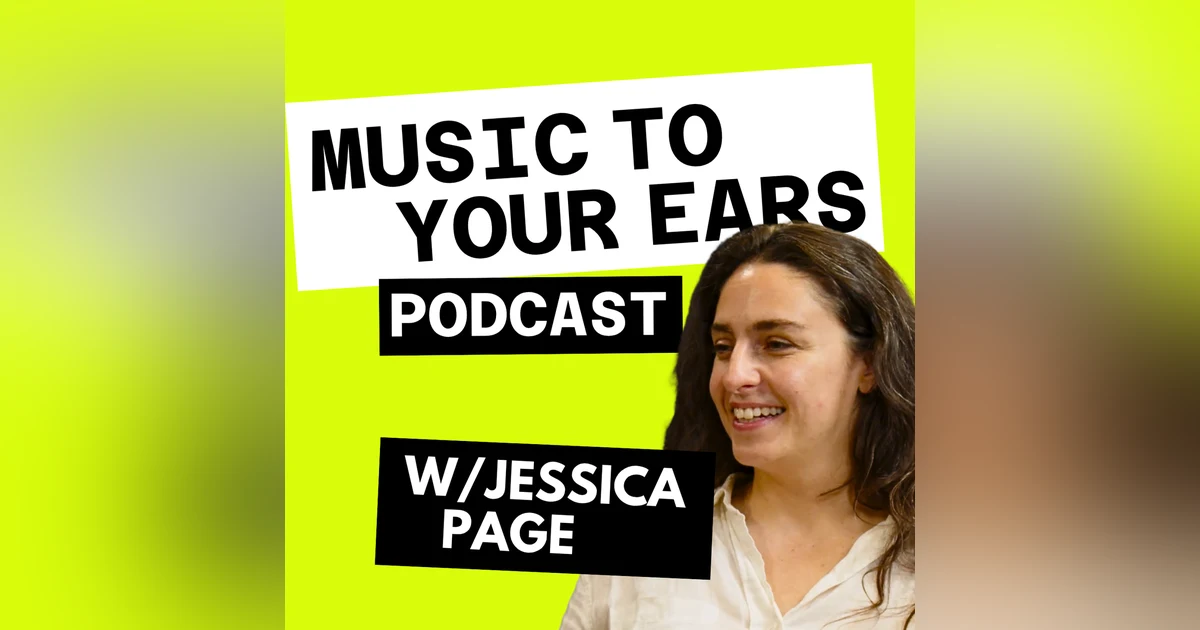

Jimmy Mikaoui and Danny Garcia welcome Jessica Page, co-founder of Rareform.


Jimmy Mikaoui and Danny Garcia meet with Jessica Page, co-founder of Rareform and former co-GM of Mom + Pop. Get ready - this episode is one of our most technical yet! Jessica dives right into the details of proven music business strategies. We discuss how beginning musicians can grow their audience online, how musicians can trigger platform algorithms, selling concert tickets, and even how to capture and use audience data. This is an accelerated masterclass in music marketing!
View our best clips in one place:
https://www.instagram.com/musictoyourears.podcast/
Follow on your favorite podcast app:
https://www.podpage.com/musictoyourearspod/
Music: thatmood - "Blast"
https://open.spotify.com/artist/1JRDdBu6YKtxZ4Y5T3Vizn?si=DAQqsRZxQoG-yBYES9iTlw
Sign up for show updates and early access:
https://form.jotform.com/mtyepodcast/newsletter
About Music To Your Ears Podcast:
With thousands of tracks releasing daily, how do music artists and marketers cut through the noise?
Join our hosts Danny Garcia and Jimmy Mikaoui as ”Music To Your Ears” dives into the strategies, tools, and success stories behind modern music promotion, featuring leading music executives and marketing professionals whose experiences and roles range from distributors, cutting-edge boutique agencies, tech platforms, record labels and music publishers.
And they were like, you seem to know what's going on here. You're Literally, literally. know, so you cultivate your own community. 100%. They were like, you're young, you seem cool. You know all these people that we're trying to market to. Do you want a job? And I was like, and I had reviewed one of their products on my music blog. Oh, wow. Yeah, like that's literally, you like you kind of make your own magic in a way by putting yourself in front of people. do you want to hire?
a 20 something that you might know a little bit about digital. You wanna hire somebody that has, you've seen they have their pulse on the scene. They understand your product. That's great. That's like a double bonus,
Jimmy Mikaoui (00:43)
Hello, welcome to Music to Your Ears podcast. We have a wonderful guest today, Jessica Page, co-founder of Rareform, in my opinion, Queen of the World as well. I'm Jimmy Mikaoui joined by my co-host, Jessica, welcome.
Danny Garcia (00:57)
I'm Danny Garcia.
Jessica Page (01:00)
Thanks for having me guys. So fun. So fun to be on and excited to be. What guest am I number? Five,
Jimmy Mikaoui (01:07)
We don't know in which order they're gonna go out, so there's a lot of mis-
Exactly. Mike was guest number one. Absolutely. We were all super nervous. It went well. ⁓
Jessica Page (01:25)
It's really exciting. It's always fun to do this and much more fun when you actually know the people that
Jimmy Mikaoui (01:31)
Do you want to tell us a bit about your journey and how you got to co-found an awesome agency with your co-founders?
Jessica Page (01:43)
Yeah, sure. mean, we I don't know how far back we can go but obviously
Jimmy Mikaoui (01:50)
as far as you want. We all played in bands at one point.
Jessica Page (01:54)
I fake DJed at some point in my life. Me too. Yeah, right? Everyone does that. If you're in a major city, you're obviously a DJ. Well, you and I go back to the mom and pop days, specifically your days at Marathon and Courtney Barnett as well. Exactly. was an amazing time and place in how we first got to know each other, how you first got to know my business partner, Halle. So that was a great, amazing experience, seven years of our career.
collectively, Hallie and I together, seven years we did together. And then Koji set the, at the end, last two years, I believe. ⁓ And prior to that, I got my, I guess I cut my teeth a little bit in distribution. I was there for about two years at a company called Caroline, which is now, as all the music people know, Virgin. ⁓ And prior to that, I did a little stint at, where was I, I was at a music tech company called XFM. And there was also some complex.
working at Complex, covering live music and ticketing for a few years. So fairly well-rounded. I would say that Mom and Pop was my most informative and the biggest growth for me and ⁓ like an incredible experience and, you know, thankful for Goldie and Thad for putting the faith in Hallie and I to really ⁓ help grow the company and have lots of wins. But my focus was specifically on digital and streaming and building out those teams. ⁓
while Holly focused more on tour marketing, project management, the more traditional aspects, I guess, of what a project manager, and also just like what a GM of the company, which she did become, really focused on keeping the budgets in line, keeping people happy, running all the teams. And yeah, that led us to, in 2020, we left separately, we started kind of consulting.
later on brought each other into campaigns. And then there was, lucky for us, so much business that we started this company. And I think we learned how to do a lot of things really well at a smaller company. And that allowed us to kind of know how to hire publicists, know how to run radio campaigns, understand what DSPs need, understand the ever-changing landscape of digital strategy, ⁓ and also how to hire and manage people.
So where we are now is somehow we've gotten even more indie, even though we were what I feel is a very cool, fair indie label that was very friendly to artists, but really taking on the role of how do we support managers? How do we look at campaigns in a non-traditional way? How do you build a sustainable business for artists and manager? And I think it really runs the gamut. Some's really traditional, like we want to treat a top five record and we want to win a Grammy and these are our goals the next five years. And some is like,
this artist doesn't tour but has a massive catalog and they're interested in illustration and running their Discord and that's how they're going to sustain and that's how they're going to sell back to their fans. So I think you get to use your mind in different ways, but it's exciting to be in this place now and there seems to be a great need for it, especially artists trying to enter the US market that really need the boots on the ground and like a deep understanding of who you can hire independently in this space when you don't have.
a massive major label backing you or you're not interested in those types of deals, whatever it may be. So we've become those people for, think, a good chunk of that type of specific artists and team.
Jimmy Mikaoui (05:20)
That's awesome for listeners who aren't familiar with rare form. Could you give a bit of context?
Jessica Page (05:26)
Sure,
absolutely. So Rareform is a very a la carte label and artist services company. We are totally agnostic. We are not attached to a distributor. Everything we do is like, you know, anything from hiring and building teams, US globally. So do you need a radio person? Do you need a project manager? Do you need someone doing press? Do you need somebody tying it all together and running your strategy? Are you just coming in for your first big US tour?
have you been touring for a long time and you really want to level up or you want someone harassing the promoters every day of their lives, keeping tabs on them, like, we're those people. And then on the streaming and digital strategy, I think that world is forever changing and tailoring really specific strategies to the artists, to their teams, whether it's your CRM strategy, running an advertising strategy, running a campaign to compliment everything you're doing, making sure that ⁓ the DSPs are being taken care of.
that we have a structure and strategy around the best way to get what you want and to market to these teams and people. So really anything that a label could provide or artist services team, a big management company could potentially provide, we can provide and also fill in the spaces where maybe ⁓ it's lacking ⁓ for various reasons. Maybe you're a management team with two people, but you really need a more robust strategy and support.
Jimmy Mikaoui (06:49)
What
is for you the best attributes or the biggest challenges when you have to market in the US a non-domestic band?
Jessica Page (06:59)
Yeah, mean, no secret that it's a very competitive market and it's very expensive. I think those two things right there are a great barrier to entry for, I would say, 90 % of artists trying to enter the market. And then just the time and money that it takes to introduce a new artist. I think, you can, and how prolific they can be through that experience and how consistent they can be. So you can have one amazing record.
And if you're not back for four years, it be really, really challenging. you know, that feeling of like, we've come so far and so much money has been invested. Hate to hark back to my record days as a label exec, guess, but it's like, cool, when's the next thing coming? Which is really hard to hear for artists that just blew it out for a year and a right? So to me, I think it's probably what a lot of artists face everywhere. But I think coming to the US is like,
the monetary investment across the board, visas, touring, just marketing yourself in general. And then the amount of time and investment that takes, because it's not three months, it's not a year, it's usually multiple years to really grow and be impactful. And I think it's just really hard to make money in this industry. It's really hard, especially as a developing artist, to start out.
Danny Garcia (08:22)
And no, was just going to on that, on that note, like a lot of people listening to this are independent artists, like just starting out. How do you, how, how can they, you have any advice for them wrapping their head around that? Like the amount of money time it takes to get from zero to one. Yeah. And any, yeah, like any frameworks they can kind of tap into or.
Jimmy Mikaoui (08:23)
Sorry, go ahead, Danny.
Jessica Page (08:50)
Good
question. think like framework wise, I oh wait, I would say I know this is very hard for artists, but trying to think of yourself as a business. That's huge. What are you gonna grow around you that you can continue to nurture? like, is it your own community? Probably like, it's very helpful to be the artist that people call when they come into your city. Yeah. Right? Like what does that network look like? That's how you end up opening for bigger bands going on tour.
Your agent will do that for you eventually, but if you're not making your agent money, which you call not when you're developing, you kind of have to develop those relationships on your own before someone decides that you're worth investing in, right? You're a business. And I think like the second part is how are you holding onto those fans that you're growing? How are you funneling them and how are you letting them know? Like, sure, you have social media, but we all know that's gated. It's a very important component. Like never too early to start a email list or too early to grow.
The third thing I would say is just consistency. ⁓ You know, I think like four songs a year is gonna be hard to grow off of. And I think like thinking about what's in your bank and how you wanna do that and then how you wanna collaborate with your community. The growth does, for a lot of artists, come with collaboration. And not every artist is built that way, but I would think about the crossover, the growth, who else you're plugging into. That's where I see the biggest growth of independent artists. And the introduction.
to ⁓ a new audience, right? ⁓ That sounds a lot simpler than, know, but I do think like when you see scenes coming up in cities, you know that there's like four people coming out of it. Like New York is having that now, right? It's like the dare, cross children. Like there are these things that it's like they all know each other, they all collaborate, they're all in photos together. Fcukers, all of them. The last photo is all four of them together because it's a scene, they know each other, they've all DJ'd together, they've all done these things together.
Danny Garcia (10:45)
and like rises the.
Jessica Page (10:46)
It rises the tide, right? Like who's getting the first call to open for him? Who's at the festivals together? I mean, that's not always. I feel like New York is having like a rebirth that I probably haven't seen since I was here in like 2007 to 2012. You were here before. You saw the scenes in the Lower East Side. So it's not always that simple, but I do think like community to when I see something having success and then it's like, oh, this person is on it. Oh, I'm opening for this person.
Part of it is that you're buzzy on your own and part of it is that you've cultivated relationships because a lot of those people did not have agents, did not have those things.
Danny Garcia (11:21)
Yeah. And it works like, aside from, cause there are people that aren't in a cool city like New York, L.A., right? But it works online too. 100%. The same thing, that's what makes it a good framework.
Jessica Page (11:34)
I came
into music on Twitter, online. Three of my best friends in New York moved here after I used to throw a brunch when all the music bloggers would come in for CMJ. That's how I got my first job in music. My first, my two year anniversary of my music blog, my first bosses that hired me in music, Music Tech, the company doesn't exist anymore, came, we got quite drunk for like, they were probably like 33, right? And they were like, you seem to know what's going on here.
You're Literally, literally. You know, so like you cultivate your own community. 100%. They were like, you're young, you seem cool. Like, you know all these people that we're trying to market to. Do you want a job? And I was like, and I had reviewed one of their products on my music blog. Oh wow. Yeah, like that's literally, you know, like you kind of make your own magic in a way by putting yourself in front of people. Like, do you want to hire a 20 something that you might know a little bit about digital? You want to hire somebody that has the, you've seen they had their.
pulse on the scene and they understand your product. That's great. That's like a double bonus, right? So if I hadn't done that and been working in restaurants and bartending, like, I no idea. I didn't even know how music got on platforms or anything. I did distribution. was like, oh.
Jimmy Mikaoui (12:46)
But to that point, are you able to move the needle digital only, online only before artists come to market? when we used to work together, it was all about we need artists in market, otherwise there's little we can do.
Jessica Page (13:05)
I think it's a different ambition of being at a label, right? Because the artist in market means sessions. It means investing in the tour, like, tour support. It means how do we get that artist to next level so that we can do more than break even on what we've invested? I think when you're developing, it's a very different thing. Yeah, yeah. Because, like, you're not at the level where you're going to have... Maybe you have some label interest, but you probably, would say, don't sign a deal until you have more leverage, you know, if you can generate that for yourself.
So I would say that ⁓ to me, it is always still depends on consistency. ⁓ think being able to curate your own kind of world online to really, really matters. ⁓ I think that we're past the time of really, ⁓ really maybe like.
beautifully edited content, meaning anything online. I think there's like, I think there is a really like amazing place for long form, but I think it only speaks to like a very specific type of band in one place when they have like, maybe earned that spot to be able to spend that money and like, maybe give like their core fan base is much larger and they will consume that where it's like, maybe that's not the best of your small budget to own short shoot that. I think it like,
becomes about personality, about lifestyle, about cultivation, and about being able to consistently create that around yourself, if that makes sense. I think the best things that I see of artists succeeding, and I think it's a real blessing to feel comfortable in that space, is being able to be yourself in that place. And for some people, that's really, really uncomfortable.
And that's a challenge that like, don't know how to solve for them. Yeah. it's really hard. I will say like for the bands that I work with, they are not TikTok bands. It's not because I chose that. It's because like that's not who they are as people. So was never going to feel good to them. But what they did manage to do is like before they invested in
Jimmy Mikaoui (14:57)
I'm to seem here with-
Jessica Page (15:16)
shooting like big robust long form they invested in like their friends shooting them at shows and that when they were doing like tiny tours, they had a buddy with them that was like willing to bring a camcorder or somebody in the band was like willing to shoot and like show what it was like and somebody was like, we always had that. And from that, that would translate to fans.
And then we developed more, they developed more personality style things. Like leaving notes for fans. They really came up with stuff that they could be like, how do I talk to my community? Because I'm not gonna be the TikTok dance guy. And I kind of have social anxiety, but like, you know, I'm a deep poet, so I'm gonna write some poetry for my fans. Or I'm gonna like, tell them to sign up for email list. I'm gonna send them like a really long like journal entry rundown. like, worth it.
Jimmy Mikaoui (16:06)
But that's awesome because we talk about this challenge a lot on the podcast. How do you develop a consistent brand ⁓ and still engage with the fans with things that aren't just a promotion of music and opening the door to your personality, which then puts you in that uncomfortable spot.
Jessica Page (16:30)
Yeah, I think ⁓ it feels like when I start to work with artists, especially developing artists, and I think we go through this with large artists when you sign them into a system. You're like, what brands are you cool with? What don't you like? What are you comfortable with? I think it's like, if I can spend, let's say my scope of work is to help develop a digital strategy, right? I'm going to go to SAA, and I'm going to do that with this artist and Mike today.
I generally know, I know the story really well, so it's like a gift that like, then we have a little bit of budget and support and we can like bring Mike into it early. But it is about that, okay, what do you like to do? Like, he was really into like animation and clay, okay, that's maybe a bucket of something. He's really into whatever these other things are like actually sitting and saying like.
let's deconstruct your personality and this is probably uncomfortable for you, but at least we can find some things that you genuinely like to do that you won't be uncomfortable with and let's see if they connect. And sometimes it is like trial and error, but I do think it is like, if you're not the like, hey, out here like guy, which most people aren't, like thank God I am not an artist, because I'm much better at telling people what to do than doing it myself. I'm like following my advice, as I, you know, do as I say, not as I do type of person.
⁓ But I just think that like you kind of again it comes back to treating yourself like a business and brand. And I do think like the strongest artists, most successful artists are like, yes, they're really creative. But I think that they like have really found a way to like speak to their fans and like, know exactly who they are when you like see the image or you watch something or you see an interview like you their personality is so clear, their creative is so clear. So I think, you know,
part of working with Courtney Barnett is like, I feel like there was always like a message and creative, but maybe that artist did not want to be faced to camera, but like those things were so strong that you knew exactly what they were trying to say. So you could build around that. So it kind of has to be like, is there a really strong message we can run with or is it, and like you're an artist and that's cool and you've done all the illustration yourself and like, we know what to do with this or is that I really need to get like my personality and figure out who I am and what I want to show.
maybe those things give you more control, right? Like you don't have to show everything. You've chosen your buckets of what you want to show. So that is like a branding exercise for a person, if that makes sense.
Jimmy Mikaoui (18:54)
⁓ totally, mean you know, with Courtney we were blessed with so much talent and so much vision that...
Jessica Page (19:00)
Yeah, it's like when that's like a dream. Yeah,
that's like a dream. like also you have to develop into that. Like a lot of, you know, there's still guidelines for like what that looks like, where you are at. And I think, you know, every generation has a few of those artists where it's like so, so crystal clear and you're so blessed that they have found theirself as an artist and that they have then chosen to work with you. But there's a lot of mentorship that needs to happen into that place. And like sometimes we work directly with artists.
A management team is still a job. Like you are investing in a person as a business, so how are you making your money? It's really hard to develop artists. So there's like lot of guidelines that we do for up and coming artists that are like more session based or we are doing hourly. It's rare that we do it now. But when we see somebody that like we think is really great and they like have a vision, they need a little help sorting it out. Like think the next things we'll do is probably develop like a guide.
that people can tap into. that's And maybe we do it as a group session or something. Because I do really feel like we're great at developing artists, but it is a time cost benefit of how do you get them to this place or how do you start to teach them so that they can cultivate on their own because, yeah.
Jimmy Mikaoui (20:17)
That's the magic word, you know, we come back a lot to the lack of education, but it's really challenging because artists are asked to do so much that you need to educate them on 20 aspects of the business.
Jessica Page (20:25)
Such a lack of education.
And
I talk about that all the time and you I came off a panel at Miami Music Week and it was like, you know, a few people are on Spotify, a few people, you know, a good mix of people. But, you know, and Spotify is like, okay, we have these metrics, we're showing, like people are pretty transparent, right? But what do you do with data you don't understand? What do you do? You have no idea if your benchmark is good or Is the thousand streams today good? I don't know, like.
What's a save rate? So I started kind of saying, hey, if you're between this and this save rate, that's pretty average. If you're here or more, go like, you know, write a note. Tell somebody that you're there or more. Like, put it in your next Spotify for Artists update. You know, things like that. And like a lot of people came over to me and were like, no one's ever told us that before. We have all this data, but it's really overwhelming. Like, what do we do with this?
And I do think it's like, I know who that data is designed for, right? It's designed for me, it's designed for you, it's designed for a distributor that is supposed to be like helping market and use this in a informative way for planning. the truth is...
Jimmy Mikaoui (21:48)
Measuring an ROI. that's really how it's presented.
Jessica Page (21:52)
⁓ which is great for the industry people, but there's a massive part of the industry that is not educated that is the people that are generating the business, which is the artists. So it's like, we'd probably be more powerful to educate all of them freely because it would make all of our jobs easier. People would know what I'm talking about.
Jimmy Mikaoui (22:12)
It would
waste time, know, for me that's the... I don't expect them to know because that knowledge is so difficult to acquire and they don't necessarily teach any of that in the music schools and stuff. But the heartbreaking part is the time and resources lost trying things when you and I have the answer and it would have been so easy not to do it for them, just to say, hey, turn left at the next corner.
Jessica Page (22:41)
Like there's literally, they're walking around blind being like, I don't understand how any of this works. And, you know, digital, think I like, and I excel at because I like to try the things and know the platforms and it's not, nothing's standard, right? Like it's forever changing, which is frustrating, but also really fun. Like I can't do the same repetitive thing over and over again. I'm not built like that. But we came out of this, I came out of this, ⁓ I guess,
this panel thinking we should have a QR code that just sends a sheet of like benchmarks and like best practices and not at the like upload an audio liner out of like, here's how you read your track. Here's how you know if you have something good. Like maybe you just need a win that day to keep going. Maybe it won't be that you have a rep to tell, but maybe you'll be like, I'm on the right track. Because I don't know how you inform besides that something blows up or you're just like, bless artists. like that is just what they need to do.
they can't do anything else and this is what they're creating and like we need all of those people in this world. But I just think like, I look at stuff when I haven't had a win in like a few months and I'm just like, man, this is a really hard business. You know, like it is and you get these little wins or you get a really big win and you're like, cool, I'm doing the right thing. Like this feels good or you get inspired again. Like how do you stay inspired? Some, you know, it is, or you're watching your peers succeed or you're watching these things. Like I think it's really important to like,
I don't know how you map out your future if you don't know where you are. And I think there's just like this massive lack of education. So anyways, came out of that thinking like, people are coming over thinking me for three bullet points of knowledge on what their metrics look like. And there's all this wealth of, there's the chart metrics, there's song charts, there's all these things, right? ⁓ But like, if you don't know what you're looking for, yeah, if you don't have the context, for me, I can open a page and look at a bunch of stats and be like, all right, we're not doing so bad. And like go and...
But that's 15 years of looking at streaming sounds, you know? Like every day from like I wake up and I'm like, how are we doing?
Danny Garcia (24:44)
I mean, think save, like, or just to go back to macro too, like a lot of artists focus on the wrong thing in terms of like the monthly list. Like, so I think for me, it's, I always tell people just focus on engagement. Cause that goes across all DSPs, even socials, right? Like I think.
Jessica Page (25:05)
And it does go into the, is considered an algorithm in your track score. All of those things like I told somebody, you know, if your track score is over 60%, you're probably gonna start to hit an algorithm. And that information comes from outside of the platform as well as inside the platform. But they're like, what? That things I'm doing outside of here that I'm not even telling them about? And I'm like, yeah.
Danny Garcia (25:25)
Yeah, it tracks. so that's like one of the, just to kind of distill it down is like, it's gotta be about engagement. It's like save rates, followers, likes, comments, like to your point, that's, cause I see a lot of artists just going like crazy on the playlisting. Yeah. million monthly listeners.
Jessica Page (25:42)
I got bunch of questions like that. I mean, there are certain reasons why you wouldn't do it. If you're going to do it, it has to be really specific and strategic. Yeah. We won't get into why people do that. ⁓ But I'm like, you're going to throw off your whole audience. It also has to learn about you. Yeah. I'm like, create some playlist that have you and the peers where you want to be. That's your whole... That's where you start to see the radio.
Jimmy Mikaoui (26:05)
I have
Jessica Page (26:06)
I'm deep in that world too. And I'm like, let's warm up. Nobody knows who you are. Let's send some marketing dollars that way. It's hard for artists and manager to hear, I think, a long tail overarching strategy because that means it's money spent on a thing that they can't see a direct ROI on immediately. But I'm like, you know, we are, whether you like it or not, in the algorithm years, we're going to be here for a long time.
maybe forever, I don't know. It's not my job to, well, it is my job to maybe know the future, but I know where we are right now. And what works in these spaces is you're training a machine to learn about you. That's what it is. Meta's the same way. I'm like, don't spend if we can't spend for two weeks because we're gonna cut a campaign off. Exactly. It will never learn anything about you. I'm like, can we get a bucket of money to run in the background? Our team will optimize. That's hard for people to hear that it's not single by single, that it's not these things.
Jimmy Mikaoui (26:57)
⁓
Also, for me, the biggest takeaway is the short-term versus long-term investment because that focus on streaming numbers and immediate impact from running whatever campaign is a short-term benefit that does nothing for your career. Whereas building that engagement over time, these fans are going to stick. They'll come to shows, they'll support the next releases.
Jessica Page (27:24)
It's also for the larger artists, like sometimes I'm walking into a big meeting and they're like, we want a number one in this market. And I'm like, okay, who's done the CRM strategy? Cause you need a lot of vinyl to do that. It's very rare you can just do it on stream. You basically can't. ⁓ So it's like, how are you building that? Every timeline we make has the CRM strategy overlaid in it. That's we find the thing that we want to do. Like if I'm working on something, we are going to walk away with three to five times the amount of direct.
first level contacts because I don't think you can build a career or do anything next. And like, I don't know who we're selling tickets to. I need to know the audience. I need to be able to remarket to them. Like if it's all not working together, then you're just missing a chunk of your business forever.
Danny Garcia (28:08)
So it's going to the power of the email list. Yeah. just, you know, which we were, was on a panel yesterday here at Indie Week about exactly that, like the email list. And I think there was a lot of people in the audience, like kind of just like, ⁓ I'm not looking at that at all. Yeah, terms of like independent artists. To your point, is like that's, that's like, that's the core of the business.
Jessica Page (28:27)
That's wild to I'm like, that's your whole video.
I'm
always like, I would rather have 300 people that you know are gonna buy something from you than like 20,000 that are like at a 1%, 2 % open rate. cares?
Danny Garcia (28:41)
It's the highest ROI channel. That's we were saying. can reach them directly. They're actually going to buy something, et cetera. So I think we're preaching to the choir.
Jimmy Mikaoui (28:52)
That's where it goes full circle on the back to the engagement versus certain metrics that DSPs want you to use at benchmarks, but don't do much for you. And there is a generation of artists now that build their profile on the back of passive listening without necessarily understanding what it means. Numbers are great. The dollars coming through the door are great.
but then the main piece of a career building strategy is missing in that context.
Jessica Page (29:28)
Yeah, I think it depends what you want your career. I mean, that's also like a first question we asked you because like, A, I don't want to work harder than the artist. B, I mean, I will, but I don't want to. And B, like everyone has a, you know, coming out of a label system is like, ⁓ even an indie, like there's still, it's still a business and it's a specific type of business, right?
good or bad, it's just like that is the business model for that. When you talk to independent artists, we're always like, what's your goal? What is your idea of success? Because it's probably very different than the world that I came from, which is like let's street a top five record and blow out a tour and maybe we win a Grammy and that would be great. And everyone makes money. And so I think ⁓ not every artist wants that. Some artists don't mind the passive listening.
Some wanna have an active Discord that they sell to and yeah, maybe they're on some passive list, but they could care less if they get a playlist. Or their audience is so active that they're like, why would I care about a playlist? I just wanna make sure that I can optimize this, which is an amazing place to be. And we're helping optimize their business. Yeah, kind of. I try to because I just don't think that the types, every type of artist who looks at...
Danny Garcia (30:40)
reverse engineer from the goal.
Jessica Page (30:48)
work with is so different, which is why we're like, we don't have rate cards. It doesn't make sense. can't give you a rate card. There's like a few parts of our business that are like really specifically, which is more advertising is a percentage, you know? But otherwise it's like a challenge is to move in and out of these teams and figure out where you fit in because like sometimes they have one person that really excels at this thing and not at another thing. So you're filling that gap.
Danny Garcia (31:13)
Yeah. Question on, I think we touched upon it a little bit, but like the live side, we were just talking with, you know, Dan from Sonic Bids before, and we were talking about the crossover of like digital and live and how you can kind of bridge that gap as an artist. Do you guys touch upon that a lot or is that?
Jessica Page (31:33)
Digital
and live in terms of like the visibility of artists playing live?
Danny Garcia (31:39)
Like how do you capture people that are at a show, Like capture that and like use that as momentum or on the flip side, how can your digital strategy help bring people out to shows, right?
Jimmy Mikaoui (31:53)
That
was the main point actually, we talked about this like after the recording but...
Jessica Page (31:59)
Yeah.
Jimmy Mikaoui (32:00)
from the label recorded music side, you kind of win when there's a stream or a sale. And that's the end of the journey or the effort you were starting. And he was laughing because he said, well, for us, after that, you need to get people to get off their couch, get in their cars and then drive to venue and spend two hours there.
Jessica Page (32:20)
We become harder and harder.
mean, there's a lot of things that we do that probably a promoter or a manager think are maybe non-traditional. Managers, they rely on a promoter, an agent to do the basics of selling the tour and pushing it forward. ⁓ I think that we have a really great pre-sale to on-sale strategy that captures a lot of data and front loads, which a lot of people do with Seated.
⁓ and front loads, you know, how the start of the tour looks, which gives you an idea of like where you're gonna need to invest and in what markets and how much of your like core audience converted, which I think is really important to know, because you either have like a lot more work to do than you thought, or you're doing better than you thought, or you're like right where you thought you could be and it can always be better, right? ⁓ We have had experiences in markets that like,
it is just not selling well and we do a month long either warm up or mid, what we call like a mid maintenance campaign where we do a marketing funnel and I can tell you it works. It's an investment, but you will at least break even and have like people butts in seats, which is better than having to cancel a show. But that means you hit people with top performing content and you warm them up and then you warm them up and then you form all those.
those people that watch for 15 to 20 seconds into here's the new content and our best live show content. And then you hit them with trying to sell a ticket and like, you know, we moved 200 tickets that we wouldn't have moved, but we invested about a thousand dollars to do it. You know, maybe 500 to a thousand depending on it. And every market when we pre-sale, do localized assets. We hit the market, there's a distribution based on past sales and it's working really well. But it's also this gap of like,
there's the strategy missing because like there's too much to do on the agent side. The managers don't know that world at all. Thankfully, Hallie, my business partner does know that world really well. Tor Marketing at Foundations, yours at AEG. It's like this mid part that we've picked up, but it does end up being an investment from the artist. But it works. We usually start at 100 to 200 dollars a market for pre-sale.
but then you know who your audience is and then you have the data. So it's a long-term investment. to me, I'm like $100 to $200, you're converting this sales plus collecting data. Is it when, when, like everyone should be really happy about that. Cause you're have to sell those people vinyl and you're gonna have to do all these other things and you're gonna have to remind them you exist a year later.
Danny Garcia (34:56)
There should be like some sort of, you know, like lifetime value or something, calculation for the person that actually, like the butts in seats example, like those 200 people.
Jessica Page (35:06)
Yeah, but that's your bursting gay, they're gonna buy other shit from you.
Danny Garcia (35:11)
100 over yeah ⁓
Next like 10 years probably if you had a great show right like I'm still buying like Tame Impala crap that comes out from from the show Yeah, exactly
Jessica Page (35:20)
I've to
like three shows, haven't put a record out in years. I'm here for it though, I'm so old. ⁓
Danny Garcia (35:28)
Because
you went to the show like years ago, right?
Jessica Page (35:32)
Core peak indie memories.
Danny Garcia (35:35)
So it's like the fan lifetime value equation.
Jessica Page (35:37)
I think that like really, I know that there's so many platforms that like, I think the way that it's like sold to manage it, really, I have worked with teams that are like, this is how advertising works, because they're working with big ad tech firms that are like, it's 10K and here's the visibility you got. There's not, and I get that, there's general visibility and engagement, which I don't think is valuable, but I think that people truly are like,
We're not investing in advertising because I don't understand the ROI. I'm like, the ROI is like the CRM. Like almost every strategy we do has a ROI to it.
Jimmy Mikaoui (36:13)
In
fairness to them and to your credit about how you're doing it, there's a lot of scenarios where management will sign off on the investment and never see the data. So whoever's running the campaigns will capture all that data for their next hundred campaigns and different artists as well.
Jessica Page (36:33)
I mean, we deeply, deeply preach like own your data. Everyone else does, literally. Like everyone else owns your data and makes money off of it. You should at least be owning it. And I was talking about earlier some of the like management teams we work with that also have labels and they have like an incredible roster on, especially on the management side, cause it's been, and I'm like, you know, I never asked them.
which I'm sure they're not doing, is like, is your artist's own data used across all of your artist teams? Because a lot of management teams are very not structured like a traditional business. You're kind of on an island with some other people and you're using maybe some top managers or resources to leverage things or whatever it is that you're doing. But I would say they're not as structured strategically. There's a few of them that are where it's like, let's
like all of our data from all of our artists and like let's make this work for everyone on the team. Which I'm like that's a huge loss. We should do that. But there's no one there that's not what managers do traditionally.
Jimmy Mikaoui (37:38)
You're right that they're not structured like that. I think the genre diversity and within the roster adds another layer of complication because they don't even sing that
Jessica Page (37:47)
Sometimes, but it's like we're so past genre barriers that it's like if an audience isn't working, it's not working. Shut it off. Who cares? That's true. It's not that hard. It's like, OK, check that one off. We literally unchecked a button and it's no longer something. gone. Yeah, and you don't know. Sometimes I see things and I'm like, that ROI is crazy on that audience. What is this? And it's like a custom audience that we developed through whatever we developed it through. And I'm like,
That, let's take note of that. Apparently it works for this genre and I did not think that it would.
Danny Garcia (38:17)
And it's a lot of times it's like creative and audience. It's not even like the job. That's like four different.
Jessica Page (38:20)
Yes, and that's the thing. like,
yeah, I'm like, gave me a bad creative. Can we please get the creative we asked for? Like an ad mat that flashes once on someone's screen is usually not gonna cut it. 100%. So yeah, it's usually like we're about to do an ounce a tour and there's the, I guess, smaller tour, this is going up into bigger rooms, more dates, the tour sold out in a day, the last tour, I'm like, we have all this amazing footage of like,
the artist playing, he's meeting every fan that stays. He stays for hours. It's like amazing, so rare to see. I'm like, make sure that gets in there. know, like, what are we looking for? What's the messaging? Please keep the messaging the first five seconds. I think that we will blow out this tour. I think they're really nervous about it. I'm like, the fan engagement's really good. People were driving two hours. Now we're in those cities. I think they will go again. You know, you don't drive two hours to see someone and then say, ⁓ I'm not gonna buy the hometown show. You just don't.
I don't think I don't believe that's fan behavior. Yeah, ⁓ I would bank that they would be buying those tickets ⁓
Jimmy Mikaoui (39:29)
Absolutely.
Danny Garcia (39:30)
Well, I think we're coming up on time, but we do like to end with one question, which is what's the best piece of advice you've gotten in your career that you'd like to kind of impart on anyone listening?
Jessica Page (39:42)
It's once you understand how valuable you are, other people will start to value what you do. I think to really know yourself and believe in yourself is to allow other people to believe in you too. And I think until then, that was the best.
Jimmy Mikaoui (39:59)
Thank you very much, Jess. was a pleasure having you.
Jessica Page (40:03)
Thanks guys.