Money Matters Episode 343-Why Men Get Perimenopause Completely Wrong (And What to Do Instead) w/ Sam Anderson
Most men get perimenopause completely wrong.
Not because they don’t care—
…but because no one ever taught them what’s actually happening.
On the latest episode of the Money Matters Podcast, I sat down with Sam Anderson (tag him here), author of Perimenopause: The A–Z Guide for Us Idiots—and one thing stood out:
👉 The biggest mistake men make?
They try to fix it.
When in reality…
✔️ It’s not something to fix
✔️ It’s something to understand
✔️ And something couples need to navigate together
We talked about:
• Why men take symptoms personally (and why that backfires)
• What real support actually looks like day-to-day
• How small changes can completely shift a relationship
• And why this conversation needs to happen more in workplaces
One line that stuck with me:
“It’s not you vs her—it’s both of you vs the problem.”
Big thanks to Sam Anderson (tag) for coming on the show and opening up this conversation—this is one more people need to hear.


Most men get perimenopause completely wrong.
Not because they don’t care—
…but because no one ever taught them what’s actually happening.
On the latest episode of the Money Matters Podcast, I sat down with Sam Anderson (tag him here), author of Perimenopause: The A–Z Guide for Us Idiots—and one thing stood out:
👉 The biggest mistake men make?
They try to fix it.
When in reality…
✔️ It’s not something to fix
✔️ It’s something to understand
✔️ And something couples need to navigate together
We talked about:
• Why men take symptoms personally (and why that backfires)
• What real support actually looks like day-to-day
• How small changes can completely shift a relationship
• And why this conversation needs to happen more in workplaces
One line that stuck with me:
“It’s not you vs her—it’s both of you vs the problem.”
Big thanks to Sam Anderson (tag) for coming on the show and opening up this conversation—this is one more people need to hear.
Christopher Hensley RICP, CES: . [00:00:00] Today we have with a Sam Anderson. Now Sam Anderson is a lecturer from Scottish Borders who found himself thrown into the reality of perimenopause. When his partner began experiencing symptoms no one had prepared them for frustrated by the lack of honest. Real world guidance, especially for partners. Sam wrote Perimenopause, the A to Z Guide for US Idiots. This book blends humor, blunt honesty, and lived experience to help partners understand what's really happening behind the mood swings and anxiety. Brain fog and emotional shifts that often go unexplained. Rather than offering clinical advice, Sam focuses on what it actually feels like to live through it as a couple, giving readers practical insight from how to support, communicate and stay connected during one of the most misunderstood phases. Of women's lives. His work is part survival guide, part reality check, and a [00:01:00] much needed voice for partners trying to get it right. Sam, thank you so much for
Sam Anderson: Excellent.
Christopher Hensley RICP, CES: today. . Well, what this is a, a great, uh, uh, topic. I can tell you, I'm gonna set this up this way. I, I mentioned to my wife that I was having Sam on to, uh, to talk about this topic and that he uses humor, uh, to talk about it.
Christopher Hensley RICP, CES: And she looked dead in my eyes through me and said, there's nothing funny about this topic. So we can start with that.
Sam Anderson: A colleague at work bought the book and he took it home and his partner did the same. She went, I'm reading it first. He better not be taken. Can, can I swear He better not be taking it, better not be taking the piss.
Sam Anderson: He woke up in the morning and there was, uh, page markers on different words that you had to learn.
Christopher Hensley RICP, CES: That is funny. That is funny. So let's just dive right into it. Um, you say in the book that, that no one prepares couples for this. What caught
Sam Anderson: I think
Christopher Hensley RICP, CES: off guard?
Sam Anderson: for me as an over, like, I think, I think men in general [00:02:00] are overthinkers when you're with your partner. Uh, and it was the overthinking, what have I done? What's happening, uh, and, but also that my partner wasn't sure as well. She'd, uh, I think for her the brain fog was the, the biggest. The new sensation that she had.
Sam Anderson: She was always, uh, she knew dates, times, she didn't forget things. And this just started happening, and she was just, she was getting worried. And, but then it was also sort of, uh, alone time, uh, sort of the wee bits, uh, wee bits of rage coming in just for no apparent reason. Just sort of things that sort of going, the TV would make a noise or the dishwasher and like, oh, kick off and something happening here.
Sam Anderson: It wasn't bad, but you're just going, okay, she needs quiet time. Why is it me? Have I done something but constantly asked if I done something that annoys even more?
Sam Anderson: So [00:03:00] that was, that was the was as well, luckily for me.
Sam Anderson: I've it before.
Christopher Hensley RICP, CES: Uh, you know, we're, we're, we're definitely entering
Sam Anderson: Yeah.
Christopher Hensley RICP, CES: here, right? I'm 51, so this is, uh,
Sam Anderson: I'm 50 this year as well. It's, it's all new, but I'd never heard of it. Then. Luckily for me, uh, a lecture at, uh, college in Scotland, I. They were offering, uh, to become a menopause champion. And I was like, so I applied, I, I contacted my human resource department and asked them if it was okay for a male to do this.
Sam Anderson: Uh, it is sort of uncommon. And I was a sickened male in Scotland to do this training. Uh, they were like, okay, we'll find out. Managed to do the training. And it just opened up. A different way of think and it gave me more an insight into what was happening, but also my partner, but also [00:04:00] female colleagues at work, friends, family.
Sam Anderson: It just opened it up. And then when you start looking at online, it's all science and chemicals and it's too, it's too in depth. It's too too much detail that we don't you need if you're interested, but you just want, you just want to know what these. Symptoms are, eh, Instagram's great for it. So my Instagram accounts, golf kettlebells and perimenopause women,
Sam Anderson: it's massive.
Christopher Hensley RICP, CES: Wow, that's a
Sam Anderson: it was just, I, I just wanted to try and make some notes down and that ended up becoming a bigger, a bigger notepad. Then I was like, I got interviewed for my work about being the menopause champion and. I sort of said, oh, I'm thinking of writing a book and this, this then tangent off to me, actually needed to go and write a book because I'd said I was writing a book.
Sam Anderson: So I did. But [00:05:00] again, I wanted it to be, it was open for men to just understand using a bit humor. I think for men it's easier if we use a bit humor to it's educ and informative, but the we humor side. I swear I use the words that guys use in the pub. It's like talking to a friend when you're going for a beer, basically short snippets for each word, uh, where you could be lying in bed and your partner says, I felt like I was having an electric shocks today.
Sam Anderson: There's electric shocks in the book. You, you, you don't laugh off and you go, oh, but you, you go to the book in like electric shocks. She can get these sensations due to the chemicals in her body changing. It's, it's been a really interesting journey and it's sort of. I've, I've really enjoyed it. It's been good.
Sam Anderson: It's been sort of eyeopening, but it's, it's, it's led to sort of different way of working, but also relationship with my partner's got even closer, which is good for that under, yeah.
Christopher Hensley RICP, CES: I mean there, there's a vacuum of information
Sam Anderson: [00:06:00] Yeah.
Christopher Hensley RICP, CES: on these topics to begin with. And then as a partner, um, you know, I found you on the group, uh, Facebook, uh, me, menopause perimenopause support for partners. And just, I was out there looking for resources and there wasn't any, so this is, uh, you know, this book is, is, is. It's good information, it's timely to, for couples to communicate about this stuff. Um, let me ask you, before writing the book, what were you getting completely
Sam Anderson: I think the biggest thing we. It wrong is we take it personally. It's, it's not, your partner doesn't want to be going through this and feeling the way that they do. And if something happens, you always take it on the ones closest to you, the ones that you love, because they're the ones that are there. And we take it personally and it's just, it's about learning that it's a fine line and a fine balance of how to judge when to do something.[00:07:00]
Sam Anderson: It's, it sounds weird, but it could, it could be as simple as you come down in the morning. You could feel there's a sense something there and you're like, you know what? I'm gonna have my breakfast in a different room because my crunching might annoy my partner just at that. You know what I'm saying?
Christopher Hensley RICP, CES: It's
Sam Anderson: But it, it's, it is that, and again, it's. I'm lucky because my partner, she, she doesn't, as, as people have said, the, the book's all about her. The book isn't all about her. She's maybe only had 10% of these symptoms, but she encouraged me to, to, to push through and just to say, go for it, write a book.
Sam Anderson: Because the other morning she came down and she was like, my, my knees are really sore. J for joint pain. It's in the book. She'd never had that before, but it was in the book. So it's, it's there. It's just something. Comes and goes with the, the chemicals moving about the body. Yeah.
Christopher Hensley RICP, CES: A a, as I read through the book, I mean [00:08:00] that was something notable is that at this experience, everybody's symptoms are,
Sam Anderson: Oh,
Christopher Hensley RICP, CES: different. Like there's a whole list of symptoms that they could be going through. You talk about something called the hormonal hurricane. What does that actually look like day to day?
Sam Anderson: it, it changes. It could calm. It could be quiet some days it could be cleaning the house top to bottom to feel better. It, it's, it, it, it varies. It depends on the, it depends on how your partner's feeling that day. They may have a lot of energy, but again, it might be their, their energy is then they just crash.
Sam Anderson: So they're, they're high. They're, they're doing all the chores. You're trying to, again, it's another thing. It's. What we often try to do is fix it. We don't need to fix things. We just need to try and support as a guy. And it's like saying, do you need a hand? No, don't go. Are you sure? If they say no, that's fine.
Sam Anderson: Okay. It's just about learning that behavior as well. But the [00:09:00] hormonal hurricane, it, it's, it varies. It's like a twister, I suppose. Eh,
Sam Anderson: but yeah, it, it's a weird one. .
Christopher Hensley RICP, CES: What are some of the biggest myths men or partners believe about
Sam Anderson: The HRT cures it all. I would say my partner isn't using it. My partner isn't using HRT.
Christopher Hensley RICP, CES: Yet?
Sam Anderson: She's, uh, she doesn't think, she doesn't, she's not ruling it out, but she's wanting to try and, uh, go as long as she can without it. At least a few of our friends have used HRT and uh, again, there's mixed. Uh, lemme see.
Sam Anderson: There's mixed feedback on it. It works, it doesn't work. Uh, and I think that's the, the biggest thing that we, we read about now is HRT, and it's like, you should, you need to go on HRT. I don't think you do. I think it's, it's, it's down to the individual and again, different coping strategies that you can use to try and get through this time.[00:10:00]
Sam Anderson: Because it isn't just, it's not a short time. It could last 10 years.
Christopher Hensley RICP, CES: Mm-hmm.
Sam Anderson: yeah. It's, it's a long time to try and to go through it. Yeah. But, uh, yeah, that, that's, I also think what it was about the, the biggest myths that, that, that you have all the symptoms, but the symptoms can come and go. There might be a week where you don't have any at all.
Sam Anderson: Other weeks, it, it's just you're crashed or your partner's crashed, then they, they could change, the symptoms could change weekly as well as, as I said earlier, the, the joint pain. My partner never had sole joints and she came down and she was just like, she goes to the gym, but she was just like, oh, my knees.
Sam Anderson: I wasn't at the gym, but I was just like, it, it could just be the joint pain. You don't know, but that's what you, you could try and rule it out with the what's in the book.
Christopher Hensley RICP, CES: There's two different, um. Uh, to look at it. There's the physical symptoms and then there's the [00:11:00] emotional and the relationship impact there. How much of this is physical symptoms versus emotional relationship impact?
Sam Anderson: I'm not a doctor, but I would say possibly, I think the, again, it swings, it, it, it depends what's happening that day. 'cause sometimes it could be the brain fog, the mental side. If your partner's had a day at work where they're usually confident in control at work and they've forgotten something or something's happened, that mental side when they come home has knocked them off.
Sam Anderson: So when they, they come back from work, then you're maybe asking questions about how their day went, uh, how they're feeling. They don't need that over stimulation or, uh, co conversation. They just want quiet space. So that, that's both physical and mental. I would say that they, they, they are the physical side.
Sam Anderson: Again, I think it depends on the individual. It's hard to say be, as we said at the start, everybody's different. It's so, it's so massive. It's, when you look into it, it's just, it's [00:12:00] scary.
Christopher Hensley RICP, CES: And, and what I did read from the book was that uh, women will go to their doctor and they will report symptoms and that the doctors will
Sam Anderson: Yeah, yeah, yeah, yeah.
Christopher Hensley RICP, CES: we
Sam Anderson: To, yeah.
Christopher Hensley RICP, CES: and
Sam Anderson: That, that seems to be a, a, an occurrence. So, 'cause I think there's more,
Christopher Hensley RICP, CES: uh,
Sam Anderson: . And, uh, at the back of the book, there's a symptoms checker that I got when I, I done my training and we ticked and you're like going, it's definitely perimenopause, but the doctor just wouldn't recognize it because of the age of my partner.
Sam Anderson: Uh, and again. You talk to other women, they've had a similar situation, so bloods don't always come back, uh, correct. Or I don't think there's an understanding of perimenopause yet, or menopause. It's, we're getting better and obviously we're both on LinkedIn and now that my, my book's out, my LinkedIn's became more, uh, uh, contacts with menopause, perimenopause.
Sam Anderson: And it's great because people are getting in touch, especially for getting men to talk about it as well, which is good.
Christopher Hensley RICP, CES: I love it. Just having the dialogue and the conversation, that's how we get,
Sam Anderson: Yeah,
Christopher Hensley RICP, CES: attention pointed at stuff. So it's, I think [00:13:00] that's, that's fantastic. I do wanna, uh, talk about the relationship side, the relationship impact. How does perimenopause change communication inside a relationship?
Sam Anderson: from the Facebook group that we are on, it sounds like a lot of, uh, men are having problems with that side, and it could be that. Men don't like to talk or they miscommunicate, but it could also be the partner side as well. The, the female that's possibly not able to communicate how they're actually feeling because they don't know.
Sam Anderson: So that then the relationship, uh, could struggle there. Again, I, I'm lucky my partner is open with communication. There are some days where she's quiet. There's some days where, uh, she'll chat away. Uh, but that doesn't affect our relationship 'cause we've got that. We have that relationship where we understand each other now, so I know where and when.
Sam Anderson: Whereas before we'd looked into it and go, oh, what have I done? Because there was no communication. She wanted to go her bed early, she [00:14:00] needed an early night, she needed quiet space. But that's all to do with perimenopause and it, it's about understanding that, and again, sort of. For relationships. It could be that you've planned an out in you, you're going out to an event.
Sam Anderson: Then the symptoms just kick in and you might have to go yourself. And it's nothing to do with you. It is about your partner actually saying, you know what? It's better if you go yourself rather than me coming along and sorta not feeding, not feeling it. Yeah, it's, it's weird. It's all Instagram's great.
Christopher Hensley RICP, CES: Yeah, yeah, yeah. I hear a lot of, of, uh, um, and being patient and, and, um, you,
Sam Anderson: Yeah.
Christopher Hensley RICP, CES: were horrible at trying
Sam Anderson: Don't need to fix it.
Christopher Hensley RICP, CES: everything.
Sam Anderson: Yeah.
Christopher Hensley RICP, CES: of the things you talk about. What, what, what mistakes do partners make
Sam Anderson: I think we of often try to give solutions where your partner doesn't want a solution. She just, she would rather do it herself, [00:15:00] but in her own time rather than us taking over or taking charge or. Constantly sort of saying, we'll get it, we'll do this, or do you need a hand? I'm fine. Just gimme space. Gimme time.
Sam Anderson: I'll get it done when I'm ready. Eh, it's, it's difficult. It's, it's, again, it's hard. I've wrote about some of the things, but I've not actually had to deal with them yet, but we're prepared for it because of the, yeah.
Christopher Hensley RICP, CES: You, you, you've got a resource and a manual. Now, when, when, when you go down that road for listeners, if you're listening, um, I'm gonna include a link in the podcast notes here so you don't have to stop driving and write it down. But how did they get
Sam Anderson: Amazon. It's worldwide on Amazon. So, uh, for your, for your listeners, it'll be a. amazon.com. Uh, there's a link there. It's electronic or paperback. The, the paperback side, I would say is best because I've left blank pages for your own [00:16:00] notes for maybe words that aren't in the book that you could add or you can write down triggers next to sort of certain parts, which it was more like, it's, it's a dictionary, but a notebook as well, just so that you can put your own notes in as well and have, have different words.
Sam Anderson: But again, it's worked well with. Couples reading the book together. It's opened up conversation, which has been really good. The feedback on Amazon is a, a new author, if I'm called that, I don't know, but, uh, I've had 16, 16, uh, five star reviews in two weeks, which, yeah, and it's been, it's been, there's one in Australia, two in USA and the rest were UK and it's just as good.
Sam Anderson: It's about. It's guys under are wishing they'd had this before. A couple of guys have got it now and their partners are reading it. And obviously people at work have, uh, we've got a couple at work and we're working with the, uh, NHS in the uk and they're looking at [00:17:00] possibly, they've given great feedback about how the book could be used in the workplace as well as a tool to open up discussions when they're training other people to become menopause champions, because it's that.
Sam Anderson: Uh, I've got some, what is it? Uh, it's a tool to raise awareness during training sessions and discussions 'cause of the language it uses, it's, it's just, it demystifies the topic and can encourage staff to talk about it. So it's been, it's been good. It's, we don't want science, we want to know what it is.
Sam Anderson: Yeah.
Christopher Hensley RICP, CES: Right.
Sam Anderson: If you, if you're a doctor and you want your stats, yeah. Okay, fine. But for us guys. When I was writing it, I tried to limit each word to 150 to 200 words. So it's, it's just a dictionary. You just pick it up. You don't have to read it, cover to cover. It's just you find the word and you think, okay. Right.
Sam Anderson: Okay. Uh, let's, uh, what's, what's the one to be used?
Sam Anderson: Impact and irritability. [00:18:00] Those were the two ones, which people quite
Christopher Hensley RICP, CES: Hmm
Sam Anderson: sort of the impact because it impacts the whole house, your work, everything just about that. But then irritability, that irritability is going to be us. We are gonna be that irritability, and it's just about how we, we deal with that. And again, as we said at the start, your partner doesn't mean it.
Sam Anderson: It's, it's about that and it's about having communication. The big thing that I found with communication was the timing. If something happens and you just have a disagreement, you, you wait till the right time to discuss it. You don't do it there. And then.
Sam Anderson: Poke the fire even more. You just, just hold back and just, uh, yeah, leave it. That was the big thing. It was great.
Christopher Hensley RICP, CES: What does real support actually look like? Not the Hollywood version as a partner showing up, what does that look like?
Sam Anderson: Uh, listen, listen, without solving, uh, [00:19:00] don't take things personally. I think small, small actions. If, if your partner says, it's too hot, go stop. Open the door, open the window. If she's cold, get a blanket it. It's the easy, easy fixes that support rather than, I know we're saying no, don't fix it, but it's the small actions and it's patience.
Sam Anderson: Patience is a huge thing on both sides. Yeah. Uh, and again, the, the takeaway from the book is don't take it personally. Every time I reply on a, uh, Facebook group, I always finish with, the hardest thing to do is not take it personally.
Christopher Hensley RICP, CES: I, I love that there are a lot of, you know, a male that is fairly informed, that group, there's a lot of guys that are, this is gonna be very helpful in there. So I, I love it. I love it. Some of the things you just shared with us are, are some of those easy things. I think, you know, as
Sam Anderson: No,
Christopher Hensley RICP, CES: for [00:20:00] this big
Sam Anderson: no,
Christopher Hensley RICP, CES: fix, something that's gonna fix
Sam Anderson: it's walking. Yeah, walking out the room.
Christopher Hensley RICP, CES: is
Sam Anderson: just walk, walking out the room. And, but it's, it's making sure that your partner knows that you've not, you've not fell out with them, but you're walking, you're just giving them space that they need. Uh, yeah, I think it's making sure that your, your partner, uh, sort.
Christopher Hensley RICP, CES: I love it. I love it.
Sam Anderson: Feel supported rather than alone because it must, it must be terrifying.
Christopher Hensley RICP, CES: Love it. We are,
Sam Anderson: No problems.
Christopher Hensley RICP, CES: we're right here bumping towards the end of the show. What have I for? What have I forgot to ask you that you'd like to share with listeners?
Sam Anderson: I think it's just about getting men to talk more. I think men need to.
Christopher Hensley RICP, CES: Mm-hmm.
Sam Anderson: To discuss it more and be open about it. And, uh, what was that? Not what was, somebody said to me if, if I try to speak to my partner about it, they get the ick. I don't know what that, if, if you, if that's, uh, but it's about them. Not, [00:21:00] there's nothing wrong with talking about it or your feelings and how your partner is, it's about just, it's being open.
Sam Anderson: I think that's the whole thing. It's if you could speak to your, if the book could do anything. I think from some of the feedback I have, it's got couple, one, one message I got on Messenger from that was, uh, someone from the group, but they didn't have their name. You've made me start liking my wife again, and I was like, I was quite good just,
Christopher Hensley RICP, CES: Hey, if you
Sam Anderson: but I was like going, I'm going.
Christopher Hensley RICP, CES: awesome.
Sam Anderson: But I was just, I said how he's just like, you've just explained that. A couple, I think you only looked at a couple of points and it was just like, yeah, yeah, I've done that. I've done that shit. I need to change that. And it's just about those wee bits. And it's, it's about that you're, it's, your partner doesn't know what's gonna happen either.
Sam Anderson: And if they don't, we don't. So it's about trying to go through it and learn it together, isn't it? [00:22:00] And I think that's the big thing that my, my worker trying to push as well and other workforces. It's, it's a work. It, it, it needs to be discussed everywhere because it affects you, not just your partner at home.
Sam Anderson: It affects with family, friends at work, culture, all that. It's just going through the whole lot. So, yeah, it's just the more we talk, the better. I have came up with an idea though that, eh, I was working with the NHS and they do a menopause cafe, an online, or they do a, uh, a real one. So you meet at a cafe and, uh, actually went to one, it was four women.
Sam Anderson: Myself and they chatted away and they're like, guy here, which was good. And we got, we got a chat going, but I thought about one, just a, a, a men's only one, but calling it the Perry Pint.
Christopher Hensley RICP, CES: Yeah.
Sam Anderson: Yeah. What, what? Basically
Christopher Hensley RICP, CES: I would
Sam Anderson: it is, it's about on a Friday now, I go for a, a beer at my, my local pub and guys are talking to me about perimenopause. When's that ever gonna [00:23:00] happen? Before? Just because it's like, but they like going in it. It's about realizing that, ah, you, you're not mourning about your partner.
Sam Anderson: You're trying to find out more information to help support them. Yeah.
Christopher Hensley RICP, CES: Absolutely. And this is a, a universal thing and something that needs to be talked about more, so I'd love it. Sam, thank you so much for being on the show. The book Perimenopause, the A to Z guide for u uh, for US idiots. And this is available on Amazon. Uh, uh, Sam, I shared with you, I'm going through that same experience.
Christopher Hensley RICP, CES: I'm putting a book out this week,
Christopher Hensley RICP, CES: . So I encourage listeners, if you get the
Sam Anderson: Yeah,
Christopher Hensley RICP, CES: those reviews there. 'cause that's important right there at the beginning. I know I'm gonna go back and hit the reviews there. Uh,
Sam Anderson: you too. Thank you very much.
Christopher Hensley RICP, CES: on the show.
Christopher Hensley RICP, CES: Have a good
Author
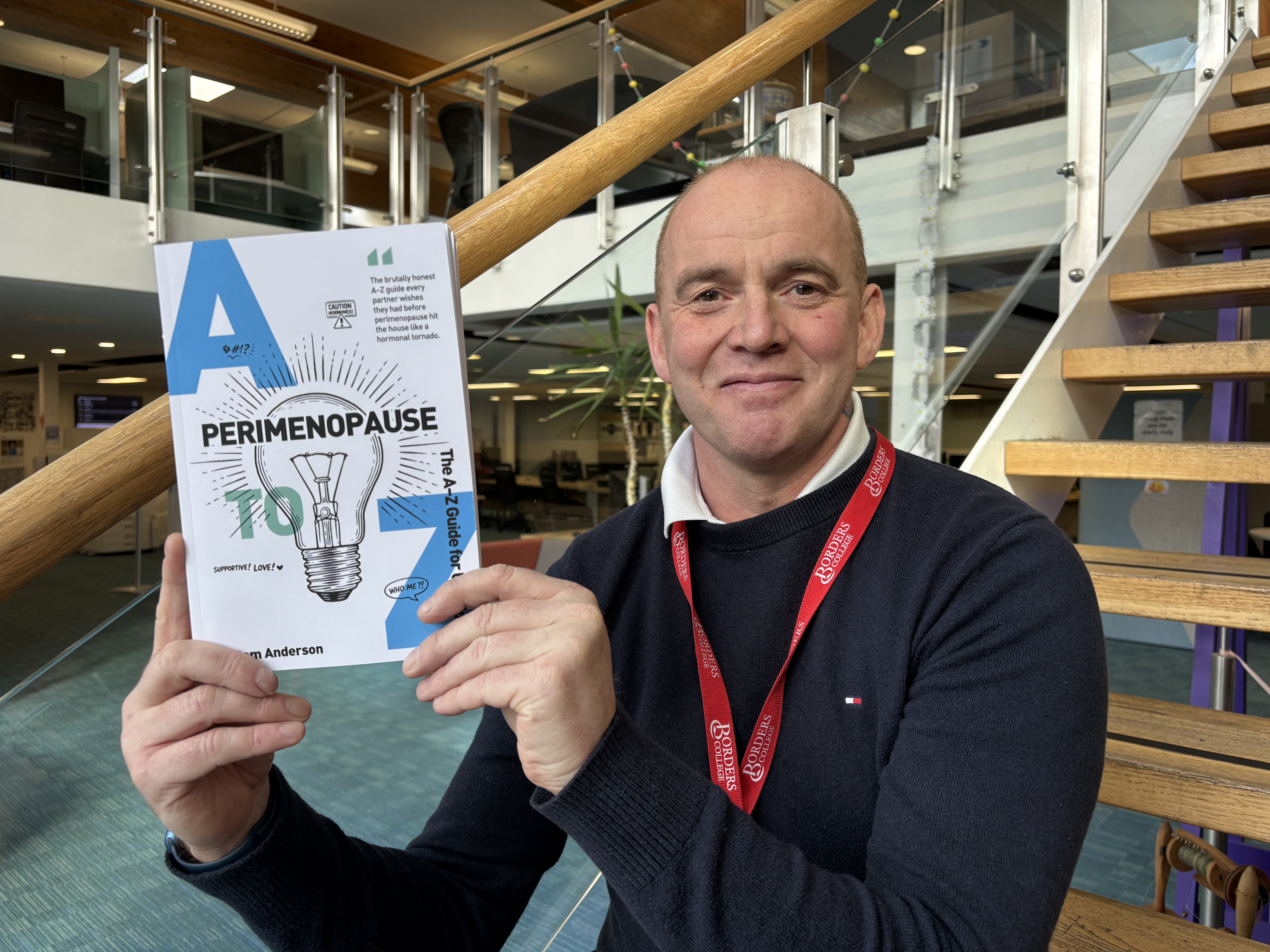
Sam Anderson is a college lecturer and retained firefighter from the Scottish Borders who never imagined he’d one day write a book about perimenopause — yet here we are.
After realising he understood absolutely none of what his partner was going through (but very much wanted to), Sam threw himself into learning everything he could. That curiosity quickly turned into a mission: to help other partners avoid the cluelessness, confusion, and “oh sh*t, I shouldn’t have said that” moments he faced.
As a lecturer, Sam went a step further and trained as a Menopause Champion to support colleagues at his work, proving that sometimes the best education comes from simply giving a damn.
When he’s not writing about hormones and relationship survival, Sam can be found playing golf, keeping fit, drinking more coffee than is medically advisable, and enjoying whisky and beer — not necessarily in that order.
This book is his way of saying:
“If I can learn this stuff, so can you. Now stop guessing and start supporting.”