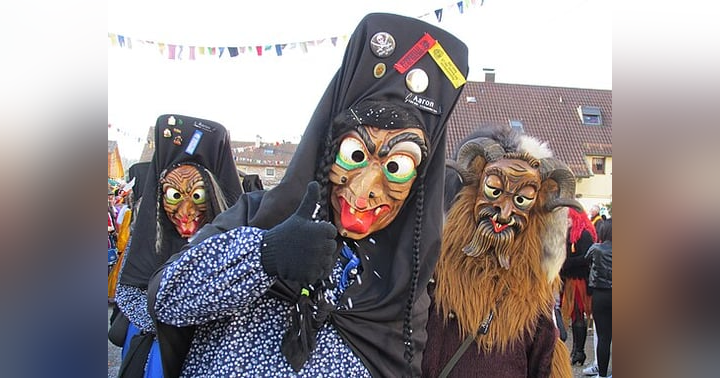





The Witch Next Door
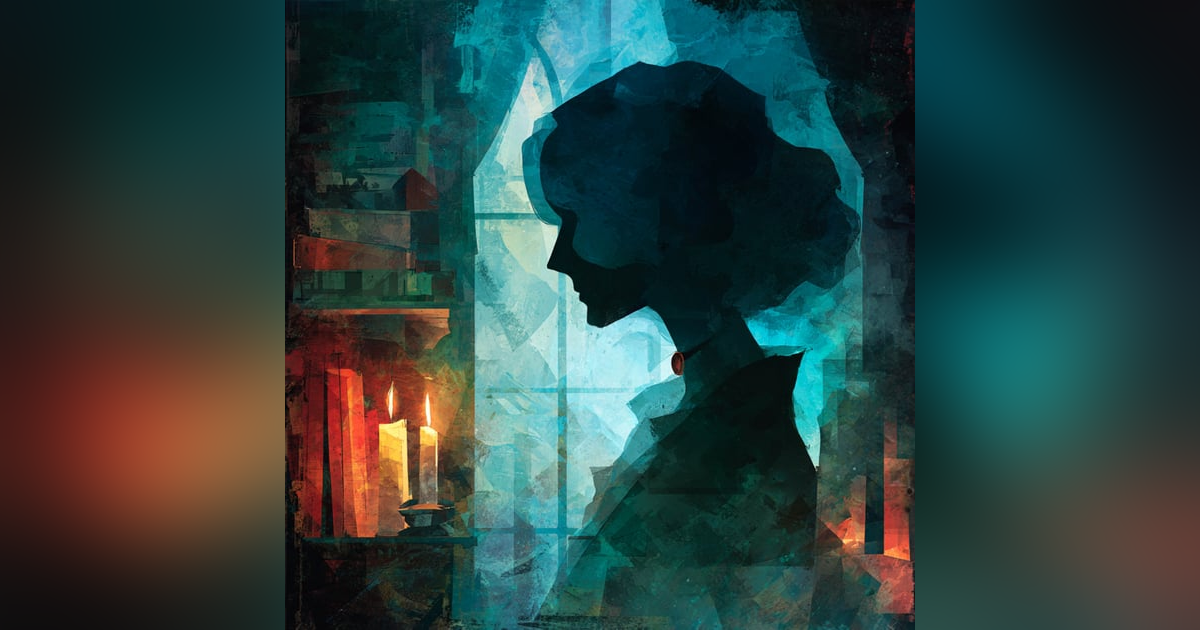
This October, Lexicons Unbound steps into the world of witches—not as broomstick caricatures, but as figures of power, resistance, and folklore. From Ozark “granny witches” to pop culture icons like Bedknobs and Broomsticks’ Eglantine Price and Bewitched’s Samantha, Melanie and Molly trace how the word witch has shifted from fear and persecution to reclamation and empowerment.
Blending personal stories, folklore, women’s history, and cultural commentary, they ask: what does it mean to be called a witch? How do accusations reflect social tensions? And why does the archetype continue to haunt, inspire, and empower women today?
Because maybe the witch we feared… was simply the woman next door.





Want a look at the episode's sources? Visit our Pinterest page: Lexicons Unbound
Hello everybody welcome to Lexicons Unbound. I just want to start off with, it's basically a t-shirt quote. They didn't burn witches, they burned women. And today we're going to talk about the word, the person, the lifestyle, all of the above and connect these things into folklore and really what's going on right now in terms of what is a witch. My grandmother never called herself a witch. In fact, I think she would be a little offended if I would have referred to her as one, but she was born on the Ozark Mountains and she was, as far as I was concerned, an herbologist. Her anointing oil of choice was Vicksav and she planted as many stories as she did seeds. Today, we're not going to conjure spells, but we're going to conjure connections and memories.
We're going to talk about witches. So happy October, everybody. We're glad you're here with us. Molly, what does the word witch mean to you? What makes a witch? Man, I think that is such a loaded question because of course my brain goes to the occult immediately. Being a witch was bad. When growing up in a church family, witch was not a thing you would call yourself. But then, you know, falling in love in high school with Wicked, of course I wanted to be a witch. And now we know we've got part two coming out next month in November and I cannot wait to see it and that is a witch, right? So a witch for me is this person that now sort of stands on the outside of society and I think that there's been this reclamation of that word into something that isn't evil, something that recognizes the divine in more things. Yeah, and I think you hit upon a good point, it's sort of a reclamation because I think, well, okay, my childhood memory, just to bounce off of yours for a second, was Eglantine Price from Bedknobs and Broomsticks for Disney. And she was not, at least at the beginning of the film, you don't feel like she was born a witch, she was learning how to be a witch. And I also discovered that role was the first leading female role in a Disney film that was a good and kind witch. And back in the 70s, we weren't able to see films over and over again. I remember my parents taking me to see that at the movie theater, but then I didn't see that film for years and years afterwards. But I can still sing those songs today and I haven't heard them in forever. You know, she beat Nazis. I think the reclamation really has
started in the 70s. And I found some research on that that I'll share in a little while. But I think it was about empowerment. And the historical part that I read, and I'm sure you did research on this too, but it was really about the women who were accused of being witches were on the margins. Witches, absolutely. They were the widows or the older women who never married or the people that were dependent upon charity. And I shouldn't say people. I need to say women because... Almost exclusively. We know it wasn't exclusively, but almost. What I found was like the figures were in the 80s percentiles, right? 80 to 85 % were based on women. And what I found so interesting was when I was going through Google Scholar and I was looking at all of the different articles and things,
just the amount of the areas of study that had scholarly research on witches. It was women's studies, gender studies, mythology, history, ethnography, anthropology, all of those fields, copious amounts of articles. And I always start just to give listeners an idea of what I do, I always start with a really general search and I don't put any dates on it and kind of see where these articles fall in terms of our timeline, what's new research, what's old research. And this was just copious. And then I sort of hone in and say, okay, now give me articles from 2023 on. There's so much conversation about this.
What I saw was really sort of started in the 70s. That's when people started talking about it and researching and building bodies of work on it and not just in folklore. I mean, in all of this other stuff. So that's exactly what I was going to say was I was starting to find things in the 70s is when it started to seem to populate more. I am actually going to pull an article from 1979. This is by Richard A. Horsley. And I loved that he said,
For the majority of those accused, we lack adequate evidence to determine whether they belonged to any particular social status or played any particular role in the society. Many were apparently seen by their neighbors as quarrelsome, others merely as eccentric. The most typical circumstance, whether of wise women or of ordinary women, was that the accused had happened to quarrel with or place demands upon their neighbors.
The prominence of the wise woman among the accused therefore can be explained by the special role which they played in the peasant society. And I thought that was so interesting that in some ways, accusation of witchcraft or of being a witch could come down to simply being frustrated with your slightly weird neighbor. Exactly. Tell me again who you were quoting. That was Richard A. Horsley was the last name, 1999.
I'm looking at Keith Thomas's "Religion and the Decline of Magic". What he says is "in any such comparative study of witchcraft, two points that are of primary importance, that witchcraft accusations grew out of ambiguous social situations at the village level and that witchcraft accusations were generated by tangible personal misfortunes and by real hostilities between neighbors".
So basically the same thing, right? Yes. I remember telling you this, but for our listeners, I happened to be in New Orleans for our national conference last fall and went into this lovely local bookstore and I found this really cool book called Witches, Sluts, Feminists, Conjuring the Sex Positive. And in the introduction to that book, Kristin Soleil says, the witch is undoubtedly the magical woman, the liberated woman, and the persecuted woman, but she can also be every woman. And I thought that was a really powerful way to think about the witch, that we often put her in these other categories, magical, right? Liberated, especially in that reclamation of the word, persecuted undoubtedly, but it could also just literally be any woman. And how important that was to understanding that it keep yourself safe from witchcraft wasn't necessarily a thing. Like there were steps you could probably take, but you weren't going to necessarily always be able to avoid an accusation. And that might be all it takes. We had
And now we get back into the patriarchy. It always comes back to it. Let's be real. I know. And before we move on, we're talking about the 70s. There is an article called We Witches, Knowledge Wars, Experience and Spirituality in the Women's Movement during the 1970s. And this is by Professor Anne Kwaschik. I believe that's the right way to pronounce it. K-W-A-S-C-H-I-K.
I have this article coming to me. I wasn't able to access it online, but the abstract reads, "during the 1970s, feminist activities reappropriated the figure of the witch in various ways as a symbol of political radicalism, feminist revolt or victimhood, or the presentation of subversive, parenthesis, healing or bodily knowledge". So I really just feel like we can trace at least maybe the movement here in the States, but I think it might be across European countries also, because I found quite a bit of research within the Baltic states. There's a Hungarian professor emeritus that has done a tremendous amount of work. My research, and I'm sure yours did too, sort of melds into Africa and Burma. And this just feels like a worldwide phenomenon.
To that point, I will say that in our show notes, of the things that we also have or that I found where there are a couple of, granted these are academic books, those of you who are not academic readers, take that with a grain of salt, but both Rutledge, that's how I pronounce it, other folks call it Routledge, but they have a series of books. So Rutledge studies in the history of witchcraft, demonology, and magic. You find all of those books on Amazon?
I went to their website. So the link I have is for the Rutledge website. Okay. And then that's so that you can go through. then Springer, because Springer has recently bought some of the other smaller imprints. So it's the Paul Grave, Historical Studies in Witchcraft and Magic. There are quite a few books in that category as well. And then there's a whole academic journal called Magic, Ritual, and Witchcraft. I want to tell our listeners something though. You'll notice in our show notes that, if there is a book that is not available readily online through Creative Commons or another source, the link that we'll have in our show notes is to an incredible source called worldcat.org. You can create a free account there and then you can put this book or any book that you want into their search engine and it will tell you the closest library to you that has it.
We want things to be accessible. And one of the points to this podcast is to really shout to the rooftops that you don't have to be sitting in a classroom to learn something. And you don't have to have special access to read research and do those kinds of things. A lot of the research that we're quoting has been made available by the researchers for free. You don't have to go through a journal. So just as a note for that, know that the things that we're putting in our show notes should be easily and readily accessible to those who would like to explore them. And so it's the Pallgrave one that has a whole bunch of titles. It's got like five pages. The Routledge one, or Routledge one has nine currently. I think I came to that one because of the Hungarian professor, because she has written some books that are involved in this 33 book study.
Yes. It's amazing to me that there is such interest in this. I guess I shouldn't be amazed. To have these book lengths on some of these being very specific topics. Yes. Yes. WitchTok is a thing? Yes. Right? I think we've done the history of this word and given us a foundation of who this person might be and how it might even be us at some point or someone we know. I was thinking about this because I was thinking about that Vicks. I've heard stories of that being used in families and it wasn't, it was used in ours for colds. But I was, I was in grad school before I learned the power of putting Vicks on your feet when you have a cough. And I had a cold once that that was literally the only way I could sleep because those coughs just were so wracking that I'm like, this stuff is kinda magic. But the, but
he thing that I got thinking about was that so many of these things, especially if your grandmother was from the Ozarks, thinking about that kind of area, so many of these remedies are so class-based. And so it's about access to money, access to medical care, and where you lived, how far were you from a doctor who made house calls or from a hospital? The thing was like, yeah. was none. Yes, you were at the point of, we have to be able to make it or know how to fix this because we can't just go to urgent care for every little thing, not saying that people do now necessarily because insurance and medical expenses are ridiculous. I think you've hit on something here is that money access. So we see all of the social media posts about fire cider. Have you seen the recipes for fire cider? for when you're sick. Okay. For when you're sick. right? Lots of garlic and onion and honey. know the antibacterial properties of honey. And anti-inflammatory. The quote unquote folk recipes are based in science. And many of them
Right. find it, I just find it so interesting thinking about Outlander and the show. haven't read the books yet. I promise I will listeners if that matters to you. Thinking about the show and that, you know, so the premise being she is a time traveler. She was a nurse in 1945. And she goes back and so she's got some herbal knowledge. And so she ends up being called a wise woman or a white witch. They end up calling her a white witch. Thinking about... we have to classify. Yes. Yes. Between good and evil, right? And that becomes a storyline in one of the seasons as well. But what I find so interesting with it is why it is also such a specialized knowledge, even at her time in 1945. She was reading books to learn about what could she do with particular herbs, where that would have been potentially much more common knowledge, especially as you think about those midwives. I know that this medicine will help, or this herb will help alleviate a little bit of pain. so I think that there are, so my experience personBecause I really think it is much more applicable to all of us than we give it credit for. And we shouldn't just be talking about it around Halloween because it really is very much part of our women's world. Absolutely. But we know Halloween is when the veil between the living and the dead is supposed to be its thinnest. So perhaps this is also when we get to start the conversation for the rest of the year. Exactly. Exactly. Well, all right. So now I'm going to, going to ask you. if we're going to start talking about reclaiming the word witch, is this reclamation, is it empowering or is it exhausting? I was looking at the phrase and Soleil uses it because she spends the last chapter of her book, it's called "Legacy of the Witch", and she spends it digging in a little bit to epigenetics. And so thinking about the intergenerational trauma and that this stuff is hereditary.
And so that in some ways epigenetically, we might carry some of this information we don't even know about. And she said, she does actually say how many of us are the granddaughters of the witches they could not burn. And I thought that was, it gives me goosebumps. It's so powerful. And then I looked it up and I was like, this is a like rather controversial phrase. There are a lot of people that really hate this and think you should never use it. And so I was really hesitant about it.
But what I am seeing is more vocal, especially in popular culture, more vocal descriptions and talk about the word witch. And so for one, of course, given how big she is, I of course thought of Taylor Swift. She has a song on her reputation album called, Did Something Bad. And in the bridge she says, "they're burning all the witches even if you aren't one. They got their pitchforks and proof.
Their receipts and reasons. They're burning all the witches even if you aren't one". And she says, "so light me up". And I just think that is really powerful. And then one more was during COVID, I found this young woman actually came across as a real that I had seen at first and she had the start of a song and people in the comments were like, please finish this song. I gotta know what's the rest of it. But it's called W-I-T-C-H and it's uh "Women In Total Control of Herself". Wow. The first line of the song is, "rumor on the street is that her apples are delicious. The jury says she's charming, but her exes say she's wicked". And I just thought, man, what a time to be playing with that and turn it around to a feminist anthem, essentially, of, no, I'm going to claim this. I'm a woman in total control of myself. So sure, if you want to call me a witch, have at it.
Go right ahead. Go right ahead. There's so much on social media. What my algorithm delivers to me because of what I watch is a lot of kitchen witchery, lot of hearth witch, a lot of green witch kinds of things because that makes sense to me. I mean, where did I see my grandmother the most? I saw her in the kitchen. All of these smells, all of these herbs, all of this stuff that she used to make pickles. I mean, What a transformation. Put an awful cucumber and boil it with all this stuff and then it becomes this crisp thing. I mean, you know, who thought that up? Who decided it was okay to eat that mushroom? I mean, right? Yep. Somebody had to figure that out the hard way. And so all of these things about make a simmer pot that's got cinnamon and orange slices and cloves, that was on my stove at Christmas.
When I was little, mulling spices and all of that stuff, mean, that was the kind of creative thing that she did. So none of that seems odd or marginalized or- It's tradition. Well, exactly. It's empowering. My answer is absolutely empowering. I know, I think we got to sort of maybe a point with Harry Potter where we were exhausted with that, but I think that's paved the way for people to normalize and bring certain things into their home. Absolutely. I like this statement. "Sometimes we're just tired women in linen with a library card". Yes. We're not a witch. That's all I need. Somebody's tired who put on some cool clothes. When I mean cool, I mean it's hot in the summer and we just need some linen. Comfort clothes and went and got a book that told us how to make a laundry detergent so we didn't have to go buy something that had a bunch of chemicals in it.
Right. Right. It makes me think too, a couple of things here. I think that we would be remiss to not mention kind of a foundational book. This was Barbara Ehrenreich and Deirdre English in 2010. And they had an original book earlier, but this is from 2010. And one of the things that they're talking about, because their book is all focused on the information that was kind of taken, right? So the book is called "Witches, Midwives, and Nurses, a History of Women Healers". I saw that one. Yes, I did. And they talked about "the sheer waste of talent in witch hunts, the sheer waste of talent and knowledge that they represented, the victims, besides the individual women who were tortured and executed, were also all the people who were consequently deprived of their healing or midwifery skills. At a time we now associate with the Renaissance in Europe and the first signs of the scientific revolution, the witch hunts were a step backward toward ignorance and helplessness, and not only for the largely lower class peop
but also is a connection to today and how we understand a medical model versus a social model of childbirth. love that you brought that up because I actually follow this creator on TikTok and she's called "That Glasgow Witch" and she just did a post and I don't know if you've heard about this or not- Do you know about the new tartan that has been created by three women in Scotland? Vaguely.
Okay. so it is in memory of the... Yes, yes. was killed, they call it a femicide. And so now there is an officially recognized tartan in Scotland for the victims of the witch hunt. That is huge. Isn't that huge? Yes. I think it's a big thing for a country to acknowledge something that has the word witch in it. To unilaterally nationwide put out PR things about the victims of the witch hunt. So she'll be on our show notes too. So you can, she actually has a piece of the tartan that she has on her Instagram and TikTok stories. One of the things that I think it's important for our listeners to know if they don't already know this about us is that part of research is also about complexifying an issue. And so even as we love the idea of reclaiming this word, I think it's important that we know we're not saying you can just reclaim it and be like, that's it. Now it's an okay word, right? Like that's all it takes. But instead to talk about, there is a 2023 book by Bridey Cosmina. one of the things that, and I didn't get to dig into the book too much itself. I was looking mainly at the description, but really talking about the amount of work that has been done by feminist activists and writers in their political efforts in the 20th century and how this has indelibly affected cultural memories of the witch and the witch trials and how this played out in popular culture representations of the symbol through the 20th and 21st centuries. So that this book is an important study of how cultural symbols like the witch inherit paradoxical memories, histories, and politics. And I think that's a really important thing
for us to know that this is in reclaiming what we're also doing is shifting cultural memory. And while that's important, it also in some ways complicates how we might understand or talk about historically the witch hunts that happened over hundreds of years. That word is its own connotation. We don't just apply that to witches. We apply that to anyone who thinks they are being unjustly
All these political witch hunts. Yes. Yes. Yes. It's a bit amusing to me that they have to put the word political in front of it. Yes. We have to categorize, again, categorize. We talked just a little bit about commercializing this term. I was at Half Price Books, the big flagship store in Dallas a couple of days ago, and they had an entire wall of not just the Harry Potter books, but also any kind of and puzzles and crochet kits and bookmarks and you know all of the stuff and Wicked will be the same way is the same way right? Absolutely, absolutely. But it also I feel like if you're what's the word to the verb for making all of these products for it it's also normalized. Commodifying. Commodifying thank you. Molly is so wonderful when my brain doesn't work she can supply me with the word but yeah it becomes normalized. One of the quotes that I had here was that on social media, the witch is part spellcaster, part Pinterest board. There's power in the aesthetic, but when you hashtag witch, are you reclaiming, resisting, or just vibing? Are you being just part of the core? Or is this something that you are really taking to heart? I think we have to think about that. Like you said, it's complex. Now that we've sort of walked through some of these paths, let's get to where we live, which is the folklore part of it, the figures, the archetypes and the neighbors. When I think about witches, what kinds of things do I think about? And as much as I was not a, I've never been a fan of Snow White. That's just not been my thing. But when the evil stepmother becomes the witch, the sorceress to give that poisoned apple, that was the image of a witch in my mind for many. The hag. The hag, the crone.
That she's purposefully ugly as a disguise. And I just think that was interesting. But one of the things I thought about was the witch in Hansel and Gretel. That story terrifies me. Not only she going to eat the kids and lure them in, but the idea that it's calculated, that it is manipulative, that she is sort of a trap. think that there's, for me, that's kind of what I think of with folklore is that the witch is, she's a trickster character, but not in the same way that we understand like the coyote in indigenous folklore. She's a trickster like the Cheshire cat. She is up to no good. She represents a downfall. She represents something evil. I guess that's the terrifying part is that you're so off balance because you have no idea which way this is going next. Yes. But then I thought about, you know, one of the things Soleil says in her book is that one of the first pop culture witches, a gentle sorceress, with Samantha in Bewitched. And I grew up watching, granted reruns, but I grew up watching Bewitched antink-a-tink. I'm twitching my nose right now. Yeah, boy. Listener. I loved Bewitched and I always got so angry at just the drama her mother would create, the drama her husband, whichever version of Darren we got, would create.
You know, Sam's so busy trying to just hold it all together that it also read to me as she's stuck in the middle, that she's trying to just live her life and she's constantly having to deal with other people. She was a witch, but she was very normal. Yes, and wanted to be. And then when I actually grew up watching Sabrina, the teenage witch, and that was more my age level. And so it was very much being invested in like what hijinks is she going to get into or out of today? I'm going to make a confession right now because I watched Bewitched, but I loved Indora. I loved her mother. mean, I just, she was powerful. Yes. And calculating. And calculating and you know, very smart. Maybe, maybe we'd call her that. Maybe not, but.
And then I also have an affinity and you would know if you looked in my office for the Evil Queen in Snow White. Yeah. And what's terrifying is that yes, I do. I like that character. And yes, I have said that out loud, but so many people have given me things with Evil Queen on it. know. I'm like, what am I projecting exactly? I know. It's very strange, but it's only people who really know me, which also is another kind of like scary little thing. You my students always called me Mary Poppins.
But again, there's another magical person. I'm okay with that. But yeah, it's kind of scary what I identify with. Well, and then you think about the way we've talked previously too about reclaiming of stories and so that that Disney gives us Maleficent's story. You have the Disney descendant movies that reclaim evil in some ways or the villain. And that's what I think is interesting too, that those are the stories that I grew up on. So that often the folklore for me, the witch was bad, right? It's been so long since I've seen it, but what is, there is a Disney movie where the witch and Merlin have a magical fight. that Madame Mim in the King Arthur story? I don't remember if it's that one or if it's the one in the sword and the stone.
That's what it is. It's a sword and the stone. Forth, where they're like turning each other into things, but you're not supposed to identify with her. Like she's the one standing in the way of the story at that moment. And so I think that's the thing is so often the witches were the hindrance to things being okay. This is something I think we share is that we want to know the backstory. We want to know the... And as performers... It can just become an evil witch. The reason it's always been more fun to play a bad character than a good character or a funny character. There's all this backstory you get to figure out. especially with something witchy or evil, what was the catalyst? What caused that shift? Yes. Yeah. We've got ageism going on here because you were talking about the hag and the crone.
And the ugliness was the disguise because nobody looks at somebody. No, I'm not going to look twice. No, no. No, no. Absolutely. So this ageism and power, why are older women still feared and or dismissed? Yes. I've seen a lot of stuff on social media about invisible women. Like after 50 women are invisible. Well, and that we've seen that play out in Hollywood there. I can't remember who the actress was who said, I started being asked if I wanted to play grandmother roles at something like 50 and was like, whoa, wait a minute. 50? You certainly could be a grandmother. Right. But Hollywood's version of grandmother is not a 50-year-old. And Hollywood, now we have these mature, I'm going to use the word mature, actresses who are like, get out of my way, Meryl Streep. absolutely. Dame Helen Mirren.
Well, of course. another one I'd say. Judy Dench is still working despite major disabilities with her sight and her age. Jamie Lee Curtis. is very outspoken about sexism, ageism, and alcoholism. And she's really turned to embracing her age, which is not something we see a lot. She's very much like, this is me. Take me or leave me. And I think that goes so far to empower other women about this. And I think it's about understanding that if we let go of the power, people will happily take it from us. Absolutely. That we have to work to keep it. I wanted to bring up this quote from Kristin Soleil. And she says, "you can't take the words out of the mouths of oppressors, but you can subvert the intended meaning of their words". And so as we think of that all year long, that we can't change what people say, but we can shift what the meaning of those words might be. And of course,
To be very clear, this isn't a it's done one time and then ta-da the word has shifted, right? This is a process and it's very long and convoluted. But what I love that she says, and she makes this case in a couple of places in the book about the power of words, therefore the power of spells kind of thing. She says "the ways we speak and the words we say have radical potential". And that is a piece that I really want to make sure our listeners take away too. The ways we speak and the words we say have radical potential. I did find a book, a 2023 book by a person named Rick Gregory, and he talks about specifically the witch in relationship to folklore in Tennessee that I've never heard of. Yes. The description of the book starts this way. "Apparently slumber parties in the mid-south 1970s were plied with a strange ritual. At midnight, attendees would gather before a mirror and chant, don't believe in the Belle Witch, three times to see if the legendary spook would appear alongside their own reflections, a practice that echoes the Bloody Mary pattern. Bloody Mary. The execution of Queen Mary of Scots centuries ago. Going on, the legend of the hint who terrorized the Belle family of Adams, Tennessee is one of the best known pieces of folklore in American storytelling.
Featured around the globe in popular cultural references all around. This book specifically explores the oral traditions associated with the poltergeist and demonstrates her regional, national, and even international sweep". I've never heard of the Bellwitch, but this book sounds really interesting. I am a bona fide member of 1970s era sleepovers. Yes. And I have stood six deep in a bathroom with 10 year old girls looking in the mirror in the dark talking about the bell witch. I've done it. I've been part of it. We've done light as a feather. Yes. We've done light as a feather. yes, light as a feather. Yes, yes. And picked up those girls using two fingers. It was its own rite of passage. It was. It was titillating and tantalizing and a little bit dangerous. Now I'm sure that my friend's mother heard us, knew what we were doing, knew that there was no issue with it. Yes, I am Gen X, but occasionally we did have a little bit of supervision. Especially when we were in the house with other people. But I don't know, it was probably two o'clock in the morning and they were probably asleep. I was in Arkansas, which is adjacent to Tennessee. So it's not surprising that I knew it. You were way up north. I was way up north, yeah. I think we dabble in it more than we knowBovinschen et al. And what they said, and this is 1978, and it's still just as much true right now.
"The past can still seem so close only because the structures of gender specific suppression appear to have remained so constant. Even if for the moment we are relatively safe from being burned at the stake". I love the idea that we are relatively safe because that's all we are. That's all we will ever be. Right? Wow. And I think particularly in our current political situation, that is trenchant.
And then I have, we're kind of toward the end here, I have a little poem I found. It's called "Witches" by Fleecy Millay. "In the past, they burned us because they thought we were witches, because we knew what to do with herbs outside of the kitchen, because we knew how to dance and seduce and pray, because we moved with the cycles of the moon". I think that's a perfect place to end us. I really love this topic and I think it would be interesting to talk some more about Granny Witches and listeners, we would love to know where you'd like to jump off from and what you'd like to talk about. So please visit us on our pod page and give us all the input. I hope we have some robust conversations about this because maybe the witch we feared was the woman we ignored, the woman who lived next door, the one who knew how to do all the things that we didn't know how to do.
We'll be anxious to have you join us next time. Thank you for staying with us for this episode. Happy October. We'll talk to you soon.