The Wyrd Masquerade: Witches, Masks, and the Power of Disguise
When we think of costumes, we often picture a performance of some kind or a Halloween party, but in folklore, costume is rarely just surface decoration. Following a #WyrdWednesday prompt on BlueSky, we step into the world of witches and masquerade, where masks carry more than decoration: they hold history, community, and power. 'Tis the Season!
Alpine Witch Traditions
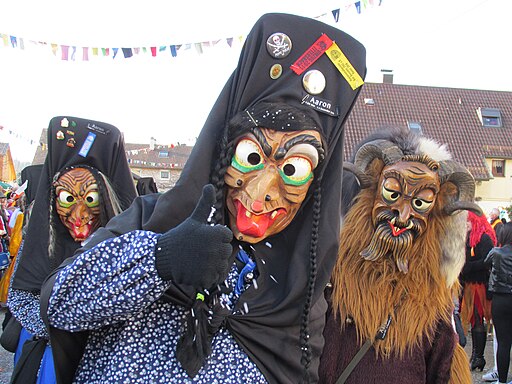
In Alpine regions of Europe, carnival season (known as Fasnacht or Fasching) brings out figures like the ones in our featured image. Their grotesque wooden masks, called Larven, were carefully carved and often passed down through families. These weren’t cheap props for a single season. They were heirlooms, meant to embody the liminal figure of the witch. During Fasnacht, masked witches paraded and danced through the streets. Their role was both disruptive and protective: to frighten away the lingering spirits of winter, to stir up chaos before order returned, and to remind everyone that disguise and transformation are part of life’s cycles.
Many of these “witches” were actually men in drag, taking on the exaggerated appearance of the feminine trickster. This boundary-crossing, between genders, between order and chaos, between human and spirit, echoes how witches have always been seen as liminal figures. Not fully one thing, not fully another, but existing in-between.
By the nineteenth century, the witch became a popular figure at masquerade balls and Victorian fancy-dress parties. Pointed hats and broomsticks began to standardize the image, but the folkloric roots remained: costume was not only playful, it was also powerful. A mask can conceal, reveal, and transform.
The witch’s costume, whether grotesque, glamorous, or practical, reminds us that dress and disguise are never neutral. They carry stories, fears, and hopes across centuries. We'd like to know; if you were to step into the ball, what mask would you choose?
Image credit: Baden de, CC BY 3.0 <https://creativecommons.org/licenses/by/3.0>, via Wikimedia Commons
Find us on BlueSky @LexiconsUnbound
Folklore Sparks Curiosity: The Tale of the Kensington Runestone