Glowing Tombstones: Folklore Under a Texas Moon
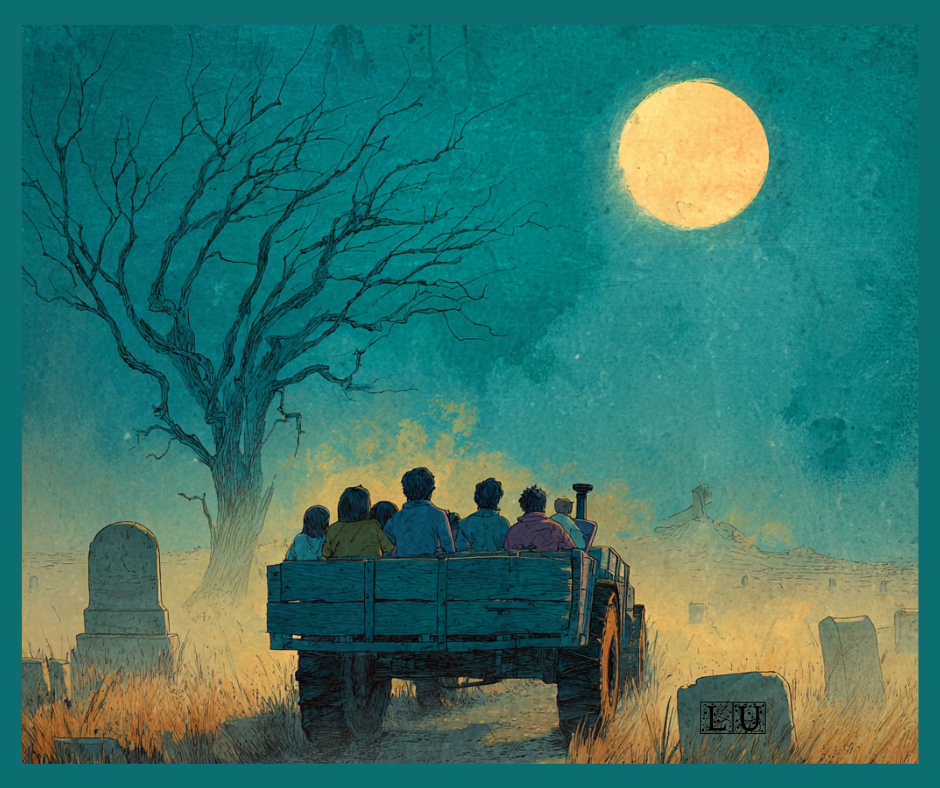
Growing up in a small North Texas town in the early ’80s you had to make your own fun, and local urban legends were favorite source materials. One long ago October, our youth group gathered for the annual Halloween party, but this particular year came with a twist: our parents had planned a “mystery night.” We were told only to meet at a particular parking lot, and once everyone had assembled, we piled into cars whose drivers knew our next destination. We headed out of town, the dark Texas night pressing in, while we all excitedly guessed on our destination. As soon as we turned onto Rogers Rd., our guesses ended as it became glaringly clear where we were headed. Highland Cemetery, home of the legendary “glowing tombstone.” Founded in 1883 and still active today, it holds over 7,000 memorials, many reconstructed from funeral home records, obituaries, or family Bible entries of Wichita County settlers and Iowa Park residents. At fifteen, I knew nothing of its history, only its reputation as the backdrop for teen dares and date-night make out stories.
Once we had all pulled over and parked next to the bar ditch, we were met by another parent, proudly sitting on his Massey-Fergueson hitched to a trailer stacked with hay. We scrambled aboard, some of us more hesitant than others, the diesel exhaust sharp in the cold night air. Soon we began rattling slowly towards the metal archway that marked the entrance. As we passed under, all conversations went quiet. After a few minutes, an older boy pointed ahead. “There,” he whispered. Suddenly the tractor headlights flicked off. The engine followed. In the sudden silence, someone finally breathed and quietly said, “Do you see it?” Another asked “Is it glowing?” We all tensed in the rough hay, palms sweaty and hearts thudding with a mixture of nerves and excitement. Then, without warning, dark figures leaped from behind a tombstone. They were barreling straight towards us. Chaos erupted with screaming teenagers scattering in every direction, some even bolting back down the gravel path towards the gate. It didn’t take long to realize it was a couple of our parents, giddily I’m sure, lying in wait. Eventually the laughter bubbled up through the panic, and it turned into the perfect kickoff for our party. But I can tell you that I never, ever, went inside that cemetery again.
Highland may have been my introduction to this particular glowing tombstone lore, but it is far from the only Texas cemetery with these kinds of stories. Across the state, similar legends surface in rural graveyards, often tied to single stones whose glow, real or imagined, become a magnet the latest thrill-seekers.
Just an hour southeast of Iowa Park lies Veal Station Cemetery near Springtown, home to perhaps Texas’s most famous glowing tombstone. Visitors swear that a polished granite headstone emits a soft glow visible at night. A Fort Worth Star-Telegram photo (Casstevens, 2003) captured this eerie effect, later explained by caretaker Don Moore as reflection from a nearby dairy barn’s light. Tui Snider addresses this in her book, Paranormal Texas, stating that the cemetery lures ghost hunters and adrenaline junkies, who are drawn there more for the legend than the skepticism.
This combination of logical reasoning and enduring myth illustrates a fundamental aspect of glowing tombstone stories: even when science provides a rational explanation, folklore persists because it fulfills a deeper longing for mystery. In Pottsboro, the Grant family plot centers on a striking marble obelisk said to glow an unsettling green on full-moon nights. The stone’s epitaph, carved for Julia A. Grant, warns: “Take warning by me young people as you pass by… as you are now, so once was I.” (Owl See You in the Cemetery Blog, 2013). Alan Brown’s The Big Book of Texas Ghost Stories recounts the legend of “Jake’s ghost” in Hutto Cemetery near Austin, where visitors claim to see a glowing tombstone tied to Jake’s restless spirit. Yet no stone bearing that name exists in the cemetery. This version strips away the physical stone altogether, showing how glowing tombstone lore can float free of its material origins. Even without a specific marker, the story persists because what’s compelling is not the stone itself, but the ritual of going to the cemetery, looking into the dark, and believing you might see something.
Reading these stories, you start to notice the patterns; small cemeteries, one unusual stone, and always, always at night. They are less about ghosts than about how we use place, memory, and darkness to create meaning and how a faint glow can light up the stories we tell about the dead. As folklorist Nancy Adgent notes in Deep East Texas Grave Markers, “Grave markers are often the only physical evidence of a person's existence and offer opportunities for even ordinary people to 'speak' from the grave.” In this way, the glowing tombstones become more than curiosities. They are cultural crossroads where material, memory, and story converge. Where stones speak both through their physical presence and through the legends we build around them.
What fascinates me is how these immigrant designs actually feed the glowing tombstone legends. Walk through almost any rural Texas cemetery and you’ll see European fingerprints, especially from German and Czech communities. They loved marble, granite, and dramatic shapes like obelisks or spires. At night, those polished surfaces catch every bit of moonlight. The Grant family’s obelisk in Pottsboro is a perfect example: its inscription seems to glow against the rural darkness. These weren’t just artistic flourishes; they were ways of weaving cultural values into stone. Add a layer of folklore, and the effect only grows stronger.
And here’s the part I like the most, these legends are not static, they are performed. Teenagers gathering at cemeteries like Highland or Veal Station enact what folklorists have named “legend-tripping", a ritualized visit to a place reputed to be haunted. The shared experience, daring one another to step out of the car, pointing out ominous epitaphs, watching the shadows for movement, takes precedence over seeing the glow. Through this experience, cemeteries have evolved from simple burial grounds into performance spaces that unite historical significance with thrilling experiences. The glowing tombstone exists as both an historical artifact and a social event. The enduring nature of this legend converts cemeteries from lifeless places into active locations where people create stories and perform rituals. These stories fulfill a fundamental human requirement to experience the past physically present in the current moment. These legends also endure because they blur boundaries. They fold together folk beliefs and material fact, grief and thrill-seeking, history and performance. In small Texas towns, cemeteries are not remote Gothic constructs but part of the landscape, visible from highways and black tops, their iron gates passed daily on commutes and errands. A glowing tombstone reclaims that everyday visibility and reframes it: not as neglect or distance from the dead, but as an active, shared space where past and present momentarily overlap.
When I think back to that night at Highland Cemetery it isn’t hard to call back the sense memories. How cold it was, the smell of exhaust and hay, the screams and the laughter. We didn’t see a tombstone glow, but I don’t think that was ever really the point.
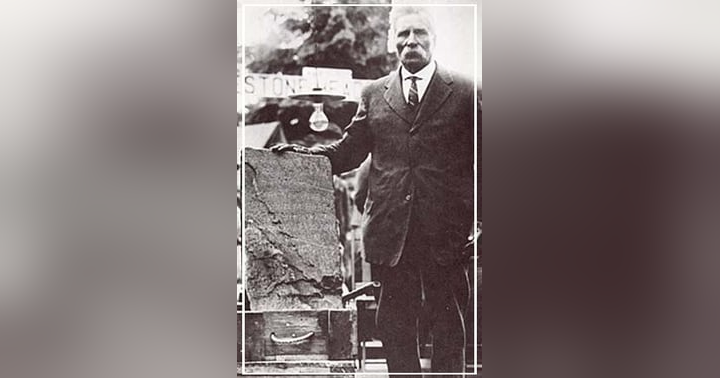
Folklore Sparks Curiosity: The Tale of the Kensington Runestone