
 Apple Podcasts

 Spotify

 Amazon Music
 RSS Feed
From Burnout to Flow: How ADHD Shaped My Brain Health Journey with Jamie Toyne


What if the key to better focus, less burnout, and sharper brain health was flow ?
In this inspiring episode of Let’s Talk Brain Health! , former professional athlete and ADHD advocate Jamie Toyne shares how discovering the science of flow transformed his life—and how it can do the same for you.
Jamie explores what it takes to enter a flow state, why it’s essential for cognitive performance, and how small shifts in your daily routine can help you get “in the zone” more often. He also shares practical tools to reduce distractions, improve focus, and build habits that support your brain’s natural rhythm.
Whether you're seeking more clarity, energy, or creativity, this episode offers actionable strategies to help you tap into your brain’s full potential through flow.
00:00 Introduction & Jamie's ADHD Journey
03:03 Discovering Flow Through Tennis
06:30 Burnout and the Quest for Flow
08:56 The Science and Practice of Flow
14:28 Creating Flow in Daily Life
18:50 Addressing Burnout and Self-Care
25:17 Rapid Fire Questions and Conclusion
Resources
0:00 Your brain health matters. Welcome to the Let's Talk Brain Health podcast from the virtual Brain Health Center. Join the conversation on brain health and Wellness with your expert host, Doctor Crystal Color and respected guests. Discover ways to take charge of your total brain health, mind, body, spirit. Tune into the latest brain care news, science based tips and practical strategies to build a better brain and live a brain healthy lifestyle. By prioritizing your brain health, you are taking an important step towards living a happier, healthier life. Let's continue our brain care journey together with our next guest. Today we welcome our special guest Jamie Toyne to the Less Talk Brain Health podcast.
0:51 Jamie was diagnosed with ADHD as a child and has burnt out three times in his career, once as a professional tennis player and twice as a business owner. After researching the connection between ADHD, burnout and flow, Jamie developed coaching program called Flojo, which helps ADHD founder secure burnout, harness their ADHD superpowers, and start flowing towards their goals. Jamie is also the author of The Pressure Gauge Mindset and founder of two other companies called Deal Flow and Exit Planner that helped more than 400 entrepreneurs successfully exit their business.
1:31 Jamie, welcome to the podcast. Is there anything else about your background that you'd like our audience to know before we dive into today's topic? Hey Crystal, lovely to be here. Whatever comes up will come up. Well, perfect. I appreciate your willingness to come on and share more about your story and your journey in this broader brain health and Wellness space. I'd like to ask a bit about your experience living with ADHD because one of the things we talked about on the podcast is all brains are unique. No2 are the same and yet our brains make our story so very broadly to get us started today, would you be willing to tell us about your brain story? My brain story So I was born in Australia to a Greek mother and an African father and adopted at birth by Anglo Australian couple.
2:27 I was born and raised in Australia. I spent most of my childhood years in a very small, remote town in the middle of Australia. So for Americans, it's like the classic Outback in the middle of the desert. And I was diagnosed with ADHD at 11 years old. I presented with all the classic symptoms of hyperactivity and inattentiveness. Yeah, very disruptive in the classroom. School reports saying lots of potential but can't focus. And, yeah, got into a lot of trouble at school. And my diagnosis didn't really change anything. In fact, I didn't really know fully that I had ADHD until I was an adult and I sort of re explored that with my mom, but I wasn't medicated or anything like that. So I continued through childhood unmedicated and she wasn't a big fan of the medication back then.
3:14 And my experience as a child was schools really cop a lot of negative attention, I suppose, particularly from authority figures like teachers and stuff like that. But I was very sporty, I was very athletic and that was sort of my escape and it was where I was able to focus and thrive. I was really, really lucky and I played tennis and soccer and athletics. And then at about 14, I really focused on the tennis, which actually allowed me to move into state to Melbourne, which is one of the biggest cities in Australia, and actually drop out of school and finish my schooling by correspondence remotely basically. And I joined the professional men's tennis tour and just competed and did my studies on the road with a tutor, which was really challenging. I learned a lot of skills because I had to sort of manage myself at a pretty young age, and that one to one attention versus like being in a classroom sharing attention with 25 other people was actually pretty good for my learning. I had a very supportive mother.
4:12 She's a social worker, so she allowed me to move through life in a way that worked for my brain. I appreciate you sharing your story and you talked very candidly that there were some skills that you used and how exercise may have been one of those components and movement that's important for your own care. Is there any other skills you'd like to highlight that has been something that served you well to date on your own brain care journey? I think the biggest skill is harnessing your true nature and not trying to fit yourself into someone else's mould or follow someone else's path to success, which is really hard when you're in a schooling system or a university system or a workplace. Which is why a lot of entrepreneurs, a lot of people with ADHD, creatives and artists and entrepreneurs have self LED practices because they can really design their work to work for their brain. I guess the biggest skill I've developed really early, much with the support of my mother, was to really do things my way. I think that's such excellent learned skill that you might have learned early in life with support from your mom, like you shared.
5:17 And to learn what supports our own brain is very different. And it's a lot of conversations most of us don't have until you're in an environment where you're feeling different or as you mentioned, you talked about how ADHD is often framed as a challenge, but you view it as a superpower. Would you like to add any insights into how did that redirect you into taking care of yourself? ADHD didn't really, it became my superpower in spells, but often it was like the unlocked potential thing where they were like these moments of really high performance and consistency and really excelling. But mostly my childhood and my young adult and my 20s were spent with a lot of inner turmoil and a lot of suffering and a lot of frustration because I couldn't do the things that I wanted to do even in my tennis career. Obviously it went really well to a point. And then when I sort of joined the pro circuit and it became more of a serious career opportunity and I secured a bunch of sponsorships, one including an investor who basically just paid for everything, my travel, all my living expenses and travel expenses and tournament entries in exchange for 10% of the prize money. At that moment, I experienced significant pressure. And I would say that really what I was able to do on the tennis court was drop into a flow state. All the chaos and all the stress in my mind sort of dissipated and I was able to experience peace. I dropped out of my mind and into my body and I just knew what to do and everything sort of effortlessly clicked into play.
6:44 So that was sort of like my first real taste of flow. And then I would say that when the pressure built up or circumstances changed, I sort of switched from maybe a growth mindset to a more fixed mindset. And on my 18th birthday, I burnt out and probably been burning out for a year before that, traveling around and losing a lot of tennis matches and feeling very frustrated. I quit in a very dramatic fashion and that was that. That was my first experience with burnout. You've covered so many important topics that I think are of interest to people where they likely see themselves or their loved one in some aspect of what you shared. And I know a big part of our conversation today was this idea of flow. How can we cultivate that state for ourselves?
7:25 Or just like you said, a lot of the times we recognize we're in flow after the fact because when we're in the time just seems to go so quickly. And I'd like to see if you had any more insights about that for people that might be new to this idea of concept like yours came when you were on the court and in your element, a skill you knew really well. What would you like our listeners to know about cultivating? Flow. I became really obsessed with Flow after my second burnout, which was I was running Emerges and acquisitions company headquartered in San Francisco at the time. And I had a very significant burnout. And through my research, I realized that flow is really the antidote to burnout in a lot of ways, or at least it's the opposite state of existence. When we're burned out while experiencing chronic exhaustion both mentally and physically, we've got a negative attitude, we're lacking motivation, our performance dips. And if you look at flow state and the studies around that, we're 500% more productive when we're in a flow state. So if we can be in a flow state all of Monday, we could essentially take the rest of the week off and achieve the same amount.
8:30 So it's quite significant and our creativity explodes and we're energized. And so I knew what experience I didn't want, which was the experience and sensations of burnout. And I wanted more flow. I wanted to feel good and like I'm performing well. Everyone's experienced flow many, many times before, whether it's on the sports field or making art or cooking or gardening or having a deep conversation, or it might be in the bedroom with intimacy. I mean, there's just so many examples and we do experience these moments. I think where flow becomes very mysterious and very fleeting is in the workplace when we're focused on tasks that are repetitive or potentially boring and figuring out ways to sort of really tone out focus and get into a flow state.
9:15 There's a lot of neuroscience now to suggest that we can trigger these flow states by manipulating our neurobiology. So changing the brain wave frequencies in our brain, dropping them from alpha to beta to Theta, releasing certain neurotransmitters and neurochemicals in the brain, and also reducing our cognitive load, which is really just the prefrontal cortex that is responsible for like planning and decision making. It's also the part of the brain that overthinks everything. When that's really active, it's impossible to get into a flow state. That's the neuroanatomical changes that happen in the brain when we insert a first thing. There's intrinsic motivation. There's a bunch of things that go into flow, but being able to trigger a flow state on a daily basis, the primary thing is being able to focus. You need to be in a focus state for at least 20 minutes before you can expect to enter a flow state. And it's not going to be that you'll enter one. But again, there's like music you can play to manipulate brain waves.
10:11 There's all kinds of things you can do, yoga, breath work. So I became really obsessed with flow after my second burnout and I really focused of entering a flow state. So I really learned that and mastered that to a degree. But I actually burnt out for a third time. And it was a very different burnout because the first two were very career focused. One in my tennis career, one in my entrepreneurial career. The third one, I was actually really performing quite well. I published my first book. I had launched a new software company. I was doing quite well professionally, but my personal life fell apart and I sort of burnt out in my personal life. And that's when I started to look at flow a little bit differently. And I started switching over to the East and looking at sort of really studying like Eastern philosophy because the concept of flow has actually been around for whatever millennia. The ancient Greeks called it enthusiasmos, the Taoist monks called it wuwei, the Zen Buddhist called it zazan. And I started looking into the history of flow. And we have a habit of this in the West. We sort of take concepts that are provided from Eastern philosophy, and then we only focus on what we can measure and quantify through math and science. And so I think flow has become this very narrow lens of bio which can almost guarantee high performance consistently, but you can still burn out.
11:28 That was really at the point that I decided to go really deep on the neuroscience behind my ADHD turn out and also flow and also just mixing in some of those ancient principles of harmonization and balance. That really led me to come up with design a program called Flojo that really is focused on helping creatives and entrepreneurs with ADHD that are looking to go from a state of burnout to flow. And I call that that sort of state of being Flojo. And actually interestingly, Flojo, I made-up that word, but really what I did is I took the word flow and then I took the word mojo. Are you familiar with that word?
12:12 Mojo is actually an Afro Caribbean word. So the Yoruban people from I think Nigeria, when they got dropped off on slave ships in Cuba on their way to America, sort of a fusion of those two cultures. And they came up with this word mojo. And it means unique magical power, which is really cool. And the reason I matched those two words together is because Flojo is about like harnessing your true nature. So making your ADHD your superpower. It's really like designing your life in a way that everything aligns to your true nature and who you are and making that your competitive edge. And at that point, I think started to flow a little bit better in my life, not just professionally but also personally. I love the word match up as soon as you explained it.
12:53 It makes perfect sense for what you would know about wanting to cultivate a flow state. And I think this has been a common emerging type of conversation. We're just talking performance. You want it in your work environment, sports settings have their own criteria, but also for a lot of us in day-to-day life where we're starting to realize we have some control over cultivating more emotional type states, ideally for better cognitive performance. I mean, before it just kind of seemed like if I go into this space and for a lot of us tuning in, it might be in nature. You kind of know how you feel when you're in there or what happens afterwards. But the idea that we can intentionally build practices or things in our environment into our day-to-day lives I think is more of a important conversation.
13:42 You hit on the buzz term biohacking. A lot of us look at our environment. Do you have any tips for people who might just be starting to think of, I have recognition of what slow is or I've had this state of flow in my own life. So to recap or to highlight for individuals, it's the idea of when you've been immersed in an activity, typically it's one that you're passionate about or something that uses your skills appropriately. And time just passed. Next thing you know, you look up it's hours and it was effortless. So I will say that's very broad, but if people want to cultivate more of that, do you have any tips or something as a starting place where maybe they could go to have more of this flow intentionally in their lives? What is your natural state of being? We experience flow all the time as kids. When we're playing, we're really creative. We experience time dilation all the time as kids, and we're completely immersed in the present moment. It's when we get older and life becomes a bit more complicated that we get pulled out of the present moment and start focusing on past and future.
14:45 If flow is your natural state of being, the goal is really to just get back to that homeostasis, like your true nature. It's about stripping away the conditioning. And what that could look like is basically just removing the things that block you from flow. So when we biohack, we're often adding things. I've got to go to the gym, I've got to go to the store, I've got to change my diet, I've got to do, and those things work. But if there's something fundamentally blocked, for example, if something's so out of alignment, the work you're doing makes you miserable, or the customers that you serve, you don't actually align with your values and you're helping nasty rich people get richer or something like that. No amount of sauna and ice bars is going to help you get into a flow state because the intrinsic motivation is not there because something's misaligned. So really trying to identify what is blocking you from flow. And so I break that down into a few different categories, but one of the big ones is alignment, which I'm talking about.
15:43 And the easiest way, if you're like, how do I know if something's like a flow blocker or something I need to address? The easiest way I can explain it is if you put energy into something and that energy does not flow back to you, at least the equal amount of energy that you put in, then something about that is unaligned. And in some relationships or some tasks or responsibilities that you have to do, sometimes it's a complete drain of your energy. Like you put all this energy in and you get absolutely nothing back. And they're usually the big blockers or what I call boulders. I want to start with that because I think that's actually much more important. And if all you're really trying to do is createspace for flow to naturally emerge with the biohacking stuff, you're just looking for some quick sort of tips to get started tomorrow. The three like foundational things that I talk about all the time are really boring, but so true is nutrition, exercise and sleep.
16:35 They're foundational piece. If you're not nailing those three, don't worry about saunas and ice blast. Just get that sorted. But then obviously I listen to music that is designed to get my brain waves into a certain state, like gamma and Theta wavelength music. I Mihai chick sent Mihai, who's sort of seen as the godfather of flow and it's sort of Western form. He's a psychologist, an amazing man, and he talks about the flow channel. So if you can picture in your mind an XY axis, you have the challenge of the task that you're doing on the vertical axis, and on the horizontal axis you have the skill level. If you chart your task or the project that you're responsible for in that graph, basically you're wanting to find the perfect balance between challenge and skill. If the challenge far exceeds your skill level, you're going to experience stress and anxiety and it's going to pull you out of the present moment and you're not going to be able to enter a flow state.
17:30 If your skill far outweighs the challenge, you're going to experience boredom and apathy. Really, it's about getting that balance between challenge and skill right. Even if you're responsible for boring, repetitive tasks, you can make it more challenging by reducing the time box that you attribute to it. So if it usually takes you an hour to plug in and do your bookkeeping, try and do it in 25 minutes and put some fun music on while you do it, and you might be able to get into flow that way. A general rule of thumb is that you're wanting the challenge to exceed your level of skill by about 4%. This is not science. This is just something that Steven Cutler and Mihai Chick sent me how to talk about. But if you can sort of picture that, it's a little bit of a Ridge, but it's not too much of A Ridge.
18:12 Cal Newport's work on deep work, his book, is really, really incredible. Really protecting time, uninterrupted time, and really safeguarding that. There are hundreds of interventions that I sort of go through in my program, but there are a few to mention now. I appreciate you doing the broad brush stroke because we get about 30 minutes to pick experts brains and there has to be something in there that peaks people's interest. And I think a lot of this makes me think about brain health is there's a lot of options that you have and it's finding what's resonating with you now in today's moment. And to also recognize, I will share to my extent too, that I've had three episodes of Burnout myself and how different they were. And I remember my last one, once I recognized it, the strategies I used for my first two episodes of Burnout weren't filling my needs in the third time around.
19:03 And so it was like, OK, now what else are things I need to explore that would fit where I'm at now? What am I open to trying? Sometimes we overlook that we have this toolbox we use that we rely on a lot. And we get in this scenario, we're like, you know what? Breath work usually gets me through it not working this time. Or like you mentioned some of the other ones like pull bass or sauna you might not have access to more regularly as you're wanting to use it. But it's like this can be part of my monthly routine or things I do as maintenance. But when I'm nitty gritty day-to-day skills, what is actually something I can tap into and use and explore? So I'm so glad you did the broad brush stroke because I think there's a lot for us to think about what fits for us. And I do say sometimes that's the discredit. We hear these great things and it's working for everyone else. And then we try it and we're like, why isn't it working for me?
19:57 And we tend to put the blame and onus on ourselves. And just like you said, doing that mindset shift. You know what, this is an option. It doesn't work for me now. Maybe I revisit it in another point in time and not having the judgment of all of this works for people who I know that might have similar symptoms or navigating this challenge, but it's not doing me any good and I failed. Cliche, yet another thing. It's important to know that. And so I'm so glad you highlighted lots of different things in there for us and reflecting back to you. Is there anything else you'd like to elaborate on? The main point I want to drill home is focus on removing the blockers first, then worry about what flow triggers you can add because the impact of removing a significant blocker is going to generate infinitely more flow and it's going to be a lot easier than adding something.
20:49 And the other thing I would mention just in terms of my burnouts, I mean, they all occurred for different reasons in a way. But the common thread between all three burnouts is the relationship I had with myself. And I'm very enthusiastic about a particular type of psychotherapy, which is called internal family systems. The concept is that we're made-up of different parts. You can call them alter egos, you can call them whatever. And these parts essentially there to sort of protect the vulnerable part of us that was basically who we were as a child and the experiences that we have and the beliefs and fears that limit us in ways. When I think about Bernard, I think about two particular parts of myself.
21:30 One is I call my higher self or the general, and that's my prefrontal cortex. If you want to bring it into a brain that's setting the vision and the strategy and setting out the planning and writing the to do lists. And then the other part is the lower self or what I call the workhorse. And that's the one that's responsible for actually doing the work. It's the one that has to sit in front of the computer. It's the one that has to jump on the tennis court. It's one that has to make dinner. And that relationship in all three burnouts was so toxic for so long that something physically sort of snapped inside of me, I would say. And these really big moments and my second burnout, I was living in Mexico running a very successful company and I took a six month hiatus and stepped down as the CEO and went back to my tiny town.
22:11 And in the middle of Australia and my tennis career, I smashed all my rackets in front of hundreds of fans and forfeited the match and never played again. I wouldn't say I had a very good awareness of burnout. It really happened and it was like enough was enough. But just to give you an example of these two parts of how they can communicate and work with each other, My higher self will often set very ambitious goals with very unrealistic timelines and deadlines and essentially sets my lower self up for failure. Instead of getting that beautiful naturally occurring dopamine hit of like getting to the end of the day and like ticking off everything in my To Do List or getting to the end of the week and finishing a project, I constantly feel like I'm failing. And when you constantly feel like you're failing and you start to feel really dejected and you feel a lack of energy and a lack of motivation and you start to rebel against yourself.
22:58 And I think that's something that particularly for people with ADHD or people experiencing difficulties with focus, with the integration of digital technology, we can really rebel against ourselves. And that's how lower self basically going how I don't want to do this because you're setting out for failure. And doesn't matter if I do it or not, I'm not going to be happy at the end of it. And I think the approach that we are taught as kids and adults to achieve our goals, we need a carrot and we need a stick. We need the discipline stick to whack ourselves with, and we need the carrot to dangle ahead of ourselves. And the problem is it's all very well to use that as a technique if your higher self actually allows your lower self to eat the carrot when they achieve something and actually sets them up for success. It's deep psychological stuff that isn't easy to fix, but I think having an awareness of it and starting to proactively build that relationship between those two parts of yourself can go a really, really long way.
23:49 Just to ground that into like a practical example. When you write your To Do List at the end of the day, and if you don't, you should, you should write your To Do List for tomorrow. At the end of the day, attribute like a number of hours or how much time it's going to take to complete those tasks. And write those tasks out in a really respectful way so that when you wake up in the morning and your lower self tired or stressed or whatever, they're very clear on what they have to do on their To Do List. And don't set yourself up for failure. Set yourself up for success. That's just a very simple example, but it's one that I would say 8 out of 10 clients aren't doing, at least when we start working together. We had the nice way of bringing the whole story to make it very practical for all of us, and I regret we've covered so much ground with you. We're winding down our time, So what we tend to do at the end of our podcast is just a few rapid fire questions I'd like to ask to begin.
24:41 What is 1 resource? I'll do this broad book quote podcast research study that shifted your thinking on the brain flow, burnout or ADHD. It's a very short poem by Porsche Nelson, and it's called There's a Hole in My Sidewalk. I will make sure to include a link to that below in our show notes for our listeners, as well as a link to your book. Where can our people find you? I'm actually relatively invisible online to protect my focus and for my ADHD, so I'm not on social media. I have a website which is Jamie toyne.com. That's J AM i.e toyne.com.
25:25 And on that website I have a free diagnostic tool that measures the level of burnout you're experiencing versus flow and identifies what factors or what things are blocking you from flow and a few easy, simple tips on things you can do to remove those blockers and get more flow. So that's on my website. It's my website forward slash flowjo which is FLOWJO Dash Finder Finder. And we will put the links below for anyone tuning in so they can quickly find to you. I want to ask one bit of a personal question for you because we've covered a lot in today's episode. What is your one non negotiable for taking care of your own brain?
26:11 Sleep. I will literally cancel appointments in the morning if I have a sleepless night and I will sleep in till 9:00 or 10:00 AM if I need to because I can't get into flow. I'm not going to have a productive day. I'm very vigilant and very enthusiastic about my sleep. Thank you for sharing that. We know we all are balancing our own brains unique needs, and sleep tends to be one. A lot of us have to put in work and effort to be our best selves. As we wind down today, what's the one final insight or action that you want our listeners to take away from our conversation today? Identify what's blocking you from flow and remove it. I hope today's episode in our conversation with Jamie sparks some action for anyone that's trying to find different ways to take care of their brain.
26:59 Jamie, thank you so much for letting me pick your brilliant brain on the Let's Talk Brain Health podcast. Thank you for investing in your personal brain care. By listening to this episode, We hope Let's Talk Brain Health has provided new insights, inspiration, and action steps to support your personal brain health journey. We encourage you to continue learning about brain Health Science and hope you will share our podcast with others. We look forward to exploring more topics related to brainhealthinfutureepisodesemailpodcast@virtualbrainhealthcenter.com with questions or topics of interest. We are here for you.
27:40 Until next time, may you give your brain the care it deserves. Make your brain health a priority.
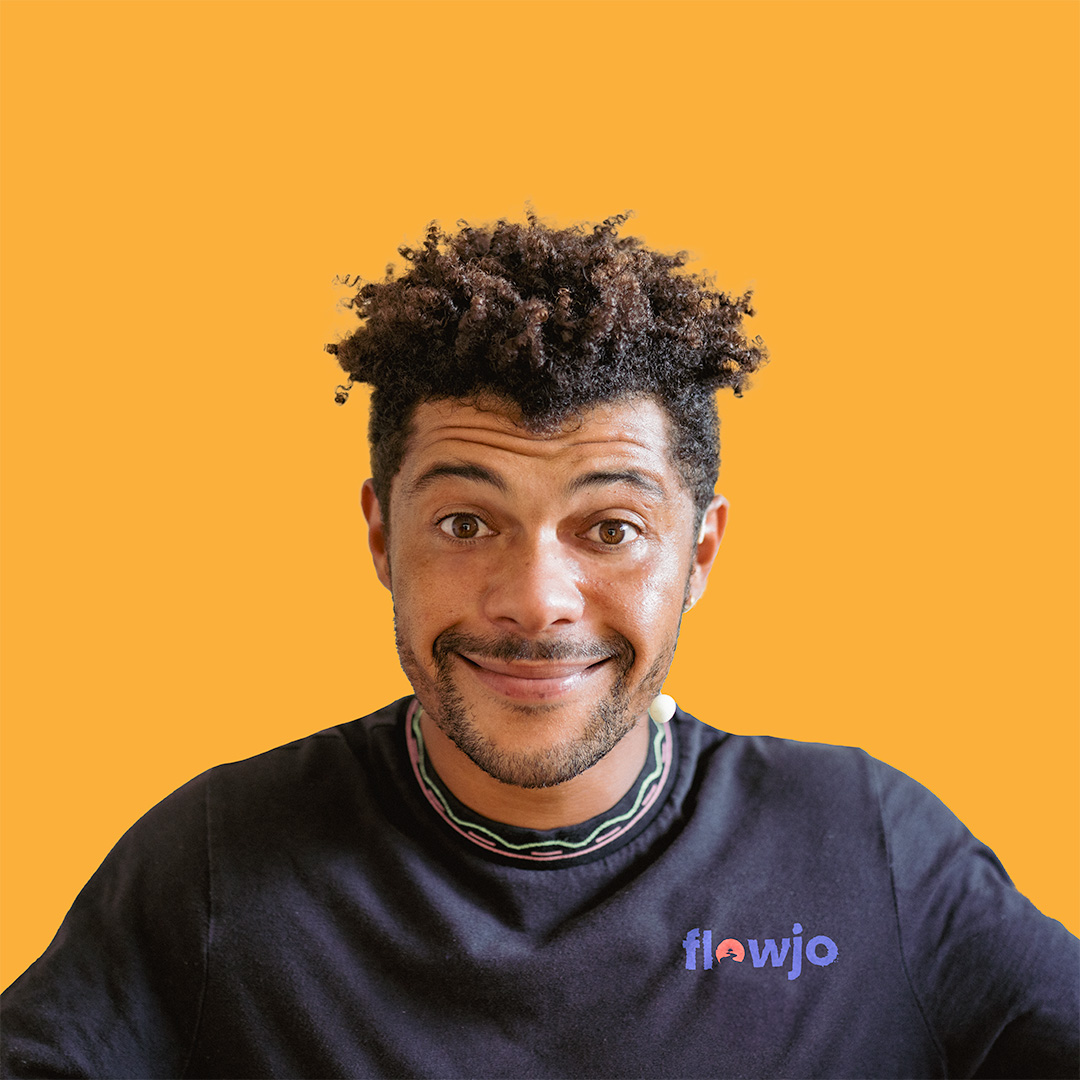
Serial Entrepreneur / Author / Coach
Jamie was diagnosed with ADHD as a child and has burnt out three times in his career - once as a professional tennis player, and twice as a business owner.
After researching the connection between 'ADHD', 'Burnout' and 'Flow' Jamie developed a coaching program called 'Flowjo' which helps ADHD founders to cure burnout, harness their ADHD superpowers, and start flowing towards their goals.
Jamie is also the Author of the 'Pressure Gauge Mindset' and Founder of two other companies called Dealflow and Exitplanr, that helped more than 400 entrepreneurs successfully exit their business.