Why Great Leaders Raise Up Generations | Russell Evans
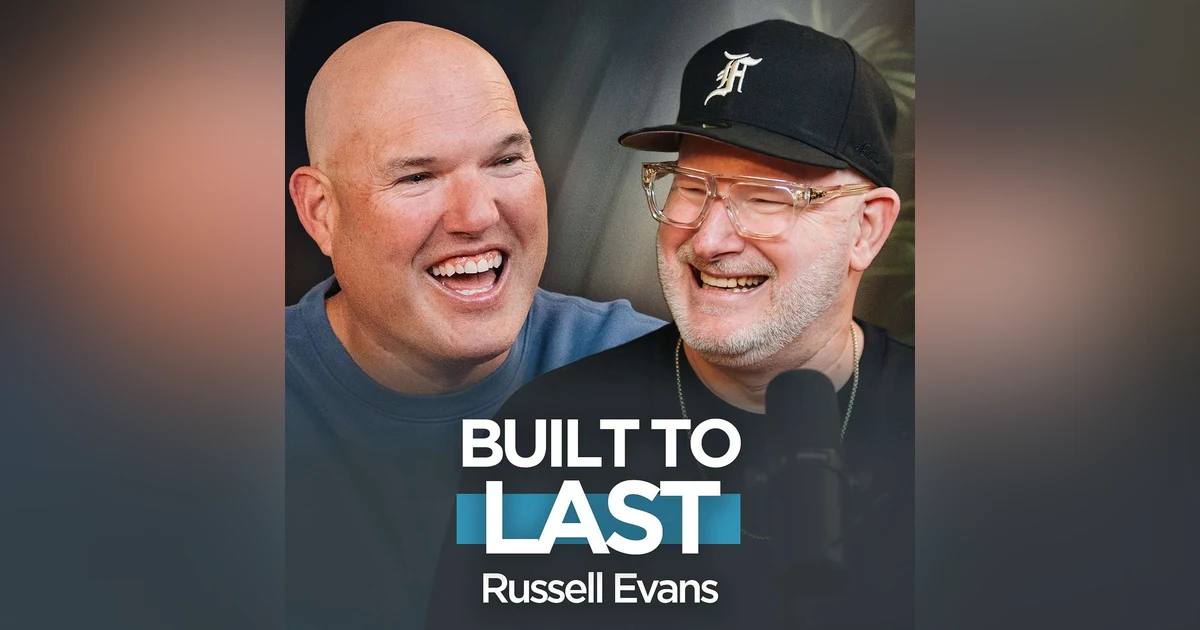


In this episode of Lead to Win, Pastor Jeff Little sits down with Russell Evans, founder and global senior pastor of Planetshakers, for a powerful conversation on culture, honor, and raising up the next generation.
Russell shares how great leaders build beyond themselves by creating a culture that releases people, honors every generation, and develops sons and daughters who carry the vision forward. From leading a global church movement to empowering young leaders, this conversation unpacks why lasting leadership is not built on celebrity or personality — it’s built on family, honor, obedience, and a heart to see others go further.
If you’re a pastor, leader, parent, or anyone passionate about developing people, this episode will challenge you to think differently about legacy, culture, and what it really means to build for generations.
TIMESTAMPS
0:48 - A Back Row Story On Humility
3:50 - Russell Evans Origin Story
11:43 - Culture Takes Time And Heart Work
25:40 - Honor As The Key To Family
34:02 - Sound That Shapes Atmosphere And Faith
42:12 - Skill Without Shortcuts DNA Process
52:22 - The Struggle That Forms Leaders
57:38 - Raise Sons And Daughters Not Celebrities
LEAD TO WIN RESOURCES
More Resources: https://leadtowin.com/
Win With People: https://leadtowin.com/pages/win-with-...
Register for Leaders Gathering: https://leadersgathering.leadtowin.com/
Information on Milestone Church: https://milestonechurch.com/
FIND US AT: https://leadtowin.com
GET IN TOUCH: Contact us at info@leadtowin.com
FOLLOW PASTOR JEFF
Instagram: https://www.instagram.com/jefflittle/
Facebook: https://www.facebook.com/pastorjefflittle
FOLLOW LEAD TO WIN
Instagram: https://www.instagram.com/leadto.win/
00:48 - A Back Row Story On Humility
03:50 - Russell Evans Origin Story
11:43 - Culture Takes Time And Heart Work
25:40 - Honor As The Key To Family
34:02 - Sound That Shapes Atmosphere And Faith
42:12 - Skill Without Shortcuts DNA Process
52:22 - The Struggle That Forms Leaders
57:38 - Raise Sons And Daughters Not Celebrities
A Back Row Story On Humility
SPEAKER_05Honor started with the father. He honored us first. So how do you keep family? The father honors the children. And the children honor the siblings and the brothers and sisters and they honor the parents and everything's created through sound. God said, let there be light, He spoke. There's power in sound. Your sound goes before you. I go to countries in the world that I have people come up to me all the time and said, When I heard that song, I got healed. Our sound touched places that we could never go in ourselves. Right. My kids have music called Planet Boom, which is the youth ministry music, which has got rap and hip hop, and I'm gonna honor a sound of a generation that might not be my preference, but because I know it's empowering them, I'm gonna be honoring enough to release them to be who they're called to be.
Russell Evans Origin Story
SPEAKER_03So Russell, I have we have to start with a funny story. Like so the two of the two of us get together in any setting. Yes, and we we can kind of hijack the uh the the the protocol. Yes, that's right. Right? So they'd usually separate us like kids in class. But one of the first times actually that I met you, we were at like a pastor's gathering, and of course, we had we had just casually interacted. Of course, I knew about who you are, and you know, this big global leader and all of these big things. So I just thought it would be fun to mess with you. And there was everyone was kind of being seated, and you know how things go. There's like, you know, there were these important people who had these special chairs up front. You and I, we were not included in the important group. And uh a friend of ours, Steve, who, you know, likes to kind of organize everybody. He's he's got clipboards, he's one of those people, you know, and so he's kind of the master of ceremonies. And I told you, I said, because you know he and I are close, I said, Russell, go up there and and uh we got a seat for you right up there in the in the in the in the prime, you know, you know, first class seating for you. And you too, you went and said, and I'm watching the whole thing. I got some guys and you went up there and you just about sat down and Steve said, Russell, what are you doing up here? Go to the back. That's really not that's not right on the first time that we connected. Well, it was good. It was it it was it tested my character. It was testing your humility right off the bat. So I want you to know I'm I'm so glad to have you here. I'm glad for us to have a conversation. I think there's several elements that I want to I want to ask some questions because since then we've become good friends, and I really respect what you do and and more importantly, some cultural things and how you do it that I think that people can glean from. And so on the on the podcast here, you know, we have pastors and leaders and ministry leaders, but we also are getting more responses too from people like teachers or business leaders or entrepreneurs, because in some ways there there are differences, but it it's it's all the same, right? Same principles. We're working with people, right? And so I want everyone to that doesn't know who you are. Maybe they've listened to some of the music from your church, Planet Shakers Music, which is really all over the world now. But take us back into the history so so everyone knows you're you're a pastor of a multi-site in in multiple places, uh a movement of churches that really are global now, too. So you guys have sites all over the world, yeah. And so so Australia, yes, okay, and so different part of the world, furthest, furthest point from uh Texas, where we are here right now. And um, give me give me the background. How did you become the pastor of Planet Shakers? Tell me what happened, tell me how you stepped into that role.
SPEAKER_01Yeah.
SPEAKER_05Um, my dad was a pastor, my grandpa was a missionary. In fact, he was a missionary in India for 25 years, then went to Papua New Guinea, and then my dad became a missionary in in Papua New Guinea, and I was born in Papua New Guinea. Uh the night I was born, actually, there was 127 earth tremors. Wow. So I tell people I was born a planet shaker and I was born again a planet shaker. That's awesome. Anyway, my dad, we moved back to Australia because my mum got sick, and um, they asked him to take over a church. The church grew. Um, Dr. Cho mentored my dad, um, and the church became at that stage the largest church in Australia, and my dad was the superintendent of the assemblies of God, and under his leadership, there were they were planning a church every second week.
SPEAKER_03Um so for people in America though, this is a different, this is the Australian assemblies, which would be different than America, but but but you know, again, they might some some of the same uh uh sort of beliefs and structures.
SPEAKER_05Yeah, it's called the Australian Christian Churches now. Okay. Um that's what the environment I was brought up in. Um I didn't want to be a preacher because we uh had so many preachers in our family and and I had a lot of insecurity to be honest. I never thought that I could do anything good. Right. I was good at sport and I was good at music. And and my mum, she was one of those scary ladies that would hear from God about everything you're doing. And so she said, When you turn 15, God's gonna speak to you really powerfully. And I thought, whatever, but I didn't say that because that could end up with some challenging times to my life from her, and she was good at discipline. Um, and so when I was 15, I had an encounter with God. God spoke to me that God was gonna use me to speak to the world, and at the same time, I had an encounter where my English teacher said I couldn't communicate. So, on one hand, God saying, I'm gonna send you as a spokesman, you're gonna talk to the world. And at the same time, my English teacher says this. Um sounds kind of like other characters in the Bible. Yeah, yeah. And then I I introduced I played in a band and introduced a song, and it was a really poor introduction. It was embarrassing. Uh the band and I went back and watched it. They were all laughing, and I made a an agreement in my heart that I'd never speak in public again. Zero. And then when I was 18, I had another God encounter. And God said, I want to use you. I said, But I I can't speak. And he said, Who said that? And I said, I knew what he was saying. I was agreeing the lie of the enemy. Yeah. So then I took over a small group, it grew in our church, so we multiplied it many times. Then they asked me to take over the teenagers. I didn't want to do that because I believe in sowing and reaping, but that really grew. Yeah. And then I helped start a church across the other t side of the city with my old youth pastor and my dad at the I was running two jobs basically, and my dad said, Would you come back and run the young adults? And I didn't want to do that because over here there was no Evanses. Here there were Evanses. Right, right, right. And but I felt God's sake. This is in Melbourne. Yeah. No, this is in Adelaide. Oh, Adelaide is a little bit. Okay, okay. And then God spoke to me to come back. I came back, and then I had another encounter with God, and he said, start a conference called Planet Shakers. I said, God, what's that? Because I've discovered with God, He never tells you the 10-step plan, he tells you the one-step plan. Right. He says, Stat a conference for young people, and so we did. And uh it was with we had 300 day delegates, 800 at night the first year, and God just breathed on it. Had no plan for doing praise and worship, even though I'm mu musical, so that's why we have music. And your wife is too. Yes, my wife. In fact, my wife in the first year was cutting the sandwiches for the green room out the back for the speakers, and I had someone else leading worship, and the Holy Spirit spoke to me and said, Your wife's gonna lead it next year. And she was leading at church, but she so I went and said, You're gonna be the worship leader next year, and she goes, Oh, okay. Um she talks about going from sandwiches to leading worship, yeah. Um, and it grew, it it it just grew. God put his hand on it. Kids were driving in buses for 34 hours in the thousands. Um you know, the sessions would start at 9 a.m. in the morning, young people were lining up at 6 a.m. And so then we took it to each to different states and it grew to 25,000 people in probably about a seven-year period. And at the same time, we let we release praise and worship, and God just breathed on that. So we're doing all this. I'm still at my dad's church, my brother's taking over the church. I'm helping uh another church in England start a conference like we're doing in Planet Shakers. And at when I was in England, I was speaking in a church, and God said, Leave everything you've ever known. So I was in one church for 34 years and said, Go to Melbourne and start a church. And so in 2004, my family and I, with 12 others, moved to Melbourne and we started, and 22 years later, um, we've had over 170,000 people walk the aisles to say yes to Jesus. Wow. Um, because that's how we want to build our church. Yeah. And our church isn't 170,000 people, but it has you know filled a lot of churches across our city, but also across the world. Yeah. Because a lot of students study in Melbourne and have gone back to their nations. Very good. That's good.
SPEAKER_03So yeah, so now, even you know, out of say 18,000 people, what percent are still young people that you reach?
SPEAKER_05Yeah, well, of the 18,000 uh in Melbourne, in Melbourne, 17,000 would be under 40, yeah, and 12,000 would be under 30.
SPEAKER_03Wow. So it's you just always had a movement of young people, right? Just just reaching young people, raising them up, training them. Then then, so then though, you you started having global expressions, and even within Australia, you've got other sites. Yeah.
SPEAKER_05So in Melbourne, we have n eight campuses. Uh-huh. We have a campus in Sydney, we have one in Port Moresby, Papua New Guinea, one in Singapore, one in Cape Town, one in Zimbabwe, and a one a new one in a place called Stalinbosch. So, yeah, and the music obviously people know us for. I think uh I got a stat not long ago that 2.7 billion downloads we've had in the last 10 years. So our music has touched the four corners of the globe. Yeah. And we do conferences all around the world too. So yeah.
Culture Takes Time And Heart Work
SPEAKER_03So you and I being able to have a conversation, I just wanted people to understand, you know, just a bit of the scope, a bit of the history, a bit of the background. But one of the things that I think would be so helpful to everyone because there is something that transcends context that is is bigger. You know, you find a lot of times all of us, uh if you have a stewardship or a leadership responsibility, you know, I have these challenges, or I have, you know, it we could if this were not so, and and you know, I pastored. One thing unique about me is I I pastored three other churches before starting milestone. We started two years before you guys, but I I'd had some experience in other contexts planting churches. And what I began to discover about myself is human nature is well, we pick out the reasons why we can't. You know, well, this, this, or you know, and and of course, I want to I want to talk a little bit about what you might say. This is not a the style of this podcast is to inspire, grow, equip, not us pick apart whatever thing that's wrong. Anyone can point out flaws, but who's got solutions? So that's not the point. But I do think you you being in a context that's 8% goes to church or very much non-Christian. I don't even know if you could use the term post-Christian.
SPEAKER_05Yeah, I would say we're a secular nation that has Christian Judeo roots.
SPEAKER_03Roots that were within it. And so I don't know. I'm not I'm not trying to, but in America, right? Like the the you def definitely postmodernism, definitely secularism, definitely technology globalization has impacted the fabric of our nation. So I want to get into some of that. But what I want to start at though, because what I would say to the the teacher who has a classroom, what I would say to the business leader as a team, to someone who has a staff, really at the end of the day, where you have to start is your own heart and then the culture that you're building. So I want to talk about culture because because really that that is, you know, as as Peter Drucker or anyone, culture eat strategy for breakfast, right? So I think being willing to be honest about what culture do I have? What what cultural context am I in?
SPEAKER_01Yeah.
SPEAKER_03And so talk to me about Planet Shakers. And so these 12 people come. Tell me, tell me about culture. Tell what what thoughts would you have for somebody out there going, okay, I know culture is important. It's like really try to try to break it down so we could get our hands around it. I think culture takes time.
SPEAKER_05Yeah. I think people want to build experience in a moment. I I say moments create momentum, which becomes movements. Yeah. So it's in those moments that you build culture. Um, so that's why conferences are great because it accelerates moments. Yeah, yeah. Um, but I think you've got to have a baseline of what culture do you want to have? Yeah. And as a pastor, we want to have kingdom culture. We want to have what the Bible says a church should look like, a Christian should operate with. Jesus took 12 years, uh three years with 12. Right. He didn't take three minutes. Right. And what was Jesus doing over that three years? He was teaching them the way of the Father, he was teaching them the kingdom. So he was teaching the he was he's saying you can't live in this culture. There's another culture I have for you. But that culture that it takes time to develop. Yeah. And I think we live in a in the Western world which loves instantaneous and we build mushroom churches that have really they're real heavy here, but they have a small foundation. Right. So we've got to build the foundation. Like you build a house, the foundation takes time. Yeah. And so with us, when people come into our church, they don't automatically go into position. We want to, we want to deal with the heart of people because people hear through their heart. Right. So, you know, even people listening to this podcast will hear through their heart. Right. So if their heart is not pure, they won't think pure. If their heart's not soft, if their heart's hurt, they'll think hurt. Right. So that takes a while to to do deal with. So I think what culture, how you create culture is you uh firstly demonstrate it. Um so if I want people to be pray people who worship, yeah, I gotta be in that meeting worshiping. Exactly. If I want people to um, you know, be a giver, I gotta be a giver. If I want people to be a forgiver, I gotta be a forgiver. Right. Um, and you know, as pastors, you can get hurt easy, and just like a teacher, you can get hurt. You and so what keeps your belief going is your heart. Yes. Is I always say soft heart, strong mind. So I want to teach a people to keep their heart soft towards God, but strong in their thinking. Yes. So a lot of people can get hard hearts and soft thinking. Yeah. That's easy to do. That's easy, yeah. So I think what builds culture or helps build culture is keeping a heart soft.
SPEAKER_03I think leadership is all about people's hearts. Oh, it's so good. It's cliche, but I kept thinking when you were saying that, right, it's more caught than it is just taught, right? I mean, a lot of Jesus' teachings, he would have to explain them to them. He'd have to pull them aside and be like, now let me tell you what I was talking about. And then they even didn't get and understand because like he he's like, you know, doing everything he said he would do, and they're all confused. Like, where'd he go? He's like, Well, didn't we have a meal? And I told you, well, what's gonna happen? Yes, you know, but they caught his heart, they caught his spirit, they saw he treated people. Yes, they they begin, and then obviously, as the Holy Spirit comes upon them and illuminates and empowers them, they begin to walk in what was modeled. But you're right, for us, it's like the time, the proximity. And I think, I think probably one of the biggest challenges is you know, teaching is important. I mean, Proverbs is clear that if you don't understand, yeah, you can't do what you don't understand. The Bible is a and we have a spoken message. The gospel is a spoken. I'm a preacher, you're a preacher. Faith comes by hearing. Faith comes by hearing. Yeah. But I think the overelevation of that has produced what you're talking about. What do you do if you're, you know, if you if you're a youth pastor, you're you're a worship pastor? How do you build culture if a lot of what you do is sing and talk?
SPEAKER_05Yeah, I I I think it's in the relationship. Yeah. It can't be just what's on the stage. Right. Or just it's in the Jesus built community and and common unity. And so it it's in you build culture by rubbing up against each other. You know, you you change by real through a relationship.
SPEAKER_02Yeah.
SPEAKER_05The Bible says each joint supplies. Right. So how I build uh a culture is keep things joined. And and so that means I've got to keep a heart joint. And we gotta break down what people define as success.
SPEAKER_02Right.
SPEAKER_05Because if we look through a Western viewpoint, success is numbers, or success is money, or success is influence.
SPEAKER_02Right.
SPEAKER_05Jesus, if you look at the Bible, success is obedience, yeah, and success is fruitful. Right. So if you look at um uh Noah, for example, Noah wouldn't be invited to any of our conferences because in that season, yeah, he's building an ark that no one's joining. Exactly. But he became the second greatest leader the world's ever seen.
SPEAKER_02Right.
SPEAKER_05Jesus is the greatest. But how does Noah keep building something when everything seems like it's not happening?
SPEAKER_03So good. I mean, you have to you have to go back to words like stewardship, right? Like so he was stewarding, which Hebrews acknowledges his faith for that season, he was stewarding and obedient to what his assignment was at that time. So if you're if you're stewarding, you're having fruit, yeah. In in the season you're in, you know, as you said, whatever the next step is, you're taking it. Yes, then you know, then then God's honored in that. And and yeah, you're gonna build a culture that reproduces that, you know.
SPEAKER_05So it really go you gotta how how I define you've got to build culture is you gotta bring people back to what the Bible says. Yeah.
SPEAKER_02Yeah.
SPEAKER_05Not what I say, right? Not what my feelings say. There you that's good. What the Bible says. What does the Bible say to someone that's hurt me? I gotta forgive them. Yeah. What do I need to do in the area of I I was talking to our church just recently about um the life of Jesus and everything he did, you know, uh 1 Corinthians 13, love is patient, love is kind, love is long suffering. So if you look at discipleship, you've got to put that prism of 1 Corinthians 13. So love is patient. So how do I create or develop culture within my family or my church or whatever? I gotta do it in love. So I've got to be patient enough for them to grow.
SPEAKER_02Yes.
SPEAKER_05Um, I and not get frustrated. The father didn't get frustrated with us, even though he knows we do the dumb things. So love is kind. So am I being kind in my how I respond to people? Very good. Am I am I being long-suffering? Am I am I keeping no accounts of wrong? Yeah.
SPEAKER_03Now, the truth is So you can call it I'm bold, I speak the truth, but the Bible gives truth in love. Yeah. So if it's not kind, there's no reason to be a jerk. Yeah. Right? 100% for Jesus. Yeah. Right? I mean, you know what I'm saying? Yeah.
SPEAKER_05Yeah. And I think. The older I get, I'm a grandfather now.
SPEAKER_03Yeah, I am too. It's the best.
SPEAKER_05Yeah, it is. I think um the more trust you you have. Actually, how if people ask me how how do you build greatness? Um you can teach skill.
SPEAKER_02Yeah.
SPEAKER_05What a lot of tea what a lot of people do is they micromanage people. Problem with micromanaging people, you make average people good, but you know it don't make good people great.
SPEAKER_03Wow, that's that's powerful. Yeah. So So you're saying you have to trust them and you have to be patient enough to let them fail.
SPEAKER_05Yeah. And then you prune them kind when they do. And then you prune them. That's what Jesus did. Yeah. So how I how I believe we're how I lead is that's the boundary. This is the culture of the house. This is go and do how go and build that.
SPEAKER_02Right.
SPEAKER_05Go and build that. Don't step out of the boundary. Right. But not if somebody's always having to come to me and saying, what should I do? What should I do? Then they're not learning to develop their own leadership gift because they're needing instruction for everything. Everything, yeah. And if you have that, that what actually makes things small. You you make average thing, um, average good. You never make good great.
Honor As The Key To Family
SPEAKER_03Oh, so good. I mean, it's really at the end of the day, you're talking about the heart of, I mean, you're talking about the heart of a father. We're we're in, we're I'm teaching on family right now. Yeah, right. And so actually, I did a survey at Easter. People wanted to hear more about parenting and and children than they did even marriage. Yeah. Okay. So I was just thinking about like what I'm building the whole thing around this one thought. Yeah. Parent the heart. And then you say, what does that really mean to parent the heart? Right. So how do how do we and and I think I think just this the nugget I had was is as you get older, what you're really saying, you learn how to pick what are the right battles. Yeah. You know, you you be when you said you define the boundary, yeah, what you're really saying is, okay, these, these hills I will die on. Yeah. These hills, and I think as young parents, rightfully so, all of us did it. It's like, that really wasn't that big a deal. Yeah. You know, you're like, why did I make such a big deal out of that? Right. Because I used my change for the one when I'm really need to over here, right? Yeah. So you're really talking about having the heart of a father. So I know this about you because we share this. What we're really talking about is the similar values that we have for us too, discipleship, right? You teach what you know, you reproduce what you are. You're talking about being with people, spending time with people. Even the steps that we create are really there to facilitate connection, relationship, to develop discipleship. Okay. Because it's all about people. It's all about people, developing people, building people. And then now we're even talking about a larger ethos of being not a mob. Yeah. Not Jesus loved the crowd. I think some people get confused. Yeah. Like it's like, oh, it's just anti-crowd, it's deep, discipleship only, you know. No, no, no, no. He loved the multitudes. He touched them, he reached them, he corrected the disciples for being too harsh with them. So if the multitudes don't love you, and multitude is a relative to them. He fed them, yeah. He took care of them. The disciples were like, send these people away. Yeah. We're tired of these people, man. They did just a little bit of ministry and they're like, Can you find these people something? Like, no, you're gonna give them something. But talk to me a little bit about the ethos of like spiritual family. Like, I know I realize that can be a painful term for people, but we're going back to the Bible. Yeah, it's a very biblical, it's a very biblical ethos. You said the father. Yeah. We're talking about God. Yes. So how would someone I understand if I have a team at work? There's some boundaries there from it being spiritual family ministry leaders or somebody out there going, I just want a better team.
SPEAKER_01Yep.
SPEAKER_03How does seeing it through a familial lens impact the culture? Because I know that's the culture of planet shape.
SPEAKER_05So the I I wrote a book called Honor Key. Okay. So honor key? Yeah.
SPEAKER_02Okay.
SPEAKER_05Honor with a U in it, because that's how you spell it in English. You know, because and Savior, you want you and Savior. You want to be saved. You want to be saved, and we took us out of it. Okay. Okay. So if you look at faith, I was doing a study on Jesus' miracles.
SPEAKER_02Uh-huh.
SPEAKER_05Every miracle where there was no honor, there were there were every place he was where there was no honor, there was no miracle. Right. Now, honor means to value or give weight to. Um, so what you've give weight to or what you value is what you receive from.
SPEAKER_02Yeah.
SPEAKER_05The problem how we've taught honor is we've taught it hierarchical.
SPEAKER_02Yeah.
SPEAKER_05You know, you gotta honor up no, honor started with the father. He honored us first.
SPEAKER_02Yeah.
SPEAKER_05So how do you keep family? The father honors the children. So good. So good. And the children honor the siblings and the brothers and sisters, and they honor the parents. And so where there's honor, because Jesus died for the whole world, but the whole world hasn't honored what he's done. Right. That's right. So you get so when you get saved, you could be given faith, right? It's a gift from God. So the key to faith is honor. So the key to family is honor.
SPEAKER_02Yeah.
SPEAKER_05The key to love is honor. So, and honor isn't about control. See, it's sometimes people have taught honor to control people. Right. Honor actually is about releasing people.
SPEAKER_02Yeah.
SPEAKER_05So if I don't honor people, I there's two ways of leading. I lead from honor. So I'm a father that releases children. Spirit, um, children honor each other on a, you know, I say from the pulpit to the parking lot, everyone's honored exactly the same. We might have different jobs, right? But each job is equally as important.
SPEAKER_03It's really good. I've never really put language to that, but I mean what you're saying is really true. Because how do you, how does that, how is that a healthy thing in in a family? Every there's there's honor going, it's it's not just coming upwards. It's it's honoring, and I and I've noticed that because you said you you work with that many young people. Can I tell you something I've learned because I'm getting to a different phase? Yeah. So now I have I have young people here who approve my expense report. Like my fine, the the the the the CFO of Milestone Church was one of our first four kids in the youth group. Yeah. Like she actually has my audit, you know, here's your expense report. Yes. And she has like real power. Yes. Right. So it's like I'm I'm there's an honor relationship with them, which has accelerated their growth to not keep them as kids, but bring them. The goal is for them to become adults. And I've noticed that not everybody's really good at working with young people because they actually can feel like they can lead easier while they're kids. That's why a lot of people struggle with teenagers, 20-year-olds, is you've got to shift to a different level of honor. You honor them when they're three, but you you guide them a lot more. But when they get a little older, if you don't, if you don't think they can actually say something to you, you really don't have much leadership in that in that in that reg in that regard, you know.
SPEAKER_05Well, I think God gives you children so you don't get too old. Yeah. I think a church that doesn't listen to the voice of the people, the children that are raised in their church. So your CFO is you is there to be your eyes and ears because we all have blind spots. True. Right. So true. So where there's honor, if I I say, hey, I I empower you to to do that, so I'm dumb if I'm not listening. Yeah, exactly. I gotta be exactly I gotta be a person who goes, Okay, cool, thank you. Um and I think it's having is what happens sometimes is we honor styles, and that stops us from growing. So that's why my kids, that my kids' style of music is different to what I I think I'm contemporary. I think you know, people look at Planet Shakers and they go, Yeah, well, that's very contemporary, and it is contemporary to most churches. Yeah. But then my kids have music called Planet Boom, which is the youth ministry music, which has got rap and hip-hop, and and I gotta go, oh, and I can confine that to being over there, or I can bring it into the mainstream and go, okay, I'm gonna honor a sound of a generation that might not be my preference. Right. But because I know it's empowering them, I'm gonna be honoring enough to release them to be who they're called to be. And so that doesn't mean I dominate my praise and worship set with hip-hop and rap, but it doesn't mean I don't put something like that in there.
SPEAKER_03Right. So that so, so let me, so on a basic level, when you start talking about leadership, right? You you you know, so so the people listening, you really have one of two choices. You either don't have honor of the generation coming behind, to which ultimately means that you and your age group become the ones sitting around listening to what you prefer. Yeah, right. Yeah. Or they they have to figure out how to get rid of you or minimize you or remove you, or or somehow kind of find a way to hostile takeover to get the expression to go.
SPEAKER_01Yeah.
SPEAKER_03Or again, the greatest option is that we honor each other and the expression of the body becomes more more full and and more of the picture of what God wants it to be, right?
SPEAKER_05Yeah. So look, for example, the Bible says, Christ in you, the hope of glory. So when I honor, truly honor, I don't honor to control, I don't honor to I because honor doesn't look for anything in return. Right. Because I I have uh had people over the years go, I honored them and they gave me nothing back. Well, that's not honor. Honor because the the two systems the world works in, there's the kingdom and then there's the world. And the world operates under intimidation, manipulation, and control. That's how a lot of leaders operate.
SPEAKER_02Right.
SPEAKER_05They they intimidate, manipulate, or control to get people to do things for them. Right.
SPEAKER_02Right.
SPEAKER_05Where the father doesn't, he he gives us free will, he doesn't intimidate us. Yeah, he tells us there's consequences to our actions, and you can't hurt the family, but he doesn't control us.
SPEAKER_02Right.
SPEAKER_05If if if that makes sense. Yeah. So when I honor, if I if I go beyond looking beyond style and look at the God in somebody to give weight to, to value, so when I honor what God's put in somebody, it comes out and it blesses everyone else. Right. So when there's the culture that is a culture that is kingdom, that is all about um not hierarchical, it's all about relation. Yeah, you know, and having, and sometimes dad has to say no, yeah, but that's okay because that's the role. Yeah. But sometimes dad has to go, I need to listen to what's going on because I'm dumb if I don't.
Sound That Shapes Atmosphere And Faith
SPEAKER_03I want to ask you a very practical question, but I want to take a little bit of a moment here because I've heard you talk about this. So we're just gonna do a little sidebar. Talk to me about when you honor the different generations, the different gifts, the different expressions within a church. Tell me about the sound. How how does a how does a sound and I and I and this very much would speak to anybody in worship ministry, but it's actually bigger than that, right? It's it's so talk about that because I thought it was fascinating to me when I hear you talk about sound.
SPEAKER_05Well, if you think about sound, everything's created through sound.
SPEAKER_02Right.
SPEAKER_05Light's created through the sound, the earth was created, God said, let there be light. He spoke. So there's power in sound. Um, you know, the word person is a Latin phrase which is per, which means what flows through, and son, which you get sonic or sound. So we are the sounds that flow through our life. Jesus was the personification of the Father, He was the sound of the Father on earth. So what sound does is it it has power to it. You know, God inhabits the praises of his people. Right. So if I if I was the devil understands this because he was the worship leader of heaven. So he he understands the power of sound. And so your sound goes before you. It it it it turns up to places that you've never been, but it's released from your life that touches. So if I look at Planet Shakers in our worship, I go to countries in the world that I have people come up to me all the time and said, When I heard that song, I got healed. When I got hurt, God touched me. I I heard just a story the other day about about a banker who was going through a very challenging s time. He heard someone else recorded one of our songs and heard the song, and God says, I can do it, and God turned it around a thing that was gonna go bankrupt to now being a multi-billion dollar business.
SPEAKER_04That was awesome.
SPEAKER_05And but that was written at our sound touched places that we could never go in ourselves, right? And so if you think about this, if I'm Satan, I will try to keep get all the sound to go to me, number one. I I um sound sound is prophetic too. It it takes you, it speaks the future. Yeah, you know, so before I've gone anywhere, I have to speak where I'm going. Right.
SPEAKER_03The fruit of the lips and the you know, all of the passages that we know that connect the tongue and the sound that you speak, you know, to your thinking, yes, to your to your life. Yeah, so it's it's it's a big meta, it's a big picture in scripture, no doubt.
SPEAKER_05Well, think about sounds that you listen to. Right. The lies of the enemy. Yeah. He's speaking. Yeah. He's speaking. And so, you know, then your feelings are speaking. And you know, people go, you know, well, church, you know, we're not an emotional church, but God created our emotions.
SPEAKER_02Yeah.
SPEAKER_05But we can have good emotions, right? We can have loving emotions, we can have peace emotions, we can have joy.
SPEAKER_03And there's so many like discoveries now psychologically of clapping, yeah, praising, shouting, all of these postures of worship that we see in the Bible have physiological benefits to human beings.
SPEAKER_05Yeah, 100%. So I'm not praising because I'm an emotional person, I'm praising because I will bless the Lord at all times.
SPEAKER_02Yes.
SPEAKER_05So when my emotions are saying, I feel horrible, I feel bad, I feel life. When I release a sound of what God's put in my life, and I use my body to praise, I use my voice to praise, I'm actually countering the environment that I'm living in. So church should be atmosphere changes through our sound. Yes. Through our praise, through our declaration. Yes. Our sound also can be our generosity, it can be kindness to people. Yeah. But first it has to be spoken, first it has to be sung. You know, you think about clapping, they've done a scientific thing that when you clap, you interrupt thoughts. So if I clap, I'm getting bombarded with a negative thought, then I start clapping unto God, and all of a sudden I can take that thought captive and then put a different thought in there through what I speak and what I declare.
SPEAKER_03That's so good. Well, I think, you know, going back to our culture, right? So it's like this, this is Well, culture is a sound. The sound is is is is you listen and you can tell the culture by what you hear. Yes. In fact, you you know, back to I'm on this parenting family thing right now, but I I mean, big parents are like, How's my kid doing? Yep. Well, listen. Like to young parents, I say, try to be at their bedside because they open up.
SPEAKER_01Yes.
SPEAKER_03But out of the abundance of the heart, the mouse speaks back to connecting heart and sound. Yeah. You know, when you're working with your team, you're like, How's my team? Or are they are they are they in a good place? Are they unified? Well, if you listen long enough, you'll find out through the sound where their heart is.
SPEAKER_05Yeah, and I I would say that as well, the one thing that I looked for a healthy place is how's the hem? Has the hem got oil? Yeah. Because the Bible says that, you know, the the oil flows from the head to the hem, right? What did the woman with the issue of blood she touched the hem of Jesus' gum? She didn't even touch the body, she touched the hem. Most people in church life touch the hem. They don't usually touch the head.
SPEAKER_04So good.
SPEAKER_05And so does the hem have oil? Because if the hem has oil, there's great honor and great order.
SPEAKER_03And that's a picture you're giving to what you're saying is the strength of the culture is not where it is at the top, but it's when you actually get into the environment, the greeter, the usher, the parking lot person, when people interact with them, how strong is whatever you say you value being distributed at that level. That's really powerful. That's really good.
SPEAKER_05So I have people come to me on a semi-regular basis and say, I met one of your church people. And I go, How do you know? They're all happy. And I go, Well, isn't that good? They said, Yeah, no, that's good. So that says to me, now, not all of them are happy, you know, we're human, but when they're in dealing with people, they're bringing joy. 100%.
Skill Without Shortcuts DNA Process
SPEAKER_03So that says to me, the oil, there's the culture on what so number one characteristic we get. So I I I'm not able to do because we have multiple campuses, the membership first step, but I've done like 250 or 60, whatever it is of them. Yeah, and I still do a few, and I did it last Sunday. Number one description friendly. You wouldn't, you you wouldn't even imagine how powerful, friendly. Yeah. Friendly, because you're talking about what you said, 1 Corinthians 13. Love, kindness, you know, patience. Friendly is just their way of saying I'm experiencing love, is what they're saying. And true. And home. You know, you want to be, if you had a troubled home, you probably knew someone's home that there's no perfect home, but you're like, oh, I feel home. I feel accepted. I feel loved. I feel valued. I feel honor. Yeah. Outdo one another in showing honor. So talk to me about this, though. So that's very good. So we're going back to building culture. Okay. So say on a worship environment, okay, you have to have someone who has skill where I where I believe we tend to compromise the most in the area of culture and go fast, because you were talking about it takes time, got to have value, got to have the right sound, gotta is where you need it, you need it for whatever it is you're doing. This could go beyond church. So if you need an accountant or you need a salesperson or you need a team member, and then if it's also connected to skill, yeah, you're probably the most vulnerable to compromise culture. Yes. So talk to me practically right now. A very talented like can play the instrument when they sing, the windows break, dogs bark. You know, it's like how does that person, let's talk practically. I show up at Planet Shakers tomorrow and I am, and which I know this happens because you guys are in that space. How would that interaction look? What what would be some steps? How are you gonna think about that?
SPEAKER_05Well, there's no fast tracks for for people who are more talented than others. Everybody goes through the same process.
SPEAKER_03Okay, good. Very important. So what you said, there's no there's no, it doesn't matter who you are, you still have to go through the same process.
SPEAKER_05I have pastors who've passed their own church evangelists that have been in ministry for 40 years, and they have to go through the same process as they do as a person coming through the front door for the first time. That's good. Because people have a concept of what the family sound is, a concept of you know how we operate, how how and so we then take them through what we call you would call 'em probably one oh one. Yeah, yeah. We we would call it DNA.
SPEAKER_03So y'all have uh a grow track type model that's kind of uh a steps that they have to take. Can get involved unless they do DNA. Doing y'all call it DNA. Okay. So that's a that's a familial term.
SPEAKER_05Yes. And so we'll teach them the kingdom cultures of Planet Shakers Church.
SPEAKER_03The kingdom cultures of Planet Shakers Church, which means Planet Shakers cultures. Right. So you're you're trying to sit go back to the word. So we want to be kingdom people.
SPEAKER_01Yes.
SPEAKER_03So we want to know what the kingdom values are. Yes. And then we've said for us, these are the priorities of, and what I talk about is for a lot, a lot of companies and leaders and environments. I write about it in my book, It's Worth It, which has our kingdom values and our culture, and uh, it's it's it's built around the treasure in the field, but they have aspirational values, not actual values. The worst thing you can do is put this as a value, but then there's no way for me to experience it, relate to it, understand it, yeah, in in your culture. So what I so DNA is a way you're showing them that.
SPEAKER_05So what I would say to people who come to planet, let's say pastors or leaders who come to planet shakers conference, or I said, don't be planet shakers.
SPEAKER_02Yeah.
SPEAKER_05Get an impartation, but Hebrews 8 5 says, build according to the pattern shown to you on the mountain. So God, that word pattern is design scar or architectural blueprint. The mountain represents the presence of God. So in his presence, he designs me. Now, he'll put people around me that will help that design. Right. Accelerate that design, because how you accelerate something is you have authority meets honor. If you if you have honor but have no authority, nothing accelerates, and if you have authority and no honor, nothing accelerates. So we have a lot of karaoke businesses, karaoke churches that go to a conference, yeah, and they go, Well, that's the key. And they're always looking for the key, but they don't go to God, who is the giver of keys. Yeah.
SPEAKER_03It's kind of connected to building a church.
SPEAKER_05But so if if I go back to my dad's church, there are a whole heap of things I learned in that. But when I came to do Planet Shakers, I said, God, how do you want us to do this? And so there was things we did differently to my dad, this thing we just do automatically. But talking about we were growing, we grew pretty quickly, and the pressure was I gotta put in small groups, I gotta put a youth program in. And I said, No. I said, we only do it when God tells us to do it.
SPEAKER_02Yeah.
SPEAKER_05Not I never respond out of pressure of need. I respond when God says we need to do it. Exactly. Because timing is everything.
SPEAKER_03And most of the time, God's going to take you. This is a big principle. There's going to be the provision of a leader. There's going to be the previ, you know, there's going to be things He is going to put in place. I think a lot of times people t start things on a concept without leadership, without the right, the right things to actually cause it to flourish, you know.
SPEAKER_05And so Yeah, there's principles that work everywhere. Because the biblical principles. So someone comes in, they go through DNA, but then DNA finishes with an encounter. Okay. Because the encounter, and what we do in the encounter is I'll do a session on where's your heart? Because everyone listens through their heart. Every single person. Um, so what's your heart condition like? If I put an uh uh ECG on your heart and checked out where is it, is it hard, is it hurt, is it dis and then we give them like a questionnaire of different things they've gone through and they tick it and then we do this thing about renouncing and that denounce. Basically giving them some freedom. You're helping them with with with with with freedom. Identifying things that and then we're gonna come out of agreement with those lies. Yeah. And so then we have we have about 500 of a thousand people who come to these, and we have probably about 40 paper shredders at the front. So none of us see what their issues are between them and God, and they come and shred it. That's great. And so that brings freedom. So then when they're stepping into the era of involvement, we've dealt with a lot of the heart. Then the next course we do is called Inner Champion, so you discover who you are in Christ, and then that encounter is come home to the Father and learn to be a son, not a slave. And I always teach people this because I preach it from the pulpit, you need to get that own rev revelation for you. And so many people just listen to something. Oh, I've got to do that. No, in the storm, if I don't have my own revelation that this is truth, right? So I always say, check out what I'm saying, see if it lines up with the Bible, because I want those guys to have their own revelation so that they can be strong sons and daughters. They're not doing it because dad's telling me, they're doing it because I'm a son and I'm a daughter.
SPEAKER_03It's so good. So you're creating experiences for it to become real for them. You're you're providing and setting the table, yeah, like a family would, to create these environment experiences where this becomes something that they own. And as they come through the journey, and it could be that as people come through that journey, they also get a revelation that this isn't how I want to build. Like I actually want to go build a different model. It's a great, it's a great place to always tell people you're either gonna want to take more steps, go deeper, or you're gonna, you know, the the the the blessing of clear vision is it creates high buy-in.
SPEAKER_01Yeah.
SPEAKER_03The challenge of clear vision is it also divides. You know, so it's like people can begin to decide what they what they want to build, you know.
SPEAKER_05And there's no pressure. If not, there's no pressure. No, this issue. Yeah. Yeah. But this is what God has told us on the mountain. Exactly. Not someone else's mountain. This is the mountain God spoke to us here.
SPEAKER_03To this is how to build. It's it's God's vision. Yeah. You're you're casting that vision. You're our your job and your current role as stewardship is to articulate that clear vision, and then people come and they carry that vision and become owners of what that vision is, you know.
SPEAKER_05So and then then the oil flows. Yeah. And so there's there's oil at the hem. Yeah. And and I there's a I re-emphasize every business, people in it's whether there's oil at the hem. Right. It's not the head, the head, the the coard meeting, the corporate meeting. Uh-huh. Yes, of course, there'll be oil there because that's where the vision flows. But in the organization, is there a flow of that oil right down to the person who has little connection with the head? Right. Because, you know, it's a lot bigger or whatever. And so I think that's that tells me what's healthy in a culture.
SPEAKER_03100%. Yeah. So the worst thing you can do actually is define a value in the break room that they don't experience in the environment. You'd be better off, you know, we love people. Yeah. But then you go meet with everybody and go, they don't, they don't really care about me. You know, so it's like you'd be better off to go, we love uh making a product, or we we love profit. Yeah, yeah. You know, you'd rather define something that you can actually live up to. And that would be my advice too to leaders. Don't adopt something like you and I share this because we lead our church like fathers. Yeah. But if you don't, if you don't have that flow or pattern, or in other words, it there's a lot of strengths to it, but in my opinion, it could also be challenging if that's not something you're willing, you know, to to to pay the price to have. Because it's a harder route. Yeah. We're we are actually communicating a more challenging route.
The Struggle That Forms Leaders
SPEAKER_05Yeah, slow, slow always builds better. And my dad told me this one thing, and I thought it was amazing. And this is the challenge with the next generation, because we live in a world of AI, everything, everything's quick. The the caterpillar goes in the cocoon, and it's in the struggle in the cocoon, creates the beauty of the butterfly.
SPEAKER_04That's good.
SPEAKER_05But what a lot of people and parents do, so let's say there's a struggle at school. You know, I remember my son had a problem with their teacher. Yeah. So I didn't go to in front of my son, oh, the teacher's dumb.
SPEAKER_03I had to say, this is good.
SPEAKER_05I had to say, son, yeah, not everything's going to be great for you, but it's in the struggle. You've got to honor the teacher. You got to and I wasn't happy with the teacher.
SPEAKER_03Right. You didn't tell him that.
SPEAKER_05But I didn't tell him that. But if I went and cut the cocoon open, I'm going to create something that's deformed.
SPEAKER_04There you go.
SPEAKER_05And we got a world that wants to cut the cocoon open.
SPEAKER_04Right.
SPEAKER_05Because in the process, they want to shorten the process.
SPEAKER_03Yeah.
SPEAKER_05But it's in the process you form the butterfly.
SPEAKER_03Love it. Oh, that's such a good principle. It's it's it's also fear, right? Like the number of young families, you know, don't put their kids in childcare, what they eat, what they see, what they do this, all this stuff. Not that you shouldn't be a good steward. And if you have a conviction about those things, but where there's a false mindset is that you can protect them from the struggle.
SPEAKER_01Yeah.
SPEAKER_03And as those of us who are grandparents now, homeschool, Christian school, public school, you know, high fructose corn syrup, all organic, red dye, no red dye, this, that, bullies, no bully. You know, it really at the end of the day, though, your child is going to have that struggle. That struggle is part of God's process for them. Part of life. It's part of life. And and and and you having a mindset, I've I think it's pretty rare to go, well, I'm not going to go fix the teacher. I think that's a rare thing, which translates into those people building teams today are are are also you you're inheriting some of those mindsets. So now when you say I'm gonna develop, equip, train, well, you're now putting them back in the cocoon sometimes. Yeah. Okay, yeah.
SPEAKER_05And it's in the struggle. And it's yeah. And that's why so somebody going back to your question about if some musician comes into our church, they have to go through the the challenges of yeah, the the challenge with the stage is it's not the real world. Right. And geez leadership, I was um in Israel, uh in the Man of Olives, and you walk down the Man of Olives, the Garden of Gethsemane's on the left, and you walk into and that was the same road that they said, Hosanna, Hosanna, and it's the same road that no one was with him, they fell asleep. Exactly. And I felt God speak to me one day and say, The road of leadership is a road of adulation and isolation. And you gotta handle both well. Yeah. There'll be times people are cheering you, yeah, and there'll be times people are falling asleep. Yeah. But what keeps or worse, yes, yeah, crucify them.
SPEAKER_03Yeah.
SPEAKER_05But what keeps you going is the joy set before me. Exactly. And so it's I get my greatest joy out of not the pulpits I pr preaching, not the people I meet, even though I love meeting people, it's seeing people do well. Exactly. And and I have to understand that that takes you know, to disciple means to child train. So my grandkids come over my house and and I'll do things for them that they won't I won't do for anyone else because I love my grandkids.
SPEAKER_02Yeah.
SPEAKER_05It's same in church. We gotta love the people. We gotta love them, yeah. And and you know, too.
SPEAKER_03If you love them, you have you have more patience. It's back to the love chapter. Yeah. So we we have uh we have a college, we have uh, you know, lots of young people here. We're in the we're in the middle right now of what we call our super series, which is our big outreach time where kids bring their friends. So we have thousands of kids coming on Wednesday night at all our campuses. But, you know, I have a passion to train. Really, it is at my phase of life, you know, I love the people of our church. I love, I love everything about church, really, but I really find myself the most passionate right now, too, about training up this group coming behind. And that's that's really I'm as you're saying, watching them walk in their calling. Um, I've seen God do more than I ever expected He would in our own life. 100%. So I'm I'm I'm I feel overblessed and thankful. So I want to give it away to those coming behind me. What advice would you give if I had you right now in front of our college or a bunch of young Christian leaders, or we have a big young adult ministry here, what advice would you give them? Uh, you know, in their context, in today's difference, what what would you say to them? A young leader saying, Hey, I want to get better, I want to grow, what would you say?
SPEAKER_05I would say that everything flows out of the heart. So keep doing heart checks on yourself and keep your heart accountable. And you know, the I think offense is the biggest robber of our future. So good. I remember I had a challenge many years ago um with a person and um I got hurt by them. And my nature, my the practical nature was to protect myself. And I had a pastor friend come up to me and he says, said to me, We're not cynics, we're believers. And you gotta believe in people still. It's good. You can't live in protection. So good. And so I pull, I said, God help me with my heart. I don't wanna because if I put if I get in protection, I control everything. Right.
SPEAKER_03If I get in protection, I don't release anything. Right. So And you also don't offer yourself. Yeah. Because a person in your place, like you become, you become less open. Yeah, you know, like you're not gonna have a bunch of young leaders sit around and you go, hey, let me talk to you honestly. Let me tell you what I've been through. You're gonna worry about the potential of that harming you. And so I believe it's the enemy strategy. In my opinion, most leaders who lose that ethos of helping other people comes from hurt. I agree with you 100%. Because you pull back, you say, Well, I'm not, I'm not, I'm not offering myself anymore.
SPEAKER_05Yeah, I mean, I'm I'm just I don't have to. It it it's not a job, it's a calling.
SPEAKER_03It's a calling, exactly.
SPEAKER_05I there's a illustration that's out of context, but it describes how how I would see raising up the next generation. Okay. Jesus said, Go find me a young donkey. And that's never been written. Untie it and bring it to me because I need it. So our job is to find those young people that have never had experience, never, you know, they're not all this great, but and they're tied up. They got the things of life that time untie them, help them to get free. And then you see what the disciples did, they took their cloaks and they put it on the donkey. And so our job is to get the mantles that we've been given and put on the next generation. And the Bible says Jesus rode into the city as they said, Hosanna, Hosanna, which means save us now. The disciples were no longer in the story after the donkey had been given to Jesus. And so I think the biggest challenge in the Western church is we've built a church on celebrity and personality instead of generations. And if here's a thought with generations in the third generation, there's multiplication. In the second generation, there's double portion. Elijah, Elisha, double portion. Moses, Joshua. But it's in the third generation, Abraham, Isaac, one son, two son, in the third generation, there's 12. So the devil works is real hard to, you know, because first generation, they'll stick. Second generation, they'll attack. But if I can get the third generation, I stop the multiplication. So going back to my family, my grandfather was a missionary in India, touched thousands of people. My dad touched millions. We're now touching, you know, 2.7 billion downloads. Right. It's in and my brother the same. It's the mold.
SPEAKER_03So that's where the attack with you of you can't speak, you can't just stop, stop you from stepping into that calling. Yeah.
SPEAKER_05And I needed someone to untie me.
SPEAKER_03Yeah.
SPEAKER_05And it wasn't, it actually wasn't my dad. People say to me, What are you doing? I said, I'm just interpreting the dream of my youth pastor. And my youth pastor would get up and say, You can change the world. And Joseph became great because he interpreted Pharaoh's dream. He didn't come great because he had his own.
SPEAKER_03Yeah. You listened to that, and then it began to be part of something you owned personally. Yeah.
SPEAKER_05Yeah. And so I'm I was untied. Yeah. Someone believed in me. I was insecure. I I had all the reasons why you don't touch me.
SPEAKER_03But somebody had a a powerful dad pastor. Yeah. I mean, there's a lot of well, I'm not messing with him. His dad'll come get me.
SPEAKER_05Well, yeah. Well, but I grew up in the the day pastors' kids should do this and pastor's kids shouldn't do that. Yeah, yeah, yeah. So um, but I had a youth pastor who untied me and he put his mantle on me. Yeah. And he cheered me on. Love it. And I think a great leader is seen in their sons. So good.
SPEAKER_03That is so good. So powerful. Well, this has been an amazing time. Um, so our our passion is at lead to win, you know, so so you know, our passion really is to to talk about these things. I I mean, I think we have so many pragmatics, right? And we do help with pragmatic things. And people come to our lead to win conference in January.
SPEAKER_01Yeah.
SPEAKER_03We want to give tools. Yeah, 100%. But the things we're talking about, in my opinion, are the are the substance things, the heart things, the culture things that there's a whole whole host. I think we live in an age of a lot more, I think an average pastor has a lot more tangible practical tools. But what we're talking about, again, the culture, the environment, things like that. Like I think if there's a young leader out there saying, one day I want to raise up sons that ref that reflect the heart of God and go further than me, what an what an inspiring thing, you know?
SPEAKER_05Yeah. And you you you don't want it's like pilots. You can teach a pilot how to fly a plane, but if a pilot cares for the passenger, they'll keep away from turbulence. A pilot they don't care for ta uh what the passengers think and like the joy, they'll go through turbulence. So you can teach pastors' skills, you can teach pe people skills, but you you've got to teach them the heart of the people in that plane. Exactly. And I think, by the way, I I do want to say um what you're doing with Lead to Win and your your leadership, and you know, obviously Steve with you and what you're doing in coaching, and I think um you're some of the most inspiring leaders I know, and you know, I come and hang around uh inspiring leaders because I do think you again, it's not what's taught, it's what's caught. Right. And the more people are around greatness, people become greater. And I want to thank you for um being an inspiration to me. I walk around and see what you've done and what God's done through you, and I and I'm inspired by it. So I would encourage anyone to if you want to be a winner, hang around winners.
SPEAKER_03Yeah, that's great. Well, we we we love your friendship and and and and anytime anytime I'm able to get in a setting where I can pull from you, because I think the important thing, and this is really how I would like to even frame this whole time together, is people see music, people see buildings, or people see services, but very few times do people get a chance to go, what are the what are the beliefs, what are the values, what are the the the things we won't compromise that have created that culture? And when anytime you drill down, you will find there's a set of bedrock values that are are driving that. So I I'm I appreciate you talking to us about that, making us better. You're a great friend. I so appreciate you being with us today. Thank you. I want to say thank you for checking out this episode of the Lead to Win podcast. I want you to know that I love and my team loves getting this kind of content into your life so it can help you lead and win at what matters most. So I'd love for you to do me a favor like, comment, especially subscribe if you would, so that we can make sure that we're able to get to you some of the things that are gonna help you lead to win