The Reluctant Leader: Called Into Something You Didn’t Choose
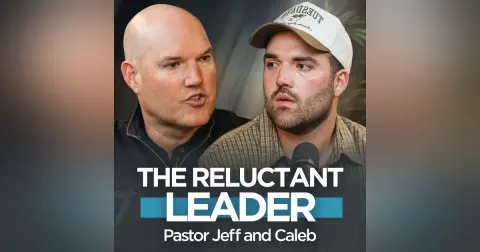


The hardest room to lead is often your own home. In this conversation, we sit down with Pastor Jeff to share the tension every communicator feels when teaching on family: staying honest without dishonoring your story, offering hope without pretending you have a perfect formula, and resisting the pressure to turn principles into rigid methods people can copy and compare.
TIMESTAMPS
0:00 - Welcome And How It Began
3:05 - Why Family Topics Draw Leaders
10:15 - Defining The Reluctant Leader
18:55 - Why Family Feels So Painful
28:55 - Prodigals And The Need For Hope
33:10 - When Kids Become A Bigger Idol
38:20 - Home Stability Expands Leadership Capacity
41:50 - Parenting Principles Beat Parenting Formulas
49:40 - Marking Moments That Make Love Felt
LEAD TO WIN RESOURCES
More Resources: https://leadtowin.com/
Win With People: https://leadtowin.com/pages/win-with-...
Register for Leaders Gathering: https://leadersgathering.leadtowin.com/
Information on Milestone Church: https://milestonechurch.com/
FIND US AT: https://leadtowin.com
GET IN TOUCH: Contact us at info@leadtowin.com
FOLLOW PASTOR JEFF
Instagram: https://www.instagram.com/jefflittle/
Facebook: https://www.facebook.com/pastorjefflittle
FOLLOW LEAD TO WIN
Instagram: https://www.instagram.com/leadto.win/
00:00 - Welcome And How It Began
03:05 - Why Family Topics Draw Leaders
10:15 - Defining The Reluctant Leader
18:55 - Why Family Feels So Painful
28:55 - Prodigals And The Need For Hope
33:10 - When Kids Become A Bigger Idol
38:20 - Home Stability Expands Leadership Capacity
41:50 - Parenting Principles Beat Parenting Formulas
49:40 - Marking Moments That Make Love Felt
0:00 Well, I want to welcome you back. We are jumping into another episode of the Lead to Win podcast. And I'm really excited for you to get to watch this episode today because it really impacted me. The really the way that this episode came about was very different than any that we've had before. A couple weeks ago, our team was planning and preparing to do an episode on family, which so many of you have said, hey, we want more content on that, marriage, dating, parenting, all that stuff. So we were planning and preparing for that. And we end up in a meeting with Pastor Jeff where we're sitting at a table and he starts to explain this concept of the reluctant leader. Now, if you know Pastor Jeff or if you've ever watched this uh podcast or been around him, heard him preach, you know, he's a pretty strong, definitive leader in a lot of areas, but he started to explain this idea of feeling like a reluctant leader in certain areas, especially the one that we were talking about.
0:54 And so I started asking questions. It started getting heated. We started with this massive dialogue as really a family and a team. And I remember we just looked at each other and I was like, I think we should take this downstairs and record this episode. He was like, okay, let's do it. So we came and we sat at this table and we got into it. We had a dialogue and a discussion about the fact that let's be honest, we all feel like a reluctant leader in areas. Maybe you know that you need to talk about something, you know that you need to lead in a certain area, but you feel a little reluctant to do that. And so I just started asking him, like, tell us how you think about that. And it really turned into a unique episode that I'm excited for you to get to check out. So let's do this.
1:35 Let's check out this episode right now. Well, today we had on the schedule a couple different podcasts, you know, that are really one episode that we wanted to film, but we just got out of a conversation just to set the framework a little bit. As a church, we're in a season getting close to Easter, but we always do a family series at the church where you talk about marriage and family, kids, parenting. And along with that, that series that's coming up, one of the things we had talked about with the Lead to Win podcast, because I know we have so many viewers that you watch that are maybe from other areas or a part of church or in ministry, even just leaders. But a lot of people, even in our own church, listen to the podcast.
2:18 I get texts during the week, you know, I love this episode. I got to check that out. And and a few months ago, we did an episode on family, and it turned out to be one of the episodes that we got the most feedback on. Right. People saying, thank you for talking about this. Thank you for bringing up this topic. And so we we had kind of thought maybe we need to do another episode, but then again, the request just started rolling in. And so we had planned to do an episode today, but you and I just got out of a conversation talking about this topic and why you care about it and even some of your leadership thoughts behind it, even your own journey with this topic.
3:00 But I'm excited for this episode and I'm excited to see what comes out of it. But let's just start by talking about the church, right? You've talked about this topic in the series Let's Talk Family almost every year now, but it really came out of the starting place was the church asking for you to talk about family, marriage, parenting. Um, what what kind of stirred you on or kind of made you want to talk about this topic to begin with? Well, I think, I think I started, if I'm really, really just taking it all the way back, I I started with Let's Talk Family or a family series after Easter because my context, you know, I was I was 28 years old when I started Milestone and I pastor in a suburban context in the Dallas-Fort Worth area.
3:49 As you said, a lot of our we hear from teachers and business leaders and people. And then we also have, you know, we love serving pastors and helping leaders in general. But but my my real job and my other than Christ and my family and uh trying to be a probe ass fisherman or some of the things that's a good thing. On the side, yeah, a little bit of that. Other than that, like I my my stewardship in all seriousness is I'm I'm the pastor of a family, a congregation, a group of people called Milestone Church. And every decision I make, I filter through those lenses. And I pastor in a context where it's a lot of families. It's a lot of young families now, people moving here.
4:31 I think a lot of people don't know the Dallas-Fort Worth area. You have you have kind of some mixing of cultures, right? You have you have Texas, you have words like Bible Belt, but then you also have the last 20 years since we've been here, the population, the the California people moving. Yeah. I mean, I heard a realtor the other day call it California, right? So I always love to just first start with leaders saying, you know, understand your audience. I think I think it's a something simple, but so profound. Like a lot of times I'll find, I'll, I'll find churches that are singing songs that they found on Instagram that work in New Zealand or or New York.
5:17 Urban context. Urban context, but they they're not thinking about what are the songs, the people that I pastor, right? So you don't you don't go if if you're gonna it's the my master's degree is in missiology, and that's just the study of how to reach people, you know, people, ethnos, missions, ology, study of it. And one of the first things you learn is you have to understand your context. So you don't go to Mexico and preach in in French. Right. In Mexico City, there has to be a lot of French speakers somewhere in some pocket, but primarily the dominant, predominant communication is Spanish. You're like, why are you belaboring this? Um, I started honestly with a very pragmatic approach.
6:01 I'm a pastor, a pastor in a suburban context. Ephesians, you know, when you look at the Bible, like like family is such a big topic. It starts with a family, right? It's filled with familial language. Abraham is not a spiritual guy, he's the father of our faith. Right. You are going to have a son, right? Right? It's like, so then Jesus, I don't know if people haven't ever thought about this, but like Jesus could have come any way he wanted. I mean, God, God's plan could have, it had to be in fulfillment of of the prophetic picture, but Jesus was born into a family.
6:42 Right. Right? And so anyway, if you're gonna preach the Bible and then you have this myssiological context that it's really what they care about, then you end up down that path. So then what happens is you're just a local church pastor doing a family series. 28. 28 years old. You know, you're preaching on stuff that you know you you um you know, you guys at that time, 2002, you're two years old. Hanna's one. Lauren, Lauren doesn't exist, you know, there's no Laney for sure. She's way, yeah, way out there. And and you're and you're just trying to encourage people and help people.
7:24 No doubt though, consistently the the just just like this podcast, y'all kept asking me to do a podcast, right? Like, do a podcast, talk, leadership thinking, but then we just you know, you and you guys, let's do one with with with with Hannah, you know, and then people are like, talk about that more, you know. And so so so it is what people care about the most, right? And it also is where they feel very ill-equipped. I mean, there's not a sociological study that doesn't show that that the core issues that we are usually trying to vote our way out of, structure our way out of, and govern our way out of are primarily from the breakdown of the family.
8:14 For sure. And where would you get resources, books, help, counseling? I mean, people are looking too for for content in this specific area, and there's not a lot, honestly. Yeah, I mean, I think I think, you know, in my context, during COVID, we were doing a food drive at the church and we were putting turkeys and giving people Thanksgiving. And I found myself putting stuff in people's cars, and I started recognizing a pattern. And I've got our whole next gen team out there to to to be as a leadership modeling lesson, and I asked them, what do you see? And they didn't get it at first, and then it was like hockey equipment, baseball equipment.
8:54 So I said, Do you understand they're at the church to get help with Thanksgiving, but they paid fifteen hundred dollars plus travel, plus a plus hotels for select baseball. Cause they're they because really when you talk about money being our God, I would say kids are worshipped above above money, right? So so what happens is when something is that central and important to you and valuable to you and you feel ill-equipped, and here's the real issue for me it's the place of the most pain. It's it just it it just family touches you at the deepest level, right?
9:40 It does. And I think and so take them into our conversation. What was happening? Because you're like, dad, let's do another family, a little couple family sessions. And I'm like, okay, well, let me talk through this a minute. Well, just even to go back a little bit, even from that. So again, so much influx from even our viewership on the podcast asking about family. Hey, we we want to talk about this. This is something that that we care about. Clearly, even just in this area, we've experienced that. And so we start getting stuff on the schedule and planning for today. And today we we had an opportunity to say, I think I canceled the last one. Canceled a couple, but because I I'm I'm I want to be very clear.
10:20 I would title our dialogue right now, The Reluctant Leader. Talk, talk about that. What do you what do you mean when you say reluctant leader? Like, so first of all, when you study scripturally, and this is just something for every person listening out there, people connect more to your failures. They they they when you are leading people, the more you are one of them, the more you have power to influence them. Under understanding your context, understanding the people that you're talking to. I think Maxwell said it. I don't know, he probably got it from somebody, but the point is you have to be close enough to them to relate to them, but ahead of them enough that they want to follow. Yeah.
11:01 Right. But if you're so far ahead and so out of touch, then there's not many people that are gonna so because there's an emotive connection to he understands, he's been there, we're in this together. In a church context, what is the first question people are asking? Is there anyone like me? Right. So even as a communicator, you have to understand your audience. So I want to say in the area of family, like, I think along the way, God showed us a few things that we didn't originate. But like, you take about take like for you, when you turn 13 years old, we have a manhood ceremony. I bring all of these men around you.
11:41 We we put touches, we refined it. I think, I think my brother-in-law first read about that from a book from a pastor in Arkansas called Raising Modern Day Knights. Yeah. And he and I together, we were raising kids, we started going, hey, let's do this. And so I helped him with your cousin. Older, a little bit older than me. They went first. And we've refined some things to make that powerful. We we started making a little book that has all the pictures and prophecies you used as a teenager. There's a quote unquote play. Model play, yeah. I mean, I I would say like doing young men manhood ceremonies, like I'm pretty anointed at it.
12:23 Like I hardly do it. I I mean, I go, I, I, it's like a few of them now. I've done a lot. I I'm a professional. I could start a ministry. You could sell that. Yeah. No. I mean, I get them a big gift. Yes. I end up getting emotional because I'm thinking about the impact on their life. But if we just go into a podcast and I go, hey guys, let me give you a manhood. I feel like we should offer. Here are some things that are formidable moments for kids. And and here's, you know, what is this, what does it mean? Someone recently asked me because I talk about parenting the heart. Right. The danger of having a compliant child who's actually not there in their heart. So so we could talk about all that.
13:04 And I think it's all valuable. Like, and people want anything you'll give. But for me in this area, people have so much pain. I can't tell you how many older families in our church will come up to me and go, I wish I would have been a part of milestone when I was raising my kids. So you have regret. You have pain. You have a kid that's struggling. We use the phrase, there's no pain like kid pain, right? You're only as happy as your unhappiest child. Like, so for me, one of my mantras is leaders, leaders tend to excel in areas, achievement, right, goals, drive.
13:47 Okay. So someone listening to this, most of the time somebody listening to this is like, I want to get better. Right. That's they wouldn't listen, yeah, if they didn't have an aspiration to win, grow. I mean, I listen to several leadership podcasts. I listen to uh, I mean, I I've I I look at an assortment of stuff like how things are made. I think there's some real interesting podcasts out there, right? Like you can get into some like some intriguing stuff. A lot of mine are outdoors related. Is this going to become a fishing podcast? Whatever wants to know. I mean, I listen to a bunch of fishing podcasts of like, and sometimes it's so crazy too, because it's the most basic information of stuff. And like a lot of a lot of guys who are really good go, why would you waste your time?
14:30 I think there's something about just in an area you want to be better. You feel like the more I expose myself, just being around it, around it and expose myself, I can get better, right? So most people listening are wanting to get better, so therefore, you probably excel in some areas, meaning you could be goal-oriented, you have an achievement, you have growth goals, you have sales goals, you have a plan, you have a church goal. In two major areas that is most common in dialogue today. The leader overestimates their capacity, ends up having soul burnout, you know, help in the area of burnout rhythm. Right. Like I could do 20 podcasts on uh daily rhythm, weekly rhythm.
15:15 Here's the other area, family. Family. I traded, I traded success here, and this is not being critical, but I I I drove toward here and I didn't have the capacity to focus here. Right. You know, just bottom line, you know. And so And out of out of good intentions, I think, too. Yeah. People are like, I'm trying to win, provide. Provide 100%. And do that. And and and then the real reality is most of us don't want to replicate some of the pain in our lives, but the truth is as human beings, we tend to do what we know.
15:56 So what happens is, or we overcorrect to become something, you know. I think sometimes some of the most controlling people in the area of family are in response to the chaos and brokenness of their background, right? Yeah, wow. So then I then I can flip to all the way over here, right? And so then there's the challenge of, you know why what's really challenging too is there's the challenge of honoring, you know, honoring your family members, right? Right. And then how do you talk to people about where you've been? So I don't want to get on here and go, well, my parents were this and they did that, here was all that. You want to be transparent, but you're not trying to dishonor.
16:39 I hear people get on their thing and start talking very, very dishonorably about their parents in the name of transparency. Well, that's kind of like one of the Ten Commandments. Good. And so how do I talk transparently about here was some pain from my background with but and be honorable with my parents? How do I how do I get victory in some areas to talk about where I got victory? Because you want to kind of share from a place of victory. Where do people go? You know, I mean, good counselors, if you don't have some, there's there's there's no openings. And there's not there's no openings. Oh no, no. Just last week we were trying to find something for a guy that I've been working with, and the one guy that I've used in the past for different people and recommended an amazing counselor here in our area, booked full, no, no open spots.
17:28 Right. Um on that topic though, so most most leaders have a pain point in the family area. Right. Okay. And and here's the point. And they feel like, you know what else leaders do? Gravitate toward where they succeed and pull away from where they feel like a failure. Yeah. So they you tend to pull back from it, which accentuates it a lot of times, right? And you feel like you can't win there, you know? And so I can't tell you how many times I've been in a discipleship group with business guys. And I mean, I I recently, the last men's development group I led, the guy people would probably know his name if I said, I mean, the guy's very successful.
18:11 I mean, he speaks in front of crowds of people. He is, he's, he's like, but then he was struggling with connection with his wife, and I was like, tonight, with no intentions, just grab her hand and say, honey, what what you're going to, can I pray for you? Right. And he like broke out in hives. Oh my gosh. He's nervous. Boardrooms, crowds of people, hand, grab the hand of the wife. Scary. Did you know what most business guys one of their biggest intimidating things is is like being spiritual with your family, right? It's like, I don't know enough of the Bible. I don't feel spiritual.
18:52 I don't feel like I'm a good prayer. Something that simple seems so far out of reach. So why am I a reluctant leader here? I was writing the first time I ever wrote on it. It's a lot different as a pastor, you're preaching on. Right. And you know the audience out there. You know, and I'm far enough down the road too where I've walked through my own thing. I've got friends that have struggled and stuff, and and and you know, there's they've had pains or challenges. You got, you know, in other words, you've lived some life, so you just have a you just have a grace for people. You know, and I remember though, when I moved from, I'm not just a local church pastor, I have a responsibility now to give away to the next generation of leaders some things.
19:44 When you start feeling that responsibility, it's a weird feeling. Yeah. So why do we have this podcast? I don't need a podcast. I don't need anything to do, right? I don't, I don't, I don't receive compensation from the podcast. It's all part of our church. It's like we do so. This isn't about me trying to build a platform or why am I doing this? I feel a responsibility for how much people have invested in me, how much help I've had, how much God's grace in my life. I feel a responsibility to give it away, to give it back. That is my that is my true motivation to do it. And I remember when I started writing on family the first time, I had so much spiritual warfare around it.
20:27 I remember that. I remember one night coming home from school, we were sitting there, and mom had made dinner, and we're all getting around the table. Crazy season. We're in high school, Laney's in elementary school, middle school, getting back from practice. We all sat around the table and you walk up with this script about this big, all printed out, and just you could see it in your eyes. You were wrestling through the content. You had some family chapters in there, I think. Parenting, marriage, and it was a book on identity, and I and I and it was it's a book I about identity called Who Am I? And and when I got to it, I thought one of the biggest things that shape our identity, right? One of the biggest things that can impact your identity.
21:08 Why is this so painful? If I have a kid that struggles, I'm not just a father, am I a bad father? Right. Now I begin to identify as as that now is that a is that is that now a label, right? Do I have a prodigal? That's good. Right? Am I now the father of a prodigal? Right. Those are all identifying things, and it's and it's so deep to the core of what we care about. So I felt like I need to include it if I'm gonna talk about identity. But then I got ready, and I mean I had the I had the stuff, and I was working with my team, and we were editing the chapters, and I was like, I can't, I can't do it. You you I remember that night you almost pulled them out.
21:50 You were almost done. And I actually went to you you guys because the other problem with talking about this is you feel like you're pushing. Putting your family in jeopardy or on a pedestal. And if I'm really being honest, this probably is not good for a pastor to say this, but I kind of feel like we don't believe in jinx. I mean, you know, what are those don't man steps on a crack and break his back, I mean, go under a ladder. We don't believe in that, I guess. We we we believe in the favor of God and not look. And some of some people out there would be like, don't speak it. If I'm really being honest, you're like, I don't want to jinx it.
22:32 Like, let somebody else talk about it. Oh, for sure. You know, I'm not trying to, I'm not trying to put something. And still, you're still in the season, too. I'm still in the season. I still I have a high schooler now. Right. You guys are all at a different place. But I think what am I addressing? Why is this topic so hard? Why is it challenging? It's so core to who we are. It so presses, it involves other people. At the end of the day, relationships are the biggest blessing we receive from, but one of the hardest things to live in, right? And so it has a dynamic to it. And the bottom line is there are people out there going, just give me hope.
23:15 Just give me hope that my kid's going to turn around or this could work, or if I have a prodigal, I've preached at multiple men's events in some of the largest churches in the country. You can't get a man to go to the altar. No. You know what I mean? Back when I, when I when I grew up in church, they sang 17 verses of just as I am. You walk down. They sang, if none go with me, I still will. It was like you had this kind of, I'm standing up for Jesus and I'm going to the altar. Nowadays it's like raise your hand, stick your pinky, check a box on a card. Blink twice. Yeah. If if I if I go there and I say, if you have a prodigal, we want to stand with you, the altar is full of men and they're crying.
23:58 And you know what else I say to them? You felt like you're all alone. You felt like it's just you carrying that. And you know what else I say to them? And you know what? Your wife's kind of like, this is your fault. You felt like it's your fault. And you feel like you tried to do what you knew. Some of you did stuff that you shouldn't have done. But at the end of the day, that though, and there's guys at different levels of success, right, different levels of challenge, but that to them, the the release of that emotion. I think God does something when we pray, but a lot of it is I'm all the other guys start clapping. Right. And they and they feel this sense of I'm not in this by myself.
24:41 And and so um And does anybody see me? Like, does anyone see that? And it feels almost so personal to even expose or who would you talk about? You're probably not gonna bring all of that up in a small group setting or with a friend. And so it I imagine, even from what you're saying, can feel isolating. It can feel I think it's harder to talk about in church today than money. Really? Oh, yeah. I preached this weekend on money and you get emails, and then I had some small group leaders, right? Like when, you know, money is definitely a God in our area, but when you and you start talking about tithing and you're dethroning people's gods. Right. Like Jesus said it. I didn't, he said, where your treasure is, your heart is. So you're touching idols when you start going, do you bring God your first fruits?
25:24 Right. This may be a bold statement, and maybe it's true, and maybe it's not. But my perspective as a pastor of 30 years kids are a bigger god than money. Wow. Pip kids are a bigger idol in people's lives. Do you think that's changed, or do you think it's magnified in culture to the other? I think I think it goes through seasons. I think it's always been a big deal, right? Right. Um, Abraham taking Isaac. Right? Obviously it's a type in a shadow of Jesus, the son of God, and the provision, but like there's stuff we see the Bible get really into the weeds of like familial tensions, Jacob and Esau, sibling rivalries and different stuff, you know.
26:16 But I think it's it goes through waves, right? But I think my generation, you know, you have kind of the baby boom, then you kind of have the what they called, you know, Gen X or whatever, where it was like light latchkey kids, you know, kind of like we hope they make it kind of deal. Then you kind of you move now today to helicopter parents, you know, like like it's very hard now to get parents to put their kids in children's church. I mean, I lead our young adult ministry. I had a conversation last weekend with parents, wanted to talk to me about something related to a young adult, like, you know, even beyond high school and adult.
26:58 I mean, parents are still very involved. And again, it's all out of love and care for the kid, but very, very involved. Yeah. So, I mean, you know, we talk about these things like adolescence being extended, right? So kids, kids, more buffers, or, you know, failure to launch, or all of these things. And and I think, you know, I'm one of these people who sees the prism, right? So I'm able to see the different this, you know, if you value this, then sometimes you undervalue that. I think good theology is kind of a good ability to see grace and truth. Right. But there is no doubt that with the hyper focus on, you know, getting the right grade, getting the right score, getting the right school, you know, I mean, uh the the intensity of parental involvement, at least in my context, right?
27:55 I joke and say my dad took me to kindergarten and he's like, this is Jeff, do whatever you want to him. In other words, I was in the opposite spectrum to where the pool at swimming lessons. Put me in the pool at swimming lessons. Like my parent, my parents were very much involved with me, were at my games and stuff, but they were not the solver of my problems, right? So they weren't that engaged with defending and teachers and you Jeff's being treated unfairly. They kind of thought the goal was to treat Jeff unfairly. Right. Yeah. Cause and you did that. I mean, you you tracked us, and you were all no, you you didn't want to track us. We're I didn't do homework.
28:35 I'm not tracking. I'm very much learn how, you know, I'm we're training you to be an independent adult. So, and I and that now we're getting into some of the semantics stuff of things that I I have learned along the way. But I think the the point of the matter is the this assignment, like even me bringing my family, or I think we're gonna do some more episodes and have mom and Hannah and us talk family, but I think, and really, I think what's important for us to say this, like part of what you're motivated by is that some of our church too gets excited about bringing people to hear about let's talk family, but I need to couch it with what is what is the reluctant leader?
29:21 Okay, the Bible is filled with with examples of you know, I'm going to anoint the next king, brother, brother, brother, is there another shepherd boy, brother David? Anoint him. Most of the time the stories in the Bible, not always, but most of the time is the unlikely, the unlikely or the more reluctant leader. And I would love to say there are some areas that you're not the reluctant leader. No, I and I admittedly, I there are areas where you could say, lead in this, and I'm like, hey, I I feel like I I really am pretty good there, and I could do that.
30:08 The pain in this area, the um the assignment, the signing up for, does that mean everybody's gonna evaluate me all the time? Right. The hard part of pressing on the heart in the area to help people get better. Right. Because in any area of leadership, it's how you see it, it's how you think about it that changes your perspective. I know for me, I've had the benefit of having what do leaders do? They really change your mind, right? Oh, yeah. Well, I can't, I mean, my family is this because of this or because of that. And those are probably factors that contributed to it. But I think the tendency is to believe, well, they are because of only these reasons, but it could also come from some convictions, some thought processes, some perspectives, right?
30:59 And not minimizing. I want to say, I want to say this. I feel like it's important. This podcast is not primarily about family, but I talk about it some because it is one of the things every leader cares about the most. And when you go out to lead whatever it is you're leading, which I want to remind everybody, if you're a parent, you're a leader. For sure. Because you have some people following you, hopefully. Right. But when you step into your assignment of leadership, the more stability you have in this area of your life increases your capacity. Yes.
31:39 You're you're operating on less capacity if this area, we know, uh let's say you have an employee. Okay. They go through, they go through marital strain or a divorce. Your your the capacity of that employee is severely diminished. Oh, yeah. Because they're sure they're sitting in the meeting and they're like, okay, wait a minute, is she gonna file papers? Where are we at? This emotion. Then they they're getting texts from their kids. Are you and mom breaking up? That's draining emotional drain. That's draining emotion out of you. So I would say the team we work with, the people, our churches, the more we strengthen them in this area, the actually the more effective leaders they are.
32:25 Not that it's comparable to your relationship with Jesus, but in the same sense, it's kind of what I hear you saying, it's the well from which you're able to lead from the stability of your home, obviously your personal relationship with Jesus, but even your marriage, your kids, like that allows you to lead at a different place. Is that kind of how you would say it? I love how Paul talks about it in Ephesians. And so he's like, you know, he starts talking about the church and he talks about the body and he talks about marriage, and he talks about you and your marriage and family and the church and this. And it's almost like you end up listening to him going, Paul, what are you talking about? Right. Are you talking about the church? And it's like, yes. All of it. Yeah, it's it's all intertwined.
33:05 It's it's it's all it's all a very central part of who we are. I won't, I think it's important for me to say this. I'm the reluctant leader in this area. Why I didn't ask for the assignment. I feel responsible to the young families coming behind us to try to offer. I find mo I mean, let's let's say birth rates, right, marriage, why get married? If you get married, why have kids? Why, you know, like there's there's a cultural pressure, right? Like much of the topics that are that are fueling a lot of the heated debates of the culture are fueled around the the understanding of family, right?
33:57 So all of that is so is so and so I feel a responsibility, right? But I would not probably choose to be the spokesperson. There's a lot of things you could ask me to choose to be, and I'd be like, Yeah, I feel pretty good. I'm gonna do that. But this is not an assignment because but I will say maybe this is this is my own trying to be self-aware. Right. It's just me trying to talk about this. Yeah. Maybe God's asked me to, because I can truly say with my friends or as a pastor or people, when they struggled with a kid or marriage, I've never looked down on them as you're less than me or you're worse than me or you whatever.
34:40 All I've ever tried to do is go, how can I help? It's not a comparison. It's on a yeah. You know what I mean? I I I I can tell you a bunch of places that, you know, have I failed? Yes. Saying stupid stuff. I've messed up, I've can over be overboard the meeting before this. It's like you were like, okay, I don't get it. What it what does in the meeting before what we're talking about? This, you're like, we're doing a whole podcast about being a reluctant leader from my family. What is it that you felt like I was saying that you're like, I don't get? Well, yeah. What is this about? The whole way that this uh episode came about is we had this conversation again, people asking, wanting the topic.
35:21 So I start putting together, you know, here's some things we could talk about, things we can share, stuff that we've done. Even the manhood ceremony you alluded to when I was 13, we talked about that, this, and you started pushing back on, you know, you I think maybe 17 times you said you don't get it. And finally I said, Well, you're gonna keep saying it. I don't get it. I guess I don't get it. Um and I think what I was trying to understand from you was the hesitancy around it, the the reserve. And honestly, you just mentioned it a second ago, but it reminded me of when we sat around the dinner table and we all talked about it. Like that's kind of what it took me back to of like, why is there such a because when it comes to discipleship, the gospel, that it's like, yeah, let's charge the mountain, write everything down on a sheet of paper.
36:09 But in this area, it's like such a difficult thing to get you to share about it or to talk about it when we have such a group of people asking about it. So that's when you started talking about the reluctant leader thing. And I was like, help me understand that. I don't, I don't quite understand what you're talking about. But even what I hear you saying in this conversation right now, I mean, you allude to when I was 13. So when I'm 13, you get some men around, we go to somebody's house, they write a letter, prophesy, you know, just a cool moment, take pictures together, it's memorable. And that was a marking moment for me as a young person that impacted my life. Now, whatever that was, 15 years ago, 12 years ago, we could have gotten on, gotten a camera, sat around, talked about, hey, everyone should do this.
36:57 But I mean, I still had a long time left. I was going into high school, and I mean, I loved God, served God, was a part of the church, but I made a lot of mistakes in high school and was still figuring it out. And we were working through stuff. And and I think what you've always done well is, and I can only speak to this from my standpoint as the as the kid, um, not necessarily the overarching communication pastoral side, but as the kid, even today, literally after this conversation, what I'm starting to realize is I think you were really intentional to protect us from being set up as the standard or or that we have it all together.
37:42 Because the opposite is what you said earlier. Here, let's just tell them everything, every mistake. And that's not wise either. It's not honoring. Um Yeah, I mean, I don't I I think you can build a brand today, too, by just being like, we're all a dumpster fire and let me just let's have a podcast about dysfunction. Well, that's not giving anybody any hope. Hope you know what I mean. Like the Bible is pretty clear on a lot of these principles. I think what I'm really saying is that I'm actually using the family talks we're about to have to teach a leadership principle is what I'm doing. Yeah. Good communicators understand their audience. And on listening to this right now, I if we begin to pull out the statistics of people who have had abuse, people who have had their parents were divorced, the people who got saved.
38:31 I'm starting a new generation of Christians. One of them was broken, one of them had mental things, or there was a health thing. There was there was something broken. They tried. I'll I'll tell you something that I see today that I want to say to some young couples. I grabbed a formula from somebody. They're only they're eating no red dye. Right. Okay. I think that's probably good. I'm I'm going to have my physical tomorrow. My doctor would probably say eat no sugar, no red dye. They brought a big piece of cake out for you. You said I can't eat that. I gotta get my blood. I got my blood drawn tomorrow, but I ate it anyway. As if today was gonna save you from the blood work will be carrot cake tomorrow.
39:15 Okay, so but I think where people get reactive is when they hear someone say, if they eat no red dye, if you only take these oils or vitamins or this, if you do birth this way, if you do discipline this way. I mean, we were in an era where the discipline had to be with a rod, because the Bible says a rod. So the rod couldn't be the paddle or whatever discipline. You know, the principle is the principle is in the Bible that a parent's parent understands that rebellion is bound up in the heart of the child and he gives a parent the responsibility to bring discipline to deal with rebellion, same way God, the Bible says in Hebrews, if you don't receive his discipline, you're illegitimate, right?
40:01 Because if you're not a son or a daughter, you see correction as rejection. But when you understand your role as a parent, then what you're really doing is bringing discipline out of love so that they learn how to submit to God more than they know how to submit to you. Right. And we get trapped in I use a dowel rod from Hobby Lobby or whatever it is. And then we begin to preach, prescribe, prescribe not biblical principles, biblical things that can help you, but formulas. And we as we have a tendency to do, and I have before too, major on the minors, pick the wrong battles.
40:42 I mean, I know I know people that made a big deal out of red dye, but didn't make a big deal out of the heart who really regret making that the biggest deal. You know what I mean? And I have before. I always tell parents one of my biggest things is pick your battles, right? You know what I mean? And so I think you had somebody ask recently, you said you talk about parenting the heart. What are you really saying? Focus on the right things and pick your battles. Like make sure you really are discerning and asking for the Holy Spirit's help on what, you know. And so I I feel responsible to say those things, but really it's a bigger principle that someone out there listening to this pain, hurt, this, I tried this, and someone told me that was the end all be all, but it didn't produce.
41:31 Right, you know, I have this or that, or I'm really burdened about this kid, or here's the deal. The bigger principle than we're about to go into family series and we're gonna do some podcasts. Here's the bigger principle for any leader listening. If you're not self-aware that those are the people listening to you on your team at your school, in your home, or wherever, you're not gonna be a very effective leader because they don't trust you if they don't feel like you have the heart to understand where they are. Right. Care about them. Exactly. No, that's that's so helpful and such a good frame for how to think about this topic.
42:13 I thought one of the best things that you said in our conversation before this was you were talking about leaders that were a little bit ahead of you, that maybe had kids that you looked up to as y'all were starting a young family, and how even they ended up having challenges with kids and different things and maybe pulled away from the topic a little bit. But I think what you said too about, but I'm still glad that they gave us what they had at the time. I would say this to every leader out there. If if you if you went through a bankruptcy, then do you never teach on finances? You know what I'm saying? Right. If you, if you, if you, if you've never, if you've just so what we have to do is remember the word is the word, right?
43:00 And so do we have a demand as a leader to have a sense of transparency, authentic, authenticity, honesty, and genuinousness. I'm not trying to create a category that gives excuse or license. We should be the people who say, follow me as I follow the Lord. Yes. Remember what I said? Close enough to relate, far enough ahead that they are inspired to want to follow you. Right. But on the other hand, what I see as a danger in leaders is that we have to personally have all the answers, experience. If we think that way, we're hindering the growth of our people.
43:41 And let me tell you why. You want the number one reason the people in whoever listening right now is church or small group won't lead their own small group? Why? Number one reason. They don't feel adequate. I mean, I need to go to Bible school or take some more Sunday school classes, or you know, when I Right. You know why the dad doesn't pray with his family? Doesn't feel adequate. He's like, I cussed everybody out at work today. You know, so I can't pray. So you we have to build in leadership a safe environment to go, we're all growing, we're learning, we're not minimizing character, but we can't present this front that to lead means you have to be perfect, which we know nobody is.
44:27 You know what you begin to produce? You have to present as perfect. So all I talk about is what I'm perfect at. What I do good at, yeah, what I win at. And so, but the only way we can win at the stuff we're losing at is talk about the stuff that everybody's struggling with. And nobody wants to lose the thing. And I I feel in my season of ministry, this is in jeopardy in the American church. I mean, you have young people that haven't pastored or parented teenagers getting very dogmatic. Right. I've done that before too. I Brandy and I, we we there was a in our day, there's a book, and I and I love some of the concepts, right? It really centers around the fact that you can't make your kid God.
45:08 It really helps if you don't, because then they end up not being able to live up to that. Right. And so the principle is that we're all under God and and and really it there's some just good principles, but it it is where it literal rod and some of these prescribed things that get a little legalistic. Yeah. And and we, by God's grace, glean some things that felt like they were helpful. Uh babies. Do you allow them to feed on demand over and over? They cry a lot. You know, like we we found that medically and spiritually, and for our home, beginning to allow that kid to get on a schedule helps the whole family.
45:57 But to do that, you have to you have to have some discipline with some things, and you also have to be willing to understand that every time a baby cries, it's not because they want to eat, but it's sometimes they're getting energy out and they just cry. That's one of them. Did you get up and pre-set on a Sunday? I did not because I I was very not much part of the process. So I was I was in that place, I was in the gift of exhortation. Right. Just encouragement to cheerleading. I was implementation. I was not an implementation, I was exhortation. Inspiration. You guys can do it. The best thing about having kids older with younger kids is then you can make the older kids do all the stuff you don't want to do too.
46:40 That is one thing I'll recommend. Clean, cook, I'll make Hannah and all them know change diapers for Landy and all that. You changed a lot of diapers in your day, huh? I did. I'm I'm telling you what, if I'm if there's one area I'm not a reluctant leader, it would be like on a diaper class. That's not true. No, I'm I I don't do throw up. No, and I don't do poop and that I just can't do it. It just it it honestly robs my anointing. Yeah. You're gifting when you take your spiritual gifts assessment, it wasn't on there. So I didn't get it's not in my strengths finder. Yeah. Yeah. So I can't mom, she had it strong. Oh, yeah, it was high in hers, real high, thank God. Well, and so I think what I was going back to was we were using some principles from here, and and I was I was 25, pastor in a church in a different context.
47:28 Yeah. We looked up, and what we were doing by way of principle, it spread through our church that this is the only way to do it. So I think as leaders, sometimes we're also reluctant to go, here's some stuff that's helped us. I'm gonna tell you, your manhood ceremony was a significant, significant moment in your life. It was and the book we made helped you in some key moments. I put a vision deal on your wall. Caleb, look at this vision. Here's what God has for you. But what could happen is then people go, What's that? Is that a formula? Is that the thing? Right. Really, at the end of the day, why was manhood and womanhood ceremony important for us? Is that we believe along the way that people move in life through heart, revelation, spirit, and connection over pragmatic things.
48:21 That's one of the root things about me. Right. I'm I'm a realist when it comes to people. We study all this stuff, we teach all this stuff, we give five points, but the truth is people do what they want to do. So you feel like it's more about heart, just having moments where you're intentionally investing, adding value, loving, but then some people can take that and go, what exactly and what card, and what how many did you have, and this, and what did the book look like? Like, is that kind of what you're getting at? It's more about here's the bottom line everybody, everybody would say that I love my family. Right. That's why it's so painful. I love my family.
49:02 The problem is for your family to feel that love, and you say you love them as two different things. Right. They're gonna receive and give you give and receive love different, different seasons require different love. So what what was manhood ceremony? It was me having a context where you felt my love for you and belief in your future, which helped me in the harder things because I had I had a tank there of this moment you went back to. These people love me, they they value me. That anything they say to me is built out of this. Right. It was a moment. It's not a formula, yeah, but it it enforces something that is more hard.
49:46 A value, yeah. Right. And so that's why when I start talking about family, and and even this session for you and I, yeah, it's really it's really more of like, how do you think about leadership? Yeah. You know? And and so um, well, I know, I know people are gonna appreciate the the vulnerability, the transparency. And I think this conversation really about the reluctant leader, leadership in general, but also your own journey as it pertains to this topic. I think people are gonna feel seen, heard. Um, and and even like the guys at the men's event, right? Like I'm so glad somebody said that.
50:27 I can identify with that. Um, and so I'm excited for this episode. We're gonna have uh mom and Hannah join us, I think, in a second. And so this uh next episode's coming out shortly. Make sure that you tune in to see that as well. I want to say thank you for checking out this episode of the Lead to Win podcast. I want you to know that I love and my team loves getting this kind of content into your life so it can help you lead and win at what matters most. So I'd love for you to do me a favor like, comment, especially subscribe if you would, so that we can make sure that we're able to get to you some of the things that are gonna help you lead to win.