Rich Wilkerson Jr. | Success Isn’t the Goal. Lasting Is.
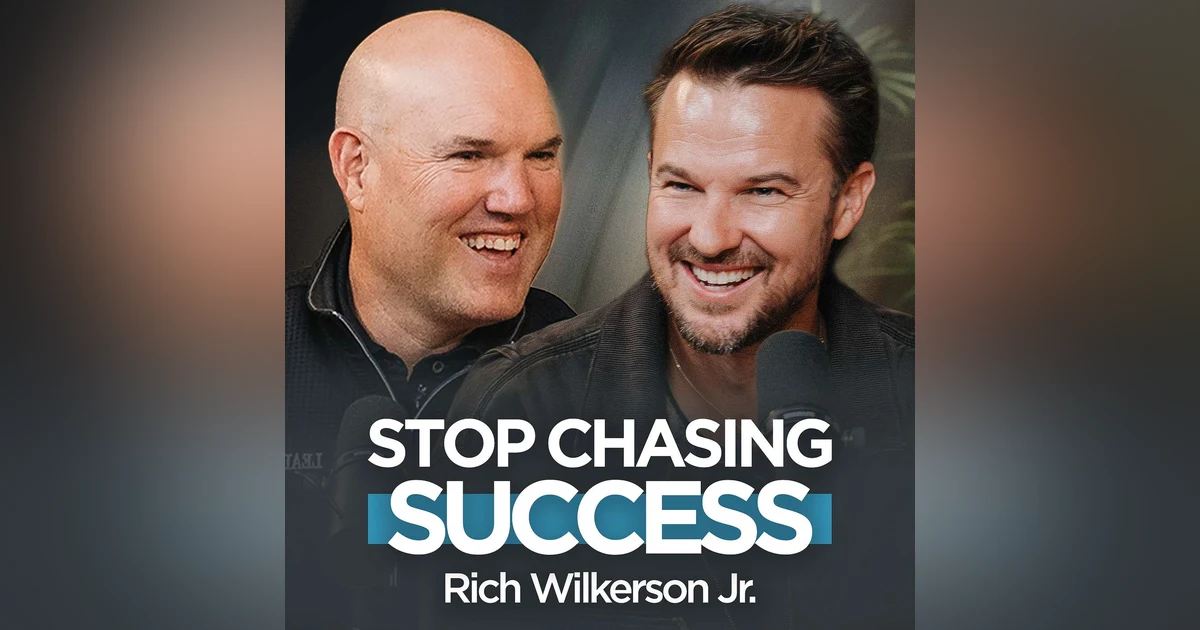


In this episode of Lead to Win, Pastor Jeff Little sits down with Rich Wilkerson Jr. for a conversation on calling, resilience, and playing the long game in leadership.
Rich shares why success isn’t the ultimate goal — lasting is. From processing pain to guarding your heart, this episode will help leaders reframe the story they’re telling themselves and stay faithful to what God has called them to do.
TIMESTAMPS
0:00 - Wanting To Last
3:20 - Playing The Wrong Game
6:05 - Esau Spirit And Outdoor Identity
10:20 - Skee Ball Church And Hidden Talent
14:55 - Growing Up In A Ministry Family
21:10 - Pain Trials And Forgiveness
27:45 - Reframing Stories And Trust
33:10 - Discernment And Almost Right
37:40 - Success Redefined As Faithfulness
41:55 - Calling Chose You
45:50 - Exegeting Miami And Loving The Crowd
49:45 - Habits Resilience And Leadership Landmines
58:45 - Final Thanks And Subscribe
LEAD TO WIN RESOURCES
More Resources: https://leadtowin.com/
Win With People: https://leadtowin.com/pages/win-with-...
Register for Leaders Gathering: https://leadersgathering.leadtowin.com/
Information on Milestone Church: https://milestonechurch.com/
FIND US AT: https://leadtowin.com
GET IN TOUCH: Contact us at info@leadtowin.com
FOLLOW PASTOR JEFF
Instagram: https://www.instagram.com/jefflittle/
Facebook: https://www.facebook.com/pastorjefflittle
FOLLOW LEAD TO WIN
Instagram: https://www.instagram.com/leadto.win/
Musicbed Sync ID: MB01EIB335NJCWV
00:00 - Wanting To Last
03:20 - Playing The Wrong Game
06:05 - Esau Spirit And Outdoor Identity
10:20 - Skee Ball Church And Hidden Talent
14:55 - Growing Up In A Ministry Family
21:10 - Pain Trials And Forgiveness
27:45 - Reframing Stories And Trust
33:10 - Discernment And Almost Right
37:40 - Success Redefined As Faithfulness
41:55 - Calling Chose You
45:50 - Exegeting Miami And Loving The Crowd
49:45 - Habits Resilience And Leadership Landmines
58:45 - Final Thanks And Subscribe
Wanting To Last
SPEAKER_04I think at one point I was like, I want to be successful. I want to, I want to win. I want to be big. I want to be known. I want to preach there. I want to say that. At 42 years of age, I want to last.
SPEAKER_03The worst thing in life is not to have a scoreboard with less points, but to actually have a scoreboard with lots of points and realize you played the wrong game.
SPEAKER_04What's God's will for my life? Well, doesn't Thessalonians say the will of God is to pray continually, give thanks and all things and rejoice always, you know? Like, are you doing those three things? The column will find you. Every time we face a trial or pain, there's an opportunity to grow and become something. Because the story you tell yourself will become the life that you live.
SPEAKER_03So, how do you think your son likes seeing my my you you so I I get nervous about telling people that I I love the outdoors, you know? And so I don't know if it's I don't know if that's powerful or not. I don't know if it's allowed. I uh should I be nervous about telling people that I'm not sure.
SPEAKER_04No, I think that you should embrace the fact that you have an Esau spirit, you know? I mean, Esau was a hunter and a gatherer. By the way, Esau means hairy, by the way.
SPEAKER_03And I and I and I am that. Totally. I mean totally, totally the opposite. But it's like I've trimmed around. Yeah. I would be the guy that, you know. So you want to know something really funny? Like, do you know? And this is very generational, but like I just had a young guy on our staff, they they had a new baby, and they have a picture of him holding the baby on his chest. Have you heard of this? Skin to skin. Is that and you're you so it's supposedly, what does that do?
SPEAKER_04Well, what it's doing, Pastor, is that it's nurturing the baby, and uh it's a big, big rage right now. It is? Yeah. I mean, my boy's eight, and we're still doing about 30 minutes every night. No, this is that's strictly for his development. That is hilarious. No, it's uh it's a whole lot in the hospitals for sure. It's called skin to skin. The hospitals talk about it. Yeah, but there's a random online thing. This is modern medicine, modern medicine. The machine, I think. Um, what was the guy with the COVID shot that was real big out there for a while? He's really pushing it. You're crazy, man.
SPEAKER_01You're not crazy, man.
SPEAKER_03So back to hunting. But let me tell you back to hunting and Esau. So what I said was I was asked if that would have been it, you know, in sure when I had my kids who are all grown now. Would you have done it? And I said they would have thought they were swaddled because I have I have basically a a blanket, like a like more like what you would put on a horse. So they would think they were in a blanket if I put them. There would be no skin because the fur.
SPEAKER_04You have so much fur on you.
SPEAKER_03Yeah.
SPEAKER_04So you are Esau. Yes. You are actually Harry.
SPEAKER_03Yes.
SPEAKER_04Wow.
SPEAKER_03Can you show us? Well, I didn't know I did shave my name in the back of one time. Very, very much. You know, like a picture. There's one guy from there's a photo of a guy at NASCAR who's bald headed, yes, who shaved Dale Arnhard in the back of his hair. So I did I did think about replicating that, but I feel like that might, that would probably get me.
SPEAKER_04No, my son Wilde got here, and uh, he got to go into uh a special place of yours and he is having the time of his life. In fact, right now, he is uh while we're filming this, he's in the kids' ministry playing skee ball.
SPEAKER_02Yeah.
SPEAKER_04And so I go home once again as uh a
Playing The Wrong Game
SPEAKER_04disappointing father and uh a pretty terrible church planner.
SPEAKER_03Dad, why don't we have skee ball in our church? I don't know, son. So those the Bible. So to set the record straight, we have a guy in our church who was actually in one of my men's uh business guys development groups. He had gone out to San Francisco, he saw a trampoline park.
SPEAKER_04Okay.
SPEAKER_03He has this vision and dream. I I start pastoring, praying for him. He's a really close friend, you know, as well, and younger guy. And and um, he started Urban Air. They're all over the country. And he's the one that did that. He was like, I'm paying for it, I'm putting this in my church, we're having this area for kids. And so it's kind of crazy that you have it, but it's also kind of speaks to the reality of, you know, when you have it, when you have these people that that God does things in their life, they kind of see their church. He also helped us with in the kids' rooms, like they do some stuff with just like um using projectors. So when they teach on the Bible story, like it projects the story for the kids to be in there. And that was all him. Like we had no, we wouldn't even have thought of it and that he did it all. I love stories like that.
SPEAKER_04I mean, number one, why go to Pigeon Forge when you can go to church? Yeah, but number two, I always think it's just really cool when we spread and cast a big vision, how there's so many different talents, giftings out there. I always think about the tabernacle and all the people they brought together to build it and put the things together. Like you just have no idea the miracles, the answers, the ideas that are sitting out there in the pew. And it's cool when you kind of empower other people. Next thing you know, you've got, you know, maps in your kids' room, things that I would never know how to do if it had not been for incredible people in our church. And it happens over and over again.
SPEAKER_03Well, I do our membership class always say to the people in there because you know, the Bible says, you know, if he's placing them here, then there's a more, there's a fuller perspective of Christ being given to the world around us because the body is more complete. And I tell them, you know, the church is the most resource-rich environment on the planet, no matter what size it is, when you're talking about talents, giftings, you know, all of that, but many times, you know, they have to be, you know, connected for that to be released, you know.
SPEAKER_04Absolutely. I just love the idea that the church is an expression of who Christ is. Oh, yeah. And the reason why we have different churches is because we got different types of people. Exactly. And so, like, I think people get too fixated sometimes, like, this is how we're supposed to do it. It's like, no, no, no, this is how we do it here.
SPEAKER_02Yeah.
SPEAKER_04Uh, in Revelation, there's that beautiful, what is it, Revelation 2, where there's the
Esau Spirit And Outdoor Identity
SPEAKER_04seven different churches. What's interesting about that passage is every time that Jesus comes and speaks, he introduces himself a different way. And I like that because I think sometimes introductions is like if I'm going to introduce myself to you, oftentimes I'm trying to quickly present what it is I want you to know about me. Or if you're gonna introduce me to your audience, this is what you need to know about Rich. And I like that fact that he introduced himself a different way, as if to say, there's something that I want to show you about me. Meaning, collectively speaking, we all know something about Jesus, but we don't know everything about Jesus. And one of the best ways that we can know more and more about him is by being in a church, being in the body, getting to know his people because his people, they will bring skee ball to your kids' ministry. And I'm just gonna say right now, so everyone out there, I am not a hater, I'm a lover of this. And uh, wherever your friend is, can he get us ski balls for our uh for our new building? Because my kid's not leaving your church. And so I'm so good. He's calling you dad. Is that that's kind of made me feel really weird?
SPEAKER_03Yeah. I'm gonna take him on a little hunting excursion as a like a manhood ceremony to bring him in to, you know, especially as he concert. Yeah, yeah. He needs this. He needs this experience primary. I I I got him some uh cowboy boots. So he's definitely going back to Miami as a true Texan. He loves you. And um, I'm just I actually hate you. I love you. So I'm glad to have you on here. Thank you for letting me come. I know um, you know, the Lead to Win podcast, uh, we were just chatting about it because I love I love the format to be able just because I've I've been getting feedback from teachers, business leaders. We have a college, so I have college students. So you have listening uh ministry leaders, but you also have just community leaders, and it's a great chance for me to offer a relationship like ours to them. And so over the last several years, we've we've had connection in different ways, but we have a specific event with we share some relationships where we get to go and be together, our families have connected, and and so I've I've just wanted to, I don't know, draw out the gold in you a little, you know, like I I think every every person, every relationship, you know, you and I have just been talking where I'm like, hey Rich, look, I'm okay at this, this, and this, but here's some stuff that I would love to give to you that I feel like could be a strength of mine. And I would like our our our audience, maybe. First thing I want to do is I want them to kind of know who you are. Because I think in our culture today, people, you know, see one snippet or soundbite or somebody pulls something from one message or some clip or something, and they could categorize somebody to go, oh, that person is this. And I'm always trying to pasture people and counsel them to go, hey, you know, your algorithm, you know, we have such one-dimensional thinking, we have one-dimensional thought process, and we kind of tend to sort of categorize people. And I think sometimes people, you know, we they know that that builds a following to have one dimension or one message. You're a pastor, you're a pastor's kid, you have a heritage of ministry. Tell us a little bit about, you know, growing up, first of all, as a ministry kid, and then what was that like to find your own calling and stuff?
SPEAKER_04I I grew up, I was born in Tacoma, Washington, 1984, and uh I grew up in a pastor's home, preacher's home, really. My dad was an itinerate evangelist out of the Assemblies of God. My grandfather, my mom's dad, pastored really an amazing, amazing church, Assemblies of God church called Life Center. In many ways, he was uh ahead of his time. His good friend was uh Robert Schuler.
SPEAKER_02Yeah.
SPEAKER_04And so my grandfather, although he had Pentecostal roots, probably really gravitated towards his friendship with Robert Schuler. He used to preach like no more than 22 minutes on a Sunday. He had messages like, cry a river, build a bridge, get over it. Nobody gets the whole loaf, enjoy the slice you get. You know, the only time you fail is the last time you try, on and on and on. It's too soon to quit. Tough times don't last, tough people do. That was my grandfather. We grew up right next door to him. And so, many ways, my most formative
Skee Ball Church And Hidden Talent
SPEAKER_04years, my adolescence going right to 14, he was my next door neighbor and he was a second father to me. Um, and that was the Buntain side. That's my mom's side. And um, on the Buntain side, there's famous missionaries. Mark Buntain was good friends with Mother Teresa in Calcutta. He built hospitals and churches. But on my dad's side, it kind of gave me like the fiery side. His first cousin was David Wilkerson, who started Timmy Square Church and Teen Challenge. And then in between all those kind of well-known notable names are uncles, aunts, cousins, all preachers, yeah, all pastors. We'd be here all day. My first, I was joking with your staff that my first slow dance was to Our God is an awesome God. Because in my house, we grew up like I was telling last night I was at a dinner with some friends. I was like, oh yeah, in my house, you know, you can't drink, you you, you can't cuss, but more than any of those things, you can't dance. I can't tell you how many weddings we'd be at the wedding at the reception. And as soon as the dancing began, my dad'd go, Wilkerson's, we're out. And it was like our, it was like our moment to uh go, we're not gonna fall to Babylon. Okay. We are not, we're not gonna let the hand of God mene, mene is. I I can't even remember the words, but you know, we were we were raised that way. And so uh my first slow dance, being our God as an awesome god, was just a hilarious story because my dad allowed us to get a DJ, but he could only play worship music, which was traumatizing to say the least. But in uh 1998, my dad felt a call to go and take over uh a little Assemblies of God church called Trinity Church in North Miami. And so, man, we left um Washington and made the move to Florida, and it was a cross-cultural experience in every sense of the word, from the climate to the food to the topography to the people. Uh the church I grew up in from 14 all the way through high school was really um it was I was the only white person there. It was Haitians, Jamaicans, Bahamians. But you know what? So much of it for me who I am today. I went to a high school, which was a Presbyterian school. So I remember being there. My dad used to be on TBN, and I feel like every week they were trying to get me saved, you know. Like, do you know the tulip? Do you do you believe in total depravity? I'm like, I, you know, it's just so I have kind of all these interesting influences that sort of uh really impacted me and become reference points in my life. But uh, ended up going to school at Lee University in Cleveland, Tennessee, met my wife, Don Cherie, right at the age of 17, right before that. It's a whole story we could talk about. But um, as we went to school together, we dated, we got married, came back and worked for my dad at that same church, Trinity, served him for eight years in young adults, much like your son is serving, had a Tuesday night program, much like he does. Yeah. And after eight years of doing that, they they launched us into full-time ministry of starting a church.
SPEAKER_03So Don Cherie, too, her father, Denny Durain. He's like a four generations as well. Yeah. I was at a I was at a pastor the other day. Your father-in-law was sitting beside me, right? I mean, I'm like nobody sitting, you know, next to this legend, you know, and he leans over Jeff. I've been praying for you. I listened to a couple of your messages. You did great. You're a man. I mean, he's one of those people like you just feel like you're so cool, man. He's uh it's like we need more, you know, who you're like sitting by him, and he's like, he just makes me feel like your messages are valuable, you're valuable. And I'm sitting there going, Denny Duran.
SPEAKER_04He kind of talks in sound bites. He kind of has like this voice that just makes you it's like I always wonder what's God's voice sound like it's it's definitely Mufasa, you know, from The Lion King. Like, I'm gonna be so mad if we get to heaven, like God hasn't hit puberty. Well done, good. You know, what's what's happening? My father-in-law, when he speaks, it's like this cadence, this flow. Yeah, everything's like the word of the Lord.
SPEAKER_03Just so exhortive, encouraging, genuine. Um I I mentioned, I mentioned this to earlier we were with uh some teams of people, and and I mentioned this because it impacted me because Don Cherie was talking at something we were at together. We were doing a little panel, and you know, we're supposed to be talking to the audience, but she was ministering to me because I was listening to her, had a had a hurt, you know, like a one of these like real close, like, you know, ministry challenges. And she was talking about how her dad at the dinner table, she's a kid, and and and we're gonna forgive them and we're gonna, you know, the whole tony set in his house toward what, you know, kind of what's God saying to us. Yes, it hurts, but we're not gonna get bitter. We're gonna, we're gonna. I just thought that was so. I mean, I know Denny personally now, respect him and
Growing Up In A Ministry Family
SPEAKER_03stuff, but in that moment, even before I knew him, I I respected him because I thought, how we need that more? We need, we need parents in homes, ministry or otherwise, that help us process uh uh our pains in a in a way that the enemy doesn't rob us of our future. Because that's really if you if you go down that path, it's just gonna rob you of what God's called you to do.
SPEAKER_04I like that scripture that you know, many teachers but few fathers.
SPEAKER_03Right.
SPEAKER_04And he he just is that in every sense of the word. Right. And you teach what you know, you reproduce who you are. Exactly. What did Jesus say? Wisdom will be proven right by all her children. And so I just look at their six biological kids. They have they have a seventh, they have they adopted as well. And just the fruit of their life is uh it's amazing. But so much of it, what you're saying is attributed to him. And here's what's really interesting. Because I think often this is good for anyone who's who's listening right now, who's who's in a challenge or who's in pain or who's in a trial. I think we often think that like good things are only passed down by good things happening to us.
SPEAKER_02Right.
SPEAKER_04But it's not true. We don't really know what's inside of any of us until we get squeezed, until pressure hits our life. Right. It's like if you squeeze an apple, you get apple juice. Yeah. Squeeze an orange, you get orange juice. What happens when you squeeze a Christian? Complaining, you know, fear. When you squeeze a believer, you ought to get uh believer juice because believers actually should have this thing called fruit. It's called the fruit of the spirit. Joy, peace, patience, kindness, goodness. And I think pain I think pain is one of God's greatest ways of teaching us. Consider it a pure joy, my brothers and sisters, when you face trials of many kinds. Because we know the testing of our faith develops perseverance, and perseverance must give way that we might become mature and complete.
SPEAKER_02Yeah.
SPEAKER_04Who says that? Consider it a pure joy.
SPEAKER_02Yeah.
SPEAKER_04My father-in-law certainly does.
SPEAKER_02Yeah.
SPEAKER_04Because every time we face a trial or pain, there's an opportunity to grow and become something. And I just learned with pain. But when you have pain, when you have a trial, you can either nurse it or carry it around with you. You know people like that, you see them come and it's like, yeah, I'm kind of avoiding that person. They're always carrying something. Uh you can rehearse it, you can talk about it over and over and over again. You can curse it. Some people go through pain or trial and they just hate it.
SPEAKER_02Yeah.
SPEAKER_04Or you could be a person who reverses it.
SPEAKER_02Yeah.
SPEAKER_04And the way that we reverse most pain in our life is through righteous revenge, which is that word forgiveness. Yeah. It's it's not the denying that something happened, it's the facing it, embracing it, acknowledging that it took place, but to say, I've got something inside of me. I have been forgiven, therefore I too can forgive. And my wife has been marked deeply by watching her father, not in the good victories, but in what appeared to be failures, betrayals, right, attacks, how he stood in it. And I'm just telling you, um it shapes me. I remember one time we were in we were in Hoover, Alabama, and we were at an evangelical football game. My father-in-law was a football coach.
SPEAKER_02Yeah.
SPEAKER_04And he was in the papers. There was a bunch of people that were upset and criticizing him. And we were in the stands, and my wife and I were sitting on the on the other uh like on the opponent's side, and I'm like 18, 19. And my wife, if you see her, she's five's three, she's beautiful, she's little, but like she's not to be messed with. And we're sitting there, and uh these people behind us start talking bad about her dad. I mean, they're trash and Denny. And I can just like her leg starts shaking. And I'm like, I'm like, what do I, you know, what am I supposed to do here? You know, like am I supposed to he's not my father? I'm like, yeah, you know, I'm just dating her. And man, they went for about three or four minutes until she finally turned around and said, excuse me, that man you're talking about is my father. And I would appreciate it if you would close your mouth because he's the best man I've ever known. And then she's like, let's go, Rich. And we like walked away. I was like, Yeah, don't mess with her or me. You know, like like she has a grit and a strength that comes only from adversity.
SPEAKER_03Yeah, exactly.
SPEAKER_04Only from adversity, only from facing it and and coming out the other side. I find it.
SPEAKER_03I mean, I haven't I haven't talked about it, but um, you know how you sometimes have this seed of a message or whatever that I if I you know get an opportunity to speak to pastors leaders, I it it's really around this subject because I I truly believe that those who don't finish well when you when you look back, it's how they manage some kind of painful event. Like, you know what I mean? Yeah um you're like, why are they closed off? Well, they they they they they're doing that as a protective measure by how they handle their pain, and and they kind of get to a point where it's like, well, I'm not letting anybody in. And people can you can feel that. So I was wondering, you know, what's the target for us as now that we're on this little rabbit trail? I'm preaching on parenting this weekend. Yeah. Soft heart. You know, it's it's it's not behavior, but it's it's heart. You know, it's it's the parenting principle is we get caught up in the grades and the in the in the accolades and the all these externals. And you used the illustration earlier about, you know, clean your room and I'm passively, you know, it's really heart, right? Like what do we want for our kids? What does God want from us? Keep that, keep that soft heart.
SPEAKER_04Solomon said, above all else. Above all else, guard your heart for the wellspring of life. And I think one of the things that we guard sometimes in life, if we would just spend half as much effort the way that we guard money, you know, we would guard our heart the same way we guard our money.
SPEAKER_02Yeah.
SPEAKER_04Because out of the heart, I mean, where your treasure is there, your heart will be also. I mean, all of these things are right there. Out of the heart, the mouth speaks. And so when he's speaking about heart, he's speaking that it's it's your life source, it's everything flows out of that place. But man, when it gets hurt, it gets hard. And it does so to protect itself.
SPEAKER_02Yeah.
SPEAKER_04I think a big thing for me, I'm I'm only 42 years of age, and I grew up in a pastor's home. And um, one of the most painful things for me was just watching people be mean to mom or dad. Right. Right. I think I always loved God. Um I sort of maybe had like proactive rebellion. What I mean by that is like I it was never like I was an atheist. I always knew who God was. I was like, I'm working on my testimony,
Pain Trials And Forgiveness
SPEAKER_04you know, I gotta have something to preach one of these days. It was pretty, pretty ridiculous. But I think if there was anything that was ever like um disheartening for me, was like, man, I know my dad and I watch him and he loves you. And for you to say that about him or for you to do that about him, but I'm grateful I got to have a front row seat to watch how he responded.
SPEAKER_02Right.
SPEAKER_04Because in his response, that's where character is formed.
SPEAKER_02Right.
SPEAKER_04I think for me at this age, I don't know if this will be helpful for anyone, but like I just find myself having to reframe it. I got I just I spent a lot of time reframing things.
SPEAKER_02Right.
SPEAKER_04Because we're all telling ourselves a story. Very good. Human beings don't see things, we script things.
SPEAKER_02Exactly.
SPEAKER_04Right? We're storytellers. Yes. And if I don't understand something, I gotta make sense out of it.
SPEAKER_02Yeah.
SPEAKER_04Oh, I why why did Jeff say? That or this, and I'm I gotta make sense, I gotta fill in the gaps, and you get to define and decide what story do you want to tell yourself.
SPEAKER_02Exactly.
SPEAKER_04Because the story you tell yourself will become the life that you live. And over and over again, I just find myself, I gotta reframe things. I I found myself in a in a season not too long ago where I was saying some stuff that I think I'm just it's like that old Garth Brooks song, you know, I'm I'm too young to feel this old. Um but I was saying some stuff like I maybe I had some relational hurt, some people that maybe left, and I was like, you know, I don't really know if I if I trust people the same.
SPEAKER_02Yeah.
SPEAKER_04And that might be a um a real feeling, and it might be honest, but just because it's honest doesn't mean it has to become true. Right. We can talk about that for a moment too. Like just because something's honest, I can be honest, but I don't have to make that the truth of my life. There you go. But I was saying, like, you know, I don't know if I trust people. But I started to reframe it because um that's not true. That's right. I do trust people. You do. When I first started out in ministry, I was delusional. Right. That means ignorant, naive. I just was bright-eyed, I trusted everybody. At 42, I'm not delusional anymore.
SPEAKER_02Right.
SPEAKER_04But there have been some things that have left me disillusioned.
SPEAKER_02Right.
SPEAKER_04And in the moments where I feel disillusioned, confused, if I'm not careful, I will start telling myself a story that's not true. Oh, you don't trust people, people aren't trustworthy, you can't trust nobody. They're just gonna hurt you, they're just gonna let you down. The reality is no, I'm I'm just not delusional anymore. I now know I have to trust certain people with certain things. Yeah. And so maybe there's not one person outside of my wife and Jesus who can take the full weight, but I lean on you for something. Yeah. I can lean on my dad for something. I trust all sorts of people. I just might not trust them with a hundred percent of everything.
SPEAKER_02Right.
SPEAKER_04I give them access to the parts that they can be responsible for.
SPEAKER_03Because the part, the part we're missing, right, is you know, you you gain discernment. I mean, discerning of spirits is one of the gifts of the spirit. But I do believe that people who don't flip the script, people who don't frame it, can become unbondable. You can you literally, if because trust is what you bond around.
SPEAKER_00Very good.
SPEAKER_03So if I if I stop trusting, then I stop bonding. And so I think you can how you process that pain, it's kind of like a Lego, right? If it you can't, it doesn't have any receptors. So it can't, it can't connect because all of the holes are unbondable.
SPEAKER_04It's really, really good. I like that idea of discernment. You're talking about that, because I think as we mature and as we grow, that's what we want to gain wisdom in. Right. Charles Spurgeon said this about discernment. He said discernment is not knowing the difference between right and wrong. Discernment is the ability to choose from right and almost right. Which, if I don't preach in 2026, I don't know what will, because that's the world that we're living in. This can happen in every category of our life. You know, we we could go from an orthodox approach. I was reading a book the other day that somebody handed me, a Christian person handed to me. I started reading it, and it was like, I was like, man, this is good. It's got a lot of spiritual language. Like, this is powerful. I'm wow, I'm really moved. You know, I'm I'm an open box. I can like I can vibe with people like that. Is really, really good. And I got to this chapter and they started saying, Um, love is God.
SPEAKER_02I was like, wow, that's that sounds that that sounds wait, that sounds almost right.
SPEAKER_04Because you got to go to your Bible then and go, wait a minute, discernment, help me out. Oh, wait, it doesn't say love is God, it says God is love. So close yet so different.
SPEAKER_02Very much.
SPEAKER_04If love is God, it means that whatever I love is God.
SPEAKER_02Yeah.
SPEAKER_04I love pizza. But what a lousy God. But if God is love, it now sets a standard for me that defines and determines, regardless of my preferences, feelings, fantasies, wants, likes, this is my standard. Therefore, if this disagrees with me, I'm going with God because there's only one that I can submit to. But discernment is key because if you don't know, and if you can't actually look at this and go, this is almost right. So if I live in this whole world and just go, man, I don't, I don't trust anyone. It's like, no, no, you don't trust some people.
SPEAKER_02Right.
SPEAKER_04And maybe that's not such a bad thing. Maybe that's just called growing up and maturing and recognizing, all right, Rich, as you've gained influence, as you've gained responsibility, you have to be wise about who it is that you're giving access to. Otherwise, your heart can be contaminated. Very true. Otherwise, your heart can become hard. And I think you nailed it. Like, sorry if I'm preaching too much here, but like up until about 2020 when the pandemic hit, we could talk about that as well. Just that whole time limit for me. I felt like I was walking in wet cement, like I was walking light, having fun, enjoying it. In 2020, it was just with the loss of friends and just different friends of ours, movements that we saw that faced so much collateral and pain. Yeah, I felt like even just for me, it was a it was a season of just repentance, not because I had done something wrong, but just more so maybe the sin of omission of things that I ought to have been doing. But it was really a maturing year for me. In all of that, I look back on that and my whole story changed. I think at one point I was like, I want to be successful. I want to, I want to win, I want to be big, I want to be known, I want to preach there, I want to say that. At 42 years of age, I want to last.
SPEAKER_02There you go. There you go.
SPEAKER_04I want to last. So when you start talking about when I look back at just at watching different people that are finishing well, yeah.
SPEAKER_02Yeah.
SPEAKER_04I I want to be like the apostle. I fought the good fight.
SPEAKER_02There you go.
SPEAKER_04I finished I kept the faith. And I'm not throwing shade at nobody. I'm just going just on the record at lead to win.
SPEAKER_02Yeah.
SPEAKER_04That's my goal.
SPEAKER_02Yeah.
SPEAKER_04How big do you want your I however,
Reframing Stories And Trust
SPEAKER_04however big the Lord wants it? I that is not my goal anymore. It's not to be successful. It truly is, like Mother Teresa said, to be faithful. I want to last. Yeah.
SPEAKER_03I mean, I I think even that, like I I heard someone years ago, can I I started, you know, as a senior pastor at 21, right? So I was talking about shouldn't have had, you know, it's like, I I didn't say I was a good pastor. I said I was a pastor, right? Right. But I heard a phrase redemptive potential. What can you really reach? You're re you know, there's a there's a redemptive potential. How does that work with the sovereignty of God and my you know, my my submission or but, you know, because I think we sometimes struggle, what's success, or what do, you know, as a leader, what do I and you hit the nail on the head as you journey along? What you really realize is what God has for me, if I keep my heart right, nobody can stop, no one can hinder. But at the end of the day, the biggest battle is really not on the outside. It's not the the job opportunity, the speaking opportunity, the inside job. It's an inside job, right? It's it's really about how I continue to keep my heart. And I and I would say myself, just like you, the last few years, I've had a few, you know, tests that everyone else would think the test or the challenge or the circumstance, you know, the COVID, all of that. I I believe all of it, when I really look at it, is all it's all God just testing my heart. Absolutely. And it purifies motives, right?
SPEAKER_04And I think that when you go through the test with an openness and a willingness to learn, the test doesn't define you. It truly does refine you. Yep. You you come out on the other side, you become something. I remember COVID, we were all singing that song, I wanna be tried by fire. I looked over up to my wife one day. She's like, I'm not singing that, man. And then all of a sudden the Lord he does do it. We're like, why were we why were we asking God, you know, to try us by fire?
SPEAKER_03But that that was our word for the year was pure. Oh gosh. And then then I preached on the the two builders of the house and what was built on. It was like, man, I I'm gonna get a different word to start the prophesied, yeah.
SPEAKER_04We just do accelerate. Oh no, I I I I like too, like I I love just the concept, even of what you're doing here on the show about leading to win, because once again, for me, it if I'm gonna I if I'm gonna define where I want to win, I also have to define where I'm okay to lose.
SPEAKER_02Right.
SPEAKER_04And I think oftentimes we don't get that. I I was never the smartest person, but I was always a straight A student, not because I'm so smart, but because I knew how to get an A and I like getting A's.
SPEAKER_02Right.
SPEAKER_04But I've just learned at this season of my life, you can't always get an A in every category.
SPEAKER_01Very much.
SPEAKER_04And so you kind of have to define where it is that you want to win and where you're okay with losing.
SPEAKER_03So the concept, the concept comes from, I think you and I've talked about it before, but everybody has a scoreboard. And the biggest challenge in life, me being a pastor all these years, sitting with people and them reflecting on their life. The the worst thing in life is not to have a scoreboard with less points, but to actually have a scoreboard with lots of points and realize you played the wrong game. That's the theme of my sort of life message is you know, winning at what matters. And I think what a pastor does is gives you permission to win at what you're really going to care about. Because when I've sat, and you have before too, on at a at a deathbed moment, they're not talking about their 401k. They're not talking about where they preached. They're talking about these meaningful relationships. They're, they're, they're talking about, man, I wish I wouldn't have held on to that bitterness. Hey, I wish I wouldn't have been so afraid in that moment. Think about the stuff we're afraid of a lot of times that then you look up, you know, take COVID. I mean, all the fear. And then the truth is, like God always does, He's working all things together for the good of those who love him and are called according to his purpose. And there is some, you know, again, people lost family members. I did funerals. I'm not in any way glossing over. Sure. But God also was at work here in a in a from a bigger perspective. So I want I want you to talk for a minute about, you know, you know, so I'm sharing a little bit of my sort of life message. What is what is Vu Church, you know, like as you as you say, hey, I've even been refining this because I I think your church is 10 years old. I think, you know, how did how did you choose your you're supposed to be there? You know, you move there with your dad. Yep. How does you and Don Cherie know we're called here? And then not not I love this question not the pamphlet, not the website, but like what's the flow? Like what really is it? Not, I mean, not a reel on Instagram where you know you're given a thought of anything, you know, but but what what what is it to like take us into that? And I and I think I think you know, you have to really say, why am I here? I really I think there's multiple moments to go, why does this matter? Why, why are we here? You know, what what what expression of Christ are we called? Because and just like you were saying, I think,
Discernment And Almost Right
SPEAKER_03you know, you can't win it, you can get an A in everything, but you got to go, hey, yep, we we have to be this, you know, like we we have a we have a burden for this. Talk to us about the church, this, what, what give us your flow a little bit.
SPEAKER_04I preached a message last year called the cross I didn't choose. And I was talking about that man named Simon who was picked out of the crowd and they put the cross on his back. But you know, just think about there's so many things in your life that you did not choose. They were chosen for you.
SPEAKER_02Yeah.
SPEAKER_04I mean, I didn't choose the family I was born into, I didn't choose my hair color, my eye color, didn't choose my stature. I didn't even choose to move to Miami. I w my house, I don't know, you know, you're making a joke. There is no gentle parenting. You know what I mean? It's like, yes, father, we I I beseech thee upon the people, curtsy, you know what I mean? Thank you for blessing me. We just we all went, you know. Um so I didn't I didn't even I didn't even I didn't choose Miami. And I think in the in the area of calling, because it's a it's a funny thing to talk about. And I don't even know if it was a conversation uh up until the last 50 years, probably, because so often people are trying to choose a calling. Right. I feel like my calling chose me.
SPEAKER_02Yeah.
SPEAKER_04In fact, I think that's kind of how it usually does work is that you're summoned into something. Right. Like the call of God comes and it's pulling you. I'm not trying to make someone feel bad. I'm trying to actually comfort someone, I'm trying to encourage something.
SPEAKER_02Right.
SPEAKER_04What's God's will for my life? Well, doesn't Thessalonians say the will of God is to pray continually, give thanks and all things and rejoice always, you know. Like, are you doing those three things? The calling will find you.
SPEAKER_02Exactly.
SPEAKER_04I I I I grew up in Miami and at 14, I was probably going there kicking and screaming to some degree, but now looking back, it's only looking back, like Kierkegaard says, that you can ever put things into order, you know, like Steve Jobs says you can only connect the dots looking backwards. It was the greatest thing that ever happened. My dad chose that for me. And after serving there for eight years, we started feeling this burden to see a church that would love a city, two values at the top are Jesus our message, people our heart. Yeah that's not something brand new. That's not what are the what's the greatest commandment? Love God with all your heart, soul, mind, and straight, like great commission, great commandment. It's the great commission. But I do think language matters because even as you're talking about leading to win, you're like, hey, I want to help people win in the areas that matter most. I would say, like, what's the ethos or what's the culture of church? It's play the long game.
SPEAKER_02Yeah.
SPEAKER_04It's another way of we're all quoting G, we're all plagiarizing Jesus. You know, what does it profit a man to gain the whole world, but freaking forfeit your soul? You know, like so I I think in Miami it's been the the message of the gospel, and and the gospel has a hinge, right? Like it's not just the good news, like I can't appreciate the good news without the bad news. Right. So I feel like from day one, it's been unapologetically, unashamed, unafraid, announcing the gospel. For God so loved the world that he gave his one and only son that whoever believes in will not perish but have everlasting life. Even in the most famous Tim Tebow verse, there is the bad news is there, perish.
SPEAKER_02Right, right.
SPEAKER_04The second death, eternal death, the separation from God.
SPEAKER_02Right.
SPEAKER_04So I feel like it's always been the full gospel being announced and proclaimed, but doing so in a way that's been wrapped in love.
SPEAKER_00Right.
SPEAKER_04And it's done so in a way for all people. And when you say, like, yeah, man, what's my life message? Um, I I don't know if I've ever used that language. I probably should lean into that more and more. But I think if you go back on my sermons for the last 20 years, if there is something that's bubbling to the top, it is probably a little bit of what we're talking about today that I want to embrace my fragility and humanity, that I am a fallen, broken person, back to my Presbyterian roots, totally depraved. Yeah. But in all that, we have such a faithful and good God.
SPEAKER_03And where you're at I got some of those reform backgrounds. So we always loved that a Pentecostal, you know, kind of got got a little more biblical. You know, it's like wow. Oh man, that's that's he's using hermeneutics.
SPEAKER_04You know somebody, yeah, you know, yeah, like it's not that hard to impress.
SPEAKER_03Have you ever studied hermeneutics? You know, I'm like, I appreciate you learned a new word, bro, but yeah, it's all good, you know?
SPEAKER_04It's always fun when we just try to throw out theological words. Talk to me about your soteriology for a moment, Jeff. You know, like, okay.
SPEAKER_02Yeah.
SPEAKER_04Now, where are you at with your eschatology? Like, we we get it, bro. We get it. But I I think it all that, like, if I'm just saying, to me, it's like grow slow. Yeah, play the long game.
SPEAKER_02Yeah.
SPEAKER_04God's faithful.
Success Redefined As Faithfulness
SPEAKER_04Yeah. And that to me is in many ways like your message. I think, I think it takes the pressure off of the person that like this is on God. I I've preached for years. God doesn't need me. Oh, but he wants me. Yeah. Yeah. I'm I'm I'm not the oil, I'm the tool. Yeah. I'm a tool for Jesus.
SPEAKER_03But I think, I think though, you know, I I would say though, that you you are you you have a very unique evangelistic gift. You know, like I see in you, I always always you always want to encourage somebody where they have, you know, the ability to reach some people that other people can't reach too, though, right? Because you're, you know, you you have, you know, God gives us personality. You and I, we could sit and tell jokes forever. Like it's like, I think, I think there's something powerful about that. That, you know, obviously we have the Bible, but God's bring there's there's the part of that message coming through you, right? So he he puts you there. My master's degree is in missiology. What does that really mean? That you don't go to France and speak Spanish. You follow me? Now, there are some Spanish speakers in France, but predominantly that's not the language. Talk to me about the missiology of Miami. Talk to me about, because I think that's another thing today that that I'll you and I have talked about this, and that is church, church goes through seasons, and I think we're in a season where there's a lot more pragmatic help for pastors. Well, I mean, there's podcasts for leaders in general. Like how many leadership podcasts? You know, it's like, it's like there's so much content, there's help. I think that's a good thing. Because when I started, there wasn't any of that. Always with a strength is a potential weakness. Potential weakness is, you know, I had I was 23. I had a church in a furniture store in a town of, you know, 182 people. I thought I was amazing. I thought I was the greatest pastor on planet earth. I had no one to compare myself to. Right. So people follow other pastors, right? And they kind of get it, and then they try to, but you have to think about context. Yep. It's it's so basic, set yet so powerful. Who are you reaching? What, you know, where's your business? Where's your company? You as a teacher, what are those? Do you can you speak their language? How have y'all contextualized would be the word, you know, what you do at Voo Church for Miami? What are some of the things you've had to learn? Like how, how, how, how you, you know, we were talking about buildings and uh what what are some of those things?
SPEAKER_04I really think that the Lord He works through a person. I I I believe it wholeheartedly that when you know God's plan is a man, God's plan is a woman. And when I even think about my story, you know, we're here in Dallas, and Dallas is known for some beautiful churches. And by the way, you have one of the most beautiful ones I've ever been in. And sometimes you'll hear preacher talk. We all know preacher talk. Well, if that was in Dallas, let me tell you what, Dallas would eat me alive. Like, like I don't have any level of um pride or thought that I could make it work in Dallas. I have a lot of confidence in contentment that God made me for Miami. Yeah. And vice versa. Yeah. Yeah. And with that, what I'm saying is that you're talking about context. I think context is everything. You actually have to exegete your city.
SPEAKER_02Yes.
SPEAKER_04You actually have to know what you're dealing with. Miami in many ways is kind of like the Wild West, uh, in terms of we were having a conversation the other day about like doctrine. Like we don't really have doctrine police. You know what I mean? We've got a lot of people from South America with Catholic backgrounds. Yeah. There's a lot of mysticism, spirituality. Yeah. Yeah. I'm preaching against like, you know, full-on tarot cards and crystals. I mean, that that would be a big crack, you know. Exactly. Santa. I mean, there's real spiritual activity there, but you know, where sin abounds, grace abounds all the more. I I think for us, when it comes to Miami, some of the things that separate, or I would say that I'm proud of VU that seem to me, I haven't been to every church and I don't know everyone's community, but some of its distinctive competencies that kind of stretch out is you go back to that Acts chapter two model that they gathered in the temple courts and in homes, they broke bread together. Um, we've always been great into the great assembly, the
Calling Chose You
SPEAKER_04gathering. We've been able to somehow generate in a difficult city that wherever we show up, somehow we've been able to see a crowd develop, which has helped because Miami is a weird. I went and did a this is a humble brag, but I I was invited to Harvard maybe six or seven years ago with community leaders for an intense study on our cities. It was like nine major cities, and um, they gave us these big thick books about each one of our cities, and like we were kind of doing a diagnostics on our our place. And Miami had all these kind of unique things, but one of the things that was really bad about it was that it was like double negative, like double zero, zero, zero in community index, meaning in volunteerism, in voting, in the census.
SPEAKER_01Yeah.
SPEAKER_04And I remember seeing this. I remember when LeBron James used to play for the Heat.
SPEAKER_01Yeah.
SPEAKER_04I went to a couple of the finals games. And brother, we're we got the greatest NBA player at the time, and we're in the finals. It's game two or three. But eight minutes in the first quarter, the room still isn't full.
SPEAKER_03They probably is it is it because I'm just speculating, because they don't feel like their voice matters or they don't feel a part of the discussion.
SPEAKER_04I think there's a few things I think from the study, but as well as what I I'll just give some of my experience. A you got a melting pot of different nationalities and worlds. Yeah. So how what are we rallying around? Yeah. Because you even use the thing right now, it's like, you know, going to France and speaking Spanish. Well, with laissez compétent. That's lazy. Okay, easy home alone. But like in Miami, like what is is it Spanish? Is it Portuguese? Right. Is it Creole? Is it Italian? Is it Mandarin, for goodness sake? Like, I think there's so many different people there. So they don't really find like who cares who's playing. Secondly, I think it's an overly stimulated surface veneer party place.
SPEAKER_02Right.
SPEAKER_04So I don't want to say Miami's shallow.
SPEAKER_02Right.
SPEAKER_04You know, it's like your church is shallow. No, churches aren't shallow. People are shallow.
SPEAKER_02Right.
SPEAKER_04And if you got a pool, right? A pool, my pool's got a shallow end and a deep end.
SPEAKER_02Yeah.
SPEAKER_04Nothing wrong with shallow. Do you have a deep end? Okay. Like I want to have a deep end. And I think that churches do, but I think sometimes we can like generalize. And so I don't think Miami's shallow, but I think there are shallow people there.
SPEAKER_01Yeah.
SPEAKER_04And so I think things like basketball games, it's like they're always just into whatever's happening. It's big. There's always new restaurants, new clubs, on and on and on and on. What I learned with our church is that somehow God gave us a grace to gather.
SPEAKER_03Yeah.
SPEAKER_04And I was like, wow, this is okay.
SPEAKER_03I want to pause there for a minute because you get it's back. It's so funny because you know, pe human beings have always been to the to extremes, right? So it's like if I get hurt in this genre of something, then I swing to this genre. We it's human nature.
SPEAKER_04We react.
SPEAKER_03We react, right? But let's let's be clear. Jesus loved the crowd. In fact, he got onto the well, whoa, whoa, whoa. Don't, don't, there's there's sheep without a shepherd. There's the crowd, Jesus, the crowds loved. In fact, he was always, he, he was such a crowd gatherer. He was actually trying to say we don't have tickets for sale. Hey, don't tell anybody. Totally. You know what I mean? So he loved the crowd, but he also had these disciples he poured into. He also had times where he challenged the crowd. If you don't eat of my flesh and drink of my blood, John 6, 66, and many withdrew. But I don't I don't think it has to be either or is what I hear you saying. And I think that needs to be said more, right? Because I've, you know, because I recently by someone, well, disciples, which is something I'm passionate about, is coaching and discipling people. But if you're really discipling them to be disciples of Jesus, then they're multiplying disciples. So therefore, if you really are making disciples of Christ, then they're going to multiply, and then you have a crowd. Don't get me going on this.
SPEAKER_04Go ahead. No, I'm just saying it's not either. Believers believe disciples do. Yeah. And you got to do what a disciple is marked by doing what Jesus did. Exactly. And so he did a lot of things. Mark chapter 2, the house was so full that there wasn't room left. But apparently he believes in overflows because they let him cut a hole in the freaking roof. You know what I'm saying? Yeah, we call it additional seating. I love all the new church semantics. It's not a service, it's a gathering, it's not a church, it's not a camp. It's like,
Exegeting Miami And Loving The Crowd
SPEAKER_04okay, we get it. I'm a freak on that stuff, so I'm actually making fun of myself. We don't use overflow either. But point being, I think that there was a grace to gather.
SPEAKER_03And I can't 28 minutes on Jesus loving the crowd. Loving the crowd. And so you begin to love the city. So now you have this melting plot of people who are starting to come together and you want to be a place where a lost person wants to come. You want to be a place where they want to bring a lost friend. And I think I think that's important. I think I think that that's I think that's also, in my opinion, in recent years, the enemy strategy actually was to make churches homogenous, meaning only these people, only the theological people, only the mature, only this race, only this expression, only because when you when you go through challenges in culture, then we gravitate to something we're familiar with, which is actually the enemy strategy to rally us around our algorithm to which we can't actually gather with our community. And it's why it's been hard to be a pastor, because that's all I've ever done with my life is serve. But when I'm in my community, I'm a reconciler, I'm a gatherer, I'm a hey, come together. Hey, wait. Yeah, yeah. Have you met them? Hey, wait. And it's and it has been harder to be a pastor.
SPEAKER_04Sure.
SPEAKER_03But it's still very, very noble work.
SPEAKER_04It's worthy work. It's worthy work. That's what I think about it. And I think it's the thing that Jesus built and that he cared about the most. And in our 10-year journey, he didn't just bless us and grace us with being able to produce crowds in Miami. I think the simultaneous both end part of that model was that it was a deep, deep community of hospitality, that it's part of um the culture that church ends and then people are in each other's homes. Yeah. Last Sunday I had 50 people in my house afterwards. We we that's how we started the church, was in my apartment. And so that's kind of continued. Yes. And the spirit of hospitality of bringing strangers around a table and just the ordinary of breaking bread together and watching as the gospel actually doesn't just happen in the great gathering, but it happens, you know, one-on-one.
SPEAKER_03And I and I'm and I'm familiar with you, you know, you've then created these other contexts for deeper teaching, and you've got, you know, interns and training and students and leaders. And so you you've built these, we've we we end up as we go building these different ways in which we can respond to the levels in which people are at. Because that's really what happens is to be a church means we do reach the crowd and we continue to develop and disciple them. So I want to switch gears. You mentioned finishing. So you are 42?
SPEAKER_0442.
SPEAKER_03Okay. And so you know, so I'm 52.
SPEAKER_04You never said that publicly.
SPEAKER_03So I'm 52. So I'm kind of older brother, but just because of your vibe, you know, I think you have a younger, you have a younger spirit, you know, which I don't think that's a bad thing, right? Like I was like, I think I was 45 when I was 25. You know, it's like this kind of old man, you know, it's like, so um, but I do think a lot of younger people listen to you, which I think is an important stewardship. And so then you also have this perspective looking back, you know, to being, you know, younger leader. So when you say, I want the, I want to finish, and then if you were talking, what are some of the, what are some of the landmines, right? What what are some of the what are what what what do you say to younger really not, I guess it could be all of us.
SPEAKER_02Yeah.
SPEAKER_03What are the landmines today? What what are the some of let's be honest, I mean, in some ways the world has changed, but when you really read the Bible, we're all, we're all, we all have still the same issues packaged in a different goal, you know what I mean? But what do you think
Habits Resilience And Leadership Landmines
SPEAKER_03is the what what wisdom at 42 do you give? Like if you had to say, hey, here's here's lead a couple leadership thoughts, landmines, you know, what are you teaching your younger staff right now? Like what are you saying, hey guys, I need you to make sure you're thinking about, blah, blah, blah. You know, I think we hit on a big one is is is the heart. Like it's like the whole world is offended. The whole it's it's like it's okay just to be, you know, brash with people and you get extra credit. I mean, I think we hit some of that. What other things do you think there is?
SPEAKER_04Yeah, I think um, you know, what it what what do you do when you don't know what to do? Well, you do your habits. A habit is this involuntary pattern that comes out of you almost like second nature. And um a habit isn't hard. Discipline is.
SPEAKER_02Yeah.
SPEAKER_04But once you've disciplined a habit, it becomes second nature.
SPEAKER_02Right.
SPEAKER_04And I would just say to any young leader, but to any person, because you know, no better time to start than today. When's the best time to plant a tree? Twenty years ago. When's the next best time? Uh today.
SPEAKER_02Yeah.
SPEAKER_04Is that you you you actually have to form uh spiritual disciplines and habits to create a foundation. Today I was talking with your staff and it said, you know, repetition creates reputation.
SPEAKER_02Love that.
SPEAKER_04And all that means is just like whatever you're repeating.
SPEAKER_02Right.
SPEAKER_04And I feel like if I could go back, I would work harder on habit stacking and creating because w a foundation matters most when the wind begins to blow. You bend, but you you you actually don't have to break. Uh Ben Sass, who um was the Nebraska U.S. Senator president of University of Florida right now, he's in, I think, stage four of pancreatic cancer. Yeah. And um he he's he's dying in front of the public right now. He's been doing podcasts, but he had written a book a few years ago that I would recommend to any leader called The Vanishing American Adult. And I went and revisited that after I heard the news about him. And the premise of the book is the elongated adolescence of men and women today, which it's like, you know, that can be as you know, I don't know if they have it here in Texas, but the 13th grade. You know, it's all these things like, well, you know what they need, they just keep adding you know more and more childhood essentially to it because uh there is a not a weakness of muscle, but a weakness of mentality and spirit and heart.
SPEAKER_02Yeah.
SPEAKER_04That somehow we live in a world today that we say hard is bad.
SPEAKER_02Right.
SPEAKER_04Well I I think that you could I'll just say it for me. Some of the best things that have ever happened for me were painful, difficult, hard moments that I was allowed, that it was God's mercy, let me go through it.
SPEAKER_02Yeah.
SPEAKER_04And so the premise of his book is talking about the education system. I'll spare you that. But he he ends up laying out five different pillars. And I think these are good pillars to kind of consider and think about. I've been thinking about them this past week, that he talks about what creates a self-reliant person. Because when you say, What am I trying to teach a generation following behind me? Judges says a whole generation grew up and did not know God. So I I I kind of live, right? You know, my my missiology is like, yo, no one else is coming. The church is God's plan. And so I'm passing a baton or I'm not. Right. So I that kind of keeps me urgent. I'm trying to put a resilience. What is resilience? It's a bounce back power that if you fall, the righteous man, well, he falls seven times, but he gets back up. Yeah. Here's what Ben says he says that we need to, number one, embrace our immortality, that we are so segmented and segregated, even in churches. We don't, I don't think we mean to, but if we're not careful, all of our programming is this is for seventh grade boys.
SPEAKER_02Right.
SPEAKER_04This is for three-year-old girls.
SPEAKER_02Yeah.
SPEAKER_04But one of the most healthy things is uh for my kids to be with their grandparents. Yeah. Then to see wrinkles and gray hair. My parents have, you know, God bless them, they don't have so many wrinkles, if you know what I mean. But but but there's this idea that we don't want to grow old.
SPEAKER_03Right. I gotcha.
SPEAKER_04We we don't we don't want to age. Right. We we're we're we're we're all trying to find the fountain of youth. If I ever write a sci-fi movie, which I might actually do, my sci-fi concept is a world that children run everything because everybody so desperately wants to not die that they want they they that we glorify kids. It's Lord of the Flies, but it's on steroids where the children are the emperors. And in many ways, this is what helicopter parenting and gentle parenting might even be doing. We'll spare it for your details in this week. But it's like we need to get around death. Death, the bad news is the good news. Death is sobering. Uh we had we we a man in our church this past week, motorcycle accident. Uh his wife was in church on Sunday, like just five days ago. He was alive and vibrant. Now he's dead. And I'm grateful for the gospel. We don't mourn like the world. That sobers us up. But if we're not careful, we will segment societies when we need to, our kids need to see how they do this.
SPEAKER_01Right.
SPEAKER_04He says the second thing is you have to limit consumption. That we live in consumerismville, and consuming doesn't make you happy, producing does.
SPEAKER_01Yeah.
SPEAKER_04We need a work ethic. And when he says work ethic, it's not about like just having a job, but it's about doing manual labor, get on a ranch, do something boring, mundane, hard, difficult. Number four, he says travel, but travel light. That when we get to see the world, we learn different cultures, we discover new things, we seek to understand before we seek to be understood, we become more. And then fifthly, he says, you gotta read, but not read good. You have to read deeply. And I think if there's something at 42, which I'm ashamed of, but I'm really trying to mature in and grow, is in reading and reading deeply, and meaning going a book and knowledge from the past gives me the opportunity that I can either learn from my experience or I can grow from your wisdom. And I'm trying to absorb and I want to go deeper than where I've been, and I want to I want to die full of God's wisdom, but empty of every gift and talent that He's given me. I pouring it out for a generation that comes behind me. And so when you say what what is I'm trying to instill, I it's something of that version of a self-reliance and a resilience that heart isn't bad. Let's let's become who he's called us to become.
SPEAKER_03So our our our mantra over our kids' churches, you don't have to wait to be great. So, you know, you grew up, you know, in that environment with your grandfathers, your dad. My dad was an engineer. I didn't grow up with the missionary uh uh ministry family, but my pastor, he let me preach at 16, right? So I think, you know, and did I know when he's letting me preach at 16 that I'm gonna be the youth pastor at a church and they're gonna give me the reins? And and I think what you're really saying is actually your child or those students or the miracles in the house, the next youth pastor might actually be the 19-year-old that is they act we we tend to rise to the expectation of what is is is so very good. It's there if you create an atmosphere, oh yo no, there's no junior Holy Spirit. I mean, yeah, we need you, man, to you know, start now. And I and I think you develop those habits when you actually see. I personally believe the exodus from the church is the reality, the the reality that they don't believe it matters, right? And so if it matters that if I'm in the game, if I'm included in the discussion, if I'm part of it, because we know the Bible says people without vision perish, cast off constraint. So it's actually me personally seeing myself connected to it is what constrains me to think differently. So if I'm gonna be a senior pastor, so I you were in there with all the young people with, I was like, you could be a pastor at 21. You you could be, you could be called on. You you could be, so you need to prepare now, not like you're you know, in a gap year hanging out. Totally. No, you're in a real year and you're a part of the team, you know. And so I think I, you know, I'm I think that's important for you because whether you ask for it or not, you're looked to, you are the pastor of a church and you have all of these things, but I do think I want to encourage you to keep sharing that voice because I think you also are saying it away in a way that's not condescending, right? So I think we also have this other side of things to go, you know, the guy and guy the other day, millennials, you know. I'm like, bro, you do realize they're like 40 years old or whatever, right? So it's like, you know, and then it's also, you know, like back when I was and y'all don't. And so it isn't a talking down, it's a calling up.
SPEAKER_04Saying millennials is like saying boomers now. You're like, no one calls out these generations. You gotta talk about alpha or Gen Z. Oh, these millennials. It's like, come on, man. Man, Gen X, I can't stand these guys. That makes me laugh. That's a funny bit,
Final Thanks And Subscribe
SPEAKER_04by the way. Yeah. You know, millennials. You know, millennials. By the way, I was preaching to the young adults last night, and I've never been more of a millennial in my life. I I don't think I was prepared enough. Every illustration I had, like you had to have been born, you know what I mean, in the 80s. It's like, dude, this is really like everyone's like, I don't know what you're talking about. And that's like who likes country music? Garth Brooks. It was like, dude, like what? It was just it was that was terrible, but God bless it.
SPEAKER_03Well, man, I'm thank you for having the conversation. Oh, thanks for letting me be on. You know, thank you for for what you do to inspire others and appreciate your friendship. And and man, I'm cheering you guys on.
SPEAKER_04Same from us. We're so grateful for you and your leadership, your life, the way that you continue to lead and who you are in the body of Christ. And so many of us are are watching. And um, what you guys have accomplished, what you guys are building is nothing short of inspiring, but it's it's transformative. And so uh if no one's told you in a while, thank you, thank you, thank you. And thanks for letting me be here with on Lead to Win, man. Greatest podcast this side of the Mississippi.
SPEAKER_03I want to say thank you for checking out this episode of the Lead to Win podcast. I want you to know that I love and my team loves getting this kind of content into your life so it can help you lead and win at what matters most. So I'd love for you to do me a favor like, comment, especially subscribe if you would, so that we can make sure that we're able to get to you some of the things that are gonna help you lead to win.